On the literary (and linguistic) road in Japan: 3, Matsue and beyond

This will be my last post on our Japanese adventures (unless something specific inspires me to write again – always leave yourself an out is my motto) and I’m going to share a few particular experiences, so here goes.

Matsue and Lafcadio Hearn

Our prime reason for going to Matsue was to visit the Adachi Museum of Art, and its famous garden. However, Matsue is also famous for having one of Japan’s best original castles, so we visited that on the day we arrived – and then explored the castle environs. And here we found a house and museum devoted to Greek-born Irish writer Lafcadio Hearn (1850-1904). He only lived in Matsue for a short time, but he met his wife there and the town has taken him as their own. I have downloaded the eBook version of one of his best known books, Glimpses of unfamiliar Japan (1871) which was published just a little earlier than Isabella Bird‘s Unbeaten tracks in Japan.

For now though, I’ll just share two little tidbits that attracted my attention in the museum. The first is that Lafcadio Hearn was apparently the person who introduced the word “tsunami” to the rest of the world. He wrote, in 1897:

From immemorial time the shores of Japan have been swept, at regular intervals of centuries, by enormous tidal waves – tidal waves caused by earthquakes or by submarine volcanic action. These awful sudden risings of the sea are called by the Japanese “tsunami”. The last one occurred on the evening of June 17, 1896, when a wave nearly two hundred miles long struck the northeastern provinces of Miyagi, Iwaté, and Aomori, wrecking scores of towns and villages, ruining whole districts, and destroying nearly thirty thousand human lives. (from “A living god”)

The second is another quote the museum included from Hearn, this one on Japanese gardens:

Now a Japanese garden is not a flower garden, neither is it made for cultivating plants. As a rule a Japanese garden is a landscape garden. Another fact of prime importance to remember is that, in order to comprehend the beauty of a Japanese garden, it is necessary to understand – or at least to learn to understand – the beauty of stones. Not of stones quarried by the hand of man, but of stones shaped by nature only. (From “Glimpses …”)

He’s right, though I hadn’t quite thought of it that way, but stones are a significant part of Japanese gardens and you can’t help but notice and ponder them when you stroll around gardens here. At Korakuen in Okayama, an English-speaking guide told us that stones represent “prosperity” and would often be given as gifts.

Okayama and folk tales
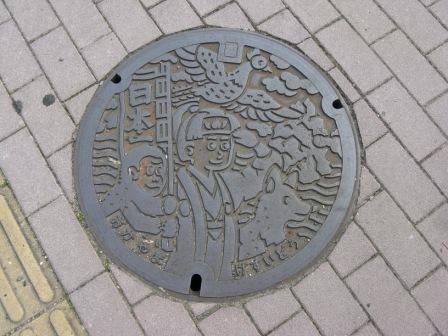
Okayama manhole cover featuring Momotaro, the Peach Boy

Momotaro and friends on Okayama manhole covers

Japan, like many countries, is rich in folktales, and we came across several during this trip. There was one particular story, though, Momotaro, the Peach Boy, that I think is somewhat known in the west – at least, I came across it when our children were young – so it was rather meaningful to meet him in his home, Okayama. The Momotaro story involves his fighting marauding demons with the help of a dog, monkey and pheasant. The demons may, according to Wikipedia, have been from the island of Megishima – and we did visit the demon cave there some days later (but that’s a whole other story). What I want to introduce here instead is the topic of Japanese manhole covers. Each town seems to have its own design (or two) – and if you search Flickr you will find a goodly number of them. They are appealing and are just one of those little details that make Japanese travel fun. Anyhow, for Okayama the design is based on the Momotaro story.

Ogishima and John Masefield

One of the most surprising literary experiences of the trip was finding, within sight of the lighthouse on the little island of Ogishima, a beautifully polished marble stone monument engraved with the three verses of John Masefield’s famous poem “Sea fever” . I haven’t been able to find out what Masefield has to do with Ogishima, and perhaps it’s simply that it’s an applicable poem for a little sea-focused island, but with Japan’s close relationship with the sea I would have thought it had its own famous sea poems to use in such a situation. Whatever the case, this westerner rather enjoyed coming across something familiar in an unfamiliar place.

Onomichi and the Path of Literature

Engraved writings by Suiin Emi, Onomichi

Suiin Emi's stone on the Path of Literature

There is, as the Rough Guide to Japan will tell you, a long temple walk you can do in Onomichi, that takes you up and down the hillsides that line this little port town. We decided to follow the Rough guide’s advice and just do selected components of the walk, which happened to include the Path of Literature. According to an Onomichi Travel Guide the path was developed because Onomichi is known to have inspired many poets/writers because of its “beautiful scenery and quiet life style”. The walk contains 25 stones (stones, again), each inscribed with some words from a particular writer and each accompanied by an interpretative sign which includes the writer’s name in English. (Nothing else was in English, but the name’s a great help for later research.)

I have chosen the Suiin Emi stone to illustrate this post because he was born in nearby Okayama. Basho is, of course, represented … as he is also in the little fishing town of Tomo-no-ura.

An apparent incongruity

Japan is a country of contrasts, paradoxes even you could say, and so I thought I’d illustrate this with something from our second day in Japan when we visited the quiet little town of Obuse (which I mentioned in my first post for its Hokusai connection). We walked out of the station and across the rather empty little street to discover what appeared to be a restaurant (albeit closed at the time) with the following sign on its door:

We have NO relation with Yakuza.

We are still pondering that one …

Monday musings on Australian literature: Travel writers on Australia

Art installation-restaurant, Teshima

Don't panic (or, art installation-cum-restaurant by Tobias Rehberger, Teshima)

Don’t panic, I told myself, the universe with still continue if I miss one week’s Monday musings. You see, after having been in Japan for over two weeks now, my thoughts have strayed rather far from Australian literature. But then, necessity being the mother of invention, an idea came to me. While I’ve been travelling, I’ve been dipping into travel literature about Japan, such as Isabella Bird‘s Unbeaten tracks in Japan (1880), Donald Ritchie’s The inland sea (2002 Ed.), and Alex Kerr‘s Lost Japan (1994). And that made me wonder about travellers to Australia and what they read.

This is not an area I’m expert in. After all, being Australian, why would I actively read up on travel literature about my own country unless, of course, I want to see what others are saying about us? And of course sometimes it’s good to hear what others are saying, and so I have read some writers on Australia (foreigners, of course, because travel literature is, by definition, written by those foreign to the shores they write about). I’ll share a couple I’ve read though it’s been a while since I read them, and I don’t have them in my backpack to refer to now. I would love to hear if you know of others, and whether you would or would not recommend them.

Bruce Chatwin‘s The songlines (1987)

Most of you have probably heard of Bruce Chatwin and his travel writing. I have his In Patagonia on my virtual TBR though when (or if) I’ll get to it is a good question. I did enjoy The songlines, which I read about twenty years ago now, though I recollect that as a travel book it’s a bit problematical. How much of it is nonfiction, how much fiction? But perhaps you could say that about much travel writing? Anyhow, I particularly liked his discussion of indigenous songlines in Australia, and his use of that as a motif for his own travels. I also enjoyed the “snippets” he presented in the second half of the book comprising various thoughts generated by his experiences… They reminded me a little of a “commonplace book”, albeit one composed primarily of one’s own thoughts.

Bill Bryson‘s In a sunburned country (or, Down under) (2000)

Bryson’s book was published under different titles in Australia and overseas I believe. It’s a hoot of a book really and not to be taken too seriously. For example, he made it sound as though Australians face dangers everyday – from snakes, spiders, crocodiles, sharks, and various poisonous sea creatures – but that, while being good for a laugh, is of course an exaggeration. These creatures and associated dangers do exist and most Australians will come across some of them in their lives but we are far more likely to die on the roads or from melanoma than we are from dangerous animals.

What Bryson does well though is, in his lighthearted manner, give you a flavour of the Australian character and what you can expect to see and enjoy on your Australian travels. (You can take this as great praise from one whose city he rather panned, but Aussies themselves pan it too so what’s new?)

These are two recent books, but there has been a long tradition of people writing about Australia, from the First Fleet on. One of the earliest is Watkin Tench’s A narrative of the expedition to Botany Bay (though my copy is titled 1788). It’s an insightful read but perhaps a little too specific to be of interest to the general traveller.

So, do you read travel literature (as opposed to travel guides) when you travel and/or do you read travel literature to armchair travel? I’d love to hear your thoughts.

On the literary (and linguistic) road in Japan: 2, Kanazawa and Kyoto

Isabella Bird (Unbeaten tracks in Japan, 1880) doesn’t appear to have visited Kyoto or Kanazawa, which is a shame as I would have enjoyed reading her comments. However, I thought I’d quote from her anyhow, from Letter I. It covers her arrival in Yokohama harbour on May 21 which is close in time of year to now:

The day was soft and grey with a little faint blue sky, and, though the coast of Japan is much more prepossessing than most coasts, there were no startling surprises of colour or form.

She’s right. Japan is a subtle country. When I, an Australian, see a weather forecast for a fine day, I expect bright blue skies, but in fact that’s pretty rare in Japan. Even when there are blue skies they aren’t particularly bright. I am gradually getting used to it … and this softness goes, as Bird says, for colour in general here. It’s mostly muted, subtle … variations of green in the countryside, and beige and grey in the cities and towns. It’s quite a shock to see bright colours (in anything but flowers, which are of course blooming now that it’s late spring).

Anyhow, onto the subjects of this post, Kanazawa and Kyoto. By the end of this trip, our third in Japan, there will be three cities that we have visited every time: Tokyo, Kanazawa and Kyoto. Tokyo, primarily because we pass through it; Kanazawa because we fell in love with it on our first visit; and Kyoto because who doesn’t love Kyoto?

Kanazawa

Plaque in Kenrokuen containing Basho's Haiku

Sign containing Basho’s Haiku in Kenrokuen

Haiku by Basho. In my first post I quoted a haiku by Issa, one of Japan’s four haiku masters, so this time I’ll quote one from Basho, another of the four. A major reason people visit Kanazawa is to see its famous garden, Kenrokuen. In the garden is a stone monument engraved with a Matsuo Basho haiku in 1689. I had a tricky time trying to find the actual haiku because it is, of course, written in Kanji (on the stone and the wooden sign). But after some googling I found haikugirl who has kindly agreed to my copying from her post the translation given to her. Here ’tis:

Aka aka to
Hiwa tsure naku mo
Aki no kazu

This roughly translates to “How brightly the sun shines, turning its back to the autumn wind”, which sounds pretty appropriate to me, regardless of the accuracy of the translation. So thankyou haikugirl.

Carson McCullers in Japan. It took three trips to Kanazawa for us to finally visit its impressive 21st Century Museum of Contemporary Art. They were running two excellent exhibitions, but I’ll just mention one, “Silent echoes”. The curator’s notes start with the following quote from Carson McCullers’s The heart is a lonely hunter:

How did it come? For a minute the opening balanced from one side to the other. Like a walk or march. Like God strutting in the night. The outside of her was suddenly froze and only that first part of the music was hot inside her heart. She could not even hear what sounded after, but she sat there waiting and froze, with her fists tight. After a while the music came again, harder and loud. It didn’t have anything to do with God. This was her, Mick Kelly, walking in the daytime and by herself at night. In the hot sun and in the dark with all the plans and feelings. The music was her – the real plain her.

Murata Daisuke, the curator, goes on to explain that the centrepiece of the exhibition is “L’echo” by Tse Su-Mei, a Luxembourg artist whose work “resonates deeply with the world of music and human life conveyed by the above quote”. The aim of the exhibition, Daisuke writes, is to highlight “an artistic world created through a complete fusion of self, technique and the world”.

We found the exhibition appealing and accessible, and demanding engagement. It occupies 8 galleries/spaces, with each space containing only one or two works of art. This gives the viewer a wonderful opportunity to engage with the work, to contemplate its meaning for herself without being overwhelmed by surrounding works. The pieces range from three-dimensional sculptures and installations to two-dimensional pictures. One, for example, by Brazilian-born Vik Muniz, is a cibachrome print of an image of a (sky)diver he’d created using chocolate sauce. It’s two-dimensional but is tactile and free-spirited. It’s titled “Picture of Chocolate: Diver (After Siskind)”. Most of the works are monochromatic or use minimal colour, which also forces us to engage more deeply with the work I think.

But the exception to this muted colour use, and also the highlight for me, was “L’echo”. It’s a video projection showing a rear view of the artist playing a cello in a mountain landscape. She wears a red vest, while sitting on a stool on bright green grass and facing a very high dark green/blue forested mountain. She plays short simple sequences on the cello and pauses while the echo comes back. Sometimes she starts playing again before the echo finishes, so it sounds almost like a round. Sometimes the echo doesn’t quite replicate what she has just played. It’s mesmerising and beautifully evocative of the way humans and nature/landscape can engage on a level beyond reason and logic. I found it moving, and hard to leave.

Other works in the exhibition work at a similar level, and generally complement each other well, but I’ve not the time to dwell more on this now.

Kyoto

Our main reason for revisiting Kyoto this trip was to see Ginkaku-ji again and re-walk the Philosopher’s Walk because last time we’d done these it was late in the day and we had not “done” them justice. It was worth the effort. Ginkaku-ji is a lovely comparatively subdued temple with smallish but beautiful grounds which incorporate a dry landscape garden as well as “strolling garden” of paths, trees and shrubs.

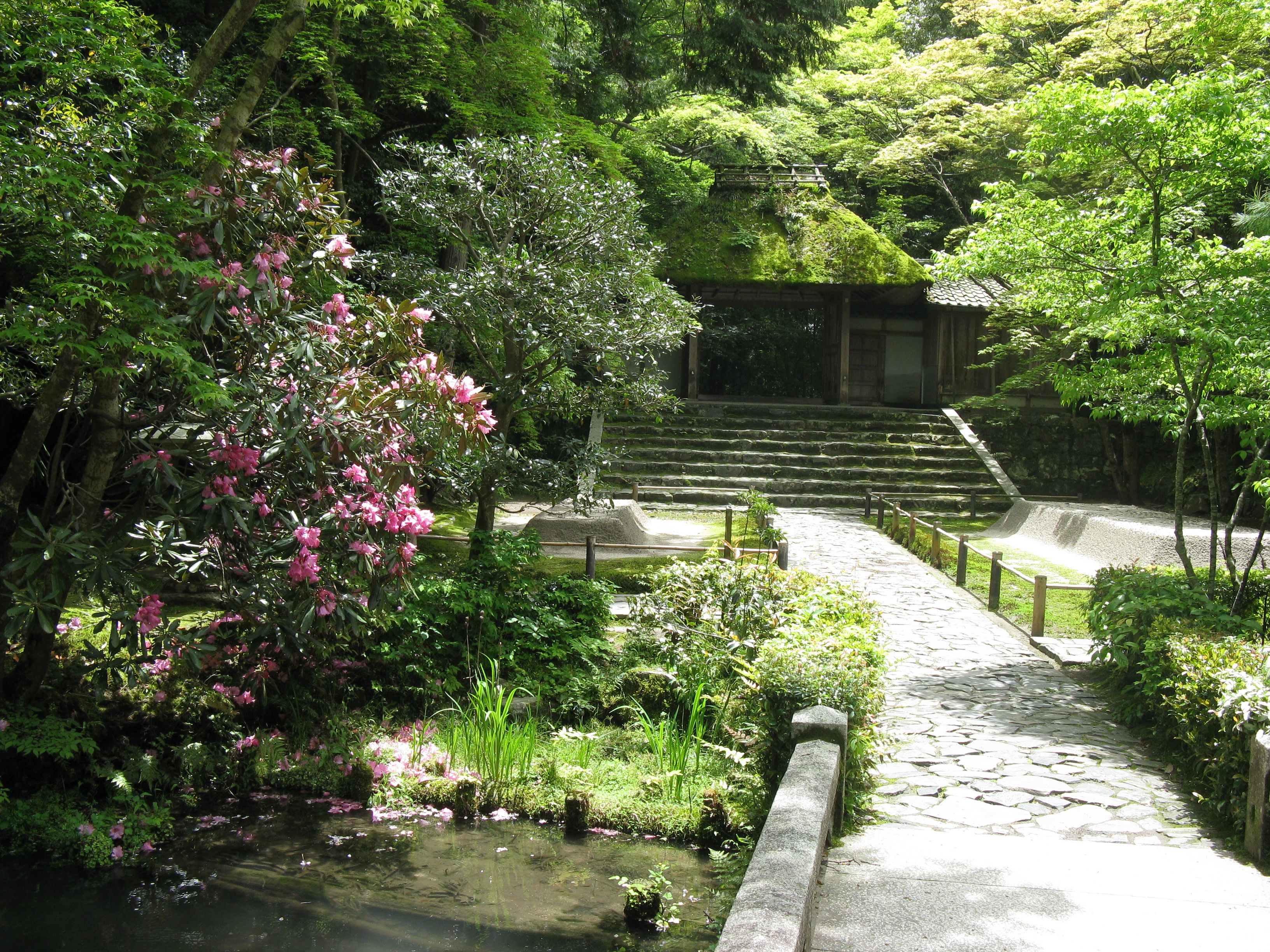
In the grounds of the Honen-In, Kyoto

In the grounds of the Honen-in, Kyoto

The literary connection I want to refer to was not here though, but along the Philosopher’s Walk from which you can detour to visit a number of other temples. One of these is Honen-in and I was rather thrilled to discover that Junichiro Tanizaki is buried in the grounds here. We visited the cemetery but of course couldn’t read the tombstones. However, I rather liked knowing he was there, since this sort of literature-spotting is not such an easy thing to do in Japan (though I’m sure I could do more if I put my mind to it!). I read Tanizaki’s The Makioka sisters about 20 years ago, and found it a real eye-opener. It introduced me to a more multi-cultural Japan than I was aware of, while also conveying the challenges of maintaining traditions in a changing world. Max of Pechorin’s Journal recently wrote a post on a book by Tanizaki on reconciling tradition and modernisation in Japan. Do read his post – and the following discussion.

A little more Japlish

And just for fun, I’ll conclude with one bit of Japlish. It comes from some instructions for hotel guests:

Washing machine: 300 yen
Desiccator: 30 yen for 10 minutes.

I decided not to find out how long it would take to desiccate our clothes, and so left the washing for another day and hotel. Funnily enough, the “desiccator” itself was well labelled by the manufacturer as “dryer”. Clearly though the translator chose a dictionary over the object itself … and I’m rather glad s/he did.

On the literary (and linguistic) road in Japan: 1, Central Honshu

Given this is primarily a litblog, I like my travel posts to have some literary or, at least, linguistic interest. And so in this first post about our current trip to Japan, literary and linguistic observations and thoughts will be my focus.

Linguistic challenges

Japanese language has a pitch-accent system which can provide particular challenges for English-speaking foreigners who try to use some Japanese words when communicating. For example:

  • Kaki: Oyster or Persimmon, depending on, to me, a very slight difference in intonation
  • Sake: Salmon or, well, Sake, with the same proviso as above
  • Hana: Flower, Nose or a Girl’s name with, I think, no variation in pronunciation. So, when you see a shop, as we did the other day, called Hana No Hana (‘no’ denoting ‘possession’), you wonder whether it means ‘Hana’s Flower’ or’ Hana’s Nose’ or ‘Flower’s Nose’ or, Flower’s Flower’, or … well, you can see where I’m going can’t you? You can have fun playing word games with Japanese people.

Japlish

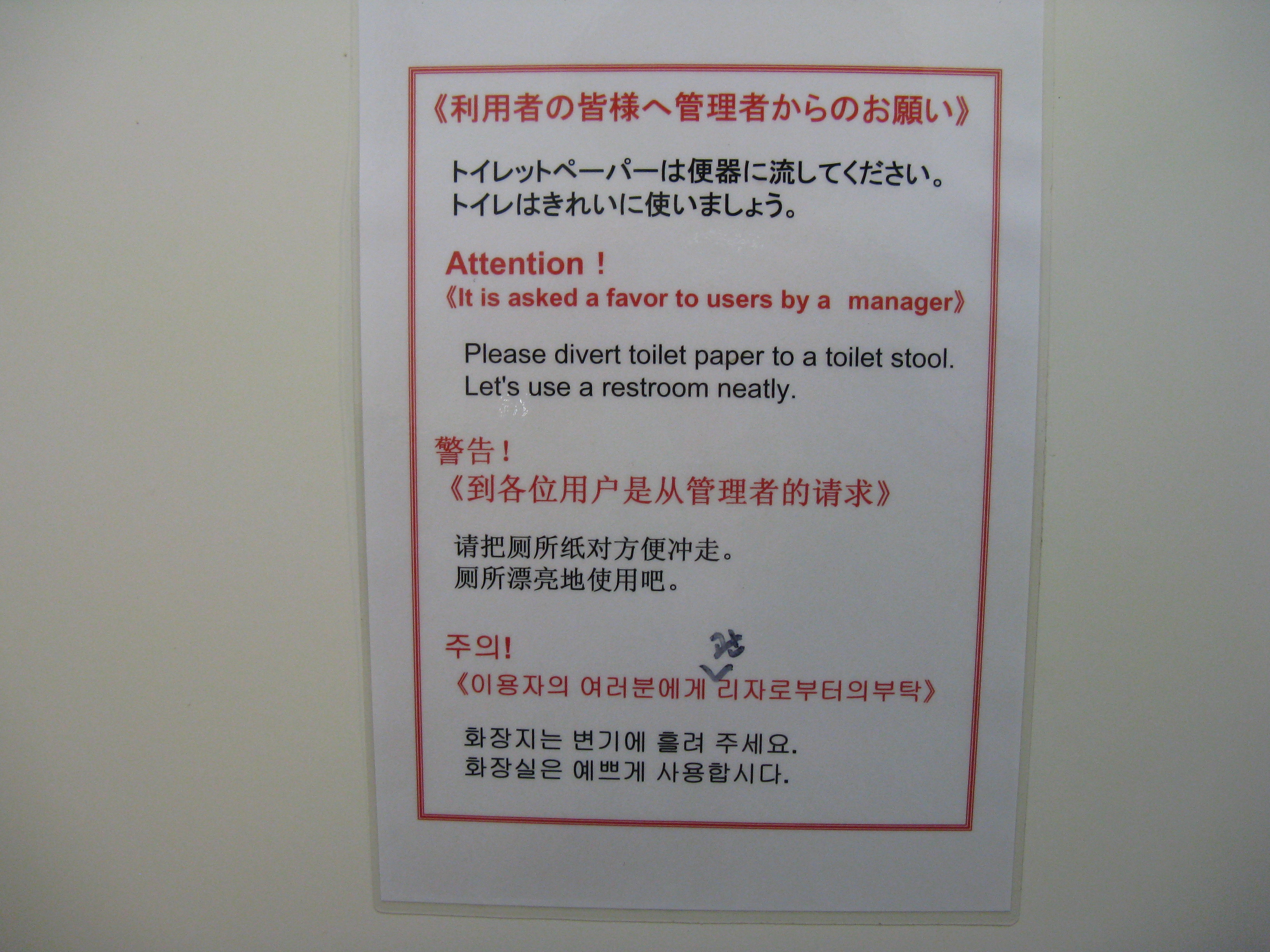
Sign in toilet, Japan

Sign in toilet, Japan

English-speaking foreigners, as you probably know, love to “catch” Japanese out in their English usage … and so for fun I’ll share just a couple that we’ve come across to date with you. But, please note that these are shared in a sense of fun not ridicule. After all, most Japanese know more English than I do Japanese, and at least they try.

  • On a special English menu in an izakaya that I shall leave unidentified to protect the innocent:

It is necessary to enjoy oneself over meal after it acknowledges though it is thought that the mistake of the word is somewhat found in the menu.

  • Inside a toilet door. For some reason, hotels and tourist venues often feel the need to tell you what to do with your used toilet paper. This one is particularly (unconsciously, we presume) entertaining:

Attention!
(It is asked a favour to users by a manager)
Please divert toilet paper to a toilet stool. Let’s use a restroom neatly.

Literature

I like to read Japanese writers, and have reviewed a couple on this blog to date, but here I’ll share something different.

A little haiku written by the poet Koyabashi Issa (1763-1827), one of Japan’s four haiku masters. It was inspired by a frog mating battle at Gansho-in Temple in the lovely little town of Obuse, and was written to encourage his sickly son. (Unfortunately, his son died a month later. In fact, Issa was pre-deceased by all his children and his wife).

Yase-gaeru,
Makeru na! Issa,
Kore ni ari.

It roughly translates to:

Skinny Frog,
Don’t give up! Issa
Is here.

English traveller-explorer Isabella Lucy Bird‘s* letters, titled Unbeaten tracks in Japan, published in 1880 about her trip to Japan. I downloaded an eBook version and have been dipping into it during our trip. In Letter XVIII she talks about her travels in the alpine region of Central/Western Honshu through which we travelled a day or so ago. Here is an excerpt:

It is an enchanting region of beauty, industry, and comfort, mountain girdled, and watered by the bright Matsuka. Everywhere there are prosperous and beautiful farming villages, with large houses with carved beams and ponderous tiled roofs, each standing in its own grounds, buried among persimmons [kaki, remember!] and pomegranates, with flower-gardens under trellised vines, and privacy secured by high, closely-clipped screens of pomegranate and cryptomeria.

She then names a number of villages, including the gorgeous Takayama which we have now visited on two occasions. She describes the farms as “exquisitely trim and neat”, and nothing has changed today.

I was also struck by a comment on food from the same letter. When she asked her hosts whether they drank milk from their cow, she learnt that they didn’t, that they thought it was “most disgusting” the way foreigners put into their tea something “with such a strong smell and taste”. Tea is of course a significant part of Japanese culture, but from a country which eats the oddest things to our western minds – salmon nose anyone? – this did make me laugh. Each to her own, as they say!

And here ends, my first little travel piece. More to come (probably).

*In the interests of full disclosure, I must add that according to Wikipedia, her first adventure was to Australia but she apparently didn’t like it.

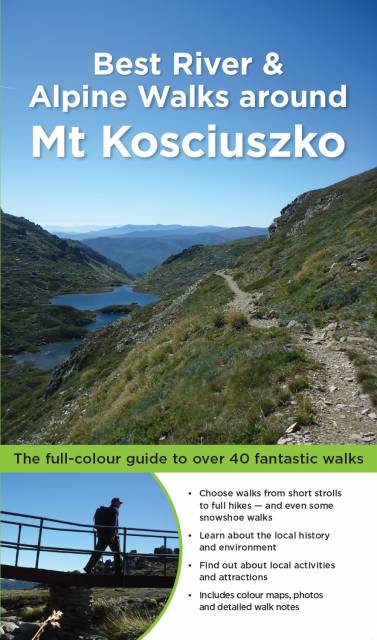
Matt McClelland, Best river and alpine walks around Mt Kosciuszko

Best river and alpine walks around Mt Kosciuszko book cover

Book cover (Courtesy: Matt McClelland, Wildwalks)

For many years now, Mr Gums and I have been going to Thredbo in Kosciuszko National Park for a few days in early January. In other words, instead of heading east to the coast, like many of our city’s residents, we head south to the mountains for a bit of R&R involving bushwalking, dining and reading. Over the years I have picked up various guides to help us – field guides to flora and fauna, general activity guides, and so on. But, until recently, I had not found a good comprehensive book on walks in the Park.

This has not totally deterred us. The Park brochures and the various guides I did find provided us with enough information for us to find and undertake walks. However, I’ve always wanted more and, when I was preparing for last year’s trip, I discovered – via Google – a wonderful website called Wildwalks. They had information on some of our favourite walks, but by no means all. However, I was in luck. Late in 2010, as well us updating and expanding their Southern Kosciuszko walks on their website, they published a book, Best river and alpine walks around Mt Kosciuszko, which details over 40 walks in the very area we like to walk, and so, of course, we bought it.

Along the Rennix Track, Kosciuszko National Park

Mr Gums walking through Derwent Speedwell on the Rennix Trail

The Wildwalks people are a generous bunch though: thorough descriptions, with maps, of each of the walks can be downloaded as pdfs from their website. Of course, unless you travel with a printer*, that means you must decide in advance which walks you plan to do. If you have the book, on the other hand, you can select a walk on a whim – or, on the basis of the weather, on how you feel after the previous day’s walk, on whether you are willing to drive to the starting point (as it is a very large national park), on how much of an appetite you want to work up …

But, enough of that, let’s get to the book. It is nicely produced on quality semi-gloss paper. It includes useful material about the park in general (including weather conditions), and about bushwalking (including safety tips) in particular. It has a map at the front with the walks marked on it, and an excellent table listing the walks so that you can see them all at a glance and check length, difficulty level etc. It has a small but useful index. And it is packed with enticing photographs. The bulk of the book is of course devoted to the walks and is organised (and colour-coded) by region, such as the Alpine Way, Guthega, and so on. There is a section, too, on Snowshoe Walks for those hardy people who go to the mountains in the winter.

For each walk the following information is provided:

  • At a glance inset box providing the Grade (difficulty level); Time; Distance and type of walk (one-way, return, etc); Ascent/descent (in metres); Conditions (amount of shade, water crossings etc); and GPS for beginning and end.
  • Brief description of the walk.
  • Finding the track. In other words, how to find the start!
  • Walk directions. Written directions for the walk, with numbered points which are shown on that walk’s map.
  • Map and relief diagram, on both of which are marked the numbers from the Walk directions.
  • Other information as appropriate, such as, for some walks, variations that can be taken.

Last week, we did four of the walks in the book – three we’d done before and one we hadn’t. We found the guide easy to understand and accurate – right down to timing and assessment of “grade”. We particularly valued the climb information provided – both textually and pictorially – for the ascents and descents involved in each walk. We did find the odd discrepancy – mostly a marker mentioned in the guide that we didn’t see on the ground. Perhaps we missed them or, more likely, they have disappeared (faded, fallen over, whatever!). We also noticed that the pdf descriptions of the walks provided a little more detail – such as distance/time information for each point on a walk – and a contour style map rather than the more schematic one in the book. This difference in maps is due, I presume, to space and page size factors – and is not a critical issue: the walks in general are easy to follow and, anyhow, you can print out the pdf in advance (at no charge) if you wish.

A good quality spiral binding, with an inbuilt book/page marker, would probably make the guide more user-friendly when you are on a walk, but spiral bindings (even good ones) are not as sturdy so the glue (perfect) binding style is probably best.

Overall then, a big thumbs up. This is a well-thought out guide prepared by people who clearly know bushwalking and what bushwalkers (particularly casual, recreational ones like us) want (and need). My sense is that the people at Wildwalks are doing this more for the love than the money – and for that I wave my hiking stick at them. If you walk – or plan to walk – in Australia (specifically, at present, in NSW and the ACT), check them out because they currently have over 900 walks documented on their site.

Matt McClelland and the Wildwalks team
Best river and alpine walks about Mt Kosciuszko
Warriewood: Woodslane Press, 2010
250pp.
ISBN: 9781921606045

* or have downloaded them onto some smartphone device in advance (as you can’t rely on reception once you are out on a walk).

Monday musings on Australian literature: Mountain murmurings

Mountain? Because this week’s Monday musings was inspired by my recent sojourn in the mountains. Murmurings? Because it will be more pictorial than textual. And what does all this to have with Australian literature? Two things, primarily:

  • My definition of “Australian literature” for this blog series is a broad one – it is intended to not only be about Australian literature but also about the things that our literature draws on, such as culture and landscape. This post is about a very specific part of Australian landscape.
  • In my last post, on Barbara Hanrahan, I referred to her looking in vain for “the sunburned land” she learned was her home. My aim in this post is to support her, to show that in fact much* of Australia, albeit a dry continent, is not sunburned.

Here’s a little context. The second – and most well-known – verse of Dorothea McKellar‘s famous (in Australia) poem “My country” starts with “I love a sunburnt country“. This is the image which Hanrahan rails against in her novel, and it is probably still the prevailing image Australians have (or like to have) of our country. And yet, there are other images – real ones as you’ll see in this post, and poetic ones, like the following:

By channels of coolness the echoes are calling,
And down the dim gorges I hear the creek falling
(The opening lines of  “Bell-birds”, by Henry Kendall)

There are, in other words, many ways of seeing Australia: not all of them are “sunburnt”, and neither are they all romantic or nostalgic, but those are not for today’s just-back-from-holiday mood.

So, to cut to the chase, here is a small selection of images from the Snowy Mountains (in Kosciuszko National Park). Enjoy, because next week we’ll be back to more serious stuff!

Through the stringy barks and saplings, on the rough and broken ground,
Down the hillside at a racing pace he went
(From “The man from Snowy River“, by Banjo Paterson)

Snowy Mountains, near Thredbo
In the Snowy Mountains, taken from the Thredbo riverside walk
Near the top of Dead Horse Gap walk, on the Main Range

It's mid-summer, but not so sunburnt here

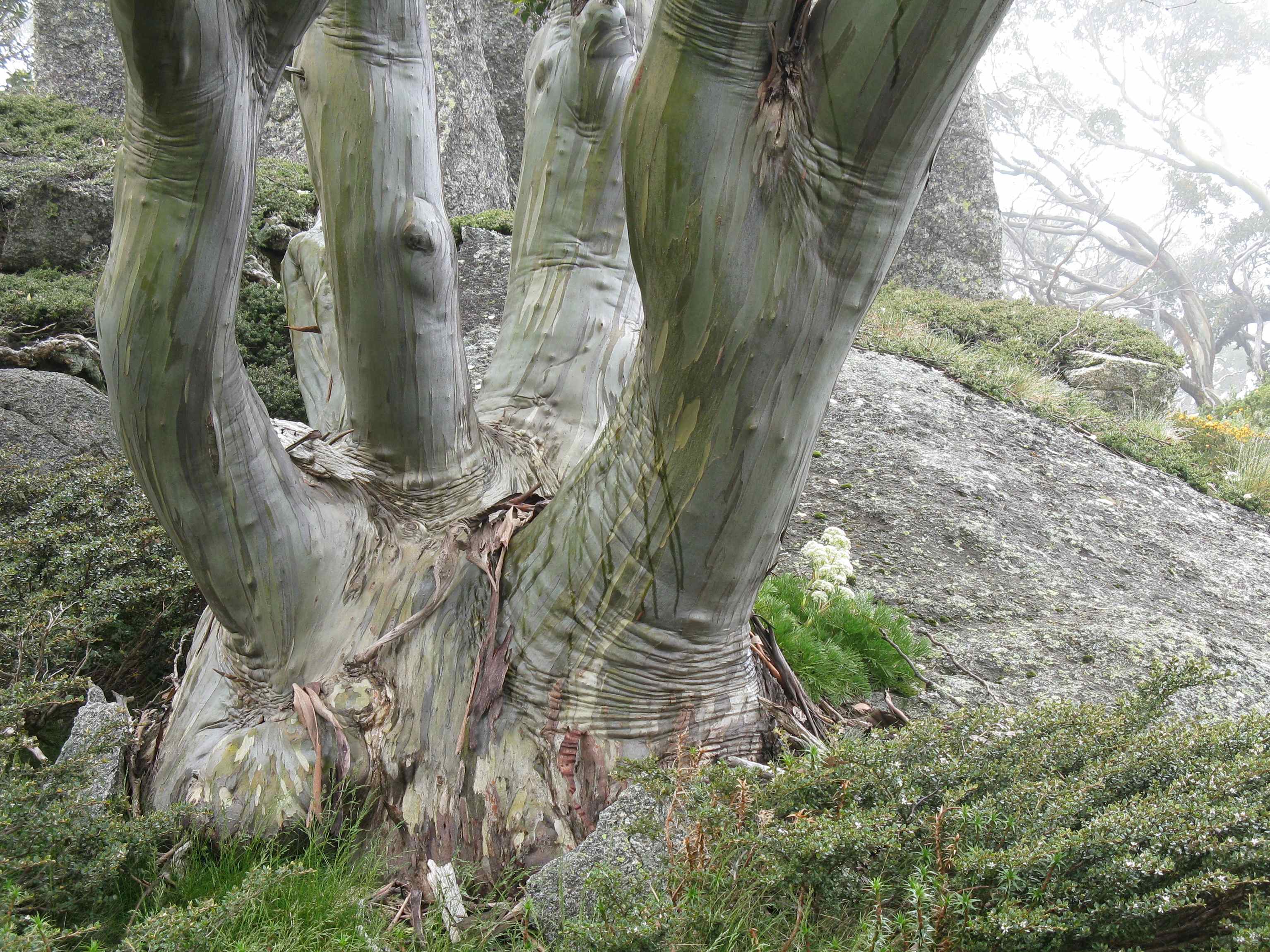
Eucalyptus Stellulata or Black Sallee

Weird but wonderful, a gum just at the tree-line

Snow Daisy close-up

Snow Daisy and friends

Gunn's Willow-herb

Gunn's Willow-herb may not be on the tip of every Australian writer's tongue but how pretty it is

Short-beaked echidna

You never know who you might meet on a bushwalk - such as a Short-beaked echidna nosing around for food

And finally, one bit of Australiana that all Aussies know: (Eastern grey) kangaroos, in the bush.

* Defined as the parts of Australia where the majority live. Much of the Australian continent is indeed pretty sunburnt!

Literary encounters, Australian style

I’ve been remiss. I could have solved some of your Christmas shopping challenges by telling you about two books which would be perfect gifts for readers: Shane Maloney and Chris Grosz’s Australian encounters, and Susannah Fullerton’s Brief encounters. Both have “encounters” in the title, but they use the word in slightly different ways, as you’ll see when you read on …

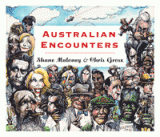
Australian encounters book cover

Book cover (Image: Courtesy Black Inc)

Maloney and Grosz’s book is the more light-hearted of the two, and just right for the Christmas season. Every encounter involves at least one Australian, but not all are literary. Some are a little tongue-in-cheek and a couple, even, are not between people. Take for example, Esperance and Skylab. (Australians will know what this is about!). Each encounter is given a page, with text by Australian novelist Shane Maloney, and a cartoon illustration by book illustrator Chris Grosz. I’ll choose just three* to share with you:

  • Australian novelist George Johnston and Canadian singer-songwriter Leonard Cohen (1960). Cohen (25 at the time) met Johnston (48) and his writer wife, Charmian Clift, in Greece. Johnston and Clift let Cohen stay in their spare room. Cohen says “They drank more than other people, they wrote more … they helped a great deal. They were an inspiration”.
  • Banjo Paterson and Rudyard Kipling (both of whom have been featured in this blog) (1900).  Paterson (36) sat next to Kipling at a dinner in South Africa, where Paterson was visiting to report on the Boer War. They apparently discussed politics and war, and must have hit it off because they met up again a year later in Kipling’s home in Sussex.
  • Robyn Davidson and Bruce Chatwin (1980). This was an organised encounter, and occurred in London. Chatwin had heard of Davidson (30) and her camel journey across the Australian desert. You can imagine what these two remote-area travel writers talked about, can’t you? Nomads was one topic, but politics was not. Chatwin apparently found politics boring and preferred to talk about (and mimic) people. Despite this, Davidson gave him contacts in Alice Springs which he would later use for his Australian travel book, Songlines.

This is an entertaining book, great for dipping into and discovering fun facts. I would have loved it if sources were provided for the information in the encounter descriptions, but this is not that kind of book. And, knowing now that these encounters took place, I can always research them myself.

Susannah Fullerton’s book, albeit called Brief encounters, is a longer tome and describes visits to Australia by 11 literati between 1836 and 1939. The book has an index and an extensive bibliography, satisfying my historian-self. The first visitor she covers is Charles Darwin, and the last HG Wells. In between are writers such as DH Lawrence (who wrote and set his novel Kangaroo only a couple of hours from where I live), Joseph Conrad, Agatha Christie (the only woman), Mark Twain and yes, even Rudyard Kipling.

Given Kipling appears in both books, I’ll use him as an example. Fullerton describes how Kipling came to visit Australia. It had its roots, she says, in an unhappy childhood and a consequent difficulty in forming relationships with women. He set off from England in 1891:

The ostensible reason he gave for the trip was that he was going to visit Robert Louis Stevenson in Samoa. What he desperately needed was to “get clean away and re-sort myself”.

His first experience of Australia was Tasmania – but only briefly – before he landed in Melbourne on 12 November. On 13 November, The Age newspaper reported him as saying:

This country is American, but remember it is secondhand American, there is an American tone on top of things, but it is not real. Dare say, bye and bye, you will get a tone of your own.

I find this quite fascinating because right now many of us feel there is an “American tone” to things in Australia, whereas back in the early to mid twentieth century the tone was distinctly British. Anyhow, Kipling said quite a bit in this early interview, both complimentary and not. His comments apparently “ruffled feathers” and he worked to smooth them over during the rest of his stay. While in Australia, he also briefly visited Sydney and Adelaide.

Now, here’s the interesting bit that ties us back to Maloney and Grosz’s book. He left Australia, Fullerton writes, rather “unenthusiastic about Australians” but this changed eight years later when he went to South Africa for the Boer War. There he met Australian troops and felt he had discovered “a new nation – Australia”. He is quoted as saying that he had never come across a “cleaner, simpler, saner, more adequate gang of men” and saw Australia as forging its own identity. Oh dear – why it is through war that our identity seems to be formed (at least in the eyes of others)?

Fullerton not only uses memoir, biographies and newspaper reports to track Kipling’s relationship with Australia, but she also quotes from his poetry and stories. One of the most significant of these is the ode he was asked to – and did – write for the Melbourne Shrine of Remembrance. The last verse includes the lines:

Then they returned to their desired land,
The kindly cities and plains where they were bred…

Clearly his view of Australia had softened. Fullerton concludes her Kipling chapter with:

Kipling spent only two weeks in Australia and saw very little of the country in that time. The visit may or may not have achieved his purpose of “re-sorting” himself. But it did leave a rich legacy – an ode, the beautiful poem “Lichtenberg” and a delightful explanation of how Australia’s most memorable animal, the kangaroo, came to look the way it does.

Fullerton’s book is well worth reading if you are interested in the authors she covers and/or in Australia as a literary destination! Lisa at ANZLitLovers agrees.

Shane Maloney and Chris Grosz
Australian encounters
Collingwood: Black Inc, 2010
111pp.
ISBN: 9781863955058
(Review copy supplied by Black Inc)

Susannah Fullerton
Brief Encounters: Literary Travellers in Australia 1836-1939
Sydney: Picador, 2009
396pp.
ISBN: 9781405039505
(Personal copy, signed by the author)

* I have left out the juicy bits – you’ll have to read the book yourself if you want to know those!

Monday musings on Australian literature: The Victorian Literary Map

This week’s Monday Musings will be a brief one, partly because my time is tight (I really must finish Parrot and Olivier in America by tomorrow) and partly because I’m primarily going to post a link to a map: the online interactive Victorian Literary Map.

As you might have guessed from my various Literary Road postings, I am rather partial to maps, particularly when they are combined with a subject of interest to me. Consequently, I was rather thrilled when I came across the Victorian Literary Map. It is a project of the State Library of Victoria, and was part of the Library’s Independent Type: Books and Writing in Victoria exhibition which celebrated Melbourne’s establishment as a UNESCO city of literature. It has Flash (with a clickable map) and Text (with a clickable alphabetical listing of towns) versions. The introduction to the text version says, simply:

Victoria is a state of rich and diverse literary culture.
View the places where some of our greatest writing was created or set, and learn about our writers and their origins.

Clicking on a place (in the map or index) can retrieve:

  • the name/s of writer/s associated with the place. Click on an author and the little pop-up “card” contains an image of the writer, a brief biography, a list of references and, where they exist, related links to another writer in the map
  • work/s set in or about the place. Click on the work and the little pop-up comprises an excerpt from the work
  • events or other literary activities associated with the place, such as Clunes Booktown

The map seems a little limited though, because the text version introduction also contains the following:

NOTE: Only towns and places that have literary records will show in the index.

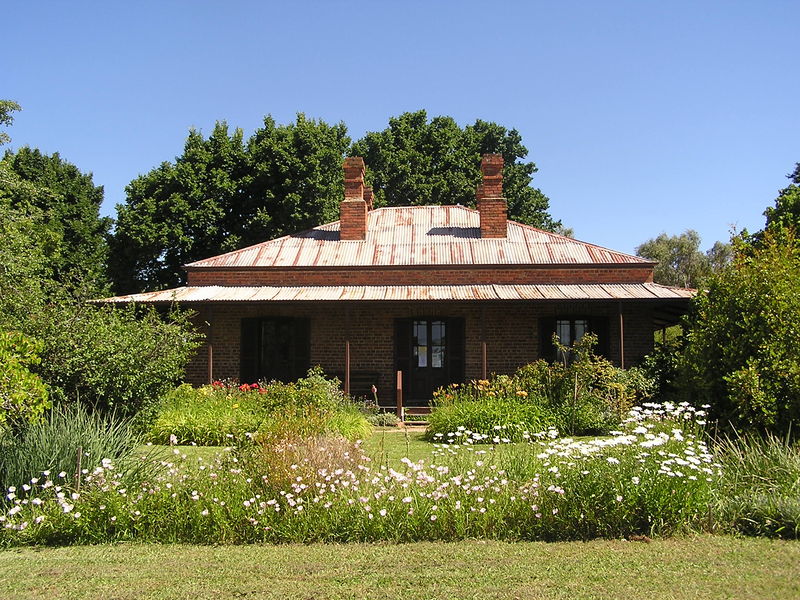
Lake View House, Chiltern
Lake View House, Chiltern (Courtesy Golden Wattle, via Wikipedia, using CC-BY-SA 2.5)

This must be why Chiltern does not appear in the map, because it certainly has literary associations. The Australian author Henry Handel Richardson lived in Lake View House for a short time, and set the early years of what is probably her most famous novel (trilogy), The fortunes of Richard Mahoney, in the town. It’s a pretty little town well worth visiting, and so it’s a shame it doesn’t appear on the map.

Anyhow, click on the map and have a look around. It’s a nice idea, though it could do with updating, in a technological sense (such as implementing some Web 2.o functionality), and expansion, in terms of content (as Victoria’s literary heritage is clearly richer than the map shows).

Oh, and I’d love to know if there are other web-based initiatives designed to help we literary travellers.

To tour or not to tour: the art of being a tourist

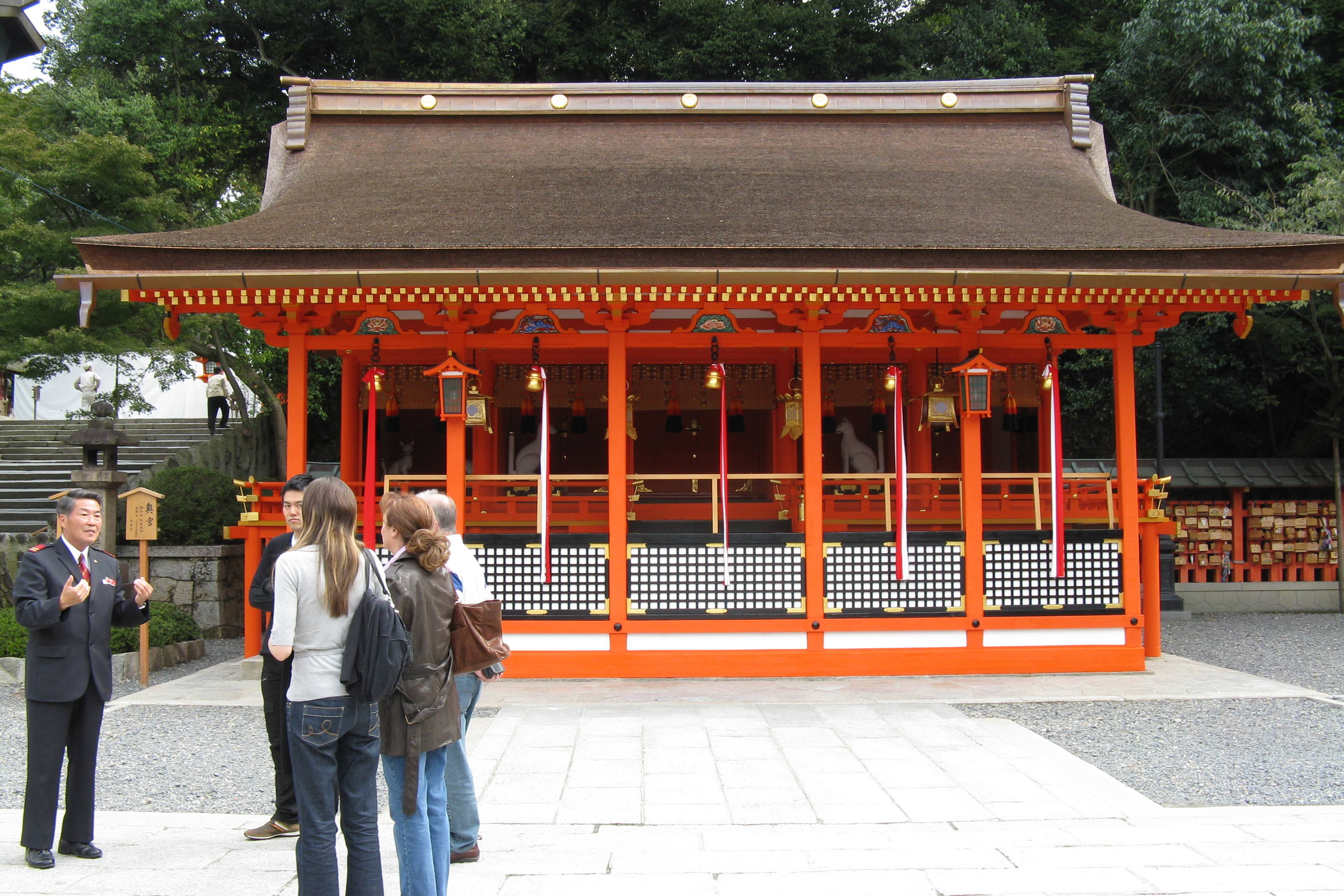
Tour guide in Japan, Fushimi Inari Taisha, Kyoto

Tour guide we saw at Fushimi Inari Taisha, Kyoto

As readers here know, Mr Gums and I have just returned from a week in Hong Kong. I did say that my Macau post would be the post to represent that trip – after all, this is primarily a book blog – but have decided that one more won’t push the friendship too much. My subject? The taking of tours.

Now, Mr Gums and I do not take a lot of tours. We generally like to do things on our own, at our own pace, but for some inexplicable-to-me-now reason, we decided to do it differently for our trip to Hong Kong. And so we booked ourselves into 3 tours during our 7 days: Day tour to Lantau Island, half day tour to the New Territories, and a long day tour to Macau.

These tours were all run by the same company, but we had different tour guides for each, different being the operative word:

  • Tour guide 1, Kim, was an extrovert. She was vivacious but rather loud with a somewhat raspy penetrating voice, and I think most of our “co-tourers” found her a bit exhausting.
  • Tour guide 2, Shirley, was quieter and more serious, but had a funny little speech mannerism involving her saying something like “shm” at the end of most sentences or long phrases. An artefact of speaking in a second language, perhaps? Or, maybe a Chinese version of “um” or “er”?
  • Tour guide 3, Cisco (though Patrice was his real name according to his name badge), was the salesman type, style-wise and in actuality, as he had a range of, there’s no other word for it, rather tacky souvenirs to sell. He tended to talk about himself in the third person, as in “Now, Cisco is not one of those guides who …”.

None of this is meant to be particularly critical. They were all very good at their jobs: they knew their stuff, imparted it well, were personable and made sure we saw all we needed to in the time frame given. But this last bit is part of the problem: the time-frame given. We felt rushed through pretty well every sight we saw. Even where we were given time to wander at will, it was such a short time that our very wandering was rushing. So, we have developed some pros and cons about going on tours, and I thought I’d share them with you.

The pros:

  • It’s convenient: You don’t have to worry about transport, tickets, lining up etc. You just follow like sheep and all will be revealed in due course.
  • It’s sociable: You get to meet other “tourers”, who will always include congenial spirits that you can enjoy passing the time with.
  • It’s informative: You learn a lot that you would probably have to work a lot harder to discover on your own, from, say, the average annual wage in Hong Kong to an insider’s understanding of Chinese Buddhism.

The cons:

  • It’s inflexible: The pace is not your own. You cannot linger at the sight that particularly interests you, and hurry through or omit altogether the ones that don’t.
  • It’s bland: You tend to eat at more generic places, of food modified to suit a general tourist palate. Boring…
  • It’s generic: You are given the info that the guide thinks is of interest, in the style (humorous, serious, too long, too brief, and so on) of the particular tour guide … of course, this doesn’t apply so much to special interest tours, but that’s not what I’m talking about here.
  • It’s disorienting: Unless you bring your own map with you, you tend to have no idea where you are in relation to where you’ve been and where you are going. You just herd on and off buses (or whatever) and/or  trot behind the guide watching to not lose him/her, rather than taking stock of what’s around you and how you got there.

And so for us, next time, we’ll only do a tour if it’s for something we absolutely would not be able to do otherwise, because, for us, the issue is not fitting in as many sights as possible in the time available, and it’s not eating only to refuel. It’s learning what a place is about. We want to eat what the locals eat, use the transport the locals use, and see what we want to see at the pace we want to see it. We’re with Donald Horne: we want to sight-experience, not simply sight-see.

(Disclaimers:

  • The above does not apply to personal guides, such as friends, friends of friends, and relatives, who provide that personal insight that is so invaluable.
  • Not all tourists want to tour the way we do. Our cons are of course other people’s pros, and vice versa. Vive la différence!
  • There are tours, and there are tours. You have to pick the “type” that suits your needs and purpose.)

Gretchen Shirm, Having cried wolf

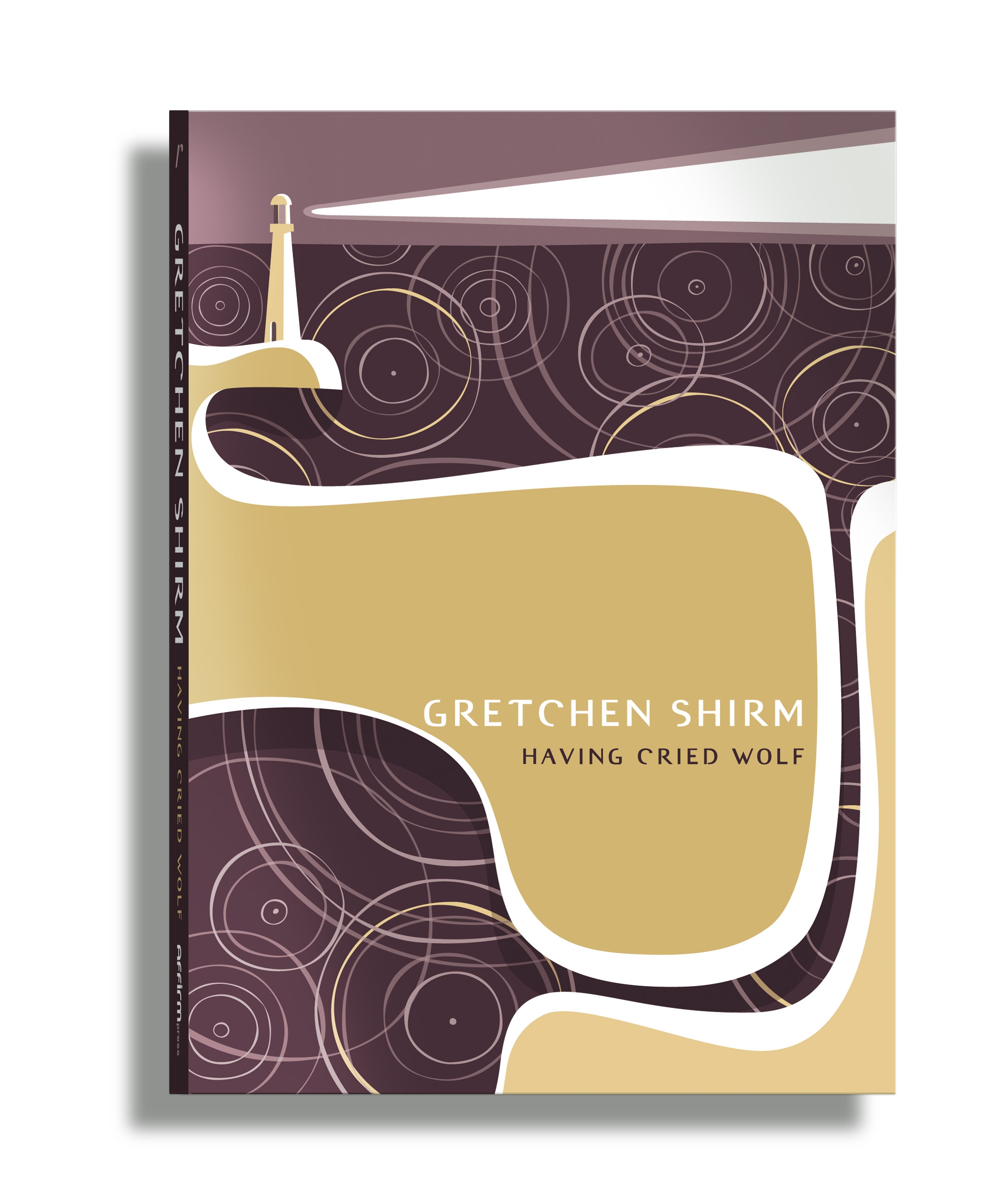
Having cried wolf, book cover

Book cover (Image from Affirm Press)

I have come to the conclusion that short stories are the best holiday reading for me. After a day’s sightseeing followed by reading up on sights for the next day, I usually find I have little time left for my reading. Novels are hard to read under such circumstances, but short stories? Well, they are just the thing. And so, on our recent trip to Hong Kong, I took Gretchen Shirm’s first collection of short stories, Having cried wolf.

Gretchen Shirm is a new Australian writer who was awarded the D.J. O’Hearn Memorial Fellowship for Emergent Writers in 2009. The blurb on the back of the collection likens her to Olga Masters, Helen Garner and Beverley Farmer, and I can see that, but as I was reading the stories I kept thinking of Tim Winton‘s The turning. The obvious reason is because, like The turning, Having cried wolf comprises short stories that are connected by character and place. The fifteen short stories are set in (or deal in some way with) the fictional New South Wales coastal town of Kinsale, and several characters reappear throughout, sometimes in their own stories and sometimes in others. It is rather fun, actually, identifying these and picking up the thread of a story as you progress through the book. Despite this, though, the stories do, I think, also stand well alone.

While Shirm doesn’t focus quite so much as Winton does on the description of place, beyond, that is, conveying the sense of small-town life, her themes are similar: the challenges of small-town living and, particularly, of maintaining meaningful relationships. These themes, however – particularly regarding maintaining relationships – are also those of the aforesaid Masters, Garner and Farmer.

And so to the stories. I must say I enjoyed them – though they are not a particularly cheery bunch. Shirm’s writing is tight and sure, with none of the over-writing often found in first-timers. She writes in first and third person, in female and the occasional male, voices. The characters range from early teens to middle-aged and she captures them all well. Her subject matter includes coming-of-age, marriage and separation, sexuality, suicide and some uncomfortable morality. While many of the stories are interlinked, they are not organised in a totally chronological manner. For example, we learn in the first story, “Breakfast friends”, that Alice is separated from her husband, but in a couple of stories later, “The shallows”, we meet her with the boyfriend who later becomes her husband. This nicely replicates I think the random way we often find out about people in real life.

I’m not going to do a blow-by-blow discussion of the stories but just mention a couple to exemplify some features of her writing. “Small indulgences” for example is a first person story by a rather down-trodden wife. It perfectly encapsulates a woman who has almost, but not quite (as she refuses to colour her hair), subsumed herself to her husband’s needs – and it ends on a delicious if rather sad ironic note. Several of the stories end effectively on metaphors that are subtle but gorgeously appropriate. “Duplicity”, which is about the son of the woman in “Small indulgences”, ends with “There were still no lights on in the house, but by then Daniel was used to the darkness”. And “Breakfast friends” ends with:

The cicada shell is empty now, but inside it was once soft, malleable and not yet formed.

The meaning of that is clear when we read it, but gains added poignancy as we learn more about its characters in later stories. There are many other lovely expressions throughout the stories, such as

… she wants to pour the memory into a mould and leave it there to set.

Why can’t I think like that!

Shirm uses foreshadowing in many of the stories to convey suspense and move the plot along, but she’s not heavy-handed about it. It does mean though that the stories are similar in tone. In other words, this is not a collection of great tonal range but I don’t think that matters, because there’s enough variety and interest elsewhere. There are however a few grammatical oddities that jarred. In a first person voice they can I suppose be forgiven, but there were a couple in third person stories that did bother me. “Peter’s friends swum in the pool” just isn’t right. Is it okay if the voice is third person subjective and that’s how the character might speak? I’m not sure. I’m being pedantic though because overall this is fine confident writing with lovely insights into human behaviour. It does not read like a first collection – and I hope we see more of Gretchen Shirm.

Gretchen Shirm
Having cried wolf
(Series: Long Story Shorts, 4)
Mulgrave: Affirm Press, 2010
ISBN: 9780980637892
221pp.

(Review copy supplied by Affirm Press)