Elizabeth Jolley, Hilda’s wedding (#Review, #1976 Club )

One of Elizabeth Jolley’s biggest fans is Helen Garner, as I have said before. Garner often mentions Jolley, and my current read, the second volume of her diaries, One day I’ll remember this, is no exception. She writes:

Elizabeth Jolley’s new novel, My father’s moon [my review]. She re-uses and reworks images from her earlier work, brings forth experiences that she’s often hinted at but never fully expressed. I can learn from this. I used to think that if I said something once I could never say it again, but in her book I see how rich a simple thing can be when you turn it this way and that and show it again and again in different contexts.

This is not the only reason Garner admires Jolley, but the reasons are not my topic for today! I will add, though, because it is relevant to my topic, that another thing Garner appreciates about Jolley is that both draw closely from their own lives in their writing.

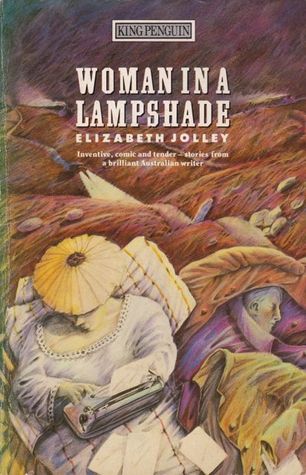
So now, “Hilda’s wedding”, which I read for the 1976 Club, hosted by Kaggsy’s Bookish Ramblings and Stuck in a Book. It’s not the short story I had planned to read, but I couldn’t find that one – also a Jolley – in my collection or online. Fortunately, during my hunting, I found this one from the same year, and it exemplifies the two points I made at the beginning. Firstly, it features a character, Night Sister Bean, who appears in other Jolley works, including the first of hers I read, the short story “Night runner”. And, being a hospital-set story, it draws on (let’s not say “from”) her own experience of nursing.

“Hilda’s wedding” is a rather bizarre or absurd story – which, again, is not a surprise from Jolley. In it, the narrator, who is a relieving night nurse – so somewhat of an outsider – organises an on-the-spot wedding for the very pregnant, apparently unmarried, kitchen maid Hilda. The various roles – husband, celebrant, parents of the bride, pages – are played by night staff including the cook, cleaners and porters. The bride is dressed, with a veil made of surgical gauze and a draw sheet as her train (which contains a hint of the Gothic that we can also find in Jolley’s writing). Immediately after the ceremony, Hilda goes into labor and gives birth in the elevator.

What does it mean? I’m not sure, but this little story about an impromptu wedding sounds like children’s play-acting. It’s a game which uses imagination and creativity, which provides a sense of fun in a grim place, and which brings a little joy to Hilda, whose “melon-coloured face shone with a big smile”. Melons, as you may know, are often associated with pregnancy and fertility. However, injected into the story at various points is the real world, one characterised by rules and impersonality. There’s also the unresolved mystery about Sister Bean and rumours about her negative impact on transfusions/drips. Is she a witch, they wonder?

Sister Bean opens and closes the story, but otherwise appears only occasionally. There are various ways we could read her. One could be people’s need to find a reason or explanation or scapegoat for the bad things that happen in a world where you have little control. In the third last paragraph, our narrator comments on the early morning, and the city waking up:

A thin trickle of tired sad people left the hospital. They were relatives unknown and unthought about. They had spent an anonymous night in various corners of the hospital waiting to be called to a bedside. They were leaving in search of that life in the shabby world which has to go on in spite of the knowledge that someone who had been there for them was not there any more.

It is against this backdrop of sadness that our nurse narrator was there for Hilda. In the next and penultimate paragraph, the narrator is standing outside, taking “deep breaths of this cool air which seemed just now to contain nothing of the weariness and the contamination and the madness of suffering”.

In this story, as is typical of Jolley, there is humour alongside sadness, comedy next to tragedy, unreality bumping up against reality, and, appropriately, no resolution at the end.

In Central mischief – a collection of Jolley articles, talks and essays compiled by her agent Carolyn Lurie – is a talk Jolley gave to graduating nurses in 1987. Before I get to my concluding point from it, I’ll just share something else she says, which is that “for me fiction is not a form of autobiography”. This is an important distinction, which I think Garner would also make. Writers like Jolley and Garner may draw on their own experiences, but what they write is something else altogether.

But now, I want to conclude on this that she tells them:

There is a connection between nursing and writing. Both require a gaze which is searching and undisturbedly compassionate and yet detached.

What a clear-eyed view – and how hard to achieve. What do you think about this?

Challenge logo

Elizabeth Jolley
“Hilda’s wedding” (first pub. 1976, in Looselicks)
in Woman in a lampshade
Ringwood, Vic: Penguin Books, 1983
pp. 139-46
ISBN: 0140084185

Shirley Jackson, The lottery (#Review)

As a lover of short stories, I have wanted to read Shirley Jackson’s “The lottery” for some time. With Kate selecting it as October’s Six Degrees starting work, now seemed the perfect time!

Shirley Jackson (1916-1965) pops up on blogosphere with some consistency, and is clearly well-regarded. Her career spanned two decades and, during that time, as the thorough Wikipedia article says, she wrote six novels, two memoirs, and more than 200 short stories. Her debut novel, The road through the wall, and “The lottery”, were both published in 1948, though she had had short stories published over the preceding decade.

It was “The lottery”, however, which established her reputation – particularly as a master of horror stories. Wikipedia says it resulted in over 300 letters from readers, many “outraged at its conjuring of a dark aspect of human nature”. In the San Francisco Chronicle of July 22, 1948, Jackson responded to persistent queries from her readers about her intentions:

“Explaining just what I had hoped the story to say is very difficult. I suppose I hoped, by setting a particularly brutal ancient rite in the present and in my own village, to shock the story’s readers with a graphic dramatization of the pointless violence and general inhumanity in their own lives.”

Many of you probably know the story, but, just in case, I’m not going to “spoil” it beyond that. I will, however, make a few comments.

I’ll start with Wikipedia’s succinct synopsis: it is about ‘a fictional small town which observes an annual rite known as “the lottery”, in which a member of the community is selected by chance’. It’s a great read, because the build-up is so good and the ending so powerful. If you were not forewarned, you’d have no idea you were reading a “horror” story, because there’s nothing Gothic about the setting, no eeriness, no overt build up of fear even. Instead, there’s the coming together of this village’s 300 people coming for this annual event. It’s summer, “the flowers were blossoming profusely and the grass was richly green”. Idyllic, in other words, or, so we are set up to see it is (or, could be?)

The children are described, then the men and women. It all seems benign, though there are tiny hints of something else, that you may not notice if you’re not expecting it. The emcee of “the lottery” is the ironically named Mr. Summers, who has the “time and energy to devote to civic [my emph] duties”. Many of the names in the story sound normal, but they also carry symbolic weight – Graves, Adams, Delacroix (pointedly, as it turns out, perverted to Dellacroy by the townspeople).

Anyhow, there is a long discussion of the “black box” that is used for the lottery, but, although it is “black”, it sounds quaint and unimportant. No great care is taken of it between lotteries. There’s a bit of camaraderie and joking between the townspeople; there’s confirmation of the formalities; but, slowly tension builds. Mr Summers and the first man to draw from the black box, grin at each other “humorlessly and nervously”. We are now half way through the story, and there’s nervousness among the attendees.

Then, plopped in here, is a little discussion about some villages – because this is not just this village’s tradition – having given up, or talking of giving up, the lottery. However, Old Man Warner (another interesting name), who has been through 77 lotteries, doesn’t approve of change. He sees “nothing but trouble in that”. When you know the end, you wonder what sort of person he is! Certainly not the archetypal dear old man, grandpa to everyone! Meanwhile, anxiety slowly builds, with another townsperson saying to her son, “I wish they’d hurry”.

The “winner”, when identified, doesn’t behave like a winner, which provides another dark hint, but which causes our aforementioned Old Man Warner to pronounce that “people ain’t the way they used to be”.

The final line of the story is shocking, but by then you have worked out what winning means, so it adds an extra layer to the story’s meaning (as you’d expect in a good short story).

You can find in Wikipedia, and elsewhere on the web, all sorts of critical reactions and theories about what it means, but I’d like to return to Jackson’s comment that she intended a “graphic dramatisation of the pointless violence and general inhumanity“. Why do the townspeople accept “the lottery”? What makes some villages give up the ritual and others not? Why do some in this town act with relish and others not? It recalls, for me, Christos Tsiolkas’ The slap. Yes, it’s a novel and a very different story, but I saw it as being fundamentally about the violence that seems to be be lying too near the surface of our so-called civilised society. I’ll leave it at that, but it makes me think, plus ça change.

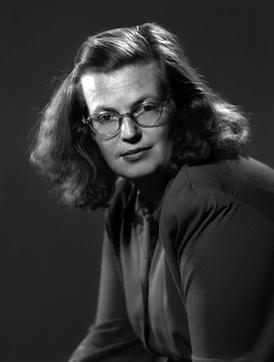
Image credit: Shirley Jackson, New York City. 1940s. Contact: photography@magnumphotos.com. Low resolution version from Wikipedia, used under Fair Use.

Shirley Jackson
“The lottery”
First published in The New Yorker, June 26, 1948

Avalailable online at The New Yorker.

Claudine Jacques, The Blue Cross/La Croix bleue (#Review, #WITmonth)

I haven’t taken part in Women in Translation month (#WITmonth) before but decided to dip my toes in this year with a translated short story. I hoped to find one online and I did, “The Blue Cross” (or, in its original French, “La Croix bleue”) by New Caledonian writer Claudine Jacques. Coincidentally, I found it was translated by Patricia Worth who now, apparently, lives in Canberra. She translated it as part of her Master of Translation Studies. It was published in The AALITRA* Review, with the English presented alongside the French.

I didn’t know Claudine Jacques, but Worth provides some information on her website. Jacques was born in Belfort, France, moving to New Caledonia as a sixteen-year-old with her parents. She’s lived there ever since. She ran a vocational training centre, before establishing a publishing company, but she now, says Worth,”devotes herself almost exclusively to writing”. She and other authors founded the Association des Écrivains de la Nouvelle-Calédonie (New Caledonian Society of Authors) in 1997.

Literary Bureau Trames adds that Jacques lives “in the bush”, and has run the local village library for 20 years. She also runs the Boulouparis comic strip festival, is involved in writing workshops for schoolchildren and in an initiative of the Association Écrire en Océanie (Writing in Oceania) which has identified talent in young Caledonians.

Worth says she finds Jacques’ writing “compelling” and is particularly interested in “the social problems laid out in her stories”. She “was surprised to find numerous similarities between the histories of Australia and New Caledonia”. Her favourite Jacques novel is Cœurs barbelés, which is about the “painful experiences of white Caledonians and the indigenous Kanak people trying to live harmoniously on an island”.

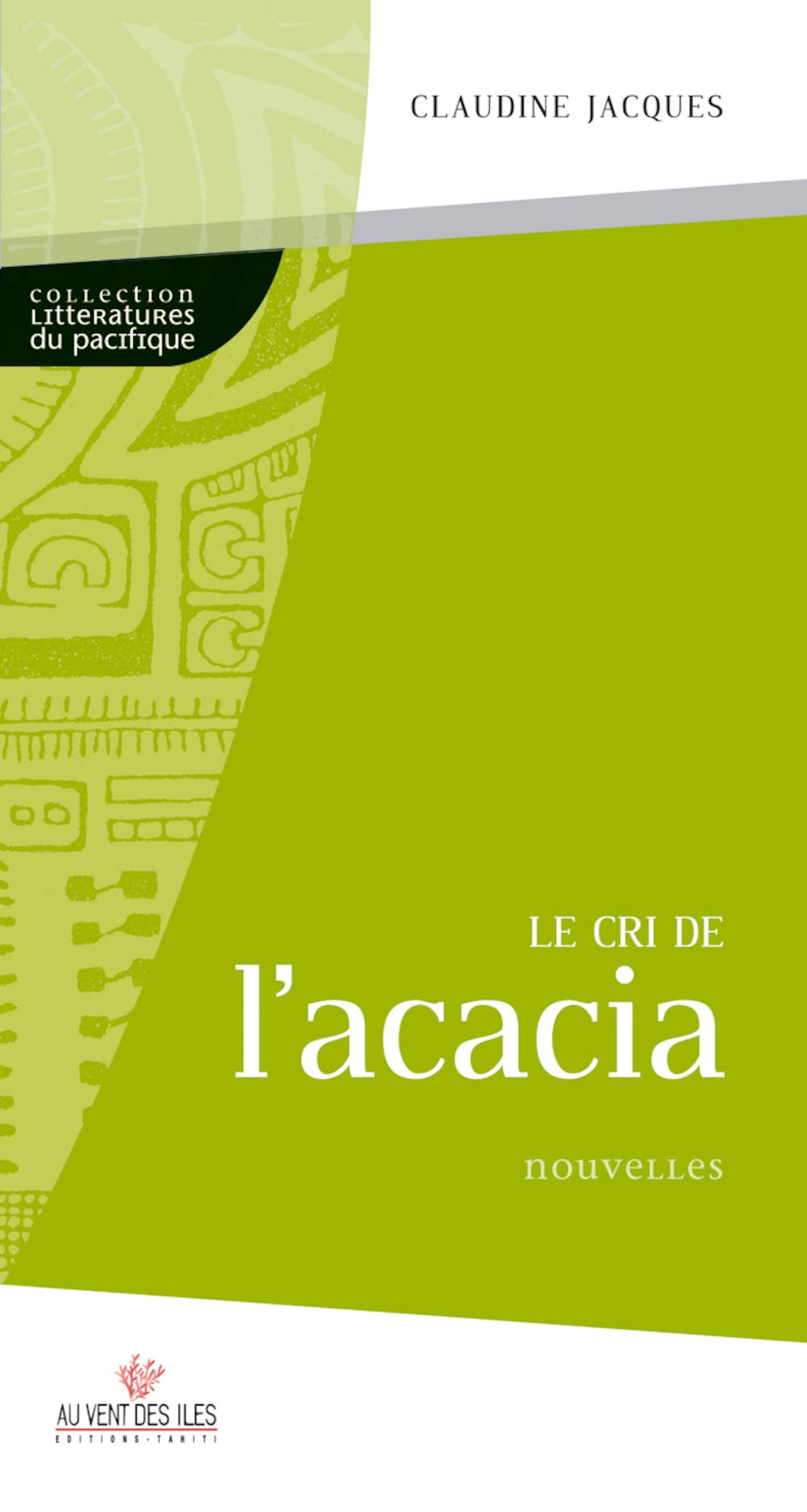
Worth has translated several of Jacques’ short stories, with three available online. “The Blue Cross” is the first I found. It comes from a collection, Le cri de l’acacia. Google translate summarised the description I found: “The cry of the acacia or all those cries that you can’t hear! Because they would be too strong, too present, too throbbing … hear the life that endures in banal tragedies or squeaky comedies, universal deep down in the intimate and the tiny, the grandiose and the derisory. All these crumpled fates are those of everyday heroes” who are the “valiant men and intrepid women with extraordinary courage … in the face of violence, alcohol, pornography and the addiction of their own lives”.

“The Blue Cross”** certainly fits this description. Its story is one of those universal, banal, domestic tragedies, one with alcohol at its centre, and a courageous woman who does the right thing. Jéhovana, the woman and wife at the centre of the story, is married to an alcoholic who is no longer fully employed due to his drinking. She has tried to maintain appearances:

She wasn’t used to making certain judgements and, out of decency, put them off. What would the neighbours and the family say, seeing her speaking and acting for him? Yet at the last family meeting it was to her that they spoke; she had given her opinion while stating plainly that it was for both of them and that she was doing it under her husband’s control, but it seemed to her that no one had been fooled.

She’s behaving as a widow would and wonders if she’d be better off if it were true

freed from all these constraints, this waiting, this shouting, these beatings, this fetid washing stinking of vomit and alcohol, and especially from the shame that she and her children bore! 

For his part, he is conflicted. She is no longer interested in him, “had banished him” from her bed.

Now and then he forced himself on her, he had the right, she was his wife, but he had less and less strength and his desire for her had softened with time. And then he didn’t like to see her sad preoccupied look; she was so happy at the beginning of their marriage but now would often cry. How could he continue to desire a woman who cries?

It all comes to a head at their son’s Communion celebration. She begged him to not drink, but, well, of course he’s an alcoholic and is unable to keep his promise. What happens next is not particularly surprising, but the resolution is, perhaps, though, then again, perhaps not. The story certainly conveys, without telling, the complexity of situations like this – particularly for women.

It’s hard to comment on the writing, given I’m reading a translation, but I enjoyed reading the story. It is told well, giving us just enough information for us to get a sense of the two main protagonists, and just enough description to set the scene for us. The most interesting thing about the choices the author has made is to name the woman, Jéhovana, but not the man. Does this suggest that he stands for all such men, while Jéhovana’s situation and decisions are individual? And Jéhovana’s name? I don’t know it, but it does bring to mind the God, Jehovah. Does this give us a hint regarding her character?

In all, an interesting story. I can see why Worth likes Jacques’ work.

Notes on the translation

Worth prefaces her transaction with some comments. She says that she left in the text “culture-specific expressions – from New Caledonian-French, Wallisian and Polynesian languages – whose meanings were clear, feeling this added “richness to the story in the way Jacques allowed them to enrich her French”. That makes sense. She includes a glossary, as Jacques did. In some cases, however, she expanded where a French expression has a specific cultural meaning in New Caledonia.

I can’t really comment on the quality of the translation, as my French isn’t up to that, but I did notice that Worth changed some of Jacques’ punctuation. For example, there’s one long sentence in French, with just commas separating the different parts, that Worth breaks into two sentences, and uses a semi-colon. It looks sensible to me, but I wonder if it says something about French style versus English style. Does anyone have any ideas on that?

* AALITRA: The Australian Association for Literary Translation.

** The Blue Cross: an international organisation “engaged in the prevention, treatment and after care of problems related to alcohol and other drugs”.

Claudine Jacques
“The Blue Cross” (“La Croix blue”) from Le cri de l’acacia (2007)
(trans. Patricia Worth)
in The AALITRA Review Vol. 0 No. 2 (2010)

Avalailable online at LaTrobe University’s Open Journal Systems site.

Emma Ashmere, Dreams they forgot (#BookReview)

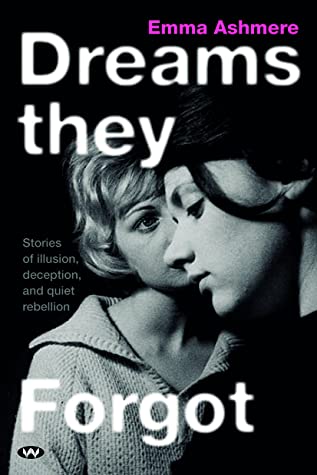
Emma Ashmere’s short story collection, Dreams they forgot, is different again from recent short story collections I’ve read. Certainly very different from the most recent, Adam Thompson’s Born into this (my review). One of the things that makes it different is its breadth in terms of time and place. Thompson’s collection, for example, is mostly contemporary, with occasional forays into the past and a little jump into the future. It is also very definitely centred in Tasmania. Ashmere’s collection on the other hand, while having some grounding in South Australia, has stories set elsewhere in Australia as well as overseas, including London, France, Bali and even Borneo. Furthermore, a significant number of the stories are historical fiction, with some set in colonial Australia, or during the Depression, for example, or post war, or in the 1970s. This is quite unusual in my experience of short story collections.

Unusual I say, but not surprising, because Emma Ashmere’s debut book is an historical fiction novel, The floating garden (my review). It is one of those books that has stuck with me because it tells such a strong story of social injustices that occurred during the building of the Sydney Harbour Bridge.

I could, then, start my discussion with the story in this collection which concerns the Bridge during its construction (“The sketchers”), but instead I’m going to the final story, because it gave me a laugh. This story, “Fallout”, concerns the (not funny) nuclear testing at Maralinga and concludes with the narrator taking her mother to the National Film and Sound Archive (NFSA) in Canberra to show her some relevant treasures. What a great little promo for the importance of collecting institutions like the NFSA. But, that’s not what made me laugh. As some of you know, I spent most of my career at the NFSA, and this is how our narrator introduces it:

I tell her I live with my girlfriend in Canberra and work at the Film and Sound Archive with a bunch of other failed actors, part-time poets and overlooked opera singers.

I wish I could count myself as one of those, but I’m far too prosaic. However, there is probably an element of truth in what she writes. All I can say is that at least the NFSA offers gainful, and valuable, employment! This story, dealing as it does with the “fallout” from nuclear testing – great wordplay here – makes a fitting and strong end to Ashmere’s collection, which deals with all sorts of fallouts in people’s lives.

Take the first story, for example. Titled “The winter months”, it concerns a young woman who, like many young people, is uncertain about what she wants to do with her life, much to her mother’s frustration. She’s in England, and is doing a TEFL course (Teaching English as a Foreign Language) which, she believes, “is going to change everything. It will give me purpose. A goal. A life”. She meets and is attracted to a mysterious and seemingly confident young woman, Aveline, but, unbeknownst to our narrator, Aveline has her own challenges, and suddenly disappears.

“The winter months”, however, is more complex than I’ve described here. It introduces us to several types of characters and relationships which thread through the collection – uncertain young women, lepidopterists (would you believe), mothers-and-daughters, neglected wives, fledgling same-sex attractions, to name a few. The result is that, as the book progresses, some stories start to feel linked, even though in most cases the link isn’t actual. The effect though is to ground the collection because this feeling is supported by recurring concerns.

One of these is Ashmere’s concern for social justice, for overlooked people, for women in particular. “Nightfall” tells the story of a young Irishwoman who arrives in Adelaide during goldfields days:

Most of us here Behind the Wall sailed across the sea with our Billies, Jemmies or Toms. No sooner did they set their boots in the dust, they streaked off like a dog chasing a rabbit across a field, all glint and muscle and hunger and bragging about what they will become. I waited for my Billy to bring back rabbits and gold, but he didn’t come.

And so, girls like her were left behind:

It’s the same in every port for girls like us. You stand with the bones of your back pressed against the wall as sailors rope up their harpoons and aim them at your lower parts, or you go into a tavern for a drink.

She ends up working for an abortionist who is, of course, more concerned about not being caught than her health and safety … This story was shortlisted for the 2019 Commonwealth Writers Prize.

Other stories explore the impact on relationships of PTSD in times when there was no support or recognition (“Warhead” and “Seaworthiness”), and another, as already mentioned, looks at the aftermath of nuclear testing at Maralinga. Many of the more contemporary stories feature children and young adults who find themselves caught in worlds they don’t fully understand or don’t yet know how to handle. “The violin” is a carefully told story about a controlling young man and his bride-to-be.

There is a melancholic or, at least resigned, tone to many of the stories, but most are not completely depressing. While happy endings might be rare, little wins or rebellions or, in some cases, lovely acts of grace lighten the endings. As with most collections, there are stories that didn’t quite work for me, but those that did more than made up for the rest. I particularly loved “Seaworthiness” and “The violin”, but most read well.

This brings me to the title, which is not one of the stories in the collection. What does it mean? It’s certainly true that many of the characters had dreams, and it’s also true that in most cases these dreams do not come to fruition. Did they forget them? Not always, but, for better or worse, other dreams – or, at least events – replace them.

If you’d like a taste of Ashmere’s writing, you can read one of the stories, “Standing up lying down”, online at Overland. I’ll finish with a quote from it:

Apparently she’d heard Laurie’s conference paper on the omissions and silences in Australian history, how particular stories are concreted over, while others are constructed and celebrated in their place.

In Dreams they forgot, Ashmere retrieves some of these concreted over stories – those she feels able to, anyhow – and gives them a darned good airing.

Challenge logo

Emma Ashmere
Dreams they forgot
Mile End: Wakefield Press, 2020
239pp.
ISBN: 9781743057063

(Review copy courtesy Wakefield Press)

Adam Thompson, Born into this (#BookReview)

When my brother gave me Tasmanian author Adam Thompson’s Born into this earlier this year, I told him I’d save it for Lisa’s ILW 2021, which I did – and which means I can now thank him properly for a yet another well-chosen gift, because this is a strong, absorbing and relevant read. If you haven’t heard of Thompson, as I hadn’t, he is, says publisher UQP, “an emerging Aboriginal (pakana) writer from Tasmania”. 

Born into this is a debut collection of sixteen short stories about the state’s Palawa/Pakana people, and based primarily in Launceston and islands in the Bass Straight. It reminds me a little of Melissa Lucashenko’s novel Too much lip (my review) because, like it, these stories are punchy, honest interrogations into the experience of being Indigenous in contemporary Australia. I say contemporary Australia, because most of the stories deal with recognisably First Nations Australia concerns. However, the collection is also particularly Tasmanian – in setting and in dealing with issues and conditions specific to that place.

They may live in two worlds, but they are still mob (“The old tin mine”)

I like to think about the order in which stories in a collection are presented, although I can never be confident of the assumptions I make about the reasoning. How can I, I suppose, as I’m not in the heads of the authors and their editors. The first story here, “The old tin mine”, is an interesting choice: it introduces various issues and ideas which are picked up through the collection and it sets a sort of resigned tone. The issues include the relationship between black and white in Australia, the introduction of city Indigenous kids to country and culture, the clumsy conscientiousness of white people who want to do the right thing, the politics involved, and the world-weariness of older Indigenous people in dealing with all of this. The story is told first person through the eyes of “Uncle Ben”, the Indigenous leader on an “Aboriginal survival camp”. He is tired, and cynical, and not particularly interested in dealing with these

Aboriginal teens. City boys. Three from Launceston, three from Hobart. “Fair split, north and south”, according to the organisation that had won the black money.

But it’s a job, and these jobs are becoming less frequent, so he takes it on.

The second story, “Honey”, is told third person, and concerns the interactions between white man Sharkey, who has a honey business, and his Palawa employee, Nathan. Sharkey is arrogant, condescending and oblivious of how his behaviour might affect Nathan. He asks Nathan for the “Aboriginal word for honey” because he thinks using it to brand his honey would “be a good gimmick for selling honey … ‘specially with the tourists”. Not all stories work out this way, but in this one, Nathan has the last laugh.

“Honey” also introduces another idea that peppers the collection, which is land rights, and non-indigenous Australians’ fear of losing land. The collection, in fact, references many of the issues confronting contemporary Australia’s relationship with its First Nations peoples: land rights; Invasion Day (or “change the date”); dispossession, the loss of Indigenous culture and attempts to reclaim it; social issues like incarceration, alcoholism and suicide among Indigenous people; and the Stolen Generations, to name some of them.

Some stories, however, respond to a particular Tasmanian issue, that regarding the definition of indigenity. As I wrote in my post on Kathy Marks’ Channelling Mannalargenna, Tasmania’s history has resulted in a specific set of circumstances regarding loss of identity, which has caused, and is still causing, complications and conflict over Indigenous identification in the state. One of the stories on this subject is “Descendant” about a bright, politicised but ostracised young schoolgirl who runs her school’s ASPA (Aboriginal Students and Parents) committee. Dorothy is assiduous about who is and is not “P-A-L-A-W-A”, and has family-tree records to prove it. Aboriginality, she says, is about “being”, not “choosing”. The story provides an excellent example of Thompson’s use of imagery to underpin his themes: Dorothy’s prized mug is accidentally broken, and Cooper, the supportive (of course!) librarian, tries to repair it, but

Bold, white cracks now intersected the Aboriginal colours like a tattered spider web.

Thompson’s writing in this collection is accessible but evocative. His dialogue varies appropriately from speaker to speaker, and the imagery, particularly that regarding colour – red, blue and white, representing white Australia, versus the red, black and orange of First Nations Australia’s flag – is pointed but not overdone. Thompson clearly knows his country. His descriptions of the islands, and the plants and birdlife endemic to them, take you there (or, at the very least, teach you about them.)

I would love to write about more of the collection’s stories, but I should leave you some surprises. I will say, though, that Thompson’s wide cast of characters – from young, disaffected palawa to smart activists, from genuine white people, who want to understand, to the smug and/or rich ones (as in the incisive “The black fellas from here“) – ensures that this collection hits home. No reader, really, can hide from the truths here because they touch us all.

White makes you wary (“Aboriginal Alcatraz”)

Born into this, then, is clearly political, but it is not all bleak. Some stories end with a bang or a twist, which skewer their points home, while others are more gentle. The title story, “Born into this“, is one of the more poignant ones. It tells of Kara, who works as a receptionist at an Aboriginal housing co-op. She’s jaded. Her boss is “a tick-a-box Aboriginal” who “could never prove his identity”, and she is tired of the struggle to survive. So, deep in the forest, where she had learnt about country from her uncle, she spends her spare time working away on her own quiet, little subversive project, a project that involves

Natural survivors, like her own family, born into a hostile world and expected to thrive. She took in the surrounding devastation and thought again about her own life.

“Born into this”.

She knows she won’t make a difference, but “fulfilling some cultural obligations in her own small, secret way” keeps her sane.

It would be great to think that books like Born into this could make a difference – and I think they could, if we all not only listened to Indigenous writers like Thompson, but also took on board, really took on board, what they tell us about ourselves.

For more reviews of this novel, please click Lisa’s ILW 2021 link in this post’s opening paragraph.

Adam Thompson
Born into this
St Lucia: UQP, 2021
210pp.
ISBN: 9780702263118

Marian Matta, Life, bound (#BookReview)

In August 2020, small independent publisher MidnightSun sent me two short story collections, Margaret Hickey’s Rural dreams (reviewed last month), and Marian Matta’s Life, bound. I enjoyed Rural dreams, as some of you may remember, for its exploration of rural lives from multiple angles and points of view. Life, bound is a very different collection. It doesn’t have a stated unifying theme but, like many short stories, it is unified by its characters being ordinary people trying to make the best of the life they have been given – or of the life that, sensibly or not, they’ve made for themselves!

The promotion accompanying the book describes it this way:

Free agents or captives of our past?

In Life, Bound, characters find themselves caught in situations not of their own making, or trapped by ingrained habits, walking in grooves carved out by past events. 

What characterises this collection, beyond this, is the varied tone, from the gothic-influenced opening story “The heart of Harvey’s Lane” to the strongly realist closing stories, “He turned up” and “A bench, a bard, a turning tide”. As with many short story collections, you never quite know what you’re going to get when you turn the page to the next story. In “The heart of Harvey’s Lane” a man becomes a famous photographer off the back of a shocking incident, but, after a while, starts to withdraw from the world, into a very strange house. As he scales down his career, he recognises that

The downward turn in my income almost exactly mirrored the upward turn in my satisfaction.

Nonetheless, the ending, when it comes is disconcerting. Covering a few decades, it’s an engrossing story about the way life can go.

Some stories are shocking, such as the second story “Climb”, about a young boy abused by his step-father, while others are cheeky, such as “Lovely apples” about a loving young couple and the suggestive “Drive my car”. In some stories, abused or overlooked characters get their own back. “Roadkill” is particularly cleverly told – with a great opening – and you have to cheer for the much-maligned Emily who’s not as stupid as they all think. But in other stories, things don’t work out, such as the devastating story about blighted hopes, “He turned up”. This title has a powerful double meaning. Titles in short stories are, I think, particularly important, because, given the form’s brevity, every word must count. Matta uses her titles well. Some are purposefully obscure, not giving anything away except perhaps the literal, as in “Climb”; others are more clearly figurative, as in “Desire lines” or “Lovely apples” or “Three-sixty”; while others are superficially descriptive but contain so much more, as in “A bench, a bard, a turning tide”.

Now, though, let’s get back to the characters “caught in situations not of their own making”. They include an abused boy, a transgender person, a woman caught in domestic violence, a homeless woman. These characters can break our hearts, but in Matta’s hands they are the characters who just might come through. I’m not naming the stories, here, because part of Matta’s skill is in slowly revealing the character’s situation, so why should I tell you here straight off?

Other characters are a mixed bunch, some “trapped by ingrained habits”, others just at a certain stage in their lives where an action has, perhaps, unintended reactions. There’s the alcoholic ex-husband who desires reconnection with his family (“Desire lines”), two sea-changers who meet in their new chosen town and become friends (“Claimed by the sea”), two people post-one-night-stand (“Summer of love”). This last one exemplifies how Matta mixes up her structure. Not all stories are simple, linear chronologies. “Summer of love” is linear, but told from the alternating points of view of the woman and the man, a perfect solution for a story about a one-night-stand.

The varied structure is one aspect of this collection that keeps the reader engaged. The above-mentioned variations in tone are another, plus, of course, the characters and stories themselves, but another is the language. Here, for example, is a character deciding that discretion is the better part of valour:

Jimmy decided not to chase that remark down to a point of clarity.

(Waterwise)

Then there are those phrases that make you laugh, such as this on entitled teenage boys being told off by their headmistress:

They shrugged, just sufficiently out of sync to appear like a music video dance troupe.

(Roadkill)

My last example is Rita – her town’s “voice of authority, the historical society’s walking catalogue” – being unusually flummoxed by a question:

A frown settles slowly on Rita’s face; her infallible memory has tripped over a corrupted file.

(Winston Mahaffey’s hat”

The stories are all, fundamentally, about humans – the things that happen to us or the messes we get into, and how, or if, we get out of them. But some of the stories also reference contemporary issues, such as climate change, domestic abuse, and homelessness.

The stories aren’t linked but this does not mean that order is not important. With a collection like this – that is, one dealing with some of life’s toughest challenges – the order in which the stories are presented, and which one is chosen for the end, can be significant. In this collection, Matta has followed the sad, bitter penultimate story with a story about homelessness in which the destitute but proud Merle slowly comes to trust the warm, generous 23-year-old Ethan. Surely this is intended to leave us with a sense that all is not lost, that there is hope if we ignore our differences and focus on our common humanities.

So, another engaging and stimulating collection of stories from Midnight Sun with – is it too shallow to end on this? – another beautiful cover.

Challenge logo

Marian Matta
Life, bound
Adelaide: MidnightSun, 2020
223pp.
ISBN: 9781925227710

(Review copy courtesy MidnightSun)

Arthur Gask, The passion years (#Review, #1936Club)

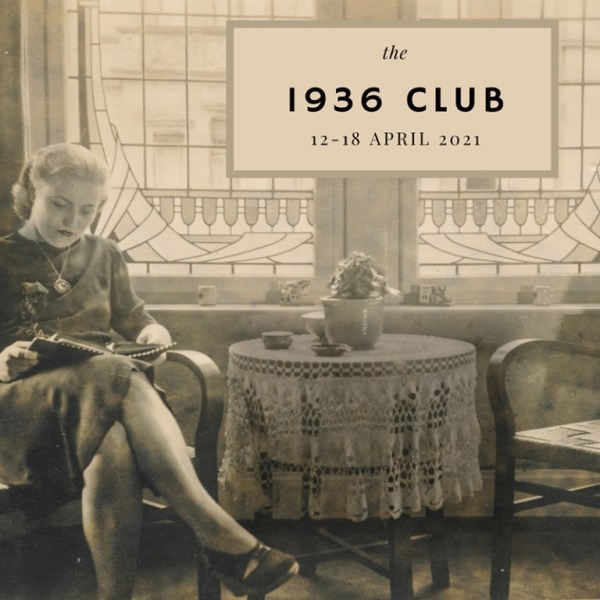
A couple of weeks ago, I posted a Monday Musings in support of Karen (Kaggsy’s Bookish Rambling) and Simon (Stuck in a Book) #1936 Club, which involves participants reading, posting and sharing books from the chosen year.The #1936 Club has been running, 12-18 April, which means it is about to finish.

In my post I listed a number of potential books for me – or others – to read (and noted those from the year that I’ve read in the past.) Unfortunately, I did not find the ones I wanted to read, so I decided to do something different, read a short story! The first short story I considered was Ernest Hemingway’s The snows of Kilimanjaro, which was first published in Esquire in 1936, but, I really wanted to do an Australian story – so, back to the drawing board. And, at Project Gutenberg Australia I found a short story published on Boxing Day (26 December) 1936 in, wait for it, The Australian Women’s Weekly! Nothing ventured, nothing gained I thought so in I dived. It’s called of course, “The passion years”.

Published in a women’s magazine on Boxing Day, it is, as you would guess, a romance. It’s past midnight and two women – “all pink and white in their robes-de-nuit” and looking “pretty enough to eat” – are chatting, one of them telling the other about her brother’s romance:

It seems just like a tale one reads and, of course, it’s a very sentimental one, too. Oh, no dear, you take it from me sentiment is not all sickly, and only those say it is who are getting old and sickly themselves. Sentiment’s the most beautiful thing in all the world, and when you’re first in love, well, the sentiment there is just too holy and too sacred to understand.

As the story goes, her brother had lost all his money in a horse race and at the same time a wealthy young woman falls for him, but, being a proud and responsible man, he withdraws when he realises she is showing interest in him because he doesn’t want to be a fortune hunter. You can guess how it works out, but what adds to the story is the perspective and world view offered by the narrator. Our teller asserts that “a baby’s only what every girl who’s really in love looks forward to”. The story is very much of its time and place, highly gendered, but it is nicely written.

However, of more interest is the writer, Arthur Gask. The Australian dictionary of biography (ADB) describes him as a dentist and novelist. Born in England in 1869, he came to Adelaide, Australia, with his second wife, in 1920. He was particularly a crime writer, and was prolific as Wikipedia and the Project Gutenberg Australia show. His first novel, The secret of the sandhills, was published to immediate success in 1921, partly he believes due to the reviews by S. Talbot Smith. Wikipedia says he wrote it while waiting for his patients!

Gask went on to write over thirty books, as well as countless short stories. He gave up dentistry in 1933, and bought a farming property, which he names Gilrose, after his detective, Gilbert Larose. However, apparently most of his stories were set in England. ADB’s Michael Tolley described his writing as pacy and sometimes titillating, and says that his works were translated into several European languages, were serialised in newspapers, and broadcast on radio.

For interest, I tracked down a local review of his posthumously published novel, Crime upon crime. The review was written by AR McElwain in Adelaide’s The Mail on 4 October 1952. I was interested in his comment on the writing

Prolific Mr. Arthur Gask of Adelaide (SA) has a remarkable facility for blending sordid crime with old world charm So much so that I am usually more fascinated by his prose style than by the actual cases …

He also provides insight into Gask’s detective:

Our old friend, Gilbert Larose introduces some unorthodox sleuthing. But there’s a Gaskian explanation for it all, never fear. Larose is simply “acting up to his reputation as a man who always places justice above law.”

McElwain’s comment on Gask’s writing points to why he most drew my attention. His writing was also admired by novelist, HG Wells, who called Gask’s 1939 novel, The vengeance of Larose as his “best piece of story-telling…It kept me up till half-past one.” In addition, philosopher Bertrand Russell also loved his books. Russell corresponded with Gask, and visited him in Adelaide in 1950, when Gask was 81 and Russell 78.

According to Wikipedia, Gask was still writing two 80,000-word novels a year when he was nearly 80. Prolific indeed.

So, my contribution to the #1936club is small, but I’m thrilled to have finally taken part and to have discovered another Aussie writer.

Did you take part in the 1936 Club?

Margaret Hickey, Rural dreams (#BookReview)

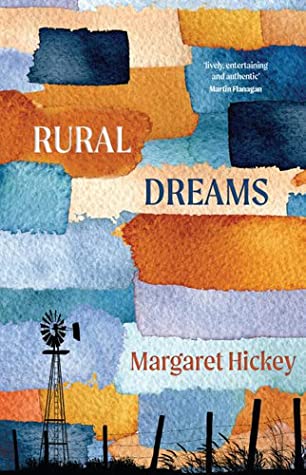
Rural dreams is another collection of short stories from small independent publisher MidnightSun, and it’s another good one. I hadn’t heard of Margaret Hickey before, but her website says that she’s won a number of awards and is a performed playwright. Relevant to this book is that Hickey grew up in small country towns in Victoria and currently lives in that state’s northeast. In other words, in this book about rural lives, she knows whereof she speaks.

Like most short story collections, Rural dreams comprises stories told in different voices and points-of-view. The narrators, male and female, range from teens to the middle-aged, and the stories are told in first person and third person voices, with one told second person. The tone varies from funny to sad, from reflective to scary, and the subject matter represents a wide gamut of rural lives, from those who have left to those who want to leave, from those who are farmers to those who are sea-changers. And, of course, it encompasses a range of rural issues, to do with farming, dying land and dying towns, for example, as well as those more universal human issues involving love and loss, joy and fear.

I greatly enjoyed most of the stories – there’s usually one or two in a collection that doesn’t quite connect. The opening story, “Saturday morning”, fired the perfect opening salvo. Told third person, it’s about a young engineering student named Simon who now lives in a share house in Melbourne but who gets up early every Saturday morning, through winter, to drive about three hours home to play football. Even he wonders why he does it, given the way it disrupts his weekend, but, as he hits “the shire boundaries”

… there it comes, that big ball of a sun, that big ball of orange rising up over the horizon. It jolts him every time. Rays light up the stone fences, hit the trees and illuminates the paddocks. The old gums shimmer green and grey in the early morning light and world appears golden quiet. It’s like it is every Saturday, a new era.

They might have a chance today.

He’s home.

“This place, it gets to you”, says the old coach, in “Coach”. And place, of course, underpins most of these stories, whether it’s the Wimmera or Mallee or Ninety Mile Beach in Gippsland.

Counterpointing our narrator in “Saturday morning” is the young Year 12 student in the next story, “Glory days”. Living in the dry Wimmera, he is sweating his ATAR score, dreaming of escape to the city where there’ll be “no more discussions about rain and cows, it will be all about novels and films and experience”.

And so the stories continue, wending across the state, and further afield. “A bit of scrapbooking” promotes the joys of living in the oft-maligned Surfers Paradise in southeast Queensland. Reminiscent a little of Kath and Kim, this story contrasts our narrator’s life in Surfers with her son’s and his partner’s in Melbourne. She just can’t understand his move there for, he told her, “a bit of culture”:

Well, I’ve never understood that. We’ve got culture all around us up here.

Take Jupiter’s Casino–it’s full of all sorts! You’ve got your Sheiks, your Maoris, your South Australians. And you can buy your sushi, your ravioli and your chicken schnitzel in every dining establishment. Every kweezeen you like.

A first person voice is the perfect choice for this story. It made me laugh. Its humour combined with a warm touch at the end makes it just the right antidote – can an antidote come first? – to the darker story, “Desolate”, which follows. This story, and the longest one in the collection “The Precipice”, are the darkest stories here. In “Desolate” our sea-changing narrator from St Kilda, whose “barely disguised air of yuppiedom did little to hide the threat of violence that lurked beneath”, finds that beautiful deserted beaches harbour their own issues. The opening to this story is deliberate:

It’s one of those days that almost kills you; it’s that beautiful.

In “The precipice” and “The Renovation” the titles are pointedly metaphorical, with the former being about domestic violence which is clearly not confined to cities. This story builds up slowly from a therapeutic bushwalk to one of horror for the three women involved. The end, though, is perfect. Hickey, who clearly loves rural living, is realistic rather than rosy about it. She references violence, drought, and issues like the potentially damaging health impact of chemicals, without being didactic or polemical. She know the characters too, like the middle-aged man still living at home who just “likes birds” of the feathered variety (“Twitcher”) or “town weirdo” Joe who cares about the land regardless of the locals (“Overcoat Joe”) or the single-mum who stands up for her scholarship-winning son at his hoity-toity private school (“Mind your language”).

As many contemporary Australian writers are increasingly doing, Hickey also incorporates references to Indigenous Australian lives and culture. She doesn’t attempt to speak for them, but these references suggest an awareness that’s important. Anna, in “The precipice”, remembers a place called “the Leap for the stories of Aboriginal families herded there by whites in the early days of settlement”; Ruby in “The renovation” is told about the middens in the community she’s moved to; Peter remembers the scar trees in “Binky”.

Finally, while the stories are stand-alone, a few are subtly linked. Kate Brunt, a netball player from the town mentioned by Simon (“Saturday morning”), is one of the young travellers in “The wanderer”. The coach (“Coach”) briefly mentions Simon. These links have no overall narrative significance, but they have a nice grounding effect.

Rural dreams is a love letter to rural Australia, one that recognises the tensions and challenges, as well as the warmth and community. Hickey gently mocks Australia’s ongoing romance with the bush, giving us instead an image that is real and human. A truly engaging read.

Challenge logo

Margaret Hickey
Rural dreams
Adelaide: MidnightSun, 2020
232pp.
ISBN: 9781925227680

(Review copy courtesy MidnightSun)

Jayant Kaikini, No presents please: Mumbai stories (#BookReview)

Book cover

Jayant Kaikini is an Indian (Kannada) poet, short story writer, playwright, a public intellectual and a lyricist in Kannada Cinema. Kannada is new to me, but it’s the language widely spoken in the Indian state of Karnataka, where Kaikini was born (in 1955). He is regarded, according to Wikipedia, as one of the most significant contemporary writers in Kannada and is “credited with revolutionising the image of Kannada film songs”. I make this point because references to film and film songs abound in No presents please.

No presents please is a collection of short stories that are both ordinary and extraordinary at the same time, but before I talk about them I’d like to share some insights from the translator, Tejaswini Niranjana, who was also involved in selecting the stories. She shares the issues she faced in translating Kaikini’s work, particularly “the flavour of the speech, the hybrid Hindu-Urdu-Dakhani speech, that is the cultural vernacular of Bombay” and is prominent in the stories. It’s clear that there were vigorous discussions about translating this speech. Kaikini apparently complained about her “frugality”, but she was worried about how the book would challenge readers not proficient in Hindustani. She solved it “by doing parallel translations–leaving in the Hindustani but giving the meaning in English either close by or elsewhere in the sentence so that the attentive reader eventually understands the meaning”. I read this discussion after reading the book. I must say that there were times when I was a little challenged, but my reading philosophy is to go with the flow and, overall, Niranjana’s approach combined with my strategy worked!

The other point I want to share is Niranjana’s insight into the content of these stories which, as the subtitle clearly states, are about Mumbai. But, here’s the thing: Kaikini has, Niranjana writes, “mastered the ruse of the ordinary”. By this she means that every story “begins with an extremely ordinary person or situation–sometimes both” but that “the ordinary often reveals itself as surreal”. Her challenge was

to maintain the ordinariness of the narrative until it could be maintained no longer, and to let the translation lead the reader along without drawing attention to itself. At the same time, when the surreal began to seep into the story, and the ruse of the ordinary opened out onto a different terrain of engagement for the characters, the translation had to find the right words to signal this “turn”.

She’s right about the stories moving, almost imperceptibly at times, from the ordinary to the surreal. I suspect that Kaikini’s (sometimes subtle, sometimes less so) references to cinema help us readers have the right mindset for shifting between reality and illusion, which is more how I would describe most of the funny little moments, than actual surrealism.

So, the collection. Titled by last story in the book, it contains sixteen stories, dated between 1986 and 2006. All are written third person, and explore Mumbai as it is experienced by its “ordinary” inhabitants. The first story, “Interval”, is about a young couple who meet at a cinema where he works and she’s an audience member:

That these two were planning to run away together early tomorrow was a fact nestling snugly in the dark, like the secret of a bud that had not yet blossomed.

You can tell here that Kaikini was first a poet. What happens is not at all what you would expect – which is one of the delights of this collection. The stories are not predictable, but neither do they have dramatic twists. Things just work out differently, quite often. In a neat rounding off, the last, titular, story, is about a young engaged couple with no family, and what happens as they draft their wedding invitation.

“the friendships among strangers” (City without mirrors)

In between are stories about, for example, a father looking for a husband for his daughter (“City without mirrors”), the despairing father of a very naughty but irrepressible 6-year-old-boy (“A spare pair of legs”), a bus-driver wanting to return to his village for an annual festival (“Crescent moon”), a stunt man (“Toofan Mail”), roommates who suddenly become estranged (“Partners”), a loyal maid who becomes ill (“A truck full of Chrysanthemums”), and a child quiz contestant (“Tick tick friend”). These stories pull no punches about the lives of people living on the margins or struggling in some way. Kaikini is not afraid to expose some of Mumbai’s (and India’s) underbelly. In “City without mirrors”, a bachelor is “aghast at the cruelty of a situation in which an old man had to speak to a complete stranger about the proof of virginity of his nearly forty-year-old daughter”.

Many of the stories, like “City of mirrors”, involve chance meetings between strangers, strangers who tend to offer something positive, rather than danger. “Tick tick friend” is about a young quiz contestant coming to the big city to compete in a television studio that happens to be in the basement of a hospital. Schoolgirl Madhu and her father meet a young man in the hospital canteen. His cheeky, positive attitude to life buoys them. Mogri (“Mogri’s world”) grows up in a chawl with her mother and frequently absent father. Early on, she realises that sex can be women’s downfall, but learns through meeting an older waiter at work that there are different ways of being between men and women.

In “Water”, two men, one ill with cancer, meet on a plane and spend a night with the third, their taxi-driver, when a huge storm creates havoc in the city. It’s a moving story, full of philosophical observations about life. Taxi-driver Kunjbhai, answering whether life seems “like hell or like heaven”, says:

Well, everything depends on how we think about it. If I think I’m happy, it’s happy I am. If I think I’m sad, then I’m sad.

That may sound a bit pat, I suppose, but in the context, it’s beautiful. I liked this story for the warmth generated between three strangers.

And that’s the thing about this book. For all the challenges most of its characters face, there is also warmth and humour in the telling, the end result being stories that don’t drag you down but that also don’t lull you into thinking all is well. There’s acceptance and resilience, but also little glimmers of hope in the stories.

No presents please won the DSC Prize for South Asian Literature in 2018. It’s the first translated work to win the award, and the jury particularly noted “the outstanding contribution” of the translator. That tells you, I think, how special this book is.

Jayant Kaikini
No presents please: Mumbai stories
Translated from the Kannada by Tejaswini Niranjana
Melbourne: Scribe, 2020 (Orig. pub. in India, 2017)
267pp.
ISBN: 9781922310187

(Review copy courtesy Scribe)

Bill curates: M.L. Skinner’s The hand

Bill curates is an occasional series where I delve into Sue’s vast archive, stretching back to May 2009, and choose a post for us to revisit. During the latter part of January we will look at some of Sue’s older posts which have relevance to my Australian Women Writers Gen 3 Week, Part II,17-23 Jan, 2021

Mollie Skinner is a little known Western Australian who served as a VAD (nurse) during WWI. Her importance to Australian Literature is that she co-wrote a novel with DH Lawrence, The Boy in the Bush (1924). She also wrote an account of her time as a VAD, and some other novels as well, at least two with some assistance from Lawrence.

_______________________________

My original post titled: “M.L. (Mollie) Skinner, The hand (#Review)”

ML Skinner, The fifth sparrow

Pam of Travellin’ Penguin blog read ML Skinner’s short story “The hand” for a challenge she was doing, and, when I expressed interest in it, very kindly sent me a copy. “The hand” is a mysterious little story – and by little, I mean, little in that it takes up less than 7 pages of the anthology, Australian short stories, that she found it in.

Now, the story is a bit tricky, and I think is best understood within the context of Skinner’s biography. She was born in Perth in 1876, but the family moved to England and Ireland in 1878. Mollie was a keen student and reader but had to abandon formal education in 1887 because of an ulcerated cornea, which resulted in her spending much of the next five years in a darkened room with bandaged eyes. After cauterisation partially restored her sight, she started to write poems and stories. Presumably this was around 1892 (ie 5 years after 1887?) when she was about 16 years old. Later she trained as a nurse, which gave her her main living. And then, the ADB biography (linked to above) says something interesting in terms of our reading of this story:  “she recognized within herself an intuitive power, or sixth sense.” A little later in the biography, we are also told that “Mollie believed that God’s hand on her shoulder guided her life. She dabbled in the occult”. She returned to Australia in 1900, though returned to England later to study. She also travelled to India, and served there and Burma during World War 1.

So to the story, which was first published in 1924. It is set in a “mining hospital back there in the west.” As there was “little doing” and the light too dim to read by, the Matron is encouraged to tell a story which she is “good at” doing. They – presumably the off-duty staff – ask her about her life in “those posts way back in the interior”. Was she ever frightened, they ask?

‘Of what?’
‘Well–the loneliness. And bad white men, and bad blacks. Of patients in delirium. Or some awful maternity case you couldn’t handle.’
‘I didn’t think about it. I did what I could. I was frightened once, though: and that, really, by a nurse screaming. A nurse shouldn’t scream.’

Interesting, the “bad white men, and bad blacks”, but I’ll just take that as another of those ways in which contemporary stories provide us insight into the times, and move on with the story. She then tells the story of the scream. She describes the small outback post, the sense of community they had, and the little L-shaped hospital which was open to the bush on one side, and the road and railroad on the other. There were two other nurses besides herself, one being Nurse Hammer “a regular town girl, very attractive, but unstable, untried.” On the night of the scream, our Matron story-teller was doing accounts while the two nurses were chatting with the patients. Our Matron’s mind kept wandering she says. She’s

very practical, really, and then liable to feel things in the air, things that other people don’t seem aware of. My father called it “unwarranted interference”; and told me to taboo it. But it gets hold of me sometimes: and this evening I was uneasy, aware of “something”. There seemed to be a sound.

But, she can’t identify anything, so continues to try to work. She hears Nurse Hammer go to bed, and then – the scream. The rest of the story concerns locating the scream – it was Nurse Hammer – and working out the cause of it – a hand has grabbed Hammer’s leg.

In the end, there’s a practical explanation for “the hand” but along the way there’s a sense of an awakening or at least, a growing up, for Nurse Hammer. Initially, the Matron is

conscious, not only of Hammer’s terrible fear, but of a deeper source, dark and secret within herself. I remembered how lovely she was. How men in the wards watched with furtive eyes as she walked past. I remembered the way she walked–how she avoided those eyes. I knew then that the girl had herself been tempted, that she was powerless, now, in this dark room, because in her own life she was passing through crisis.

The Matron finds herself praying that “whatever we found in this room would not be evil.”

Skinner builds up the suspense well, the darkness, the lantern going out, until eventually the cause of the scream is determined. Before it is fully explained though, Nurse Hammer has a little more to endure, but, says Matron,

I glanced at Hammer. The Nightingale light was flooding her face …

And the Matron goes on to use words that imply a biblical aspect to Hammer’s enlightenment – but if I say more, I’ll give away the story which I’m not sure I want to do (though unfortunately the story does not seem to be available online).

Interestingly, Skinner attracted the attention of DH Lawrence … but I think I might make this the subject of tomorrow’s Monday Musings! Meanwhile, I think the story is to be understood in the sense of a divine intervention intended to test and try Nurse Hammer, from which she emerges, in a sense, reborn and now a real nurse, like Florence Nightingale. (But, I could be wrong.)

ML (Mollie) Skinner
“The hand” (1924)
in Australian short stories (1951)
ed. by Walter Murdoch and Henrietta-Drake Brockman
(pp. 148-154)

_____________________________________

Bill has also posted on Mollie Skinner – on her collaboration with DH Lawrence – so please check out his post, ‘Writing The Boy in the Bush’ too.

As always, we would love to hear your thoughts, particularly whether you have read Mollie Skinner or any of DH Lawrence’s Australian writing?