Pauline Johnson, A red girl’s reasoning (#Review)

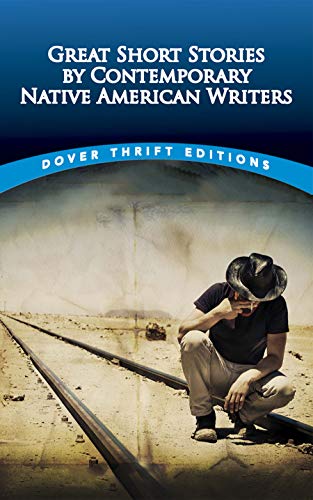
As some of you know, I have a close American friend, Carolyn, with whom I correspond weekly. We met in the early 1990s when I was living in California. During that time we started a reading group, so you won’t be surprised that our correspondence always includes reference to what we are – or are not – reading. What we recently realised is that we are not reading Native American literature. I was consequently thrilled to find Great short stories by contemporary Native American writers in my last Christmas parcel from her. I have now read the first three stories but today’s post is on the first one, “A red girl’s reasoning” by Pauline Johnson.

Pauline Johnson

The anthology’s editor, Bob Blaisdell, in his brief intro to the story, writes that Emily Pauline Johnson (1861-1913) was born on Six Nations Reserve near Brantford, Ontario. Her father, he says, was a Mohawk chief, and she was related to the American novelist, William Dean Howells, on her mother’s side. Wikipedia expands on this. It describes her as a Canadian poet, author, and performer. Regarding her parents, it says that “her father was a hereditary Mohawk chief of mixed ancestry and her mother was an English immigrant”.

Blaisdell says that Johnson started writing fiction after her father died to support the family, but Wikipedia again tells us more, focusing on her significance. It says that her poetry was published in Canada, the United States, and Great Britain, and that she was “among a generation of widely-read writers who began to define Canadian literature. She was a key figure … and has made an indelible mark on Indigenous women’s writing and performance as a whole”. Unfortunately, as so often happens, her literary reputation declined after her death, but, Wikipedia says, there has been renewed interest in her since the late 20th century.

If you are interested in her, do read the Wikipedia article because it’s reasonably thorough. Meanwhile, I will move on to …

“A red girl’s reasoning”

CanLit (where you can read the text online at the link below) says that “Red Girl’s Reasoning” was first published in Montreal’s Dominion Illustrated, in February 1893, and then, later that month, as “A Sweet Wild Flower” in Toronto’s Evening Star. Interestingly, CanLit’s online text, and the version in my anthology, both give it as “A red girl’s reasoning”. CanLit gives the author as E. Pauline Johnson. All details perhaps, but they do raise questions.

So, what’s our red girl’s reasoning? The story concerns the marriage between Christine, who is mixed-race (our ‘red girl”), and Charlie, a young white man. It starts with Christine’s white father counselling his “brand new son-in-law” to “Be pretty good to her, Charlie, my boy, or she’ll balk sure as shooting”. Charlie, as any new husband should, reassures him that of course he will, “there’s no danger of much else”. And all goes smoothly – for a while. She’s an asset to him … but, hold this thought because I want to digress to something else Pauline Johnson wrote, an essay titled “A strong race opinion: On the Indian girl in modern fiction”. It was published the year before this story, in 1892 (and is also available online).

In this essay, Johnson argues that people do not equate with their race, even though there are racial characteristics. “The American book heroine”, she writes, is allowed to be an individual. She does not have to have “American-coloured eyes” or an “American mode of dying”. She is allowed “an individuality ungoverned by nationalism”. This is not the case for “the Indian girl in modern fiction”. In an aside, she makes the point re “Indian”, that “there seems to be an impression amongst authors that such a thing as tribal distinction does not exist among the North American aborigines”. She continues:

The term “Indian” signifies about as much as the term “European,” but I cannot recall ever having read a story where the heroine was describes as “a European.” The Indian girl we meet in cold type, however, is rarely distressed by having to belong
to any tribe, or to reflect any band existing between the Mic Macs of Gaspé and the Kwaw-Kewlths of British Columbia…

She wrote this back in 1892 – how much has changed? Anyhow, her point is well-made. Johnson then details the stereotyping of “the Indian Girl” in fiction. She is always “Winona” or a name that ‘has a “Winona” sound to it’; she never has a surname; and her father is always a chief (like, in fact, Johnson’s father.) Further, this “Winona” is often suicidal, even though “suicide is an evil positively unknown among Indians”. She is always in love with “the young white hero”, and will betray her own people, but he “never marries her”. There’s more, but I think you’ve got the gist. (She does provide an exception, Charles Mair’s Tecumseh, in which the Indian Girl Iena “is the one book Indian Girl that has Indian life, Indian character, Indian beauty” – but, like her stereotyped sisters, she is not allowed to live.)

Needless to say, Johnson’s “red girl” does not have a Winona-sounding name and her white hero does marry her. Not only that, she stands up for herself when … but, I get ahead of myself. Before this, there is the wedding, which, Johnson writes, was not much, but fortunately groom Charlie didn’t mind:

in his heart he was deeply thankful to escape the flower-pelting, white gloves, rice-throwing, and ponderous stupidity of a breakfast, and indeed all the regulation gimcracks of the usual marriage celebrations …

This is significant to what follows, because the crisis, when it comes, is about Indian versus Canadian (western) marriage customs. Christine’s parents were married the “Indian” way, that is, there was a feast, but no other ritual. Charlie is aghast because he suddenly realises he has married someone “illegally born”! Her response – her “reasoning” – is that if he can’t accept that her parents are married by her mother’s customs, then she can’t accept that she and Charlie are married by his. And so the rift is wrought.

The story’s progression from here is fairly typical of nineteenth century short stories, but to say more would spoil the plot. I will say, though, that Christine does not die!

Blaisdell concludes his intro to the story that “while stagy” it “achieves some degree of pathos and delivers a strong comeuppance to Christian prejudices”. Yes, it is “stagy” (or, melodramatic, as I wrote in my margin) – but that’s fairly typical of its time. And it does deliver that comeuppance. But there is more to it. There is, for example, satire of white pretentious and superiority, a mockery of white storytelling even, in the way she uses the tropes of western rich man-poor girl stories:

She was “all the rage” that winter at the provincial capital. The men called her a “deuced fine little woman.” The ladies said she was “just the sweetest wildflower.” Whereas she was really but an ordinary, pale, dark girl who spoke slowly and with a strong accent, who danced fairly well, sang acceptably, and never stirred outside the door without her husband.

You can see the tongue firmly planted in Johnson’s cheek here.

Johnson’s story made a great opening to the anthology. It is somewhat dated in style and terminology, but its core concern, cultural clash, still holds true, and it is told with a light touch and a warmth towards its characters that engaged me.

Pauline Johnson
“A red girl’s reasoning” (1893)
in Bob Blaisdell (ed.), Great short stories by contemporary Native American writers
Garden City: Dover Publications, 2014
pp. 1-16
ISBN: 9780486490953
Available online at canlit

Claire G. Coleman, Night bird (#Review)

Wirlomin-Noongar woman Claire G. Coleman’s short story “Night bird” is the second First Nations Australia story in Ellen van Neerven and Rafeif Ismail’s anthology Unlimited futures: Speculative, visionary Blak+Black fiction, the book I chose for Bill’s (The Australian Legend) Australian Women Writers Gen 5 Week. The week finished officially a week ago, but I’m hoping Bill won’t mind my still referencing it. Coleman is not new to my blog. I reviewed her debut novel, Terra nullius, the year after it came out. She has written more fiction and some non-fiction since then, with a clear focus on the devastating impact of colonisation on First Nations culture and people.

“Night bird” continues this focus. It follows Ambelin Kwaymullina’s story in the anthology, “Fifteen days on Mars” (my review), which works well, because both draw on the importance and role of Ancestors in First Nations culture. Coleman’s story is told first person by an artist who is “too afraid to sleep, too tired to be awake”, who drinks to drown her sorrows, who fears she may be “going mad again [my emph]”. She tells us

I am haunted by the ghost of my Ancestors’ Country like a phantom limb …

[…]

I have been cut off from my Country, my ancestors cut up, the land drilled and dug and eaten by machines … my wounded homeland won’t let me rest.

This is not a subtle story. The narrator (whom I think is female, so I’ll go with that) grieves for a life she “could never have” because Country has been “severed”. She has “returned to Country” but, finding it “dead”, “could feel nothing and none” of her Ancestors. She feels haunted, but by what or whom?

I can hear a voice but I can’t make it out. I can hear a song but I can’t catch the words. I can hear the wind and it’s stealing my breath. I can hear nothing and it is screaming.

Country is part of her, but she wants to be free of the haunting, the “wordless voice”, the “phantom presence” that won’t go away. There is a wind, but it is “coming from the wrong direction – away from Country”. Then,

The wind changes, it caresses my back, and suddenly it’s coming from Country.

However, at the same time, a man appears and threatens her. There are now two voices – his and the Ancestors. This is a story about a battle between disempowerment (represented by the man) and empowerment (represented by the Ancestors). Is she, and are they, strong enough to prevail?

I suspect this story was inspired by an experience Coleman describes in her article in Writing the Country (The Griffith Review 63). She describes the life-changing experience of going to Country in 2015, her family’s Country that had been taboo due to a massacre that had occurred there in the nineteenth century. She writes:

I didn’t go there until 2015, that place changed my life forever, my world, my life, even the way I breathed. I took the taboo air into my lungs and I did not die or maybe I did. The bones of my feet landed on the sand and returned to life, I was born again on Country. The story of that place made me a storyteller; story is in my veins.

She says an old man told her that “no matter where we go Country calls out to us” and she writes of the bird, the Wirlo (or curlew), that “to me and mine are family”. Its cry, its scream, “calls me home” – as does the night bird in this story. She describes how Country cares for people as they care for Country. She writes:

I wept when I realised Country had not forgotten me even when I did not know Country. My old-people, my ancestors, would care for me.

All of this is seems embedded in “Night bird”, so now, back to it. It is another example of “Indigenous futurism”. It is ground very much in the real world. The voices that our narrator hears are mysterious, sometimes coming from her phone, sometimes from the air around her, but they are not magical, not fantastical, they are the Ancestors – and the story envisions a healthy relationship with them and thus Country.

On her website, Coleman includes a link to an interview she did with VerityLa after Terra Nullius came out. Among the questions was that one we readers love, which is whether any authors or novels influenced her. The first one she named was HG Wells’ War of the worlds, because it “is great in giving an understanding of how to show an overwhelming powerful enemy destroying a less well-armed defender”.  “In fact,” she says, “War of the Worlds is a powerful text for the examination of invasion and colonisation”. You can certainly see its influence in Terra Nullius, and it is evident here too.

Claire G. Coleman
“Night bird”
in Ellen van Neerven and Rafeif Ismail (ed.), Unlimited futures: Speculative, visionary Blak+Black fiction
North Fremantle: Fremantle Press in association with Djed Press, 2022
pp. 66-73
ISBN: 9781760991463 (eBook)

D’Arcy Niland, The parachutist (#Review)

D’Arcy Niland has appeared in my blog before but not in his own right. He was the Australian-born husband of the New Zealand-born Australian writer Ruth Park. I have posted on their collaborative memoir, The drums go bang, and have written specifically about Ruth Park, but have never written specifically on Niland before.

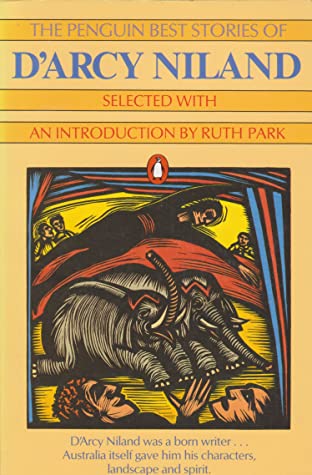
Niland is best known for his novel The shiralee, but he and Park were working writers who made their living from their craft, which means they wrote a lot – radio scripts, journalism, short stories, and novels. My path to his short story, “The parachutist”, though is a bit complicated. Over a decade ago, when my mother-in-law was still alive, I would search for suitable audiobooks for her, by which I mean books that had straightforward narratives, and not too much explicit sex and violence. She was 97 (and legally blind) when she died. A collection of D’Arcy Niland short stories seemed a possibility, but I’m not sure she ever did listen to it. Regardless, it ended back with us after she died, and we finally started listening to it on a recent road trip. The first story is titled, “The parachutist”.

Now with collections, I like to know each story’s origins. I discovered that the audiobook was based on a collection of Niland’s short stories selected by Ruth Park and published by Penguin in 1987. A start, but when did Niland, who died in 1967, write the story? The Penguin book might provide that information, but I don’t have it. However, given that back in Niland and Park’s heyday, newspapers were significant publishers of short stories, I decided to search Trove and, eureka, I found it. Well, that is, I found his story “The pilot”, which turned out to be the same story that was later published as “The parachutist”.

This discovery created another mystery: why the change of title? And when? Again, maybe Ruth Park discusses that in her Penguin introduction but … so, let’s just get on with the story. The plot concerns a predator and its prey. It starts just after a hurricane. A hawk, “ruffled in misery” comes “forth in hunger and ferocity” looking for food, expecting to find some “booty of the storm”. However, there is none, so it widens its search. Niland beautifully captures the devastation of the “ravaged” landscape and weakened hawk’s situation: “Desperate, weak, the hawk alighted on a bleak limb and glared in hate”. It’s vivid, visceral writing – and we feel some sympathy for this hawk.

It spies a dead field mouse, and gobbles it “voraciously”, but it’s not much as food goes, and just makes “the hawk’s appetite fiercer and lustier”. Niland, at this point, also introduces us to the hawk’s real nature, to the way it would normally “sup …. on the hot running blood of the rabbit in the trap, squealing in eyeless terror”. It will eat creatures still alive, in other words. Anyhow, still “frenzied with hunger”, this hawk spies something in a farmyard – a kitten playing, “leaping and running and tumbling”, completely “unaware of danger”. Life is fun. After checking for human presence, the hawk swoops, and suddenly the kitten finds itself “airborne for the first time in its life”:

The kitten knew that it had no place here in the heart of space, and its terrified instincts told it that its only contact with solidity and safety was the thing that held it.

It latches on for dear life. This is a powerful story that keeps your attention from beginning to its – hmmm – somewhat surprising end, which I won’t spoil. Instead, I will briefly return to the title. Niland describes the hawk and kitten doing battle in the sky, writing that, with the hawk now descending, the kitten “rode down like some fantastic parachutist”. Soon after, when the kitten’s claws are digging into the hawk’s breast, he says that “the kitten was the pilot now”.

So, “pilot”? This could suggest that the kitten is in control, but is it? “Parachutist”, on the other hand, seems more subtle, implying a somewhat mutual relationship between the two. It is not the sort of freely chosen relationship that parachutists traditionally have, but this later title introduces an ambiguity into the narrative.

I found the story compelling. It is told third person limited, with our point of view, and sympathy, shifting between the two protagonists. Its subject matter might be nature, but its themes are more universal, encompassing predator and prey, the powerful and the powerless, experience and innocence, and of course survival, given at different points in the story both the hawk’s and the kitten’s survival is at stake. What to do?

Also, this might be a long bow, but Niland apparently said about his 1955 novel The Shiralee, that “it is a Biblical truth that all men have burdens. This is the simple story of a man with a burden, a swagman with his swag, or shiralee, which in this case happens to be a child. I have often thought that if all burdens were examined, they would be found to be like a swagman’s shiralee – not only a responsibility and a heavy load, but a shelter, a castle and sometimes a necessity.” “The pilot” was published two years earlier, but we could argue that for the hawk, the kitten, with its fierce frenetic claws, turns into a burden. The storyline and outcome are simpler, of course, but was Niland playing with this idea too in his story?

Whatever, “The pilot” or “The parachutist” beautifully exemplifies Niland’s ability to capture and hold his reader’s attention with a strong narrative and expressive writing. I hope to share more of the stories in future.

D’Arcy Niland
“The parachutist” in Short stories collection
(Read by Dennis Olsen)
ABC Audio, 2007
ISBN: 9780733390616

D’Arcy Niland
“The parachutist” in The Penguin Best Stories of D’Arcy Niland
Penguin Books, 1987
ISBN: 9780140089271

D’Arcy Niland
“The parachutist” The Oxford book of animal stories
London, Oxford University Press, 2002 (orig. pub. 1994)
ISBN: 00192782215

D’Arcy Niland
“The pilot” in The Mail (Adelaide), 28 March 1953
Available online

Ambelin Kwaymullina, Fifteen days on Mars (#Review)

In 2014, Ambelin Kwaymullina, whose people are the Palyku of the Pilbara region of Western Australia, described herself in a Kill Your Darlings essay as writing “speculative fiction for young adults”. Three years later, in the 2017 Twelfth Planet Press anthology, Mother of invention, she said that she was “a Palyku author of Indigenous Futurisms”, citing Grace Dillon (as did I in this week’s Monday Musings) as the term’s originator. I share this progression in her thinking because it’s indicative of the energy and intellectual engagement among First Nations people with literature and the politics of what they are doing. Kwaymullina is an example of a First Nations Australian writer who is actively engaged in First Nations culture and thinking, as well as in the craft of writing.

I first came across Kwaymullina early in my volunteer work for the original Australian Women Writers Challenge, because many reviews for her young adult novels were posted to our database. But, I had not read her because YA literature is not my thing. However, I decided to read Ellen van Neerven and Rafeif Ismail’s anthology Unlimited futures: Speculative, visionary Blak+Black fiction for Bill’s (The Australian Legend) Australian Women Writers Gen 5 Week 15-22 January, and the first work in the anthology by an Australian woman was “Fifteen days on Mars” by Kwaymullina. Woo hoo… here was my chance to finally read her. I will post on more in this fascinating book, which I’ve not yet finished, later.

“Fifteen days on Mars” is an accessible short story, told chronologically from Day One to Day Fifteen. The politics is made clear in the opening paragraph, by beautifully skewering colonial settler behaviour concerning the naming of places:

It had been almost a year since we came to Mars. That was what I called this place although it had another name. It was Kensington Park or Windsor Estate or something like that but I couldn’t have said what because I could never remember it.

Our first person narrator Billie and her mum have come to Settler suburbia, where they are “the only Aboriginal people”, for some reason that is not immediately clear though we sense there’s a specific purpose. Billie hadn’t wanted to come but, as her mother’s only offspring without children, she’d drawn the short straw. The story starts with her pulling weeds from their garden, the very plants that the rest of the neighbourhood love, plants (I mean “weeds”) like roses. In this metaphorical way the colonial setting is established. This is a world we know. Very soon a new couple moves in across the road. Billie, at her Mum’s insistence, does the neighbourly thing, and makes contact. She quickly realises that their new neighbour, Sarah, is being abused by her husband, whom Billie calls The Suit. What to do?

To this point, notwithstanding the hint at the start that there’s something unusual about the situation, the story reads like a typical piece of contemporary fiction – that is, set in the known present world. But slowly, we become aware that something else is going on. Billie refers to “the rules”. Does she just mean the normal “rules” of social behaviour? Nope, our suspicion is right, there is something else. There’s reference to Sarah needing to “ask”, and to whether what or how she asks is “good enough for them upstairs”, aka “the Blue”, as Billie’s mum calls them. Billie says:

the truth was we knew very little about them, except they were some kind of intergalactic healers. But we knew why they’d come. It was because of the Fracture.

So now it’s clear we are in speculative fiction/Indigenous Futurism/Visionary Fiction/SFF territory. This is the sort of speculative fiction I can enjoy, something that doesn’t require me to learn a whole new world but that injects something new into the world I know, something that upends it a little.

The Fracture is not fully explained, but “something had smashed into the relationships that were space-time and cracks had spread out from the point of impact” resulting in, says Billie, “bubbles of the past floating across my reality”. The Blue, we are told, are trying to repair this Fracture, leaving humans “to do something about the bubbles” – but to the Blue’s rules. Billie’s mum had signed up “for the job of changing the bubble-world, or at least, of changing some of the people enough so they could exist in our reality”. Hmm, this makes them sound a bit like missionaries. An ironic twist?

Anyhow, the story continues, with a strong reference to the Stolen Generations, as Billie and her Mum, recognising these are “strange times”, try a different tack to save Sarah, and call on the ancestors. They hope the Blue won’t mind.

I will leave it there. I enjoyed the story – because it tells a First Nations story truthfully but generously; because the characters of Mum and Billie, while being somewhat stereotypical (the wise Mum and the reluctant Billie), are warm and engaging; and because the ideas and the story itself are intriguing to watch being played out.

In her 2017 piece cited above, Kwaymullina describes Indigenous Futurisms as “a form of storytelling whereby Indigenous peoples use the speculative fiction genre to challenge colonialism and imagine Indigenous futures”. This is exactly what she does in “Fifteen days on Mars”. The colonial legacy is unmistakeable, with most inhabitants of Settler suburbia remaining “unbelievably ignorant”, but she also offers glimmers of hope. I don’t eschew bleakness, but as an optimist I also appreciate it when writers can see paths to a better future. It’s energising.

Ambelin Kwaymullina
“Fifteen days on Mars”
in Ellen van Neerven and Rafeif Ismail (ed.), Unlimited futures: Speculative, visionary Blak+Black fiction
North Fremantle: Fremantle Press in association with Djed Press, 2022
pp. 42-64
ISBN: 9781760991463 (eBook)

O. Henry, Conscience in art (#Review)

Followers of the short story form will probably know of O. Henry, the pen-name of American author William Sydney Porter (1862-1910). Although he also wrote poetry and non-fiction, Henry was best known for his prodigious short story writing. His legacy, as Wikipedia says, includes the O. Henry Award, which is an annual prize awarded to outstanding short stories. The award was first made in 1919, and since then the winning stories have been published in an annual collection. I was introduced to this via the 2003 collection which includes stories by writers like A.S. Byatt, Anthony Doerr, T. Coraghessan Boyle, William Trevor, and Alice Munro. You can see the quality we are talking about. The 2003 issue also introduced me to another writer, Chimamanda Ngozi Adichie, whose “The American Embassy”, I read from the collection, and whose novel, Half of a yellow sun, I went on to read as a result.

All this is to introduce the fact that Library of America (LOA) recently published an O. Henry short story, and I thought I’d share it here.

“Conscience in art”

LOA, as always, provides some introductory notes to the story, starting a bit mysteriously in this case, by referencing the turn of the century Pittsburgh millionaires, such as electricity magnate George Westinghouse, steel company executives F. T. F. Lovejoy, Andrew Carnegie, and Henry Clay Frick, and other wealthy industrialists. Many “were passionate collectors of art”. Then they make their point, because this fact, they say, “supplies the plot of O. Henry’s story”. It’s worth pointing out, too, that an article referenced by LOA, says that Henry disliked Pittsburgh.

LOA goes on then to say that in November 1906, the editors of McClure’s magazine, wrote that

“In five years of magazine writing, O. Henry has reached the top of current fiction. The quantity as well as the quality of his work is remarkable, and he grows with every story. More stories of New York, the field of his great book The Four Million, will appear in McClure’s in the coming year.” 

O. Henry, LOA continues, had signed a contract for a dozen stories at $300 each. This might sound a big ask, but he was famously productive, having published 121 stories in 1904 and 1905. However, as it turned out, not one O. Henry short story appeared in McClure’s that year, largely because his health was declining as his drinking increased. Henry did, however, write some stories that year, with nearly half of them, says LOA, featuring “an affable con man named Jeff Peters” who had debuted in a 1903 story. Some ten or so Jeff Peters stories were distributed nationally by the McClure Newspaper Syndicate in 1907 in a series they called “The Gentle Grafter.” 

Then came the information that surprised me, because I don’t know Henry’s story. LOA says that these Jeff Peters stories came out of Porter’s three years in prison – for embezzlement – at the turn of the century. He worked the night shift as the druggist in the prison’s hospital, and is believed to have first drafted some of these tales during that time. According to LOA, the prison’s head pharmacist Dr. John M. Thomas reported that many of the stories were told to Henry on his rounds. Thomas said that he would frequently “find a story written on scrap paper on my desk in the morning, with a note telling me to read it before he sent it out.” LOA says that “Conscience in Art” is perhaps the best-known story in the collection. In it, they say, “the criminal principles and linguistic malapropisms of the swindler Jeff Peters finally meet their match in the ethically challenged Andy Tucker.”

So, the story concerns two con men, Peters who has some conscience – “I never believed in taking any man’s dollars unless I gave him something for it” – and Tucker who had no such qualms. Tucker comes up with the idea of swindling the Pittsburgh millionaires, who, Tucker tells Peters, will be easy to meet because:

‘They are rough but uncivil in their manners, and though their ways are boisterous and unpolished, under it all they have a great deal of impoliteness and discourtesy. Nearly every one of ’em rose from obscurity, … If we act simple and unaffected and don’t go too far from the saloons and keep making a noise like an import duty on steel rails we won’t have any trouble in meeting some of ’em socially.’ 

Tucker comes up with an art fraud plan, and of course there’s a twist in which Tucker manages to succeed in a scam in a way that doesn’t offend his accomplice’s tender conscience! I’ve only read one other O. Henry story, “The gift of the magi” – which is often compared with Guy de Maupassant’s “The necklace”. It’s an intense story, and different to “Conscience in art”, which is lighter, more comic, in tone. However, behind the lightness is some insight into those heady turn-of-the-century times in the US when faith in rags-to-riches held rein, and perhaps, Henry’s attitude to the rich.

Have you read any O. Henry? If so, I’d love to hear your thoughts.

O. Henry
“Conscience in art”
First published: by the McClure Newspaper Syndicate (July 1907); then collected in The gentle grafter (1908). 
Available: Online at the Library of America

Ernest Hemingway, Cat in the rain (#Review)

As I often do with Library of America (LOA), I bookmarked their recent Story of the Week featuring Ernest Hemingway’s short story “Cat in the rain” to read later. “Later” came today. I have no Hemingway on my blog, so this seemed a perfect opportunity, and I do like short stories anyhow.

First ed. cover, from Wikipedia article. Public domain.

With many of my LOA posts, I need to start by introducing the writer, but this is not one of those occasions. However, if, perchance, you don’t know who Hemingway is, you can check his Wikipedia article.

Meanwhile, some background to the story. It was originally published in Hemingway’s first short story collection, In our time, in 1925. It is a very short, short story, but it has, according to LOA’s notes, garnered much critical interest. There is also a Wikipedia article on it. I’m not sure how much more I can add to what’s been said, given I am not a Hemingway scholar. However, I enjoyed reading it, partly because it felt more sensitive than macho, so I will say something!

“Cat in the rain”

The storyline is simple. An American couple is on holiday in Italy, and the story is set in and around their hotel. It’s raining, so they are stuck in their hotel room, she staring out the window and he lying on the bed reading. She sees a cat outside, hiding under a table, and she wants to rescue it. On her way outside, she sees the hotel-keeper (“padrone”), whom she likes. When she gets outside, however, the cat has gone, so she returns to her room and her husband. Wikipedia tells you exactly what happens, but generally I try not to spoil stories here, unless I know they are well-known (like, say, Pride and prejudice.)

The thing I like about Hemingway’s writing – though I’ve only read a little, and that was decades ago – is its spareness, and this is on display here. There are short, plain sentences, and simple repetition. These make it not only strangely beautiful to read but convey so much while seeming to say little. They convey a tone of lassitude, and also a sense of tension or lack in the marriage, though not a cross word is spoken.

Here is the wife, passing the hotelkeeper on her way out to find the cat:

He stood behind his desk in the far end of the dim room. The wife liked him. She liked the deadly serious way he received any complaints. She liked his dignity. She liked the way he wanted to serve her. She liked the way he felt about being a hotel-keeper. She liked his old, heavy face and big hands.

There is lovely rhythm to this – but there is also information about her character and about what she likes in people. Later, back in the room, her husband George asks her what happened. She tells him the cat had gone, then:

“I wanted it so much,” she said. “I don’t know why I wanted it so much. I wanted that poor kitty. It isn’t any fun to be a poor kitty out in the rain.”

George was reading again.

George, in other words, is not listening to her wants or, indeed, needs, because both are wrapped up in this statement. I love this: the repetition (again), the staccato-like rhythm, and the direct, plain statement about George conveys, almost paradoxically, such intensity.

David Lodge, according to LOA, has written a “thorough and now-classic examination of the story” noting conflicting interpretations. They quote him as saying:

“although it is a well-formed narrative, with a clearly defined beginning, middle and end, the primary action is not the primary vehicle of meaning.” That is, the story presents “a plot of revelation (the relationship between husband and wife) disguised as a plot of resolution (the quest for the cat).”

That makes sense to me from my reading of the story; I read it as being about the wife, her needs and her relationship with her husband.

The story also – and Lodge’s comment doesn’t contradict this – exemplifies Hemingway’s theory of omission (or “iceberg theory”), which is the idea that, as with icebergs, there is more below the surface than above. In this case, there is the idea, for example, that there is more to the cat than just being a cat, even though Hemingway doesn’t tell us what. That’s for us to consider – and the critics sure have.

There are other reasons this story interests critics and Hemingway aficionados, a major one concerning whether it is autobiographical. According to LOA, Hemingway, himself, wrote to F. Scott Fitzgerald saying that it wasn’t about his wife, Hadley, even though they thought it was. However, continues LOA, there’s evidence that she was at least the inspiration, and that biographers agree. Hemingway biographer, Michael Reynolds “admits … that Hadley must have recognized her own marriage in the portrait of the couple”, and Hadley biographer, Gioia Diliberto agrees that “it’s not hard to see Hadley’s vulnerability and loneliness in ‘Cat in the Rain.’”

I can see why this story has garnered such interest. Despite its seeming simplicity – the story itself isn’t hard to understand – there are multiple ways it can be thought about and interpreted, from the opening sentence to the intriguing last.

If you haven’t read it, do consider giving it a go at the link below – it really is short, and quick to read. If you have read it, what do you think?

Ernest Hemingway
“Cat in the rain”
First published: in In Our Time, 1925
Available: Online at the Library of America

Ryan O’Neill, An Australian short story (#Review)

If you haven’t heard of this story by Ryan O’Neill, you are in for a surprise. It was first published in The Lifted Brow, an online literary magazine, in 2012. Its title tells you nothing, but, before I tell you more, I should introduce Ryan O’Neill for those who haven’t heard of him.

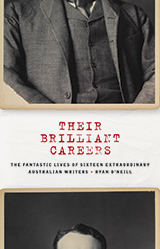
I had heard of O’Neill, but I hadn’t read him, which was one reason I chose this story to read. He came to my notice when his tricksy novel, Their brilliant careers: The fantastic lives of sixteen extraordinary Australian writers, appeared on the scene in 2016. It was shortlisted for the 2017 Miles Franklin and NSW Premier’s Literary Awards, and won the Prime Minister’s Literary Award that same year. As publisher Black Inc writes on its website, it’s “a hilarious novel in the guise of sixteen biographies of (invented) Australian writers”. You can see what I mean about tricksy.

Well, hold that thought, because his earlier-written short story, “An Australian short story” is tricksy in a different way. Instead of inventing sixteen Australian authors, this story is entirely composed of lines from short stories and poems by Australian writers, written between 1850 to 2011. The source works are an eclectic bunch, and include writers as diverse as Henry Lawson and Angelo Loukakis, as Rosa Praed and Thea Astley, and so on. You get the gist.

There are 149 of them, every one footnoted so you know exactly where they have come from. Some are as short as one word, such as “Goodbye” (from JMS Foster’s “I do love to be beside the seaside”), “–What?” (from Kate Grenville’s “Having a wonderful time”) and “Yes”, at least twice (from H. Drake-Brockman’s “The price” and Morris Lurie’s “Running nicely”, for example). You gotta laugh!

Others, though, are longer, like “And she lay beside him, separated by knowledge which he did not share, of something sinister; of wounding, of unhappiness, and of pain” (from “Winter Nelis” by Elizabeth Jolley).

There is a plot, and it concerns a couple, an unnamed husband and wife living in “a plain weatherboard house” (which comes from Peter Carey’s “American dreams”) whose “solidity was late-nineteenth century, as the town’s was” (from Hal Porter’s “Gretel”). So, we are in a country town, not a city. And then, a few sentences on, we discover that our couple are on “a farm, if such it could be called”. He, 42-years-old, is a writer, and is uncertain about whether he is “happy with her”, as in fact is she likewise re him.

The story reads seamlessly, albeit with a strange other-worldly feeling, but this comes not so much from the method of construction as from the fact that the people and places aren’t named. It’s also quite a melancholic piece, which speaks, I think, to the Australian short story tradition that it draws from and pays homage to. It is clearly Australian, O’Neill has called his story “Australian” and makes it very clear with references early on to parrots, gums and she-oaks. But, it is not a traditional farm story, because our husband is a writer, so this Australian story is about a writer, one struggling with his novel and frustrated at a perceived lack of support from “her”, while she feels she’s given him enough. It’s inspired and adds a wonderful layer to what O’Neill is doing here.

Now, I was intrigued about this story, so I went searching, and found a piece by O’Neill on writing this story. He explains how he, a Scottish-born Australian, came to write the story. He discusses his extensive reading of Australian short stories, and his thoughts about the strong realist tradition that runs through them. He sees (saw then) experimentation not being a strong feature of Australian short story writing, but does identify pockets of such occurring. It’s a great article for anyone interested in Australian short stories.

I was particularly interested in his statement at the end of the piece about his intention:

I had originally intended for this piece to be a satire. “An Australian short story” was titled “The Australian short story” for a long time, to suggest the idea that this piece, with its bush setting, and sentimental love story, was somehow representative of a certain uniformity in Australia short fiction. But as I finished the story I was surprised and pleased to see it had developed into more of a celebration than a satire.

I like this because as I was thinking about the story, I wanted to call it a satire or spoof, but it felt too subtle for that. “Celebration”, plus, we could say, commentary on, is a good way to view his story.

Coinciding with the publication of Their brilliant careers, its publisher Black Inc posted on its website, O’Neill’s Five tips for writing a short story. Tip no. 2 is that he believes

it is impossible to write a decent short story unless you have read a lot of great short stories. Try to read as many short stories as you can, and not only from contemporary writers. Read Poe, Maupassant, James, Chekhov, Carver, Mansfield, Borges, Woolf, Kipling, Barth, Salter, O’Connor (Frank and Flannery), Salinger, Yates, Jolley and Greene. These men and women are the greatest teachers a short story writer can have. You’ll learn all you need to know about structure, characterisation, setting, plot and everything else, and you’ll also have a great time. With any luck, something of their stories will stay with you when you write your own.

You certainly couldn’t argue that he doesn’t practise what he preaches, could you!

Ryan O’Neill
“An Australian short story”
in The best of The Lifted Brow. Volume 2 (ed. Alexander Bennetts)
Brow Books, 2017
ISBN: 9780994606877

Bernard Cronin, The last train (#Review, #1954Club )

Bernard Cronin (1884-1968) has featured in this blog a couple of times, but most significantly in a Monday Musings which specifically featured him. He was a British-born Australian writer who, in his heyday in the 1920s to 40s, was among Australia’s top 10 most popular novelists. And yet, along with many others of his ilk, he has slipped from view. However, I did find a short story of his published in 1954 so decided this was my opportunity to check him out.

The reason I wrote my Monday Musings on Cronin was because in 1920 he founded (with Gertrude Hart) the Old Derelicts’ Club, which later became the Society of Australian Authors, but I have mentioned him in other posts too. For example, in one post, I noted that in 1927, Tasmania’s Advocate newspaper had named Cronin as being “amongst the leaders of Australian fiction”. And, in my post on Capel Boake I shared that he had written collaboratively with Doris Boake Kerr (aka Capel Boake) under the pseudonym of Stephen Grey. In fact, he used a few pseudonyms, another being Eric North, which he used for his science fiction. Cronin wrote across multiple forms (publishing over twenty novels as well as short stories, plays, poems and children’s stories) and genres (including historical fiction, adventure stories, metropolitan crime fiction, romances, and science fiction and fantasy).

Wikipedia’s article on him includes a “partial” list of his works, with the earliest being The flame from 1916, and the latest novel being Nobody stops me from 1960. What the list tells us is that his most active period occurred between 1920 and 1950, so the story from 1954 that I read comes late in his career.

I had initially chosen a different story, “Carmody’s lark”, which was published in late 1954 in several newspapers, but belatedly discovered that one paper had printed it in 1951! Wah! Fortunately, I found another, “The last train”, that, as far as I can tell, was first published in newspapers in 1954. They are very different stories, the former being a character piece about a lonely suburban railway worker whose friends notice a change in behaviour and think he’s finally found a woman, while the latter is a more traditional suspense story set, coincidentally, on a surburban train. Both convey subtle wordplays in the their titles.

“The last train” picks up that conversation-with-a-stranger-on-a-train motif, a conversation that will change the life of the protagonist. It’s midnight, and a “nondescript little man in sports coat and baggy slacks” rushes onto the train at Ringwood in the outer suburbs of Melbourne heading for the Dandenongs. There’s a broken light in the carriage so it’s (appropriately) dim. He thinks he’s alone until he notices “a man in a rather comical misfit of hat and light raincoat”. He’s “slumped forward with his elbows on his knees, staring at him”.

Now, our “little man” has had a rather dramatic night. The story continues …

there was nothing in the least sinister in the indolent down-at-heel looks of his solitary companion. He seemed, indeed, exactly the type preyed on by the garrulous; and the newcomer, who was shuddering deliciously with a sense of rare importance, instinctively shifted over to the corner immediately opposite him.

You have probably worked out already that all is not as our “little man”, as he is repeatedly described, thinks. The story builds slowly, starting with a bit of general chat that, if you are looking for it, already contains little hints of menace. But, our “little man” blunders on, ostensibly uncertain at first but in fact keen to tell of his experience that night, while the “other man” listens, gently encouraging him on. Too late does our “little man” realise the truth of the matter, but the story ends there, leaving it to the reader to imagine the rest from the clues given.

Lest you be thinking, it is not the same story as Patricia Highsmith’s 1950 novel, Strangers on a train (adapted by Hitchcock into a film of the same name). And it is not like Christie’s earlier 1934 novel, Murder on the Orient Express. However, it is a well-told, if traditional, suspense story, that is typical, I’d say, of 1950s popular crime fiction and perfect for a newspaper readership. (Whatever happened to the inclusion of short stories in newspapers?)

And that, I think, is the best I can do for Karen and Simon’s #1954Club.

Bernard Cronin
“The last train”
in Maryborough Chronicle (Maryborough, Qld)
22 November 1954
Available online

Julie Koh, Portable curiosities: Stories (#BookReview)

I’ve decided to try reading more audiobooks this year, despite not being a big fan of this mode of consuming books. I’m a textual person. I like to see the print on the page, how it is set out. I like to see the words. I like to see how the names are spelt. Given my reservations and the fact that I expect to “read” in short stints, I thought short stories might be the way to go. I think they are, though my overall reservations still stand.

My first book was one that was well-reviewed when it appeared in 2016, Julie Koh’s Portable curiosities. It won the SMH Best Young Novelists Awards in 2017, and was shortlisted for several other awards, including the Steele Rudd Award for Short Story Collections (Queensland Literary Awards) and the Glenda Adams Award for New Writing (NSW Premier’s Literary Awards). I checked to see who won the Steele Rudd Award that year, because Koh’s collection is great. It was clearly a strong year. There were co-winners, Elizabeth Harrower’s wonderful A few days in the country, and other stories (my review) and Fiona McFarlane’s High places, which I’ve also been wanting to read.

So, Portable curiosities. I had no idea what this collection was about, and was delighted to find a lively, engaged and engaging interrogation of contemporary Australia, particularly as it intersects with Chinese-Australian experienceIt is highly satirical, penetrating the myths and assumptions that underpin our shaky existence.

The order of stories in a collection is always worth thinking about, and it is notable that this twelve-story collection opens with a story called “Sight” which satirises immigrant Chinese mothers who are so ambitious for their children to fit in and achieve success that they discourage any sort of individuality or creativity. Many of the stories have a surreal or absurdist element. They start realistically but suddenly we find ourselves in another realm or dimension. “Sight”, starting off the collection, is an example. Here, we suddenly find our young narrator having a “third eye” painted on her navel. This eye represents her imaginative self, so her mother organises for it to be removed in an operation.

From here, having satirised Chinese immigrant culture, Koh moves on to critique, with biting clarity, aspects of Australian culture, from misogyny (in “Fantastic breasts” where our male narrator looks for “the perfect set of breasts to have and to hold” at a conference on “The difficulties of an objective existence in a patriarchal world”) to crushing, soulless workplaces that pay lipservice to their employees’ mental health (in “Civility Place”). “Satirist rising” mourns the end of the civilised world, with a bizarre travelling exhibition that aims to ensure the continuation of the “landscapes of our mind”, while the cleverly titled “Cream reaper” (you have to read it to see what I mean) tackles foodie culture, turning foodie-ism into an extreme sport. Along the way, it also skewers multiple aspects of our capitalist culture, like the housing bubble, the commercialism of art, institutional banking, and the plight of the tortured writer.

As a retired film archivist, I loved “The three-dimensional yellow man” which takes to task the stereotyping of Asians on film. There’s “no need for a back story”, our one-dimensional (yellow man) Asian actor is told, “you’re evil”. He belongs, after all, to the “cruel, meek blank-faced race”. Again, the satirical targets are broad-ranging from film festival panels to Pauline Hanson – and embarrassingly close to the bone.

Many of the stories, like “Two” and “Slow death of Cat Cafe”, explore success, materialism and power, while the 2030-set “The Sister Company” exposes a cynically commercial “mental health industry” through the application of androids to the problem. All these stories, despite, or because of, their laugh-out-loud moments and forays into absurdity, hit their mark. A couple, such as “Two” and “Cream reaper”, felt a bit long, even though I thoroughly enjoyed their imagination, but this might have been a product of listening rather than reading, so I’m reserving judgement on this.

My favourite, however, was probably the last, “The fat girl in history”, which opens on a reference to the popular (in Australia) CSIRO Total Well-being Diet. The narrator is Julie, and, although this story also moves into surreal realms, there is a strong sense of autofiction here. Remember, though, that autofiction is still fiction so … Our narrator is a fiction-writer experiencing a crisis of confidence. She has written about a depressed girl, androids and the future – all of which appear in this collection. She’s been told that she writes like Peter Carey, though she admits she’s never read him. She reads an article telling her that contemporary literature is “in the throes of autofiction”, that the “days of pastiche are over”, and then informs us that she’s going to write autofiction titled “The fat girl in history.” Australians will know that Peter Carey has written a short story, “The fat man in history”, and that his debut collection named for this story started his stellar career. I will leave you to think about the portents and threads of meaning Koh is playing with here, but her outright cheekiness in daring us to go with her made me laugh – particularly when I saw where she went.

Portable curiosities deals with serious, on-song subjects, and I so enjoyed seeing her address them through satire, absurdity and surrealism with a healthy dose of black humour. At times the lateral thinking in these stories, not to mention Koh’s interest in satire, reminded me of Carmel Bird. A most enjoyable collection, that was expressively read by Lauren Hamilton Neill.

Julie Koh
Portable curiosities: Stories
(Read by Lauren Hamilton Neill)
Bolinda Audio, 2018 (Orig. pub. 2016)
5hrs 48mins (Unabridged)
ISBN: 9781489440808

Janette Turner Hospital, The inside story (#Review)

Between 1985 and 1990, Janette Turner Hospital wrote four books which had one-word titles – Borderline (1985, novel), Dislocations (1986, short stories), Charades (1988, novel) and Isobars (1990, short stories). I’ve read the novels, and they imprinted on my mind Hospital’s love of metaphor. In these works, her titles clearly herald her concerns, and I love that. All this is to say that I thought I might kick off my contribution to Bill’s AWW Gen 4 week, with a short story, so I checked The Oxford book of Australian short stories. I found a few to choose from, but the writer who grabbed my attention was Janette Turner Hospital. I’ve read four of her novels, and have her latest short story collection, Forecast: Turbulence, on my TBR. I enjoy reading her.

The story is “The inside story” and it comes from the Dislocations collection, which was first published in Australia in 1986. I specify Australia because, at the time, and for many decades, Hospital was living overseas, primarily Canada and the USA, but elsewhere too. I note, however, that her website says that she returned to live permanently in Australia in 2019.

And now, the story. There is, as you’ll have realised, wordplay in the title. It is set “inside”, with the first person narrator being a teacher of a college literature course in a jail – an American one I presume, though it’s not specified. However, it is also about the “inside” of the characters, about their selves, particularly the narrator. The story involves this narrator, speaking from a later time, telling about the period she spent as a teacher in the jail, sharing her experience and some of the interactions she had with the inmates. So, she is also an outsider, coming from outside, and also an outsider in terms of not having shared experience with her students. For the first half of so of the story, her students are simply “they”, suggesting they are alike in their attitudes and reactions to her, but towards the end two, Jed and Joe, are differentiated.

For budgetary reasons, our narrator is limited in what she can teach to what’s available, so she chooses Malamud’s The fixer as a follow-up to Sozhenistsyn’s One day in the life of Ivan Denisovich which had not gone down well. She’s surprised, thinking they’d “enjoy the prisoner as hero”. Not this lot. After all, these are the people who had told her:

We can’t afford your romantic empathy … Please check your angst in at the cloakroom, before you see us.

Still, our narrator tries:

‘Kierkegaard suggested that we are all equally despairing, but unless we can write and become famous for our despair, it is not worth the trouble to despair and show it.

You people with a tragic world view, they sighed, you make like so difficult for the rest of us.

And so the story continues, with the narrator trying to understand their experience, and how they manage the brutality of prison life, while they fend off her desire to understand and “reform them with culture”. When she suggests reading Franz Fanon, they are not interested in “another tragic bloody humanist–because that would be the kind of invasion of our head space we can’t afford in here”. In other words, while she is concerned about their “moral survival”, eschewing the cynicism of her colleagues, their focus is pure survival.

She’s not the only one who started with “idealism and compassion”. Another is a guard, but he learns:

The institution could only operate in black and white, he said. Grey got it from both sides. Get out, he said, while you’re still human.

Inevitably, there is violence, and the job comes to an end.

I enjoyed the story, though my brief search of the internet suggests that it is not mentioned the way some others are from the collection. Anthology editor Michael Wilding, however, must have liked it, though he doesn’t mention it in his preface. There is a lot to think about here in terms of dislocations – the prisoners from their lives, for a start, and our narrator’s confrontation with ideal versus reality. Who is our narrator? Does she stand for liberal do-gooders that I can relate to from the 1970s and 80s. Why did she take this job, and is her closing answer completely honest?

On Hospital’s website is a link to an interview with literary editor, Steven Romei, in which she tells him that

All of my writing career is about how human beings negotiate dark matter. I am extremely interested in how people negotiate catastrophe, not because I’m morbidly interested in it but because I’m interested in the secret of resilience, that’s what I’m always exploring in the stories and the novels.

As for how this story fits into Bill’s conception of Gen 4 (see my first paragraph), I’m not sure. Hospital was an expatriate Australian writer when she wrote this, which places her at a remove from specific Australian movements, but – maybe – you could read it as occupying a transition between 196Os and 70s idealism and the cynical neoliberalism of the late 1980s. Then again, it could just be itself, and reflective of Hospital’s ongoing interest in “moral survival” and outsiderness, not to mention “dark matter”.

Janette Turner Hospital
“The inside story”
in The Oxford book of Australia short stories (ed. Michael Wilding)
Melbourne: Oxford University Press, 1994
Orig. pub. in Dislocations, 1987
pp. 288-294
ISBN: 9780195536102