Margaret Atwood, Widows (#Review)

Marcie’s (Buried in Print) MARM (Margaret Atwood Reading Month) event is now seven years old, but this is only my second contribution. I read a reasonable amount of Atwood before blogging, and since then have let her slide somewhat, though I have reviewed a couple of books here. You can’t read it all – but, I do like her voice …

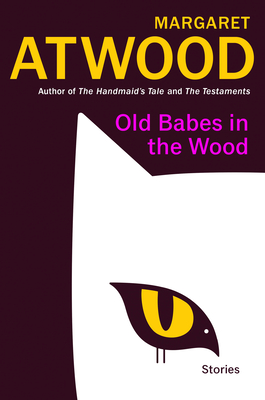
So, I decided to join in again this year, as I knew I had a collection of short stories in my TBR pile. The only problem is that my non-Australian TBRs are still in boxes somewhere. What to do? Maybe, I thought, there’s a short story online somewhere, and sure enough I found one in The Guardian. Titled “Widows” it features Nell and (the late) Tig. From Marcie’s blog I learnt that this couple first appeared in Atwood’s collection of linked stories titled Moral disorder, and appeared again in her recent collection Old babes in the wood, from which this story comes. However, I’ve not read either of these collections, and I didn’t recollect those characters or their names.

Then a strange thing happened. According to Wikipedia, Moral disorder contains eleven connected short stories, the second last one being “The Labrador fiasco”. This is the story I read for last year’s MARM, but it was in a 1996-published Bloomsbury Quid edition. I had no idea it was later included in the 2006-published Moral disorder. Oh these writers can be tricksy. Did she change it in any way – such as to name the then unnamed character – for version in the collection? Anyhow, moving on, Wikipedia tells me that the 2023-published Old babes in the wood comprises fifteen stories in three parts: “Tig & Nell” (three), “My Evil Mother” (eight), and “Nell & Tig” (four). “Widows” is the thirteenth story in the collection, so presumably the second one in that last group of four.

I won’t rehash “The Labrador fiasco”, except to say that it is a “story-within-a-story” story, and that the framing story concerns the unnamed narrator (who is apparently Nell) visiting her aging father and mother. The father, in particular, is declining, having experienced a stroke six years before the story’s opening. It is told first person by the daughter, who regularly visits her parents and is becoming aware of aging and our inevitable decline. Some years have clearly passed, and in “Widows” Nell has recently lost her husband “Tig”. It’s an epistolary story, I guess you could say, though it contains only two letters, both by Nell to a friend named Stevie.

The first, and main, letter is a delight – and pure Atwood. It’s partly in what she covers, as this short short story manages to encompass Atwood’s recurring themes – women (their position in society, and their relationships), language, aging, social conventions, and the state of the world. But it’s also in the sly way she makes her sharp little points. For example, talking about widows, she has a dig at the modern penchant for creating increasingly complicated gender-neutral descriptions:

I’m hanging out with a clutch of other widows. Some of them are widowers: we have not yet got around to a gender-neutral term for those who have lost their life partners. Maybe TWHLTLP will appear shortly, but it hasn’t yet. Some are women who have lost women or men who have lost men, but mostly they are women who have lost men.

Similarly, there is a sly reference to world politics and climate change, when she says to Stevie, who is much younger, that:

if you live another thirty years and are still enjoying it, or most of it – if anyone will be enjoying, or indeed living, considering the huge unknown wave that is already rolling toward us – I expect you will look at a picture of yourself as you are today, supposing your personal effects have survived flood, fire, famine, plague, insurrection, invasion, or whatever …

Of course, Nell talks about grief, about the forms, assumptions and cliches that surround it. She’s quietly scathing about “checking the boxes of the prescribed grief process” and eschews the well-intended offers of casseroles and suggestions that she go on a cruise.

When I read writing like this, I can’t help being reminded of Jane Austen, because both have the ability to see through our conventions and pretensions to the truths beneath, and to make us chuckle as they do so.

However, for all the cheeky barbs and social commentary, there is also something heartfelt in her discussion of grief. She speaks of how it skews one’s experience of time, how it affects one’s relationship with the person who has died, and what grieving people really talk about and deal with. Atwood knows whereof she speaks having lost her husband of 46 years in 2019.

If I thought this first letter was both clever and moving, the second letter just nailed it. In fact, if I were writing criticism and not a review, I would discuss what Atwood does here, but that would spoil the whole experience, and I don’t want to do that because you can read it yourself at the link below. Suffice it to say that, while “Widows” is a short story, it does a lot in its few words, and its ending signs off with aplomb.

Read for MARM 2024

Margaret Atwood
“Widows”
The Guardian, 25 February, 2023 (also pub. Old babes in the wood, 2023)
Available online at The Guardian, 2023

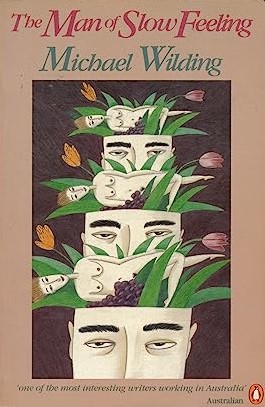
Michael Wilding, The man of slow feeling (#Review, #1970 Club)

Michael Wilding’s short story, “The man of slow feeling”, is hopefully the first of two reviews I post for the 1970 Club, but we’ll see if I get the second one done. I have been making a practice of reading Australian short stories for the Year Clubs, so when the year is chosen I go to my little collection of anthologies looking for something appropriate. My favourite anthology for this purpose is The Penguin century of Australian stories, edited by Carmel Bird, because it is a large comprehensive collection and because the stories are ordered chronologically with the year of publication clearly identified. Love it!

Who is Michael Wilding?

With these later year clubs, like 1970, there’s a higher chance that the authors we read might still be alive. This, I believe, is the case with Michael Wilding. Born in England in 1942, he took up a position as lecturer at the University of Sydney from 1963 to 1967, before returning to England. However, two years later, in 1969, he returned to Australia and stayed. He was appointed Professor of English and Australian Literature at the University of Sydney in 1993, and remained in that position until he retired in 2000.

AustLit provides an excellent summary of his career. As an academic, he has, they say, had a distinguished career as a literary scholar, critic, and editor”, specialising in seventeenth and early eighteenth century English literature. Since the early 1970s, he has also “built a reputation as an important critic and scholar of Australian literature” focusing in particular on Marcus Clarke, William Lane and Christina Stead. And, he has been active as a publisher, having co-founded two presses, and at least one literary magazine.

However, he also, says AustLit, “came to prominence as creative writer in the late 1960s, when he was at the forefront of the ‘new writing’ movement which emerged in Australia in at that time”. He was part of a group of writers, editors and publishers “who were influential in promoting new and experimental writing, and in facilitating the revitalised Australian literary landscape of the late 1960s and 1970s”. AustLit doesn’t identify who was in that influential group, but I think Kerry Goldsworthy does in her introduction to Penguin’s anthology. She writes that “short fiction was the dominant literary form in Australia in the 1970s” and the most recognised practitioners were Frank Moorhouse, Peter Carey, Murray Bail and Michael Wilding. (All men, interestingly.) This writing, says Goldsworthy, was heavily influenced by European and American postmodern writing, but she doesn’t specifically reference Wilding’s story in her discussion.

Wilding has published over twenty novels and short story collections. AustLit adds that his short stories have also been published widely in anthologies, and that many have also been translated. Wikipedia provides an extensive list of his writing.

“The man with slow feeling”

“The man with slow feeling” is a third-person story about an unnamed man who, as the story opens, is in hospital after a serious accident from which he had not been expected to survive. However, he does survive. Gradually his sight and speech return, but not his sensation. That is, he can’t taste food or feel touch.

Soon though, he realises that sensation is returning, just some time after the actual experience. For example, he and his partner, Maria, make love, but he feels nothing – until some hours later. Not good! Not only is there the problem of feeling nothing, but when they are making love, he might experience some unpleasant sensation from three hours ago. Then, when he is out shopping three hours later, he experiences the orgasm. Or, regarding food, he will eat lunch but not taste it until 4pm. It is all, to say the least, disorienting. So, he sets up a system where he records his “sensate actions” so he can prepare (or “warn”) himself “after a three hours’ delay … of what he was about to feel”.

I’m sure you can see the practical problem with this. Soon, he becomes trapped in “a maze of playback and commentary and memory”, where he is trying to record the present for the future while at the same time experiencing the past. It becomes intolerable.

The tone is one of disassociation, alienation – which had me heading off down that more “modernist” path. But, the “recorder” aspect suggested that the theme involves partly, at least, exploring the conflicted role of recording versus experiencing – which is a more post-modern idea. Can you do both? Can a writer do both? Can, I remember discussing at length during my film librarian career, a documentary filmmaker record and not experience (or not affect the experience) during the act of recording? What are the bargains you make between the two?

I don’t know enough about this time in Australian literature – I haven’t read enough – to understand where Wilding’s ideas and thoughts fit into the zeitgeist. In her introduction to the anthology, Kerryn Goldsworthy says that the writing of this time incorporated “elements of fantasy, surrealism, fabulist, literary self-consciousness, and the process of storytelling itself”. She says the stories by Murray Bail and Peter Carey are concerned with “the riddles and paradoxes of representation itself”. Wilding’s story could also be read as part of this exploration.

This is a dark story in which, if I stick with my idea about the theme, Wilding suggests that the life of sensation is what it’s all about. Fair enough, but where does that leave the writer (or recorder)?

“The man with slow feeling” had me intrigued from its opening lines to its close. I’m not sure I have fully grasped all that Wilding intended by it, but this was a time of experimentation with the short fiction form and new writerly freedoms. I wish I could point you to an online version of the story.

* Read for the 1970 reading week run by Karen (Kaggsy’s Bookish Ramblings) and Simon (Stuck in a Book).

Michael Wilding
“The man with slow feeling” (orig. pub. Man: Australian Magazine for Men, July 1970)
in Carmel Bird (ed.), The Penguin century of Australian stories
Camberwell: Penguin Books, 2006 (first ed. 2000)
pp. 232-238

Beth H. Piatote, Beading lesson (#Review)

Beth Piatote’s “Beading lesson” is the thirteenth of fourteen stories in the anthology, Great short stories by contemporary Native American writers, and with it, we move from the 1990s to the 2000s.

Beth H Piatote

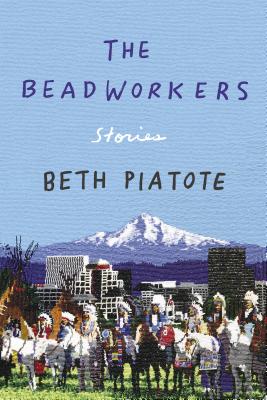
Anthology editor Bob Blaisdell provides very little information about Piatote. It simply says that she is Nez Perce and a Professor of Native American Studies at University of California, Berkeley. Wikipedia provides a little more, but not much in terms of life history. It tells us that she is a scholar and author, that she is “a member of Chief Joseph’s Tribe and the Colville Confederated Tribes”. And it expands on her academic qualifications and achievements a bit more. It seems most of her writing is academic, but she has had one short story collection published, The beadworkers, published by CounterPoint Press in 2019.

“Beading lesson”

“Beading lesson” is the shortest story in the anthology. Blaisdell gives its original date as 2002, but the source for the story is a 2008 Oxford University Press anthology, Reckonings: Contemporary short fiction by Native American women. However, I believe, from the GoodReads description of The beadworkers, that the story was also included there.

GoodReads describes The beadworkers, starting with, “A woman teaches her niece to make a pair of beaded earrings, while ruminating on a fractured relationship”. This perfectly captures the setting of “Beading lesson”, but of course there’s much more to it. Before I get onto that, however, I’ll add that the collection sounds interestingly varied, as it includes stories set in the 1960s and 1890. GoodReads concludes its description/promo with “Formally inventive, witty, and generous, the works in this singular debut collection draw on Indigenous aesthetics and forms to offer a powerful, sustaining vision of Native life in the Americas”. I haven’t read the other stories, but my guess from reading “Beading lesson” is that the collection explores the cultural, social, political and economic role and implications of beadwork, and that it also uses the idea of beadwork literally, as a practice, and symbolically, to represent the wider culture.

So now, “Beading lesson”. The fractured relationship mentioned by GoodReads is with the aunt’s sister, that is, the niece’s mother. The story is told first person by the aunt, who gently and patiently shows her niece the intricacies of beading, as they make some earrings for the mother. However, as she passes on to her niece an important cultural skill, she also shares values and information that she believes are important for her niece to know. In other words, the skill teaching is part of wider mentoring, which is what all good skill teaching is about.

What makes this story interesting is the subject of this mentoring. It’s multifold – to pass on cultural traditions, to teach the niece some life-skills, and, eventually, maybe, to lead to a repair in the broken relationship with her sister. It appears that this sister, the youngest in her family, had been spoilt. As a result, she had not learnt the skills our narrator had learnt, and has lost culture. The aunt tells her niece:

I think sometimes she wishes she learnt to bead, but she didn’t want to when she was little. She was the youngest, so I think she was a little spoiled but don’t tell her I said that. She didn’t have to do things she didn’t want to, she didn’t even have to go to boarding school. 

The boarding school reference is intriguing. Our narrator is positive about her experience, when, quite often, such schools were sites of cultural loss.

As the lesson progresses, we learn that the narrator is passing on beadskills to men in prison, which gives them skill and pride. The subtle message here of course concerns Indigenous incarceration. We also learn that her beadwork has supported her in tough times, through times of “livin’ skinny”. And, we gain some insight into the politics of, let us say, “Indigenous arts and crafts”. The aunt tells her niece that when some people

buy your beadwork, they think it should last forever. Somebody’s car breaks down, he knows he got to take it to the shop, pay someone to get it goin’ again. But not with beadwork — not with something an Indian made. No, they bring it back 10 years later and they want you to fix it for free! They think because an Indian makes it, it’s got to last forever. Just think if the Indians did that with all the things the government made for us. Hey, you got to fix it for free! 

The use of vernacular for the aunt’s story could lull readers into thinking she is a sweet but simple old lady. However, as the story builds, it becomes increasingly clear that she knows exactly what she is about. We see her to be kind, wise, and generous, where it is warranted, but not stupid. She knows the value and importance of what she does, but she also knows exploitation and is resilient in its face. She knows that maintaining cultural practice is important to her people’s continuation. This a story in which the personal is quietly, but absolutely, infused with the political. It’s clever and delightful to read.

Beth H. Piatote
“Beading lesson” (orig. pub. 2002)
in Bob Blaisdell (ed.), Great short stories by contemporary Native American writers
Garden City: Dover Publications, 2014
pp. 100-103
ISBN: 9780486490953

Available online at High Country News.

Willa Cather, The bookkeeper’s wife (#Review)

Willa Cather
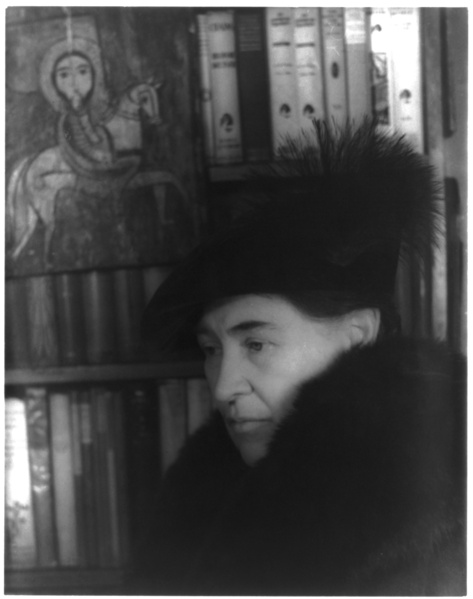
Willa Cather, 1936 (Photo: Carl Van Vechten; Public domain, via Wikipedia)

It’s nearly two years since I posted on a Library of America (LOA) short story, and it’s over a year since they published Willa Cather’s “The bookkeeper’s wife” as their Story of the Week. However, this morning I had a quiet moment and decided to check over my little LOA TBR list. Willa Cather’s seemed just the ticket because, as I have written before, I like her “robust, somewhat terse and yet not unsubtle style”. I have read three novels by Cather, and a few short stories, starting with, “Peter”, which was first published in 1892. “The bookkeeper’s wife” was published much later, in 1916, after her first three novels were published, but before My Ántonia (1918). (You can check out my Cather posts here.)

One of the notable things about her stories is their variety. Not all are about the tough life of the pioneer, or even about midwestern landscapes, albeit these were among her favourite preoccupations. She did write about urban environments, and this story is one of those.

“The bookkeeper’s wife”

LOA’s usual introductory notes explain that in 1917, Willa Cather was working on a new book, a short story collection called Office wives. These stories would be published in Century magazine, and would then be published in book form. The book never eventuated, and only four stories were written, of which three were published. The fourth manuscript has, apparently, been lost.

LOA suggests that the proposed title for the series, Office wives

seems to have been a subtle act of provocation; of the five working women featured in Cather’s three stories—stenographers, typists, clerical workers—only Stella Bixby, “the bookkeeper’s wife,” is married … Cather explores the ways in which working women and their male supervisors mirror, in a distorted fashion, the domestic arrangements between wives and husbands. 

The stories offer a different look at the “New Woman” type which was the vogue in popular magazine fiction of the early twentieth century. These women were financially independent employees in warehouses, shops, and offices, but Cather – as was her wont – had a more realistic take on the situation. She understood the prevailing power structures in such work environments, and her stories, says LOA, “depict how the freedom and independence available to women in the workplace” were “still limited by their dependence on and subservience to men”.

Cather knew whereof she spoke, having worked herself in the business world. LOA says that she had worked “as an editor, columnist, and occasional business manager at Home Monthly in Pittsburgh; as the telegraph desk reporter and headline writer for the Pittsburg Leader, a daily newspaper; and, most significantly, as a staff member from 1906 to 1912 at McClure’s magazine, where she became the managing editor”.

Interestingly, despite the planned book title, the protagonist of the first story she wrote for it, “The bookkeeper’s wife”, is the man, the bookkeeper. But, his wife, Stella, as the title implies, is the story’s linchpin. Superficially, the plot set-up suggests something predictable. It starts with our bookkeeper, Percy Bixby, sitting at his desk at work. He’s the last one there and he is about to embezzle (sorry, “accept a loan from”) his company in order to marry Stella, a stenographer working for another company, and offer her the lifestyle she expects. He has won her over a flashier man, salesman Charlie Greengay, whom Stella knew “would go further in the world” but who didn’t have Percy’s “warm, clear, gray eyes”. We think we know where this will go, but, pleasingly, it only partly plays to expectation.

The story is told third person, mainly through the eyes of Percy, but we do have moments in Stella’s head, and in that of Percy’s similar-aged boss, Oliver Remsen Junior. What makes the story so enjoyable to read, besides its plotting, is Cather’s tight, spare writing. Her words carry weight. Look at the names for a start, the stolid Percy Bixby, the exciting Charlie Greengay, the aspirational Stella Brown, and the classy Oliver Remsen Junior. Description is minimal, but there’s just enough to layer meaning, like Percy and Stella’s “clock, as big as a coffin and with nothing but its two weights dangling in its hollow framework”, and their “false fireplace”. Five years in, the marriage is clearly “hollow”, “false”. It’s worth noting, however, that they have had a baby die, but we only hear this via Oliver, so how it has impacted the marriage is left to us to think about.

Of course, Percy is found out – part-way through the story – because he ‘fesses up, in fact. There are no histrionics, no high drama. Each character behaves in accordance with their nature as established by Cather. Percy, who like so many young men got caught up in the competition for a pretty girl with high expectations, is fundamentally honest and sensible, albeit rather ordinary. Charlie’s “dash and color and assurance” sees him win, even when he loses. Oliver, a new-style humane boss, was prepared to help Percy, but has to be realistic in the end, while the titular Stella – she of the “hair [that] had to be lived up to” – ultimately sees the fundamental difference between her and Percy. Needing excitement and show, she decides to go for it, but we are told enough to know that it is still a man’s world and that, for all her independence, things may not turn out the way she so confidently expects.

“The bookkeeper’s wife”, from its title to its ending, is so beautifully nuanced that, even today, one hundred years later, we might see that things are, perhaps, not as different as we might have expected.

Willa Cather
“The bookkeeper’s wife”
First published: in Century, May 1916. 
Available: Online at the Library of America

Eli Funaro, The dog pit (#Review)

Eli Funaro’s “The dog pit” is the twelfth of fourteen stories in the anthology, Great short stories by contemporary Native American writers. Like the previous stories by Thomas King and Duane Niatum, it was written in the 1990s.

Eli Funaro

Anthology editor Bob Blaisdell provides very little information about Funaro, and I have to say that I have very little more to add. Blaisdell says that he “seems to hail from Minnesota, where he is a video director” and that his “plain-spoken and shocking story was written for a program at the Institute of American Indian Arts at Santa Fe”. That’s it.

All I’ve found is that someone called Eli Funaro – presumably the same one – is part of a media company called A Tribe Called Geek, which describes itself as

an award-winning media platform for Indigenous Geek Culture and Stem. But we are more than just a media platform. We are a community of intelligent, imaginative, innovative and creative Indigenerds acknowledging and advancing the visibility of our contributions to pop culture and STEM. From indigenous superheroes to Harry Potter and more, our podcasts, website and social media are a celebration of Indigenous Representation and Geekery.

When I tried to enter the “A Tribe Called Geek” website, I got one of those “Not Secure” warnings. While it’s probably OK to proceed, I’m not prepared to take the risk.

So, all I have is a list of 35 articles by Eli Funaro at a site called Muck Rack. Clicking on the articles takes me to that website with its “not secure” warning, and to find out more about Funaro at Muck Rack I have to join, which I’m not going to do. Funaro is not in Wikipedia, and nor is A Tribe Called Geek, but Muck Rack is. It’s a software program that “connects public relation offices and journalist listing on social media”.

What all this says to me is that Funaro seems to be more a journalist than a writer of fiction, and that his affiliation and ongoing interest is Indigenous. His articles – some of which are dated “three months ago” – seem to be mostly reviews, such as of the Wolverine movie, and of Marvel comics. The list provides a brief summary, or the opening sentence, and it’s clear that most reference “Indigenous” issues. For example, on Marvel’s Echo comics, Funaro writes that “of all the Indigenous Heroes appearing in the Marvel Universe, Echo stands out as one of the more unique comic book characters”.  Echo – or Maya Lopez – is a Cheyenne woman.

“The dog pit”

“The dog pit” is one of the shortest stories in the anthology. It is told first person in the voice of an eight-year old boy who lives on the “rez” – reservation – where, he tells us, “no garbage trucks … came to pick up your trash”, the implication being that other people had this service. So, Saturday is Garbage Day, and our narrator and his dad’s job is to haul their garbage to the dump.

The story opens with “It was a sunny Saturday, the day that dog died”. A few paragraphs in we are introduced to our boy’s dog Corky, for which his father seems to have little time. “You fed that mutt yesterday” he says, when the boy wants to feed his dog before they head off. But soon they are on their way, along “untitled roads”. Another indication of their second-class status.

The boy finds a pink ball in the glove-box and starts playing with it. However, when his father, having told him he can have it, also tells him he’d taken it from a dead man at the hospital where he works as a janitor, the boy is not so sure he wants it. His father, we are learning, is a practical man. Life is tough and he doesn’t have time for sentiment.

So they get to the dump, with its piles of burning trash and rancid smell, empty their bins, and go through their routine of bleaching their bins before they leave for home. While this is happening, the boy picks up the ball again, only to be told by his dad that the old man who had died holding the ball had probably not been the only person to have died holding it. This makes him anxious; he fears there will be many dead people angry with him if he keeps the ball.

Then we get to the death of the dog mentioned in the opening sentence. It involves the titular dog pit, and is cruel. The boy doesn’t know what to make of it, but doesn’t want his dog to end up there. HIs father, who might be practical, is not hard and says this wouldn’t have to happen. The story concludes with the boy creating his own stories about death with his new Zartan and Stormshadow toys, but also on a sense of a childish ability to put it aside. This is where I come a bit unstuck, because a point is being made in referencing these GI Joe-series figures, but there are cultural nuances that I am not fully across.

On the surface, “The dog pit” is a story about the innocence-versus-experience aspect of youth, on the gradual way we become aware of the darker side of life without taking it all in at once, but there are deeper socioeconomic and sociocultural issues being explored here, ones that Funaro seems to have continued to explore.

It’s not a perfect story. The language doesn’t always stay true to an eight-year-old’s voice, but this is probably the work of a young writer. It works overall, however, because it’s tightly told.

Eli Funaro
“The dog pit” (orig. pub. 1994)
in Bob Blaisdell (ed.), Great short stories by contemporary Native American writers
Garden City: Dover Publications, 2014
pp. 95-99
ISBN: 9780486490953

Anton Chekhov, The lottery ticket (#Review)

Back in April I posted on Majorie Barnard’s short story “The lottery” for Kaggsy’s and Simon’s 1937 Year Club. Commenting on that post, my American friend Carolyn said that in looking for Barnard’s story she found Chekhov’s “The lottery ticket”, written fifty years earlier in 1887. Of course, I had to read it too. There are enough similarities to make us think that Barnard very likely had read Chekhov’s story, but had decided to put her own spin on it. Whether we are right or not, the two stories make for an interesting comparison. I will try to discuss them without spoiling them, but there will be hints.

Both stories deal with a married couple and their reaction to the idea of winning a lottery, and both stories are told third person from the husband’s point of view. Marjorie Barnard’s is set in suburban Sydney, and explores what happens when a wife wins the lottery. She doesn’t tell him immediately so he finds out from others who had read it in the newspaper. On his way home from work, he thinks about what it all means, how “he” might spend it, and he then starts to find fault with his wife. She “wasn’t cheery and easy going” and hadn’t aged well (not as well as he had, anyhow), and so on. It ends, however, with the wife having the upper hand. Barnard’s story reflects her interest in gender, in how little agency women had, and how constricted their lives were.

This is not Chekhov’s prime interest. He is writing in a different place and time. In his story, it is also the wife who had bought the ticket, but it’s the husband who checks the newspaper and sees that there’s a “probability” that her ticket had won. However, rather than reading on and confirming whether that’s the case he suggests they wait:

Looking at his wife, Ivan Dmitritch gave a broad, senseless smile, like a baby when a bright object is shown it. His wife smiled too; it was as pleasant to her as to him that he only mentioned the series, and did not try to find out the number of the winning ticket. To torment and tantalize oneself with hopes of possible fortune is so sweet, so thrilling!

The hope of course is that they will have a lovely dream about the possibilities, those dreams we all occasionally have (even if we don’t buy lottery tickets!) But, if you know Chekhov, you’ll know that he is unlikely to be interested in unrealistic dreams, but in how ordinary people traverse life and their relationships. So, he lets Ivan dream – of “a new life … a transformation”. “That’s not money,” he says, “but power, capital!” He imagines paying off debts, buying “an estate”, going abroad. Occasionally, he notices that his wife is also dreaming. But, it comes to a head when he realises she’s dreaming of going abroad too. What? She’d be no fun to go with. She’d just talk about the children, complain about the cost of the food, not to mention want to spend money on looking after her relations,

And for the first time in his life his mind dwelt on the fact that his wife had grown elderly and plain, and that she was saturated through and through with the smell of cooking, while he was still young, fresh, and healthy, and might well have got married again.

So the story continues with this man who was, at the beginning, “very well satisfied with his lot” – including presumably, having his wife at home, cooking his meals, caring for the children – feeling very different about his life by the end.

The irony, in Chekhov’s as well as Barnard’s story, is that the lottery ticket was the belittled wife’s. Barnard, however, gives her wife agency, whereas Chekhov’s focus is on how money and greed can destabilise (or, is it reveal?) one’s values. However, the little point is still there, in the irony, in that early description of the husband with his “senseless smile, like a baby when a bright object is shown it”, and in so many of the husband’s attitudes towards his wife. Gender issues are not so forward in the resolution, but they are part of the picture.

Anton Chekhov
“The lottery ticket”
First published 1887
Available online at Classic Shorts

Marjorie Barnard, The lottery (#Review, #1937 Club)

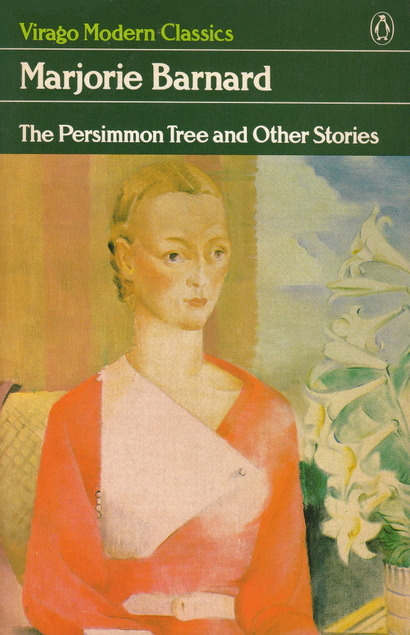
This will probably be my only review for the 1937 Year Club but I am thrilled to do it, because it is by Marjorie Barnard, an author whom I have mentioned many times, but have not yet managed to review here. My post is on a short story from her collection, The persimmon tree and other stories, which is one of the very few short story collections I’ve read more than once. It is so good. And don’t just take it from me. Carmel Bird mentions it in her bibliomemoir, Telltale, calling it “extraordinarily powerful”.

I wasn’t sure, in fact, what I was going to read for this week. I certainly hadn’t considered this collection because it was first published in 1943 but, rummaging around Trove, I discovered a story by Marjorie Barnard in The Bulletin of 6 January 1937. The page was titled “Of a lottery winner: First Prize” but I recognised it immediately, and let out an internal whoop. Here was my chance.

“The lottery”, as it is titled in the collection, has been anthologised, including in The Penguin best Australian short stories (1991), though the titular story, “The persimmon tree” is, I believe, the most commonly anthologised from the collection.

Who was Marjorie Barnard?

Marjorie Barnard (1897-1987) was an Australian novelist and short story writer, critic, historian and librarian. She wrote five collaborative novels with Flora Eldershaw, under the pseudonym, M. Barnard Eldershaw. Their first novel, A house is built, was published in 1929, having jointly won, with Katharine Susannah Prichard’s Coonardoo, The Bulletin prize in 1928. Their last, the futuristic Tomorrow and tomorrow and tomorrow was censored, and published in an expurgated edition as Tomorrow and tomorrow in 1947. Barnard also wrote works of literary criticism, and is credited with writing the first assessment of Patrick White (in Meanjin in 1956) and the first biography of Miles Franklin. (Jill Roe writes of the biography in the ADB, saying that “written with misgivings and before the release of Franklin’s voluminous papers, it exhibited characteristic virtues, with insight and style making up for ambivalence and inevitable error.”)

Barnard, along with Eldershaw, and other Sydney-based writers, like Frank Dalby Davison, was deeply concerned about the social and economic upheavals of the 1930s. These three, known as “the triumvirate”, held literary soirees which were attended by like-minded writers including Xavier Herbert and Miles Franklin. They were active in promoting writer’s rights (through the Fellowship of Australian Writers), and opposed censorship. She was a pacifist, and was apparently named in those political witch hunts of the 1950s, making her cautious about what she admitted to in terms of political affiliations. She was one of many writers who corresponded with, and often asked advice of, Nettie Palmer. She was a significant force.

In 1983, she was awarded the Patrick White Award, as was also her admirer Carmel Bird, years later. Hers was a long, and active life – far too long for me to cover here – and unfortunately, I don’t think anyone has done a biography of her. She is more than a worthy subject.

“The lottery”

What is so “extraordinarily powerful” about The persimmon tree and other stories is the quietly controlled but clear-eyed way Barnard interrogates human experience, in general, and women’s experience, in particular. Many of the stories have a strong feminist undercurrent, and “The lottery” is one of these. What makes it remarkable is that it is told third person through the perspective of the husband, which sets us up to align with him – perhaps.

The story is set in suburban Sydney. It starts with the husband, Ted Bilborough, having just boarded the ferry on his way home from work. His co-passengers tell him – show him in the paper, in fact – that his wife had won the lottery, “Mrs. Grace Bilborough, 52 Cuthbert-street.’… First prize, £5OOO, Last Hope Syndicate.” The thing is, Ted didn’t know. We then follow him on his way home as he goes through various emotions – and as he does so, we glean a picture of who he is and the sort of life his wife has led. A disconnect builds between how he – the perfect unreliable narrator – sees that life and the way we do.

At first, we are told that “everyone likes Ted”. He’s decent, it seems, in that typical-for-the-time suburban-husband way, and because of this “he’d always expected in a trusting sort of way to be rewarded, but not through Grace”. It’s little qualifications like this – “but not through Grace” – that give the game away.

Alongside Ted’s thoughts are descriptions of the evening. They too contain nuances that suggest deeper truths are at play. “The sun was sinking into a bank of grey cloud, soft and formless as mist” and two pine-trees have a “soft arrested grace”, a bit like his Grace, we readers might think. A little further on, “Ted could see that the smooth water was really a pale, tawny gold with patches, roughened by the turning tide, of pale frosty blue”.

He wonders how she’d paid for the ticket, “He hadn’t noticed any difference in the housekeeping, and he prided himself he noticed everything”. He starts to rethink Grace, who’d been “a good wife”, while he’d been “a good husband”. Indeed, “theirs was a model home” but, “well, somehow he found it easier to be cheerful in other people’s homes than in his own”. Whose fault is this? Well, Grace’s of course!

She wasn’t cheery and easy-going. Something moody about her now. Moody. He’d worn better than Grace; anyone could see that, and yet it was he who had had the hard time. All she had to do was to stay at home and look after the house and the children. Nothing much in that. She always seemed to be working, but he couldn’t see what there was to do that could take her so long. 

And so it continues, Ted ruminating on the situation, on their marriage, and on how things might proceed – even starting to feel a bit magnanimous with this money that’s not his own – until he arrives home, and discovers exactly what Grace intends. It’s all in the name of the Syndicate!

The writing is delicious. Spare, and accessible, it nails women’s lives and the constrictions so many live under. There is little agency for many of her women, and Barnard draws this with such simple but knowing realism it takes your breathe away. I love many of the stories in the book – and this is as good as any of them.

* Read for the 1962 reading week run by Karen (Kaggsy’s Bookish Rambling) and Simon (Stuck in a Book) who, I discovered, has reviewed the collection.

Marjorie Barnard
“The lottery” (orig. pub. in The Bulletin, 6 January 1937)
in Marjorie Barnard, The persimmon tree and other stories
London: Virago Press, 1985 (first published by Clarendon in 1943)
pp. 97-105

Full text of The persimmon tree and other stories is available online at the Internet Archive

Thomas King, Borders (#Review)

Thomas King’s “Borders” is the eleventh of fourteen stories in the anthology, Great short stories by contemporary Native American writers. Like the previous story by Duane Niatum, it was also written in the 1990s.

Thomas King

Anthology editor Bob Blaisdell provides some basic information about King, but I am supplementing that with information from Wikipedia which introduces him as an “American-born Canadian writer and broadcast presenter who most often writes about First Nations”. He was born in California in 1943, and “self-identifies as being of Cherokee, Greek, and German descent”. He has written novels, children’s books, and short stories. 

King studied in Californian schools and universities, before earning his PhD at the University of Utah. Between his various degrees, he worked in many jobs, including spending three years in New Zealand. He moved to Canada in 1980, where he worked as an academic until he retired.

In terms of his First Nations activity, our main interest here, Wikipedia says that “his 1986 PhD dissertation was on Native American studies, one of the earliest works to explore the oral storytelling tradition as literature”. He is committed to a wide range of issues concerning First Nations rights, prospects and culture, but most relevant to his story, “Borders”, is a statement Wikipedia shares from his book, The inconvenient Indian:

“The issue has always been land. It will always be land, until there isn’t a square foot of land left in North America that is controlled by Native people”.

“Borders”

According to Blaisdell, “Borders” appears in King’s 1993 short story collection, One good story, that one, which was a best-seller in Canada. “Borders” is one of those frequently anthologised stories, apparently, which doesn’t surprise me because it is a ripper. From what I’ve read about King’s writing, “Borders” feels typical of his approach, with its conversational style and use of humour to convey a serious message. King adapted this story into a teleplay for a CBC anthology drama series, and it has also, recently, been turned into a graphic novel for a younger readers.

The narrative comprises two storylines which are alternated with each other. It is told first person through the eyes of a young boy. One storyline concerns his much older sister, Laetitia, leaving home at the age of 17 to live in Salt Lake City, Utah, while the other tells of a trip he makes with his mother some five or so years later to visit this sister. The crux of the story, though, lies in what happens at the US-Canada border. Asked to give her “citizenship”, the mother insists “Blackfoot” and is denied entry. She refuses to offer anything else. As a result, she and her son get caught in a no-man’s land when, attempting to return to Canada, the same response to the same question results in her being refused entry there too. As one of the border officials tries to explain to her, “it’s a legal technicality, that’s all”.

Of course, that’s not all. Blackfoot people ranged across the great northwest of America in what is now known as America and Canada. For our narrator’s mother, that land is her “citizenship”, not that she is American or Canadian, and she will not back down.

From the opening, the mother is established as sensible, no-nonsense. She doesn’t want Laetitia to go to Utah, and she doesn’t give in easily, pointing out the negatives right until they leave her at the border. But Laetitia will go and her mother is eventually proud of her, because she hadn’t “gone floating after some man like a balloon on a string” nor had she “snuck out of the house … to chase rainbows down alleys. And she hadn’t been pregnant.”

We first meet the border, as mentioned above, when the mother and son (our narrator) take Laetitia there, from where she’ll get a bus to Salt Lake City. We see the border, but mother and son don’t attempt to cross it at this point. The writing, at this early point, captures the obstinacy and strength in both mother and daughter, alongside the love between them::

The wind had come up and it blew Laetitia’s hair across her face. Mum reached out and pulled the strands out of Laetitia’s eyes, and Laetitia let her.

“Laetitia let her”. Conveys so much, doesn’t it?

Anyhow, it’s a few years later, when mother and son set off to visit Laetitia that the fun starts. Our narrator sets it up beautifully, his “mom” packing food for the trip, while he plaintively hopes they can “stop at one of those restaurants too, right?” The pacing of the border conversations is perfect. We chuckle, but we see the point too. When the mother gives up trying to get into the USA, and tries to return to Canada, the humour continues. The Canadian border guard, after some friendly small talk, asks

“Where are you coming from?”
“Standoff”.
“Is that in Montana?”
“No.”
“Where are you going?”
“Standoff.”
The woman’s name was Carol and I don’t guess she was any older than Laetitia. “Wow, you both Canadians?”
“Blackfoot.”

And it starts again. It’s just delicious. “Mom” is polite, but also determined to make her point and not. give. in. There are no histrionics, there’s no violence. Just polite behaviour on all sides. (But, the description of the few days they spend in this limbo region, visiting the duty free shop and sleeping in the car, did remind me of that Kath and Kim episode when Kath and Kel spend their honeymoon at the airport.)

The language is direct and spare, told from a pre-teen’s point of view. He reports rather than comments, but in that reportage we see the truth – of the strength of the mother’s identity and determination to preserve it, and of her wisdom in dealing with her daughter.

Hachette’s promo for the graphic novel version describes it as resonating “with themes of identity, justice, and belonging”. It is exactly that. I imagine the graphic novel is a winner, because the short story sure is.

Thomas King
“Borders” (orig. pub. 1991)
in Bob Blaisdell (ed.), Great short stories by contemporary Native American writers
Garden City: Dover Publications, 2014
pp. 84-94
ISBN: 9780486490953

Duane Niatum, Crow’s sun (#Review)

Duane Niatum’s “Crow’s sun” is the tenth story of fourteen in the anthology, Great short stories by contemporary Native American writers, and moves us into the 1990s, where we will remain for the next two stories before ending up in the early 2000s.

Duane Niatum

Anthology editor Bob Blaisdell provides more information about Niatum than he does for some of the writers, but I am supplementing that with information from Wikipedia and the Poetry Foundation. Variously described as a poet, fiction writer, playwright, essayist and editor, Niatum was born in 1938 in Seattle, Washington, to a Klallam (Salish) mother and Italian-American father. After his parents divorced when he was just 4, he spent a lot of time with his maternal Klallam grandfather, from whom he learnt tribal ways and oral traditions. He is an enrolled member of the Klallam Tribe (Jamestown Band).

At 17, Niatum enlisted in the United States Navy, and served in Japan. On leaving the Navy, he did his B.A. in English, at the University of Washington, studying with poets, Theodore Roethke and Elizabeth Bishop. He then earned his M.A. at Johns Hopkins University, and a Ph.D. in American culture from the University of Michigan.

Poetry was his main love, it seems. Wikipedia states that he “established himself as one of the most influential promoters of Native American poetry”. He edited a Native American author series at Harper & Row Publishers, producing two “influential anthologies”. He has published essays on Native American literature, and his poetry has been translated into many languages.

The Poetry Foundation says that his “writing is deeply connected with the Northwest coast landscape, its mountains, forests, water and creatures” and that “the legends and traditions of his ancestors help shape and animate his poetry”. However, it is a short story, of course, that Blaisdell has chosen for his anthology.

“Crow’s sun”

I’ve now read a couple of Niatum’s poems at Poetry Foundation, but none that specifically illuminate this story. “Crow’s sun” presumably draws from his experience in the Navy as it deals with a young sailor named Thomas sentenced to 30-days in the brig. I’m not saying that the story is autobiographical. It may be – I don’t know – but my point is that his Naval experience, and its treatment of people of colour, is sure to have informed the story.

The narrative takes place over one day. It starts with Thomas, just one year into his service, waiting to be taken to the brig and ends with him behind bars. Not a lot of action, in other words, but a lot goes on. This is a story about systemic racism. Thomas, we learn, had let his mother and step-father talk him into enlisting under-age, a common story for youths of colour with limited opportunities. In his case, he’d already been kicked out of home after he’d “stopped his step-father from beating up his mother in a drunken brawl”.

Once in the Navy, things don’t go well. Thomas “cannot fathom why sailors 17 to 70 live in some dream of future glory, which is the oldest myth of the military”. We are not told what Thomas has done, but it appears, from Shore Patrolman Cook’s advice as he delivers Thomas to the brig, that Thomas has been treated harshly:

“This hole’ll be your home for thirty days, Thomas. And buddy, you’d better watch your mouth in this joint. Do your time with your trap shut, until you’re running free. Don’t act the wise-guy. I don’t like your face, Thomas, but I don’t think those hicks from the base were right. You’re a punk, but who isn’t at your age. They went too far. I believe burning a man at the stake’s too much like what like what I left in Alabama.”

This surprises Thomas, because Cook, who “is a spit and polish sailor married to the idea that blind obedience to orders is the only law”, has never really liked him. His advice, then, means something, and Thomas thanks him for it. The rest of the story tells of his admission interview with the Brig Warden – and we get the full measure of the racism he is likely to experience. The Warden aggressively violently enforces his will. He calls Thomas, insultingly and erroneously at that, a “wetback”. He ridicules Thomas’ name insisting it should be “Pancho Villa or Willy Garcia”. I don’t need to continue because you’ve surely seen or read enough scenes like this to get the gist.

What makes this story is how Thomas handles the situation, which is to call on the wisdom of his grandfather. At the first sign of the Warden’s aggression:

The muscles in Thomas’ face tighten; his eyes thicken; narrow into tiny moons peering from behind a shield of fern. He sways slightly; stiffens his whole body, not sure what to expect from the man closing in. Grandson to Cedar Crow, Thomas feels his fingers change to claws, to a wing of thrashing spirit flying wildly inside his ear. (Be calm and steady now. This man could be your enemy. Know his every move. Break him like a twig if he tries to harm you. Be the Thunderbird of our song. I am Crow, your father.)

From here on, Thomas draws on his grandfather’s wisdom to assess and manage the situation. There is violence but he sees death is not on the cards. We learn that many Klallam people had lost faith in their beliefs and practices, but not Thomas. His late grandfather, “the quiet man of family, sea and forest had counselled him well”. From here to the end, where we leave Thomas standing in his cell, we observe him watching and responding to the Warden and drawing on his spirit wisdom.

It’s a strong story about the power and value of knowing your culture.

Duane Niatum
“Crow’s sun” (orig. pub. 1991)
in Bob Blaisdell (ed.), Great short stories by contemporary Native American writers
Garden City: Dover Publications, 2014
pp. 75-83
ISBN: 9780486490953

Rebecca Campbell, Arboreality (#BookReview)

Arboreality, by Canadian writer Rebecca Campbell, won the 2023 Ursula K. Le Guin Prize. However, not being much of a speculative fiction reader, I didn’t discover this book through this award. Fortunately, some bloggers I follow, like Bill (The Australian Legend), do follow this genre, and his review convinced me that this climate change dystopian work fits into the sort of speculative fiction that does interest me.

Before I talk about the book, however, a little about the prize. It was established in 2022, in honor of Ursula K. Le Guin, and is currently worth $25,000. It has some specific criteria: it’s an English-language award for a single work of “imaginative fiction”, and intends to honour authors who “can imagine real grounds for hope and see alternatives to how we live now”. This last bit is interesting – “real grounds for hope”. It reminds me of the Barbara Jefferis Award, which now seems to be in abeyance, but which was controversial because it stipulated that the winning work had to depict “women and girls in a positive way [my emph] or otherwise empowers the status of women and girls in society”. I don’t believe literature must offer hope or be positive, but I have no problem with awards sponsors making such stipulations.

So now, that out of the way, the book. It is set on Vancouver Island, a beautiful part of the world that I have visited. It’s novella in size, but, structurally, is best described as a collection of six inter-connected short stories:

  • “Special collections”
  • “Controlled burn”
  • “An important failure”
  • “Scion and root stocks”
  • “Pub food”
  • “Cathedral arboreal”

These stories are presented more or less chronologically, starting with the first two stories being set in the very near future (up to around 2050) with the last encompassing 2100. They are linked in various ways – by location; by characters (encompassing family and friends, ancestors and descendants, over time); and, as you’d expect, given the title, by trees, particularly but not exclusively, the arbutus and its mutant version, the golden arbutus. Each story focuses on a specific issue or idea and plays it out through personal stories, such as an academic saving books from a “crumbling” library (“Special collections”); a suburbanite trying to revive a devastated garden with local plants, as one-by-one his neighbours leave (“Controlled burn”); a luthier hunting for seasoned tonewood, via the black market if necessary, to make a Cremona-worthy violin (“An important failure”). These highly personalised stories are placed in context, through the addition of another voice – an omniscient narrator, in italicised sections – which conveys the wider ecological, economic and political picture. We see the land change through fire and rising sealevels; we hear of space colonisation; we learn of pandemics. It’s cleverly done, and although it requires concentration, I was more than willing to go with it because the vision Campbell presents is compelling in its awful believability. That, I think, is what telling a near-future story can achieve. It’s hard to pretend it won’t happen.

“What are we going to do?”

What makes this book so beautiful, however, is the way Campbell manages convey both absolute horror alongside a sense of hope born of human ingenuity, resilience, and sheer doggedness. Jude and Berenice, fighting a losing battle in their mission to save books, must constantly downgrade their expectations, which means becoming more and more selective about what is saved (and therefore also what is lost to human knowledge), but they don’t give up, and these books are seen in 2100. Similarly, Bernard, in his now empty suburb where gardens have died due to a watering ban, doggedly works to find plants that will live in his and neighbouring gardens, which we see, a few generations later in “Cathedral Arboreal”, has become a forest. And Mason’s “secret history” violin also appears in this last story in another generation. These people will not let go even though they are very aware of what has been lost, of what they have lost.

We’ve lived here for ten thousand years. Someone survived everything history threw at them, the fires and tsunamis, the earthquakes, the smallpox, the settlers. Empire. Capitalism. Someone’s going to survive this. (Benno, c. 2071, in “Scions and Root Stocks”)

The ecological story Campbell tells, alongside the human one, is fascinating, albeit probably more challenging to those of us who don’t know the plants of the region and their significance – the garry oak, the arbutus, the camas (lily), fireweed, Douglas fir, and so on. I know some of the plants she names, but I don’t know their particular role in the culture, their horticultural essence and value, or their symbolic meaning (if any any). Some I looked up, and some I didn’t, but certainly Campbell’s story is rich with interconnections here too, between past, present and future, and between Indigenous and non-Indigenous practices.

One of the meanings of “arboreality” is “of, relating to, or resembling a tree” which makes it a good literal title for a book in which trees stand for so much that is important to life – ecologically, culturally, and psychologically. But Campbell is also, perhaps, playing with the “sheltering” notion implied in “arbor” and “reality”.

The Ursula K. LeGuin Prize’s selection panel wrote:

Arboreality is a eulogy for the world as we know it. Rebecca Campbell’s extraordinary, deeply felt book explores the difficulties of the long hard project of survival. There are no heroes or villains here—only people making brave, difficult choices, out of hope and love for their community, for art, knowledge, and beauty. Arboreality imagines things that we haven’t yet considered about what can and will go wrong with our gardens, libraries, and archives if we don’t act now (maybe even if we do). In her masterful and profoundly ethical stories, Campbell asks us what might be saved, what must be saved, and what it will take to do so. 

‘What are we going to do?” asks Jude in the opening story, “Special collections”. Well might he ask. Arboreality is an astonishing book because of the way it imagines the dire, with all its attendant griefs, side-by-side with survival (and its attendant, hope). This makes it a bit discombobulating because we are constantly surprised by what happens next. The world is not beautiful, and life is tough, but people are surviving and working their way through what life has thrown at them. I don’t imagine Campbell intends us to think, “it’s alright then, let’s continue along our merry, destructive ways” but more that when (because we are, it seems, past “if”) we are confronted with the worst, humans can, and hopefully will, find ways through. The question is: is this the future we want?

Rebecca Campbell
Arboreality
Hamilton, Ca: Stelliform Press, 2022
128pp.
ISBN: 9781777682330 (eBook)