Edition de luxe: A collection of short stories

Edition de luxe: A collection of short stories inspired by our hotelsLast October, I wrote a Monday Musings post on writers-in-residence programs. The first one I listed, because I listed them alphabetically, was Accor Hotels MGallery Literary Collection. This is (or was?) a collaborative program with Melbourne’s The Wheeler Centre. Quoting what I wrote then, ‘it involved providing eight award-winning Australian writers with a short residence in one of Accor’s boutique MGallery hotels and commissioning those authors to write a short story which will be published in a book which will be “presented exclusively to guests at MGallery Hotels”.’ Well, it just so happens that this weekend we are staying in one of these hotels, and what did I find but the book of short stories titled Edition de luxe: A collection of short stories inspired by our hotels. Woo hoo!

It’s a nicely presented little book, with, for each writer, a brief bio, their short story, a brief history of the hotel plus that hotel’s special appeal, photographs, and a “memorable moment” describing something you might be able to enjoy if you stayed at the hotel. This is marketing after all, in addition to offering the treat of a bit of support to writers. The marketing bit comes to the fore when you look at the table of contents. It lists the title of the story, and the name of the hotel at (or about) which it was written, but NOT the name of the writer! Harumph. I’m always irritated when names of authors are not given due recognition in listings.

So, without further ado, I’m going to name the writers, 6 women and 2 men, who appear in the book. They are:

  • Favel Parrett (“Gold”)
  • Graeme Simsion (“Slideshow”)
  • Chris Flynn (“The prophecy, 1931”)
  • Robyn Annear (“Batman’s Hill lives”)
  • Toni Jordan (“Like a kindness”)
  • Debra Oswald (“Dog grooming”)
  • Alison Croggon (“Hello”)
  • Hannie Rayson (“Pip”)

I’ve read the stories – of course, otherwise I wouldn’t be writing this! They are all 2-3 pages, some fiction, some not. They probably, the fiction ones anyhow, qualify as flash fiction, depending on your definition.

The first story, Favel Parrett’s “Gold”, is a little mood piece about what she sees from the balcony of her room at Mount Lofty House, “her” hotel, naturally. It’s non-fiction, and I enjoyed her description of the end of the day:

Time is measured in light. Evening shadows begin to stretch over the valley. The gold moves further and further away towards the horizon, chased by the sun going down.

Nice, peaceful.

The fiction pieces vary in tone from the poignant or sad, like Graeme Simsion’s “Slideshow”, with its little surprise ending, and Alison Croggon’s more worrying “Hello”, to the more lightly humorous, like Chris Flynn’s “The prophecy, 1931” about Walter Lindrum (set in Melbourne’s Hotel Lindrum) and Hannie Rayson’s sperm-donor-inspired final story in the collection, “Pip”. Historian Robyn Annear explores Melbourne’s Batman’s Hill, razed in the 1860s to make way for the railway, in her story “Batman’s Hill lives”, and Toni Jordan, in the Blue Mountains, recounts a chance encounter, which may or may not be real but which makes a sweet story, in “Like a kindness”. But, perhaps, though it’s hard to choose, I most liked Debra Oswald’s “Dog grooming” with its tale of subversion and catharsis.

I won’t say more. These are little pieces, perfect for reading in a hotel at the end of a busy working or travelling day. Quality writers, thoughtful stories. I wonder what, if any, feedback Sofitel/Accor and the Wheeler Centre have had, how the writers found the experience, and whether the project will be repeated.

Elizabeth Harrower, A few days in the country, and other stories (Review)

HarrowerCountryTextThere’s something about Elizabeth Harrower. I’ve just read her Stella Prize shortlisted short story collection A few days in the country, and other stories – and wow! Really, just wow! If you’re a regular reader here, you’ve probably noticed that I’m not one to effuse excessively about books, anymore than I’m one to pan them. I’m careful about what I choose to read, so most of what I read I enjoy. There are, after all, a lot of good and inspiring writers around. But Harrower – the more I read her, the more I see why Patrick White and Christina Stead liked her. She really is something. Her shrewd intelligence, sharp wit, and ability to penetrate the hearts of her characters in just a few words is breathtaking.

Enough though of the superlatives. They are easy to say, but can I prove they are just? I’ll give it a go. As I was reading – and enjoying – Tegan Bennett Daylight’s collection Six bedrooms (my review) I was thinking, yet again, about the current preference for writing in first person. I certainly don’t reject this narrative voice, because I do enjoy the intimacy of it, but I sometimes wonder whether it has become a little de rigueur, perhaps reflecting today’s me-focus? I don’t mean, in saying this, to criticise contemporary writers, because the self is part of the zeitgeist – and to capture that you have to use its modes. However, there’s also something to be said for standing back a little, and this is what a third person voice can do. It is, in fact, what Jane Austen is admired for – her clear-eyed ability to analytically, but wittily, comment on her society, to skewer its pretensions, entrapments and hypocrisies. Harrower exerts the same clear eye, though her focus is more the psyche to Jane Austen’s society.

Now to the collection, itself. The first thing to say is that this is a collection of twelve stories, ten of which have been published before, some as far back as the 1960s and others as recent as last year. Some have been multiply published in anthologies, and some have been reworked. Oh, and eleven are told in third person, with just one in first! There is a subtle underlying structure to the collection, with the first four being about young people – starting with ten-year-old Janet in the opening story, “The fun of the fair”, then moving on to teenagers and young women – followed by the later stories which feature married couples or single adults facing the lives they have made for themselves. The last shocking story, the titular “A few days in the county”, could only be at the end.

There is, I’d say, an overall theme to the collection, and it is best expressed by Clelia in the penultimate story, “It is Margaret”. Her mother, Margaret, has just died and Clelia is dealing with her step-father, a very controlling man reminiscent of Felix in The watch tower (my review) and Hector Shaw in this collection (“The beautiful climate”). Clelia thinks:

Here it was again–the mystery that pursued her through life in one form, in another, returning and returning, presenting itself relentlessly for her solution: how should human beings treat each other?

This is one of those chilling stories about the power people, men usually, can exert over others, and the way women, more often than not, submit to that power, as Margaret did. But Margaret – the title allluding to one of my all-time favourite poems, Gerard Manley Hopkins’ “Spring and fall” – has died, and “there was no further harm Theo could do”. We hope.

This theme, the way people treat each other, is at the heart of every story, and culminates in the final one, “A few days in the country”. What an unnamed someone did to the protagonist Sophie is not made explicit, only hinted at, but the consequences are devastating for her. An undivulged act having a dramatic impact on the protagonist is also explored in the tenth story, “English lesson”, nicely setting us up for this last story and again suggesting a careful hand in ordering the stories.

The consistent world view regarding power and manipulation in the way human beings treat each other is offset by variety in setting, character, story and tone. I was intrigued, for example, by two that read almost like little fables, “Alice”* and “The cornucopia”. Both are written third person, but with an added layer of distance. That is, they are written from a neutral position (“third person objective”), rather than by a narrator who takes us into the heads of the characters, interpreting their feelings and attitudes (“third person limited” or “subjective”). Regardless of how you describe the technique, however, the change in tone adds variety to the reading experience and forces us to look at humanity from a different, cooler, standpoint.

So, “Alice” then. She is a little girl unappreciated by a mother who prefers her sons:

Luckily for the mother, she also had two sons, younger than the girl–golden, milky boys not made entirely of wood and flames like their mother, nor of guileless life like their sister, but a mixture of both, and somehow not quite enough of either. They were extremely pretty children just the same. Like Alice, the brothers had remarkable hair and eyes, but their great triumph over her was that they were boys. She began to perceive that this, more than curls or thoughtful ways, was what pleased. The question was: could one terribly good girl ever, in her mother’s eyes, equal one boy? And the answer was no. (“Alice”)

The story goes on to chronicle Alice’s life, her struggle to be recognised and accepted in a family, then a world, where boys didn’t have to try, “they were welcome when they arrived.” Alice marries, but still wants her mother’s love. However

If Alice had a fault, dangerous to her survival, it was that she was inordinately reluctant to learn from experience. She would not. Because the lesson would be so sad.

Clelia in “It is Margaret”, by contrast, did learn lessons from her step-father, and you can see why Alice resists learning hers:

She would have known much less about good and evil without his lessons, but she had paid a good deal for them.

Lessons are another ongoing theme in the book.

You have probably realised by now that what I most love about this book is its writing. It just takes my breath away. Besides the variety already mentioned, there’s her language – the economy of her imagery, her tight pointed syntax. She can do irony. There’s not a lot that’s beautiful, for example, in “The beautiful climate”, and in “The cost of things” the real costs are more than monetary. And, yes, she can be funny – albeit mostly with biting wit – like:

The man had a lot to put up with, too, with the world not appreciating him as it should. (“Alice”)

and

Holding glasses, standing in strategic formation, the men were fascinated. Though the sum of money involved was trivial, it was, nevertheless, money, and the whole story began to symbolise some problem, to involve principles … By the instant, they grew harder. (“The cornucopia”)

It might sound from these that Harrower is only critical of men, but Julia in “The cornucopia”, with her Grades I, II and III friends will put you right on that!

You know how some writers just speak to you? Well, for me, it is writers like Jane Austen, Elizabeth Jolley, Thea Astley and now Elizabeth Harrower, writers whose sharp intellect and sly wit get to the nub of human experience and make me laugh and gasp in the one breath. Now, though, I’m stuck. I want to tell you about every story in this book, but I can’t. I’d bore you, and I need to move on. However, I hope I’ve encouraged you to try Harrower, if you haven’t already. Meanwhile, I can feel a Delicious Descriptions coming on!

awwchallenge2016Elizabeth Harrower
A few days in the country and other stories
Melbourne: Text Publishing, 2015
205pp.
ISBN: 9781925240566

* “Alice” was published in The New Yorker last year, and you can read it online. If you do, tell me if it does or doesn’t whet your appetite for more.

Tegan Bennett Daylight, Six bedrooms (Review)

Tegan Bennett Daylight, Six bedroomsI have just read Tegan Bennett Daylight’s collection of short stories, Six bedrooms, in my quest to read at least some of the Stella Prize shortlist before the announcement of the winner on the 19th of this month. I haven’t read Daylight before – she has written three novels, among other things – so I was glad for the added incentive to read her now. It helped, of course, that Brother Gums and family gave me the book for my birthday!

So, Six bedrooms. It’s a collection of 10 short stories, seven of which have been published previously in literary journals and anthologies. Eight are written in first person, and the other two in third. While the stories are all complete within themselves, as you’d expect, one character, Tasha, appears in four of them, the first, fourth, seventh and tenth. Evenly spaced out in other words, providing a nice sense of continuity and a sort of narrative framework for the whole. That, briefly, is the form of the book, but let’s get now to the content.

Most of the stories could be described as coming-of-age stories, as most of the protagonists are in their teens or early twenties. If you define coming-of-age broadly – that is, as a time of growth, transition and establishing identity – almost all the stories could be described as that. In the last story, “Together alone”, for example, Tasha is 36 years old, but while she’s certainly more “together” than her first appearance at 15 years old, she still has unresolved issues in her life, mainly to do with a missing brother and an ex-husband. This brings me to the epigraph. It’s by Tim Winton, and says “… the past is in us, not behind us. Things are never over.” A truism, you might say, but in this world where “closure” seems to be the thing, it’s worth remembering.

Although only the four Tasha stories are linked by character, there are several themes that recur in the book, besides the coming-of-age one. One is closely related to coming-of-age – the idea of the misfit. How many of us felt we were misfits, had that excruciating sense of feeling out of step with everyone else, only to discover later that those who looked so together felt the same! Tasha, in her first appearance in the book’s opening story “Like a virgin”, goes to a party with her friend Judy. She’s 15 years old, and feels ashamed because they showed everyone else how unable they were to deal with a party. Jane, the younger of two sisters in “Trouble”, feels lonely and awkward, a poor copy of her sister, and despises herself. And so on. Rose in “J’aime Rose”, though, has a different take. She calls herself a misfit, then soon after argues that she isn’t because she “didn’t have the courage”. For her a misfit is one who stands out through, say, “triple-pierced ears” or “a radical devotion to a singer or a style”. A rose by any other name I’d say! Anyhow, misfit or not, Rose, like many of the book’s protagonists, is lonely and unconfident, which leads her, like those other protagonists, to behave selfishly or even spitefully at times. The thing is that it’s all so believable! Unfortunately.

Other recurrent themes or motifs include missing people (parents, in particular, but also siblings, who disappear or die) which can exacerbate outsiderness, lack of sexual confidence, and friendships that survive or don’t under the weight of adolescent self-obsession and inexperience. Tasha and Judy remain friends through the jealousies and little lies to the last story when they are in the thirties, while Sarah and Fern in “Other animals” can’t survive a terrible difference in experience that Sarah doesn’t understand until way later. Daylight captures beautifully here the naive narrator who describes what she sees without having the maturity to understand the shadows beneath.

I enjoyed all the stories, but some stood out more than others. The Tasha stories for example. Daylight doesn’t broadcast the continuity, but provides hints – the name of the friend, the alcoholic but loving mother, the brother – that clue you in to the fact these stories are about the same person.

I also particularly enjoyed the title story, “Six bedrooms”, one of the non-previously-published stories in the book. The six bedrooms refer to a share-house. After all, you couldn’t really have a book about adolescents and young adults without one share-house story! The narrator here is 19-year-old Claire. Daylight builds the story with tight, effective narrative control. The residents of five bedrooms are introduced in the first couple of pages leaving us to wonder about the sixth. We learn about him four pages in. And Claire tells us that she has a friend in the house, with whom she’d moved from a previous house, but it’s clear the friendship is not strong. That too is left hanging, unexplained, until later in the story when we realise there are other perspectives besides Claire’s. Gradually, the relationships and their tensions are developed as Claire tries to find her own way and place. She befriends William, the resident of the sixth bedroom, but it never quite goes the way she’d like:

William sat on the one single chair. I smiled at him but it was as though the smile missed him, went over his head.

AND

I waited for him to touch me. I left my hand lying beside him so he could pick it up, but his hands were busy. He was itchy, and he needed to smoke …

AND

I invented a persona for myself: I was a girlfriend. Almost.

The problem is that she, like other narrators in the book, is naive, and there are things about William that she, in her naiveté, missed completely. Her pain of feeling stupid and alone is palpable.

Ultimately, Six bedrooms is about youth’s painful lessons. Its power lies in the way it captures the small (and not so small) excruciating moments in our lives when we know things aren’t right, but we don’t know how to right them. There are no dramatic resolutions or big light bulb moments, but there are glimmers of a forward momentum in many of the characters’ lives, such as Tasha realising in “Together alone” that “I might have been harder to live with than I thought”. Mostly, though, it’s about accepting that “awkwardness and trouble are part of being alive’’ (“Trouble”), that things are, indeed, never quite over. Another good Stella shortlist choice.

awwchallenge2016Tegan Bennett Daylight
Six bedrooms
North Sydney: Vintage Books, 2015
215pp.
ISBN: 9780857989130

Paul McDermott, Fragments of the hole (Review)

"Paul McDermott DAAS" by Canley - Own work. Licensed under CC BY-SA 3.0 via Commons.
“Paul McDermott DAAS” by Canley. Licensed under CC BY-SA 3.0 via Wikimedia Commons.

If you’re an Australian, you are sure to know who Paul McDermott is. If you are not Australian, you may not, and this book in fact would not enlighten you, because nowhere on the book is it made clear that “this” Paul McDermott is indeed “that” Paul McDermott. It doesn’t take much reading though to realise that indeed it must be. Have I intrigued you? I hope so.

Fragments of the hole is the first of the second set of fl smalls released by small independent publisher Finlay Lloyd. I mentioned them in my recent post on small books, and said then that I’d review them individually as I read them, so here I am.

I’ll start, having already mentioned him, by telling you about the author. Wikipedia describes him as “an Australian comedian, actor, writer, director, singer, artist and television host”. I knew about most of those, but I didn’t realise that his writing included more than writing scripts for his shows, or that he was an artist too. He first came to public notice as a member of the satirical musical comedy group the Doug Anthony All Stars. The Doug Anthony in their name refers to the longtime leader (1971-1984) of the National Party of Australia, which will, perhaps, give you a sense of his political leanings. However, Fragments of the hole is not political satire, so let’s get onto it …

McDermottFragmentsFinlay

The jokes start pretty much on the title page when we are told that the book comprises:

a collection of previously unpublished work from various writer/artists:

Young Master Paul, The Nymbus Art Collective, The Marvellous Mr Me, The Generator, Paul McDermott, Ol’ Miss Daisy & The Caravan King.

Hmm … the way I read it they were all written and illustrated by Paul McDermott but, you know, I could be wrong! Whoever wrote them, though, they are delightful – dark, whimsical, and a little cryptic. The collection comprises one prose story, followed by five in verse form, and most read a little like fairy stories or fables. There’s usually a little point to ponder at the end, even if that point raises another question.

Take, for example, the first poem, “The Bread Girl and the Sparrow”. It is reminiscent of “The Gingerbread Man” which, Wikipedia tells me, is just one of many folktales about “runaway food”. Who’d have thought?  Anyhow, in McDermott’s story, in addition to the issue of trust, there are layers of sacrifice and loyalty between food and predator which adds quite an interesting philosophical twist.

There’s a Roald Dahl-esque edge to the stories. The humour is dark. These are not for (most) children. “Asleep/Awake”, for example, is about the sleeping (real) self meeting the dream self. The exhortation at the end, if you are suggestible, could very well bring on a nasty case of insomnia. You have been warned. I loved too “The man who thought (he was a fog)”, and McDermott’s suggestion that perhaps the initial assumption was not the right one at all. “You look for answers where you may/You find them when you can” he says, but, are you asking the right question?

If any single idea underlies the stories it is something about “self” – what is your “self”, do you protect it, how does it interact with others? Sacrifice – sometimes chosen, sometimes inadvertent – appears in a couple of the stories; the idea of alternative selves appears in others. There is also a sense of life not going to plan. It may not always be –

That evil and sorrow await the naive
At every twist and turn

– but it doesn’t hurt to always have your wits about you.

The poems are told in a fairly simple a-b-c-b rhyming pattern, but the line lengths vary at times to change the pace. McDermott, a comedian who lives by his words, is sure in his language, which is clear and unforced. The pencil drawings are delightful. You can feel the twinkle in his eye – the fun he is having – as you read the stories and look at the pictures. They made me chuckle.

And here I will end because this is a book that is best experienced rather than described or analysed. It’s a cheekily clever but also delightfully charming “little book”. It would, dare I say it, make a perfect stocking stuffer for the discerning reader on your gift list.

Paul McDermott
Fragments of the hole: an illustrated collection (or, Odds and ends, bibs and bobs, and little bits of nothing)
(fl smalls 6)
Braidwood: Finlay Lloyd, 2015
[60pp.]
ISBN: 9780987592958

(Review copy courtesy Finlay Lloyd)

Paddy O’Reilly, Peripheral vision: Stories (Review)

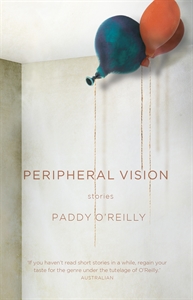
Paddy O'Reilly, Peripheral vision Book cover

The title of Paddy O’Reilly’s latest collection of short stories, Peripheral vision, comes from the story “Restraints”, in which the narrator, standing in a robotics lab where things have gone awry, says:

… and I caught again a flicker in my peripheral vision.

It’s a good title for the book because the stories are about people or events that happen to the side of “ordinary” life, however we might frame that. (I don’t talk enough about titles in my reviews, but they are important.) O’Reilly’s characters vary greatly – in gender and age. Short story writers, I’ve noticed, pay little attention to the criticism novelists often face regarding the voice they write in, like, can a man write a woman, can an anglo-Australian write an indigenous or immigrant person, and so on. Short story writers frequently range far and wide in the voices they write in. As I was reading this collection, I found myself thinking about short story writers, and what writing short stories might mean to them. While some people see short stories as a training ground for the “real” thing, novels, the writers themselves, I suspect, see them as a form in which they can let their imaginations fly. They can try being anyone or anything, anywhere, and are less likely to be taken to task for it. Certainly, in Peripheral vision, O’Reilly’s characters range from a teenage schoolgirl to a homeless man, from a twenty-something brother to a ten-year-old step-daughter, from a Filipino man to a young Australian teacher in Japan.

There are 18 stories in this collection, of which 12 have been published before. I had in fact read two of them: “The salesman”, a powerful and confronting story that I reviewed here as an individual story, and “Serenity prayer”, which was published under the title “Reality TV” in Angela Meyer’s The great unknown (my review). Another story also underwent a title change, from “Friday nights” to “Territory”. Titles! Clearly important. Well, I presume these title changes are O’Reilly’s and that she thought the same story presented in a different collection would work better under a different title. “Reality TV”, for example, is a straightforward descriptive title, with a little hint of irony, for an anthology about inexplicable things. “Serenity prayer” is a more subtle title encouraging multiple readings, particularly if you consider the ways in which this prayer is, and has been, used. This story, about a publicly betrayed wife, gets you in, and then, at the end, makes you wonder.

Simplistically speaking, the stories can be divided into two types, plot-driven and character-driven. “Territory” is a fairly traditional plot-driven story about a group of six girls out on the town on a Friday night, but, there are clues that there’s something more going on. For one, there’s the way they dress:

That was the one thing you might question about us. Other girls who went out in a group looked more alike. Arty types with arty types; girls who knew how to pick up wearing the uniform of short hip-hugging skirt, skyscraper heels, mascara and lipstick … We were a mixed-up crowd …

Then there’s the reference to a seventh girl, Suze, and the suggestion that everything might be alright now she’s been accepted into medical studies. Gradually hint upon hint is dropped suggesting that these girls aren’t just out for a good time. A very effective story. “Serenity prayer”, mentioned above, is another with a strong plot line. “One good thing”, one of the longer but still nicely sustained stories, is about the friendship between two school girls, and a violent act that occurs during a holiday visit. Its resolution, as in most of the stories, is open, leaving us to consider the short and long-term ramifications of such acts. Each of these explores a core idea – but sharing that idea could spoil the plot, so I’ll leave it here.

I can though talk about the ideas underpinning the character-focused stories. “Caramels”, for example, is about a homeless man. The ideas underpinning it relate to pride and dignity. It has a story of course, describing his life, but in these character-focused stories, plot is not the driving force. “After the Goths” is about a young twenty-four-year-old man working through guilt about something that happened in his teens. It makes him behave meanly to his older brother but, in a nice touch, his brother doesn’t rise to the occasion. Not everything, O’Reilly knows, has to be high drama to be interesting.

Other stories are perhaps better described as slice-of-life. “Deja vu”, set in a small town in France known for its medicinal hot springs, is one. It’s about holiday relationships. There’s Anthony with unexplained concerns of his own, who meets an older couple and finds himself drawn into their company against his will, as can happen when you travel. And there’s the older couple, comprising a whining dissatisfied wife and a long-suffering husband. It’s, partly anyhow, about the accommodations you make. Martin “had never been able to speak rudely to anyone” and George, the husband, seems to do a good job of accommodating his wife. The language here is delicious. The whining wife’s “mouth held the shape of a drawstring purse”. A little later, “her lips grew tighter, as if someone had pulled the drawstring”.

There’s wry humour in some of the stories, like “Breaking up” and “The word”, and a couple of the stories, “Procession” and “Restraints”, tip, intriguingly, into the speculative genre. In all, though, O’Reilly presents humans facing challenging situations – some violent, some threatening or risky, and others confusing or unsettling. Whatever it is, she rarely fully resolves the tension, leaving it instead to the reader to think about the morality, the values, the accommodations at play. This can be disconcerting if you like closure. But I like it, not only because closure can be boring and, frankly, not realistic, but also because it means you can read the stories again and again, and come to a slightly different conclusion or, should I say, understanding, each time.

Peripheral vision is exciting to read. Each story is so different that I was driven on to the next one, wondering what I’d find there. What I invariably found was a new world with another challenge to my way of seeing. I wonder what her peripheral vision will pick up next.

awwchallenge2015

Paddy O’Reilly
Peripheral vision
St Lucia: UQP, 2015
200pp.
ISBN: 9780702253607

(Review copy supplied by UQP)

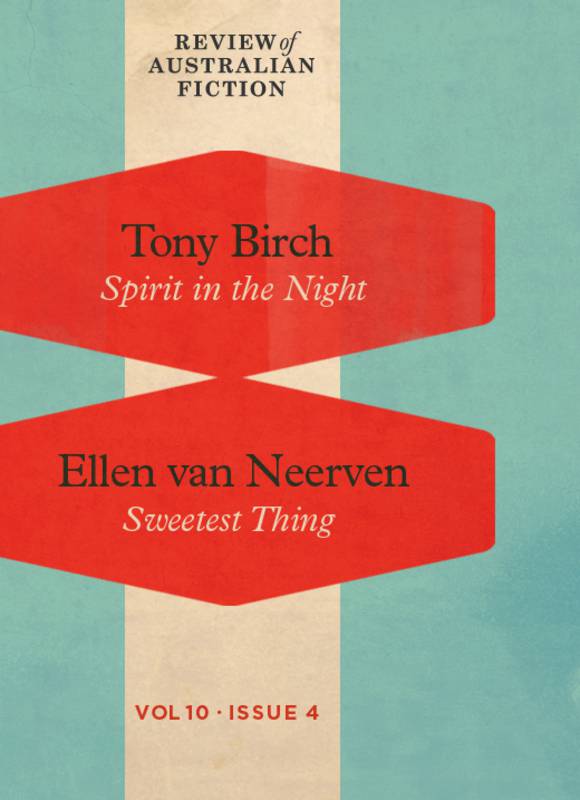
Tony Birch and Ellen van Neerven in Review of Australian Fiction 10 (4)


Review of Australian FictionI have been wanting to write about the oddly titled Review of Australian Fiction for some time. I say oddly titled because, contrary to what it might sound like, this does not contain reviews but short fiction. Established in 2012, it is published, electronically (or digitally), every two weeks. Each issue contains two stories by Australian authors: one by an established author, and the other by an emerging author, chosen by the established author. Funnily, in the issue I’m reviewing here, it’s the emerging author, Ellen van Neerven, whom I’ve read before, not the established one, Tony Birch. But, I’m so glad that Lisa’s Indigenous Literature Week has given me the opportunity to a) finally read something by Birch, and b) finally read Review of Australian Fiction issue.

Tony Birch, “Spirit in the night”

Birch’s story is told first person by a young indigenous boy, the 11-year-old Noah Sexton. He’s dirty, smelly, poorly dressed, and no-one wants to know him – except the new girl, Heather, who invites him to sit next to her. She’s “the cleanest person I’d ever seen” with “no pox rashes, bites or scars like I had”. At lunchtime, Heather offers the hungry Noah a sandwich and engages him in conversation. She asks him why he sits alone, and he gives the classic reply:

‘I sit here because I’m a Sexton.’

She doesn’t know what that means of course. When he discovers that her father is the policeman “in charge of the station”, he assumes:

Our mob was well known to the police, and I knew straightaway that as soon as her father got the story on the family name, she wouldn’t be sitting under any tree offering me a vegemite sandwich.

But, it doesn’t quite work out the way he expected. When he explains to the friendly Heather that he’s from “the only abo family left in town”, she tells him that “abo” is “a dirty word” and that “people like you, we call them half-castes. It’s more proper”. Noah disagrees, telling her that “an abo’s an abo, no matter how black or white he is … Far as whitefella is interested, the shit smells just the same.” Heather shows discomfort at this language, but Noah doesn’t care. He’s “beginning to think she was only another do-gooder”. He tells her about how his people have been treated in town, but Heather tells him her father will be different, that “he’s always fair, to both sides”. Not surprisingly, Noah is (silently) sceptical. Nonetheless, this little bit of kindness from Heather brings out a new sense of self in Noah – he doesn’t wolf down the sandwich, pretending he has a few manners, and when he gets up to go into school after that first lunch he dusts his pants off “for maybe the first time in my life”.

And so Heather spends most lunchtimes with Noah, because she’s a Christian and it’s “a sin to turn away from those in need”. Noah doesn’t like being seen as a “charity case” but is so enamoured of Heather that he’ll “put up with anything”. Understandable, given his treatment at school before.

I won’t describe any more. This is a clever story about do-gooders. Birch has astutely chosen for his protagonist a young boy on the cusp of puberty. Noah, straddling that line between childhood and adulthood, has a sense of his agency, and yet not quite the experience, nor the resources, to insist on enacting it. It’s a story about confused emotions, and about smugness and self-satisfaction. It’s about the right to dignity, and, of course, about power.

Ellen van Neerven, “Sweetest thing”

awwchallenge2015Unique, original, fresh are words I avoid when writing reviews, not only because they feel cliched but because they can be contested by anyone whose reading experience is wider than mine. So, instead, I’ll just comment on Ellen van Neerven’s capacity to surprise. I found it in her Heat and light which I reviewed earlier this year, and in “Sweetest thing”.

“Sweetest thing” is a third-person story about Serene, the child of an indigenous mother and the town’s Dutch baker. She is addicted to having her breasts suckled. It all started in puberty (“that pertinent time of a woman’s life”) with her first experience of having a man suckle her breast occuring with a male tutor when she’s nearly fourteen. He lifts up her shirt:

Beautifully out of herself, she was open and messy and dislocated like a bouquet being readied for a vase, flowers, stems, spores spread everywhere.

Nothing else happens besides this suckling, but Serene feels “bliss” and “knew then that this was what she had been programmed to need”. Slowly, as Serene schemes and positions herself to have her need met, we learn about loss. We learn, for example, about the Kedron pub, which “had refused Serene’s grandparents entry” but which is now

a haunt for women of her mother’s ilk: divorced, discarded, with loose threads of long silent and secret relationships carried under their shirts.

Under their shirts. A reference to their breasts? We learn about the gradual withdrawal of her father as he starts to focus on his “real daughter”. Serene feels anger at “the silence in her life, at his hypocrisy”.

Born into this in-between world – not quite rejected as her grandparents were, but not fully accepted either – Serene believes she deserves “comfort, worship, devotion. Trust and understanding”, but fears “hollowness”.

And so, her life progresses through school and early womanhood into mature adulthood. She has friends, she experiences casual sex, she becomes a masseuse – but still there’s the need for suckling, to have “the most basic of her needs met”. Again, I’ll leave the story here. It’s longer than Birch’s and spans a few decades of Serene’s life, which includes a meaningful relationship and a successful career.

“Sweetest thing” is an edgy story. Serene’s unusual addiction works as a rather confronting metaphor for what all humans need – love and acceptance. What I like about Van Neerven, here and in Heat and light, is that her indigenous characters are not “types”. Their indigeneity is part of who they are, and is fundamental to the challenges they confront, but her characters are also “universal” – that is, they are needy, flawed characters who muddle along, just as the rest of us do, in the lives they find themselves in. It’s powerful stuff.

ANZ_ILW2015Read for ANZLitLovers’ Indigenous Literature Week.

Tony Birch, “Spirit in the night”
and
Ellen van Neerven, “Sweetest thing”
in: Review of Australian Fiction 10 (4), May 2014

Sherwood Anderson, Adventure (Review)

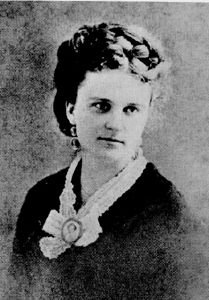
Sherwood Anderson, 1933 (Carl Van Vechten [Public domain], via Wikimedia Commons)

Sherwood Anderson, 1933 (Carl Van Vechten [Public domain], via Wikimedia Commons)

As some of you will know, I started discussing books online in January 1997 when I joined a listserv-based international reading group. I was active in that group until around the time I started blogging, when I found I could no longer keep up with all my on-line presences. In the period that my involvement was slowing down the group read Sherwood Anderson’s collection of interrelated stories, Winesburg, Ohio, but I didn’t take part. So, when one of the tales from this book was published last week by the Library of America, I decided to read it.

Rather coincidentally, the story’s title “Adventure” is similar to the last Library of America piece I read, Helen Keller’s “I go adventuring”. Each, however, uses the notion of “adventure” rather differently. Keller talks about physical adventuring, that is, travelling in New York as a deafblind person, though she also talks about what this adventuring means to her emotionally or spiritually. For one, it provides her with “the comforting certainty that mankind is real flesh and that I myself am not a dream”. Regarding Anderson’s use of the word though, LOA’s notes quote scholar Ray Lewis White, who says that “adventure” means ““the one brief moment, the one epiphany, the one telling instant, that captures and communicates the essence of that character’s personality, leaving nothing more to be said or learned about him or her.” The story which is specifically titled “Adventure” is apparently placed slap bang in the middle of the collection – and, yes, there is an epiphany.

It tells the story of Alice, who is twenty-seven years old. Although on the surface she is “very quiet”,  “beneath a placid exterior a continual ferment went on”. This ferment has its origins in a love affair with a town journalist when she was sixteen. She loses her virginity, after sincere promises from the man, Ned, that he would come back for her. He says, “Now we will have to stick to each other, whatever happens we will have to do that”. But of course, as happens with these things, Ned’s life doesn’t go quite as he planned. After a year, he has met other girls and stops writing to Alice. However, she, “the girl who had been loved”, continues to believe and hope that Ned will return.

By her early twenties, she is still waiting. She does not blame Ned for her loss of virginity. Indeed she’d offered to go away with him, unmarried, back then when she was sixteen, but she also feels unable to marry another man because “the thought of giving to another what she still felt could belong only to Ned seemed monstrous”. Alice, then, is not your “typical” shrinking small town girl done wrong. She’d offered to go away with him, but she’s also a product of her time’s attitudes regarding sex being a gift to the one you love and, of course, of her continuing love for this man:

“I am his wife and shall remain his wife whether he comes back or not”, she whispered to herself, and for all of her willingness to support herself could not have understood the growing modern idea of a woman’s owning herself and giving and taking for her own ends in life.

I’m not an expert in early post-World War One America, and I haven’t read the whole book, but I can’t help thinking that Anderson reflects here, in a story published in 1919, the modernist concern with conformist society. He certainly presents a fairly bleak view of what is possible for humans in constricting social environments, as did the “names” of the modernist movement.

Alice – I wonder if there’s an ironic reference in use of this name – continues to hope, she saves money for her future life with Ned for a few years until, one day

With a shiver of dread, she realized that for her the beauty and freshness of youth had passed. For the first time she felt that she had been cheated. She did not blame Ned Currie and did not know what to blame. Sadness swept over her. Dropping to her knees, she tried to pray, but instead of prayers words of protest came to her lips. “It is not going to come to me. I will never find happiness. Why do I tell myself lies?” she cried, and an odd sense of relief came with this, her first bold attempt to face the fear that had become a part of her everyday life.

And so, she continues on, trying “to get a new hold upon life”. She spends companionable time for a while with a much older man, realising she doesn’t want him but is avoiding being alone, because “if I am not careful I will grow unaccustomed to being with people”. And then comes the adventure … in which Alice’s bravery and desire to live life to the full results in a moment of abandon that paradoxically forces her to confront the reality of her situation. It’s a devastating (though not tragic in the usual meaning of the word) conclusion. Read it, and see what I mean.

I really liked this story. I liked the way Anderson presents Alice’s self-awareness, and her little attempts to break free, while at the same time recognising the reality for women like her at that time.

Sherwood Anderson
“Adventure”
First published: In Winesburg, Ohio: A group of tales of Ohio small town life, 1919.
Available: Online at the Library of America

Sam Tranum and Lois Kapila, Love on the road 2015 (Review)

Love on the road 2015, book coverRules, they say, are made to be broken, and so it was that I broke my rule* of not accepting overseas publications for review and said yes to a short story anthology from Ireland, Love on the road 2015: Twelve more tales of love and travel. I’m not exactly sure, in fact, why an Irish publisher offered me this book for review. Perhaps it’s because I’ve reviewed a collection, Pelt and other stories, by expat Australian Catherine McNamara who is included in this anthology. Whatever the reason, it didn’t take me long to break my rule on this occasion because I love short stories, because it includes an Australian (woman) author and, perhaps most importantly, because it’s an international collection and so offered me a perfect opportunity to diversify my reading.

The collection opens with a brief Foreword by the husband-and-wife editors. They explain that this is the second Love on the road collection, the first published in 2013. The collections are the end-product of a contest in which the editors called for submission from authors around the world “to send us their tales of love and travel, true or imagined”. In this second volume, one is true, the rest are fiction, and they are set all over the world, from Iran to the Philippines, from Zimbabwe to Costa Rica, from New Zealand to the USA.

Eight of the twelve stories are by women, and one of these is the true story. Written in second person by New Zealand writer Nod Ghosh, “Janus: A path to the future” tells of her husband’s decision, after thirty years together, to transition to female and describes their trip to Belgium for the first surgical procedure in the transition, facial feminisation. It’s a warm story about a strong love that transcends gender. Several of the stories are health-related. Catherine McNamara’s story, “Enfolded”, is about a woman visiting a past lover at his request, after an accident has left him, wheel-chair bound, with paralysed legs. The language is tighter and more restrained than many of the stories I’ve read by McNamara, but it perfectly matches the tension between the couple’s playful, no-strings-attached past and what future, if any, they might forge.

American writer Marlene Olin’s “Sunrise over Sausalito” is also health related, but its tone is upbeat. Indeed there’s a lovely variety in tone in this collection, which is something I like in anthologies. Anyhow, in this story an elderly widower has checked himself into a nursing home. He figures that since he’d checked himself in, he can also check himself out, which he does in a very special way (and no, I don’t mean by the usual way people check out of nursing homes!) It’s a warm, engaging story about how it’s never too late to fulfil your dreams.

Not all the stories are about positive relationships, though. American writer Shirley Fengenson’s “Not a finger more”, set mostly in Costa Rica, is a chilling first person story in which a wife describes her life with a physically abusing, emotionally controlling husband. Fergenson handles her first person narrator with confidence and compassion – and makes it all too real.

The four stories I’ve mentioned demonstrate the diverse ways in which the writers interpreted the theme, but it doesn’t stop there. And here’s the thing. Given the theme, I wasn’t really expecting the degree to which political issues would feature in the collection. It started with the first story, “The queue”, by Zimbabwean novelist Tendai Huchu. It was rather strange to be reading this story as we were hearing about Greek people queuing at ATM machines during their current crisis, because this story is about people lining up at the post office for their monthly pay cheques, though they need first to make sure that they are in the right queue – not the bread one, for example. It’s a story about attitude: are you or are you not able to make the best of a frustrating situation? This story’s tone of wry but hopeful resignation made it a perfect opener for this wide-ranging collection.

Other stories were more hard-hitting, such as Malawian writer Stanley Kennai’s “We will dance in Lampedusa” about a pair of hopeful young asylum-seekers trying to get from Tripoli to Italy by boat. Again, a timely story that might open a few eyes, if it ever got to the right ones. Even harder-hitting, though, is Tendayi Bloom’s cleverly titled “Manila envelope”. Bloom is an English political scientist specialising in migration policy. She has lived in the Philippines, though is currently based in Spain. Her story is a heart-sinking one about a naive Filipina teenager and the nefarious practices by which young women in poor countries are lured into foreign exploitative employment arrangements. This was a powerful story indeed, and is probably the one I’ll most remember.

Well, I think that’s half the stories. I can’t write about them all, but I did enjoy them all. The mother of the main character in “Sunrise over Sausalito” tells him that “Life … sends you detours”. And that’s what this book is about – the detours (or turning points) that we all face, and the way that love, of some sort, whether it be genuine and supportive, or exploitative and abusive, is usually behind those changes. Every story offers a different perspective, with a resolution to match. The editors have done an excellent job.

I must say I did chuckle over the front cover blurb written by Lane Ashfeldt, an Irish writer unknown to me. She describes the collection as “Vivid tales of life across the globe that let you travel while standing still”. I chuckled because at the conference on Emma I attended last weekend, we made fun of Mrs Elton’s complaint at the Box Hill picnic that she was “really tired of exploring so long on one spot”! In the case of this book, though, I’m with Ashfeldt. I was way too engaged to even notice that I had stayed on one spot – while my mind had flown around the world!

Sam Tranum and Lois Kapila (ed)
Love on the road 2015: Twelve more tales of love and travel
Dublin: Liberties Press, 2015
208pp.
ISBN: 9781909718586

(Review copy supplied by Liberties Press)

* This rule is a pragmatic one. I just have to keep a lid on review copies to enable me to have some input into what I read!

Angela Meyer, Captives (Review)

Angela Meyer, CaptivesHave you read any flash fiction? Some of the pieces in Pulse would qualify but, besides this, I hadn’t read much until I picked up Angela Meyer’s collection Captives, which I bought for my Kindle last year. I bought it for a few reasons: I enjoyed and reviewed the short story collection she edited, The great unknown; I follow her blog Literary Minded; and of course I like short fiction. So I read Meyer’s book and was – dare I say it – captivated!

Meyer has divided her collection into 7 sections, the first 6 of which are titled using polarities – On/Off, Up/Down, In/Out, With/Without, Here/There, Then/Now – with the last being, simply, Until. The titles are as terse as the little works they contain. And a couple are very little, being just a couple of paragraphs, while the longest are, I’m guessing, around 500 words. This brings me to the matter of definition. How do we define flash fiction? Well, as with all definitions, there’s not complete agreement. Most agree that it can be as short as a sentence, but there’s no such agreement on the upper limit. Some say 300 words, some 500 words, and others 1000 words. The term itself was first used in the early 1990s, but there are other terms, including micro fiction and sudden fiction. I won’t discuss this further. I’m happy to be fluid about the definition, and I like the term flash fiction.

Writing a very short story sounds challenging to me. As Becky Tuch writes in The Review Review “Distilling experience into a few pages or, in some cases a few paragraphs, forces writers to pay close attention to every loaded conversation, every cruel action, every tender gesture, and every last syllable in every single word.” Meyer clearly understands this imperative, and demonstrates a sure grasp of the form. Indeed, several of the works included in Captives have been published elsewhere, which suggests her writing in this form has gained recognition.

Captives contains 37 pieces, and they vary greatly in topic, theme and setting. Some are set in the past, some the future, some in exotic places like Norway or Scotland, and others in Australia. Some are realistic, while others toy with the unexplained. Their protagonists range from a man who has accidentally locked himself in the toilet (“Thirteen tiles”) to a sister with a secret (“We were always close”). Some pieces have been inspired by news stories like those about men who lock up women for years (“Green-eyed snake”) or about the man who walked a tightrope across the Grand Canyon (“Tightrope walker’s daughter”). Other pieces reveal writers she admires, such as George Orwell (“Booklover’s corner”) and Italo Calvino (“One of the strings and their supports remain”). In all, though, the protagonists confront a challenge, a change, a decision, or they create worlds that suit themselves. As you’d probably expect given the form, we don’t always know the outcome. Meyer leaves clues, of course, and sometimes we can be confident we know what will happen, but other times those clues simply tease us with possibilities.

The collection starts with a bang, almost literally. In “The day before the wedding” the bride discovers something new about “her love”. He is out duck-shooting, and

Still her love had the gun trained on her, and she stood, and even when he lowered it and his expression revealed play, a joke, she knew she’d seen his true face.

I don’t think this spoils the story, because the conclusion which follows is one of those teasers I mentioned – unsettling, but for whom? Meyer’s language here is tight and spare, and uncompromising. I loved it, and knew I’d made the right decision to buy this book.

Subtitled “Bad things happen. Or they might. At any moment”, the collection is dark, overall.  But, there are (somewhat) lighter pieces. In “Glitch”, Daniella finds a solution to her problem of hearing the devil, “the hiss of Beelzebub”, in the machines around her, and in “Brand new” the narrator finds comfort in the company of a brain-damaged elderly man. This story reminded me of my reading group’s joke that when we are old and have lost our memories we will just read the same book every month. Much cheaper, and just as much fun – if we choose the right book!

I can’t possibly cover all the pieces, so will look at one section, In/Out, which comprises six pieces. In “Meds” the narrator needs to decide whether he will join his partner and friends in their calm, medicated (or, as he sees it, capitulated) lives, while in “One of the crew” a woman fakes being a writers’ festival official. There’s an interesting paradox here: in the first story our protagonist is invited “in” but doesn’t want to accept, while in the second the woman wants to be “in” so pretends to be so. In two of the other pieces, the in/out dichotomy is more literal. There’s the aforementioned toilet prisoner in “Thirteen tiles”, and there’s “Foreign bodies”, in which Kate, a prisoner in gaol, starts to swallow increasingly bigger objects. The conclusion to this story, though, pushes literalism to the limit. Indeed, in many of the stories, Meyer plays with the tension between literalism or realism and the absurd or fanciful. There’s often a fine line …

I haven’t talked much about the writing, because the stories themselves are so powerful. However, part of the power of the stories comes from the writing, of course. It’s perhaps intrinsic to the form, but the writing is direct, spare. It can also be elliptical at times. Meyer expects her readers to work, but that too is the nature of short fiction. And there is tight pointed use of imagery, as in the opening paragraph of “We’ve always been close”:

My sister and I stretched a tarp over the mud to make a slide into the dam, just like when we were kids. It was full from the recent storm. Magpies called. From the dam, I splashed gritty brown water up onto the slide to give my sister something to slip on. She squealed and laughed and the sound dirtied my chest with guilt. She gripped my shoulders after landing, as she was afraid of the bottom. We’ve always been close.

On the surface a happy scene, but we know from the language that something is not quite right …

Captives is an appropriate title for the collection because, whether they know it or not, most if not all the protagonists are captives in one way or another – some physically, some psychologically or intellectually, some both. Some escape, while others remain trapped (at least to the best of our knowledge). Deborah, a psychologist in “Spark”, is trying to escape:

She had wanted to agitate the structure, to act out, in ways a psychologist should not.

Fortunately for us, though, Meyer is a writer of fiction and it is perfectly acceptable for her “to agitate the structure”. This she has done with confidence and flair. Not every story grabbed me equally, but I think that’s more to do with me and my experience. I wouldn’t be surprised if different readers found different stories worked best for them. So, my recommendation is that if you haven’t read flash fiction, this would be an excellent place to start.

awwchallenge2015Angela Meyer
Captives
Design: Sandy Cull
Carlton South: Inkerman and Blunt, 2014
ISBN: 9780987540126

Ognjen Spahić, All of that (Review)

Regulars here know that I enjoy short stories, and that I review them regularly. Most of these reviews, though, are of Australian writers. I was therefore pleased when blogger roughghosts, in his review of a novel by Ognjen Spahić, provided a link to a Spahić short story titled “All of that”. As I haven’t reviewed many Balkan writers here, and definitely no Montenegrin writers, I grabbed the opportunity to read this story.

According to the biography provided by the online journal BODY, Spahić “is the best-known member of the young generation of Montenegrin writers to have emerged since the collapse of former Yugoslavia”. He’s published two collections of short stories and his novel Hansen’s Children (the one reviewed by roughghosts) won the 2005 Meša Selimović Prize for the best new novel from Croatia, Serbia, Montenegro and Bosnia-Herzegovina. Elsewhere I read that he’s been a resident writer at the University of Iowa’s International Writing Program and won, in 2011, Romania’s Ovid Festival Prize for a prominent young talent. Have you heard of him? I hadn’t. Another win for litbloggers, methinks.

“All of that”, which I suspect comes from his first short story collection, All that, published in 2001, is a first person story by a father concerned about his son Danilo’s ability to cope with the death of a schoolfriend and with attending her funeral. Most of the story takes place on a father-son fishing trip in which the father plans to take his son’s mind off the death, but the son has other plans:

‘Dad, have you ever been to the cemetery?’ he asked as we were driving.

And so starts a conversation … I loved the writing (albeit I read a translation). The dialogue, which constitutes much of the story, is simple, direct, and true, but it is in the father’s reflections that the truth of the matter comes out. It’s the father who has problems with death. He’d lost his father (car-crash) when he was 6 years old and his mother (illness) when he was thirteen. “It’s difficult to talk about death”, he says

And even more difficult to explain to a child the ceremony and rituals which go with it in this rotten country.

“This rotten country” is alludes to something wider than the story at hand, and suggests to me there may be another level on which the story might be read. Interestingly too, as the father and son are rowing, the son says he doesn’t like fog though it doesn’t bother him. This surprises the father, but he suggests:

‘OK Danilo, Strange Prince of Darkness. Let’s row a little bit faster to that deserted island.’

Strange Prince of Darkness? Why does he call his son that? It seems affectionate. Other religious references, on the other hand, are more direct, such as “Deformed quotes from the Bible”.

Anyhow, the fog returns a few times in the story. At one time the father says it “creeps like a python after the slow process of digesting its prey”. It lifts towards the end, suggesting some resolution for the father/narrator’s anxieties.

What I enjoyed was the way Spahić slowly teases out the father’s feelings – through the dialogue, his reflections, the style (particularly the use of repetition), and the language and imagery – because in the end the story is more about the father’s feelings. Just after the “strange Prince of Darkness” comment, the father talks of making “a pretence at adventure, a small harmless attempt to escape from reality”. And yet, the son gives no sense of needing to escape from reality. It’s the father.

I’m not going to write more about this story. It would certainly bear multiple readings, but is powerful enough on the first reading to give a sense of yet another writer I’d like to get to know more. I might read Hansen’s children yet.

Ongjen Spahić
“All of that” in BODY, June 30, 2013
(Trans. by SD Curtis)
Available online at BODY