Elizabeth Gaskell, Lizzie Leigh AND Cousin Phillis (#BookReviews)

This year, Bill (The Australian Legend) has framed his usual January “Gen” (short for generation) week, as Gen 0. Zero? How can that be? Well, let’s get it from the horse’s mouth. Bill says, “I am using ‘Gen 0’ as a designation for those writers – necessarily not Australian – whose work influenced, predated or paralleled the first wave feminists of AWW Gen 1”. In other words, we are looking at mostly 19th century writers – like Charlotte Bronte, Elizabeth Gaskell, and Charlotte Perkins Gilman.

Bill’s list is just a start. I would add Kate Chopin in there too, but more discussion and expansion of Bill’s list will presumably happen over the week, so I’ll get on to Mrs – or Elizabeth – Gaskell.

My Gaskell journey started in my teens when my mother, seeing my enthusiasm for Jane Austen, suggested I read Mrs (as she was on the book) Gaskell’s Cranford. From there I read North and south, Wives and daughters, and Ruth – all before blogging. I had hoped to read her first novel, Mary Barton, for this week, but when I saw how tight my reading schedule was this month, I decided to go for a novella (in the end, two novellas) instead. As it turned out, Bill has already posted on one of them, Cousin Phillis.

The Independent Woman

Bill’s AWW Gen weeks, which started back in 2018, draw from his thesis that “a case can be made for a parallel myth” to that of historian Russell Ward’s male-dominated Lone Hand. It features “the Independent Woman, who makes her way without, and often despite, men”. He is talking Australian women, of course, but for Gen 0 we are looking at what was happening elsewhere that may have affected, or simply parallel, what was happening in Australia. Elizabeth Gaskell is a perfect example, because, despite being a wife and mother of four daughters, she managed to forge a career for herself as a writer of novels, short stories, and biography.

She could do this for a few reasons, including the fact that the church she belonged to, and married into, was the dissenting, non-conformist Unitarian church, and that her minister husband William Gaskell was himself a writer and poet. He was also, according to Wikipedia, “a charity worker and pioneer in education of the working class”. It’s no surprise, then, that Gaskell’s themes, as Bill succinctly puts in it his post on Cousin Phillis, encompassed “dissenting religion and the plight of the poor, as well as strong women characters”, are all important themes in her work.”

Her fiction falls broadly into to main strands – the “ghost” stories, and the “social novel“. It is into the latter that Lizzie Leigh and Cousin Phillis fall.

Lizzie Leigh

Lizzie Leigh, published in 1855, is the simpler, shorter, of the two novellas, and its themes remind me of the 1853-published Ruth. It starts with the death of the “hard, stern, and inflexible” husband and father, James Leigh, who says to his wife on his deathbed “‘I forgive her, Anne! May God forgive me!’” We soon learn that the “her” being forgiven is their fallen daughter “Lizzie” whom he’d disinherited.

With her husband gone, Anne decides to rent out the farm for a year and go to Manchester with her two sons, the 21-year-old responsible Will who sees things his father’s way and the much younger Tom. She wants to find Lizzie.

The rest of the novella concerns her search for Lizzie, and the difference of opinion between her idea of religion – a forgiving, New Testament-based one – and Will’s. He is prepared to support his mother, for a year anyhow, but he believes Lizzie is dead and, further, that her sin brings shame on the family. When he meets an angelic young woman, he’s convinced that her knowing about Lizzie will spoil his chances with her. But things are not as he sees them, and his mother, who had been a submissive wife, starts to express her own beliefs, and commands him to listen to her on tolerance and forgiveness:

She stood, no longer, as the meek, imploring, gentle mother, but firm and dignified, as if the interpreter of God’s will.

So, two independent women here – Gaskell the writer and Anne Leigh the character.

Cousin Phillis

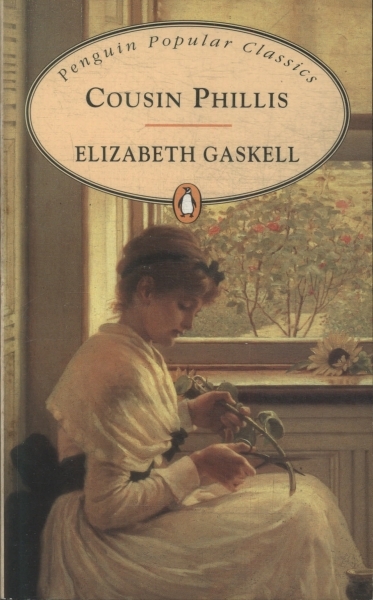
This novella, originally serialised in The Cornell Magazine (1863-64), is briefly introduced in my Delphi edition with “many critics agree that Cousin Phillis is Gaskell’s crowning achievement in short fiction”. It is a longer, somewhat more complex tale, and is, essentially, a coming-of-age story in which 19-year-old Paul, and his 17-year-old second cousin, Phillis – both only children – learn some tough lessons.

The story is told first person by Paul, who speaks from later in his life about when, as a young man, he had obtained a job in a country town working to an engineer in a railway building company. He begins visiting some previously unknown relations, the aforementioned Phillis and her Nonconformist clergyman-farmer father and plain-thinking mother. You might be expecting a romance to develop between these two, but quite early on Paul decides that Phillis is not for him. Not only is she still, strangely, wearing a childish pinafore, but she is taller and, like her father, bookish, which makes him feel inferior. This will not do, so they quickly fall into a sibling-like relationship, and Paul slots comfortably into their lives whenever he can. Well and good.

However, there is another man in the story, Paul’s supervisor, Mr Holdsworth, whom he hero-worships. Paul describes him as “really a fine fellow in a good number of ways”, adding that “I might have fallen into much worse hands”, which of course makes us wonder whether this is an ironic hint. As it turns out, yes and no. Heartbreak does ensue, and Paul, with well-intentioned naïveté, plays a role in bringing this about. But, he should not shoulder the full blame because we, like guilt-ridden Paul and sensible servant Betty, have seen how much her parents have babied Phillis: ‘”the child” is always their name for her when they talk on her between themselves’, says Betty.

Most of the action takes place on Phillis’ family farm, with Gaskell beautifully rendering rural life, while also introducing readers to the increasing industrialisation, bringing hints of the social change she portrayed with more depth in North and south‘s exploration of rural tradition versus modern values.

Gaskell also conveys some of her progressive views on religion. Early on, Mr Holdsworth asks Paul about his cousins:

How do preaching and farming seem to get on together? If the minister turns out to be practical as well as reverend, I shall begin to respect him.

Towards the end of the story, when Phillis is critically ill, her father is visited by some local ministers who preach their punitive religion to him, suggesting he consider “what sins” had brought this trial upon him, and

whether you may not have been too much given up to your farm and your cattle; whether this world’s learning has not puffed you up to vain conceit and neglect of the things of God; whether you have not made an idol of your daughter?’

Our minister will have none of it. He will confess his sins to God, but, he says

‘I hold with Christ that afflictions are not sent by God in wrath as penalties for sin.
‘Is that orthodox, Brother Robinson?’ asked the third minister, in a deferential tone of inquiry.

The ending, while not tragic, is open, which works well for me, though according to Wikipedia, she had considered adding two more parts to this four-part story. All up, another good read from the independent Mrs Gaskell!

Elizabeth Gaskell
Lizzie Leigh (1855) and Cousin Phillis (1864, available online)
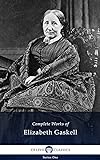
in Complete works of Elizabeth Gaskell (illustrated)
Hastings (UK): Delphi Classics, 2015 (Version 5)

Rebecca Campbell, Arboreality (#BookReview)

Arboreality, by Canadian writer Rebecca Campbell, won the 2023 Ursula K. Le Guin Prize. However, not being much of a speculative fiction reader, I didn’t discover this book through this award. Fortunately, some bloggers I follow, like Bill (The Australian Legend), do follow this genre, and his review convinced me that this climate change dystopian work fits into the sort of speculative fiction that does interest me.

Before I talk about the book, however, a little about the prize. It was established in 2022, in honor of Ursula K. Le Guin, and is currently worth $25,000. It has some specific criteria: it’s an English-language award for a single work of “imaginative fiction”, and intends to honour authors who “can imagine real grounds for hope and see alternatives to how we live now”. This last bit is interesting – “real grounds for hope”. It reminds me of the Barbara Jefferis Award, which now seems to be in abeyance, but which was controversial because it stipulated that the winning work had to depict “women and girls in a positive way [my emph] or otherwise empowers the status of women and girls in society”. I don’t believe literature must offer hope or be positive, but I have no problem with awards sponsors making such stipulations.

So now, that out of the way, the book. It is set on Vancouver Island, a beautiful part of the world that I have visited. It’s novella in size, but, structurally, is best described as a collection of six inter-connected short stories:

  • “Special collections”
  • “Controlled burn”
  • “An important failure”
  • “Scion and root stocks”
  • “Pub food”
  • “Cathedral arboreal”

These stories are presented more or less chronologically, starting with the first two stories being set in the very near future (up to around 2050) with the last encompassing 2100. They are linked in various ways – by location; by characters (encompassing family and friends, ancestors and descendants, over time); and, as you’d expect, given the title, by trees, particularly but not exclusively, the arbutus and its mutant version, the golden arbutus. Each story focuses on a specific issue or idea and plays it out through personal stories, such as an academic saving books from a “crumbling” library (“Special collections”); a suburbanite trying to revive a devastated garden with local plants, as one-by-one his neighbours leave (“Controlled burn”); a luthier hunting for seasoned tonewood, via the black market if necessary, to make a Cremona-worthy violin (“An important failure”). These highly personalised stories are placed in context, through the addition of another voice – an omniscient narrator, in italicised sections – which conveys the wider ecological, economic and political picture. We see the land change through fire and rising sealevels; we hear of space colonisation; we learn of pandemics. It’s cleverly done, and although it requires concentration, I was more than willing to go with it because the vision Campbell presents is compelling in its awful believability. That, I think, is what telling a near-future story can achieve. It’s hard to pretend it won’t happen.

“What are we going to do?”

What makes this book so beautiful, however, is the way Campbell manages convey both absolute horror alongside a sense of hope born of human ingenuity, resilience, and sheer doggedness. Jude and Berenice, fighting a losing battle in their mission to save books, must constantly downgrade their expectations, which means becoming more and more selective about what is saved (and therefore also what is lost to human knowledge), but they don’t give up, and these books are seen in 2100. Similarly, Bernard, in his now empty suburb where gardens have died due to a watering ban, doggedly works to find plants that will live in his and neighbouring gardens, which we see, a few generations later in “Cathedral Arboreal”, has become a forest. And Mason’s “secret history” violin also appears in this last story in another generation. These people will not let go even though they are very aware of what has been lost, of what they have lost.

We’ve lived here for ten thousand years. Someone survived everything history threw at them, the fires and tsunamis, the earthquakes, the smallpox, the settlers. Empire. Capitalism. Someone’s going to survive this. (Benno, c. 2071, in “Scions and Root Stocks”)

The ecological story Campbell tells, alongside the human one, is fascinating, albeit probably more challenging to those of us who don’t know the plants of the region and their significance – the garry oak, the arbutus, the camas (lily), fireweed, Douglas fir, and so on. I know some of the plants she names, but I don’t know their particular role in the culture, their horticultural essence and value, or their symbolic meaning (if any any). Some I looked up, and some I didn’t, but certainly Campbell’s story is rich with interconnections here too, between past, present and future, and between Indigenous and non-Indigenous practices.

One of the meanings of “arboreality” is “of, relating to, or resembling a tree” which makes it a good literal title for a book in which trees stand for so much that is important to life – ecologically, culturally, and psychologically. But Campbell is also, perhaps, playing with the “sheltering” notion implied in “arbor” and “reality”.

The Ursula K. LeGuin Prize’s selection panel wrote:

Arboreality is a eulogy for the world as we know it. Rebecca Campbell’s extraordinary, deeply felt book explores the difficulties of the long hard project of survival. There are no heroes or villains here—only people making brave, difficult choices, out of hope and love for their community, for art, knowledge, and beauty. Arboreality imagines things that we haven’t yet considered about what can and will go wrong with our gardens, libraries, and archives if we don’t act now (maybe even if we do). In her masterful and profoundly ethical stories, Campbell asks us what might be saved, what must be saved, and what it will take to do so. 

‘What are we going to do?” asks Jude in the opening story, “Special collections”. Well might he ask. Arboreality is an astonishing book because of the way it imagines the dire, with all its attendant griefs, side-by-side with survival (and its attendant, hope). This makes it a bit discombobulating because we are constantly surprised by what happens next. The world is not beautiful, and life is tough, but people are surviving and working their way through what life has thrown at them. I don’t imagine Campbell intends us to think, “it’s alright then, let’s continue along our merry, destructive ways” but more that when (because we are, it seems, past “if”) we are confronted with the worst, humans can, and hopefully will, find ways through. The question is: is this the future we want?

Rebecca Campbell
Arboreality
Hamilton, Ca: Stelliform Press, 2022
128pp.
ISBN: 9781777682330 (eBook)

Holly Throsby, Clarke (#BookReview)

My reading group’s last book of the year, Holly Throsby’s third novel, Clarke, was a popular end-of-year choice. It’s a straightforward but compelling read that was inspired by a story we were all across, the Lynette Dawson story. Inspired, though, is the operative word, as Clarke is not Lynette Dawson’s story.

For a start, while Clarke’s missing woman disappears in the same decade as Lynette, the 1980s, Throsby’s story is set in a different location (a regional town not a capital city) with a different sort of husband (a physiotherapist, not a teacher). Further, there is some sort of resolution a few years, not forty years, later. This was a wise choice by Throsby. It decouples the story from Lynette Dawson, which encourages us to see it as part of a bigger story. And, setting it in a smaller environment lets Throsby explore regional town life. This latter is one of the strengths of the book.

The novel opens with fifty-something Barney being visited by the police at the house he is renting. They have a warrant to excavate the backyard as the result of their having received new information concerning the disappearance of Ginny Lawson five years previously. Clarke tracks this new police investigation through the eyes of the neighbourhood, primarily Barney, his next-door neighbour Leonie, and Dorrie and Clive across the road. Leonie, Dorrie and Clive all knew Ginny and believe her husband Lou, now living in Queensland, is implicated. They have wanted this investigation ever since Ginny disappeared, but the police at the time weren’t much interested in missing women.

The main joy in reading the novel comes from Throsby’s handling of the relationships between her characters, and the way she conveys how neighbours and communities chat or gossip about and try to second-guess situations like these. They phone each other, visit each other, talk over the fence, and discuss it with their workmates. It’s so realistic, you can hear yourself doing the same over similar scenarios.

It’s a fundamentally tough story – a disappeared wife with its hints of domestic abuse, among other griefs – but Throsby handles it with a light touch, including occasional black humour. Here, for example is Leonie talking to her workmates about some concrete in Barney’s backyard that the police are now excavating. It’s clear that it had been a topic of conversation at the time of the disappearance:

The suspicious concrete’, said Varden.
‘Yes, because that’s what you do when your wife and the mother of your child has just disappeared’, said Leonie. ‘You landscape.’

There is also some subtle wordplay. For example, Ginny’s husband Lou’s “disturbing the dirt and who knows what else” in his back yard after his wife’s disappearance mirrors the disturbance felt by the neighbours. And there are some wonderful descriptions, like Leonie’s on her tricky relationship with her mother: “Leonie remembered the warmth of her mother as a heady storm that blew in fast but never stayed long”. Or on sad Barney: “His skin was kind of grey and rough and reminded Leonie of an egg carton”.

“It would be fantastic to be able to choose one’s memories. It would make life so much more bearable.” (Barney)

There are, as I hinted above, other layers to the the narrative besides the disappeared-Ginny plot line. Barney is no longer living with his wife Deb (but why?) and Leonie has her four-year-old nephew Joe living with her (why too?). Both people, it’s clear, are dealing with some sort of grief. Throsby drip-feeds us their backstories as we get to know them, and as they get to know each other. Dorrie, across the road, provides a voice of reason for Leonie, while also engaging in the neighbourhood speculations about Ginny.

I’ll leave the narrative there, and move onto the form. Clarke is fundamentally a crime story or mystery, but it doesn’t fit those genre expectations. It’s a cold case, but the criminal investigation occurs in the background. There is no protagonist detective, and we only meet the police through their interactions with the main characters. There is, admittedly, an element of the amateur-sleuth cosy-mystery going on. Our main characters do a little of their own “amateur surveillance”, as Barney calls it, and we would, of course, like to know what happened to Ginny. But, the main focus is on what is going on for Barney and Leonie, personally, and whether they will resolve the griefs in their lives that are holding them back. It reminded me of that idea that if you scratch just beneath the surface of most people’s lives you will find a sadness or tragedy.

So, my overall assessment? I thoroughly enjoyed the read. Throsby’s language, excellent characterisation, and authentic evocation of suburban 80s-90s Australia made it a compelling read. However, the twist near the end felt a bit forced, and the ending is a bit neat, albeit there was some restraint. Generally, I prefer edgier books, books that keep me thinking about where they are going. With Clarke, I wondered about what happened to Ginny, whether we’d find out, and whether a relationship would develop between Leonie and Barney, but it didn’t, for example, delve deeply into the fundamental issues that brought about the situation in the first place. As a result, it called more on my emotions than my mind, and I do like both.

Nonetheless, Clarke is an enjoyable read – and I’d happily recommend it to readers looking for generous stories about real people grappling with life’s challenges.

Holly Throsby
Clarke
Crows Nest: Allen & Unwin, 2022
346pp.
eISBN: 9781761185540

Kim Kelly, Ladies’ Rest and Writing Room (#BookReview)

Early in the month I reviewed the first of the two winners of Finlay Lloyd’s inaugural 20/40 Publishing Prize, Rebecca Burton’s Ravenous girls (my review). It was set in Sydney in the 1980s. Now, as promised, I bring you the other winner, Kim Kelly’s Ladies’ Rest and Writing Room. It is also set in Sydney, but in the early 1920s. Some of you will know Kim Kelly, as she has published around 12 novels, mostly historical fiction. Not only that but she was longlisted for the ARA Historical Novel Prize 2022 and shortlisted for the Viva La Novella 2021 prize with her novella, The rat catcher: A love story.

So, she has written novellas, before. A check on her GoodReads page revealed others, including what I think is her best known book, Wild chicory. So, she, like Rebecca Burton, is comfortable with the novella form (or length).

Finlay Lloyd describes the book on their website like this:

Two young women, brought up to expect conventional lives, are thrown together in unexpected circumstances. Each has suffered a devastating loss that challenges their belief in life and themselves. It’s rare to come across a work of deep psychological insight conveyed with such verve and lightness of touch.

As I said in my opening paragraph, Ladies’ Rest and Writing Room is set in 1920s Sydney. The title is explained in the first of two epigraphs. It comes from an advertisement in the Sydney Morning Herald, in 1922, for the Ladies’ Rest and Writing Room in Farmer’s department store. This “artistic room” was intended as a place of respite for busy shopping ladies. It was also where they could also write any “urgent notes” for “the very next mail”. Writing facilities were provided for the purpose. The room was, of course, intended for the well-heeled, as you paid a “nominal charge of 8d.” to avail yourself of its charming “rose shades”. The second epigraph comes from Sappho, which might or might not tell you something!

The story is told in from alternating third person perspectives of two young women. One is the apparently entitled Dotty, who comes from a wealthy business family and who uses the Room in the opening chapter. She is introduced, however, on the street outside where she plays chicken with a tram every Tuesday on her way to Farmer’s and its titular room. Why does she do this? We soon come to understand the pain this young woman, who seems on the outside to have it all, is dealing with. And it’s to do with World War 1, if you haven’t already guessed from the time setting.

The other young woman is down-on-her-luck Clarinda, who has just started work as the Room’s attendant. She went to school with Dotty, but Dotty, in her grief, doesn’t notice her, which doesn’t surprise Clarinda after her shooldays’ experiences with Dotty. Clarinda has her own sadness, partly stemming from losses in the War, but also from the fact that due to her father’s tragic death she and her mother are now on the proverbial hard times.

The narrative takes place over a few weeks encompassing Christmas, and comes to a head when Dotty’s pain becomes too much for her, resulting in a crisis in the Corset Salon (next door to the Ladies Rest and Writing Room). Clarinda steps in to protect Dotty, and, through what ensues, both young women grow. Clarinda treats Dotty with compassion and forgiveness, while Dotty wakes up to sadnesses in others.

What I most enjoyed about the book is its evocation of post WW1 1920s Sydney. Kim Kelly knows the place and the time well, and, despite the shortness of the novella form, she vividly captures a city and people in flux – the grief of wartime loss, the changing workforce as men return home after the war, the increasing migration, the excitement of change in the air, but with old social values and class structures still in place.

Clarinda, for example, was grateful for having finally landed a decently paid job:

It certainly beat unreliable casual waitressing at three shillings a luncheon, or three and six per dinner service, or sixty hours per week as a shop assistant at considerably less than two pounds, both of which she’d done, piecing together a living. All the better paying more respectable clerical positions for which she was qualified, were being given to returned soldiers, and that was fair enough, except that nothing fair had happened for Clarinda since her brothers were ripped from this life and …

So much is told in these words.

Kelly is also adept at characterisation, creating two well-differentiated characters in Dotty and Clarinda. They immediately come to life on the page, which is particularly important in a novella where there’s no time to waste. We care about them both, because we are privy to what’s going on for them, and thus to their isolation, even if those around them aren’t.

The writing and plotting are assured. Kelly is clearly experienced in writing historical fiction where description and rhetorical language are used to create the sort of atmosphere and tone needed to drive a plot forward. Kelly does this very well, and I quickly became engrossed in these two girls’ lives. It’s a novella that wears its heart on its sleeves, and I wondered at times whether some pulling back might have challenged us readers to delve into more of the complexities, and maybe leave us with more questions than answers. But, that would have been a different book. As it is, Ladies’ Rest and Writing Room is beautifully accessible and will hopefully attract more people to the novella form. It and Ravenous Girls would make excellent stocking stuffers for busy readers in your lives. And I don’t mean this condescendingly! I am referring to their perfect stocking-stuffer size!

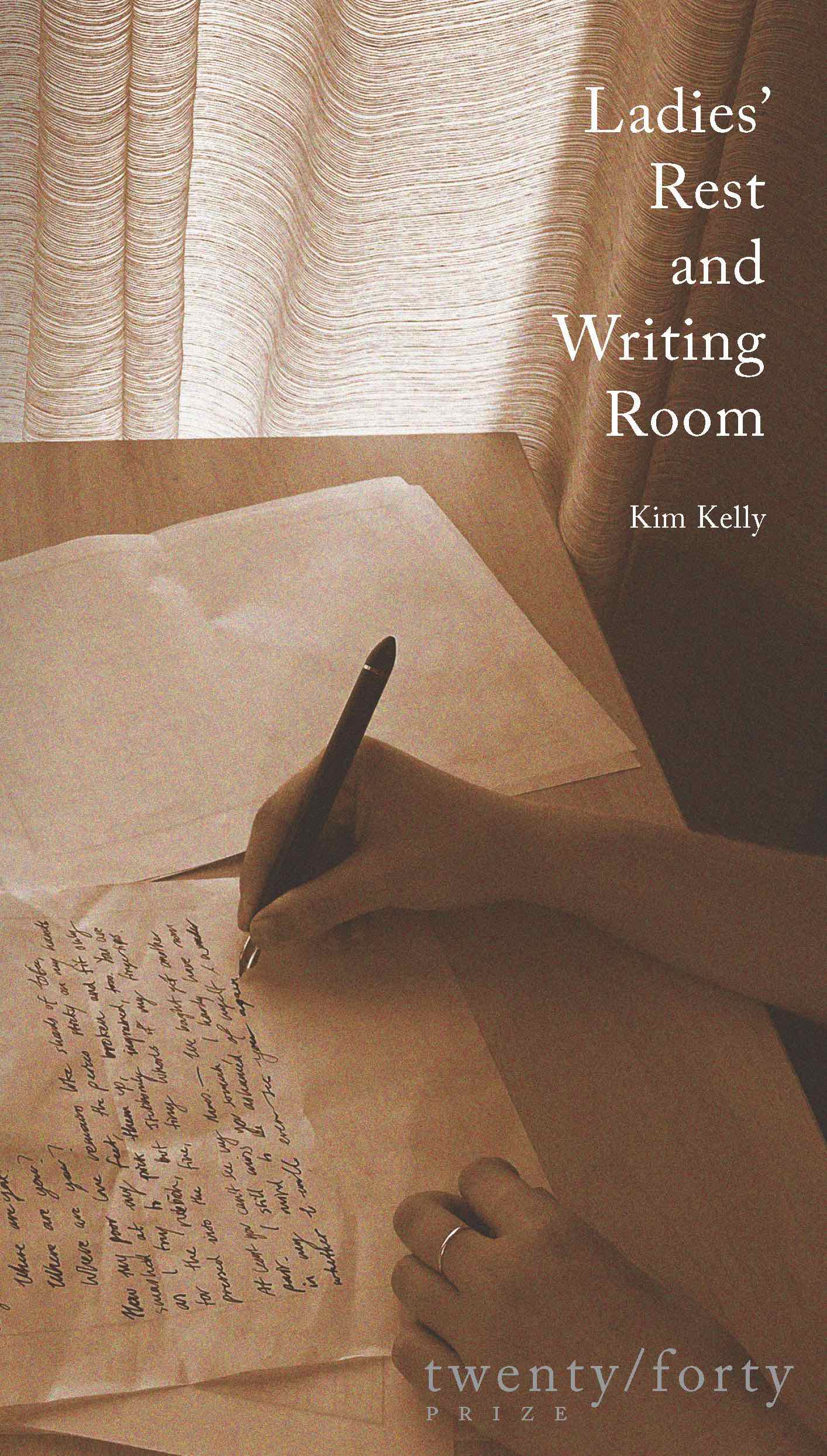
As with all Finlay Lloyd books, the design is gorgeous, with an appealing monochromatic cover featuring a woman’s hands writing a letter. Very different to your usual historical fiction cover.

Ladies Rest and Writing Room is a good read about a significant and complicated time in our history. Like Ravenous girls, it is a compassionate book, this one about navigating deep loss and the grief that attends it, and, even more, about the importance of generosity in dealing with others. I wish these two books well and thank Finlay Lloyd for sponsoring such an appealing, targeted prize.

Read for Novellas in November. Lisa (ANZ Litlovers) and Theresa (Theresa Smith Writes) have reviewed both winners in one post, but I have done them separately.

Kim Kelly
Ladies’ Rest and Writing Room
Braidwood: Finlay Lloyd, 2023
122pp.
ISBN: 9780994516596

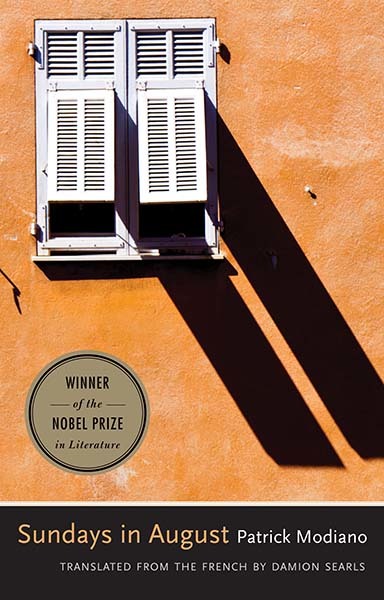
Patrick Modiano, Sundays in August (#BookReview)

Disappointingly, I ended up missing my bookgroup’s discussion of the book I had encouraged us to read, Sundays in August by 2014 Nobel prize-winner Patrick Modiano. I have no-one else to blame but myself, since I did the schedule and should have remembered that I was going to be in Hobart for my brother’s exhibition. C’est la vie.

I recommended this book for a couple of reasons, one being high praise from Kim (Reading Matters) and the other being to include translated fiction in our reading diet. Also, the book intrigued me. Kim described it as a “jewel heist”, albeit qualified by “with a difference”. That seemed unusual subject matter for a Nobel prize-winner. Having now read it, however, I see that he is a skilful writer. I loved reading it. But the subject matter?

According to Wikipedia, Modiano (b. 1945) is “a noted writer of autofiction, the blend of autobiography and historical fiction”. He has published over 40 books, and in them, Wikipedia continues, has “used his fascination with the human experience of World War II in France to examine individual and collective identities, responsibilities, loyalties, memory, and loss. Because of his obsession with the past, he was sometimes compared to Marcel Proust”. I’m not sure about the “was” here, as he is still alive. Anyhow, it is this obsession with the past, with its associated exploration of memory and loss, that made Sundays in August (Dimanches d’août) so fascinating. I am drawn to stories about the past that are told in well-controlled melancholy tones, stories that involve a later reflection on what had happened and the implications for the protagonist’s present. (By the way, this does not appear to be one of Modiano’s autofiction works.)

The novella is set in Nice, and starts with a first person narrator (identified partway through the book as Jean) spotting someone he’d known seven years ago. The man is Villecourt, and he is selling leather goods in the market. Neither man, in fact, has done well in the years since they’d met. Both are alone, and not living the apparently secure lives they had been. We quickly realise that this is not a case of old acquaintances happily re-uniting. Instead, there is palpable tension. After they meet for a drink, Jean makes clear he wants nothing more to do with Villecourt, while Villecourt tries to keep the contact going. He does little to ingratiate himself, however, reminding Jean that he, Villecourt, was the only man someone called Sylvia had loved. He also says that he and Sylvia had not been married. Why had she lied to him about that, Jean thinks to himself?

In this way, in the first few pages, we are drawn into a mystery involving these three. Soon after, the aforementioned jewel – a diamond, with a “long and bloody history”, called the Southern Cross – is introduced, and we learn that Jean and Sylvia had been on a mission to sell it. Then, a little further down the track we meet the mysterious Neals, who seem to live in a grand home named Château Azur, and who all too soon offer to buy the diamond.

It sounds like a simple story involving a love triangle and a heist, but in fact, it is a complex crime story in which it behoves readers to attend carefully for hints and clues about what’s really going on. These are conveyed through the narrative, as Jean tries to “rejoin the invisible threads”, and through gorgeously written imagery that creates an oppressive, foreboding atmosphere, occasionally lightened by the Riviera’s bright sun, and blue skies and water.

“blurred … dissolving”

As we read, the ground constantly shifts beneath our feet. People appear and disappear, and sometimes shapeshift. Virgil Neal, for example, sounds American, then he doesn’t, then he does again, before finally turning out to be someone else. Cars and buildings, too, aren’t always what they seem. Nonetheless, through cleverly managed flashbacks and foreshadowings, we gradually start to see – or, think we see – the set-up. It is all complicated, however, by that tricky beast, memory. Jean writes:

I don’t know anymore whether we met the Neals before or after Villecourt arrived in Nice. I have searched my memory, looking for points of reference, but am unable to sort out the two events. Anyway, there’s no such thing as “events.” Ever. It’s a false term, suggesting something definitive, spectacular, brutal. In fact it all happened gently, imperceptibly, like the slow weaving of a design into a carpet…

Soon after this reference to meeting the Neals, Jean says

The word “meet” doesn’t apply, any more than “event.” We didn’t meet the Neals. They slipped into our net.

Who slipped into whose net is the question. And how many nets were there? Jean will probably never know it all, but by the end he’d learnt that “our anxiety didn’t come from our contact with that cold stone with glints of blue – it came from life itself”.

Typical for a novella, the book is tightly written. Every word counts, and is worth noticing. I loved, for example, that Jean was a photographer who now can’t seem to remember the necessary details, and that Sylvia’s last name is (ironically?) Heureux. These little details aren’t casual, and make us readers think and question at every step, as we are alternately unsettled then proffered glimmers of light.

Sundays in August is an accessible, noir-ish tale about loss and the emptiness that accompanies it. It explores life’s shadows and uncertainties, shows how innocence can be so easily taken advantage of, and it doesn’t wrap everything up neatly, leaving us to ponder the possibilities. I won’t spoil the ending, but it is spot on, and explains, at last, the title, leaving us on a little up despite it all. I’ll be reading more Modiano, if I can.

POSTSCRIPT: I believe we know the main culprit in it all, but the question is, who else was in on it and who else was taken in. It would take more reads to work through that, but in the end I think we can’t ever know it all because we can only know what Jean saw and tells us.

Read for Novellas in November.

Patrick Modiano
Sundays in August
Translated from the French by Damion Searls
New Haven & London: Yale University Press, 2017 (Orig. French pub. 1986)
156pp.
ISBN: 9780300223330 (Read on Kindle)

Shelley Burr, Ripper (#BookReview)

When I started reading Ripper, Shelley Burr’s follow-up novel to her bestselling award-winning debut novel Wake (my review), I thought about crime novels, about how they are often written in series and how I am not a big series fan. Ripper looked to me like a stand-alone novel – and it is, somewhat! I say somewhat, because a few chapters in we come across one Lane Holland.

The plot thickens…

Lane Holland, I thought. I know that name. Sure enough, Lane Holland is the private investigator protagonist of the aforementioned Wake. However, he is not the prime investigator in this novel, because he is in prison as a result of his previous investigation. (You’ll need to read Wake to find out more!) The result is an intriguing crime novel in which we have our prime, self-appointed amateur investigator, Gemma, plus the police working away in the background, and Lane who is pulled into the investigation by his prison governor, Patton Carver. Yes, you’ve guessed right, the plot thickens – except I haven’t really told you about the plot yet.

Ripper is set in a fictional town called Rainier, which, as Burr confirms in her acknowledgements, is partly based on the town of Tarcutta. Seventeen years before the novel opens, three murders had occurred in this little country town, the last one outside the door of Gemma’s little teashop. She – and the town – have never fully recovered from these events. The town has stagnated under its black reputation, and Gemma herself suffers PTSD from what she had experienced. Now a tour company has arrived wanting to run a true crime or dark tourism walking tour of the Rainier Ripper’s murderous path, but Rainier’s residents have mixed feelings about the idea. On the eve of the trial tour aimed at garnering their support, the tour operator is killed in what looks like a copycat murder. It has to be copycat because the Rainier Ripper is in prison, the same prison as Lane Holland. As I said, the plot thickens, and part of the thickening springs from why prison governor Carver is interested.

Once again, I enjoyed Burr’s story, because once again it is more than a crime story, exploring issues like the impact on a small town of having a reputation for violence, the impact on people who have been close to a violent crime, the idea of dark tourism, and the murky world of police investigations and the ways in which confessions are elicited. I am not an expert but Burr’s research into the relevant issues, including prison life, felt thorough but lightly applied.

I also enjoyed Burr’s characterisation. Gemma and Lane are well-evoked. Other characters are necessarily more sketchy, but they are individualised enough to lift them above pure stereotype, to make them feel true. There is an engaging exploration, through Gemma’s daughter and her friends, of how teenagers cope with a complex adult world. There are some truly “tangled” family relationships in the town. There is some diversity, including a non-binary teen and a Wiradjuri woman, which Burr introduces without trying to appropriate other experiences. There are farmers, business people, pub owners, and doctors whose lives are entwined through marriage and murders. It’s a lot to convey, and there are plenty of names, but I rarely got lost!

Ripper has some similarities with Wake, in addition to also belonging to the rural noir sub-genre. It’s told through roughly alternating third person voices (Gemma and Lane); the protagonist is privately investigating; and it deals with a cold case, which involves a missing person. But it is significantly different, too, including the fact that Gemma is an amateur unlike Wake‘s Lane, and that it is set in a different place with different issues to confront. This means that it is not formulaic, which keeps us readers on our toes. We can’t assume anything about where Burr is going.

Now, I am not a big plot-follower, by which I mean I don’t put serious brainpower into trying to work out who dunnit. Rather, I read crime like I read most books, that is, with a focus on the characters and the issues being explored. But of course, I can’t help following the actual plot, particularly when the characters have engaged me and I want them to fare well. In Ripper, I worked out one of the plot twists, but it had several – like those Christie and Christie-like TV shows I watch – and they left me for dead. They did make sense, though, which is the important thing.

On the basis of her manuscript for Wake, Burr won a two-book deal with Hachette, and Ripper is the second book. I do hope she is offered more book deals because, while there is absolute closure on this book’s crimes, there is also a clear hint at the end about where a next book might go – and I’m intrigued. Burr is a clever writer, with her wits about her. Ripper’s readers will guess the main investigation Burr plans for her next novel, but what will the context be this time? What will be the issues? Time will hopefully tell.

Shelley Burr
Ripper
Sydney: Hachette Australia, 2023
346pp.
ISBN: 9780733647857

(Review copy courtesy Hachette Australia)

Pat Barker, The women of Troy (#BookReview)

I shocked my reading group last week when I announced during our discussion of Pat Barker’s novel, The women of Troy, that I was tiring of feminist re-imaginings of historical women. This is not to say that I didn’t enjoy the novel, and it is definitely not to say that I am not interested in novels addressing feminist issues and concerns. It is simply to say that mining the past for the wrongs of the past, while perfectly valid, is starting to feel a bit repetitive, and consequently, also perhaps a bit reductive.

In the last couple of decades, the Classics seem to have been particularly popular for authors to revisit. I can point, in my own reading, to Margaret Atwood’s The Penelopiad (my review), and more recently to authors I haven’t read like Madeline Miller and Natalie Haynes. These authors have all re-imagined women’s roles from the Greek classics. A somewhat different, because non-feminist, re-imagining is one that relates closely to Barker’s novel, David Malouf’s Ransom (my review). In it, Malouf explores the visit Priam makes to Achilles to beg for the body of his son Hector. This event occurs before Barker’s novel starts, but it – particularly how the characters interpret it – underpins Barker’s plot.

So, let’s get to Barker’s novel. It starts with the fall of Troy but it mostly occupies the time during which the victorious Greeks, eager to return home with their spoils of war, which include the titular women of Troy, are unable to leave because they need the right weather to sail. However, it’s not coming because the gods are offended. The Trojan King Priam’s body has been brutalised and left unburied – by the now-dead-Achilles’ son Pyrrhus, who is emulating his father’s treatment of Priam’s son Hector.

Barker evokes the scene well, detailing life at the encampment along the bay, which includes the households of Greek heroes and kings – like Agamemnon and Odysseus – and the women’s quarters where the captive Trojan women are being kept. The warriors, who are fine when they are fighting, are restive, while the women are trying to survive this nightmare. Three voices carry the story, the main one being the first-person voice of Briseis, who had been Achilles’ “prize of honour” but is now married to his trusted companion Alcimus. She tells her story from 50 years hence. Her voice is occasionally interrupted by one of two third-person male voices who speak from their present, the aforementioned Pyrrhus, and the out-of-favour seer, Calchas. In fact, it is Pyrrhus who opens the novel.

“nobody would believe a girl capable of doing it” (Briseis)

Barker knows how to tell a compelling tale. She unfolds the plot at a steady pace, building up the tension in the encampment through strong imagery and tight description. I particularly loved her use of birds to both convey tone and further the themes. Chief among these were the ever-present crows who, Briseis tells us partway through the story,

were everywhere now, and they seemed so arrogant, so prosperous … Almost as if they were taking over.

Above all, though, it’s Barker’s characterisation that engaged me, her ability to invest her characters with humanity – including the brutal Pyrrhus who at 16 years old is young, unconfident and struggling to live up to the reputation of his father Achilles. Briseis, the spoil of a previous war and now carrying Achilles’ child, is more privileged than the newly captured Trojan women, but she needs all her wits if she is to keep them as safe as she’d like, particularly the independent Amina who is determined to defy Pyrrhus and give Priam the burial he deserves.

One of the ways Barker creates these relatable characters is to use contemporary and often highly colloquial language, which I admit I initially found off-putting. I don’t usually bother much about anachronism in historical fiction, so it tickled me that our reading group member who tends to be the most critical of anachronism was the main defender on this occasion. She argued that the language of The Iliad, for example, is poetic, rather than realistic, and that, given we don’t know the language of the time, Barker’s earthy approach – with its expressions like “poor cow”, “as you would”, and “fat lot of good” – is valid. Fair enough – and, in fact, I did find myself able to go with the flow, once I’d attuned myself.

There were other moments, too, though, where the language felt a bit clunky, but they were not enough to spoil what was a page-turning read about the politics of war, of enslavement and of genocide, a story in which the victors take the women for their own and aim to kill all surviving Trojan males:

They weren’t just intent on killing individual men; they meant to erase an entire people.

It’s a grim and brutal world. As Briseis tells us near the beginning, “the only thing, the only thing, that mattered in this camp was power – and that meant, ultimately, the power to kill”. 

But, there are some things that the victors, for all their swaggering physical power, overlook or can’t control. One is the greater power of the gods, and the other is the women. Barker shows how women, in being so ignored, so underestimated, so under the radar, can in fact exert some agency exactly because of this. It’s not an ideal way to be, but when needs must you do what you have in your arsenal.

You don’t need to have read the first book in the trilogy to appreciate this novel. I hadn’t. And, while the kernel of a sequel can be seen in its ending, The women of Troy has enough closure to make it work as a stand-alone novel. I wouldn’t call it a must read, but for those interested in looking at Greek myths from a different angle, there is much to “enjoy” here.

Pat Barker
The women of Troy (Troy trilogy #2)
Penguin Books, 2021 (Kindle ed.)
309pp.
ISBN: 9780241988343

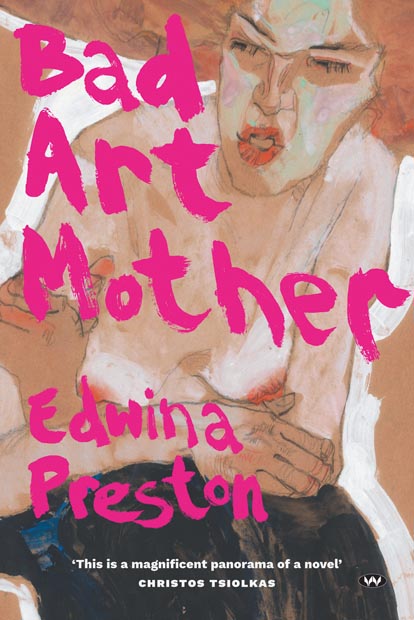
Edwina Preston, Bad art mother (#BookReview)

Edwina Preston’s Bad art mother was my reading group’s June book, replacing our previously scheduled book because we’d heard Bad art mother was to be the featured book in the Canberra Writers Festival session, Canberra’s Biggest Book Club. This suited me, as, coincidentally, I’d just started reading it!

Bad art mother has been shortlisted for two awards this year (so far), the Stella Prize, and the Christina Stead Award for Fiction (in the NSW Premier’s Literary Awards). Not a bad achievement for a book that was rejected by publishers over 20 times before being picked up by Wakefield Press.

The novel is mostly set in 1960s Melbourne, which was a time of social change. While feminism was around the corner but not there yet, the city’s life was being influenced by the postwar influx of European migrants. Preston captures this well, said our Melbourne-born members. The story draws its inspiration from various Australian arts practitioners who were active in the mid-twentieth century – the Heide Circle and the artist Mirka Mora and her husband Georges, in Melbourne, and the Tasmanian poet Gwen Harwood. Bad art mother is the third book I’ve read in recent years inspired in some way by the Heide story, the others being Emily Bitto’s novel The strays (my review) and Jane Sinclair’s memoir, Shy love smiles and acid drops (my review). Interestingly, all of them focus to some degree on the damage done to children.

I enjoyed the experience of reading Bad art mother, not only for its expressive language, but also for its intriguing, complex structure. It is told primarily from the point of view of a young boy, Owen, whose mother, Veda Grey, is struggling to make her name as a poet. However, we also get Veda’s point-of-view through letters she writes to her sister. After opening with Veda’s book launch in 1970, the novel is told in six parts, which to-and-fro in time, but it has an overall chronological trajectory, with part one telling of his parents’ meeting and his birth, and the final part being set around 2016 when Veda’s book is about to be republished in an anniversary edition. The central four parts commence with Owen as an adult in the 1980s, before returning to his childhood in the 1960s. It sounds complicated but it works. Lives, after all, are rarely simple and linear. Owen’s certainly wasn’t. Wanting to be just a kid, he had to be the grown-up more often than not.

The other thing to mention is that Owen tells his story first person, but to a specific person, “you”, whom we soon discover is Ornella, his father’s “sister”. That is, she was the daughter of the Italian family that “adopted” his father when he came to work in their restaurant at the age of 19. Throughout his childhood, Owen is passed between his parents, the rich but dysfunctional Parishes (to whom his mother entrusts him in a deal that buys her more time for her art), and Ornella. It is Ornella who saves him when all the others fail. She is the unimaginative one, the stern one, but also the stable, reliable one, the one who picked him up “on time, every time“. Owen knows that he owes his life to her, and now, as she is failing with dementia, he visits her and tells her his story, expressing what she means to him, while also working through his feelings for his mother.

“I will hang my anger out to dry” (Veda)

The book spans Owen’s life from the 1960s to the 2010s, but with its focus being the 1960s, it is, essentially, a work of historical fiction. Why did Preston choose to write about this time? I like my historical fiction to have some relevance to the time in which it is written. Fortunately, Preston’s novel does – and it concerns the challenge creative women face. There are three such women in the story. Rosa, the muralist, works in Owen’s father’s restaurant, and does it her way. She is not a tortured soul, but it takes a long time for her art to be accepted. Mrs Parish is an ikebana artist who quietly finds her own way by removing herself to Japan. And, of course, Veda, the poet – the only one who is a mother. She struggles big-time with her drive to create and her role as a mother. She writes to her sister:

How does one protect them? Sometimes I think I would throw in every hope of my own, every dream of literary prowess or success, to protect him, even for one second, from any hurt that might come to him.

But would I, Tilde? Would I?

If it came to it, I wonder how I would make such a choice. I should hope that if ever given that choice I would make the right one, but I know I would resent it for the rest of my life. I would never be happy. I would be a bloody, injured banshee who ruined everyone around her.

What sort of a mother chooses a book over a child?

Sometimes I am not sure what I am capable of at all.

The point, then, is that it is hard for women to make art and be recognised for it, and it is especially hard when the woman is also a mother. The tension for Veda is palpable through both Owen’s story and her own letters. And this brings me to the issue which triggers the novel’s crisis, anger. When Veda shows her anger at how she and her work had been treated, things go wrong and her life falls apart. Owen’s partner Julia tells him in 2016 when Veda’s poems are being re-released, that she remains relevant because, for all the progress that had been made in the interim, “it’s still hard to be angry, if you’re a woman. It’s still not allowed”. This was a major takeaway from the book for my reading group.

Bad art mother is an intelligent novel that offers no answers to the quandary it presents, but that asks the right questions. Good on Wakefield for taking it on.

Lisa also enjoyed this book.

Edwina Preston
Bad art mother
Mile End: Wakefield Press, 2022
317pp.
ISBN: 9781743059012

Review copy courtesy Wakefield Press

Bonnie Garmus, Lessons in chemistry (#BookReview)

Bonnie Garmus’ debut novel Lessons in chemistry made a splash on best-of-2022 booklists last year, resulting in my reading group scheduling it this year. It is an enjoyable read, but the intriguing thing is that more than one reader I know couldn’t remember what it was about a few months after reading it. Each remembered enjoying it but could not recollect the details. Why is this? Why, in fact, are there some books that we read and enjoy but forget quickly, while others linger long after we’ve turned the last page? I will leave this for you to ponder. Meanwhile, I’ll get onto the book.

Most of you will know the basic story, but I’m going to document it anyhow – because, you know, I might forget it down the track. It is historical fiction set in the 1960s, and tells the story of female scientist, Elizabeth Zott, whose only ambition is to be a research chemist but whose career is constantly derailed by powerful men’s determination to keep women out of the laboratory. She ends up in the most unlikely job, the host of an afternoon cooking show which, despite her best efforts not to fit the female-TV-star mould, becomes a hit.

Everyone in my reading group thoroughly enjoyed the read, despite some reservations, to which I’ll return later. Our overall assessment was that, with its stereotyped, larger-than-life characters who don’t really change, it read like a fairytale, fantasy or, revenge comedy. But, we also recognised that it dealt with some relevant and serious topics, particularly regarding the inequitable treatment of women – in science, and in life. So, here is the question: given my earlier comment regarding readers forgetting its details not long after reading it, how effective is its light, comedic approach to making the message stick? Humour is a tricky thing. We love reading it, but does it move us to take its target seriously?

Like all writing, some humour is more effective than others. Satire, for example, with its characteristic clever, ironic wit engages my brain and, in doing so, can help the message go down. Lessons in chemistry has some of these elements, but it felt more situational and laugh-out-loud than satiric. This is what makes it so enjoyable, but such humour can sometimes bury the message. Time will tell for me!

And now, let’s look at its humour. Some of my favourite scenes came from the cooking show which Elizabeth Zott uses to teach her housewife audience chemistry, but more than that, to empower them. In one show, she describes different chemical bonds, one being the hydrogen bond:

“I call this the ‘love at first sight’ bond because both parties are drawn to each other based solely on visual information: you like his smile, he likes your hair. But then you talk and discover he’s a closet Nazi and thinks women complain too much. Poof. Just like that the delicate bond is broken. That’s the hydrogen bond for you ladies — a chemical reminder that if things are too good to be true, they probably are.”

“See?” a woman in Santa Monica demanded as she turned to her sullen seventeen-year-old daughter, the girl’s eyeliner so thick, it looked as if planes could land there. “What did I tell you? Your bond with that boy is hydrogen only. When are you going to wake up and smell the ions?”

Her poor producer Walter Pine, whose boss is demanding sexy clothes and cocktails with the cooking, tries in vain to rein her in.

Rowing is another topic that recurs through the novel. Obstetrician Dr Mason wants to get single-mother Elizabeth back in the boat when her baby, Mad, is just one year old. He discovers that she has a keen, helpful neighbour, and suggests that she ask this neighbour to help out:

“At four thirty in the morning?”
“This is what is so unsung about rowing,” Dr. Mason said, turning to leave. “It happens at a time when no one’s really that busy.”

That made me splutter my coffee – as did so many other observations throughout the book. It is a chuckle-inducing read, replete with funny one-liners and surprising similes alongside its array of set pieces.

But, as I said, my group did have some reservations, though they varied. One, for example, didn’t like the anthropomorphism involving the dog, Six-Thirty, while others of us appreciated his astute commentary on his human companions. Another felt it read a bit like a catalogue of issues – suicide, rape, domestic abuse, single-parenthood, and plagiarism, among others. And a couple of us found it somewhat anachronistic. I usually give historical fiction authors a lot of leeway in this regard, but the novel felt imbued with a strong 21st century sensibility. For example, Elizabeth Zott’s young daughter responds to minister Wakeley’s question about her age with “I’m not allowed to give out private information.” Most of us remember the 1960s, but we don’t remember this sort of idea being promulgated. It was just “don’t talk to strangers”.

“Chemistry is change” (Elizabeth)

Garmus was 65 when the book was published, making her a late-bloomer in terms of a novelistic career. However, it also means that she has a lot of life experience to share. She – through Elizabeth – believes that science has much to offer human beings. Elizabeth is infuriated that “too many brilliant minds are kept from scientific research thanks to ignorant biases like gender and race”. She believes that science can be empowering – “when women understand chemistry, they understand how things work”. Indeed, for her science encompasses

the real rules that govern the physical world. When women understand these basic concepts, they can begin to see the false limits that have been created for them. 

Beyond this, however, is the over-riding philosophy that life, like chemistry, is all about change. Through the book Elizabeth has to cope with a range of challenges, some of them serious, and some, in fact, tragic. It is her faith in science – plus the support of some decent people, it has to be said – that see her through.

Lessons in chemistry is not a perfect book, but it is great fun to read and it has a big heart. I can forgive it its little failings for these.

Brona (Brona’s books) and kimbofo (Reading Matters) both enjoyed this book too.

Bonnie Garmus
Lessons in chemistry
Transworld, 2022
391pp.
ISBN: 9781473594531

Maggie O’Farrell, The marriage portrait (#BookReview)

I have mentioned Author’s Notes a few times recently, because I have read a few works of historical fiction. Maggie O’Farrell’s latest novel, The marriage portrait, is another historical novel and so here I am again talking Author’s Notes. The marriage portrait, as you probably already know, is based on the life of Lucrezia de’ Medici, who lived from 1545 to 1561. Her death was ascribed at the time to “putrid fever” (or pulmonary tuberculosis). However, very soon after she died, rumours started that she had been poisoned by order of her husband, Alfonso II, Duke of Ferrara. That suspicion inspired English poet Robert Browning to write his dramatic monologue, “My Last Duchess“. It was this poem and a portrait of Lucrezia that inspired the novel.

O’Farrell writes in her Author’s Note that “I have tried to use what little is known about her short life but I have made a few alterations, in the name of fiction” and goes on to explain some of those alternations and why she made them. I have always argued that historical fiction is just that, fiction. We should not read it as history, that is, we should not rely on it for the facts. However, good historical fiction will provide some truths, and we do find some in O’Farrell’s novel.

The marriage portrait is told in two alternating chronological strands, one starting with Lucrezia’s conception in 1544, and the other a day or so before her death in 1561. In these two strands we are given the whole of Lucrezia’s life. We see her growing up as a resourceful, intelligent but needy middle child in a large family where she felt different from her younger and older siblings. Presumably this is O’Farrell’s invention to enhance her isolation. And we see the last year of her marriage: its deterioration as she fails to bear an heir (to a man who went on to marry twice more without issue) and her realisation that he means to kill her. Not surprisingly, we quickly become engaged in Lucrezia and her plight. O’Farrell knows how to tug our heart strings.

“The ladies . . . are forced to follow the whims …” (Boccaccio)

When I read novels, I believe in reading everything, which here included some matter before the story starts. First is a small paragraph headed Historical Note, telling us of Lucrezia’s death and the rumours concerning it. This is followed by two epigraphs, one from Browning’s poem referring to the portrait, and one from Boccaccio’s The decameron which commences with “The ladies . . . are forced to follow the whims, fancies and dictates of their fathers, mothers, brothers and husbands …” Hence some of the aforementioned truths.

I’m not going to spend a lot of time on the novel but, overall, I found it a readable and immersive story about what was a brutal time period, particularly for women and the serving classes. (I use “serving” rather than “servant” to encompass a wider group of people.) There’s nothing particularly new here, but O’Farrell shows very clearly how women and the serving classes were pawns in the political power plays of the time, with little or nothing to protect them except, sometimes, luck – or the courage of another.

There is more, though, to the novel, than politics and power, gender and class. O’Farrell also looks at that aspect of Renaissance life that we all love, art and artists. Admittedly, politics and class have a hand here too, but Lucrezia herself (the fictional one, anyhow) is depicted as a skilled artist, and her work, materials and technique are described in loving detail. It is through her art that Lucrezia most often can assert herself, albeit that assertion must be hidden from others.

I could argue, too, that the novel suggests the way politics and power can destroy love, loyalty and affection between, in this case, marriage partners and siblings. This could be a modern reading of the situation, but I’m not completely averse to us “moderns” understanding the past through our own lens.

As for the writing itself, it’s gorgeously lush, though verges on the overdone at times. Cosimo’s tigress is described as moving “like honey dropping from a spoon”; she doesn’t “so much pace as pour herself, as if her very essence was molten, simmering, like the ooze from a volcano”. Lucrezia’s husband Alfonso is depicted as “an aquatic creature, half man, half fish, crawling up out of the shores of a river, silvered tail glistening in moonlight”. However, despite this, the rich, descriptive writing seemed appropriate for the opulence of the period. And, there is some more restrained, to-the-point writing, such as this introduction of the man whom those versed in historical fiction will recognise as the likely villain:

The man emerges, shoulder first from the branches, the papers still clutched in his hand. He makes his way through the garden but, unlike Alfonso, he doesn’t pick his way along the paths: he walks through the flowerbeds as if they aren’t there, striding over the low green hedges, through the blooms, scattering bees and petals in his wake. Here is a man, Lucrezia thinks, as she eyes his progress, who waits on no one, who lets nothing get in his way.

His name is Leonello, and Lucrezia recognises him for what he is.

O’Farrell is an experienced writer, so the novel is carefully plotted and structured. I enjoyed her use of parallels to foreshadow later actions. The strangling of the guard Contrari, for example, heralds a later strangling, and our tigress is described by Lucrezia as “a creature captured against its will, a creature whose desires have all been disregarded”, which mirrors her own experience later.

The marriage portrait is not a subtle novel, and it does play somewhat with the historical record, as discussed in the Author’s Note. It’s also excruciatingly brutal at times. But, I did become engrossed in the era and invested in Lucrezia’s plight. A moving read. 

Note: This book was my reading group’s April selection, but due to a COVID-risk I did not attend the meeting.

Maggie O’Farrell
The marriage portrait
London: Tinder Press, 2022
438pp.
eISBN: 9781472223869