Catherine McNamara, The divorced lady’s companion to living in Italy (Review)

McNamara A divorced lady's guide to living in Italy

Bookcover courtesy Indigo Dreams Publishing

What would you say to a cross between chick lit, those mature-women-finding-themselves travel memoirs (like, say, Mary Moody’s Au revoir or Elizabeth Gilbert‘s Eat, Pray, Love), and Alice in Wonderland? Such a fusion is how I’d describe Catherine McNamara’s first novel, The divorced lady’s companion to living in Italy. Intrigued? Then read on …

The plot is simple. Marilyn Wade, a forty-something mother of two teenagers, is “dumped” in her kitchen by Peter, her husband of 17 years. After a period of disbelief and confusion, she decides to go to Milan where rumour has it that another neighbourhood “dumped” wife, Jean, is living a happy and glamorous life after finding true love at Machu Pichu. Jean, also, she believes, runs an English language school where she hopes she’ll find work. Enter Fiona, Federico, Brett, Arnaud, eventually Jean … and a whole new world, to put it mildly, for our Marilyn.

So, why do I describe it the way I did in the first paragraph? Well, to start with, it has elements of chick lit. Just look at the cover with its title in pink. But it’s not a pure chick lit cover is it? There’s no designer handbag or impossibly high heels, no tiny waisted 20-something young thing. Instead, with the exception of the title, there’s a rather classy black and white cover comprising half of a woman’s face that reminds us of more mature women, like, say, Sophia Loren. In fact, there are many references to Sophia Loren in the book. The cover, then, nicely sets up the content as having some thematic correspondence with chick lit but with a difference.

Because in fact, Marilyn’s search is not really chick-lit-like. She’s a mature woman who sees life a little more complexly, and this brings me to the second style of book I mentioned, the mature-woman-finding-herself-travel-memoir. Marilyn is not idealistic about true love and the desire to have it all that is common to chick lit. She’s been around the block, has been betrayed and hurt, and is more than a little jaded – but she has enough hope and energy to think she can still make something meaningful of her life and she leaves the comforts of home to do it. She takes risks – in all meanings of the word, if you catch my meaning – on her way to forging a new life for herself. (Fortunately, like chick lit heroines, she seems to have enough money to support her adventures into her self).

How then, you must be wondering, does Alice in Wonderland fit into all this? It’s not simply the adventures, because these would be covered by the travel-memoir genre I’ve described, but more to do with the rather fantastical world in which they occur. The world Marilyn finds herself in is characterised by somewhat bizarre people (or, at least, people who push our credulity) and by excessive coincidence. For some readers these may get in the way of their ability to suspend disbelief, since McNamara seems to take Chekhov’s gun theory seriously and pushes it to the limit. The first couple of coincidences had my antenna out, but then I got into the flow and actively looked for them. They made me laugh and feel part of Catherine’s fantasy (because, really, books in these genres are fantasy aren’t they? Or is it me who is jaded!?)

As for the writing itself, McNamara has clearly been honing her craft for some time. She has published a children’s book and several short stories. She has a lovely, original turn of phrase. And while at the beginning I felt she sometimes overused similes, as the novel wore on the writing tightened and became controlled and expressive without feeling overwritten. I liked, for example, the opening sentence:

An old friend of mine named Jean fell through a tear in her marriage and landed on her feet.

(Now, doesn’t that sound like Alice in Wonderland?). And I liked this description of Marilyn’s arrival in Milan:

Then, without waiting for my agreement, the woman who’d sold my husband the prize-winning beetle-eating show turned on her high heels and began to tug me into Milan.

Milan, the fashion capital of Italy where appearance is god, turns out to be quite a tricky place for mature-aged housewife Marilyn, but she’s ready for change and change is what she gets. She learns to smarten herself, without succumbing to the Italian fear of aging:

But this is awful [says her young lover Federico]. This woman she not know who she is anymore. She is like carnevale mask, very scary. But this is Italy now, everyone afraid to get old …

All up, The divorced lady’s companion to living in Italy is a fun and often funny read about friendship, love, risk-taking and changing direction.

Catherine McNamara describes this novel as commercial fiction. Her next book, which will be published by Indigo Dreams in 2013, is a short story collection titled Pelt and other stories and represents her foray into literary fiction. McNamara is serious about her career and is clear about her goals and her audience. From what I’ve read so far, I think we’ll be seeing more of her.

PS Elizabeth Lhuede of the Australian Women Writers Challenge will be proud of me. I have stepped out of my literary fiction comfort zone into genre, which will help me achieve my Franklin-fantastic Dabbler level of the challenge. Thanks Catherine for the incentive, and woo hoo!

Catherine McNamara
The divorced lady’s companion to living in Italy
Stoney Stanton: Indigo Dreams, 2012
284pp
ISBN: 9781907401732

Review copy courtesy Indigo Dreams Publishing via the author who has been, for several months now, a regular commenter on this blog.

Susan Johnson, Life in seven mistakes (Review)

By coincidence, really, my local reading group finally got around to reading Susan Johnson’s Life in seven mistakes just as her next novel, My hundred lovers, is to be published. Johnson has written several novels now, though I’d only read one, The broken book based on the life of Charmian Clift, before this. I loved that book and I liked this one.

Life in seven mistakes is a book targeted squarely at middle-class, middle-aged Australian baby boomers – a bit like, perhaps, Jonathan Franzen‘s The corrections was for Americans. It’s about a family – parents Nance and Bob who have retired to Australia’s answer to Miami, Surfers Paradise, and their three middle-aged children, Elizabeth, Robbo and Nick. They are not a particularly well-functioning family (says she, in an understatement). Johnson sets out to analyse how such families come to be … and how, or if, they can be rectified.

There’s not, as is common in books like this, a strong plot.  The main story is set over a few days encompassing Christmas. Robbo and Elizabeth, with their families, have come up to Surfers Paradise from their respective big southern cities to celebrate Christmas and their parents’ 50th wedding anniversary. Nick is absent, being in prison for a minor drug related offence, but his life has been off the rails for some time. The atmosphere is charged with long-unspoken tensions – and a crisis, of course, occurs – but I won’t spoil that main plot point.

Like The corrections, this book chronicles the family’s past while also telling a story about the present gathering. Johnson does this by using alternating the chapters to tell two chronological stories. The present one starts a couple of days before Christmas with the family already gathered, while the past story starts at the time Nancy meets Bobby, and progresses until it pretty much meets the present. This structure works well. It is easy to follow and enhances our understanding of the characters without interrupting the flow of what’s happening now. The chapters have pointed titles like “On top of the mountain” in which Elizabeth sees Australia’s Great Dividing Range in symbolic terms:

As she drives, Elizabeth fancifully pictures the mountain range as forming the backdrop to their lives, and for one fantastical moment she imagines time strung end-to-end along it, her father in his working boots, aged twenty-five, at one end of the mountains, and his son Nick, aged forty-five, at the other. She sees her father at the very top of the mountain, moving trees with his bare hands, and her brother at its very base. Did her father want to remain forever elevated, was that it?

Johnson has a keen eye for family dynamics and most readers (at least from the target group I described) would have moments of recognition here even if, hopefully, the whole is not their experience. It is this, together with Johnson’s sharply observed language, that makes this book somewhat of a page turner. You can’t help wanting to know how this motley crew came to be and what they are going to do next. Will Elizabeth, the successful ceramicist about to have her first one-woman show in New York, grow up and finally stop feeling “infantilised” around her family? Will Nancy relax her drive for perfection and let her family in? Will Bob engage with his family rather than stick to his position as “star of the story”?

I must say I loved the language. Almost every page contains something that makes you stop and think, yes, she’s got it. But – there is a but – somehow the book didn’t work for me quite as well as The broken book did. I’m not quite sure why because, really, it’s the sort of book that is normally right up my alley – and by this I mean the subject matter, the setting (much of which was very familiar to me) and the language.  And yet, it didn’t totally sing for me. One reason may be that the novel is billed as “funny” and “ironic”. Whilst there is humour here, I didn’t find it a funny novel, and I didn’t really see it as ironic. It read more like a serious, straight drama to me. This can’t be my main concern though, because a novel shouldn’t be judged by how it is described by others.

My bigger issue is probably more to do with the “voice”. The novel is told third person – mainly third person, limited.  And this limited point of view is predominantly Elizabeth’s. It’s her pain, her inner conflict, that we are mostly privy to. But the point of view does shift at times. It has to, for example, in the chapters about Bob and Nancy’s marriage because Elizabeth can’t know their story. And so, there are subtle shifts between Elizabeth’s, Bob’s, Nancy’s and sometimes an omniscient viewpoint. This, I think, spreads our engagement a little thin. The book feels like it’s meant to be Elizabeth’s, but it isn’t totally, and so when the resolution comes it feels a little, well, limited.

It was nonetheless a good read … and I would certainly read more Johnson. Can’t say  better than that!

Lisa at ANZLitLovers loved it. Resident Judge enjoyed it too, and like me, saw some similarity to The corrections.

Susan Johnson
Life in seven mistakes
Sydney: Bantam, 2008
346pp
ISBN: 9781741669190

Deborah Robertson, Sweet old world (Review)

Sweet Old World by Deborah Robertson cover image

Cover (Courtesy: Random House Australia)

I may not have read Sweet old world by Deborah Robertson if Random House Australia had not suggested it to me – but I’m rather glad I did. Why do I say this? Because it isn’t the sort of book I usually like to get my teeth into. It doesn’t play with form, or voice, or style. It is, instead (“hallelujah” some might say), a single voice, third person, chronological novel. In other words, it’s a traditionally told tale – but is well done.

Before I continue, though, I must mention a surprising synchronicity. I read today, in Random House’s publicity sheet, that in 2006 Robertson had won the Colin Roderick award (for her first novel Careless, 2006). Now, if I’d read that before writing this week’s Monday Musings, that name (and therefore award) would have passed me by. Some things are clearly meant to be! I should add that, with the same book, she also won the Nita Kibble Award, and was longlisted for the Orange Prize and shortlisted for the Miles Franklin Award. She is a writer to watch.

So, onto the book. Sweet old world is about journalist and part-guesthouse owner, David Quinn. He’s 43 years old, single, childless, and lives on Inishmore Island, one of those beautiful but harsh Aran islands off Galway. David is your quintessential SNAG (Sensitive New Age Guy), but I say that without any sense of satire. He is a genuinely nice guy who desperately wants to be a father, something he, as a man, feels unable to talk about “although he’s not exactly the silent type”.

At the start of the novel, the closest he is to achieving this goal is to be the involved uncle of his sister Orla’s three sons. They are not central to the plot though. A woman is. Early in the novel, after dining at his house, 17-year-old Ettie has an accident on her bicycle and ends up in hospital in a coma. Her mother, 38-year-old Tania, flies out from Western Australia (whence David had also originally come) to watch over her daughter … and you can guess the rest. Or can you? I’ll say no more on the plot, to avoid spoilers.

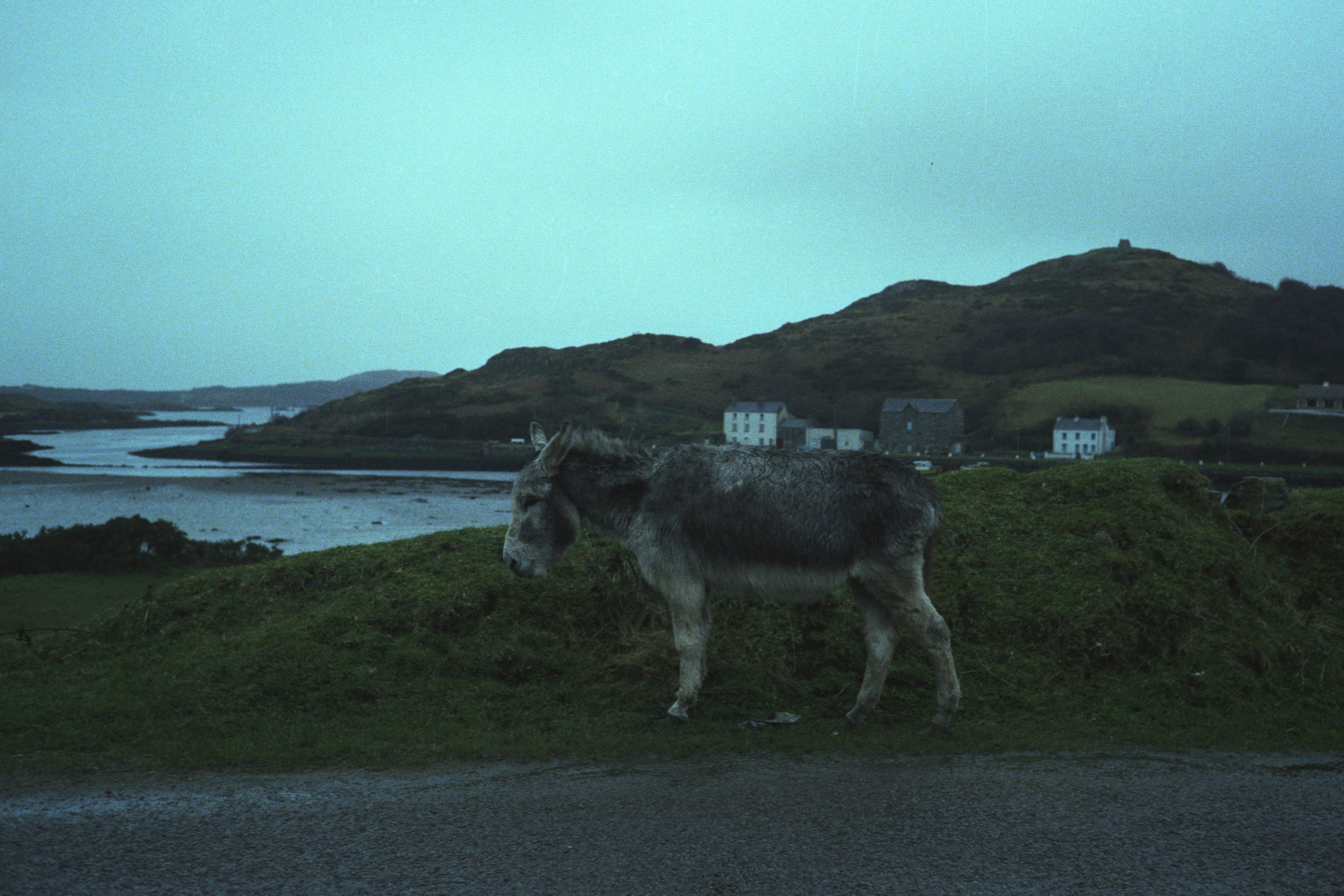
Connemara Donkey, Galway, 1980

Connemara donkey, Galway, 1980

What is lovely about this book is Robertson’s ability to describe place and get to the heart of a character. I loved her description of Inishmore and Galway (which I have visited). There’s rain, and more rain, there’s the wild terrain, but there are also blue skies and mild, warming weather. David’s relationship with nature charts his emotions, but not in a heavy-handed way. The first section of the novel (there are no numbered chapters) ends with:

He pushes the door wide open … and steps out into the day of salt-scented sunshine.

Later in the novel, “he gives into the sun and the excitement inside him” but, in a down period, “rain blackens the island’s limestone”. Another time, the island makes him feel “subtly undermined”. Out of context, these seem too obvious, but within the text they effectively support the tone.

What also charts David’s emotions is his bad back. When things aren’t going well, he is laid (seriously) low. This bad back also plays a role in the plot. It brings Tania to him – and it reminds us, and him, that he is on the wrong side of 40 (particularly in terms of his fatherhood goals), and “that, one day, time would suddenly contract; tighten around him”. It’s an effective and believable motif.

Like most chronologically told stories there are flashbacks to fill out the picture. We hear about David’s past failed relationships and about his previous job as a journalist for Agricultural Times which saw him writing about the Animal Liberation Front. We discover that Orla may be right about David being “a truth-seeking missile for hurt”.

If there’s a weakness in the novel, it’s in the plot. I found it a little contrived, particularly regarding the crises in the relationship. While the story is told in third person, it’s limited to David’s point of view. If we are to believe him, and I think we are meant to, then his actions make sense.  And yet Tania keeps falling over one issue – her uncertainty regarding his very brief and, from what the reader saw, innocent time with her daughter. I found Tania’s uncertainty understandable, somewhat, the first time, but less so thereafter. It all hinges on David’s credibility …

Technically, though, the plot is well-constructed, and teases us to second-guess where it’s going. Take, for example, this description of David’s nephews’ comic project which, sometimes

turns out to be the genuine item, that rare thing – a romantic comedy with injuries, tears and forgiveness, as well as real jokes.

Whether Sweet old world meets this description is something for you to discover. I will simply say that despite my initial statement, there is something fresh in this novel. I loved her descriptions, and the occasional flashes of whimsical humour. Robertson has created in David an interesting and psychologically-comprehensible character, and she has given real voice to men who long for children. There’s much to enjoy here.

Lisa at ANZLitLovers enjoyed it too, but also has some questions.

Deborah Robertson
Sweet old world
North Sydney: Vintage Books, 2012
291pp.
ISBN: 9781741668254

(Review copy supplied by Random House Australia)

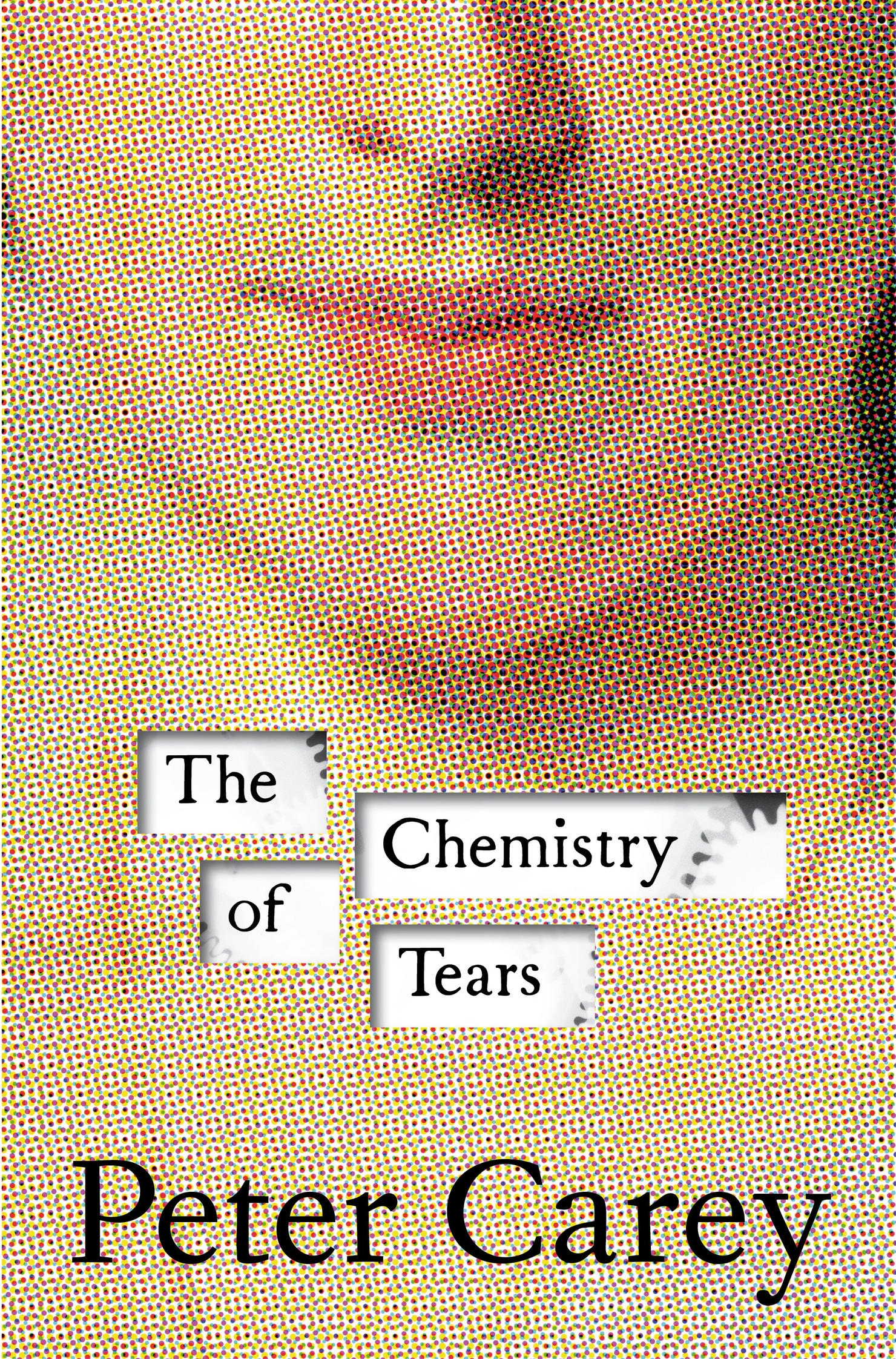
Peter Carey, The chemistry of tears (Review)

Peter Carey Chemistry of tears bookcover

Gorgeous bookcover (Courtesy: Penguin Group, Australia)

It may sound strange, but when I think of Peter Carey, I also often think of Margaret Atwood. Their works and concerns are very different, I know, but the thing is that both produce highly varied oeuvre. They take risks; they try new forms, voices and genres. This is not to say that I only like writers who do this – after all, I love Jane Austen – but I am always intrigued to pick up a Carey or an Atwood. Consequently, I was keen to read Carey’s latest, The chemistry of tears.

As a librarian-archivist who also worked with museum materials, I was engaged from the first chapter which introduces 40-something Catherine, one of the two protagonists. She’s an horologist and senior conservator in a museum, and the novel opens with her discovery that her (secret) married lover of 13 years, another museum employee, has died. She’s devastated. She also thinks their relationship has been a secret, but soon discovers that her boss, Eric Croft, knows about it. Aware of her grief, he allocates her to a project away from the main museum building. And, he provides her with an assistant, Courtauld graduate Amanda. Catherine has been a calm, rational creature but warns us that she is now “a whirring mad machine”. Hang onto that image. The date is April 2010. Hang onto that date.

The second protagonist is Henry Brandling, who is the author of the exercise books Catherine finds in the tea chests containing her project. This project is to reconstruct a Vaucanson style Digesting Duck which Henry commissioned for his consumptive son. Henry’s part of the story takes place in 1854.

The novel is narrated pretty much alternately in first and third person voices. The first person is Catherine relating her progress with her project, and with her pervasive grief, while Henry’s story is told in third person, based on Catherine’s reading of his exercise books. Henry’s is a pretty wild story that sees him travel from England to Karlsruhe, Germany, to find someone able to make the automaton and then on to Furtwangen to oversee its construction by watchmaker Sumper. Henry’s faith in himself and the somewhat enigmatic Sumper are sorely tested as the manufacture proceeds in a rather secretive and chaotic manner within a household that also includes the moody Frau Helga, her odd but clever son, Carl the Genius, and the silversmith-cum-fairytale-collector Arnaud.  Meanwhile, in 2010, Catherine’s progress is no less erratic, due partly to her own self-centred grief-stricken behaviour and partly to the not completely transparent actions of assistant Amanda.

There were times, I must say, when I wondered if Carey were pushing his plot too hard – when Catherine’s behaviour got just a little too irrational or paranoid, or when Sumper (if not Henry) became a little too obsessive – but these times were fleeting because he always managed to pull it back just as I thought he was going over the edge.

Carey uses a whole grab-bag of devices to tell this tale. I liked the obvious but not slavish parallels between grieving Catherine and her clever but a-little-too-independent assistant Amanda, and between worried father Henry and his rather independent watchmaker Sumper. These parallels encourage us to think more deeply about what is really going on in the two domains, to consider who is rational and who isn’t, or whether no-one is. Carey also uses humour and satire, some light foreshadowing, and effective imagery, in addition to the structure and voice I’ve already described. Looked at individually, none of these is particularly innovative, but in concert they result in something rather fresh and, more than that, something that is entertaining while also challenging the intellect.

If you know Carey, though, you will know that this novel is about more than two people resolving their respective griefs. Remember my instructions in the second paragraph to hang onto an image and a date? They are clues to the bigger themes of the novel. The date, April 2010, is the date of the Deepwater Horizon oil spill in the Gulf of Mexico. This is a serious and distressing issue for Amanda. And what caused the oil spill? Why, a big machine of course. Carey’s theme, however, is a little more complex than simply demonstrating the negative effects of industrialisation, that triumph of the 19th century, on our lives today. Enter the automaton story-line …

Automata, you’ll be aware, represent scientists’ attempts to imitate life but, as Henry recognises early in his quest, they are “clever” but “soul-less” creatures. Catherine also reflects on automata in her first chapter:

But really, truly, anyone who has ever observed a successful automaton, seen its uncanny lifelike movements, confronted its mechanical eyes, any human animal remembers that particular fear, that confusion about what is alive and what cannot be born.

The plot – well, the theme – thickens, because Henry and Catherine’s automata, the duck, isn’t quite what it appears to be. And here, Carey cheekily introduces and twists the ugly duckling story because, as we learn early in the novel, the duck is in fact a swan – and a swan, in reality and myth if not in fairytale, is something both “beautiful and pitiless”. Carey uses it to suggest that science may be taken too far … and to represent …

The other big theme of science versus belief, the paradox of scientific and industrial endeavour towards perfection versus the chaos of humanity. As Eric says to Catherine late in the novel:

Do you know, I find the notion that mysteries must be solved to be very problematic. […] Why do we always wish to remove ambiguity?

Is this Carey confronting us head on with our own paradoxes? With the fact that we are happy with, want even, our modern culture’s tendency to produce open endings, to recognise that not all can be neatly explained, while at the same time expecting science to push and push and push for answers. Accepting mysterium tremendum, suggests Carey, is the stuff of life.

Lisa of ANZLitLovers also liked this novel.

Peter Carey
The chemistry of tears
Camberwell: Hamish Hamilton, 2012
268pp
ISBN: 9781926428154

(Review copy courtesy Penguin Group, Australia)

Willa Cather, My Antonia (Review of eNotated edition)

Portrait Willa Cather 1936

I am a Willa Cather fan, and have read some of her novels and short stories, so was intrigued when eNotated Classics offered me an eNotated version of Cather’s My Ántonia for review. eNotated? That sounded like something worth exploring so, although I’ve read the novel before, I decided to read it again. I wasn’t sorry. It’s still a wonderful read.

My aim here is not so much to review the book, though I won’t be able to resist saying a little, but to explore this eNotated edition that I read on my Kindle. I understand from the website that eNotated Classics produces books for the Kindle, the Nook and iBooks. The company’s aim is to take “advantage of eBook technology to extend and enrich books in a way that increases understanding, engagement and reading pleasure”. Did they achieve this aim for me? That is the question!

I’d say yes and no – and will explain by discussing what I see as the three main components of the eNotated version.

eNotation links

These are underlined text (words or phrases) that you click for added information, which can be dictionary-style definitions, brief encyclopaedic-like descriptions, or interpretations. The eNotations can also be read as a group by clicking a single link at the beginning and end of each chapter, and they appear at the end of the book. In fact, the novel finished at the 77% mark in the book, with the last 23% comprising the eNotations and other material.

I was disappointed that many of the eNotation links contained the same information that the Kindle dictionary contains. Since the latter is faster to access by simply moving the cursor to the word to be looked up, those eNotations were rather superfluous. However, perhaps this depends on the dictionary the e-reader accesses, making the experience different with different e-readers.

There were a few of the more interpretive style and I appreciated those. One concerned the relevance of the play Camille which the narrator Jim sees with Lena. This sort of notation can be useful to students who may not, for example, know the play.

A useful feature is their identification system, which comprises a bracketed number at the end of each paragraph and each eNotation, making them easy to cite and to find. The number is obvious as you read, but you soon get used to it.

Theme indications

Now this one bothered me somewhat. See what you think: here are the first lines of the novel as they are presented in this eNotated version:

Last summer I happened to be crossing the plains of Iowa (TIME) in a season of intense heat, and it was my good fortune to have for a traveling companion James Quayle Burden – Jim Burden as we still call him in the West.

Throughout the novel sentences or phrases are treated like this – formatted in italics followed by (TIME), (NARRATOR) or (ELEGIAC). The “How to read this book” section at the beginning of the book explains that these italicised passages are cited in the relevant theme essay – Time, Narrator or Elegiac – at the end.  These are not really “themes” in the literary analysis sense: “Time” is a theme but “Narrator” relates to voice, and “Elegiac” relates to tone. I did find these a little intrusive and wonder whether they would have been better handled as links to the essay they occur in without the bracketed upper case word to show the way.

Additional information

At the end of the book are several items designed to add value. Most of these are not unique to e-Books. They are the eNotations (which you can click on to go back to the text), the three theme essays, a History of Nebraska, a Willa Cather Timeline, a Key Event Timeline, a Bibliography and Images. These are all useful value-adds. I liked the fact that the 12 images can be enlarged, something I can’t do with maps and images in the travel guide I bought last year. It was fascinating to see an image of a Dugout house in Nebraska, though photo credits next to the captions would have been good.

I’m not a Cather expert, but I found the Theme essays interesting – and expect they’d help both students and general readers. The bibliography is short and looks useful, though the most recent citation is dated 1987 which seems a little old. The novel might be a classic, but scholarship continues …

And now to the book itself

How do I love this book? Let me count the ways! I love its meditation on the past, on how the past intrudes into the present. Jim Burden is, really, “burdened” by his past. He meets Antonia when he is a 10-year-old orphan arriving in Nebraska to live with his grandparents, and she a 14-year-old Bohemian immigrant arriving with her family to settle there.  They end up on neighbouring farms and become friends when her father asks Jim to teach Antonia how to speak English. The novel then follows the next 30 or so years of their lives – the first four “books” cover 10 years from the novel’s opening, while the last “book” jumps to 20 years later. Jim, the narrator, keeps an eye on what happens to “my” Antonia over the years, but the book is as much about him and his inability to move on from the past. He says near the end:

In the course of twenty crowded years one parts with many illusions. I did not wish to lose the early ones. Some memories are realities, and are better than anything that can ever happen to one again.

 I love its language and tone. It’s delicious to read. I’d probably describe it as “melancholic” or “meditative” but I wouldn’t argue with Bedell’s “elegiac”. Here is an early description as Jim arrives in Nebraska from the greener, more lush Virginia:

Between that earth and that sky I felt erased, blotted out. I did not say my prayers that night: here, I felt, what would be would be.

Lovely, simple, spare writing.

And I love Cather’s description of pioneer life, and pioneer characters. Much of what she writes could easily apply to 19th century Australia. The landscape is different – but is similarly bare and harsh – and the ethic mix is different – but the experiences and hardship are universal. It’s a life and environment in which character is writ large – and Cather draws her characters beautifully. Even the minor ones – such as farm hands Jake and Otto who disappear early in the novel – are vivid. Here is Jim on Ántonia, late in the novel:

She lent herself to immemorial human attitudes which we recognize by instinct as universal and true. I had not been mistaken. She was a battered woman now, not a lovely girl; but she still had that something which fires the imagination, could still stop one’s breath for a moment by a look or gesture that somehow revealed the meaning in common things.

This is one of those novels that stays with you and I’d recommend it to anyone. Would I recommend this eNotated edition? Yes. It’s a good attempt to take advantage of the eBook format and, while there are features that didn’t  work perfectly for me, at USD5.99, it’s hard to beat.

Willa Cather
The eNotated My Ántonia
eNotated by Barbara Bedell
eNotated Classics, V1.00 12/1/2011 (based on 1918 edition)
Kindle edition
ISBN: 9780982744864

(Review copy supplied by eNotatedClassics.com)

Julian Barnes, The sense of an ending (Review)

I should have known I wouldn’t be the first to think of it, but during my reading Julian Barnes‘ Booker Prize winning novel, The sense of an ending, I was suddenly reminded of TS Eliot‘s The love song of J. Alfred Prufrock. It was the melancholic tone, the sense of life having passed one by, that did it:

What did I know of life, I who had lived so carefully? Who had neither won nor lost, but just let life happen to him?

Doesn’t that remind you of “I have measured out my life with coffee spoons”? I don’t usually read reviews before I write my own, but I wondered if my thought had come to anyone else. Of course it had. I googled “julian barnes sense of an ending prufrock” and up came several hits. Oh well, I thought, at least I’m not going to sound totally foolish. There is safety in numbers, after all, which brings me back to Tony, the novel’s protagonist, who says, at another point in the novel:

I’m not odd enough not to have done the things I’ve ended up doing with my life.

I admit to having a certain fellow feeling with Tony, a self-confessed “average” person who’s led an average life “of some achievements and some disappointments”. But, enough self-revelation, let’s get on with the review.

I’ll start by saying that this book is right up my alley. Firstly, it’s a novella and regular readers here know how I love a good novella. Secondly, it’s a good novella, by which I mean it’s tightly constructed and sparely written. And thirdly, plot is not the main point; character and life are Barnes’ focus.

Nonetheless, while there’s not a strong plot, there is of course a story, and it concerns the aforesaid Tony. He’s the first person narrator and is a reliably unreliable one. He tells us this on the second page, while at the same giving away the novel’s essential form:

But school is where it all began, so I need to return to a few incidents that have grown into anecdotes, to some approximate memories which time has deformed into certainty. If I can’t be sure of the actual events any more, I can at least be true to the impressions those facts left. That’s the best I can manage.

This tight little para tells us a few things about what’s to come. The word “deformed” combined with the idea that he “can’t be sure of the actual events” tells us to beware, that imperfect (for whatever reason) memory is at play. The mention of returning “to a few incidents” describes the basic structure of the novel, as it does indeed focus on and tease out the ramifications of a “few incidents”.  And the reference to school hints that there might be something of the bildungsroman about it.

I still haven’t told you anything about the story, though, have I? It’s divided into two parts. In Part One, Tony is in his teens and twenties and focuses on his three male friends and his first serious girlfriend, Veronica. This part is less than 60 pages and, as Tony promises at the beginning, primarily comprises a few scenes from his life, linked by some running commentary. There are classroom scenes and a particularly memorable one involving his first  (and only) weekend visit to his girlfriend’s home. We come back to this scene in the second part. I loved how, after spending some 50 pages on his youth, Tony wraps up around 40 years of his adult life in two pages. Impressive writing.

In Part Two, Tony is confronted again with some of the major incidents from his youth and is forced to reconsider his sense of self. The most important of these incidents concerns the suicide of one of his friends … and gradually we get a whiff of a mystery, albeit one just hovering around the edges. This is because the mystery is not the main point.

Tony, in this part, is bequeathed, out of the blue, the diary of the friend who had committed suicide 40 years previously. Now, Tony believes that it is the witnesses to your life, those you spent time with, who “corroborate” who you are. As these people drop away, there is, he says “less corroboration, and therefore less certainty to what you are or have been”. He therefore sees this diary as potentially significant:

The diary was evidence; it was – it might be – corroboration. It might disrupt the banal reiterations of memory. It might jump start something – though I had no idea what.

The bequest does “jump start something” but to what purpose is the moot point. An issue that occupies Tony is that of change. “Does character develop over time?” he asks and then continues, in one of those little postmodern touches we’ve become used to, “In novels of course it does, otherwise there wouldn’t be much of a story”. You said it, Tony/Julian, we are tempted to respond, except that by this time Tony had so captured my attention that the minimal story was neither here nor there.

And this is where I’ll leave the story … and return to an issue I raised earlier in the post, that regarding its being something of a bildungsroman. It’s not a traditional coming-of-age novel because only the first part of the novel chronicles his development as a young man. But, something is jump started for Tony in his 60s that forces him to rethink who he had been and who he had become. Memory, he says, can lock you into

the same loops, the same facts and the same emotions. I press the button marked Adrian or Veronica, the tape runs and the usual stuff spins out. The events reconfirm the emotions – resentment,  sense of injustice, relief – and vice versa. There seems no way of accessing anything else; the case is closed.

Occasionally, however, something happens to break the loop, as it does for Tony. He is suddenly confronted with new (or, different) memories which bring new emotions. He looks at “the chain of responsibility” and sees “my initial there”. He learns that the things he’d thought fixed or certain can be dissolved, that memory cannot be relied upon and can, in fact, come back to bite you. Time and memory, Barnes shows us, are malleable, suggesting, to me at least, that perhaps we never really do come of age.

Julian Barnes
The sense of an ending
London: Vintage, 2011
150pp.
ISBN: 9780099564973

PD James, Death comes to Pemberley (Review, sorta)

How do you review or evaluate a Jane Austen “sequel”*? Do we expect, want even, the author to channel Austen? I suspect the answer is as varied as are the readers of sequels, and it probably depends on why we read Austen. Those who are mostly interested in the stories and what happens to the characters are likely to have a completely different perspective from those who love Austen’s language and her very particular wry, sly eye on humanity. I fall into the latter group and this is why I am not drawn to sequels. I want to read Austen for Austen, and other writers for their style and worldview.

I have just read PD JamesDeath comes to Pemberley. I’d describe it as a traditional sequel, with a difference. That is, it picks up the story of Elizabeth and Darcy some six years after their wedding, but it is a crime novel, which adds an extra complication for the reviewer, because not only is there the issue of Jane Austen’s story and characters to consider, but there’s a shift in genre. This, I’ll admit right now, puts me at a double disadvantage: I don’t read Jane Austen sequels and I don’t read crime novels. So why did I read this book? Two reasons really. It was given to me by a friend and my local Jane Austen group decided to discuss it as part of this year’s focus on Pride and prejudice.

I’m glad I read it, mainly because I’ve been wanting to try a “sequel” for some time to understand what they are all about – and a sequel by a writer of PD James’ reputation seemed like a good one to try. However, I can’t say I really enjoyed it. It was, however a quick read – and I did find it intriguing to ponder what sequel readers look for.

Before I discuss that, I’d better say something about the plot, though that’s hard without giving too much away. The story proper starts on the night before a big annual ball. Elizabeth, Darcy, Colonel Fitzwilliam (now Viscount Hartlep), Georgiana and the Bingleys are all at Pemberley getting ready, when a carriage careens into view carrying, we soon discover, an hysterical Lydia claiming that her husband, Wickham, has been shot. Darcy, Colonel Fitzwilliam and a new character and suitor to Georgiana, Alveston, set off into the woods to find out if indeed this has been the case. The novel then, as crime novels tend to do, follows the story of a murder through inquest, trial and resolution. It’s an interesting enough plot, and one whose resolution I didn’t guess. But then, as I’ve already said, I’m not a crime reader.

But now, rather than review the book in my usual way, I’m going to talk about it specifically in terms of its “sequelness”. (Is that an ok neologism?). So here goes…

Characterisation

If there’s one thing a sequel should do, I think, it’s to be true to the characters. No matter what new situation they are placed in, they need to still be them. Unfortunately, in this novel, Elizabeth and Darcy do not come across as Jane Austen’s creations. Darcy spends most of the novel – which, remember, occurs six years after the wedding – bothering about his decision to marry Elizabeth and how it returned Wickham to his world. He’s not sorry about marrying Elizabeth but he mulls and mulls and mulls yet again about the implications feeling, for example, “that he had lost some respect in his cousin’s [Col Fitzwilliam] eyes because he had placed his desire for a woman above the responsibilities of family and class”. That’s not our Darcy!

Similarly, it’s a rather subdued Elizabeth we see. Sure, she’s older but she is still in her 20s. And sure, she’s now the mistress of Pemberley, but that doesn’t mean the young woman who stood up to Lady Catherine, unlike “sensible” girls who recognise their need of a husband, now has to be quiet and, yes, dull. Why doesn’t she tell Darcy of some clues and suspicions that may be relevant to the murder?

Would Charlotte Lucas really harbour resentment towards Elizabeth? James suggests she does:

… but it was unlikely that Charlotte had either forgotten or forgiven her friend’s first response to the news [that she’d accepted Mr Collins].

Style

I’m not sure that a sequel must ape Austen’s style … which is just as well because James doesn’t really. The problem is that I think she tried. She’s clearly a good writer, but it probably would have been better for her to stick to what she does best. There were moments of wit and humour, but much was ponderous. Here is Georgiana’s suitor speaking to Darcy:

Forgive me, sir, but I feel I must speak. You discuss what Miss Darcy should do as if she were a child. We have entered the nineteenth century; we do not need to be a disciple of Mrs Wollstonecraft to feel that women should not be denied a voice in matters that concern them. It is some centuries since we accepted that a woman has a soul. Is it not time that we accepted that she also has a mind?

This is way too didactic and preachy for Austen, particularly for a non-Mr-Collins-like character. The dialogue, overall, lacks Austen’s light touch – and is often stilted without capturing the formality of the period.

There were times too when I felt she was more Dickens than Austen. Some of her characters’ names are pure Dickens, such as Hardcastle, Pegworthy and Belcher.

However, I understand that James is known for her settings – something that Austen did not focus much on – and her descriptions of place are generally evocative and effective.

Observations

Along with her style, it’s the way Austen hones in on human behaviour and describes it with brevity and wit  that keeps me coming back to her. James was clearly keen to match Austen in this area and occasionally made me smile, as with this description:

… had exacerbated a disagreement common in marriages wherein an older husband believes that money should be used to make more of it, and a young and pretty wife is firmly of the view that it exists to be spent; how otherwise, as she frequently pointed out, would anyone know that you had it?

And this comment by the imperious Lady Catherine:

I have never approved of protracted dying. It is an affectation in the aristocracy; in the lower classes it is merely an excuse for avoiding work.

These little commentaries were like beacons in the forest … and showed me that, despite the misses in the novel, James does “get” Austen.

Genre

Then there’s the genre shifting. This is both a crime novel and historical fiction. I can’t speak much for the crime aspect except to say I thought it was well plotted and kept me guessing. I didn’t work out whodunnit, but when it came, the clues generally made sense. James also incorporated some Gothic elements – nature awry, dark woods and possible ghosts – something that Austen didn’t write, though she did spoof readers of Gothic fiction in her Northanger Abbey.

The historical fiction aspect was mixed for me. James had clearly researched the period thoroughly and I enjoyed learning about the practice of law, in particular. However, there were times when it felt that she just had to impart some information, whether or not it was essential to the story. Interesting enough, but it got in the way of her story.

Unlike Austen, who is often criticised for not writing about current events, James makes regular references to the Napoleonic war – and to English nationalism. This is fine. I don’t think a sequel has to limit itself to Austen’s subject matter.

I’d love to write more, but have already taken up way too much of your precious reading time. I’ve probably panned the novel more than I originally intended to. This is because it’s not the book for me – but it’s by no means a “bad” book. If you like Austen sequels, you’ll probably like it. If you like crime novels or are a fan of PD James, you could very well like it. But if you like Austen for her Austen-ness, then, like me, you’d probably rather read Pride and prejudice  – again. Horses for courses, as they say.

Death comes to Pemberley
London: Faber and Faber, 2011
310pp
ISBN: 9780571283583

*  Sequel in this Jane Austen context are books written by other writers based in some way on Austen’s novels. They can be “real” sequels (or prequels) in that they take an existing novel and tell us what happened next (or before); they can be retellings of a particular novel; or they can take another approach, such as tell the story of, or from the point of view of, another character.

Chris Flynn, A tiger in Eden (Review)

Flynn Tiger in Eden
Courtesy: Text Publishing

Are all people redeemable, regardless of what they’ve done? This is the question that confronts us in Chris Flynn’s debut novel, A tiger in Eden. I wondered, as I was reading this book, what inspired Flynn to write – in first person – about a man who was a violent thug during the Troubles in Northern Ireland and how he managed to achieve such an authentic voice. I don’t read reviews before I read books, and I didn’t read the press release which came with the book until I’d finished it, but when I did I discovered that Flynn was born in Belfast during the period he writes about. “I was born into the war and knew nothing else growing up”, he says.

He has seen horror, he says. He has had guns pointed at him, and he has heard “stories of torture and cruelty so nightmarish I would not recount them to someone who had grown up outside of Northern Ireland. You don’t want that in your head”. This, however, is the world of Flynn’s protagonist, the thug-on-the-run, Billy Montgomery, whose head is full of violent memories and whose hands are stained with blood. “Sometimes”, he says, “I reckon the worst thing that can happen to a person is surviving”.

I don’t want to say too much about the story because it’s a slim book with a small cast of characters and a pretty straightforward plot. To say too much would give it away. It’s set in Thailand in the mid 1990s. The aforesaid thug Billy, who is not short of a penny due to his criminal past, is hiding out. But, here’s the interesting thing. Billy is a sympathetic character, despite the violence we know he’s done (though we don’t know the full extent until near the end) and even despite the violence we see him enact in the first half of the novel. He’s sympathetic because we realise early on that he’s trying to work through something, that he’s carrying some terrible baggage he wants to shake off.

It’s the mark of a good writer to be able to make an unappealing character sympathetic. And Billy is pretty unappealing. Not only is there his violent past, but his attitude to women is (or, at least has been) appalling, as has been his attitude to Catholics and various other “lesser”, to him, members of society. But, this book is really about the education of young Billy and so, through the love of a couple of good women (which is, yes, a little corny) and some other meaningful encounters, a Buddhist retreat, and reading, Billy starts to think about his life and, consequently, starts to confront his demons.

One of the things that makes Billy work is his voice. The novel is told first person in the vernacular of his ilk. This means there’s liberal use of swear words*, minimal punctuation, and the grammar is, shall we say, idiosyncratic. The result is a voice that sounds authentic – and, in this case, reliable. The only thing stopping Billy from telling the truth at times is the pain it would release.

Billy is, of course, the tiger in Eden, a potential threat to good people everywhere, but just to give it some added real and metaphoric punch, Flynn has our Billy confronting and staring down an actual tiger, an escapee from a zoo (just like Billy really). However, whilst I say Billy is “the” tiger in Eden, he is not the “only” tiger in Eden. Flynn shows Thailand to be a place spoilt if not corrupted by sex-tourists and cashed-up back-packers who abuse the locals one way or another. Here is Billy after realising that a genuine friends-only outing with a local Thai girl threatens her reputation:

The aul sex tourism had changed things for all these people, I could see that now ‘cos normal life no longer existed. It was kind of like how the Troubles had changed things back home, once you go down that road, sure there’s nothing going back, everything gets changed forever and not for the better. I felt ashamed so I did.

In other words, while Flynn’s main story is men like Billy, he manages to make a few other points along the way.

At the beginning of this post I said that the book confronts us with the question of redemption, and so it does, but that’s not so much what Billy is seeking. He does not specifically ask to be “saved”. He simply wants to be able – psychologically and actually – to put the past behind him and “make something” of his life. This is not a perfect book. It’s somewhat predictable and the supporting characters are not well fleshed out, but Billy is a character that will engage you and make you see the world from another angle. And isn’t that what reading is all about?

Chris Flynn
A tiger in Eden
Melbourne: Text Publishing, 2012
217pp.
ISBN: 9781921922039

(Review copy supplied by Text Publishing)

* So it’s not the book for you if that offends.

Merlinda Bobis, Fish-hair woman (Review)

Merlinda Bobis Fish-hair woman

Courtesy: Spinifex Press

How do you classify a book like Fish-hair woman by Filipino-Australian writer, Merlinda Bobis? Darned if I know, but I’ll have a go. It’s part war story, murder mystery, political thriller, romance, and historical epic. It draws on the magical realist tradition of writers like Isabel Allende, but overarching all this, it is a book about stories – about the stories we cleave to ourselves and the stories we tell others, the stories that convey the truth and the ones that hide it, the stories that change with time and those that never change.

But enough preamble, let’s get to the action. The book is set in the Philippines, with the core story taking place in a village called Iraya in 1987. It is a time of civil unrest: government soldiers fight communist insurgents (the historical New People’s Army), with privately-controlled armies added to the mix. The villagers are caught in the middle, struggling to survive under

violence dressed as salvation. What hopeful word, the sibilants a gentle hush: salvacion. The soldiers and the rebels spoke of this same cause, even as they remained in opposite camps and our village festered in between.

The central characters are Estrella, the fish-hair woman who uses her 12-metres-long hair like a net to retrieve the dead from the river (“trawl another victim of our senseless war”); her older “sister”, Pilar, who joins the communist insurgents; and Tony, the Australian journalist whom both had loved. These relationships are complicated by the fact that Estrella, whose mother died at the birth, is the illegitimate daughter of the most powerful man in the village, Mayor Kiko Estraderos (aka Doctor Alvarado), the man who runs the private army.

While the main action occurs in 1987, the time-frame moves between 1977, 1987 and 1997, with the story being mostly told from the perspective of 1997. By this time Pilar and Tony are among the dead or disappeared and Tony’s 19-year-old son Luke has been lured to the Philippines, on the pretext that his father is alive, by Kiko who wishes to “sanitise history and facilitate his return to politics”.

It’s a multi-layered story of political unrest, complicated village loyalties, and familial and romantic love. It is told in first person and third person, with changing points of view.  Sometimes we see through Estrella’s eyes, sometimes Luke’s, sometimes an omnipotent narrator’s or another character’s, and occasionally through newspaper clippings. Woven through it are recurring images and smells – the sweet lemongrass tainted by the corpse-laden river, the fireflies that light the dead so they can be found, and Estrella’s long hair that magically grows each time she senses violence and pain.

Australian Women Writers Challenge 2012 Badge

Australian Women Writers Challenge (Design: Book’dout – Shelleyrae)

This is one of those books that requires you to go with the flow. Its structure mimics the way we layer stories, the way we weave history and myth, stories and memories, so that at any one time we may or may not know where we are or who we are. Estrella, the fish-hair woman, and Stella, Doctor Kiko’s daughter, for example, are different facets of the same person, each with different stories.

There are simpler characters, too. One is Pay Inyo, the village gravedigger. He reminded me a little of the grandfather in Lianke’s Dream of Ding Village. He’s the peaceful man, the wise one who urges a humane path, who says it’s about perspective, “about how and from where you look … how far … and what you will to see”. But even he is unsure about the story:

But who is the hero in this story? Pay Inyo is not sure anymore, nor is he sure about what the story is in the first place. There are too many stories weaving into each other, only to unweave themselves at each telling, so that each story can claim prominence. Stories are such jealous things. The past and the present, ay, what wayward strands.

There were times, as I read, when I thought that Bobis may have created a few too many “wayward strands”. Some stories may not have been critical to tell, but her voice is so compelling and the language so expressive that I didn’t really begrudge her these, because by then I was well and truly along for the ride.

This is a novel set during war and yet it is not really about war. It is about people, “those whom we love and hate”, about how we use and manipulate stories to “save” or ” kill”, and, as Pay Inyo would like us to see, about collective grieving, collective responsibility:

This is the wake of the world: each of us standing around a pool that we have collected for centuries. We are looking in with our little pails … We try to find only what is ours. We wring our hands. Ay, how to go home with only my undiluted pail of grief? To wash my rice with or my babies, to drink? But the water is my dead kin, an enemy, a beloved, a stranger, a friend, someone who loved me or broke my heart. How to tell them apart? How to cleave water from water?

For all the sadness and brutality in this book, it has a big heart. And its message is clear. We are all in this together. How much better if we see it sooner rather than later.

Merlinda Bobis
Fish-hair woman
North Melbourne: Spinifex Press, 2011
303pp
ISBN: 1876756977

(Review copy supplied by Spinifex Press)

Amitav Ghosh, River of smoke (Review for the Shadow Man Asian Literary Prize, 2011)

I’m rather sorry that I haven’t read Amitav Ghosh‘s Sea of poppies because, while River of smoke does work on its own, I think my experience would have been richer had I read the beginning of the trilogy. This shouldn’t affect its Man Asian Literary Prize chances, but you never know.

Giant water lilies, Pamplemousses

Giant water lilies, Pamplemousses Botanical Garden

I loved that the book starts in the gorgeous island of Mauritius which I visited for a couple of weeks in 2004. Pamplemousses Botanical Garden was one of the first sights we visited. It is full of wonderful exotic plants, particularly spices, that we hadn’t seen before. This sounds a bit nostalgic but it is relevant to a book that is, as the artist Robin Chinnery writes, about “flowers and opium, opium and flowers”.

Let me explain. The story centres on three boats – the Ibis, the Anahita and the Redruth. The first two are involved in the opium trade – one English owned, one Indian owned – while the Redruth is involved in plant collecting and trading. The novel is primarily set in Canton in the lead up to the first Opium War of 1839-1842. At the time of the novel, the Chinese are in the process of trying to ban the opium trade and consequently have forbidden foreign ships to enter the port. The result is that the traders are all in Fanqui-town (Canton’s foreign enclave) waiting for the situation to resolve in their favour, while their boats are moored in the Hong Kong-Macau area. The novel reminded me a little of Dickens, not just because of its length but also because of its large cast of characters, its plot encompassing nefarious deeds, conspiracies and adventures, the comic relief, and its socio-political themes. There is also colourful language, satire and irony. Of course, Ghosh is writing historically while Dickens was exploring his own place and time, but that’s a minor difference.

The story is told from two main points of view. One is a traditional third person story of the opium traders, seen mainly (but not only) through the life (and eyes) of the Indian opium trader, Bahram Modi. The other combines the opium story with the plant story, through letters written from a young gay artist in Fanqui-town to his botanist friend, Paulette and her employer Mr Fitcher, on Redruth. He, Robin Chinnery, describes the hunt for the elusive golden camellia, while also providing a (semi)outsider’s perspective on the unfolding events in the opium trade crisis. I enjoyed Robin’s generally cheery voice and his colourful descriptions of life in Fanqui-town but I wonder whether the novel needed this extra layer to provide this added perspective? Paulette, the recipient of his letters, is largely silent and seems to add little to the narrative.

When a novelist writes a work of historical fiction, I wonder s/he has chosen to set a story in a past time – and look to see whether there is some application to the story in the novelist’s own time. In this case there is, for Ghosh’s target is the complexities of international trade, and the hypocrisies and fallacies that are still evident in the notion of “free trade”. He shows that “free trade” is rarely free or equal to all parties. The opium trade (and the British East India Company’s involvement in it) is perfect for this with its additional moral problem involving trading (or is it smuggling – the line is a fine one) a product that is injurious and that was, in fact, banned in England. Towards the end of the novel, the traders discuss their response to the Chinese Commissioner Lin’s demand that they give up their opium cargoes. The American Charles King appeals to their “better” natures:

‘ … Are you not aware that with every shipment you are condemning hundreds, maybe thousands of people to death? Do you see nothing monstrous in your actions?’

‘No, sir,’ answered Mr Burnham coolly. ‘Because it is not my hand that passes sentence upon those who choose the indulgence of opium. It is the work of another, invisible, omnipotent: it is the hand of freedom, of the market, of the spirit of liberty itself, which is none other than the breath of God’.

Guess who wins the argument?

Shadow Man Asian Literary Prize 2011 Badge

Image by Matt Todd of A Novel Approach

The most interesting character in the book is Bahram, the Indian opium trader who is only just accepted by the British traders. He is a complex character whose nature, motivations and flaws we come to know well. His flaws as a husband, father and businessman are many, but so are his strengths as an employer and friend. We  feel for him as he has to make a difficult decision and wish he were a little braver, a little wiser. He is testament to Ghosh’s ability to draw a flawed but sympathetic character.

A major pleasure in the book is the writing. Ghosh is a versatile writer who can slip from the breezy, colloquial vernacular of Robin to the formal tones of the English merchants. His grasp of the period is breathtaking. I gave up “Googling” the unfamiliar words and just let them flow over me, because the context made them clear:

On reaching the enclave the lascars and lime-juicers had gone, as was their custom, straight to the shamshoo-shacks of Hog Lane, so as to get scammered as quickly as possible.

In other words, as soon as they got off the boats, the sailors went to the pubs and got drunk (by drinking too much “stagger juice”).

There were, though, occasional lapses into didacticism. They were rare but they jarred when they occurred. An example is a little aside describing the Spanish silver dollar.  Mostly, though, Ghosh does show rather than tell and the novel is full of colourful detail about food and dining, art, plants, boats and business.

River of smoke is not a perfect novel but is a great read – for its description of a fascinating period in history, for its lively portrayal of characters you would recognise today, and for its exploration of issues (still) relevant now. My overall assessment? Read it.

For reviews by other team members, please see my Shadow Man Asian Literary Prize 2011 page.

Amitav Ghosh
River of smoke
London: John Murray, 2011
522pp.
ISBN: 9780719568992