Stephen Orr, Shining like the sun (#BookReview)

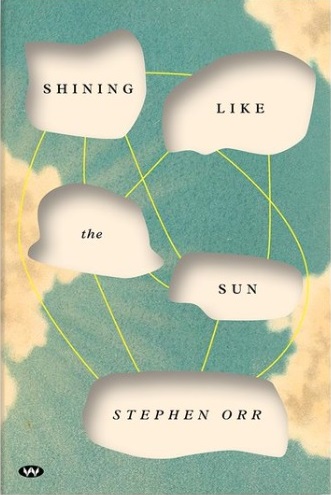
A question that confronts many young people as they reach adulthood – in western cultures at least – is, should I go or should I stay? This is particularly so for young people in small rural towns, and is the issue at the heart of Stephen Orr’s latest novel, Shining like the sun. Wilf Healy, the oldest of three brothers, stayed in Selwyn which is now dying, while his brother Colin left for the bright lights of America, as soon as he could. Now eighty years old, the widowed Wilf is confronting the rest of his life, and he is again pondering the question, except he is not thinking of heading for the bright lights but for Louth, the island on which he grew up. The thing is, that island is empty. No-one lives there now. But this doesn’t dissuade Wilf from his dream. Meanwhile, his 17-year-old great-nephew Connor is about to lose his Mum to cancer and sees no life for himself in Selwyn.

That is the basic plot. Selwyn is a fictional wheatbelt town in South Australia – only identified because Louth Island is a real island off the coast. Selwyn has “three hundred people coming and going, dying, lost in the cracks”, plus one of those signposts pointing to far-flung places around the world. Wilf lives and works in Monk’s pub, delivers the mail (not to mention vegetables and pharmaceuticals) around the community, and drives the school bus, all because he can’t say “no” when yet another job needs doing. However, as the novel opens, he’s had enough. He wants to retire, but his plans to leave are half-hearted at best – and not just because of his sense of responsibility for his sick niece Orla and her son, the disengaged Connor. Why?

The three epigraphs provide a clue, but so of course does the story. We follow Wilf through his days, as he engages with the people of Selwyn, people whom Orr paints beautifully with a description here, a piece of dialogue there. Take young Connor, “an out-of-tune whistle that just needed a breath of air”, or Bobby, the 85-year-old vegetable grower and builder of a kit plane “who is too old to deliver vegetables, but not fly”. Take the school principal, Noah, for whom Wilf drives the school bus. He’s a weak man, who, when a certain crunch comes, cannot stand up for right. And take Wilf’s school bus passengers who are so entertainingly individuated from the opinionated Sienna to the JK Rowling-wannabe Luke, from the withdrawn Trevor to the entitled bully Darcy. The bus-rides are interspersed through the novel, providing perfectly pitched comic relief while also playing an important role in moving the narrative along. It is something that happens on the bus that triggers the novel’s main crisis.

But, Wilf and Connor provide more than two ends of the “do I leave” spectrum. Wilf’s reflections on his growing up provide a stark contrast to the lives of Connor and his peers. Wilf, of course, came from the often brutal “spare the rod, and spoil the child” era, when you did what you were told and expected little else, whilst Connor is growing up at a time when young people are not directed, but encouraged to find themselves. Orr does not judge either way, but lets his readers see and ponder how it all plays out in a life.

I opened this post on the question of staying or going, identifying it as the novel’s central issue – which it is. However, this is not the theme. Rather, it is the question which gives the theme its push. The theme, itself, is something deeper, something so fundamentally human that it could almost sound trite, except it’s not. I’m talking about the idea of community, of connection, of being where you are part of something bigger, where you can make a difference to the lives of others. This might sound schmaltzy. However, because Orr’s characters are fallibly human, and because the socio-economic challenges facing small towns (in particular) are real, connection doesn’t come easily. Shining like the sun, with its cast of authentic characters and array of specific, yet also typical situations, teases out whether this connection, this idea of community, can in fact still fly.

“the possibility of being happy” (Connor)

Orr’s intention? There is surely some political intent, some wish to convey the value and importance of these towns which are being allowed to die through neglect and poor policy (“farms flattened”, and so on). But, it is also personal in terms of exploring what sustains human beings the most – a fancy job or house? Or connections with your community? Mr Gums and I wait for the cliched “tight-knit community” which is unfailingly trotted out after whatever disaster (natural or personal) is on the day’s news. Like most cliches, however, it has an element of truth. A “real” tight-knit community is worth its weight in gold – another cliche for you. Orr knows this, so does Wilf. There is nothing romantic to this story, just real life with all its questions and toughness alongside moments of humour and mutual support in which, even Connor realises, there is “the possibility of being happy”.

Shining like the sun, then, is another special Stephen Orr novel. It is not fancy in voice or structure. That is, it is told third person – albeit a first person narrator opens the proceedings – and is told chronologically, with occasional flashbacks as Wilf remembers his past. What makes it special is the quality of the descriptive writing, the knowing characterisation, the authentic dialogue, and the serious but warm tone leavened by natural humour that comes from ordinary people going about their business.

I read this novel immediately after my return from touring outback Queensland. We saw many small country towns, most of which were variations on the theme. Orr’s story rings true to these towns. Indeed, to end on a cliche – because, why not? – Shining like the sun is a love letter to an Australia little known to its mostly urban inhabitants. It has much to offer on both political and personal levels, but, beyond that, it is just a darned good read.

Stephen Orr
Shining like the sun
Mile End: Wakefield Press, 2024
313pp.
ISBN: 9781923042278
Review copy courtesy of Wakefield Press.

Jane Caro, The mother (#BookReview)

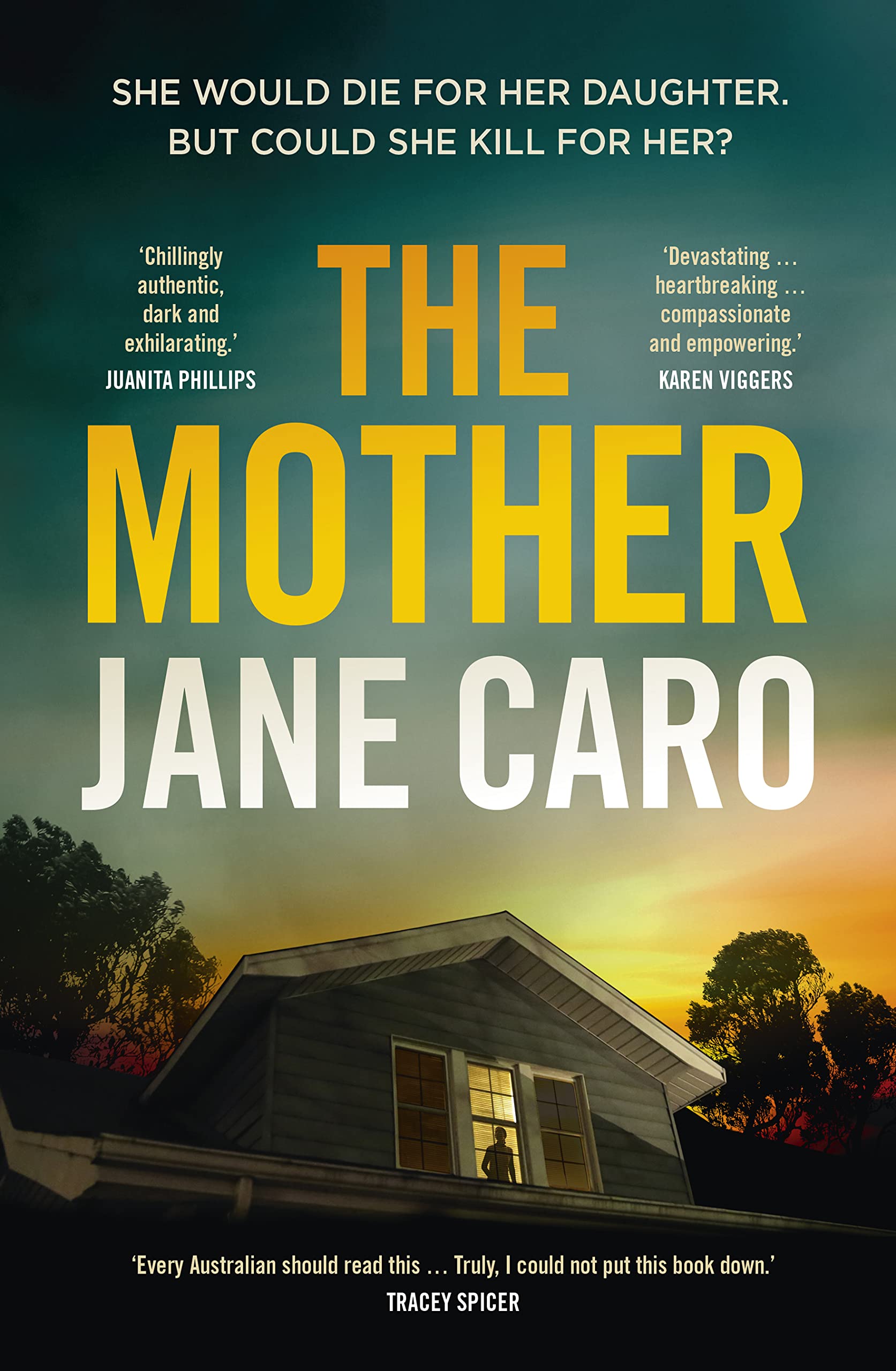
When my reading group scheduled Jane Caro’s debut novel, The mother, I was, I admit, not exactly enthusiastic, because my sense was that it was not going to be the sort of, shall I say, subtle writing I prefer. My sense was right, but I am not sorry I read it – partly because of the engaged discussion we had and partly for Caro’s intention.

The mother, then, is not a literary award-winner – the writing is fine but not exciting or breath-taking in the way I like – but, and it is a big but, it is an accessible, fictional exposé of the main points Jess Hill makes in her Stella Prize-winning See what you made me do: Power, control and domestic violence (my review). Hill explores family and domestic violence from every angle, but the most shocking and enlightening part for me concerned children, particularly the Family Court’s inability or refusal to see the risks to children from its parent access orders, even when the children themselves express fear. This point is powerfully made by Caro in her novel*.

But, let me step back a bit. The mother tells the story of 60-something middle-class Miriam Duffy who, widowed early in the novel, is pleased – and indeed grateful – when her emotional daughter, with whom she has had a tricky relationship, marries a perfect-seeming man. Gradually, however, little niggles about this relationship become bigger until one day they are confirmed when Ally returns home with two little children in tow, having left her husband. From here the situation deteriorates as the husband Nick escalates his bullying, predatory behaviour, and Miriam and Ally realise that the law is unable to protect them. The novel is described as a thriller, so I’ll give you just one more piece of information. It opens with a Prologue in which Miriam buys a handgun.

This brings me to the structure. After this Prologue, the novel is divided into two parts. In Part 1, Ally marries and soon after, Miriam is widowed. There is also a second, older, daughter who is in a stable marriage and has two children. During this part, Caro slowly drips out many of the flags that constitute coercive control, but that on their own don’t initially look like it or can be explained away – things like isolation from family and friends, use of a (demeaning) pet-name, jealousy, charm that is turned on and off at will, and surveillance, moving into sexual violence and gaslighting. This part ends with Ally’s return home. Part 2 commences four years later, and we are reminded of the Prologue, because Miriam is researching where she can buy a gun. Miriam and Ally have been systematically intimidated by Nick, and have reported his transgressions against Ally’s AVO (Apprehended Violence Order) again and again, but

Eventually they had stopped going to the police. It wasn’t that the cops weren’t sympathetic; it was just that they could not do anything.

In this part, Caro ratchets up the sense of helplessness (and hopelessness) the two women feel as Nick finds new ways to harass and terrify them. As I read it, I couldn’t help but think about all the news stories of recent years about murdered women and children. Nor could Miriam and Ally, but they turned the TV off the minute these stories came on. They were too close to home!

Like many issue-driven books, The mother did, as many in my reading group commented, feel didactic at times, and it is somewhat predictable. Some of us also felt that it was a little laboured in places. However, offsetting this is the novel’s characterisation and understanding of human nature. Caro conveys the complex human emotions we all experience under stress. She explores the lines and balance between what is acceptable in relationships and what is not, the fears about when to speak up, the justifications we try to find when things feel awry, and the feelings of guilt (particularly in mothers).

The mother is unapologetically a novel with a cause. With its compelling storyline and believable characters, it has a chance of reaching those who do not understand what coercive control is, and who do not realise that it crosses all demographics. Nick, for example, is a vet and Ally a PhD candidate. Miriam, a successful businesswoman, lives in comfortable North Shore Sydney.

This novel is being promoted primarily as a thriller, but I’m more inclined to see it as belonging to that long tradition of social problem novels. It may not be as sophisticated as the best of them, but its intention is clear, to drive social change. I hope it succeeds. I don’t imagine Jane Caro, or Jess Hill for that matter, will let matters lie until we see real, sustained change happening – and nor should we.

* This month there has been news about changes in family law in Australia, including removing the presumption of equal shared care, putting a focus on prioritising children’s best interests, and revamping the role of independent children’s lawyers. Time will tell what difference this makes in practice.

Jane Caro
The mother
Allen & Unwin, 2022
368pp.
ISBN: 9781761063893 
ASIN: B09MQ3PN1W

Sebastian Barry, The secret scripture

What follows here is an edited version of the first ever review post I wrote – back in December 2008 on a Blogger blog I set up for my reading group. I’ve been meaning for some time to bring it over here because I’d like to have Sebastian Barry represented on my blog! However, my review was written in a different style to the one I use now, so I’ve tried to update it a bit. This is difficult given it’s a long time since I read it! I apologise for its awkwardness.

I read The secret scripture because I’d heard great things about his previous novel, A long long way, which, like The secret scripture, was shortlisted for the Booker prize. The book is set in Ireland in contemporary times, with flashbacks to the 1930s, and is told through the voices of two characters: Roseanne, a centenarian who has lived in a mental hospital for over 50 years, and Dr Grene, a psychiatrist at the institution for 35 years. As Roseanne writes her life-story, which she hides under boards in her room, Dr Grene investigates the reasons for her being there with a view to deciding her future, because the hospital is slated for demolition. His understanding of her story and her own telling of it differ. What falls out is a tortured story of religion, family and politics at a time in Ireland when sides had to be taken, rules took precedence, and humanity was in short supply.

As he investigates Roseanne, Dr Grene, who is grieving over the death of his wife, Bet, spends a lot of time with Roseanne, and shares his own story with her.

“the assault of withering truth”

There was so much to like about the novel – the language, the characters (albeit most are loosely drawn), and the themes. I particularly liked Barry’s musings on “truth” and “history”, which is not new of course. I also liked the connection made between truth and health, that Roseanne’s “truth” was a healthy one.

Roseanne is intriguing as a narrator. I would call her reliable not because she tells us the correct facts necessarily (as it appears that she may not have) but because, as Grene says at the end, she tells us “her” truth and this truth “radiated health”. It may not hold up in a court of law but it gets to the heart of who Roseanne is. It is “vexing and worrying”, though, as Roseanne says, when different people’s truths (such as Fr Gaunt’s and Roseanne’s) cross each other. How true is (the perfectly named) Father Gaunt’s anyhow? His conveys the facts but contains no humanity, let alone empathy. He has no idea of who Roseanne is, but he does know the “law” (of the church at least).

“History, as far as I can see, is not the arrangement of what happens, but a fabulous arrangement of surmises and guesses held up as a banner against the assault of withering truth.” 

As those of you who know me might imagine, the exploration of truth was one of my favourite aspects of the book. In this novel it is so humanely nuanced, suggesting that we should look out for two truths – the facts and inner meaning – and decide which one should take precedence in any given situation. Facts, as we know only too well, are important but we should also heed the “hidden inner” truth as well. In relationships, for example, perhaps the “hidden inner” truth is equally if not more important. Why a person is saying or doing something, for example, may be more critical than what they are saying or doing.

Then there’s the language. It is beautiful, poetic. Poetic usually means two things to me, mostly in combination – language that is rich in imagery and that has a strong rhythm. Barry’s writing has wonderful rhythm, which he creates through the use of repetition, and particularly thought the careful use of punctuation, and long sentences interspersed with short sentences to give a lovely flow. This example near the opening almost reads like blank verse:

“That place where I was born was a cold town. Even the mountains stood sway. They were not sure, no more than me, of that dark spot, those same mountains.

There was a black river that flowed through the town, and if it had no grace for mortal beings, it did for swans, and many swans resorted there, and even rode the river like some kind of plunging animals, in floods.

The river also took the rubbish down to the sea, and bits of things that were once owned by people and pulled form the banks, and bodies too, if rarely, oh and poor babies, that were embarrassments, the odd time. The speed and depth of the river would have been a great friend to secrecy.

That is Sligo town I mean.”

He sets a powerful tone in these opening few paras – the rhythm is slow but with just an edge of awkwardness that catches you off guard. And the language conveys something untoward – “cold”, “dark”, “black”, “rubbish”, “secrecy”. These are not repeated but, used in combination in such a few concentrated paragraphs, they give a sense of the story to come. It’s an evocative opening and it engaged me quickly.

As for characters, Roseanne engaged me from the start; she always felt authentic. I wasn’t always so sure of Dr Grene. Did we need all the Bet stuff, albeit was moving? Perhaps, given the role of men in women’s lives, and in Roseanne’s in particular, we are meant to be on guard. However, he particularly started to lose me towards the end, when he started to more actively investigate Roseanne’s history. From a plot point of view it was logical and understandable, but the voice became more prosaic, ordinary, in some sense that seemed to lose Grene’s particularity.

My main issue with the book was, in fact, the ending. It was contrived. Maybe Dr Grene’s voice felt more forced towards the end because even Barry knew his plot resolution was a bit too neat and didn’t quite know how to do it! Fortunately, plots aren’t the main indicator for me of a good read.

Dr Grene’s choosing, in the last para, the bright and open rose rather than a uniform neat one, suggests an acceptance of being open to many truths, to the imperfections of the world, than to that tidy, dry version of the world that we get from Fr. Gaunt. This softens the neat plot conclusion somewhat – as does the fact that Barry doesn’t go in for the full cliched emotions that such a story might commonly close on. Consequently, despite some misgivings, I’d happily read more Barry because I loved the heart and openness in his exploration of truth, and his writing is so engaging.

Kimbofo also reviewed this way back when!

Sebastian Barry
The secret scripture
London: Faber and Faber, 2008
300pp.

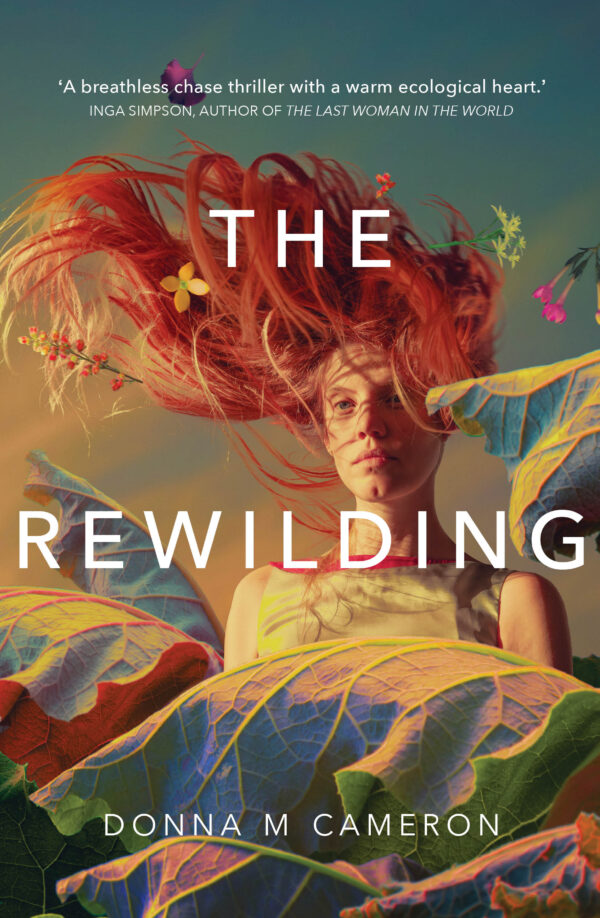
Donna M. Cameron, The rewilding (#BookReview)

Quite coincidentally, earlier this month, I read and posted on Willa Cather’s short story “The bookkeeper’s wife” which commences with a young man, Percy Bixby, sitting in his office deciding to do something in order to keep his flashy fiancée Stella. That was published in 1916. I have now just finished Donna M. Cameron’s novel, The rewilding, which was published in 2024. It commences with another young man, Jagger Eckerman, is sitting in his office deciding to do something that will lose him his flashy fiancée Lola. Both young men are caught up in fraud, Percy of his own making, Jagger unwittingly, though that doesn’t make him entirely blameless. From here the stories part company, so we will leave Percy, whose story I’ve already told, and look at 27-year-old Jagger.

Jagger has been living the high life. Caught up in his own privileged lifestyle, he’s been carelessly signing documents he shouldn’t, until finally the penny drops and he wakes “up to the fact that every aspect of his life is a farce”. So, he clicks Send on his whistle-blowing email and scarpers. The problem is that the only place he can think to scarper to is a cave in a national park south of Sydney, and when he gets there he finds someone else already holed up in the same spot, the 24-year-old “feral” eco-warrior, Nia Moretti. As the accompanying publicity sheet says, it is hatred at first sight, but they soon realise they need each other, whether they like it or not.

The rewilding starts with a bang and barely lets up for the length of its 300 pages. It’s a genre-bending work of eco-literature that combines thriller, road story and romance. The central thriller-driven plot is not my favourite type of story – I’m not much interested in watching or reading about chases, violence and suspense – but Cameron handles her material confidently, creating a book that I enjoyed reading despite myself. I just hurried through the bits that were less interesting to me. Why I was happy to read it is what I want to focus on here.

First, there’s the genre-bending aspect. Cameron balances the thriller components with more reflective and tender sections, with moments of interpersonal tension, with touches of humour, gorgeous natural descriptions, and serious themes. Second, the story is well-paced, and the writing fresh but accessible. It is primarily told third person through Jagger’s perspective, but this is occasionally interspersed with short chapters in Nia’s voice, in which she speaks to a mysterious “you”. These provide additional insights into Nia that Jagger can’t know, while also increasing the mystery. Who is this “you”? What has happened to Nia? Third, the two main characters are nicely developed. Jagger is on the run, scared and uncertain about what his future holds. Still grieving his mother’s death and the mistakes he’s made, he is fundamentally decent and an optimist. Nia, on the other hand, is an uncompromising idealist, and pessimistic, but reveals a softer side. Gradually, as is typical of the romance genre, the antagonism between them is relaxed, although not, of course, without setbacks.

“a capitalist suit” versus “the feral”

And finally, there are the themes. For me, a good story isn’t enough. I need some meat, some ideas that make the time I put into reading worthwhile, and this book has meat – personal and political. In the personal realm, Jagger is a young man who had lost his way but, when some truths become clear to him – when he realises his relationship had been built on a lie and his workplace was engaging in a waste removal scam – his better self, the one his recently dead mother had so carefully tried to engender in him, comes to the fore. In his suit and fancy shoes, he surprises Nia with his deep knowledge of and love for nature. Likewise, Nia is struggling with a personal loss. She is resentful of the “capitalist suit” who comes into her cave, and finds ways of using him – and his money – to her own ends but, despite her toughness, she has a heart. So, on the personal level, The rewilding is a novel about values, about the lines you draw, about the life you choose to live and what that means personally and …

politically, because this is also a novel about climate activism. Nia and her radical Earth Rebellion mates, the Lorax, are determined to save the planet. Their focus is a mining operation in northern Queensland which is about to proceed without permission. First, though, she has something to do in disaster-struck, flooded Brisbane, something that puts her and Jagger’s lives at risk. On the run, and being followed by hit men, he has no option but to go along with the only person who can help him. It is at this point, before the final dramatic confrontation at the mine, that Nia starts to unbend a little towards Jagger and his perspective.

“Why be scared of change?”

The rewilding is a wild, dramatic novel. It does push the boundaries of credibility at times, but probably no more than you expect in a thriller. Ultimately, through her characters and their fierce, lively conversations, and through her fast-paced plot which offers a few scenarios, Cameron explores the critical issues confronting us and asks the big questions we are asking, without resorting to overt didacticism.

Climate change novels can be bleak, but many authors, even those writing the bleakest of stories, talk at writers festivals about wanting to leave their readers with some hope. That this was Cameron’s intention is foreshadowed in the epigraph from Tolkien’s The lord of the rings, “Where there’s life, there’s hope”. So, at the end, certain rapprochements are achieved, but the conclusion is real rather than simplistic. It recognises that life is messy and change is hard but that it’s worth keeping on trying. The rewilding is a worthy addition to Australia’s eco-literature field.

Donna M. Cameron
The rewilding
Melbourne: Transit Lounge, 2024
309pp.
ISBN: 9781923023062

(Review copy courtesy Transit Lounge, via publicist Scott Eathorne of Quikmark Media)

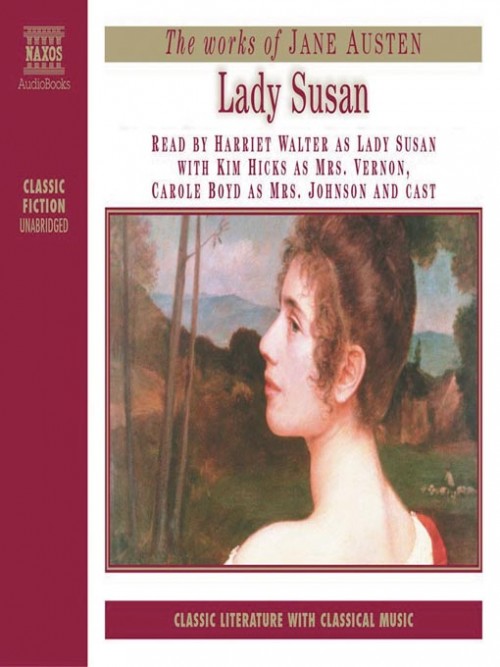
Jane Austen, Lady Susan, revisited (#BookReview)

I have read Jane Austen’s Lady Susan several times, including with my local Jane Austen group in 2014 (my review). That now being ten years ago, we decided it was time to read – and consider – it again. However, as my time was tight, I decided to try an audiobook version, and found a Naxos edition in my library. Mr Gums and I listened to it on our 650+ km drive home from Melbourne, and found it excellent.

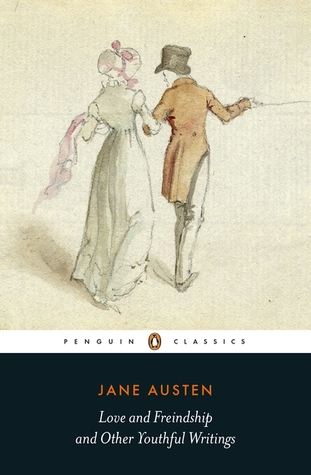
For those of you unfamiliar with Austen’s minor works, Lady Susan is, as far as we know, the first novel (novella) that Austen completed, but it was not published during her life-time, for the simple fact that she never sent it to a publisher. Written, scholars believe, in 1793/94, when she was still a teen, it was not published until 1871, decades after her death, when her nephew James Edward Austen-Leigh included it in his memoir of her. It has since been adapted to film, television, stage and book. The best known of these is probably the 2016 film, which was titled Love & friendship, a strange decision given that is the title of another work of Austen juvenilia (my post).

I gave a brief plot summary in my previous post, but will again here. Lady Susan is a bewitching, 35-year-old widow of four months, who is already on the prowl for a new, wealthy husband. The novel opens with her needing to leave Langford, where she’d been staying with the Manwarings, because she was having an affair with the married man of the house, and had seduced his daughter’s suitor, Sir James Martin. She goes to stay with her brother-in-law Charles Vernon and his wife Catherine, whom she’d done her best to dissuade him from marrying. She’s not long there before Reginald, Catherine’s brother, arrives to check her out because, from what he’s heard,

Lady Susan possesses a degree of captivating deceit which must be pleasing to witness and detect.

After all, she is “the most accomplished coquette in England”! Of course, the inevitable happens and the artful Lady Susan captivates him. Meanwhile, Lady Susan wants her shy, 16-year-old daughter, Frederica, to marry Sir James, the man she’d seduced away from Miss Manwaring – but sweet, sensible Frederica wants none of this weak “rattle” of a man. And so it continues …

Lady Susan, then, is a fairly simple tale, containing the deceits and silliness common to its 18th century genre, but also showing restraint and innovation which hint of the novelist to come – her wit and irony, her commentary on human nature, and her themes. I wrote about this too in my last post and don’t plan to repeat it here. There are many angles from which the book can be considered, and this time I’m interested in another, its form as an epistolary novel.

The epistolary novel was common in the eighteenth century. It’s something Austen tried again with Elinor and Marianne, which she wrote around 1795 to 1797, but later rewrote in her famous third person omniscient voice. Retitled Sense and sensibility, it became her first published novel in 1811. Pride and prejudice’s precursor, First impressions, may also have started as an epistolary novel. It’s interesting, then, that although she made a “fair copy” of Lady Susan in 1805 she didn’t rewrite it too. Why she didn’t is one of the many mysteries of Austen’s life. Perhaps it was the subject matter, because this is not Austen’s usual fare. Lady Susan belongs more to the 18th century tradition of wickedness, lasciviousness and adultery, forced marriages, and moralistic resolutions. Characters tend to be types rather than complex beings, and the novels are racily written, with a broad brush rather than a fine pen. This is true of Lady Susan, but there are departures. For a start it’s a novella not one of those 18th century tomes!

I might be going out on a limb here, because, while I have read a couple of 18th century epistolary novels, including Samuel Richardson’s, my memory has faded somewhat. However, Wikipedia helps me out a bit. Its article on the epistolary form says that there are three main types: monophonic (comprising the letters of only one character); dialogic (using letters of two characters); and polyphonic (which has three or more letter-writing characters). Lady Susan is an example of the last one. The main letter writers are Lady Susan (mostly to her friend Alicia Johnson in London) and her sister-in-law Catherine Vernon (mostly to her mother Lady De Courcy), but we also see some letters back from these correspondents, making four letter writers. But wait, there’s more! There are also letters – albeit just one in two cases – from others, namely Reginald De Courcy, his father Sir Reginald De Courcy, and Lady Susan’s daughter Frederica.

So, in this short book, we have 7 letter writers. But wait, there’s even more. To conclude the novel, Austen discards the epistolary-form and writes a first person denouement, which includes commentary like this:

Whether Lady Susan was or was not happy in her second Choice — I do not see how it can ever be ascertained — for who would take her assurance of it on either side of the question? The World must judge from Probability; she had nothing against her but her Husband & her Conscience.

The thing that intrigued me most as I was “reading” Lady Susan this time was the form. Austen used it for Love and Freindship, Lady Susan, Elinor and Marianne, and perhaps First impressions. But she abandoned it for the style for which she is recognised as a significant innovator – a third person narrative characterised by free indirect discourse, meaning the narrator’s voice embodies the perspectives of the characters. As John Mullan, writing primarily about Emma, explains: “Before Austen, novelists chose between first-person narrative (letting us into the mind of a character, but limiting us to his or her understanding) and third-person narrative (allowing us a God-like view of all the characters, but making them pieces in an authorial game). Austen miraculously combined the internal and the external”.

So, my thinking is that she started by using a form with which she was familiar as a reader and which was popular with readers of the day, but whose limitations she soon started to feel. Her using a relatively large number of letter writers, enabling us to see Lady Susan in particular from different perspectives, and her turning to an over-arching first person narrator for her conclusion, suggests that she understood the limitations of writing a novel-in-letters in terms of developing complex realistic characters, of managing plot, and of incorporating narratorial commentary. The rest, as they say, is history.

Thoughts anyone?

Jane Austen
Lady Susan (Classic Literature with Classic Music)
Naxos Audiobook, 2005
Duration: 2hrs 30mins

Available in e-text.

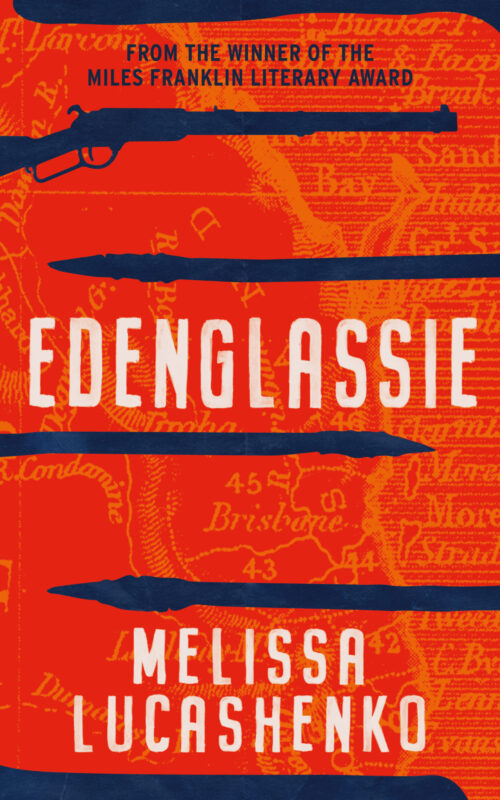
Melissa Lucashenko, Edenglassie (#BookReview)

Broadly speaking, Melissa Lucashenko’s latest novel, Edenglassie, does for southeast Queensland what Kim Scott’s That deadman dance does for Noongar country in southwest Western Australia. Both tell of the early days of their respective colonies from a First Nations perspective; both are written in a generous spirit but with absolute clarity about the dispossession that took place; and both suggest things could have been different.

Unlike That deadman dance, however, Edenglassie, is a dual narrative story. The main storyline, featuring two young people, Mulanyin and Nita, is set around the Magandjin or Meanjin (Brisbane) region during the mid-1850s, making it just a little later than Scott’s first contact narrative. Dispossession, massacres and other brutalities from the colonisers were met with armed resistance, but there were also attempts to work together. Paralleling this historical story is a modern one, featuring Granny Eddie, Winona, and Dr Johnny, set in the same area at the time of its 2024 bicentenary. These stories, one using historical realism and the other modern humour, riff off each other to provide a complex picture of the colonial project – then and now.

Melissa Lucashenko said much that interested me in the conversation I attended for this book, but here I’ll focus on two points she made. One is that the book’s central question is “what was going through these people’s [the colonisers’] minds?” Things could have been different then, she said, and could still be now. The other point is that she wanted to counteract the trope of the dying race. This idea has been slowly changing since Mabo, she said, but is still evident. The modern storyline, with its confident and politically involved Goorie characters, ensures that we see a vibrant, living culture in action.

Realising these two ideas is a big ask, and in my reading group there were some equivocations, but I think Lucashenko pulls it off, through creating engaging characters who come alive on the page and narratives that ring true to their times. Mulanyin, the kippa (young initiated man) from the historical period, and Winona, the fiery young woman in modern times, represent the passion of youth. They are impatient and want things to happen – or change – now. Both, however, also have elders guiding them – in the Goorie way, which is to encourage people to work it out for themselves and to remedy their mistakes.

“needing to endure the unendurable” (Mulanyin)

So, what is it that these young characters must contend with? The novel starts with two pointed events. In the modern storyline, Granny Eddie trips over a jutting tree root and is ignored by passersby until two young brown faces – Malaysian students as it turns out – help her up and get her to hospital. The modern scene is set, and all is not well.

We then flash back to 1840 where members of the Goorie Federation are looking forward to the imminent departure of the dagai, only to be told that this is now unlikely. A Goorie mother wonders what

If life never returned to normal. If the rule of law was never restored. What would her son see as a man? … Would her daughters be subject to the terrors the dagai brought?

What indeed?

Having asked the question, Lucashenko then moves her historical story to 1854-1855. Mulanyin is living with his law-brother Murree north of his own saltwater Nerang/Yugambeh home. Here, he is in close contact with the colonisers, and particularly with the Petries. At this time, the Petries, particularly the young Tom Petrie, were sympathetic to, and tried in their own way to work with, the Goories on whose land they resided. Lucashenko seems to be saying that, given colonisation was happening and wasn’t going to be undone, there were ways in which it might have been made to work (or, at least, work better). Conversations between Tom, Mulanyin, and other characters, explore their differences, particularly regarding attitudes to country. Mulanyin wants to know

what goes on in the brain of an Englishman? When he arrives in another man’s country to steal his land, and water, and game, and then with a straight face, calls those he steals from thieves? Is this how it is in Scotland? Is this why your people have fled that terrible place?’

The ensuing discussion has Tom struggling to explain the English, but admitting that “in their ignorance, they don’t understand that the land here has its own Law. They think that only their British law exists”. However, he says, they “respect some boundaries still … Those that are well defended”.

What did ‘well defended’ look like, Mulanyin wondered, if not like a thousand Goories assembled at the Woolloongabba pullen pullen? If not like Dundalli, leading the warriors who had willingly assembled under him, from Dugulumba to K’gari?

Fair point, Mulanyin.

Meanwhile, the modern-day characters are living with the fall-out from the failure of the colonisers to make it work and of the colonised to succeed in their resistance. Goories are still here, yes, but life is a struggle, and Winona wants to fight back, wants “to bite em hard onetime, while we got the chance”. She can’t understand why Granny Eddie, who grew up “with a dirt floor and empty belly” doesn’t think she deserves more. Granny, though, is two things. A pragmatist who sees that “Dagai not going away! We gotta get on with them”. And she’s an elder well-versed in her culture, so when Winona takes a hardline with Dr Johnny, who claims Aboriginal heritage, Granny says

“You’re thinking like a whitefella when ya close him out. That’s not our way. We bring people in, we bring our Mob home, and we care about them. We teach them how to behave proper way…”

Further, she argues,

“We can’t be sunk in bitterness … Or stuck in the past. We need to focus on the good dagais, like Cathy and Zainab, and them Petries, and –.”

Winona, Granny Eddie and Mulanyin all make sense, but they speak from different angles. What makes Edenglassie so interesting is the way Lucashenko gives space and respect to these angles. She certainly shows what was lost – and the utter unfairness of it. But, with the generosity of spirit we keep seeing, she also shares through her characters what living with deep connection to country means. And, she encourages everyone to think about alternative ways we can do this.

Towards the end of the novel, Gaja (Aunty) Iris shares an important story with our modern protagonists, introducing it with

we all know how important our stories are … People all over the world keep their stories close. Middle Eastern people believe … that by telling a story you can change the world, and nothing is as powerful as the right story at the right time.

With ideas about truth-telling and decolonisation becoming part of modern Australian culture, now feels like the right time for stories like Edenglassie. It might be an uncomfortable time to be a settler Australian, but that’s nothing compared with what First Nations people have endured and continue to endure. The least we can do is try to understand. Books like Lucashenko’s not only help us along this path but give us a lively read at the same time.

Melissa Lucashenko
Edenglassie
St Lucia: UQP, 2023
306pp.
ISBN: 9780702266126

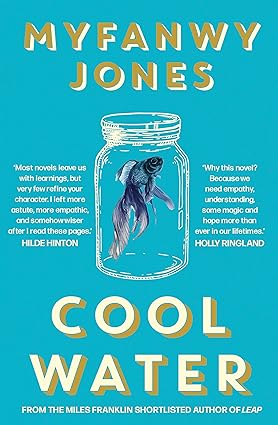
Myfanwy Jones, Cool water (#BookReview)

When I was a little girl, I was allowed to watch a limited amount of television, and what I loved – yes, you can laugh at me – were the singing cowboys, like Roy Rogers and Gene Autry. We are talking the 60s and I was constrained by what was on at the times I was allowed to watch, but still, I gave my heart and soul to these cool dudes. At least, they were to me. All this is a long way around to say I love that Myfyanwy Jones’ third novel, Cool water, features one of my favourite songs from that era, the titular “Cool water”, but I’ll return to that later.

Cool water is a strong, but thoughtful novel about fathers and sons, about what makes a good man, and, particularly, about family and what we inherit (whether we like it or not). I have read a few novels since blogging that explore manhood and fatherhood, including books by Christos Tsiolkas and Steve Toltz. This is another, and I found it absorbing. Set in tiny Tinaroo in Yidindji Country on the Atherton Tablelands of Queensland, Cool water is structured around two storylines, one, set in contemporary times, and the other set over 1955 and 1956 during the building of Tinaroo dam. Threading through these two time-frames are three men, Frank, his father Joe, and grandfather Victor.

“Life was an extreme sport” (Frank)

The novel opens with a Prologue, featuring Victor, the town butcher, appearing supremely confident at a town event. But immediately there is something a bit askew in the way he is described. Not only is he “imposing”, but he’s “horribly handsome”. We are introduced to many of the characters who will appear in the story to come, but the Prologue closes at “the end of the hall, where fatherly embrace has become stranglehold: Joe, white-faced now, wide-eyed and wheezing, as Victor Herbert uses the crook of his arm to apply an unrelenting pressure …”

From here, we jump to the present and Victor’s grandson Frank. His father, Joe, has died in the last year, and he, his wife Paula and daughter Lily have returned to Tinaroo for Lily’s wedding. But all is not well. Joe casts such a shadow over Frank that his relationship with Paula is suffering. They are drawing apart. The novel is told third person, but in the contemporary story, it is all from Frank’s perspective, whereas in the earlier story we switch between Victor, young Joe, and a woman named Evelyn who, unhappy in her marriage, catches the philandering Victor’s eye. Jones handles the storylines well, but it is Frank’s voice which carries the novel as he struggles to make sense of his complicated father and be the man, husband and father he wants to be:

… he feared all the men in his family were cursed. And that however hard he tried to be good, he would not be able to escape his shadow.

By contrast, Joe is the murkiest character. We see him as a young boy, caught in an adult drama between Victor and Evelyn that he doesn’t understand. A sensitive boy, he has promise as a human being, but is the youngest and least tough of Victor’s three sons and bears more than his share of Victor’s brutality. Unlike Victor and Frank whom we know as adults, we only know adult Joe through Frank’s eyes. This can feel frustrating because a strong sense of intergenerational trauma underpins the novel but the Joe Frank describes doesn’t match the child we’ve met. However, through seeing how his father treated him, and hearing Frank’s (and his sister’s) recollections, we gradually fill in the gaps to see a man who didn’t fully shake his father’s brutal volatility. As the story progresses, we realise that Joe’s dreams of a different life to that mapped out by his butcher father had not been realised. His death seems to Frank, “a measured suicide” through “deliberate self-neglect”. He is the saddest character in the story.

All this is told against the backdrop of the dam and its lake – first the building of the dam, and later as a drought-stricken recreational facility. This three-generation story could have been set anywhere, so why choose this? I had some ideas, but wanted to see if Jones had been interviewed about it, and I found she had, at Good Reading Magazine. Jones says that her novels “always seem to start with place”, and so it was a visit to Tinaroo Dam which inspired this novel. She says that, “in 2017, Tinaroo Dam was at 25 per cent capacity and full of blue-green algae; pieces of the old, submerged town of Kulara had begun to surface – an eerie manifestation of the ever-present past”. 

And there you can see the inspiration. The dam is a powerful place, with a complicated history worth exploring but it also works as a useful metaphor for the “ever-present past” (and thus perfect for Jones’ exploration of intergenerational trauma). Dams and lakes, too, are intrinsically paradoxical, with dam-building representing violence and a desire to control, and lakes offering opportunities for beauty, peace and recreation. Jones uses this to full effect, including well-placed references to colonialism and First Nations dispossession, starting with subtle humour in the Prologue, where we are told that a visiting magician had “come a long way by ship (that said, so had most of the crowd, one way or another). In such ways can writers both truth-tell and decolonise our literature, without telling stories that are not their own.

As for the song, “Cool water”, lines from it appear a few times in the novel, always associated with Victor and always conveying some sense of menace, but also just a little perhaps of a lost soul, a war-damaged man who has lost his way. (In case you are interested, here is the version of “Cool water“, by Frankie Laine, that was popular in 1955 when the novel is set, but there are many versions out there which convey different senses of its meaning.)

Ultimately, Cool water is a hopeful novel, one that recognises and conveys unapologetically the very real damage that can happen in families, but that also sees, as Frank hopes early on, that “a different ending was always possible”. A sensitive novel that leaves much unanswered. I like that.

Myfanwy Jones
Cool water
Sydney: Hachette Australia, 2024
296pp.
ISBN: 9780733650024

(Review copy courtesy Hachette Australia)

Charlotte Wood, Stone Yard devotional (#BookReview)

Charlotte Wood’s most recent novel, Stone Yard devotional, is set in the Monaro, a region just south of where I live. It’s a landscape that is much loved by many of us, including Nigel Featherstone, whose My heart is a little wild thing (my review) is also set there. The Monaro is expansive country, a dry, golden-brown plateau, characterised by rocky outcrops here and there, much as the cover shows. There are also hills in the distance, and big skies. Perfect country for contemplation, I’d say, which is exactly what Wood’s unnamed protagonist is doing there. (In fact, it’s also what Featherstone’s protagonist went there to do, for a very different reason – although, coincidentally, both books have something to do with mothers).

Stone Yard devotional is a quiet and warm-hearted read, one that asks its readers to not rush ahead looking for a plot, but to think about the deeper things that confront us all at one time or another. These things are hinted at by the two epigraphs, one being Australian musician Nick Cave’s “I felt chastened by the world”, and the other American writer Elizabeth Hardwick‘s “This is what I have decided to do with my life just now. I will do this work of transformed and even distorted memory and lead this life, the one I am leading today”. Add these to the title – with its hardscrabble sounding “Stone Yard” set against the gentle, inwardness of “devotional” – and you have a sense of the intensity to be found within.

“a place of industry, not recreation”

While this is not a plot-driven novel, there is a definite narrative arc. Taking the form of undated journal entries, the novel covers a period in the life of a middle-aged woman who has left her city life – her husband, her job in threatened species conservation, and her friends – to live in an abbey on the Monaro. It starts with a five-day stay, which is followed by more stays until the time comes when she arrives and doesn’t leave. Why she does this is not explicitly explained but through her contemplations we come to see that there’s unresolved grief in her life over the death of her parents some three decades earlier and, alongside this, a level of existential despair which has built up over time.

This is the set up. The narrative arc comes from three “visitations” to the abbey – a mouse plague which ramps up as the novel progresses, and the celebrity “environmental activist nun” Helen Parry, who accompanies the bones of the murdered Sister Jenny who had left the abbey decades ago to work among poor women in Thailand. These three events, both real and metaphoric in import, present practical and moral challenges, “a rupture” but also “a frisson of change”, for our narrator, and for all at the abbey.

So, we follow Wood’s narrator as she settles into life at the abbey, taking on the role of cooking for the group, and, as their non-religious member, the shopping and other errands that need to be done. Much industry is required to keep the place running when there is no financial help from the church, but the main industry is emotional and spiritual (in its wider meaning). Early on, our narrator recognises that prayer and contemplation “is the work … is the doing”. For her, as an atheist, this is not religious in origin or intent, but nonetheless contemplation is the real work she does while living at the abbey.

Much of this contemplation is invoked by flashbacks to and memories of events from the past, some experienced by her and others that happened around her (like the suicide of a farmer). Many involve her beloved and humane mother, who, like nuns Helen and Jenny, was an “unconventional”, determined to continue along her path despite what others thought. Such contemplation is hard, and our narrator is tested by the “visitations”, particularly Helen Parry with whom she has history involving bullying at school. Our narrator wishes to apologise but, as she comes to see, the hard work is in coming to that point of apology, not in having the apology accepted. But, forgiveness and atonement are only part of the bigger questions posed in this novel. Grief, despair and, ultimately, how to live are also part of its ambit – and are set against the shadow of climate change and its implications for our lives and choices.

This sort of exploration, however, can only work if we like the telling, and I found it thoroughly compelling. Stone Yard devotional is delicious for its details about life in an abbey on the “high, dry, Monaro plains, far from anywhere”, and for its insights into the women living there. No character is fully developed, but each, from the “business-like but soft-looking” leader Sister Simone to the distressed Sister Bonaventure, feels real in the role she’s been given in the narrative. While there’s not a lot of dialogue, our narrator reports on interactions between the women, and these contribute to her contemplations about life. She is not perfect and admits to moments of pettiness and poor judgement in her dealings with her co-habitants. Contrasting this little community is local farmer Richard Gittens, who supports the abbey in many practical ways and who represents, as our narrator recognises, “decency”.

All this is told in spare but expressive writing that maintains a tone which is serious and reflective, but which never becomes bleak.

There is no single, final enlightenment, but rather, as the narrator says earlier in the novel, “an incomplete, unhurried emergence of understanding, [a] sitting with questions that are sometimes never answered”. This is the sort of writing I love to read. In some fundamental way, it reminded me of my favourite Wallace Stegner quote. In Angle of repose, he wrote that “civilisations grow by agreements and accommodations and accretions, not by repudiations”. Through living this life in retreat, Wood’s narrator comes to know herself better. In so doing, she is able to lay some of her demons to rest, not through any major crisis but through quiet contemplation. The abbey does, indeed, turn out to be a “place of refuge, of steadiness. Not agitation”.

Interestingly, and perhaps pointedly, the novel ends on an anecdote about the narrator’s mother and her “reverence for the earth itself”. Ultimately, Wood invites us, without exhortation, to not be “chastened by the world” but to do the hard work of thinking about what is really important. A compassionate, and gently provocative, book.

Kimbofo (Reading Matters) also liked this book.

Charlotte Wood
Stone Yard devotional
Crows Nest: Allen & Unwin, 2023
297pp.
ISBN: 9781761069499

Thomas King and Natasha Donovan, Borders (#BookReview)

Earlier this year I posted on Thomas King’s short story “Borders” from Bob Blaisdell’s anthology, Great short stories by contemporary Native American writers. The story was written in 1991, but as I noted in my post, it has also been adapted into a teleplay for the CBC, and turned into a graphic novel for younger readers. I was intrigued, and because I loved the story, I bought the graphic novel, on the assumption that we will share it with our grandchildren in a few years.

To recap a little from my original post. Wikipedia describes King as an “American-born Canadian writer and broadcast presenter who most often writes about First Nations”. Born in California in 1943, he “self-identifies as being of Cherokee, Greek, and German descent”, and has written novels, children’s books, and short stories. I also shared from Wikipedia a quote they include from King’s book, The inconvenient Indian, because it’s relevant to Borders:

“The issue has always been land. It will always be land, until there isn’t a square foot of land left in North America that is controlled by Native people”.

In that post I summarised the story, and I’ll repeat that here too. The narrative comprises two alternating storylines, both of which are told first person through the eyes of a young boy. One storyline concerns his much older sister, Laetitia, leaving home at the age of 17 to live in Salt Lake City, Utah, while the other tells of a trip he makes with his mother some five or so years later to visit this sister.

The crux of the story lies in what happens at the US-Canada border. Asked to give her “citizenship”, the mother insists “Blackfoot” and is denied entry. She refuses to offer anything else. As a result, she and her son get caught in a no-man’s land when, attempting to return to Canada, the same response to the same question results in her being refused entry there too. As one of the border officials tries to explain to her, “it’s a legal technicality, that’s all”. Of course, that’s not all. Blackfoot people ranged across the great northwest of America in what is now known as America and Canada. For our narrator’s mother, that land is her “citizenship”, not that she is American or Canadian, and she will not back down.

So, to the graphic novel. The illustrator is Natasha Donovan, who is described at the back of the book as “a Métis illustrator, originally from Vancouver, Canada”. She has illustrated, among other books, “the award-winning graphic novel Surviving the city, as well as the award-winning Mothers of Xsan children’s book series.”

This graphic novel version of Borders is beautiful. It turns what is a perfectly suitable story for pre-adult readers into a book that should appeal to and engage these readers. It contains King’s full text as far as I can tell, enhanced (if I can use that word) with Donovan’s gorgeous drawings. Because it is designed for younger readers, the drawings are simple enough to appeal to younger readers, but they offer a subtle depth which make the story well worth reading in this form by older readers too. The original story is told in a spare style, which leaves the reader to imagine (work out) the ideas and emotions behind the words. In this graphic version, sometimes the illustrations replicate the words, but in many cases they value add. This is not to say that value-adding is necessary, as it’s a gem of a story, but that the drawings encourage the reader to stop, think, and consider what the words might be saying.

An example: of their second night stuck in border-limbo, our narrator says that “The second night in the car was not as much fun as the first, but my mother seemed in good spirits and, all in all, it was as much an adventure as an inconvenience”. The panel following this depicts chicken wire in the foreground with a flock of birds flying off in the background, conveying some of the tension between the constraint of borders and the idea of freedom. The next panel, also textless, shows mother and son companionably sitting on the boot of their car, eating their sandwiches. In the border-guard scenes, the narrator mentions their guns. Donovan picks this up, providing frequent close-ups of guns, gun belts and holsters when the guards are present, which suggests authority and, perhaps, menace without overplaying the idea of fear.

What I liked about this graphic version, too, is how much it encouraged me to “see” things from our young protagonist’s perspective. I saw it in the text, but it becomes more vivid and immediate in this version. We see him report what he is seeing, and his own thoughts; we see him inserting his boy-ish wishes and perspectives. There is a running theme, from the beginning, about food which marks his focus on the concrete, on his needs. He asks Mel, the duty-free shopkeeper, for a hamburger, which he doesn’t get, but the next day:

Mel came over and gave us a bag of peanut brittle and told us that justice was a damn hard thing to get, but that we shouldn’t give up.

I would have preferred lemon drops, but it was nice of Mel anyway.

In this way, King conveys the truth as experienced by our young boy, but the wider truth that is happening around him – the strength of the mother’s identity and her determination to preserve it. Occasionally, our young narrator perceives some of these truths too. He sees the pride – and yes, the not always positive stubbornness – displayed by his mother and sister, but concludes:

Pride is a good thing to have, you know. Laetitia had a lot of pride, and so did my mother. I figured that someday I’d have it too.

Hachette’s promo for the graphic novel version describes it as resonating “with themes of identity, justice, and belonging”. It is exactly that – and conveys so much that is both personal and political, making it a rich book for any age to think about and consider.

Thomas King (story) and Natasha Donovan (Illustrator)
Borders (text from the 1993 published version)
New York and Boston: Little, Brown and Company, 2021
[192pp.]
ISBN: 9780316593052

Gail Jones, Salonika burning (#BookReview)

Australian author Gail Jones’ ninth novel, Salonika burning, is a curious but beautiful novel, curious because she fictionalises four real people for whom she has no evidence that they met or knew each other, and beautiful because of her writing and the themes she explores. The novel is set during World War 1, but its focus is firmly on the interior rather than the grand stage of battle.

It opens dramatically with the burning of the city of Salonika (Thessaloniki). This is another curious thing, because this destructive event was caused not by an act of war but an accidental kitchen fire. Also, the novel is not set in Salonika but some 90 miles off, in and around “the field of tents that comprised the Scottish Women’s Hospital”, on the shores of Lake Ostrovo in Macedonia. It is 1917, and the novel’s narrative centre is this hospital and those working in and around it. Here, not Salonika, is where our four main characters are based — Stella, an assistant cook/hospital orderly; Olive, an ambulance driver; surgeon Grace; and Stanley, an orderly with the Royal Army Medical Corps. They are based on the Australians, writer Miles Franklin and adventurer Olive King, and the British painters, Grace Pailthorpe and Stanley Spencer. In her Author’s Note, Jones makes clear that she has fictionalised these characters, and that while all are known to have worked in the vicinity, there is no evidence that they met or even knew each other. It is “a novel which takes many liberties and is not intended to be read as a history”. This is fine with me. After all, a novel, by definition, is not history. The novel follows these characters over a few months after the burning of Salonika.

“everything was coming apart”

So, why Salonika? I see a few reasons. For a start, its burning sets the novel’s tone. On the first page we are presented with opposing ideas. The sight of the burning city is described as “strangely beautiful” but, on the other hand, “alarm, instant fear, the sufferings of others … were no match for excitement at a safe distance”. As the fire died, “excitement left and in its place was a murky lugging of spirit”. Throughout the novel, Salonika represents these contradictions, this tension between what is ugly, what is beautiful; between what is random, what is not; and in how to respond to, or feel about, what is being experienced.

The Salonika fire also encompasses the idea of witness and representation. In the opening scene, Jones describes a painting made of the fire by William T. Wood. It is a “morning-after scene, brightly calm, with a floaty view from the heavens” done in his “signature pastels, remote as a child’s dream and thinly decorative”. Those who saw this painting later, she writes, “saw the pretty lies of art”, whereas “former residents and soldiers said, No, it wasn’t like that”. This tension too is played out in the characters as they think about how they might represent their experience.

The burning of Salonika, then, embodies several ideas that are followed through in the novel. But, Salonika is also relevant to the plot. The novel’s narrative arc lies mainly in the characters and their emotional reactions to what is happening as the months wear on. Not only is there the war with its injured and dying soldiers, but malaria is rife, and the privations they experience, professionally and personally, are exacerbated by the burning of Salonika and the attendant shortage of essential provisions – food, petrol, medical supplies. However, a plot also unfolds, and it is something that happens on the way to Salonika, well into the story, which sets the novel’s final drama in motion.

Salonika burning traverses themes that are the stuff of the best war literature – themes that expose the “idiocy of this war, of all wars” and its impact on those caught up in it – but it offers its own take. The telling feels disjointed, particularly at the start, with its constant switching between the perspectives of the four characters who interact very little with each other until well into the novel – and even then it’s often uneasy, as befits their temperaments. And yet, the novel is compelling to read, primarily because of these characters. They are beautifully individuated, so flawed, so human, so real.

Olive, who is the first character we meet, and the one who closes the novel, is confident, tough and practical. Grace, too, is tough, doing her “duty” with a “dull vacancy”. Stella, at 38, the oldest of the four, is “cranky and wanting more”, more excitement to write about, but she believes in “chin-up and perseverance”, while the youngest, 26-year-old Stanley, is “ill-fitted … to this life of rough cynical men”.

These are “intolerable” times, and we are privy to their struggle to maintain their sanity. Olive resorts to her German grammar to escape the emotional load, while Stanley has his mules and favourite painters, his “Holy Rhymers”. Stella, “writing jolly accounts in her diary”, thinks about what stories she will tell, while Grace has her favourite brother to think about and write to. The disjointed structure mirrors, I think, their sense of isolation. Contact and the potential for friendship is there, but Matron discourages emotional engagement. There’s “no room for emotion”, she says, just “duty”. Olive, who seems to represent the novel’s moral centre, thinks otherwise:

It seemed another kind of duty, not to forget. Olive wanted to speak of what she had seen and known, though she suffered too much remembrance.

This could neatly segue to that issue of representation, and the post-war work done by Stella, Grace and Stanley, but instead, I want to conclude with another idea. On a supply trip to Salonika, Olive, “driving in her safe foreign aura”, had been indulging in a dose of self-pity, but is suddenly confronted by the loss Salonika’s burning represented for its residents, “and only now understood that it was the woe of others that claimed importance”. Likewise, Stanley, Grace and Stella are confronted with the woes of others through the novel’s closing drama, and must decide where their humanity lies.

I started this post noting some curious things about Jones’ approach to her story, but these didn’t spoil the read. Rather, they added to my interest as I read it. Ultimately, Salonika burning is a true and tenderly written novel that captures the essence of war’s inhumanity, and then goes about extracting the humanity out of it. A worthy winner of the 2023 ARA Historical Novel Prize.

Lisa and Brona also read and enjoyed this book.

Further reading

Gail Jones
Salonika Burning
Melbourne: Text Publishing, 2022
249pp.
ISBN: 9781922458834