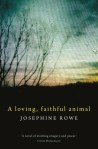
Josephine Rowe, A loving, faithful animal (Review)

Josephine Rowe, A loving faithful animal

How many novels have you read featuring the Vietnam War? I’ve not read many I must say, but last year I did review Charles Hall’s Summer’s gone, and now this year I’ve read Josephine Rowe’s A loving, faithful animal. It’s a debut novel but, from its form, you can tell that Rowe is an accomplished short story writer. I have in fact read one of her short stories – from her collection, Tarcutta Wake. Unusually for me, I didn’t review it at the time. I think this is because I planned to read the whole collection, but that hasn’t happened (yet, anyhow), which is clearly my loss.

So, before I discuss the content of this novel, I should explain what I mean by my comment regarding short stories and its form. For a start, it’s a multi-voice novel. On its own, this is not unusual, but here the voices are also in different persons, which is not unheard of either, really. However, added to this is the fact that the chapters (or “stories”), particularly “Breakwall”, could be read as stand-alone pieces. To make the novel out of these pieces, they are linked via character, and there’s an overall chronological narrative arc to them, but they also remain little jewels in themselves. There’s real skill here, in the way Rowe juggles her voices, perspectives, stories to create a very satisfying whole.

Now, to discuss the novel itself. It comprises six stories, starting in second person with Ruby, whom we come to realise is the younger daughter of the book’s central family. It then progresses through four stories told from different third person limited perspectives – Ruby’s mother Evelyn, her father Jack, her uncle and father’s brother Les or Tetch, and her sister Lani – before returning to Ruby’s second person voice to conclude. The story is one of a family broken by the father’s ongoing trauma (PTSD) following his Vietnam War experience. It’s a devastating story showing how such trauma can play out, resulting in domestic violence, dividing loyalties and causing splits in families.

… she did not drive away …

The novel opens on New Year’s Eve, around 1990. The family has struggled on for some time. Jack has been unable to retain good employment, going in and out of rehab, with Evelyn always drawing him back, wanting their relationship and the family to work. But, every time she takes him back, she loses something too, particularly in terms of the respect of her elder daughter. As the novel opens, it’s New Year’s Eve, and Jack has gone, for good this time it seems, after something unspeakably brutal – the full details are never, fortunately, given – has happened to the family’s pet dog, Belle, the titular “loving faithful animal”. Except, as you’d expect, there’s more to the title than this. Evelyn, too, is “a loving faithful animal”, as in her way is Ruby and, perhaps we could also argue, Jack’s half-brother, Les/Tetch. He had escaped the war by “getting rid of his own fingers” and now hovers on the edge of the family, wanting to keep an eye on them, wanting his brother to be okay, but wanting too some family for himself.

What I enjoyed most about this book, besides its tackling this important subject, is its empathetic but unsentimental portrayal of its characters. Evelyn’s loyalty (her faithfulness) is shown to be both admirable and stupid. We see the catch-22, damned-if-you-do-damned-if-you-don’t nature of her situation, with the added element of a young girl having made her bed, that is, having married against her parents’ advice, and now having to lie in it:

But she could never quite bring herself to. Run out on him like that. And it was never as simple as money. It was never as simple as pride, because she’s not sure she’s never had much of that either. Or if she does, it hasn’t turned out to be worth much, not when it comes right down to it. (II “The Coastal Years”)

Life is cruel, particularly when stubbornness and lack of forgiveness face off against each other. Anyhow, we also ache for Jack who can’t escape his past, and nor “get a handle on” the future, so leaves rather than inflict more cruelty. We see and understand Lani’s decision to reject it all and escape into a future on her own, while Ruby stays determinedly loyal. Every decision though comes at a cost.

It’s not an easy book to read, and not just because of the subject matter. Rowe is not the sort of writer who wants to tell a simple narrative. She wants to convey emotions, psychology, motivations, not just actions, because these are the stuff of life. And this requires a particular sort of writing which, for Rowe here, is a sort of minimalist, sometimes disjointed, sometimes lyrical style:

This is Exhibit A in the Museum of Possible Futures, the life that might have rolled out smooth as a bolt of satin, if she had just swung her slender legs up into that beautiful car and driven as fast as she could in the opposite direction, leaving the man with the camera far behind. Your father, he could keep the photograph.

But she did not drive away. Instead she sold the car and spent every night of her life trying to lead your father out of the jungle, out of the mud, away from the cracks of invisible rifles, strange lights through the trees. (I “A Loving, Faithful Animal”)

There’s more of course – isn’t there always? – including little running motifs involving cicadas and panthers, and Tetch whom I’ve barely mentioned, but I’ll close here. This is the sort of book that I’d love to see in next year’s awards shortlists, for its writing and for its fierce, authentic evocation of the lasting effects of war. I wonder if I will.

Lisa (ANZLitLovers) was also impressed by the book.

AWW Logo 2016

Josephine Rowe
A loving, faithful animal
St Lucia: UQP, 2016
200pp.
ISBN: 9780702253966

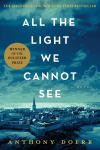
Anthony Doerr, All the light we cannot see (Review)

Anthony Doerr, All the light we cannot seeJust when you thought that there couldn’t possibly be another angle to writing about World War 2, up comes another book that does just that, like, for example, Anthony Doerr’s Pulitzer prize-winning All the light we cannot see. I had, of course, heard of it, but it wasn’t high on my reading agenda until it was chosen as my reading group’s September book. I wasn’t sorry we chose it, because I do, in fact, like World War 2 stories, and Doerr’s turned out to be an engaging one – warm, generous but not sentimental, and highly readable despite its alternating time-frames, locations and characters.

I’ve read several and reviewed some World War 2 novels and memoirs. Many have been about Jews and the Holocaust, such as Imre Kertesz’s Fateless, Hans Bergner’s Between sea and sky, Marcus Zusak’s The book thief, and two memoirs, Halina Rubin’s  Journeys with my mother and Anna Rosner Blay’s Sister, sister. A couple have been about the fighters, such as Alan Gould’s The lakewoman and Richard Flanagan’s The narrow road to the deep north. Some have drawn on the perspectives of children and young people – Zusak’s The book thief, Ursula Hegi’s Stones from the river and, of course, Anne Frank’s The diary of a young girl. Doerr’s book fits into this last group, but is different again. Zusak’s and Hegi’s girls are non-Jewish Germans, and Anne Frank is of course a Jewish girl in Amsterdam. These books focus on the Holocaust. Doerr’s does not. His interest is the personal experience of his young people – a blind French girl, Marie-Laure, born around 1928, and an orphan German boy, Werner, born around 1927. Their stories – Marie-Laure’s birth in Paris and flight with her father to Saint-Malo after Paris is occupied, and Werner’s childhood and youth in Germany followed by his war experience in Russia, Central Europe and France – are told in parallel until they inevitably meet.

Marie-Laure and Werner are nicely realised characters. They are ordinary young people trying to make a life for themselves in terrible times, but are extraordinary too. Marie-Laure’s childhood-onset blindness makes her initially helpless but she becomes a resourceful and imaginative young girl. Werner, the orphan, is a clever boy who develops a fascination with radios and things electrical. This leads him to a particular role in the war – tracking down partisan-resistance transmitters – that is different from most “soldier” stories.

All the light we cannot see is a big book. It has a wide, but not unwieldy, cast of characters, and a complex structure comprising two chronological sequences, within each of which the stories of our two young people alternate. This might sound difficult or confusing to read, but Doerr handles it well.

I’m not going to write a thorough review of this. Being a top-selling prize-winner, it has been reviewed widely. Instead, I’d like to share some of its themes, or ideas, because these are what interests me most. Before that though, I want to raise one issue. One review I read and some in my reading group expressed irritation at Doerr’s use of American idiom (such as people going “to the bathroom in their pants”). For some reason this sort of issue rarely worries me. Does that make me a bad reader? Perhaps. But it’s difficult, I think, to write in the language of another place and time, and when writers try to do it, it can feel forced. Some manage it (like Peter Carey’s True history of the Kelly Gang) and some compromise by relying on some well-placed words from an era. Generally, I’m happy for the author to use contemporary-to-them expression.

What you could be (Volkheimer to Werner)

What interests me most as a reader is not whether authors get these sorts of details right but questions like why is the author writing this, why has the author structured the story this way, what does the imagery mean, and so on. It is to the first of these that I’ll turn now. The novel’s overall subject matter is the obvious one – the tragedy of war, the way war destroys people’s lives – but within this are some interesting ideas.

One relates to logic and reason. Early in the novel, Marie-Laure’s locksmith father believes (or, perhaps, wants to believe) in logic:

Walk the paths of logic. Every outcome has its cause, and every predicament has its solution. Every lock its key.

This idea is reiterated in the book Marie-Laure is given by her father, Verne’s Twenty thousand leagues under the sea:

Logic, reason, pure science: these, Aronnax insists, are the proper ways to pursue a mystery. Not fables and fairy tales.

The opposing view, however, is put by Werner late in the war when he is tracking resistance transmitters:

Everybody, he is learning, likes to hear themselves talk. Hubris, like the oldest stories. They raise the antenna too high, broadcast for too many minutes, assume the world offers safety and rationality when of course it does not.

Logic and reason may work well enough in “normal” life, but during war they can stand for very little.

Somewhat related to this are the discussions about curses and luck. A major plot line concerns an ancient gem, the Sea of Flames diamond, which is said to carry a curse. It’s surely not by chance (ha-ha) that Doerr hides this stone behind the 13th door in the museum, and that his novel has 13 sections! Anyhow, here is Marie-Laure’s father on curses and luck. There are, he says:

no such things as curses. There is luck, maybe, bad or good. A slight inclination of each day toward success or failure. But no curses.

AND

Stones are just stones and rain is just rain and misfortune is just bad luck.

Later though, when her father has been arrested and Marie-Laure is scared and alone, she conducts an imaginary conversation with him:

You will survive, ma chérie.
How can you know?
Because of the diamond in your coat pocket. Because I left it here to protect you.
All it has done is put me in more danger.
Then why hasn’t the house been hit? Why hasn’t it caught fire?
It’s a rock, Papa. A pebble. There is only luck, bad or good. Chance and physics. Remember?
You are alive.

In almost every story I’ve read about war – fiction and non-fiction – luck has played a significant role. It’s one of the things that makes war so scary. You cannot expect reason to prevail.

Finally, related to these two ideas is that of choice:

Frederick [Werner’s friend at Schulpforta, the Nazi training school] said we don’t have choices, don’t own our lives, but in the end it was Werner who pretended there were no choices …

Frederick, in fact, chose to exercise his choice by refusing to follow orders and he suffered the consequences, while Werner did as he was told – at school and later in the field (“they do as they’re told”) and suffered the consequences in a different way. Late in the novel, Werner meets Marie-Laure:

He says, “You are very brave.”
She lowers the bucket. “What is your name?”
He tells her. She says, “When I lost my sight, Werner, people said I was brave. When my father left, people said I was brave. But it is not bravery; I have no choice. I wake up and live my life. Don’t you do the same?” 

These and similar discussions thread through the book. They remind us that in war survival is largely a matter of “luck”, that reason and logic will only get you so far when you confront the chaos of war, and that, perhaps paradoxically, you do have choices even if they are between two unappealing alternatives. The ultimate tragedy is that war destroys “what you could be” – all those talents, all those dreams, are subsumed into the business of survival.

This is not a perfect book. It’s a bit sprawling, trying to do a lot with imagery that I haven’t been able to completely untangle. And I wonder about the necessity of the final decades-later chapters. However, it is a page-turning read and produced a lively discussion in my bookgroup. I’m glad I read it.

Anthony Doerr
All the light we cannot see
London: Fourth Estate, 2014
531pp.
ISBN: 9780007548682 (eBook)

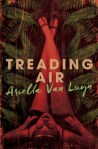
Ariella Van Luyn, Treading air (Review)

Arielle Van Luyn, Treading air

It wasn’t until I reached the end of Ariella Van Luyn’s debut novel, Treading air, that I discovered it was loosely based on the life of a real person. I’m glad it happened that way. I like introductions, but I always read them last because I like to come to my reading as unencumbered as possible – and totally unencumbered I was with this one. Even the title gives nothing away.

So, I was pleasantly surprised to find the first page labelled “Brisbane 1945”, because I spent some of my formative years in Brisbane, albeit rather later than 1945. I was even more surprised, a couple of chapters in, to find a section labelled “Townsville 1922”, because my Mum was born in Townsville at the end of that decade, and I visited it a few times in my youth. There, see how I’ve sneakily given you the historical setting –  and implied the structure – without specifically saying so?

Now, let’s get to the story. As Van Luyn explains in her acknowledgements at the end of the novel, it concerns Elizabeth (Lizzie) O’Dea, aka Betty Knight/O’Brian/Stewart/Johnson, who was born in Brisbane around the turn of the 20th century*. She married Joe O’Dea and moved to Townsville in 1922 where Joe was promised a job. However, as Van Luyn tells it, Joe soon loses that job, and Lizzie, with few work skills, becomes a prostitute, which she sees as far more lucrative, and yes, less demeaning, than the domestic work her mother had done. From there, life becomes increasingly challenging … but, I’ll leave the plot here, because there are other things to discuss.

The novel opens in Brisbane’s lock hospital where Lizzie’s been sent by a magistrate. This opening set-up gives me a great opportunity to discuss how Van Luyn uses fiction and history to construct her character and story. Brisbane’s Courier Mail and the Townsville Daily Bulletin both report on a case at that time: Lizzie is accused of “attempting to steal £20” which brings about a “bond” (deferred) sentence on 8 May 1945. The Courier-Mail writes

“It is rather remarkable,” said Mr. Wilson, “that in this long list of stealing convictions she has never been given a chance to see if she could reform. “We will just try it for an experiment. …” Mr. Wilson ordered O’Dea to enter into a bond to come up for sentence if called upon within six months. “We will both thank you, sir,” said the woman as she left the dock.

Mr Wilson’s “experiment” idea resulted from O’Dea arguing that she wanted a chance to be there for her husband Joe’s imminent release from his 20-year prison sentence.

However, the “crime” Van Luyn uses in the opening of her novel is Lizzie’s stealing “tins of bully beef and some US army blankets”. This crime actually occurred in 1944 and the court case in October of that year resulted in a fine of £5. Here is Van Luyn’s story of the court case in her opening chapter:

At first, in the police court, surrounded by dark wood, she couldn’t make sense of what Mr Wilson was saying about Joe. In a wig that hung down his cheeks, he looked at her medical report and decided to be generous: only six weeks in the lock hospital to recover [because she’d been found to have “the clap”]. He said when Joe got out a few days after she had, they could start a new life together. “We’ll try it for an experiment,” Wilson said, and Lizzie wanted to stick her fingers in his eyeballs. She isn’t a bloody lab rat.

My marginalia here is: “feisty, independent”. So, I have two points to make. One is that Van Luyn shifts a crime of which Lizzie was accused to a different time because, presumably, it’s a more interesting time, narratively speaking. And the other is that, instead of having Lizzie thank Mr Wilson, Van Luyn has her responding (internally, anyhow) in a feisty manner to establish Lizzie as an independent woman, a survivor. For an historian, these “plays” with the facts would be unforgivable, but for Van Luyn, they enable her to engage the reader in the story and quickly establish the sort of person she believes, from her research, that Lizzie was. In other words, Van Luyn plays with the “facts” to create her “truth”. As she is writing fiction, I have no problem with that! Do you?

The other main point I want to make about this book draws from Sulari Gentill’s comments at the Canberra Writers Festival. She said she likes to find interesting but forgotten people. I understood this to mean working class people and minorities, that is, the “little” people, the women, and those disadvantaged by culture, race, and so on. This is certainly what Van Luyn does here. In addition to Lizzie, a working class woman, she also has Chinese and indigenous characters in Townsville. In this focus on the “forgotten people”, her book reminds me of others I’ve reviewed recently, including Eleanor Limprecht’s Long Bay (my review) about abortionist Rebecca Sinclair, and Emma Ashmere’s The floating garden (my review), which uses fictional people to tell the story of a real situation, the removal of marginalised people from their Milson’s point community to make way for the Sydney Harbour Bridge.

“Her life has twisted away from her”

Back to the story. It’s told third person, but from Lizzie’s perspective, and alternates between the 1920s and the mid 1940s, so we know at the beginning that Lizzie’s been “on the game” and is a survivor. Several dramas occur during the novel – including a murder, a shooting, an attempted suicide  – and all these can be found in court records of the time. Van Luyn doesn’t over-sensationalise these, any more than she does Lizzie’s life as a prostitute. She is, though, explicit in her descriptions, giving us a picture of a lusty, resourceful young woman who’s determined to survive. Life is tough going, however. Lizzie, like Townsville, is “unformed”, but Joe, she comes to realise, “can’t look after her” as she’d hoped, so “she has to look after herself”. Moreover, although prostitution is more lucrative than domestic work, she’s not very good at saving – not surprisingly, given her upbringing – so the gap between the dream of an independent future and the reality stays wide for much of the novel.

It’s to Van Luyn’s credit that she has managed to create out of a scrappy historical record a character who, petty criminal though she is, not only comes alive but engages us fully. This is not a sentimental story, but it nonetheless reminds us that not everyone gets a lucky start in life. There are Lizzies still amongst us today. This is the sort of historical fiction I enjoy.

awwchallenge2016

Ariella Van Luyn
Treading air
South Melbourne: Affirm Press, 2016
282pp.
ISBN: 9781925344011

(Review copy courtesy Affirm Press)

* Researching Trove, I found several court reports in which her age wanders around wildly, suggesting birthdates anywhere between 1893 to 1902.

Robyn Cadwallader, The anchoress (Review)

Robyn Cadwallader, The anchoressLet me start by saying that I’m not a big reader of historical fiction, and particularly not of non-Australian historical fiction, so to read a novel set in mediaeval times is quite a departure for me. However, I did want to read Robyn Cadwallader’s The anchoress for a number of reasons. Not only is Cadwallader an Australian writer living in the outskirts of my city, but we did meet a couple of years ago for a lovely lunch when she was in the throes of negotiating the publication of this book in three countries! And, besides this, the topic was so intriguing. I’m not a mediaevalist and had never heard of anchoresses and anchorholds before. It’s taken me sometime to get to it, but I finally have.

Now, one of the reasons I don’t jump to historical fiction is that I’ve tended to see it in terms of bodice-rippers and romances, and these don’t really interest me. But, The anchoress is not such a story. I don’t read back cover blurbs before I read books but towards the end of this book, as I was trying to guess where it might be going, I did look at the back, not because I wanted to know the end – because I didn’t – but because I was intrigued about how this book that was teasing me was marketed. The last sentence of the blurb is that the book is “both quietly heartbreaking and thrillingly unpredictable”. This reassured me that it wasn’t likely to go where a “genre” novel would probably go. Does that make sense?

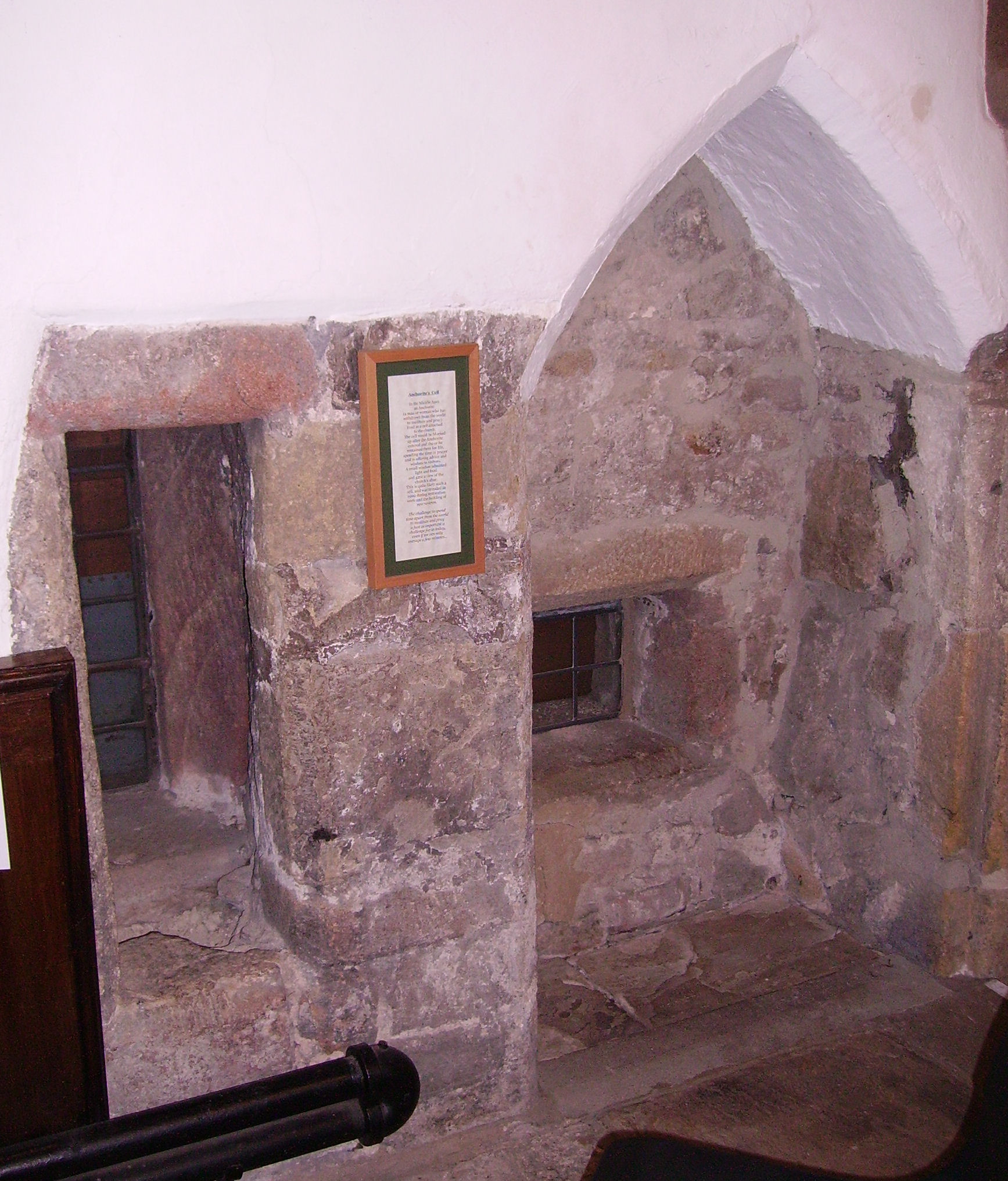
Anchorites' cell, Skipton

Anchorite’s cell, Holy Trinity Church, Skipton, UK (Courtesy: Immanuel Giel, Public domain, via Wikimedia Commons)

So, the plot. It tells the story of Sarah, a young 17-year-old girl who, after some traumatic experiences including the death of a loved sister in childbirth, asks to be enclosed as an anchoress. This means she agrees to spend the rest of her life in a small stone cell, essentially “dead to the world”, tended to by a maid through a window in the wall and visited by a priest who will provide guidance and take her confession. Her support is paid for by a patron, the local Lord. She is given a Rule book as her guide, and is expected to provide advice to village women. Sarah’s story is told first person but, interspersed with hers – in shorter third person chapters – is the story of young, inexperienced Father Ranaulf, her priest-advisor-confessor. And so the stage is set for – well, we don’t quite know what.

As the story progresses, all sorts of narrative possibilities present themselves. Will she stay (like Sister Agnes) or leave (like Sister Isabella)? How will her relationship with Father Ranaulf develop? And why did Sarah really decide on this rather extreme course for her life (because, of course, there is a reason)? These all have the potential for melodrama or cliche, but Cadwallader keeps it grounded. There is drama – a fire – but even it is downplayed in the service of Cadwallader’s bigger themes rather than generating page-turning excitement.

However, it’s not plot that draws me in my reading, but character, themes and language. And here the main characters are well-drawn. The story takes place over the period of a year or so. At the beginning Sarah is an idealistic young anchoress, keen to do it right. She takes seriously her decision with the uncompromising enthusiasm typical of a young person, and so is determined to be disciplined. She allows herself no pleasure, not even some tasty food donated by the villagers, despite advice that this level of self-denial is not expected, and moves into self-flagellation. Over the course of the novel she comes to a more realistic understanding of what being “holy” might mean, and of what she needs to survive her chosen role. Father Ranaulf is also young and inexperienced, which results, initially, in stiff, black-and-white responses to Sarah. Over time, he too comes to a more humane understanding of her and of his role as her advisor. I’m almost tempted to call it a mediaeval coming-of-age story as these two young people come to a maturer world view. Anyhow, it’s nicely and realistically done.

There are other characters of course – Sarah’s maids, villagers who visit Sarah, various priests, and Sarah’s patron and local Lord, the somewhat cliched Sir Thomas. These are less rounded but they enrich the picture Cadwallader paints of mediaeval life, and contribute to the story-line.

“Body without a body”

“True anchoresses”, Sarah reads in her Rule, “are like birds, for they leave the earth – that is, the love of all that is worldly – and … fly upwards towards heaven”. Birds are a recurring motif in the novel, starting with a symbolic bird, the jongleur whom Sarah calls Swallow. “An acrobat”, she says in the opening paragraph of the novel, “is not a bird, but it is the closest a person can come to being free in the air. The nearest to an angel’s gift of flying”. For Sarah, being enclosed was her way of emulating Swallow, of leaping into the air, of being a “body without a body”. She yearns to be free of her body, to leave the senses behind, but the more she tries to escape them, the more they make themselves known. Her challenge is to reconcile this dichotomy, this need to deny the senses while still very much having them, this being, theoretically, dead to the world, while very much alive.

Tied up with Sarah’s challenge is the wider story of mediaeval life and values. Cadwallader conveys life at the times, mostly through the people who visit Sarah. Life, we discover, if we didn’t already know it, is hard for women. We meet women who are abused and assaulted, and we realise that their rights are few in a society which sees women as “lustful and tempting”. Father Ranaulf tell Sarah that:

It is man who is mind and soul, woman who is body.

Wise Father Peter allows women some advance on this when he tells Father Ranaulf that holy women can develop manly souls and “almost become a man”! But it is Sarah who really confronts Renaulf, and forces him to a more empathetic understanding of her (and, by extension, of other women).

Life is also hard for the poor, as Cadwallader tells through the villagers’ lack of power in the face of the Lord’s control over the land they work. And life is a challenge too for church-men, who have to manage villagers and lords while earning money to survive. Father Ranaulf wants to make beautiful books but must “produce an income”, not to mention advise an intelligent young woman who won’t accept his platitudes and thoughtless “rules”!

So, The anchoress is an engaging story. It’s about a time long distant, thus satisfying our historical curiosity, and it’s about power in gender and class, that still resonates today. But, above all, it is about human beings, about how we read or misread each other, about how (or if) we rise to the hard challenges, and about whether or not we accept a duty of care to those who come into our lives. An enjoyable read.

awwchallenge2016Robyn Cadwallader
The anchoress
Sydney: Fourth Estate, 2015
314pp.
ISBN: 9780732299217

Ali Cobby Eckermann, Ruby Moonlight (Review)

ANZLitLovers ILW 2016Ali Cobby Eckermann has been on my radar for a while, so when Lisa announced her 2016 Indigenous Literature Week, I decided Eckermann’s verse novel Ruby Moonlight would be my first choice. This novel won the poetry prize and the book of the year in the 2013 New South Wales Premier’s Literary Awards.

I enjoy verse novels but don’t read them often enough to build up a comprehensive understanding of the form. Eckermann’s Ruby Moonlight is the shortest and sparest of those I’ve reviewed on this blog, but its narrative is just as strong. It is set in colonial South Australia – the not-very-poetic subtitle being “a novel of the impact of colonisation in mid-north South Australia around 1880” –  and tells the story of Aboriginal teenage girl, Ruby Moonlight, whose family is massacred by white settlers. The novel reads like a classic three-act drama. It opens with the massacre and Ruby’s lonely wanderings, and then moves into a somewhat idyllic phase when Ruby meets the also lonely “colourless man”, Miner Jack. They become friends and lovers, giving each other the company and warmth they both so desire:

good friendships
blossom
slowly
(from “Friends”)

and

in the moonlight
solace is shared
in this forbidden friendship
( “Solace”)

But it can’t last, of course, not in that place and time, because neither the colonisers nor the Aboriginal lawmen will accept it: “it is the oasis of isolation/that tolerates this union”. Nothing else.

Ali Cobby Eckermann, Ruby MoonlightThe poetry, as you can see from my excerpts, is spare. There’s no punctuation, not even apostrophes, and no capitalisation except for proper names. Lines are generally short, and description is generally minimal. There’s a lovely but restrained used of repetition, and the rhythm is matter-of-fact, that is, it moves the story along with few flourishes (if that makes sense). The story is told through separately titled poems, each of which occupies its own page, though some only part of it. The titles are simple and to the point – “Ambush”, “Friends”, “Oasis”, “Hate”, “Cursed”, “Sunset”. You could almost track the trajectory of the story through its titles. This spareness, I think, enhances the emotional power. The poems say what they need to say without embellishment.

The excerpts above are from more narrative-focused poems, but there are also poems which provide context, describing the seasons as time passes, commenting on the landscape within which our characters operate, providing a sense of the country’s spirits watching, tending, ready to act. The novel opens on the poem “Nature” which sets the scene perfectly by conveying the opposing faces of nature – “sometimes/turning to/butterfly” or sometimes just to “dust” – which also subtly heralds the coming massacre. And, a few poems in, soon after the massacre, comes one describing nature’s nurturing of Ruby:

chirping red-browed finches lead to water
ringneck parrots place berries in her path
trust nature
(“Birds)

The words “trust nature” are repeated at the end of each couplet in this poem, providing a soothing mantra for Ruby.

Most of the poems are presented in couplets or triplets, but occasionally one uses a different structure, usually to mark a dramatic change. Early in the novel is the devastating, shaped-poem, “Ambush”, in which all lines but one comprise single words (“hack/hack/hack” it starts); and half-way through is another shaped-poem, “Tempo”, which marks both the passing of time and acts as a transition from a short time of idyll for Ruby and Jack to the appearance of others:

Jack knows the remainder of the conversation
before it was spoke ya see any blacks roaming
best ya kill ’em disease spreading pests
(“Visitor”, immediately after “Tempo”)

The irony of it! Who brought disease?

So, Ruby and Jack. One of the delights of the book is the sympathetic representation of these two characters. Bereft after the loss of her family, Ruby stumbles across Jack, a loner who scrapes a living out of fur-trapping. Both are outcasts in colonial Australia, Jack an Irishman, a hated “Mick” (“a music-less man stands aloof at the bar/scowling his hatred for the Micks”, from “Loose”) and of course Ruby, a lubra or black woman. These two cautiously find a “small trust … growing” (“Solace”) between them, but it is a “forbidden friendship”, forbidden from both cultures, so their times together are snatched carefully. Ruby is watched by members of another mob, people who are “slowed by fatigue” and “weary with worry” (“Signs”), and who know the dangers:

camp smoke whispers
tell story of the killings
(“Whispers)

Jack and Ruby become the target of the aforementioned “music-less man” – a man who’d lost his “music heart” after an act of barbarity – and his hired help, two brothers “with rotten teeth smirks” (“Scheme”). Hatred and greed fuel these men. And so the scene is set, but it doesn’t quite play out the way you expect, because Eckermann wants to focus more on our universal need for warmth, love and companionship, and also on survival.

The novel is imbued with indigenous presence, from the opening where Ruby’s family live in “Harmony” in their environment, through her meeting with the other mob, the Cloud people, “on their winter trek”, to the appearance of “Kuman”, her guardian spirit who guides her to safety.

Ruby Moonlight is a special read that adds another perspective and voice to colonial contact narratives, a voice that pays respect to indigenous law and traditions, addresses the politics of contact, but also recognises our personal and universal need for love and companionship. It’s a warm and generous book, but it doesn’t pull punches either. A good read.

awwchallenge2016Ali Cobby Eckermann
Ruby Moonlight
Broome: Magabala Books, 2012 (2015 reprint)
74pp.
ISBN: 9781921248511

Julie Proudfoot, The neighbour (Review)

Julie Proudfoot, The neighbourWhen Julie Proudfoot offered me her debut novel, The neighbour, for review I was more than happy to accept. After all, it had won Seizure magazine’s Viva La Novella Prize in 2014, and you all know how much I love a novella. I must say it’s a gorgeous looking book. I’m not one to judge books by their covers, but neither am I immune to a beautiful book, and The neighbour is that – from its rich, green and mysteriously intriguing cover to its crisp, clear internal design. It is such a pleasure to hold and read. No wonder I prefer print to electronic!

But of course, the most important thing is the content, and the book delivers here too. It’s an Ian McEwan style page-turner. By this I mean it starts with a dramatic event which sets in train actions and reactions as the characters struggle to come to grips with the event, with its impact on themselves and their relationships, and with the way it exposes secrets and past traumas. The event is the horrible but accidental death of a child due to a mistake made by a neighbour. The circle of characters is tight – Ryan, Angie, and the nearly-five Lily, who live next door to Luke, Laney, and their four-year-old son Sam. On the opening page, Luke acknowledges, internally, that a frisson of tension (“a nervous kind of energy”) exists between himself and Angie  – and then she asks him for a favour he does not want to do.

“His actions were wrong, but now he can right them”

The neighbour is a novel about psychological disintegration brought about by grief and guilt, and about the tension that ensues when one wants to forget, another wants to remember, while yet another wishes to atone. Grief, we see, is a personal, private thing, and particularly so when it is bound up in a secret that prevents its full expression. Luke has always been Mr Fix-it for Angie and Ryan, so of course he wants to keep on fixing. If he can just fix their house, the loose roof-tiles, for example, he can make amends. Actions, he tells Angie, are the only way he can “beat down” the guilt. But you can’t help or fix for others if you are falling apart yourself, and you certainly can’t if those others don’t want that help. This is something Luke has trouble recognising as his thinking becomes more and more disordered.

And Luke’s thinking becomes so disordered, in fact, that his behaviour moves into quite bizarre territory. His determination to fix things for Angie and Ryan, despite their refusal, edges him into stalker territory. But, stranger still, Lily’s death resurrects (I’ve chosen this word specifically but I’m not going to explain why!) memories of his older brother’s drowning when they were children. Luke’s response to these memories is, there’s no other word for it, sadistic, but we go with it because we know Luke is losing his hold on reality. He is not a sadist. He is a troubled man. We care about him – because Proudfoot makes sure we do.

She achieves this by telling most of the story through Luke’s perspective, though we also occasionally enter other perspectives, such as Angie’s, too. It’s in third person, but present tense, so we journey with Luke, and other characters, as they try to make sense of their situation. Here’s Luke after Ryan has vehemently rejected his attempt to fix their roof:

As he climbs back over the fence, he can feel Ryan watching him. It’s going to be tough. Ryan will fight it. He knows this, but they’ll thank him in the end. They don’t even know what they need right now. He’ll get them all back on track. Ryan and Angie need never be aware of it.

The language, as you can see, is clear and direct. Because we are in Luke’s head most of the time, description is kept to a minimum, but the writing is nonetheless evocative. Sentences are generally kept short, which keeps the story moving and develops tension. The short, choppy sentences also mimic the characters’ erratic, distressed mental states. Here is Angie through Luke’s eyes:

When she talks her face is in parts. Her eyes shine. Her mouth moves. Her cheeks square up when she speaks and droop when she stops. In doing what Ryan wants, she has become fractured and tense. The more Luke tries to help her, the worse she gets.

Then there’s the plotting. It’s delicious. As the novel progresses, we think we’ve guessed the back story, and we have, but not quite. As it builds to its conclusion, we think we know how it will end, and we are right, almost. The end, in fact, has a beautiful irony – and is perfect.

Despite its brevity, The neighbour tells a complex story of grief, guilt, culpability and responsibility. There are layers, here, as there often are in tragic accidents, but rather than labour them, Proudfoot trusts us to comprehend them while she gets on with the story. This is a powerful, thoughtful – and at times – shocking novel that gripped me from its opening sentence. I look forward to seeing what Proudfoot produces next.

Lisa (ANZLitLovers) read and enjoyed this when it first came out.

awwchallenge2016Julie Proudfoot
The neighbour
Sydney: Xoum Publishing, 2014
204pp.
ISBN: 9781922057983

(Review copy courtesy the author)

William Makepeace Thackeray, The luck of Barry Lyndon (#Review)

By the time I reached about the 30% mark (on my Kindle) of William Makepeace Thackeray’s classic novel, The luck of Barry Lyndon, I was reminded of a monologue by English comedian Cyril Fletcher which my father had on an old gramophone record. It’s about a “lunatic” (this was in less linguistically-sensitive times) who decided to write a novel. I won’t spoil the fun because you can watch Fletcher perform it himself on YouTube (it’s the first short story):

If you’ve watched it, you might see my point, because Barry Lyndon does go on and on and on, reporting adventure after adventure after adventure, with no apparent change or development in his character (except that he gets older!). I am exaggerating a bit, but …

So, why did I persevere? Firstly, it was my reading group’s June book, and I always like to do my homework; secondly, it is a classic that I haven’t read; and thirdly, I sensed satire, and was intrigued to see just where it was going. As a reading experience though it’s a challenge, one that was perhaps less so for contemporary readers in 1844 because they received it in serial form over 10 months or so. Still, I’m not sorry I read it.

What's in a name?

What’s in a name?

Anyhow, enough introductory patter. Let’s get down to it, starting with a little about the story. It’s a picaresque tale, a popular form in the 18th century in which the story is set, and spans many countries from Ireland and England to much of Europe. Its “hero”, Redmond Barry, pretends to be (believes, indeed, he is) a gentleman – he knows how to speak, dress, and duel – but, see how I enclosed “hero” in quotation marks? That’s because he is, in fact, an anti-hero – a conman and consummate rake (another great 18th century type!). Having lost the hand of his cousin, and then his money through gambling in Dublin, he ends up a soldier fighting the Prussians in the Seven Years’ War. While in Europe, he teams up with an uncle and together they manage to live the high life, gambling their way around Europe. “Luck”, of course, runs out, and he’s penniless again but he manages to essentially bully the wealthy and widowed Countess of Lyndon into marriage. However, things again go bad as Redmond Barry (now renamed Barry Lyndon) mismanages his wife’s money – and so the story continues to its inevitable conclusion.

The “luck” of Barry Lyndon?

One of the questions the book raises is that of “luck”. To what extent is Lyndon master of his own fate and to what extent does luck come into play. As one of the members of my reading group said, Lyndon is one of literature’s greatest justifiers. He can justify (excuse) just about everything he does, but he’s also the consummate unreliable narrator. He continually asserts the “truth” of his story, even though, early on, he’s told us that the “Irish gentry . . . tell more fibs than their downright neighbours across the water.”

The novel opens with:

Since the days of Adam, there has been hardly a mischief done in this world but a woman has been at the bottom of it …

And there it starts. Whatever happens to Lyndon is always someone else’s fault – nothing to do with his gambling, his inability to manage money, or his insensitivity to the needs of anyone but himself. There is a strong misogynistic thread through the novel – but this is part of the satire, which is common in picaresque novels. The targets are many, but a major one is idea of the 18th century gentleman, the sort of person Barry Lyndon proclaims throughout that he is but that he shows by his actions he is not!

The novel is, overall, a romp, albeit a rather tedious one at times, but it does have some things to tell us, besides what a “gentleman” should be. One of these, I think, is that it chronicles social change in Europe, the change from the chivalric life of aristocracy to a more bourgeois life of the middle classes. I’ll give one little example. Lyndon spends his life settling scores through the “gentleman’s” method, a duel (though to be fair he “pinks” people rather than kills them). However, late in the novel, as things close in, he is brought to account for one of his schemes. He writes:

Of course I denied the charge, I could do no otherwise, and offered to meet any one of the Tiptoffs on the field of honour, and prove him a scoundrel and a liar: as he was; though, perhaps, not in this instance. But they contented themselves by answering me by a lawyer, and declined an invitation which any man of spirit would have accepted.

We are talking late eighteenth century, you see – the time of the American War of Independence and the lead into the French Revolution. The times, they were a-changing.

Truth or fiction?

So, there’s the issue of Lyndon asserting the “truth” of his story, asking us to trust that he is the decent, good guy he says he is. His misfortunes, he says, are due to

the consequences of villainy in others, and (I confess it, for I am not above owning to my faults) my own too easy, generous, and careless nature…

Hmm … not quite the “faults” we readers would ascribe to this wife and child-beater, profligate spender, and keen duellist.

However, there’s another angle to this “truth” idea. It’s related to the idea that this is a “memoir”, not a novel. He writes:

Were these Memoirs not characterised by truth, and did I deign to utter a single word for which my own personal experience did not give me the fullest authority, I might easily make myself the hero of some strange and popular adventures, and, after the fashion of novel-writers, introduce my reader to the great characters of this remarkable time. These persons (I mean the romance-writers) …

Later, we find, in one of the occasional “footnotes”, which are part of the novel and provide the occasional corrective to Lyndon’s narrative:

[Footnote: From these curious confessions, it would appear that Mr. Lyndon maltreated his lady in every possible way; that he denied her society, bullied her into signing away her property, spent it in gambling and taverns, was openly unfaithful to her; and, when she complained, threatened to remove her children from her. Nor, indeed, is he the only husband who has done the like, and has passed for ‘nobody’s enemy but his own:’ a jovial good-natured fellow. The world contains scores of such amiable people; and, indeed, it is because justice has not been done them that we have edited this autobiography. Had it been that of a mere hero of romance one of those heroic youths who figure in the novels of Scott and James there would have been no call to introduce the reader to a personage already so often and so charmingly depicted. Mr. Barry Lyndon is not, we repeat, a hero of the common pattern; but let the reader look round, and ask himself, Do not as many rogues succeed in life as honest men? more fools than men of talent? And is it not just that the lives of this class should be described by the student of human nature as well as the actions of those fairy-tale princes, those perfect impossible heroes, whom our writers love to describe? There is something naive and simple in that time-honoured style of novel-writing by which Prince Prettyman, at the end of his adventures, is put in possession of every worldly prosperity, as he has been endowed with every mental and bodily excellence previously. The novelist thinks that he can do no more for his darling hero than make him a lord. Is it not a poor standard that, of the summum bonum? The greatest good in life is not to be a lord; perhaps not even to be happy. Poverty, illness, a humpback, may be rewards and conditions of good, as well as that bodily prosperity which all of us unconsciously set up for worship. But this is a subject for an essay, not a note; and it is best to allow Mr. Lyndon to resume the candid and ingenious narrative of his virtues and defects.] (Ch. 17)

I love the satire here of romance-adventure novels, epitomised by writers like Sir Walter Scott, and note Thackeray’s plea for what became the great social novels of the nineteenth century. (You have to wonder, though, at the idea of “Poverty, illness, a humpback” being “rewards”!)

And here I will end because many have written eloquently about this classic. All I wanted to do was to make a couple of points! Have you read Barry Lyndon, and did you enjoy it?

William Makepeace Thackeray
Barry Lyndon (orig. The luck of Barry Lyndon)
Goldfish Classics Publishing, 2012
[339pp.]

Dorothy Johnston, Through a camel’s eye (Review)

When should I give up saying that I don’t read crime? In the last seven years, I’ve posted nine reviews tagged crime fiction (of which one was a guest post). Perhaps just over one a year still qualifies as not reading crime? Then again, what’s the point of saying it, if every now and then I do read crime? I think there is a point – it advises that I’m not a crime fiction expert, so my posts need to be read from that point-of-view, and it also tells readers not to come here looking for posts on crime.

So now, with that off my chest, I’ll get to Dorothy Johnston’s crime novel, Through a camel’s eye. It’s the first novel in her new crime series, Sea-change mysteries. I decided to read it for two reasons. One is that I’ve read and posted on two other works by her and was interested to see how a Miles Franklin shortlisted author might approach crime fiction. The other is that she was going to be in town last weekend and we’d agreed to meet for a quick cuppa, so I thought this would be the time to read her latest book (though I didn’t finish it in time). I didn’t plan to quiz her about the book, but I did want to show some support for a hardworking author. As with most of the crime novels I’ve read while blogging, I wasn’t sorry about my decision to expand my horizons a little.

Dorothy Johnston, Through a camel's eyeBefore I write about the book, though, I do want to mention the cover. It features a soft-edged image of a camel, lighthouse, and boardwalk. It’s gentle, atmospheric and, woo-hoo, it doesn’t have an image of a tiny man or a woman’s back as has been popular in recent times. The murder victim is, however, a woman, which, given women do not comprise the majority of homicide victims, is another issue that crops up in commentaries. The point here, though, is that Johnston does not delight in gruesome detail. We gradually discover during the course of the novel how the murder took place but the details, the victim’s emotions, the appearance and/or treatment of the body are not focused on. This is because Johnston’s interest lies elsewhere.

And now, I should get to the story. It’s a police procedural set in a small coastal community in Victoria. The police station is run by a local, Constable Chris Blackie, who returned to the town when his mother was unwell and stayed on after she died. The novel starts, though, with Anthea, a young, recently graduated constable who has been sent to be Chris’ assistant. Her country-town placement has precipitated a break with her architect lover, and she’s pining. Actually, the novel doesn’t quite start with her, either – she’s just the first police officer we meet. The novel starts with one of the town’s “characters”, the recently mute Camilla Renfrew, watching a young woman, Julie, train a young camel. As Camilla walks away, she remembers that on a previous visit she’d heard a woman’s scream. And so there we have it, we think, the crime – and yes, one of the book’s two crimes is a murdered woman, but it’s not, in fact, the first crime we are confronted with. That honour goes to the aforementioned camel, Riza. He goes missing.

From these two crimes, Johnston spins an intriguing tale that keeps us wondering whether the crimes are connected or not – but you’ll have to read it yourself to answer that question. I want to talk instead about what I enjoyed most about the novel – characters and language.

… looking for drama

Most crime novels, I think, draw on archetypes. In this case, there’s the idea of a “sea-change” – particularly for Anthea – and the basic character set-up, the reserved, loner boss, and the fresh, unsettled, somewhat disengaged offsider. Anthea is “disappointed” to have been sent to Queenscliff, and thinks she has her boss pinned:

She would like to dismiss Chris Blackie as an old fuddy-duddy, or a closet-gay; but found she couldn’t, quite.

She’s attracted to “forceful men with definite ideas” but Chris is not that sort of man. He’s barely conscious of his “maleness”, and she doesn’t quite know how to respond to such a person. For his part, Chris would have been happy to run the station solo. Nonetheless, he’d been open to the idea of a woman, but

Anthea had come looking for drama. He’d seen it in her eyes the minute she walked in. Both the anticipation and the almost instantaneous disappointment …

He wasn’t to know of course that her first sight of him, bum-up tending the police station’s lavender and rose garden, hadn’t exactly inspired her.

So, we have an archetypal “misfit” situation – two people working together, neither of whom are completely comfortable in their skins. It is the development of these two characters and their relationship, rather than in solving the crime, that I enjoyed most in the novel. Anthea may have come “looking for drama” but Johnston develops her story quietly, tenderly, rather than dramatically. She achieves this by taking us into the heads of these two unsure people, showing us their thoughts, feelings and reactions.

Why are they unsure? Well, I’ve already described some of it, but there’s more – and this could be where those of you who don’t like coincidences may come a little unstuck, because there are several missing parents here. Anthea’s parents had died in an accident when she was three, while Chris’ father had drowned when he was ten. Camilla’s “cold, punitive” husband had died of a heart attack when her now adult son, Simon, was ten, something for which he seems to still blame her. And young Julie, the camel owner? Her parents had died in a car-crash when she was in her teens. Johnston doesn’t labour all this, but these losses provide background to the characters and help explain their lack of mooring. Coping with loss and resolving the past could also be seen as themes of the novel. Anthea, for example, needs to let go of her lover, while Chris needs to resolve the fears that are stunting him.

Besides these characters, there’s Johnston’s description of place and small town life. We meet the town’s denizens – farmers, teenagers, caravan park owners, retired solicitor. They are typical – they have to be for us to believe the town – but, overall, they work as individuals too. We see the pros and cons of small town living, the everyone-knows-everyone-else’s-business aspect alongside the looking-out-for-each-other part. Chris’ old cottage and Anthea’s flat, the paddocks and seascape, are all clearly, but succinctly, described, as are the characters. Here is a minor character:

His big frame relaxed as though someone pulled a peg that was holding complicated scaffolding in place.

And here is the physical environment, seen through the eyes of another minor character:

Camilla was fascinated by the thick white stalk of the lighthouse, appearing and disappearing through the fog. Behind her, the pier squatted as a vague horizontal line, a grey denser than the sky. Its verticals were lines of shadow legs, a giant centipede.

The crimes are solved, and Chris and Anthea progress in self-understanding, but enough openings are left for us to wonder where Johnston might take these characters next. Through a camel’s eye relies more on the little details of lived lives than on the big dramas to provide interest, which is exactly why I enjoyed it.

awwchallenge2016Dorothy Johnston
Through a camel’s eye
For Pity’s Sake Publishing, 2016
216pp.
ISBN: 9780994448521

Sonya Hartnett, Golden boys (Review)

Sonya Hartnett, Golden boysAlthough Sonya Hartnett has written a large number of books, for children, young adults and adults, I’ve never read her, which is something I’ve been wanting to rectify. My opportunity came in May when my reading group scheduled her latest novel, Golden boys, for discussion. It was shortlisted for several awards last year, including the Miles Franklin Award – and has by now, I expect, been reviewed to within an inch of its life, but that’s not going to deter me!

You can tell, with Golden boys, that Hartnett is an experienced writer for young people. The book’s protagonists, the perspectives through whom the story is told, are all pre-teen. The three main voices are 12-year-old Colt, eldest son of the well-to-do Jensons, and almost 13-year-old Freya and 10-year-old Syd, children of the working class Kileys. The set up is that the Jensons have moved into a working class suburb for a reason that starts to become clear as the book progresses.

The novel opens with Colt:

With their father, there’s always a catch: the truth is enough to make Colt take a step back. There’s always some small cruelty, an unpleasant little hoop to be crawled through before what’s good may begin: here is a gift, but first you must guess its colour.

It’s a powerful beginning, and we’re right there. The scene is played out through Colt’s eyes. He’s been through these games before and he doesn’t want to play. He’s starting to realise there’s something darker behind his father’s generosity: “His father spends money not merely on making his sons envied, but on making them – and the word seems to tip the floor – enticing. His father buys bait.”

The second (unnumbered) chapter starts with Freya:

Freya Kiley has started to see things she hasn’t before. Until recently she has lived as every child must: as someone dropped on a strangers’ planet, forced to accept that these are the ways of this world.

But, on the next page we read

Now she’s older and smarter, and she’s starting to see that the world is a castle, and that a child lives in just one room of it. It’s only as you grow up that you realise the castle is vast and has countless false floors and hidden doors and underground tunnels … And as you get older, you’re forced out of the room, whether you want to go or not. Freya wants, with urgency, to go.

This lovely castle motif recurs through the novel. Anyhow, here we have two young people on the cusp of adolescence living in families which are headed (because this is the late 1970s when men still tended to “head” the family) by two problematical fathers – the superficially charming, generous but creepy Rex Jenson, and the detached, sometimes violent Joe Kiley. You have probably guessed what some of the themes are … but they are tied up with the plot, and …

I’m not going to talk about the plot because I have other issues to explore. I’ll just say that it builds slowly, inexorably, as the neighbourhood children gravitate to the well-endowed Jenson home, until we reach the climax . It’s expected – has been cleverly foreshadowed – and yet is surprising in exactly how it plays out. It’s painful, but clever too in resolving little while exposing a lot.

Adult? Young Adult?

Rather, I want to talk about voice and audience. When writers write in the voice of young people, or through the eyes of young people, there’s an immediate assumption, fear even, that the work is for young adults, but this isn’t necessarily so, though it can probably make such books cross more easily between adult and young adult readers. This is where Hartnett’s adult-marketed Golden boys sits. Its subject matter extends beyond a narrow focus on teenage experience, like first romantic relationship, first sexual experience, feelings of alienation or otherness, conflict with parents, and so on, to exploring the experience of awakening awareness to the reality of adult life. Here – this awakening – is the focus of Colt and Freya’s consciousness. How are they going to make sense of the flawed adult world they are now seeing? How are they to move through it? Will they survive their loss of innocence (and we are not talking sexuality here, but that deep shock when your view of the world, your sense of safety, is shaken to the core.) I should reiterate here that there are other youthful perspectives, including that of 10-year-old Syd who provides a neat counterbalance to Colt and Freya. At 10 he still has the self-focus of a child, not yet aware of “adult” life. What he wants for Christmas, whether he can still swim in the Jensens’ pool, and whether being a gangster would be a good career are what occupy his mind!

Hmmm, I’m not sure still that I’ve explained why this is a book that should interest adults – those adults who think, perhaps, “been there, done that”. It’s relatively easy to argue that the book, meaty though it is, would appeal to young adults, but why would a book in which all the perspectives are those of young people appeal to adults? Well, first there’s the subject matter, which addresses pedophilia and domestic violence. Just because we see these events through a young perspective doesn’t mean the exploration is superficial or irrelevant to an adult reader. Indeed, this perspective adds weight, because we see what the children see and the impact on them, how they try to process what they actually see, and how they comprehend the behaviour and responses of the various adults. When traumatic things happen in “real” life, it’s the adults we see and hear – the adults who are interviewed on the radio or television, the adults who write the memoirs or exposés. Hartnett presents the other side, the missing voices of the young – and I found her young people to be psychologically convincing. They are aware, perceptive and curious – but their understanding has limits, such as Freya’s taking the full blame for her parent’s situation because she was the reason they married. Hartnett, though, never sells them short, and neither I think should we.

And then there’s the writing. The imagery fits beautifully. There’s the castle motif for Freya, and a subtle but ominous repetition of the colour “black” from that bike in the opening scene to local bully Garrick’s fringe being described in the last scene as “blown back from his forehead like black grass on a sandy dune”. Descriptions tend to be physical. When Colt is confronted by the boys “the sun becomes an inferno, claws tigerishly at his neck”. On another occasion, one of Freya’s little sisters “skitters off like something twanged from a catapult”. The novel, in other words, is a joy to read – despite the unpleasant subject matter – for the imagery, careful plotting, characterisation, and that ending which manages to surprise despite our basic expectations being met.

Earlier, I quoted Freya as seeing the world or life as a castle. Towards the end, as things become more and more clear, she considers:

If she has spent her life rummaging through a castle of countless rooms, she thinks she must have found the vault at the castle’s core, because inside it there is nothing but her wits.

And that is the lesson, in the end, that both Freya and Colt learn. They will have to make their own decisions, rely on their wits, if they are going to survive this flawed, not always safe, world.

awwchallenge2016Sonya Hartnett
Golden boys
Hamish Hamilton, 2014
238pp.
ISBN: 9781926428611

Chinua Achebe, Things fall apart (Review)

Chinua Achebe, Things fall apart

First edition, from Heinemann (via Wikipedia)

At last I’ve read that classic of African literature, China Achebe’s Things fall apart. It all came about because this year ABC RN’s classics book club is doing Africa. As I’ve been wanting to read this book for a long time, and as my reading group has been making a practice of choosing one ABC RN bookclub book a year, I recommended Things fall apart and – woohoo – they agreed. I am so happy! OK, so I’m easily pleased, but …

The funny thing is that as I started it, I did wonder what all the acclaim was about. Yes, I was finding the writing gorgeous, and yes, I found all the detail about life in the little Igbo village of Umuofia fascinating, but were these enough for its huge reputation? Then, I got to Part 2 – this is a classic three-part book – and the arrival of white man and the missionaries in southeastern Nigeria. The plot started to thicken – but, not just the plot. The whole gorgeous structure of the novel, its complexity and its sophisticated analysis of human society and the colonial imperative started to become clear.

Here, though, is my challenge – a challenge faced by all bloggers writing about much-analysed classics – what can I add? I haven’t actually read any of the analysis, except for my edition’s introduction, so I risk either going over the same old ground, or heading off on a completely irrelevant tangent, but I’m going to try. And how I’m going to try is to talk about a few of the aspects of the book that stood out to me, which, as is my wont, will focus more on how it is written than with the story itself.

However, I will start with a brief synopsis of the story, just in case there are others out there who haven’t read it. The plot is fairly simple: it tells the story of Okonkwo. Born to an “ill-fated”, “lazy and improvident” man, he decided early in life that he would not be like his father. He becomes a powerful and respected “warrior” in his community, one known to be hardworking but who could also be cruel to his family or to anyone who showed weakness. He is determined to be a “man”, to never show a “female” side. Male-female dichotomies are, in fact, an underlying thread in the novel. Whenever things go wrong for him, his response is always aggressive: if you aren’t confronting a situation head on, you are a “woman”. This inflexibility, his unwillingness to waver from his tough-minded course, results in his downfall. He could be seen I think as a classic tragic hero, as the man who could have been great but for a tragic flaw, an inability to be flexible, an unwillingness to marry his two sides.

This idea of two parts is fundamental to how the novel is structured and how the themes are developed – and Achebe conveys it through dichotomies and parallels. There’s the male-female one, which Okonkwo battles within himself. “When did you become a shivering old woman” he asks himself regarding the distress he feels after engaging in a violent act. Later, he is surprised to hear of a husband who consulted his wife before doing anything:

 ‘I thought he was a strong man in his youth.’ ‘He was indeed,’ said Ofoedu. Okonkwo shook his head doubtfully.

But there are other dichotomies, and two, in particular, that I found interesting. One is between  Okonkwo and his friend Obierika. Both are respected men in the village, and both adhere to their traditions and conventions, but Okonkwo, who is “not a man of thought but of action” is so fearful of appearing weak he follows the “laws” rigidly. Obierika on the other hand is more thoughtful:

Obierika was a man who thought about things. When the will of the goddess had been done, he sat down in his obi and mourned his friend’s calamity. Why should a man suffer so grievously for an offence he had committed inadvertently? But although he thought for a long time he found no answer. He was merely led into greater complexities. He remembered his wife’s twin children, whom he had thrown away. What crime had they committed?

A similar dichotomy is set up between two missionaries:

Mr Brown’s successor was the Reverend James Smith, and he was a different kind of man. He condemned openly Mr Brown’s policy of compromise and accommodation. He saw things as black and white. And black was evil. He saw the world as a battlefield in which the children of light were locked in mortal conflict with the sons of darkness.

So, we have dichotomies established within the two cultures he’s describing – the African and colonial/missionary – but these two sets of dichotomies also work as parallels for each other, reflecting the differences, the conflicts in fact, that can occur within both (all) cultures.

Now I get to more uncomfortable ideas. Okonkwo’s tragedy could be seen to mirror Africa’s, but this is a tricky thing to consider. Okonkwo’s flaw we know. Did Africa, likewise, have a flaw or weakness? We criticise colonialism – and surely it is a bad thing, the subjugation of one people by another, the taking of one people’s land by another – and yet … Achebe himself benefited from the education brought by the missionaries, and in Things fall apart he tells us that some Igbo villagers saw positives:

The white man had indeed brought a lunatic religion, but he had also built a trading store and for the first time palm-oil and kernel became things of great price, and much money flowed into Umuofia.

Some even saw positives in the religion.

So, Achebe is not uncritical of either side of the colonial equation – the colonisers and the colonised – but his final point in the novel makes clear his attitude to the colonial project. In the last paragraph we learn that District Commissioner plans to write a book. Its title, “The Pacification of the Primitive Tribes of the Lower Niger”, euphemistically describes the colonisers’ mostly violent/aggressive subjugation of African people as “pacification” and demonstrates an arrogant assumption that a society not like their own is “primitive”. For Achebe, then, the overriding point of Things fall apart is not so much to present the positives and negatives within the two opposing cultures, but to expose the disdain with which the colonisers treated African people, and the way they denigrated African culture.

This is such an honest and provocative book, one that would bear multiple re-readings – like all good classics. Have you read it?

Chinua Achebe
Things fall apart
London: Penguin Classics, 2001 (orig. pub. 1958)
ISBN (e-book): 9780141393964