Janet Lee, The killing of Louisa (#BookReview)

Book coverI started reading Janet Lee’s historical fiction The killing of Louisa straight after reading Amor Towles’ A gentleman in Moscow (my review), which is also a work of historical fiction. They couldn’t be more different. Not only is one about a real historical figure in late 19th century Australia, while the other is about a fictional one in 20th century Bolshevik Russia, but one is told first person present tense, while the other is third person past tense.

Now, when first person present tense started appearing on the contemporary literary scene as the style-du-jour, I rather liked it. I liked its freshness, and the sense it gave of speaking directly to me. But then it started to wear a bit thin. This is not to say that I don’t like it – ever – just that it can be overused and not necessarily add to the experience. I loved the measured, sometimes wry, third person voice in Towles’ novel. It suited a book that seemed to be critiquing both human nature and an historical period. Did the first person voice suit Lee’s novel?

Well, let’s see. The novel is about Louisa Collins who, in 1889, was the last woman to be hanged in New South Wales. Her story is a horrifying one: she was tried four times for murder, with the fourth trial convicting her after the three previous ones failed to come to a decision. There’s more to it though, in that the first two were for the murder, by poison, of her second husband. When the juries could not agree, she was charged with the murder, also by poison, of her first husband. When that too failed, they returned to the first husband, and finally a guilty verdict was achieved, largely using the testimony of Louisa’s 11-year-old daughter May who admitted to seeing a box of “Rough on Rats” in the kitchen. The novel tells this story from Louisa’s point of view.

Formally, the story takes place over six weeks, from 26 November 1888, when she is in gaol waiting for her fourth trail, to 8 January 1889, when she is executed. However, of course, we want to know the full story of Louisa’s life and how she got to be where she was. Lee does this by having her tell her story to the prison chaplain, Canon Rich, while she awaits her execution.

It’s a moving story – of course. Born to a poor family in a country town, Louisa, when still a young teen, is found a job in the home of a lawyer by, it seems, the mother of a wealthy young man who fears her son is becoming too close to the girl. Louisa’s employer is good to her, and she’s happy, but at the age of 18, she is married her off to a man around 15 years her senior whom she barely knows. Charles is a butcher with his own business, and they both work hard, but, more through bad luck than bad management, the family, which seemed to be making a go of it, ends up living in Sydney, and poor. They take in boarders to supplement their income. It’s a world, of course, where women had no rights and little power, though Louisa does stand up for herself within her marriage, exerting a right to wrest some enjoyment out of her life. Things, however, become complicated when the flashy, confident Michael appears on the scene.

All, or most of, this Louisa tells Rich, with a fair degree of self-knowledge about her own failings but also with some insights into human nature (such as how recollections can change!) and how the world works. On her mistress spending years in mourning for a dead baby, Louisa says to Rich:

But the Missus had become like this because she was allowed to dwell upon her sadness for so long. Sometimes folk who suffer a tragedy can pick themselves up and dust themselves off and keep going on through life, and it is often the poorer ones who do this because they don’t have the luxury to stop and mourn […]

Mourning and feeling feeble is a luxury, and it is my observation that only the rich have that luxury, sir.

Louisa is not speaking from theory here; she has learnt the truth through her own experiences of loss.

However, hers a tricky story to tell, because, ultimately, we don’t know whether she was guilty or not, and Lee is not about producing a work of romantic fiction. So, she needs to tread a fine line. Using the primary resources available to her which comprise some letters, court and parliamentary records, and newspaper reports, she tells Louisa’s story.

And Louisa’s story is worth telling for several reasons. First, there’s that reason why many of us enjoy historical fiction, which is to learn, to feel, the social history of a period. Louisa’s first person voice conveys perfectly the lives of poor working women of the time – the hard work, the dust and grime, the worry, the powerlessness. She also conveys her increasing awareness of the need for representation for women in parliament. Knowing where we’ve come from and why we should do all we can not to go back there is a good reason for reading books like this.

But, unfortunately, the book also reminds us of how far we still have to go. One of the features of Louisa’s case is that old story of women being tried by society and the media for not behaving with the propriety expected of them. Louisa likes to have a good time, so she would dance and drink when an opportunity arose, and she argues for her right to do so. Worse though, she appears “cold” after the deaths of her husbands. She doesn’t wear mourning and she doesn’t cry and wring her hands. Heard that before? (Australians will immediately recall the Lindy Chamberlain case.) Louisa’s awareness of this issue is supported in the text by well-placed excerpts from primary sources, such as the snide remark in Parliament, comprising all men of course, about her “method of procuring divorce by means of arsenic”. The problem is that, still, even after Lindy Chamberlain, things haven’t changed, or not changed enough … we still have trial-by-media and women are still excoriated for not behaving in a so-called “womanly” way.

Janet Lee’s is not the first book about Louisa Collins. In 2014, journalist Caroline Overington published her history, Last woman hanged, after researching the case for some years. I haven’t read that, but I understand that she too presents an “open” story, that is, one that leaves it to the reader to consider the rights and wrongs of the case. And that, I think, is the right way to handle this story. What is wrong, though, is capital punishment! It is wrong for so many reasons, but one of the greatest of these is the risk of executing innocent people.

But now back to my original question regarding voice. As I started The killing of Louisa, I felt I wanted a third person omniscient voice telling this story. I wanted a considered voice giving me the pros and cons of the case. However, as I read on, I became engaged by Louisa’s voice, particularly by the tone Lee achieves which, while containing an element of sorrow and self-pity, is neither pathetic nor whiny. By adding excerpts from the sources, Lee provides some of that overview I wanted.

The killing of Louisa, then, is not only an engrossing story about a shameful case from the past, but one that intelligently grapples with the challenges of presenting such a case through historical fiction.

AWW Challenge 2019 BadgeJanet Lee
The killing of Louisa
St Lucia: UQP, 2018
268pp.
ISBN: 9780702260223

(Review copy courtesy UQP)

Amor Towles, A gentleman in Moscow (#BookReview)

Cover for Amor Towles A gentleman in MoscowAmerican writer Amor Towles’ third novel, the best-selling A gentleman in Moscow, generated a surprisingly lively discussion at my reading group last week, because beneath its engaging, accessible exterior are some puzzles. These puzzles relate primarily to Towles’ intentions. What were they? Why did an American investment banker write an historical fiction novel about a Count in Bolshevik Russia?

But, I’m rushing ahead, so I’ll slow down and do the right and proper thing, which is to start  with a plot outline. The novel opens in Moscow in 1922, when our protagonist Count Rostov – once a hero of “the prerevolutionary cause” but now a “Former Person” – is sentenced to indefinite house arrest in the grand hotel, the Metropol, in which he has been living for four years. Not only that, but he is to live in the old servant’s quarters rather than in his luxurious suite. Fortunately, our count is nothing if not resourceful, and he quickly decides that “if a man does not master his circumstances then he is bound to be mastered by them”. The next 450 pages or so chronicle the next three decades or so of the Count’s life under this house arrest, detailing life in the hotel and the relationships he forges over that time. It is, unexpectedly, a thoroughly enjoyable read, but why, exactly? What is it all about?

While most of my reading group loved the book, albeit a couple of us had this niggling “why” question, one member found it “intellectually dishonest”. She could not accept the Count as being in any way representative of Russian aristocrats of the time, and she felt that the novel glossed too easily over the real horrors of the period. Why did she feel so strongly about this, while the rest of us, mostly well-versed in Russian history, did not feel the same way? Well, I don’t know exactly, but I think it might have something to do with form and tone.

I’m going to explore this a little rather than focus on the content, partly because it intrigues me and partly because I presume that quite a few of you will have read the book and know its content. So, here goes. The novel is historical fiction, but what sort? It’s not your bodice-ripping romance nor the swash-buckling adventure that exemplify this genre. But, neither is it the sort of social realism that is the most common alternative to the romance or adventure approach. What, then, is it? Well, as I was reading it, I had visions of Austen. Sorry, but it’s true! It’s not Austen, of course, but it has a comedy-of-manners ring to it, complete with Austen-like commentary, not to mention her satiric and ironic touches.

This means that although, as its own blurb says, it takes place during “some of the most tumultuous decades in Russian history”, the focus is elsewhere. It’s on the Count and the small community surrounding him; it’s on how does one, in fact, adapt to living under such circumstances. Some of you will know Jane Austen’s famous comment in a letter to her niece about her subject matter:

You are now collecting your People delightfully, getting them exactly into such a spot as is the delight of my life – 3 or 4 families in a Country Village is the very thing to work on.

It’s not a stretch to see the story of the Count’s life in the Metropol through this prism. Indeed, the above-mentioned blurb continues to say that the Count, stripped of his luxuries, “is forced to question what makes us who we are”. This journey was the book’s main story for me. We do learn about Stalin’s regime, through characters who come to the hotel and interact with the Count, but the Count’s personal story is the main game.

So, what does he learn? Early on, he vows “to master his circumstances through practicalities”, and this he does by tailoring his life and expectations. His initial change from hotel guest to prisoner sees him still living pretty much the high life, free to relax and dine, but by the end of the novel he is working as the Head Waiter in the main restaurant, for which, in fact, his aristocratic training in etiquette had well qualified him. He had said that “his model for mastering his circumstances” would not be Dantés planning revenge, nor Napoleon imagining his triumphal return, but “a different sort of captive altogether: an Anglican washed ashore. Like Robinson Crusoe”. Crusoe, in other words, adapted, confronting the challenges as they arose.

As with most of Austen’s protagonists, the Count’s “learnings” are not overly dramatic. He’s already a generally decent, sensible sort of person, but late in the novel, he tells his lover, Anna, in a discussion comparing American “conveniences”, like dishwashers, with Russian privations,

“I’ll tell you what is convenient … To sleep until noon and have someone bring you your breakfast on a tray. To cancel an appointment at the very last minute. To keep a carriage waiting at the door of one party, so that on a moment’s notice it can whisk you away to another. To sidestep marriage in your youth and put off having children altogether. These are the greatest of conveniences, Anushka—and at one time, I had them all. But in the end, it has been the inconveniences that have mattered to me most.”

These inconveniences revolve around the deep relationships he develops through his imprisonment and the demands that such relationships entail. They result in a man who is described by his interlocutor at the beginning as being “without purpose” turning into someone very purposeful.

What’s also Austen-ish is the commentary, the astute observations made about human nature, such as:

By their very nature, human beings are so capricious, so complex, so delightfully contradictory, that they deserve not only our consideration, but our reconsideration—and our unwavering determination to withhold our opinion until we have engaged with them in every possible setting at every possible hour …

If there’s one thing Austen recognises it’s the capriciousness of humans. Another Austen-like statement is this one: “It is a fact of human life that one must eventually choose a philosophy”.

But, still, why write such a story? Towles, himself, has said that he wanted to write about someone forced to live in a grand hotel, and that he had “no central theme”. Rather, he wanted to create a work that would be “satisfyingly cohesive” but “prompt varied responses from reader to reader, and from reading to reading.”

Consequently, while my reading of the book encompasses seeing it as critiquing the corruption, hypocrisies and loss of freedoms that characterised the Bolshevik regime, my overall response is a broader one, which is that, unlike the Count’s friend Mishka and the little-girl-turned-mother Nina, we would do better to develop and rely on our personal set of values, to work on our relationships and the attendant responsibilities not to mention on our own adaptability to circumstances, as the Count does, than commit to any single “ism”.

Lisa (ANZLitLovers) thoroughly enjoyed this book too.

Amor Towles
A gentleman in Moscow
London: Viking, 2016
502pp.
ISBN: 9781448135509 (Kindle ed.)

Julian Davies, Call me (#BookReview)

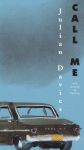
Book coverI wasn’t sure what I was in for when I started reading Call me, the latest offering from that tricksy duo, novelist Julian Davies and illustrator Phil Day. But, it soon became clear that what was before me was a coming-of-age story. What, I wondered, was Davies doing writing such a novel? Then I remembered that this was the author who gave us, most recently, Crow mellow (my review), so I decided to relax and go with the flow. Sensible me, because this is a sophisticated take on the genre, geared to an adult audience.

The story starts in the first person voice of a young woman called Caddie, who is in bed with a young man called Pip. They are both in their last year of school, and the story spans the last couple of months of that year, through their eyes. However, the tricksiness starts here, because Caddie’s voice is first person, while Pip’s is third person subjective. Why? An author doesn’t make these decisions lightly, so I usually want to know why. It’s particularly interesting here because this is a male author choosing to write his female character in first person, and the male in third person. I’ll come back to this because right now you are probably wanting to know more about the actual story than these technicalities!

“This is Australia” (Pip’s friend, Stu)

So, the story. Caddie and Pip have been in a relationship for around a year at the start of the novel, but it’s geographically challenged because Caddie lives in the city (in Canberra, in fact) while Pip lives in the country, an hour or so’s drive away. Davies knows whereof he speaks because he too lives about an hour’s drive from Canberra. Caddie’s parents see themselves, according to Pip, as “high middle class”. They both run businesses, her father’s being an investment business called Capital Capital, and her mother’s an art gallery called Sense and Sensibility (because, as she apparently told Pip, “she was lapping up Jane Austen while her friends were still  playing with their dolls”). They keep “upgrading” their homes, and they fight a lot. Pip’s parents, on the other hand, describe themselves as “feral middle class”. Sydney escapees, they live in the not-quite-finished house they built themselves; they take a loving but laissez-faire approach to parenting; and they get on well. All this introduces the city-versus-country theme that recurs in Davies’ works, including Crow Mellow and his Meanjin piece about building his own home (my review). It’s pretty clear where Davies’ preference lies!

The majority of the novel takes place over 15 days, and chronicles, in lovely nuanced detail, the tensions that develop in Pip and Caddie’s relationship due to Pip’s decision to leave school only weeks before the end. Their thoughts and feelings are told alternately in chronologically named chapters, like “Day One” and “Day Eight (Still Later)”. Although Caddie is critical of her parents, in the way that teenagers often are, she’s following the traditional path of working hard at school and planning to go to university. She is totally into mobile phones and social media. Pip is a more independent thinker. He’s not interested in social media, and only has a phone because Caddie gave it to him. And yet, in a neat paradox, Caddie records her thoughts in a diary, while Pip records his into his phone! This is pure Davies, by which I mean nothing is simple or straightforward.

So, we have the city-versus-country theme, plus a subtle questioning of modern technology, including our reliance on it and its potential for misuse. A third theme relates to education. Pip’s decision to leave school stems from his refusal to live by external expectations that don’t feel authentic to him. He hates the “petty rules” and, as Caddie explains it, “the kind of society we live in that the education system feeds”. He has no alternative plans but feels incapable of “passively endorsing” a system he doesn’t believe in.

“What kind of person am I?” (Caddie)

Accompanying these more sociological themes are personal, psychic ones. Both Caddie and Pip are deeply concerned with their identity, specifically with what it is to be “a person”. Caddie, living in her “sheltered” house and uncomfortably aware of the material benefits provided by her parents, wonders not only “what kind of person” she is, but, more broadly, “what does it mean to be a person.” This question of personhood is frequently burdensome to her. Pip, however, has a different take, recognising that “he is only one person”. One of the challenges they face is negotiating their own and each other’s personhoods. Late in the novel, when their relationship is floundering, Pip wonders “did the new, distant Caddie undermine and diminish his sense of her as the person he thought he knew?” Meanwhile, Caddie “wonders who Pip is that he can hold this view.”

Call me, then, is essentially a book of ideas that questions, in a lightly satirical way, aspects of modern Australian society, but it’s not boringly didactic, partly because the ideas are explored though some engaging characters. These include two we met in Crow Mellow, making this book a sort of “companion piece”. The characters are the wise Phil Day, a teacher who, cheekily, happens to share a name with the book’s illustrator, and the ridiculously named cynic, Dick Scrogum (aka Scrotes). Scrogum’s opinionated banter and Day’s quiet conversations encourage Pip to dig a little deeper into the reasons for his decision.

These characters, however, are only part of why the book doesn’t become mired in earnestness. Another reason is that, surprisingly, as the book progresses, it becomes apparent that there’s more to it than just Caddie and Pip’s relationship; there is in fact quite a plot developing. Who are the mysterious callers on Pip’s phone and what do they want? Should we be worried about them? And what about the gun that Pip has? It is pretty much de rigueur that once a gun is mentioned in a narrative it’s going to be used, but will it? Is this book not what it looks, but, really, some sort of crime-mystery-thriller? You’ll need to read it to find out.

And now, I’ll return to that question I posed at the beginning about voice. Both first person and third person subjective voices offer easy engagement with characters but can only offer limited perspectives. Telling the story through two such voices widens the perspective, by letting us see Caddie and Pip through each other’s eyes as well as their own. In other words, we get a little touch of omniscience alongside close engagement. But, why is one voice first person and the other third? I’m not sure really, but maybe it’s something to do with the fact that Pip is the main protagonist, and that Caddie, as the “I”, represents both herself and the reader (who is, perhaps, likely to be more like her – female, sincere, somewhat conservative, but also open-minded and keen to explore). By being more directly in her head, we are encouraged to question, as she does, certain assumptions and values. I suspect too that there may be something autobiographical about this novel. Is Pip like Davies’ younger self? And does putting Pip at one step remove provide him with a little space to interrogate the boy he was? Certainly Caddie seems to question who Pip is more than vice versa. I’m probably wrong about this, but at least I’ve given it a shot!

As I say all too often, there is so much to say about this book. I haven’t even touched on the gorgeous landscape descriptions of a region I love. Nor on the clever segues, nor Phil Day’s whimsical illustrations, nor the humour, nor, indeed, what a beautiful book is it to look at, hold and read. However, I’ve written enough for now.

Call me, then, is not only an engrossing story about the psychic growing-up of its protagonists, but one that also offers provocative commentary on both humanity in general and modern society in particular. Them’s big boots, but Davies pulls it off, resulting in a book that’s both intelligent and fun to read.

Julian Davies
Call me
Illustrated by Phil Day
Braidwood: Finlay Lloyd Publishers, 2018
363pp
ISBN: 9780994516541

(Review copy courtesy Finlay Lloyd Publishers)

Marilynne Robinson, Gilead (#BookReview)

Marilynne Robinson, GileadOnce again I have reason to start a book post with a discussion of the title, this time Marilynne Robinson’s 2005 Pulitzer Prize winning novel, Gilead. Gilead, in the context of this novel, has a literal and metaphorical meaning, literal because it takes place in the fictional Iowan town of Gilead, and metaphorical because “gilead” may also connote “hill of testimony”. This novel is, in fact, dying minister John Ames’ testimony of his life and values, something he is writing for his 7-year-old son to read when he is older.

Given Gilead was published in 2004,  many of you may already have read it, as well as her next two books, Home and Lila, which form a trilogy and which, I understand, cover the same people but from different perspectives. I read Gilead with my reading group. Responses were mixed, but many of us were interested enough to want to read Lila, at least, to see her perspective.

I was, though, one of those who liked the book unconditionally. I agree that it’s slow to get into, which is not helped by the fact that it has no chapters, excepting one “break” heralding a slight change of pace towards the end. This break occurs when a certain piece of information comes out about John Ames’ namesake, Jack (John Ames Boughton). It is around here that the book picks up in interest significantly because there’s a suggestion that there might even be a plot! However, given I’m a reader who doesn’t seek a strong plot and that I rather like spare writing in a melancholic tone, I was engaged from the beginning. It is melancholic, naturally, because the narrator knows his life is running out, but it’s more resigned than sad.

So, what is this essentially plot-less book about? That depends a bit, I’d say, on each reader’s perspective. For some the book is very much about theology and religion. John Ames speaks a lot about the Bible, about biblical characters and stories, and about death and heaven. Some in my group found his religion old-fashioned. And it is to some extent – partly because of its era. Ames was born in 1880 and the book is set in 1956 when he is 76 years old. John Ames also talks a lot about his family – his father and grandfather, in particular, who were both ministers. Now, Ames’ being born in 1880 means his father, and grandfather, were alive during the Civil War. We learn quite a bit about the history of the abolitionists in Iowa and Kansas. Ames’ grandfather was a John Brown follower, which meant that he was not above using violence to achieve the goal. His father on the other hand, having seen what his father did and thought, was a pacifist. Most of my reading group enjoyed this historical-cultural aspect of the novel.

But, what interested me most about the book was what I saw as one of its main themes, which concerns how to live a good life. In the opening paragraph Ames refers to a conversation with his young son. He writes

I told you that you might have a very different life from mine, and from the life you’ve had with me, and that would be a wonderful thing, there are may ways to live a good life.

Late in the novel, he says something much simpler than this, though. He says

There are a thousand thousand reasons to live this life, every one of them sufficient.

Is he departing from the idea of living a good life, to just living your life? I’m not sure. Pretty much at the novel’s central point he refers a statement by theologian John Calvin that we are actors on a stage with God being the audience. Ames interprets this as suggesting that we are “the artists of our own behaviour”, and, further, that God as audience implies an aesthetic rather than (as well as?) a moral aspect to God’s reaction to us. He explores the implications of this role of God’s a little further but, while it was interesting, it’s not where I want to take this post. I have other ideas to share!

One of the main threads – or themes – in the novel concerns fathers and sons. This is pretty obvious, really, given the whole book is framed as a letter from a father to a son in which Ames discusses his wishes for his son, but it is amplified through his discussion of the relationship between his grandfather and father, and between his father and himself. The relationships are complex, as I’ve already suggested. But, his thoughts on these relationships are intensified by his relationship with and attitudes to his namesake, the aforementioned Jack, to whom he is a “second father”. It is Jack who forces Ames to reassess his values and attitudes, not to mention his understanding of his worth as a Christian minister.

The problem is that Jack has been a bad boy. He became involved with a young girl, and a child ensued – after which he scarpered, leaving his family to work out what to do. Ames struggles with his attitude to Jack – particularly when Jack reappears 20 or more years later, as Ames is writing this letter. He says of Jack’s behaviour:

It was something no honourable man would have done … And here is a prejudice of mine, confirmed by my lights through many years of observation. Sinners are not all dishonourable people. But those who are dishonourable never really repent and never really reform … in my experience, dishonour is recalcitrant.

This is his own view, he admits, because “no such distinction occurs in Scripture”. Again, we are turned to formal theology, but again, I am going to turn away. The point for me is, regardless of what is “scriptural” or not, that Ames struggles with the idea of forgiveness, of acting with grace towards Jack. This forms his inner conflict as he considers father-son relationships, his preaching to his flock, and his relationship with his old friend and Jack’s father, Boughton. It is through this conflict, through finally opening himself to really listen to Jack, that he comes to a deeper more all-encompassing idea of what “grace” and, within that, forgiveness, really mean.

And that’s why I liked this book. It’s quiet but it deals with the essence of what confronts each of us every day in our relationships with each other. It deals with the disquietude that we all confront when people don’t behave in the ways we think they ought. Ames describes it as “that old weight in the chest, telling me there is something I must dwell on, because I know more than I know and must learn it from myself.” You don’t have to be a minister or a Christian to have the same hope that John Ames does, which is “to die with a quiet heart”. Gilead is, to me, a lovely book about what it means to be human and to live with humanity.

Marilynne Robinson
Gilead
London: Virago, 2006
282pp.
ISBN: 9781844081486

Maria Edgeworth, Leonora (#BookReview)

My Jane Austen group decided to start the year by discussing one of Austen’s precursors, not to mention favourite writers, Maria Edgeworth (1767-1849). Edgeworth was born eight years before Austen and lived much longer than Austen’s not quite 42 years – lucky her! She was also prolific, so we had plenty to choose from. According to Wikipedia, she was “during the period 1800–1814 (when Walter Scott‘s Waverley was published) … the most celebrated and successful living English novelist.” Australian academic Dale Spender supports this in her Mothers of the novel*, writing that:

If ever there was a period in the history of letters when women unquestionably led the way it was in the last quarter of the eighteenth and the early years of the nineteenth century when the only challenges to the pre-eminence of Fanny Burney and Maria Edgeworth came from other women – like Elizabeth Inchbald and Ann Radcliffe.

So, Edgeworth is well worth looking at, and my group gave it a good shot. Some books were read by more than one member, and some members read more than one book, but I was the only one to read Leonora. In case you are interested, here are the books we read:

  • Letters for literary ladies (1795)
  • Castle Rackrent (1800)
  • Belinda (1801)
  • Leonora (1806)
  • The absentee (part of Tales of a fashionable life) (1812)
  • Harrington (1817)
  • Helen (1834)

Now, Leonora

Its plot is essentially this: kind, newly married, well-to-do Leonora invites to her English home, Olivia, who had been exiled to France because of her unconventional, shall we say, behaviour in marriage. This was a time when divorce was shocking and required “guilt”. Sensation-seeking Olivia’s ideas about marriage are romantic:

I married early, in the fond expectation of meeting a heart suited to my own. Cruelly disappointed, I found—merely a husband.

Poor Olivia!

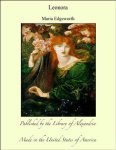
Maria Edgeworth, LeonoraIn Leonora, Edgeworth leaves aside her Anglo-Irish themes for an English-French one. She pits English common-sense, through Lady Leonora guided by her mother the Duchess, against French “sensibility”,  through Olivia, an English woman who behaves like a French “coquette” under the guidance of her friend Gabrielle. The novel anticipates Jane Austen’s Sense and sensibility (1811), but while Marianne’s “sensibility” can be seen as teenage silliness and idealism, Olivia’s is self-centred, lacking in morality – and, unlike Marianne, she’s unlikely to change. The book critiques this sort of over-dramatic, over-blown behaviour, and makes a case for steady love based on early passion developing into deep respect and friendship!

Leonora, it must be said, does not exhibit the subtlety nor the realism that makes Austen so special. The characters tend to the black-and-white, and the discussion of sense versus sensibility lacks the nuance that Austen brings to it. Austen’s characters are more “rounded”, with sensible Elinor also capable of feeling, and emotional Marianne not being completely devoid of sense. In Leonora, sense and sensibility are presented very much as dichotomies, though Leonora is shown to have strong feelings in addition to sense, which works, of course, to her advantage in the end. Despite this lack of subtlety, the book is worth reading, for several reasons.

To start with, it’s an epistolary novel, a form which, Wikipedia says, has been around since the 15th/16th centuries. I don’t always like these novels, mainly because the letter form can break the narrative flow. I did find it a little challenging at first to work out who was who – until sorting that out became part of the fun. Given there’s no one authorial voice, it also took me a little while to work out which character/s, if any, Edgeworth, was aligning with. Was she, an Irish-sympathiser by-and-large, supporting British “sense” or French “sensibility”? However, the form provided Edgeworth with a neat way of presenting multiple first person points of view. It gave a freshness to the narrative, and enabled her to easily present different perspectives and characters. (By their own mouths shall they be known!)

Of course, I enjoyed the sense versus sensibility theme, not only because of the Austen comparison, but also because Edgeworth aligns them with national characteristics. Leonora was published during the Napoleonic Wars when England (the United Kingdom) was fearful of French invasion. It’s not surprising then that anything “French” was viewed askance. Leonora’s mother writes to her that a

taste for the elegant profligacy of French gallantry was, I remember, introduced into this country before the destruction of the French monarchy. Since that time, some sentimental writers and pretended philosophers of our own and foreign countries have endeavoured to confound all our ideas of morality.

Sensibility, then, is aligned with France and lack of morality – and, of course, vice versa for sense and England.

There is also some commentary on fiction and the novel, and that always interests me. Austen is, of course, famous for it in Northanger Abbey. (Indeed, one of the novels she references in her defence of the novel is Edgeworth’s Belinda.) Here, for example, is Leonora’s response to her mother, who had Olivia tagged at the outset. Leonora’s mother criticises Gothic novels, which Olivia reads: “they must have scènes and a coup de théâtre; and ranting, and raving, and stabbing, and drowning, and poisoning; for with them there is no love without murder”. Sensible Leonora has a more generous take:

Many people read ordinary novels as others take snuff, merely from habit, from the want of petty excitation; and not, as you suppose, from the want of exorbitant or improper stimulus. Those who are unhappy have recourse to any trifling amusement that can change the course of their thoughts. I do not justify Olivia for having chosen such comforters as certain novels, but I pity her and impute this choice to want of fortitude, not to depravity of taste. Before she married, a strict injunction was laid upon her not to read any book that was called a novel: this raised in her mind a sort of perverse curiosity. By making any books or opinions contraband, the desire to read and circulate them is increased.

Haha, I love the comment on the effect of banning books! Anyhow, interestingly, Olivia’s mentor Gabrielle, who later in the novel urges more dastardly plotting, tells her that such novels do not provide good advice for life:

Permit me to tell you, that you have been a little spoiled by sentimental novels, which are good only to talk of when one must show sensibility, but destructive as rules of action.

(And she goes on to say that “Love has been with you the sole end of love; whereas it ought to be the beginning of power.”)

I’ve been pretty brief here – really?, you say! – because each of the points I’ve touched upon could make a post in themselves. Leonora is not a subtle book, but I enjoyed reading it, partly for its place in literary history and culture, partly for its commentaries, and partly because it has a liveliness that I found engaging despite myself.

* Bill (The Australian Legend) is making a study of Mothers of the novel, starting here.)

Maria Edgeworth
Leonora
Library of Alexandria, 2012 (Orig. pub. 1806)
174pp.
ASIN: B0073UNBJC (Kindle ed.)
Available online at Project Gutenberg

Annabel Smith, Whiskey and Charlie (#BookReview)

Annabel Smith, Whiskey and CharlieSome explanations first. Western Australian author Annabel Smith’s novel Whiskey & Charlie was first published in Australia back in 2012 as Whisky Charlie Foxtrot, which immediately brings to mind the two-way alphabet (or, as I knew it, the alphabet used by the police on The Bill for communication. The things you learn via TV!) However, as happens, the book was, excitingly and successfully, published in America in 2014, and its title was changed to the less evocative Whiskey & Charlie. What I read – heard, actually – was the audiobook that I won in a Readers’ Pack draw last year. Mr Gums and I listened to it on our recent road trip to Melbourne. It passed the time beautifully.

But, another thing, before I talk about that. I’m not a huge fan of audiobooks as I explained earlier in this blog. I really like to see the text; I don’t like to miss visual clues; and I rarely like readers acting out the voices. All these were challenges with Whiskey & Charlie, particularly the last one. The reader, Gildart Jackson, is English. He did the English accents well, but, oh dear, his Australian accent sounded disconcertingly American. I assume this audio, with its American title, was made for an American audience, but, regardless … I prefer reading!

So now the book itself which, really, is what this is all about isn’t it? It tells the story of two identical twins, Whiskey (born William) and Charlie. It is all told, however, through Charlie’s eyes, as the novel starts after Whiskey has had a freak accident and is lying in hospital in a coma. They are 32 years old, and the trouble is that they have been estranged for some time. Charlie has no idea what music, for example, Whiskey would want played at his funeral should he not awaken. He’s distressed. A procastinator who avoids confrontations, he’d always believed there’d be time to sort it all out. The novel progresses from this point, with the family taking turns waiting by Whiskey’s bedside, while Charlie remembers the past and how they’d got to the point they’re at. As he does so, he gradually comes to some realisations about himself and their relationship that enable him to – finally – mature, to see that it hadn’t all been as one-sided as he’d rather smugly assumed. This could be seen in fact as a coming-of-age novel. Perhaps all novels are, in a way; perhaps none of us stop coming of age until we, well, stop?

Anyhow, what makes this book particularly intriguing, besides the thoroughly engrossing story of an ordinary family with all its ups and downs – emigration from England to Australia, parental divorce, and so on – is its structure. And this is where the two-way alphabet comes in. We learn early on that when they were 9 years old, the then close twins been given a walkie-talkie set, and, to help with communication, they learnt this alphabet. William was disappointed that Charlie’s name was in the alphabet, while his was not. Charlie dubs him Whiskey, which becomes his name from then on. Smith structures the narrative around the alphabet, with each chapter titled according to the words – Alpha, Bravo, Charlie, Delta and so on right through to Zulu – and with each of these words linking to some part of its chapter’s content.

This – and the fact that the flashbacks aren’t completely chronological – gives the novel a somewhat episodic structure, but it doesn’t feel forced. Instead, the story is revealed in the backwards-forwards sort of way, for example, that we gradually get to know new friends while the friendship itself is moving forward. (A not uncommon structure. What makes this one a bit different is being organised by the alphabet.)

I’m not going to write my usual sort of review, mainly because having listened to it, I don’t have the same sort of notes, or the same easy access to check details or find quotes. So, I’ll just make a few comments. It’s quite a page-turner, with the main plot, as you’d expect, turning on whether Whiskey will come out of his coma, and if he does what state will he be in. The secondary plot relates to Charlie’s mental state, and his understanding of himself and his relationship with his brother (not to mention with his long-suffering, angelically patient partner, Juliet). He has always felt inferior – the one who came second, the one who didn’t get the girls or the fancy jobs – but he also felt in the right when it came to their estrangement. However, were things really how he saw them? This is something he has to work out for himself. For this reason, the third person limited voice is a good choice for the novel. It enables us to feel with Charlie, while also providing that little bit of distance which enables us to see that Charlie’s perspective may be just a little skewed.

One of the lovely things about Smith’s plotting is that there’s no melodrama, or over-blown emotionalism here. Sure, drama occurs, and there are some surprises, but it’s all within the realm of possibility. There’s some lovely humour too, particularly in the stories of the boys growing up. One particularly funny section has Charlie describing the “bases” in petting with a girl. There were times, though, when I felt Charlie was too angry, too irrational, particularly towards the end when it seemed he was on the road to growth, but that’s minor and didn’t affect his overall trajectory.

Binding all this together is the description of Whiskey’s medical condition. Smith obviously did quite a bit of research – or already knew – just how extended comas play out. While I knew some of it, there were details that I didn’t, and that I found fascinating. Smith also covers such issues as grief and end-of-life decisions.

Finally, I like the title. At first I wondered why Whiskey’s name was first when Charlie was telling the story, particularly given Charlie also comes first in the alphabet. But, of course, it’s polite to put the other person first, and it also reflects Charlie’s sense of who was first in their relationship.

Whiskey & Charlie (or Whisky Charlie Foxtrot) has been out for a few years now, but it’s still worth reading if you come across it in a library or bookshop. Or, have you read it already? If you have, let me know what you thought.

Lisa (ANZLitLovers) also liked and reviewed this – but way back when it came out!

AWW Challenge 2019 BadgeAnnabel Smith
Whiskey & Charlie (Audio)
(Read by Gildart Jackson)
Blackstone Audio, 2015 (Orig. pub. 2012)
10H30M on 9CDs (Unabridged)
ISBN: 9781504608268


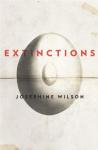
Josephine Wilson, Extinctions (Guest post by Amanda) (#BookReview)

I am very pleased to bring you another guest post by Amanda, for a book I’ve not managed to read yet, much as I’d like to: Josephine Wilson’s Miles Franklin Award winning novel, Extinctions.

Amanda’s review

Josephine Wilson. ExtinctionsI loved this book. I was really sorry when it ended. It’s the kind of novel you press into the hands of a good friend. If we lived in the same town I would drive over and lend it to you. [Thanks, Amanda, I wish you could!]

It comes with impressive credentials – Winner of the 2017 Miles Franklin Literary Award and the 2015 Dorothy Hewett Award for an Unpublished Manuscript. I would never judge a book based on its awards – and putting those aside, Wilson has created an intelligent sensitive story, combining the personal and political with poignant and endearing characters.

I’ll give you a brief synopsis of the plot and a mention of some unique touches Wilson employs. Some reviews out there give away too much, which ruins the book’s unfolding narrative.

As implied by the title – the book deals with extinctions of all sorts – racial, national, natural and personal. Our protagonist is retired engineering professor Fred Lothian, father to Caroline and Callum, reluctant resident of St Sylvan retirement village, neighbour to Jan and desperately missing his deceased wife Martha. The first couple of chapters are a bit slow moving as we are introduced to Fred and in retrospect to Martha. But it picks up the pace quickly and indeed the ending did seem a bit rushed. The story is told mainly through balancing the present with Fred’s memories.

Wilson uses photos and drawings throughout the book to emphasise a point, which works very well. The photos are unique enough to create interest and have sufficient detail for a reader to divine meaning in addition to the narrative. She also likes quoting large paragraphs from other literature, ranging from Shakespeare to Wind in the willows. That I liked less, they seemed overdone and distracting.  Some engineering terms are used as metaphors in numerous chapter titles.

Wilson is a master story-teller. She is excellent at creating suspense. She deftly manages humour and even in this poignant, serious tale it never seems out of place. You’ll find the most entertaining first date in literature in this book. Some writers let their characters meander aimlessly in the story, but Wilson was having none of that. She works her characters like draught horses. They are constantly flung at each other to challenge, chide, ameliorate and alleviate each other. She has a great ear for dialogue and parent-child dynamics. However, this is a political book and sometimes her characters’ conversations can seem didactic – with each taking an opposing view to prove that there is no absolute right or wrong in most matters. Also occasionally Wilson needs to stretch the plot twist to fit the story and even Fred admits that some events were highly coincidental.

Extinctions is full of beautiful sentences – there is a whole paragraph about the early years of educating a child. It’s too long to quote here, but you will recognise it when you get to it. With great writing I often wonder how much is autobiographical. I note in the afterword that both of Wilson’s parents and a mother–in-law passed away during the writing of the book. Also her father was an engineer.

What I liked most is Wilson’s message of hope – that before we all grow old and become extinct, it is never too late to make amends and make the world a better place for the ones we love.

Lisa (ANZLitLovers) reviewed it of course when it came out.

AWW Challenge 2019 BadgeJosephine Wilson
Extinctions
UWAP, 2016
ISBN: 97817425888988

Angela Meyer, A superior spectre (#BookReview)

Angela Meyer, A superior spectreA superior spectre may be Angela Meyer’s first novel, but her already significant writing credentials, including being the author of the short/flash style fiction collection Captives (my review), and the editor of the anthology The great unknown (my review), ensure this is a confident debut. And it needed to be, because Meyer took big risks in this book – structurally, genre-wise, and with her characters.

Let’s start, however, with the title. It hints at genre, doesn’t it? And yes, this book does owe much to genre, but more to genre-bending than to simple genre. It has two storylines – which is part of the risky structure – one set in mid 19th-century Scotland, drawing on historical fiction, and the other also set in Scotland, but in 2024, making it more speculative fiction. There is also a touch of the Gothic here, with visitations, hidden rooms and madhouses, with dark thoughts and hints of perversion. But, the novel is more complex, more sophisticated than that suggested by this idea of two interwoven storylines from the past and the future. The two epigraphs that introduce the novel clue us into this complexity. The first epigraph is from Emily Dickinson and suggests that the “superior spectre” is not “external”, or “material”, but something “interior”, or “more near”, while the second, from Kafka, hints at the dark side of love and human nature.

These ideas are explored through the two main characters: Leonora, a young farm girl from the Scottish Highlands, and Jeff, a dying man who has “escaped” Australia (something that is difficult to do in his chip-controlled futuristic world) to die alone in Scotland. Leonora is poor, but well-read and resourceful; she’s a hard-worker and loves her father; she’s sensual, sexual, but not afraid to express it; and she has a mind of her own, but is independent rather than wilful. She is, in other words, easy to like and wish well for. Jeff, on the other hand, is more ambiguous, and thus a challenge for us readers. Not only does he admit to some questionable sexual proclivities, but his behaviour in Scotland, particularly towards Leonora, becomes increasingly selfish. He knows it, but in the end puts his needs and desires ahead of hers. How, though, given their different eras?

Well, let’s now turn to the structure. Meyer sets us up at the beginning with a comfortable, predictable structure in which third-person Leonora’s story alternates with first-person Jeff’s. There’s nothing particularly remarkable in this, but it doesn’t last. In Part 2 (of this four-part novel), Leonora’s story also becomes first-person. It happens because, as the back cover blurb has told us, Jeff is using some experimental technology (a “tab”) that enables him to inhabit Leonora’s mind, and at the end of Part 1 he decides to change how he brings her to us. His aim, he says, is to enable us to “partly inhabit her as well” though in so doing, he warns us, our thoughts too, like Leonora’s, may be “infected” by him. I like books in which the structure itself underpins the meaning of the work. In this case, the structure unsettles us – as in, where are we now, who are we with – and mirrors the discord being experienced by Leonora, who wonders

about how powerful our thoughts can be. We might think we are sick when we truly have no ailment. But if we present the symptoms, and believe them, are we not sick anyway? . . . I wonder if a person could learn to be aware of when the mind is influencing a bodily reaction, and also when an instinct is overruling the mind.

So, in A superior spectre, we have a destabilising structure, a slippery character in Jeff who knows he doesn’t deserve our sympathy but wants to justify himself nonetheless, and a creative intertwining of genres – but to what purpose? There are several, I think, some personal, some sociopolitical. The latter is obvious. For Leonora there are the gender expectations which limit what a young girl of her class and background can do: she cannot study at university as some young women she meets are doing; she cannot marry the Laird for whom she falls; and she cannot protect herself from being deemed mad when she admits to strange visions of flying machines and horseless carriages. For Jeff, whether we like him or not, there is the lack of personal freedom that comes with living in a so-called technologically-advanced (dystopian) society. It’s not completely coincidental that Meyer wrote her final draft of this book on Jura, where George Orwell finished 1984.

But, it’s the personal – particularly the grappling with one’s inner demons or “spectres” – that gives the book its greatest power. Jeff’s selfishness, his poor self-control and yet desire to explain himself to us, recall characters like Nabokov’s Humbert Humbert. It’s hard to completely hate a character who is so open about his self-disgust even while he does nothing about it, and who engenders at least some sympathy from his Scottish landlady. She doesn’t approve, but she doesn’t reject either. In the end, Jeff is more pathetic than hateful, partly because his “spectres” are plain to see.

Leonora’s “spectres” come from her challenge in matching her sensual nature with the life she finds herself in, from her desire to find that freedom espoused by John Stuart Mill:

It is difficult for me to read about freedom and tyranny without relating these words to my own situation. Mill’s number one basic liberty is a freedom of thought and emotion. The individual being sovereign over his own body and mind. But what if your thoughts are being suppressed not just from the outside, but from some inner tyrant also?

She knows her aunt wants the best for her, a “good” marriage, but fears this would mean

suppressing the thoughts and emotions I have? It is the opposite of liberty; it is to put myself potentially in the hands of another tyrant. I feel I am pressing at walls all around.

Jeff’s “infection” of her (his tyranny), then, can have multiple readings: not only is it a manifestation of his selfish disregard of others, but it represents her own inner spectres, and symbolises the male control she rejects.

A suitable spectre is not an easy book to pin down, but this just makes it more enjoyable. And if that’s not a good enough reason for you, how about that it offers an intelligent interrogation of past and future, of inner conflicts and outer challenges, through two vividly drawn, not-easy-to-forget characters?

Lisa (ANZLitLovers) also liked this book.

AWW Challenge 2019 BadgeAngela Meyer
A superior spectre
Edgecliff: Ventura Press, 2018
270pp.
ISBN: 9781925183917

(Review copy courtesy Ventura Press)

Louise Mack, Girls together (#BookReview)

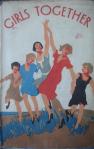
Louise Mack, Girls togetherWell, that was, surprisingly, genuinely enjoyable. Louise Mack’s Girls together is a sequel to her novel Teens (see Bill’s review), and features protagonist Lennie (Elinor) Leighton. It shouldn’t have been a surprise, given I know something about Mack, through my Monday Musings on her and my review of her debut novel The world is round, but it was, because …

The novel starts with this paragraph:

Square and solid as ever, stood the old brown school, with the fig-trees standing in its playground. The wooded staircase was as firm as even under the rush and onslaught of hurrying feet; the sturdy gate still bore with patience the cruel slammings of girls, big and little, rushing in late when the bell had finished ringing, or hastening homewards before half the school had left the classrooms.

It goes on to describe the chaos and disorganisation attending Lennie who is running late for her train home, and has, besides, lost her ticket. I thought that I was in for a pretty traditional school story. School stories were my favourite stories when I was a young reader, but now, of course, my interests are very different. I was prepared to persevere, however, because I was reading the book for Bill’s AWW Gen 2 Week and because this is a classic written in 1898 by a too-little known Australian woman writer. (You may wonder why I specifically chose it, but it was a serendipitous decision, being one of the books I found in my late aunt’s house when I was managing her estate. Bill’s week proved the perfect opportunity to read it.)

As it turned out, the book is not a traditional school story. School is part of it, but the focus is 16-year-old Lennie at a point of transition in her life – and her relationship with her 18-year-old friend Mabel, who returns in the opening chapters from Paris and is training to be an artist. Now, Lennie belongs to the tradition of some other famous sisters – like Judy in Ethel Turner’s Seven little Australians, Jo in Little women, and even, in a way, Elizabeth in Pride and prejudice. She’s impulsive more than sensible, but is loyal and generous of heart to those whom she loves. She lives with her parents (the Mother and the Doctor), her big brother Bert who is at University, and her little sisters, sensible Floss, gentle obedient Mary and the youngest, 11-year-old Brenda, who is observant, quick and a bit naughty. I’m sure you can recognise some of these “types”.

There is a marriage plot – but not for Lennie. This is more a coming-of-age book than a romance: it’s about Lennie’s transition from self-focused girlhood to adulthood and its associated more mature world-view. This, Mack handles nicely. Her characters may be recognisable types – but they are also individualised. Mack captures how girls feel, how they relate to each other authentically. Here is Lennie meeting her friend Mabel after two years’ separation:

You see they merely hovered on the outskirts of all they meant to say, touching things lightly, with the shyness of their reunion still lingering around lips and eyes. But as the twilight deepened, and darkness came softly into the bedroom, laughs grew more and more frequent with them.

But, there are many writers who capture relationships and communication well. What makes this book particularly interesting to read for us, now – and here I’m repeating the point made by Bill – is the social history, the picture Mack paints of 1890s Sydney, including a reference to the Banking Crisis of 1893.  The reference is brief, but it is used as a plot point in the trajectory of Lennie’s life.

More interesting, though, is the discussion of gender. Louise Mack was not, I understand, an activist in the Australian suffrage movement but she was part of the “women-oriented culture” which was becoming increasingly visible from the 1890s. Gender issues, sometimes directly, sometimes indirectly, underpin much of what happens in Girls together. Indirectly, it’s there, for example, in an assumption that “girls” can go to university. Whether they should or shouldn’t isn’t even discussed. It’s just assumed that they can. Direct references, though, abound. Mabel’s art teacher in Paris tells her:

‘When you go back to Australia, Mees, you just take care you do not marry, for eef you marry you will never paint better than you do now.’

And the girls themselves frequently discuss gender issues, sometimes with Lennie’s brother Bert. There’s a discussion about ambition where Bert suggests that Mabel and Lennie talk about it constantly while men, he says, never do. Does this reflect women’s increasing awareness that they can have goals beyond the domestic? There’s a reference to Lennie’s mother’s anxiety about the potential for girls failing in their push for “public” careers, and, being a woman of her times, she “would have kept them back from success rather than let them face the chance of failure.” All this is told naturally, not melodramatically, giving a realistic sense of a normal family facing changing times. We see parents having their thoughts and concerns, but supporting their children, rather than opposing them.

Nonetheless, this is a book of the 1890s. So, when Lennie is told by Mabel’s art teacher – a character respected in the novel – that “It’s better to be a good woman than a great one, little girl … unless you can be both”, I wondered what Mack really saw as options for her heroine.

All I can say is that the novel has an open ending. This may be because Mack planned to write more about the family – and she did write a third novel, Teens triumphant, in 1933 – but perhaps it also reflects an awareness that girls’ lives aren’t complete at the age of 17 or so, and that Lennie still has a chance at greatness!

Finally, there are lovely descriptions of Sydney, but again this is not overdone. In this week’s Monday Musings, I quoted a reviewer writing in 1917 that Capel Boake had “not made the mistake, very common with our writers, of painting in the ‘local colour’ so heavily that the human element in the picture is lost in what we may call a superficial provincialism of incident and characterisation.” Well, neither did Mack make this mistake, some twenty years earlier. The colour is there and is lovely, but is used sparingly to set the scene – and perhaps convey some attendant emotions:

The year was at September, when suddenly Summer came stepping down from her niche among the seasons, and ousted Spring before her time was well begun. The hot winds from the great inland plains of New South Wales blew down over the mountains to this city at the Harbour’s edge, and suddenly everyone woke from their winter cosiness, and furs and fires, and delightful nights, to find that the time for sleeping was over, and the restless nights and long, trying days of the Australian summer-time had come again, long before their time was due.

Girls together is an entertaining, refreshingly written story that clearly draws on Mack’s own experiences and concerns. It also reflects the social consciousness for which the period is well-known and, as an urban novel, it offers an antidote to the “bush realism” school which largely typifies Bill’s Gen 2 period. Well worth reading if you get the opportunity.

AWW Challenge 2019 BadgeLouise Mack
Girls together
London: The Pilgrim Press [n.d]
[first pub. 1898]
220pp.

Jamie Marina Lau, Pink Mountain on Locust Island (Guest post by Amanda) (#BookReview)

Late last year I hosted a review of Maria Tumarkin’s Axiomatic by Amanda who had responded to my call on the Australian Women Writers Challenge for reviews of it and Jamie Marina Lau’s Pink Mountain on Locust Island, which won the 2018 Melbourne Prize for Literature’s Readings Residency Award, and was shortlisted for the Readings Prize for New Australian Fiction.  Amanda offered to write reviews of both, and so, as with Axiomatic, I am hosting Amanda’s review, so that it can then be added to the AWW database. Thanks very much – again – Amanda!

Synopsis of Pink Mountain on Lotus Island

From publisher The Lifted Brow’s website:

“Monk lives in Chinatown with her washed-up painter father. When Santa Coy—possible boyfriend, potential accomplice—enters their lives, an intoxicating hunger consumes their home. So begins a heady descent into art, casino resorts, drugs, vacant swimming pools, religion, pixelated tutorial videos, and senseless violence.”

Amanda’s review

Jamie Marina Lau, Pink Mountain on Lotus IslandTwenty-year-old Lau’s debut novel is simultaneously innovative, surreal, disjointed and funny. At her best she writes like a stand-up routine; at her worst, though, she veers into the bizarre and nonsensical: “cardigan metropolis and a hushed voice millennia”; “he was in a creme brulee mood”. I don’t get it either. The chapters are divided into numerous short vignettes and sequences, some only a sentence long and follow a linear timeline. It’s a book for the social media and internet age – perhaps written for those just getting used to reading serious prose after the word limits on Twitter.

Its protagonist Monk is 15, and living with her Xanax-addicted former Art lecturer Dad after the departure of her Mum. It could be set in any urban metropolis with a bustling Chinatown. Along comes the love interest Santa Coy (also a developing artist) and then things get complicated.

There is a narrative though that can be followed, and it is cinematic so you can visually follow her discussions around what makes Art and what people will sacrifice for it, the difficulties of human relationships, and cross cultural complexities.

Food is another obsession – its preparation, consumption, description of, e.g. Yum Cha – and some bizarre discussions. What is the difference physically and philosophically between turnips and yams? Turnips are lively and yams are brooding. Obviously, if you didn’t know this you have to visit the same supermarkets as Monk does. [Haha, love this Amanda.]

Some plot twists are unbelievable and her non-traditional use of metaphors and language often fall flat. Lau (who also makes music under the pseudonym ZK King, hence the musical references in the novel) stated in an interview that she often has several browsers open while writing – reading articles, listening to music etc – and this multimedia multi-tasking is what comes across in her writing and original use of language.

Lau described Monk as the most sincere female character she had created – and that is the strength of this novel, Lau’s authentic portrayal of her teenage Monk as a composite of angst, joy, confusion, curiosity and strength. You just need to get through some bizarre distractions to discover this.

AWW Challenge 2019 BadgeJamie Marina Lau
Pink Mountain on Locust Island
Brow Books, 2018
244pp.
ISBN: 9780994606884