Steven Conte, The Tolstoy Estate (#BookReview)

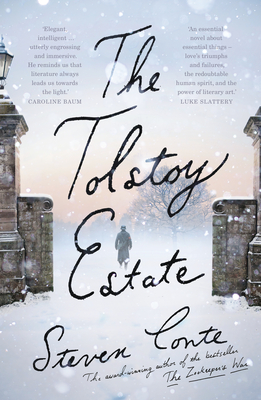
Steven Conte burst on the scene in 2008 when he won the inaugural Prime Minister’s Literary Award with his 2007-published debut novel, The zookeeper’s war. I always intended to read it but somehow it never happened. Jump to 2020, and Conte’s second novel, The Tolstoy Estate, was published. That’s a big gap, but what he’s produced is a well-researched, carefully-crafted, thoroughly absorbing novel.

What intrigues me more than this gap, however, is that both his novels are set during World War 2, and both deal with Germany in the war. The zookeeper’s war is about how the Berlin Zoo’s owner and his Australian wife managed to keep it going through the war. I wonder what it is about war and Germany that attracts Conte? Or, is it just coincidence?

So many paths to follow

The Tolstoy Estate’s plot is not complicated. Most of the story takes place over the six week period – November-December 1941 – during which a German army medical unit established and ran a hospital in Yasnaya Polyana, Tolstoy’s estate, near Tula, south of Moscow. Arriving at the estate, the Germans, including doctor Paul Bauer, meet the site’s curator, Katerina Trubetzkaya, who is, not surprisingly, hostile. A relationship develops between Paul and Katerina, against a backdrop of deteriorating conditions both on the war-front and in the unit, as its commanding officer Metz’s behaviour becomes increasingly erratic.

Sounds straightforward enough? Yes, but as one of my reading group members said, the novel has so many paths to follow, so many ideas to think about, that it’s impossible to follow them all. I agree, so, here, I will focus on just a couple of them.

I’ll start, however, with a few comments about the style and structure. The novel is primarily told in third person through the perspective of Paul, so our understanding of what happens, our assessment of the characters and their relationships, come through his thoughts and feelings. Fortunately, he is quickly established as a humane, considered person, so we can trust him, as much as we can trust anyone.

SORT OF SPOILER (though not the ending)

Half-way through the novel we jump to 1967, and a letter from Katerina to Paul. This introduces a second chronology which covers nearly a decade from then. Most of it, until the last chapter, is conveyed though a few letters between the two, interspersed with the main wartime narrative.

Why does Conte do this? This is the question I always ask when an author plays with their narrative structure like this. My usual thought is that the author wants to de-emphasise the plot to encourage us to think about something else, but then the question is, what? I suspect that this is partly the case here, and I’ll talk about the “what” soon. Regardless of the “what”, however, the impact of revealing that Katerina and Paul have survived the war, is to slow us down. It encourages us to focus on the development of their relationship against the backdrop of this cruel war, rather than rushing to turn the pages to see what happens next.

As for the paths, the “whats”, there are many. The Tolstoy Estate is about war of course. The history part of this novel is true, in that Tolstoy’s estate was indeed occupied by the Germans for a military hospital, so there is that. And, there’s the exploration, through our two protagonists, of two unappealing regimes, Nazism and Stalinism. I could write more about the nuances of that, but I won’t. Then, there’s its evocation of how humans behave during war, of how some will and some won’t behave with humanity across the enemy divide. We see this in many war novels, so I won’t dwell on that, either, except to say that I liked Conte’s appreciation of the continuum of humanity’s behaviour from the worst to the best. One of the questions on Steven Conte’s website concerns whether we can forgive what we come to understand. I’ll leave that one with you too!

Love is an excellent motivator (Katerina)

Now, though, I want to turn to two paths that particularly interested me – love and literature. Let’s do love first. The Tolstoy Estate is a love story. Both our protagonists have lost their spouses, meaning both are currently free but have experienced love before. However, they are also, of course, technically, enemies, belonging to opposing regimes, both of which can be brutal to those who cross the line. This tests their love.

Love is not one-dimensional, as Conte knows, so he sets their love against other sorts of love, including master-race proponent Metz’s dutiful but ultimately sexless marriage because of the “physiological costs imposed by sexual congress”; the Soviet Government’s conservative, sexist attitude to romantic relationships, evidenced in its reaction to Katerina’s novel; a German officer’s homosexuality that brings about his demise; the bawdy conversations and behaviour of many soldiers. There’s also Bauer’s brief but pointed reference to the soldiers he treats:

Loves or is loved“, he thought constantly as he amputated, concerned less about the truth of the incantation than its usefulness to keeping him alert.

War and love, by definition, make strange bed-fellows. War heightens emotions of all sorts, and forces those who love to think seriously about it, as Paul and Katerina do. Paul’s bawdy but romantic colleague Molineux says that Paul and Katerina’s bond “transcends race, it transcends law”, and yet both Paul and Katerina are aware that the practicalities of love can spoil even a strong bond – which provides the perfect link to the literature path …

Writers document, great men do (Metz)

Contemplating the value and practice of literature underpins the novel, with Tolstoy’s War and peace, of course, providing the pivot. It links to the love path, because Paul and Katerina frequently consider Tolstoy’s evocation of love in the novel. In a letter to Katerina, Paul writes that War and peace reminded him

that love doesn’t always conquer but that, arguably, it’s better that way – that thwarted love is stronger, more enduring than the domesticated kind.

But, beyond love in Tolstoy, Conte’s characters also think about the value of literature. Again, here is Paul in a letter to Katerina, telling her that War and peace had restored his faith in

doing good in the world; because if, as Tolstoy argued, we are all specks in a vast world-historical drama, including those who think they’re in charge, it follows that everyone’s actions are potentially significant, that the humblest person can influence events as much as any general, emperor of tsar.

This counteracts Metz’s argument to Katerina early in the novel that

with his rifle our humblest “Landser” shapes the world in a way your Tolstoy never did.

The old “pen is mightier than the sword” discussion I suppose, but oh so engagingly told!

There are also discussions about the craft of writing – some of which reflect wryly on Conte’s interest, such as Katerina’s research focus being narratology.

But I will end with Katerina’s concern about the fading of the novel in the later 20th century:

Everything fades, I suppose, certainly everything made by human hands, and yet I can’t help feeling bereft to witness this diminution of the novel, which for all its inadequacies has trained us to see the world from others’ points of view. To borrow a Stalinist idiom, the novel is a machine, a noisy, violent thing whose product, oddly enough, is often human understanding, perhaps even a kind of love.

Love … and the novel. A good place to end my post on this compelling and intelligent novel.

Lisa (ANZLitLovers) also loved this novel.

Steven Conte
The Tolstoy Estate
Sydney: Fourth Estate, 2020
410pp.
ISBN: 9781460758823

Malcolm Knox, Bluebird (#BookReview)

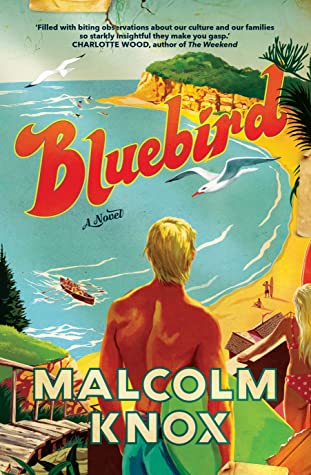
Malcolm Knox’s sixth novel, Bluebird, comes with some impressive endorsements. On the front cover is “Charlotte Wood, author of The weekend“, while the back features “Christos Tsiolkas, author of Damascus and The slap” and “Adam Gilchrist, former test cricketer and beach-goer”. Hang on, Adam Gilchrist? What the?

Some of you will know why, but I didn’t. However, I now know that as well as being a novelist, Knox is a respected journalist who has been a cricket correspondent, sport editor, and literary editor. Wikipedia reminded me that he was the literary editor who exposed “the fake Jordanian memoirist, Norma Khouri“. This won him and co-journalist, Carolyn Overington, a Walkley Award for Investigative Journalism.

The thing is, I knew Malcolm Knox’s name, but had read none of his novels or his many works of non-fiction. Consequently, I came to Bluebird cold. I have no idea whether it is typical of Knox’s writing, but, I did enjoy it.

Superficially, it looks like a satire on all those beach communities that pepper Australia’s coasts – the middle-aged men who prefer surfing to working, the country-club set, the councils which sell out to developers, small-town racism and gay-bashing, and so on. You can imagine it, I’m sure. Except that, in fact, it soon becomes clear that while a beach-town might be the setting, Bluebird’s satire is broader, reaching into wider aspects of contemporary Australian life – dysfunctional men and broken families, development, aged care, banking, local government, the list goes on. It’s more that given Australians’ love for the beach, such a town makes the perfect, relatable, setting for his tale.

However, satire can sometime be an intellectual exercise, engaging the mind more than the heart, but Knox achieves both, by creating flawed characters whom we recognise and can engage with, and by telling a story that is just that bit larger than life to make it exciting but not so much that it doesn’t feel real. At first, I was concerned that it was just a little bit too smart-alecky for me, that there were just a few too many biting lines, but I found myself drawn in because I cared about the seemingly hapless 50-year-old Gordon and (some of) his family and friends.

How did they get away with it?

The novel is told in four parts – First Part, Next Part, This Part and Last Part – with each introduced in an italicised section by “Bird’s eye”, a not quite disinterested truth-teller. The story concerns the recently unemployed, recently separated Gordon, and his attempts to keep Bluebird’s iconic house, The Lodge, intact. The Lodge, however, is more than a house; it’s a symbol of all that is both good and rotten in Bluebird, in Gordon’s family, in, I think we could say, Australia. It is a paradox. Bird’s eye, introducing First Part, says:

This house is not an answer but a question: absolute beachfront yet virtually inaccessible, sitting on premium real estate that is somehow not real estate at all, a historic abuse protected by custom.

And the question is, how did they get away with it, or, more pointedly, as Bird’s eye asks, what have they got away with, to, even more pointedly, will they keep getting away with it.

So, through Gordon, the novel explores how its characters (and, dare I say, Australians) have managed to maintain the good life. Gordon lives in his beloved Lodge, sharing the bunk room with his teenage son Ben, who has some sort of “Asperger-ish ADHD-sih, non-specific, nameless disorder-is Thing”, and his goddaughter Lou, who is, arguably, the most competent character in the novel. His soon-to-be ex-wife, Kelly, is also there, occupying the “queen room”. His many unemployed, or minimally employed, friends also hang around the Lodge – unless, that is, there is a surf. And, he has elderly parents, irascible father Ron, who is living, unwillingly, in aged care due to having terminal kidney failure, and mother Norma, “a model for pressing forward without an inward glance”. But, the centre of it all is Gordon, and he is floundering. He has no money, and is marooned by a secret concerning his brother’s death over 40 years ago. The problem is that he is likeable, “a good man” in fact, and people want to help him, even at risk to themselves.

And, of course, there are the bullies – including his soon-to-be ex-step-mother-in-law Leonie who pulls the family financial strings for her own purposes, Council heavy Frontal, and “big man” about town, Tony Eastaugh. None of these want to help Gordon save The Lodge, and thus Bluebird itself.

It’s a complicated story of financial skulduggery set against personal insecurities, jealousies, and just plain ineffectuality, but the novel holds together largely because of its language and humour, Knox’s ability to skewer Australian culture, and his insight into human nature. I loved for example his comment on Gordon and Kelly’s marriage:

Habit, over-familiarity, neglect and inaction killed more lives than cancer.

Change is what I’m ready for (Gordon)

Marriage, however, is not his main target. Rather, it’s Australian men and the way they are letting the side down. Bluebird’s men tend to be ambitious power-hungry bullies or ineffectual past-focused also-rans. There are few in the middle. Overall, it’s the women who are decisive, which is not to say that they are all “better” people. Knox’s attitude to most of his characters seems to be one of frustrated affection. These people, he seems to be saying, are hanging onto the past, but

The past was worn out, not as solid as it was made out to be. Past its best.

The ending, when it comes, is cataclysmic, but not hopeless. Knox wants us to believe that people – that Australia, which seems also to be wallowing in its past – can change. It’s not that the past is all bad, but it shouldn’t drive us.

Introducing the Last Part, Bird’s eye says

This is not the outsider’s story. This is the story of those who are in the middle yet on the margin, the hole in the doughnut, so close to the centre that they have fallen into the void.

The question is, can we get ourselves out? Bluebird is a warm and funny but also biting read. Recommended.

This review is featured by Twinkl in their blog about the latest must-read books. See more recommendations and get involved at Book Lovers’ Top Picks For Your 2021 TBR List.

Malcolm Knox
Bluebird
Crows Nest: Allen & Unwin, 2020
487pp.
ISBN: 9781760877422

(Review copy courtesy Allen & Unwin)

Delia Owens, Where the crawdads sing (#BookReview)

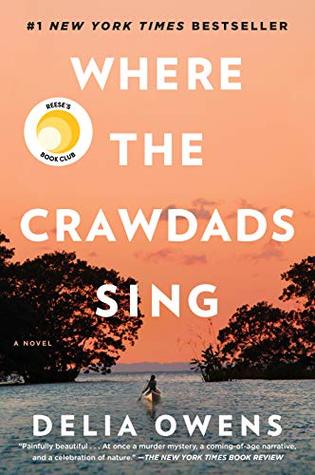
Delia Owens’ bestselling debut novel, Where the crawdads sing, is a problematical novel, as my reading group discovered – and yet, I couldn’t help being emotionally engaged. It reminded me a little of a childhood favourite, Gene Stratton Porter’s A girl of the Limberlost. My heart went out to Owen’s protagonist, Kya, the maligned, ignored, Marsh Girl, and I loved the writing about the North Carolina marshland. But, intellectually, I had to work to defend my enjoyment, which I’ll aim to share here.

“in the end, that is all you have, the connections”

I’ll start with the obvious, a summary of the plot. The main narrative runs from 1952 to 1970, and is told in two chronologies that eventually meet. The novel tells the story of Kya, who, in 1952, is six when her Mum and, soon after, her siblings leave home. Four years later, when she’s ten, her father also departs, leaving her alone, in their North Carolina marsh shack. She can’t read, has no money, and few skills. But, she’s an intelligent, resourceful little girl, and, with the help of a few kind people, she makes a life – albeit a lonely one – for herself. The novel commences, however, in 1969 with the discovery of the body of a young man, Chase Andrews, who is a local football hero. Was it an accident or was he murdered? The second chronology, then, is a crime story, following the investigation of this death through to the court case. You can probably guess where the two chronologies meet.

Owens manages this structure skilfully, drawing us into Kya’s life, and how and why she develops into the person she is in 1970, while, simultaneously, slowly building suspense by recounting the details of the investigation. The writing is lush and evocative, ensuring that we engage with Kya and her struggle to survive, her increasing loneliness and her desperation to connect with others. We see her turn to nature and wildlife to learn about life, as well as to provide herself with sustenance and give her a minimal income (by selling fish and mussels, for example).

This is nature writing at its best, with stunning descriptions of the marsh, and the birds, fish and insects that inhabit it, but it is also eco-fiction, with occasional allusions to development. Tate, a young man who befriends Kya (and provides her with a much-needed connection) tells her:

They think it’s wasteland that should be drained and developed. People don’t understand that most sea creatures—including the very ones they eat—need the marsh.”

The marsh is Kya’s family; it is what, in the absence of family, forms her:

She knew the years of isolation had altered her behavior until she was different from others, but it wasn’t her fault she’d been alone. Most of what she knew, she’d learned from the wild. Nature had nurtured, tutored, and protected her when no one else would. If consequences resulted from her behaving differently, then they too were functions of life’s fundamental core.

It is hard, as a reader, not to care about Kya. Will she find the connections she so badly wants – “Being completely alone was a feeling so vast it echoed” – and will they stick?

“it’s usually the trap that gets foxed”

However, it’s easy to pick holes in the book. Kya’s survival (given her youth) and her development into an educated young woman (given she only spent one day at school) can stretch credulity. Many of the characters feel stereotyped, from the good “colored” people, who put themselves out to help Kya, to the prejudiced townspeople, who reject and exclude her (as they do all marsh people). “Barkley Cove”, writes Owens, “served its religion hard-boiled and deep-fried”. And, if you don’t like your heartstrings being obviously pulled, you may not engage with Kya at all.

All this makes it problematical, because it’s one of those books that whether you love or hate depends largely on what sort of reader you are, what you like to read, and/or how you read this particular book. There are many ways to read Where the crawdads sing – a crime story, a romance, a coming-of-age story, historical fiction, a modern fairy-story or allegory, even, to name a few. Some of these ways demand more realism than others, and expose holes which are irrelevant to other ways. It is one of these other ways that appeals to me.

This way is to read it more like a fairy story or allegory, as a story about the triumph of the maligned, a comeuppance for the underdog. If you read it this way, the stereotyping of the minor characters, and the improbability of Kya’s survival and achievements, serve to emphasise the challenges faced by the underdog. It is hard to explain what I mean without giving away the ending, but I’ll try.

Throughout the novel, we are not only reminded of the prejudice and mistreatment of Kya (as representative of the marsh people) but are also aware of the ostracism of “colored people” as they were called then. Kya turns to nature to learn about life. Early in the novel, when the “colored” Jumpin’ warns her about Social Services looking for her, friend Tate tells her to “hide way out where the crawdads sing”:

Kya remembered Ma always encouraging her to explore the marsh: “Go as far as you can—way out yonder where the crawdads sing.”

“Just means far in the bush where critters are wild, still behaving like critters.”

One of Kya’s main challenges is to work out the differences between what she observes in nature and in human behaviour:

“In nature—out yonder where the crawdads sing—these ruthless-seeming behaviors actually increase the mother’s number of young over her lifetime, and thus her genes for abandoning offspring in times of stress are passed on to the next generation. And on and on. It happens in humans, too. Some behaviors that seem harsh to us now ensured the survival of early man in whatever swamp he was in at the time. Without them, we wouldn’t be here. We still store those instincts in our genes, and they express themselves when certain circumstances prevail. Some parts of us will always be what we were, what we had to be to survive—way back yonder.”

These two quotes – among others – hint at the novel’s underlying idea, which is that it’s not only “critters” who are “wild”, that human beings will be ruthless too. Exploring this ruthlessness in its natural and human manifestations, and how Kya navigates it, is a major theme of this book – and explains why Owens has written it the way she has. The resolution is deeply satisfying (albeit I didn’t love the device used to achieve it).

Where the crawdads sing is a thoughtful read for those who feel passionate about the maligned of this world. It is also a glorious lovesong to the marshland. I’m glad my reading group scheduled it.

Delia Owens
Where the crawdads sing
London: Corsair, 2018
379pp.
ISBN: 9781472154637 (Kindle ed.)

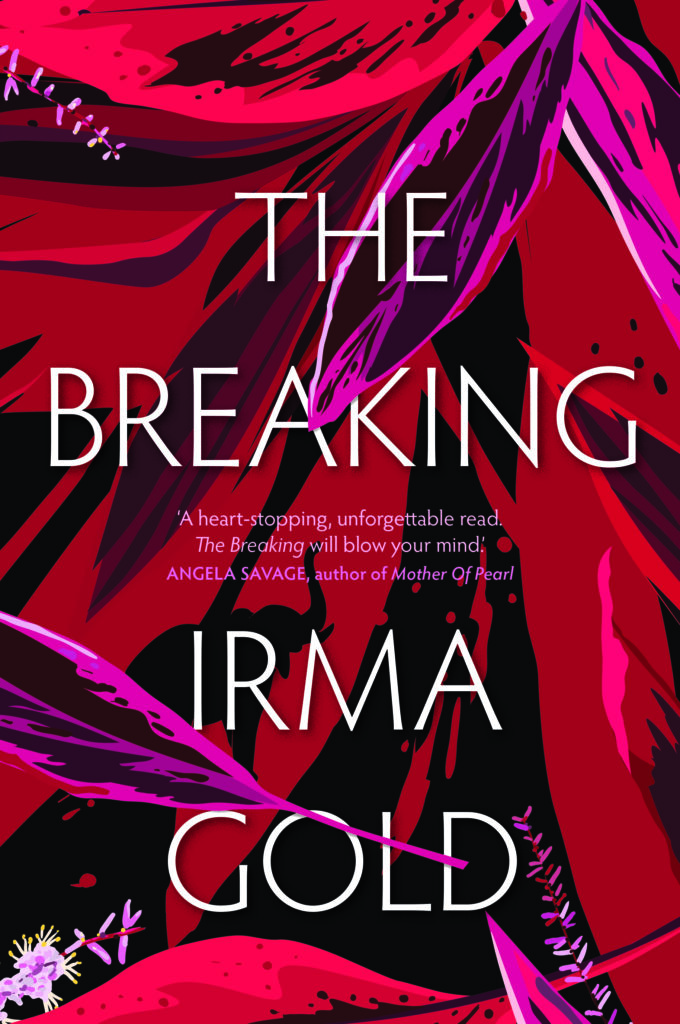
Irma Gold, The breaking (#BookReview)

Book cover

I have broken a golden rule! That is, I am reviewing Irma Gold’s debut novel, The breaking, out of the order in which I received it for review, which is something I (almost) never do! But, I am attending an author event on this book this weekend, and I really wanted to have read it before that conversation.

The breaking is an example of a growing “genre” of literature, eco-literature. This literature encompasses cli-fi, and focuses on human activities that endanger the environment in some way. It’s a broad church, covering climate, water and the land, deforestation, animal rights, and more. Books in this genre are often inspired by their writer’s passions. They tend to have a strong plot because the author wants to engage the reader in an issue: how better to do this than with an engaging plot. However, the plot is, largely, subservient to the issue, because at heart these are political novels, often in the “personal-is-the-political” sense.

So, some examples? Heather Rose’s Bruny (my review), which is deeply concerned about the future of Tasmania, Angela Savage’s crime novel The dying beach (my review), which explores the impact of shrimp-farming on the environment, and Karen Viggers’ novels, like The orchardist’s daughter (my review) which addresses deforestation, are three. These could be called “passion project” books. Critics often find this sort of writing difficult to asses. If it sells well, if it’s popular, is it good?

I’m going to sidestep the implication of that concern, and simply say that of course something popular can be good. If it’s well-plotted, well-written, has engaging characters – and deals intelligently with something relevant or important – then it’s good.

All of this is a very long introduction to Irma Gold’s book, but relevant, I hope. So, The breaking? The title doesn’t give away its passion, though if you look carefully at the gorgeous cover you might see it. It’s the plight or exploitation of elephants in Thailand. Gold, as she explains in the Afterword – I love an Afterword – has been to Thailand, and worked with elephant rescue projects, so she knows whereof she speaks. (I hope to have more to share after the weekend!)

It’s a grim situation, as I’m sure you know, and, like many grim situations in developing nations, it’s complicated by the fight for survival. For many Thais, elephants are their bread-and-butter, both as beasts of burden and, more, for their tourist potential. Gold addresses this dilemma in her novel without being overtly didactic, by having her characters see the situation with their own eyes, discussing it with each other, and weighing up the options.

“Be brave” (Deven)

The breaking is about two young Australian women, Hannah Bird, who has just arrived in Thailand as a tourist, unsettled and insecure because she’s lost her job, and Deven, who has been living there for some time and is involved in elephant rescue projects. They meet in a hostel lobby, as tourists do, and the experienced Deven invites Hannah to go to the night markets with her. From there, a friendship – and eventually something more – develops as the somewhat naive Hannah is drawn into the more experienced and confident Deven’s passions and views of the world. It’s not long before we discover the layers in the title as Hannah is introduced to the cruel practice of phajaan.

We follow their trajectory – told in Hannah’s first person voice – as they tread an activist’s path. It starts with involvement in organised, legal rescue projects that aren’t going to change the world quickly. However, as often happens to those who stay the course, they find themselves confronted with the ultimate activist’s dilemma of “how far will you go” for the cause you believe in? Always, it is Hannah following Deven, deeper and deeper into both political and personal engagement. Deven is driven to save those elephants, while Hannah, who believes in the cause, is more cautious, but, she’s falling for Deven, so, where Deven goes … the ending is powerful, confronting us head on with what can happen if you let passion rule your brain.

“We have to change the culture” (Deven)

Throughout all this Gold takes us on a journey through Thailand, showing it through the eyes of wide-eyed oblivious tourists, like Hannah, and those of the more experienced, aware Deven, who rejects the tourist path, the ladyboy shows, the elephant rides, and so on. Gold shares the food and culture of Thailand, using local words with little attempt to translate. She addresses this in her Afterword, explaining that although it is traditional to italicise foreign words, she “made a deliberate decision not to” do so here. Italics, she says, makes it easy for readers to “skim over foreign words” but she “wanted to encourage readers to engage with Thai language in the way that the Australian characters attempt to”. Gold’s solution is deft, because we readers puzzle and feel our way along with narrator Hannah, who is guided but not spoon-fed by Deven. Deven can be tender and caring, but she doesn’t mollycoddle!

However, if I have given you the impression that Hannah is all follower and Deven all leader, then you’ll have the wrong impression. Deven, alienated from her parents, has her own demons, and Hannah is not a push-over. As the novel progresses she takes in what Deven says but processes it in her own way. She sees “it’s not that simple; it’s not that black and white”, while for Deven it is simple. The denouement suggests where Gold lies, but the question remains for each reader, where do you lie? And, beyond that, whose rights should prevail?

Irma Gold’s The breaking reminded me somewhat of Madeleine Dickie’s Troppo (my review), which also explores the experience of young Australians caught up in unfamiliar lives and cultures, and who must forge their own way, morally and ethically, in places where the usual signposts are missing. Like Troppo, The breaking is an engaging debut novel that encourages us to consider some of the critical questions of our time.

Challenge logo

Irma Gold
The breaking
Rundle Mall, MidnightSun, 2021
271pp.
ISBN: 9781925227819

(Review copy courtesy MidnightSun Publishing via Brendan Fredericks)

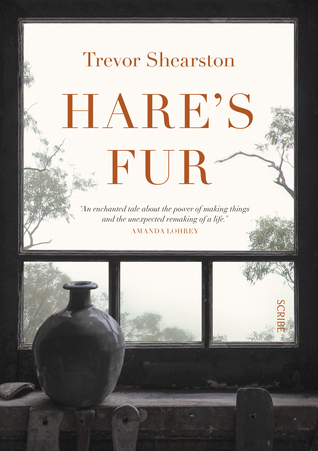
Trevor Shearston, Hare’s fur (#BookReview)

While I want to, I often don’t manage to follow up books recommended by Lisa but Trevor Shearston’s Hare’s fur particularly caught my attention. He was an Australian author I didn’t know; the novel is set in the Blue Mountains; and the protagonist is a potter, which sounded intriguing. So, I bought it – over a year ago, in fact, when I had a bookshop gift voucher to spend – but have only just managed to squeeze it into my schedule.

It’s a lovely read. However, I was surprised to discover that Shearston has published several novels, and a short story collection. His 2013 novel Game, about bushranger Ben Hall, was longlisted for the Miles Franklin Award, and shortlisted for the Christina Stead and Colin Roderick awards. Hare’s fur is quite a different book – at least, ostensibly, as I haven’t read Game to know its style or underlying concerns!

So, Hare’s fur. It tells the story of Russell Bass, a recently widowed 70-something potter living in the beautiful Blackheath area of the Blue Mountains. Unlike his potter son-in-law, Hugh, Russell sources the rock for his glazes in the canyons below his home. On one of his forays – to a remote creek that he thinks only he visits – he hears voices, and, on further investigation, discovers three children living in a cave, teen Jade who is looking after her younger sister Emma and little brother Todd. They are, he discovers, hiding from child welfare (DoCS) and the police. What would you do? The novel – novella, really, I’d say – tells the story of the relationship that develops between these four, and how Russell navigates this tricky human, legal and moral territory.

Now, before I go further, I was interested to see in Trevor Shearston’s GoodReads author page a book called The impact of society on the child: Proceedings of the inaugural annual meeting. I can’t find what his role was. It doesn’t seem he was editor or assistant editor, but, assuming he was involved, it suggests a formal interest in children’s well-being. Certainly, that is the essential theme of this novel. It’s about deciding what’s responsible and being generous, in the face of justifiable fear and lack of trust.

From Govett’s Leap, Blackheath

What’s lovely about this novel is that the adults involved – not just Russell, but, peripherally, his daughter and son-in-law who live 30-minutes walk away, and his neighbour – are open to solving this problem. They recognise the very real risks and challenges of Russell’s desire to protect the children, but they don’t resort to black-and-white solutions. I will leave what happens there, because one of the joys of the novel is following the various characters’ decisions and actions as they navigate this tricky situation.

Other joys of the novel include the writing, and particularly the descriptions of the landscape. Here is part of Russell’s walk down to his creek:

Tea-tree and lomandra had grown across the opening of the abandoned lookout. He pushed through the clumps of blades to the apron of lichened concrete and found the faint pad that only his feet maintained, skirting to the right of the platform through wind-sculpted casuarinas and hakea and more tea-tree to the cliff edge. There he stopped and removed his beanie and took the sun on his face and scalp. It was the last direct sunlight he would know until he stood again on this spot. …

He describes the birds and flowers, the colours and the misty coldness of the mountains, so beautifully.

The characterisation is good too. Told third person but from Russell’s perspective, we are privy to the feelings of this man who is still grieving his wife but is getting on with it. His daughter and son-in-law, and his neighbour, invite him over for dinner or drop meals on his doorstep, but he’s not helpless. He’s sad and a bit lonely, but he has his work. His relationship with the children is gentle, thoughtful and respectful. His response to Jade is wise,

She lacks education, he told himself, not intelligence. Don’t talk down to her.

Then there’s the title – hare’s fur. Hands up, if you know what it means? I didn’t, but it’s a special kind of brown glaze. Jade asks him how he turns the rocks into glaze. He tells her

… when it’s heated to a high enough temperature it’ll melt again. And, having lots of iron in it, that gives a black glaze. If I’m lucky, with streaks of dark blue, or red, or sometimes little brown flecks that look like animal fur.

One of Russell’s most treasured possessions is a valuable, 900-year-old hare’s fur tea bowl bequeathed him by a collector. Why the novel is titled for this is not obvious, but presumably part of it relates to the fact that this glaze is precious and rare, and needs to be nurtured like the children he has found. There’s a point where he shows Jade this bowl and lets her hold it. He tells her she can go look at it in his room any time, but asks her not to pick it up. Trusting her like this, with an object precious to him, is significant – but not laboured in the novel.

Hare’s fur is a positive book about the importance of trust and respect, and of being open to others. It’s also about how lives can be remade. Russell is as lucky as the children that they found each other.

Trevor Shearston
Hare’s fur
Melbourne: Scribe, 2019
194pp.
ISBN: 9781925713473

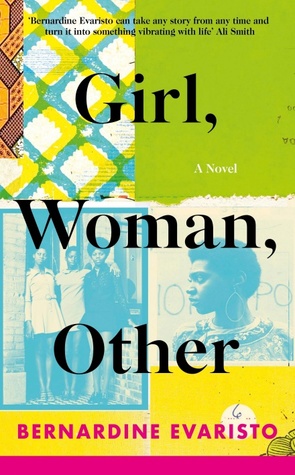
Bernadine Evaristo, Girl, woman, other (#BookReview)

If ever there was a “zeitgeist” book, Bernadine Evaristo’s 2019 Booker Prize winning novel, Girl, woman, other is it. It might be an English-set novel about black British women, “the embodiment of Otherness”, but its concerns, ranging from ingrained inequality, racism and sexism to newer issues such as globalisation, are contemporary – and relevant far beyond its setting.

Take, for example, sexual violence. One young woman, after being raped, is not sure exactly what happened:

    wondering if he’d done anything wrong or was it her fault
    she should have stayed and talked to him about it
    he might have said he hadn’t heard her saying no

(Chapter 2: LaTisha)

This could have been set in Australia, given discussions happening here right now. It is truly troubling how many young women apparently feel uncertain about what they’ve experienced, and turn it back on themselves. But now, having leapt in to make my “zeitgeist” point, I’ll start again, properly!

Girl, woman, other is an astonishing book, as most of my reading group agreed. It’s fresh and exuberant, but oh so biting too. As much poetry as prose, it has minimal punctuation and yet it just flows. It’s a risky book – what great art isn’t? – because, in addition to its idiosyncratic style, it comprises multiple points-of-view that move back-and-forth in time. There are four main chapters, each divided into three parts with each part in the voice of a different character. This makes 12 voices in all! The voices within each chapter are closely related in some way – mothers, daughters, friends – but the links between the four chapters are more subtle. This demands much of the reader.

Fortunately, the voices are captivating. Spanning over a century, they range from the ultra-confident 19-year-old Yazz, daughter of a lesbian mother, to 93-year-old Hattie, a strong-minded farmer and great-grandmother. All are women, and all have some genetic links with African or Caribbean cultures, some from a few generations back, others being themselves migrants. Through them, Evaristo interrogates a diversity of experiences and responses to colour, in particular, in contemporary England. Hattie’s mother, for example, had an Abyssinian father, and she herself had married an African-American GI. However, with the colour fading amongst her descendants, the family is less than happy when it is reintroduced by Julie who “saw not the darkness of his skin but the lightness of his spirit”. Hattie reflects

    none of them identifies as black and she suspects they pass as white, which would sadden Slim if he was still around 
    she doesn’t mind, whatever works for them and if they can get away with it, good luck to them, why wear the burden of colour to hold you back?
    the only thing she objects to is when they objected to Chimango when he arrived on the scene, a fellow nurse at the hospital where Julie worked, from Malawi
    Hattie was sickened by their behaviour, they should’ve been more enlightened 
    but the family was becoming whiter with every generation 
    and they didn’t want any backsliding

(Chapter 4: Hattie)

You can see how well the language flows, and how accessible it is. It’s experimental but unforced. You can also see the author’s approach to her subject matter, which is to show, through her characters, different behaviours, values and attitudes. With 12 characters telling of their interactions with even more people, the breadth of humanity Evaristo encompasses is breathtaking – and it is all done without judgement. Some characters might, and do, judge each other, but Evaristo doesn’t. She lets them speak for themselves, which requires us to read attentively.

So, when Dominique’s female lover increasingly restricts her life, we see abusive control long before she does. And, when 93-year-old Hattie’s mother, Grace, experiences postpartum depression in the early 20th century, it is not named. Who talked about that then? But we recognise it immediately.

Issues come and go in this novel, whether they are up-to-the-minute topics, such as Brexit or transgender rights, or ongoing issues in women’s lives such as violence or ageing. Underpinning it all, however, is race and inequality. Being “othered” is common to Evaristo’s characters, and they all deal with it differently, but we see very clearly its debilitating, devastating impact.

    oh to be one of the privileged of this world who take it for granted that it’s their right to surf the globe unhindered, unsuspected, respected

(Chapter 2: Carole)

By now you might be thinking a few things – that the novel is heavy-going, perhaps, or that it’s chaotic. But nothing doing. For all its seriousness – and there are definitely grim moments – the novel has a light touch, frequently bitingly satiric, sometimes simply funny, always human. Nineteen-year-old Yazz, for example, is a hoot with her teenage know-it-all confidence. Many recognise their failings, as they grow older, such as Amma appreciating her father too late or Carole realising her supportive teacher had feelings. Transgender Morgan, the epitome of the modern activist, speaks many truths:

    Megan was part Ethiopian, part African-American, part Malawian, and part English
    which felt weird when you broke it down like that because essentially she was just a complete human being

Chapter 4: Megan/Morgan

And, although the novel may sound chaotic, it does have an overarching structure. It starts hours before Amma’s play – the one she hopes will finally make her name – is to premiere at the National Theatre, and it ends with the After Party and an Epilogue, which, combined, bring most of the characters together. The ending, in fact, is clever. The After Party is political, drawing together the threads and reminding us that there’s a long way to go before black people in white societies are not defined by their colour. The Epilogue, on the other hand, is personal, showing us that there’s always human connection and that that, really, is the stuff of life – if only we could all see it.

Girl, woman, other is such a read. Uncompromising in its politics, but also warm and cheeky, it offers heart and intelligence in equal measure.

Bernadine Evaristo
Girl, woman, other
Hamish Hamilton, 2019
453pp.
ISBN: 9780241985007 (ebook)

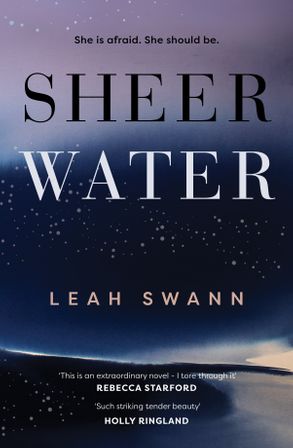
Leah Swann, Sheerwater (#BookReview)

Book cover

I’ve been wanting to read Leah Swann’s Sheerwater, having read and enjoyed, a few years ago, her short story collection, Bearings (my review). However, I didn’t get around to buying a copy, so was pleased to see it available as an audio book when I was looking for listening matter for our recent Melbourne trip. I thought we’d finish it on the trip but, in the end, the sightseeing was so interesting that we listened less than we thought we would. We’ve finished it now!

But, how to write about a crime book in which the main mystery – the disappearance of two boys – is resolved for us early on. At least, resolved in the sense that we discover what has happened to them and who was involved. As it turns out, though – and we learn this quickly – there’s another story to tell, and it’s a powerful, terrifying and unfortunately only too relevant one, a story of domestic violence, of power and control that isolates those who are vulnerable.

Interestingly, the novel’s opening reminded me strongly of the unforgettable opening to Ian McEwan’s Enduring love, which, as it happens, is also about dysfunctional love, albeit a different sort. There is also an ironic allusion to Australian literature’s “lost child” motif, when Ava thinks “this was a Continent where you could still get lost”, because these children aren’t “lost” – per se!

Anyhow, the story takes place over three days, and is told in alternating 3rd person voices, primarily those of the mother Ava, father Laurence, and 9-year-old Max who is the older of the two sons. Swann does an impressive job of getting into the heads of these disparate characters. Each one feels psychologically real, and their stories are compelling – well, most of their stories. Laurence is way too chilling to be compelling, but he is scarily real.

Now, I’m not going to write my usual sort of review, because listening to a novel (particularly while driving) doesn’t provide the same opportunity for reflection (and note-taking) that reading does, and certainly not for recording quotes, though I did jot down a few when I wasn’t the driver. The novel falls into the literary crime category, I’d say, for several reasons: it’s not a traditional crime novel; it’s told from multiple points of view; and the language is highly descriptive, if not poetic.

The title Sheerwater, for example, has multiple meanings. There’s the literal one, it being the name of the town that Ava is escaping to, and a literal and metaphorical one in that shearwaters (or, mutton birds), at the time the book is set, are doing their big migration south. They start the novel and each of the three days (if I remember correctly). There’s a sense that their impressive endurance mirrors that of women like Ava, and their arduous journey that of the boys. If we push it, there could also be a play on the words “sheer water” given the multiple meanings of “sheer” (pure, perfect, precipitous) and the role of water and the sea in the novel.

“We become evil when we hide the truth from ourselves” (Mother)

Swann creates a melancholic tone early on with phrases like “no pity under its wings”, and “sea of shipwrecks and stolen lives”. The no-nonsense but ultimately supportive policewoman Ballard is described by Ava as having a face like the “impermeable slap of seawashed stone”. It’s not all completely grim though. There is a lot of love, and Ava’s comment on one person’s kindness being enough to sustain a whole childhood is beautiful albeit, in a sense, prophetic.

So, was this book good to listen to? Yes, and no. Katherine Tonkin reads it well, including bursting into little verses of song when required. I didn’t find her voice intrusive, which can be a problem with audiobooks. However, for me, such highly descriptive books are better read than listened to. Somehow, when listening, there’s a greater sense of wanting to get on with the story. The descriptions and internal ruminations got in the way of that, whereas reading it would have allowed me to better absorb the language and descriptions, to feel and consider them, so I’m sorry about that.

Still, the narrative is strong, and it grabbed our attention, forcing us to think hard about each character, their truthfulness, their motivations, and the soundness of their actions. Who would you believe, and what would you do (if you were any of the characters involved), are the questions you confront as you read. The ending is also strong, emotional – and, dare I say it, appropriate.

In Sheerwater, Swann uses fiction to put flesh on the media stories we hear about domestic violence, encouraging us to see behind the stories to feel the confusion, roller-coaster emotions, helplessness and terror that those involved experience. Sheerwater is a book that says something.

Read for Reading Matters Southern Cross Crime Month

Challenge logo

Leah Swann
Sheerwater
(Read by Katherine Tonkin)
Bolinda/HarperCollins Audio, 2020
8hrs 44min (Unabridged)
ISBN: 9781460782354

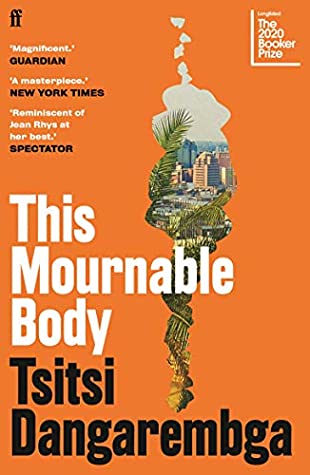
Tsitsi Dangarembga, This mournable body (#BookReview)

Zimbabwean author Tsitsi Dangarembga’s This mournable body was my reading group’s February book. Shortlisted for the Booker Prize, it is Dangarembga’s third novel, and is a sequel to Nervous conditions (1988) and The book of not (2006), neither of which I’ve read. These novels are written in English, the language of Dangarembga’s schooling, though she also speaks Shona.

It is a remarkable book, for its subject matter, vivid writing and the complexity of its protagonist, Tambu (Tambudzai). Wikipedia’s article on Nervous conditions describes Tambu’s character, saying “her desire for an education and to improve herself seem strong enough to overcome just about anything. She is very hard on herself, and always strives to do her best and make the correct decisions”. This perfectly describes the character I met in This mournable body, except that by now Tambu is around 40 years old and disappointed that life has not worked out as she had hoped. Indeed, she is out of work and living in a boarding house, eking out her savings from her previous copy-writing job in order to survive. A sense of failure and an air of desperation surrounds her.

Interestingly, Dangarembga chose a second person voice to tell Tambu’s story. There are various reasons for choosing this voice. Madeleine Dickie chose it for her novel Red can origami (my review) to involve if not implicate the reader in the world she was describing. I don’t know why Dangarembga chose it, but my guess is to convey Tambu’s apparent dissociation from her self. Second person avoids both the objective insight that an omniscient third person voice can provide and the confessional immersion in a life that first person offers. Tambu is struggling; she is caught between her Western-education with its Western-style aspirations and her Zimbabwean family and culture. We see her pain, but second person keeps her and us a little remote from it, as if she and we are watching it, not fully comprehending what is happening.

The novel is set in troubled late 1990s Harare, on the cusp of the millennium. It has a three-part structure – Ebbing, Suspended, and Arriving – which chronicles the trajectory of this period in Tambu’s life. In Ebbing, we see Tambu’s hopes for a successful, secure life, ebb:

Fear, your recurrent dread that you have not made enough progress toward security and a decent living, prickles like pins and needles at the mention of “village.” You have dodged this fear for too long—all your conscious life.

We also learn some of the reasons for the state she’s in, despite having been plucked from her village by her uncle and given a good “white” education. These reasons include the fact that although having gained Independence, Zimbabwe remains a racist place where black Zimbabweans still suffer under the colonialism they “thought” they’d thrown off. Tambu had had a good job as a copywriter in an advertising agency:

you have no one but yourself to blame for leaving your copywriting position. You should have endured the white men who put their names to your taglines and rhyming couplets. You spend much time regretting digging your own grave over a matter of mere principle.

Late in Ebbing, Tambu manages to obtain a decent job as a teacher, but it doesn’t last long, largely because her insecurity – her jealousies and fears – result in her self-destructing.

Suspended starts with her having been suspended from this job and admitted to a psychiatric hospital where her life is effectively “suspended” as she struggles to regain her mental health and equanimity. This she does, with the help of her family, including cousin Nyasha who takes her in. Incomprehensibly to Western-focused Tambu, Nyasha had returned, with her German husband and two children, from an apparently successful life in Europe, to work for the community, and specifically to improve things for Zimbabwean youth.

In the final part, Arriving, Tambu finds herself working for Tracey, her white Zimbabwean nemesis who had been a schoolmate at the prestigious Young Ladies’ College of the Sacred Heart and then her boss at the copywriting agency. Tracey is setting up an eco-tourism business, Green Jacaranda, and sees potential in Tambu – and indeed, Tambu seems to start to find herself, both personally and professionally, but I will leave the plot here …

This mournable body, however, is more than just a story about Tambu. Dangarembga weaves Zimbabwean social and political history into her narrative. While Tambu hadn’t been involved in pre- and post-Independence violence, many in her family had. The impact of war – particularly on women – provides one of the running commentaries throughout the novel. One refrain concerns her sister Netsai’s loss of a leg, which works as a visible reminder of personal and national losses:

Sometimes I ask if people forgot that many people went to war. Because if they have not forgotten, these people in this country, what is going on with them? Why are they so foolish? Do they think we went for this? … This is not what we went for and stayed for without food and blankets, even clothes, without our parents or relatives. Some of us without legs. Yet now we are helpless and there is nothing we can do to remove the things we see that we didn’t go to fight for.

Independence, in other words, is not working out the way they expected. The interplay of race, gender and colonialism continues to impede the country’s growth. Through her characters, Dangarembga powerfully conveys that old mantra “the personal is the political” – even though Tambu, ironically, tries to avoid talking politics with Tracey. “I don’t believe in politics”, she naively tells Tracey.

This mournable body is a serious and often heartbreaking novel, but there is also humour, much of it in the form of irony and satire. Here’s Tracey on her new business, echoing, for different reasons, Tambu’s dislike of “village”:

Everything’s Green Jacaranda eco! And you can’t say village. … That kind of promise doesn’t work these days either. It’s got to sound like fun, not under-development, soil erosion and microfinance.”

Tracey is either oblivious to – or chooses to ignore – the truths of Zimbabwean culture, preferring to exoticise a generalised notion of “Africa” for her business. In one excruciating scene she asks Tambu to organise village women to dance bare-breasted for their tourists.

At the other end of the spectrum is Tambu’s landlady’s now late husband, a black Zimbabwean who had profited from Independence. He had experienced an horrific accident, but

His biggest blow was what happened to his BMW and his temporary relegation to a lowly Datsun Sunny. People admired the stoicism with which Manyanga put up with this.

Dangarembga’s Zimbabwe is a complex society that has been riven by internal and external conflicts over decades, conflicts that are, in part, personified in Tambu’s difficulty in separating out her own goals from the “white” ones she had been educated into. While Dangarembga provides no easy answers, she suggests there are paths of hope, paths that rest with individual people who have a firm grip on what they want for themselves and for their country. This mournable body is an excruciating read at times, but the insights and perspectives it offers, particularly to Westerners whose assumptions it questions, are worth the pain and challenge.

Lisa (ANZLitLovers) was also impressed by this book.

Tsitsi Dangarembga
This mournable body
London: Faber & Faber, 2020 (orig. ed. 2018)
288pp.
ISBN: 9780571355532 (Kindle ed.)

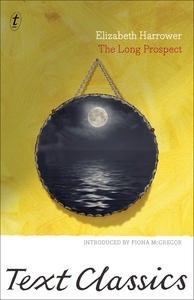
Elizabeth Harrower, The long prospect (#BookReview)

Oppression and tyranny, power and manipulation in human relationships are the stuff of Elizabeth Harrower’s writing, at least in my experience of it, and so I found it again in her second novel The long prospect. Unlike The watch tower (my review), however, which explores the more traditional domination of women by a man, The long prospect’s tyrant is narcissistic grandma Lilian who makes pre-pubescent granddaughter Emily’s life a misery. Why is a novel about a cruel, manipulative person wielding power over someone whom they should love so enjoyable? Let me try to explain …

The long prospect, which was first published in 1958, is set in postwar Ballowra, a fictionalised industrial town based on Newcastle, just a couple of hours’ drive north of Sydney. The major part of it takes place in the home of forty-seven-year-old Lilian who wields sadistic power over all who come within her purview, including but not limited to the aforesaid granddaughter Emily. The novel starts, in fact, with Lilian visiting her ex-tenant and apparent friend, thirty-something Thea, in her new apartment in another part of Ballowra. Lilian walks into the apartment, without being invited, “her eyes on swivels”, and very quickly we realise that this friendship is one in which Lilian has assumed power but is now feeling put out. Words like “disapproval”, “frowning” and “affronted” leave us in no doubt that Lilian’s visit is not the sort of generous one you’d expect from someone visiting their friend in their new home.

This controlling, self-centred, unaffectionate behaviour of Lilian’s, as I’ve said, is not limited to Thea and Emily but extends to all her relationships, including to her daughter Paula, and to the various men who populate the novel, such as the hapless “boy-friend” Rosen and the tender, thoughtful but powerless boarder Max.

At the heart of The long prospect is Emily’s desperate search for affection and attention, which she finally finds in this thirty-something Max, who had been introduced earlier, by name only, as a past lover of Thea. Max warms to the intelligent – but clearly neglected – young girl, and starts spending time with her, mentoring her intellectual and emotional development. Unfortunately, this doesn’t go unnoticed by Lilian’s self-centred and jealous entourage, and eventually insinuations are made that bring about the novel’s denouement. Before that, though, Emily’s blossoming enthusiasm for life and learning is a delight to see.

Harrower constructs her novel and builds up the tone and tension beautifully. She introduces Lilian’s character via her opening visit to Thea. She sets up Emily’s need for affection and her subsequent bond with Max through her previous attachment to Thea and her desperate crushes on teachers. Harrower’s word use is precise, from the recurring appearance of “grey”, describing people and place, to the plain spare language that pares relationships and actions down to their essence. Here’s the desperate Rosen, trailing after Lilian into the kitchen, still hoping she will keep him:

There, catching her, he chances a reproachful expression, seeing that, anyway, her grey eyes were no longer hard, but mild and blank. She had quite abandoned her fiery mood. He was reassured, and smiled at her sheepishly. Her new look must mean apology. In fact, Lilian thought about salmon sandwiches. She filled the kettle.

Catastrophic emptiness

But, now, here’s the thing folks. I finished this book, and half-wrote this post, just before my Dad died three weeks ago. I am having trouble remembering all the thoughts I had while reading it, thoughts that particularly related to Bill’s AWW Gen 3 Realism vs Modernism discussion we were having – but I’ll try. Harrower falls primarily into the Modernist tradition. She reflects the ills of the time through individual psyches, rather than exploring causes and social impacts as we find in Realist books like Mena Calthorpe’s The dyehouse (1961) (my review).

Both Emily and Max feel the psychological impacts of their environments. Early on Emily, desperate to belong, finds herself an outsider yet again:

There was a chill lack of desirability about the room she had left, and about those she might enter – a bleak and rigid lack of warmth that penetrated the future as well as the present and the past.

Max recognises that he had responded to “the catastrophic emptiness of the past few years” by settling for:

Comfortable resignation. He looked at the idea of it. It had not always been that, but the change had been slow and subtle, worked in him secretly. Now the metamorphosis was complete, surprising, disagreeable. (p. 150)

Disagreeable, particularly now that a crisis involving Emily, whom he had wanted to nurture and protect, had come:

Max fought down a sense of alienation … (p. 150)

And yet, in The long prospect there is also a subtle backdrop of the industrialisation that is one of the drivers behind Modernism’s theme of alienation and the individual. Emily’s father Harry Lawrence, on his way for a rare visit with her, considers his old home town:

After years in the country, this subjection to industry, the smoky sky, the matured deterioration immanent at the birth of such towns as Ballowra left him oppressed and indignant. He was unwilling that it should be so bad.

The overriding sense in the book – from all the characters – those we like, and those we don’t, is one of disappointed lives. Max is one of those we like, for his warmth and his capacity for mature reflection:

No external excuse, not lack of this or that fine feeling could be counted as justification. Nothing could undo the harm these casual people had done. Yet, Max argued, they were themselves and lived as they could, and had not been wisely treated either, very likely.

I like the “very likely” qualification! I also like this fundamentally non-judgemental attitude, that doesn’t then follow through to excusing poor behaviour. Max goes on: “it was too easy to exempt from responsibility those who felt no responsibility for their actions. Too easy, reductive, wrong.” In other words, understand but don’t excuse!

The long prospect is thoroughly engaging, despite its overall depressing subject matter. The perfection of Harrower’s insight into human psychology combined with the delicious precision of her writing make it, yes, a joy to read, even though Emily’s plight is heartrending. It’s no wonder, really, that Patrick White was disappointed when Harrower stopped writing. He knew a good writer when he saw one.

Read for Bill’s (The Australian Legend) AWW Gen 3 Week; also reviewed by Kim (Reading Matters).

Challenge logo

Elizabeth Harrower
The long prospect
Melbourne: Text Classics, 2012 (Orig. ed. 1958)
277pp.
ISBN: 9781922079480

Angela Savage, Mother of Pearl (#BookReview)

Book cover

Having commented in my Reading Highlights post about how little self-directed reading I did last year, I decided to start the year with just that, before returning to the Review TBR pile. What to choose? Many books jostled for attention, but in the end I chose Angela Savage’s novel Mother of Pearl because I felt it would be a warm-hearted but meaty read, just right for this time of year. I was right.

Let’s start with the meaty first. The subject matter is commercial surrogacy, in Thailand specifically. This surrogacy involving “farang” couples was banned in Thailand during the writing of this book, but that doesn’t invalidate it. Many novels have been written about behaviours, cultures, practices that have changed or disappeared – and, anyhow, commercial surrogacy still exists in various forms in different countries around the world. So, on many fronts, both contemporary and historical, Mother of Pearl has much to offer.

And what it offers is a sensitive portrayal of a very complex issue. On the surface, the novel is about a childless Australian couple paying a poor Thai woman to carry “their” baby (created using the husband’s sperm and a donor egg) but, as Savage wrote on novelist Amanda Curtin’s blog*, what specifically interested her were “the political, ethical, cultural and emotional aspects of overseas surrogacy”. This, of course, makes the book sound very much like an “issues” novel, and it is. However, Savage, who is an experienced and award-winning crime writer – I have reviewed her novel, The dying beach – has written a novel that shows not tells, that is in no way didactic, that explores the “issue” from multiple angles without moralising.

How does she do this? Partly by creating well-rounded and engaging characters, which include Meg (the would-be mother), her sister Anna (an experienced Southeast Asian aid worker), and surrogate mother Mod. There are others, including Meg’s husband Nate. The novel starts in 1998 with Mod who is, then, a 16-year-old girl. We learn of the role of temple culture in her life, and we hear her “fortune” told which says that her “good luck will be earned, not won”. The novel then jumps ten years and we are introduced to forty-year-old Anna, recently returned from Cambodia, and her 14-months-younger sister Meg who has, ostensibly, given up the idea of having a child after years of trying, including gruelling IVF rounds. However, at Anna’s place, she meets a gay couple with a child born to a Thai surrogate mother, and the seed is sown.

Who are the winners, who are the losers (Anna, paraphrased)

From here, the novel, like many modern novels, switches perspectives, primarily between Mod, Anna and Meg, to explore the emotions and motivations, the practice and legalities of commercial surrogacy, and the cultural implications in Thailand. Anna – who is experienced in Thai culture and, let us say, the “disinterested” party – is our main guide through all this. She is, I’d say, our voice, because she is the one concerned about the exploitative aspects of this surrogacy. However, she comes to see that it’s a little more complex than would appear on the surface. This is not to argue that such surrogacy is a good thing, but that neither is it a black-and-white issue.

I particularly liked the way Savage explored the different motivations of surrogate mothers through Mod’s spending time with other surrogates and potential surrogates. We learn not only of the need for money, but of factors like the desire to earn Buddhist merit and the exploitation of young Thai women by their boyfriends and fathers. Exploitation, we realise, is a complex beast.

So, the novel is meaty because it does tease out many of those “political, ethical, cultural and emotional” factors that Savage intended to do. Meg’s single-minded focus on having a child, and the pressure this creates on others, is quietly interrogated. Aid-worker Anna’s discomfort with the exploitativeness of commercial surrogacy is teased out, as she faces reassessing “the moral high ground, where she’d once felt so at home”. The financial, cultural and emotional implications for Mod are also genuinely explored.

However, the novel is also warm-hearted because it is non-judgemental. Our main characters aren’t perfect. Meg and Anna, in particular, have their sisterly squabbles, tensions and fallings-out, but their disagreements aren’t bitter, and they both “put their foot in it” at times. More importantly, though, Savage leaves it to the reader to consider the issues and decide where we stand, and why.

Finally, underpinning all this is the writing. Mother of Pearl, which is logically divided into three parts – Preconception, Gestation, Afterbirth – is an accessible novel. The alternating perspectives are easy to follow, the pacing is good, and the writing flows well. There are some perfect descriptions, like

Anna recoiled like a sea anemone poked with a stick. She was fixed to the rock face; everything moved around her.

but they are not overdone in a novel for which the narrative is the driving force. I was concerned for a while that Meg and Nate were too good to be true, given the stresses they’d been under for years, but Savage injected enough little cracks to reassure me that they hadn’t stepped out of a romance novel. Finally, there’s the perfectly apposite pearl motif, which is also handled with a light touch.

Mother of Pearl, then, respects the complexity of its “issue” without becoming polemical. In so doing, it discourages judgement where compassion should prevail, and yet is clear-eyed about the realities that make surrogacy so problematical. A good choice for my first book of 2021.

Lisa (ANZLitLovers) also appreciated this book.

Challenge logo

Angela Savage
Mother of Pearl
Transit Lounge, 2019
318pp.
ISBN: 9781925760354

* Thanks to Lisa for providing the link to this post.