Colum McCann, Twist (#BookReview)

Colum McCann said during the conversation I attended back in May that books are never completed until they are in the hands of readers who tell back what a book is about. This is essentially reception theory, which, referencing Wikipedia, says that readers interpret the meaning of what they read based on their individual cultural backgrounds and life experiences. In other words, “the meaning of a text is not inherent within the text itself, but is created within the relationship between the text and the reader”.

Although I don’t adhere to any theory absolutely, this makes some sense to me – as does my extrapolation from this that the reader’s background and life experiences contribute not only to the meaning they obtain from a work, but their assessment of it.

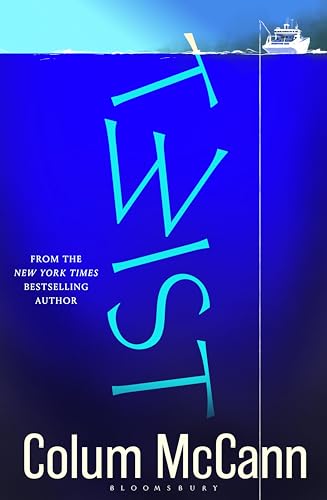
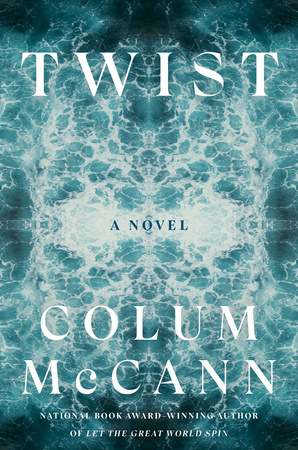
Colum McCann’s latest novel Twist was my reading group’s last book of the year. All of us were fascinated by its underlying story about the data – our data – travelling around the world via undersea cables, and the fragility or vulnerability of this data. But, when it came to assessing how much we liked the book, other things came into play, things that say as much about who we are as readers, what we look for in books, as they say about the book itself. For example, readers who look to empathise with appealing, rounded, human characters might assess Twist quite differently from those for whom ideas play a significant role in their preferences.

I’ll return to this, but first more on the novel. Twist is narrated by 50-something Irish novelist, Anthony Fennell, whose career had stalled. It “felt stagnant”, and he was feeling disconnected from life, “the world did not beckon, nor did it greatly reward”. He was, in fact, “unsure what fiction or drama could do anymore”. He needed, he tells us, “a story about connection, about grace, about repair”. Fortuitously, into his lap falls an assignment to write a long feature about a cable repair vessel, which is led by a man called John Conway (whose name, we soon realise, contains allusions to Joseph Conrad and also perhaps to that other well-known JC).

So, in the first few pages of the novel, we know we are being told a story from after the event by a writer who was there as it happened. We know this event relates to Conway because Fennell tells us on the opening page that something had happened to him, and that he is going to tell his version of what happened as best he can, which might take some “liberties with the gaps”. Conway, then, is central to the narrative arc, but we also know that the subject matter is data and the internet, and that the theme will concern ideas like connection and disconnection, brokenness and repair, fact, fiction and the limits of storytelling. It’s impressive, in fact, just how much of the rest of the book is set up in the first couple of pages.

The narrative proper then starts. It’s January 2019, and Fennell meets Conway, and his partner Zanele, in Cape Town, before joining the Georges Lacointe on its journey up the western African coast to the site of a cable break. It takes some time to get there, so we get to know Conway a bit more. He is a good leader, and his multicultural crew of men respect him. The first and main cable break is repaired at the end of Part One, and then things go seriously awry. Zanele, who was performing in her unauthorised climate-change-focused version of Waiting for Godot in rural England, suffers an acid attack. Life starts to “unravel” for Conway who cannot get away to help her. Indeed, as the back cover says, Conway disappears.

I will leave the plot there. It does get more complicated, so I’ve not spoiled it I believe. I will return instead to my opening point about readers and their assessments. Most of those in my group who had reservations focused on the characters. Conway and Zanele were too shadowy; they were not well-rounded; we didn’t know them well. And, why choose a hard-to-identify-with man like Fennell as a narrator? I understand these questions but they don’t concern me, because I read the book differently – so let’s look at that.

Twist draws from, or was inspired by, two classic novels, F. Scott Fitzgerald’s The great Gatsby, with its story of a man’s obsessive love for an unattainable woman, and Joseph Conrad’s Heart of darkness and its story about the darkness at the centre of colonialism. While the narrative arc clearly owes much to Fitzgerald, McCann said during the aforementioned conversation that Conrad’s novel provides the more obvious literary parallel. Those tubes along the seabed, he said, follow old colonial routes, and suggest corporate or digital colonialism.

“There is no logic. The world is messy.” (Fennell)

Looking at the novel through this perspective provides a way of understanding why McCann has written it the way he has. It is not about Conway and Zanele. We only see them through the eyes of Fennell. They are established enough to draw us in but their prime role is to support the ideas – disconnection, connection, turbulence, repair – rather than to be the subjects of the story. We know Fennell somewhat better, as we need to. He is a flawed man, stalled in life and feeling disconnected from it. It is his journey through the narrative that carries our hopes for repair.

If I had any criticism, it would more likely concern the writing. McCann’s is an exuberant, epigrammatic style. It’s not hard to see what he is doing, the games he is playing with meaning and metaphor. However, I can enjoy this sort of writing. It keeps ideas to the fore. And they were ideas that interest me – zeitgeist issues about the fragility of our data; the line between doubt/certainty, connection/disconnection (emotionally, spiritually, technologically), and break/repair; and the messiness of life. It’s not hard to find quotable quotes, like “opinion, the obscene certainty of our days” (p. 218) and “the disease of our days is that we spend so much time on the surface” (p. 25). I enjoy these too!

Part Two opens with:

It is, I suppose, the job of the teller to rearrange the scattered pieces of a story so that they conform to some sort of coherence. Between fact and fiction lie memory and imagination. Within memory and imagination lies our desire to capture at least some essence of the truth, which is, at best, messy.

By the end, McCann has told a story which illuminates the messiness of our time. The truth is that there is no real coherence. There is – and probably always has been – just all of us trying to muddle through the best way we can. This is not earth-shattering news, but McCann exposes some of the issues, many driven by technology, that affect our trying today. The light he throws on these – and the personal progress Fennell makes – are why I enjoyed reading this novel.

Colum McCann
Twist
London: Bloomsbury, 2025
239pp.
ISBN: 9781526656957

Brian Castro, Chinese postman (#BookReview)

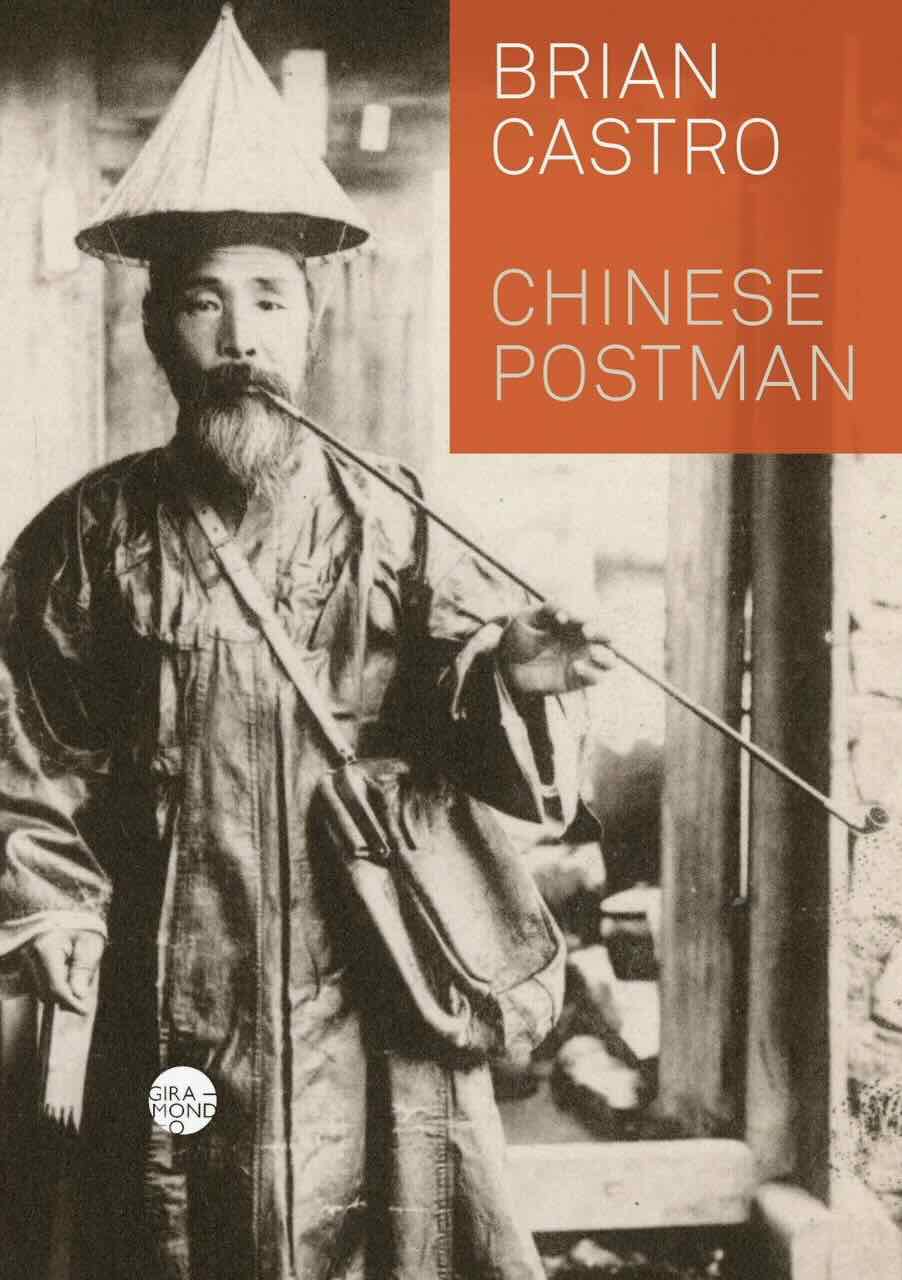
Serendipity is a lovely word, and is even lovelier when it touches my reading. Such was the case with my last two books, Olga Tokarczuk’s House of day, house of night (my review) and Brian Castro’s Chinese postman. The connections between them are simple and complex. Both focus more on ideas than narrative, are disjointed in structure (or, at least, in reading experience), and draw consciously on their author’s lives. They also seem to be questioning the nature of fiction itself, a question that is true of two other books I’ve read in recent times – Michelle de Kretser’s Theory & practice (my review) and Sigrid Nunez’s The vulnerables (my review). None of these books are fast reads, but they are rewarding ones.

The other thing that connects these books is that, because narrative provides more of a loose structure than a driving force and because they blend that narrative with ruminations, memoir, essay, vignettes, anecdotes, recipes even, they exemplify the idea that every reader reads a different book. This is not only – or even primarily – because we are not all men in our mid-70s with mixed ethnicity, to take Castro (and his protagonist) as an example. Rather, it is because we all think about and weigh differently the issues and ideas these authors focus on.

In The vulnerables Nunez refers to Virginia Woolf (as does de Kretser) and her “aspiration to create a new form. The essay-novel”. She also refers to Annie Ernaux’s nonfiction book The years, describing it as “a kind of collective autobiography of her generation”. I’ve digressed a bit here, but my point is that these writers have things to say about their time, their generation, the state of the world – and they are looking for better ways to say it. They are suspicious of pure narrative, and yet I think they also recognise, to some degree at least, that “story” is a way to reach people. Therein lies the tension that each tries to deal with.

So now, Castro! There is a story, a sort of narrative, running through Chinese postman, and I’ll let publisher Giramondo explain it:

Abraham Quin is in his mid-seventies, a migrant, thrice-divorced, a one-time postman and professor, a writer now living alone in the Adelaide Hills. In Chinese Postman he reflects on his life with what he calls ‘the mannered and meditative inaction of age’, offering up memories and anxieties, obsessions and opinions, his thoughts on solitude, writing, friendship and time. He ranges widely, with curiosity and feeling, digressing and changing direction as suits his experience, and his role as a collector of fragments and a surveyor of ruins. He becomes increasingly engaged in an epistolary correspondence with Iryna Zarebina, a woman seeking refuge from the war in Ukraine…

The narrative arc, then, concerns this email correspondence with Iryna. It starts when she emails him:

Dear Professor, I am reading one of your books on the doorstep of war. You once wrote about war eloquently, so the critics said. I do not believe anyone can write eloquently about war. If you could find the time, could you please answer that question. (p. 29/30)

He doesn’t reply “of course”, because he suspects it’s a scam. But, the problem is, it’s got him thinking about his ‘”eloquence” in writing about war’. At this point, readers who have read the epigraphs will remember that one of them quotes John Hawkes*, who said, “Everything I have written comes out of nightmare, out of the nightmare of war”.

War – Ukraine, Vietnam, World War 2, and others – is, then, a constant presence in the novel. As is the aforementioned Iryna because, although she’s “probably a bearded scammer”, he does write back. He asks her about the “dogs in the Donbas”, hoping this “will shove aside the irritating accusation of eloquence”. And so a correspondence begins in which war and dogs, among other issues, are discussed. In other words, dogs become another thread in the novel, as do toilets, aging and its depredations, solitude, the writing life and more.

This is a “big” book, one that, as I’ve intimated, will be read differently by different people. Those concerned about where the world is heading will engage with the issues that mean something to them. Those of migrant background might most relate to his experience of discrimination and othering. Those of a certain age will relate to thoughts about mortality and managing the aging body. (To test or not to test is one question that arises.) Those of a literary bent will love the wordplay and clever, delightful allusions (and wonder how many more they missed. I loved, for example, the allusions to TS Eliot’s “The love song of J. Alfred Prufrock”, a poem about anxiety and indecision which reflects Quin’s inner questioning about action and inaction. I also loved the wordplay that made me splutter at times.) And those interested in the form of the novel will wonder about where this is all leading!

“the unreliability of reason” (p. 232)

There is so much to write about this book, and I’m not sure I can capture the wonder of reading it, how ideas are looked at from every angle – inside out and upside down – in a way that illuminates and stimulates rather than confuses. It’s quite something.

I’ll try to explain something of this through two of the interweaving motifs – toilets and dogs. Both mean multiple things as Castro is not one to close things off. So, early on, toilets reflect the sort of cleaning work migrants must do to support themselves, as Abe does at University. Later, they are part of the aging person’s concern about bowel health. But, in between they could also symbolise feelings of disorder and helplessness, his “anxiety in the gut”, including just coping with “the difficult things of ordinary life”. Similarly dogs epitomise the instinctual, simple life, but, in stories like their being used for target practice, they could also represent innocent victims of war. Here of course, I’m sharing my personal responses to these motifs. There are many others.

No wonder Quin worries about the writing life. It’s something he, a writer, is driven to do, “it pushes fear into the background”, but does it achieve anything?

I’ve always believed it is the novel that carries all the indirect notes of empathy. It may even be violence that brings empathy to war and its suffering. It may be anything. Yet, the plasticity of the novel bends to all the obtuse emotions and accommodates them. Then all is confined to the scrapheap of having been read, having been experienced, having been second-hand and second-read. Major libraries are throwing out paper books. (p.140)

Chinese postman was my reading group’s September book, and it proved challenging, but that is a good thing. We had a lively discussion during which disagreement was not the flavour, but a genuine and engaged attempt to understand what Castro was on about. Whether we achieved that, who knows, but I am glad I have finally read Castro. I won’t be forgetting him soon.

* Wikipedia des John Hawkescribesa (1925-1998) as “a postmodern American novelist, known for the intensity of his work, which suspended some traditional constraints of narrative fiction”. !

Brian Castro
Chinese postman
Artarmon: Giramondo, 2024
250pp.
ISBN: 9781923106130

Olga Tokarczuk, House of day, house of night (#BookReview)

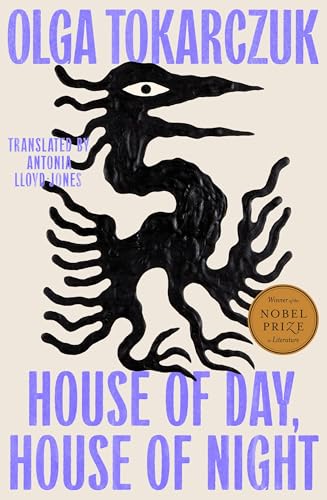
About 30 pages into Olga Tokarczuk’s novel, House of day, house of night, I turned to Mr Gums and said, I have no idea what I am reading, which is unusual for me. I certainly don’t pretend to understand everything I read, but I can usually sense a book’s direction. However, something about this one was throwing me, so …

I had a quick look at Wikipedia, and found this “synopsis”:

Although nominally a novel, House of Day, House of Night is rather a patchwork of loosely connected disparate stories, sketches, and essays about life past and present in … a Polish village in the Sudetes near the Polish-Czech border. While some have labeled the novel Tokarczuk’s most “difficult” piece, at least for those unfamiliar with Central European history, it was her first book to be published in English. [Accessed: 1 October 2025]

That made me feel better! I am more than comfortable with “loosely connected disparate stories” but am only generally-versed in Central European history. So, I decided to relax and go with the flow. From that point on, I started to enjoy my reading more, but it was slow going, because the “disparate stories” demand attention. It’s not a book you whizz through for story, but one you savour for thoughts and ideas, and for the connections you find along the way.

Tokarczuk calls it, in fact, a “constellation novel”, which I understand builds on thinking by the German critic and philosopher, Walter Benjamin (1892-1940). According to academic Louis Klee, who has written on “the constellational novel”, “these novels are recognizable by the presence of a first-person narrator committed to drawing affinities and making connections among disparate things”. They can be non-linear and incorporate various forms of writing from essayistic to lyrical to fragmentary, and encourage readers to find their own connections (like finding patterns in a constellation).

This well encapsulates House of day, house of night. It comprises numerous individually titled chapters (or sections or parts), some just a few paragraphs long, and others several pages. At first it felt disjointed, but it wasn’t long before an underlying structure started to reveal itself, one held together by a first-person narrator, a woman who had come to live in a small Polish village with her partner R – just like Tokarczuk and her husband did – three years before the novel opens. She tells of life in the village, and particularly of the relationship she develops with her neighbour, a somewhat mysterious old woman named Marta, who embodies a wisdom that she sometimes shares but other times must be gleaned from what she doesn’t say.

Interspersed with our narrator’s story, are other stories – some real, some magical, some past, some present – about the region and people in it. There’s a gender-fluid monk named Paschalis who is writing the life of the female saint Kummernis. There’s the unnamed couple who think they have it all, until each is visited by the same lover, a female for “he” and a male for “she”. There’s a religious community called the Cutlers who make knives and believe that “the soul is a knife stabbed into the body, which forces it to undergo the incessant pain that we call life”. There’s the wonderfully named Ergo Sum who had tasted human flesh in frozen Siberia, where he’d been deported in 1943, and believes he is turning into a werewolf. And so on. Some of these stories continue, for several chapters, woven around our narrator’s story, while others stand alone. Some are about people who think they have life worked out, while in other stories, the people don’t have a clue.

There’s more though, because scattered through the stories are ruminations on disparate things like dahlias, nails, comets and grass allergies. And threading through it all are various motifs, usually providing segues between chapters, encouraging us to see links and to ponder their meaning for us. These motifs include dreams, names, time, death, borders, mushrooms (potentially deadly), and knives. The more you read, the more connections you see between them and the stories. Many are philosophically-based, but are not hard to understand. In other words, the challenge is not in understanding, but in how we, individually, process the links we see. You might have already noticed some in my examples above, such as the idea of identity. Even the mysterious Marta, who disappears every winter, is unsettling. Who is she really?

“people are woefully similar”

This is the sort of book you would expect of a Nobel prizewinner. The writing is simple but expressive, and is accompanied by a rich, dark, and often ironic humour. We have border guards who don’t want to deal with a dead body so they quietly shove it to the other side of the border. And Leo the clairvoyant who says “Thank God people have the capacity for disbelief — it is a truly bountiful gift from God”. That made me splutter.

Underpinning all this – the thing that gives the book its heft – is a quiet but somewhat resigned wisdom. It interrogates some big questions – our willingness (or not) to see what is happening in front of us, our relationship to place, how we comprehend time, and who we are. These are explored through universal binaries, not only the night-and-day contained in the title, but life and death, change and stasis, ripening and decay. How do we live with – and balance – these parts of ourselves, of life?

But, House of day, house of night is also set in a particular place and time, southwest Poland, just post World War 2. This area, explains the Translator in her note, was part of the German Reich until 1945, when the Allies agreed to move Poland’s borders west. Many Poles left their old lands of the east (now part of the USSR), and resettled in this once German area in the west, occupying homes left by the evacuated Germans. This specific history is also found in the book, with Polish families hopefully, greedily, digging up German treasures, for example, and Germans sadly returning to see their old places.

House of day, house of night offers no answers, but it sure asks a lot of questions – about how, or whether, we can move forward into more humane, and hence more fulfilling lives.

This brings me to the ending. I won’t spoil it – it’s impossible in a story like this anyhow – but we close, appropriately, on the idea of constellations and finding patterns, and a hope that it is possible to find a pattern that explains it all. It is deliciously cheeky. And, on that note, I will end.

Olga Tokarczuk,
House of day, house of night
Translated from the Polish by Antonia Lloyd-Jones
Melbourne: Text publishing, 2025 (Orig. pub. 1998; Eng trans. 2002)
298pp.
ISBN: 9781923058675

Review copy courtesy Text Publishing

Louise Erdrich, The night watchman (#BookReview)

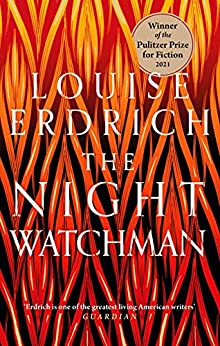
Louise Erdrich’s Pulitzer Prizewinning The night watchman is historical fiction about a community fighting back against a government set on “terminating them”. Erdrich, whom I have reviewed before, is an enrolled citizen of the Turtle Mountain Band of Chippewa Indians of North Dakota and it is the story of this community’s response to something called the House Concurrent Resolution 108 that she tells in The night watchman.

Passed by Congress on August 1, 1953, this Resolution would, says Erdrich in her Afterword, “sever legal, sacred, and immutable promises made in nation-to-nation treaties”. Or, as Wikipedia explains, it would “end reservations and tribal sovereignty” and “integrate Native Americans into mainstream American society”.

As it happens, Erdrich’s grandfather, Patrick Gourneau, was Chairman of the Turtle Mountain Band of Chippewa Advisory Committee at the time and recognised this resolution for what it was. He is the inspiration for Thomas Wazhushk, one of Erdrich’s two protagonists. Thomas is a man of two cultures:

Watching the night sky, he was Thomas who had learned about the stars in boarding school. He was also Wazhashk who had learned about the stars from his grandfather, the original Wazhashk. (p. 17)

Throughout the novel Thomas strategically draws on these two selves in order to perform his role, which is to keep the community safe (or, at least, safer, than they would be if the Government’s plans came to fruition).

This is both a sophisticated and a grounded novel. Grounded in the way Erdrich uses her storytelling ability to create a compelling narrative peopled by a large cast of wonderfully individuated characters. We are interested in them all, and this makes the novel a darned good read. Sophisticated in how Erdrich subtly layers her story to enrich its meaning. The overall structure comprises two parallel but related stories or journeys: Thomas’s fight for his community’s survival, and his niece Patrice’s journey to find both her missing sister and her own path in life. Erdrich’s writing is simple, plain, but also imbued with gorgeous lyricism, metaphor and symbolism. The novel is threaded, for example, with physical holes, wells, caves, ship holds, and falls, which never let us forget the precariousness of these people’s lives.

She also peppers the story with humour, which reminds us no matter how serious things are, people can still have a laugh. There are many laugh-out-loud moments, alongside a recognition of humour’s role in how we navigate the things we confront. In Minneapolis, Patrice finds herself in a strange and potentially dangerous situation, and has

the sort of feeling and thinking that could only be described in Chippewa, where the strangeness was also humorous and the danger surrounding this entire situation was of the sort that you might laugh at, even though you could also get hurt… (p. 131)

“Survival is a changing game” (Biboon)

Overlaying all this is Erdrich’s exploration of how language works, how it can be used to clarify or obfuscate, to inspire or deflate. Her writing embodies this knowledge. So, for example, Thomas receives the Resolution papers and reads them carefully. He sees

their unbelievable intent. Unbelievable because the unthinkable was couched in such innocuous dry language. Unbelievable because the intent was, finally, to unmake, to unrecognize. To erase as Indians … his people, all of us invisible and as if we never were here, from the beginning, here. (p. 79)

His people were being targeted, the papers said,

for emancipation. E-man-ci-pation. Eman-cipation. This word would not stop banging around in his head. Emancipated. But they were not enslaved. Freed from being Indians* was the idea. Emancipated from their land. Freed from the treaties that Thomas’s father and grandfather had signed and that were promised to last forever. (p. 80)

Later, the once dapper but now frequently drunk Eddy Mink cuts to the chase, stunning officialdom with his plain language statement:

The services that the government provides to Indians might be likened to rent. The rent for use of the entire country of the United States. (p. 200)

Meanwhile, as Thomas builds his case, Patrice, who works in the Turtle Mountain Jewel Bearing Plant where Thomas is the titular night watchman, sets off for Minneapolis to look for her sister. Vera had gone there with her new husband but had not been heard of since. What Patrice finds in the city, how people can be exploited, is shocking, and she returns home somewhat wiser but with more to learn about herself and the ways of humans.

Surrounding Thomas and Patrice is a large community of people – family, friends, neighbours, work colleagues, teachers, coaches, visiting missionaries, and even a ghost. The interactions between these people build up a picture of a community that functions despite external stresses and the usual internal disagreements. This makes engrossing reading because these characters are so real, including the two Mormon missionaries who not only add humour and pathos but also represent the naiveté of supporters of a faith – in the form of Utah Senator Arthur V. Watkins – that was driving the Resolution.

Similarly, our protagonists’ interactions with specific individuals make great reading while also advancing the narrative and the ideas. When Thomas is with his father Biboon and Patrice with her mother Zhaanat, we feel their spiritual connection with their culture, and their desire to learn from their elders. When Thomas is with the white teacher and boxing coach, Barnes, we see how little non-Indian society understands the existing situation and the implications of the Resolution. Thomas patiently – and generously – explains to the clueless Barnes why Indians are not, and can never be, “regular Americans”. And, why he, Barnes, cannot be an Indian! Just look at this writing:

“If I married an Indian woman,” said Barnes, “would that make me an Indian? Could I join the tribe?”
He was awed at the possible sacrifice he could be making.
Thomas looked at the big childish man with his vigorous corn-yellow cowlicks and watery blue eyes. Not for the first time, he felt sorry for a white fellow. There was something about some of them—their sudden thought that to become an Indian might help. Help with what? Thomas wanted to be generous. But also, he resisted the idea that his endless work, the warmth of his family, and this identity that got him followed in stores and ejected from restaurants and movies, this way he was, for good or bad, was just another thing for a white man to acquire.
“No,” he said gently, “you could not be an Indian. But we could like you anyway.”

In statements like “he was awed at the possible sacrifice he could be making”, Erdrich conveys more about cultural superiority than just this man’s thoughts.

When Patrice is with her girlfriends and workmates, Valentine and Doris, we see how her goals diverge from their more girlish ones, and when she is with Wood Mountain we see her inner conflict about her chosen direction. As a young person, her journey is more personal than Thomas’s but they coalesce when it comes to saving the community.

“Assimilation. Their ways become your ways.” (Roderick)

I loved spending time with these characters. In fact, so did most of my reading group, as this novel was our September read. We enjoyed her vividly drawn characters – and their perfect names, like Juggie Blue, Wood Mountain, Louis Pipestone, Millie Cloud, and Patrice not Pixie. We teased out the complexity of the storytelling, the way Erdrich seemed to effortlessly incorporate complex ideas into a compelling narrative. This starts right at the title, The nightwatchman, which is both literal, Thomas’ job, and metaphorical, in his role of keeping watch as the community’s Chairman. I was reminded a little of Melissa Lucashenko’s novels, in which tough stories are told with compassion and humour to paint a picture of real people confronting a world that’s against them.

Early in the novel, Thomas moves that the Committee call the Resolution the “Termination Bill [because] Those words like emancipation and freedom are smoke”. This bill heralded what is now called the Termination Era (1953-1968). As Erdrich explains in her Afterword, this is what happened to 113 tribal nations. Although some regained recognition, “31 are now landless” and “24 are considered extinct” (p. 447).

The night watchman is one of those books that hits the spot – the heart spot and the mind spot. Recommended.

* The novel is set in 1953, and Indian is the term most commonly used when the specific Chippewa is not.

Louise Erdrich
The night watchman
London: Corsair, 2020
453pp. (Kindle edition.)
ISBN: 9781472155337

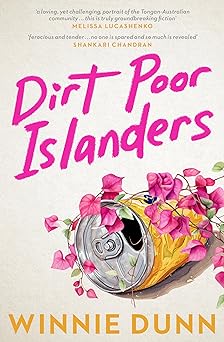
Winnie Dunn, Dirt poor Islanders (#BookReview)

Book cover

When my reading group chose our books for the second half of the year, the shortlist for the Miles Franklin Award had not yet been announced. However, wonderfully, the three books we chose from the longlist, all ended up on the shortlist. One of those was Winnie Dunn’s debut novel, Dirt poor Islanders. It is the first novel published by a Tongan Australian, and adds a welcome strand to the body of Australia’s second and third generation migrant literature.

Dirt poor Islanders spans around a year when its protagonist Meadow is approaching 12 years old. It can, therefore, also be read as a coming-of-age novel. It is a raw, earthy, honest and sometimes confronting read that exposes the challenges faced by Australian-born migrant generations, who are caught between two worlds.

This is not a new story. However, what is impressive here is that Dunn, in her first novel, has found her own strong and clear voice. It’s there in the way she gets right into the head of her protagonist Meadow, who is, admittedly, modelled on herself. It’s there in the way she interweaves English and Tongan language, capturing the vitality in her migrant community. It’s also there in her use of repetition, some of it onomatopoeic, to give her writing rhythm and create a tone that’s sometimes melancholic, sometimes humorous. Dunn also doesn’t spoon-feed her readers. She expects us to go with the flow and make the necessary connections. It’s not hard reading, but it does require attention.

“this way of seeing myself as half … and never enough” (Meadow)

So, who is Meadow? She’s a young girl who lost her birth mother at the age of 4. At the novel’s opening she is the eldest of six children in a blended family comprising three children from her birth mother, one from her step-mother, and two from this second marriage. Another is on the way. Her father is 30 years old. Meadow is grappling with what it means to grow up Tongan, particularly one who is hafekasi (half-Tongan half-White) and feeling caught between two worlds, neither of which fully accept her. She is desperate for a mother, and feels closest to her namesake, aunt Meadow, who lives in Mount Druitt with our Meadow’s paternal grandmother and another four aunts.

We follow Meadow through a tumultuous year. Early on, she spends most weekends at her Nana’s house surrounded by the five aunts, but when her father buys a new house in Plumpton, he wants Meadow, her sister Nettie and brother Jared, to call that home. With her birth mother gone, however, Meadow feels “stuck” and insecure. Aunt Meadow, also known as Lahi, is her “mother-aunt” and her rock. The narrative is built around the wedding of this Lahi, who, Meadow believes, is more interested in women. She fears for her boyish aunt, but she also fears for herself, that she will lose this mother figure to whom she clings with all her being.

Now, Meadow wants to be a writer, so she’s an observant girl, well able to express her feelings. She sees the messiness – literal and figurative – of Tongan lives, and she shares the lessons she is learning about being Tongan, not all of which are pretty. For example, “Tongan meant dirty” (p. 37), “being a joke” (p. 73) and “second best” (p. 102). But, there are positives too. “Togetherness was what it meant to be Tongan” (p. 40) and “being Tongan meant eating together and being grateful to eat together” (p. 118).

Dirt poor Islanders, then, depicts a migrant family living under stress. Big families and low-paying jobs with long hours mean a chaotic home. Meadow’s scalp is nit-infested, and her home, decorated with second-hand goods, much picked off roadsides, is cockroach-infested. Her parents work hard to keep the family sheltered and fed, but the mess overwhelms. Flipping between maturity and immaturity, Meadow sees all this – the hard work, the exhaustion, the love – but she struggles to find her place, to accept her Tongan heritage.

It all finally comes to a head, and her father organises for her to go to Tonga, because, he says, “it’s time for youse to know what being a Tongan truly means” (p. 239).

Migrant literature encompasses both memoir and fiction, with the latter mostly being autobiographical or autofiction. Dunn confirmed in her Conversations interview that much of the novel’s family background comes from her life, but the novel diverges from real life in its narrative arc and the resolution of Meadow’s inner turmoil. This answered the question I had as I was reading, which was why Dunn had chosen fiction, like Melina Marchetta did in Looking for Alibrandi, over memoir, like Alice Pung did in Unpolished gem. It’s a choice. What matters are the truths conveyed, not the facts, and Dirt poor Islanders feels truthful.

This truth is not all raw and confronting as I may have implied at the beginning. It is also warm and humorous. Meadow, who doesn’t like rich, fatty Tongan food tells us:

If it came out of a can covered in sugar and sodium, Tongans were eating it. But back then, all I wanted was food that came out of a window. (p. 37)

Preferably at Maccas! There are also funny scenes, many relating to the wedding which occupies the novel’s centre, and which is another nod – besides the title and epigraph – to the book that clearly inspired Dunn, Kevin Kwan’s Crazy rich Asians.

“no one could live as half of themselves” (Meadow)

However, Dunn’s book is fundamentally different from Kwan’s, whose aim, he said, was, to “introduce a contemporary Asia to a North American audience”. Dunn did want to introduce Tongan Australian culture – and counteract the image presented by Chris Lilley in Summer Heights High – but through Meadow, she also explores the excruciating difficulties children caught between cultures face. By the end of the novel Meadow comes to understand a little more the “messy truth” of being an Islander, and that:

No one could live as half of themselves. To live, I needed to embrace Brown, pālangi, noble, peasant, Tonga, Australia – Islander. (p. 275)

Dirt poor Islanders is both shocking and exciting to read, which is probably just what Dunn intended. I feel richer for it!

Winnie Dunn
Dirt poor Islanders
Sydney: Hachette Australia, 2024
293pp.
ISBN: 9780733649264

Andrea Goldsmith, The buried life (#BookReview)

Titles are intriguing things, and we don’t always pay them the attention they deserve, but the title of Australian writer Andrea Goldsmith’s ninth novel, The buried life, is worth thinking about. It is the third novel I’ve read by Goldsmith, and, like the others, is a contemporary story focusing on relationships and the stresses her characters confront, stresses that we will know ourselves or recognise in those around us, stresses that make her characters relatable. The title, however, hints at the direction this novel will take, which is to look at the way these stresses can often be hidden for years. But they will out, one way or another.

This is a confidently written novel, using techniques I love. First, Goldsmith calls on music, art and literature to illuminate her ideas. What reader doesn’t enjoy that? And then, she uses a formal structure, comprising four named parts, each of which contains named chapters that open with a revealing epigraph. Part 3, for example, is titled “The buried life” and its first chapter’s epigraph comes from Matthew Arnold’s same titled poem:

But often, in the world’s most crowded streets,
But often, in the din of strife,
There rises an unspeakable desire
After the knowledge of our buried life

If we hadn’t realised it by this time, the point is clear. This novel, which explores big themes encompassing friendship, love and death, is also about the thoughts and feelings we bury inside – hidden from others, and sometimes also from ourselves. We have three people – 43-year-old Adrian, an academic specialising in Death Studies, his 28-year-old neighbour Kezi, an artist who makes paper by hand, and 57-year-old Laura, a social scientist who works in town planning. At the beginning of the novel, Adrian and Kezi are friends, and do not know Laura. However, a chance meeting between Adrian and Laura in a Melbourne city cheese shop brings her into the fold, and our trio is complete.

the “carefully constructed life”

Each of these characters has things that are buried, just waiting to resurface. For the “temperate” Adrian, suffering the break-up of a 10-year relationship, it’s his parents. They had died when he was very young and he was brought up by loving grandparents – so lovingly, in fact, that he had denied for decades the impact on his life, including his chosen career, of his parents’ early deaths. For the outwardly confident lesbian, Kezi, it is also parent-related. Rejected in her late teens by her highly religious – read fundamentalist – parents for her sexuality, she craves their love and acceptance. And then there’s Laura, a successful career woman who seems to have the perfect marriage. “Seems”, however, is the operative word because very quickly the reader realises that her narcissistic husband is dismantling her, “piece by piece”. But Laura cannot see that her constant modifications to keep Tony happy is self-destructive. It’s worth it, she feels, for what she believes he gives her.

Goldsmith slowly unfolds her characters’ stories in such a way that we, like others in their circles, understand their buried lives long before they do. Adrian’s academic colleague, Mahindra, not to mention his ex-lover, Irene, sees what Adrian doesn’t about his choice of a career in Death Studies, but Adrian continues to insist that his childhood was simply his “normal” and had nothing to do with it. Laura’s sister Hannah and friend Jules constantly point out to her the way her husband undermines her, and the harm it is doing, but, despite knowing she tiptoes around him, she is convinced “she had become a better person with Tony”. He is her “normal”. The younger Kezi is more in touch with her inner self. Her pain and desires are not so much buried as kept at bay. She “wanted her parents’ love … she wanted them to love her as she was, and not as they wanted to her to be”. This want is threatening to sweep away “her carefully constructed life”.

So, three characters, all waiting – in our minds at least – for the trigger that will reveal their inner selves in a way that can no longer be ignored, that will force them to “shed their old skins”. In Part 3, Adrian, thinking that whatever relationship he’d been building with Laura was over, walks to the cemetery, listening to Mahler, whom he has recently discovered. As he sits on a fallen log, the “past rushes in”. Memories of his father and the loss he’d endured come to the fore, and he finds himself “crying for the little boy, crying for the grown-up man … mourning the buried life”. Back home, he picks up Arnold’s poem and recognises that for him

it was not desire, as in Arnold’s poem, that had pulled up the past from ‘the soul’s subterranean depth’, rather he had been ambushed by what insisted on at last being acknowledged.

As the novel progresses from here, Laura and Kezi are also forced to acknowledge the truths they had been resisting. It’s a powerful novel about how hard we work to deny the truths right in front of us, and it works well because it does this through characters that are so utterly believable. We will them to work it out.

However, the novel is also about death. It is never far away, given Adrian’s research and the deaths that surround our characters. Indeed, the final epigraph, which comes from Philip Roth, tells us that “Life’s most disturbing intensity is death”. Those of you who know Goldsmith will know that she lost her beloved partner, the poet Dorothy Porter, back in 2008. Porter’s last poetry collection, The bee hut (my review) ends with a poem written just a couple of weeks before her death from cancer. It concludes with “Something in me / despite everything / can’t believe my luck”. Death is sad, but some writers can write about it with such beauty, as Porter does in this poem. Penelope Lively also does it at the end of Moon tiger. And Goldsmith does it at the end of this novel, because you won’t be surprised to know that in a book with this title and subject matter, someone does die. It brought me to tears, not so much the death, terribly sad though it is, but the writing of it. It is inspired.

The buried life is a moving read, one made even more so if, as you read it, you play some of those Mahler pieces Adrian loves. I dare you to be disappointed.

Andrea Goldsmith
The buried life
Transit Lounge, 2025
321pp.
ISBN: 9781923023253

(Review copy courtesy Transit Lounge via Scott Eathorne, Quikmark Media)

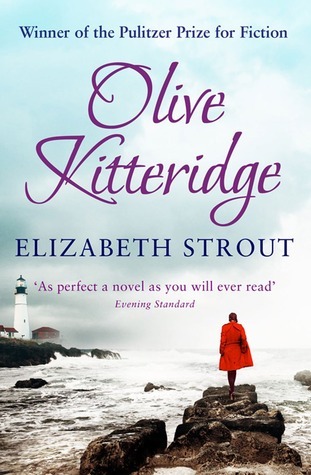
Elizabeth Strout, Olive Kitteridge (#BookReview)

Elizabeth Strout’s Pulitzer prize winning novel Olive Kitteridge has been around for 17 years, but it’s only now that I have managed to read it. And that’s because my reading group scheduled it as our June read. It’s not that I didn’t want to read it – I really did – but other books kept getting in the way. I realise now that I should not have let that happen because Olive Kitteridge is a wonderful read.

Now, how to describe it? The first thing is its form. It’s more like a collection of linked stories, or what its Wikipedia article calls a short story cycle. Although I’ve read many linked short story collections, I haven’t come across this term before. I’d like to explore it some time, but not now, because I’m keen to talk about the book. I will say, though, that some in my reading group found the episodic form somewhat disconcerting at first. However, despite this, almost all of us thoroughly enjoyed the book. Why? Well, as it turned out, the form is partly what makes it such a strong and moving read.

As most of you will know, the novel is set mostly in the late 20th and very early 21st centuries in the fictional small-town of Crosby, in coastal Maine. It comprises 13 chapters – or stories – that explore the life of retired schoolteacher Olive Kitteridge and her relationships with family and friends. In some of the chapters Olive is front and centre, but in others she makes a cameo appearance, sometimes just as a passing reference. The end result is as much a picture of a small town as it is of Olive, though Olive is our lynchpin. As one of my reading group members said, her question as she read each story was, “Where’s Olive?”

everyone thinks they know everything and no one knows a damn thing. (“River”)

So, while my reading group talked about the form and the gorgeous writing, we mostly focused on the picture painted of a small town – which, said one, provides an antidote to the “apple-pie” image we typically get of small-town America – and on the character of Olive. She is complex and not easy for readers to like, but we found her real, and most of us did like her. The opening story, “Pharmacy”, doesn’t pull any punches in its depiction of Olive. She comes across as curmudgeonly, uncompromising. She is cutting about her husband Henry’s new young pharmacy assistant and unwilling empathise with her. She is prickly and vengeful with her son’s new bride, Suzanne (“A Little Burst”), while Bob in “Winter Concert” wonders how Henry can “stand” her.

However, there are many occasions where Olive is kind and compassionate, where she sees need in others and helps or offers to help, where, as Henry describes it, “all her outer Olive-ness” is stripped away. For example, ex-student Julie remembers Olive telling a class

“Don’t be scared of your hunger. If you’re scared of your hunger, you’ll just be one more ninny like everyone else.” (“Ship in a bottle”)

And Rebecca recollects Olive saying to her at school, “if you ever want to talk to me about anything you can” (“Criminal”). Olive also quietly talks a young man, an ex-student, down from suicide (“Incoming tide”) and she and the truly “nice” Daisy try hard to help the young anorexic Nina (“Starving”).

Olive, too, can be insightful. In “Security”, for example, we read that sometimes she had “a sense of just how desperately hard everyone in the world was working to get what they needed”. And she suffers, especially from a “rupture” with her beloved son, and from grief over husband Henry’s massive stroke.

So, what we have is a character who can be tough and acerbic – even engage in a little schadenfreude – but also be sensitive and empathetic. This led me to see the book as being about more than a picture of a small town, much as that is a central and engaging part of it. The form – the interconnected short stories about life in the town – supports this view of the novel. However, this form also supports another way of looking at it, one encompassing something fundamental about our humanity.

In each story, we see characters confronting some crisis or challenge in their lives – some big ones, some quieter ones. We never see these stories fully through. They are vignettes, even those featuring Olive. This made me think about how little we know others, and perhaps even ourselves? We never fully know what others think of us, or what impact we have on others, but in this book – largely because of its form – we do see, for example, how Olive is, or has been, viewed or remembered, both positively and negatively. No one perspective is right, but each contributes to a picture of a person. This is how life goes. We see little parts of people’s lives, and sometimes we are little or big parts of people’s lives, but what do we truly know?

A bleak interpretation of this could be that it exposes our essential aloneness, but a more positive perspective is that it reminds us that we are all “real” people with good and bad, hard and soft selves. Books like Olive Kitteridge encourage us to look around corners, to not take one aspect of a person at face value, to be generous to others and ourselves. It also reminds us that we never stop learning about ourselves (or others). Certainly, at the end of this book, Olive, in her early 70s, is still discovering things about herself and her feelings. She isn’t giving up, no matter how tough things have become.

In my group’s opening discussion, I said that I thought the novel offered many truths, albeit often uncomfortable ones. For example, in “Tulips”, which is a story about things going terribly wrong, Olive reflects, “There was no understanding any of it”. But, my favourite occurs in “Security”, when some rapprochement is being made with her son, and Olive thinks

whatever rupture had occurred… It could be healed. It would be leaving its scars but one accumulated these scars.

One surely does!

There’s so much more to talk about in this book – the spot-on descriptions, the quiet humour, the many beautifully wrought characters and their trials, and the political references such as to 9/11 and George W Bush which provide context. But the main story is the human, the personal. The novel closes with Olive reflecting deeply on her life and her choices, on how much had been “unconsciously squandered”. She realises that, while

It baffled her, the world. She did not want to leave it yet.

I love getting inside the heads of characters like Olive, and so I loved Olive Kitteridge. I’ll be reading more Strout I’m sure.

Brona and Kate both read and enjoyed this long before I did!

Elizabeth Strout
Olive Kitteridge
London: Simon & Schuster, 2008
270pp.
ISBN: 9781849831550

Percival Everett, James (#BookReview)

Well, let’s see how I go with this post on Percival Everett’s Pulitzer Prize winning novel James. I read all but 30 pages of this novel before my reading group’s meeting on 27 May. I was not at the meeting as I was in Far North Queensland, but I wanted to send in some notes, which I did. The next day, our tour proper started and I did not read one page of any novel from then until the tour ended. So, it was some 15 days later before I was able to pick it up to finish it. I found it surprisingly easy to pick up and continue on but, whether it will be easy to remember all my thoughts to write about it, is another thing. However, I’ll give it a go.

I greatly enjoyed the read. The facts of slavery depicted here are not new, but Everett offers a clever, engaging and witty perspective through which to think about it, while also being serious and moving. In terms of form, it’s a genre-bender that combines historical and adventure fiction, but I would say these are overlaid with the road novel, a picaresque or journey narrative, those ones about freedom, escape and survival rather than adventure.

Now, I’m always nervous about reading books that rewrite or riff on other books, particularly if I’ve not read the book or not read it recently. I’m not even sure which is true for Huckleberry Finn, given I came across that book SO long ago. Did I read it all in my youth? I’m not sure I did, but I don’t think it mattered here, because the perspective is Jim’s, not Huck’s. More interesting to me is the fact that at times James reminded me of Toni Morrison’s Beloved, such as when James says “we are slaves. What really can be worse in this world” (pt 2, ch 1) and his comment on the death of an escaping slave, “she’s just now died again, but this time she died free” (pt 2 ch 6).

Before I say more, however, I should give a brief synopsis. It is set in 1861 around the Mississippi River. When the titular slave, James, hears he is about to be sold to a new owner some distance away and be separated from his wife and daughter, he goes into hiding to give himself time to work out what to do. At the same time, the young Huck Finn fakes his own death to escape his violent father, and finds himself in the same hiding place as James. They set off down the river on a raft, without a firm plan in mind. The journey changes as events confront them, and as they hear news of a war coming that might change things for slaves. Along the way they meet various people, ranging from the cruel and brutal through the kind and helpful to the downright brave. They face challenges, of course, and revelations are shared. The ending is satisfying without being simplistic.

“It always pays to give white folks what they want” (James)

All this makes for a good story, but what lifts it into something more is the character and first-person voice of James. Most of you will know by now that Everett portrays James as speaking in educated English amongst his own people but in “slave diction” to white people and strangers. On occasion, he slips up which can result in white people not understanding him (seriously!) or being confused, if not shocked, that a black man can not only speak educated English but can read and write. Given the role language plays as a signifier of class and culture, it’s an inspired trope that exemplifies the way slavery demeans, humiliates and brutalises human beings.

James – the book and the character – has much to say about human beings. There’s a wisdom here about human nature. Not all slaves, for example, see things the same way. Some are comfortable in their situation (or, at least, fear change), while some will betray others to ingratiate (or save) themselves. But others recognise that there is no life without freedom and will put themselves on the line to save another. We meet all of these in the novel. And, of course, we meet white people of various ilks too. Some of the most telling parts of the novel are James’ insights into the assumptions, values and attitudes of white people and into how slaves, and presumably coloured people still today, work around these. It would be funny if it weren’t so deadly serious:

“White folks expect us to sound a certain way and it can only help if we don’t disappoint them … The only ones who suffer when they are made to feel inferior is us. Perhaps I should say ‘when they don’t feel superior’ …” (pt 1 ch 2)

AND

It always made life easier when white folks could laugh at a poor slave now and again. (pt 1 ch 12)

Everett piles irony upon irony, daring us to go with him, such as when James is “hired” (or is he “bought”, he’s not quite sure) to perform with some black-and-white minstrels, and has to be “painted black in such a way as to appear like a white man trying to pass for black”:

Never had a situation felt so absurd, surreal and ridiculous. And I had spent my life as a slave. (pt 1 ch 30)

There are other “adventures” along the way of course – including one involving a religious revival meeting. James is not too fond of religion, differentiating him, perhaps, from many of his peers.

Is James typical of slaves of the time? I’m not sure he is, but I don’t think that’s the point. This is not a realist novel but a novel intending to convey the reality of slavery and what it did to people. James jolts us into seeing a slave’s story with different eyes. We are forced to see his humanity – and perhaps the joke is on “us” white people. Making him sound like “us” forces us to see him as “us”. We cannot pretend he is other or different. This is seriously, subversively witty, I think.

And this brings me to my concluding point which is that the novel interrogates the idea of what is a “good” white person. No matter how “good” or “decent” we are, we cannot escape the fact that we are white and privileged. No matter what we say or do, how empathetic we try to be, it doesn’t change the fundamental issue. James makes this point several times, such as “there were those slaves who claimed a distinction between good masters and cruel masters. Most of us considered such to be a distinction without difference” (pt 1 ch 15). I suppose this is “white guilt”, but I don’t really know how to resolve it. Talking about it feels like virtue signalling, but not talking about it feels like a denial of the truth. There were times when the book felt a little anachronistic, but that’s not a deal-breaker for me because historical fiction is, fundamentally, the past viewed through modern eyes. And how are we really to know how people felt back then?

I’d love to know what you think if you’ve read the novel (as for example Brona has!) 

Percival Everett
James
London: Mantle, 2024
303pp.
ISBN: 9781035031245

    Jane Austen, Emma (Vol. 2, redux 2025)

    EmmaCovers

    In April, I wrote a post on Volume 1 of Emma, sharing the thoughts that had come to me during my Jane Austen’s group’s current slow read of the novel. This month, I’m sharing some ideas that Volume 2 raised for me.

    I wrote in my Volume 1 post that, during this read, what popped out for me was the idea of young people lacking guidance. It relates to issues like character development and to themes like parenting (which Austen regularly explores in her novels.) The question with these slow reads always is, will an idea that pops up in one Volume continue in the next? Well, in this case my answer is yes and no.

    Jane Austen, Emma, Penguin

    What I mean by this is that this notion expanded for me in Volume 2 to encompass the idea of “nature versus nurture”. Now, I’m not saying that Austen was specifically engaging in that debate, but that she has a lot to say about both aspects of our character. Before I continue, I will just share that I did wonder when the “nature versus nurture” debate started?

    My searches, including via Wikipedia and two AI services, revealed that while ideas about innate (nature) vs. learned traits (nurture) can be traced back to ancient philosophy, the “nature versus nurture” debate, as a formal concept, began in the mid-1800s with Francis Galton, a cousin of Charles Darwin, who coined the term in his 1874 publication, “English Men of Science: Their Nature and Nurture”. In case you are interested, Chat GPT advised that philosophers like Plato and Aristotle debated discussed the role of “heredity and environment in shaping individuals” with Plato leaning towards nature (“innate knowledge”) and Aristotle towards nurture (“experience and environment”). And Wikipedia identifies Chen Seng having asked a similar question in 209 BCE. These aren’t the only people to have thought about the question, and Wikipedia’s article is useful if you are interested. But I’ll move on as the history of the debate is not my focus here.

    What kept popping up for me – as I looked to see how my guidance-of-young-people theme was developing – were various comments Austen was making about nature and nurture. I’ll share just a few.

    The first one to come to my attention in Volume 2, concerned Jane Fairfax, who was orphaned as a toddler and brought up, at first, by her grandmother, Mrs Bates, and aunt, Miss Bates. Austen describes her as a three-year-old

    her being taught only what very limited means could command, and growing up with no advantages of connection or improvement to be engrafted on what nature had given her in a pleasing person, good understanding, and warm-hearted, well-meaning relations.” 

    So, “nature had given her” a good start, and her relations had nurtured her as best they could with their “very limited means”. However, soon after, the Campbells (the family of a friend) had taken her in:

    “She had fallen into good hands, known nothing but kindness from the Campbells, and been given an excellent education. Living constantly with right-minded and well-informed people, her heart and understanding had received every advantage of discipline and culture”.

    And then, Austen seems to make the point that Jane Fairfax’s innate character, her disposition, was such that good nurturing had found fertile opportunity: “Her disposition and abilities were equally worthy of all that friendship could do…” Unfortunately, with no money, her destiny looked likely to be governessing, which the Campbells knew and did their best to prepare her for, but that’s another story …

    As for Frank Churchill, in my last post regarding guidance, I noted that Austen suggests that, with his guardian family (his aunt and uncle at Enscombe), he had been left to his own devices with little guidance other than “his own comfort”. In this volume, Austen says more about his nature

    “He seemed to have all the life and spirit, cheerful feelings, and social inclinations of his father, and nothing of the pride or reserve of Enscombe.”

    It seems that at least some of the Churchills’ nature had not been nurtured into Frank. Ironically, it’s Emma’s father, Mr Woodhouse, who identifies some flaws in his behaviour, calling him “not quite the thing”, though his reasons are fussy.

    And then there’s the third character whom we meet in Volume 2, Mrs Elton. These are Emma’s thoughts, and she is a snob, but nonetheless, she hones in on some points relevant to my thinking:

    and the quarter of an hour quite convinced her that Mrs. Elton was a vain woman, extremely well satisfied with herself, and thinking much of her own importance; that she meant to shine and be very superior, but with manners which had been formed in a bad school, pert and familiar; that all her notions were drawn from one set of people, and one style of living; that, if not foolish, she was ignorant, and that her society would certainly do Mr. Elton no good.

    We don’t know how much of this comes from Mrs Elton’s nature, but Emma does lay a much blame for her behaviour and character on her nurture.

    Then there’s sweet Harriet, whom we met in Volume 1, and whom Emma considered, then, “not clever, but she had a sweet, docile, grateful disposition” and only needed to be “guided by any one she looked up to”. In Volume 2, her nature is again referenced, in terms of “the many vacancies of Harriet’s mind”! Poor Harriet. What will happen to her? Wait for Volume 3!

    Finally, it’s Emma’s brother-in-law Mr John Knightley, who shows particular sense, when he provides these instructions to Emma on caring for his sons while he’s away:

    ” .. Do not spoil them, and do not physic* them.” 
    “I rather hope to satisfy you both,” said Emma; “for I shall do all in my power to make them happy, which will be enough for Isabella; and happiness must preclude false indulgence and physic.”

    [* Meaning, don’t medicate them as their mother, Emma’s sister, is wont to do.]

    There’s no reference here to specific moral, or any other education, but we can infer from this, and our knowledge of the man, that he is well aware of the importance of good nurturing to his sons.

    Of course, there were other issues that intrigued me in Volume 2, but these ideas are the ones I want to document this go round with Emma.

    Any thoughts?

    Shelley Burr, Vanish (#BookReview)

    With Vanish, the third novel in her Lane Holland series, Burr mixes it up yet again, which appeals to me because my main reason for not liking genre fiction is that it can be formulaic. I know this is why many like it, and I understand that need for comforting reading. It’s just not my need.

    So, a brief recap. In Wake (my review), we are introduced to a private investigator, Lane Holland, who arrives in a remote, outback, fictional town to investigate an old missing persons case. He’s keen and caring, but he also has his own agenda – and the resolution is shocking. The next book, Ripper aka Murder town (my review), is set in a different country town. It initially looked like something different, as Lane is in prison from Wake‘s fallout, but it soon becomes a dual investigation story that coalesces when it turns into both a murder and a missing persons case.

    And now, book 3. It seems you really can’t keep a good PI down, even if he is in prison! Vanish is set a few years later. Lane is still in prison but, because of prison governor Carver’s vested interest, he soon manages to get himself on a pre-parole release program in order to continue the unsolved investigation from Ripper. If you’ve read Ripper you’ll know what that is, and if you haven’t, it becomes clear very soon. My point, though, is that once again Burr has produced a highly readable crime novel that manages to be a bit different from the preceding book, while retaining enough familiarity for those invested in her characters and worldview. It’s a fine balance that Burr has trodden nicely.

    Like its predecessors, Vanish belongs to the rural noir sub-genre, and is consequently, noir-ish – or Australian Gothic – in tone. It features characters we have met in the previous novels, including Lane Holland, his sister Lynnie, and his first client Mina McCreery. Further, its plot centres again on a missing person. In Vanish, however, there’s more than one missing person. A serial missing persons case!

    Some stay. Some leave. Some disappear.

    “Some stay. Some leave. Some disappear” appears above the title in the book’s first Australian edition (as you can see in the cover pic above). What it references is the main setting of the novel – a farm near Hume Weir, southeast of Albury, an area Burr knows well. At the novel’s opening, Lane has tracked down several missing people as having visited this farm, then disappearing from view – hence the tag line. What is this farm, and why have some people disappeared? Lane wants to find out and Carver, with his daughter still missing, is happy to help him do so.

    Consequently, with ankle bracelet, a prison guard minder, and an agreement for him to work at the farm, Lane arrives – but not without a mysterious-sounding death having just happened on the road in. This, of course, captures Lane’s attention – and we’re off.

    Now Lane is, of course, your suspicious type. He takes nothing at face value, and he closely observes all that’s going on around him. There’s something about this farm that doesn’t feel right. Is it a community of like-minded people who want to escape their old lives and live more simply, growing their own food and reducing their energy impact on the world? Or is it a cult? How genuine is the owner Sam Karpathy, not to mention his recently deceased father? What do the people in the nearby township know, and why do they seem evasive when Lane tries to find out? And, why is a certain person from a previous novel there too?

    Oh, and who is the trapped, sick, or injured person whose story is told in short italicised sections interspersed with the main narrative? (It added to the intrigue, and I didn’t guess it at all.)

    As in her previous novel, Burr’s builds her crime story around wider issues. In Ripper for example it was “dark tourism”. Here, it is the idea of people wishing to live eco-minded, sustainable lives. So, as the investigation progresses, Burr also interrogates what this sort of life means in terms of whether or not you compromise and why, whether you stockpile for an end-of-world scenario, whether you eschew western medicine, and so on. These are questions Lane considers as he tries to understand the community he is living in. And it starts with the controlling Karpathy.

    Lane, as he needs to be, is a trustworthy narrator for us. The novel is told third person, through his eyes, and he brings us along with him, sharing his thoughts and explaining his processes. His awareness of body language and his experience of human behaviour guide his actions. I loved those details. There’s risk and tension, some creeping around the farm at night, a locked room, magic mushrooms, and more. I didn’t find it edge-of-the-seat suspenseful, but I don’t like that anyhow, so the level of stress was just about right for me. The plot builds slowly, sending us off in various directions, and keeping us uncertain as we consider what Lane sees and questions. Is Karpathy, for example, coercive or simply wanting to keep control of a dream he is vested in. The denouement, when it comes, unfolds quickly, and at just the right time.

    I enjoyed the read. I have been invested in Lane from the beginning, and he continued to interest me in this book. He’s conscientious, intelligent and decent, but, appealingly, is not always sure of himself, particularly when it comes to relationships. Also, Burr evokes place well. The farm, which is set in mountains just far enough from a little town to feel isolated, feels believable, as do the natural disasters – flood and bushfire – which threaten it.

    My only question now is, will we see more of Lane? As a convicted felon he will not be able to renew his investigator licence. There is a hint at the end that there might be a way around it. Time will tell, but if you are a Lane Holland fan, I think you can have hope.

    Shelley Burr
    Vanish
    Sydney: Hachette Australia, 2023
    384pp.
    ISBN: 9780733652158

    (Review copy – an uncorrected book proof, hence no quotes – courtesy Hachette Australia)