Jill Roe, Our fathers cleared the bush (#bookreview)

Jill Roe, Our fathers cleared the bushAs that old pop song goes, what kind of fool am I? I went, you see, to Macquarie University, which I chose for its then modern approach to tertiary education. It was great, but somehow, I didn’t end up in tutorials taught by Thea Astley, nor did I study Australian history in which Jill Roe was one of the University’s foundation lecturers. What was I thinking? Hindsight is a marvellous thing, eh?

Most of you will know who Thea Astley is, but non-Australians, in particular, may not know Jill Roe. She is best known for her comprehensive award-winning biography of Miles Franklin (see a review by Lisa, ANZLitLovers), but she wrote many books and was, among other things, a regular contributor to the Australian Dictionary of Biography. The book I’m reviewing here, Our fathers cleared the bush, was published last year, only months before her death early this year.

Old and new regionalism

What a fascinating read it was – for its content, which tells the story of Eyre Peninsula, a part of Australia I don’t know, and for its form and style. This latter is what I’m going to focus on mostly in this post. The book’s subtitle, “remembering Eyre Peninsula”, provides some clue to its form, which I’d describe as an amalgam of memoir/family history, regional history and historiography. Roe seems, overall, to be exploring an approach to writing the history of regions.  In her introduction she writes:

The aim is not so much to tell my own story – though I often start there – nor to fill a gap in the literature – though there is one – but rather, on the basis of personal reflections and a now quite extensive range of materials, to capture some key aspects of, and moments in, the regional experience over time.

“Extensive range of materials”. Hold that thought, because I’ll come back to it. For now, though, I’m sticking to the regional history idea. Chapter 7, one of my favourites in fact, is titled “I danced for the Queen”. In it she writes quite a bit about regionalism and regional histories. She suggests that as Australian history established itself in the 1950s and 60s, “some fine regional studies appeared” and she names a few. It was “a golden age of regional history when it seemed the national story was becoming clear”. But, she argues, that was “old regionalism”. Since the 1970s, new issues and factors have arisen. These include the understanding of “regionalism” itself; the rise of interest in local and family history which is adding “new building bricks, even new layers” to the undertaking and appreciation of regional history; the role of the environment; and that major factor, the recognition of Aboriginal history, which she says introduces a discontinuity into held narratives. She suggests that exploring Aboriginal history “seems to work best in regional frameworks”. Perhaps, but there is also need to include Aboriginal history in the overarching national story. I presume she would argue that too?

She teases out the Aboriginal history issue a bit more. She says:

On a grander scale, the history of the Kimberley in Western Australia is being transformed by research into the Aboriginal experience, much of it distressing, none of it yet settled or fully integrated into the national story. This history may be hard for some to take in, but that is because it adds new data and a challenging dimension to taken-for-granted narratives. In time, along with environmental and the other histories, Indigenous history will most likely lead to a new regional history in this country.

She then makes what could almost be a manifesto:

… my firm belief that any history in which people cannot recognise themselves – whether proudly or ruefully, in surprise or dismay – is not good history.

Beautifully said, and hard to argue with – at least these days when we don’t accept that history begins and ends with great deeds by big men (and occasionally women).

“a now quite extensive range of materials”

Now, histories can often be rather dry, but Our fathers cleared the bush has a lovely conversational tone. It almost felt like she was talking to me as I read along. We learn a lot about life on the Peninsula from the 1840s to the 1960s and beyond. We hear about farms and schools, churches and sport, transport and the country show. I laughed at her comment that when she turned her mind back to the Peninsula in 1998, she “paid no attention to sport as a source of social life and values, a mistake I mustn’t make again”. Anyhow, all these are features of country life, and many are shared through the prism of her and her family’s experience, but while we come away knowing the skeleton of her life, this is definitely not a memoir. The focus is the history.

However, as well as telling the history, she also shares her methodology and her sources. She says that “the discovery of a new source is the historian’s delight”. She mentions women’s diaries and school records; and she talks about the value and limits of census data. She uses anecdotal evidence but carefully notes the unreliability of recall. She notes there are limits to what personal memories can offer the large picture. In her family, for example, there were no sons so the daughters “did more than usual of the outdoor work.” It would be not be valid to generalise, then, she’s saying, from her family. For some readers, Roe’s historiographical discussions might get in the way of the history itself, but I enjoyed getting to know the historian’s mind.

Finally, she also points to histories that are still waiting, such as “a comprehensive account of the Aboriginal experience of the Eyre Peninsula”. Others include “the coming of service stations” to Australia or the role of Greek Orthodox churches in fishing communities. Anyone looking for a PhD topic might like to start here!

So, I’m at the end of my post and I’ve told you very little about the Eyre Peninsula. All I can say is that if you are interested in the Peninsula, or in the history of rural Australia, you should find what you’re looking for in this book (particularly given its index and extensive end-notes) but if you are interested in approaches to modern history writing, this would also be a good book to read. Roe says, early on, that her approach to history is “post-modern, in the sense that it can’t come to a definite conclusion”. That is certainly what she has presented here – a story about a region that tells us much but which also leaves many questions to be answered – because life goes on and there’s always more historical research to do.

PS For a lovely tribute to Jill Roe written just after her death, please read blogger (and historian) Yvonne’s post.

aww2017 badgeJill Roe
Our fathers cleared the bush: Remembering Eyre Peninsula
Mile End: Wakefield Press, 2016
249pp.
ISBN: 9781743054291

(Review copy courtesy Wakefield Press)

Maxine Beneba Clarke, The hate race: A memoir (Review)

This is how it changes us. This is how we are altered.

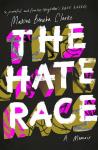
Maxine Beneba Clarke, The hate raceMaxine Beneba Clarke’s Stella Prize short-listed memoir, The hate race, is one powerful book. I’ve been reading about racism since my teens during the Civil Rights years, and have read many moving novels and memoirs. Clarke’s book holds its own in this company.

The book chronicles Clarke’s life from early childhood through to the end of high school, but she bookends this chronological story with a prologue and epilogue which are set later, during her son’s first year of school. This approach to structuring her story is effective, because it enables her to reflect on what’s changed a generation later. And the answer is, not much, which is such an indictment on Australian society.

Before saying more, though, I need to back-pedal a bit, and make sure you know who Clarke is – besides being the writer of a well-reviewed collection of short stories, Foreign soil. She’s the Australian-born daughter of West Indian-born parents who migrated to Australia from England in 1976. As a young girl she was mystified by people asking her where she was from, and confounded when these same questioners became angry when she responded, honestly, Australia. This is, I know, a common story, but is not, I think, well-documented in our literature. However, as Clarke would say, what’s a story for, if not to tell how it went.

And that’s what she does, tells us how it went – and went, and went. The bulk of the story is, as I’ve said, told chronologically but Clarke hangs each chapter, each step in her chronology, around a specific topic, such as her involvement in sport or debating, or that transition period between primary school and high school. She captures beautifully the trajectory of thirteen years of schooling from the early 1980s to the mid 1990s. Although everyone’s experience is different, much of what she describes is universal: the first day of school, the yearning for a specific toy (like a Cabbage Patch Kid), parties, first love, getting braces, and so on. What isn’t universal, though, is her experience of being a child of colour.

This is how …

Reading her story is gut-wrenching. She faces racism – direct and indirect, intended and unintended – from her first day of pre-school to the end of high school. One high school class-mate, who ranks the girls in the class (as if that’s an acceptable thing to do anyhow), doesn’t rank her at all “because animals didn’t count. Greg Adams said that would be bestiality”. She’s called every name you could possibly think of – and more you probably couldn’t. She’s spat at and threatened. Luckily, she has friends too – otherwise it’s hard to imagine how she could have survived.

The disappointing thing is the inept handling by the schools, because it’s clear that for all the work ostensibly being done in schools to promote tolerance and harmony, only some of it is getting through*. There’s only so much schools can do, of course, given students’ main role models are their parents, but the least teachers can do is take the racist behaviour seriously and respond in a meaningful and supportive way. This, however, is not always the case: “He’s trying to wind you up. It’s just a little bit of nonsense. Don’t give him the satisfaction, Maxine”, says one high school principal, for example. That’s not good enough. Writing about her early primary school years, Clarke says this:

I knew before I started big school that, for me, the playground would always be a battlefield: a world divided into allies and enemies. At five and a half, racism had already changed me.

After a while, you start to breathe it. Another kid’s parents stare over at our family on the first day of school with that look on their faces. You make a mental note to stay away from that kid … You tell a teacher someone is calling you names. Blackie. Monkey girl. Golliwog. The teacher stares at you, exasperated, as if to say: Do you really expect me to do something about it? The next time you have a grievance, you look for a different teacher. This is how it changes us. This is how we’re altered.

Towards the end of the book, her boyfriend asks her to come to his place to swim in his family’s pool. She’s uncertain:

I had no reason to believe Marcus’ family would have an issue with the two of us, based on what I knew of them, but I wasn’t sure I wanted to put myself through the stress of finding out.

This is how we edit our lives.

How we brace against the blows.

The book isn’t unmitigated misery. Clarke mixes up the tone, sometimes using humour to make her point – it never hurts, after all, to see the absurd side of things – but the book is a memoir, not an autobiography. This means that it is not about the whole life but a part of it, and in Clarke’s case the part that she wants to share, to expose, is her experience of racism while growing up. Her goal was not vindictive. She writes in her Acknowledgements that she loves Australia, but she wanted to show “the extreme toll that casual, overt and institutionalised racism can take: the way it erodes us all”. That, she certainly does.

There are things about the book that I could quibble about, but they are petty in the face of its overall power. I don’t like to describe books as “important” or to say that everyone must read them, but for a readable and devastating understanding of how racism, in all its guises, impacts on a personal, rather than a theoretical or historical level, The hate race is essential. It’s a story that needs, as indeed Clarke aimed, to be “written into Australian letters”. It deserves the accolades it has received.

Kim (Reading Matters) also admired this book.

aww2017 badge

Maxine Beneba Clarke
The hate race
Sydney: Hachette Australia, 2016
261pp.
ISBN: 9780733632280

* This is the 1980s and 1990s I know, but I use present tense here about schools because it’s pretty clear that not a lot has changed.

Louisa Atkinson, A voice from the country: January (Review)

Louisa Atkinson, as I wrote in a post a few years ago, was a pioneer Australian writer. She was a significant botanist, our first Australian-born woman novelist, and the first Australian woman to have a long-running column in a major newspaper. It was a natural history series titled A Voice from the Country which ran in The Sydney Morning Herald for 10 years from 1860. I’ve shared here a few natural history articles/essays written by Americans, such as John Muir, but never an Aussie one. That’s going to change here, now – for a couple of reasons. Firstly, because I can, given the articles are findable through Trove, and secondly because the Australian Women’s Writers Challenge plans to focus this year, among other things, on classic Australian women writers. You can’t be a more classic Aussie writer than our Louisa!

But, which of Louisa Atkinson’s many columns should I do? I read a few and decided on one from her first year. In fact, I think it might have been the very first in the series. It’s titled “January”, which makes it particularly appropriate this month. Atkinson was living in Kurrajong, on the lower slopes of the Blue Mountains, in “Fernhurst”, the house built by her mother.

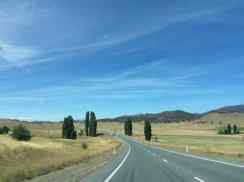
Monaro region, in January

January in the Monaro, 2010s not 1860s

So, the piece is about what it says, January. She describes the birds and plants in particular that you see in January in her region. Here is the opening sentence:

A WARM drowsy month, without the opening promise of Spring or maturing riches of Autumn.

Beautiful don’t you think, and it perfectly catches the middle of the Australian summer, particularly when you read the next couple of sentences:

In dry seasons the grass is scorched and white, the dust flies along the road before the least puff of wind, much to the annoyance of the traveller. The observer of nature finds his field of observation limited, yet not altogether barren.

In other words, it is dry, more yellow I’d say than white, and there’s nothing much happening, nature-wise. “Much” though is the operative word, because it’s “not altogether barren”, as she goes on to show by describing, for example, the activity of various birds such as the “waterwagtail or dishwasher”, laughing jackasses, lowries. Now, here’s another reason I chose this piece – her language. There’s the obvious fact that Atkinson has an engaging way of writing about nature, but what I want to explore here is its unfamiliarity.

By this I mean unfamiliar expressions and names. Regarding the former, I often find in articles I locate through Trove, language that is more erudite than we see in today’s newspapers. It suggests a higher level of literacy in readers. Take, for example, Atkinson’s use of “ferruginous” to describe the colour of a fungus. We might find that word in a novel these days, but not, I expect, in a general interest newspaper column. Of course, it may also suggest that newspapers were geared more to the elite than to the general populace? I don’t know enough about newspaper history to say any more on this. Sometimes, it’s more that word usage has changed. For example, Atkinson writes that some young birds “essay flight”. We rarely see “essay” used in that sense these days. I love that reading these older articles can give us insight into other times beyond the subject matter of the writing.

The other unfamiliarity relates to her naming of things. I know what laughing jackasses and lowries are – kookaburras and crimson rosellas*, respectively – but these names aren’t commonly used now. However, I have no idea what a “waterwagtail or dishwasher” is. Is it the willie wagtail and nicknamed dishwasher because its tail swishing back and forth reminded people of a dish mop? So, I did a Google search, and found an article titled “21 Facts about Pied Wagtails” from UK’s Living with Birds website. Facts 6 and 7 are:

6. Few birds have as many country names as the pied wagtail. They range from Polly washdish and dishwasher to the more familiar Penny wagtail, Willy wagtail and water wagtail.

7. The origin of the washer names is a mystery, but it may be because women once washed clothes, as well as pot and pans, by a stream or village pump, the sort of place that pied wagtails also frequent.

So, not the action of their tail perhaps but the places they frequent? I’m not a bird expert, but my understanding is that this White or Pied Wagtail is a “vagrant” in Australia, and that what we call the willie wagtail is from a different family. Which one – if either of these – is Atkinson talking about? Regardless, my point is that reading past writing can trip us up when the writers described plants, animals or objects using terms or names we don’t use now. We have to be careful – particularly those of us not expert in subjects – about drawing wrong conclusions from our reading.

POSTSCRIPT, 31 Jan 2017: Pam (Travellin’ Penguin) checked out “dishwasher” through her bird contacts, and was pointed to the book Austral English, which says that it’s “an old English bird-name for the Water-wagtail; applied in Australia to the Seisura inquieta … the Restless Flycatcher”. It quotes from the 1827 Transactions of the Linnæan Society, that the bird “is very curious in its actions. In alighting on the stump of a tree, it makes several semi-circular motions, spreading out its tail …”.

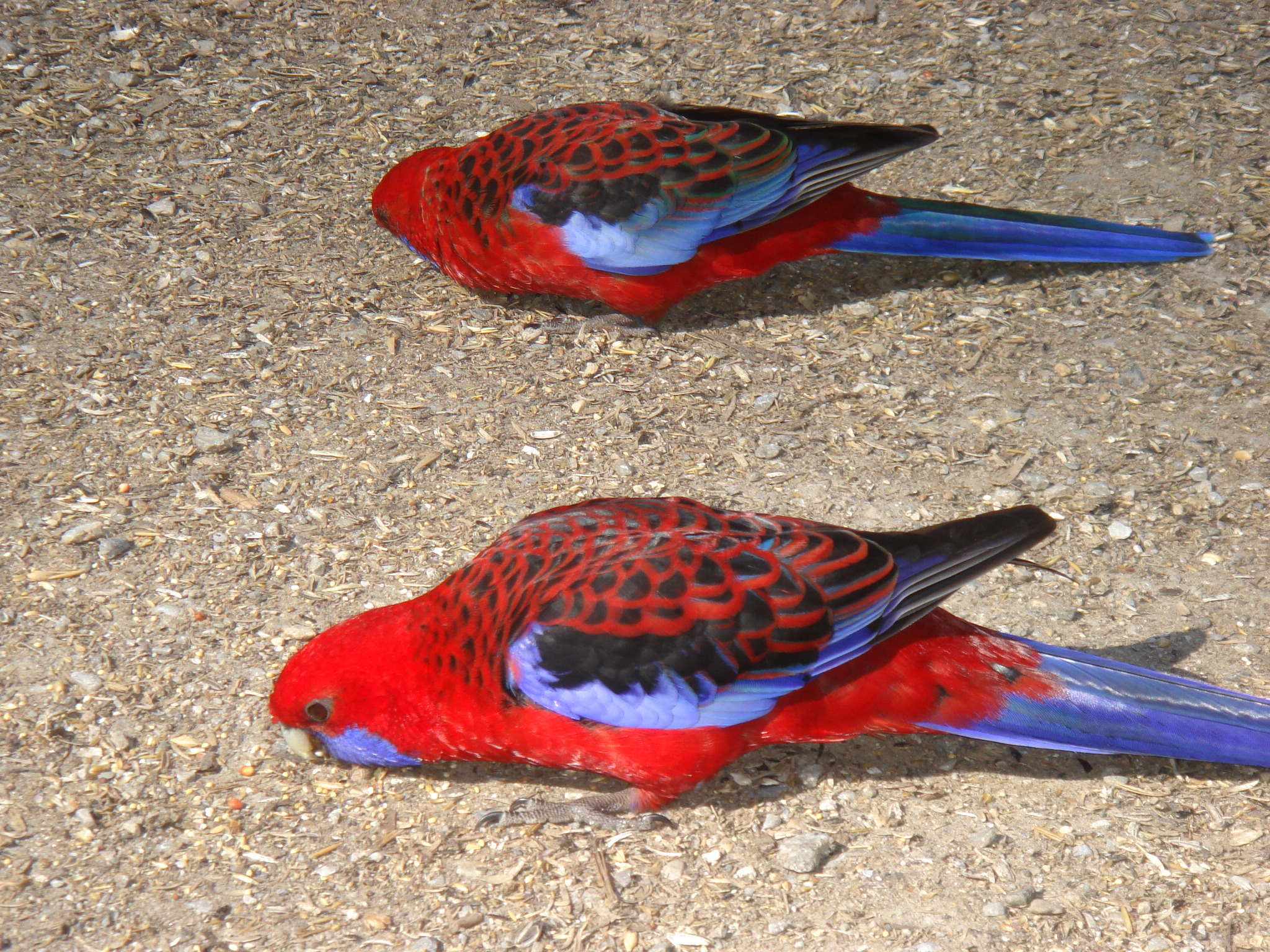
Crimson Rosellas

Crimson Rosellas by Kevin Tostado, using CC BY 2.0, via Wikimedia Commons

Enough of that, though. Let’s get back to Atkinson and her description of the lowries (i.e. crimson rosellas).  They are common to my garden – and her writing captures them perfectly:

A flock of lowries, young and old, frequent the fields, whence the oaten hay was gathered, nor confine their depredations there, assisting themselves liberally to the ripening peas and beans, which the gardener intended for seed, and even pursuing these favourite morsels into a verandah where they are spread to dry. The flock presents a brilliant appearance ; the full plumaged birds are vivid crimson, blue, partially pied with black, whilst the nestlings are variegated with green.

And now to conclude I’m going to jump five years to a report in the The Sydney Morning Herald in January 1865 of a meeting of the Horticultural Society of Sydney. It reports on various attendees bringing all sorts of plant specimens to the meeting, most of them exotic, and then, towards the end, there’s this:

Miss Atkinson, of the Kurrajong, sent a jar of jam, of the Lisanthe sapida, with the following remarks –

“LISANTHE SAPIDA – A small shrub of the Epacris family, bearing a crimson fruit, enveloping a single stone; good bearer, crop lasts about two months or more, coming in in November. To make jelly—boil the drupes, adding a few spoonfuls of water; when soft strain the juice off, add one pound white sugar to a pint, and boil to jelly. The fruit makes a pleasant tart—the Lisanthe Sapida grows in poor sandstone ranges. If any member of the societv would like to cultivate the shrub, and cannot procure the fruits in their locality, it is to be met with in the Kurrajong.”

A vote of thanks was given to the exhibitors, and more especially to Miss Atkinson, who it was remarked had made herself most remarkable for her endeavours to bring colonial productions into notice.

The lisanthe (or lissanthe) sapida, aka native cranberry, is, as you might have guessed, a plant native to Australia. Lovely to see recognition, by her peers, of a woman, and one who clearly loved and promoted the natural environment in which she lived.

* Mountain lowry is an alternative name for the Crimson rosella but is not, I believe, the most common one, particularly in New South Wales, but readers can correct me if I’m wrong.

aww2017-badgeLouisa Atkinson
“A voice in the country: January”
in: The Sydney Morning Herald, 1 March 1860
Available: Online

Friedrich Gerstäcker, Australia: A German traveller in the Age of Gold (Review)

Friedrich Gerstacker, AustraliaFriedrich Gerstäcker’s Australia: A German traveller in the Age of Gold was first published in its original German, as Australien, in 1854. Gerstäcker did prepare, at that time, an English language version of his travels, but the section on Australia, at least, was much shorter than his German edition, and is all English readers have been able to access – until now. Amazing really.

You may remember that I mentioned this book back in November, because it inspired a Monday Musings on 19th century travellers. It is a beautifully conceived book. It has a brief note on the text at the beginning, and an afterword at the end. There is also a decent index, and extensive end notes sharing editor Monteath’s in-depth research. These notes added significantly to my enjoyment and understanding of Gerstäcker’s writing.

So, who was this Friedrich Gerstäcker? A German, he travelled around the world from 1849 to 1852, partly funded by a German publisher. Australien was the fourth of five volumes. His writings were loved in Germany and he was, apparently, a household name there for many years – starting when his mother, unbeknownst to him, gave the diaries he was sending home during his 1837-1843 American travels to a publisher!

Now, as I said in my Monday Musings, historical travel writing can provide valuable “primary” insight into different times and places. But the best travel writers are those who, in addition to that, use language well and give us themselves. Gerstäcker is such a writer.  He provides revealing insights into mid-nineteenth century Australia. But, in addition, his writing is engaging: it has touches of humour mixed with deeper reflection, it includes some gorgeous descriptions, and we get a sense of who he is.

“the truly astonishing number of public houses” (p.21)

Gerstäcker arrived in Sydney in March 1851, and left it at the very end of September in the same year. He provides a fascinating picture of Sydney life at the time, commenting on the plethora of drinking establishments (or “public houses”), but also expressing some astonishment that his prejudices regarding visiting a “criminal colony” were ill-founded. It was not, as expected, full of “an indefinite number of murderers, thieves, burglars and other dreadful, horrible, characters”. He then travels, by the Royal Mail, canoe and foot, from Sydney, via Albury and the Murray River, to Adelaide. The chapters describing this trip (Chs. 2-5) are probably the most interesting in the book.

In South Australia, his focus is on visiting some of the German communities there, particularly in Tanunda, in the Barossa wine region. He sees his role partly as providing “real” information about places for would-be German emigrants, and reflects thoughtfully on what emigration means. He notes that Germans had made themselves a living, one that many “would never have been able to establish in Germany in that time and with those means” but he also sees the cost. He writes:

Now the question still remains of course, how much the heart is still attached not only to old habits but also to old friends and loved ones and perhaps even the old homeland itself, and whether it really was so impossible to secure a living back there that one really had to tear oneself away from everything one held dear and transplant oneself in cold foreign soil. Sometimes – and how often! – a slightly better living is too dearly bought through emigration …

He also writes about the practice of religion by the Australian Germans, particularly the tensions between different groups, and he describes in some detail how government-supported education works in South Australia, pointing out some of its illogicalities. This would have been of interest to prospective immigrants, and is now to current readers and researchers. The material most relevant to contemporary Australians, though, was his navigation of the Murray. How navigable was it was the question on administrators’ lips and Gerstäcker was able to provide first-hand knowledge.

He returns to Sydney by boat, in August, and notices a dramatic change there, providing an on-the-ground insight into the impact of the beginning of the gold rush. In his “short absence” Sydney had changed from “a busy city, but otherwise calm, to all appearances perfectly reasonable” to a city in which everyone was “dizzily, yet tirelessly dancing around the glistening false God of the newly found gold”. His departure being delayed for boat repair reasons, he decides to visit some of the goldfields and the picture he draws is one of frenzy, excitement, and loss. He overlays this with common-sense advice, based on his Californian goldfields observations, that it is generally more profitable to work one claim systematically than to be forever upping stakes to chase another chance to strike it rich.

Interestingly, he castigates the media – the newspapers, in other words – on several occasions. He writes, for example, of people’s failure to make their fortunes, and comments:

All of this is not reported in the Australian newspapers: they only highlight the positive elements of the picture and their purpose and goal is easily recognisable. They want people to come to Australia, workers …

Ah, the media … but that’s another whole story.

“indestructible, unavoidable, unbearable gum trees everywhere” (p. 43)

Gum trees

A boring forest of gum trees (Southern NSW)

You have probably realised by now that while Gerstäcker’s writing is generally informative, it is also limited by the perspective of his times, and by his own cultural biases. For example, imagine my horror at his ongoing disparagement of our gum trees! They are “sorry specimens”, “dull, green” or “dun-coloured”.

Soon after his arrival in Sydney he writes that “strangely enough, all the beauty of the scenery is restricted to the sea and to the nearby coast of Port Jackson”. He shows his cultural hand, most obviously, when he heads into the, admittedly beautiful, Blue Mountains region near the end of his trip, and writes of Mount Victoria that

this was the first place in Australia where I have seen real scenery of a quite impressive nature. Mount Victoria is itself a fairly significant mountain, rugged and picturesque, sloping down into a depression that surrounds it on three sides, forming a wide, deep, densely wooded valley. The vegetation is, however [oh dear, here it comes], the same as in all other parts of Australia that I have seen so far. Gum trees, nothing but gum trees, which makes the remaining countryside so terribly monotonous …

He does admit, a couple of sentences on, however, that seen in the distance “decorated … with the sunlight and … draped … in colourful, misty veils” they have a “mysterious aura”. But then he continues that “in reality they are also just plain, dun-coloured gum trees, all with the same leaves”. I could retort that any single-tree-species forest can be monotonous, but it’s not worth it. He won’t hear me!

There’s a lot more to share and enjoy, but I can’t finish this lengthening post without mentioning his descriptions of Australia’s “Indians” as he calls indigenous Australians. Strangely, Monteath only discusses, in his Afterword, the sources Gerstäcker uses for the extensive information he provides about indigenous life and culture in chapters 8 and 9. He doesn’t comment on Gerstäcker’s attitudes to the “Indians” in his travels, attitudes which are mostly derogatory and fearful, often based more on hearsay than on experience. For example, Gerstäcker repeats the stories he’d heard of the “Indians” killing people for their “kidney fat”, a widely-held belief at the time that Monteath explains in his very useful end-notes.

On his first sighting of “Indians”, near Albury, Gerstäcker writes of finding himself

in amongst the eternal dreary gum trees and amongst the black, dirty, treacherous, murderous people of these forests.

Funny how, despite this, he manages to survive his long trip from Albury to Adelaide, with minimal incident even though he did much of it alone and was carrying items of great interest to the “blacks” he met! Most of the time he repeats stories of “their” treachery, and he regularly describes them as dirty and ugly, but he also says that he does not agree with “acts of cruelty against Indian tribes”. It is “right and proper to apply restraint”, he says, but

we can hardly expect that they should immediately conform to rules and practices which, after all, have been imposed on them by the whites.

And right at the end of his trip, while visiting islands in northern Australia, he comments that he is

firmly convinced that the primary cause of all hostility, indeed of all acts of cruelty toward the savage tribes, is the white man himself.

This is an engrossing book that I took some time to read. It’s certainly not a page turner, but it is full of information, observations and reflections that would appeal to diverse interests. For this reason, it’s probably difficult to market. How lucky we are to have publishers like Wakefield Press willing to take a risk on books like this.

Friedrich Gerstäcker
Australia: A German traveller in the Age of Gold
(Ed. Peter Monteath; Trans. Peter Monteath and his team)
Mile End: Wakefield Press, 2016
303pp.
ISBN: 9781743054192

(Review copy courtesy Wakefield Press)

Bruce Pascoe, Dark emu, black seeds: Agriculture or accident? (Review)

Bruce Pasco, Dark emu

Indigenous author Bruce Pascoe’s Dark emu, black seeds: Agriculture or accident? was my reading group’s October book, and a very interesting read and discussion it turned out to be. It’s not a simple book to discuss and really got us thinking, eliciting a variety of responses, though we all agreed with Pascoe’s basic premise that we Australians need to revise our understanding of, and beliefs about, Australia’s history. How could we not?

Publisher Magabala’s website says Dark emu

argues for a reconsideration of the ‘hunter-gatherer’ tag for pre-colonial Aboriginal Australians and attempts to rebut the colonial myths that have worked to justify dispossession.

Pascoe, they continue, contends that indigenous “systems of food production and land management have been blatantly understated in modern retellings of early Aboriginal history”.

A case to be argued

Dark emu is, then, a book that is determined to argue a case – and herein lies its challenge. In his Introduction, Pascoe sets out his main thesis which is that Aboriginal economy was “much more complicated … than the primitive hunter-gatherer lifestyle we had been told was the simple lot of Australia’s First People”. He asks:

Could it be that the accepted view of Indigenous Australians simply wandering from plant to plant, kangaroo to kangaroo in hapless opportunism was incorrect? (p.12)

Now, there are a couple of things here that disconcerted me. Firstly, emotive language like “hapless” doesn’t help when you want to present a logically argued case. And, anyhow, “hapless” is not a word I would ever apply to hunter-gatherer societies. Being hunter-gatherers doesn’t, to my mind, mean they don’t know their environment and don’t use this sense and knowledge in their hunting and gathering. But secondly, I didn’t comprehend his argument that the early settlers had no legitimate right to seize the land because Aboriginal Australians were practising agriculture:

In denying the existence of the economy they were denying the right of the people their land and fabricating the excuse that is at the heart of Australia’s claim to legitimacy today. (p.17)

Arguing this seemed to me to imply the corollary that if indigenous Australians did not have this economy, if they were indeed simply hunter-gatherers, then taking the land would be legitimate? But surely the fundamental truth is that, regardless of how indigenous people were living and using the land, it was their home and they had a right to be treated as the owners? Being on the path to sedentism, practising agriculture and aquaculture, didn’t, in my mind, make their ownership of the land more legitimate. Did it? I needed to understand this a bit more so, unusually for me, I set off looking for discussions of the book before completing my review, and I found the answer.

It was in a discussion of the book by Amy McQuire at NewMatilda.com. McQuire wanted to know why Australia had “so readily embraced” Dark emu, and whether it meant Australians must now “embrace the issue of sovereignty and treaty”. She quotes Professor of Law Megan Davis (from It’s our country: Indigenous arguments for meaningful constitutional recognition and reform):

“It mattered whether claiming a territory was done by settlement or whether by conquest and cession, because each had differing implications for the reception or not of British law.

“Settlement occurs when the land is desert and uncultivated and it is inhabited by backward people.

“Conquest means that it is a forcible invasion of occupied land and cession means that there is a treaty over occupied land. In the case of conquest, the laws of people conquered apply until the Crown or other foreign power laws apply, and in regard to cession, a treaty is entered into but the Crown or foreign power abrogates it.”

She writes “When lands are cultivated, then they are gained through conquest or they are ceded by a treaty”. And when lands are conquered or ceded, it still has laws of its own.

“Until the Crown asserts sovereignty and actually changes them ‘the ancient laws of the country remain’.”

Ah, so now the penny dropped. It’s all about the “law” (European law, that is), not about “reason” or “logic”. Pascoe makes reference to “Australia’s claim to legitimacy”. He discusses the way colonisers can fabricate history and be reluctant to credit colonised peoples (e.g.. p.61) for their achievements, and in so doing underrate sovereignty. But it didn’t properly click with me. I consequently didn’t see why he was arguing so forcefully for this “new” vision of pre-colonial Aboriginal Australian life. I was reading it more as an interesting, and yes very important, contribution to our understanding of Australian history, and I was seeing it as a way of correcting the historical record, and therefore of restoring the “truth” and, critically, “Aboriginal pride in the past”. But I didn’t fully grasp the import of the distinction he was making (and why, accordingly, the odd emotive word or long bow crept in.)

Convincing the doubters

However, this little niggle didn’t stop my being thoroughly engaged by the book. I loved the way Pascoe interrogates records from the past, particularly the journals of explorers such as Charles Sturt and Thomas Mitchell, to prove that Aboriginal Australians* were developing a sedentary culture based on intensification of agriculture and aquaculture. They managed the land, “manipulating the landscape” to produce crops for harvesting, corral animals for hunting, and trap fish for capturing and spearing. They irrigated, they built wells and dams, they stored food for future use. They built dwellings and lived in village groups. And they had been doing so for thousands, if not tens of thousands, of years making them among the world’s earliest, if not the first, agriculturalists (depending on whose “dating” you believe).

Pascoe, however, doesn’t stop at his argument that they practised agriculture. He also contends that they practised it sustainably, using a variety of techniques, including what archaeologist Rhys Jones called “firestick farming”. He argues that there’s much about Aboriginal practices that we could learn and use today, and that modern Australian agriculture could be more sustainable, particularly in our environmentally-uncertain-climate-changing world, if we focused our efforts on Australian plants and animals.

The depth of Pascoe’s research is mind-boggling, and is perhaps partly explained by his comment in that NewMatilda.com article that academics had criticised his previous writing, which apparently used his own words. He decided “to use an authority that they respected … the explorers and the settlers… you know the ‘heroic’ first settlers.” (Oh dear!) But he also draws on a wealth of other research from anthropologists (like WEH Stanner), archaeologists (like Rhys Jones), historians (like Gill Gammage and Rupert Gerritsen), and others. The book is heavily but not intrusively footnoted (I do like a footnote!), and contains an extensive bibliography.

While I would never have called myself a doubter needing to be convinced, it is true that, for all my interest in the subject, my knowledge of indigenous history and culture was rather out of date. Dark emu should, really, be read by all Australians, and at 156 pages of text, it is not a big ask.

Several of my blogger friends have reviewed this book, including historians Janine (Resident Judge of Port Phillip) and Yvonne (Stumbling Through the Past), as well as teacher-librarian Lisa (ANZLitLovers) and biographer Michelle (Adventures in Biography).

* Terminology, terminology! I note that Pascoe mostly uses the term Aboriginals.

Bruce Pascoe
Dark emu, black seeds: Agriculture or accident?
Broome: Magabala Books, 2014
175pp.
ISBN: 9781922142436

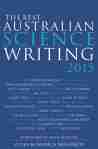
Bianca Nogrady (ed), The best Australian science writing 2015

Bianca Nogrady, The best Australian science writing 2015It was one of the more science-minded members of my reading group who tentatively suggested we add The best Australian science writing 2015 anthology to this year’s schedule. I’m not sure why she was uncertain because we’ve shown ourselves to be pretty open readers. Our main question when someone suggests a book is “Will there be something to talk about?” I can’t imagine a book like this lacking in things to talk about. And so we scheduled it.

Five editions of this anthology have been published, each with a different editor, so I was tickled to find that our edition’s editor was Bianca Nogrady whose thoughtful book about death and dying, The end, I reviewed a couple of years ago.

Now, an anthology like this can be read in different ways. You can read it sequentially, as I did because I know editors put thought into ordering their content. Nogrady did a careful job here, not butting articles on similar topics up against each other, but ordering them in a way that built on our understanding. Alternatively, you can pick and choose depending on your interests, though the titles don’t always give away their contents. What are science writers doing getting creative with their titling! Or, in this case, you could meander through the anthology by following the links to “like” articles provided at the end of each article. Presumably your perambulations would get you through them all at the end! This approach might be a fun (and enlightening) way to read it, but I was on a deadline, so …

I started at the engaging Foreword by Adam Spencer, the Australian comedian and radio presenter with a special interest in science and maths, and read on. I was quickly engaged and read it almost like a page-turner. Truly! Of course, there was the odd article that didn’t really grab me, and some grabbed me so much that I’ll not forget them in a hurry, but overall it was an enjoyable, stimulating read.

In her Introduction, Nogrady analyses the content. She says that while the 2014 anthology featured several articles “on our changing climate and its repercussions, this year there were an overwhelming number of submissions about our vanishing biodiversity, and what could be or is being done about it”. She argues that this “suggests a shift away from the big picture catastrophe of climate change – in the face of which many of us feel utterly powerless – towards a more specific and manageable concern”. She also notes that there were “a number of articles exploring the rapidly evolving field of robotics and artificial intelligence” and observes that “despite being a relatively small nation, we have long held our own in the global science and technology arena”. This is certainly borne out by the articles in the anthology. I’d add a third thread – medical issues. We probably don’t need an explanation for this one. Who is not interested in health and medicine!

Entrants for the annual Bragg UNSW Prize for Science Writing, named for the father and son who were Australia’s first Nobel laureates, form the core of the anthology. The 2015 winner was Christine Kenneally’s “The past may not make you feel better”. Excerpted from her Stella prize-winning book The Invisible History of the Human Race, it explores, from multiple angles, DNA testing and genomic counselling, using Huntington’s chorea as its reference point. The runners-up were Idan Ben-Barak’s “Why aren’t we dead yet”, a wonderfully lucid and surprisingly entertaining description of pathogens and the immune system, and Trent Dalton’s “Beating the odds” about the driven Australian man who has developed an artificial heart.

There are several reasons why I enjoyed the read, and I’ll dot point them to keep it simple:

  • subject matter: although I’m not at all scientifically inclined, I recognise the significant role science (or STEM) plays in our lives – in health, the environment, our buildings and transport, for a start. These essays, selected for their ability to communicate scientific issues well, were just what I needed to bring me up to speed, particularly in those areas I’m pretty ignorant in, such as robotics. James Mitchell Crow’s  prize-shortlisted article “Robots on a roll”, for example, introduced me to “big” robots working on the Brisbane docks and in Pilbara mines.
  • radical ideas: some articles challenged current thinking or practices. These included Brodie Smith’s “Playing God” on the idea that we should use triaging to manage the problem of vanishing species and Michael Sleaze’s also prize-shortlisted article, “Aliens versus predators: the toxic toad invasion”, which argues that this invasion, while not a good thing, is not the disaster we’ve believed it to be.
  • esoteric topics: by this I mean articles on topics I would never have known about had I not read the anthology. Lauren Fuge’s “The women who fell through the cracks of the universe” delves into late 19th to early 20th century astronomy to tell us about “Pickering’s harem“, the mostly unsung women (or “human computers”) who contributed hugely to “the first Henry Draper Catalogue, a catalogue of more than 10 000 stars classified according to spectrum, published by Pickering in 1890”. Of course, I loved that this article was as much about history as about science!
  • style: the articles varied in style and tone. There was even a poem or two. There were some written in first person, giving a personal perspective. In “How I rescued my brain”, David Roland took us on his journey of diagnosis, treatment and eventual recovery from his stroke. And there were some written with a light, humorous touch. Ian Lunt’s “Field guide to the future”, for example, provides a delightful comparison between traditional printed field-guides (I particularly love wildflower ones) and the new digital ones.

But here’s the common problem with anthologies and collections – how to do the book justice without naming every contribution. I think I’ll just share a few quotes, to give you a flavour, starting with Slezak on the toads:

The toads are spreading further and faster than anyone expected, and they do have a devastating impact when they first arrive in a region. But most animals are adapting to their presence surprisingly quickly, and some even benefit.

‘If you’re a frog, the toad is your superhero,’ says Shine. ‘You’ve got its picture up on the wall. This guy is coming in, he looks like a frog and is killing everything that attacks frogs. If you’re a green tree frog, what more could you hope for in life?’

[…] ‘I’ve gone to thinking it’s a good-news story about the resilience of ecosystem. (from “”Aliens versus predators: the toxic toad invasion”)

Here is Ian Lunt on the fact that printed field guides must use words (not audio) to describe bird calls:

With a budget for paint – one illustration per species – but none for sound, cheerful ornithologists turned to onomatopoeia: ‘Pee-pee-pee-peeooo, Wee-willy-weet-weet, It-wooa-weet-sip, Zzzt zzzt zzzt. Cher-cher-cherry-cherry, Wah-i-wah-i-wah-oo, Twitchy tweedle, Kupa-ko-ko, Lik-lik-lik’. Less cheerful colleagues followed suit: ‘Chop-chop, Four o’clock, Wide-a-wake, Walk to work. Want a whip? It’s for teacher. Tweet-your-juice, Sweet pretty creature’. (All real calls, I assure you.) (from “Field guide to the future”)

And thirdly, here is Idan Ben-Barak on the human immune system:

And so, an immune system must correctly identify a diverse array of harmful creatures and react to each one in its own special way. Oh, and you know what would be very helpful? If it could remember the pathogens it’s encountered before and store this information on file, somehow, so that it could make short work of them the next time they pop in. And it needs to be prepared for new invaders it’s never encountered before, because life is like that. And it needs to be prepared for completely new invaders nobody has ever encountered before in the history of humankind, because pathogens evolve over time. And it needs to be economical, so the body can keep it operational. And it needs to be fairly unobtrusive, so the body can keep functioning normally. And it needs to do it all very quickly, every time, or the body will be overrun, because pathogens multiply like the devil. (from “Why aren’t we dead yet”)

Hopefully by now, I’ve convinced you that this is a great read – and if I haven’t, well, you’re probably a lost cause! Either way I’ll leave it here.

awwchallenge2016Bianca Nogrady (ed)
The best Australian science writing 2015
Sydney: NewSouth Publishing, 2015
ISBN: 9781742242231 (ebook)

Bidda Jones and Julian Davies, Backlash: Australia’s conflict of values over live exports

Bidda Jones and Julian Davies, BacklashWhen co-author and publisher Julian Davies sent me Backlash to review, he described it as “our latest and perhaps most ambitious book so far – non-fiction”. Hmm, I thought, that’s quite something from the publisher of some very interesting and, it seems to me, ambitious books. But now, having read Backlash, I understand what he meant. For a start, Backlash comes straight from the heart of its writers, but more than this, it is ambitious in that its goals and messages reach beyond the specific issue of live exports and animal welfare, as important as those are.

It’s unlikely, if you’re Australian, that you didn’t see or hear about the 2011 Four Corners television episode on the live export of animals to Indonesia, A Bloody Business*. While the actual audience on the night was, Jones and Davies say, comparatively small, the impact – in the short-term in particular – was huge. This book tells the wider story – how the program came about and what happened afterwards. In doing so, it explores the ramifications of the trade, weighs economic expediency against ethical considerations, exposes the democratic processes by which decisions are made, and asks us to think about what it all says about us as a people. As the subtitle says, it’s about “conflict of values”. Live export might be the subject of this particular story but, for Jones and Davies, it exemplifies something bigger, something to do with the sort of society we wish to be and how we might get there. For this reason, as for any, Backlash is a valuable read.

What I didn’t know, or didn’t remember, when I started reading the book is that co-author and zoologist Bidda Jones, head of science and policy at RSPCA Australia, along with Lyn White, animal activist and now campaign director for Animals Australia, were the people who took the issue to Four Corners. It was Jones’ research and White’s video footage which convinced Four Corners to do the story. After the broadcast, politician Barnaby Joyce asked Jones and White why they hadn’t taken the story to him and his Opposition colleagues. The reason was simple, they had tried approaching politicians but had failed to garner any interest. So, to the media it was.

There is no fancy writing here. The book uses plain, direct language as befits its aims. There is little use of flashy rhetorical devices to sway opinion. The authors focus instead on fact and logic to present their case. The book is carefully structured. It starts with an introduction which sets out the book’s aims and explains that although both authors contributed to the book it has been written in Bidda’s first person voice. Chapter 2 briefly recounts their experience of watching the Four Corners program. The book then moves back in time and, over several chapters, chronicles how the program came about: the research (which included Lyn White’s filming trip to Indonesia), the lobbying, and the strategic planning. We then return, at Chapter 16, to the screening of the program and a description of its content. The rest of the book discusses the show’s aftermath. They detail the main cases for and against live export of animals, the initial widespread strong reaction which resulted in the government imposing a short-term ban on live export to Indonesia, and the backlash against this decision which resulted in live export being restored. Since then, they argue (though others argue differently), no real progress has been achieved in improving the welfare of animals. It’s a distressing and depressing story about the failure of our duty of care to animals.

The book is not, as they admit in the Introduction, “an unbiased examination of the different sides of the live export debate”, that is, they decisively argue the animal welfare case, just as Bill McKibben in Oil and honey starts from the basis that he is a climate change activist. However, they also argue that they don’t take “an inflexible ideological position”. They recognise that ours is a “pluralistic society” with many different stakeholders. I understand this to mean that they are vegetarians** who would prefer no animals be killed for food, but they recognise that there are many people who do wish to eat meat. Their position, then, is not to stop animal farming altogether, but to ensure that the welfare of the animals involved is given the priority it should in a civilised society.

Achieving better animal welfare, though, is easier said than done. In chapter after chapter, they demonstrate how “money speaks and is heard”, how bureaucratic processes are manipulated, how changes in political personnel subvert plans, how public policy is too often formed under the influence of power-plays and egos rather than logic and reason. And so, despite a huge public outcry and clear public concern, in the end economic arguments outweighed ethical considerations. The few recommendations made to improve animal welfare conditions were either watered down (such as mandatory stunning pre-slaughter made “a recommendation” not “mandatory”), were not given a proper regulatory framework, and/or got lost in the bureaucracy.

By now, you are probably wondering if the book is all about nay-saying, but it’s not. Jones and Davies propose a range of options, starting with improving the welfare of animals involved in live export. This means improving the selection of animals to be exported, improving the transport conditions under which they are exported, and then improving their treatment and slaughter at the other end. Better, though, they argue, would be to stop live export altogether and focus on the meat trade. This is what New Zealand decided to do in 2007 when it ceased live export out of concern for animal welfare and for its reputation as a country which cared about animal welfare. The problem is that ceasing live export requires longterm planning (including the rebuilding of abattoirs in northern Australia) but contemporary Australian politics is epitomised by “short-termism” underpinned by “a built-in avoidance of complex issues”. I don’t think many of us would argue with their statement that:

Altering the land management practices of pastoralists over millions of hectares requires a long-term outlook and courageous decision-making – rare qualities in today’s political climate.

And so, issues like animal welfare concerns, environmental degradation and insecure export markets are ignored in favour of short-term economic gains.

At the beginning of the book, Jones and Davies state that

a central premise of this book is that a well-governed society develops ways to reconcile economics and welfare so that both suffer as little as possible.

They stay true to this throughout demonstrating that it is possible to balance economic considerations with ethical concerns. (Just look at New Zealand for a start!) Australians, Jones and Davies believe, have shown that they (we) do not condone “entrenched cruelty” to animals, but so far people power has not won out. This story has a way to go yet …

awwchallenge2016

* You can watch the program online (in Australia at least) but warning, it it VERY unpleasant viewing.
** Please see Bidda’s comment below clarifying that they are not vegetarians, as I thought I’d read.

Bidda Jones and Julian Davies
Backlash: Australia’s conflict of values over live exports
Braidwood: Finlay Lloyd Publishers, 2016
207pp.
ISBN: 9780994516503

(Review copy courtesy Finlay Lloyd Publishers)

Jane Jose, Places women make (Review)

Jane Jose, Places women make“Places”, Jane Jose writes in her book Places women make, “can lift our spirits and be inclusive, and add surprise, excitement, wonder or some beauty to day-to-day life in the city.” These sorts of places, which are essential to making our cities liveable, rarely just happen. They take planning, and who does this planning? Men. At least, it’s men, says Jose, who have been the “hero architects of most of Australia’s city buildings, leading the design, even if women were invisibly designing the detail behind the scenes.” So, in Places women make, she aims to right this imbalance, to bring to the fore the work women have done in making cities better. This is not, however, a feminist rant. She does not undermine the work done by men. She simply wants women to receive their share of recognition, not just because they deserve it but because it is important for other women – particularly young women – to know.

I had not heard of Jane Jose before reading this book, which proves her point rather because, in fact, she, a self-described urbanist, has been involved in urban planning for well over two decades. She has done this through many roles, including, at one point, Deputy Lord Mayor of Adelaide, her home town. Indeed, one of the fascinating aspects of the book is just how many ways people can contribute to urban planning and improvement. She tells of the obvious people – the architects and town planners – but there are others too, such as the civic leaders and politicians, the landscape designers and gardeners,  the heritage and environmental activists, and the philanthropists. Women – many of them – have performed all these roles, and she shares some of their stories. It’s inspiring reading.

The book is structured thematically, starting with her overall thesis about what women can offer to urban design. This is probably a good place to mention two – hmmm – mantras, I’ll call them, which pervade the book. One is straightforward, and that is, to (mis)use EF Schumacher’s phrase, “small is beautiful”. Although women have been, and are, involved in big projects, it is often in the “small” projects that they make their biggest impacts. Early on, she repeats a leading architect’s criticism of Sydney’s Lord Mayor of Sydney, Clover Moore. Jose writes that he

once criticised her to me for having paid too much attention to the small public places and parks in the city rather than driving major projects. He described the small projects she is promoting in the city as being “like tatting”. To my mind this shows a lack of understanding of how women see the small things adding up to a greater whole.

Jose goes on to discuss the projects and ideas Clover Moore has driven, arguing that Moore “understands that community places and activities are the glue in the community” and further, that beautiful, liveable cities “bear the fruit of a strong economy”. I’m not an economist, but there must be some truth to this argument I think. Anyhow, throughout the book, Jose describes many, many small community-focused projects initiated by women, from Wendy Whiteley’s magical Lavender Bay garden to Stephanie Alexander’s Kitchen Garden Foundation, from Jane Lomax-Smith’s work on protecting Adelaide’s parklands to Tess Brady’s involvement in the creation of Australia’s first booktown at Clunes. Some of these, as you can tell, started small but ended much bigger, which is what happens to good ideas. From little things, big things grow (as Australia’s Paul Kelly sings).

The other mantra or thread is perhaps a little more problematic. It relates to what Jose calls a “feminine sensibility”. She defines this in terms of “creativity … intuition … lateral approach”, as having “a special relationship with community and village life”, and as taking the “long view”. She writes that “we know a female perspective is different from that of a man”. Intuitively – ha! – I understand what she is saying, but from a gender studies or feminist point of view this feels like dangerous ground. However, I’m going with her because her stories are powerful enough to argue her case. Women’s contributions have in general been overlooked or underplayed. Take for example Marion Mahony Griffin, wife of Walter Burley Griffin, credited as Canberra’s designer. It took decades for her part in what was clearly a partnership to be recognised.

What I enjoyed most about the book are the stories about projects, big and small, that women have initiated, some known to me, but many not. I enjoyed reading about Australia’s cities and what local women have fought for in them. This coming week I’ll be in Adelaide, the city where Jose cut her urban planning teeth. She writes about her involvement in the re-visioning of North Terrace and more specifically in activism to save Adelaide’s heritage architecture. I have visited Adelaide several times over the years, but on my visit last year, I was thrilled by how beautiful – and welcoming – it is, particularly North Terrace. We have Jane Jose, forensic pathologist Jane Lomax-Smith, architect Jackie Shannon Gillen, among others, to thank for that.

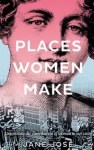
While her main focus is contemporary Australia, Jose also tells stories from the past. She describes how wives of Australia’s early administrators strongly affected the design of the cities they were in, women like Mrs Macquarie, wife of governor Lachlan Macquarie, and the energetic Lady Jane Franklin, wife of explorer and lieutenant governor of Van Dieman’s land, John Franklin. It is this Jane, in fact, who graces the book’s cover. (I have written about her before on this blog). These women are just two examples of women who, married to influential men, used their influence to affect city planning and design.

In addition to casting her net historically, Jose also crosses the seas. She ends her book with a special tribute to the influential American urbanist Jane Jacobs (1916-2006), who inspired her belief that cities can be villages or communities. But she also refers to other international women, such as American landscape architect Kathryn Gustafson, Chilean landscape architect Teresa Moller, and London-based Iraqi architect Zaha Hadid.

What more can I say? Places women make is a fascinating book written by a woman passionate and clearly knowledgeable about her subject. If I have any complaints they are minor, and yet I do need to say them. One is that while she provides a wonderful list, at the end, of the women whose stories she tells, there is no index. I’d love an index. The other is that there are no foot-notes or end-notes documenting her sources, just a brief reading list. These don’t affect the book’s worth as a popular introduction to her subject, but they’d be much appreciated by those of us interested in a little more!

And now, since you can’t really “spoil” a book like this, I’ll end with Jose’s conclusion because it says it all:

Cities matter. They are alive and they change, they are the places we live our lives and make our memories. It takes commitment, imagination and passion to make even the smallest idea for change blossom from an idea into a park, a playground, a library or a shaded street. With the influence of women, cities can be better places. Tomorrow’s children need the places women make.

Lisa at ANZLitLovers also enjoyed the book.

awwchallenge2016Jane Jose
Places women make: Unearthing the contribution of women to our cities
Mile End: Wakefield Press, 2016
213pp
ISBN: 9781743053942

(Review copy courtesy Wakefield Press)

Don Miller, Will to win: The West at play (Review)

Sport is probably not the first subject you expect to find here, but it is in fact the focus of my latest read, Don Miller’s Will to win: The West at play. Published by independent Melbourne press, Hybrid Publishers, it was offered to me after my Monday Musings post a few months ago on Australian Rules in literature. In that post, I wrote that Australian Rules “can over-emphasise competitiveness to the point that winning overrides being fair and just”. I said this of Australian Rules because that was the subject of my post, but the statement is true of much sport – that is, of elite, professional sport – and it’s this “truth”, this issue of winning, that Don Miller examines in Will to win.

Who is Don Miller? He’s not familiar to me, but he apparently worked in the Department of Political Science at the University of Melbourne for 30 years until 1995, and then in 2006 he established an organisation called the Melbourne Centre of Ideas. I’m not sure what his academic credentials are, exactly, but “creative thinking”, particularly on society and values, is his mantra.

Miller writes in his Introduction that the book was inspired by two ideas. One is anthropologist Claude Lévi-Strauss’s statement in his book The savage mind that when football was introduced to New Guinea the locals changed one rule: the game was to be played until both teams were equal. Love it! Miller read this a few decades ago, but the second notion is far more recent: it’s the “failure” of Australia’s swimmers at the 2012 London Olympics. There was such a hue-and-cry about this during and after the Games, including blaming post-mortems, apologies galore, and the commissioning of a review! I remember being horrified. Well, so was Miller. He had, unsuccessfully, tried to write about sport many times before, but the London situation gave him the angle he was seeking: he would write about “contemporary professional sport” and frame it with a reference to New Guinea.

So, this is what he does, approaching it, he says, in a spirit of enquiry:

to follow my own thoughts; to see where they take me; to consider new questions as they periodically erupt. A journey of discovery, clarification, and pleasure.

Several themes run through the book, the main ones stemming from Western culture and civilisation, from the way the West looks at the world. Western thinking he argues tends to be dichotomous (that is, to see issues as black/white, or, in this case, win/lose). The West is focused on the measurable, believes actions should be purposeful, and admires progress. He explores these ideas in terms of their relationship to sport – of how they frame the way we view, practice and understand sport. 

Sport’s excesses

The overriding motif is – as you can tell from the title – that winning is everything. The logical extension of this is the idea of “excess”. To win, sportspersons push themselves – physically, emotionally and mentally – to a point beyond endurance, to, in fact, self-harm. Take hurdler Sally Pearson, who, Australians know, is a tough, determined competitor. She said after the London Olympics:

My back was killing me. It’s just a matter of telling your body that you have to do it, no matter what – I know I am not an old athlete. I’m only 26, but just the way my body is ageing at the moment and my disc is degenerating, it’s just a matter of trying to keep it intact so I can compete at least until Rio.

But, the more sensible (value judgement here!) of us think, what about your post-sport life?

So, there are the punishing regimes athletes put themselves through in order to be the best, to win, regimes that Miller likens to training for and partaking in war. Is such self-harm worth it, he poses. He quotes the infamous Lance Armstrong who famously said “losing and dying; they’re both the same”. Tour de France athletes, we know, undertake punishing training to compete in a gruelling race. But mention of Armstrong of course raises another by-product of competitive sport, that of cheating and corruption. There is a fine line between “winning” and “winning at any cost”, with the latter referring not only to the aforementioned physical and mental cost to the athlete, but to crossing over the line of fairness and ethics to something more ruthless. Armstrong epitomises this crossover, but is by no means the only sportsman to have been so lured. In his discussion of Armstrong’s behaviour, Miller suggests that his behaviour could be seen as “the exemplary model of a Western businessman”. A fair analogy?

Sport’s truths

Miller also explores some “truths” that have been promulgated about the value of competitive sport, arguing that some are false (such as “the practice of sport is a human right*”) and others overstated (such as that sport will set you up for life). Really, he questions? Sport a human right, like food, shelter and security? As for setting you up for life, Miller asks that, even if we agree that sport can have these benefits, “does it have a monopoly?” What about being an oboe player in the Australian Youth Orchestra, or part of a multidisciplinary team pushing the boundaries of science, or even being a wheat farmer or apprentice plumber? Don’t the skills learned here also train you for life? Life, he suggests, is complex, and to propose otherwise, to propose there is a “singular model or formula”, is grossly misleading.

Then there’s that ultimate “truth” about losers, that they are, well, losers, that even second place is losing. Miller quickly puts paid to that idea. We all know winners who do not “succeed” and losers who learn valuable skills. Indeed, it’s worth considering, he says, Jean Cocteau’s statement that “to succeed is to fail”, a statement that “breaks from conventional dualistic thinking”.

Will to win is not so much an academic work, as a clearly written, personal investigation of a topic that has long interested Miller. It is not footnoted, though he does cite sources as he goes, particularly from newspapers, and there is a bibliography. Does it have a conclusion? Yes, and no. This is what he says near the end:

This book returns again and again to the excess in modern sport – to its ubiquity and impact. Whatever it does, it goes too far, and the cumulative consequences can be disturbing. The book is a call for moderation of all its qualities, a change of emphasis, a shift towards a more expansive range of values.

The challenge is to think and imagine other ways of engaging in sport – a challenge that he suggests we should take up now. Can we Westerners, for example, see our way to a win-win value? I enjoyed the read – but, in me, he was preaching to the converted. I’d love to know what those more passionate about competitive sport think, those who expected and accepted the apologies of Australia’s 2012 London Olympics Swimming Team. What would they answer to Miller’s questions?

* The Olympic Charter

Don Miller, Will to win, book coverDon Miller
Will to win: The West at play
Melbourne: Hybrid Publishers, 2014
123pp.
ISBN: 9781925000580

(Review copy courtesy Hybrid Publishers)

Prison post: Letters of support for Peter Greste

GresteNewSouthIf you’re Australian, you’ll know who Peter Greste is. If you’re not, you may know. He was one of three Al Jazeera English journalists* who were arrested in Cairo in late 2013 for “spreading false news, belonging to a terrorist organisation and operating without a permit”. It was a ridiculous charge and we all thought they’d be released quickly, but instead, in June 2014, they were convicted of “spreading false news and supporting the Muslim Brotherhood”, and Greste was sentenced to 7 years in prison. At that point, Peter Greste’s family set up an email account encouraging people to send messages of support to Peter that they would then print out and deliver to him in prison.

After 400 days in prison, in February 2015, Greste was released, that is, deported. His conviction was not overturned. In September 2015, his two colleagues, who had been kept in prison, were pardoned and released. Australia’s Foreign Minister, Julie Bishop, understands that Greste will be pardoned too, but I don’t think this has formally happened yet.

However, this book is not specifically about the legal story. Rather, it comprises a selection of the emails sent to Peter between his conviction on 24 June 2014 and the time of his deportation in early February this year. I have a copy of the book because my wonderful octogenarian mother was one of the correspondents. Some of her messages are included in the book.

To be honest, although I rather enjoy reading letters – you’ve seen posts about them here before – I wasn’t sure I’d enjoy a 200-plus-page book of letters (emails) to one person about one topic. But, I was bowled over, not simply because of the quantity of emails that were written, but because of their warmth, generosity and eloquence. Some are from Peter’s friends, acquaintances and colleagues, past and present, and a few are from well-known people like Julie Bishop and Wendy Harmer. But many are from complete strangers like my mother and, at the other end of the age spectrum, 9-year-old Grace. Grace writes:

Do you like to read? I love reading because when you are stressed or are worried or angry, reading takes you to a completely different world, where all your worries and fears are drowned away from your mind. (Grace Worthing, 11 July 2014)

Some of the strangers are journalists and journalism students. Many of these want to emulate him, while a few admit to lacking the necessary bravery to do so. All of the writers, though, strangers or not, are outraged by the idea and fact of Greste and his colleagues being imprisoned for doing their job, and many express appreciation for the work journalists like him do in telling the truth:

However small, I hope it is some consolation that your cause has given a voice to those of you in the business of giving others a voice. Your situation has highlighted the risks you take, the dangers you face, knowingly, in your dedication to shedding light on injustice and human suffering, and to exposing the truth, from all angles. (Lulu Nana, 25 July 2014)

Some writers tell of tweeting about the injustice of his imprisonment. They describe writing letters to government, diplomats, Amnesty International, or the editor of their local newspaper. They talk of taking part in fund-raisers and benefit shows. They will not, they say, let it rest until he is free.

Not all letters, however, are specifically political. Some are more personal. They want to cheer Peter up, offer him hope or sympathy, or just take his mind off where he is for a moment or two. They do this by telling him stories from their own lives, and or by sharing little jokes, proverbs or inspirational quotes. They quote from Shakespeare, the Bible, or poets like Robert Frost, but you probably won’t be surprised to hear that by far the most commonly quoted is Nelson Mandela. What is perhaps a little more surprising is that these Mandela quotes are all different!

Another common feature of the letters is praise for Greste’s family – his mother and father, his brothers, and his sisters-in-law. They are described as “diamond grade”, as inspirational in their strength, cohesion and dignity. One correspondent even went so far as to write, after Greste’s release:

I hope we don’t lose the Greste family from public life entirely. If any of our leaders, in various fields, have been paying attention they could’ve picked up some excellent lessons. (Amy Denmeade, 8 February 2015)

The letters are presented chronologically, but the chronology is broken into sections: section one, for example, comprising spontaneous responses to the announcement of his conviction; section two, the establishment of the email address and “call to arms”; and section five being letters written in December for his birthday and Christmas. (Several correspondents, including my mum, in fact, sat down and wrote an email on Christmas Eve or Christmas Day.) Each of these sections has a brief introduction describing what is happening at that point in the chronology. There are also a timeline of events at the beginning of the book, a foreword by Greste himself, and an acknowledgement statement by editor-publisher Charlotte Harper.

What more can I say? The book could so easily have been schmaltzy, but it’s not, mainly because the writers, those selected for inclusion anyhow, are too unselfconsciously themselves. After all, when they wrote, they had no expectation that their letters would ever be published, so they wrote from their hearts. This is a book of its time, and yet is also timeless. That is, it relates to a very specific event involving very specific people, and yet it is really about big principles, like justice and truth, and about human values, like empathy and compassion. It is, in other words, a darned good read.

PS: Just in case you are interested, profits from the first year’s sales are going to the Foreign Prisoner Support Service. Digital copies can be ordered for $9.99 from Editia; and print copies for $24.99 from NewSouth Books.

Prison post: Letters of support for Peter Greste
Braddon: Editia, 2015
229pp.
ISBN: 9781942189022

* The other two were journalist Mohamed Fahmy, and their producer Baher Mohamed.