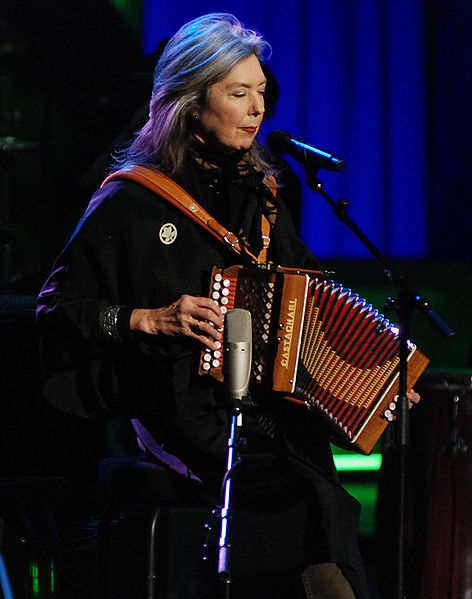
The Griffyn Ensemble’s paean to the weather

It’s pretty much a given that a Griffyn Ensemble concert will be both entertaining and challenging – and their latest concert, Cloudy With a Chance of Rain, was no exception. But this concert had an added fillip: it was unashamedly political in addressing the thorny (for some) issue of climate change. Good on the Griffyns I thought.

Before I continue though, I’ll list the current line-up:

  • Kiri Sollis (Flute, etc)
  • Matthew O’Keeffe (Clarinets)
  • Wyana O’Keeffe (Percussion – hmm, it seems there’s been another wedding amongst the Griffyns as Wyana was previously Etherington)
  • Meriel Own (Harp)
  • Susan Ellis (Soprano)
  • Michael Sollis (Director, Composer, and Mandolin, etc)

That’s six, where there was once seven. I wonder what has happened to Carly Brown, their French Horn player? Anyhow, for this concert there was a seventh – geomorphologist and ex-weather presenter, Rob Gell.

So to the concert, which was described in the program as including works “spanning geography and genre contextualised through the four seasons, from the ancient ice ages to the distant future.” It commenced with Rob Gell introducing the climate theme by talking about the ice age and leading us nicely into the first part of the concert, labeled Winter, because the concert was organised by the four seasons. It was, in fact, the four seasons without the Four Seasons! Now that’s original programming, though poor old Vivaldi probably turned in his grave!

The music itself was highly varied, as we expect from the Griffyns. The concert started with a moody, contemporary piece, “White Scenery”, by Latvian composer, Pēteris Vasks. Originally a piano piece, it had been arranged by the Griffyns for harp, mandolin, flute and vibraphone. The other wintry pieces were Debussy’s “Snow is Dancing” played on harp, and Schubert’s song “The Linden Tree”. We then moved through the seasons, hearing a mix of traditional classic, contemporary, jazz and popular music. I can’t possibly list all the pieces now (which, in addition to Europe, came from places as varied as Japan, Uruguay and the southern US) … so will move onto …

Desert south of Woomera, South Australia

Desert south of Woomera, South Australia

What I, a reader who enjoys music, particularly love about the Griffyns: there’s always a literary element to their concerts and they always credit writers in their simple but useful programs. In this concert there were songs set to works by Wilhelm Müller (“The Linden Tree”), Ruth Valadares Corrêa, Rainer Maria Rilke and Herman Hesse among others, as well as an original work inspired by Patrick White. This work, “Mirage”, was composed by the group’s director, Michael Sollis, for piccolo and glockenspiel. It was inspired, the notes say, by “Patrick White’s image of the harsh Australian desert landscape – full of emptiness, desolation, relentless heat, and an unnerving sense of ritual”. Now, if I was intrigued and impressed by how the comparatively high registers of the flute could convey the depths of winter in Vasks’ “White scenery”, I thoroughly enjoyed the piccolo’s representation of a mirage for this summer piece. The piece played out a little like a cat-and-mouse game between the two instruments, with, surprisingly for the subject matter, an element of humour. Kiri Sollis and Wyana O’Keeffe did a lovely job with what was a musically and intellectually challenging but evocative piece. It was in the Summer narration that Gell made his strongest points about climate change, sharing some now well-known but still scary data about increasing temperatures, increasing rain, and the havoc these will cause.

I would love to list all my favourite pieces from the concert, but that would be most of them. While Vivaldi, thankfully really, wasn’t there, another obvious selection was – “Summertime”. I also loved Susan Ellis’ rendition of another favourite of mine, “Autumn Leaves”. The notes describe it as a 1945 French song made famous by Edith Piaf, but I know it best in a version by the lovely Eva Cassidy.

It was a good concert. It may have had a rough spot here and there, but it had life, and it teased our minds and moved our hearts. I’ll close with some words from Wilhelm Müller’s “The Linden Tree”:

When dreaming there I carved
Some words of love upon the bark
Both joy and sorrow
Drew me to that shady spot

“Joy and sorrow” in a “shady spot”. That just about says it all.

Tafelmusik anyone?

Galileo

Galileo (Courtesy: tonynetone, using CC-BY 2.0, via flickr)

Tafelmusik = table (or banquet) music, and has been used since the mid-16th century for music played at feasts and banquets.

AND …

Tafelmusik = a Canadian Baroque orchestra specialising in early music, performed on period instruments.

BUT WAIT, THERE’S MORE …

197856 Tafelmusik = an asteroid discovered in 2004 and named for the orchestra.

You learn something new every day, don’t you? But why am I sharing this particular learning of mine? Well, because this week we attended our first Musica Viva subscription concert of the year and it happened to be The Galileo Project: Music of the Spheres, created and performed by Tafelmusik. It’s been some time since I wrote about a music concert. As I’ve said before, I love music but am no expert. This concert, though, was one-of-a-kind and I can’t resist sharing it with you, Whispering Gums style.

Baroque music was my first “classical*” music love – and so I was predisposed to enjoy this concert but I wasn’t expecting to enjoy it quite as much as I did. The concert was a musical performance something like we’ve seen before with groups like The Song Company (and their Venetian Carnival). The Galileo Project was performed by 17 musicians and an actor. It incorporated music (of course), visual images, narration and movement. And, unusually for ensembles, the whole program was performed from memory. If there were any hiccoughs I didn’t hear them.

So, why Galileo? Through the program and post-concert Q&A, we learnt that The Galileo Project was Tafelmusik’s contribution to the International Year of Astronomy in 2009, which was the 400th anniversary of Galileo’s use of the astronomical telescope. We were told that Canadian astronomers had a goal for 2009: that every Canadian would get to look at the stars through a telescope! I don’t think they quite achieved that, but it never hurts to aim high.

Anyhow, the program. It was divided into sections:

  • The Harmony of the Spheres I (Vivaldi)
  • Music from Phaeton (Lully)
  • Music from the Time of Galileo (Monteverdi, Merula, Galilei, Marini)
  • Henry Purcell
  • The Dresden Festival of the Planets (Rameau, Handel, Telemann, Zelenka, Lully, Weiss)
  • The Harmony of the Spheres II (Bach)

The music was linked by a narration drawn from contemporary writings (by Shakespeare, astronomers/scientists – who also included Newton and Kepler – and musicians) exploring the relationship between science, mathematics and music. Galileo’s father, Vicenzo Galilei, was a lutenist. One of his interests was testing lute strings to find “the mathematical formulas that express the relationships among length, tension and musical pitch” (program notes). Galileo, himself, was also a lute player, as well as a mathematics teacher and astronomer.

The concert program contains extensive notes on how astronomy and music intersected during the period, including:

  • the 1719 Festival of the Planets, which was a month-long event comprising operas, balls, outdoor events and special concerts designed to commemorate each of the known planets of the time – Mercury, Venus, Earth, Mars, Jupiter and Saturn**. Handel, Telemann and other musicians were involved in the Festival.
  • Johannes Kepler‘s Harmonices Mundi (Harmony of the World) in which he outlined his theory regarding harmonies (musical intervals and short melodies) that can be derived from planetary motion using mathematical formulae. The orchestra played some of these tunes from the planets.

All this was fascinating, but if you want to know more, here is a link to a Teacher Resource Guide which will give you more info than I ever could.

Meanwhile, I’ll just dot point my highlights of the concert:

  • the engaging rapport between the members of the ensemble. They clearly know each other well and enjoy playing together. That, or they are good actors!
  • the gorgeous sound. Llewellyn Hall should have good acoustics but I have never noticed quite how beautiful the sound is until this concert. It was warm and lush but also oh-so clear.
  • perfection that wasn’t cold and technical. They played from memory, they “orbited” or otherwise moved around the stage – and the hall – as they played their violins and oboes (which was impressive in itself but also enhanced our experience of the sound), and they made it feel spontaneous.
  • the sensitive incorporation into the narration of an indigenous Australian story about tracking Venus, from the Yolngu people.
  • beautiful, varied pieces of music played on authentic instruments.

We were told last year that if we only came to one Musica Viva concert in 2012, this should be it. We have, as usual, subscribed for the year, and we plan to attend them all, but this was a concert to remember. We hope Tafelmusik comes back.

* Using “classical” in its generic, not specific, meaning.
** Did you know that Uranus was discovered in 1781 by Sir William Herschel who was an oboist, organist, composer and amateur astronomer?

Every folkie knows … Leonard Cohen

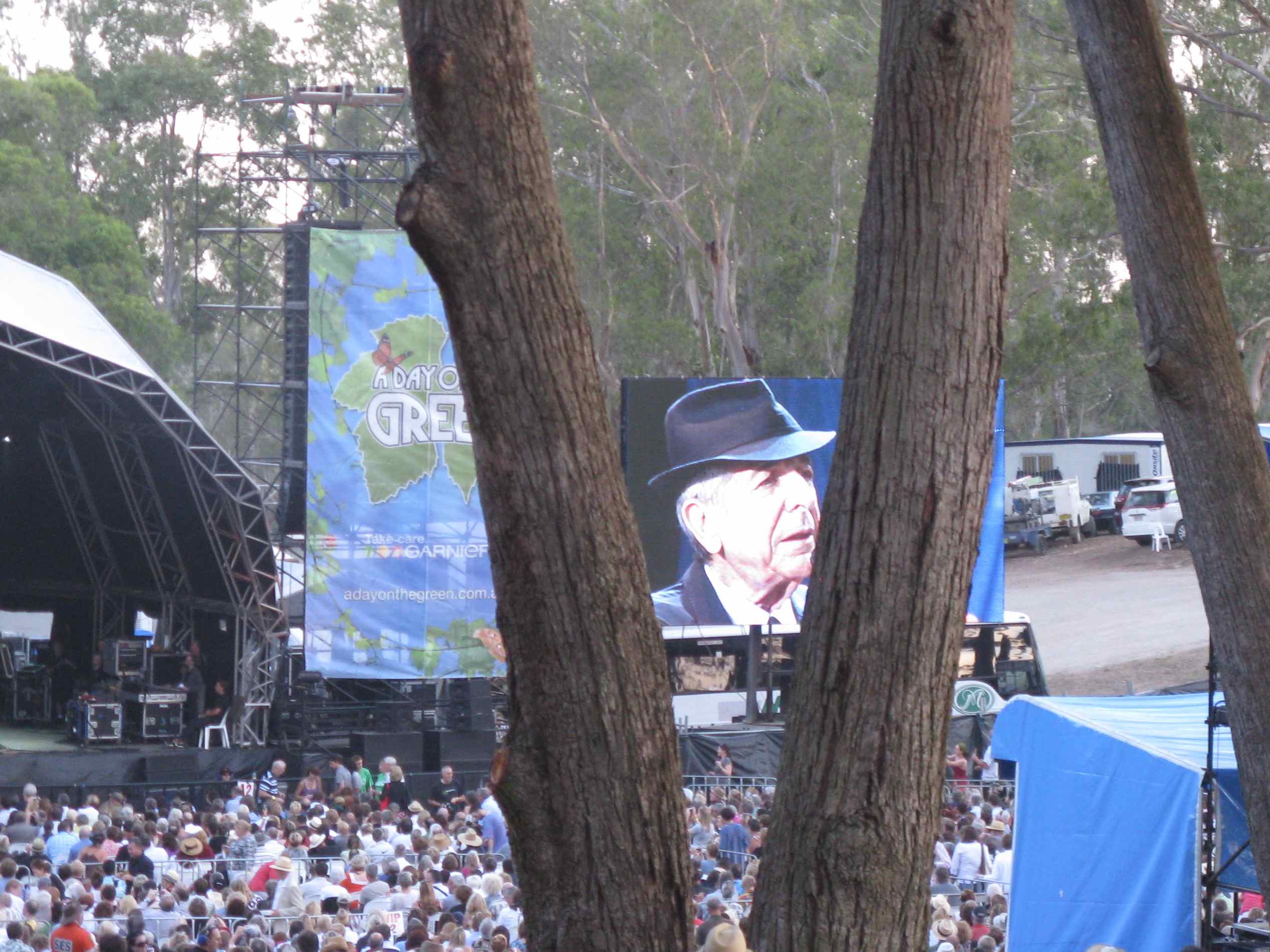
Leonard Cohen at Centennial Vineyards

Leonard Cohen at Centennial Vineyards, 2009

I recently wrote about the National Folk Festival in relation to Australian stories and history, but I can’t resist also writing a little post about “the man” because he was, it seemed, everywhere. I’m exaggerating of course but he – Leonard Cohen, of course – did seem to keep popping up.

There were performers who sang his songs, such as Ami Williamson who commenced her show with “Hallelujah”. You might think that is a little cliched but nothing about Ami is cliched … she put her own stamp on the song and got us in the mood for an energy-packed show that ranged through pop, folk, country and opera, both covers and her own original creations. Her “Daughter-in-law’s lament” is a hoot. She is a versatile gal.

Ruth Roshan, with Tango Noir, also did a Cohen song, though her choice was “Everybody knows”. The ambience was more 1930s French salon, and the dusky, sensual mood of the tango, but somehow Cohen fit right in there and Ruth pulled it off, despite her gentle voice and inviting smile.

Other performers though struck out into something different – into songs inspired by and/or featuring Cohen. Margret RoadKnight sang a whimsical song by Canadian singer songwriter, Nancy White, titled “Leonard Cohen’s never gonna bring my groceries in”. In case you don’t know it, here are a few lines to give you a flavour:

I’ve a husband and a baby, there’s another on the way.
And, like Leonard, I am aching in the place I used to play.
But really, I’m enjoying all this domesticity.
Hey, I never have to deal with Warren Beatty’s vanity.
But there is one thing I regret, and my regret is genuine.
Leonard Cohen’s never gonna bring my groceries in.

Since RoadKnight – and most of her audience – were of a certain age, this song went down very well!

And finally, it wasn’t only Australian performers who paid homage to the man. There was also (the rather lovely, I must say) English performer, Martha Tilston. She spoke of her envy of Cohen’s songwriting ability and said his line from “The stranger song”, “He was just some Joseph looking for a manger”, made her feel like hanging up her songwriting hat”. Instead though, she wrote a song about her inspiration, “Old Tom Cat”. Its opening lines are:

The tilt of your hat
Old tom cat
You wear truth like a necklace
It hangs around your poetry.

… and it includes references to Suzanne, Maryanne, Hallelujah and, of course, Joseph.

Funny how all these performers all women! That’s how it goes …

The illicit passions of Griffyns

Musical instruments at the Belconnen Arts Centre

The instruments await their players

Ha! That got you in didn’t it? Or, didn’t it? It’s been a while since I wrote about a music event. That’s not because I haven’t been to any but because I’m no expert and prefer not to put that on show too often. However, the Griffyn Ensemble is a young, talented ensemble and deserve, I think, to be recognised, encouraged and promoted – and so here I am again, talking about a musical evening.

I have written about the ensemble before but, just to recap, it is a small chamber ensemble which likes to push chamber music into unexpected directions. That includes composing and/or arranging music themselves, premiering the works of other contemporary composers, playing non-chamber music in a more-or-less chamber setting and, sometimes, even, playing chamber music. The concert we attended this weekend was titled Illicit Passions:

From Baroque to Rock ‘n Roll, The Griffyn Ensemble returns with inflamed desires and rapture, performing music exploring the sordid side of love with songs inspired by carnal lust, women of the night and tortured romance, and featuring stories from Ancient Greece to a surreal future. (from the programme)

Sounds a bit like the kitchen-sink, doesn’t it? And, in some senses it was, but this is a group that likes to take its audience “on a journey” rather than, as their musical director Michael Sollis said at the concert, “just playing pieces”.

The ensemble currently comprises:

  • Michael Sollis, Musical director and composer
  • Kiri Sollis, Flute (etc)
  • Matthew O’Keeffe, Clarinet (etc)
  • Wyana Etherington, Percussionist
  • Carly Brown, French Horn
  • Meriel Owen, Harp
  • Susan Ellis, Soprano

Because it is such an eclectic group of musicians, their concerts tend to provide opportunities to showcase individuals though solo and small group performances. And so at this concert we had, for example, Meriel Owen premiering, on the celesta, an intriguing piece composed by Sollis, titled “Letter to a Greek Nymph”; Kiri Sollis and Meriel Owen playing Debussy’s sublime “Prelude à l’après d’un faune”; Matthew O’Keeffe and Kiri Sollis playing a gorgeous rendition of “Send in the clowns“; and Susan Ellis singing, from the back of the room, a heart-rending a capella interpretation of Tori Amos‘ “Me and a gun“. There were also some very entertaining rounds of 18th century drinking songs sung by Michael Sollis, Wyana Etherington and Meriel Owen, and a whole lot more music, ranging from Beethoven to The Police! The concert concluded with a mesmerising (and unfamiliar to me) arrangement of Bob Dylan’s “Forever Young” sung by Ellis, accompanied by Etherington.

The programming was a little odd – but entertaining for all that. I’m not sure how “Forever Young” fits into the theme of “illicit passions” but it could I suppose suggest the “surreal future” referred to in the programme notes. The programme sequencing took us on a bit of a wild ride in which the connections were not always completely clear. But – and this is a big but – the performers played (and sang) beautifully and I do like music programming that’s innovative, that challenges we audiences to think about what we’re hearing and why. There’s joy in this ensemble – even when the music is sombre.

Silver moon upon the deep dark sky,
Through the vast night pierce your rays.
(From “Song to the moon”, by Antonin Dvorak)

… sang Ellis, early in the second half. Some 30 minutes or so later, we went out into the dark sky, gladdened that we have such an ensemble in our town.


Introducing the Griffyn Ensemble

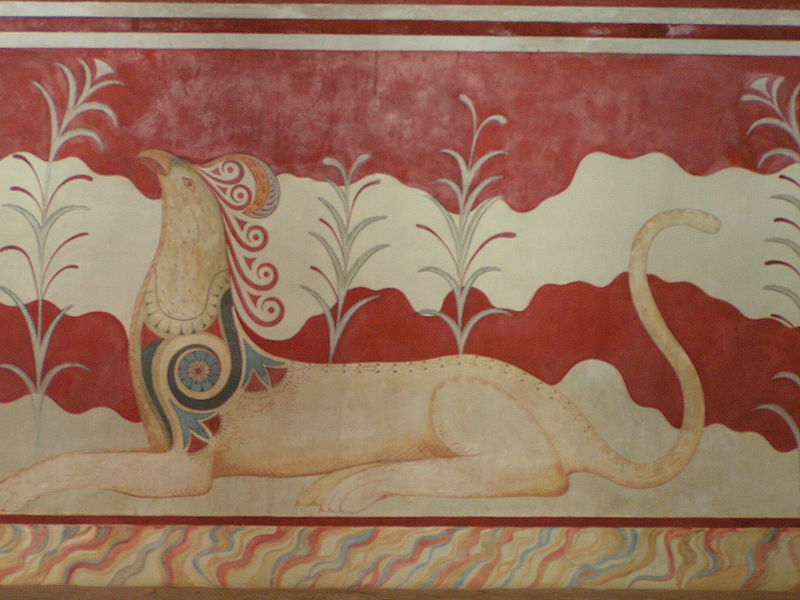
Griffin from Throne Room, Knossos

A painted Griffin, Knossos (Courtesy: Paginazero, via Wikipedia, using CC-BY-SA 3.0 Unported)

The Griffyn Ensemble is an exciting chamber music ensemble based right here in our (that is downunder’s) national capital. The ensemble is named, in a fun wordplay, after Walter Burley Griffin, Canberra’s designer, and the mythical beast (the griffin, gryffin, or gryphon).

The group  was founded in December 2006 and its members are mostly, I believe, graduates of the ANU’s School of Music. It has had various make-ups over time including violin, viola and cello, but it currently comprises:

  • Kiri Sollis – Flute
  • Matthew O’Keeffe – Clarinet
  • Carly Brown – Horn
  • Laura Tanata – Harp
  • Wyana Etherington – Percussion
  • Susan Ellis – Soprano
  • Michael Sollis – Musical director and composer

Fascinating line-up eh? And the result is that they play some rather fascinating music – which focuses on the 20th and 21st centuries. The music, for those of us who have not had a lot of exposure to more contemporary classical music, can be a little obscure. But that’s fine with me, because I like to be introduced to more modern works as well as hear the old favourites, just as I love to read classic novels alongside the latest literary release.

Tales from Heaven and Hell

We’ve heard members of the ensemble a couple of times before, but on Saturday night we went to a concert performed by the current full ensemble at the lovely, new-ish Belconnen Arts Centre. It was a challenging but also enthralling program*:

  • Madrigals Book III (1969), by George Crumb (Soprano, harp, percussion)
  • Perelandra Piccolo Concerto (2010), by Michael Sollis (the full ensemble, with Kiri Sollis featuring on piccolo)
  • A Dybbuk Suite (1995), by The Klezmatics (the full ensemble)
  • Good Night (1989), by Henryk Mikolaj Górecki (Soprano, alto flute, harp, three tam tams)

I was intrigued by Crumb’s Madrigals which comprises three very short accompanied (though that word doesn’t do justice to the harp and percussion) vocal pieces of a style that was unlike anything I’ve heard before. The lyrics are drawn from Federico Garcia Lorca. All I can say is that it was a nicely controlled and expressive performance by the three musicians involved. Sollis’ Perelandra Piccolo Concerto is a 4-movement piece inspired by CS Lewis‘ novel Perelandra – and featured, of course, the piccolo. The novel, which I haven’t read, tells the story of Elwin Ransom, who is sent to Perelandra (Venus) to prevent the Fall of a new Adam and Eve. The piece includes spoken text, effectively read by soprano Ellis. I must say that the piccolo is not my favourite instrument – particularly as a major solo instrument – as I tend to like something a little more mellow (like, say, the alto-flute in the last piece) but Kiri Sollis (the composer’s wife) did play it with both verve and skill. All in all a work that made you think while entertaining you at the same time.

However, it was probably the second half of the concert that moved me the most. I think this is because the first half had a more intellectual appeal – my brain had to work to enjoy it – while the second half appealed more to the emotions. A Dybbuk Suite contains all that paradoxical joy and melancholy that you tend to find in klezmer music and I found my foot tapping at times. Lovely. Good Night, on the other hand, mostly comprises a mystical, moody dialogue between harp and alto-flute with some voice and percussion near the end. It was quite mesmerising: Kiri Sollis and Laura Tanata seemed perfectly attuned to each other and played the piece at a controlled and measured pace. It quietly but gorgeously concluded what was a truly delightful concert.

(*This is not a formal music review – that is not my skill as I’ve said before – but simply my lay music-goer’s response to the concert)

Musica Viva: The Harp Consort do Carolan’s Harp

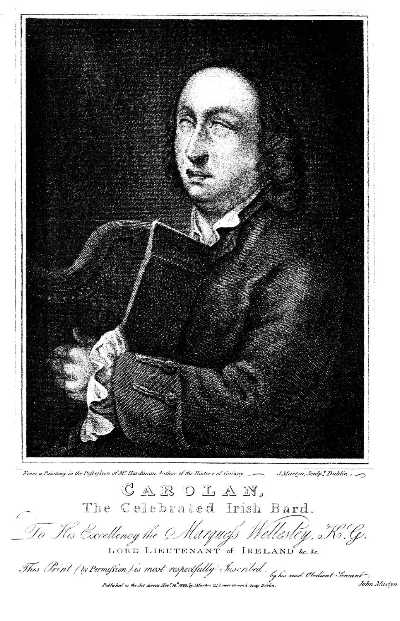
Turlough O'Carolan

Carolan (Presumed Public Domain, via Wikipedia)

Can you pronounce this? Toirdhealbhach Ó Cearbhallaín? Perhaps you’d prefer the English transliteration: Turlough O’Carolan. O’Carolan was a blind Irish harper* who lived from 1670 to 1738, and, according to Wikipedia, is believed by some to be Ireland’s national composer. He was also the composer and subject of this week’s Musica Viva concert.

Carolan’s music, the program notes said, “spans the divide between high art and popular styles and is a mixture of fashionable French Baroque dance forms, including minuets and jigs, combined with ancient Gaelic forms including laments and planxties**”. The Consort’s director, Lawrence-King added, during the concert, that he also incorporated Italian music that was being played in Ireland at the time. A true cosmopolitan it seems.

We’ve seen and enjoyed The Harp Consort before (around 2006), and so I was looking forward to this week’s performance. I was not disappointed. It was, by turns, wistful, humorous, lilting and lively – and thoroughly engaging. Mr Gums did hear one member in the audience suggest that they might as well have been at the Folk Festival! I can think of worse places to be – but this was, really, of a somewhat different ilk, albeit covering some similar ground. Anyhow, if you click on this link, you will hear some music emanating from their website. Go on, do it! If you are disappointed, I won’t expect you back here!

The performers at tonight’s concert were:

Celtic harp

Celtic Harp (Courtesy: OCAL via clker.com)

Before you read on, remember that I am not musically trained and would in no way call myself qualified to comment on technical skill and interpretation. However, this was the perfect performance for one such as me, who loves literature, dance and music, because it incorporated all three. Not only were there songs – with the words (fortunately with translation) printed in the program – but Andrew Lawrence-King told us Carolan’s story throughout the evening’s performance. I particularly enjoy concerts in which the musicians engage directly like this with the audience.

Then there was the dancing. If the other performers hadn’t been so engaging themselves, Steven Player would have stolen the show. He has a wonderful ability – as all good dancers do of course – to inhabit the character of each dance. The dancing style seemed to combine elements of Irish stepdancing and Scottish highland dancing – which probably makes sense since presumably these dance forms have all had some similar roots and influences. Anyhow, whatever it was, Player performed with grace and feeling – and gave his all.

And finally, the music. I have a soft spot for early music – for the lovely melodies and the gorgeous (in looks and sound) instruments. You can see from the performer list above that there was a wide range of instruments played. The music, including several songs performed with a lovely sweet voice by O’Leary, was appealingly diverse, ranging from laments to jigs, from love songs to comic ones.

It’s hard to pick a highlight from such a concert, but, I often find myself drawn to percussion. Metzler was fascinating to watch. He played numerous percussion instruments, including some unfamiliar to me, and a couple of novelty instruments (one to emulate birdsong, another the wind). And he, too, fully engaged with the character of the music he was performing, acting out parts when appropriate.

Overall, what I liked about the concert was the sensitivity with which the Harp Consort played the music, and the energy and exuberance they invested in the performance. It was, as they say, the total package.

Late in the concert came the comic drinking song, “Bumper Squire Jones”. It seems appropriate to end with some lines from it:

Ye clergy so wise

Come here without failing
And leave off your railing
‘Gainst bishops providing for dull stupid drones;
Says the text so divine,
“What is life without wine”
Then, away with the claret –  a bumper, Squire Jones.

None of us needed a claret that night. We were high enough without it.

*Harper: You learn something new everyday. According to Wikipedia, “harper” is used in the folk tradition, and “harpist” in the classical. The Musica Viva program used both, indicating perhaps that this was a bit of a cross-over concert!

**Planxty may, say the notes, have been coined by Carolan. It signifies popular, animated pieces in jig rhythm.

A Day on the Green, with Diana Krall (et al)

Leonard Cohen, 2009

My man, 2009

Last night was my second “A Day on the Green” concert held at the beautiful Centennial Vineyards in Bowral. The first was January 2009 when I attended the stupendous – there’s no other word for it – Leonard Cohen concert. That really was a concert to end all concerts.

Last night’s concert though was no slouch. The performers, all female jazz and blues singers, were, in order:

Katie Noonan, 2010, at Centennial Vineyards

Katie Noonan, at A Day on the Green, 2010

All performers entertained us beautifully – but each in her own special style. Katie Noonan (with her Captains!) got us off to a good start with some engaging home-grown music. They performed for just half an hour but included music from their recent album. There is something nice about being entertained by your own, by someone who speaks the same cultural language.

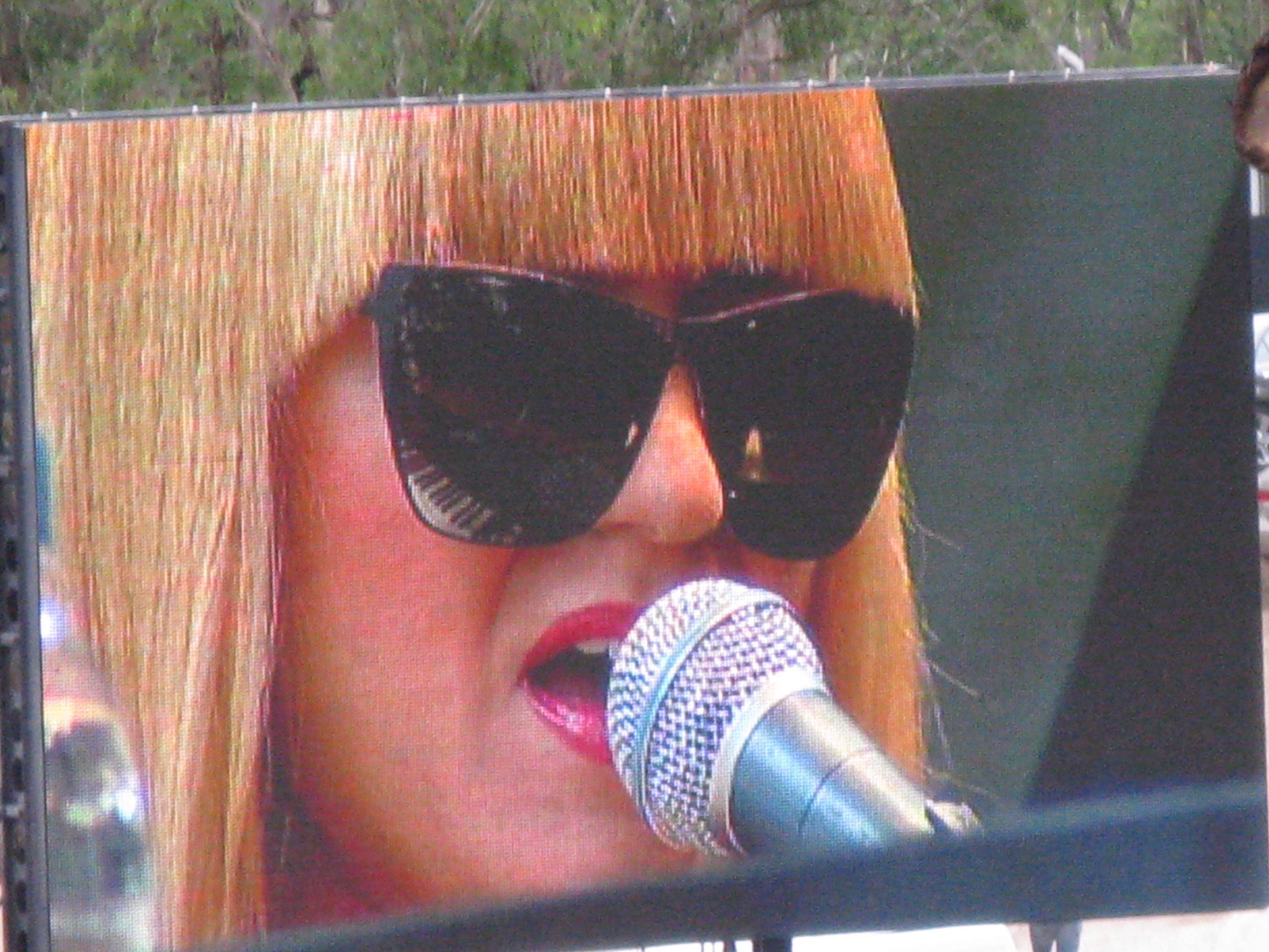
From Mr Gums’ point of view, Melody Gardot’s set, also only around half an hour, was the most musically interesting of the night. She is a singer-songwriter, pianist and guitarist, and was probably the most intense – and in many ways the most sophisticated – of the performers. For those who don’t know her story, she came to her music career through music therapy following a near fatal accident in 2003. (It is because of the accident – not some sort of diva-affectation – that she wears the dark glasses you see in the image below.) I found her fascinating.

Melody Gardot, 2010

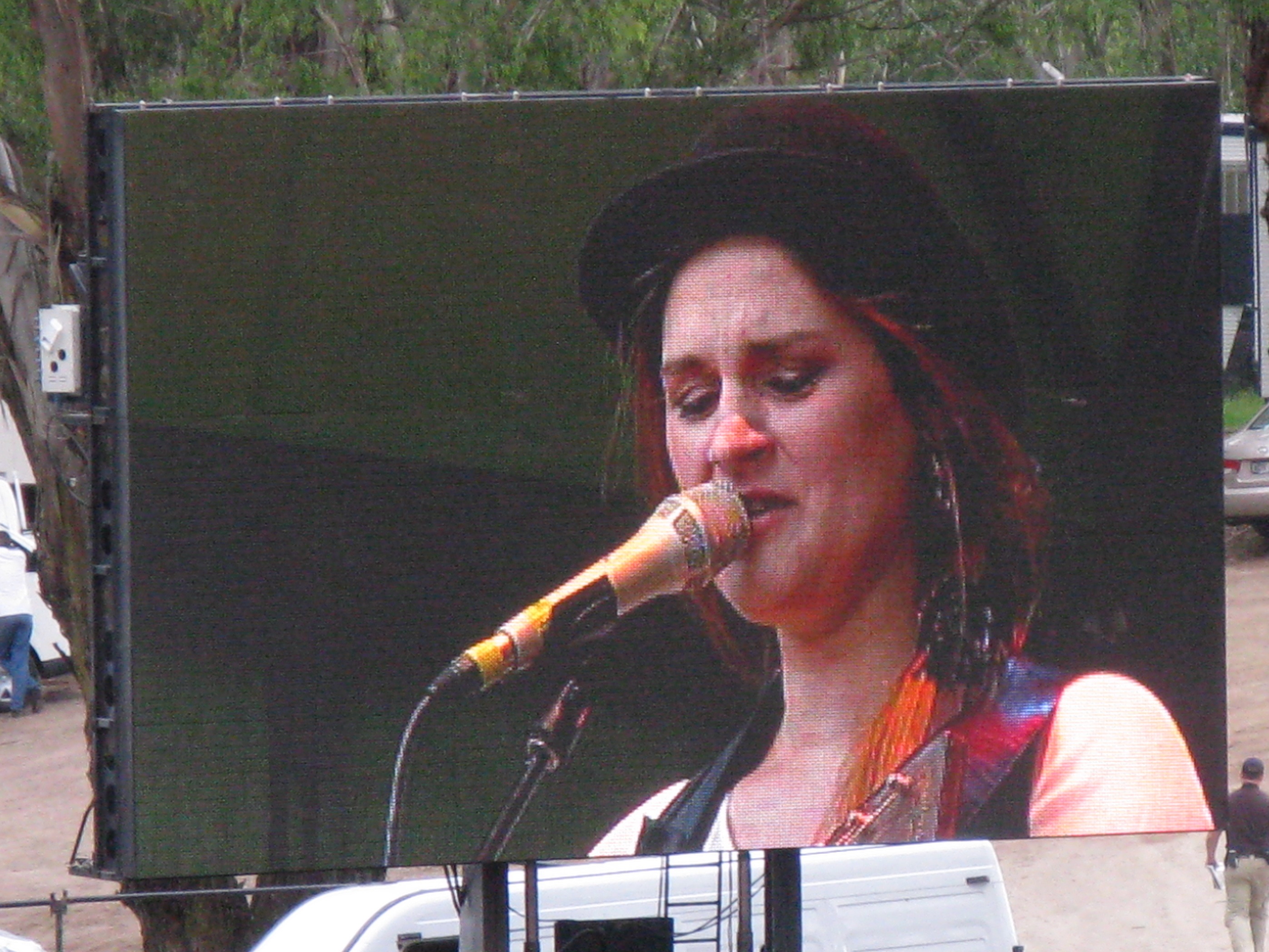
Next up was Madeleine Peyroux. She too is a singer-songwriter and guitarist, and presented both original music and uniquely interpreted covers. She was the character of the night, and used her Chaplinesque bowler hat to good effect as she transitioned between pieces. If Gardot was the nightclub sophisticate, Peyroux was more relaxed and casual, but no less professional. She apologised for not having many happy songs, but who could complain when you were treated to such music as her beautifully controlled soulful rendition of Cohen’s “Dance me to the end of song”. She performed for about 45 mins – and I liked her.

Madeleine Peyroux, 2010

...and then came Madeleine (in 2010)

Diana Krall is a pianist and singer-songwriter – and interpreter of song. Before I went to the concert I read a few online “reviews” of earlier performances in this series, and there were some complaints: her voice wasn’t up to it (I believe she had a cold earlier in the series), and “we didn’t come to hear solos by her supporting musicians”. Did they not understand the world of live jazz concerts and the role therein of solo instrumental improvisations? The improvisations in the gorgeous and extended “Dancing cheek to cheek” mystified me at times – but I’ll only learn by listening, won’t I? Krall entertained us for around 75 mins, including a couple of encores, and maintained a relaxed rapport with the audience, managing to include a couple of rain-themed songs in her set!  Her singing is soft and throaty, and I particularly loved her interpretation of Dylan’s “Simple twist of fate”.

Diana Krall, 2010

Getting dark and pushing the camera to its limits, but here she is ... Diana Krall

It was a long night – we arrived around 2.30pm, the concert started at 3.30pm and ended around 8.30pm. That’s  a long time to be sitting on your behind on picnic chairs, particularly when doing the poncho dance (on-off-on-off) during the intermittent but fortunately not heavy rain. It didn’t spoil our enjoyment of the music though – nor of the gorgeous setting.

Gums, at Centennial Vineyards, 2010

The gums overhead swayed to the music

Note on the photographs: There was a stage, and we could see the musicians, but the screen did provide better photo opportunities, and hence my shots here are of the performers as we saw them on the screen.

POSTSCRIPT: For a review by a music reviewer/blogger, read Chris Boyd’s here.

Musica Viva, the Internet and Borodin

Tonight was the opening of our Musica Viva 2010 International Concert Season. The performers were the Borodin Quartet, and they performed two quartets by Shostakovich and one by their namesake, Borodin. I’m not going to review this concert in detail because, as I’ve said before, I have no musical training and so can’t comment in any detail on the structure of the music or the technical skill of the musicians. There are things though that I can talk about.

The first thing is the Internet. Like many of us, I like to keep an eye on how organisations and businesses use the Internet to enhance their services. A few years ago Musica Viva started making their concert programs available online before the concert. Not only did this mean you didn’t have to pay for a printed program at the venue but you could read up on the pieces beforehand. In addition to this aid to audience education, they have, for some years, offered free pre-concert talks. We never managed to get to those which is a shame as I’m sure they would have further enhanced our appreciation of the concerts but, well, you just can’t fit in everything. This year, though, they have replaced this with a new feature: online concert talks – which they say they will make available around 2 weeks before the concert. You can check out the talks offered for tonight’s Borodin concert here. What a great way to use the Internet to help audience members get the most out of the concerts. As the athletes at the Winter Olympics say, I’m stoked!

The next thing is a little more esoteric. I may not be trained in music, but I am a trained librarian/archivist. I was therefore rather chuffed to read that Borodin, an industrial chemist as well as composer, invented “a chemical compound – a special type of gelatine coating – that enabled him to preserve his [hand-written] musical work for posterity” (from the concert program). How great is that?

Cello

Cello (Courtesy: Clker, by OCAL)

And now for the concert. Three pieces were played:

  • Dmitri Shostakovich String Quartet no. 4 in D major, op. 83 (1949)
  • Dmitri Shostakovich String Quartet no. 13 in B flat minor, op. 138 (1960-70)
  • Alexander Borodin String Quartet no. 2 in D major (1881)

It was a lovely concert. The two Shostakovich pieces were a little more demanding for those in the audience who like something more traditional, but I thought both were beautiful. The end of his 4th quartet, with a slowly sustained fading line from the cello supported by light (not bright) pizzicato from the other instruments, was played sensitively and left us with a wistful melancholy. According to the program, Shostakovich said that music should always have “two layers” and that Jewish folk music with its ability to “be happy while it is tragic” is close to his vision of music. Both these quartets reflected, I think, this goal though in the mostly sombre 13th it was much harder to find! My concert neighbour (not Mr Gums, but on my other side) and I agreed that this was not music to listen to at home on the radio or a CD, but to hear live, in the concert hall.

The Borodin is a different kettle of fish – romantic, with all the richness and lyricism you associate with that period. The third movement, the Notturno (or Nocturne), is famous. I recognised it immediately but if you had asked me before the concert who wrote it I would have “guessed” Beethoven. Well, it is Romantic! But, hearing it tonight, I realised that it does sound a little more “modern” than Beethoven, and that’s about as technical as I’ll get!

All in all, a lovely concert – interesting music well played – to start this year’s season. Next up The Harp Consort. You never know, I may be inspired to tell you about that one too.

Vale Kate McGarrigle

Kate McGarrigle

Kate McGarrigle, 2008 (Courtesy: Dfrancois, via Wikipedia, under CC-BY-3.0 Unported)

Last week I read on Cat Politics’ blog that Kate McGarrigle – one part of the Kate and Anna McGarrigle duo – had died just shy of her 64th birthday. How very sad. Like Cat Politics I discovered the McGarrigles in the 1970s, and over the years have acquired a few of their albums:

All wonderful. For those rare ones of you out there who don’t know them, they sing, write songs, and play instruments. Kate was married to musician Loudon Wainwright III (who wrote that silly fun song of my youth, “Dead skunk in the middle of the road”!) and is mother to musicians Rufus and Martha Wainwright. Oh, and they are Canadian.

And like that other wonderful contemporary Canadian singer-songwriter, Leonard Cohen, Kate and Anna are poets. I know that’s a bit simplistic – most songs can be seen as poetry (or at least as verse!) – but Kate and Anna’s words (with sometimes unusual rhythms) and music, in songs like “Heart like a wheel” (Anna) and “Talk to me of Mendocino” (Kate), have a plaintive beauty that resonates long after the song is over. Add to this their mesmerising voice tones and lovely harmonies and you have the whole package.

There are many obituaries out there and so I am not going to ramble on but, for those interested – and who haven’t seen it already – here is a link to Kate and Anna singing “Heart like a wheel” in 1990.

And let the sun set on the ocean
I will watch it from the shore
Let the sun rise over the redwoods
I’ll rise with it till I rise no more

(Talk to me of Mendocino, Kate McGarrigle)

A free range Christmas

Can you think of anything more free-ranging than a concert which includes the Inch Worm song and Blake’s Tyger, Rudolph the Red-nose reindeer and a 13th century Benedictine Nun’s lullaby, and much more besides? I certainly wouldn’t have before we attended a concert on Friday titled A Free Range Christmas by the wonderful Song Company.

The Song Company is an Australian vocal ensemble which was formed in 1984. It comprises 6 singers – and they perform music, often if not mostly a capella, in a wide range of styles. Their website states that they sing music from the 10th century to the present day – well, you can tell that from my little intro to this post can’t you! The website also states that they have an ongoing relationship with Australian poet Les Murray. That explains why our show was introduced by their Artistic Director, Roland Peelman, reciting Les Murray’s “Animal Nativity” poem.

Cartoon singers

Singing-Bunch (by Mohammed Ibrahim, from http://www.clker.com)

Anyhow, we have seen the Song Company before – back in 2003 when they did their Venetian Carnival, a theatrical musical  (or is it musical theatrical?) journey through the music of some of the great composers of Venice such as Monteverdi, for Musica Viva. It was an exciting concert and I’ve wanted to see more of them ever since. Their performances usually include a theatrical element and this was so on Friday night, though it was not quite as flamboyant as the Venetian Carnival.

A free range Christmas comprised a wide range (ha!) of songs about animals – many but by no means all – with a Christmas theme. Several were composed by contemporary Australian composer, Martin Wesley-Smith, including his humorous “Lost snail” and “I’m a slug”. They really did mean “free ranging”! The show was loosely held together by a little running joke to do with a Rudolph the Red-nosed Reindeer Christmas ornament…and we did eventually get, more or less, a rendition of the song. Highlights for me included a beautiful version of “Wimoweh”/”Mbube” (how many ways can you do this song?), a sung arrangement of Blake’s “The Tyger”, a gorgeous version of my sentimental favourite “Carol of the birds”, and a very entertaining presentation of “The twelve days of Christmas”. Put this together with three men and three women who can sing with great versatility, as well as recite and act a little, and you have a great night out.

Not everyone in our party loved it though. Some thought it a little slow to start – and perhaps starting with a set of serious but beautiful early and lesser known songs was not the way to engage the children in the audience. Some did not like the humour, which veered (though only lightly) I suppose towards the nonsense/silly/music hall variety, but the rest of us thought it just about right for the Christmas season – all the moreso when we repaired downtown for an after-show snack and had to battle our way through multitudes of pub-crawling Santas. Each to his (her) own as they say!

Singers:

Clive Birch, Bass
Richard Black, Tenor
Mark Donnelly, Baritone
Ruth McCall, Soprano
Nicole Thompson, Soprano (guest artist)
Lanneke Wallace-Wells, Mezzo-soprano (guest artist)