Bill curates: Mary Church Terrell’s What it means to be coloured …

Bill Curates is an occasional series where I delve into Sue’s vast archive, stretching back to May 2009, and choose a post for us to revisit. In 2011, when today’s post was first published, Barack Obama was in his first term as President and then Senate Majority Leader, Republican Mitch McConnell, was pursuing a scorched earth policy of refusing to even allow Democrat legislation to be debated, with the stated aim of making Obama a one-termer. Obama got a second term, but then there was Trump, and racism in America seemed to take a giant step back into the light, giving new relevance to this talk from 1907.

This is the last Bill Curates post he sent me a few months ago. I intended to publish it then, but life, reading and blogging got busy, and I tucked this away in my drafts folder for another time. I think now is the time to post it and to thank Bill for the wonderful support he gave my blog through my dark year. It was so appreciated. Thank you Bill, you helped save my sanity.

______________________________

My original post titled: Mary Church Terrell, What it means to be colored in the capital of the United States
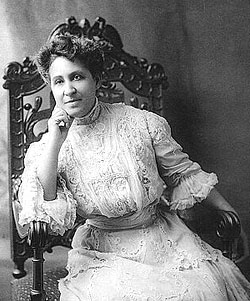
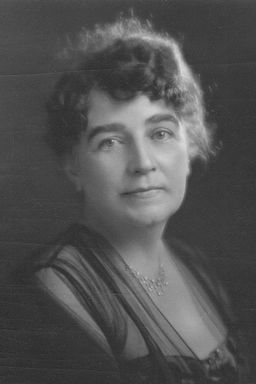
Mary Church Terrell. Public Domain, National Parks Service, via Wikipedia

I heard a radio interview this week with Jane Elliott of the brown-eye-blue-eye experiment fame, and she suggested that racism is still an issue  in the USA (through the efforts of a vocal minority) and is best demonstrated by the determination in certain quarters that Barack Obama will not win a second term*. It’s therefore apposite (perhaps) that my first Library of America post this year be on last week’s offering, “What it means to be colored in the capital of the United States” by Mary Church Terrell (1863-1954). This essay originated, according to LOA’s introductory notes, in a talk Terrell gave at a Washington women’s club in 1906. It was then published anonymously, LOA says, in The Independent, in 1907.

Now, I’d never heard of Terrell, but she sounds like one amazing woman. Not only did she live an impressive-for-the-times long life, but she had significant achievements, including being, it is believed, the first black woman to be appointed to a Board of Education (in 1895). She also helped found the National Association of Colored Women. On a slightly different tack, she was a long-time friend of H.G. Wells. Interesting woman, eh?

I have a few reasons for being interested in this essay, besides Jane Elliott’s comment. I lived in the DC area – in Northern Virginia – for two years in the early-mid 1980s and was surprised by some of my own experiences regarding race there. And, as a teen in the 1960s and early 1970s, I was aware of and fascinated by the Civil Rights movement in the USA. I was surprised but thrilled to hear, late last year, an audio version of John Howard Griffin‘s book, Black like me, that I read and loved back in those days.

But enough background. To the essay… I’ll start by saying that I’m not surprised that it began as a talk, because it seemed to ramble a bit. However, as I read on, some structure did start to appear. She starts by listing the various areas in which she, as a black woman, was (or would have been if she’d tried) discriminated against in the national capital. These include finding a boarding house and a place to eat, being able to use public transport, finding non-menial employment, being able to attend the theatre or a white church, and gaining an education. She introduces her section on transport as follows:

As a colored woman I cannot visit the tomb of the Father of this country, which owns its very existence to the love of freedom in the human heart and which stands for equal opportunity for all, without being forced to sit in the Jim Crow section of an electric car …

The irony here is not subtle – but she’s in the business of education where subtlety would not get her far!

She then returns to many of these issues – and this is where I started to wonder about her structure – but what she does is move from introducing the issues by using herself as an example to exploring each one using real examples of people she knows or has heard of. She describes, for example, how employers might be willing to employ a skilled black person, but are lobbied by other staff and threatened with boycotts by clients and so take the easy path of firing (or not hiring) the black person in favour of a white person. In one case the employer is  a Jew,

… and I felt that it was particularly cruel, unnatural and cold-blooded for the representative of one oppressed and persecuted race to deal so harshly and unjustly with a member of another.

You can guess why, in 1907, this was published anonymously!

Anyhow, I won’t repeat all the examples she provides to demonstrate the extent of prejudice at play, because you can read the essay yourself. I will simply end with her conclusion:

… surely nowhere in the world do oppression and persecution based solely on the color of the skin appear more hateful and hideous than in the capital of the United States, because the chasm between the principles upon which this Government was founded, in which it still professes to believe, and those which are daily practiced under the protection of the flag, yawns so wide and deep.

Some 100 or so years later, the US sees itself as the leader of the free world and yet it seems that this chasm is still rather wide. What are the chances that it will completely close one day?

* Please note that this is not a holier-than-thou post. We Aussies have our own problems with racism and prejudice, and so I am not about to throw stones at anyone else.

___________________________

I love that Bill decided to choose a non-Australian post for this BC. It’s so depressing to think that no improvements seem to have been made in the decade since I wrote this – there, or I fear in most countries. Certainly, statistics coming out here in Australia are showing no improvement in important measures, like life expectancy and incarceration. Indeed there’s been some sliding. This is not good enough.

Thoughts?
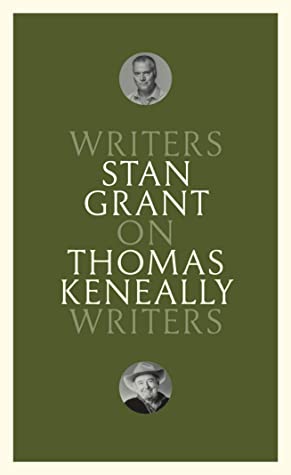
Stan Grant, On Thomas Keneally (Writers on writers) (#BookReview)

Book cover for Stan Grant, On Thomas Keneally

Stan Grant’s On Thomas Keneally is the second I’ve read in Black Inc’s Writers on writers series, Erik Jensen’s On Kate Jennings (my review) being the first. As I wrote in that post, the series involves leading authors reflecting “on an Australian writer who has inspired and influenced them”. Hmm … the way Keneally inspired and influenced Grant is not perhaps what the series editors envisaged, but certainly his essay meets some of the other goals: it is “provocative” and it absolutely starts “a fresh conversation between past and present.”

Most Australians will know immediately why Grant chose Keneally, but for everyone else, it’s this. In 1972, Thomas Keneally’s The chant of Jimmie Blacksmith was published. It is historical fiction based on the life of Jimmy Governor, an Indigenous man who was executed in 1901 for murdering a white family. Keneally is on record as saying he was wrong to have written the book from an Indigenous person’s perspective, but he did, and the book is out there (along with its film adaptation by Fred Schepisi).

That’s Keneally, but what about Stan Grant? Of Wiradjuri and Irish heritage, he is no stranger to this blog. He’s an erudite, thoughtful man, always worth listening to, but, here’s the thing. I find it difficult, with this book, to be a white Australian discussing a First Nations Australian writing about a white Australian who wrote a novel about a First Nations Australian. The politics are just so complicated. I’ll do my best, but will just focus on a few ideas. At 86 pages it is a short piece so, if you are interested, I recommend you read it yourself.

If you have ever listened to Grant, you will know that his thinking is deeply informed by history and philosophy, and so it is here. He is also palpably angry, and pulls no punches. He writes, just over half way through the essay that

This entire essay is about writing back to the white gaze. I need to write back to the white author who would steal my soul. I must prove I exist before I can exist.

Grant starts his essay by reminding us of Australia’s history and how “in a generation or two, my people were nearly extinguished.” He introduces us to Jimmy Governor, who was executed just three weeks after Federation. Jimmy becomes the lynchpin for his argument, because he, “that grotesque murderer”, is also, says Grant, “the memory of a wound. He is a scar on our history that runs like a fault line between black and white.” He is “a spectre that will not let us bury our history.”

The problem is, argues Grant, that the real Jimmy is nothing like Keneally’s Jimmie:

Keneally’s caricature of a self-loathing Jim­mie Blacksmith is a lost opportunity to explore the complex ways that Aboriginal people … were pushing against a white world that would not accept them for who they were; that would not see them as equal; that, in truth, would not see them as human.

But, of course Keneally’s novel is historical fiction, and, historical fiction, as most of us realise, says as much about the time it was written as about the time in which it is set. In Keneally’s case, The chant of Jimmie Blacksmith was written in 1972, a particular time in Australian history, Grant recognises, “a time of anti-Vietnam protests, the election of the Whitlam government and the Aboriginal Tent Embassy”. Grant continues:

Keneally was writing a protest story for a protest era; he needed Jimmie Blacksmith to be the freedom fighter that Jimmy Governor never was. Jimmy was a man who wanted respect. He bridled against injustice, yes, but this was a crime of anger, not an act of war.

Grant though wants something more. He wants exploration and understanding of how history, how Australia, has negated First Nations Australians’ very beings. He refers to Jacques Derrida’s coinage of

‘hauntology’, to describe how the traces of our past – our ghosts – throw shadows on our world.

Grant believes that “the West thinks it can vanquish history; that the past can be entombed”. I don’t personally ascribe to that. It’s not rational, to me. But I can see how the course of Western “progress” does in fact manifest that way of seeing, and it leaves people – like First Nations Australians – in its wake. This, really, is the theme of Grant’s essay.

However, at times Grant lost me. He says Christos Tsiolkas is “copping out” when he says that it is not for white Australians to write “a foundation story for the first peoples of this country”. Grant suggests Tsiolkas can, and that he could “look to the First Peoples to enter our tradition; to understand that story and his place in it before he writes a single word about what it is to be an ‘Australian'”.

I’m uncertain about how a white Australian can do this right now, but that is probably my lack of imagination. Regardless, I feel that Grant is refusing to recognise the respect behind Tsiolkas’ statement. It’s a respect many of us feel when we contemplate writing about First Nations Australians. We don’t want to presume we know what we can never understand. Grant says it himself, late in the book:

No one who has not lived through our interminable loss could capture what it is to be Indigenous in Australia.

In the last part of the essay, Grant discusses other Australian writers. Besides Tsiolkas, these include Patrick White, Joan Lindsay, Randolph Stowe, from the past, and contemporary Indigenous writers like Tara June Winch and Bruce Pascoe. His thoughts are often surprising. He clearly approves Eleanor Dark who “knew that blackness hovers over everything that is written in this country”.

The final part of essay reads like a manifesto. Grant states exactly what he will and won’t do and be. But, he also says he is glad Keneally wrote his book because it has stayed with him for forty years. In it, he felt “the weight of my history”. The results weren’t always positive, but the book has, I think he’s saying, kept him thinking.

And he says this:

Like me, Thomas Keneally made his own pilgrimage to the old Darlinghurst Gaol. Standing near where the real Jimmy Governor was hanged, he said he was sorry for “assuming an aboriginal voice”. He should have sought permission, he said. “We can enter other cultures as long as we don’t rip them off, as long as we don’t loot and plunder,” he said. I don’t think we can police our imaginations. I don’t think we need to ask permission. Australian writers have never done this and, frankly, I see them in my country more clearly because of it. It is like the debate about Australia Day; why move the date if it will only hide the truth.

I will leave you with that.

(My third post for Lisa’s 2021 ILW Week.)

Stan Grant
On Thomas Keneally: Writers on writers
Carlton: Black Inc, 2021
90pp.
ISBN: 9781760642327

George Orwell, My country right or left (#Review)

Having recently posted on the fourth essay, “The prevention of literature“, in my book of George Orwell essays, I’ve decided to plough on and try to finish it. The next essay is the short, cleverly titled, “My country right or left”. It was first published in Autumn 1940 in Folios of new writing.

It’s a curious little essay. I’m going to introduce it by sharing the Orwell quote used by the Orwell Foundation under its banner: “What I have most wanted to do… is to make political writing into an art”. You can certainly tell from “The prevention of literature” that he sees literature as being necessarily political. That essay was written in 1946, just after World War 2 had ended. “My country right or left” was first published just one year into this war – and is politically-driven.

The essay starts with:

Contrary to popular belief, the past was not more eventful than the present. If it seems so it is because when you look backward things that happened years apart are telescoped together, and because very few of your memories come to you genuinely virgin. It is largely because of the books, films and reminiscences that have come between that the war of 1914-18 is now supposed to have had some tremendous, epic quality that the present one lacks.

I wasn’t sure at all, from this opening, where it was going. Soon, however, it’s clear that war is the driver for the essay which turns out to be about Orwell trying to rationalise, or work through, his socialist beliefs, his previously avowed pacifism, and his patriotism (and thus support for the war).

He writes about being a middle-class school boy during World War 1 and being oblivious to what was happening, particularly to “the true significance” of the big events. He writes:

The Russian Revolution, for instance, made no impression, except on the few whose parents happened to have money invested in Russia. 

I’m sure that’s not unusual! He talks about how pacifism

had set in long before the war ended. To be as slack as you dared on O.T.C. parades, and to take no interest in the war was considered a mark of enlightenment.

Interestingly, however, this pacifism, he says, gradually gave way to a certain nostalgia in those who had not experienced the war! He suggests that this was why his generation was so interested in the Spanish Civil War. He then moves onto World War 2, to the growing awareness in the mid-1930s that it was coming and – this is his main point – his realisation that he “was patriotic at heart” and “would support the war”.

Orwell’s sees this as a no-brainer. He says:

If I had to defend my reasons for supporting the war, I believe I could do so. There is no real alternative between resisting Hitler and surrendering to him, and from a Socialist point of view I should say that it is better to resist; in any case I can see no argument for surrender that does not make nonsense of the Republican resistance in Spain, the Chinese resistance to Japan, etc. etc. 

But, he admits that this support stemmed primarily from “the long drilling in patriotism which the middle classes go through”. The drilling had, he said, “done its work … once England was in a serious jam it would be impossible for me to sabotage”. This patriotism, however, in not incompatible, he argues, with his socialist view that “only revolution can save England”. That “has been obvious for years”. “To be loyal both to Chamberlain’s England and to the England of tomorrow might seem an impossibility”, he writes, but it is, in fact, a fact, because such dual loyalties were happening everyday. Revolution could not happen with Hitler in control, so, Hitler must be resisted.

His final point is to criticise the left-wing intellectuals who do not understand this, though his method is curious. He turns to the idea of “patriotism”, arguing that “patriotism” should not be equated with “conservatism”, because, unlike “conservatism”, “patriotism” can encompass change. Indeed, he proposes that “socialism” can grow out of the emotions that underpin “patriotism”, whether “the boiled rabbits of the Left” like it or not.

So, curiously argued perhaps, but I can imagine the socialist-leaning, middle-class raised, intellectually open Orwell wanting to nut out how to marry his socialist beliefs with the very real threats his imperfect Britain was facing – and coming up with something confronting, but true.

Wikipedia writes that “according to his notes to his literary executor in 1949”, this was one of three essays that he did not want reprinted after his death. I can sort of see why, and I don’t know why the executor didn’t respect this. However, I do like the insight this essay provides into how Orwell thought, and that it shows him to be an independent thinker, rather than a parroter of received truths.

Previous reviews of essays from this book: “Books v. Cigarettes“, “Bookshop memories“, “Confessions of a book reviewer“, and “The prevention of literature“.

George Orwell
“My country right or left” (orig. 1940)
in Books v. cigarettes (Great Ideas)
London: Penguin Books, 2008
pp. 21-41
ISBN: 9780141036618

Available online at the Orwell Foundation.

George Orwell, The prevention of literature (#Review)

One of the reasons a work becomes a classic is its timelessness, its continued relevance to each period in which it is read. This is certainly why many of George Orwell’s works are seen as classics. Scarily, there is nothing more relevant now than his writing on the impact of totalitarianism – of which his 1946 essay, “The prevention of literature”, is one example.

The essay starts by responding to a PEN meeting that was held on the tercentenary of Milton’s Areopagitica. Milton defends, Orwell writes, “the freedom of the press”, and he was concerned that not one of several hundred people present “could point out that the freedom of the press, if it means anything at all, means the freedom to criticise and oppose”.

Orwell continues to say that there are two main threats to “the idea of intellectual liberty”: the theoretical enemies, or proponents of totalitarianism; and, the immediate, practical enemies, bureaucracy and monopoly. He spends little time on this latter, but I’ll mention it because it is as valid now as it was then. He sumarises it as:

the concentration of the press in the hands of a few rich men, the grip of monopoly on radio and the films, and the unwillingness of the public to spend money on books.

I’m not sure how the last of these stands now, but I believe Australians are buying books, and particularly did so during the pandemic. However, his first two points are certainly still valid concerns, eight decades later.

Orwell’s prime focus, however, was the impact of totalitarianism on intellectual freedom, and thus on literature. He spends some time discussing attacks on freedom of thought and the press. He argues that

in the foreground the controversy over freedom of speech and the press is at bottom a controversy over the desirability or otherwise of telling lies. What is really at issue is the right to report contemporary events truthfully, or as truthfully as is consistent with the bias and self deception in which every observer necessarily suffers.

I love this qualification, but I think you can see where this is going in terms of my opening paragraph. I’m not going to write a treatise on this, but Russian-American Masha Gessen wrote a response to it in The New Yorker, in 2018, which is well worth reading for their historical understanding of where Orwell was coming from as well as for their commentary on its relevance to now. Gessen wrote that:

We live in a time when intentional, systematic, destabilizing lying—totalitarian lying for the sake of lying, lying as a way to assert or capture political power—has become the dominant factor in public life in Russia, the United States, Great Britain, and many other countries in the world. When we engage with the lies—and engaging with these lies is unavoidable and even necessary—we forfeit the imagination. But the imagination is where democracy lives. We imagine the present and the past, and then we imagine the future.

What Gessen is referring to here is, first, the point that Orwell makes about totalitarianism’s “disbelief in the very existence of objective truth” – its lack of interest in “truthfulness” – and, second, its quashing of the “imagination” which is fundamental to literature.

Orwell argues that totalitarianism engenders instability, that totalitarians alter their perspectives at a moment’s notice to suit the prevailing situation. Such a society, he writes, “can never permit either the truthful recoding of facts, or the emotional sincerity, that literary creation demands”. You don’t have to be in a totalitarian state for this to happen, he adds. This problem can also occur wherever there is “an enforced orthodoxy – or even two orthodoxies”, where you cannot write sincerely. This point, I think, is worth considering in terms of “rules” about who can write what. I am certainly sympathetic to the concern about people’s stories being appropriated and, more problematically, being over-ridden, but there are many stories and “truths”, and sincere (I like this word) writing about them should be welcomed and respected. We learn about ourselves through the give-and-take, the conversation, that the arts facilitates. It is truly positive that we are now hearing more voices – this is what we must encourage and protect – but it would be dangerous if all these voices were confined to boxes.

Related to this is Orwell’s understanding of literature. He writes that “above a quite low level, literature is an attempt to influence the viewpoint of one’s contemporaries by recording experience”. For him, essentially all literature – particularly “prose literature” – is political in some sense. He says “there is no such thing as a genuinely non-political literature, and least of all in an age like our own, when fears, hatreds, and loyalties of a directly political kind are near the surface of everyone’s consciousness”. It sounds very much like our time.

Finally, after some other fascinating discussions – some of which made sense, some less so to me, such as his discussion of verse – he concludes that “a bought mind is a spoilt mind” and that “the imagination, like certain wild animals, will not breed in captivity”.

“The prevention of literature”, although written at a very particular point in world history, turned out to be more relevant than I would have hoped possible. It raises many questions about the threats we are currently facing to intellectual liberty and freedom of expression, and thus, to “truthfully” reporting, to “sincerely” questioning, what we see happening.

Previous reviews of essays from this book: “Books v. Cigarettes“, “Bookshop memories“, and “Confessions of a book reviewer“.

George Orwell
“The prevention of literature” (orig. 1946)
in Books v. cigarettes (Great Ideas)
London: Penguin Books, 2008
pp. 21-41
ISBN: 9780141036618

Available online at the Orwell Foundation.

Gene Stratton-Porter, The last Passsenger Pigeon (#Review)

I have passed up reading and/or posting on so many Library of America (LOA) Story of the Week offerings over the last months – sadly, because there have been some excellent selections chosen for their political relevance. However, when I saw a sentimental favourite, Gene Stratton-Porter (1863-1924), pop up, I knew I had to break the drought.

Gene Stratton-Porter (Uploaded to Wikipedia, by gspmemorial; used under CC-BY-SA-4.0)

Some of you may not be familiar with this American Midwest author who wrote, says LOA, “sugary (and extremely popular) fiction to underwrite her work in natural history”. It was one of these works, The girl of the Limberlost, that I loved, and later introduced to Daughter Gums who also loved it. Yes, it was sentimental, though it has its tough side, but it did also leave an everlasting impression on me of its setting, Indiana’s Limberlost Swamp. According to LOA again, it was the immense success of this book, and Freckles which I also read, that resulted in her publisher agreeing to also publish her less saleable nature books. She was, writes LOA, “a fighter for the world she saw disappearing around her, as Standard Oil of Indiana drilled new wells and farmers drained more land”.

Interestingly, LOA’s as usual excellent introductory notes focus not on Stratton-Porter but on her subject, the Passenger Pigeon. LOA discusses others who have written about this bird – novelist James Fenimore Cooper, a chief of the Potawatomi Indians Simon Pokogon, and naturalists John James Audubon and John Muir – before eventually getting to Stratton-Porter herself. LOA’s point is to document the extinction of these birds from the early 1800s, when they were still seen in immense flocks, to a century later in 1914 when the last one died in captivity. Stratton-Porter wrote her piece just 10 years after that.

So Stratton-Porter’s piece. She commences by describing the beauty of her childhood farm, including its woods and forests where birds, such as the Passenger Pigeon, loved “to home”. She writes, introducing her environmental theme, that:

It is a fact that in the days of my childhood Nature was still so rampant that men waged destruction in every direction without thought. Nature seemed endlessly lavish …

When people started to clear land they “chopped down every tree on it” without, she says, having any “vision to see that the forests would eventually come to an end”. She writes – and remember, this was 1924:

… as the forests fell, the creeks and springs dried up, devastating winds swept from western prairies, and os the work of changing the climatic conditions of the world was well under way.

She talks of animals and game birds “being driven farther and farther from the haunts of civilisation”, but she also talks of people who did not believe in living so rapaciously, preferring instead to live in log cabins in small clearings. She describes her family’s own hunting practices, including of quail. As their numbers decreased, her minister father forbade the family’s trapping and egg-gathering. He’d noticed that when bird numbers were low, grain-damaging insect pests were high.

He had never allowed, however, the hunting of Passenger Pigeons, despite their being significantly more numerous in those days than quail. Stratton-Porter thinks this stemmed from his having “a sort of religious reverence” for pigeons and doves. Others, though, had no such qualms, and she describes some brutal hunting practices involving wild pigeons, which apparently made good eating. Gradually, it became noticeable, writes Stratton-Porter, that their numbers were decreasing. Not only did her family miss the sound and beauty of these birds, but

The work that they had done in gathering up untold quantities of weed seeds and chinquapins was missed and the seeds were left to germinate and become a pest, instead of pigeon food.

Once again, she notes the wider ecological or environmental implications of species reduction or loss. She then writes of the death of the final two birds in captivity before sharing her own searching for any remaining wild birds. It was while she was watching and photographing, over a period of time, a brooding goldfinch, that she heard the unmistakable “wing music of a bird that should reasonably have been a dove, but was not”. She describes this beautiful bird, but says “it had not the surety of a bird at home; it seemed restless and alarmed”. This was, she argues, “one of the very last of our wild pigeons”, a male bird “flying alone, searching for a mate and its species”.

Stratton-Porter closes her essay with a cry from the pigeon, whose song she says sounds like “See? See?”:

Where are your great stretches of forest? Where are the fish-thronged rivers your fathers en- joyed? Where are the bubbling springs and the sparkling brooks? Why is this land parching with thirst even in the springtime? Why have you not saved the woods and the water and the wildflowers and the rustle of bird wings and the notes of their song? See what you have done to me! Where a few years ago I homed over your land in uncounted thousands, to-day I am alone. See me searching for a mate! See me hunting for a flock of my kind! See what you have done to me! See! See! See!”

And that was written in 1924! Nearly 100 years ago, and yet we still destroy habitat including, here in Australia, that of one of our most popular native animals and national symbols, the koala. Will we never learn?

Gene Stratton-Porter
“The last Passenger Pigeon”
First published: Good Housekeeping, 1924 (Collected in Tales you won’t believe, 1925)
Available: Online at the Library of America

Julia Baird, Phosphorescence (#BookReview)

Book cover

Much as I love watching Julia Baird on The Drum, and much as Mr Gums and I worried about her multiple cancer diagnoses and her extended journey to recovery over recent years, I’m not sure I would have read her book, Phosphorescence: On awe, wonder and things that sustain you when the world goes dark, if my reading group hadn’t scheduled it. However, we did schedule it, and I did read it. I found many of its ideas affirming or confirming, or, if not those, thought-provoking. In other words, although it feels like a self-help book which I usually avoid, I’m glad I read it.

Why? Her hope, which she shares late in the book, is pretty straightforward:

I wrote this book in the hope that it might be a salve for the weary, as well as a reminder of the mental rafts we can build to keep ourselves afloat, the scraps of beauty that should comfort us, the practices that might sustain us, especially in times of grief, illness, pain, and darkness. (p. 274)

She goes on to say that she understands that the things she’s shared, “stillness, kindness, the sea and ancient trees can hardly be a universal panacea for all the suffering on the planet”. This is true, but there is more to the book. In the Prelude, she describes her intention as being ‘to search for “the light within”, for what makes people shine’. What she shares, I’d say, will speak to each reader differently, according to our personal values, beliefs, and life experiences.

The book is divided into four main parts, focussing in turn on awe, wonder and silence; the importance of accepting and valuing failure and imperfection; the art and value of friendship; and the practice of looking and savouring, of paying attention to our inner strengths. Each of these explores its topic from three perspectives: documentary evidence from researchers, writers, philosophers; anecdotal evidence from people Baird knows or has spoken to; and, of course, her own personal experience.

It is an unusual hybrid of a book. Part book of essays, part memoir, and part quest (for “phosphorescence” or “the light within”), it sometimes felt more like a collection of random thoughts and ideas than the coherent argument I was expecting. This may be partly because several of the essays originated in previously published pieces, whose links are not immediately obvious. However, while this uncertainty was at the back of my mind as I was reading, it didn’t stop me enjoying each essay as it came along, because each had something interesting – and often heartfelt – to offer.

So, for the rest of this post I’m going to share some of the ideas that appealed to me and why.

Japanese thought, friendship, imperfection and doubt

First was the frequency with which she references Japanese thinking and aesthetics – and many of you know how much Mr Gums and I like Japan. The ideas, which are hard to put into Western words so my descriptions are loose, are Shinrin-yoku (or forest-bathing, the physiological/psychological benefits of being in the forest); Yūgen (mysterious or sublime, perhaps, experiences of beauty); Wabi-sabi (beauty in imperfection or transience, often characterised by asymmetry, roughness); Kintsugi/Kintsukuroi (repairing broken pottery visibly, so that the damage becomes part of its history and beauty); and Moai (the groups created among newborns in Okinawa to provide lifelong social support).

It’s not surprising that a nation that is generally known for values like stillness and stoicism, for preferring what novelist Juni’chirō Tanizaki calls “a pensive lustre to a shallow brilliance”, might have ideas relevant to a search for our “inner light”.

Moai is discussed in the section on friendship which is titled “We are walking each other home” (after Ram Dass). If there’s one image from the book that moved me it was this, the idea of “walking each other home”. It speaks of grace, tenderness and care, and of the way I’d like to think my friends, family and I are with each other. Baird’s section on friendship is beautiful.

In another evocatively titled section – “We are all wiggly” – Baird discusses failure and imperfection. Again, as in the other sections, she ranges over a wide range of ideas and examples, which are too numerous to share here, but they include honouring our failures, letting ourselves go (appearance-wise), and appreciating impermanence.

In the fourth section, Baird, a Christian, writes about faith and doubt. While I appreciated her discussion of her faith and what Christianity means to her, I most enjoyed her discussions of other forms of faith, hope and stoicism, and its corollary, doubt. Embracing doubt is valid, she argues, though she adds this aside:

(Although, seriously, if you can’t accept what the vast majority of scientists have to say about climate change, it’s not doubt that is your problem.)

I also enjoyed her exploration of the importance of searching for our “ert” (a term coined by marine biologist Lisa-ann Gershwin to oppose “inertia”).

In this section she also refers to Helen Garner and Tim Winton, Australian writers for whom faith is important, but whose thinking about it is personally rather than institutionally focused.

Setting a “low bar”

However, what struck me most was her articulation of a philosophy that I live by. It is, as described by psychologist Barry Schwartz, that “the secret to happiness is low expectations”. Or, at least, Baird adds, “realistic ones, erring on the low side”.

When it first dawned on me that this was how I managed my life, I was surprised. It didn’t seem to accord with my view of myself as an idealist, but I then realised that the two were not mutually exclusive. I could have high ideals of how we should all behave and treat each other but I could also not expect that we all would (all of the time). I worried that this might sound snooty, or holier than thou, but hoped not. For me, this approach encompasses the realisation that we don’t all come from the same place; we don’t all have the same experiences or values; we have not all had the same opportunities; and, perhaps most critically, many of the things that affect us are out of our control and that, to remain sane, I need to be able to accept them.

As I’ve been writing this post, it’s become clear to me that the book does, in fact, satisfy Baird’s goal of searching for “the light within” – even though, while reading it, I sometimes felt I was losing the overall plot as I followed her down multifarious paths. In retrospect, I’ve decided that this could be the book’s strength. Not only does it offer a variety of experiences and thinking, but it enables us to choose paths most suitable for us, paths that may change depending on our circumstances. I won’t be swimming with giant cuttlefish like Baird, but I’m very happy to bathe in the forest.

Challenge logo

Julia Baird
Phosphorescence: On awe, wonder and things that sustain you when the world goes dark
Sydney: Fourth Estate, 2020
310pp. (including 23 pages of Endnotes)
ISBN: 9781460757154

Fannie Barrier Williams, Women in politics (#Review)

It’s been months since I posted on a Library of America (LOA) Story of the Week offering, but this week’s piece by African American activist, Fannie Barrier Williams, captured my attention. Several LOA offerings this year have been relevant to the times – including stories about infectious diseases – but this one is so spot on for so many reasons that I could not pass it up.

Fannie Barrier c1880, photographer, public domain via Wikipedia

Fannie Barrier Williams (1855-1944) was, according to Wikipedia (linked above), an American political and women’s rights activist, and the first black woman to gain membership to the Chicago Woman’s Club. According to LOA, she was also the first African-American to graduate from Brockport Normal School and “quickly became part of Chicago’s black elite when she moved there with her lawyer husband in 1887”. She was a distinguished artist and scholar.

However, it’s her activism that is my focus here. Wikipedia says that “although many white women’s organizations did not embrace their black counterparts as equals, Barrier Williams made a place for herself in the Illinois Woman’s Alliance (IWA).” She represented the viewpoint of black Americans in the IWA and “lectured frequently on the need for all women, but especially black women, to have the vote”.

And so we come to her little (in size not import) piece, “Women in politics”, which was published 1894. It concerns women voting. Universal suffrage was still some way off in the USA, but Barrier Williams commences by arguing that the “fragmentary suffrage, now possessed by women in nearly all states of the union”, will certainly and logically lead to “complete and national suffrage”. So, with this in mind, she, says LOA’s notes, “challenged women to use their newfound political power wisely”. She asks:

Are women ready to assume the responsibilities of this new recognition of their worth? This question is of immense importance to colored women.

She then poses, provocatively,

Must we begin our political duties with no better or higher conceptions of our citizenship than that shown by our men when they were first enfranchised? Are we to bring any refinement of individuality to the ballot box?

Her concern is that women – but we could read anyone really, giving it broader relevance – should not vote on partisan lines. Her concern is that voting along party lines will achieve nothing, and that

there will be much disappointment among those who believed that the cause of temperance, municipal reform and better education would be more surely advanced when the finer virtues of women became a part of the political forces of the country.

Hmmm … this seems to trot out the belief that women will bring “womanly” virtues, those more humanitarian-oriented values, to politics, which history has not necessarily borne out. However, this doesn’t belie the main point about voting thoughtfully.

She then discusses the opportunity for women to vote in Chicago for the trustees of the state university, but notes that the two women candidates have aligned themselves, respectively, to the republican and democratic tickets. She says that “so far the campaign speeches and methods have not been elevated in the least degree above the dead level of partisanship”. She doesn’t want to discredit these women’s good motives but argues that

this new opportunity for self-help and advancement ought not to be lost sight of in our thirst for public favors, or in our eagerness to help any grand old “party.” We ought not to put ourselves in the humiliating position of being loved only for the votes we have.

It seems that these two women candidates were white women. What she says next reminds me of Aileen Moreton-Robinson’s Talkin’ Up to the White Woman: Indigenous women and feminism (2000)which Angharad of Tinted Edges recently reviewed. Angharad writes that “Moreton-Robinson argues that because of feminism’s inherent but insufficiently examined white perspective, Indigenous women are excluded, minimised or merely tolerated conditionally. She argues that because race is considered to be something that is “other”, white feminists are unable to acknowledge their own race and associated privilege, their own role in perpetuating racial discrimination and are therefore unwilling to relinquish some of that power.”

A similar point was made over 100 years earlier by Barrier Williams:

The sincerity of white women, who have heretofore so scorned our ambitions and held themselves aloof from us in all our struggles for advancement, should be, to a degree, questioned. It would be much more to our credit if we would seek, by all possible uses of our franchise, to force these ambitious women candidates and women party managers to relent their cruel opposition to our girls and women in the matter of employment and the enjoyment of civil privileges.

She continues that “we should never forget that the exclusion of colored women and girls from nearly all places of respectable employment is due mostly to the meanness of American women” and that voters should use the franchise to “check this unkindness”. She urges voters not to focus on “the success of a party ticket for party reasons”. This would make them “guilty of the same folly and neglect of self-interest that have made colored men for the past twenty years vote persistently more for the special interests of white men than for the peculiar interests of the colored race”.

Strong words, but history surely tells us true ones. So, she asks voters “to array themselves, when possible, on the side of the best, whether that best be inside or outside of party lines”.

For Barrier Williams, as for many who fought for women’s suffrage, the vote was not just about equality but about what you could do with the vote. It was about having the opportunity to exert “a wholesome influence in the politics of the future”. The words may be strange to our 21st century ears, but the meaning still holds true – and is a timely one to consider now!

Fannie Barrier Williams
“Women in politics”
First published: The women’s era, 1894
Available: Online at the Library of America

Joan Didion, Quiet days in Malibu (#Review)

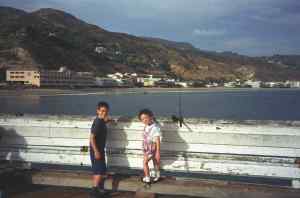
Malibu from Malibu Pier, August 1993

As for many people I expect, Joan Didion’s now classic The year of magical thinking made a lasting impression on me, so I was keen to read her essay “Quiet days in Malibu” when it popped up as a Library of America (LOA) Story of the Week back in November. I was also interested in the subject matter. Having lived in Southern California in the 1990s, I wanted to see what Didion had to say about Malibu, a place that has always conveyed the romance of Californian beaches to me, largely through Gidget! There, I’ve admitted my teen-girl secret.

What Didion had to say was not what I expected. She starts with:

In a way it seems the most idiosyncratic of beach communities, twenty-seven miles of coastline with no hotel, no passable restaurant, nothing to attract the traveler’s dollar. It is not a resort. No one “vacations” or “holidays,” as those words are conventionally understood, at Malibu. Its principal residential street, the Pacific Coast Highway, is quite literally a highway, California 1, which runs from the Mexican border to the Oregon line and brings Greyhound buses and refrigerated produce trucks and sixteen-wheel gasoline tankers hurtling past the front windows of houses frequently bought and sold for over a million dollars. The water off Malibu is neither as clear nor as tropically colored as the water off La Jolla. The beaches at Malibu are neither as white nor as wide as the beach at Carmel. The hills are scrubby and barren, infested with bikers and rattlesnakes, scarred with cuts and old burns and new R.V. parks. For these and other reasons Malibu tends to astonish and disappoint those who have never before seen it, and yet its very name remains, in the imagination of people all over the world, a kind of shorthand for the easy life [my emph]. I had not before 1971 and will probably not again live in a place with a Chevrolet named after it. 

Things have, naturally, changed since Didion lived there for seven years through the 1970s, but only a little I think. Pacific Highway 1 still runs through it, alongside the beach, though the more inland 101 Freeway is the main north-south route. It is still home to many celebrities and other well-to-do living in expensive mansions. This opening paragraph, however, also introduces us Didion’s style – including her use of repetition (“The water off … The beaches at … The hills are …”) and quietly pointed commentary (as in “I had not before 1971 and will probably not again live in a place with a Chevrolet named after it.”)

This essay, published in a 1979 collection titled The white album, was in fact a reworking of two pieces published in Esquire in 1976. LOA’s notes say that those pieces “showcase the beach community” not through its celebrities but through “the lifeguards on the beach and the manager of a local orchid farm.” To these pieces, which form the bulk of the essay, Didion added the above-quoted introductory paragraph and a concluding section, about which more later.

The white album, LOA’s notes also tell us, opens with her famous line, “we tell ourselves stories in order to live”. The stories she tells in this essay are about “ordinary” people, as much as anyone, really, is ordinary. First up is lifeguard Dick Haddock. She introduces him thus – with that same use of repetition:

Dick Haddock, a family man, a man twenty-six years in the same line of work, a man who has on the telephone and in his office the crisp and easy manner of technological middle management, is in many respects the prototypical Southern California solid citizen.

She describes visiting his “office”, the lookout on Malibu’s Zuma Beach, on Thanksgiving morning in 1975, when

A Santa Ana wind was just dying after blowing in off the Mojave for three weeks and setting 69,000 acres of Los Angeles County on fire. Squadrons of planes had been dropping chemicals on the fires to no effect. Querulous interviews with burned-out householders had become a fixed element of the six o’clock news. Smoke from the fires had that week stretched a hundred miles out over the Pacific and darkened the days and lit the nights and by Thanksgiving morning there was the sense all over Southern California of living in some grave solar dislocation. It was one of those weeks when Los Angeles seemed most perilously and breathtakingly itself, a cartoon of natural disaster …

Oh no! As I post this story, we are suffering similarly from bushfires. We certainly feel that we are living in “some grave … dislocation”. Note too another of those pointed comments – on LA seeming “most perilously and breathtakingly itself, a cartoon of natural disaster”. Anyhow, Didion’s description of Haddock, his colleagues and their work, is respectful and evocative, recognising both the drama and the tedium of what they do.

The second piece is about another prototypical Southern Californian, “a Mexican from Mexico”, or “resident alien” (just as I, a wife, was a “derivative alien” to my husband’s “primary alien”!) Amado Vazquez is anything but ordinary, though, as he’s an expert orchid breeder for Arthur Freed Orchids. Didion shares with us her love of greenhouses:

all my life I had been trying to spend time in one greenhouse or another, and all my life the person in charge of one greenhouse or an- other had been trying to hustle me out.

And here, finally, was her opportunity to spend time in one! Again, in her chatty style, she explains the work of an orchid breeder – of stud plants, of orchid fertility, of the naming of plants, of the business of orchid breeding. She references that racist name-changing behaviour that white people often do, whereby the orchid named for Vazquez’s wife “mysteriously” becomes “Vasquez”.

But, I want to close on the short concluding section in which, after significantly mentioning the drowning death, “a casualty of Quaaludes”, of one of her 12-year-old daughter’s friends, she describes another horrendous fire:

Within two hours a Santa Ana wind had pushed this fire across 25,000 acres and thirteen miles to the coast, where it jumped the Pacific Coast Highway as a half-mile fire storm generating winds of 100 miles per hour and temperatures up to 2500 degrees Fahrenheit. Refugees huddled on Zuma Beach. Horses caught fire and were shot on the beach, birds exploded in the air. Houses did not explode but imploded, as in a nuclear strike. By the time this fire storm had passed 197 houses had vanished into ash …

This fire also destroyed three years of the orchid breeder’s work … Malibu, you see, with its peculiar geography, has is rife for natural disasters.

It was at this point that I realised the irony of the title. Through restrained, respectful reportage about the ordinary people of Malibu, Didion conveys that, in fact, Malibu is rarely quiet, and that few of its inhabitants enjoy an “easy life”.

Joan Didion
“Quiet days in Malibu”
First published: The white album, 1979 (sections published in Esquire in April and June 1976)
Available: Online at the Library of America

Sebastian Smee, Net loss: The inner life in the digital age (#BookReview)

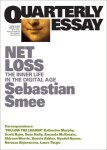
Book CoverIf you’ve been reading my blog recently, you’ll already know why I am reviewing Sebastian Smee’s Quarterly Essay edition, “Net loss: The inner life in the digital age”, but to briefly recap, it’s because it inspired a member of my reading group to recommend we read Anton Chekhov’s short story, “The lady with the little dog”. What wonderful paths a reading life can take, eh?

Smee’s aim in his essay is, he says,

to dig into this idea that we all have an inner life with its own history of metamorphosis – rich, complex and often obscure, even to ourselves, but essential to who we are. It is a part of us we neglect at our peril. I am interested in it because of my sense that, as we live more and more of our lives online and attached to our phones, and as we are battered and buffeted by all the informational, corporate and political surges of contemporary life, this notion of an elusive but somehow sustaining inner self is eroding.

He commences the essay, though, by admitting that he uses social media – a lot. And not only that, he also admits that he knows that he is “handing out information about myself to people whose motives I can’t know. I feel I should be bothered by this, but I’m not, particularly.” He’s not bothered because they know only know “superficial stuff” about him, such as his phone number and age, what sports teams he supports, the music he listens to and where he does the weekly food shop. From all this, he  says, they can probably guess how he’ll vote, but, he says, and this is a big but, “they cannot know my inner life”.

This is where Chekhov’s “The lady with the little dog” comes in because Gurov discusses his inner and outer lives, making clear that the inner life is where “everything that was essential, of interest and of value to him, everything that made the kernel of his life, was hidden from other people”.

The digital age is, as Smee says, making huge incursions into our lives. Children, “from a young age, are encouraged to present performative versions of themselves online” and, for all of us, “it gets harder to be alone with ourselves or to pick up a book; harder still to stay with it”. This is true – to a degree – though there are many of us who do carve out alone-times for ourselves. For me, this includes never being plugged in when I walk. That is definitely my alone-time. As is my yoga time, and bed-time when my phone is in another room, while my book is with me!

But, what is this inner life? How do we define it? Smee says it includes “apprehensions of beauty, your intimations of death, what is going on inside you when you are in love, or when your whole being is in turmoil”. He feels that, today, “we can no longer assume that it has its own reality. To the extent that it exists at all, it seems to have no place in public discourse. Even in discussions of art, it is ignored, thwarted, factored out”. Hmm, I haven’t consciously thought about whether, when discussing the arts, we refer to our inner lives, whether we share our innermost feelings about what we see, hear or read, but I’d have thought we do. Yet, if Smee is right about what he calls “the obscurity and unknowability of our inner selves”, then have we ever?

Anyhow, Smee explores what “self” is and how various writers and artists have viewed it. Chekhov’s Gurov, for example, felt a tension between his inner and outer lives; while American filmmakers Lizzie Fitch and Ryan Trecartin, he says, portray our identity, our inner selves, as something flexible, as something messy, splintered, and defined by our relationships with each other.

Smee talks about the effect of social media, like Facebook, on our selves. Trustworthy studies, like one in the American Journal of Epidemiology, he says, “find that use of Facebook correlates with diminished wellbeing, both physical and mental”. Correlation doesn’t mean causation of course but the implication is there. Smee returns to his question about how much companies like Facebook really know about us, about how accurate their profiles are.

He talks throughout the essay about algorithms, because that is how social media software works. Their algorithms that deal “with big and disparate data sets can see patterns where they couldn’t previously be detected”. This has “proved incredibly useful in business, medicine and elsewhere”. However, these algorithms “still struggle to cope with the messiness and idiosyncrasy that inhere in individual human beings.” Can they, will they ever be able to, gain access to our inner lives? It’s hard to say, he says, because “individual reality is beyond quantification. And cause and effect are always more complex than we like to think”.

Throughout his discussion, Smee draws mostly on writers and artists, rather than on philosophers and psychologists, to explore his topic, to exemplify his arguments. And so to this question of quantifying individual reality, he turns to Cézanne, who conveys in his art that

life … is not hierarchical, like a newspaper article, or linear, like an algorithm. It is fluid and multifaceted … Instead of cause and effect, there are only clusters of interlocking circumstances which mysteriously give rise to new circumstances.

Will, I wonder, this inherent instability save us – and our inner lives?

Social media will, of course, continue to keep trying to access our selves. One way they do so is by trying to capture as much of our attention as they can. And yet, Smee goes on to argue, our inner lives, “the very things that move us the most”, are, in fact, “the hardest to share”. Chekhov knew it was hard to do. Moreover, he knew that sharing our inner selves “can also be a betrayal of the primary, inward experience.” Touché.

Smee also makes an important distinction between private and inner life. Privacy is linked to political freedom (and power), he says, “to what you do and think away from the interested, potentially controlling eyes of others”. It’s “a shallow concept”. Inner life, on the other hand, as he argues throughout the essay, “may be elusive and impossible to define”.

And yet, says Smee, it’s this inner life that can erupt into hate, as we see played out on social media, the trolling, the never-ending vindictiveness. He references Frances Bacon’s paintings, arguing that they “dramatise a tension between the psyche’s darker compulsions and a pressure felt within civilised society to conform, to stifle emotions, not to lash out.”

Do we want these inner lives unleashed? (In a way, though, we then know what people really think?!) However, the question that most interests Smee is why are these negative aspects of our inner lives being unleashed? He suggests that it’s what all the artists (the filmmakers, writers and painters) he quotes are expressing – “an apprehension that we are alone”. This is where, Smee proposes, social media comes in with a solution:

One response to this panic, it seems to me, is to disperse ourselves, by being as widely visible as possible. Social media, and the internet generally, make this feel possible, to an unprecedented degree. They allow us to lay before the world (in the hope that the world will be watching) the things we love, the things we hate, and a mediated image of our lives that can seem to rescue us from the threat of oblivion.

But, to really protect our inner lives, he believes, we need the converse: “to pay attention again to our solitude, daring to hope that we might connect that solitude to the solitude of others.”

So where does the essay leave us? Early on he argues that

Once nurtured in secret, protected by norms of discretion or a presumption of mystery, this ‘inner’ self today feels [my emph] harshly illuminated and remorselessly externalised, and at the same time flattened, constricted and quantified.

It’s easy for us to say, yes, yes, yes, this is so, but I wonder whether this too is just a feeling? And whether, in truth, our inner lives remain as obscure and unknowable as Smee describes in the essay – and therefore as rich as ever? Net loss is a fascinating essay to read – particularly for “arty” types who love allusions to writers and artists. He makes pertinent points about the way social media operates and gives us much to think about regarding the inner life, but in the end leaves us with more questions than answers – which is perfectly alright. The one immutable, however, is that whatever we think is happening, the inner life is worth protecting.

Lisa (ANZLitlovers) reviewed this, as did Amy (The Armchair Critic) who discusses it at some depth including delving into what Smee doesn’t do.

Sebastian Smee
“Net loss: The inner life in the digital age”
in Quarterly Essay, No. 72
Collingwood: Black Inc, 2018
98pp.
ISBN: 9781743820698

Stan Grant, On identity (#BookReview)

Book coverStan Grant seems to be the indigenous-person-du-jour here in Australia. I don’t say this disrespectfully, which I fear is how it may come across given Grant’s views “on identity”, but it feels true – particularly if you watch or listen to the ABC. He pops up regularly on shows, sometimes as presenter, other times as interviewee. He therefore needs no introduction for Aussies. For everyone else, though, a brief introduction. Grant is described in the bio at the front of his book, On identity, as “a self-described Indigenous Australian who counts himself among the Wiradjuri, Kamilaroi, Dharrawal and Irish.” The bio goes on to say that “his  identities embrace all and exclude none“. He is also a Walkley Award-winning journalist (see my Monday Musings on this award), and the author of Talking to my country, which I reviewed a couple of years ago.
Grant could also be described as a (modern) Renaissance man. I say this because of the way he synthesises his wide range of reading – including philosophy, history, psychology, history, anthropology, and literature – into coherent ideas that support his arguments. He did this orally at the conversation event I attended a couple of months ago, and he does it in this long-form essay called On identity.

In my post on that event, I wrote that his main point about identity was its tendency to exclusivity. In On identity, he explores this “exclusivity”, and its ramifications, starting with those boxes we see on all sorts of forms – including the census – that asks whether you are of Aboriginal or Torres Strait Islander descent. As a person with a keen interest in the pros and cons of “labelling”, I’m aware of the obvious implication of this, that is, that it marks or separates people out. However, as Grant points out, it also, in cases where heritage is mixed (like Grant’s, like many indigenous people’s), forces them to deny other aspects of themselves, to exclude other members of their families.

And so it forces Grant, for example, to deny his Irish grandmother Ivy.

If I mark yes on that identity box, then that is who I am; definitively, there is no ambiguity. I will have made a choice that colour, race, culture, whatever these things are, they matter to me more than my grandmother.

Through her, through this conversation about ticking boxes, Grant introduces his theme of “love”, of growing up surrounded by unconditional love, and how a focus on “identity” becomes a cold substitute for what truly sustains and binds, love. Now, this might sound a bit corny, or simplistic, but bear with me …

Grant then leads us through his argument. He discusses the work and ideas of Noongar author Kim Scott, whose trajectory as an indigenous person, Grant admits, has been quite different from his own. Grant grew up knowing he was indigenous. Scott, on the other hand, was raised with very little contact with Noongar people. On discovering his ancestry and wanting to know more, he felt forced to make a choice – was he black or white? And that decision, Scott writes in his family history, Kayang & me, was a “political imperative”. There are no references to “love” in this book, writes Grant, which confirms, he says, “what I have come to believe is true: identity – exclusive identity – has no space for love”.

Grant “deeply” admires Scott, but feels sad that “in writing himself back into a Noongar identity … it isn’t love that calls him, but politics”. Scott is not oblivious to this, worrying that his decision may strand his children in “no man’s land”, making them targets from both sides of “a historical, racial fault-line”. This concern leads Grant back to his mantra that “identity does not liberate: it binds”. He talks about other writers including Jewish ones (like Kafka) and Irish (like Yeats), about their attitudes to the problematic and limiting notion of “identity”. James Joyce’s Stephen Dedalus, he says, “knows if he is to write anything he must find freedom; he must shake loose the chains of identity.”

Grant turns to other writers of colour, who have found their “identity” limiting. Toni Morrison sees that the “very serious function of racism” is to distract, preventing you “from doing your work”. Writing for her, says Grant, “has been the struggle to live free from the white gaze”. Similarly, James Baldwin sought to be “free of identity” by going to France:

Baldwin did not wish to escape being black, but he desperately wanted to be rid of other people’s ideas of blackness.

Unfortunately, Baldwin returned to the USA, and got caught up in black protest. Thus, argues Grant, the man “who had been raised in the church … had forgotten the lessons of his own childhood. He had forgotten about love”:

When Baldwin turned to politics, his words lost no power–perhaps they grew more powerful–but he made the worst bargain I think a writer can make: he swapped freedom for identity and the identity writer can only write propaganda.

Strong words, for another day, perhaps! For Grant, it is the Baldwin of France he returns to “because he taught me that a black man could have the world”.

And here, really, is the paradox that I see in Grant’s argument. It’s sophisticated, erudite, and elegantly written. He makes a strong case for his belief that identity binds rather than frees, and that in so binding, if this makes sense, it keeps people divided. But, I’m not sure that he answers for me what can be done about the division (that is, the oppression of people on the basis of race, colour, religion, gender, sexuality, etc) that has given rise to “identity” in the first place. It’s all very well to point to the limitations of and the problems inherent in the politics of identity, but what is the answer to the underlying problem?

Grant returns at the end of the essay to love. He discusses the relationship between totalitarianism and love. Antebellum America, Nazi Germany, Pol Pot’s Cambodia and other regimes, he writes, turn unity (collective identity) into totality, and “crush love because it is the surest way to crush freedom”. What he means by this is that “we banish love, when we no longer see ourselves in each other”, when “we see instead an enemy”.

So, Grant eschews any identity that would cage him, any identity that would deny any aspect of himself or that would pit himself against others. But, acknowledging at last my paradox, he does admit that there are privileges in identity – whiteness, masculinity, sexuality – which need to be called out. It’s just that they are political, and he’s not about politics*. All he’ll say is that “we find no liberation behind walls”. Amen to that!

On identity is not simple reading. Neither does it provide answers to the “identity” problem. But what I like about it is that it offers a way to think about identity that is positive not negative, that would bring us together, not divide us. Where to next?

Lisa (ANZLitLovers) and Janine (Resident Judge of Port Philip) have also posted on this book.

* What he actually says is: “I have no desire to be the writer of politics” p. 95.

BannerStan Grant
On identity (Little books on big ideas)
Carlton: Melbourne University Press, 2019
95pp.
ISBN: 9780522875522