Helen Trinca, Looking for Elizabeth: The life of Elizabeth Harrower (#BookReview)

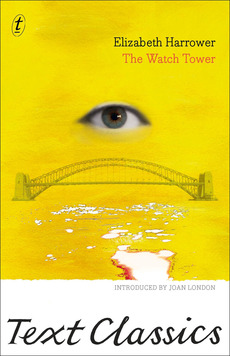
Elizabeth Harrower The watch tower

Like many, I was astonished when I read Elizabeth Harrower’s The watchtower (my review), upon its publication by Text Classics in 2012. Astonished not so much for its writing, though that is excellent, but for its subject, which is what we’d now call coercive control. The astonishment comes from the fact that The watchtower was first published in 1966, at a time when domestic abuse was hidden. Harrower recognised it, however, and called it out. The book made a splash at the time, but then disappeared from public view, though not completely from academia. Then, in 2012, Michael Heyward and his Text Publishing Company decided to publish it, and so began what biographer Helen Trinca calls, her “second act”.
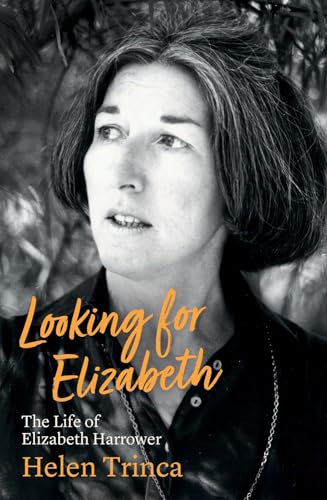
Looking for Elizabeth is the second literary biography I’ve read by Trinca, the first being Madeleine: A life of Madeleine St John (my review). Trinca must like challenging subjects, because Harrower, like St John, was challenging to write about, albeit in Harrower’s case, Trinca had the benefit of knowing her.

So, what made Elizabeth Harrower such a challenge? Trinca had many conversations with her from 2012 on, including formal interviews for newspaper articles, and Harrower had placed her papers (including letters, reminiscences, and novel drafts) with the National Library, to which Trinca apparently had full access. But interviews and papers don’t tell the full story, particularly if the subject has spent her life “curating” or shaping it, destroying many of her papers along the way, including, as she told Text editor David Winter in 2013, “more than 400 foolscap pages of literary thoughts – part journal, part stories, part eye-witness accounts, secrets and so on”.

Trinca’s biography draws on a variety of sources, which she documents in her Author’s Note. Besides her personal connections with Harrower, which included meetings, phone calls and emails, and Harrower’s papers, she used the papers of others (including Shirley Hazzard, Kylie Tennant, and Judah Waten), all sorts of other records, and interviews with family and friends. Gaps in information are frequently noted within the text – and are sometimes speculated about using that thing that many literary biographers do, the works themselves. How much can – and do – they tell us about the person who held the pen?

Many writers say they begin their project with a question. In Trinca’s case, the framing question seems to have been, Why did Elizabeth Harrower stop writing at the height of her powers? Because, this is indeed what she did. Having written and published four well-received novels – Down in the city (1957), The long prospect (1958, my review), The Catherine wheel (1960), and The watchtower (1966) – she withdrew her fifth completed novel, In certain circles, from publication in 1971, and never published a novel again, despite many encouragements from her friends including Patrick White and Christina Stead. She wrote a few short stories, but gave up writing altogether by the end of the 1970s.

From this literary trajectory, Trinca weaves a moving and interesting story about a fascinating woman. Like Madeleine, this is a traditional, chronologically told biography. It is well-documented, using clear but unobtrusive numbers pointing to extensive notes at the end, and there is a decent index.

“I’ve lived dangerously” (Elizabeth Harrower)

I am not going to tell the story of Harrower’s life, because the biography does that. Essentially, she was born in industrial Newcastle in 1928, and lived with her grandmother after her parents divorced, before joining her mother in Sydney. She never got over, it seems, being “a divorced child”. It dislocated her. Her mother remarried, and Trinca suggests that her stepfather was behind men like The watch tower’s Felix Shaw. She lived in London from 1951 to 1959, before returning to Australia, rarely leaving Australia after that. She did not marry, but had an intense, emotional relationship with the older, married Kylie Tennant, which raises questions that Trinca isn’t able answer, though she points to other “crushes” on older women. Do we need to know?

Through Harrower’s life she mixed with some of Australia’s significant people, including writer Patrick White, politician Gough Whitlam, and artist Sid Nolan. She had a long correspondence with Shirley Hazzard (about which I wrote after attending the launch of a book of those letters.) She died in 2020, suffering from Alzheimer’s. (Her life dates closely mirror my own mother’s.)

Now, rather than detailing this life more, I’ll share some of the threads that run through Trinca’s story, as they provide insight into who Harrower was, and what makes her writing, and her persona, so interesting. They also give the biography a narrative drive.

These threads include that aforementioned one regarding why she stopped writing. Another concerns what drove her to write. Trinca writes about an interview Harrower had with broadcaster Michael Cathcart in November 2015:

She reprised a comment she had often used in the past: ‘I always had an alarming and dangerous interest in human nature. And so recently, I think I was answering some questions, and I said that I felt I had urgent messages to deliver. I wanted to tell people things’.

These things are the emotional truths we find in her books. In an interview with Jim Davidson for Meanjin in 1980, she discouraged people from finding her life in her books, saying that the “emotional truth” is there but “none of the facts”:

None of the books are actual accounts by any means. They are less extreme than reality because reality is so unbelievable. Besides which, people can only take so much. You don’t want to frighten them do you, or do you?

This is the “wounded wisdom” that critics like America’s James Wood identified. It’s not surprising, given the life that led to this “wisdom”, that Harrower was wary, guarded, in her dealings with people, which is another thread that runs through the book. Harrower was polite and genuinely interested in people – “she listened with intent” – but always turned questions back on them rather than give herself away. In 1985, she admitted that, in interviews, “my whole intention seemed to be to give nothing away, to disguise myself”.

Which brings me to the final thread I want to mention, the idea of having “lived dangerously”. Several times through the biography, Trinca refers to Harrower’s saying that she had lived dangerously, but what did she mean? It seems she meant something psychological, metaphysical even. In 2012, she said to Trinca:

In my own mind I have lived dangerously, dangerously in the sense of finding out more and more about human nature. … At this age, you are aware of some very contrary and dangerous things you have done with your life as if you were going to be immortal. This is the irritating thing, now it is dawning on me that I am not immortal.

She said something similar in 1985, “I consider that in my life I’ve lived dangerously, and I haven’t lived a self-protective sort of life”.

“To have lived dangerously”, writes Trinca near the end of her book, “was a badge of honour for Elizabeth”. I read this as Harrower believing that, for all her wariness, she had let herself be open to life and its difficult emotional challenges.

What it actually means probably doesn’t greatly matter, despite Trinca’s “looking”. Nor do the gaps. What matters is the body of work she left, however she lived her life. It’s beautiful, unforgettable, precious, and Trinca tells that story so well.

I now look forward to Susan Wyndham’s biography which is due out soon. How will she fill in the gaps? Will she delve more into Harrower’s political leanings, and what conclusions will she draw about Harrower, who she was and why she wrote what she did?

Helen Trinca
Looking for Elizabeth: The life of Elizabeth Harrower
Collingwood: La Trobe University Press, 2025
309pp.
ISBN: 9781760645755
Sean Doyle, Australia’s trail-blazing first novelist: John Lang (#BookReview)

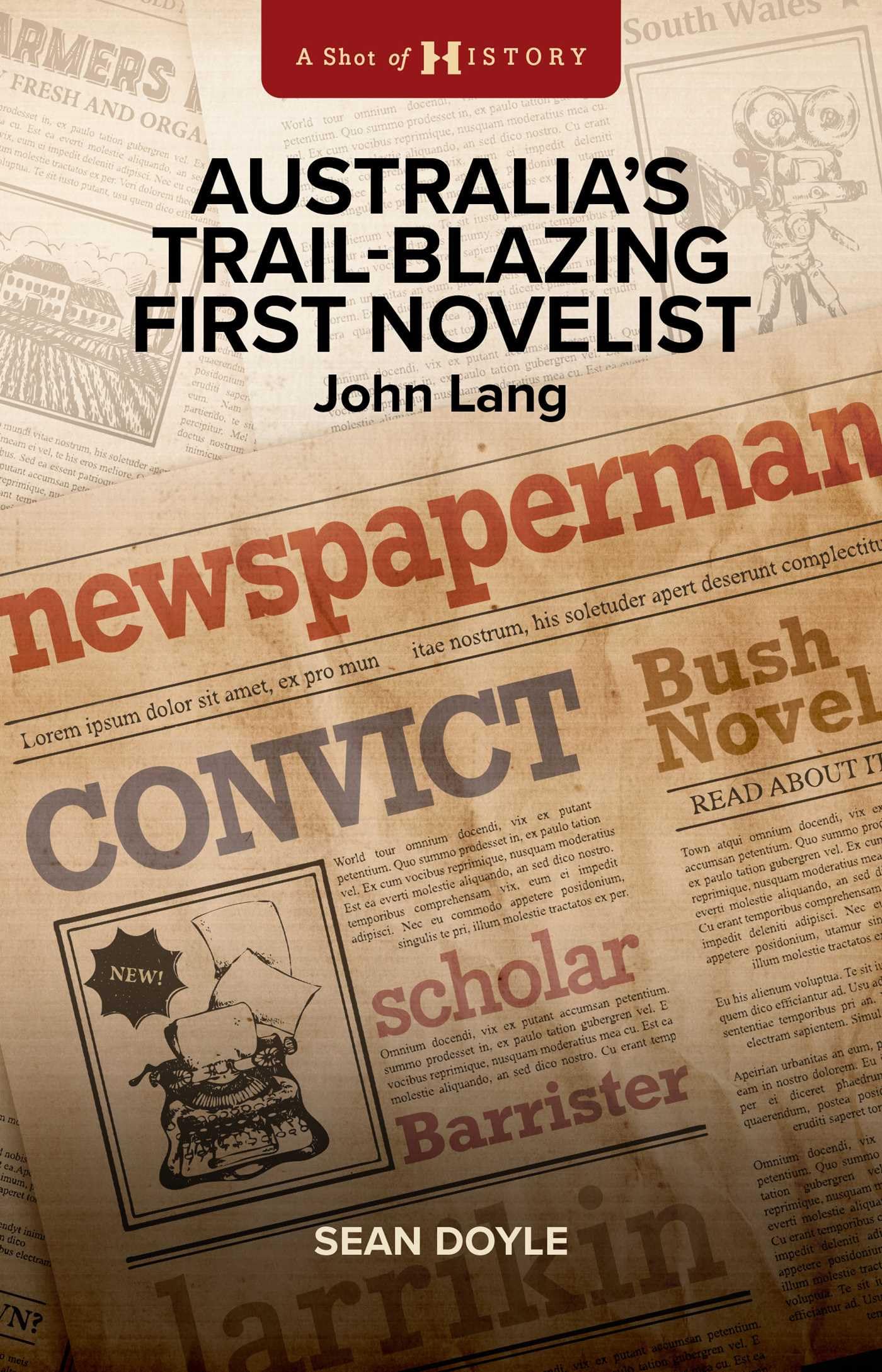
Sean Doyle’s literary biography, Australia’s trail-blazing first novelist: John Lang, provides insights not only into this “idiosyncratic” man, but into two colonial societies – Australia and India – through the early to mid nineteenth-century. Doyle’s is not the first biography of John Lang, but it’s the first I’ve read.

However, Lang (1816-64) himself is not new to me. In 2018, I reviewed his 1853 novel, The forger’s wife, when it was published by Grattan Street Press in their Colonial Australian Popular Fiction series. But, even that wasn’t my first mention of Lang, as I had written briefly about him in a 2012 Monday Musings on Australia’s “pioneer novelists”. In that post, I wrote that he was born at Parramatta, went to Cambridge in 1838 where he became a barrister, and returned to Sydney in 1841, before leaving again a few years later to live in India and England. All this is covered in excellent detail in Doyle’s biography (with relevant clarifications).

John Lang, The forgers wife

I also noted that, according to (my 1994 edition of) The Oxford companion to Australian literature, “the enigma surrounding the life and personality of John Lang has not, even a century later and in spite of considerable literary research, been completely solved”. It is, however, believed he wrote the fiction work, Legends of Australia, which was anonymously published in 1842. The Oxford companion suggests that authorship of this “would entitle Lang to the distinction of being the first Australian-born novelist”. I added that there is a 2005 biography of Lang by Victor Crittenden, whose title says a lot: John Lang: Australia’s larrikin writer: barrister, novelist, journalist and gentleman. He was a contributor to Charles Dickens’ periodical Household Words. All of this is also covered by Doyle, but with additional research, which confirms some of the information that the Oxford companion writers “believed”.

Sean Doyle opens his book with a Preface which sets his biographer’s ground rules. Arguing that the richness of Lang’s life is in the details, he admits that not only did Lang lack a champion “to carry his flame posthumously”, but that there are few contemporary sources and what does exist is sketchy. No diaries or letters are known to survive. So, the temptation of course is to look to his novels, but, as Doyle cautions, while these can be “a looking-glass into his own life … any correlation requires caution”. His process then was “to assemble the verifiable facts, identify the spaces between them, and navigate the spaces with the firm aim of being true to what we know of his temperament, life and times”. He argues that Lang’s “known actions and ways inform the spaces of the unknown”.

Doyle then moves to his Introduction where he makes a strong argument for why this man deserves this biography, starting with Lang’s being “the first Australian-born novelist”, not with 1853’s The forger’s wife, but with Violet, or the danseuse, which was published in 1836 (and identified as being by Lang in Crittenden’s biography). Doyle names many other firsts, including the first Australian satire (Legends of Australia, 1842), full-length detective-novel in English (The forger’s wife, 1853), Indian travelogue by an Australian (Wanderings in India, 1859), and supernatural tale by an Australian (“Fisher’s ghost”, 1836). Other firsts include making the first translation of a classic (a Roman poem) in New South Wales. These firsts, Doyle admits, were more easily come by in the early days of a colony, but argues this doesn’t diminish the achievement.

“He just couldn’t help being idiosyncratic” (Doyle)

The rest of the book, until the Epilogue, chronicles Lang’s life, in nicely readable detail, through 25 chronological and clearly titled chapters, such as “Chapter 1, Family and Social Background”; “Chapter 11, Calcutta, 1842”; and “Chapter 21, Furlough in the UK (and a Creative Peak) 1852-’54”. In the telling, Doyle conveys much about Lang’s personality and character, which he gleans from the sources he has. These include, for example, newspaper reports of Lang’s “ill-advised” comments on the franchise and representation in New South Wales’s colonial legislature while seconding Wentworth’s motion supporting the idea. This is just one of many occasions in Lang’s life – as documented by Doyle – in which he shoots himself in the foot (as they say!) The end result is a biography that portrays a man – a “currency lad” no less – who had a lot of talent, a lot of heart and a lot to offer but who, more often than not, undercut himself through poor judgment and/or poor timing and/or an inability or refusal to read the times and produce accordingly. Lang wanted to emulate Dickens’ success, but “he just couldn’t help being idiosyncratic” – in his literary, personal and political lives.

Nonetheless, Lang achieved much in his relatively short life of 47 years. He is, argues Doyle, better known in India, than Australia, largely because of his support of Rani of Jhansi during her battles against the East India Company, but also for, as a barrister, winning Sikh Jyoti Prasad’s suit against the Company. Indeed, Doyle’s coverage of Lang in India at the time the Company fell and the British Raj commenced makes good, albeit distressing reading. It’s an ugly history, as we know. Lang also established, in 1845 in Meerut, a newspaper titled The Mofussilite, which documented many of India’s sociopolitical challenges of the time, and was often critical of the Company and the British.

The Epilogue provides a thoughtful summation of Lang’s achievements and significance, particularly in terms of his writing, and of the social, political, literary and personal circumstances that affected who he was and what he achieved. It makes a case for Lang’s place in Australia’s literary history, arguing that

without his balanced depiction of the convict era, the colony’s story is lopsided. This matters: a culture is the sum of the stories it tells itself.

The Epilogue, in fact, is a useful document on its own.

The biography is written in a popular-history style, meaning it has a strong narrative drive, with a liberal use of exclamation marks, some foreshadowing, and, for some chapters, serial-like cliff-hanger endings (which feel appropriate to Lang’s era). Doyle wants to understand Lang’s character and actions, and he pursues this with the gusto of a story-teller but with an eye on the facts and truths as he sees them.

Doyle is clearly keen to get the story of Lang and “his rollicking times” known. His research feels thorough and the characterisation as accurate as he can glean from this research. There are end-notes which cite sources for important points and a list of mainly secondary sources (biographies, histories, articles and websites). At times I would have liked to better understand which gaps were being filled, which thoughts and feelings were guessed rather than known, albeit Doyle heralds some with “maybe”-type markers and recognisable pop-psychology. There is no index, which is a big negative for me in biographies, but I know they are expensive, and the chronological telling will help people hone in on where the persons or events they are researching might be.

I did have questions as I read. What was Lang’s attitude to his wife and children, who left him in India, and whom he apparently never saw again, and where did First Nations people fit in those early colonial days of “big” men and their “progressive” ideas? But these are not necessarily germane to the main story here. Lang’s life is story enough, and Doyle has delved as far as he can.

Australian’s trail-blazing first novelist makes good reading for anyone interested in Australia’s literary history.

Note: Four of Lang’s works are available at Project Gutenberg Australia.

Sean Doyle
Australia’s first trail-blazing novelist: John Lang
Newport, NSW: Big Sky Publishing, 2023
372pp.
ISBN: 9781923004382

(Review copy courtesy the author.)

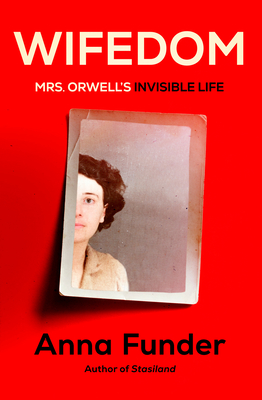
Anna Funder, Wifedom (#BookReview)

Anna Funder’s Wifedom: Mrs Orwell’s invisible life is a book with a mission, a mission that is implied in its full title. That mission is to examine the notion of “wifedom”, and the way patriarchy works to construct it, through the example of the invisible – or, as Funder also calls it, erased – life of George Orwell’s wife, Eileen O’Shaughnessy.

To do this, she wrangles Eileen out of the shadows of history to produce an intelligent, funny, warm-hearted, loyal and hard-working woman who, observed novelist Lettice Cooper, loved George “deeply, but with a tender amusement”. It’s an engrossing story, well-told. However, it’s a challenging read too.

Funder explains early in the book that her interest in Eileen came from reading something Orwell wrote about women and wives – after Eileen had died. It’s astonishingly misogynistic, and made her wonder who Eileen was and what she might have thought. Funder set about reading six Orwell biographies written between 1972 and 2003, but she found them unhelpful when it came to Eileen. Indeed, she says, they gave so little that they “started to seem like fictions of omission”. Funder then, logically, went to these biographers’ sources. She found some more bits and pieces about Eileen, but it wasn’t enough. All she had was “a life in facts, a woman in pieces”, so she “considered writing a novel – a counterfiction to the one in the biographies”. But, she was fascinated “by the sly ways” in which Eileen had been hidden, and she felt a novel couldn’t effectively explore this. Then she “found the letters”.

These were six letters that Eileen had written to her good friend Norah from just after her marriage in 1936 until 1944, but they had not been discovered until 2005. These letters gave her Eileen’s voice – and this voice was “electrifying”. Funder believed she could no longer write a novel. She writes,

I wanted to make her live, and at the same time to reveal the wicked magic trick that had erased her, and that still holds sway today. I thought of it as writing a fiction of inclusion.

“it’s hard … for history to find you”

This is where the book gets tricky, because, while I found Wifedom a fascinating read, it raised questions too, and they are intrinsic to what Funder is trying to achieve, and how she goes about achieving it. The book is divided into five parts, with the first part titled “Wifedom, A Counterfiction”. What does this mean? She doesn’t immediately explain what I have described above. Instead, she opens her book on a scene in which she imagines Eileen writing a letter to Norah – and she includes excerpts from that letter. This throws us readers in at the deep end. As we get into the book, we come to recognise these imagined sections, because they are identified by indentation, and opening and closing graphical symbols, but at the beginning it’s a bit mystifying, albeit an engaging way to capture our interest.

Early in the read, then, it becomes apparent that Wifedom comprises a complex mixture of processes and forms. The imagined sections are interspersed throughout the book between more traditional biographical writing about Eileen and George’s life. And interspersed between these are reflections from Funder’s own life, because one of her points is that the patriarchy, the “patri-magic”, which erased Eileen’s life from George’s biography, still exists and is evident in her own life as a wife and mother, despite her supportive husband and “egalitarian” marriage. I’m not going to focus on this aspect of the book, though, because it seems to fade away somewhat as Eileen and George’s story picks up, and is not, anyhow, where I want to go in this post.

Instead, I want to tease out the process. Early on Funder writes that

Looking for Eileen involved the pleasure of reading Orwell on how power works. Finding her held the possibility of revealing how it works on women: how a woman can be buried first by domesticity and then by history.

This is not particularly new. Anyone interested in feminism is aware of how women have been lost in (and thus to) history. However, Funder’s book is enlightening in this regard. She does an excellent job of interrogating how it can happen. It happens when biographers ignore or play down the role of women in their subjects’ lives. Through cross-matching her sources she finds example after example of Eileen’s contributions being downplayed or omitted. She shows how the use of passive voice and terms like “wife” rather than Eileen’s name work to make her disappear. (Orwell does it himself in Homage to Catalonia.) She finds examples where biographers, disconcerted by some of George’s behaviour, excuse it (how often are men excused!), or, uncertain about evidence, will rephrase it. For example, Funder writes that Eileen

noted his extraordinary political simplicity – which seems to have worried one of the biographers, who rewrote her words to give him an ‘extraordinary political sympathy’.

Eileen’s words come from a 1938 letter to Marjorie Dakin. The biographer is Crick. (Another of the textual clues to readers in this book is that Eileen’s words are conveyed in italics, while the words of others are enclosed in quotation marks.)

But here’s the challenge – interpretation. Funder writes early in her book that,

As serendipity would have it, in 2020 Sylvia Topp published Eileen: The Making of George Orwell, which contained much material I hadn’t found, and was thrilled to read, though we interpret it differently, and so build differing portraits of Eileen.

She does not explain what she means here, but in the very thorough Notes at the end of the book, Funder elaborates on Topp’s approach to Eileen. Put simply, Topp, Funder says, sees Eileen as one of those celebrated people’s partners who devoted their lives “joyfully to assisting the talented partners in all their various needs knowing all along that they would be under-appreciated, and often ignored, and yet never faltering in their dedication, or in their willingness to submerge their own personal talents into their partners’ success.” Topp, then, sees Eileen as a “helpmeet of genius” while Funder is interested, as she writes in these Notes, “in examining what it took, perhaps, to be in that marriage, and that dream”.

So, what we have here is interpretation. Topp had the same sources that Funder did. Indeed, she added some to Funder’s arsenal. But, she interprets them differently. As a feminist, I easily aligned with Funder’s interpretation, but as I read I also had this little niggle that Funder was interpreting her sources – from the perspective of her times, values and gender – just as other biographers had before her.

Wifedom was my reading group’s April book. Our conversation focused mainly on the biographical content – on Eileen’s life, on George Orwell and his books, and on the impact of patriarchy on Eileen. We were horrified by the life led by Eileen, as Funder tells it – and the facts seem inarguable. Their relationship appeared to us to have been so one-sided. Eileen did all the domestic work, and it was hard work given the primitive rural cottage that they called home. She was, often, the main breadwinner, and she did his typing, as well as offering editorial comment. She was necessary to him. Meanwhile, he focused on his writing and, we gathered, chasing other women. And yet, Eileen stayed with George. Why, we wondered?

We didn’t delve into the interpretation issue, albeit I would have loved to, but I needed more time to collect my thoughts. We did, however, discuss why we thought Eileen stayed with George which, I guess, was us interpreting what we’d read! Various ideas were put forward, including that Eileen might have been a “rescuer”, or that she knew she was unlikely to have been published herself (in a patriarchal world) and so channelled her energies through George, or, simply, that she loved him and, much like Topp argued, willingly helped him in any way she could.

So, there you have it! History, biography, it’s all a matter of the facts you have, and the way you see them. I don’t mean to devalue the biographer’s art by that statement, but simply to recognise that even the most formal, most rigorously documented biography will, necessarily, be affected by the biographer and their times. For this reason, I found Wifedom an absorbing and provocative read, though perhaps only partly in the way Funder intended.

Anna Funder
Wifedom: Mrs Orwell’s invisible life
Hamish Hamilton, 2023
511pp.
ISBN: 9781760143787

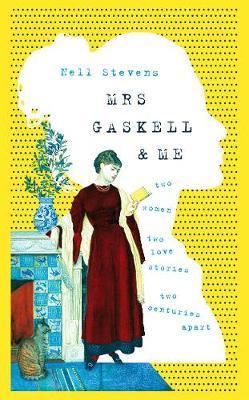
Nell Stevens, Mrs Gaskell and me: To women, two love stories, two centuries apart (#BookReview)

It’s a bit of a stretch, I admit, to submit Nell Stevens’ strange hybrid biography-memoir, Mrs Gaskell and me, as my second contribution to Bill’s (The Australian Legend) Gen 0. But, having read Elizabeth Gaskell’s two novellas, Lizzie Leigh and Cousin Phillis, for the week, and having had Stevens’ book on my TBR for a few years, I decided it was now or never to get it off the shelf. After all, as I wrote in my Two Novellas post, Mrs (Elizabeth) Gaskell (1810-1865) is a good example of a nineteenth century independent woman because, despite being a wife and mother, she managed to forge a career for herself as a writer.

So, let’s leap in. The reason this book is a bit of a stretch for inclusion in Bill’s week is not only because it is one of those hybrid biography-memoirs or bibliomemoirs, but because of Stevens’ statement in her disclaimer at the beginning of her book:

I have changed names, scenes, details, motivations and personalities. Every word has been filtered through the distortions of my memory, bias and efforts to tell a story. This is as true of the historical material as it is of the sections about my own life: studies, letters and texts excerpted here are not always faithfully quoted. This is a work of imagination.

So, it’s a work of imagination that tells two alternating stories. In first person, we have Stevens’ own story, which goes from 2013 to 2017, and encompasses her love affair with an American and the writing of her PhD on Mrs Gaskell. This is the memoir bit. In second person is Stevens’ story of Mrs Gaskell primarily covering the years 1855 to 1865 which encompass her three-months-long trip to Rome in 1857 and its aftermath. This is the biography bit.

Now, regular readers know my attitude to the fiction versus nonfiction question. I am more interested in truths than I am in facts. Facts on their own don’t always tell us a lot, and when we are talking a person’s life, they can be limiting. Knowing when a person married, for example, is far less relevant or interesting than how they felt about their marriage and the person they married, but, it is hard to get facts about those feelings. Even if the subject wrote letters and/or diaries, how truthful were they? And, did what they wrote one day in a fit of passion (positive or negative) reflect the truth of the relationship as a whole? And so on. All this is to say that I am happy to accept Mrs Gaskell and me as an imaginative bibliomemoir, but if you’re not, this book will not appeal to you.

Because of the reason I chose to read this book now, I’m not going to write the usual sort of review. There are several out there, if you are interested. Instead, I am going to focus on how it fits into Bill’s Independent Woman thesis, which is to look at non-Australian writers “whose work influenced, predated or paralleled the first wave feminists of AWW Gen 1”. This means, to me, that we can look at the works of these women writers and at their lives, and Mrs Gaskell had an interesting life.

“all of a sudden you had a career” (Stevens)

It was also, I think, though I haven’t read a true biography of her, a divided life. There was the traditional “Mrs Gaskell”, the well-brought up and educated wife and mother, but there was also this:

“Nature intended me for a gypsy-bachelor; that I am sure of. Not an old maid, for they are particular and fidgety, and tidy, and punctual – but a gypsy-bachelor.”

Gaskell wrote this in a letter in 1854. I checked its accuracy, given Stevens’ disclaimer, and it is, I believe, a true quote. Stevens goes on to write that Gaskell “played the role of wife and mother so very well, and so lovingly, but she was a ‘gypsy bachelor’ nonetheless”. So, while she was not one of those nineteenth century adventurers, like Isabella Bird and Flora Tristan, she was nonetheless independent. In her writing, this came through her “industrial” or “social novels” or what Stevens calls her “philanthropically motivated condition-of-England novels”. In these, she identified and questioned some of the significant social and moral issues of her era: in North and South, for example, she was among the first to explore conflict between employers and workers, and in Ruth (see Bill’s review), she preached compassion for “fallen” women. (I have read both of these, but before blogging.)

However, she also exhibited a level of independence in her personal life, despite its conventional trappings – and this is something that Stevens conveys (albeit with different motivations) in her bibliomemoir. Early in the book, Stevens writes, using her second person voice,

“You were always lucky, Mrs Gaskell; you were always grateful for what you had, and yet, all the same, you were restless” [my emph].

She then briefly chronicles Gaskell’s career trajectory from writing for herself, to sending articles and then short stories to magazines, to, finally, writing her first novel, Mary Barton, in 1853. Stevens writes that it “became the sort of book that people bought and reviewed and talked about, and all of a sudden you had a career”.

This is the background, but Stevens’ focus is Gaskell’s visit to Rome in 1857, when she was 46 years old, and what it meant to her. She went to escape, says Stevens, the potential fallout (of which there was plenty) from her Charlotte Brontë biography*. She found an energising community of artists (authors, poets, sculptors, painters, musicians) and met the seventeen years younger American author and critic, Charles Eliot Norton. They saw each other constantly, and remained in contact afterwards. It was, we believe, an unconsummated relationship, and not all agree it was a romance, though Stevens argues so. Whatever it was, it was clearly intense and significant, and given the (documented) ongoing years of contact that followed, it satisfied some of Gaskell’s intellectual yearnings and fed into her subsequent writing. Beyond this, Rome was, overall, argues Stevens, “transformative for her, to meet Norton, to be in Rome, to be treated as an equal by other artists”.

The other point I’d like to make is Stevens’ story that, at the end of her life, Gaskell bought and renovated a house in Hampshire without telling her husband. Sounds independent to me.

The Nell parts of the book, which chronicle Stevens’ own love affair and her struggles to write her PhD, mostly engaged me, particularly the academic life satire, but, I’m leaving it here because Mrs Gaskell was my theme. It’s an unusual book, but I’m glad I read it. I may not remember the details, which is fine given they may not all be exact, but I will remember how Stevens successfully transformed this intriguing author from her “Mrs Gaskell” persona to a living, feeling, independent woman.

* Wikipedia reports that in 2017 The Guardian named The life of Charlotte Brontë one of the 100 best nonfiction books of all time.

Nell Stevens
Mrs Gaskell and me: Two women, two love stories, two centuries apart
[Published in the USA as The Victorian and the romantic]
London: Picador , 2018 (e-Edition, 2019)
256pp.
ISBN: 978-1-5098-6819-3

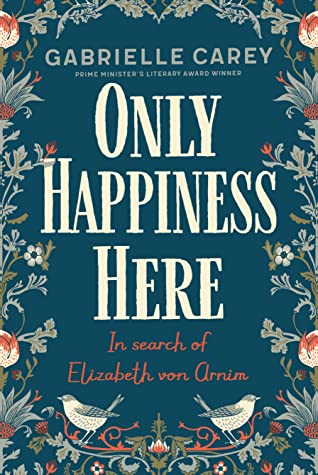
Gabrielle Carey, Only happiness here: In search of Elizabeth von Arnim (#BookReview)

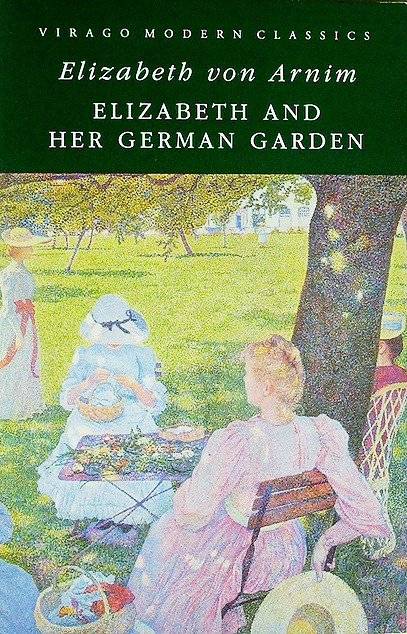
I discovered Elizabeth von Arnim (nee Mary Annette Beauchamp, 1866-1941) back in the 1990s when Virago republished her first novel, Elizabeth and her German garden. Published in 1898, this novel, writes Gabrielle Carey, was an immediate hit, turning her, almost overnight, into one of England’s favourite authors. It was certainly a revelation to me.

I went on to read several of her books, including her pseudo-autobiography All the dogs of my life, over the next decade. I was completely charmed by her wit and humour together with her insights into love and marriage, and their impact, in particular, on women’s lives. Anyone who’s a Jane Austen fan couldn’t fail, I’m sure, to see von Arnim’s ancestry. I wrote one of my early Monday musings posts on her.

Book cover

What, a Monday Musings on Australian literature on Elizabeth von Arnim? It was cheeky I know – and I admitted it at the time. Yes, she was born in Australia, but yes, she left here, never to return, when she was three. However, I just wanted to write about her. And so, it seems did Gabrielle Carey, who opens her hybrid memoir-biography with

When I first discovered Elizabeth von Arnim, I found, for the first time, a writer who wrote about being happy. So much of my reading life – which essentially means so much of my actual daily life – had been spent reading miserable literature because, let’s face it, most literature is miserable.

Carey isn’t clear about when she discovered von Arnim in relation to when she started working on this book, but says that once she discovered von Arnim, she became something of a “von Arnim evangelist”. She was “incensed” that von Arnim had been so completely forgotten. I could relate to this, because I felt the same. Unfortunately, my evangelising didn’t go far because no-one in my reading group had heard of her when I recommended that we do one of her novels as our “classic” this year. More on that, then.

If you are among those you don’t know this writer, you might be surprised to hear that several biographies have been written about her, including three in the last decade. I have two of them, Jennifer Walker’s more traditional literary biography, Elizabeth of the German garden: A literary journey, published in 2013, and Gabrielle Carey’s. The third is Joyce Morgan’s The countess from Kirribilli, published in 2021. Just this should tell you something about the fascination with which this woman is held, this woman who published 21 books, whose first cousin was Katherine Mansfield, and who knew EM Forster, had an affair with HG Wells and married (among others) Bertrand Russell’s brother. She had a life – and then some!

OK, so I’ve written quite a bit about Elizabeth von Arnim, but not much about Gabrielle Carey’s book. Only happiness here is the third sort-of literary biography that Carey has written, the other two being Moving among strangers (my review) about Randolph Stow and her family’s connection with him, and Falling out of love with Ivan Southall about her losing faith in this childhood writing idol. Carey, it seems, likes to explore her subject matter through the prism of her own life and experience (a bit like Von Arnim did with her fiction). This is not to everyone’s taste, but when done well, like, for example, Jessica White’s Hearing Maud (my review), it can be both engaging and effective.

I loved White’s book for the way she explored Maud Praed (daughter of novelist Rosa Praed) through their joint experiences of deafness, neatly marrying information with activism. Carey’s book has a very different driver, one I foreshadowed in the opening quote from her book. A few pages on, Carey makes her goal clear:

What did Elizabeth von Arnim understand about happiness that no other writer I’ve ever come across did? And is it something I too might be able to learn?

She wanted to know “the secret to her enviable ability to enjoy life” because it was clear from her novels and journals that she did, despite the many trials she faced. Indeed, the book’s title is the sign von Armin put over the door of her Swiss chalet. Carey argues that von Arnim “was, perhaps unknowingly, one of the earliest proponents of positive psychology”. Carey was so serious about her goal that amongst the end-matter in her book is a page titled “Elizabeth von Arnim’s Principles of Happiness”. There are nine, but if you want this bit of therapy you are going to have to read the book yourself! However, to whet your appetite, the first one is “Freedom”.

Carey tells her story – I mean, von Arnim’s story – chronologically, regularly interspersing her own reflections and experiences in relation to von Arnim’s. An early example occurs when she writes about von Arnim’s first marriage to the much older Count von Arnim, and her novel inspired by this, The pastor’s wife (albeit the Count was not a pastor!) In this novel, von Arnim writes that “Ingeborg in her bewilderment let these things happen to her”. Carey immediately follows this with:

How well I understand this experience of letting things happen. All my life I had let things happen to me, often without my consent.

And she then spends nearly two pages exemplifying this from her life. Mostly this approach of Carey’s was interesting, even illuminating, but there were times when it felt a little too self-absorbed. However, this didn’t overly detract from what is a thoughtful introduction to von Arnim and her work. In under 250 pages, Carey manages to tell us something about almost every one of Von Arnim’s books – how each one fit into her life, what aspects of her life it drew from, and how it was received at the time. In that same number of pages, she conveys the richness of von Arnim’s long and event-filled life. I’m impressed by how succinct and yet engaging the book is, and am not surprised that it was shortlisted for the 2021 Nib Literary Award. I should add here that while the book is not foot-noted – its not being a formal “literary biography” – there are two and a half pages of sources at the end.

So, what did I, as a reader of von Arnim, get from this book, besides a useful introduction to her complete oeuvre? Well, firstly, I got a deeper understanding of how much of her oeuvre drew from her own life, and from that I got to better understand her attitude to marriage and to the relationship between men and women, and to her exploration of, as Carey puts it, “the clash between the concept of the ideal and the real”. I also got to understand more about her times, its literary milieu, and her place within it – and to see how we can never really foretell which writers will survive and which won’t. When von Arnim died, obituary writers were sure she’d not be forgotten. They also believed she’d be far more remembered than her shorter-lived cousin, the above-named Katherine Mansfield. But …

… as Carey sums up, “her style of conventionally plotted novels, however, rebellious, insightful or entertaining, soon went out of literary fashion”, because, wrote English novelist Frank Swinnerton, “her talent lay in fun, satirical portraiture, and farcical comedy”. These, he said, were ‘scorned by the “modern dilemma”‘. We are talking, of course, of Modernism, which, as Carey puts baldly, “didn’t believe in happiness”, a value that has carried through to today.

I will leave this here, because I want to return to it in a separate post. Meanwhile, I’d argue that while von Arnim’s books might be witty, they are not simplistic. They come from an astute and observant mind that was able to comment both on the times and on universalities in human nature. They may not have Modernism’s bleakness, but they aren’t light fluff either. Carey’s simple-sounding quest has, I think, touched on something significant.

Brona (This Reading Life) enjoyed this book, which she ascribes to the bibliomemoir genre.

Gabrielle Carey
Only happiness here: In search of Elizabeth von Arnim
St Lucia: UQP, 2020
249pp.
ISBN: 9780712262975

Jane Sinclair, Shy love smiles and acid drops (#BookReview)

Jane Sinclair’s hybrid biography-memoir, Shy love smiles and acid drops: Letters from a difficult marriage, is an unusual book. Covering around two years in her parents’ life, this book comprises, mostly, letters sent between her parents between April 1960 and July 1962 when Sinclair and her mother were in England while her father remained in Australia. Between the letters (and some entries from her mother’s journal), Sinclair adds explanatory information, which ensures the narrative flow.

Sinclair was 5 to 7 years old when these letters were written. Being so young, her memory of that time is scattered, but she has clearly thought much about her parents in her adult life. Also, she remembers family stories of those times told to her later, and she did discuss her parents’ relationship with them, though, as is the way with such things, not as much as she wishes she had. The book was inspired by her finding the letters that underpin this book.

What makes this book particularly interesting is who her parents are, the artist Jean Langley and music critic John Sinclair. You may or may not have heard of them, but these two were part of mid-twentieth century Melbourne’s arts and music scene. In particular, they had close connections with the Heide artistic community, which inspired Emily Bitto’s award-winning novel, The strays (my review), and which was created by two art-lovers and philanthropists, John and Sunday Reed. This community was famous for two things, the art produced there and the complicated personal relationships amongst its members.

Some of Australia’s best-regarded modernist artists were associated with Heide, people like Albert Tucker, Sidney Nolan, and Joy Hester, all of whom appear in this book. Artist Arthur Boyd was also close to these people, though not part of the community. However, Heide was just as well-known, as Wikipedia puts it, for “the intertwined personal and professional lives of the people involved”. Sunday Reed herself had affairs with several in the community, with her husband’s knowledge. This art history is what primarily attracted me to the book, but it was the background rather than the focus that I’d hoped. Instead, Shy love smiles and acid drops is exactly what it says it is, the story of “a difficult marriage”. As we are told on the back cover

when Jane Sinclair was five her mother Jean Langley followed her lover, Arthur Boyd, to London and took Jane with her. This book covers the two years they live there before returning to Australia in 1962, by which time her mother is three months pregnant to an Englishman.

“Your letter makes me cross” (Jeannie)

The letters are difficult reading because of the emotional pain and distress they contain. There are some fascinating insights into London and England at a time when many Australians saw it as a mecca for arts and culture. Indeed, while Jean Langley was there, living near the Boyds, so were their friends, Barry Humphries and his wife.

In her introduction, Sinclair speaks of how the letters caused her to “seriously question” her mother’s “version of herself as the aggrieved, wronged wife that she had cultivated and genuinely believe to be true”. Sinclair was also sorry that she had never allowed her father, who died twenty-five years before her mother, to tell his side of the story. This is understandable given when he died, she had probably not reached that age of (hopefully) wise reflection many of us do later in our lives, that age when we start to really see our parents as human beings, rather than seeing them through the prism of their relationship with us. I think this is so, in even the best of parent-child relationships?

Anyhow, Sinclair tells us that her parents’ relationship was “intense and difficult” from the start. They separated many times, but “there remained an irresistible attraction that kept them returning to each other”. Eleven years of age separated her mother and father, but it seems that personality difference (“not compatible emotionally”) was the essential problem. John Sinclair apparently tended to melancholy and depression, while Jean Langley was a romantic. “She could create sparkle and shine” and “wanted the world to be a beautiful place of happy endings”. All this comes through the letters. John expresses his sadness, his missing his wife and daughter, while Jeannie expresses her frustration with him, and her increasing disappointment with life and human beings, as things become more and more complicated. The England she adored at the beginning of her trip is not so great when it becomes cold and grey, and as the reality of never having enough money sets in.

“a riddle, muddle, fiddle, diddle” (Jeannie)

But what comes through even more is miscommunication, and particularly what seems to be Jeannie’s wilful misreading of John’s letters. When he invites her to return home on her terms – meaning she can live separately from him if she wishes – Jeannie seems to misread that wilfully, insisting again and again that she can’t be his wife, she won’t sleep with him, and so on. Readers wonder where she reads this, because we don’t.

At times, I put my feminist hat on and wondered whether there was something about John that we don’t know. Should I be supporting my down-trodden sister, I started to wonder? But, while there are, naturally, gender issues to do with women’s place in the mid-twentieth century, I don’t read a woman wronged by her husband here. I read a woman who, due to her own personality, and upbringing perhaps, regularly let emotion cloud her ability to reason – to her own detriment as well as those around her. She falls in and out of love twice during this English sojourn – besides the apparently abiding love for Arthur Boyd – and admits in June 1962 that, “I seem to have made a mess of my emotions”.

As the narrative progresses, daughter Jean notes that her mother, who liked to see herself as truthful, strayed often from it:

My mother believed in her emotional truth, and unfortunately for my father, it was sometimes very far from reality.

Reading this, I think I would say more than “sometimes”. I have known people like Jeannie, people who have such a zest for life but who wear their emotions so close to the surface that they can’t reason through what is really happening. They can be both joyful and draining to be around, and this is how Jeannie comes across.

This is not my usual review, because, in a sense, it’s hard to review such a personal book. Indeed it’s so personal that it’s worth thinking about its target. There’s some interesting social history here – life in the 60s, the experience of Aussie artistic expats in London, the challenges of communication in those pre-electronic communications days. There’s also a little about the the art world, the odd reference to a Boyd or Nolan exhibition, to the Blackmans, and to Brett Whiteley whom Jeannie calls “a shocking little upstart”. But, overall, this is a nicely presented but intense story of a “difficult marriage”, and it will appeal mostly to those interested in human relationships.

Read for #ReadIndies month (kaggsysbookishramblings and Lizzy’s Literary Life). Hybrid is a Melbourne-based independent publisher, with a special but not exclusive interest in Judaica. I have reviewed many of their books over the years.

Jane Sinclair
Shy love smiles and acid drops: Letters from a difficult marriage
Melbourne: Hybrid Publishers, 2021
279pp.
Cover art: from oil painting by Jane Sinclair
ISBN: 9781925736588

(Review copy courtesy Hybrid Publishers)

Cindy Solonec, Debesa: The story of Frank and Katie Rodriguez (#BookReview)

Cindy Solonec’s Debesa is one of those curious hybrid biography-memoirs that are appearing on the scene. Its subtitle describes it as The story of Frank and Katie Rodriguez, implying biography, but in fact, Frank and Katie are Solonec’s parents and so the book also incorporates some of her own story as part of the family. I’ll return to this later, but will start with the main content, the biography.

Debesa spans four generations of the family, starting in the 1880s with Solonec’s maternal great-grandparents, but it centres, as the Media Release says, “on the unlikely partnership of Cindy’s parents: Frank Rodriguez, once a Benedictine novice monk from Spain, and Katie Fraser, who had been a novitiate in a very different sort of abbey – a convent for ‘black’ women at Beagle Bay Mission” north of Broome. The Release also explains that Debesa is a rewriting of Solonec’s 2016 PhD thesis which “explored a social history in the West Kimberley based on the way her parents and extended family lived during the mid-1900s”. What Solonec does in the book, then, is to turn her thesis into a readable history and a family memoir, a combination that is becoming an increasingly acceptable approach to historical writing.

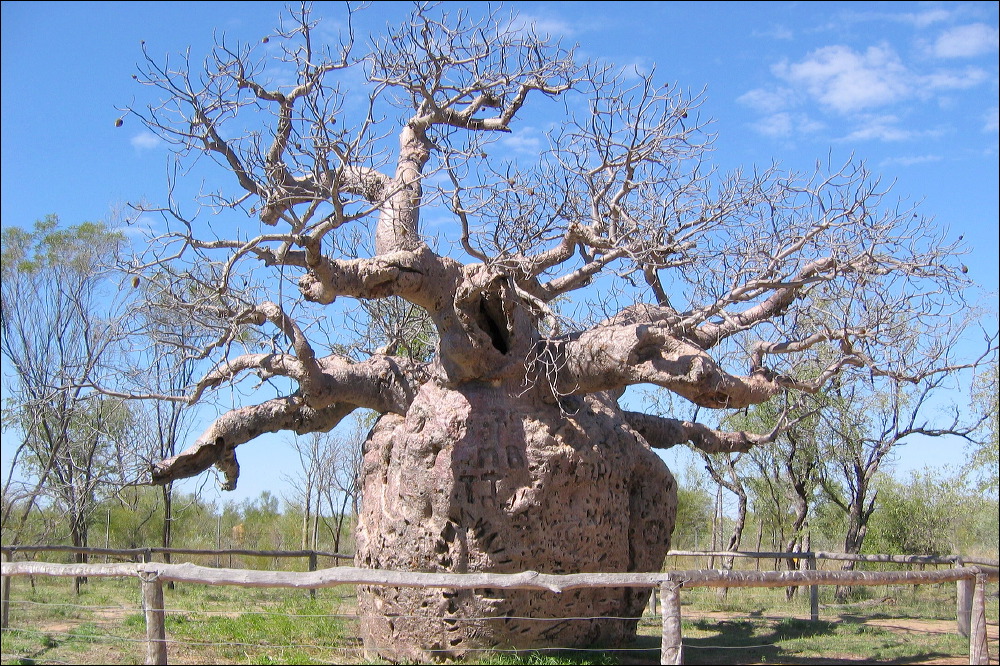
There is some contention about this tree’s prison use, but not about its cultural significance.

I was keen to read Debesa for a few reasons, not least being that I’ve been to the Kimberleys (east and west) and am intrigued by this beautiful region and its complicated history. I grew up being aware of its pastoral history, particularly regarding the Durack family and the Ord River Irrigation Scheme, and I came to understand some of its colonial past when I saw such “sights” as the Boab Prison tree in Derby during my visits there. As Solonec’s family story is contemporaneous with the mid-twentieth century Duracks and the Ord River scheme, it was enlightening to see this world from a smaller and more marginalised perspective. I say “smaller” because Frank and Katie’s property, the titular Debesa, was a small pastoral holding, and “marginalised” because Katie’s “mixed descent” Indigenous (Nigena) background meant the family was always on the outer.

Solonec sets the scene in her Introduction by providing a brief history of the Kimberley’s colonial history, one founded on “the ideology that everyone must live like white people. Speak their language. Adapt to the ways. And marry lighter skinned people …”. It’s the same story that we’ve read before – people dispossessed, country spoiled, and children stolen. In her early chapters, Solonec documents the family’s story from the time of her maternal great-grandparents, Indian immigrant Jimmy Casim/Nygumi and his Nigena wife, Muninga. Their daughter, Solonec’s grandmother Jira, was born in 1900 and stolen with her cousin in 1909. Designated as orphans and renamed Phillipena and Francesca, they were taken to Beagle Bay Mission, leaving their mothers distraught.

Alongside the stealing of children was the stealing of the land:

On stations along Mardoowarra [lower Fitzroy River], land was fundamental to Nigena existence. They knew every part of that country intimately. Their neighbours and the broader Australian post people’s concept of ‘country’, their religious attachment, their awareness of food sources, was inherent to their way of life. They knew the call, cry, track of every living creature. Everything that breathed, every hill, every creek, crevice and outcrop and night sky with its myriad of galaxies, they knew by name. The seasons dictated their movements and their care for country within pliable boundaries. No-one ever got lost.

But, the Nigena had to watch, Solonec writes, as their land was taken for pastoralism and their sacred sites destroyed and/or renamed. Her extended family, “like refugees in their own country, lived in bush camps near the homesteads” and the women were preyed upon by “lecherous, irresponsible guide menfolk”. There is nothing new here, but Solonec puts flesh on the bone by telling it through the prism of her own family.

In chapter 3, we meet Solonec’s parents, Frank, who migrated from Galicia, Spain, in 1937, and Katie, whose parents were the stolen Phillipena and Fulgentious, a Nigena man with a white stockman father. Together they forge a life, drawing on their deep and shared commitment to Catholicism. They take work where and when they can, Frank as a trusted builder and Katie a respected cook and station-worker. They raise and educate their four children, acquire their own land, and slowly build a home and establish a small pastoral business, Debesa. Theirs was a partnership in every sense of the word. Solonec makes the interesting observation that Aboriginal cultures and European peasant cultures, from which Frank had come, have much in common, including a “strong sense of kin”. And, of course, Frank as a non-English migrant, had his own experience of bigotry and prejudice.

Biography? Memoir?

There’s excellent historical research here about life in the Kimberley, with illuminating “short histories” of subjects like mustering and wage disparity, and discussion of issues like the divisive and destructive “exemptions” from the Native Administration Act. (Tony Birch addresses similar exemptions in his novel, The white girl.)

To write this book, academic Solonec drew, rightly, on a large body of secondary sources and other life-writing about the region – all of which is documented in the thorough bibliography at the end – but she also had her father’s diaries, which provided the book’s “chronological framework”, and the stories of her mother and extended family passed on through oral tradition. She writes that, fortunately:

Aboriginal peoples still uphold past events through oral histories … I was excited to find that their stories were not that hard to cross reference with the literature. Their memory vaults with stories that have been handed down served them well, confirming the reliability of Indigenous intelligence.

(I suspect she means “intelligence” in both meanings here.)

As I opened this post, though, the book is a curious mix. The first half reads like a traditional biography while the second half slips more into memoir. This is heralded in the Introduction where Solonec describes her aim as

wanting to leave a documented account for posterity about the way marginalised peoples lived in the Mardoowarra (Fitzroy River) region during the middle of the twentieth century. A social history as experienced by my families. I wanted to leave an account of ordinary people’s everyday lives that would not otherwise be recorded. An account based on my parents’ joint biography.

This is perfectly valid, and she achieves what she set out to do. Her approach does, however, raise some questions, particularly towards the end, where there’s a risk of the subjective blurring the objective, making the truth potentially hard to discern. Solonec is justly proud of her parents’ achievements, and certainly they had much to contend with, but there’s a sense that all the problems they had were external, which seems unrealistic. I don’t believe, however, that this invalidates the critical historical truths contained here. In fact, the warmth of the story makes Debesa an approachable history which, given the significance of its subject, is a good thing.

Lisa also reviewed this book, engendering some good discussion.

Cindy Solonec
Debesa: The story of Frank and Katie Rodriguez
Broome: Magabala Books, 2021
264pp.
ISBN: 9781925936001

(Review copy courtesy Magabala Books)

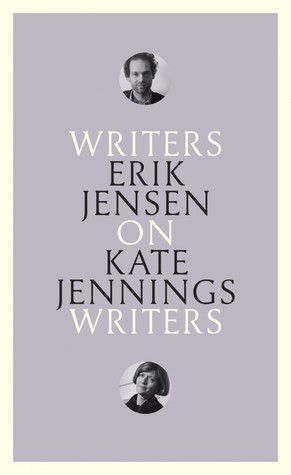
Erik Jensen, On Kate Jennings (Writers on writers) (#BookReview)

It took Kate Jennings’ death for me to finally pick up one of Black Inc’s Writers on writers books, Erik Jensen’s On Kate Jennings. The series, says Black Inc, involves leading authors reflecting “on an Australian writer who has inspired and influenced them”. It continues, “Provocative and crisp, these books start a fresh conversation between past and present, shed new light on the craft of writing, and introduce some intriguing and talented authors and their work.” Let’s see how Erik Jensen goes!

But, who is Erik Jensen? Most of the series’ writers are well-known, such as Alice Pung, Stan Grant, Michelle de Kretser and Nam Le, but a couple are less so. Jensen is a Walkley award-winning Australian journalist and author. He’s probably best known for being a founder, and still editor, of The Saturday Paper. However, in 2014, he also wrote a biography, Acute misfortune: The life and death of Adam Cullen. It won a NIB Literary Award and was shortlisted for the Victorian Literary Awards’ Nettie Palmer Prize for Non-fiction. As you’d expect for this series, then, he has some cred.

However, his writing seems to be primarily non-fiction, so why Kate Jennings? Fortunately, he answers that in the opening paragraphs:

I had looked up Kate because I was a fan of her essays – pieces about her life, mostly, ruthless in their precision.

In the next paragraph, he launches without warning into describing the opening of Snake (my review), Jennings’ autobiographical novel. You have to be familiar with Jennings and Snake to get what’s going on here, but it’s unlikely you’d be reading this, I think, if you weren’t. What follows is an introduction to Kate Jennings, realised through interweaving the content and trajectory of this novel with his interviews and communications with Jennings and, occasionally, others.

I was moved by the insights, and impressed by the richness of the portrait Jensen achieves in around 100 small-book pages. He is clearly very fond of Jennings. Indeed, he concludes his essay with

This essay is for Kate Jennings. It is a love letter to her work and to the life that produced it. As a friend and a writer, I am grateful for both. More than anything, I want to thank Kate for the generosity she has shown – in agreeing to this essay, in being so open with the material, and in how with her own work she has shown me what to do.

However, Snake is a tough book. It portrays a dysfunctional family, with a difficult and self-centred mother. Jennings tells Jensen, “I was so very lonely. And at the mercy of my mother.” To his credit, Jensen also talks to Jennings’ brother, Dare, whose perspective on the family is very different. Dare, writes Jensen, “remembers the same mother Kate does, although he remembers her differently. They had a very different relationship. It was warm, close.” Dare supports Kate, but his experience of the family was different. He was the adored son.

This brings me to that whole issue of autobiographical fiction, which is Jennings’ forte (much like her friend, Helen Garner’s.) Jensen writes that “Kate writes close to life. Not completely close, she says. She does make up things. ‘I round the corners,’ she says, ‘and make the really ghastly stuff a little better.’” She writes to work out what she thinks. She also says that “the emotions were autobiographical but not necessarily the story“. This is a significant distinction, and serves as a reminder that fiction needs to be “true” but should not be read as “factual”.

Much of this wasn’t particularly new to me, given I’ve read both Snake and her fragmented biography, Trouble. However, Jensen value adds. For example, he writes that he sees Snake as “the Great Australian novel”. He gives it to people inscribing it as such. One recipient was Ian Donaldson, a former professor of English at Cambridge and a fellow of King’s College. Jensen shares Donaldson’s reaction:

‘The great Australian novel?’ he writes the next morning. ‘Yes, I’d agree, it certainly warrants that sort of ranking, though that phrase as conventionally used conjures up a kind of laborious realism which Snake so spectacularly lacks. I loved its spareness, its brevity, its ability – like the creature it mimics – to strike without warning then vanish without trace.’

You can see why I like Snake too – its spareness! I was interested in Johnson’s comment that a GAN “conventionally … conjures up a kind of laborious realism”. Do you agree? Anyhow, Snake, “a poet’s novel” as Jensen calls it, is not that.

After spending some time on the content of the novel, Jensen also discusses its path to publication (including the rejections) and its reception. Australian reviewer Elizabeth Riddell was not particularly impressed, but in North America, Carol Shields (in The New York Times) and the Publisher’s Weekly, were highly positive. Yet, the novel was soon “lost”, or, as Jennings put it, “pretty well ignored”, largely she felt due to the feminists who “couldn’t accept the treatment she gave her mother”. Seven years later, however, it was re-released, with the Age describing it as “probably the most accomplished, realistic novel about bush life to be produced in the past decade”.

Jennings shares much of her life with Jensen, including her challenges with alcohol and depression, and her loving marriage to Bob Cato. The result is a picture of someone who was both “obstinate and fragile”, as Jensen writes in his The Saturday Paper obituary (8 May 2021), who had great successes but also faced tough challenges, and who was, above all, an uncompromising and stylish writer.

In other words, through exploring Snake, from multiple perspectives, supported by critical truths about Jennings’ life, Jensen does meet Black Inc’s stated aims. It’s intelligent and compelling. I have now bought another in the series.

Erik Jensen,
On Kate Jennings: Writers on writers
Carlton: Black Inc, 2017
112pp.
ISBN: 9781925435818

Desley Deacon, Judith Anderson: Australian star, First Lady of the American stage (#BookReview)

Book coverWhen historian Desley Deacon offered me her biography of Dame Judith Anderson for review, I was a little reticent because my review copies were getting out of hand. Little did I know then what was in store for me, and just how much more behind I would become. However, finally, its turn came, and here I am with my review.

First though, I must say something about the publication itself, particularly given our recent discussion here about Print on Demand books. Deacon’s Judith Anderson: Australian star, First Lady of the American stage is available as an e-Book or a PoD one. I read the PoD edition, and it is beautiful. The cover is gorgeous, and the book’s overall design is stylish, with an art deco look reflecting the style of Anderson’s early life and career. The book is big and heavy, but the binding is strong allowing the book to open well for reading. And, the icing on the cake is that it is gorgeously illustrated with quality reproductions of images from the full range of Deacon’s life. These illustrations are beautifully interspersed throughout the book, rather than concentrated, as is more common, into a couple of glossy photographic sections.

But, of course, the important thing is the content. There are, broadly, two main types of biography, those written in the narrative or creative fiction style, like, for example, Sarah Krasnostein’s The trauma cleaner (my review), and those traditional, scholarly, cradle-to-grave ones, like Philip Butterss’ An unsentimental bloke: The life and work of C. J. Dennis (my review). These latter tend to be closely referenced and well-indexed. Judith Anderson is one of these.

“she has a way with her” (critic)

So now, Judith Anderson. Like many of my generation, my first introduction to her was as the terrifying Mrs Danvers in Alfred Hitchcock’s classic 1939 (no I wasn’t alive then!) Rebecca. But, Judith Anderson had been around a long time before that. Born in Adelaide in 1897, she (as Francee Anderson) went to the USA in 1918, and this is where she both established her career and made her home for the rest of her life. It wasn’t easy – is an actor’s life ever? – but eventually Anderson began to get roles. Deacon chronicles the trajectory of her career meticulously, from these early days to her final performances when she was in her eighties. It was a long, and distinguished career which, while centred on the stage, also included film, television, radio and the college speaking circuit. Anderson, unlike some actors, was not averse to working in forms – like television, like, even, television soaps – scorned by others. Regarding this latter, Anderson is quoted as saying “there is no indignity in earning $5,000 per week”. No, indeed, particularly when you never knew where your next pay check was coming from, and when you were providing significant support to other family members.

Various themes run through this story of Anderson’s life. One is the frequency with which critics praised the brilliance of her acting but bemoaned the silliness or inappropriateness of the vehicle. Indeed, this issue was the main reason for the long time it took for her to have her breakthrough. However, Anderson, always a hardworker, kept at it, and eventually her vehicle came, the play Come of age, by Clemence Dane. It was 1934, and she’d been treading the boards in America for 16 years! English playwright Keith Winter saw the play and wrote:

There are in the English speaking world, three actors who have genius of a quite staggering order – Charles Laughton, Edith Evans, and Judith Anderson. Perhaps Laurence Olivier.

No small praise. In the end, though, besides the aforementioned Mrs Danvers, the two roles for which Anderson was most known, was as Euripides’ Medea and Shakespeare’s Lady Macbeth. Character and strong women roles did seem to be her forte.

“same old muddling” (Anderson)

While the biography’s focus is Anderson’s work life, largely because that was her life, Deacon also includes something of her personal life, including, in particular, her two short disastrous marriages. It was a sadness for Anderson that she never managed to have her own family and children. This brings me to another theme that runs through the biography: she had, as Deacon describes it, a “hectic personality” or, as Anderson herself said, “I have not myself a very serene temperament”.

Australian arts administrator, Robert Quentin, said during her 1955 tour in Australia, that she was “more than living up to her reputation as being the most troublesome actress in the world.” Deacon is not one of those biographers who psychoanalyses her subject. Her approach is more straight – that is, she presents what is on record, using the occasional “may” or “could” when some fact or other is not known. However, I’d like to suggest that, while this apparent difficult behaviour of Anderson’s was probably partly her temperament, it may also have stemmed from ongoing frustration with the acting life, with the challenge of getting work, with being messed around, with having to accept what she felt were less than ideal plays or co-players, and so on. In 1935, for example, she was being sussed out for a play, but there was the usual to-ing and fro-ing as backers, producers, and/or agents negotiated and fiddled around. She writes, “when I left Wed afternoon it was definite – but now the same old muddling.” You can feel the frustration.

“near perfection in the dramatic art” (Variety)

Judith Anderson: Australian star, First Lady of the American stage is clearly, like Deacon’s friend Jill Roe’s biography of Miles Franklin, a passion project that was years in the making. Thoroughly researched, and written in a formal but accessible style, it is a positive but non-hagiographical story of an actor who was once described by Variety as achieving “near perfection in the dramatic art”. Dame Judith Anderson is too little remembered today, but her struggle to fulfil her creative self is timeless. For this reason, if no other, her biography is well worth reading.

Challenge logoDesley Deacon
Judith Anderson: Australian star, First Lady of the American stage
Melbourne: Kerr, 2019
509pp.
ISBN: 9781875703067 (PoD)

(Review copy courtesy the author.)

Jessica White, Hearing Maud (#BookReview)

Book coverHybrid memoir-biographies take many forms. For a start, some are weighted more to biography while others more to memoir. As I wrote in my post on Jessica White’s conversation with Inga Simpson, most of those I’ve read “have been mother-daughter stories, the biography being about the mother and the memoir, the daughter. White’s book is different. The biographical subject is Maud, the deaf daughter of the late nineteenth-early twentieth century writer Rosa Praed (1851-1935)”. However, Bill (The Australian Legend) responded in the comments that “I’m pretty sure Hearing Maud is another mother/ daughter memoir. On two levels”. In a sense he’s right.
I say “in a sense” because Maud is not White’s mother. However, two mother-daughter threads do run through the book, Maud and her author mother Rosa, and Jessica and her mother. But, unlike those more direct mother-daughter memoirs in which the daughter focuses on the mother’s story while also throwing some light on her own life, in White’s book the two mother-daughter stories work in some way as foils for each other, but, more significantly, the focus is on the two daughters’ lives. As with most memoirs – hybrid or otherwise – there is a larger intent behind Hearing Maud than simply telling the story of a life or lives. It involves exploring deafness.

As I reported in the conversation post, White talked about “coming out” as a deaf person. I wrote how “living in the country amongst a large extended family, she’d been, essentially, sheltered from fully experiencing her deafness”. This resulted in her growing up as “a hearing person” albeit a “bad” one! It wasn’t until she was in her 30s that she started to think about herself as deaf, and to understand its impact on her life, particularly in her longstanding sense of loneliness and isolation.

Before, however, you start suspecting that this is going to be another misery memoir, let me get to the book. It starts with a Prologue, in which White tells us how she lost most of her hearing around the age of four, due to meningitis (or, more accurately, the treatment for it.) She then says, and it is this idea that underpins her story:

My life came to be defined by what the ancient Greeks termed a pharmakon, that which is a poison and a cure.

She goes on to say that the way the pendulum swings, between these two, depends on the time and culture in which the deaf person lives. For Maud, deafness was “a bane”. It led to her being committed to an asylum at the age of 28 and being left there until she died 39 years later. For White, on the other hand, it led to her becoming a reader and then a writer, because these “assuaged my persistent loneliness and gave me a sense of purpose”. What White goes on to do in her book is provide a mini-history of attitudes to deafness and deaf people over the last century and a half, exploring the ways in which both personal (including family) circumstances and social attitudes and policies can deeply affect the course of a deaf person’s life. Of course, life is a lottery for all of us – we are all affected by time and place, family and culture – but for those with a disability, there are additional layers that further reduce their control over their outcomes. (Interestingly, probably because of when she was born, White doesn’t discuss the whole nomenclature issue. In the early 1980s, for example, it was not acceptable to call people “deaf”, they were “hearing impaired”.)

Now though, I want to talk a bit about the writing. Hearing Maud is White’s third book (I’ve reviewed her second, Entitlement), and it shows. It shows in the novelistic language that brings life to the story. It’s never overdone, but there are scattered images that beautifully convey her feelings, such as this comment after her first real conversation with another deaf person, when she was 32:

Once again I have the sense of something settling into place, like a bird alighting in a tree, its wings relaxing. When I say goodbye and walk back past the sandstone buildings to the bus stop by the lakes, my step is buoyant.

You can feel the emotional release, can’t you.

It also shows in the confident handling of the multiple storylines – hers, and Maud and her mother Rosa’s stories. The stories are told generally chronologically but are interwoven with each other, so we start with White’s childhood ending a little before this book is completed, and similarly we move through Maud’s life. However, there are some backwards movements when something in the life of one raises an issue in the life of another. It does require some concentration from the reader, but the segues are natural and clear. Describing her childhood, for example, White tells of the times she spent in the bush, and how “the solitude was a balm”, enabling her to daydream about the boy on whom she had a crush. This leads her directly to  Rosa Praed – “Whenever I read Rosa’s novels, I reconnect with this heady mix of romance and the bush” – and a discussion of Rosa’s focus on the bush in many of her novels. Similarly, a discussion of the importance of letter-writing to her – being an “unthreatening way … to make connections” – leads to an extended discussion of Maud’s letters, and from that to Maud’s education and the history of deaf education in Europe in the late nineteenth century. There’s a lot of information here, but it’s so well integrated into the narrative that you learn almost despite yourself!

Finally, White’s skill shows in her control of tone. This is not a dry non-fiction work, despite the amount of information it contains, but a story about real people. White’s tone balances the formal (grammatical sentences, endnotes, and so on) with the informal (first person voice, and expressions like “I imagine Maud walking to the museum”). She also conveys her passion for her subject, and sometimes her frustration and anger, but doesn’t let it flow over into diatribe. However, she’s very clear about her intention for the book, as she tells her sister:

‘I’m tired of being taken for granted. I want people to know how hard I’ve worked – and how hard most people with disabilities have to work – to get where I am. I want them to hear Maud’s voice [hearing Maud!] and to know that, although things are much better, deaf people are still expected to act like hearing people. I want them to see how difficult it still is, when it shouldn’t be…’

I hear you Jess, loud and clear!

Lisa (ANZ LitLovers) and Bill (The Australian Legend) have also reviewed this book.

AWW Challenge 2019 BadgeJessica White
Hearing Maud
Crawley: UWAP, 2019
271pp.
ISBN: 9781760800383