Phillip Stamatellis, Growing up café: a short memoir (Review)

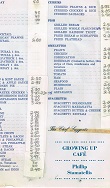
StamatellisGrowingFinlayLloydPhillip Stamatellis’ Growing up café is the third book I’ve read in publisher Finlay Lloyd’s fl smalls collection. Unlike the previous two, by established creators Paul McDermott and Carmel Bird, it is a debut work by an unknown writer. According to the author bio provided at the beginning of the book, Stamatellis is studying writing at the University of Canberra. What an achievement to have this work published, while still studying.

Growing up cafe is an enjoyable read. It tells the story of his growing up in his family’s cafe, the Radnor, in Goulburn, which is just 100km from Canberra. I used to visit cafes there regularly on trips to Sydney, that is, until it was bypassed by the highway. Now, if we go off the highway for a cuppa – and we do – it is not usually to the centre of Goulburn, but that’s another story. Back to the book …

Stamatellis has structured his short memoir cleverly. It is not told chronologically, and nor is it told in one voice. The story of his boyhood is told third person (“the boy”) via anecdotes that shift backwards and forwards across the years between 1965 and 1982. Reflections from adulthood are told first person, from the present, that is from 2014 and 2015. Whilst on the face of it the anecdotes from the past look rather higgledy-piggledy, careful reading shows that there is always a connection. There is method in the madness, in other words – and anyhow, as his friend says to him when he worries about his book making sense, “it doesn’t have to make sense, it’s not like life does.” Fair enough.

Things I enjoyed about the book include the nostalgia factor (the memories of Greek and Italian cafes or milk bars that I grew up with, though not “in” like Stamatellis) and the social history (the documenting of such cafes and the lives that surrounded them). Stamatellis captures all this nicely, from a young insider’s perspective. Phillip is, as far as this memoir tells us, the youngest of three boys born to Greek parents. The boys all grew up “in” the cafe, and they all worked in it from the moment they could. “I’ve lost count of the number of tables I’ve cleaned”, he writes, “I could do a three-plate carry by the time I was eight.”

The book opens at “Lunchtime, Summer, 1977”. The opening sentence – “The midday sun was stark in the street, and the small chirruping of cicadas almost drowned the rumbling of a passing Holden GT” – captures Australian country towns in summer perfectly, noisy cicadas and noisy Holden cars. It also reminded me of a song written in 1975 about another regional Australian city, Newcastle. The song, by Bob Hudson, includes the lines:

All the young men of Newcastle
drive down Hunter Street
in their hot FJ Holdens
with chrome plated grease nipples
and double reverse
overhead twin cam door handles,
sitting eight abreast in the front seat,
and they lean out of the window
and say real cool things to the sheilas
on the footpath, like ‘Aah g’day’.

Stamatellis, in his opening paragraph, describes teenagers in the cafe: “Cigarettes hung from their lips, the girls with their arms around their boyfriends’ waists.” It’s all so 1970s Australian – as is, unfortunately, the racism. “Thanks wog“, says a customer. A little further on is an anecdote in which “the boy’s” mother confronts racist graffiti on the cafe’s toilets, and then treats an indigenous person generously. All she says is to her son is:

‘Life is hard for some people but the sun shines for everyone, not just the wealthy’.

It’s not all serious though. There are funny, family anecdotes here too – brothers getting up to mischief, for example. There are stories about local characters, such as fun parlour owner Uncle Con, jeweller Ange Zantis, and the priest Father Sinesios, not to mention the challenge of serving the annual influx of an often unruly snow crowd. (If you are from this region you’ll know all about the trek to the snow through Goulburn, Canberra and Queanbeyan each winter). And there are the reflections from the present. These modern chapters round it out nicely. Through them we learn a little about where “the boy” is now, but overall I most enjoyed the chapters focusing on the past. They provide insight into a life now gone, and yet the lessons – such as tolerance, hard work, family cooperation – are timeless.

In the last chapter – set in 2015 – Stamatellis reflects on nostalgia:

I suppose at this very moment I’m feeling nostalgic and it seems that nostalgia makes a point of highlighting the good stuff and even finds positives among sadness – but my nostalgia is burdened by an unseen weight, a sense of entrapment …

Stamatellis doesn’t expand upon this, but I wonder if this little “small” is the beginning of something larger. It’s certainly a time and place that could do with some further scrutiny because we haven’t yet, I think, properly documented the experiences (and contributions) of that wave of southern European immigration.

(Note: I did find several typos, which is rare in my experience from Finlay Lloyd.)

Phillip Stamatellis
Growing up café
(fl smalls 8)
Braidwood: Finlay Lloyd, 2015
63pp.
ISBN: 9780987592972

(Review copy courtesy Finlay Lloyd)

Emma Ayres, Cadence: Travels with music (Review)

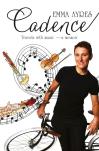
Emma Ayres, CadenceAlthough Emma Ayres’ memoir Cadence had been passed around my reading group with much enthusiasm over the last year or so, I wasn’t intending to read it – not because I wasn’t interested, but because there were other books I wanted to read more. However, when I found the audiobook at my aunt’s house while we were clearing it out, Mr Gums and I decided to listen to it on our trips to and from Sydney. It proved to be a great car book. However, a warning: we listened to it intermittently over two months, so this will be more a post of reflections than a coherent review.

Emma Ayres is probably known to most Australian readers of my blog, but perhaps not to others so let’s start with a potted bio. Born in England in 1967, Ayres is a professional musician – a viola player in fact – who has also worked as a radio presenter. She lived in Hong Kong for eight years, playing with the Hong Kong Philharmonic Orchestra, but in 2000 she rode a bicycle, fundraising for charity, from Shropshire, England, through the Middle East and central Asia, to Hong Kong. She moved to Australia in 2003, and worked as an ABC Classical Music radio presenter for eight years, from 2008 to 2014.

Now to the memoir. Cadence is ostensibly a travel memoir, but it covers a lot of ground within its seemingly narrow construct of chronicling her year-long bicycle journey. The ground it covers, besides the story of her travel, which is exciting enough given the regions she rode though, includes her childhood, her reflections on her life as a musician, and her analyses of classical music. Some of her technical descriptions went over my head, but I found her discussions of composers to be not only accessible and eye-opening, but deeply interesting. And it’s all told with a thoughtful philosophical underpinning.

Cadence is an excellent title for a musician’s memoir, and she plays with its meanings throughout, referring, for example, to a “perfect cadence”, or a “slow cadence”, or more frequently to  “interrupted cadences … moments when the direction is changed”. Indeed, the memoir could be seen as comprising almost continuous interrupted cadences because, although the bicycle trip provides her memoir’s chronological backbone, she skips around frequently, going backwards to her childhood and early years as a musician and forwards to her life after the trip when she briefly toyed with being a cellist. It can take a little concentration to keep track of exactly which part of her life she is writing about at any one time, but it’s not too hard. After all …

Cadences are waypoints in the music, places where you can take a breather, readjust your instrument and hurtle on to the next bit of the adventure.

I greatly enjoyed Ayres’ reflections on life and travel. The book is full of her insights, many learnt on the road. For example, regarding the challenge of deciding whether to do the trip she says:

If you are not sure whether or not you should do something, ask your ninety-year-old self.

At another point she discusses how much she loved Pakistan despite all the nay-saying she had received when she was planning her trip. She was treated, she writes, almost without exception, with kindness and generosity everywhere she went. “Do we make our own welcome?” she wonders, and goes on to suggest that before we criticise another country, we should perhaps look at ourselves first.

Being a woman cycling alone is risky business, particularly in some of those male-dominated countries through which she travelled. She frequently took advantage of her androgynous look, helping it along by keeping her hair very short and wearing non-feminine clothes (where she could). Consequently, she was regularly taken for a man. She discusses gender often, commenting on how we are ruled by it and its associated expectations. She sees herself as “a border dweller in the world of gender”, writing:

I do admire people who are by birth penumbral but have the courage and desire to be firmly one or the other and go through a sex change, but I like the fluidity of being able to float around the middle. I really to think that the basic this or that of male and female is shallow and limiting. How simplistic to think, with all those opposing hormones flowing in each of our bodies, that we are one and therefore not the other. And how much better in countries like India and Thailand that they recognise more than two sexes. More variations in the octave, more variations in gender.

Another theme that runs through the book is the idea of being in the moment. She tells the story of being taken to task for reading Anna Karenina when on a bus in Pakistan. Her young seat-mate is mystified by her passionate rendering to him of the story, saying to her “but you are here!” She genuinely sees his point, and puts the book down. Later in the trip, she regrets not spending more time with a fellow-traveller who crosses her path because “I was too focused on destination and again forgot the importance of the here and now”.

Cadence is a generous, warm-hearted book which abounds with travel anecdotes to delight any lover of travel literature. There are scary moments, and funny ones, and others that are just plain interesting. It also contains intelligent, considered insights into music, some of which I plan to share in a follow-up post. For now, I’ll conclude with a comment she makes early in the book:  “Travel”, she says, “goes inwards as much as outwards”. That is exactly what she demonstrates with this book. I can see why all those in my reading group who read the book urged it onto the next person.

awwchallenge2016

Emma Ayres
Cadence: Travels with music – a memoir
Sydney: ABC Books (by HarperCollins), 2014
284pp.
ISBN: 9780733331893

Emma Ayres
Cadence: Travels with music – a memoir (audio)
(read by Emma Ayres)
ABC Commercial, 2014
8 hours (approx) running time (on 7 CDs)

Rochelle Siemienowicz, Fallen (Review)

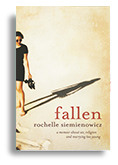
SiemienowiczFallenAffirmBeing a reader who focuses more on “truths” than “facts”, I’m not averse to writers playing around with fact in their fiction or fiction in their fact. This issue raises its head most frequently in historical fiction of course, but it’s also present in autobiographies, memoirs and even biographies. And so, here I am, having just reviewed Kate Grenville’s biography-cum-memoir of her mother, talking about another memoir, Rochelle Siemienowicz’s Fallen.

“It is a story …”

Siemienowicz’s memoir commences with – well, a literary in-joke – “Call me Eve”. What? It’s a memoir the front cover tells us, and the author’s fist name is Rochelle. Who’s this Eve? Rochelle explains in her brief introductory note, a note that precedes the Prologue, that her parents would never have named her for “that original sinner” but that it’s the name she gives herself when she thinks back to that time when she was a young wife, “so very young, so very hungry”, when she “picked the fruit and ate and drank until I was drunk with freedom and covered in juice and guilt”. The name Eve then has a symbolic meaning that forces us, as we read the book, to consider the idea of “fallen women”, but it also enables Siemienowicz to distance her present self from that young woman she once was. This reminded me of Kate Holden’s memoir, The romantic (my review), in which she chose a different path to create that separation – the third person voice.

Anyhow, having explained the name issue, Siemienowicz continues with the point that interests me, the form of her memoir. She writes that “it is a story, with parts made up and fragments rearranged like a dream half remembered now that twenty years have passed”. In the Epilogue, she mentions, almost in passing, that she’d originally written the book as a novel.

So, in Fallen we have a memoir that has strong novelistic elements, including a tight cast of characters, a deliberate narrative structure, and dialogue. You don’t find dialogue in traditional autobiographies. We readers would not believe that the writer could remember verbatim conversations held so long ago. But, dialogue is increasingly being incorporated into memoirs. Dialogue can engage readers, and while it may not represent verbatim “fact” it can convey the “truth”.  If you are starting to question by now whether this really is a memoir, I should confirm that it is fact-based, at least I believe it is, unless Siemienowicz has pushed artifice so far that her apologetic-cum-warning phone-call to her ex-husband in the Epilogue is fake! But I don’t think this is the case. There does come a point where you must suspend your disbelief and go with the writer after all.

“I feel something breaking inside of me”

Now, having spent paragraphs on introductory discussion, it’s time to say something substantial about the book’s content. Fallen is the story of a young woman raised by devout Seventh-Day Adventists (SDA) who believe, among other things, that premarital sex is a sin. To satisfy her intense sexual longings and remain “clean in the Lord’s sight”, Eve, who feels a freak in a freakish religion, marries Isaac, another SDA, in 1992 when she’s only 20. She’s deliriously happy. They love each other, and they’re free. They rebel – drink alcohol, eat meat, spend hours in bed – but then, within a couple of years, Isaac starts to withdraw, losing interest in their sexual relationship. The solution – because they love each other, and are committed to their vows (to stay married, at least) – is to have an open marriage. There’s only one rule, they must always ask permission first.

Most of the book is set in Perth in 1996, when Eve returns home to attend a conference and catch up with old friends. Her lover, Jay, is to follow for a week, followed by her husband the week later. Before Jay arrives, she reconnects with her first love, and has a fling with another conference attendee. Oh what tangled webs! Things, in other words, start to unravel, and Eve’s faith in her marriage and her vows starts to break down under the weight of secrets. She begins to question whether their rules can work “in the real world” – but the alternative, and its implications, are confronting.

“Can the centre hold …”

Memoirs are interesting beasts. Why do we read them? Sometimes it’s obvious. The memoirist is famous, or is writing about something we love (like literature, for example, for me). Sometimes it’s less obvious. It might be that the memoirist has experienced something we are experiencing like, say, grief. With Fallen, however, neither of these reasons really apply for me. So why read this one? Well, for two main reasons. One is that while the circumstances – a young woman of a strict religious upbringing trying open marriage – are rather narrowly specific, there are some broad themes. One has to do with sexual freedom. What does it mean, before, within and without marriage? How does it affect relationships? What has it to do with sincerity, intimacy and honesty? How do principles fit with feelings? There’s a broader theme too – the formation of identity. The subtitle of the memoir, “marrying too young”, hints at this. How easy is it to sustain a marriage made before you have fully formed your identity?

I feel myself spread all over the nation, with loyalties and loves and lusts from the east coast to the west, and no idea what to do with them. I’m a girl with no qualities and no boundaries, with legs wide open and a beating heart exposed. I’m appalled by myself, but also intrigued. How many tiny pieces of myself can I give away before there is nothing left? How curiously exhilarating. It feels like vertigo.

The other reason for reading this memoir is the writing. Siemienowicz knows how to tell a story. She structures the memoir around a trip back home, which she tells chronologically, but into it she weaves the story of her life and relationships to that point. We see a young woman who can be confident and brazen one moment, and vulnerable and uncertain the next, who throws herself wholeheartedly into life but doesn’t always think about where she’s pointing. And we see all this through a focused narrative and clear, direct but spirited language.

Fallen is, at times, an uncomfortable read but Siemienowicz’s honesty, her angst about her “fraying code of honour” versus her desire to fully engage in her life, captured my imagination and had me wanting her to find an honourable conclusion to a painful part of her life. This memoir is testament, I’d say, that she does.

Rochelle Siemienowicz
Fallen: A memoir of sex, religion and marrying too young
South Melbourne: Affirm Press, 2015
263pp.
ISBN: 9781922213655

(Review copy supplied by Affirm Press)

Helen Keller, I go adventuring (Review)

My reading has been so disjointed recently that I thought I’d look at recent Library of America (LOA) offerings for inspiration, and came across Helen Keller‘s “I go adventuring”, an excerpt from her Midstream: My later life. It appealed to me because I haven’t read anything by Keller since I was a teenager, and because this piece is about New York. I couldn’t resist.

Helen Keller sitting holding a magnolia flower, circa 1920 (Presumed Public Domain, from Los Angeles Times photographic archive, UCLA Library)

Helen Keller sitting holding a magnolia flower, circa 1920 (Presumed Public Domain, from Los Angeles Times photographic archive, UCLA Library)

Firstly, Keller. What an amazing woman. Like many, I suppose, I have always been in awe of her ability to make a meaningful life for herself without sight or hearing. LOA’s always useful introductory notes discuss Keller being asked, in relation to another excerpt, “what she could possibly have ‘seen’ from the top of the Empire State Building”. She replied that

I will concede that my guides saw a thousand things that escaped me from the top of the Empire Building, but I am not envious. For imagination creates distances that reach to the end of the world … Well, I see in the Empire Building something else—passionate skill, arduous and fearless idealism. The tallest building is a victory of imagination.

The notes continue to say that throughout her adulthood, Keller “faced scepticism over her abilities and criticism for her choices of language”. On one occasion, she responded that the deaf-blind person “seizes every word of sight and hearing, because his [using the male pronoun common to her times!] sensations compel it. Light and color, of which he has no tactual evidence, he studies fearlessly, believing that all humanly knowable truth is open to him”. American novelist and essayist, Cynthia Ozick, LOA tells us, accepts Keller’s point, saying, simply, “She was an artist. She imagined”.

Secondly, New York. Before I first visited New York in the early 1980s, I’d lived in Sydney, and had visited great European cities like London, Paris and Rome. None of these interested me greatly because I really don’t much like cities. (Yes, I liked the museums and galleries, the historic sites, but as places to “be” they didn’t really appeal). But New York. There was something about it – and I finally “got” cities. I still don’t like them a lot, but I credit New York with opening my eyes to “city-ness”, if that makes sense, to the buzz and rush and life of them.

However, I’ve indulged myself enough now, so let’s get to Keller’s piece. She starts by referring to her situation:

Cut off as I am, it is inevitable that I should sometimes feel like a shadow walking in a shadowy world. When this happens I ask to be taken to New York City. Always I return home weary but I have the comforting certainty that mankind is real flesh and that I myself am not a dream.

See, that’s New York for you! She then talks about the great bridges, starting with Brooklyn Bridge, which she says is “the oldest and most interesting of them … built by my friend, Colonel Roebling”. In my first visit to New York, one of the places I had to visit was Brooklyn Bridge – because of Ken Burns’ wonderful documentary of the same name. It’s an old film now, 1981, but is well worth viewing if you haven’t seen it and get the chance. Keller, though, says she mostly uses the Queensborough Bridge. She writes that not all poetry is found in poetry books, that

much of it is written in great enterprises of engineering and flying, that into mighty utility man has poured and is pouring his dreams, his emotions, his philosophy. This materializing of his genius is sometimes inchoate and monstrous, but even then sublime in its extravagance and courage. Who can deny that the Queensborough Bridge is the work of a creative artist?

While we continue to build astonishing structures, continue to push the edges of what we can achieve,  we are also, I think, more blasé about the achievements and more questioning about the value and implications. Keller’s admiration reminded me of the awe and wonder of the nineteenth and early twentieth centuries towards engineering feats, though she too, with the word “monstrous”, is perhaps sensing some other ways of seeing?

Keller’s piece is really short, so I’m not going to commentate it all. She describes circumnavigating New York in a boat and talks about about life on the water, and she ends with a vivid description of the power of the subways. I want to close though on another reference to herself. She writes:

New York has a special interest for me when it is wrapped in fog. Then it behaves very much like a blind person. I once crossed from from Jersey City to Manhattan in a dense fog. The ferry-boat felt its way cautiously through the river traffic. More timid than a blind man, its horn brayed incessantly. Fog-bound, surrounded by menacing, unseen craft and dangers, it halted every now and then as a blind man halts at a crowded thoroughfare crossing, tapping his cane, tense and anxious.

With that, she conveys so beautifully, for sighted people, some of her experience of the world.

Helen Keller
“I go adventuring”
First published: In Midstream: My later life, 1929.
Available: Online at the Library of America

Biff Ward, In my mother’s hands (Review)

Biff Ward In my mother's hands

Courtesy Allen & Unwin

“Profoundly moving”, “a kind book”, and “harrowing” could be blurb words for Biff Ward’s memoir, In my mother’s hands, but they’re not. They are some of the words used by members of my reading group when we discussed the book this week with – lucky us – the author in attendance.

It’s quite coincidental that I happened to be reading this book right when Annabel Smith asked me to name my favourite memoir for her Friday Faves, which resulted in my follow-up post on memoirs this Monday. However, I’m glad it happened this way, because it’s given me an excuse to continue the discussion a little more. There’s so much to say about Ward’s book, but for this post I’m going to explore just two aspects: the reading experience, and its literary qualities.

On reading In my mother’s hands

So, let’s start with the story. Biff Ward is the daughter of one of Australia’s most influential historians of the mid-twentieth century, Russel Ward. At our meeting, she told us that people expected her to write his biography, but, she said, that was never her interest. Instead, she found herself writing about her mother. In doing this, though, she did in fact write about her father – but in a memoir, not a biography, because this book is about her experience of living in a family with an increasingly delusional, paranoid mother. What that experience was like – and how she eventually unravels the full story – makes compelling reading.

But, there’s more to reading this book than the story, strong as it is. There is how Ward tells it. She evokes the times beautifully – particularly the 1950s and 1960s – showing, in particular, the devastating result of the lack of understanding or awareness of mental illness. And she does this while inhabiting the child she was at the time, that is, she manages to tell those years from her child’s eye view, interspersing this voice with her experienced adult one. Take, for example, her description of when, as a teenager, she’s home when her mother is visited by “top girl” or “the queen bee of the university wives”. Ward believed this visit showed her mother was being talked about publicly, and she felt “shame and embarrassment” as “Top Girl bustled down the hall and out the front door”. That word “bustled” perfectly captures the idea of a “busybody”. Later, though, she sees it differently:

Now I can see that the network of women, connected through the university where their husbands worked, might have cared about my mother. Or might have wanted to care but were not sure how to go about it.

Also contributing to my reading enjoyment was how seamlessly Ward incorporated her research into the story to substantiate her feelings and ideas. She quotes from letters her father wrote to his parents and sister. (How wonderful that these were kept, says this librarian-archivist!) She talks of speaking to friends and family members later about their memories. She shares her research into official records. She refers to her father’s autobiography. And so on. None of this is tedious, but is woven naturally, logically, into the narrative.

Then there’s Ward’s honesty in confronting difficult truths, and her ability and willingness to reflect on her experiences and comprehend their meaning or implications. Here she is, for example, on her response to her father’s overwhelming (and surely unreasonable) request for her to look after her mother for a year:

I didn’t know that somewhere inside me was a plan. My motivation was buried way too deep for me to connect that first touch of an erect penis with the request Dad had made of me.

You can probably guess the outcome.

It would be easy to read this book with anger – to be angry particularly with Russel Ward for his failings – but that would, I think, miss the point. Ward is not angry – and indeed her father did a lot right too. Her tone is more one of sadness, than of anger. She appreciates the culture of the times and she knows that people are flawed. I loved this – the generosity with which she relates what was clearly a traumatic upbringing.

What makes a memoir literary?

This might sound like a snooty question, but literary non-fiction is a recognised genre, and memoirs are making literary award lists. So, what makes one memoir stand out over another in terms of literary qualities? Critic Barbara Lounsberry captures my perspective: “Verifiable subject matter and exhaustive research guarantee the nonfiction side of literary nonfiction; the narrative form and structure disclose the writer’s artistry; and finally, its polished language reveals that the goal all along has been literature.” (from Wikipedia)

So, narrative form, structure and “polished” language. While I wouldn’t call In my mother’s hands particularly innovative or challenging in terms of style and technique, I would call it skilled and polished. Ward’s use of her child’s voice interspersed with her more reflective adult one effectively draws the reader in. Her use of foreshadowing – such as “I missed seeing that I had been provided with a rehearsal of what was to come” and “It’s hard, looking back, to pick the precise moment when a turning point arrives, when your life is about to change” – picks up on a structural device common in fiction. (It also neatly demonstrates the memoirist’s ability to think back).

The jewel in the crown, though, is her language. Ward’s writing is generally direct and to the point, but she has a great eye for metaphor and produces some gorgeous images that can encompass multiple ideas. I loved this description of her mother’s increasing (often self-imposed) alienation within the family:

Even when there weren’t visitors, we hardly spoke to her. As her delusions grew, as she had almost no everyday conversation, we cut off from her, twig by twig. Our family tree grew its gnarled limbs around us and through us, in the imperceptible way trees do, so that we didn’t notice how weirdly shaped we all were.

This obviously distorts the traditional family tree motif but also, I think, subtly suggests the tree of (non) life?

And then there’s the title itself. In my mother’s hands references so many ideas – the fact that children are (rather defencelessly) in their parents’ hands; the idea that as a nurse her mother had had caring, nurturing hands; her mother’s grotesque habit of gouging and hurting her hands (invoking Lady Macbeth, and the mystery at the heart of the book); and her mother’s terrifying attempt to strangle Ward in her bed when she was 12 years old. Literal, symbolic, metaphoric. They’re all there in those four words.

The chapter titles are similarly evocative, usually brief and apt, such as Brittle, Knife, The Cobweb, Running. Language is, in fact, a significant issue in the book because in those awful days when mental illness was not understood, Ward, her father and younger brother had no language to explain to each other, let alone to outsiders, what they were experiencing. Sometimes Ward would lie, she said, because “when there are not adequate words, fiction will suffice”; other times they would use “shorthand” to obscure the reality.

I could write more about the language in this book, because I found it perfectly tuned to the story and to conveying the feelings within, but I’ll leave it here.

At the end of our meeting, I mentioned to Ward her longlisting for the Stella Prize. She smiled a little wryly, and said, in relation to missing out on the shortlist, that she felt in good company being “rejected with Helen Garner and Sonya Hartnett”! She sure is – and on the basis of this book, I’d say she well deserves being mentioned in the same breath as those writers.

awwchallenge2015Biff Ward
In my mother’s hands
Sydney: Allen & Unwin, 2014
268pp.
ISBN: 9781743319116

Jill Sanguinetti, School days of a Methodist lady: A journey through girlhood (Review)

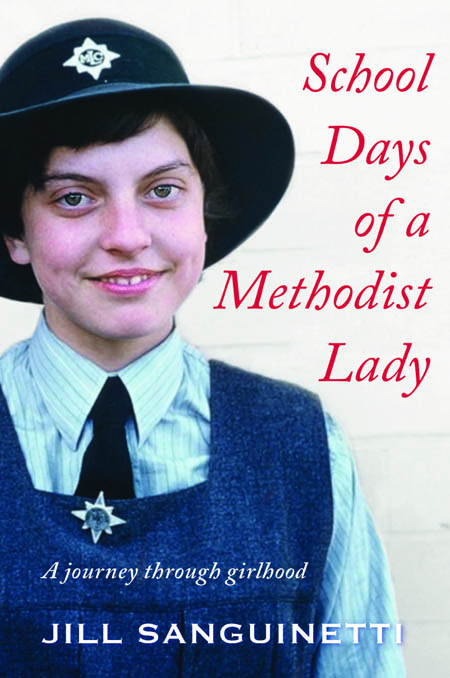
Jill Sanguinetti, School days of a Methodist ladyWhen I read a memoir, particularly one by an unknown person like Jill Sanguinetti’s School days of a Methodist lady, my first question is why was this memoir written? Sally Morgan’s My place, for example, explores how she discovered her indigenous origins and why her family had kept this hidden, while Frank McCourt’s Angela’s ashes chronicles the extreme poverty of his childhood. Not surprisingly, many memoirs, like these two, examine the writer’s childhood – that formative time in our lives – and Jill Sanguinetti’s is no exception.

So, why did Sanguinetti write her memoir? In her opening letter to the reader she says she’s written it for the MLC community, for young people “struggling to grow through life’s complexities”, and for herself to air “a dark and musty corner of my soul”. This breadth is a bit of a shame because it means the memoir doesn’t have a core purpose that propels it along like, say, Morgan’s and McCourt’s. Nonetheless, I did enjoy the book, mainly because of its subject, Sanguinetti’s school days. The main focus is her four years as a boarder at Melbourne’s prestigious MLC (Methodist Ladies College), but it starts with her childhood in the small country town of Kyabram in northern Victoria.

Now, I wasn’t a boarder and I didn’t attend a prestigious private school, but I am a baby-boomer, as is Sanguinetti. This means that, although I went to government schools in two Queensland towns and then Sydney, and although I’m a later baby-boomer, we shared a similar world, and I enjoyed wandering down memory lane with her. I remember the freer childhood of a 1960s country town, and singing hymns with my sister after church. I remember the Billy Graham Crusades (though unlike Sanguinetti, I didn’t attend one). Elvis was well established by the time I was a teen, so my rock ‘n roll memories are of the Beatles, Credence Clearwater Revival and the Stones, but our ways of enjoying them through our radios was similar. And I remember the formality of schools in those post-war decades. Sanguinetti tells all this with a simple, straightforward clarity.

What helped keep my interest, too, was the memoir’s structure. While it is roughly chronological, starting with the family’s move to Kyabram in 1951 when she was 6, and ending with her leaving MLC in 1961, most of the chapters in between are thematic allowing her to explore these aspects of her life in more depth. And so there’s a chapter on church (“My family at church”), and one on friendships (“The gift of girlfriends”), a chapter on school discipline (“Discipline and resistance”), and another on boys (“The embarrassing problem of boys”). And so on. I particularly enjoyed her chapter on four inspirational teachers (“Matriculation: Four Great Teachers”). Don’t we all have them? This departing from a formal chronological structure, yet still moving the time on, enables the book to function as a meaningful social history of the time within the broader narrative.

I started my post with “my first question”, but I do have others about memoir-writing, a major one being how writers manage to remember so much. My memory of my childhood is woeful, patchy at best. I appreciate that when you get down to it memories come, but still … Well, Sanguinetti covers this issue both directly and indirectly in her book – within the main text and in her Acknowledgements. Her own memory is of course critical, but she was lucky that her parents kept the letters she (and her sister) wrote home while at boarding school. How useful for a childhood memoir, methinks, to have gone to boarding school! There is a trap in this, though, because your memory can be swayed by what you wrote in your letters. Indeed, Sanguinetti quotes, from one of her letters, an experience from her schooldays, and then writes:

I have no recollection of the dormitory prayer circle and doubt that it lasted long.

What significance, then, should we grant this experience in her memoir? How often, I wonder, does this happen in memoirs without our knowing? The significance depends a bit on the intention of the memoir. If it is intended to be a social history of a place or time, or a nostalgia piece, then it’s probably just as significant as events more clearly remembered, but if the memoir’s focus is the experiences that formed the writer, does something not remembered carry equal weight as one consciously remembered? (Hmm … let’s not answer that lest we become mired in psychological theory!) I should add here that Sanguinetti had other sources  – written and oral – for her work. Some are mentioned in her Acknowledgements, and others in her useful, well worth reading, Chapter Notes.

Now, let’s return to my original question: why did Sanguinetti write this memoir? Throughout the book she hints at or foreshadows something darker, and we gradually realise it is depression of some sort. Around the middle of the book (“Angst”), she says that “I believe today that it was the sustained stress that harmed me in the long term, rather than separation from home or the privations of boarding”.  This chapter ends with:

I was up and down like a yo-yo, revelling in the buzz and stimulation of school life one moment, and languishing in anxiety, regulation and grey ordinariness the next. I knew that other girls whose marks were not brilliant did not tackle their work with the same intensity as I did, nor did they get in a muddle, or be all up and down as I was. And why was I blighted with ever-stiffening fingers and crazy handwriting. What was it about me?

While she suggests misery, and mentions that her sister “too, started to show signs of depression”, she doesn’t develop this or make us “feel” her pain, which makes it easy for us to dismiss it as “typical” adolescent ups and downs. However, from a reference, in the post-school concluding chapters, to a breakdown, it was clearly more than that. For her, she says, the memoir “would free myself from that particular set of ghosts” left from her MLC experience, but for us it is a well-written, analytical, and yes, interesting story about Australian school and society in the 1950s to early 1960s.

Thinking about all this, I was reminded of Carolyn Heilbrun’s Writing a woman’s life in which she worries that in autobiographies “nostalgia, particularly for childhood, is likely to be a mask for anger”. This is not a nostalgia piece, though – it’s too real in her evocation of boarding-school hunger, cold and lack of freedom to be that – but it does feel as though she throttled back. Indeed, she says as much through her choice of epigraph:

Perhaps the only point about autobiography is to remember a world which, by the time of writing, has changed so much as almost to vanish, and to record the succession of changes … How to look back, not in anger, but in reflection, is a problem I had to solve. For the small, enclosed world I began in had its concealments and anguishes as well as joys. (Judith Wright)

Sanguinetti, I realise, headed me off at the pass, before she began. She’s done what she intended – and done it well. Still, a little anger mightn’t have gone astray.

awwchallenge2014Jill Sanguinetti
School days of a Methodist lady: A journey through girlhood
Melbourne: Wild Dingo Press, 2014
239pp.
ISBN: 9780980757095

(Review copy courtesy Wild Dingo Press)

Kate Forsyth, Stories as salvation (Review)

One of the best things about being involved in the Australian Women Writers’ Challenge is hearing of writers whom I may not otherwise have come across, or, if I had, who may not have registered strongly with me. One such writer who regularly pops up in the challenge is novelist Kate Forsyth. The reviews that keep coming in for her books, particularly for The Wild girl and Bitter greens, have intrigued me, but I haven’t yet found an opportunity to read these novels. I did, however, find time to read the short memoir, “Stories as salvation”, Forsyth wrote for the Griffith Review some months ago now.

Forsyth’s story is both common and unusual. It’s common because it is a tale of a young girl who turned to books and stories as solace during a childhood characterised by much ill-health and many hospital stays. How many memoirs have we read that tell this story?

Stories. My only source of sunshine, my only solace. I would read all day and as late into the night as the nurses would let me … Stories were escape. Stories were magic.

But, it is unusual too, because, like most such stories, hers has its unique elements. Her health problems started when she was two years old with a vicious attack by a family dog which, among other things, destroyed one of her tear ducts. She barely survived that attack, and then suffered multiple serious infections requiring hospitalisation, due mostly to this tear duct problem. She subsequently became, she said, at the age of eleven, “the first Australian to have a successful implantation of an artificial tear duct”. She includes in this memoir her poem “Scars” which was first published in Quadrant in 1994 and which evokes the visible and invisible scars of her experience, their power and her power over them.

What I found most interesting in this essay-length memoir was her clear articulation of how her childhood reading had informed the writer she is today. I am always interested in how writers end up writing what they write, and what their intention is (regardless of whether their intention is what I might take away from their writing.) For Forsyth, her introduction to Grimms’ Fairy Tales when she was seven came “to haunt [her] imagination”. She was particularly attracted to Rapunzel who

too was locked away from the world against her will. She too was lonely and afraid. Her tears healed the eyes of the blinded prince, as I so desperately longed to be healed. The uncanny parallels between Rapunzel and my life seemed to have some potent meaning.

And so, later, she started writing. Her first novels, commencing with The Witches of Eileanan in 1997, were firmly in the fantasy genre. In them, she says, “the themes of imprisonment and escape, wounding and redemption, appear again and again”. However, it seems Rapunzel stayed in her mind. She started researching the origins of the story, and realised that she did not want to write it as “an otherworld fantasy”:

I wanted to capture the charge of terror and despair that young girl must have felt. I wanted to remind readers that women have been locked up for centuries against their will in this world.

Our world.

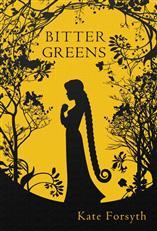
ForsythBitterGreensSo the resultant novel, Bitter greens (2012), is set in a real place at a real time. It could not, therefore, she says, rely on magic to explain all the mysteries in the story. She also explains how this research led her to “undertake a doctorate on the subject, with Bitter greens as the creative component.” It also led her to write The Wild girl about Dortchen Wild who was a neighbour of the Grimm family and who told Wilhelm Grimm “almost one quarter of the eighty-six tales collected” in the brothers’ first edition. (Just to be clear, though … she was one of many from whom the brothers collected.)

Now, I have to say that I am not particularly interested in Forsyth’s fantasy series, but these two books, which tend more to the historical fiction genre, do fascinate me. I will try to get to them one day. Meanwhile, I’m intrigued by what Forsyth loves in a story:

romance, passion, tragedy, struggle, and, finally, triumph.

I do like those things – who doesn’t – but I don’t need “triumph”. I don’t dislike books with this result, but I am happy with stories that are more equivocal, that make me wonder at the end. Life isn’t always, in fact often isn’t, triumphant – and I am more than happy for the arts to reflect that reality. Moreover, I’m not sure what Forsyth thinks, but I think stories can, by their very existence, provide “salvation” without offering “triumph”.  What do you think?

BTW, I was intrigued to read in her Official Biography that Forsyth is a direct descendant of Charlotte Waring, the author of the first book for children published in Australia, A Mother’s Offering to her Children. Waring was the mother of Louisa Atkinson, about whom I have written.

awwchallenge2014Kate Forsyth
“Stories as salvation”
Published in the Griffith Review, Edition 42, 2013
Available: Online at the Griffith Review

Olivera Simić, Surviving peace: A political memoir (Review)

Olivera Simic, Surviving peace

Courtesy: Spinifex Press

I hadn’t heard of Olivera Simić when Spinifex Press offered me her book, Surviving peace: a political memoir, to review, but her subject matter – the Bosnian war, to put it broadly – was of particular interest to me, so I said yes. You see, I worked for several years with a woman who, like Simić, was also “survivor” of that war, and while she’d talked a little about it, I was hoping this book would fill in some of the gaps. It sure did – and then some.

Simić was born in the former Yugoslavia, and lived through the Yugoslav Wars (1991-1999). She was nineteen years old and living in Banja Luka in Bosnia and Herzegovina (BiH) when the Bosnian War (1992-1995) broke out. To keep her safe, her parents sent her to friends in Serbia for the duration of the war. She was living in Serbia* in 1999 when NATO bombed it –  Operation Merciful Angel** (really!) – as part of the Kosovo War (1998-1999). These aren’t her only traumatic experiences, but I won’t give her whole biography here.

According to her Spinifex author page, Simić is now “a feminist, human rights activist and academic at the Griffith Law School, Australia”. She teaches international law and transitional justice, suggesting that her personal experience of war and peace is underpinned by thorough academic grounding. The book has an extensive bibliography, which not only substantiates her arguments, but provides an excellent resource, both fiction and non-fiction works, for further reading on the subject.

So, how does an academic, working in an area in which she has been personally involved, write and teach about it? Surviving peace is described as a memoir so, as she says in her Preface, “the personal ‘insider’ perspective assumes the lead” in this book, but she also wants to increase understanding of war trauma and its impact on people’s lives. She’s a feminist, and brings a feminist sensibility to her academic work, one which accepts that personal experiences provide legitimate evidence in research. She believes, as I do, that there is no such thing as “objective knowledge”. Consequently, this “memoir” can also work as a scholarly study of the consequences of war, of the challenge of living post-conflict, of, as she describes it, surviving peace.

One of the features that makes this book more than “just” a memoir, is that it’s not told in a simple linear chronology. She does start with the beginning of the war in 1992, and end pretty much with the present, but in between she structures the book more thematically, so I’ll do that too, roughly aligned with her themes.

Where are you from?

In Chapter One Simić describes how within a decade of Tito’s death, Yugoslavia had changed from a place of “collective identity” in which ethnicity was not an issue to being an ethnically divided society that descended into war and genocide. She now “identifies”, reluctantly, as a Serb (Bosnian Serb/Orthodox Christian), formally separated from her old compatriots, Bosniaks (Muslims) and Croats (Roman Catholics). “The war”, she says,”erased my country, my language, my youth”. Her discussion of how language has played out in this breakdown of society is fascinating – but her description of the impact of having an identity “forcibly attached” to her, is painful:

The ethnic identity that I have been reduced to in peacetime has become a chain around my neck that threatens to choke me. It determines everything I do, say and write … Every time someone starts to enquire about my ‘ethnic identity’ I find myself walking a minefield of people’s judgements and closed-mindedness.

Of course, she’s not the only one caught in this trap – and she supports her discussion of the issue with academic writings and the personal experiences of others. Later in the book she describes how her father changed from communist to “ultra-right nationalist”. He now mixes only with Serbs, and has “nothing to discuss” with Bosniaks and Croats, among whom he’d had close friends pre-war. It’s impossible not to generalise, and draw truths, from the “stories” she tells, truths about constructing ethnicity which extend far beyond Bosnia and the Balkans.

Speaking the truth – and moral responsibility

In Chapter Two, titled “Traitor or truthseeker”, Simić discusses why she is driven to write about atrocities – particularly the Srebrenica massacre – committed in “my name” by her people. It has brought her into direct conflict with her father. “Truth” she shows is a relative thing – if we didn’t know it before. Each ethnic group has its own truths about what happened, making it “almost impossible to have respectful conversations about politics and war in today’s BiH”.

I found this section particularly interesting, because its generalities extended, for me anyhow, beyond the Bosnian War to indigenous relations in Australia. She discusses her feelings of “moral responsibility” for acts committed in her name, and argues

Of course, I cannot be held accountable for atrocities perpetrated by members of my ethnic group; that is their burden. However, I can and do feel a responsibility to demand justice and examine crimes committed by ‘my clan’.

That makes perfect sense to me. Simić quotes Hannah Arendt as saying that every government should assume “political responsibility for the deeds and misdeeds of its predecessors, and every nation, for the deeds and misdeeds of the past”. She also quotes Bernard Schlink (of The reader) who wrote that the past can “cast a long shadow over the present, infecting later generations with a sense of guilt, responsibility and self-questioning”. Oh yes! I do hope we here in Australia are finally recognising this … (Interestingly, she also raises the issue of survivors feeling they have sole ownership of their experience and that only they have the right to talk about it. This reminded me of our discussion on this blog earlier this year about whether white writers can write indigenous characters.)

Simić talks of “dirty peace”, which she defines as a time when killings have stopped but ‘war’ is still being fought. In BiH, for example, those who speak uncomfortable truths – and she gives examples – are ostracised and threatened. She talks about forgiveness (which I discussed earlier this year in another post) and argues that real peace is unlikely to be achieved until once-warring parties can sympathise with each other. Reconciliation, she says, means something more than simple co-existence.

“The answer to violence can never be more violence”

Simić is a pacifist and abhors violence. She details in the memoir her own painful experience of post-traumatic stress syndrome (PTSD). It is the most personal, intimate part of the book. Her PTSD primarily stemmed from her experience, as a civilian, of the NATO bombing. She is particularly bitter about NATO’s actions. She discusses it at some length, including both her personal experience, and the “facts”. She doesn’t excuse what the Serbs did in Kosovo, but argues “there must be other ways”. What those other ways might be, however, is not the subject of this book.

Her discussion of modern warfare, in fact, is chilling – and reminded me of Andrew Croome’s inspiration for his novel Midnight empire. The more remotely war is conducted, the easier it is for those conducting it to not see the real people, real lives, being affected. In this new warfare, the number of “ungrievable lives”*** multiplies.

The ramifications of war, then, are enormous, besides the loss of life and destruction that occur during the violence, besides the PTSD suffered by combatants and civilians afterwards. She writes of her own life as a refugee, of dislocation in the lives of others, of a “peace” that for many is no life at all. Some of this she conveys in Chapter Four through letters between three women, including herself, which bear direct witness to violence and its aftermath.

Incorporating truth into history

You’ve probably gathered by now that I found this a deeply engrossing book. It is unapologetically written from the point of view of a survivor. Quoting academic Elizabeth Porter, Simić believes that stories provide the basis for incorporating truth into history. I like this because for me history is more than facts and events, more than great men and their actions. It comprises the truths drawn out of – generalised from – people’s lived experiences. Nonetheless, there were times when I wondered if Simić were pushing her personal barrow a little too far, but then remembered that this is, first, a memoir.

I’m never one to say you must read a book. However, if the subject interests you, then Surviving peace would be well worth adding to your pile!

awwchallenge2014Olivera Simić
Surviving peace: A political memoir
North Melbourne: Spinifex Press, 2014
188pp.
ISBN: 9781742198941

(Review copy courtesy Spinifex Press)

* I mistakenly wrote Sarajevo in my original version of this post.
** The name reported to Simic by a pilot, but this name, used briefly in Yugoslavia, was a misnomer.
*** Janet Butler’s term for whole populations “barely considered as human” by those conducting or reporting on war.

Simone de Beauvoir, Memoirs of a dutiful daughter (Review)

Courtesy: HarperCollins Australia

Courtesy: HarperCollins Australia

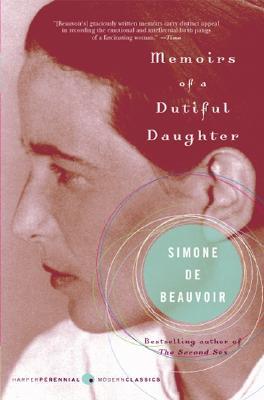
I have only read one other work by Simone de Beauvoir – and I’m ashamed to say that it wasn’t The second sex (which still sits in my long-in-the-tooth TBR pile). It was, instead, one of her autobiographical novels, She came to stay. I enjoyed it as I recollect, but that was a long time ago. Then this year, my reading group decided to choose one of the books being discussed in ABC Radio National’s European classics series – and we opted for the first of Beauvoir’s autobiographies, Memoirs of a dutiful daughter.

Now, the things is, it’s a pretty dense book that can be looked at from multiple angles, too many to explore in one review. Consequently, my plan is to focus here on a few that interest me, and to later post a Delicious Descriptions containing examples of her gorgeous descriptive writing.

First though, as always, a brief summary of its content. Published in 1958, the book chronicles her youth from her birth in 1908 to when she turned 21 in 1929. It deals at some depth with her childhood, school and university days; her relationship with family and friends; her youthful thoughts about and experience, such as it was, of love; and, most importantly, the foundations of the ideas that drove her adult life. It shows the inner conflict she experienced as an independent thinker growing up in a conservative Catholic bourgeois family. I’d describe it as the autobiographical equivalent of a bildungsroman, which sounds silly since autobiography is intrinsically about the development of self. But this particular autobiography ends at the moment when she formally leaves childhood behind, and, like a bildungsroman, is primarily the story of her “formation”.

Autobiography

WARNING: THERE BE SPOILERS IN THIS SECTION – DOES THAT MATTER IN AN AUTOBIOGRAPHY?

BeauvoirMemoirsHarperPerennialThis leads nicely into the first aspect of the book I’d like to discuss, its form. It is a traditional autobiography in that it starts with her birth and moves in a linear way, with the occasional foreshadowing, to her chosen endpoint which is when she turned 21, finished her schooling and left home. Like an autobiography it contains many characters. (There is a comprehensive index if keeping track becomes difficult, though I didn’t find it that hard).

The book also, though, has some novelistic elements. While at times the style is dry and almost diary-like, at other times it is highly evocative, particularly when she describes her experience of nature. More relevant though to my argument is her use of characters, because while we meet many, there are three that she focuses on – herself, her first cousin and first love, Jacques, and her closest friend Elizabeth “Zaza” Mabille. These two significant people provide coherence to the narrative line and a semblance of a plot. Will she or won’t she marry Jacques? And how will Zaza develop?

Beauvoir doesn’t marry Jacques, but while the book ends when she’s 21 and he’s about 23, she briefly describes what happens to him in the rest of his life, which ends, sadly, when he’s 46. Zaza, on the other hand, could be seen as her alter ego. As we read the book, focussing on Simone as “the dutiful daughter”, we become aware that Zaza is also one. The difference between them is that while Simone is dutiful in an obey-the-parents sense, she is an independent thinker and learns to distance herself intellectually from her parents. Zaza, on the other hand, exemplifies the tragedy that can happen to “dutiful daughters” who don’t achieve this. She, in other words, rounds out the theme implied in Beauvoir’s title.

This sense of Jacques being her potential future and Zaza being her alter ego gives this autobiography some of the sensibility of a novel.

Gender

I couldn’t of course write on this book without discussing gender. But first, it’s important to remember when she was born – 1908 – and the community into which she was born – conservative, Catholic, bourgeois. It was intriguing to see how her ideas developed in this early part of her life.

Early in her childhood she saw that mothers had a life of “servitude”, and were “overburdened with a thousand tiresome tasks”. Her response was to decide not to have children but be a teacher. In her teens, she states that “I believed in the absolute equality of human beings” but doesn’t engage with  the idea of universal suffrage. A few pages later, she is a little fuzzy on this idea of equality when she considers her future husband:

I should be in love the day a man came along whose intelligence, culture, and authority could bring me into subjection.

Why, she says, did she think this? She continues

I never thought of myself as a man’s female companion; we would be two comrades [but, she goes on] My education, my culture, and the present state of society all conspired to convince me that women belong to an inferior caste.

She goes on to explain that the man she loved would be “the model of all I wished to become; he would therefore be superior to me”.

Overall then, her thinking was a little confused. Theoretically she believed in equality and demanded independence for herself, resulting in much conflict with her parents in her later teens, and yet she saw her ideal partner as being “superior”. Part of her belief in equality was an absolute rejection of the double standard. She ascribed to the Christian morality of her times but felt “that men should be subject to the same laws as women […] I saw no reason why my future partner in life should permit himself liberties which I wouldn’t allow myself”.

By the end of the book, that is, by the time she turned 21, her thinking hadn’t developed much beyond this. She believed in equality, she didn’t want to be constrained as she saw married women with children were, but she had not developed the ideas that she presented in The second sex, which she wrote around the age of 40Tellingly, Beauvoir-Sartre biographer Hazel Rowley writes in my edition that it was Sartre who told Beauvoir that if she were to write her memoirs she would need to look into “what it had meant to be a woman”. Beauvoir was apparently dismissive, believing that being a woman had never really affected her but, she decided to do some research. What she discovered was “a revelation” and resulted in her putting her memoirs aside to write The second sex.

Literature and truth

The other issue that spoke strongly to me as I read the book was the importance of literature, of books and reading, to her – and, related to this, her search for truth. Reading was, she writes, “the great passion of my life”. If you are well-versed in French literature, as I am not, you could track her intellectual development through her reading. She discusses the books she read as a young school girl, her reaction as a young teenager to Jo in Little women and Maggie in Mill on the floss (both English books, I know!). She talks of engaging in her late teens with contemporary literature of “the disquiet” through writers like Gide (whom I have reviewed here), and of then moving on from them.

She learns much through reading, not only intellectually and morally, but practically. Books, for example, provided her with much of her sex education, so that when her mother finally decided it was time to tell her the facts she could say “I know all about that” – though what she knew about sex and what she understood about the world were two different things!

She learns that literature and reality are not the same thing, saying at one point that

Literature takes its revenge on reality by making it the slave of fiction.

At times she argues that literature is the truth, while at other times she feels its connections with truth are dubious, but this is all part of a portrait of the writer as a young girl. “Real” truths are not found easily, and she, we see, worked hard for hers.

Finally – and how long we readers had to wait for it – it’s her meeting with Sartre, “the dream-companion I had longed for”, that grounds her, as she reaches the end of her formal childhood. He is, she says, her intellectual superior, and she is, she knows, still naive, but

I no longer asked myself: what shall I do? There was everything to be done, everything I had formerly longed to do: to combat error, to find the truth, to tell it and expound it to the world, perhaps to help to change the world.

And so she did.

Simone de Beauvoir
Memoirs of a dutiful daughter
(Trans. by James Kirkup)
New York: Harper Perennial, 2005
(First pub. 1958; Translated 1959)
364pp.
ISBN: 9780060825195

Sue Milliken, Selective memory: A life in film (Review)

Sue Milliken, Selective memory

(Courtesy: Hybrid Publishers)

Funny how things go sometimes. I may not have read Sue Milliken’s memoir, Selective memory, had the publisher, Hybrid Publishers, not noticed my rather particular interest in film via my recent review of Margaret Rose Stringer’s And then like my dreams. I’m glad they did because this book took me down memory lane …

Sue Milliken is a name well-known to me through my career as a librarian-archivist working with film and television. Her career as a film producer started in the same decade, 1970s, that my career started (albeit mine towards the end of the decade). Consequently, I enjoyed her memoir. She writes in her author’s note at the beginning that she had intermittently kept a diary, that

as the dramas around me escalated, I found myself given to recording the day’s events. They form the basis for this work.

She acknowledges that other participants “may have widely varying memories and opinions of the same events”. This is obvious, really, but probably a wise point to make when writing about an industry high in emotion and ego. Never hurts to cover yourself! And Milliken, while I suspect she has been quite circumspect in places, is rather honest in this book. She’s not afraid to let her feelings be known about certain people, such as the former wife of Barry Humphries, Diane Milstead. Diane and I, she writes, “quickly grew to loathe each other”. Admittedly, they were working on a disastrous film, Les Patterson Saves the World. How, she asks, “do you tell the funniest man in Australia that he’s not funny?” They tried, she says, and some changes were made, but “the train had left the station and we were along for the ride”. There are many such moments in the book. One that made me laugh relates to her decision to not let on to a large group of her peers that her current production, Total Recall, was going belly-up:

Anything was preferable to telling 200 industry schadenfreudeists at the conference, here are the sets but the movie has just been cancelled.

Australian director Bruce Beresford, who has made three films with Milliken, writes in the introduction that this is “a forthright and witty account”. He’s right about that.

Milliken tells her story pretty much chronologically, and focuses primarily on her work, with occasional references to her personal life. I must say that, being a typical voyeuristic reader, I’m usually interested in people’s lives, but the snippets included here sometimes felt like items from the cutting room floor. That is, they seemed to be just popped in, perhaps because that’s how they appeared in her diaries, or perhaps because they showed that she did have a life too! I enjoyed it all, but in terms of coherence, I’m not sure these little asides were necessary. What was necessary, though, was her insider’s insight into some of the most important decades in Australia’s film history.

Her main role in the industry has been as a producer; she has produced many major Australian feature films, including The Fringe-dwellersBlack Robe, Sirens, Paradise Road. However, Milliken has also worked as a film guarantor and a film censor, and held significant positions in the industry such as Chair of the Australian Film Commission, a board member of ScreenWest, and president of the Screen Producers’ Association of Australia. As you can imagine there’s a lot of politics behind these organisations, and she has many times been at the centre of them. She chronicles it all clearly but lightly, not bogging us down in excessive detail, but getting the salient points across.

But now, I’m going to go subjective, and pick out a few points in the book that have particular interest for me. The first relates to the film, The Fringe Dwellers (1987). Adapted from a novel by Nene Gare, it’s about an indigenous Australian family living on the fringe of an Australian country town. It was a moving and confronting movie, but of course it was made by white Australians from a book by a white Australian. Having recently discussed this contentious issue in a post, I was not surprised to read that there was criticism “from young Aboriginal activists who disapproved of white filmmakers telling a story about Aboriginal people, and of the story itself which was written by a white writer”. Milliken agrees that they had a point, though she also notes the positive aspects of the process – work for indigenous Australians, and increased understanding of indigenous issues for her, the cast and crew (and, hopefully, for the audiences). In 2008, Milliken was made an Officer of the Order of Australia (AO) for, among other things, support and encouragement of indigenous filmmakers. This is not to ignore the problem, but it indicates goodwill and intentions on Milliken’s part.

Another relates to Paradise Road (1997), the film of which she’s the most proud. I smiled when she discussed the casting. Its ensemble cast includes many significant actors such as Glenn Close and Frances McDormand. I happened at the time to know a good friend of the director, Bruce Beresford, and this friend and I were chuffed that Beresford (who, I believe, was also chuffed) had managed to get Jennifer Ehle for the cast. Ehle was, of course, the gorgeous Lizzie Bennet in the famous Colin Firth Pride and Prejudice (1995). It’s always bothered me that Ehle has never got the recognition she deserved for that role, all because of the fawning, which I totally understand mind you, over Firth. Anyhow, what amused me was that while my colleague and I were thrilled about Ehle, Milliken was fighting to get another, still largely unknown, actor for the film – Cate Blanchett! It was, I gather, her first feature film.

The third film I want to mention is one that hasn’t been made, The Women in Black, from the book by Madeleine St John (my review). As I’ve mentioned before, Bruce Beresford was very taken with the book and wanted to make the movie. It was Milliken he approached. She agreed that it would “make a charming film” and writes “we set about acquiring the rights”. At the completion of Paradise Road, it became the film she most wanted to do but financing “proved elusive”. It is apparently still proving to be so!

Milliken’s memory may be selective, and she may not have told every story worth telling, but this is a good read, not just for those interested in Australian film history but for anyone interested how films are made, particularly from a producer’s point of view. 

awwchallenge2014Sue Milliken
Selective memory: A life in film
Melbourne: Hybrid Publishers
267pp.
ISBN: 9781921665875

(Review copy supplied by Hybrid Publishers)