Maxine Beneba Clarke, The hate race: A memoir (Review)

This is how it changes us. This is how we are altered.

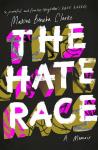
Maxine Beneba Clarke, The hate raceMaxine Beneba Clarke’s Stella Prize short-listed memoir, The hate race, is one powerful book. I’ve been reading about racism since my teens during the Civil Rights years, and have read many moving novels and memoirs. Clarke’s book holds its own in this company.

The book chronicles Clarke’s life from early childhood through to the end of high school, but she bookends this chronological story with a prologue and epilogue which are set later, during her son’s first year of school. This approach to structuring her story is effective, because it enables her to reflect on what’s changed a generation later. And the answer is, not much, which is such an indictment on Australian society.

Before saying more, though, I need to back-pedal a bit, and make sure you know who Clarke is – besides being the writer of a well-reviewed collection of short stories, Foreign soil. She’s the Australian-born daughter of West Indian-born parents who migrated to Australia from England in 1976. As a young girl she was mystified by people asking her where she was from, and confounded when these same questioners became angry when she responded, honestly, Australia. This is, I know, a common story, but is not, I think, well-documented in our literature. However, as Clarke would say, what’s a story for, if not to tell how it went.

And that’s what she does, tells us how it went – and went, and went. The bulk of the story is, as I’ve said, told chronologically but Clarke hangs each chapter, each step in her chronology, around a specific topic, such as her involvement in sport or debating, or that transition period between primary school and high school. She captures beautifully the trajectory of thirteen years of schooling from the early 1980s to the mid 1990s. Although everyone’s experience is different, much of what she describes is universal: the first day of school, the yearning for a specific toy (like a Cabbage Patch Kid), parties, first love, getting braces, and so on. What isn’t universal, though, is her experience of being a child of colour.

This is how …

Reading her story is gut-wrenching. She faces racism – direct and indirect, intended and unintended – from her first day of pre-school to the end of high school. One high school class-mate, who ranks the girls in the class (as if that’s an acceptable thing to do anyhow), doesn’t rank her at all “because animals didn’t count. Greg Adams said that would be bestiality”. She’s called every name you could possibly think of – and more you probably couldn’t. She’s spat at and threatened. Luckily, she has friends too – otherwise it’s hard to imagine how she could have survived.

The disappointing thing is the inept handling by the schools, because it’s clear that for all the work ostensibly being done in schools to promote tolerance and harmony, only some of it is getting through*. There’s only so much schools can do, of course, given students’ main role models are their parents, but the least teachers can do is take the racist behaviour seriously and respond in a meaningful and supportive way. This, however, is not always the case: “He’s trying to wind you up. It’s just a little bit of nonsense. Don’t give him the satisfaction, Maxine”, says one high school principal, for example. That’s not good enough. Writing about her early primary school years, Clarke says this:

I knew before I started big school that, for me, the playground would always be a battlefield: a world divided into allies and enemies. At five and a half, racism had already changed me.

After a while, you start to breathe it. Another kid’s parents stare over at our family on the first day of school with that look on their faces. You make a mental note to stay away from that kid … You tell a teacher someone is calling you names. Blackie. Monkey girl. Golliwog. The teacher stares at you, exasperated, as if to say: Do you really expect me to do something about it? The next time you have a grievance, you look for a different teacher. This is how it changes us. This is how we’re altered.

Towards the end of the book, her boyfriend asks her to come to his place to swim in his family’s pool. She’s uncertain:

I had no reason to believe Marcus’ family would have an issue with the two of us, based on what I knew of them, but I wasn’t sure I wanted to put myself through the stress of finding out.

This is how we edit our lives.

How we brace against the blows.

The book isn’t unmitigated misery. Clarke mixes up the tone, sometimes using humour to make her point – it never hurts, after all, to see the absurd side of things – but the book is a memoir, not an autobiography. This means that it is not about the whole life but a part of it, and in Clarke’s case the part that she wants to share, to expose, is her experience of racism while growing up. Her goal was not vindictive. She writes in her Acknowledgements that she loves Australia, but she wanted to show “the extreme toll that casual, overt and institutionalised racism can take: the way it erodes us all”. That, she certainly does.

There are things about the book that I could quibble about, but they are petty in the face of its overall power. I don’t like to describe books as “important” or to say that everyone must read them, but for a readable and devastating understanding of how racism, in all its guises, impacts on a personal, rather than a theoretical or historical level, The hate race is essential. It’s a story that needs, as indeed Clarke aimed, to be “written into Australian letters”. It deserves the accolades it has received.

Kim (Reading Matters) also admired this book.

aww2017 badge

Maxine Beneba Clarke
The hate race
Sydney: Hachette Australia, 2016
261pp.
ISBN: 9780733632280

* This is the 1980s and 1990s I know, but I use present tense here about schools because it’s pretty clear that not a lot has changed.

Maria Katsonis and Lee Kofman (eds), Rebellious daughters (Review)

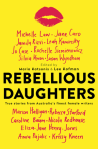
Maria Katsonis and Lee Kofman, Rebellious daughtersTo rebel or not to rebel, that is the question. At least, it’s the question that interested memoirists Maria Katsonis and Lee Kofman who, having written their own stories about “conservative upbringings and subsequent rebellions”, wanted to discover what other women could reveal about that “universal life experience”, the rebellion against parents. This book, Rebellious daughters, is, obviously, the end result – and it makes for fascinating reading.

In their Introduction, Katsonis and Kofman quote American author Gordon Lish’s statement that the  best thing writers can do is to get themselves “in trouble”, to “make it hot” for themselves. This is what they wanted from their contributors, they wanted them to take risks – and it’s what they got.

Like most anthologies, Rebellious daughters has been carefully ordered. It starts with one of the grand-dames of Australian literature, Marion Halligan (“The daughters of debate”) who describes herself as “well-behaved”, as the “good girl” that so many of the later contributors rebelled against. But this is not to say that she didn’t engage in her own little subversions, such as reading forbidden books. They didn’t do her any harm, she writes, “the delicate ones were my parents.” I related to Halligan’s story because, like her, I was the eldest, “the one who came before, who paved the way” and didn’t rebel dramatically. But, enough of that, I’m talking order, structure, here.

The book ends with author-journalist Jane Caro (“Where mothers stop and daughters start”) who shares her daughters’ rebellions, the loud in-your-face one and the withdraw-and-don’t-engage one. Her motherly perspective provides a satisfying, logical conclusion to the anthology. And then, right in the middle, the ninth story of seventeen, is author-publisher Rebecca Starford’s “Who owns my story”. Drawing on her own life and memoir, Starford grapples with the form, with the ethics and practice of memoir writing. I was intrigued by the placement of this contribution, but it’s clever. Having read eight already, I was ready to think about the issues Starford posed, and then, as I read the final eight, I had them in mind.

So, what are the issues? Starford starts by quoting author JP Dunleavy, who said that “The purpose of writing is to make your mother and father drop dead with shame”. Starford likes this quote because

it reveals, simply and with a degree of sharp comedy, the risky nature of memoir writing.

She touches on several issues. One is the idea of shame, and whether it is “an emotion women memoirists suffer from more acutely than our male counterparts.” She thinks it is, and wonders if this is due to girls being taught that they should never speak out. She also explores “a nagging moral quandary”, that is, “the right” to tell stories that involve others. It is, she admits, “the biggest ethical question a memoirist faces” particularly when the memoir portrays these others “in an unflattering light”. She discusses the option of writing the story as fiction. (But we all know cases where people “see” through that – or think they do – don’t we!) Anyhow, she says that she couldn’t choose the fiction option:

For me, the act of writing a memoir was important to the process. If I’d written my experiences as fiction, I would have been hiding behind the genre, and that would have been self-defeating, less courageous, and less honest.

This makes sense to me – and implies that many memoirs are a form of catharsis or, at least, of resolving one’s past. This seems to be the case for Starford who concludes that her memoir has resulted in improved communications with her father. And, she says, while her memoir might have seemed like rebellion to him, for her it was about “seeking to understand him and my mother” and how her experiences as a child had shaped her.

Starford’s analysis of the personal and ethical implications of writing memoirs provides a wonderful grounding for understanding of the other “stories”. There’s a lot of pain here, but there’s also humour, occasionally laugh-out-loud, more often wry. Lee Kofman’s story (“Me, mother and Sexpo”) about taking her conservative Hassidic mother to the Sexpo exhibition is hilarious, but is also a lesson in the assumptions we make – particularly about our parents. Michelle Law’s (“Joyride”), on the other hand, perfectly captures her pain of rebelling only to discover that she’d misread the feelings of the boy in question.

Not surprisingly many of the stories are about tension over boys and sex. Krissy Kneen (“Wundermärchen: A retelling of my grandmother”), whose Steeplechase I’ve reviewed, comes to realise in the end that instead of being the rebellious granddaughter she thought she was, she had taken on her grandmother’s mantle, she’d become a storyteller who likes to shock the innocent. It’s just that her grandmother used death, where she uses sex.  In “Resisting the nipple”, Rochelle Siemienowicz, whose memoir Fallen I’ve reviewed, tells of her struggle against the “good girl” expectations of her strict Seventh-day Adventist family and then of her complicated feelings, particularly regarding her mother, when becoming a mother herself.

In many of the stories, the youthful rebels are shocked to discover things aren’t as they thought they were or would be. Jamila Rizvi (“The good girl”) is confused when she realises that a girl (like her baby sister for example) could be not-good but liked. Jo Case (“Rebelling to conform”), in her desperation to be popular, starts to do poorly at school only to realise, later, that some of those popular girls she was trying to emulate got good grades. And Amra Pajalic (“Nervous breakdowns”) is frustrated by her out-of-touch migrant mother’s nervous breakdowns until she realises the cause is a mental illness.

Not all the rebellions in the book are against mothers – some are against fathers and grandmothers – and not all are resolved but, in most of the stories, age and experience eventually bring rapprochement. That doesn’t mean of course that the daughters capitulate. Rather, they come to understand their mothers (or whomever) a little more and their mothers likewise learn to accept the daughter they have. As Susan Wyndham (“A man of one’s own”) concludes

life is a long lesson and from this distance I prefer to look back with tenderness on those riotous years … And for both of us I say, no regrets.

And that seems the perfect point on which to end my post on this engaging, sometimes shocking, but thoroughly generous and warm-hearted book.

Note: A percentage from the book’s sales is going to the Women’s Legal Service Victoria.

aww2017-badgeMaria Katsonis and Lee Kofman (eds)
Rebellious daughters: True stories from Australia’s finest female writers
Edgecliff: Ventura Press, 2016
322pp.
ISBN: 9781925183528

(Review copy courtesy Ventura Press)

Georgia Blain: Births deaths marriages: True tales (Review)

Georgia Blain, Births deaths marriagesPoignant is a word I actively avoid in my review posts, as it’s such a review cliché, but sometimes a book really does call for it, and the late Georgia Blain’s essay-collection-cum-memoir, Births deaths marriages, is such a book. In the last essay, she talks of her mother, broadcaster, activist and non-fiction writer, Anne Deveson, trying her hand at fiction just as she, Blain, was trying non-fiction. She writes:

We had switched places, my mother and I. And we looked at each other. Both mothers. Both writers. Both trying on each other’s shoes, taking a few steps back, eyes on our feet, before we glanced across once again, curious as to how this had happened (“A room of one’s own (2)”)

The poignant thing, of course, is that these two who were so closely entwined in life, not just as mother-and-daughter but as writers, died within a few days of each other – with the sadly ironic twist that the daughter died first. It makes my heart break a little, something I wouldn’t have felt had I read it before these deaths. Such is the impact of context on our reading, eh?

Anyhow, onto the book. Births deaths marriages (the title has no separating commas) is the second memoir-in-essay-form that I’ve read this year, the first being Fiona Wright’s Small acts of disappearance. Both books follow a general chronological arc but the essay form makes it easy for this not to be strict, allowing the writers to follow tangential yet relevant threads. From here, though, the two “memoirs” depart, because the respective writers’ lives are very different. Wright, the younger writer, was writing primarily about her twenties and focused particularly on her experience of an eating disorder, while Blain was in her mid forties when writing hers. She was a published novelist and, significantly, had experienced a much more public life, not only because both her parents were public figures but also because of her mother’s own memoir, Tell me I’m here, about life with her schizophrenic son.

This book – with its intensely personal subject matter and its unusual form – offers rich opportunity for discussion. To do it justice, I’m going to have to narrow it, so I’m going to focus on form and style, but some content will push through along the way. The way I see it, there are two broad types of memoir, those which tell about lives most of us know little or nothing about (such as Frank McCourt’s Angela’s ashes, or, more obviously, celebrity memoirs) and those which are about lives much like ours. Georgia Blain’s falls into this latter category. For these ones to engage readers, they need to offer something illuminating about the lives we lead.

“the truth was a little more complex” (from “Getting in the boat”)

The first essay in Blain’s memoir is titled “A room of one’s own”. In it she reflects on her childhood, on how her mother would write about their family for newspaper columns and how reading these columns later, with their bland pictures that “did not accurately reflect who we were”, brought back the child she was, the child who wanted her family to be like the one in the columns, who thought all other families were like that and not like the messy reality she was experiencing. These bland columns are the antithesis of what Blain shares in her essays (and indeed of what Deveson herself shared in her memoir). It’s all about purpose I suppose. Newspaper columns tend to be more about entertainment – with perhaps some subtle messages about life – whilst memoirs, good ones anyhow, are about “truth”. If we don’t feel the memoirist is sharing the “truth” of her (or his) experience we are going to lose interest pretty quickly.

Blain convinces me that she is sharing her truths when, for example, she describes, in “The story my mother tells me” and “The outside country”, her fears about childbirth and her struggle to cope with the demands of motherhood. She exposes herself with soul-baring honesty when she shares her sense of disconnect, of being alone, of being “shattered” when her baby is born. She writes that she wanted to give her daughter “the place in my life that she needed and deserved, one that was without my terror and anxiety about loss of self” but it took several months for this to happen. She writes with similar honesty about her relationship with her husband Andrew. It takes some guts to write what she does.

In “Close to the bone”, Blain addresses more directly her writing life, and the difference between writing fiction, which she’d done until this book, and writing about herself, which she was now doing. Reflecting on her brother’s death, she says:

The complexity and rawness of an immediate response to pain is not easy to understand and recognise, let alone pin down in writing, in a photograph or in a film. The very act of capturing distorts. Once neatly contained, all that we felt is no longer unruly, unreasoned, immediate and wild. Perhaps this is why we hold these moments as truth. They cannot be replicated. Each time we try, we dilute their intensity, we confuse, holding up false images of this so-called truth that leave us reeling as we try to reconcile what we see encapsulated with what we have experienced.

Even her “truth”, the one she is writing, she sees, is not easy to grasp. She goes on:

I believed, and still do, that if I wrote about my own life and the lives of those I love, I had to tell the truth. But foolishly, I believed the truth lay only in the immediate…

These two excerpts reminded me of that David Hockney comment about happiness being a retrospective thing I wrote about recently, because I read them as her recognition that there are different truths – those immediate reactions and feelings, and those that come later. It’s this sort of reflection on “how” we live and interpret our lives which makes Births deaths marriages such a meaningful read.

I said that this memoir exemplifies the second type of my two simple categories, but I meant it when I defined them as being about “lives much like ours” because no life is the same. And so, Blain, like all of us, had her own set of challenges, including her control-freak, sometimes-violent father, and the tragic loss of her schizophrenic brother. One of the joys of her book lies in watching her explore and expose her own development, her learning not only to come to terms with these experiences in her life, but to use them to come to a more open, flexible way of understanding. She writes of “chasing absolutes”, of believing that “there was one truthful answer to every question” which she had to pin down, when in fact, as she learns, the truth lies in the “layers”.

In the end, there are no resolutions, she realises, but there are momentary happy endings along the way. She also realises that “writing about oneself” can “amount to more than a purely personal exercise”. It sure can, as she has proven here. This memoir is special – and not just because of the context in which I am reading it – but because it’s honest, because it doesn’t pretend to have it all sorted, because, in fact, it’s true – to her life and experience, and also to ours.

AWW Logo 2016Georgia Blain
Births deaths marriages: True tales
North Sydney: Vintage Books, 2008
ISBN: 9781742743981 (eBook)

Susan Varga, Heddy and me (Review)

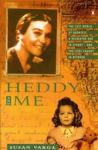
Susan Varga, Heddy and me Book cover

Penguin edition

Susan Varga’s biography-cum-memoir, Heddy and me, was first published back in 1994, so why am I reading it now? By a rather circuitous route, as it happens. Lesley Lebkowicz, whose The Petrov poems I’ve reviewed, read my post on Anna Rosner Blay’s Sister, sister, and suggested to Susan Varga that she might like to send me her book to review. Varga apparently liked the idea and consequently I received an email from her personal assistant offering it to me. I had heard of it, and am interested in the subject matter, so I said yes. That was, embarrassingly, over four months ago, for which I apologise, but eventually its time came and here, finally, is my review.

I’ll start with the judges’ comment when they chose the book to win the 1994 Christina Stead Award for Biography, Autobiography or Memoir*. They described it as “the front rank of autobiographical writing in this country”. That’s a big call but, having read it, I agree, because it is an engrossing book which intelligently negotiates two usually opposing forms, biography and autobiography/memoir. In it, Varga tells the story of her Hungarian Jewish mother Heddy – her life in Hungary, her experience of World War 2, and her subsequent emigration with her extended family to Australia. But, in telling this story, Varga, as the title conveys, also tells her own. She was born, mid-war, in 1943 and was just 5 when the family migrated. Hers was a complicated growing up in which she struggled to find self. She finally realised, late in her research, that she straddles two generations: the first (those who migrated) and the second (the children of those migrants).

Now, I can see why Lebkowicz thought I might be interested in this book, because both books involve a daughter not only telling the Holocaust-survival-and-migration story of a mother, but also working through her understanding of and relationship with that mother. Like Blay after her, Varga captured much of her mother’s story via tape recorder:

… the room itself is imposing, with its long oak table and chairs covered in embossed velvet. Imposing but not unfriendly, which is very much Mother’s style.

I switch on the tape-recorder. She talks, I listen. She [unlike Blay’s mother] doesn’t need much prompting; she’s telling me her life story, which she knows will be raw material for a book. In the past when people have said to her, ‘Heddy, you should tell your life story,’ she has said, ‘I’m waiting for Susan.’

I’ve told her it won’t be her life story, not properly. It will be filtered through my reactions and thoughts, my second generation eyes.

And Varga’s eyes are complicated, sometimes testy ones, as she strives to comprehend her strong-willed mother. So, like Blay’s book, Heddy and me is an amalgam of biography and autobiography, thereby neatly sidestepping David Marr’s injunction for biographers to get out of their story! Like Blay’s book, too, Heddy and me is a story of survival – of a peculiar combination of luck, resourcefulness and judgment – and it’s a story of the lasting impacts of the war. For both families, one of those impacts is an ongoing sense of fear:

… the fear of impermanence, the readiness to flee, takes the form, among others, of a deep conservatism running through the older generation, as if any change at all could result in their lives being uprooted again. They are over-protective, still prone to buy their children a diamond, something portable, just in case.

And we children feel a pervasive fear that we do not know how to express. Impermanence and insecurity lurk in the shadows behind this all-Australian red-brick security.

I found this analysis, this explanation of conservatism, enlightening – and helpful.

However, despite similarities with Blay’s book, Varga’s is different. For a start there are the obvious departures. Varga’s family is Hungarian to Blay’s Polish one, and Varga’s mother was married with a young child when the war started while Blay’s mother was still a teenager. Moreover, Varga’s mother managed to avoid, through various subterfuges, being sent to a concentration camp. She didn’t suffer the ghetto and concentration camp terrors and depredations of Blay’s mother, but Heddy and her colourful mother Kató, whose story is also told here, did suffer, including being raped multiple times by their Russian liberators. There are deeper differences too, speaking to the different psychologies of the two families, their individual wartime experiences, and how these subsequently played out in their post-war lives. And there’s the structure. Varga interweaves her own story and her reactions to her mother’s story within the one narrative flow, while Blay carefully differentiates her voice from her mother’s and aunt’s.

A particularly fascinating part of Varga’s book is the picture she paints of Hungarian society before, during and after the war. I learnt a lot, for example, about Budapest – its vibrant pre-war culture and life, albeit a life that, for its Jewish inhabitants, had its paradoxes. They lived, writes Varga, an outwardly normal life, “clinging to continuity while awaiting upheaval”. Varga chronicles the trajectory of anti-Semitism, from pre-war to the out-of-the-frying-pan-into-the-fire situation in which Hungary’s Jews found themselves post-war, when Nazism was replaced by Communism. Indeed, having survived the war, Heddy, Kató and family were prepared to stay in Budapest until it became clear to Heddy “that the noose was tightening again, like Hitler, except then it was against the Jews, now against everyone.” So, Heddy, ever attuned it seems to the political nuances around her, worked on her family until they agreed to move to “the New World”. Later, as part of research for her book, Varga returns to Hungary with her mother, and becomes aware of the increasing (or, really, continuing) anti-Semitism:

As I begin to grasp the subtleties of political life in the post-Communist world, I find it awful that the Jews should once again need friends and protectors, I think of 1943, when Hungary’s Jews still thought themselves safe because Kállay, or some other prominent politician, was their friend.

Once again, I am astonished, though I suppose by now I shouldn’t be, at how deeply anti-Semitism seems to run, particularly in Europe.

And here, I’m going to insert some personal connections with Varga’s story. I mentioned in my review of Sister, sister that I’d spent some time in my Sydney youth with Jewish people – eastern European Jews – who were business friends of my father’s. Blay’s and now Varga’s books consequently ring true for me, Varga’s particularly, because her parents did exactly what many of these people did – they set up business in the rag trade, and then handbags. I still have some handbags to prove it! But, my connections with Varga are more than this, because I went to the same high school she did, albeit a decade later. Unfortunately, Varga’s experience was not as positive as mine, partly due to her increasing sense of disconnection with her family and partly to the fact that by my time in the mid-to-late 1960s society was becoming less rigid (even in strict government girls’ schools). It was at that school that my understanding of civil rights – particularly, then, relating to racism and anti-Semitism – was honed. This is rather ironic given Varga found it “a school of endless strictures and platitudes”.

Anyhow, enough about me, and back to the book. Heddy and me was, I suspect, groundbreaking when it was first published, not so much for its portrayal of personal experience of the Holocaust, because such stories started appearing soon after the war, but for Varga’s intensely personal exploration of women’s experience and identity across three generations, before, during and after the war. Since then, similar stories have been written – Blay’s, for example, and another I’ve reviewed, Halina Rubin’s Journeys with my mother. However, these later books don’t minimise the power of Heddy and me, which not only illuminates the personal and familial costs of the Holocaust, but also provides an historical perspective on that mysterious thing we call human behaviour. This book deserves a continued life.

AWW Logo 2016Susan Varga
Heddy and me
Abbotsford: Bruce Sims Books, 2000 (2nd ed.; Orig. ed. Penguin, 1994)
304pp.
ISBN: 9780957780033

(Source: Susan Varga)

* Unfortunately FAW’s awards website only goes back to 1999. This comment is on the front cover of my edition, and is credited to “Christina Stead Award”.

Anna Rosner Blay, Sister, sister (Review)

BlaySisterHaleSome of the most vivid memories of my Sydney-based late teens and early twenties relate to spending time with Jewish people, business friends of my father. We went to parties in their homes, to weddings and bar mitzvahs. These were always happy, family-oriented occasions. I had crushes on the sons. I knew that most of these people had come to Australia after the war, had suffered during the war, many in concentration camps, but I knew little more than that. The war was back then and this was now. I have no idea what those sons knew or thought about their parents’ pasts. Anna Rosner Blay’s biography-cum-family-memoir, Sister, sister, has reminded me of those days and made me wonder, yet again, about the lives whose paths I so airily crossed.

Around that time, I also started reading “Holocaust literature”. I’ve read memoirs about surviving the war, including most recently Halina Rubin’s Journeys with my mother (my review), and novels about survival, such as Imre Kertèsz’s Fateless (my review), but Anna Rosner Blay’s Sister, sister adds new ground to my reading. Not only is it about two sisters, Polish Jews, who survived the war from the early restrictions, through ghetto, concentration camps, death marches and factories, to their eventual emigration to Australia, but it also exposes the longterm effects of Holocaust experiences, particularly on the next generation. It’s a moving book.

Three voices

Blay presents the story in three voices: those of her aunt Janka and mother Hela, and her own. Janka and Hela’s voices are clearly identified interview-style, while her voice is conveyed via italics without her name being appended. An interesting decision, but it works. Blay captured the sisters’ stories via tape-recorder and notebook, and then “transcribed and rearranged” them, primarily, I’m assuming, to get them into chronological order, given the stories came out in fits and starts, late in the sisters’ lives. Towards the end of the book Blay writes:

My mother’s accounts are often disjointed, abbreviated, shreds that veer away from the painful reality. But at other times they are laid out before me, complete and pulsating with life, precious jewels that I must handle very carefully.

She has, indeed, handled them (and her aunt’s) memories very carefully to produce a story that is horrifying, horrifying as a personal story, but also because it is clearly representative of a more universal experience of the millions of Jews who suffered under the Nazi regime, which just compounds the horror.

I’ll start with the universal. A survival story, Sister, sister describes the brutality, degradation and humiliation which the Germans visited upon the Jews during the war. You’ve heard the stories before, but, oh dear, to read yet again of the utter inhumanity is appalling. I couldn’t possibly quote the most brutal, so here’s a minor example. Both women ended up separately at Auschwitz. Both were stripped, shaved, sent into showers (that were – what a relief – real showers) – and then tossed random clothing and mismatched shoes. Hela received two left clogs causing blisters, while Janka’s pair comprised “one with a high heel and the other flat. I therefore walked with a limp.”

Surviving this war was, Janka tells, “a macabre game of chance”:

We hardly ever knew what would turn out to be good for us and what should be avoided, possibly by subterfuge. Sometimes being led to a train could mean being sent to a small camp with a factory, and easy work; other times it could mean being sent to death. Sometimes you could save your life just by lingering, which was dangerous in itself. There was no way of knowing how to survive …

And this brings me to the personal, because while the sisters’ experiences are universal, they are also deeply personal. One of the things that Blay does very well is capture Janka and Hela’s individual personalities. Janka tends to be more expansive, telling more stories in more detail. She is also “braver”. She lingers (drawing her sister or friends back) when she thinks to go forward means death; she lies about her skills when she thinks that will get her a better “job” and/or keep her with people she knows; she negotiates black market deals (to swap her mismatched shoes, for example); and so on. She identifies these, and other situations she survives, as “miracles”. The younger Hela – just 18 years old when the war ends – is, by her own admission, less brave, more fearful. She relies on her sister and later, a friend, to keep herself together when times get tough. She’s lucky to end up, towards the end of the war, as a Schindlerjuden, through her musician husband. But this is not to say she’s a wuss. She’s a hard worker, a skilled seamstress, and she survived. You had to be strong as well as lucky to survive. Janka, ten years Hela’s senior, says:

When we were girls Hela was like a flower that had opened too early, its fragile petals still crumpled and sheltered from the ways of the world. But she also had the strength to persist in harsh times, and to continue to flourish even in a storm.

Through directly presenting the sisters’ personal voices, Blay brings them alive as individuals in addition to representing them as survivors in general.

But, there’s a third prong to this story, the one that apparently forms the crux of Magda Szubanski’s recent memoir Reckoning. I’m talking the impact on the next generation. This is where Anna’s voice comes in. Again Blay handles this well, with Anna’s italicised reflections appearing intermittently in response to comments by one or other sister. Her voice is mostly gentle, without histrionics, but we are left in no doubt as to the longterm impact of the experience on the sisters and the way this has transmitted to the next generation. There are losses galore – losses of people and connections, for a start. Anna describes visiting a school friend who shows some of her “treasures” – a war medal, photos, some family jewellery. Anna writes:

She asks if I like the treasures; I nod, unable to speak. The tightness grows to a hollowness, an empty feeling that can’t be filled. The threads that link Linda to her past are strong, glowing. They are made manifest by the treasures before me, and I sense that it is not the objects themselves that have so taken my breath away. It is not their beauty or value that tugs at me, but the world of significant connections that surrounds them.

So, not only are there no grandparents, but there no objects to provide a link, a sense of history. Other losses are deeper, more psychological. Hela’s fear of hunger, of death, of fear itself, are also transmitted, sometimes subtly, sometimes not so, to her daughter:

My mother is always anxious at mealtimes. She coaxes me to eat more and checks how much I am putting in my mouth.

AND

I never trust strangers.

AND

My earliest nightmare is of a narrow cobblestoned lane. Fences on both sides crowd me in. As I walk along, alone, I realise I am being followed. An old man comes behind me with a sack, and grabs me …

Anna’s comments are not chronological, because they respond more organically to the sisters’ experiences, but together they convey how experiences – even when the telling of them has been withheld until late in life – carry through to the next generation. Anna’s stories, though, never overwhelm her aunt’s and mother’s because they are the main game. Anna sums it up best late in the book:

the enormity of the injustice and of the horror defies expression … [yet] … The power of the human spirit to survive, despite everything, is limitless.

Sister, sister was shortlisted for the Age Book of the Year Award and the New South Wales Premier’s Award in 1998. It’s not hard to see why.

Lisa (ANZLitLovers) also read and admired this book.

awwchallenge2016Anna Rosner Blay
Sister, sister
Alexandria: Hale & Iremonger, 1998
264pp.
ISBN: 9780868066479

(Review copy courtesy the author)

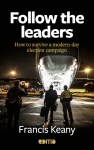
Francis Keany, Follow the leaders: How to survive a modern-day election campaign (Review)

Francis Keany, Follow the leadersI had a little laugh when I picked up Francis Keany’s book, Follow the leaders, about his experience as a journalist on the 2013 election campaign, because that very day our current leader Malcolm Turnbull formally announced the 2016 election. It’s all a game of course because we already knew when it was to be – the budget had been brought forward a week to accommodate the chosen date, after all – but the formalities had been held off until after said budget had been delivered. The fact that elections and electioneering are largely a game is one of the themes of Keany’s book.

Now, before I tell you more about this book, a little disclosure. Francis (or Frank) Keany is known to me. He has been my son’s friend since they met in high school in the mid-late 1990s. I’ve taken a particular interest, therefore, in following his journalistic career which has included stints in country New South Wales, Sydney and back in Canberra where we now hear his reports on ABC Radio. He’s a radio journalist, and during the 2013 election he was working for the Macquarie Radio Network.

Mr Gums and I went to the launch of the book and were interested to hear in the introductory comments by journalist James Massola that for all the books out there about politics, there are not very many about a journalist’s experience of an election campaign. He did mention one Australian book, Margo Kingston’s Off the rails about Pauline Hanson’s 1998 campaign, but this is not he said about the main campaign, the leaders. Keany’s book is particularly interesting, he continued, because it’s about modern campaigning in which social media is a significant component. As Keany writes:

the so-called 24-hour media cycle has added to the pace and tone of modern election campaigns. The mistakes that are made are amplified and exaggerated in a bid to meet the appetites of media consumers …

In this world, gaffes like Tony Abbott’s “suppository of all wisdom”, he writes, start trending immediately on Twitter. And then there are the interminable attempts by people to get selfies with the leaders, a “ridiculous aspect” of the campaign the journalists agree.

Keany’s book is not an analysis of or treatise about the process, he doesn’t have a theory to push, he simply shares the dogged day-to-day experience of being part of the press pack that accompanies the two leaders over the last 30-odd days of the campaign. Keany spent the first two weeks of the campaign following the Abbott (Leader of the Opposition) camp, and the last two weeks or so with the then Prime Minister Rudd’s camp.

I found it rather eye-opening. Of course, I’ve seen and read and heard the journalists reporting on campaign trails and I’ve comprehended that they travel in a bunch, but just how intense, not to mention exhausting, it all is, I hadn’t fully realised. Keany describes the experience of being herded onto military planes with their crude toilet facilities, of travelling on coaches, of visiting three states in a day, and of plans being changed suddenly. He describes donning hi-vis vests to traipse after a politician in a factory, sharing late night drinks with colleagues, and missing his partner Tess.

He is painfully honest about his personal experience of being a rookie campaign journalist, of the emotional toll of being separated from a partner when a little bit of support is just what you need, and of the physical toll wrought by the sheer exhaustion of the hours, not to mention by the poor nutrition as you eat on the run.  Here he is at Day 16:

The tiredness has set in like a staph infection – it has become incurable. No number of power naps or snoozes can shake off the dull feeling that’s filling my head.

I can’t think clearly – I’m starting to make too many mistakes.

While his prime focus is his experience, he does provide some insights into the campaign itself. He explains – though perhaps we all know this one – that “campaigns have never been just about policy. They are about public relations”. He watches the politicians interact with the public, hears them discuss strategies, and concludes that “I don’t think politicians give the average punter enough credit for their knowledge of the outside world.” He talks of the journalists’ awareness of panic in the Rudd camp with last minute schedule changes, press conference delays, and sudden policy announcements. We glimpse the machinery behind the leaders – how political minders try to control the message by, for example, withholding press releases until the last minute. How tricky it is, we see, for journalists to keep it all together. They have to physically keep up with the leaders, tease out the key issues from the spin and try to get their questions answered, and then find time to prepare and file their stories according to the needs of their bosses.

Next time I start to rail at a journalist’s gaffe, I’ll think first about the difficulties that can be involved in “filing” one’s reports while you are on the run, and risking missing the bus to the next venue!

Keany’s writing is clear and, appropriate to his aim, is informal and chatty in style. He has a sense of humour too, which is conveyed in frequent asides, such as his description of a hotel room which “looks like it was nice back when the Raiders last won a premiership”. Even if you don’t know when that last one was, which I don’t, you get his point. But, I can’t help commenting, pedant that I am, on a recurring and irritating grammar peccadillo. It’s to do with “who” versus “whom”, as in, for example, “a mysterious pilot who we hardly ever see”. Or, is this just another grammar nicety that’s going to bite the dust?

For all the stresses and challenges, Keany is clearly passionate about his career. He writes in his Introduction that he’s aware of debates about the value of the press gallery, but says:

I firmly believe that our political system is grounded in the participation of all Australians, and that the media has a significant role to play in ensuring as much transparency as possible in that system.

I think he’s right – and I also think he has done journalism a service by providing some behind-the-scenes insight into why the media may not always be perfect, while also demonstrating that in this age of spin and control journalists are needed more than ever.

Francis Keany
Follow the leaders: How to survive a modern-day election campaign
Braddon: Editia, 2016
153pp.
ISBN: 9781942189404

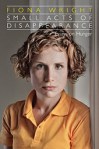
Fiona Wright, Small acts of disappearance (Review)

Fiona Wright, Small acts of disappearanceIt would be a rare person these days, from Western cultures anyhow, who didn’t have some brush with an eating disorder, whether through a friend, a family member, or personal experience. And yet it is one of our most misunderstood afflictions, which is where Fiona Wright’s Small acts of disappearance: Essays on hunger comes in. Wright, born in 1983, is a published poet. However, in her mid twenties, in her first hospital day program for her seriously low weight, she had to admit to herself that she was, indeed, one of “those women”, one of those women, that is, whom she’d always thought were “vain and selfish, shallow and somehow stupid”.

Now, many of you know that I am interested in form. Well, Small acts of disappearance is interesting in this regard. On the surface, it is what it says it is, a collection of essays, but it is also, in effect, a memoir of Wright’s experience of one of medicine’s most mystifying conditions, anorexia nervosa. There are ten essays, the title of each commencing with “in” as “In Colombo”, “In Hospital” and “In Hindsight”. This word “in” has a literal meaning, but its repetition also accentuates that she really is “in” something that she cannot, must not, distance herself from. While there is a loose sort of chronological drive to the essays, the first one, “In Colombo”, does not start at the beginning, not that there is, in these things, a clear beginning. She goes to Colombo as a newly graduated journalist in her early twenties, around three years after what she defines as the formal onset of her condition, but years before she commences any dedicated sort of treatment. It is in Colombo, however, when she thinks “things changed” and her “illness grew more complicated”, and so it is from here that she launches her set of essays exploring this “illness”.

There is, then, an idiosyncratic sort of chronology or narrative arc, which provides a structure for what is essentially a set of thematic essays. Linking them are some recurring threads, in addition to the condition itself of course. One of these relates to the paradoxical and perverse nature of the condition, and another to language. I’m going to be perverse and start with the second of these, language. Wright, being a writer, loves language, so as well as writing the book in her own gloriously clear and evocative language, she also shares the “new” language she learns. There’s the language of treatment (“In Increments”), for example, which she describes as “a jargon, that language that speaks only to the initiated, that carries with it its own definition of inclusion”, and the language of group therapy and recovery (“In Group”). She considers the implications of the language, of how it normalises the way the initiates communicate. Group language and behaviours, she explains, mean sufferers can identify each other, like it or not, outside treatment.

In my opening paragraph I suggested that anorexia nervosa is a misunderstood condition. Wright herself had believed that “those women” were vain and stupid. However, through years of treatment she comes to realise that the very opposite is true, that anorectics (her label) tend to be people (men and women) “who think too much and feel too keenly, who give too much to other people”. She says of the women she met in treatment that they were “some of the bravest but also most vulnerable that I had ever met”. The awful thing, the challenge for treatment, is the condition’s perverse and paradoxical nature. No matter which way you look at it, there’s likely to be a contradiction. Sufferers “fear death” and yet let their bodies destroy themselves; their desire for control often triggers the illness, but the illness, the hunger, wrests control from them and takes over; they want anonymity while their emaciated bodies draw attention to themselves; the pain of hunger numbs other pain; and, so on. Hunger, she writes, is addictive, heightening the senses, creating a feeling of “hyper-alertness”. It “feels so good” that “even now” on the road to recovery, she can miss it. Wright’s analysis of the psychology and pathology of eating disorders is clear and authentic.

While much of the book chronicles her personal experiences, Wright supports her impressions/findings with knowledge gleaned from reading and research. This gives the book a gravitas not usually found in the “sick-lit” (sub-)genre, to which this book may or may not belong, depending on the breadth of your definition. She describes the Minnesota Hunger Experiment, which was conducted during World War 2 on conscientious objectors to ascertain the physiological and psychological impacts of extended periods of starvation or malnutrition. She analyses fictional characters who exhibit disordered eating in novels by Christina Stead (For love alone), Tim Winton (Cloudstreet) and Carmel Bird (The Bluebird Cafe).

She also devotes an essay (“In miniature”) to miniatures, which themselves have a contradictory nature. They unsettle our perception, she writes, while also attracting us. So, she interrogates her love of miniatures from childhood, teasing out of this a pathology that desires to be small and that likes clear boundaries. She writes:

To be miniature, then, is to occupy space differently, and especially, pointedly, to have a different occupation of public space. We disturb it with our discrepancy, even as our smallness means that we occupy less of it. I think sometimes that the drive to hunger, the drive towards smallness, is about precisely this: we feel so uncertain, so anxious about our rightful place in the world, that we try to take up as little of it as possible. It is a drive to disappear that can only ever succeed in making us more prominent, more visible, because it makes us as different and offensive on the outside as we so often feel we are at heart.

And then, scarily, she describes how the crafting of miniatures takes “real skill, exceptional care, and time”. Oh dear. Hunger, she says, “narrows the world so minutely and completely” that it brings the world “back under our command”. But, “it is a false and contradictory kind of command … We possess the world, perhaps, but in the process we are dispossessed of our own selves.” It is a long way back, and as she makes clear in her book, she hasn’t yet quite worked out how to live “a full-sized life”.

I’ll close, logically, with her last essay “In Hindsight” which, in another structure, could have been the opening essay because in it she looks back, back, back to origins. In hindsight, she sees aspects of her childhood and adolescence that contained hints of what was to come. All along she’s told us that her disorder had a particular physical trigger when she was 19 years old, but here, in the last essay, she writes:

I’ve resisted telling this other story, I think, because I don’t want to hear it myself.

And then she exposes all those early signs, with such heart-breaking, self-exposing honesty. I’m not surprised Small acts of disappearance has made it to the Stella Prize shortlist. Wright offers us a clear-eyed, analytical but moving insider’s view of a devastating and still mystifying condition. It’s a gift of a book.

awwchallenge2016Fiona Wright
Small acts of disappearance: Essays on hunger
Artarmon: Giramondo, 2015
193pp.
ISBN: 9781922146939

Helen Macdonald, H is for hawk (Review)

Helen Macdonald, H is for hawkMy reading really has been rather odd lately. I’ve read a memoir about horse-racing (Gerald Murnane’s Something for the pain), a novel about hedge-funds and investment banking (Kate Jenning’s Moral hazard), and now a grief memoir focused on falconry (Helen Macdonald’s H is for hawk). None of these are topics I would naturally pick up, but in each case I’ve enjoyed being presented these very different worlds. H is for hawk, this post’s subject, is additionally interesting because it combines three different forms of writing – memoir, biography and nature writing.

T. H. White lecturing on his Arthurian fiction (Courtesy John J. Burns Library, Boston College, via Wikipedia CC BY 2.0).

TH White (Courtesy John J. Burns Library, Boston College, via Wikipedia CC BY 2.0).

As I don’t read reviews before I read books, I really didn’t know what I was getting in for, except that I understood it was about a woman managing her grief through raising a hawk. It is about this, but it is about so much more too, including being a sort of mini-biography of novelist TH White. You probably know White through his most famous works, The once and future king and The sword in the stone, but you may not know that he also wrote a book called Goshawk about the training of his goshawk called Gos. Imaginative name that! Macdonald was far more creative. She named hers Mabel! (She does explain this surprising tame-sounding name).

Many people have written about falconry over the years so why does Macdonald light on TH White? Well, it’s complicated. She had read Goshawk when she was a young girl, and hadn’t much liked it. However, she read it again and

saw more in it than bad falconry … White made it a metaphysical battle. Like Moby-Dick or The old man and the sea, The goshawk was a literary encounter between animal and man that reached back to Puritan traditions of spiritual contest …

White, you see, wrote it after he’d left his teaching post in 1936 to live in a workman’s cottage. He was fleeing a world in which he, a homosexual, didn’t fit, a world in which he had to live “in perpetual disguise”. Macdonald suddenly recognises a fellow-feeling, writing that

I felt, for the first time, that my urge to train a hawk was for reasons that weren’t entirely my own. Partly they were his.

Because MacDonald was training her hawk to escape her grief following the sudden death of her beloved father. She was, she writes, “running” like White. Both, we gradually learn, experience a sort of madness that they need to resolve and recover from.

And so the book progresses in fits and starts, but chronologically so, as Macdonald parallels the awful and sad story of White and Gos with hers and Mabel’s. It makes fascinating reading.

Now, this book has been out for well over a year. It won the Samuel Johnson Prize for Non-fiction (which our very own Anna Funder won for Stasiland) among other awards and shortlistings. It’s been comprehensively reviewed, I believe, so I fear reiterating what others have said before. Consequently, I’m just going to give a broad brush overview of my response to it (and follow up with a Delicious Descriptions post of some of its truly gorgeous nature writing).

To start with, I enjoyed it immensely. It fits into what we call literary or creative non-fiction. That is, it uses some novelistic techniques such as dialogue, poetic imagery and a narrative arc, but it is very definitely non-fiction. It contains a lot of fact about her life, and much research about falconry and TH White. And there are several pages of end-notes identifying sources of quotes, though these notes are not flagged in the text.

I was fascinated by her stories of falconry – her own and from the past – and I am always interested in the lives of writers. Macdonald is an historian by profession, and weaves history through the telling of her own experiences. Although as a child she had agreed with the general censure of White’s training of Gos, as an adult she is more sympathetic, empathising with White’s loneliness and understanding his lack of knowledge and experience. I must say that while I was intellectually interested in the falconry, I would be among those of her friends who find the idea “morally suspect”. It seems a cruel activity to me – and, in fact, cruelty is one of the many threads running through the book. White, who had been physically and emotionally abused as a child, was, apparently, a “sadomasochist”, though Macdonald argues that he consciously worked to keep that part of himself at bay.

This brings me to another aspect of the book I enjoyed – the way she weaves multiple ideas or themes through it. Freedom is one. Macdonald seeks it through her hawk:

The hawk was everything I wanted to be: solitary, self-possessed, free from grief, and numb to the hurts of human life.

Hawks seek it too, sometimes. Macdonald describes “bating”, in which a bird tries to fly from a fist or perch while still attached, as a “wild bid for freedom”. And White definitely seeks freedom. Macdonald frequently refers to his desire for it. She quotes his own writing:

A longing came to my mind, then, that I should be able to do this also. The word ‘feral’ had a kind of magical potency which allied itself with two other words, ‘ferocious’ and ‘free’ … To revert to a feral state I took a farm-labourer’s cottage …

Feral. This word conjures another theme, that of wildness. Both White and Macdonald revert to wildness in their own way – by training wild birds, and by withdrawing from society. Macdonald describes how she becomes, essentially, one with her hawk. She starts to think and see like a hawk, and is taken, she writes, “to the very edge of being human”. Eventually though, sense returns. She comes to understand that falconry is “a balancing act between wild and tame” – and not just for the hawk! She rejects American naturalist John Muir’s “earth hath no sorrows that earth cannot heal”, arguing instead that “the wild is not a panacea for the human soul.” All this makes me think that there’s a fourth form of writing that this book could fit into – the quest story – because it is, fundamentally, a quest for sanity and peace, for both Macdonald and White.

There are other ideas and themes, but I fear that my broad brush is starting to become a fine pen. I will write a little about nature and the environment in my Delicious Descriptions post, so will end my main analysis here.

I read this with my reading group. Some found Macdonald a little too self-obsessed for their liking. Why did the death of her father create such a schism in her soul? Why was she not able to see that her mother’s need, as the bereaved spouse, was surely greater? I wondered a little about this too, though it didn’t affect my appreciation of the book. The answer is, I suppose, that we are all different. For whatever reason – timing, perhaps, the quality of the father-daughter relationship, definitely – Macdonald’s father’s death knocked her for a six. Having accepted that as a given, I found H is for hawk a thoughtful, complex book that engaged me from the start.

This is a long post, I know, but I want to share one more thing. It occurs two-thirds of the way through the book, and, to me at least, shares one of life’s important lessons:

There is a time in life when you expect the world to be always full of new things. And then comes a day when you realise that is not how it will be at all. You see that life will become a thing made of holes. Absences. Losses. Things that were there and are no longer. And you realise, too, that you have to grow around and between the gaps, though you can put your hand out to where things were and feel that tense, shining dullness of the space where the memories are.

Helen Macdonald
H is for hawk
London: Vintage Books, 2014
300 pp.
ISBN: 9780099575450

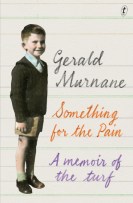
Gerald Murnane: Something for the pain: A memoir of the turf (Review)

Gerald Murnane, Something for the painWhen I heard Australian author Gerald Murnane had written a memoir, and even more when I heard its title, Something for the pain: A memoir of the turf, I knew I had to read it. I am not a horse racing tragic, by any stretch, but how could I resist such an intriguing sounding memoir from one of Australia’s most erudite, though too little read, contemporary authors? With such a title, the book sounded unlikely to be a typical chronological story of his life – and this suspicion was indeed borne out in the reading.

Something for the pain is a dry book – but I don’t mean dry in terms of boring. I mean dry in terms of containing a wicked, wry sense of humour. Murnane is deadpan straight, and yet he knows exactly what he is doing, what he is telling us about himself, as he discusses this horse or that, this trainer or that owner, these colours or that racecourse. I enjoyed The plains which I reviewed a few years ago, but this is something else altogether. Where that novel was somewhat obscure and challenging to nut out, reading this memoir is like listening to Murnane talking. You could almost think he is ingenuous, but …

Bernborough, c. 1945 (Presumed Public Domain, via Wikipedia)

Okay, so what do I mean by all this? Let’s see if I can explain it. The book is, in a very real sense, exactly what Murnane says it is. In other words, it is about horse racing and Murnane’s love of it. It has twenty-seven chapters, and pretty well every one is titled with a specific reference to the turf – usually a horse or a racing personality. The novel’s second chapter, titled “The Drunk in the Dance Hall”, refers to an actual dance hall drunk who gave his father a great racing tip, while the following chapter, “A Bernborough finish”, includes the name of a particular horse (Bernborough, of course). But, while the chapter titles refer to horse racing, and while every chapter tells us something (quite a bit in fact) about horse racing, or, more accurately, about Murnane’s experience of and feelings about horse racing, the chapters also convey information about him. I found it absolutely delicious to read.

“The Drunk in the Dance Hall” starts, for example, with “I could never learn to dance”. We learn a little about his experience of dancing and something also of early to mid-twentieth century dance hall culture  – as well as the story of the aforementioned racing tip and its result. Even more interesting, though, is the next chapter about Bernborough. It starts with:

I was never one for hanging pictures or sticking up posters or postcards. I’ve always preferred to be surrounded by bare, plain surfaces and to have my desk facing a wall rather than a window.

However, in 1982, he tells us, when he was lecturing at a college of advanced education, he found a display board above his desk. Uncharacteristically – for him – he decided to stick up some pictures. There was space, he explains, for thirty to forty postcard-sized pictures, but he stuck up just three, neatly grouped together, surrounded by much bare space:

The first two were portraits: one of Emily Brontë and the other of Marcel Proust. The third was actually two linked scenes, the first showing a field of horses nearing the straight, and the second showing the winner of the race and his nearest rivals as they reached the winning post.

You can just see it, can’t you, the surprise of his colleagues and students when confronted by this. He continues, a couple more pages in:

During those years, I sometimes sensed that some or other visitor to my room was puzzled by the odd little group of images huddled together on the otherwise bare wall. To the few who enquired I was pleased to explain that the young woman from Victorian England, the eccentric Frenchman, and the bay stallion from Queensland were equally prominent figures in my private mythology and continued to enrich my life equally.

I mean, honestly, how can you not love that! He says no more, however, on this, following it instead with the story of Bernborough and how the term “Bernborough finish” was born. He concludes on his orchestrating his own Bernborogh performance. The next chapter (no. 4) whizzes back to the 1940s, Murnane being born in 1939, and some childhood memories – which of course include racing stories.

And so, in this lurching backwards-forwards way, Murnane tells us much about the history of Australian horse racing – about owners and trainers, and betting, and specific horses – which I found interesting in an arcane sort of way. Along the way, though, we also learn a lot about him, things that provide much insight into his work and what drives him. We discover his love of maps but hatred of travel, his favourite landscape, his love of names and colours, his preference for the spiritual over the material, his enjoyment of beer and his meticulous creation of personal archives, his discomfort with any sort of pretension or self-consciousness, and last, but by no means least, his vivid imagination. We discover his cheeky sense of humour. The way chapters are framed or introduced versus the content that follows is a good example. Take Chapter 10 in which he discusses psychoanalysis, religion and betting systems. It might just be my warped sense of humour, but the juxtaposition of these made me laugh. And we do learn some facts about his life – his various jobs, his parents and his uncle Louis, and his wife. What he doesn’t do is discuss his writing in any depth, though he frequently mentions his (autobiographical) first novel, Tamarisk Row, which makes many references to racing, and he does occasionally talk a little about his views on writing.

I’m going to leave it here, not because I have nothing more to say, but because I want to pick up one or two issues – relating to his writing – separately in a Delicious Descriptions. So, I will end with one little anecdote. Around halfway through the book, he discusses his search for his own racing colours and design. He has settled, he informs us, on some combination of brown and lilac but just cannot decide on a design. He writes:

I described the task as serious, and I do take it seriously. I’ve devoted myself to horse racing as others sorts of person devote themselves to religious or political or cultural enterprises, although I hope I can still make a joke at my own expense. I read once that certain musical compositions (by Bach? by Beethoven? I forget) sounded like the efforts of the human soul to explain itself to God. If ever I find my perfect combination of brown and lilac, I’ll feel as though I’ve thus explained myself. But I seem destined to never find my perfect set of colours. Is this because I’ve deluded myself for most of my life? Are racing colours not so eloquent as I’ve always believed? Or, is my soul too much of a mess for explanation?

Not likely, I’d say. Murnane is one very intelligent man – and his memoir is well worth reading. Don’t be put off by the stated subject matter. The turf does infuse it all, fascinatingly so, but it’s the mind behind it that shines through.

Lisa at ANZLitLovers also reviewed this book recently.

Gerald Murane
Something for the pain: A memoir of the turf
Melbourne: Text Publishing, 2015
251pp.
ISBN: 9781925240375

(Review copy courtesy Text Publishing)

Halina Rubin, Journeys with my mother (Review)

Halina Rubin, Journeys with my motherI’ve read a lot of World War 2 literature over the years, but very little from the Polish point of view, so I was more than willing to read Halina Rubin’s Journeys with my mother when it was offered to me a few months ago. Rubin was born in Warsaw on 27 August 1939. Note the date: her mother, Ola, was still recovering in hospital when Germany invaded Poland a few days later. Within two months, her parents, secular Jews, had fled to the Soviet Union, and this is where the young Halinka and her mother saw out the war. It’s a fascinating story – and it’s told in a thoughtful way.

Rubin divides her story into two parts. Part 1 is mainly background. It provide some family history about her parents, Ola and Władek, and their parents before she was born, but it also describes the depth of anti-Semitism with which they lived, long before the war started. It tells how her parents were radicalised early, how for them “the ideals of communism offered a way to solve the twin problems of unemployment and poverty, and put an end to racial hatred”. Oh, such idealism … but her parents, despite experiencing political betrayal, never fully lost their values and commitment to social causes.

Anyhow, part 2, which conveniently aligns with the start of the war, tells the story of her nuclear family after she was born. “I try to imagine” she writes of those opening days of the war, “how abruptly, how without mercy, their world changed”. She describes how, with their faith in the Soviet Union, her parents fled to Białystok, once a Polish town but now under Soviet control, while other members of the family made different decisions or timed their flight decisions differently, with, in most cases, tragic consequences.

Halina and her family lived there for nearly two years, Ola working as a nurse, until Germany betrayed the Soviet, invaded – and the atrocities began. So, they fled again, heading further east for Russia itself. Władek was taken to join the Red Army, but Ola and Halina made it to Oryol where Ola worked again as a nurse. Later, mother and daughter, who were evacuated under German orders from Oryol, went to Lida in Belarus, and from there they escaped into the forests where they joined the partisans – because, remember, Ola was a committed communist. It’s astonishing, really, that Ola and her oh-so-young daughter survived the threats and privations of such a life, but survive they did:

Around us was a forest so dense that even wild animals – boars, deer and wolves – chose to follow the same known tracks. The myriad of lakes made the terrain marshy.

Only the locals knew how to get their bearings, how to keep away from the swamps ready to swallow you up; how to keep the wolves away. It was a perfect place to hide, but tough to survive.

They were wet, cold, and desperately hungry. A truly amazing story of survival against a backdrop of egregious political treachery.

Journeys with my mother doesn’t end with the war, however, but follows her parents as they return to Poland, then move to Israel, and finally, after her father’s death, her mother’s move to join her in Australia. Rubin describes the early days of peace – the adjustments that had to be made as people separated from war-time friends and connections, and reunited, if they were lucky, with family members; the impact of political decisions being made about governance and borders; and, shockingly, the continuing anti-Semitism. She asks:

Who could have predicted that peacetime would be so difficult?

Although a very different book about a different war, this reminded me of Olivera Simić’s book Surviving peace which I reviewed a year or so ago.

But I’ll leave the story here – to move onto the telling.

I’ve categorised this as an autobiography or memoir but it could also be described as biography, since Rubin’s prime focus is the life of her parents. And that required research, as she didn’t manage to capture all she could before they died. This is partly because she didn’t start thinking about (aka wasn’t very interested in) documenting her parents’ lives until after her father had died, by which time her mother was old, but also because the story was so stressful that her mother found it hard to tell. Rubin writes:

As always, whenever remembering her parents or sisters or the years of the war, eventually her voice would turn into a whisper and tears would well up her eyes. In the very last tape, I hear her say, ‘That’s enough, I cannot go on.’ The tape is still recording when I say, ‘Let’s have tea.’ The conversation was never resumed. I did not have the heart to put her through that ordeal again.

Rubin had done this taping before her mother’s death in 2001, but it was not until some years later, with the encouragement of her daughter, that she delved into “two boxes filled with papers, photographs, letters, notebooks and correspondence”. These plus her mother’s stories got her going, but there were gaps, so she travelled back to the places they’d lived, talked to old friends and a surviving cousin, trying to complete the story. She reports this directly and consciously in the book, switching between describing her fact-finding trips (revisiting places, meeting people) and recounting her and her parents’ lives in the places she visits. In other words, she takes us on her research journey – and I like that. It does give the story a disjointedness that might irritate some readers, but for me it adds to the interest and, yes, authenticity.

Like all such research, there are serendipitous finds and wonderful coincidences. One such occurs during a meeting with Valerii Slivkin from a museum in Lida. He shows her a document written by partisans after the war. They mention “the presence of ‘a four-year-old-girl'”. That girl of course was her! Earlier in the book, during one of her discussions of her mother’s stories, she says:

My mother was my first, albeit sketchy, narrator. When talking about the past she would get distressed so her storytelling could be convoluted, meandering around events, places, people. And I had not been a good listener. Perturbed, intent on not missing as much as my mother’s sigh, I could hardly concentrate. Later, however, I would discover how clearly she, in fact, remembered the events of the past.

Slivkin is one of those whose information confirms “how accurate she was”.

However, Rubin is also realistic about the limits of what you can know or discover. Looking at photo of her aunt who died early in the war, she wonders about the story behind the photo:

Ewa looks pregnant. I wonder if this is another family secret or simply a never told story. And if the complexities of our lives are at times impossible to unravel, how much more impossible are the events of the past. Nothing is certain.

It sure isn’t. But that doesn’t mean you shouldn’t look for the certainties – and Rubin, in this book, has given it a red hot go.

Lisa (ANZLitLovers) also enjoyed the book.

awwchallenge2016Halina Rubin
Journeys with my mother
Melbourne: Hybrid Publishers, 2015
251pp.
ISBN: 9781925272093

(Review copy courtesy Hybrid Publishers)