Rick Morton, One hundred years of dirt (#BookReview)

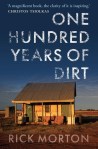
Book coverWay back in the early 1970s when I was an undergraduate university student, I did some sociology, and one of our set books was The myth of equality by Tom Roper. It, and the courses around it, have informed ever since my understanding of how our society operates. Morton’s book One hundred years of dirt would have been perfect recommended reading for these studies. At the end of his first chapter he says this:
the single experience of my sister’s road to this point detonates the argument that equality of opportunity is stitched into our nationhood.

One hundred years of dirt, in other words, is not a simple memoir, as it might initially appear, but is, rather, a cry to Australians to see that the ideas, the myths we hold dear, are just that, myths.

But now, back to the beginning. Rick Morton, a thirty-something journalist, grew up tough. Born on a remote outback cattle station to a family of violent men, he experienced more than his share of trauma. Besides the intergenerational violence, he saw, when he was 7 years old, his older brother nearly burn to death and then, while his mother was away with that brother in hospital, saw his father carry on an affair with the governess. Not surprisingly, this caused a family breakdown, resulting in his mother leaving with her three children and no financial support. Poverty was theirs from then on. Morton speaks eloquently of the struggle to make ends meet, making it clear that families like theirs have no time to consider issues of the day, like climate change, when even a mooted $7 Medicare co-payment “could be the difference between eating or not for a person on the poverty line.”

Time, in fact, is an interesting issue – and one that resonated with me, too, as a feminist. Time is a commodity and how we choose to spend it – or are able to spend it – is political. Like hours at the hairdresser for example. (I know I am treading on sensitive toes here, but so be it.) Anyhow, as Morton says, “only some people have the time” to be “woke”. Just “living for so many people in Australia is exhausting“.

So, on the surface, One hundred years of dirt could be seen as your standard misery memoir: Boy from poor and violent background struggles against the odds to make it good as a journalist and successful author, with the help of a loving mother. It is that, superficially, but it’s much more too.

There is a general chronological movement to the story. It starts in the present, when that point quoted above about “equality of opportunity” is made. It then flashes back to the family’s origins on huge cattle properties in southwest Queensland, focusing particularly on grandfather George Morton and his hard, violent ways. From here, Morton moves more or less chronologically through his life, but each chapter is framed around a theme, so the chronology is not exact. The chapters, in fact, could be read as individual essays on their specific topic, such as drug (ice) addiction, mental health, being gay, class, and otherness or outsiderness. For some readers – as some in my bookgroup found I think – this departure from a more typical narrative flow may make the book feel disjointed. However, for me, the clear heralding in the first chapter that One hundred years of dirt was about more than one life had me engaged and ready, perhaps, for anything!

That anything turned out to be a personal exploration of how inequality plays out in contemporary Australia, supported by smatterings of socioeconomic data. Morton is, after all, a journalist, and so he brings his journalistic nose for facts to bear on his and his family’s personal experiences. In doing so, he provides example after example of how out of touch the knowledge class or “commentariat” is with the lives of those at the bottom end of the income stream. He discusses, for example, unpaid internships and the incomprehension that there are people who just can’t afford to take advantage of them. Journalism, which is rife with unpaid internships as a pathway in, has become one of “the most exclusive middle-class professions of the 21st century”. Morton describes the complete ignorance many in the middle-class have about their privilege:

There are those who have had the good fortune to never have felt other than the silkiness of privilege, their bubbles so perfect they cannot feel the gravel underneath.

He also writes:

As a nation, we have convinced ourselves that all of us has the same standing start, but this is neither true for the working class whites from broken families nor for those with black or brown skin. It’s not true for those without a proper education nor for those who were abused.

However, this book is not just bitter medicine. It has a spoonful of sugar. There are some genuinely funny moments – some of them black of course – and there are Morton’s wonderful turns of phrase which illustrate his meaning beautifully. He talks, for example, about working in a workplace surrounded by colleagues from “moderately wealthy and upper class families”:

… my colleagues [whom he did see as “dear friends”] could not fathom the life I had led. There were frequent attempts at empathy but it sounded a lot like people who were reading pre-prepared lines. Imagine a fish turning up to discover her psychologist is a Very Concerned sea eagle.

Love the fish analogy, but ouch, really, ouch! I feel I have a good understanding of inequality of opportunity and the ways in which it underpins disadvantage in Australia, but finding the right language in face-to-face encounters is not easy.

I have probably made this book sound like a sociological thesis or polemic. There is that, but it is still, at heart, a memoir. It’s simply that I have focused on what I see as the book’s main message. However, this message is wrapped up in a story about human beings, and particularly about Rick and his dearly loved mother Deb. He describes her as “the hero of this piece”, the mother who

sees boy as special, tells him he was sent here from that big night sky by beings unknown to report back on what he sees. She invented the aliens because she couldn’t see herself as the protagonist. She outsourced the explanation for her own success as a mother to the aliens out there.

Lovely Deb; thoughtful, provocative Rick. This is a powerful read.

Rick Morton
One hundred years of dirt
Carlton: Melbourne University Press, 2018
191pp.
ISBN: 9780522873153

Anna Goldsworthy, Piano lessons (#BookReview)

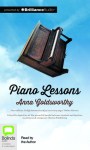
Book coverEver since Anna Goldsworthy’s memoir, Piano lessons, was published, I’ve hankered to read it, but somehow never got around to acquiring a copy. So, when I was casting around for our next road trip audiobook and this one popped up serendipitously in Borrowbox, I grabbed the opportunity.
Now, I have to admit that although I did play drums and fife, briefly, in a primary school band, I have never had formal music lessons. Ballet was my thing as a child. However, Mr Gums learnt piano to Grade 7, and I sat in on our kids’ music lessons, especially their piano ones, for years. I loved it, because I learnt so much about music (and music teachers) as a result. I was consequently primed for this book about the author’s piano lessons and her relationship with her Russian-born piano teacher, Mrs Sivan. Being on the Liszt List, that is, someone whose student-teacher lineage reaches back to Liszt, Mrs Sivan initially comes across as formidable, but very soon her warmth and generosity come to the fore.

Essentially, this memoir is a coming-of-age story. It covers Goldsworthy’s life – specifically her piano-playing life – from the age of nine until her mid-late twenties. It is not, however, the traditional coming-of-age story, but her coming-of-age as a musician and, along the way, as a wiser more rounded person. We see Anna coping with the humiliation of failure, when she gets a C in an important piano exam having been used to always getting As. We see the point at which she realises that, if she is to achieve her concert pianist dream, practising for barely two hours a day is not going to cut it. We see the naiveté of a young woman who, not prepared for a journalist’s questions, manages to hurt the people closest to her, learning, in the process, the importance of “humility and gratitude”. And, we see the brilliant pianist and school dux learning that a “perfect score” is “not proof against disaster”.

But, we also hear the wisdom of her piano teacher who doesn’t just teach her the techniques of playing piano, but also the meaning of music, the value and role of the arts and, more, a deeply humane philosophy of life, one that recognises, for example, the value of competition for learning but not for measuring one’s achievement or worth. Indeed, she tells Anna that she is “not teaching piano playing”, she is “teaching philosophy”. It is some years, of course, before Anna stops seeing piano playing as “obstacle courses for fingers” but as something you feel and express.

Goldsworthy describes this piano teacher, Mrs Sivan, as “less a character than a force”, and she conveys this sense largely through reproducing her teacher’s rapid-fire broken English. This might have been worked well in text, but in the audiobook – which was read by Goldsworthy herself – it was frequently difficult to listen to and was sometimes so fast that we missed words. Unfortunately, I don’t have the text to give you an example, but I found one tiny quote on GoodReads. Here is Mrs Sivan telling student Anna about Chopin:

I tell you a secret about Chopin, piano is his best friend. More. He tells piano all his secrets.

Mrs Sivan preceded this by saying that George Sand was not Chopin’s great love, the piano was! One of the real pleasures of this book is the insight provided into several musicians, particularly Bach, Mozart and Chopin, but also Beethoven, Shostakovich and others. Mrs Sivan knows them and their music so well, and impresses upon Anna that musicians must understand the composer and their lives to understand their music. Mozart, for example, “was born with happy of everything”.  I found her adamance about this interesting, because, in the literary arts, there are those who argue that the author’s life is irrelevant and should not be considered at all. I think there’s a place for it.

Piano lessons is not a long book – just 240 pages or so – but the writing and the structuring of the story are so tight that Goldsworthy conveys this coming-of-age to some depth despite the book’s brevity. She does this by never labouring her points, by knowing which stories to tell and how much to tell of them, and by imbuing it all with a light touch. Sometimes you think you are left hanging – “did she win that audition?” – but the answer always comes directly or indirectly a little later.

There is more to this book about music and musicians, about fostering talent, about forging a meaningful life as a musician, and about teaching being “the highest calling”, but not having it on hand, I’ll close here by sharing Mrs Sivan’s words about the arts. She told Goldsworthy that the arts must be “aesthetically and ethically grounded” and that they embody “unlimited flying of imagination”. I like both of these ideas – particularly that about the arts needing to be both aesthetic and ethical. In one sense, I don’t like to think that the arts “should” be anything, but I also believe that being ethical about what we do – whatever that is – is important. I think I would have liked Mrs Sivan.

Lisa also (ANZLitLovers) loved this book.

Challenge logoAnna Goldsworthy
Piano lessons (Audio)
(Read by Anna Goldsworthy)
Bolinda Audio, 2015 (Orig. pub. 2009)
2:23 e-audiobook (Unabridged)
ISBN: 9781489020260

Ruth Park and D’Arcy Niland, The drums go bang! (#BookReview)

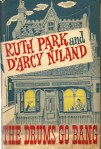
Book coverVolume 1 of Ruth Park’s autobiography, A fence around the cuckoo, covers the period of her life up to when she lands in Australia to marry D’Arcy Niland. Not being sure, perhaps, that there’d be a sequel, Park concludes with:
We lived together for twenty-five years less five weeks. We had many fiery disagreements but no quarrels, a great deal of shared and companionable literary work, and much love and constancy. Most of all I like to remember laughter.

That autobiography was published in 1992. The drums go bang, written collaboratively by Park and Niland, was published in 1956 and covers the first five or so of these years to just after the publication in 1947 of The harp in the south.

The first thing that struck me was its point of view: it slips astonishingly between third person and first person plural, sometimes in the middle of a paragraph. And then the penny dropped, its collaborative nature. When they are talking about one of them, Tiger (Ruth’s nickname) or Evans (D’Arcy’s), third person is used, but when they are talking about them together, first person plural is used. Here is an example about their delayed honeymoon:

We didn’t mind the delay. Tiger was crazy to see Sydney, and besides she wasn’t too keen on going away to the Blue Mountains with a strange man. While Evans was away at the Railway she went around the city on her own …

Once you work out what’s going on, it works very well. However, to understand this particular paragraph, and the “strange man” comment you’ll need to read their story for yourself, as I want to move on to other things. Suffice it to say that this comment, while containing an element of truth, given the way their relationship developed, is also an example of their light, self-deprecating humour. As Park said in her autobiography, “most of all I like to remember laughter”.

The drums go bang is a short and often funny book, but it manages to cover a lot, including their struggles to find accommodation in 1940s Sydney when accommodation was scarce, their decision to go freelance and the resultant struggle to survive, their work in the outback, two pregnancies, their lives in Surry Hills and other Sydney suburbs, and their relationships with a wonderful cast of characters. The aspects which interested me most were of course Surry Hills, because it inspired The harp in the south, the writing life, and the writing itself, which provides such an insight into their skills.

Although they tell it with such humour, Park and Niland are very clear about how difficult the freelance life is. For most of the five years covered by the book they live a hand-to-mouth existence, experiencing poverty at close hand. However, there’s also good advice here for would-be writers. For example, early in the book, Tiger expresses frustration at Evans’s belief that a good story will sell regardless, but even this is told with humour:

He was convinced that if the story were good it must sell. He bailed up an amiable Salvation Army major and tried to persuade him that “The Other Side of Love” was just what was needed for the War Cry. He submitted “The Menace of Money” to the Business Man’s Monthly, and a sentimental animal story to the house magazine at the Abattoirs.

They share their Minor Carta, their manifesto for writers who wish to make a living writing. Its eight articles include some hard learnt truths, such as that you have to “write anything and everything”, you cannot afford to be “snobbish” about your art, and you can’t let rejection slips get you down. They talk about the variability of payment systems for freelance work, unscrupulous writing schools, and the importance of marketing, of needing to “shape it to fit”. They write articles, songs, short stories, radio plays, children’s radio, comedy sketches, and more – anything that might bring in a cheque (and they do it sharing one old typewriter.)

I’d love to share more about their lives, and particularly the characters in it, like Evans’ brother Young Gus, the generous freelance publisher Mr Virtue, and colourful relations like Aunt Nibblestones and Uncle Looshus, but I want to get onto something that is most relevant to Bill’s AWW Gen 3 Week, their time in Surry Hills and how it inspired The harp in the south. Initially scared by “the place, with its brawling, shrieking life”, abusive drunks and fighting prostitutes, Park started to adapt, and

… began to study the people for what they were, and not what they did. Their true kindness, their generosity and charity filled her with shame. They were so much more genuinely loveable than she had given them credit for being, and she began to understand how the incredible congestion of their lives, the rabbit-warren houses, the inescapable dirt of an area which is built around the big factory chimneys all contributed to their innately lawless, conventionless attitude towards life. She began to understand that in such a place dirt ceases to become important, morals are often impracticable, and privacy is an impossibility.

As it turned out, though, The harp in the south was written, almost, you could say, accidentally. In New Zealand for some needed R&R after the birth of their second child, they are sent a clipping by Uncle Looshus which announces a Sydney Morning Herald competition for a novel, short story and poem. Park tries to convince Niland to write a novel but he refuses, saying he only writes short stories, and tells her to have a go. So, she does, and of course Surry Hills is her inspiration:

… she felt she understood them. She certainly liked them, mostly because in the midst of all their dirt and poverty and fecklessness they contrived to be happy.

She wrote down a sentence that seemed to sum up their philosophy: “I was thinking of how lucky we are”.

That sentence, the last line in the book, was the key that opened the door. From then on the story grew by itself.

This book, published serially in 1947 to both acclaim and vituperation, has become a classic of Australian social realism, albeit, as Paul Genoni says, “tempered with romanticism”. The same could be said of this delightful memoir.

Challenge logoRuth Park and D’Arcy Niland
The drums go bang!
Illustrated by Phil Taylor
Sydney: Angus and Robertson, 1956
195pp.
ISBN: None

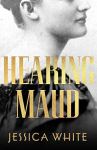
Jessica White, Hearing Maud (#BookReview)

Book coverHybrid memoir-biographies take many forms. For a start, some are weighted more to biography while others more to memoir. As I wrote in my post on Jessica White’s conversation with Inga Simpson, most of those I’ve read “have been mother-daughter stories, the biography being about the mother and the memoir, the daughter. White’s book is different. The biographical subject is Maud, the deaf daughter of the late nineteenth-early twentieth century writer Rosa Praed (1851-1935)”. However, Bill (The Australian Legend) responded in the comments that “I’m pretty sure Hearing Maud is another mother/ daughter memoir. On two levels”. In a sense he’s right.
I say “in a sense” because Maud is not White’s mother. However, two mother-daughter threads do run through the book, Maud and her author mother Rosa, and Jessica and her mother. But, unlike those more direct mother-daughter memoirs in which the daughter focuses on the mother’s story while also throwing some light on her own life, in White’s book the two mother-daughter stories work in some way as foils for each other, but, more significantly, the focus is on the two daughters’ lives. As with most memoirs – hybrid or otherwise – there is a larger intent behind Hearing Maud than simply telling the story of a life or lives. It involves exploring deafness.

As I reported in the conversation post, White talked about “coming out” as a deaf person. I wrote how “living in the country amongst a large extended family, she’d been, essentially, sheltered from fully experiencing her deafness”. This resulted in her growing up as “a hearing person” albeit a “bad” one! It wasn’t until she was in her 30s that she started to think about herself as deaf, and to understand its impact on her life, particularly in her longstanding sense of loneliness and isolation.

Before, however, you start suspecting that this is going to be another misery memoir, let me get to the book. It starts with a Prologue, in which White tells us how she lost most of her hearing around the age of four, due to meningitis (or, more accurately, the treatment for it.) She then says, and it is this idea that underpins her story:

My life came to be defined by what the ancient Greeks termed a pharmakon, that which is a poison and a cure.

She goes on to say that the way the pendulum swings, between these two, depends on the time and culture in which the deaf person lives. For Maud, deafness was “a bane”. It led to her being committed to an asylum at the age of 28 and being left there until she died 39 years later. For White, on the other hand, it led to her becoming a reader and then a writer, because these “assuaged my persistent loneliness and gave me a sense of purpose”. What White goes on to do in her book is provide a mini-history of attitudes to deafness and deaf people over the last century and a half, exploring the ways in which both personal (including family) circumstances and social attitudes and policies can deeply affect the course of a deaf person’s life. Of course, life is a lottery for all of us – we are all affected by time and place, family and culture – but for those with a disability, there are additional layers that further reduce their control over their outcomes. (Interestingly, probably because of when she was born, White doesn’t discuss the whole nomenclature issue. In the early 1980s, for example, it was not acceptable to call people “deaf”, they were “hearing impaired”.)

Now though, I want to talk a bit about the writing. Hearing Maud is White’s third book (I’ve reviewed her second, Entitlement), and it shows. It shows in the novelistic language that brings life to the story. It’s never overdone, but there are scattered images that beautifully convey her feelings, such as this comment after her first real conversation with another deaf person, when she was 32:

Once again I have the sense of something settling into place, like a bird alighting in a tree, its wings relaxing. When I say goodbye and walk back past the sandstone buildings to the bus stop by the lakes, my step is buoyant.

You can feel the emotional release, can’t you.

It also shows in the confident handling of the multiple storylines – hers, and Maud and her mother Rosa’s stories. The stories are told generally chronologically but are interwoven with each other, so we start with White’s childhood ending a little before this book is completed, and similarly we move through Maud’s life. However, there are some backwards movements when something in the life of one raises an issue in the life of another. It does require some concentration from the reader, but the segues are natural and clear. Describing her childhood, for example, White tells of the times she spent in the bush, and how “the solitude was a balm”, enabling her to daydream about the boy on whom she had a crush. This leads her directly to  Rosa Praed – “Whenever I read Rosa’s novels, I reconnect with this heady mix of romance and the bush” – and a discussion of Rosa’s focus on the bush in many of her novels. Similarly, a discussion of the importance of letter-writing to her – being an “unthreatening way … to make connections” – leads to an extended discussion of Maud’s letters, and from that to Maud’s education and the history of deaf education in Europe in the late nineteenth century. There’s a lot of information here, but it’s so well integrated into the narrative that you learn almost despite yourself!

Finally, White’s skill shows in her control of tone. This is not a dry non-fiction work, despite the amount of information it contains, but a story about real people. White’s tone balances the formal (grammatical sentences, endnotes, and so on) with the informal (first person voice, and expressions like “I imagine Maud walking to the museum”). She also conveys her passion for her subject, and sometimes her frustration and anger, but doesn’t let it flow over into diatribe. However, she’s very clear about her intention for the book, as she tells her sister:

‘I’m tired of being taken for granted. I want people to know how hard I’ve worked – and how hard most people with disabilities have to work – to get where I am. I want them to hear Maud’s voice [hearing Maud!] and to know that, although things are much better, deaf people are still expected to act like hearing people. I want them to see how difficult it still is, when it shouldn’t be…’

I hear you Jess, loud and clear!

Lisa (ANZ LitLovers) and Bill (The Australian Legend) have also reviewed this book.

AWW Challenge 2019 BadgeJessica White
Hearing Maud
Crawley: UWAP, 2019
271pp.
ISBN: 9781760800383

David Brooks, The grass library (#BookReview)

Book coverOK, I’m going to show my hand here. I love animals – and hate animal cruelty – but I am not vegan. More to the point though, I am cautious about animal rights activists because they can sometimes act out the very violence and cruelty on humans that they condemn for non-human animals. I was, therefore, a little wary when I was offered for review David Brooks’ book, The grass library. However, Brooks, a poet/novelist/essayist/academic/one-time co-editor of Southerly, has enough cred that I decided to take a chance. I’m glad I did – just as I was glad to have read, three years ago, Bidda Jones and Julian Davies’ more targeted animal rights book Backlash: Australia’s conflict of values over live exports (my review).
The publisher’s letter accompanying my review copy quoted the Sydney Morning Herald’s description of Brooks as “one of Australia’s most skilled, unusual and versatile writers”. It is the combination of this writing skill, with the thoughts contained within, that makes The grass library such an engaging and provocative read.

Although there is no doubt about the author’s commitment to his cause, The grass library is not an in-your-face polemical book. Instead, it is a thoughtful work in which Brooks, now a committed vegan and animal rights advocate – advocate being, perhaps, a more appropriate word than activist – works through his practical, philosophical and ethical position. And he does so in a way that encourages us to think along, and to wonder about and question our own thoughts, practices and values.

The book is part-memoir, part-reflection. It starts with Brooks’ partner, simply called T in the book, pronouncing that she can’t eat meat anymore. “We’re turning vegetarian”, she says. A week later, that becomes vegan. And so, a big change occurs in their lives, one that takes oyster- and cheese-loving Brooks not too long, in fact, to get used to. Brooks writes, heralding the book’s real subject-matter:

But this book isn’t about veganism, or guilt. If I’d permitted myself a more eighteenth-century subtitle it might have been “An account of three years pf philosophical and un-philosophical transactions with animals in the Blue Mountains of New South Wales”, but ultimately and more simply it’s about discovery and wonder: wonder and wondering.

After a couple of false starts, Brooks and T find themselves, in 2012, living on a small farm in the Blue Mountains, with their recently adopted dog Charlie, and, soon after, two rescue sheep, Henry and Jonathan. Not long after that, a new-born lamb, Orpheus Pumpkin, joins them, and by the end of the book, ram Jason brings the number to four. These sheep and Charlie form the book’s backbone and become (or, should I say in the spirit of the book, are) characters in their own right. Other non-human animals appear too, some briefly, including cicadas, ducklings, a snake, and rats.

What I most enjoyed about this book is the calm, non-histrionic way in which Brooks introduces and ponders on a range of random-sounding but coherent-as-the-book-progresses ideas, such as “dusk anxiety” and “herd music”. “Dusk anxiety” is introduced early on through a twitching that Charlie was exhibiting at that time of day. It’s a sort of mood-change or discombobulation that some humans (and, Brooks believes, some non-human animals like Charlie) feel at that strange twilight, half-and-half time of day. Sounds valid to me. However, it also provides Brooks an opportunity to raise the issue of anthropomorphism. His argument is that anthropomorphism is not a bad thing, that in fact, it is central to empathy. The barbarity we engage in against animals is made possible, he argues, by denying this empathy, by believing “that we are so different from the creatures we live amongst that we cannot know or even hazard how they feel.” To read this book, then, you need to understand (if not accept) this fundamental world-view. Brooks may not know what the non-human animals he writes of feel, but he writes with the assumption that they do feel (and that we may know what they feel).

Another significant idea underpinning the book is that of the binary way we view animals. This idea is one of the most confronting or, at least, challenging in the book:

There are so many old, rusty binaries involved here. […]

We categorise animals, and behave towards them – accord or refuse them protection or sanctuary – depending on whether we see them as wild or tame, feral or domesticated, native or exotic, rare or common, endangered or of least concern, pet or pest, livestock or otherwise …

In most of these cases, he says, one side of the binary will be given a higher “value” (in human terms), with, often, a justification to kill the opposing side. For each animal concerned though it is his/her life!

It’s not for nothing, I think, that the next chapter talks about rats at their farm!

This discussion of binaries is part of a major thread in the book, which is language, and how it “trips” us up, how it “will restrict us, hold us back, if we don’t learn to use it with greater care and respect”. Language is all too often speciesist, he argues. Grammar – the use of “it” for a non-human animal, for example – is violent, for example, or, at least, has the potential for violence.

It’s a book, then, that makes the brain hurt – albeit in a gentle, encouraging way. However, there is beauty in the book too, such as the chapter on “herd music”. This chapter starts in his writing room, his “grass library”, and is inspired by the appearance outside his room of the two sheep when (and only when) he plays music. He ponders this. They are herd animals, but being just two rescue sheep, they have no herd and are thus deprived of, he posits, the music of the herd:

… if music it can be called (but how else to call it?): the sound of hooves shifting in the grass or tapping on stone, the occasional bleat of a lamb, response of its mother, grunt or growl or call of a ewe or a ram, the sound of snipping at grass-blades, coughs, throat-clearings, nudgings, strokings, as one sheep passes another, regurgitations, ruminant chewings, fartings, belches, sounds nearer and further off, all in all a constant, rolling concert, approximated—very distantly resembled, in a bizarre, post-something way— by the muted rhythmical under-music of whatever it is that I might be playing on the stereo system in my cabin, an aural equivalent of warmth, the ghost of companionship.

I share this because I loved this, but also because it provides some insight into the way Brooks thinks (or wonders.)

I can’t say I agree with all that Brooks writes. For example, as vegans, he and T didn’t want to feed their rescue lamb lactose-based lamb powder, so they seek non-animal products like almond milk (which doesn’t, for the record, work). But, but, I say, lambs grow on milk! And then, of course, there are those binaries. Philosophically I take his point, but practically? I need to think about this more.

The grass library, then, can be a confronting read because it challenges us to reconsider some fundamental perspectives and assumptions. However, it is not a difficult read, because not only is it generous, but it is also peppered with engaging stories about life in the mountains and the non-human animals with whom Brooks and T. live. I recommend it.

Lisa (ANZLitLovers) also enjoyed this book.

David Brooks
The grass library
[Blackheath]: Brandl & Schlesinger
221pp.
ISBN: 9780648202646

(Review copy courtesy Brandl & Schlesinger)

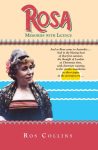
Ros Collins, Rosa: Memories with licence (#BookReview)

Book coverMemoirs are tricky things. There are readers who love them, readers who hate them, and readers like wishy-washy me who sit in the middle. I sit in the middle because, for a start, I don’t like to say “never” when it comes to reading. I sit in the middle because I couldn’t cope with a steady diet of memoirs, particularly those how-I-got-over-my-[whatever trauma or challenge it was], which is certainly not to say that I don’t admire those memoirists or don’t enjoy some of their fare. And, I sit in the middle because I don’t like formula, because I like books that try to tackle their subject or their form a little differently. So, the memoirs I mostly read are those which play with form or whose subject matter offers something different. Ros Collins’ memoir, Rosa: Memories with licence, does both of these.

First, the subject-matter. Rosa deals with, as the book description says, “Anglo-Australian Jews [who are] often overlooked in fiction and memoir.” Having known many Anglo-Australian Jews through my life, I was interested to read Collins’ discussion of her family’s life, as a contrast to those more directly Holocaust-influenced lives of European Jews we’ve all read about. It’s not easy being Jewish, I believe, regardless of personal or family history, so I was interested to read this story.

Then there’s the form. The subtitle, “memories with licence”, suggests that this is not going to be your usual memoir. For a start, it is told third person about a person called Rosa, which is the name given to the author Ros by “two elderly men from Southern Europe” whom she met on a recent Anzac Day Eve. She goes on to say, in her Introduction, that it is this “Rosa who wanders through the following stories, sometimes fictionally, sometimes autobiographically”, though I hazard to guess it is mostly autobiographical – just told one voice removed! Near the end of the introduction, she says that:

Rosa is much more personal [than her previous family history book, Solly’s girl] – and freely written – and I have taken liberties with the truth. Memoir with a little fiction, or fiction with a little history? It’s hard to say. Memories with licence.

The book has been classified on its back cover as Memoir. And that is how I have read it, as it reads true.

So, why tell it this way? Collins says she wishes “to entertain”. Her aim is not to delve into world history, cataclysmic events, or, even, dystopian futures. She wants, instead to shine a light on lives that may not be well known to many Australians, on Anglo-Australian Jewish lives. Taking a third person voice enables her to tell her story a little more objectively, to comment on what people, in particular Rosa, were, or may have been, thinking and feeling. Third person also enables her to get out of the main subject’s voice and head. It enables her to suggest what others might be thinking, such as Rabbi Szymanowicz:

Rabbi Szymanowicz stopped surreptitiously searching the room for younger people with whom he might more profitably connect, and looked at her. Seldom, if ever, had he met an elderly congregant quite like her; for an eighty-something-year-old Rosa did not come across as a sweetly gentle Miss Marple – more likely to be opinionated and argumentative.

This sort of statement could not be made in the same way in a traditional memoir. A traditional memoirist can not so directly get into the head of another character. A traditional memoirist can only suppose what another character might think (unless they are quoting documented facts from, say, letters). Taking this third person approach gives Collins more licence. She can, for example, “guess” about the relationship between her two grandmothers, two women who were not happy because they lost significant supports, when Rosa’s parents married.

All this could be disconcerting to some readers, but Collins has been honest from the start about what she is doing. Ultimately, the important thing is whether the book rings true and I believe it does. Rosa’s character – her humanity, her sense of her own flaws, her uncertainties, as well as her pride in her achievements – shines through.

Another way in which the book departs from traditional memoir is in its lack of linearity. While there is an overall movement from past to present, Rosa is not told chronologically. Instead, each chapter or “story” takes up a theme through which the story of English-born Rosa (Ros) and Australian-born Al (Ros’s husband Alan) is told. Chapter 4, “Jellied eels”, for example, explores food, Jewish culture, and Rosa’s navigation of it all. Collins explains how, as a child, Rosa had been told what she could and couldn’t eat, but not told why. Her mother expected her to “just accept the traditions” but of course this is not the way to hand down traditions, not, certainly, “to a difficult daughter – full of unnecessary questions”!

Collins also tackles, gently and without polemics, what Israel means (or, might mean) for Anglo-Australian Jews. For those of us who find Israel and the politics of the region highly problematic, it’s useful – though not necessarily convincing – to be reminded that in Israel, as Rosa quotes Golda Meir saying, “nobody has to get up in the morning and worry about what his neighbours think of him. Being a Jew is no problem here.”

Rosa, then, is a warm-hearted, open-minded “memoir” written by an Anglo-Australian Jewish woman for whom being Jewish, as for many I believe, is as much, if not more, about history and heritage as god and religion. In this book, Collins interrogates her family’s past, and her late husband’s story, in order to come to a better understanding of herself, and of what she would like to pass on to the next generation. This book is testament to that soul-searching, and makes good reading for anyone interested in the life-long business of forming identity, Jewish or otherwise.

AWW Challenge 2019 BadgeRos Collins
Rosa: Memories with licence
Ormond: Hybrid Publishers, 2019
ISBN: 9781925736113
186pp.

Jocelyn Moorhouse, Unconditional love: A memoir of filmmaking and motherhood (#BookReview)

Book coverAlthough it is quite a traditional memoir, style-wise, Jocelyn Moorhouse’s Unconditional love: A memoir of filmmaking and motherhood is particularly interesting for a couple of reasons. Firstly, she’s an artist who had a happy childhood. Who knew that could happen? Secondly, while most memoirs focus on one aspect of the writer’s life – such as their career (sport, for example), their trauma (childhood abuse, perhaps), their activity (like travel) – Moorhouse intertwines two ostensibly distinct parts of her life, her filmmaking career and her life as a mother.

Jocelyn Moorhouse will be known to many filmgoers as the director of the critically successful Proof, How to make an American quilt, and The dressmaker. She is also the wife of PJ Hogan who directed Muriel’s wedding, My best friend’s wedding, and Peter Pan. This is one amazing couple. Not only have they each made critically successful films, but they are lifetime creative and life partners, working on and/or supporting each other’s movies, negotiating the logistics of parenthood, and so on. They have made it work for over 30 years, in a way that few do. That’s impressive.

It could all, then, have been pretty idyllic, but life rarely turns out that way, and for Moorhouse and Hogan it didn’t. The reason is that of Moorhouse and Hogan’s four children, the middle two are autistic. This resulted in an 18-year hiatus in her filmmaking career, although during that time she kept her hand in, mostly working in some way with PJ on his projects. The book, then, tells both stories, the development of her career from her early studies in media and drama at Rusden State College and then at the Australian Film and Television School, where she met Hogan, and her very particular and demanding life as the mother of two autistic children.

She shares the emotions of giving birth to two gorgeous children only to have them regress around two years of age, as is apparently typical with autism, into unhappy, and therefore difficult children. I say unhappy because it is clear that the children suddenly find the world confusing and frustrating. Their language and communication skills regress so they resort to screaming and crying, and other difficult behaviours. Moorhouse talks about the shock of diagnosis, the therapies they try, including the ones that work (for them), and the logistics of running a family whose life is peripatetic and dependent on the next film job coming along.

Moorhouse, the experienced storyteller (and in fact problem-solver), tells her story carefully. It’s not until halfway through the novel that she brings us to her growing uneasiness about her second daughter, Lily, and Lily’s diagnosis. It’s a tough chapter, because it was a shock to her. She realises that her discussion of causes, not to mention possible preventions and cures, could upset some readers:

I am aware that some of the readers of this book may be autistic themselves and could possibly find this chapter upsetting. Please understand that I wasn’t rejecting Lily because of her autism. If you keep reading, you will discover that I love her autism and her brother’s too. But twenty years ago I was afraid for Lily’s future …

It is tricky to write about issues like this, without offending unintentionally. It’s a long “journey”, to use current terminology, that she and her family go on. And it’s a hard one. Late in the book she says that it took her years to realise that a lot of the pain she was feeling stemmed from “an internal war between my instinct to cling to the dreams about life, and my need to accept the truth”. By the end, she and PJ learn to rebuild their dreams for Lily and Jack, and she learns to balance her need to work against the family’s needs.

This brings me to her career. I enjoyed reading about that, about her own films and the insight she gave me into a film director’s work in general. I worked with film – from an archival point of view – and met various film industry people over the years, but I still learnt much about just what a director does from this book, such as the amount of script work they (might) do, the work involved in casting, choosing location and designing sets, and so on. Each director has his/her own way of doing things, it’s clear, but I greatly enjoyed reading about Moorhouse’s experiences – the wins and losses, the need to be philosophical about those that got away or didn’t go to plan.

Style-wise, Unconditional love is a straightforward chronological memoir, told in plain language, making it an accessible read. A lovely, though not unusual thing she does, is to begin each chapter with a quote. They come from diverse sources, including filmmakers (like Ingmar Ingmar Bergman and Frederico Fellini), writers (like Virginia Woolf and Maya Angelou), people who treat or have autism (like Oliver Sacks and Temple Grandin), and artists (like Marc Chagall). The opening quote, for the introduction, comes from Margaret Atwood, saying that, “in the end, we’ll all become stories”, which seems perfect for both a memoir and a filmmaker.

This is a generous memoir, rather than a tell-all one. There’s little name-dropping, though of course names are dropped because that’s the business she and Hogan are in. There are references to relationship and financial challenges – you’d be surprised if there weren’t any – but these aren’t dwelt upon. She also seems careful to not intrude unnecessarily on her children’s rights to their own lives, particularly as they get older.

Unconditional love is a book that will appeal to readers interested in Australian filmmakers, to those interested in families with autistic members, but most to anyone interested in a story that shares the challenges of a life but focuses more on the solutions.

AWW Challenge 2019 BadgeJocelyn Moorhouse
Unconditional love: A memoir of filmmaking and motherhood
Melbourne: Text Publishing, 2019
296pp.
ISBN: 9781925773484

(Review copy courtesy Text Publishing)

Vicki Laveau-Harvie, The erratics (#BookReview)

Book coverTruth is that, while I like to read at least some of the Stella Prize shortlist, I didn’t have Vicki Laveau-Harvie’s memoir, The erratics, on my high priority list, though the more I heard about it, the more intrigued I became. However, it was winning the prize that tipped it over into my must-read category. What a challenging read it is.

The erratics is the story of how Laveau-Harvie and her sister responded to their estranged aging parents’ needs as infirmity caught up with them. Canadian-born Laveau-Harvie had, decades earlier, escaped the family home in rural Alberta moving, eventually, to Australia. Her younger sister had also escaped, though not so far. She lived in Vancouver. It all came to a head when their 94-year-old mother’s hipbone “crumbles and breaks” putting her in hospital. Laveau-Harvie and her sister regroup to help – their father, in particular, who, they discover, had been being systematically starved by their mother. The story of this dysfunctional family, and the sisters’ actions to save their father and ensure their mother is deemed incompetent, never able to return home, is arresting.

Equally arresting is Laveau-Harvie’s writing. It’s not surprising that she won the Stella (not to mention the Finch Memoir Prize and being shortlisted in the NSW Premier’s Literary Awards), because the writing grabs your attention with an impressive sureness of tone and language. It’s particularly impressive because it is, apparently, 70-something Laveau-Harvie’s first book.

The back-cover blurb of my edition concludes with: “a ferocious, sharp, darkly funny and wholly compelling memoir of families, the pain they can inflict and the legacy they leave, The erratics has the tightly coiled, compressed energy of an explosive device  – it will take your breath away”. It does all of that.

First, it’s an astonishing story of a mother who seems incapable of the love we expect from a parent. I’ll share the quote that you’ll have read before if you’ve read about this book:

One of the few coherent messages my mother repeated to me and my sister as we grew up, a message she sometimes delivered with deceptive gentleness and a touch of sadness that we weren’t more worthy prey, was this one, and I quote: I’ll get you and you won’t even know I’m doing it.

If you are a parent who feels guilty about mistakes you made in your parenting, you can rest easy after reading this (unless of course you are like Laveau-Harvie’s mother!) Most of us, I’m sure, made our mistakes inadvertently, not with the intent behind this woman’s behaviour. The problem in Laveau-Harvie’s family was compounded by the fact that their father, while not brutal like their mother, was weak, believing (or, at least accepting) everything his wife said about their daughters.

So, the story, itself, is compelling – in the strange behaviour of these two parents, and in the willingness of the daughters, despite being rejected by their mother, including being given no formal role in managing her affairs, to step in and do the hard stuff out of love for their father and, I guess, a sense of responsibility. But, in addition to the story, what makes this memoir particularly compelling is, as I’ve already said, the writing itself.

It’s a tight, spare read at just over 200 pages. It has stunning descriptions, but I’ll exemplify it with the metaphor contained in the title itself, a metaphor that draws from a geologic formation called the Foothills Erratics Terrain in the town nearest her parents’ home:

Countless years ago, the Okotoks Erratic fell in on itself and became unsafe to climb upon. It dominates the landscape, roped off and isolated, the danger it presents to anyone trespassing palpable and documented on the signs posted around it.

Unfortunately, Laveau-Harvie’s mother came with no such sign.

There is a deft handling of chronology, with the occasional bit of foreshadowing. And then there is the tone, which is achieved by a crisp story-telling style that is direct, colloquial, witty even, and that focuses on the facts with little explication, all the while conveying the challenges faced by the two sisters in negotiating their relationships with each other, their father and their mother. One of Laveau-Harvie’s techniques is to undercut a description or plan with a short, emphatic sentence like “That was the plan” or “I can’t fix this” or “I don’t do this”.

It’s an invidious situation, and you can’t help but feel their pain. She writes at one stage of not remembering certain events:

I do know this: where there is nothing, there must be pain; that’s why there is nothing. Be glad if you forget.

There’s another of those short concluding sentences – “Be glad if you forget”. It’s powerful.

The strongest part of the narrative concerns the relationship with her sister who, still living in Canada, is the person on-site, and who has always been less able distance herself from the pain. There’s a telling sentence about their choices of mementoes from the house:

I salvage a few other things … things from my childhood … my sister takes only things acquired by my mother after we had left home, heavy crystal goblets, silver serving plates, full dinner sets of translucent china. I want only the connection to the past, she wants never to feel it again.

So, this sister, the one who wants to distance the past takes on, at a cost to her health, more than Laveau-Harvie believes sensible: “I can see sinkholes of simmering resentment about to develop between us.” Laveau-Harvie explores the challenges of siblings negotiating the care of aging parents with the clear-eyed honesty she applies to the whole story, albeit, at times, I wondered how the sister felt about her depiction. Presumably, it’s ground they’ve well-covered between each other.

The book, then, is compelling and many readers, like Kim (Reading Matters), have found it a “compulsive read”. I did too. But, there was also something about the tone that disquieted me, as it did Kate (booksaremyfavouriteand best). This surprised me because I wasn’t expecting to feel this way. I love fearless honesty. It’s one of the reasons (besides her writing) that I like Helen Garner so much. She is not afraid to say the hard, unpalatable things. And yet, I found it difficult at times here. I think it’s because I felt some of this “honesty” was attended by an unkindness, by a willingness to laugh at another’s expense (though, admittedly, she also frequently laughs at her own).

An example is her description of the array of carers she and her sister put in place for their father. It’s funny, and has an element of truth, recognisable by anyone who has experienced the situation. But I bridle at name-calling, so “the gold-digger” and “the housekeeping slut” did not make me laugh. (I particularly hate women calling other women “slut”, even a “housekeeping” one – but that may just be me!) And then there’s the description of the breakage of some fine china freighted to Australia:

I imagine customs officers dropping the box because it has a label that says ‘Fragile’, satisfied at the sound of something delicate breaking.

Ultimately, however, although I couldn’t help reacting, occasionally, with the disquietude that I did – I realise I can’t judge. How can I, when the family life she experienced is beyond my ken? And, the ending is inspired. She draws on myths about the Okotoks to lay her mother – that “bitterly unhappy and vindictive old woman” – to a potentially more peaceful rest.

The erratics, then, is an impressive debut. It’s compelling and, significantly, it prompts us to think about the importance of love, responsibility and respect within all families.

AWW Challenge 2019 BadgeVicki Laveau-Harvie
The erratics
Sydney: Fourth Estate, 2019 (Orig. pub. 2018)
217pp.
ISBN: 9781460758250

Anita Heiss (ed.), Growing up Aboriginal in Australia (#BookReview)

Anita Heiss, Growing up Aboriginal in Australia

As many others have said, including my reading group, Anita Heiss’s anthology, Growing up Aboriginal in Australia, should be required reading for all Australians. At the very least, it should be in every Australian secondary and tertiary educational institution. Why? Because it contributes to the truth-telling that is critical to real reconciliation between Indigenous and non-Indigenous Australians. Truth-telling comes in many forms. There are formal processes, as through truth-telling commissions, but there are also the informal processes that we can all engage in while we wait for the government to fiddle-diddle around deciding whether it can front up and do the right thing.

Essentially, truth-telling means all Australians acknowledging and accepting “the shared and often difficult truths of our past, so that we can move forward together”. These truths include the original colonial invasion of the country, the massacres, the Stolen Generations, and the ongoing racism that results in continued inequities and significant gaps in almost every health, educational and occupational measure you can think of. Informal truth-telling encompasses all the things we do to inform ourselves and each other of these truths. Heiss’ anthology, Growing up Aboriginal in Australia, which contains 50 stories by indigenous Australians on their experience of growing up indigenous in this so-called lucky country of ours, contributes to this informal truth-telling. Taken as a whole, the book provides a salutary lesson, for all Australians who care to listen, on the experience of being indigenous in Australia. Taken individually, each story has the potential to break your heart. If you think I’m laying it on a bit thick, then you haven’t read the book!

“a stranger in my own land”

The above line from William Russell’s story, “A story from my life”, brought me up short because it replicates a line I read in Atkinson’s book The last wild west (my review). Atkinson describes his Indigenous friend and co-worker Sno as being “an alien in his own homeland”. There is strength in this replication between books, just as there is strength in the repetition of experiences within Heiss’s book, and the strength is this, that every repetition reinforces the truth of the historical (and continuing) injustice faced by Indigenous Australians. The stronger, the more inescapable the truth becomes, the harder it must surely be to ignore.

So, what are the repeated experiences in Growing up Aboriginal in Australia? Well, there are recurring references to the Stolen Generations, to being questioned about identity (“are you really Aboriginal?”, “you look too white to be Aboriginal”), to feeling disconnected from culture, to being called racist names, to being humiliated in myriad ways too numerous to list, and to being physically attacked. These are the experiences that we’ve all heard of, but Heiss’ contributors enable us to feel them. And that’s important. I’ll share just a few quotes from a few stories:

Thankyou for your acknowledging every 26 January with such grace and humility. Thankyou for your encouragement – and advice to me – to let the past be in the past, to simply ‘get over it’ on the day my people’s land was invaded and dispossessed. (Dom Bemrose’s biting “Dear Australia”)

My father cut to the chase. ‘Olly, you can’t go telling people we’re Aboriginal … It isn’t safe’. (Katie Bryan, “Easter, 1969”)

I would paint and draw and sculpt about being Aboriginal. I would see people twitch uncomfortably and sometimes even let their ignorant thoughts out: ‘But you don’t look it’, ‘From how far back’, ‘Do you get lots of handouts?’ (Shannon Foster, “White bread dreaming”)

In Year 2 I was lined up with Aboriginal classmates to be checked for nits and, as I stood there with fingers being raked through my hair, I felt angry and embarrassed as my non-Indigenous classmates watched. I realised that … for some reason it was only supposed to be us Aboriginal kids that had nits. (Jared Thomas, “Daredevil days”)

None of us kids are allowed to go anywhere outside after dark by ourselves. We can’t ever go to the toilet at night: we gotta go in twos, and Mummy stands at the door and watches. She has a big bundi* ready in case there’s trouble … Terror is outside the door, and we can’t do anything about it. (Kerry Reed-Gilbert, “The little town on the railway track”)

It was hard selecting these quotes – not because they were hard to find but because there were so many options that it was hard to decide which ones. That’s the shame of it. And these stories come from all ages – from teenagers to those in their 70s or 80s –  and from all parts of Australia, from, as Heiss writes in her Introduction, “coastal and desert regions, cities and remote communities.” They come from “Nukuna to Noongar, Wiradjuri to Western Arrernte, Ku Ku Kalinji to Kunibídji, Gunditjamara to Gumbayanggirr and many places in between.”

The contributors include many well-known people – writers like Tony Birch and Tara June Winch, sportspeople like Patrick Johnson and Adam Goodes, performers like Deborah Cheetham and Miranda Tapsell –  but there are also lesser-known but no less significant people, many of whom are actively working for their people and communities.

Despite the devastating picture being painted, the book is not all grim. There are also positive repetitions in the book. They include deep connection to country, the importance and support of family, and particularly, the strength of mums. There’s humour in some stories: you can’t help but laugh, while you are also grimacing, at Miranda Tapsell’s story of her friends expecting her to turn up to a party as Scary Spice, but opting for Baby Spice instead (Miranda Tapsell, “Nobody puts Baby Spice in a corner”).

“two divided worlds”

One of the early stories is particularly sad because its 29-year-old author, Alice Eather, took her life before the book was published. In her person, in her story, in her life, she represents the challenge Indigenous people face in Australia today. Her story “Yúya Karrabúrra” starts with a poem. At the end of the poem she writes:

This poem is about identity, and it was a really hard thing to write in the beginning because identity is such a big issue. It’s a large thing to cover. The poem is about the struggle of being in between black and white.

Now Alice, like many in the book, had an Indigenous parent and a non-Indigenous one, but the struggle she names here is faced by every person in the book, regardless of their family backgrounds, because every one of them must contend with white society and culture, and it’s clearly darned hard.

I’m going to close on this idea of identity, because identity is the well-spring from which everything else comes. The stories are organised alphabetically by author, which I’m sure was an active decision made to not direct the conversation. Coincidentally, though, the last story – Tamika Worrell’s “The Aboriginal equation” – provides the perfect conclusion. It constitutes a strong, unambiguous statement of identity. She says:

I will not sit quietly while my identity is questioned. It doesn’t matter how many times you say you didn’t mean to be offensive, that doesn’t dictate whether or not I’m offended.

Then concludes with a hope that she

will live to see a future that is less ignorant, less racist and at least somewhat decolonised. Until then, I’ll continue to be an angry Koori woman, educating those who don’t understand and those who choose not to.

She’s not asking for the moon here is she? The least we can do is choose to understand – and we can start by reading books like this.

Lisa (ANZLitLovers) has also posted on this book, and there are several reviews for the Australian Women Writers Challenge.

* “bundi” is a Wiradjuri hitting stick I believe.

AWW Challenge 2019 Badge

Anita Heiss (ed.)
Growing up Aboriginal in Australia
Carlton: Black Inc, 2018
311pp.
ISBN: 9781863959810

Neil H Atkinson, The last wild west (#BookReview)

In one of those strange synchronicities, I attended an event, a few hours after finishing Neil H Atkinson’s The last wild west, that gave me the perfect opening for my post. This event was the launch of the VR film, Carriberrie, at the National Film and Sound Archive. Speaking at the launch, indigenous woman and participant in the production, Delta Kay, referred to being approached by the non-indigenous filmmaker Dominic Allen about making the film. Most non-indigenous people, she said, come to their community and “want, want, want” but Allen was offering to “give”, in a spirit of true reconciliation. This spirit of “giving” to indigenous people was as far from Atkinson’s experience as you could get.

Neil H Atkinson, The last wild westAtkinson’s memoir –The last wild west: A saga of Northern Territory cattle stations, racial violence, wild horses and the supernatural: A true story – chronicles the time, 1977-1980, he spent working at a Northern Territory cattle station. He went there in a state of disillusionment and despair, having been refused shared custody of his children after his divorce. His aim was to transform himself, to become a man the judge would see as stable and reliable, to become, in other words, a person “like other people, who were trusted and respected”. He did transform himself, but not quite in the way he’d expected. He had felt that in the Northern Territory he could work hard and prove himself a man. In no way did he think that he would become involved in brutal racial conflict and that the “manhood” he sought would encompass a new understanding of humanity.

I’ve read novels about white brutality towards indigenous people in Australia – such as Thea Astley’s A kindness cup – and I’ve read histories and other nonfiction books, like Chloe Hooper’s The tall man, which tell this story. However, I haven’t read a memoir this charged on the subject. The physical and psychological brutality conveyed here is truly confronting – and what makes it worse is that, much as we’d prefer it be otherwise, it’s not surprising or unbelievable.

But, why write it now? Atkinson’s experience happened 40 years ago, and progress has surely been made (as suggested by projects like Carriberrie.) Atkinson answers this in his Introduction:

I wanted to hold up a mirror; otherwise it is too easy for people to say: “That was then, and  our society isn’t like that anymore.” I wanted to ask if things had changed as much as people thought they had.

This is a question for each reader to consider. I would certainly hope that the sort of brutality described in this book is no more, but I really can’t be sure. However, I do know – we all know – that we still have a long way to go before true equality is achieved. For that reason – because we all know about slippery slopes – Atkinson’s book is relevant, and worth reading.

“an alien in his own homeland”

And now, I’d better give you some sense of what Atkinson’s experience was. Self-described as timid and insecure, Atkinson, with no cattle station experience, decides that the Northern Territory is the place to remake himself. Serendipitously, while en route, he meets two truckies who give him the names of a pub, of a man who visits that pub and of the station he works for. They advise him not to admit his lack of experience but to “wing it”. They also tell him that “blacks are treated worse ‘n shit”, that they “should get more credit and be paid more”, and, most critically, that “there’s a hell’va lot of bad blood between whites and blacks right now.” This was post-Wave Hill, a landmark for indigenous land rights that heralded a time of change in the outback. White owners and bosses felt threatened, and, while the tide might have been changing, indigenous people were still deemed inferior and had little or no power.

Atkinson’s story is one of being caught between these two worlds. While he starts off having little regard for indigenous people and their rights, early describing himself as having “little sympathy for the blacks”, he is a sensitive person. He soon experiences the brutal machismo of the men in charge – to greenhorn men like himself, to the indigenous workers and their families, and to the cattle. Indeed, his descriptions of the treatment of the cattle by the station workers and managers conveys such barbarity that you are prepared for anything.

To write this memoir, Atkinson draws from the diaries he kept at the time, in which he recorded experiences “as they occurred, the same day or shortly after, and using as far as practical, people’s own words”. The result is that the dialogue and descriptions feel fresh and authentic. He is a good story-teller, telling his story chronologically, and building up slowly to the event which – well, I won’t spoil it. He shares this journey with an almost ego-less honesty, admitting that, even two-thirds of the way through his time in the Territory, even after seeing much brutality, he was still thinking “It was an Aboriginal problem, not mine.” His intellect, his historical understanding, in other words, lagged behind his humanity. Emotionally, he started aligning himself increasingly with the indigenous workers, but he continued to do his darndest to avoid becoming involved in the conflict, to avoid even recognising that the indigenous people’s struggles for voice, dignity, and land, was an “Australian” problem not just an “Aboriginal” one. This attitude is, to a degree, understandable, given the power and control wielded by the white station foreman and his henchmen.

Atkinson’s writing is highly evocative. Initially, I found it almost over-blown – too many adjectives I was thinking. But, as I got into the story, I became mesmerised by his voice, by his way of imbuing feeling into what he was seeing and experiencing. This is not the spare writing of modern writers – but it feels right for Atkinson. Certainly, it conveys an inner response to the situation he found himself in:

Dawn knocked with such blinding clarity, its beams should have scarred the door and windows with clutching fingers of blazing red and yellow, as if I should just hurry over and embrace the new day because of its arrogant promise of purity and renewal.

[and, on Sno, his indigenous co-worker]

I then watched him walk away, a black man with a black shadow cast over the baked red earth of a past filled with pain.

Now, I’ve discussed here many times that issue concerning white people telling black stories. This is not, ostensibly, a problem here, because this is Atkinson’s memoir of his experience. It involves sharing his understanding of indigenous people’s culture, particularly of their attitude to place (“country” is not used here – was not used, I think, so much back in the 1970s) and of their spirituality. Mostly, he quotes their words to him, or his interpretation of their words. It can be a fine line.

As I often say in my posts, there is so much more to this book, so many issues and ideas that I haven’t touched upon, but I’m going to close with two ideas Atkinson discusses in the book, ideas which get to the nub of why this book is worth reading. One concerns his understanding of the history wars:

Such wars are as much about morality as about facts, because we choose the way we frame the national drama: either to regard the dispossession of the people as an injustice that needs addressing, or not. There is no neutral body of facts to which to appeal to answer the basic question. We all have to answer for ourselves. Every Australian has to exercise historical judgement. (p. 149)

And the other, in a sense, frames this:

Most ignorance is ignorance you choose. We don’t know because we don’t want to know. Our will decides how and upon what subjects we use our intelligence, direct our interest. Those who don’t detect any meaning in the Aboriginal world generally do so because, for one reason or another, it suits their opinion that the black world should be meaningless, so it is. (p. 194)

I don’t usually like to use book review clichés, but The last wild west is, I must say, provocative in the best meaning of the word.

Neil H. Atkinson
The last wild west: A saga of Northern Territory cattle stations, racial violence, wild horses and the supernatural: A true story
Melbourne: Hybrid Publishers
288pp.
ISBN: 9781925272918

(Review copy courtesy Hybrid Publishers)