Rick Morton, One hundred years of dirt (#BookReview)

Book coverWay back in the early 1970s when I was an undergraduate university student, I did some sociology, and one of our set books was The myth of equality by Tom Roper. It, and the courses around it, have informed ever since my understanding of how our society operates. Morton’s book One hundred years of dirt would have been perfect recommended reading for these studies. At the end of his first chapter he says this:
the single experience of my sister’s road to this point detonates the argument that equality of opportunity is stitched into our nationhood.

One hundred years of dirt, in other words, is not a simple memoir, as it might initially appear, but is, rather, a cry to Australians to see that the ideas, the myths we hold dear, are just that, myths.

But now, back to the beginning. Rick Morton, a thirty-something journalist, grew up tough. Born on a remote outback cattle station to a family of violent men, he experienced more than his share of trauma. Besides the intergenerational violence, he saw, when he was 7 years old, his older brother nearly burn to death and then, while his mother was away with that brother in hospital, saw his father carry on an affair with the governess. Not surprisingly, this caused a family breakdown, resulting in his mother leaving with her three children and no financial support. Poverty was theirs from then on. Morton speaks eloquently of the struggle to make ends meet, making it clear that families like theirs have no time to consider issues of the day, like climate change, when even a mooted $7 Medicare co-payment “could be the difference between eating or not for a person on the poverty line.”

Time, in fact, is an interesting issue – and one that resonated with me, too, as a feminist. Time is a commodity and how we choose to spend it – or are able to spend it – is political. Like hours at the hairdresser for example. (I know I am treading on sensitive toes here, but so be it.) Anyhow, as Morton says, “only some people have the time” to be “woke”. Just “living for so many people in Australia is exhausting“.

So, on the surface, One hundred years of dirt could be seen as your standard misery memoir: Boy from poor and violent background struggles against the odds to make it good as a journalist and successful author, with the help of a loving mother. It is that, superficially, but it’s much more too.

There is a general chronological movement to the story. It starts in the present, when that point quoted above about “equality of opportunity” is made. It then flashes back to the family’s origins on huge cattle properties in southwest Queensland, focusing particularly on grandfather George Morton and his hard, violent ways. From here, Morton moves more or less chronologically through his life, but each chapter is framed around a theme, so the chronology is not exact. The chapters, in fact, could be read as individual essays on their specific topic, such as drug (ice) addiction, mental health, being gay, class, and otherness or outsiderness. For some readers – as some in my bookgroup found I think – this departure from a more typical narrative flow may make the book feel disjointed. However, for me, the clear heralding in the first chapter that One hundred years of dirt was about more than one life had me engaged and ready, perhaps, for anything!

That anything turned out to be a personal exploration of how inequality plays out in contemporary Australia, supported by smatterings of socioeconomic data. Morton is, after all, a journalist, and so he brings his journalistic nose for facts to bear on his and his family’s personal experiences. In doing so, he provides example after example of how out of touch the knowledge class or “commentariat” is with the lives of those at the bottom end of the income stream. He discusses, for example, unpaid internships and the incomprehension that there are people who just can’t afford to take advantage of them. Journalism, which is rife with unpaid internships as a pathway in, has become one of “the most exclusive middle-class professions of the 21st century”. Morton describes the complete ignorance many in the middle-class have about their privilege:

There are those who have had the good fortune to never have felt other than the silkiness of privilege, their bubbles so perfect they cannot feel the gravel underneath.

He also writes:

As a nation, we have convinced ourselves that all of us has the same standing start, but this is neither true for the working class whites from broken families nor for those with black or brown skin. It’s not true for those without a proper education nor for those who were abused.

However, this book is not just bitter medicine. It has a spoonful of sugar. There are some genuinely funny moments – some of them black of course – and there are Morton’s wonderful turns of phrase which illustrate his meaning beautifully. He talks, for example, about working in a workplace surrounded by colleagues from “moderately wealthy and upper class families”:

… my colleagues [whom he did see as “dear friends”] could not fathom the life I had led. There were frequent attempts at empathy but it sounded a lot like people who were reading pre-prepared lines. Imagine a fish turning up to discover her psychologist is a Very Concerned sea eagle.

Love the fish analogy, but ouch, really, ouch! I feel I have a good understanding of inequality of opportunity and the ways in which it underpins disadvantage in Australia, but finding the right language in face-to-face encounters is not easy.

I have probably made this book sound like a sociological thesis or polemic. There is that, but it is still, at heart, a memoir. It’s simply that I have focused on what I see as the book’s main message. However, this message is wrapped up in a story about human beings, and particularly about Rick and his dearly loved mother Deb. He describes her as “the hero of this piece”, the mother who

sees boy as special, tells him he was sent here from that big night sky by beings unknown to report back on what he sees. She invented the aliens because she couldn’t see herself as the protagonist. She outsourced the explanation for her own success as a mother to the aliens out there.

Lovely Deb; thoughtful, provocative Rick. This is a powerful read.

Rick Morton
One hundred years of dirt
Carlton: Melbourne University Press, 2018
191pp.
ISBN: 9780522873153

Carmel Bird, Field of poppies (#BookReview)

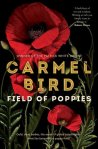
Book coverThere are some writers whose personalities shine through so strongly that I have taken to characterising them in just a word or two. Jane Austen, for example, I think of as wickedly witty, and Helen Garner as heartbreakingly honest. Carmel Bird is another of these. I describe her as seriously cheeky, by which I don’t mean she is really cheeky, but that there’s seriousness beneath her surface cheekiness. The cheekiness makes me chuckle, but ruefully, suspiciously so, because I know that waiting nearby is very often a skewer of some sort. Her latest novel, Field of poppies, is no exception. Even the title is paradoxical, alluding as it does to both Monet’s pretty painting, Field of poppies in Argenteuil 1873, and the poppy fields of Flanders.
Field of poppies, then, has all the hallmarks of Bird’s writing – a light tone, and all manner of allusions and digressions, underpinned by a clearly-focused intelligence. If you are lulled, early on, by narrator Marsali’s chatty, friendly tone, you’d be advised to check the epigrams and preface. The very first epigram tells you, in fact, exactly what this novel is all about:

We are within measurable, or imaginable distance of real Armageddon. Happily there seems to be no reason why we should be anything more than spectators. (Henry Asquith, Secretary of State for War, July 24 1914)

Can’t say plainer than that. The epigrams, which include one by Bird’s signature fictional novelist Carrillo Mean, are followed by an incisive preface which offers a vision of the modern world and where it’s heading. Mixing visions of disaster (“Crops failed, dried out, withered, died”) with those annoyances we love to comment on (“People forgot how to punctuate or spell”), it further cements the book’s intention.

The novel is told first person by retired interior designer Marsali Swift who, with her husband, the semi-retired doctor William, made a tree-change to the perfectly named, prosperous ex-goldfields town of Muckleton. I mean, Muckleton! That suggests something too, doesn’t it? However, in the opening paragraph, Marsali also tells us that she and William had given up their country idyll after seven years and now live in a high-rise apartment in Melbourne, called, ironically, the Eureka. The tree-change hadn’t met their expectations, because of two events, a robbery at their loved home Listowel, and the mysterious disappearance of local eccentric musician, Alice Dooley. The arrival of a new gold-mine doesn’t help, either, with its disruptions and environmental threat.

Now, if you know Bird’s writing, you will know what to expect, but if you don’t, let me say that this is not a book you read for plot – though there is a plot about the missing Alice. Rather, it’s one you read for the joy of engaging with a lively but concerned mind and all the insights such a mind can offer. Isn’t that, really, what we read for? As one member of my reading group described it, reading this book is like having “a conversation with a quirky, artistic, intelligent friend”. That’s exactly how I feel when I read Bird. I feel my mind engaging with hers, pondering where it’s going and what it’s trying to tell me, and really enjoying the ride. She can be so sly, such as this about the missing Alice’s Silver Sisters group of witches:

The Silver Sisters still exist, to the best of my knowledge but Alice certainly does not. I understand the SS were always a harmless lot …

Whoa? The SS, harmless? Well, of course, the Silver Sisters were, but referring to them as SS can’t help but remind us of another SS, can it? This is what Bird does – and I love it. She makes me feel alive as a reader.

“Such a state of affairs is clearly a fantasy”

Various motifs run through the novel, including the aforementioned poppies, dreamhouses, and Alice in Wonderland. Each contributes in its own way to the idea that all is not as it seems, that we may, in fact, be living a fantasy. Marsali spends some time dissecting Monet’s painting, but as she draws us into its seemingly idyllic beauty, she inserts something sinister – not only the poppies and their dark reminder, but the possibility of a gun pointing out of a window in the lovely house nestled in the background. Bird’s meaning is clear: our dreamhouses, our country idylls, may not be what they seem at all. Dreams, she says early in the novel, are dangerous. For a start, they can lure us away from reality.

Later in the novel, Marsali’s description of returning to Muckleton for bookgroup makes her meaning clear:

When I go there for Mirrabooka nights I drive past the gate to Listowel and catch a glimpse of the house itself behind the trees. It’s really so very like the house in the distance in the Monet, the dangerous fool’s gold of the old lost dream house.

For Marsali, there are glimmers like these of the truth beneath the fantasy, but will she and William – who, we must see, stand for many of us – really change their ways?

Bird also refers in the novel to several literary texts, and in particular to Alice in Wonderland. Carroll’s Alice works beautifully as a foil for the missing Alice Dooley. Without spoiling the ending too much, both disappear into the deep, but Alice in Wonderland survives while Alice Dooley doesn’t. However, this foil isn’t a case of simple opposites, because, although Carroll’s Alice survives, the world she enters is chaotic.

“This is my memoir”

Another thing Bird does in this book is play with the idea of fiction. Marsali keeps reminding us that this is her memoir. It’s dangerous, she writes, for fiction writers to include dream sequences in their narratives, but as this is her memoir, she will include some! Similarly, “it’s hard to make coincidence work in fiction”, but again, because this is her memoir, she has them since “coincidences happen quite naturally in real life”. It’s “a nice coincidence”, Marsali writes, that Alice Dooley was called Alice! She pushes our acceptance of coincidence even further by not only involving kangaroos in the two road accidents that start and end the book’s drama, but also having the second accident’s driver spending time at a pub called The Kangaroo before he sets off on his fateful drive:

Look, it was called The Kangaroo. I can’t help that. It just was.

Well, look, that made me laugh. She is so blatantly cheeky.

I’d love to go on, because this book is rich in commentary, satire and jokes about contemporary life – and I’ve barely touched them.

However, I will close here, and will do so on this from the book:

Beauty always falls in love with the Beast, who always turns out to be the Prince, but that’s only the end of the telling, not the end of the lives of Beauty and her Beast-Prince. Life goes on until it doesn’t. Cinderella died in the end, and so did Snow White.

Fantasy, fairy tales, even fiction, in other words, are just that. They do not tell the whole story. Which world are Marsali and William living in, and which, indeed, are we?

Lisa (ANZLitLovers) also enjoyed this novel.

Challenge logoCarmel Bird
Field of poppies
Melbourne: Transit Lounge, 2019
241 pp.
ISBN: 9781925760392

Review copy courtesy the author.


Charlotte Wood, The weekend (#BookReview)

Book coverAfter reading the first few pages of Charlotte Wood’s latest novel, The weekend, I was starting to wonder how on earth these women, with “their same scratchy old ways”, could be described as “dearest friends”. They seemed so different, and so irritated or, sometimes, cowed by each other’s differences. Where was their point of connection I wondered, besides their late friend Sylvie?

But, let’s start at the beginning. My edition’s back cover describes the set up beautifully: “Four older women have a lifelong friendship of the best kind: loving, practical, frank and steadfast. But when Sylvie dies, the ground shifts dangerously for the other three. Can they survive together without her?” Well, they are going to find out, because the book concerns a weekend – a Christmas weekend, in fact – in which the remaining three come to Sylvie’s beach-house to clean it out for sale. It’s a thankless task at the best of times, so when you get three very different, but still grieving personalities doing it, the stage is set for tension, at the very least.

Who then are these three? There’s retired restaurateur Jude who has had a married lover for over forty years; public intellectual Wendy whose much loved husband died many years ago and who now has the frail, demented dog Finn in tow; and out-of-work actor Adele whose relationship has just fallen apart, leaving her homeless. Wood sets the scene, and establishes their characters perfectly through describing their journey to and arrival at the beach-house (much like the opening title sequence for another house-party story, The big chill.) We quickly learn that Jude is organised, task-focused, financially comfortable and disdainful of other people’s frailties; that Wendy is disorganised and soft, but emotional and loyal; and that vain but always optimistic Adele is seen by her friends as “the child” of the group. While Wendy and Jude work at their Jude-assigned tasks, she can be found reminiscing over Sylvie’s LP collection.

Over the weekend, the women’s friendship is tested to its limits. Early on, Wendy reflects that “it was exhausting, being friends”, while Adele remembers their early years of friendship, and how they “saw their best selves in each other”. But, how honest are they, can they be, should they be with each other? Adele ponders early, that “it was dangerous business, truth-telling”. Over the weekend, of course, some truths come out – what they think about each other, and truths that were supposed to be secrets. And yet, the friendship holds fast:

Because what was friendship, after forty years? What would it be after fifty or sixty? It was a mystery. It was immutable, a force as deep and invitable as the vibration of the ocean coming to her through the sand.

“simple creatureliness”

However, there is a fourth main character in this story – the aforementioned Finn whom Wendy brings with her knowing full well that Jude would not be impressed. But what was she to do? Living alone and unwilling to euthanise him, she had no option. Utterly frail in body and mind, he is a significant character – or, at least, plays a significant role – in the book. This role is bifold. Firstly, we gain more information about the women’s characters and their attitudes to aging and death through their attitudes and reactions to him. His physical and mental frailty, his incontinence, deafness and blindness, confront the women with their own mortality. No-nonsense Jude doesn’t want him and his mess around, and thinks, frankly, he should be put down. She is barely aware of Finn’s importance to Wendy. Adele isn’t enamoured but more tolerant and understanding, while Wendy, for whom Finn was a lifeline after her husband’s death, finds it impossible to think about euthanasia. His presence throughout the novel sometimes mirrors, sometimes opposes the women’s volatile emotional states.

But, the other more interesting role played by Finn has to do with one of the novel’s over-riding themes, one triggered by ageing. It’s the question of what have I lived for, what have I achieved, when have I “finished [my] turn”? Wendy and Adele, for example, both feel they have more to achieve. For Wendy, it’s the intellectual idea she feels she’s moving towards, “the place she had always felt was there waiting for her”, and for Adele, it’s “clawing back her one great moment on the stage”. Jude’s life is more about “gathering experience, formulating opinions, developing ideas” to “fold away and save for” those times her married lover is able to see her. So, the underlying question is: When you no longer have those seemingly limitless goals of youth, what goals do you have, where do they come from, and what happens when you, perhaps, run out of goals or purpose? Finn offers this opposite – “simple creatureliness”, or, just being. This issue of goals and purpose is, I believe, one of the biggest challenges of ageing – alongside the obvious physical ones – and I love that Wood takes it on.

However, she doesn’t stop there, because her women also confront other ageing-related issues – increasing homelessness for older women, the threat of loneliness that often attends age, and coping with technological and cultural change not to mention with children who start to parent you.

To keep this story and its tensions focused, Wood uses the house-party setting, as many other authors have done before including John Clanchy in his novel Sisters (my review). I didn’t much like the melodramatic party scene, involving two interlopers, that occurs near the end, but this is a common trope, I think, in the house-party sub-genre. Overall, I loved the writing. It’s tight. We shift seamlessly between the characters without getting lost, each one nicely differentiated, and there are some spot-on images:

Every time Jude had to hold her tongue, every time she didn’t tell Wendy she should pay him the kindness of letting him die, she felt falsehood pulled tighter like a plastic bag, closer, closer over her mouth and nose. She couldn’t bear it.

AND

Outside the cicadas were filling the still summer air with sound. You must shed the dead skin … The bush was full of insects and snakes reborn, shining with newness. The dried carapaces rustled as the resurrected creatures slithered out of, away from, their dead selves. You had to struggle free from what had protected you.

By now, you may be thinking that this a grim book, but while its intent is serious, Wood’s touch is light, using some humour – sometimes generous, sometimes satirical or ironic – in the telling. This humour – as in the scene describing Adele, in the park, having just peed, running into a theatre producer – keeps these women real and relatable, and the tone edging to hopeful.

You would think that The weekend would be the perfect pick for my reading group, given we are all women not much younger than Wood’s protagonists and that many of us have been friends for thirty years plus. And yet, the responses of the twelve members present at our meeting were mixed. One group was ambivalent, arguing that the characters were too much like types, while the other loved it, believing it captured the dynamics of longtime women’s friendships with heart and humour. You know which group I belonged to – for all the reasons I’ve described above.

Lisa (ANZLitLovers) also enjoyed the book.

Challenge logoCharlotte Wood
The weekend
Sydney: Allen & Unwin, 2019
256pp.
ISBN: 9781760292010

(Review copy courtesy Allen & Unwin)

My reading group’s top picks for 2019

In what is becoming a tradition, my reading group once again voted for our top picks from our 2019 schedule. Given many of us like hearing about what other reading groups do, I’m sharing the results as I did last year.

First, though, here is what we read in the order we read them (with links to my reviews):

  • Trent Dalton, Boy swallows universe (my review): debut novel, Australian author
  • Anita Heiss, Growing up Aboriginal in Australia (my review): memoir anthology, Indigenous Australian editor
  • Marilynne Robinson, Gilead (my review): novel, American author
  • Amor Towles, A gentleman in Moscow (my review): novel, American author
  • Sayaka Murata, Convenience store woman (my review): translated novel, Japanese author
  • Mary McCarthy, The group (my review): novel, American author
  • Anton Chekhov, The lady and the dog (my review): translated short story, Russian author
  • Enza Gandolfo, The bridge (my review); novel, Australian author
  • Les Murray night: read any book by or about him (I was in Japan, so did not contribute): Australian poet
  • Karen Viggers, The orchardist’s daughter (my review): novel, Australian author
  • Tim Winton, The shepherd’s hut (my review): novel, Australian author

So, five men and six women; six Australian writers and five non-Australian; two translated works; three works written before 2000 (plus much of Les Murray’s work); an anthology of Indigenous Australian writing; nine fiction works plus a poet and a collection of memoirs. A decent mix, I think, given our focus always has been women and Australian writing but not exclusively so.

The winners …

Twelve of our thirteen currently active members voted. We had to name our top three picks, which resulted in 34 votes being cast (one member casting just one vote). The results were:

1. Boy swallows universe, by Trent Dalton (8 votes)
2. A gentleman in Moscow, by Amor Towles, and The shepherd’s hut, by Tim Winton (7 votes, each)
3. Convenience store woman, by Sayaka Murata (6 votes)

So, four of our eleven books received 28 of the 34 votes cast, that is, 80%, which is an interesting concentration, given that none of our reads this year were actively disliked. Despite the overall variety in our reading this year, our top books were not as varied as last year: the top three were books were all by men, with just the fourth being by a woman, and all four are novels.

Highly commended was The bridge, by Enza Gandolfo, but, various members also made special mentions of Marilynne Robinson’s Gilead, Mary McCarthy’s The group, and Karen Viggers’ The orchardist’s daughter.

Of course, this is not a scientific survey. Votes were all given equal weight, even where people indicated an order of preference, and not everyone read every book, so different people voted from different “pools”.

Selected comments (accompanying the votes)

  • Boy swallows universe: Commenters used words like “brave”, “raw”, “edgy”, “energetic”, “unusual”, with one noting its “generosity for its flawed characters.”
  • A gentleman in Moscow: Two commenters captured the gist of our responses with “Beautifully written, fascinating premise, and thoroughly engaging, while hinting at the dramas around” and “A classy read. Sometimes hilarious whilst also full of dignity and the unexpected.”
  • The shepherd’s hut: Commenters on this in-your-face book used rather different words, like “strong”, “despite the language” and “uncompromisingly”, but the book clearly made an impact on us to share equal second favourite for the year. As one of us said, “what a tale”!
  • Convenience store woman: Our commenters emphasised its quirkiness and its very different voice – though, in fact, most of our top books had rather different voices. However, one commenter nailed what was particular about this one, with “Gives a voice to someone who is normally excluded. Love the relentless logic of the narrator.”

And a bonus!

Bruce Pasco, Dark emuAs last year, a good friend (from my library school days 45 years ago) has agreed for me to share her reading group’s schedule from this year:
  • Circe, by Madeleine Miller (novel, American author)
  • Bridge of clay, by Markus Zusak (novel, Australian author)
  • Dark emu, by Bruce Pascoe (non-fiction, indigenous Australian author)
  • The lover, by Marguerite Duras (novel, French author)
  • Little fires everywhere, by Celeste Ng (novel, American author of Chinese descent)
  • On the Java Ridge, by Jock Serong (novel, Australian author)
  • Anything is possible, by Elizabeth Strout (novel, American author)
  • The Romanov sisters, by Helen Rappaport (novel, British author)
  • The buried giant, by Kazuo Ishiguro (novel, Japanese-English author)
  • Dear Mrs Bird, by AJ Pearce (novel, English author)

My group has read one of the above books – Dark emu – but a few years ago. This wasn’t the case with their list last year, where we had read none.

I don’t think this group did a formal top pick list this year, but my friend’s favourite was Circe, which she described as such “a rewarding read”. Her second choice, she said, would “perhaps” be On the Java Ridge. She said that “although the writing was uneven, we in the group thought the content was significant”. Her least favourite, by far, was Dear Mrs Bird. Many of you, I know will have read and agree with her about Circe. I would like to read it, but I am particularly interested in Jock Serong, because his books keep popping up in Australian readers’ lists.

But wait, there’s more!

This year, some members of my group named other (ie non bookgroup) favourite reads of the year, and I share them with you (with links to my reviews if I have read them, regardless of whether I nominated them for this list!):

  • Maxine Beneba Clarke’s The hate race (my review)
  • Louise Erdrich’s The bingo palace (my review)
  • Robert Galbraith’s (aka J K Rowling) Lethal white
  • Gail Honeyman’s Eleanor Oliphant is completely fine
  • Melissa Lucashenko’s Too much lip (my review)
  • Ian McEwan’s Machines like me
  • Liane Moriarty’s The husband’s secret
  • Liane Moriarty’s Truly madly guilty
  • Liane Moriarty’s Big little lies
  • Michelle Obama’s Becoming 
  • Henry Handel Richardson’s The getting of wisdom
  • Jock Serong’s On the Java Ridge
  • Jock Serong’s Preservation
  • Jock Serong’s Quota
  • Tara Westover’s Educated

If you are in a reading group – face-to-face or online – would you care to share your 2019 highlights?

Tim Winton, The shepherd’s hut (#BookReview)

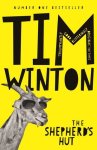
Book coverTim Winton and Christos Tsiolkas have to be Australia’s foremost contemporary writers about men and boys, Tsiolkas doing for urban/surburban males what Winton does for small town/rural ones. Winton’s latest novel, The shepherd’s hut, continues his exploration of males in extremis. It’s strong, gritty, page-turning, and yet reflective too, which is not easy to pull-off.

The shepherd’s hut is the story of a teenage boy who goes on the run after finding his violent father dead, crushed under the car in the garage. He thinks he’ll be blamed, and he’s not hanging around to find out. With the exception of Lee who lives in Magnet – she’s symbolically and literally his magnet – he’s friendless, so it’s to Magnet that he heads, on foot across the Western Australian desert. And thus the adventure begins, except that the novel starts at the end of that adventure – or the beginning of the next adventure – take your pick. Here are the last few sentences of the opening two pages:

For the first time in me life I know what I want and I have what it takes to get me there. If you never experienced that I feel sorry for you.

But it wasn’t always like this. I been through fire to get here. I seen things and done things and had shit done to me you couldn’t barely credit. So be happy for me. And for fucksake don’t get in my way.

What an impressive opening. The tone, and thus the character, is defiant. There’s the hint of trials that have been confronted. There’s the in-your-face vernacular language. And there’s the sense of something ending and something else beginning. Where is this book going to go, we wonder, so we turn the page – and we find ourselves in the past, at the beginning, we suspect, of whatever it is that he has just come through.

Soon enough, we learn that our boy is Jaxie Clackton, that his mother had died not too long ago from cancer, and that he is living with his violent father. Jaxie himself is, not surprisingly, prone to bullying and violence himself, but, really, all he wants is peace:

all a person wants is feeling safe. Peace, that’s all I’m after.

Can this angry boy, can anyone who has grown up surrounded by violence, really remake themselves? That is the question.

The shepherd’s hut is, essentially, a road story, albeit one done on foot. Jaxie heads out into the wheatbelt, steering clear of the highway. The exposed, pared-back landscape provides the perfect backdrop for Jaxie’s emotions as he struggles to survive in the wheatbelt-mining-desert country in which he finds himself. It’s not easy to hide out there where “you stick out like a rat on a birthday cake”, let alone find food and water, but Jaxie has to survive, physically, mentally and spiritually, if he is to achieve his goal. Winton’s descriptions of Jaxie’s journey – the landscape, what he needs to do to sustain himself – are graphic and visceral.

Eventually, Jaxie finds another human being out there, exiled Irish priest Fintan MacGillis. Jaxie is naturally suspicious – given all he’s heard about “pedos” and “kiddy-fiddlers” – but gradually a bond, sometimes uneasy but nonetheless strong and mutually beneficial, forms between these two outsiders. Jaxie’s energy and passion provide a foil for Fintan’s wiser more experienced understanding of the world. There is a sort of biblical feeling to all this – a forty-days-in-the-desert vibe – as these two serve out their “exiles”.

There is a lot we are not told. Exactly why Fintan is there is never fully explained (but it’s not for kiddy-fiddling), and whether anyone is really after Jaxie is never confirmed. This information is not important to the story being told, which is … well, what is it about?

“I know what I am now” (Jaxie)

On the surface, it is about violence – particularly about domestic violence and its impact on those so abused, like our Jaxie. But, this is Winton, and while his novels chronicle social conditions, exposing society’s failings, his main interest tends to something deeper – call it biblical, theological, or spiritual. So, to focus on Jaxie, our protagonist, I’d argue that his time in the desert – both alone and then with Fintan – do result in some spiritual  growth for him. One of the motifs running through the book concerns goats – why? Well, we could read Jaxie as a scapegoat. Literally, and perhaps even symbolically. We know he’s on the run because he believes he’ll be blamed for his father’s death, but is it going too far to also read him, damaged young man that he is, as a scapegoat for the violence enacted by society? We can certainly read the outcast, somewhat flawed priest Fintan, who, significantly, lives in the titular shepherd’s hut, as his spiritual guide. Indeed, Fintan describes the landscape in which they find themselves as “penitential”.

In the novel’s opening two pages, Jaxie, on his way out of the desert, describes himself as having “hoofed it like a dirty goat all these weeks and months”, but, he says, “I’m no kind of beast anymore”. It is both his time in the desert and the, dare I call it, ministrations of Fintan, which bring him to this new sense of self. Late in the novel, before the final drama that brings their time in the desert to its conclusion, Fintan says to Jaxie, “I suspect that God is what you do, not what or who you believe in”. When the crisis comes, Jaxie sees himself as an “instrument of God”, but my, it’s not a particularly pretty one!

In other words, none of this is as neat as we might like. Fintan is a complex shepherd, and Jaxie a problematic subject of his shepherding. There are no simple solutions, and there are no perfect beings, but there are people who are prepared to go through fire (or the desert, as the case may be) in order to come to a better understanding of themselves. “I know what I am now”, Jaxie says at the end, but whether he achieves the peace he believes is coming, whether he, with his “for fucksake don’t get in my way” attitude, is truly capable of achieving it, is the question we are left with. I’d like to think so.

Jaxie, then, is an original, compelling character whose edgy energy wins you over despite yourself. He challenges us to consider how violence plays out in contemporary society, and forces us to confront what this violence does to us. Through him, Winton asks whether redemption is possible and, more importantly, what that might look like. The shepherd’s hut is a book I could read many times and find something new to consider every time. That makes it a special read.

Tim Winton
The shepherd’s hut
Penguin Random House Australia, 2019 (orig. ed. 2018)
266pp.
ISBN: 9780143795490

Anton Chekhov, The lady with the little dog (#Review)

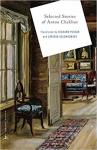
Penguin collection, translated by Wilks, book cover

“The lady and with the little dog” was an out-of-left-field recommendation for my reading group for two reasons. One is that it is a single short story – not even a whole collection which we have done before. And the other is that the member who recommended it did so on the basis of its being referred to a few times in Sebastian Smee’s recent Quarterly Essay (72), Net loss: The inner life in the digital age, which I’ll review next, hopefully.

So, what to read? We were as a group challenged, albeit was a good challenge. First, “the lady and the little dog” has appeared in many Chekhov collections over the years, accompanied by different selections of stories (though of course some individual ones do recur more than others.) Second, the story has been translated by many translators, including Constance Garnett, Ivy Low Litvinov, collaborators Richard Pevear and Larissa Volokhonsky, and Ronald Wilks. So, do we read all or some of the other stories in the collections we variously acquired (or try, even, to suggest we all read the same collection? That wasn’t going to happen! Particularly given availability challenges.) Or, do we just read the story plus the work that inspired its recommendation? (But what about the fact that there was a mix-up not resolved until late in the month about what exactly was that work!) In the end, our being a disciplined but not controlling group, we all chose our own paths, which made for an interesting meeting.

Penguin collection, translated by Garnett, book cover

Now, I have to admit that at the end of my first reading of the story – this story that is the lead story in so many collections and so must be well-regarded – I was a little underwhelmed, though why is hard to explain. After all, much as I love Guy de Maupassant’s short stories with their dramatic twists, I also love quiet stories about character, which is more Chekhov’s style. I think the issue was that I read it too fast, too distractedly, because when I reread it, Chekhov’s skill started to shine through. Chekhov, by the way, is seen as marking the transition between the mid- to late-nineteenth century realism of de Maupassant and the modernism of early twentieth century Joyce.

The story concerns an adulterous affair between 40-year-old Gurov and the much younger Anna, who meet while holidaying in Yalta without their respective, unsatisfactory spouses. Gurov’s arranged marriage was to a woman whom he considered “not very bright, narrow-minded and unrefined” and who “makes love insincerely”, while Anna sees her husband as “no more than a lackey” or “flunky” (depending on your translation!) She wants “to live life to the full”. Gurov initially sees his seduction of and relationship with Anna as “just another adventure”, not expecting to care when she returns home to St Petersburg. But, after he returns to Moscow, he realises that he’s been touched by her. Life has become meaningless:

Those pointless business affairs and perpetual conversations – always on the same theme – were commandeering the best part of his time, his best strength, so that in the end there remained only a limited, humdrum life, just trivial nonsense.

Penguin collection, translated by Pevear and Voslonsky, book cover

Consequently, he seeks out Anna, and finds that she too was unhappy, and so their affair resumes.

As the affair progresses, Gurov makes a distinction between his inner and outer lives (which is what Smee references in his essay). Gurov thinks:

He was leading a double life: one was undisguised, plain for all to see and known to everyone who needed to know, full of conventional truths and conventional deception, identical to the lives of his friends and acquaintances; and another which went on in secret. And by some strange, possibly fortuitous chain of circumstances, everything that was important, interesting and necessary for him, where he behaved sincerely and did not deceive himself and which was the very essence of his life – that was conducted in complete secrecy; whereas all that was false about him, the front behind which he hid in order to conceal the truth– for instance, his work at the bank, those quarrels at the club, his notions of an ‘inferior breed’, his attending anniversary celebrations with his wife – that was plain for all to see. …

What I noticed more on my second read through was Gurov’s personal growth. In the beginning, he is bored, misogynistic, and selfish. He found men boring, and preferred female company, and yet “he always spoke disparagingly of women and whenever they were discussed in his company he would call them an ‘inferior breed’”. Moreover,

Repeated – and in fact bitter – experience had long taught him that every affair, which at first adds spice and variety to life and seems such a charming, light-hearted adventure, inevitably develops into an enormous, extraordinarily complex problem with respectable people – especially Muscovites, who are so hesitant, so inhibited – until finally the whole situation becomes a real nightmare.

Penguin collection, translated by Slater, book cover

Then Anna appears, and this self-centred man is suddenly possessed by “those stories of easy conquests … and the alluring thought of a swift, fleeting affair, of a romance with a strange woman whose name he didn’t even know.”

By the end, though, not only has he realised that he had “genuinely, truly fallen in love – for the first time in his life”, but that he had come to a new understanding of himself:

Anna Sergeyevna and he loved one another as close intimates, as man and wife, as very dear friends. They thought that fate itself had intended them for each another, and it was a mystery why he should have a wife and she a husband. And in fact, they were like two birds of passage, male and female, caught and forced to live in separate cages. They forgave one another all they had been ashamed of in the past, forgave everything in the present, and they felt that this love of theirs had transformed them both.

There is, however, no easy conclusion – no clever twist, no clear ending, happy or tragic.

And so, of course, as I should have realised on the first read, “The lady with the dog” (or “with the little dog” or “the lap dog” or “the pet dog”, depending on your translation) is a tight, moving, ironic story about a man who, like many of Jane Austen’s best characters in fact, discovers the errors of his attitudes, and is transformed by the knowledge.

Anton Chekhov
“The lady with the little dog”
in The lady with the little dog and other stories
(trans. Ronald Wilks)
London: Penguin Books, 2002)
(“The lady with the little dog”, first pub. 1899)
ISBN (eBook): 9780141906850

Avalailable online at Adelaide University’s etext site.

Mary McCarthy, The group (#BookReview)

Book coverMy reading group has a few loose “rules” for choosing our reads, but one of the more rigid ones is that each year we like to read at least one classic. This year’s first classic – yes, another is coming – was Mary McCarthy’s The group. As I wrote in last week’s Monday Musings, it was published in 1963 and became a New York Times best-seller. I was initially uncertain about this choice, because I had read it and there are so many classics I still haven’t read, but, as it turned out, I was glad to read it again. This is because it is a true classic, by which I mean it’s a book that you can read again, at a different time in your life, and find new richness.

For those of you who don’t know the story, it centres on the lives of eight women from Vassar College’s Class of ’33 (of which McCarthy herself was a member, so she knew whereof she wrote – Bill!) The novel follows their lives for the next seven years as they, variously, marry, divorce, have children, find jobs, and in the case of one, die. In doing so, it also evokes their era beautifully. This was a time when America was coming out of the Depression, when women’s expectations about their lives were starting to change, when medicine was starting to assert its authoritarian self, when Trotskyism was attracting the radical intelligentsia, and when Europe was moving into World War 2. Our eight women – Kay, Lakey, Polly, Dottie, Priss, Libby, Pokey and Helena – having received a liberal Vassar-style education, are engaged in the issues of their day. Indeed, the role of education is one of the themes of the novel. Early in the novel, Kay recognises that:

That was the big thing they taught you at Vassar: keep your mind open and always ask for the evidence, even from your own side.

Late in the novel, Norine, a friend of the group, and also Vassar ’33, voices the challenge their education has posed for them: “our Vassar education made it tough for me to accept my womanly role”. Some, of course, found it easier to accept than others.

[SLIGHT SPOILER ALERT FOR THE NEXT PARAGRAPH ONLY, BUT THIS IS A CLASSIC SO I’M INCLUDING IT]

I loved the novel – the satire, the writing, the details, the individuation of the characters. What was not to like? Well, there are flaws for some readers. It doesn’t have a strong plot, and the structure is episodic, so that just as you get into one person’s story, you leave her to move onto another. This can be alienating for readers who love to emotionally engage with their characters. I can see all this but, for me, they are not overriding issues. Firstly, while there isn’t a strong plot, there is a narrative trajectory that sees relationships develop and change over time as the girls mature from new graduates to experienced women. Also, the novel commences with the wedding of a character, who recurs more frequently than do others as the book progresses, and it neatly concludes with her funeral. Secondly, despite the episodic approach, I engaged with the lives of each character as she came into focus for a chapter or so. Of course, some engaged me more than others, and, in fact, McCarthy gives some more time than others. What made McCarthy’s approach work for me were the ideas being explored through the various characters, and the writing used to do this. Evocative and/or witty writing expressing interesting ideas or viewpoints will get me every time.

So, for example, the book contains wonderful set pieces that seem to just keep coming, including Dottie’s deflowering and the sociology of the “pessary”, Priss’s (shock! horror!) breast-feeding in hospital under the instruction of her paediatrician husband, Priss versus Norine on child-rearing, Hatton the butler’s management of “his” family, Kay’s time in a mental hospital, to name just a few. These vignettes – which provide such insight into the lifestyles, the political interests, health and medicine, and so on, of these women – make the novel a rich source for social history of the times. Being educated, and generally of a liberal bent, most of the group are actively engaged in the political issues of their day. Some support Roosevelt’s New Deal, while those more radical become involved in socialism, Trotskyism in particular. There are references to World War 2, and the tensions between the America Firsters (sound familiar?) and those who thought America should join the war.

Gender is also an issue. Educated they may be, but these women find themselves, more often than not, controlled by men in what was still a patriarchal society. The women believe that:

It was very important … for a woman to preserve her individuality; otherwise she might not hold her husband.

But the truth is somewhat different. Kay is mischievously committed to a mental hospital by her husband, without her knowledge, and finds she needs his agreement to be discharged, while Priss

did not recommend sacrifice, having meekly given up her job and her social ideals for Sloan’s sake. It was now too late, because of Stephen [her son], but she was convinced she had made a mistake.

And then, as you expect from a classic, these more temporal concerns are wrapped up in bigger, more universal themes, such as juggling love and friendship, managing relationships and work, balancing theory versus practice, or navigating the gap between appearance and reality. Our characters reflect the gamut of human nature, being, variously, conservative, radical, idealistic, pragmatic, confident, kind, empathetic, proud, manipulating, ambitious, pompous, opinionated, naive. You name it, you are likely to find it amongst the eight.

Besides its rich content is the writing. It’s so sly and satiric that it carries you on regardless of the story:

Now, in the chapel, they rearranged their fur pieces and smiled at each other, noddingly, like mature little martens and sables: they had been right, the hardness was only a phase; it was certainly a point for their side that the iconoclast and scoffer was the first of the little band to get married.

Moreover, McCarthy can skewer character with just a few words. Candace Bushnell, in her Introduction to my edition, writes that “Readers who desire ‘likeable characters’ in their fiction above all else may be disturbed to find that every one of her characters is flawed.” This is true, and is, in a way, what I liked best. There’s no perfection here, there’s just young women struggling to make lives for themselves with an education that didn’t always make it easy for them to live in the world they found themselves. Here are couple of McCarthy’s character descriptions:

she had an image of herself as a high-bred, tempestuous creature, a sort of Arab steed in an English sporting primitive. (Libby)

fat cheerful New York society girl with big red cheeks and yellow hair, who talked like a jolly beau of the McKinley period, in imitation of her yachtsman father. (Pokey)

a solemn, ashy-haired little girl who looked like a gopher and who felt it her duty to absorb every bit of word-of-mouth information that pertained to consumer problems. (Priss)

In the last chapter, Polly, the most sympathetic of the women, thinks “how young and superstitious they had all been … and how little they had changed.” Perhaps, though I think she’s being a bit hard and that some wisdom had been achieved. Regardless, the ending, when a certain male character gets his comeuppance, is delicious – and was loved by the members of my group!

Mary McCarthy
The group
London: Virago (Hachette Digital), 2009 (Orig. ed. 1963)
438pp.
ISBN: 9780748126934

Sayaka Murata, Convenience store woman (#BookReview)

Book coverConvenience store woman, which won Japan’s prestigious Akutagawa Prize, is Sayaka Murata’s 10th novel, but her first translated into English. Hopefully, it won’t be the last. A rather unusual book, it elicited a stimulating discussion at my reading group last week.

The convenience store woman of the title is 36-year-old Keiko Furukawa. She isn’t “normal”, and her family worries she will never fit in to society. However, when 18 years old, she obtains work at a newly opened Smile Mart convenience store, and quickly feels comfortable, undertaking routine daily tasks, and following the store’s rules. Eighteen years later, she’s still there. This is not seen as a valid situation for a woman of Keiko’s now mature age. Why isn’t she married? And why doesn’t she have a better job? Then she meets another convenience store worker, the also, but differently, nonconformist Shiraha, and she thinks she can solve both their problems by having him move in with her.

It’s a short book, at just 176-pages in the print edition, and is told first person. Now, for those of you who remember my recent discussion of first person voices, Convenience store woman is a perfect example of an effective use of first person. The main theme is the push for conformity, the push to follow the expected narrative of a life, but our narrator, Keiko, is not, for whatever reason, able (or willing) to conform. This theme is particularly relevant to Japan, which has a reputation for conformity and group behaviour, but it’s also universally relevant, because many societies, my own included, are not good at coping with people who stray from the “norm”.

So, Keiko is different. She’s been different all her life. She knows it, and she’s mystified. She’s particularly mystified by the way people often behave which seems counter to logic, and also by the way people cheer up when they think she’s behaving “normally”. An example of the former happens in her childhood, which she tells us via flashback. There’s a schoolyard fight. The kids call for the fight to stop, so she goes to the toolshed, gets a spade and bashes one of the kids with it. Everyone is horrified,

“But everyone was saying to stop Yamazaki-kun and Aoki-kun fighting! I just thought that would be the quickest way to do it,” I explained patiently. Why on earth were they so angry? I just didn’t get it.

An example of the latter occurs after she invites Shiraha to live at her place. Everyone assumes they are in a relationship. “They were all so ecstatic”, she wondered, she says, “whether they’d lost their minds”. Listening to her friends “go on”, she says,

was like hearing them talk about a couple of total strangers. They seemed to have the story wrapped up between them. It was about characters who had the same names as we did, but who had absolutely nothing to do with me or Shiraha.

There it is – the expected story or narrative of life!

Of her convenience store colleagues, she says:

I was shocked by their reaction. As a convenience store worker, I couldn’t believe they were putting gossip about store workers before a promotion in which chicken skewers that usually sold at 130 yen were to be put on sale at the special price of 110 yen. What on earth had happened to the pair of them?

As you can see there’s a good deal of humour in this book. You can also see why this story could only be told first person. Any other voice would risk undermining Keiko’s authenticity, her reality.

So, for Keiko, it’s “convenient” having Shiraha at her place. Everyone is happy for her, and she likes that “they’ve stopped poking their nose into my business”.

However, while Keiko, for all her strangeness, is a likeable character, Shiraha is not. He has no desire to work, and takes advantage of her wish to appear “normal”, even though it satisfies his need for the same. He excuses his laziness by criticising society and its unfair gender expectations on men:

“Naturally, your job in a convenience store isn’t enough to support me. With you working there and me jobless, I’m the one they’ll criticize. Society hasn’t dragged itself out of the Stone Age yet, and they’ll always blame the man. But if you could just get a proper job, Furukura, they won’t victimize me anymore and it’ll be good for you, too, so we’d be killing two birds with one stone.”

Worse, he’s arrogant and cruel:

“I did it! I got away! Everything’s okay for the time being. There’s no way you’ll be getting pregnant, no chance of me ever penetrating a woman like you, after all.”

Actually, he only “got away” because Keiko had the idea of his moving in. Fortunately, she has no interest in sex, so his comment falls on flat ears – but we notice it.

The novel, then, hinges on the idea of normality, with the word “normal” recurring throughout the novel. Early on, Keiko realises that “the normal world has no room for exceptions and always quietly eliminates foreign objects”. This is why, it dawns on her, her family wishes to “cure” her. She is therefore grateful for the convenience store, where she can operate as “a normal cog in society” – until her age makes it no longer “normal”. The charming Shiraha has his own take:

“People who are considered normal enjoy putting those who aren’t on trial, you know. But if you kick me out now, they’ll judge you even more harshly, so you have no choice but to keep me around.” Shiraha gave a thin laugh. “I always did want revenge, on women who are allowed to become parasites just because they’re women. I always thought to myself that I’d be a parasite one day. That’d show them. And I’m going to be a parasite on you, Furukura, whatever it takes.”

Shiraha shows us that Murata’s understanding of deviations from the norm is nuanced, not simplistic.

Anyhow, later in the novel, after her sister asks “How can we make you normal?”, Keiko comes to recognise that her sister is happier seeing her as “normal”, albeit with “a lot of problems”,

than she is having an abnormal sister for whom everything is fine. For her, normality—however messy—is far more comprehensible.

In the end, Keiko does resolve her conundrum regarding how to live in a way that is true to herself. It is inspired, in fact, by the convenience store, which I think we can read as a microcosm of society. She suggests that “a convenience store is not merely a place where customers come to buy practical necessities, it has to be somewhere they can enjoy and take pleasure in discovering things they like”. She can play a role in that.

Convenience store woman is a wonderful read. Perfect in tone and voice, and fearless in its exploration of the confining nature of “normality”, it forces us to look beyond, and imagine other lives and ways of being.

Sayaka Murata
Convenience store woman
Translated by Ginny Tapley Takemori
London: Portobello Books, 2016 (trans. ed. 2018)
eISBN: 9781846276859

Amor Towles, A gentleman in Moscow (#BookReview)

Cover for Amor Towles A gentleman in MoscowAmerican writer Amor Towles’ third novel, the best-selling A gentleman in Moscow, generated a surprisingly lively discussion at my reading group last week, because beneath its engaging, accessible exterior are some puzzles. These puzzles relate primarily to Towles’ intentions. What were they? Why did an American investment banker write an historical fiction novel about a Count in Bolshevik Russia?

But, I’m rushing ahead, so I’ll slow down and do the right and proper thing, which is to start  with a plot outline. The novel opens in Moscow in 1922, when our protagonist Count Rostov – once a hero of “the prerevolutionary cause” but now a “Former Person” – is sentenced to indefinite house arrest in the grand hotel, the Metropol, in which he has been living for four years. Not only that, but he is to live in the old servant’s quarters rather than in his luxurious suite. Fortunately, our count is nothing if not resourceful, and he quickly decides that “if a man does not master his circumstances then he is bound to be mastered by them”. The next 450 pages or so chronicle the next three decades or so of the Count’s life under this house arrest, detailing life in the hotel and the relationships he forges over that time. It is, unexpectedly, a thoroughly enjoyable read, but why, exactly? What is it all about?

While most of my reading group loved the book, albeit a couple of us had this niggling “why” question, one member found it “intellectually dishonest”. She could not accept the Count as being in any way representative of Russian aristocrats of the time, and she felt that the novel glossed too easily over the real horrors of the period. Why did she feel so strongly about this, while the rest of us, mostly well-versed in Russian history, did not feel the same way? Well, I don’t know exactly, but I think it might have something to do with form and tone.

I’m going to explore this a little rather than focus on the content, partly because it intrigues me and partly because I presume that quite a few of you will have read the book and know its content. So, here goes. The novel is historical fiction, but what sort? It’s not your bodice-ripping romance nor the swash-buckling adventure that exemplify this genre. But, neither is it the sort of social realism that is the most common alternative to the romance or adventure approach. What, then, is it? Well, as I was reading it, I had visions of Austen. Sorry, but it’s true! It’s not Austen, of course, but it has a comedy-of-manners ring to it, complete with Austen-like commentary, not to mention her satiric and ironic touches.

This means that although, as its own blurb says, it takes place during “some of the most tumultuous decades in Russian history”, the focus is elsewhere. It’s on the Count and the small community surrounding him; it’s on how does one, in fact, adapt to living under such circumstances. Some of you will know Jane Austen’s famous comment in a letter to her niece about her subject matter:

You are now collecting your People delightfully, getting them exactly into such a spot as is the delight of my life – 3 or 4 families in a Country Village is the very thing to work on.

It’s not a stretch to see the story of the Count’s life in the Metropol through this prism. Indeed, the above-mentioned blurb continues to say that the Count, stripped of his luxuries, “is forced to question what makes us who we are”. This journey was the book’s main story for me. We do learn about Stalin’s regime, through characters who come to the hotel and interact with the Count, but the Count’s personal story is the main game.

So, what does he learn? Early on, he vows “to master his circumstances through practicalities”, and this he does by tailoring his life and expectations. His initial change from hotel guest to prisoner sees him still living pretty much the high life, free to relax and dine, but by the end of the novel he is working as the Head Waiter in the main restaurant, for which, in fact, his aristocratic training in etiquette had well qualified him. He had said that “his model for mastering his circumstances” would not be Dantés planning revenge, nor Napoleon imagining his triumphal return, but “a different sort of captive altogether: an Anglican washed ashore. Like Robinson Crusoe”. Crusoe, in other words, adapted, confronting the challenges as they arose.

As with most of Austen’s protagonists, the Count’s “learnings” are not overly dramatic. He’s already a generally decent, sensible sort of person, but late in the novel, he tells his lover, Anna, in a discussion comparing American “conveniences”, like dishwashers, with Russian privations,

“I’ll tell you what is convenient … To sleep until noon and have someone bring you your breakfast on a tray. To cancel an appointment at the very last minute. To keep a carriage waiting at the door of one party, so that on a moment’s notice it can whisk you away to another. To sidestep marriage in your youth and put off having children altogether. These are the greatest of conveniences, Anushka—and at one time, I had them all. But in the end, it has been the inconveniences that have mattered to me most.”

These inconveniences revolve around the deep relationships he develops through his imprisonment and the demands that such relationships entail. They result in a man who is described by his interlocutor at the beginning as being “without purpose” turning into someone very purposeful.

What’s also Austen-ish is the commentary, the astute observations made about human nature, such as:

By their very nature, human beings are so capricious, so complex, so delightfully contradictory, that they deserve not only our consideration, but our reconsideration—and our unwavering determination to withhold our opinion until we have engaged with them in every possible setting at every possible hour …

If there’s one thing Austen recognises it’s the capriciousness of humans. Another Austen-like statement is this one: “It is a fact of human life that one must eventually choose a philosophy”.

But, still, why write such a story? Towles, himself, has said that he wanted to write about someone forced to live in a grand hotel, and that he had “no central theme”. Rather, he wanted to create a work that would be “satisfyingly cohesive” but “prompt varied responses from reader to reader, and from reading to reading.”

Consequently, while my reading of the book encompasses seeing it as critiquing the corruption, hypocrisies and loss of freedoms that characterised the Bolshevik regime, my overall response is a broader one, which is that, unlike the Count’s friend Mishka and the little-girl-turned-mother Nina, we would do better to develop and rely on our personal set of values, to work on our relationships and the attendant responsibilities not to mention on our own adaptability to circumstances, as the Count does, than commit to any single “ism”.

Lisa (ANZLitLovers) thoroughly enjoyed this book too.

Amor Towles
A gentleman in Moscow
London: Viking, 2016
502pp.
ISBN: 9781448135509 (Kindle ed.)

Marilynne Robinson, Gilead (#BookReview)

Marilynne Robinson, GileadOnce again I have reason to start a book post with a discussion of the title, this time Marilynne Robinson’s 2005 Pulitzer Prize winning novel, Gilead. Gilead, in the context of this novel, has a literal and metaphorical meaning, literal because it takes place in the fictional Iowan town of Gilead, and metaphorical because “gilead” may also connote “hill of testimony”. This novel is, in fact, dying minister John Ames’ testimony of his life and values, something he is writing for his 7-year-old son to read when he is older.

Given Gilead was published in 2004,  many of you may already have read it, as well as her next two books, Home and Lila, which form a trilogy and which, I understand, cover the same people but from different perspectives. I read Gilead with my reading group. Responses were mixed, but many of us were interested enough to want to read Lila, at least, to see her perspective.

I was, though, one of those who liked the book unconditionally. I agree that it’s slow to get into, which is not helped by the fact that it has no chapters, excepting one “break” heralding a slight change of pace towards the end. This break occurs when a certain piece of information comes out about John Ames’ namesake, Jack (John Ames Boughton). It is around here that the book picks up in interest significantly because there’s a suggestion that there might even be a plot! However, given I’m a reader who doesn’t seek a strong plot and that I rather like spare writing in a melancholic tone, I was engaged from the beginning. It is melancholic, naturally, because the narrator knows his life is running out, but it’s more resigned than sad.

So, what is this essentially plot-less book about? That depends a bit, I’d say, on each reader’s perspective. For some the book is very much about theology and religion. John Ames speaks a lot about the Bible, about biblical characters and stories, and about death and heaven. Some in my group found his religion old-fashioned. And it is to some extent – partly because of its era. Ames was born in 1880 and the book is set in 1956 when he is 76 years old. John Ames also talks a lot about his family – his father and grandfather, in particular, who were both ministers. Now, Ames’ being born in 1880 means his father, and grandfather, were alive during the Civil War. We learn quite a bit about the history of the abolitionists in Iowa and Kansas. Ames’ grandfather was a John Brown follower, which meant that he was not above using violence to achieve the goal. His father on the other hand, having seen what his father did and thought, was a pacifist. Most of my reading group enjoyed this historical-cultural aspect of the novel.

But, what interested me most about the book was what I saw as one of its main themes, which concerns how to live a good life. In the opening paragraph Ames refers to a conversation with his young son. He writes

I told you that you might have a very different life from mine, and from the life you’ve had with me, and that would be a wonderful thing, there are may ways to live a good life.

Late in the novel, he says something much simpler than this, though. He says

There are a thousand thousand reasons to live this life, every one of them sufficient.

Is he departing from the idea of living a good life, to just living your life? I’m not sure. Pretty much at the novel’s central point he refers a statement by theologian John Calvin that we are actors on a stage with God being the audience. Ames interprets this as suggesting that we are “the artists of our own behaviour”, and, further, that God as audience implies an aesthetic rather than (as well as?) a moral aspect to God’s reaction to us. He explores the implications of this role of God’s a little further but, while it was interesting, it’s not where I want to take this post. I have other ideas to share!

One of the main threads – or themes – in the novel concerns fathers and sons. This is pretty obvious, really, given the whole book is framed as a letter from a father to a son in which Ames discusses his wishes for his son, but it is amplified through his discussion of the relationship between his grandfather and father, and between his father and himself. The relationships are complex, as I’ve already suggested. But, his thoughts on these relationships are intensified by his relationship with and attitudes to his namesake, the aforementioned Jack, to whom he is a “second father”. It is Jack who forces Ames to reassess his values and attitudes, not to mention his understanding of his worth as a Christian minister.

The problem is that Jack has been a bad boy. He became involved with a young girl, and a child ensued – after which he scarpered, leaving his family to work out what to do. Ames struggles with his attitude to Jack – particularly when Jack reappears 20 or more years later, as Ames is writing this letter. He says of Jack’s behaviour:

It was something no honourable man would have done … And here is a prejudice of mine, confirmed by my lights through many years of observation. Sinners are not all dishonourable people. But those who are dishonourable never really repent and never really reform … in my experience, dishonour is recalcitrant.

This is his own view, he admits, because “no such distinction occurs in Scripture”. Again, we are turned to formal theology, but again, I am going to turn away. The point for me is, regardless of what is “scriptural” or not, that Ames struggles with the idea of forgiveness, of acting with grace towards Jack. This forms his inner conflict as he considers father-son relationships, his preaching to his flock, and his relationship with his old friend and Jack’s father, Boughton. It is through this conflict, through finally opening himself to really listen to Jack, that he comes to a deeper more all-encompassing idea of what “grace” and, within that, forgiveness, really mean.

And that’s why I liked this book. It’s quiet but it deals with the essence of what confronts each of us every day in our relationships with each other. It deals with the disquietude that we all confront when people don’t behave in the ways we think they ought. Ames describes it as “that old weight in the chest, telling me there is something I must dwell on, because I know more than I know and must learn it from myself.” You don’t have to be a minister or a Christian to have the same hope that John Ames does, which is “to die with a quiet heart”. Gilead is, to me, a lovely book about what it means to be human and to live with humanity.

Marilynne Robinson
Gilead
London: Virago, 2006
282pp.
ISBN: 9781844081486