Louis Nowra, Into that forest (Review)

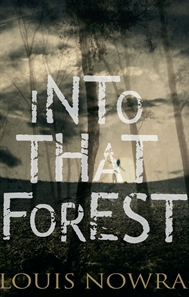
Louis Nowra, Into that forest

Courtesy: Allen & Unwin

Louis Nowra is one versatile and prolific writer, having written novels, non-fiction, plays and screenplays, essays and even libretti. Into that forest is his latest work. It was shortlisted for the Young Adult Novel prize in the 2012 Aurealis awards and the Ethel Turner Young People’s Literature prize in this year’s NSW Premier’s Literary Awards. I read this for my reading group. We don’t often do youth literature but every now and then one pops up that we think might interest us … such as a book by Nowra.

The first thing to say is that the novel is written in a unique voice. Here is its opening:

Me name be Hannah O’Brien and I be seventy-six years old. Me first thing is an apology me language is bad cos I lost it and had to learn it again. But here’s me story and I glad to tell it before I hop the twig.

And what a story it is … this novel feeds into several Australian, and wider, literary traditions. There’s the lost child and the feral child motifs (reminding me of Dog boy). There’s Tasmanian Gothic, and there’s also a bit of the fairy-tale about it. Subject-wise it covers some significant ground: environmental issues (involving both the extinct Tasmanian tiger and the whaling industry) and what we’d now call Post Traumatic Stress Disorder. This might sound rather mechanistic, but there’s no sense of “ticking off”. It’s not didactic, and it’s all logical within the framework of the book.

Set in the late 19th century, it tells the story of two young girls, Hannah (then 6) and Becky (7) who find themselves lost in the bush (oops, forest!) after their boat capsizes in a storm and Hannah’s parents drown. They are taken in by a Tasmanian Tiger pair, and live with them for four years. Meanwhile, Becky’s father, Mr Carsons, is out looking for her. Eventually they are found, but the process of re-integration is not easy. The novel has a small cast of characters, which keeps it tightly focused. Besides Hannah’s parents who die near the beginning, there’s our two young protagonists, Becky’s father, his friend Ernie, the “tiger man”, a few other minor characters – and of course, the tigers, named Dave and Corinna by Hannah.

As in Dog boy, the description of life with the tigers is pretty visceral. At first Becky resists living like a tiger – perhaps because she still has a father whom she hopes will find her – but eventually she too succumbs, if succumb is the word. It is, after all, a matter of survival. And so they shed their clothes, start to move mostly on all fours, and develop keen animal instincts (of sight, hearing and smell). They also develop a taste for raw food and become adept at hunting. The descriptions of killing and eating the prey are not for the squeamish – “I were starving and the taste of blood made me feel even more hungry” and “What were ever in that shiny pink gristle surged through me in waves of ecstasy” – but they are important to our understanding of what their lives had become. Hannah says:

God knows where me sense of survival came from. Maybe it’s natural cos humans are just animals too.

There is a bogey man here – the tiger man or bounty hunter, whom Hannah had met before, through her parents. To the girls he is more brutal than the tigers. He’s “evil”, kills tiger pups, does “stuff to himself that were rude”. But, perhaps, he’s just another survivor, albeit a not very pleasant one?

While Hannah is the narrator, Becky’s character is the more complex one. She struggles more with the change forced upon them:

She didn’t want to forget. Me? I thought it were stupid to try and remember like Becky did. I didn’t see any use for it. Me English started to shrivel up, like an old dry skin a snake gets rid of. It just lies there in the grass rotting away and then vanishes with the wind. I took to talking in grunts, coughs and hoarse barks like the tigers. This annoyed Becky no end. But it were simple – the tigers understood me. Becky warned I were making a mistake. You will forget your language. You will forget your parents. You are becoming an animal, she’d say. Why argue with her? She were right on every level.

Becky initially fights against the brutality of the hunt – there’s a horrific description of the tigers attacking seals – but then surprises Hannah by rather fearlessly exerting some dominance in the pack. She was of course desperately hungry by then, but it shows Hannah that:

she were really stubborn if she wanted something. She were brave, she were stubborn, she were smart, she were tough.

Unfortunately, Becky is not as tough – or as adaptable – as Hannah thought, and consequently precipitates the novel’s rather shocking conclusion.

It’s a pretty bold novel – but less so than, say, Lord of the flies. There’s plenty to discuss, particularly regarding the subjects I suggested at the beginning of the post. The big theme, though, the one common to feral children books, has to do with defining our nature. What separates human from animal? What would you do to survive – and what would that say about the essence of humanity? Good stuff for young adults, and a gripping read too for we older readers.

Louis Nowra
Into that forest
Crow’s Nest: Allen & Unwin, 2012
ISBN: 9781743311646 (Kindle ed.)

Andrew Croome, Midnight empire (Review)

Andrew Croome, Midnight Empire

Courtesy: Allen & Unwin

Andrew Croome’s latest novel Midnight empire is yet another read this year that is outside my usual fare. I read it because of my reading group’s focus this Centenary year on Canberra writers. It wasn’t a big ask, though, because I had read and enjoyed his first novel, Document Z. While both deal with spies, they are very different novels: Document Z is historical fiction, while Midnight empire is a thriller. I wonder what Croome will do next. Romance? Interestingly, Croome, who attended my reading group’s discussion, suggested that Midnight empire is more like a first book. This is because when writing Document Z, he could always go back to the historical record when he stalled, but with Midnight empire he had to rely on his own ideas to keep the story going. Croome told us that the inspiration for the book was drones and, developing that, the idea that with drones people can conduct “war” from their office desk. What does this mean for our psyches, he wonders. And where is the line between who is at war and who isn’t? But more on that later.

First, a little about the plot. The protagonist, Daniel Carter, is a rather naive 26-year-old computer programmer whose company’s encryption algorithm has been bought by the US government for its drone program. Daniel is sent by his Canberra-based company to Creech Airforce Base, outside Las Vegas, to install the software and make sure it runs properly. Suddenly he finds himself at war, albeit sitting at a computer terminal in the American desert, a long way from Afghanistan and Pakistan where the actual war is being waged. Unlike the airforce pilots and CIA agents Daniel is working with, he has not been trained for war.

Parallelling the story of Daniel’s professional life is his personal one. He comes to Las Vegas despite the wishes of his long-term girlfriend Hannah. Their relationship has been foundering and his, to her mind, not well thought through decision to go to Las Vegas is the catalyst for her to break up. Daniel is disappointed, but it leaves him free to meet someone new – and he does, of course. He meets the beautiful Russian, Ania, at the poker table. This is Vegas after all!

As you would expect for the genre, things start to go awry. An agent double-crosses them, pilots start dying mysteriously in Vegas, and the drones are sent in to Peshawar to take out their target. Daniel becomes perturbed about the morality of what he sees and decides to leak some information. Meanwhile, his life with Ania becomes complicated when she tells him her brutal husband has come to Vegas looking for her. Daniel is torn between his work and his personal responsibilities, and starts crossing even more lines from which he may not be able to return. As we read on, we are not sure who to trust or believe. Is or isn’t Ania the traditional spy-tale Femme Fatale? And are the CIA starting to suspect him?

Daniel … in the lion’s den

Croome has, I suspect, chosen Daniel’s name for its allusive – and ironic – value: we can see where Daniel is, but he seems pretty oblivious. Fairly early in their relationship Ania questions Daniel about his work. She’s mystified by the fact that he says he’s fighting a war, even though he didn’t volunteer for it and wasn’t conscripted:

‘Then why are you here?’

‘It is simply that I have a job. I am doing my job.’

You are at war because of your job?’

‘Yes’.

She seemed to find this amusing. ‘But that is not romantic,’ she said. ‘How am I supposed to believe that you are my hero, if it is your job?’

She tries to understand this war in which he says that he won’t be killed. It’s not a war, she believes, if he is not in danger of being killed. Daniel sees it differently:

‘We drop bombs on people … They are trying to harm people and we blow them up. I don’t know what else you’d call it’.

At this point, the war is just like a job to Daniel.  He goes to work on the base, they track targets with the drones, and he goes back to his temporary home in Vegas and lives his life. When he is reminded by his CIA boss Gray that “like it or not, you happen to be at war” his reaction is disingenuous:

if people were dying or endangering one another, it had stuff-all to do with him. Gray could shove it. If the alertness of your encryption operator was your primary concern, you needed your priorities set straight.

He has a point – to an extent – and yet, as his ex-girlfriend had clearly understood, he had agreed to be part of it. Not long after this, they attack their target, completely demolishing a building in which people, including children, had been. It’s remote, cold, clinical … Daniel looks for the children hoping they’ve not been taken out too, but “where were they?” And yet, still, the penny hasn’t fully dropped. Ania, as Hannah had before her, wants Daniel to recognise what he is doing:

I am just saying think, Daniel … I am just saying there are choices – there are decisions to make.

I won’t labour this further; I’m sure you’ve got the main theme by now.

The midnight empire …

How do you critique a novel like this, one that is more plot driven than I’m used to? What should my review focus on? Plot, character, setting are, I’m guessing, the critical things – and I’d give them the thumbs up. The plot is plausible, the character of Daniel believable, and the setting chillingly realistic. The resolution – particularly in terms of who is implicated – is a little more ambiguous than Croome apparently intended but that’s probably the risk you take when you start to play with genre formula. I did find some of the technical details – the encryption technology, and the ins-and-outs of poker playing – somewhat uninteresting at times, but that’s more to do with me and my reading focus I think. Overall, it’s a carefully orchestrated and gripping read that should appeal to a wide readership.

‘Aren’t you interested, though?’ she said. ‘That people would be able to do this – exist somewhere beyond the rest of us, surfacing, emerging at night, a strange midnight empire, you would almost say traceless.’

Ania is talking about the people – and they are real – who live in the storm drains beneath the Strip – but what, we wonder, about the other, infinitely more worrying midnight empires? Croome has made very clear in this novel why we should be intersted in them…

Andrew Croome
Midnight empire
Crows Nest: Allen & Unwin, 2012
238pp
ISBN: 9781743311127

Irma Gold (ed), The invisible thread (Review)

The invisible thread, by Irma Gold

Cover (Courtesy: Irma Gold and Halstead Press)

I even get nervous when I open a book, you know, for the first time. It’s the same thing, isn’t it. You never know what you’ll find, do you? Each person, each book, is like a new world … (from Mark Henshaw’s Out of the line of fire, in The invisible thread)

At last, you may be thinking, she’s going to review the whole book. At least, I hope that’s what you’re thinking, because this book deserves a dedicated review rather than the scattered posts I’ve done to date. The book I’m talking about is, of course, Canberra’s centenary anthology The invisible thread.

The aim of the anthology is a little different to that of Meanjin‘s special Canberra issue, which I recently reviewed. While its editor, Sanders, wanted to offer “a taste of Canberra”, Gold’s aim was to present “literature of excellence” from writers, past and present, who have had a significant relationship with Canberra. For her, Canberra is “not the headline act” but provides “the invisible thread” linking the writers to each other and to the rest of Australia. In her foreword, Robyn Archer, the centenary’s Creative Director, puts it this way:

Many of the pieces are not about Canberra, but they reveal a diversity of interest and style among writers in this region, and thus reflect the unique nature of a city which is located rurally, but positioned nationally.

In other words, The invisible thread is not a parochial apologia for Canberra but an intelligent presentation of the city’s and thence the nation’s cultural, political, social and interpersonal life. The nation’s concerns are Canberra’s concerns – at both the macro (war, indigenous-non indigenous relationships, the environment, and so on) and the micro (birth, marriage, death, and everything in between) levels. You would be hard-pressed as an Australian, or even as an international citizen, not to find something in this book to interest and move you.

Reviewing an anthology is tricky though, and this is particularly so with The invisible thread because it comprises highly diverse pieces – poems, short stories, essays, and excerpts of novels and non-fiction works.  The pieces are not grouped by form, like the Meanjin issue, but in a more organic way intended to take us on a journey in which, editor Irma Gold writes in her Preface, “each work is allowed to converse with those beside it”. And so, in preparation for my reading group’s discussion, I went back to the start and read the book in the order presented. What a pleasure that turned out to be because I did indeed discover added meanings that weren’t necessarily apparent from the dipping-in-and-out approach I had been using.

Let me give an example. The anthology opens with an excerpt from war historian CEW Bean’s Anzac to Amiens, itself a condensation of his Official history of the first world war. I knew of Bean but had not read his history. I was surprised by his use of imagery, such as this:

And out on every beautiful fresh morning of spring come the butterflies of modern warfare – two or three of our own planes, low down …

After another war-related non-fiction piece, the anthology segues to a short story (“The Good Shoppers”) by Lesley Lebkowicz, which is about her refugee parents, now old and shopping in the supermarket but still affected by the Holocaust, and then to two poems about age (Judith Wright‘s “Counting in sevens” and AD Hope‘s “Meditation on a Bone”). The “conversation” encouraged by this sequence is complex and, I expect, different for each reader. For me, the juxtaposition suggests an irony: “war” steals “age” from many of the youths sent to it. This is just one small example of the sorts of “conversations” Gold has set up in the anthology. Considering them as I read the book added another layer to an enjoyable reading experience. I like reading that challenges my brain on multiple levels.

Compiling an anthology involves, obviously, selecting what to include. It must be hard enough to choose poems, short stories and essays, but what about writers who are best (or only) known for novels or non-fiction books? They can only be represented through excerpts, but there is the risk that these cut-down pieces will be less satisfying to read. Alternatively, of course, they might encourage us to locate the full work and read it. The Bean example above is an excerpt. There are many others, including those from Kate Grenville’s Sarah Thornhill, Jack Heath‘s Third transmission, and Roger McDonald‘s When colts ran. I have noted many to follow-up, which tells you how I found the excerpts overall!

A trickier challenge, probably, is that of representing diversity – not just regarding chronology, subject-matter, tone, and form or genre, but in terms of the writers themselves, such as their gender, or whether they are of indigenous, migrant or other minority background. What emphasis should be given to these in the selection process? And, anyhow, should the writer’s background be highlighted? I’m not sure what Gold and her committee decided about this but the anthology, while primarily representative of the majority culture, is not exclusively so and probably reflects the writing community it drew from.

This is not the last you’ll hear from me on the anthology. It is much too delicious, much too rich, much too full of “luminous moments”* for me not to continue to draw from it. I’m possibly – probably? – biased, but I believe this book should be on every Australian bookshelf and, without disrespecting Irma Gold’s hard work, I’d say it doesn’t really matter whether you read it in its original order or just dip into it as the spirit moves you. What would matter would be to not read any of  it at all.

Irma Gold (ed)
The invisible thread: One hundred years of words
Braddon: Halstead Press, 2012
256pp.
ISBN: 9781920831967

* from Marion Halligan’s essay “Luminous moments” which concludes the book.

Anita Heiss, Paris dreaming (Review)

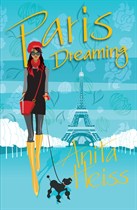
Anita Heiss Paris Dreaming

Paris Dreaming (used by permission of The Random House Group Ltd)

Late last year I wrote a post about the inaugural Canberra Readers’ Festival. One of the speakers was indigenous Australian author, academic and activist, Anita Heiss. I wrote then that I bought one of her books. It was her fourth (I think) chick lit novel, Paris dreaming. This might surprise regular readers here, as chick lit is not really my sort of thing, however …

There are reasons why I was happy to read this book. First was that my reading group chose it as part of our focus on books featuring Canberra for our city’s centenary year. Yes, I know, it’s called Paris dreaming, but the heroine starts in Canberra and Canberra is mentioned (not always positively I must say) throughout the book. The other reason is the more significant one, though, and that is Heiss’s reason for writing the book. I said in the first paragraph that she is an activist and her chick lit books, surprising though it may sound, are part of her activism. In fact, I think pretty much everything Heiss does has an activist element. In her address at the Canberra Readers’ Festival she described herself, an educated indigenous Australian, as in the top 1% of the bottom 2.5% of Australia. She feels, she said, a responsibility to put her people on the “Australian identity radar”.

Does this book do it, and if so how? Well, one of her points is that 30% or more of indigenous Australians are urban and this book, as its genre suggests, is about young urban indigenous women. Anita Heiss manages I think (though I’m not the target demographic so can’t be sure) to present characters that both young indigenous and non-indigenous women can relate to. Our heroine Libby and her friends are upwardly mobile young professionals. They care about their work; they love fashion, drink and food (this is chick lit remember!); and they wonder how to marry (ha!) their career goals and romance.

Indigenous design vase, on hall table, Governm...

Indigenous art vase, Government House, Canberra

So what’s the plot (besides the obvious chick lit formula which this book certainly follows)? At the start of the novel  30-year-old Libby, manager of the education program at the National Aboriginal Gallery, is on a man-fast. She’s been bitten one too many times and has sworn off men, much to the dismay of her tiddas (her “sisters”). She is, though, keen to develop her career and wants a new challenge – all part of the chick lit formula – and so pitches a proposal to her boss that she mount an exhibition of indigenous Australian art at the Musee du Quai Branly in Paris. Of course, her boss approves and off she goes to Paris where, following the formula, she falls for hunky, sexy Mr Wrong while Mr Right watches on, spurned (and spurned and spurned). But, of course, I don’t need to tell you how it comes out in the end do I? This is not subversive chick lit because that would not serve Heiss’s purpose …

Did I enjoy it? Yes, but not so much as a piece of literature because my reading interests lie elsewhere, but as a work written by a savvy writer with a political purpose. This purpose is not simply to show that young, urban, professional indigenous Australians exist but, as she also said in her address, to create the sort of world she’d like to live in, a world where indigenous Australians are an accepted and respected part of Australian society, not problems and not invisible. She is therefore unashamed about promoting indigenous Australian creators. She names many of them – artists, writers, filmmakers – and discusses some of their work, educating her readers as she goes. Most of the people, works and places she mentions are real but there’s an aspirational element too. The National Aboriginal Gallery does not exist but she presents it as a significant player in the Canberra cultural institution scene. Good for her!

I’ll probably not read another of Heiss’s choc lit (as she, tongue in cheek, calls it) books, but I’m glad to have read this one – and I’ll certainly look out for works by her in other genres (including her memoir Am I black enough for you?). Heiss is a woman to watch.

Anita Heiss
Paris dreaming
Sydney: Bantam, 2011
313pp.
ISBN: 9781741668933

Frank Moorhouse, Cold light (Review)

As I reached around the two-thirds point in Frank Moorhouse‘s Cold light, the third tome in his Edith trilogy, I wanted to cry out “Enough already”! It’s not that I wasn’t enjoying (most of) it, and it’s not that it’s a bad book, but it does go on – and on. It’s a book, I think, that could do with a severe prune. But perhaps that’s just li’l ol’ novella loving me talking!

For those not familiar with Frank Moorhouse’s Edith Trilogy, a little summation. The first book, Grand days (1993) sees Edith Campbell Berry join the League of Nations as an enthusiastic, idealistic ingénue. She’s “plucky”, as most reviewers point out, which she needs to be because she wants to change the world. It was, as I recollect, a thoroughly engrossing  a thoughtful insight into Europe at that time. The second book, Dark palace (2000), I haven’t read, though it is in the TBR. Embarrassing eh? It won the Miles Franklin Award after Grand days had been controversially rejected for not being, according to the judges’ interpretation of the award conditions, “Australian enough”. Dark palace chronicles the failure of the League and, with it, of the ideal of internationalism. This ideal, or at least her desire to make the world better, is something that Edith still hankers for at the start of Cold light. Unlike the first two novels, which are set in Europe, Cold light is, until the last few chapters, set in Canberra. That of course gave it added interest for me.

The three novels cover the middle half of the twentieth century – from the early 1920s to the early 1970s – with Cold light “doing” 1950 to 1973. Edith must be in her 40s when the novel opens and is well into her 60s by its close. This can be a challenging time of life for a woman and Frank Moorhouse’s exploration of the issues women face – biologically, socially, and intellectually – is sensitively and authentically done. Edith’s challenges are compounded by the fact that she wants to work – in the public sphere – but in 1950s Australia married women, as she was, were not entitled to work for the government. Edith does manage to get around this in various ways, mostly by being employed under honorariums and the like. Not very satisfactory, but better than nothing.

What I most enjoyed about the novel was its coverage of some of the big issues of its time, particularly in relation to Australia: the planning of Canberra which was still in its infancy, the Cold War and the attempts to ban the Communist Party of Australia, and nuclear energy. One way or another, Edith becomes involved in each of these issues and serves as our guide. I particularly liked the discussions about Canberra and what sort of city it should be. Early in the novel it is described as a “toy city”, a “make-believe city”, an “unfinished city”, “a city that is not a city”. Some of those criticisms still hang over it now, though less so I hope. Certainly, Edith begins to warm to it and enthusiastically works for a few years with the Town Planning section. She initially envisions it as a place of “communal memory”, as “the living memory of the nation”. Fifteen years on, as the will-we-won’t-we-will-we-won’t-we artificial lake is finally “opened”, her thinking has moved on. She would like to see Canberra as a “social laboratory”, which would “try out all sorts of ideas for good living”, and as a “place for citizens to ask questions”. Moorhouse’s thorough research into Canberra’s planning shows through here, as it does in the other topics he covers in the book.

I also enjoyed much of his characterisation. The novel has a large cast of characters, so his list of “Who is who in the book” at the end, with the “real” people asterisked, is very useful. But, beware, because if you read Edith’s entry, you’ll find a potential spoiler. The best drawn characters are the fictional ones: Edith, her cross-dressing “lavender husband” Ambrose, and to a less extent her brother and Communist Party official Frederick, and his girl-friend-partner, Janice, for whom Edith has some confused feelings.

Edith is, of course, the focal character. The novel’s voice is third person subjective, that is, it is told through Edith’s eyes, her perspective. And Moorhouse does it well. Edith’s a living, breathing, believable human being – but there’s just too much of her. We spend too long with her questioning and ruminating on just about everything she confronts. She ponders, and wonders, she asks herself multiple questions – and it is all just too much. And yet, and I know I’m being contradictory, she’s an engaging character. But not “plucky”. Surely that’s a bit twee for a professional woman? I’d use the words resourceful and confident. Even when she doesn’t feel confident, she knows how to put on a show. Despite this, by the book’s end, she wonders if she’s “bungled” her life. She wonders, in fact, for many pages, and asks many questions (have I said that before?) in the process. She tries to recast her life as “a journey” rather than as a failure to achieve goals, which seems fair enough to me. She’s most concerned, at this point, with her personal rather than her professional life, and the fact that she’s had three husbands. Alluding to Othello, she concludes:

She had loved not too wisely, nor too well. But she had tried with all her might.

She sure had.

I also enjoyed the themes of the novel. There are many of them, in fact, but the two that interested me most are the failure of idealism and the challenges of aging. As the book draws to a close she wonders:

Perhaps she was wrong to assume that evolution was moving towards some humanistic paradise.

But she still believes that

Safety lay in candour – the open personality in an open society.

And I love her for it.

Finally, I liked the fact that this novel of uncertainties has a very certain end. Moorhouse was clearly determined to end with a bang, not a whimper. Overall though, I would have like some zing, some wit, or alternatively, something to wrench my guts. Instead, it was just a little too laboured for me to feel the “wow” that I’d hoped for. A good read? Yes. An interesting read? Definitely. But a great read? Not quite.

For a thorough and totally positive review, check out Lisa’s at ANZLitLovers.

Frank Moorhouse
Cold light
North Sydney: Vintage Books, 2011
719pp.
ISBN: 9781741661262

Gerald Murnane, The plains (Review)

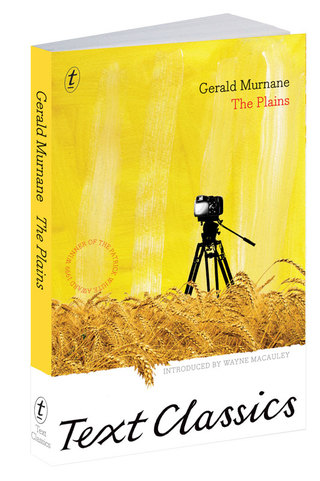
Gerald Murnane, The Plains, bookcover

Bookcover (Courtesy: Text Publishing)

Wayne Macauley, he of the Most Underrated Book Award fame, wrote in his introduction to my edition of Gerald Murnane‘s The plains that “you might not know where Murnane is taking you but you can’t help being taken”. That’s a perfect description of my experience of reading this now classic novella. It was like confronting a chimera – the lower case one, not the upper case – or, perhaps, a mirage. The more I read and felt I was getting close, the more it seemed to slip from my grasp, but it was worth the ride.

The plains was first published in 1982, which is, really, a generation ago. Australia had a conservative government. We still suffered from cultural cringe and also still felt that the outback defined us. All this may help explain the novel, but then again, it may not. However, as paradoxes and contradictions are part of the novel’s style, I make no apologies for that statement.

I’m not going to try to describe the plot, because it barely has one. It also has no named characters. However, it does have a loose sort of story, which revolves around the narrator who, at the start of the novel, is a young man who journeys to “the plains” in order to make a film. It doesn’t really spoil the non-existent plot to say he never does make the film. He does, however, acquire a patron – one of the wealthy landowners – who supports him in his endeavour over the next couple of decades. It is probably one of Murnane’s little ironies that our filmmaker spends more time writing. He says near the end:

For these men were confident that the more I strove to depict even one distinctive landscape – one arrangement of light and surfaces to suggest a moment on some plain I was sure of – the more I would lose myself in the manifold ways of words with no known plains behind them.

Hang onto that idea of sureness or certainty.

The book has a mythic feel to it, partly because of the lack of character names and the vagueness regarding place – we are somewhere in “Inner Australia” – and partly because of the philosophical, though by no means dry, tone. In fact, rather than being dry, the novel is rather humorous, if you are open to it. Some of this humour comes from a sense of the absurd that accompanies the novel, some from actual scenes, and some from the often paradoxical mind-bending ideas explored.

So, what is the novel about? Well, there’s the challenge, but I’ll start with the epigraph which comes from Australian explorer Thomas Mitchell‘s Three expeditions into the interior of eastern Australia, “We had at length discovered a country ready for the immediate reception of civilised man …”. Bound up in this epigraph are three notions – “interior”, “country” and “civilised”. These, in their multiple meanings, underpin the novel.

Take “interior”. Our narrator’s film is to be called The Interior. It is about “the interior” of the country, the plains, but it is also about the interior, the self, and how we define ourselves. While there are no named characters, there are people on the plains and there’s a sense of sophisticated thinking going on. Some plainspeople want to define the plains – their country, the interior – while others prefer to see them almost as undefinable, or “boundless”, as extending beyond what they can see or know. The plainspeople are “civilised” in the sense that they have their own artists, writers, philosophers, but it is hard for we readers to grasp just what this “civilisation” does for them. Is it a positive force? Does it make life better? “Civilised”, of course, has multiple meanings and as we read the novel we wonder just what sort of civilisation has ensconced itself on the plains.

These concepts frame the big picture but, as I was reading, I was confronted by idea after idea. My notes are peppered with jottings such as “tyranny of distance” and boundless landscapes; cultural cringe; exploration and yearning; portrait of the artist; time; history and its arbitrariness; illusion versus reality. These, and the myriad other ideas thrown up at us, are all worthy of discussion but if I engaged with them all my post would end up being longer than the novella, so I’ll just look at the issue of history, illusion and reality.

Towards the end of the novel we learn that our narrator’s patron likes to create “scenes”, something like living tableaux in which he assembles “men and women from the throng of guests in poses and attitudes of his own choosing and then taking photographs”. What is fascinating about this is the narrator’s ruminations on the later use of these “tedious tableaux” which have been created by a man who, in fact, admits he does not like “the art of photography”, doesn’t believe that photographs can represent the “visible world”. The landowner contrives the photos, placing people in groupings, asking them to look in certain directions. Our narrator says

There was no gross falsification of the events of the day. But all the collections of prints seemed meant to confuse, if not the few people who asked to ‘look at themselves’ afterwards, then perhaps the people who might come across the photographs years later, in their search for the earliest evidence that certain lives would proceed as they had in fact proceeded.

In other words, while the photos might document things that happened they don’t really represent the reality of the day, who spent time with whom, who was interested in whom and what. They might in fact give rise to a sense of certainty about life on the plains that is tenuous at best.

Much of the novel explores the idea of certainty and the sense that it is, perhaps, founded upon something very unstable. Murnane’s plainspeople tend to be more interested in possibilities rather than certainties. For them possibilities, once made concrete, are no longer of interest. It is in this vein that our narrator’s landowner suggests that darkness – which, when you think about it, represents infinite possibility – is the only reality.

The plains could be seen as the perfect novel for readers, because you can, within reason, pretty much make of it what you will. If this appeals to you, I recommend you read it. If it doesn’t, Murnane may not be the writer for you.

Lisa at ANZLitLovers, a Murnane fan, has reviewed The plains

Gerald Murnane
The plains
Melbourne: Text Publishing, 2012 (orig. published 1982)
174pp.
ISBN: 9781921922275

Elliot Perlman, The street sweeper (Review)

Elliot Perlman‘s latest novel, The street sweeper, is a complex book with a pretty simple message. It’s complex because of its multiple interconnecting storylines that move back and forth between World War II, the American Civil Rights era, and contemporary times. It has multiple themes, about which I’ll write further, but the underlying message is simply this: history is important. Related to this is the idea that all things are connected. Let me explain …

The original characters in the novel, those from whom the connections flow, are two lawyers, the Jewish Jake Zignelik and African-American William McCay. Both were active in civil rights in the 1960s. However, as the novel starts, Jake has been dead for some time, and William is in his 80s. The baton, in a way, has been passed to their sons, Charlie and Adam who are historians at Columbia University. It is around 2008, and both men have lost their way somewhat. Charlie is a successful academic, so successful that his administrative duties are not only tearing him away from his main love, research, but also from the important relationships in his life, those with his father, wife and teenage daughter. Adam’s problem is different. His career has stalled. He hasn’t published anything for so long that he will not get tenure – and Charlie, who has been his mentor, but who has let that relationship slide too, can’t help. Adam, believing it’s the honourable thing to do, breaks up with his long-standing girlfriend, Diana, on the basis that he’s unable to be the husband and father that he believes she wants.

None of these characters, though, is the street sweeper of the title, because there is another significant character, the one who opens the novel. This is Lamont Williams, an African-American who has just started work as a janitor at a cancer hospital in a pilot program for ex-convicts. He, like Adam, is close to 40 years old. Lamont, we soon learn, is a good man to whom bad things happen, just like the hero in Perlman’s first novel, Three dollars. He is, in fact, innocent of the crime that put him in jail but his colour and poverty meant he didn’t have a chance – just like the Jews in war-time Europe.

The novel focus primarily on these two men – Adam and Lamont – as they struggle to get their lives on track. Lamont’s story sees him getting to know hospital patient and Holocaust survivor Henryk Mandelbrot who tells Lamont over a period of nearly 6 months of his experience under Nazism, particularly in Auschwitz. Mandelbrot wants his story known, and insists that Lamont learns and remembers it. Meanwhile, Adam, initially reluctantly, looks into a research project suggested by Charlie’s father William, one that sees him also learning about the horrors of the Holocaust. As the novel progresses, and more characters – from the past and present – are introduced, the connections and links between people multiply, rather like a Dickensian novel. There is, though, a point to these connections. Early in the novel, Perlman writes that

you never know the connections between things, people, places, ideas. But there are connections.

And these connections, whether we know it or not, can direct the trajectory of our lives – as they do for the characters in The street sweeper. There is also a central ideological connection in the book, and this is that there are “parallels between the situation of blacks in the United States and the Jews in Germany”.

A major theme of the novel – one of Perlman’s pet themes in fact – is that of moral responsibility, of what makes a “good” person. As so often happens, those who have the least but, paradoxically, the most to lose, are quickest to take the moral path. Early in the novel, and four days into his 6 months probation, Lamont is accosted by Mandelbrot who asks a favour. This favour is something Lamont is not supposed to do – it’s not his job – but, seeing the old man’s distress, he risks losing his job to do the right, the moral, thing. Late in the novel, a professional woman who has nothing to lose but a bit of her time is asked to do a moral thing. She experiences a jolt when, after a passage of time, she realises that she’d been prevaricating about an issue of justice. Not all characters though come to this realisation regarding their moral duty.

I said in my opening paragraph that the underlying message of the novel is that history matters. This is conveyed throughout the book by discussions about history and the role of historians, by showing historians going about their business, by reference to the “long causal chain” and to the importance of remembering, and most of all, by the refrain, “tell everyone what happened here”. You won’t be surprised to know that I loved the fact that Perlman explicitly and implicitly explores the theory and practice of history here, but it deserves a post of its own so watch this space … I’ll simply say now that Perlman explains in his author’s note which characters are based on “real” historical figures, and he provides an extensive list of the sources he used.

The question I always ask when reading historical fiction is why has the author decided to tell this story from the past? In Perlman’s case the answers are obvious. First it’s the one made explicitly in the novel, and that is to “tell everyone what happened here”. Then there’s the more implicit one to do with why we need to know what happened, and that is to ensure that the horrors visited upon the Jews in the Holocaust and the African-Americans in the US don’t happen again. And finally it’s to remind us of our basic moral responsibility which is, as William says to his son, to “Do what’s right here, Charlie”.

I could pick some holes in the novel. It’s big and a little baggy around the edges. It can verge on didacticism at times. And, to make the necessary connections, Perlman relies a lot on coincidence, which could seem contrived if you haven’t bought into the story. But, here’s the thing. I have read many good, even excellent, books this year. However, The street sweeper, like Rohinton Mistry‘s A fine balance and Margaret Atwood‘s The handmaid’s tale, is one that will stay with me long after I’ve forgotten the name of the characters, long, even, after I’ve forgotten how the plot falls out. And that, for me, is the best sort of read.

Lisa of ANZLitLovers also liked this novel.

Elliot Perlman
The street sweeper
Kindle edition
Random House, 2011
ASIN: B005LV7O4S

Anna Funder, Stasiland (Review)

Anna Funder's Stasiland bookcover

Funder’s Stasiland (Courtesy: Text Publishing)

Anna Funder‘s Stasiland, which won the Samuel Johnson Prize for Non-Fiction, is one of those books that can be reviewed from multiple angles, and I know that when I get to the end of this review I’m going to be sorry about the angles I didn’t get to discuss. But, I can only do what I can do, eh?

I found it interesting to read this book immediately after another non-fiction book, Brenda Niall‘s biography True north, because the contrast clarified for me why I liked True north but loved Stasiland. To put it simply, True north is a well-written but pretty traditional biography, while Stasiland is what I’d call “literary non-fiction”. In other words, in Stasiland, Funder uses some of the literary techniques – relating to structure, voice and language – more commonly found in fiction to tell her story. It’s not surprising really that this is the case, because when I heard her speak last month, she said that she had initially planned to write Stasiland as a novel but, having done the research and interviews, it “didn’t feel right” to turn those people’s stories to another purpose. She was also aware that there were things in these stories that might not be accepted, that might seem too far-fetched in fiction! Such is the fine line we tread between fact and fiction.

At this point, I should describe the book, though its broad subject is obvious from the title. Funder (b. 1966) has a long-standing interest in things German, from her school days when she chose to learn German, and has visited and/or lived in Germany several times. She writes of travelling through the former German Democratic Republic, a country that no longer exists, that comprises “tumble-down houses and bewildered people”, and she describes feeling a sense of “horror-romance”:

The romance comes from the dream of a better world the German communists wanted to build out of the ashes of their Nazi past; from each according to his abilities to each according to his needs. The horror comes from what they did in its name.

And so she decides to try to understand this dichotomy and places an ad in the paper:

Seeking: former Stasi officers and unofficial collaborators for interview. Publication in English, anonymity* and discretion guaranteed.

This is, depending on how you look at it, either a very brave or naively silly thing to do. Funder, who sees writing as an act of empathy or compassion, interviews several Stasi men who answer her ad, as well as other East Germans who suffered at Stasi hands. It might be coincidental, but essentially all her subjects who suffered were women, while the perpetrators were men. In fact, when she visits the Stasi HQ in Berlin, she’s told it only had toilets for men! All this is not to say, however, that men didn’t suffer (or, even, that there weren’t women perpetrators). Indeed, some of the Stasi men she interviewed were themselves bullied, blackmailed and otherwise stood over to keep them in line.

What makes this book compelling are the stories she gathers, partly because the stories themselves are powerful and partly because of Funder’s own voice. Funder places herself in the book. This is not a third person “objective” recounting of the interviews she conducted but a journey we take together to find some answers. When she interviews Herr von Schnitzler, who hosted the Black Channel, a television program in which he presented a Communist commentary on excerpted programs from the West, we are in the room with her, hearing not only what he says, but getting a sense of his personality alongside her. We see her being fearless in sticking to her questions in the face of a man who frequently shouts. “I recognise”, she writes, “this pattern of unpredictable shouting followed by bouts of quiet reason from other bullies I have known”.

It is particularly in the von Schnitzler section that the GDR paradox becomes most clear. Von Schnitzler was, Funder tells us, molded by the injustices of the Weimar Republic. We see how the drive to create a new society not bedevilled by the iniquities – that is, the inequalities – of capitalism (or imperialism as many of the Stasi men call it) resulted in the creation of an authoritarian society where freedom was minimal (or non-existent) and dissent not allowed. In stark contrast to von Schnitzler and his refusal to see any error in, or critique, the GDR, is Julia, one of the “victims”, who had believed in the GDR but, through having an Italian boyfriend, had become caught in the Stasi net. She discovered that the “state can be so dangerous, so very dangerous, without me having done anything at all” and was completely traumatised by the extent of surveillance and loss of privacy she experienced. And yet, having experienced the East and the West, she can still say

you see the mistakes of one system – the surveillance – and the mistakes of the other – the inequality – but there’s nothing you could have done in the one, and nothing you can do now about the other … and the clearer you see that the worse you feel.

The GDR story is, as Funder tells it, one of grand humanitarian aims but one also riddled by paradox and irony. She asks Herr Bock, a recruiter of informers, what qualities he looked for in an informer:

‘… and above all else,’ he says, looking at me, his eyes distorted and magnified through the glasses, ‘he needed to be honest, faithful and trustworthy.’

I look back at him. I feel my eyes too, getting wider.

How can you resist a writer who tells a story like this, who shows without telling exactly what is going on, who can inject sly touches of wit and humour into the tough stuff?

I can’t possibly relate all the stories – many quite horrendous – in this book. All I can say is that it is a book that manages to show how history writing can be intimate while at the same time conveying facts and hard truths. It is a memorable book, and worth reading if you have any interest at all in politics and human behaviour.

Anna Funder
Stasiland
Melbourne: Text Publishing, 2002
ISBN: 9781877008917
282pp.

* I’m intrigued by the promise of anonymity because it seems that in some, if not in all, cases, real names are used. I presume the people involved agreed to this.

Susan Johnson, Life in seven mistakes (Review)

By coincidence, really, my local reading group finally got around to reading Susan Johnson’s Life in seven mistakes just as her next novel, My hundred lovers, is to be published. Johnson has written several novels now, though I’d only read one, The broken book based on the life of Charmian Clift, before this. I loved that book and I liked this one.

Life in seven mistakes is a book targeted squarely at middle-class, middle-aged Australian baby boomers – a bit like, perhaps, Jonathan Franzen‘s The corrections was for Americans. It’s about a family – parents Nance and Bob who have retired to Australia’s answer to Miami, Surfers Paradise, and their three middle-aged children, Elizabeth, Robbo and Nick. They are not a particularly well-functioning family (says she, in an understatement). Johnson sets out to analyse how such families come to be … and how, or if, they can be rectified.

There’s not, as is common in books like this, a strong plot.  The main story is set over a few days encompassing Christmas. Robbo and Elizabeth, with their families, have come up to Surfers Paradise from their respective big southern cities to celebrate Christmas and their parents’ 50th wedding anniversary. Nick is absent, being in prison for a minor drug related offence, but his life has been off the rails for some time. The atmosphere is charged with long-unspoken tensions – and a crisis, of course, occurs – but I won’t spoil that main plot point.

Like The corrections, this book chronicles the family’s past while also telling a story about the present gathering. Johnson does this by using alternating the chapters to tell two chronological stories. The present one starts a couple of days before Christmas with the family already gathered, while the past story starts at the time Nancy meets Bobby, and progresses until it pretty much meets the present. This structure works well. It is easy to follow and enhances our understanding of the characters without interrupting the flow of what’s happening now. The chapters have pointed titles like “On top of the mountain” in which Elizabeth sees Australia’s Great Dividing Range in symbolic terms:

As she drives, Elizabeth fancifully pictures the mountain range as forming the backdrop to their lives, and for one fantastical moment she imagines time strung end-to-end along it, her father in his working boots, aged twenty-five, at one end of the mountains, and his son Nick, aged forty-five, at the other. She sees her father at the very top of the mountain, moving trees with his bare hands, and her brother at its very base. Did her father want to remain forever elevated, was that it?

Johnson has a keen eye for family dynamics and most readers (at least from the target group I described) would have moments of recognition here even if, hopefully, the whole is not their experience. It is this, together with Johnson’s sharply observed language, that makes this book somewhat of a page turner. You can’t help wanting to know how this motley crew came to be and what they are going to do next. Will Elizabeth, the successful ceramicist about to have her first one-woman show in New York, grow up and finally stop feeling “infantilised” around her family? Will Nancy relax her drive for perfection and let her family in? Will Bob engage with his family rather than stick to his position as “star of the story”?

I must say I loved the language. Almost every page contains something that makes you stop and think, yes, she’s got it. But – there is a but – somehow the book didn’t work for me quite as well as The broken book did. I’m not quite sure why because, really, it’s the sort of book that is normally right up my alley – and by this I mean the subject matter, the setting (much of which was very familiar to me) and the language.  And yet, it didn’t totally sing for me. One reason may be that the novel is billed as “funny” and “ironic”. Whilst there is humour here, I didn’t find it a funny novel, and I didn’t really see it as ironic. It read more like a serious, straight drama to me. This can’t be my main concern though, because a novel shouldn’t be judged by how it is described by others.

My bigger issue is probably more to do with the “voice”. The novel is told third person – mainly third person, limited.  And this limited point of view is predominantly Elizabeth’s. It’s her pain, her inner conflict, that we are mostly privy to. But the point of view does shift at times. It has to, for example, in the chapters about Bob and Nancy’s marriage because Elizabeth can’t know their story. And so, there are subtle shifts between Elizabeth’s, Bob’s, Nancy’s and sometimes an omniscient viewpoint. This, I think, spreads our engagement a little thin. The book feels like it’s meant to be Elizabeth’s, but it isn’t totally, and so when the resolution comes it feels a little, well, limited.

It was nonetheless a good read … and I would certainly read more Johnson. Can’t say  better than that!

Lisa at ANZLitLovers loved it. Resident Judge enjoyed it too, and like me, saw some similarity to The corrections.

Susan Johnson
Life in seven mistakes
Sydney: Bantam, 2008
346pp
ISBN: 9781741669190

Julian Barnes, The sense of an ending (Review)

I should have known I wouldn’t be the first to think of it, but during my reading Julian Barnes‘ Booker Prize winning novel, The sense of an ending, I was suddenly reminded of TS Eliot‘s The love song of J. Alfred Prufrock. It was the melancholic tone, the sense of life having passed one by, that did it:

What did I know of life, I who had lived so carefully? Who had neither won nor lost, but just let life happen to him?

Doesn’t that remind you of “I have measured out my life with coffee spoons”? I don’t usually read reviews before I write my own, but I wondered if my thought had come to anyone else. Of course it had. I googled “julian barnes sense of an ending prufrock” and up came several hits. Oh well, I thought, at least I’m not going to sound totally foolish. There is safety in numbers, after all, which brings me back to Tony, the novel’s protagonist, who says, at another point in the novel:

I’m not odd enough not to have done the things I’ve ended up doing with my life.

I admit to having a certain fellow feeling with Tony, a self-confessed “average” person who’s led an average life “of some achievements and some disappointments”. But, enough self-revelation, let’s get on with the review.

I’ll start by saying that this book is right up my alley. Firstly, it’s a novella and regular readers here know how I love a good novella. Secondly, it’s a good novella, by which I mean it’s tightly constructed and sparely written. And thirdly, plot is not the main point; character and life are Barnes’ focus.

Nonetheless, while there’s not a strong plot, there is of course a story, and it concerns the aforesaid Tony. He’s the first person narrator and is a reliably unreliable one. He tells us this on the second page, while at the same giving away the novel’s essential form:

But school is where it all began, so I need to return to a few incidents that have grown into anecdotes, to some approximate memories which time has deformed into certainty. If I can’t be sure of the actual events any more, I can at least be true to the impressions those facts left. That’s the best I can manage.

This tight little para tells us a few things about what’s to come. The word “deformed” combined with the idea that he “can’t be sure of the actual events” tells us to beware, that imperfect (for whatever reason) memory is at play. The mention of returning “to a few incidents” describes the basic structure of the novel, as it does indeed focus on and tease out the ramifications of a “few incidents”.  And the reference to school hints that there might be something of the bildungsroman about it.

I still haven’t told you anything about the story, though, have I? It’s divided into two parts. In Part One, Tony is in his teens and twenties and focuses on his three male friends and his first serious girlfriend, Veronica. This part is less than 60 pages and, as Tony promises at the beginning, primarily comprises a few scenes from his life, linked by some running commentary. There are classroom scenes and a particularly memorable one involving his first  (and only) weekend visit to his girlfriend’s home. We come back to this scene in the second part. I loved how, after spending some 50 pages on his youth, Tony wraps up around 40 years of his adult life in two pages. Impressive writing.

In Part Two, Tony is confronted again with some of the major incidents from his youth and is forced to reconsider his sense of self. The most important of these incidents concerns the suicide of one of his friends … and gradually we get a whiff of a mystery, albeit one just hovering around the edges. This is because the mystery is not the main point.

Tony, in this part, is bequeathed, out of the blue, the diary of the friend who had committed suicide 40 years previously. Now, Tony believes that it is the witnesses to your life, those you spent time with, who “corroborate” who you are. As these people drop away, there is, he says “less corroboration, and therefore less certainty to what you are or have been”. He therefore sees this diary as potentially significant:

The diary was evidence; it was – it might be – corroboration. It might disrupt the banal reiterations of memory. It might jump start something – though I had no idea what.

The bequest does “jump start something” but to what purpose is the moot point. An issue that occupies Tony is that of change. “Does character develop over time?” he asks and then continues, in one of those little postmodern touches we’ve become used to, “In novels of course it does, otherwise there wouldn’t be much of a story”. You said it, Tony/Julian, we are tempted to respond, except that by this time Tony had so captured my attention that the minimal story was neither here nor there.

And this is where I’ll leave the story … and return to an issue I raised earlier in the post, that regarding its being something of a bildungsroman. It’s not a traditional coming-of-age novel because only the first part of the novel chronicles his development as a young man. But, something is jump started for Tony in his 60s that forces him to rethink who he had been and who he had become. Memory, he says, can lock you into

the same loops, the same facts and the same emotions. I press the button marked Adrian or Veronica, the tape runs and the usual stuff spins out. The events reconfirm the emotions – resentment,  sense of injustice, relief – and vice versa. There seems no way of accessing anything else; the case is closed.

Occasionally, however, something happens to break the loop, as it does for Tony. He is suddenly confronted with new (or, different) memories which bring new emotions. He looks at “the chain of responsibility” and sees “my initial there”. He learns that the things he’d thought fixed or certain can be dissolved, that memory cannot be relied upon and can, in fact, come back to bite you. Time and memory, Barnes shows us, are malleable, suggesting, to me at least, that perhaps we never really do come of age.

Julian Barnes
The sense of an ending
London: Vintage, 2011
150pp.
ISBN: 9780099564973