William Trevor, The hill bachelors (#Review)

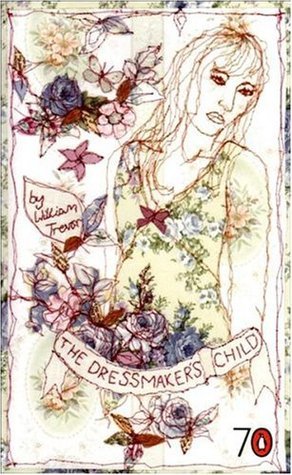
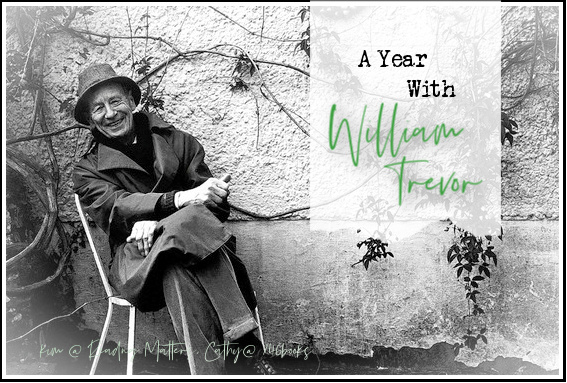
Well, Kim (Reading Matters) and Cathy’s (746 Books) “A year with William Trevor” project is all but over, and I’ve only done one post – on the titular story in the little The dressmaker’s child collection. The second story, “The hill bachelors” (as in bachelors living in the hills), was first published in his collection titled The hill bachelors.

William Trevor (1928-2016), as most of you will know, is an Irish writer of novels and novellas, short stories and plays. He is particularly good at writing about marginalised people, or those who are loners or outsiders, and writes authentically about them, regardless of their age or gender. “The hill bachelors” is another of these, though perhaps more a variation on the theme. Is the protagonist Paulie marginalised? In a sense perhaps? Is he a loner or outsider? Again, it depends on how you see him, and the choices he makes.

Trevor is one of those writers who lets the reader work out who’s who, what’s what, as we go. The first two paragraphs of this story describe a 68-year-old woman, wearing mourning clothes, waiting for “them” who will decide her future. Very little is overtly explained, but by the end of the second paragraph, we know that she has worked hard and got on with whatever life has thrown at her – and, it seems, she will continue to do so with a calm resignation.

Then, we are introduced to a man we come to realise is her 29-year-old son, Paulie. He is coming for his father’s funeral/wake. He is the youngest of five children, and had not had a good relationship with his “hard” father. It soon becomes apparent that the mother expects the children to work out what will happen to her now – and what will happen to her now, as soon becomes apparent, is that Paulie will return to the family farm. After all, “he was the bachelor of the family”, and his job as a lorry driver “wasn’t much”. However, to do this he will have to give up the woman he loved as she is not interested in a farm life.

While he is working out his notice back in town, his mother is helped by neighbours, the bachelor Hartigan and his sister. It is this sister who introduces the idea of the hill bachelors. She suggests that Paulie would not want to come back because

“It’s bachelors that’s in the hills now. Like himself,” Miss Hartigan added, jerking her bony hand in the direction of the yard, where her brother was up on a ladder, fixing a gutter support.
“Paulie’s not married either, though.”
“That’s what I’m saying to you. What I’m saying is would he want to stop that way?”

Seeing bewilderment in Paulie’s mother’s face, she goes on to explain that “the bachelors of the hills found it difficult to attract a wife to the modest farms they inherited”.

And so Paulie comes back. He “harboured no resentment … it was not the end of the world”. What was “the end of the world”, however, was hearing the woman he loved say that life on a farm did not attract her. He works hard, and he starts dating local women, but Miss Hartigan seems to have known whereof she spoke.

The story is told third person, through the alternating perspectives of the mother and Paulie. We hear what the the rest of the family thinks, or has done, mostly through Paulie’s and his mother’s thoughts and assumptions, through their deep knowledge of how their family works and of the rural traditions within which they live. There is a little dialogue, but not much. Paulie and his mother are both “types” and yet quietly individualised too.

There’s no big drama in this story, just ordinary people making the decisions that seem right at the time. Paulie’s mother is not unkind or demanding. Indeed, she offers to move in with a married daughter, and, in a little revelatory moment, Trevor lets on that she’d shed some private tears in her early days on the farm. She would do her best to make it easy for a new wife, unlike her own experience. However, marriage to a man from the hills has taught her passivity, to do what she’s told, so she resigns herself – as we are led, from the opening paragraphs, to expect she’d do – to see out her lot. Paulie, too, seems resigned, like his mother, to play out the role set for him, even if it means joining the titular hill bachelors.

All this makes it a far more complex story than it might seem on the surface. It means that, as much as we’d like to, it’s hard to see Paulie as a victim, because he does have a choice, difficult though it may be. But the pull of tradition and responsibility is strong, and while Paulie is aware of what is happening to him, he is resigned to it. Ultimately, as he himself realises, “guilt” and “goodness” have nothing to do with it, it just is what it is, “enduring, unchanging” – and he is not going to buck it.

Trevor thus leaves it for us to think about – to think what the different choices might mean for his mother, for Paulie, and, more widely, for the rural way of life that, regardless of their decisions or their own thoughts about it, does seem to be on its way out. It is up to us readers to ponder the bigger picture, to wonder where that will get him, them or the farm. After all, if he doesn’t marry, what will happen? In continuing their rural traditions, will anything be ultimately achieved, or will this be another sad little life?

Cathy (746 Books) has reviewed the collection.

William Trevor
“The hill bachelors”
in William Trevor, The dressmaker’s child
London: Penguin Books, 2005
pp. 21-39
ISBN: 9780141022536
(First published in The hill bachelors, 2000)

Claire Keegan, So late in the day (#BookReview)

In her final Novellas in November post, Cathy (746 Books) wrote about Claire Keegan’s short story “So late in the day”, and included an online link to the story. Having not read any of Keegan’s writing, to that point, and feeling the lack, I pounced – and was not disappointed.

“So late in the day” is a beautifully observed story told through the eyes of a man named Cathal. In it, he reflects on his relationship with a woman, Sabine, whom we come to realise is no longer around. Why? The story starts by encouraging us to empathise with him. His work colleagues seem worried about him, and his boss encourages him to go home early. The opening paragraph contains hints of things being a little awry or disturbed. It’s gloriously subtle. Every word carries weight, which makes the reading pure pleasure as you ponder just what the straightforward-sounding words and sentences are really signifying.

Life is clearly discombobulated for Cathal. For example, as he makes his way home, we are told:

For no particular reason, a part of him doubted whether the bus would come that day, but it soon came up Westland Row and pulled in, as usual.

The “for no particular reason” is telling, because there is a reason he feels uncertain, albeit we don’t know it yet, and his unawareness of why he feels this way is part of the issue.

So, the bus comes, and he finds himself sitting next to a woman who seems to want to talk. Hmm… he’s not happy. Soon, however, she turns to her book, The woman who walked into doors. Now, it’s a rare writer who inserts books into their stories randomly, but I didn’t know this book, so off I went to the internet and very quickly found that it is by Roddy Doyle. The Guardian quotes him on why he wrote this book which features a pre-existing character of his: “I had to give Paula a chance to explain why: why she married this man in the first place, and why she stayed with him.”

Gradually, then, the penny drops, but oh so slowly, because Keegan’s story is told from a man’s point of view, and this man is so woebegone, so clueless.

This is the sort of writing I like, writing that challenges the reader to work a bit, to read between the lines and not jump to simplistic responses. Cathal is an unreliable narrator. He does not see the whole truth, but Keegan draws out, from his own mouth, exactly what has happened, so that it all becomes clear to us, the reader, while he remains locked in his cluelessness.

There’s another challenge for the reader, though, besides sussing out what has happened, and it’s to do with how we feel. We start by feeling sympathy for him. He’s sad and lonely. But, as he talks about Sabine, a picture builds up. He is the more passive one in the relationship, but more than that, he is the taker. She organises the outings. She cooks, though he does grudgingly clean up, resenting the mess she makes. She’s generous, doesn’t “mind the cost” of nice food, spending “freely” at the markets, while he either tots up costs or, when he’s paying, makes mean choices. When he proposes to her, it’s devoid of romance. Is he emotionally repressed, and should we continue to feel for him, or is something else going on?

Quite late in the story, in a telling flashback, he remembers an occasion from his childhood. His brother had played a nasty trick at the dinner table on their nearly sixty-year-old mother, and instead of remonstrating with him the father joins the laughter. In this anecdote, and his reaction to it, we see the depth of his disconnect in how to relate to a woman, which adds to our growing awareness of an ungenerous, self-centredness in him. He doesn’t know how to give. There are occasional glimmers of awareness, but by the end, when we know exactly why he is so sad, why this day is so hard for him, we are left wondering what to think about him. Can he change? Or, more to the point, does he realise he needs to change? Does he fully comprehend the depth of his failure?

The French-translated title for this story is Misogynie, which makes no bones about its over-riding theme, but I like the subtlety, the multi-layered meanings behind “So late in the day”. To tease that out here, however, really would spoil the story for any of you wanting to read it.

Meanwhile, I’ll share this from early in the story. As Cathal is leaving work, we are told

He would ordinarily have taken out his mobile then, to check his messages, but found that he wasn’t ready—then wondered if anyone ever was ready for what was difficult.

Good question, but it doesn’t augur well for our narrator’s development does it?

An absolute gem of a story.

Claire (Word By Word) also liked it.

Claire Keegan
“So late in the day”
in The New Yorker, 28/2/2022

Available online at The New Yorker.

Monday musings on Australian literature: Prime Minister’s Summer Reading List, 2023

December is when I start my round of regular end-of-year posts, and a new one I’m adding to the fold is the The Grattan Institute’s annual Prime Minister’s Summer Reading List. The institute is an Australian non-aligned, public policy think tank, which produces readable, reasoned reports on significant issues, like, most recently, the role of hyrdrogen in Australia’s green energy goals and an analysis of the keenly awaited review of the NDIS (National Disability Insurance Scheme).

My focus here, though, is another activity of theirs, their Prime Minister’s Summer Reading List, which they have published annually since 2009. This list, as they wrote on the inaugural 2009 list, comprises “books and articles that the Prime Minister, or any Australian interested in public debate, will find both stimulating and cracking good reads”.

As I wrote in last year’s post, the Institute’s then chief executive, Danielle Wood, said they aimed

to pick books that have something interesting, original, or thought-provoking to say on issues that are relevant to the Australian policy landscape. The books don’t have to be by local writers or about Australia … but they do have to address issues that have relevance in an Australian policy context.

I managed to read, after the event, two of last year’s list, Debra Dank’s We come with this place (my review) and Jessica Au’s Cold enough for snow (my review). Dank’s is an obvious choice, but I love they they also chose something quietly, and perhaps even enigmatically, reflective about life and change in Au’s book.

Here is the 2023 list in their order, with a small excerpt from their reasoning:

  • Anna Funder, Wifedom: Mrs Orwell’s invisible life (on my reading group’s 2024 schedule, Brona’s review): “People don’t become invisible by accident … a powerful case study of the hidden lives of wives whose contributions are downplayed or entirely disregarded”
  • Ellen van Neerven, Personal score: “highlights the disproportionate impact of a changing climate on Indigenous people, the importance to Aboriginal health of story and being heard, and the complexity of gender and belonging, on and off the field. A new and transformative piece of sports writing … an essential read for anyone wanting to better understand sport, community, and power on sovereign land”.
  • Mark Considine, The careless state: Reforming Australia’s social services: “Australia’s social services are doing a bad job of looking after people … impressively summarises the problems, explains how we got here, and shows that what may seem like separate problems have many shared roots”. 
  • Micheline Lee, Lifeboat: Disability, humanity, and the NDIS (Quarterly Essay 91, September 23): “describes how the NDIS’s disempowering, confusing, and bureaucratic processes have worn out the trust of people with disability and their families … [yet] there is a warming tone of optimism running through Lee’s analysis”.
  • Jennifer Pahlka, Recoding America: Why government is failing in the digital age and how we can do better: “Technology is the front door to many government services … But too often, the design of online services is an afterthought, and users are left to grapple with lengthy, confusing, and duplicative processes … [and] bad design can entrench inequalities … “a compelling call to arms for better design and delivery of government services”.
  • Henry Dimbleby and Jemima Lewis, Ravenous: How to get ourselves and our planet into shape: “explores the complex machinations of modern food systems … details how our food choices are influenced by the industries that make our food, and the environment that surrounds us … shows how our decisions about what foods to put in our shopping baskets are subtly but constantly influenced by a vast food system. The consequences are rarely good for us, our health, or our planet”.

So, one biography, one part memoir-history-poetry, an essay, and three specific-issue-focused non-fiction works, with four by Australians, one by an American, and one from the UK. It’s good to see a First Nations author here again, and to see important issues – like disability, the challenges of the digital age, and modern food systems – front and centre in the Institute’s thinking.

I would, of course, love to see a greater recognition of the value of fiction to addressing “issues that have relevance in the Australian policy context”. Fiction has been included in the past, but not often. I wrote a little about some of their choices last year. We don’t know whether the relevant prime minister reads the suggestions, but some thoughtful or provocative fiction might be better summer reading for our poor top politician needing some break?

I could suggest Chris Flynn’s short story collection, Here be Leviathans (my review), and Carmel Bird’s Love letter to Lola (my review), to fill that bill. Short stories are perfect for busy people, and these two collections are entertaining but also offer some real meat in terms of thinking about various issues confronting humanity, including the environment and environmental destruction. Also Tony Burke made a good point about Paddy O’Reilly’s Other houses (Lisa’s review) which was shortlisted for this year’s Prime Minister’s literary awards and which is about a group of people we rarely read about, cleaners. Surely a book about the working life, that is, the battlers, the people whom journalists and politicians this year have constantly pointed out are “doing it tough”. Fiction about such lives would be perfect for our PM.

You can see all the lists, by year, to date at these links: 2009, 2010, 2011, 2012, 2013, 2014, 2015, 2016, 2017, 2018, 2019, 2020, 2021, 2022.

If you had the opportunity to make one book recommendation to the leader of your country, what would it be?

Holly Throsby, Clarke (#BookReview)

My reading group’s last book of the year, Holly Throsby’s third novel, Clarke, was a popular end-of-year choice. It’s a straightforward but compelling read that was inspired by a story we were all across, the Lynette Dawson story. Inspired, though, is the operative word, as Clarke is not Lynette Dawson’s story.

For a start, while Clarke’s missing woman disappears in the same decade as Lynette, the 1980s, Throsby’s story is set in a different location (a regional town not a capital city) with a different sort of husband (a physiotherapist, not a teacher). Further, there is some sort of resolution a few years, not forty years, later. This was a wise choice by Throsby. It decouples the story from Lynette Dawson, which encourages us to see it as part of a bigger story. And, setting it in a smaller environment lets Throsby explore regional town life. This latter is one of the strengths of the book.

The novel opens with fifty-something Barney being visited by the police at the house he is renting. They have a warrant to excavate the backyard as the result of their having received new information concerning the disappearance of Ginny Lawson five years previously. Clarke tracks this new police investigation through the eyes of the neighbourhood, primarily Barney, his next-door neighbour Leonie, and Dorrie and Clive across the road. Leonie, Dorrie and Clive all knew Ginny and believe her husband Lou, now living in Queensland, is implicated. They have wanted this investigation ever since Ginny disappeared, but the police at the time weren’t much interested in missing women.

The main joy in reading the novel comes from Throsby’s handling of the relationships between her characters, and the way she conveys how neighbours and communities chat or gossip about and try to second-guess situations like these. They phone each other, visit each other, talk over the fence, and discuss it with their workmates. It’s so realistic, you can hear yourself doing the same over similar scenarios.

It’s a fundamentally tough story – a disappeared wife with its hints of domestic abuse, among other griefs – but Throsby handles it with a light touch, including occasional black humour. Here, for example is Leonie talking to her workmates about some concrete in Barney’s backyard that the police are now excavating. It’s clear that it had been a topic of conversation at the time of the disappearance:

The suspicious concrete’, said Varden.
‘Yes, because that’s what you do when your wife and the mother of your child has just disappeared’, said Leonie. ‘You landscape.’

There is also some subtle wordplay. For example, Ginny’s husband Lou’s “disturbing the dirt and who knows what else” in his back yard after his wife’s disappearance mirrors the disturbance felt by the neighbours. And there are some wonderful descriptions, like Leonie’s on her tricky relationship with her mother: “Leonie remembered the warmth of her mother as a heady storm that blew in fast but never stayed long”. Or on sad Barney: “His skin was kind of grey and rough and reminded Leonie of an egg carton”.

“It would be fantastic to be able to choose one’s memories. It would make life so much more bearable.” (Barney)

There are, as I hinted above, other layers to the the narrative besides the disappeared-Ginny plot line. Barney is no longer living with his wife Deb (but why?) and Leonie has her four-year-old nephew Joe living with her (why too?). Both people, it’s clear, are dealing with some sort of grief. Throsby drip-feeds us their backstories as we get to know them, and as they get to know each other. Dorrie, across the road, provides a voice of reason for Leonie, while also engaging in the neighbourhood speculations about Ginny.

I’ll leave the narrative there, and move onto the form. Clarke is fundamentally a crime story or mystery, but it doesn’t fit those genre expectations. It’s a cold case, but the criminal investigation occurs in the background. There is no protagonist detective, and we only meet the police through their interactions with the main characters. There is, admittedly, an element of the amateur-sleuth cosy-mystery going on. Our main characters do a little of their own “amateur surveillance”, as Barney calls it, and we would, of course, like to know what happened to Ginny. But, the main focus is on what is going on for Barney and Leonie, personally, and whether they will resolve the griefs in their lives that are holding them back. It reminded me of that idea that if you scratch just beneath the surface of most people’s lives you will find a sadness or tragedy.

So, my overall assessment? I thoroughly enjoyed the read. Throsby’s language, excellent characterisation, and authentic evocation of suburban 80s-90s Australia made it a compelling read. However, the twist near the end felt a bit forced, and the ending is a bit neat, albeit there was some restraint. Generally, I prefer edgier books, books that keep me thinking about where they are going. With Clarke, I wondered about what happened to Ginny, whether we’d find out, and whether a relationship would develop between Leonie and Barney, but it didn’t, for example, delve deeply into the fundamental issues that brought about the situation in the first place. As a result, it called more on my emotions than my mind, and I do like both.

Nonetheless, Clarke is an enjoyable read – and I’d happily recommend it to readers looking for generous stories about real people grappling with life’s challenges.

Holly Throsby
Clarke
Crows Nest: Allen & Unwin, 2022
346pp.
eISBN: 9781761185540

Finlay Lloyd 20/40 Publishing Prize 2023 Winning Books Launch with Conversation

I have written about Finlay Lloyd’s 20/40 Publishing Prize a few times now, so I hope I’m not imposing too much on your precious time. However, this weekend was the launch here in Canberra, and it involved a conversation led by a favourite Canberra journalist, Virginia Hausseger, with the two winning authors. I had to go.

The participants

Rebecca Burton and Kim Kelly are the two winners, and I’ve introduced them before, so just to recap, Burton is an editor and author of two young adult novels, while Kelly is also an editor and the author of twelve adult historical fiction novels.

Virginia Hausseger is, to use Wikipedia’s description, an “Australian journalist, academic advocate for gender equity, media commentator and television presenter”. She is well-known to Canberra audiences, having been our local ABC news presenter from 2001 to 2016.

Julian Davies did the introductions. He is the inspiring publisher and editor behind Finlay Lloyd, a company he runs with great heart and grace (or so it seems to me from the outside.)

The conversation

Before the conversation started proper, Julian provided some background to the prize. Human nature, he said, seems drawn to large things. Why else would we have things like the Big Potato! What is it about large things? He sees it related to the “tussle between quality and quantity” and thinks there’s something problematic in our tendency to admire the grand and overlook the miniature. (Yes!) He believes restrictions can liberate writers, and sees the novella form as perfect for this. It can encourage succinctness while allowing room for development. I don’t expect he had any argument about that in the room.

He reminded us that it was judged blind (by two old men and three young women). That it was won by published writers shows that those who have developed their craft are likely to shine through.

Then, Virginia took over …

On their novellas

Kim described her novella with beautiful succinctness saying it was set in 1922 Sydney in the wake of World War 1, just as the city was starting to wake up. It’s about grief, and about how recognising pain in the other leads to the young women rescuing each other. She added a little later that many novels have been written about the War, but not so many about after it, and even fewer about young women’s experience of that time.

She has written three novellas, and “kind of” knows at the beginning which form the story will be. The impetus for this one was wanting to impress a potential PhD supervisor. While researching Trove she saw the ad for the Room (which she included as an epigraph.) Virginia remarked that the closing pages set up a whole new story.

Rebecca said that hers was about two teenage sisters over six weeks of summer in 1986. The old sister, who is anorexic, has been admitted to hospital for bed-rest, and the younger sister visits her daily. It’s about what the sisters learn about each other, and the impact of this condition on the family.

She said that she hadn’t set out to write a novella, but she is comfortable with a word length which is shorter than the standard novel. Then she saw the prize! Writing adult fiction is a new genre for her, but she had stopped reading YA fiction and adores literary fiction. A friend suggested that she write what she reads. Sounds good advice to me.

On Ladies Rest and Writing Room

Kim explained that rest and writing rooms “were a thing” in the late 19th and early 20th centuries, for men and women. What is special about hers is that it was in a department store, and how it was advertised.

Dotty’s grief comes out in shopping addiction and behaving as though she had a death wish. She is so tied up in herself that she doesn’t notice her old schoolmate Clarinda. The book is built around the moment of recognition, that is, when Dotty “sees” Clarinda.

When Virginia commented on how well the “story gallops along” while still being “tight, descriptive, elegant”, Kim said that was the “magic of editorial process”. Also, she said, she knows that Sydney well.

On Ravenous girls

Answering where her story came from, Rebecca said that it was a story she had to write. Frankie had been with her for a long time, and a story about her childhood kept coming to her. The trickiness was not so much the 1986 summer story, but managing the way the time telescopes at the end. She wanted to nod at the years that go by after someone comes out of hospital.

When Virginia commented on how well she’d handled the scene of another girl post-hospital, providing an alternative glimpse of how it goes, Rebecca said she wanted to tell other stories because every story is different.

Young Frankie loves her sister, but is bewildered. An enlightening moment for her is when she realises that sister Justine is the only one allowed to suffer, that her own pain is not seen. She realises that the story she’s been told is not right. Hers is a story of loss, grief, sadness. She’s left to her own resources, and because her older sister is sick, she’s left with no role model.

As for Justine, she uses hunger to mute her desires. Rebecca said that her working title was Yearn, and quoted that great line from the novella, “I don’t want to want the things I want”. Justine feels shame for wanting things, and so starves herself for wanting them.

On the physical process of writing

Kim throws her whole self into a new project, trying to get it all down before she loses her emotional or imaginative connection. Then she goes away, coming back some time later to a “full tub of play dough” that she can then mould. She is able to quarantine the time to work this way because as a freelancer she can manage her time. She loves to be free to fly through the story.

Rebecca has a very different more measured process. She works part-time to a set roster, so has a “chipping away” process. Since her new job, she has created a ritual involving getting up an hour earlier than usual, making a cup of tea and writing for an hour. This helps her manage the peaks and troughs that happen with writing. If things go badly she can get up and go away, leaving it for the next time, and if they go well, she can get up feeling good! It’s important for her not to get obsessed with writing.

On the editing process

Rebecca said for her it went structural edit, then copy edit, then the final proofread. The delight of working with small publisher was that time was allowed for growth.

Kim seconded Rebecca’s comment about the delight of working with Julian, who “cares about words and ideas”. In her worklife as commercial fiction editor, time is of the essence, so she luxuriated in the “nurturing” experience of working with Julian.

On what’s next

Kim’s next project is her PhD, which will include a story about an ancestral grandfather who intersects with Dickens. It’s an idea she has had for a long time, but she will need to try Rebecca’s “chipping away” approach for this!

Rebecca has these characters in head, and wants to see these young girls into adulthood. This could mean three related novellas, the next set in 1993 with Justine in recovery and in her first relationship. She wants to explore recovery because some never move beyond “functional recovery”. The third book she’d like to be about Frankie in her 30s or 40s to see how things have worked out for her. Some of these futures are hinted at in Ravenous girls.

Virginia was an excellent, well-prepared and enthusiastic interviewer. She knew the books well and showed genuine interest in them and their authors.

There was no Q&A which suited me, as I had to rush off to get to my monthly Jane Austen meeting where we were to discuss the up-and-comers in Austen’s novels. However, I did have a very brief chat, as I was leaving, with the other “old man” judge, John Clanchy whose writing I love and who had commented on my recent novella post. He talked about his interest in the form and the choices writers need to make when working within it, such as which characters or stories to develop and which to leave by the wayside.

The Finlay Lloyd 20/40 Publishing Prize Winning Books of 2023 Launch
Harry Hartog Booksellers, Kambri Centre, ANU
Saturday, 18 November, 12.30-1.30pm

Kim Kelly, Ladies’ Rest and Writing Room (#BookReview)

Early in the month I reviewed the first of the two winners of Finlay Lloyd’s inaugural 20/40 Publishing Prize, Rebecca Burton’s Ravenous girls (my review). It was set in Sydney in the 1980s. Now, as promised, I bring you the other winner, Kim Kelly’s Ladies’ Rest and Writing Room. It is also set in Sydney, but in the early 1920s. Some of you will know Kim Kelly, as she has published around 12 novels, mostly historical fiction. Not only that but she was longlisted for the ARA Historical Novel Prize 2022 and shortlisted for the Viva La Novella 2021 prize with her novella, The rat catcher: A love story.

So, she has written novellas, before. A check on her GoodReads page revealed others, including what I think is her best known book, Wild chicory. So, she, like Rebecca Burton, is comfortable with the novella form (or length).

Finlay Lloyd describes the book on their website like this:

Two young women, brought up to expect conventional lives, are thrown together in unexpected circumstances. Each has suffered a devastating loss that challenges their belief in life and themselves. It’s rare to come across a work of deep psychological insight conveyed with such verve and lightness of touch.

As I said in my opening paragraph, Ladies’ Rest and Writing Room is set in 1920s Sydney. The title is explained in the first of two epigraphs. It comes from an advertisement in the Sydney Morning Herald, in 1922, for the Ladies’ Rest and Writing Room in Farmer’s department store. This “artistic room” was intended as a place of respite for busy shopping ladies. It was also where they could also write any “urgent notes” for “the very next mail”. Writing facilities were provided for the purpose. The room was, of course, intended for the well-heeled, as you paid a “nominal charge of 8d.” to avail yourself of its charming “rose shades”. The second epigraph comes from Sappho, which might or might not tell you something!

The story is told in from alternating third person perspectives of two young women. One is the apparently entitled Dotty, who comes from a wealthy business family and who uses the Room in the opening chapter. She is introduced, however, on the street outside where she plays chicken with a tram every Tuesday on her way to Farmer’s and its titular room. Why does she do this? We soon come to understand the pain this young woman, who seems on the outside to have it all, is dealing with. And it’s to do with World War 1, if you haven’t already guessed from the time setting.

The other young woman is down-on-her-luck Clarinda, who has just started work as the Room’s attendant. She went to school with Dotty, but Dotty, in her grief, doesn’t notice her, which doesn’t surprise Clarinda after her shooldays’ experiences with Dotty. Clarinda has her own sadness, partly stemming from losses in the War, but also from the fact that due to her father’s tragic death she and her mother are now on the proverbial hard times.

The narrative takes place over a few weeks encompassing Christmas, and comes to a head when Dotty’s pain becomes too much for her, resulting in a crisis in the Corset Salon (next door to the Ladies Rest and Writing Room). Clarinda steps in to protect Dotty, and, through what ensues, both young women grow. Clarinda treats Dotty with compassion and forgiveness, while Dotty wakes up to sadnesses in others.

What I most enjoyed about the book is its evocation of post WW1 1920s Sydney. Kim Kelly knows the place and the time well, and, despite the shortness of the novella form, she vividly captures a city and people in flux – the grief of wartime loss, the changing workforce as men return home after the war, the increasing migration, the excitement of change in the air, but with old social values and class structures still in place.

Clarinda, for example, was grateful for having finally landed a decently paid job:

It certainly beat unreliable casual waitressing at three shillings a luncheon, or three and six per dinner service, or sixty hours per week as a shop assistant at considerably less than two pounds, both of which she’d done, piecing together a living. All the better paying more respectable clerical positions for which she was qualified, were being given to returned soldiers, and that was fair enough, except that nothing fair had happened for Clarinda since her brothers were ripped from this life and …

So much is told in these words.

Kelly is also adept at characterisation, creating two well-differentiated characters in Dotty and Clarinda. They immediately come to life on the page, which is particularly important in a novella where there’s no time to waste. We care about them both, because we are privy to what’s going on for them, and thus to their isolation, even if those around them aren’t.

The writing and plotting are assured. Kelly is clearly experienced in writing historical fiction where description and rhetorical language are used to create the sort of atmosphere and tone needed to drive a plot forward. Kelly does this very well, and I quickly became engrossed in these two girls’ lives. It’s a novella that wears its heart on its sleeves, and I wondered at times whether some pulling back might have challenged us readers to delve into more of the complexities, and maybe leave us with more questions than answers. But, that would have been a different book. As it is, Ladies’ Rest and Writing Room is beautifully accessible and will hopefully attract more people to the novella form. It and Ravenous Girls would make excellent stocking stuffers for busy readers in your lives. And I don’t mean this condescendingly! I am referring to their perfect stocking-stuffer size!

As with all Finlay Lloyd books, the design is gorgeous, with an appealing monochromatic cover featuring a woman’s hands writing a letter. Very different to your usual historical fiction cover.

Ladies Rest and Writing Room is a good read about a significant and complicated time in our history. Like Ravenous girls, it is a compassionate book, this one about navigating deep loss and the grief that attends it, and, even more, about the importance of generosity in dealing with others. I wish these two books well and thank Finlay Lloyd for sponsoring such an appealing, targeted prize.

Read for Novellas in November. Lisa (ANZ Litlovers) and Theresa (Theresa Smith Writes) have reviewed both winners in one post, but I have done them separately.

Kim Kelly
Ladies’ Rest and Writing Room
Braidwood: Finlay Lloyd, 2023
122pp.
ISBN: 9780994516596

Chris Hammer in conversation with Jack Heath

Apologies for those of you expecting a Monday Musings. I did think about it, as this conversation turned out to be a bit of a Chris Hammer retrospective so it could have worked as one of my Monday Musings spotlight-on-an-author post. However, after considering my options, I decided to call this post what it is, a report of an author event. It was held at the wonderful Muse Canberra, a restaurant-cum-bookshop or vice versa, where co-owner Dan did the introductions before passing the baton to Jack Heath to conduct the conversation.

The participants

Chris Hammer is a multi-award-winning local Canberra author, who worked for 30 years as a journalist, during which he also published two nonfiction books. Since 2018, when he was 58, he has written six bestselling crime novels. (If he’d been around when I wrote my Late Bloomers post in 2011, he would have qualified – as the only man!) His first three novels (Scrublands, Silver, and Trust) feature the journalist Martin Scarsden, with the next three (Treasure and dirt, The tilt, and The seven) featuring a detective duo, Ivan Lucic and Nell Buchanan. The seven was the official subject of the conversation.

Jack Heath is also a local writer – of fiction for children/young adults and adults. He is definitely not a late bloomer, having published his debut novel, The lab, in 2006, when he was 20. Since then he has written around 40 science fiction and crime novels. His new book, Kill your husbands, is coming out now.

From these intros, I think you’ll be able to work out who’s who in the pic!

The conversation

I loved that Jack launched straight in, with little of the usual pleasantries. It was clear that they were comfortable with each other, which is probably not surprising, both being Canberra-based crime writers.

On moving from nonfiction to fiction 

Although his first novel only came out five years ago, Chris said that fiction had always been a passion. Like many writers, he has in his drawer a very bad one he wrote in his 20s (that will never see the light of day – unless, joked Jack, you don’t destroy it and your literary executor thinks otherwise! We all know some of those examples.) Chris said he didn’t have the talent or attention span for fiction when he was young, so he turned to journalism, but persistence pays off.

On dramatic openings

The seven starts with a bizarre death. Is this his modus operandi, Jack wondered. Chris’s answers to this and the next question were fantastic, taking us through his novels, and, at the same time, his development as a writer. I’m not sure I’ve ever attended such a lucid discussion of a writer’s oeuvre in one session before.

After giving a sly little plug to the premiere of the Scrublands TV series on Stan later this week, Chris said not all start like that, but most, including Scrublands, do. He finds it works effectively.

However, Scrublands did not start like that. He was six or seven drafts in before he decided to start with a prologue describing the murder. He was learning on the job, he said. The narrative then jumps a year with his journalist investigating the murder on its first anniversary.

With The Seven, the dramatic opening death marks the start of a contemporary story. The homicide detectives arrive. (The murder victim is an accountant. They are good victims, Chris said, because they have secrets. That got a laugh.) Anyhow, the killer is still on loose, so the detectives are in a race against time. But, there are two other storylines: a university student in the 1990s who decides to do his thesis on the history of irrigation (during which he finds some skeletons); letters from an Indigenous girl from 1913. The connection between them all is not clear until near the end.

On his voices

All Chris’ novels are set in Australia, and all but one are rural. Will this always be the case? Further, Scrublands, his debut novel, features a journalist, a bit like himself. It is set in the present, but gradually, through his later books, he has been moving back in time, and diversifying his characters. How did he get into voices that aren’t a middle-aged ex-journalist?

Chris described his development beautifully:

  • Scrublands, the first of his journalist series, has a simple structure, and is told completely chronologically.
  • Silver, the second in the series, has similar trajectory but there are flashbacks.
  • Trust, the third (and currently final) in the series, has two alternating points-of-view.
  • Treasure and dirt, the first of his detective duo (Ivan-Nell) series, has a dramatic prologue (like Scrublands) and alternating points-of-view. The duo start finding crimes in the past, and this got him into some exposition. However, writers are always told to show-not-tell, so in ….
  • The tilt, the second Ivan-Nell book, he decided not to use exposition, which meant needing to create voices from the past. The 1973 voice wasn’t a big stretch since he was alive then, but the 11-year-old boy from World War 2 was a challenge, so he created an old man looking back on his time as an 11-year-old. This novel has multiple (four, I think) points-of-view.
  • The Seven, the third Ivan-Nell book, also has multiple points-of-view from different times, but they include a 15 to 16-year-old Indigenous girl. Before I or anyone could ask the question, Chris said that we need diverse – including Indigenous – characters in books, otherwise it’s terra nullius all over again. But there’s the issue of appropriation, so he decided to tell her story through letters, which, he said, can be unreliable, given people “present” themselves through letters.

Each book, he told us, has built on the experience of the previous books, with the latest ones being “more accomplished”. This doesn’t necessarily mean they are better stories! Jack interrupted, though, with the comment that Chris just keeps getting better and better.

By this point in the session, I felt we were getting gold.

On second-guessing issues of the day

Jack noted that many of his books seem to have second-guessed coming issues of the day (such as reference to Afghanistan war crimes in 2018’s Scrublands, and irrigation corruption in The seven). How did he do it?

Some has been luck, some has come from keeping his ear to the ground (with his journalist friends). For example, rumours were just starting to appear regarding the SAS-Afghanistan war crimes when he was writing Scrublands, so he included that. Given it’s fiction, he didn’t have to be factual. Most of his books are set in rural Australia, where ongoing concerns are climate change and Indigenous dispossession. These are part of The seven. It’s not hard to write his stories, he said, because, given its history, “the Australian continent is a crime scene”. Touché. He added that “Crime writers often touch on matters of societal concern”.

However, the opal mines’ skulduggery in Treasure and dirt he made up, only to be told later that what he’d described really does happen.

On changing his setting

Most of his novels, except for Trust, are set in dying country towns, but The seven’s setting is a beautiful, tidy town. Was he playing against his “type”?

The answer in a single word was No – but he was looking for something new. An earlier novel had featured a lot of water, and he thought water-trading would be good to explore, but not in that book. The town in The seven is fictional, but is based on Leeton, which was planned by Canberra’s Griffins. It has circular layouts and lovely art deco buildings.

On being a nice guy!

Finally, Jack, saying what a nice guy Chris was, offered four reasons: 1. he’s not really nice, but is a villain; 2. he’s so successful, he can afford to be generous; 3. he came to success late, so he realises how lucky he is; and 4. he’s just always been very nice!

Having learnt from his two nonfiction books how hard it is to make a living from writing, Chris considers himself fortunate to be “living the dream”. Scrublands was life-changing, and he is very grateful. He is financially secure and doesn’t have to struggle for that work-life-writing balance that most writers do. Also, Australian crime writers are welcoming and collegial, and – unlike many journalists – have their egos under control!

Q & A

There was a brief Q&A, some of which required knowledge about Hammer’s earlier books.

  • On whether there will be more Ivan and Nell books, or a new tortured detective: The next book is another Ivan one, but he is thinking of bringing journalist Martin back. (The way this questioner started her question made Jack and Chris palpably nervous about spoilers!)
  • On whether he plots carefully: As I’ve heard authors say before, Chris said there are the “plotters” (like Jane Harper) and the “pantsers” (like himself). He has a setting, an idea, and a few plot lines, and then sees how it goes. If he doesn’t know where the plot is going, how can the reader, the implication being this is good in crime writing. He also wants his main character/s to have “skin in the game”. There is usually an emotional storyline, whose trajectory he knows, but the crime plotting is done constantly as he goes.
  • On his “silly” character names, which critics have commented on: If I understood correctly, he said that as he was writing Scrublands, he got a bit bored and created fun names. He feels sheepish about them now as he is stuck with them, the reason being he has many recurring characters, and can’t really have recurring characters with exotic names alongside new ones with plain names. Also, his editors didn’t complain, which they’d do if they disapproved. And, one reader told him that the distinctive names helped her keep track of who’s who.

A wonderfully lively session, one enjoyed also by Mr Gums who has read three of the novels, and bought a fourth from Muse.

Chris Hammer in conversation with Jack Heath
Muse (Food Wine Books)
Sunday, 12 November 2023, 3-4pm

Carmel Bird, Love letter to Lola (#BookReview)

In her prose piece, “Ocean of story” (my post), Christina Stead wrote that

It is only when the short story is written to a rigid plan, or done as an imitation, that it dies. It dies when it is pinned down, but not elsewhere. It is the million drops of water that are the looking-glasses of all our lives.

The stories in Carmel Bird’s latest collection, Love letter to Lola, could never be accused of being written to a rigid plan – and if you know Carmel Bird, you would never expect them to. What I so enjoy about Bird is the subversive way she plays with form and tone, while never losing sight of the things she wants to say – but more on that later. Love letter to Lola contains eighteen short stories, the majority of which have been published elsewhere, but mostly in niche or themed journals and collections. However, “The tale of the last unicorn” appeared in The dead aviatrix (my review), as did the titular “Love letter to Lola”, except that here Spixi’s letter earns response.

This new collection is divided into two main sections – Animals, comprising twelve stories, and Human and Angels, the other six. These are followed by a Reflection in which Bird discusses the inspirations for the stories, and much more besides, including, if you read it carefully, her thoughts on stories, writing and fiction. Ignore it at your peril! She tells us, in this last piece, that while the collection has “no primary overall topic … there is a fairly consistent kind of slant on life in general, and a distinct recurrence of themes, motifs, and propositions”. That there is, and in big picture terms, it involves “peering at life and death from different angles, in varying moods”, with a particular interest in “the wild and weird things humans do to undermine the safety of the planet”.

“inklings and threads” (“Two thirds of the truth”)

So, let’s start with the first section, Animals. The twelve stores are told in the voices of different animals, reminding me a little of Chris Flynn‘s Here be leviathans (my review). The animals, their locations and habitats, and their eras vary, but the subject matter all relates in some way to death, and, in several cases to a very particular type of death – extinction. Consequently, we have stories from, or about, a Spix’s macaw (“Love letter to Lola”), a passenger pigeon (“Resurrecting Martha”); a dodo (“The comeback or a pond of dreams”); and a thylacine (“Fertile and faithful”). In these stories, Bird plays with, among other things, plans by the “scientificators” to clone and return animals to existence, but in each one there is a different spin, drawn from the facts. Overall, there is a valid incredulity about the whole business, but the way Bird writes it through her various creatures is gloriously entertaining. Just read Dodo’s story to see what I mean.

“Fertile and faithful” is a good example of Bird’s playing with form and voice. It a distinct biblical look and tone to it, but the bite and wordplay are ever-present. She writes of plans by “delirious and magical scientists” to “grow a shiny new version of the great stripy animal within the being of a tiny little browny grey Sminthopsis, known as a dunnart”:

CHAPTER 3

8. And in the almost fullness of time the scientists became gods.

At the other end of the spectrum – hmm, is it the other end? – are the pathogenic creatures capable of playing havoc with the human race, like mosquitoes (“It’s a mosquito thing”), flies (“Surveillance”) and rats (“Completing the 1080 project”), not to mention that most reviled of creepy-crawlies, the cockroach (“The affair at the Ritz”). Then, there is the sad story of a spider, “Margaret Orb-Weaver, The Interview, 19 September 1922”, inspired by the small green spider seen crawling across a white card on Queen Elizabeth II’s coffin. This story takes the form of an interview with Margaret just before she descends into the vault on the coffin. In her brief moment of fame, Margaret manages to pass on a few truths. In this and other stories, like “The cockatoo’s question”, Bird, whose imagination runs rife while simultaneously being grounded in reality, reminds us of our contemporary ills, like the spectre of fake news, or our faith in money.

The second section, Humans and Angels, picks up more of Bird’s fascinations, fascinations that won’t be new if you’ve read other work by her, and particularly if you’ve read her bibliomemoir Telltale (my review). Through her love of fantasy and magic, and of weaving fact through her imagination, she further explores and shares her thoughts about the weird and disturbing things that humans do – and with the same sophisticated wit that we experience in Animals.

I loved “Yes my darling daughter” with its cheeky, pointed playing with the idea of wolves and sharks, and the dangers confronting young women. The chatty tone, as in so many of the stories, belies the message, but if you miss it, the “helpful quotations” at the end should see you straight.

Our last speaker is Beau, the Recording Angel (“Recording Angel”) who leads us on a merry dance (or, danse macabre, perhaps) through the island of Nevermind, referencing, presumably, humans’ general apathy. As he does so, he tells various stories including those of two young historical figures, “Walter’n’Matilda”, who suffer tragic deaths but find true love in Nevermind. If, as our angel instructs, you put their two names together quickly, you might catch a hint of a popular Australian song – and thereby catch some of the workings of Carmel Bird’s mind.

The delight of reading Carmel Bird is also the challenge. The delight comes from the playful way she digresses, the way she can allude to, or reference, anything from a children’s picture book to a Greek philosopher to the latest work of scientists, or even to her own characters and works. The challenge is how many of these we pick up because Bird‘s mind is not our mind and her reading is not our reading. But it doesn’t really matter because we are sure to pick up enough of the inklings and threads woven throughout to recognise the things Bird would like us to think about – seriously but with hope in our hearts too.

But again, if you are struggling, there are the four epigraphs which provide the perfect guide to how to approach her stories and what we should expect as we read them. Pure gold.

If you haven’t realised by now, I love reading Carmel Bird. Her “endless search for meaning”, as she describes it, is wrapped in the sort of darkly entertaining writing that I can’t resist. It is the sort of writing I can happily read again and again – with the same expectation that I read Jane Austen. That is, both writers can make me laugh and squirm at the same time, which for me is just right.

(Review copy courtesy the author, but copies are available from Spineless Wonders. Yes, Carmel Bird herself sent me this book, but that is not why I loved it. It made me do that all by itself.)

Carmel Bird
Love letter to Lola
Strawberry Hills: Spineless Wonders, 2023
223pp.
ISBN: 9781925052961

Pat Barker, The women of Troy (#BookReview)

I shocked my reading group last week when I announced during our discussion of Pat Barker’s novel, The women of Troy, that I was tiring of feminist re-imaginings of historical women. This is not to say that I didn’t enjoy the novel, and it is definitely not to say that I am not interested in novels addressing feminist issues and concerns. It is simply to say that mining the past for the wrongs of the past, while perfectly valid, is starting to feel a bit repetitive, and consequently, also perhaps a bit reductive.

In the last couple of decades, the Classics seem to have been particularly popular for authors to revisit. I can point, in my own reading, to Margaret Atwood’s The Penelopiad (my review), and more recently to authors I haven’t read like Madeline Miller and Natalie Haynes. These authors have all re-imagined women’s roles from the Greek classics. A somewhat different, because non-feminist, re-imagining is one that relates closely to Barker’s novel, David Malouf’s Ransom (my review). In it, Malouf explores the visit Priam makes to Achilles to beg for the body of his son Hector. This event occurs before Barker’s novel starts, but it – particularly how the characters interpret it – underpins Barker’s plot.

So, let’s get to Barker’s novel. It starts with the fall of Troy but it mostly occupies the time during which the victorious Greeks, eager to return home with their spoils of war, which include the titular women of Troy, are unable to leave because they need the right weather to sail. However, it’s not coming because the gods are offended. The Trojan King Priam’s body has been brutalised and left unburied – by the now-dead-Achilles’ son Pyrrhus, who is emulating his father’s treatment of Priam’s son Hector.

Barker evokes the scene well, detailing life at the encampment along the bay, which includes the households of Greek heroes and kings – like Agamemnon and Odysseus – and the women’s quarters where the captive Trojan women are being kept. The warriors, who are fine when they are fighting, are restive, while the women are trying to survive this nightmare. Three voices carry the story, the main one being the first-person voice of Briseis, who had been Achilles’ “prize of honour” but is now married to his trusted companion Alcimus. She tells her story from 50 years hence. Her voice is occasionally interrupted by one of two third-person male voices who speak from their present, the aforementioned Pyrrhus, and the out-of-favour seer, Calchas. In fact, it is Pyrrhus who opens the novel.

“nobody would believe a girl capable of doing it” (Briseis)

Barker knows how to tell a compelling tale. She unfolds the plot at a steady pace, building up the tension in the encampment through strong imagery and tight description. I particularly loved her use of birds to both convey tone and further the themes. Chief among these were the ever-present crows who, Briseis tells us partway through the story,

were everywhere now, and they seemed so arrogant, so prosperous … Almost as if they were taking over.

Above all, though, it’s Barker’s characterisation that engaged me, her ability to invest her characters with humanity – including the brutal Pyrrhus who at 16 years old is young, unconfident and struggling to live up to the reputation of his father Achilles. Briseis, the spoil of a previous war and now carrying Achilles’ child, is more privileged than the newly captured Trojan women, but she needs all her wits if she is to keep them as safe as she’d like, particularly the independent Amina who is determined to defy Pyrrhus and give Priam the burial he deserves.

One of the ways Barker creates these relatable characters is to use contemporary and often highly colloquial language, which I admit I initially found off-putting. I don’t usually bother much about anachronism in historical fiction, so it tickled me that our reading group member who tends to be the most critical of anachronism was the main defender on this occasion. She argued that the language of The Iliad, for example, is poetic, rather than realistic, and that, given we don’t know the language of the time, Barker’s earthy approach – with its expressions like “poor cow”, “as you would”, and “fat lot of good” – is valid. Fair enough – and, in fact, I did find myself able to go with the flow, once I’d attuned myself.

There were other moments, too, though, where the language felt a bit clunky, but they were not enough to spoil what was a page-turning read about the politics of war, of enslavement and of genocide, a story in which the victors take the women for their own and aim to kill all surviving Trojan males:

They weren’t just intent on killing individual men; they meant to erase an entire people.

It’s a grim and brutal world. As Briseis tells us near the beginning, “the only thing, the only thing, that mattered in this camp was power – and that meant, ultimately, the power to kill”. 

But, there are some things that the victors, for all their swaggering physical power, overlook or can’t control. One is the greater power of the gods, and the other is the women. Barker shows how women, in being so ignored, so underestimated, so under the radar, can in fact exert some agency exactly because of this. It’s not an ideal way to be, but when needs must you do what you have in your arsenal.

You don’t need to have read the first book in the trilogy to appreciate this novel. I hadn’t. And, while the kernel of a sequel can be seen in its ending, The women of Troy has enough closure to make it work as a stand-alone novel. I wouldn’t call it a must read, but for those interested in looking at Greek myths from a different angle, there is much to “enjoy” here.

Pat Barker
The women of Troy (Troy trilogy #2)
Penguin Books, 2021 (Kindle ed.)
309pp.
ISBN: 9780241988343

J.D. Vance, Hillbilly elegy (#BookReview)

I did something recently that I haven’t done for a long time. I picked up a book from a remainder table. It was at the National Library bookshop, and I was waiting to meet a friend for lunch. The book was J.D. Vance’s memoir Hillbilly elegy: A memoir of a family and culture in crisis, and on its front cover was a review excerpt from the Independent, which said “profound … a great insight into Trump and Brexit”. I was intrigued, and embarrassed that I had not been aware of this “international bestseller” – unlike many of you I suspect.

So, I started reading while waiting for my friend and was engaged. On the first page of his Introduction, Vance tells us that the cover of the book says memoir, but he’s only thirty-one and has accomplished nothing great, nothing that would justify a complete stranger paying money to read about him. Then comes the point, he had written the book, he said, because he had achieved something quite ordinary. He had graduated school, then gone to university and Yale Law School, something that doesn’t happen to people like him, to white people who grow up poor in an Ohio Rust Belt steel town. This is the sort of socio-cultural story that interests me.

Then I hit a little block. I wrote about it to my American friend – we always share our reading – and she filled me in on Vance (born in 1984). Anti-Trump in 2016, he has since back-flipped and is now not only not anti, but actively, and visibly, pro-Trump. He is, in fact, as of 2023, a Republican Senator and Trump supporter. Hmm … well, I kept reading, though admittedly after a little pause. I’m glad I did because I learnt quite a lot – about American white working class culture, specifically Appalachian hillbilly culture, and how it can lead to the sort of thinking that can make something like Trump happen. But, the book was published in 2016, so it doesn’t necessarily explain what is happening today.

The memoir

As a memoir, Hillbilly elegy follows a typical misery (or poor-boy-done-good) memoir trajectory. Born into a dysfunctional family with an addict mother and a procession of “father” figures, Vance was headed for a life of similar struggle and little hope. He provides a colourful and warm-hearted but also clear-eyed picture of the Kentucky-based Appalachian hillbilly culture from which he’d come, and of those from it who migrated, as his family did, to the now declining factory towns of Ohio. Of all the American books I’ve read over the years, this was not a story I knew, and I found it fascinating – in both the parts that were unique and those that were universal to disadvantaged families (in western cultures anyhow), namely the poverty, the lack of opportunity, the lack, even, of awareness of what could be striven for (let alone how to do it). This lack of awareness and know-how are, in a way, the real kickers.

As is common in this genre, Vance survives with the help of others, most notably his maternal grandparents, Mamaw and Papaw to whom he dedicates his book. He credits Mamaw’s (and his mother’s, in fact) commitment to the importance of education, along with the help of others who recognised something in him, as being what got him through. It’s a common story in one sense, but the particulars of this one – to do with the hillbilly culture and his individual circumstances – make it worth reading.

At the end of the book, Vance acknowledges the help of various people in writing this book. These include someone called Charles Tyler who forced him “to hone in on a few core themes”. Those themes are evident from the beginning, and they stem from an interrogation of his cultural background, its derailment and how it operates to hold people back. It’s a believable story, and I enjoyed reading it, partly because he brings the place and the people to life and partly for the truths he shares, because there are truths there, truths that confirm some of my own sociological studies into disadvantage back in the 1970s.

The sociology

However, it’s also in the sociological analysis that I was most challenged. Vance describes in detail the problems his culture faces – the poverty and lack of opportunity, the drug addiction, the broken families, the violence, the complicated relationship to work – but the conclusions he draws are what’s interesting.

An example is his discussion of his culture’s understanding of success, which they put down to one of two factors: the luck of being born into wealthy families, or talent. As most hillbillies don’t come from the former, they ascribe success to being smart, meaning “hard work doesn’t matter as much as raw talent”. He analyses this a little, providing some nuance, but it seems that in his mind work ethic (or lack thereof) is an issue. He raises it first in his Introduction where he describes his experience of working on the floor of a tile distribution business and seeing poor work ethic firsthand. This and similar experiences (including seeing welfare gaming in operation) drove this book, which he says is about “a culture reacting to bad circumstances in the worst way possible … a culture that increasingly encourages social decay instead of counteracting it”.

My friend wrote during our discussion by correspondence that he seems to come more from the “pull yourself up by your bootstraps” mentality than one acknowledging the role of outside help, such as from the government. Vance does talk about all the help he received – indeed he says he wouldn’t be where he is now without it – but it was from family, friends, and mentors, meaning personally-based, not from the government. The message feels confused. He clearly appreciates how difficult it is for people who grew up like he did to get ahead on their own, but his analysis of the remedy feels narrowly simplistic:

Public policy can help but there is no government that can fix these problems for us.

and

I don’t know what the answer is precisely but I know it starts when we stop blaming Obama or Bush or faceless companies and ask ourselves what we can do to make things better.

These are valid points – to a point. Change does need to come from within, but that can rarely happen independently. Serious support is needed, and it needs to be systemic, and structural, from without as much as from within. Vance understands issues like lack of opportunity and ignorance. These things can’t be easily fixed from within. It doesn’t seem like Vance sees that (or, didn’t then, anyhow).

I wasn’t far into Hillbilly elegy when I was reminded of another poor-boy-done-good memoir, Rick Morton’s One hundred years of dirt (my review). However, while Vance has gone on to join his country’s ultra-right, Morton, who was also born in the mid-1980s, has gone in a very different direction. A journalist, his expertise is social justice, and he regularly calls government to account for its failings. His understanding of opportunity and social inequity feels more nuanced to me, but that may be because I agree with his way of thinking about these issues, and how they might be addressed. I could ask why these two men who came from such poverty-stricken backgrounds are so different in their thinking, but I’d only be conjecturing (albeit with some basis in fact) so let’s just leave that thought hanging.

I’m glad I read Hillbilly elegy. Vance cares deeply about his culture, and his stories of real people who are genuinely hurting engaged my heart, but he also provided insight into a way of thinking about these issues that I little understood.

J.D. Vance
Hillbilly elegy: A memoir of a family and culture in crisis
London: William Collins, 2016
264pp.
ISBN: 9780008220563