Bernard Cronin, The last train (#Review, #1954Club )

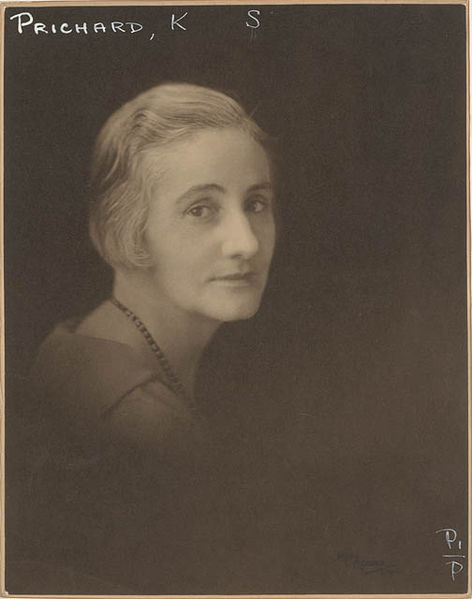
Bernard Cronin (1884-1968) has featured in this blog a couple of times, but most significantly in a Monday Musings which specifically featured him. He was a British-born Australian writer who, in his heyday in the 1920s to 40s, was among Australia’s top 10 most popular novelists. And yet, along with many others of his ilk, he has slipped from view. However, I did find a short story of his published in 1954 so decided this was my opportunity to check him out.

The reason I wrote my Monday Musings on Cronin was because in 1920 he founded (with Gertrude Hart) the Old Derelicts’ Club, which later became the Society of Australian Authors, but I have mentioned him in other posts too. For example, in one post, I noted that in 1927, Tasmania’s Advocate newspaper had named Cronin as being “amongst the leaders of Australian fiction”. And, in my post on Capel Boake I shared that he had written collaboratively with Doris Boake Kerr (aka Capel Boake) under the pseudonym of Stephen Grey. In fact, he used a few pseudonyms, another being Eric North, which he used for his science fiction. Cronin wrote across multiple forms (publishing over twenty novels as well as short stories, plays, poems and children’s stories) and genres (including historical fiction, adventure stories, metropolitan crime fiction, romances, and science fiction and fantasy).

Wikipedia’s article on him includes a “partial” list of his works, with the earliest being The flame from 1916, and the latest novel being Nobody stops me from 1960. What the list tells us is that his most active period occurred between 1920 and 1950, so the story from 1954 that I read comes late in his career.

I had initially chosen a different story, “Carmody’s lark”, which was published in late 1954 in several newspapers, but belatedly discovered that one paper had printed it in 1951! Wah! Fortunately, I found another, “The last train”, that, as far as I can tell, was first published in newspapers in 1954. They are very different stories, the former being a character piece about a lonely suburban railway worker whose friends notice a change in behaviour and think he’s finally found a woman, while the latter is a more traditional suspense story set, coincidentally, on a surburban train. Both convey subtle wordplays in the their titles.

“The last train” picks up that conversation-with-a-stranger-on-a-train motif, a conversation that will change the life of the protagonist. It’s midnight, and a “nondescript little man in sports coat and baggy slacks” rushes onto the train at Ringwood in the outer suburbs of Melbourne heading for the Dandenongs. There’s a broken light in the carriage so it’s (appropriately) dim. He thinks he’s alone until he notices “a man in a rather comical misfit of hat and light raincoat”. He’s “slumped forward with his elbows on his knees, staring at him”.

Now, our “little man” has had a rather dramatic night. The story continues …

there was nothing in the least sinister in the indolent down-at-heel looks of his solitary companion. He seemed, indeed, exactly the type preyed on by the garrulous; and the newcomer, who was shuddering deliciously with a sense of rare importance, instinctively shifted over to the corner immediately opposite him.

You have probably worked out already that all is not as our “little man”, as he is repeatedly described, thinks. The story builds slowly, starting with a bit of general chat that, if you are looking for it, already contains little hints of menace. But, our “little man” blunders on, ostensibly uncertain at first but in fact keen to tell of his experience that night, while the “other man” listens, gently encouraging him on. Too late does our “little man” realise the truth of the matter, but the story ends there, leaving it to the reader to imagine the rest from the clues given.

Lest you be thinking, it is not the same story as Patricia Highsmith’s 1950 novel, Strangers on a train (adapted by Hitchcock into a film of the same name). And it is not like Christie’s earlier 1934 novel, Murder on the Orient Express. However, it is a well-told, if traditional, suspense story, that is typical, I’d say, of 1950s popular crime fiction and perfect for a newspaper readership. (Whatever happened to the inclusion of short stories in newspapers?)

And that, I think, is the best I can do for Karen and Simon’s #1954Club.

Bernard Cronin
“The last train”
in Maryborough Chronicle (Maryborough, Qld)
22 November 1954
Available online

Monday musings on Australian literature: 1954 in fiction

Some of you know that Karen (Kaggsy’s Bookish Rambling) and Simon (Stuck in a Book) run “reading weeks” in which they choose, somewhat randomly, a year from which “everyone reads, enjoys, posts and shares wonderful books and discoveries from the year in question”. The next one is 1954, and is happening this week, 18-24 April.

I’ve taken part a couple of times, the first time being the 1936 Club for which I also wrote a Monday Musings. I’ve decided to do this again for 1954.

By 1954, World War 2 was over, and the now infamous baby-boom was well underway. Australia was welcoming migrants from war-torn Europe and life was, generally, looking good. However, the war was still close, and the Cold War was being well felt. The war featured heavily in popular literature, but writers were also looking at who we were as Australians, and at our near neighbours.

My research located a variety of books published that year across all forms, but to keep this simple, I am going to focus on fiction. Here is a selection:

  • Jon Cleary, The climate of courage
  • Dale Collins, Storm over Samoa
  • L.H. Evers, Pattern of conquest
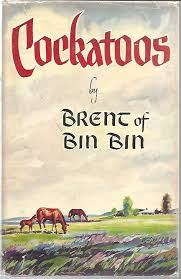
  • Miles Franklin (as “Brent of Bin Bin”), Cockatoos (Bill’s review)
  • Catherine Gaskin, Sara Dane
  • Nourma Handford, Coward’s kiss
  • T.A.G. Hungerford, Sowers of the wind: A novel of the occupation of Japan
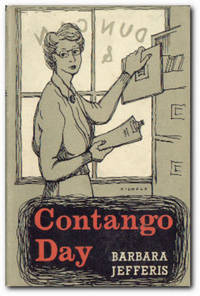
  • Barbara Jefferis, Contango Day
  • Eric Lambert, The veterans and The five bright stars
  • Henry George Lamond, The manx star
  • Eve Langley, White topee (Bill on The pea pickers and White topee)
  • Kenneth Mackenzie (as “Seaforth” Mackenzie), The refuge
  • Alan Moorehead, A summer night
  • Tom Ronan, Vision splendid
  • Arthur Upfield, Death of a lake
  • Judah Waten, The unbending
  • Don Whitington, Treasure upon the earth

Many of these authors have been forgotten, while others, like Alan Moorehead, are more remembered for their non-fiction work. Some, like Jon Cleary and Arthur Upfield, were successful writers of popular fiction, and are still remembered, albeit probably little read. Women are less evident here, than they were in 1936.

However, this list also includes some significant “literary” writers, like Miles Franklin, Eve Langley and Judah Waten, and others who are remembered today for awards established in their names, T.A.G. Hungerford and Barbara Jefferis. I like the sound of Jefferis’ debut novel. It was set during a single day in Sydney about Miss Doxy, a confidential filing and records clerk. The Barbara Jefferis Award was endowed by her husband in 2007 to commemorate her. 

There were very few literary awards at the time. One that did exist, the Australian Literature Society Gold Medal, was awarded in 1954 to poet Mary Gilmore for her collection Fourteen men.

Writers born this year included two poets, Kevin Hart and Dorothy Porter, and the novelist Kerry Greenwood. Deaths included, significantly, Miles Franklin.

Overland magazine, to which I often refer, was established in 1954 by Stephen Murray-Smith and Eric Lambert, who had also co-founded, with Frank Hardy, Melbourne’s Realist Writers’ Association.

The state of the art

Of course, I checked Trove to see what newspapers of the time were saying about Australian literature, and the fiction in particular.

Some specific issues

A recurring issue was the cost of books in Australia. A brief article in Adelaide’s Advertiser (January 25) reports on a visit to Australia by Desmond Flower of the large British publisher Cassell & Co. Flower said that English publishing costs had dropped slightly because of reductions in the price of cloth and paper, and the cost of printing was also likely to fall which should bring book prices down in England, “and consequently Australia”. (As an aside, he also noted that book business in Australia had trebled since 1939, which represented a greater increase than anywhere else in the Empire.)

Another discussion concerned the Little Golden Books, and Americanisation of Australian culture. (Nothing new, eh?) Jill Hellyer writing in the Tribune (July 21) argues not only that these cheap books had “pushed Australian authors even further from their precarious position”, when there are excellent Australian books available, but that the books were “full of loose phrases, bad grammar and cheap American slang”. She admits some in the series are good, but is particularly scathing about the Disney versions of classic children’s stories. There was a riposte, in the Tribune (August 11) from a “West Australian mother” who argued that “it is possible to select, from among these books, ones that can be good and useful for our children”. She didn’t mind ‘reading the words “sidewalk” or “cookies” because it provided her the “opportunity to explain this is how people talk in America”. From her point of view, these understandings help us get to know other people and cultures. However, while she disagreed with Hellyer’s specific cultural concerns, she agreed that “some [Golden Books] are very unpleasing, notably the ones based on Walt Disney’s films that were mentioned by the author of the article”.

Censorship was also discussed. The highly-respected Australian librarian John Metcalfe was quoted in Sydney’s The Daily Telegraph (August 10) as arguing against proposals (from both the right and the left) to extend censorship. The particular target was comic strips and books believed undesirable for children. Censorship, he said, is against the “liberal tradition” and was a “negative approach to the problem”. The Children’s Book Council, he said, “shows that a positive approach can be made in encouraging children to tackle a better type of literature.”

Similarly, a commentator in Wagga Waga’s Daily Advertiser (September 2) expressed concern about plans to extend censorship. Accepting that there there was a “a plethora of cheap and sexy trash on the market” and “an emphasis in some publications on crime and violence”, and agreeing that these can present “a danger to the younger generation and the lesser intellects [defined how?] among the adults”, this commentator believed that “a ban on ‘obscene’ literature is too dangerous to be countenanced”, and goes on to argue the case. There must be other ways, our commentator says, because

Once books are banned or burned, freedom is on the way out.

Some specific books

I could write screeds on reviews of particular books – even though I only read a tiny percentage of the articles I retrieved in Trove – but that’s not practicable, so, I’ll just share a few.

Brent of Bin Bin’s Cockatoos was much approved – and was also recognised by then as the work of Miles Franklin. IM (Ian Mair?) summarising the year’s books in Melbourne’s The Age (December 11) wrote “In the year’s fiction, first must come The Cockatoos … Like all her novels of country life, it has a wonderful feeling for place and period”. Earlier in the year, the writer of the Books Received column in Townsville’s Bulletin (April 18), wrote:

The theme is the universal one of the conflict between the artist and the practical majority who do not take the arts seriously, but the novel is also another Brent of Bin Bin’s memorable recreations of place and period in Australian country life. It is concerned particularly with the problem if the “exodists” — the restless young Australians who fifty years ago sought art of adventure, and in so doing suffered uprooting and exile. 

Oh dear – “the practical majority who do not take the arts seriously”!

There’s superlative praise for popular writers of the time like Jon Cleary and EV Timms. T.A.G. Hungerford‘s Sowers of the wind was also much liked. Interestingly, Wikipedia says that this novel won the 1949 Sydney Morning Herald prize for literature but was held back by publisher Angus & Robertson until 1954 “because it dealt with the economic and sexual exploitation of the Japanese after the War by Australian occupation forces”.

But I’ll save my last discussion for Eve Langley’s White topee. There were many reviews for this book, which continues the story of Steve from The pea pickers, but most seemed to be variations on a theme, which is to say, they praised its creativity but expressed some uncertainty too. Langley remains a challenging author for many, but her contemporary reviewers did value what she offered.

The Newcastle Sun’s (August 5) reviewer perhaps puts it best, opening with

It is impossible to judge White Topee by Eve Langley according to the established standards as the author has embarked upon the adventure of writing in a way that is completely original and individual.

The review uses headings like “poetic passages”, “heady style”, and “impressionistic”, but also gets Langley:

There are so many strands in this study of the country that the author’s impressions come tumbling with enough dazzling rapidity to suggest eccentricity, but the work on closer examination is revealed to be composite and, the result of shrewd observation and searching frankness.

M.P. in Queensland Country Life (August 5) is more measured, writing that it “could have been an outstanding book” but “is full of ego”. M.P. admires much in Langley’s passion and the writing:

Her love of Australia is deep and emotionally strong, and on the too rare occasions when Eve Langley forgets the poets and calls on her own descriptive powers she gives passages that, with their beauty and strength, are pure classics.

M.P. concludes that when Langley “extricates herself from the morass of sentimentality and confusion of mind she will write a book that is truly great”.

R.J.S., reviewing in Cairns Post (August 14) admired the book. S/he starts by saying “it has brilliant descriptive passages and much originality of thought but lacks a plot and is not a novel when judged by the usual standards”. S/he make a strong case for the work’s value:

To date no one has interpreted Australia and its people as Miss Langley has done in “White Topee.”

R.J.S. advises that the novel “cannot be skipped through” and suggests that “the careful reading it deserves will disclose that the writer has opened a new furrow in the field of Australian literature”.

I’ll leave White topee there, and will conclude my introduction to 1954 in Australian fiction with popular non-fiction author, Colin Simpson, who is quoted in Grafton’s Daily Examiner (December 23) as saying:

If one person in three would make one of his or her Christmas gifts a book by an Australian author, that could sufficiently enlarge the market to make authorship economic for more than just a few of us. The effect on our national literature could be very considerable.

Plus ça change?

Additional sources:

Meanwhile, do you plan to take part in the 1954 Club?

Elizabeth von Arnim, Vera (#BookReview)

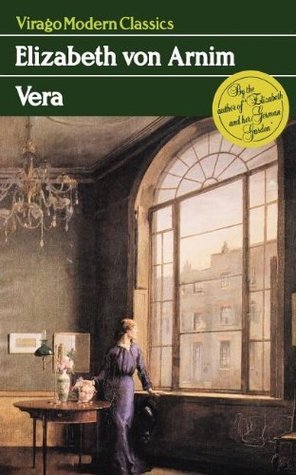
After a run of tough reads in 2021, my reading group wanted something gentler, so I suggested that for our “classic” we do a novel by Elizabeth von Arnim, whose works I’ve loved for their pointed wit, delightful humour, and astute commentary on marriage and the relationship between men and women. As is my wont, I nominated one from my TBR shelves, Vera. To my delight, they agreed.

Then, before reading it, I decided to remind myself of von Arnim’s life, so I read Gabrielle Carey’s Only happiness here: In search of Elizabeth von Arnim (my review). Imagine my horror when, two-thirds through, Carey wrote that Vera was her “darkest” novel, “a haunting portrait of psychological tyranny”. What? Too late by then, but I did hope my reading group would, one, forgive me, and, two, not be turned off von Arnim. As it turned out, all those who attended the meeting liked the book and pronounced it “not too dark”. Was I pleased!

Nonetheless, Vera is a dark novel, one that reminded me of a book written four decades later by Elizabeth Harrower, The watch tower (my review). Both novels are about narcissism and coercive control, about older men who marry and tyrannise vulnerable and inexperienced much younger women.

Wuthering Heights by Jane Austen”

When Vera was published, readers and reviewers were, says Carey, confused. How did “playful, witty Elizabeth von Arnim, author of light social comedies” become “a gothic writer of macabre tragedy”? Von Arnim was distressed but cousin Katherine Mansfield’s husband, John Middleton Murry, is reported to have said to her, on the appearance of a negative review in The Times Literary Supplement, “Of course my dear, when the critics are faced with Wuthering Heights by Jane Austen, they don’t know what to say.”

This is an apposite comment for a few reasons – besides its intention to reassure. Firstly, von Arnim pointedly has Lucy, our young wife, read Wuthering Heights even though husband Everard calls it “morbid”. It’s an effective allusion, given the darkness of Brontë’s novel and its focus on obsessive love. However, Murry’s comment also conveys something about the experience of reading this novel, because, while it is dark and distressing, it still bears von Arnim’s Austen-like light touch, and that, I think, is what my reading group appreciated.

By now, if you haven’t read it yourself, you may be wondering why this novel is called Vera when the two protagonists I’ve named are Lucy and Everard? So, let me do a quick plot summary.

The novel begins with 22-year-old Lucy Entwhistle leaning on the front gate of the house in Cornwall that she and her father had taken for the late summer. Her father has just died suddenly and Lucy is in shock. Into view comes another – apparently – grieving person, the mid-forties Everard Wemyss, whose wife Vera had died a week or so ago. Things, though, are not quite as they seem. A shadow hangs over Vera’s death, with a suggestion that it may not have been accidental but a suicide. Lucy, unfortunately, is naive and vulnerable, and despite the best efforts of her wise Aunt Dot, she is swept into marriage, with socially unacceptable haste. After the honeymoon, Everard takes her to his county mansion, “The Willows”, where Vera had died. He makes no attempt to change anything – expecting Lucy to sleep in the same bed Vera did, to occupy Vera’s sitting room, to have breakfast overlooking the flagstones onto which Vera had fallen (or jumped). Kind, head-over-heels-in-love Lucy does her best to justify Everard’s increasingly controlling behaviour but it dawns all too quickly that he expects nothing less than utter servitude . 

And so, Lucy, whose usual state had been one “of affection and confidence”, learns that the “scenes” that she hated could not be avoided “for no care, no caution would for ever be able to watch what she said, or did, or look, or equally important, what she didn’t say, or didn’t do, or didn’t look”. It leaves her “afraid with the most dismal foreboding, that someday after one of them, or in the middle of one of them, her nerve would give out and she would collapse. Collapse deplorably; into just something that howled and whimpered.”

Lucy starts to think kindly of this Vera she’d never met.

“It’s wonderful, wonderful … what love will do” (The doctor)

It’s grim, certainly, but this is Elizabeth von Arnim, so there’s humour – black comedy – here too. There are some truly funny scenes, particularly involving the poor servants for whom Everard has not one ounce of humanity. These servants only stay at “The Willows” because he is in town all week. They can manage his cruelly imperious ways from Friday night to Monday morning, because the wages were higher than any they’d heard of. (They probably had to be!)

So, here is a scene in which Everard confronts the parlourmaid about a missing button on a piano leg cover:

“What do you see?” he asked.
The parlourmaid was reluctant to say. What she saw was piano legs, but she felt that wasn’t the right answer.
“What do you not see?” Wemyss asked, louder.
This was much more difficult, because there were so many things she didn’t see; her parents, for example.
“Are you deaf, woman?” he enquired.
She knew the answer to that, and said it quickly.
“No sir,” she said.

And so it continues, but you get the gist. The scene is indicative of Wemyss’ extreme bullying behaviour, but you can’t help laughing while feeling for the poor parlourmaid.

This black humour is one of the things that kept me reading. Another was von Arnim’s writing. She has wonderful turns of phrase, such as this of Lucy reining in some disturbing thoughts: “Lucy made a violent lunge after her thoughts, and strangled them”.

Von Arnim is also an excellent satirist and ironist. Just look at the doctor’s statement above. He’s surprised and unsure about the marriage to Lucy but, well, look what love can do! Already, however, we are aware that his initial uncertainty is more than valid. One of the points Carey makes in her book is von Arnim’s disappointment in love and marriage. In her experience – including the marriage to Francis Russell which inspired this novel – men change as soon as they are married or, as the heady days of love wane. Vera is at the extreme, but not unbelievable, end of this disappointment.

Finally, there’s Jane Austen. Elizabeth von Arnim – and I’m not the first to say this – owes much to Austen. From my first Von Arnim, Austen’s wit and astute observation of human nature shone through. She nails the way humans think and behave with, sometimes, excruciating accuracy. But von Arnim’s style in Vera is not Austen’s. We don’t have Austen’s omniscient third person voice. Vera is told third person, but von Arnim uses that technique more common to modernists, the interior monologue, with the narrative perspective shifting between the main characters – Lucy, Everard and Lucy’s wonderful Aunt Dot. In fact, a few of the last chapters are with Aunt Dot as she comes head-to-head with Everard and learns just how right she had been to be concerned – but, well, look “what love will do”.

There’s more to discuss in this book. There’s Wemyss’ deeply creepy infantalisation of his 22-year-old wife, calling her “a good little girl” and “my very own baby”. There’s also his insistence that everything can be simplified to one right answer. Initially, the overwhelmed, grieving Lucy finds this comforting but, having grown up in an atmosphere of intellectual enquiry, she starts to not only think that such an attitude might “cut one off from growth” and “shut one in an isolation”, but to doubt “whether it was true that there was only one way looking at a thing” or “that his way was invariably the right way”.

Too soon after her death, Elizabeth von Arnim was relegated to the realms of light romantic comedy, but that denies their value, even when you look at her lighter works. However, when you add Vera to her oeuvre, you have a writer whose work must be seen as relevant now as it ever was.

Elizabeth von Arnim
Vera
London: Virago, 1983 (orig. pub. 1921)
319pp.
ISBN: 9781844082810

Nella Larsen, Passing (#BookReview)

For last year’s Novellas in November, Arti (of Ripple Effects) posted on a book and author I’d never heard of, Nella Larsen’s Passing. She also discussed its 2021 film adaptation. Quite coincidentally, that same month, my Californian friend Carolyn wrote positively about the film in a letter to me. It sounded right up my alley, so how grateful was I when, this month, Carolyn sent me the book. I decided to squeeze it in …

According to Wikipedia, Nella Larsen (nee Walker) was born in a poor part of Chicago to a Danish immigrant mother, and a father “believed to be a mixed-race Afro-Caribbean immigrant from the Danish West Indies”. He disappeared early in Nella’s life, and her mother married another Danish immigrant. Because of Nella they were seen as a “mixed” family and were not welcome in the mostly white neighbourhood where they’d moved. Nella grew up in that difficult limbo of being neither white nor black.

Eventually, she married a Black-American* physicist and they moved to Harlem where they became involved with “important figures in the Negro Awakening”, later known as the Harlem Renaissance. I share all this because it is relevant to Passing, which was her second novel.

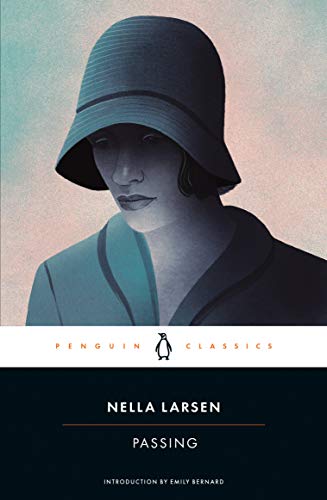
Passing, set mostly in 1927, tells the story of two Black women, Irene and Clare. Both can pass as white, but Irene lives in Harlem with her darker doctor husband, while Clare lives in white society, as a White, with her Black-hating banker husband. At the start of the novel, Irene receives a letter from Clare, referring to an accidental meeting they’d had in a swish hotel in Chicago where both had been “passing” as white. This meeting had been 12 years after they’d last seen each other as teens in Chicago, at which time Clare had been whisked away by her White aunts after the death of her drunken janitor father.

Two years had passed since that uncomfortable Chicago meeting, two years during which Irene had done her best to forget an occasion “in which even now, after two years, humiliation, resentment, and rage were mingled”. But now, Clare was wanting to see Irene again …

“they always come back” (Brian)

Much has been written about this book, which speaks directly to the challenges and conflicts faced by African Americans at the time. There was a new Black bourgeoisie – a professional middle class – to which Irene belongs, and in which she feels comfortable. She’s committed to the whole “uplifting the brother” project and does good works to that end. Clare, on the other hand, has turned her back on her race. The scene is set, we think, for conflict.

And there is, but if you think it’s going to encompass a simple dichotomy, you would be wrong. From the start, Larson keeps us on our toes, forcing us to see two very different ways of living as a black woman in that place and time. The story is told third person, but through the perspective of Irene. She is the conservative rule-follower who is sure of her path, while Clare, who is probably closer to Larsen herself, is more adventurous, a risk-taker. She’s lively, sensual, a breath of fresh air, but how are we to read her – and, for that matter, Irene?

As the novel progresses, we (and our allegiances) are tossed between the two, just as tensions between the two ebb and flow. Are we to approve Irene’s conscientious approach to life, or should we empathise with the “lonely” Clare who wants to reconnect with the black community? Both are flawed characters. Irene’s choice involves buying into the whole aspirational, consumerist, success-focused values of the bourgeoisie, so much so that she rides rough-shod over the wishes and needs of her husband and sons. Clare, on the other hand, might be lively but she can also be “selfish” and “wilful”, with her risk-taking being potentially dangerous or damaging to others, including her neglected young daughter. It’s clear that if her husband discovered she’d been touched by “the tar brush”, she’d be in deep trouble. It’s to Larsen’s credit that we do not see these characters as black and white (hmm!).

Irene and Clare are not the only characters in this tight novella, but the most interesting of the others is Irene’s husband, Brian, who finds himself caught between the two women after Clare inveigles herself into their lives. At the end of Part 1, just after the meeting in Chicago, Irene is preparing to return home to New York and Brian whose “old, queer, unhappy restlessness had begun again within him, that craving for some place strange and different, which at the beginning of her marriage she had had to make such strenuous efforts to repress.”

“caught between two allegiances” (Irene)

Passing is told in three parts – Encounter, Re-encounter, and Finale. In Re-encounter we learn more about these characters through their interactions, and we discover the source of Brian’s restlessness. He is, potentially, another adventurer, though different to Clare.

Early in this final part, Irene and Brian discuss Clare, “passing” and race. Brian has a more nuanced understanding of “race”, it seems. Answering Irene’s question about why those who pass “always come back”, he says, “if I knew that, I’d know what race is”. Much later, we learn that race is at the core of Brian’s restlessness. When Irene upbraids him for honestly answering their son’s question about lynching, he lashes out:

…I’d feel I hadn’t done my duty by them if I didn’t give them some inkling of what’s before them. It’s the least I can do. I wanted to get them out of this hellish place years ago. You wouldn’t let me. I gave up the idea because you objected. Don’t expect me to give up everything.

Passing is about many things, only some of which I’ve discussed. It’s about convention and security versus risk and adventure, about gender and marriage, about class and money, and about self-definition. There is much here that is universal about human nature, but, of course, race is a driving factor. As the novel draws to its conclusion, Irene finds herself

caught between two allegiances, different, yet the same. Herself. Her race. Race? The thing that bound and suffocated her.

But, there is another layer to this novel, a foreshadowing of something darker. Half-way through the novel, Irene says to Clare that “as we’ve said before, everything must be paid for”, while a little further on, Clare says to Irene

“Can’t you realize that I’m not like you a bit? Why, to get the things I want badly enough, I’d do anything, hurt anybody, throw anything away. Really, ‘Rene, I’m not safe.”

It’s chilling, but I’ll leave it there. I was engrossed by this novel from its opening sentence to its clever, unsettling ending.

* I’m uncertain about nomenclature, given the language used in this 1920s novel is not what we use now. I hope I’ve made a fair call.

Nella Larsen
Passing
New York: Penguin Books, 2018 (orig. pub. 1929)
128pp.
ISBN: 9780142437278

David Foster Wallace, How Tracy Austin broke my heart (#Review)

Many readers here, I know, are not the slightest bit interested in sports. You know who you are and I’m not going to out you, but you are welcome to do so in the comments. Meanwhile, this is for the rest of you who enjoy watching sports. For me, watching sports aligns well with being a reader, because sport is all story.

What I mean by this is that a sports event has a beginning, a middle and an end. It is full of character and characters. There’s also setting, and there are themes. Some relate to the characters. Are they the underdog, a star on the rise, someone coming back, an oldie having one last go, the bad boy? But, there can be darker themes too to do with politics, social justice, economics, and so on. I don’t need to elaborate them here.

As a lover and supporter of the arts, however, I certainly appreciate that sport can get more than its fair share of attention and money, but that’s not so much the fault of sport, itself. In the best of all possible worlds all forms of human endeavour deserve support and recognition. Enough, though, of my justification … on to David Foster Wallace.

American author David Foster Wallace was a person of wide interests, one being tennis. Several years ago I posted on his essay “Federer as religious experience”. That essay was very different to this one, but its approach is similar in that Wallace takes us on a journey, as he thinks through the issue in front of him. For this reason, I’m going to re-use a quote I used in my previous post. It’s from Best American essays editor, Robert Atwan, who defines the best essays as being

deeply personal (that doesn’t necessarily mean autobiographical) and deeply engaged with issues and ideas. And the best essays show that the name of the genre is also a verb, so they demonstrate a mind in process–reflecting, trying-out, essaying.

Wallace commences his essay by describing his love of tennis and, in particular, of child tennis star Tracy Austin who was born the same year he was. He consequently looked even more forward than usual to reading her sports-memoir. He’s self-deprecating about buying these mass-market books, ‘the sports-star-“with”-somebody autobiography’, saying that he usually hides them “under something more highbrow when I get to the register”.

Unfortunately, Austin’s “breathtakingly insipid autobiography”, being full of cliches and platitudes, might have broken his love of the genre. However, he decides to explore it to see if it might “help us understand both the seduction and the disappointment that seem to be built into the mass-market sports memoir”. He works through the issues, exploring our expectations of them, and why they might compel us. Unlike Wallace, I have never gravitated to these sorts of memoirs, but I can relate to some of the reasons he gives. These athletes are beautiful and inspiring. They make, in fact, “a certain type of genius as carnally discernible as it ever can get”.

So, we want to know them – who they are, how they did it, and how “it feels inside, to be both beautiful and best”. These memoirs, “explicitly or not … make a promise—to let us penetrate the indefinable mystery of what makes some persons geniuses”. But, the problem is, they “rarely deliver”.

He uses Austin’s trajectory to exemplify all this, and discusses why her ghostwritten book fails. It’s not only because it is poorly written. It forgets it’s for the reader. Rather, its “primary allegiance” seems to be “family and friends”, with “whole pages … given over to numbing Academy Award-style tributes to parents, siblings, coaches, trainers, and agents, plus little burbles of praise for pretty much every athlete and celebrity she’s ever met”. It also wallows in the cliches, stereotypes and myths that we’d actually hoped it would break open for us. It’s not that we are looking for “dirt”, but we want insight. The only insights we get in Austin’s memoir, Wallace shows, are unwitting ones where she naively exhibits her lack of awareness of reality, such as her protestation that her mother “did not force” her to play tennis at 3. What three-year-old has free choice? There are other, scarier, examples of naïveté, stories that an aware memoirist would tease out from the position of wisdom gained from experience.

There is also what Wallace describes as the Greek-like tragedy of Austin’s career, the fact that her “conspicuous virtue, a relentless workaholic perfectionism that combined with raw talent to make her such a prodigious success, turned out to be also her flaw and bane”. This too is not grappled with in the memoir. The book could have helped expose “the sports myth’s dark side”.

But then, in a very Wallace-ish way, he starts to turn his analysis around. He notes that this “air of robotic banality suffuses not only the sports-memoir genre but also the media rituals” in which top athletes are asked to explain their “techne” in those post-contest interviews. With the Australian Open just over, and the Winter Olympics on, I’m sure you know what he means. We get no insights, just “I stuck to the plan” or “focused on one point at time”, etc.

From here, Wallace starts to look at the issue from a different angle. He can’t believe, given what they achieve, that these athletes are as vapid as they come across. Maybe they achieve the heights they do because these “one ball at a time” cliches are true, that what goes through the athlete’s mind as they stand ready to serve, make the pass, whatever, is, in fact “nothing at all”.

When Tracy Austin accepts the car crash that ended her come-back attempt with “I quickly accepted that there was nothing I could do about it”, maybe this is true:

Is someone stupid or shallow because she can say to herself that there’s nothing she can do about something bad and so she’d better accept it, and thereupon simply accept it with no more interior struggle? Or is that person maybe somehow natively wise and profound, enlightened in the childlike way some saints and monks are enlightened?

This is, for me, the real mystery—whether such a person is an idiot or a mystic or both and/or neither. The only certainty seems to be that such a person does not produce a very good prose memoir.

Maybe, he continues, it is only spectators who are not divinely gifted athletes who can “truly … see, articulate, and animate the experience of the gift we are denied” while those with the gift are “dumb and blind about it”. Maybe this blindness and dumbness are not the price of the gift but its essence. I see an element of truth here, but the question is, where does this blindness start and end.

David Foster Wallace
“How Tracy Austin broke my heart” (1994)
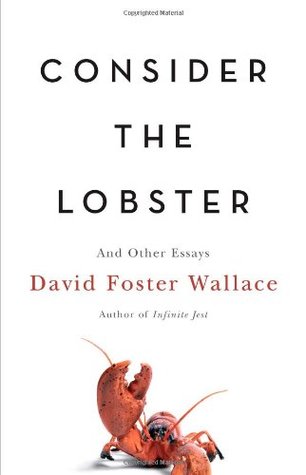
in Consider the lobster and other stories
New York: Little, Brown and Company
pp. 164-181
ASIN: B00FORA1TO (Kindle edition)

Scanned version available on-line at psu.edu

James Weldon Johnson, Stranger than fiction (#Review)

Several months ago, I bookmarked a Library of America (LOA) Story of the Week offering – as I often do for later use – but, despite its being a very brief offering, I’ve only got to it now. It’s on James Weldon Johnson (1871–1938), and was timed, 17 June 2021, to synchronise with the 150th anniversary of his birth.

American readers here may know Johnson, but many of the rest of us probably don’t. Wikipedia describes him as an American writer and civil rights activist, but that hides a wealth of accomplishments. LOA, lists his achievements in a news item. He

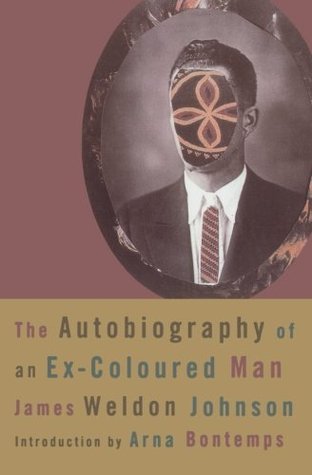
  • wrote one novel, The autobiography of an ex-colored man, “which is considered by many critics to be the first modern African American novel and a major inspiration for Harlem Renaissance writers”.
  • was a lawyer, the first African American from his county, or perhaps state, to pass the Florida bar exam.
  • was an educator, and president of the Florida State Teachers Association (for Black teachers).
  • was a songwriter who, with brother Rosamond and friend Bob Cole, wrote dozens of popular songs. Many ended up in Broadway musicals of the early 1900s. They also wrote two songs used for Theodore Roosevelt’s 1904 campaign. One of these, “Under the bamboo tree,” was a big national hit in 1902 and was later performed by Judy Garland and Margaret O’Brien in Meet Me in St. Louis). He and his brother wrote and composed the hymn “Lift every voice and sing,” also known as the “Black national anthem”.
  • was a diplomat, U. S. Consul in Venezuela (1906–1909) and in war-torn Nicaragua (1909–1912).
  • was a journalist at The New York Age, supervising its editorial page and writing a daily column for over ten years.
  • was an activist with the NAACP, who, in his role as field secretary, significantly increased the number of branches and the size of the membership.

LOA’s Story of the Week includes some biographical information that inspired his novel, and the text of his 1915 New York Age editorial which discussed the critical reaction to the novel.

“Stranger than fiction”

When I saw the title of this offering, I expected an essay, perhaps an entertaining one, on that old adage that “truth is stranger than fiction”, but I didn’t know the author then. What I got was something far more interesting.

LOA prefaces the essay, as usual, with some explanatory material. In this case, they start with two “dramatic experiences that would inform his writing and activism for the remainder of his life”. One occurred in 1895, when, as an enterprising new teacher (a black man, remember) he asked to visit a white school to see and compare practices. He did so, but apparently a few days later he learnt that his visit “had raised a hullabaloo”. Parents had objected to the presence of a “Black man” in their children’s classrooms. Johnson wrote that “The affair was fomented to such an extent that the board of education felt it necessary to hold a meeting to inquire into the matter and fix the responsibility for my action.” To their credit, the superintendent and the school’s principal stood their ground, and it all blew over.

The second involved his meeting a journalist in a park in 1901, at her request. She wanted to fact-check an article she was writing on the disproportionate damage done to Jacksonville’s Black neighbourhoods by the Great Fire. She and Johnson were confronted by “eight or ten militiamen in khaki with rifles and bayonets” who had “rushed to the city with a maddening tale of a Negro and a white woman meeting in the woods”. Again, it was resolved, but the ordeal left its mark.

Johnson’s novel, The autobiography of an ex-colored man (1912), which was inspired by experiences like these, has been described as the first fictional memoir by a black person. Set in late nineteenth to early twentieth century America, its protagonist is a young biracial man, known only as the “Ex-Colored Man”. Because of such experiences as witnessing a lynching, he decides to “pass” as white for safety and advancement reasons. The book chronicles his experiences and ambivalent feelings about his decision.

The book did not sell well initially, but sold very well three years later, after, says LOA, Johnson revealed himself as the author and “distributed several thousand copies of a glowing review that had appeared in Munsey’s Magazine“. This brings us, finally, to the essay, “Stranger than fiction”, which was published in 1915 in his daily column in The New York Age, where he was editor.

His aim was to give “a brief overview of the novel’s critical reception” but it was partly inspired, says LOA, by rumours that the estate of a wealthy woman publisher, Miriam (Frank) Leslie, was being contested by her late husband’s relatives on the grounds that she was the daughter of an enslaved women and therefore ‘her relatives had “no heritable blood”‘.

Johnson states at the beginning of his essay, that his book (novel)

produced a wide difference of critical opinion between reviewers on Northern and Southern publications.

Northern reviewers generally accepted the book as a human document, while Southern reviewers pronounced the theme of the story utterly impossible. A few of the Northern reviewers were in doubt as to whether the book was fact or fiction.

For many Northern reviewers, in other words, the work was so “real” they could barely believe it was fiction. (It doesn’t sound that, like Helen Garner’s critics, this bothered them.) Southern critics, on the other hand, asserted that the work was unbelievable because, writes Johnson,

the slightest tinge of African blood is discernible, if not in the complexion, then in some trait or characteristic betraying inferiority. This is, of course, laughable. Seven-tenths of those who read these lines know of one or more persons of colored blood who are “passing.”

As it turned out the Miriam Leslie rumours were unfounded, but Johnson at the time, believed it could have been true, and, if so, was “stranger than any fiction”. Which, ironically, just goes to prove the adage, whether the story was true or not!

Meanwhile, I was interested, though not surprised given how things are still playing out, in the disparity between Northern and Southern critical responses some 50 years or so after Abolition. Not strange at all, unfortunately.

James Weldon Johnson
“Stranger than fiction”
First published: New York Age, 1915
Available: Online at the Library of America

Amy Witting, Isobel on the way to the corner shop (#BookReview)

My first reading group book of the year, Amy Witting’s Isobel on the way to the corner shop, nicely doubles as a (late) contribution to Bill’s AWW Gen 4 week. Winner of the 1993 Patrick White Award, Amy Witting is one of those much-admired Australian writers who had not then and still has not received the full recognition she deserves. In her lifetime (1918-2001), she was admired by Patrick White, himself, and Thea Astley. Australian poet Kenneth Slessor is recorded as having said “tell that women I’ll publish any word she writes”.

Another admirer, Australia critic Peter Craven, argued that her form of realism wasn’t really accepted by the reading public until Helen Garner appeared on the scene, but for him “Witting was a great master of realism, a naturalist who could render a nuance in a line that might take a lesser writer a page”. Take for example this two sentence paragraph from our socially unconfident protagonist early in the novel:

The prison of other people’s eyes. No prison narrower.

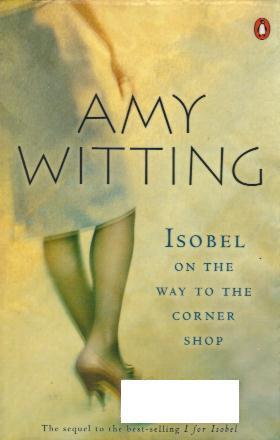
So now, the book. Isobel on the way to the corner shop (1999) picks up the story of Isobel Callaghan that Witting had started in I for Isobel ten years earlier. You don’t need to have read the earlier book to enjoy and appreciate this one, because enough of Isobel’s past is given for us to have a sense of why she is the person we meet here.

“I have to step out into space”

The person we meet is a 21-year-old woman who, having received some encouragement from an editor, is struggling to establish herself as a writer. She’s poor, starving and isolated, having left her job after screaming at a colleague in “a rage”. She fears she’s going mad. I was engaged from the start by her strong sense of self, her vulnerability, and her determination to be independent, and I enjoyed every moment I spent with her. I felt anxious, as anxious as she did when she felt she was going mad, and just as relieved as she was when her illness was given a name – tuberculosis.

The first third of the novel introduces Isobel and takes us to the moment of her admission into Mornington Sanatorium in the Blue Mountains. In this section, some of the novel’s themes become apparent – one being the artist’s struggle to survive. Another concerns love. The novel starts with Isobel stalled over writing a love scene, because she doesn’t “know the first thing about it”. Not about parental, family love; not about romantic love. This, and her sense of herself as awkward and unlovable, cause her to make a big – and hurtful – mistake when a young man makes a gesture of real affection towards her.

Over the rest of this section of the novel, Isobel meets some people who show genuine kindness – love – towards her. Although the hospital makes her feel like a “parcel”, the section closes with a comforting touch from hospital volunteer Mrs Delaney, “the first time anyone had touched her in kindness”. Through the remainder of the novel, Isobel observes and experiences all sorts of expressions of love (and its opposite), including through a delightful little poetry discussion group at the sanatorium, which starts when Doctor Wang asks Isobel to explain Gerard Manley Hopkins to him.

In the final two-thirds of the novel, another theme that was nascent at the beginning, comes to the fore, and it’s to do with “being oneself”. Isobel’s sense of self is challenged at the sanatorium. It’s an inspired setting because it encompasses a microcosm of society: patients of a disease that doesn’t discriminate between rich and poor, their visitors, and the doctors, nurses and other staff with whom the patients come in contact. Finding your place in such a world, where you can be stuck for months, is not easy.

Isobel is particularly tested by her room-mate Val, a peevish, inflexible, and, she thinks, illiterate woman. Val is unhappy, and like many unhappy people, is self-absorbed. She “felt for no-one”. Try as she might, Isobel cannot get their relationship onto a comfortable footing:

Is it possible to cause so much misery to another human being, simply by being oneself? she wondered, feeling a reflection of that misery. No help for it; she must continue to be herself.

Maintaining your self is difficult, though, when you are “different”, as our funny, resourceful, and compassionate Isobel clearly is. At one point, when her recovery is threatened, she realises that she must be tougher, and so creates a new mantra for herself, “bastards get better”.

There is, surely, a hint of autobiography here, for Amy Witting’s name is a pseudonym, chosen to remind herself to “never give up on consciousness’, not be unwitting, but to always remain ‘witting'”.

Gradually Isobel does get better, physically and emotionally. She discovers, for example, that people from her old workplace cared deeply about her:

I have to live as if…I have to assume that I have some importance to other people. I have to live accordingly. I have to step out into space.

With this comes debts and responsibilities, something new for her to accommodate.

Peter Craven described Witting’s work as “a form of realism”, and “realism” sounds valid to me. The novel contains minimal drama of the narrative-arc kind. Instead, there’s astute, warm and sometimes wry, observation of ordinary people living their lives. Witting looks into the hearts and minds of human beings to understand who we are, and how we get on together with all our differences. She also offers some subtle social commentary about gender, race, poverty, class. These are not the main game, but they inform the realism inherent in the setting.

Ultimately, Isobel on the way to the corner shop is about how a young artist learns to maintain her integrity, her authenticity, while also behaving responsibly and compassionately. It is, in a way, about growing up, but it encompasses far more too.

Amy Witting
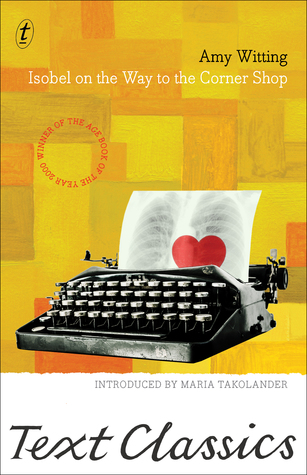
Isobel on the way to the corner shop
Melbourne: Text Classics, 2015 (orig. pub. 1999)
311 pp.
ISBN: 9781922182715

Margaret Barbalet, Blood in the rain (#BookReview)

When I thought about Bill’s AWW Gen 4 week, I knew I’d have some hard choices to make as I have many eligible novels on my TBR shelves. However, the choice wasn’t too hard because there was one author who just doesn’t seem to be talked about and I wanted to include her on my blog. Little did I know that Lisa had a similar idea, so this week you have not one but two posts on Margaret Barbalet’s Blood in the rain.

I am a bit embarrassed about it, though, because I must have bought my copy around the time it was published, as the “Aust. recommended” price sticker on my Penguin says $7.95! Indeed, I referred to this book, albeit not by title, when I wrote about Canberra’s Seven Writers of which Barbalet was a member. This is another reason I’ve been keen to read this novel.

Barbalet might have been part of the Canberra Seven, but she was born in Adelaide, grew up in Tasmania, and went to university back in Adelaide, before living in Canberra for many years. Blood in the rain is set in Adelaide and environs, and its descriptions of place reminded me at times of Barbara Hanrahan’s The scent of eucalyptus (my review), although the style is different. It might be just me, but I had a strong sense of Patrick White’s intensity in Barbalet’s book, particularly in the weight of her descriptions.

And this is probably a good time to tell you what the novel is about. The back cover tells us that it’s “about Jessie … a young girl growing up and reaching for maturity in the Australia of the Great War and the Depression, as she moves from country town to country town and eventually to Adelaide”. It also says that her life is “in may ways, ordinary” but that Barbalet “follows Jessie’s odyssey with a perception and compassion that reveals a person who is quite extraordinary”. This is accurate, but it misses a few salient points.

“she feels everything”

For example, the novel starts when Jessie, 4 years old, and her brother Stephen, 8, are living with their parents in a small coastal town. In the first chapter, their mother walks out, and we never hear from her again. Jessie adores her brother, but with their father deemed incapable of raising them – in the eyes of the local churchgoing women – the two children are taken in by different relatives. And through one of those twists of fate, Jessie is taken into a loving family, the Whaites, while Stephen goes to the home of a stern maternal uncle Theodore, and his cowed unmarried daughter. There is no affection here, and, indeed, there’s disdain from Theodore, because Stephen’s father was an Irishman – “Of course, Catholics, Irish, what can you expect”. In his opinion, Stephen “had never been checked”.

We spend a little time with Stephen – just enough to realise that his youth was miserable, and for us to see the contrast with Jessie’s life – but the book is Jessie’s. The war comes, and with the death of Mr Whaite in that war, Mrs Whaite can no longer afford to keep her, so Jessie is moved on to an unmarried relation, Miss Symes. Miss Symes doesn’t have the motherly warmth of Mrs Whaite but Jessie realises early on that she “would not be unkind”. A major theme of the book concerns, as Jessie ponders in adulthood, “what made a life good or bad”. One factor, this novel shows, is a secure, loved childhood, something Jessie had well enough, but not Stephen.

Anyhow, the story progresses from here, with Jessie going off to work as a domestic when she’s around 14 years old … and we move into the Depression. Meanwhile, Stephen, with whom she manages to stay in contact, goes to war, and returns with an injured arm, but it’s clear that Stephen’s greatest injury is emotional. The siblings reconnect after Stephen returns to Adelaide with a wife, Pamela, and baby – and some time after, Jessie moves in with them. I’ll leave the story there.

Since I read this for Bill’s week, I want to comment on how this book might or might not fit into his ideas about Gen 4. I’ll start with style, and return to my point about Patrick White. A little research into Barbalet uncovered that she was a fan of DH Lawrence. Guess who was also a fan of DH Lawrence? Yes, Patrick White. I rest my case!

Seriously though, White writes in his autobiography, Flaws in the glass, about missing Australia, and says “I could still grow drunk on visions of its landscape”. Well, you get the sense that Barbalet could too, as her descriptions of place – whether city, country, or coast – are so intensely evocative:

There was no one about but the smell of poverty remained.

The dew on the grass looks dirty, she thought, glancing through the pinched paling fence on the vacant block at the corner. Yellow light leant at corners, streaking the walls with new angles the colour of old flannel. Fingers of sun lifted new dirt in the glare.

There is also intensity in her descriptions of humanity, a Whitean (sorry!) sense of tough, hard lives that need resilience to survive. Jessie has resilience, seeking and enjoying, whenever she can, “manna in the dry waste of life”.

None of this is specifically Gen 4, but Blood in the rain does also embody its era. Barbalet, for example, plays with point of view, something that seems to start once Jessie is sentient. In other words, the novel is told third person, but at moments when Jessie’s feelings are likely to be strong we slip into second person. It begins when she is taken to live with Miss Symes, sister-in-law to her brother’s guardian. The mention of Stephen brings out feelings:

Your brother Stephen. If you skipped and walked even your feet would say the words. That dear face might suddenly slide in front of your eyes … You said the name over and over.

As does the awareness that, while Mrs Whaite had loved her, it wasn’t enough to keep her:

But, you, you, were someone who could be left.

It’s an intriguing technique, and a bit disconcerting at first, but it gives intensity to Jessie’s emotional self.

Besides style, though, is genre and subject matter. Blood in the rain is historical fiction, which was not particularly common in literary fiction, and it’s historical fiction about ordinary people, about ordinary women in fact. It’s a domestic story with little dramas, the sort of story that Gen 4 women made particularly their own.

Domestic, however, doesn’t mean trivial. This novel is about important ideas – about women’s resilience and stoicism in the face of poverty, about the raising of children, and in fact about love. Love, Jessie decides, is what makes the difference between a good life and a bad one. If that’s women’s fiction, it’s fine by me.

Margaret Barbalet
Blood in the rain
Ringwood, Vic: Penguin Books, 1986
204pp.
ISBN: 9780140089448

Janette Turner Hospital, The inside story (#Review)

Between 1985 and 1990, Janette Turner Hospital wrote four books which had one-word titles – Borderline (1985, novel), Dislocations (1986, short stories), Charades (1988, novel) and Isobars (1990, short stories). I’ve read the novels, and they imprinted on my mind Hospital’s love of metaphor. In these works, her titles clearly herald her concerns, and I love that. All this is to say that I thought I might kick off my contribution to Bill’s AWW Gen 4 week, with a short story, so I checked The Oxford book of Australian short stories. I found a few to choose from, but the writer who grabbed my attention was Janette Turner Hospital. I’ve read four of her novels, and have her latest short story collection, Forecast: Turbulence, on my TBR. I enjoy reading her.

The story is “The inside story” and it comes from the Dislocations collection, which was first published in Australia in 1986. I specify Australia because, at the time, and for many decades, Hospital was living overseas, primarily Canada and the USA, but elsewhere too. I note, however, that her website says that she returned to live permanently in Australia in 2019.

And now, the story. There is, as you’ll have realised, wordplay in the title. It is set “inside”, with the first person narrator being a teacher of a college literature course in a jail – an American one I presume, though it’s not specified. However, it is also about the “inside” of the characters, about their selves, particularly the narrator. The story involves this narrator, speaking from a later time, telling about the period she spent as a teacher in the jail, sharing her experience and some of the interactions she had with the inmates. So, she is also an outsider, coming from outside, and also an outsider in terms of not having shared experience with her students. For the first half of so of the story, her students are simply “they”, suggesting they are alike in their attitudes and reactions to her, but towards the end two, Jed and Joe, are differentiated.

For budgetary reasons, our narrator is limited in what she can teach to what’s available, so she chooses Malamud’s The fixer as a follow-up to Sozhenistsyn’s One day in the life of Ivan Denisovich which had not gone down well. She’s surprised, thinking they’d “enjoy the prisoner as hero”. Not this lot. After all, these are the people who had told her:

We can’t afford your romantic empathy … Please check your angst in at the cloakroom, before you see us.

Still, our narrator tries:

‘Kierkegaard suggested that we are all equally despairing, but unless we can write and become famous for our despair, it is not worth the trouble to despair and show it.

You people with a tragic world view, they sighed, you make like so difficult for the rest of us.

And so the story continues, with the narrator trying to understand their experience, and how they manage the brutality of prison life, while they fend off her desire to understand and “reform them with culture”. When she suggests reading Franz Fanon, they are not interested in “another tragic bloody humanist–because that would be the kind of invasion of our head space we can’t afford in here”. In other words, while she is concerned about their “moral survival”, eschewing the cynicism of her colleagues, their focus is pure survival.

She’s not the only one who started with “idealism and compassion”. Another is a guard, but he learns:

The institution could only operate in black and white, he said. Grey got it from both sides. Get out, he said, while you’re still human.

Inevitably, there is violence, and the job comes to an end.

I enjoyed the story, though my brief search of the internet suggests that it is not mentioned the way some others are from the collection. Anthology editor Michael Wilding, however, must have liked it, though he doesn’t mention it in his preface. There is a lot to think about here in terms of dislocations – the prisoners from their lives, for a start, and our narrator’s confrontation with ideal versus reality. Who is our narrator? Does she stand for liberal do-gooders that I can relate to from the 1970s and 80s. Why did she take this job, and is her closing answer completely honest?

On Hospital’s website is a link to an interview with literary editor, Steven Romei, in which she tells him that

All of my writing career is about how human beings negotiate dark matter. I am extremely interested in how people negotiate catastrophe, not because I’m morbidly interested in it but because I’m interested in the secret of resilience, that’s what I’m always exploring in the stories and the novels.

As for how this story fits into Bill’s conception of Gen 4 (see my first paragraph), I’m not sure. Hospital was an expatriate Australian writer when she wrote this, which places her at a remove from specific Australian movements, but – maybe – you could read it as occupying a transition between 196Os and 70s idealism and the cynical neoliberalism of the late 1980s. Then again, it could just be itself, and reflective of Hospital’s ongoing interest in “moral survival” and outsiderness, not to mention “dark matter”.

Janette Turner Hospital
“The inside story”
in The Oxford book of Australia short stories (ed. Michael Wilding)
Melbourne: Oxford University Press, 1994
Orig. pub. in Dislocations, 1987
pp. 288-294
ISBN: 9780195536102

S-S-S Snake, Kate Jennings’ Snake, that is

I thoroughly enjoyed Tegan Bennett Daylight’s essay on Helen Garner’s Cosmo cosmolino (1992) in Reading like an Australian writer. Consequently, I plan, over time, to read and share other essays in this book – at least those discussing books I’ve reviewed here. As it happens, there is an essay by Debra Adelaide on Kate Jennings’ Snake (my review), and it’s the perfect next cab off the rank. Not only have I already posted this year on Erik Jensen’s longer essay on the book in the Writers on writers series, but Snake is a novella, so I’m using this post as a contribution to Cathy’s (746books) Novellas in November. I hope that’s not too cheeky.

I’ll start, though, by introducing Debra Adelaide. A novelist with a few books under her belt, including The women’s pages which I’ve reviewed, she first became known to me through her work on early Australian women writers, her Bibliography of Australian women’s literature, 1795-1990 (1991) and A bright and fiery troop: Australian women writers of the nineteenth century (1988). Like many writers, she also teaches creative writing, and Snake is one of the texts she regularly sets.

So Snake – for those who don’t know – draws from Jennings’ life, and tells the story of a lively, imaginative woman, Irene, who marries a decent but boring man, Rex. It cannot work, and the consequences are dire.

Jensen’s and Adelaide’s essays are very different. This is partly because Jensen’s, being in the Writers on writers series, focuses on the writer, whilst Adelaide’s in Reading like an Australian writer focuses on the reading and writing. Not surprisingly, the approach Adelaide takes is closer to mine – except that her writerly perspective is more astute, centred and expository.

The elastic novella

Early in her essay, Adelaide specifically address its form as a novella, saying that Snake demonstrates “how wonderfully elastic the novella can be”. In Snake‘s case, it is “so elastic that it can almost be prose poetry”. It is also “audaciously” abbreviated. She’s right – this is one spare novel.

Adelaide identifies three main reasons that she sets this text for her students – “its poetic brevity, its ‘experimental’ form, and its intriguing, sometimes maddening, allusions to and quotes from numerous literary and cultural references”.

It is, she says, the perfect set text, because it can be easily read in one night and remembered, but,

Brevity does not mean simplicity: its complex themes ripple out and take their time before finally landing on the muddy shores of our imagination.

This is what makes Snake such a good and memorable read.

The three s’s

Adelaide divides her essay into three main sections, those three s’s in the title: Structure; Serpents; and Scenes, sex and Serena McGarry.

I love discussions of structure, because structure can so often help inform the meaning. When a short novel like Snake has a complex structure, it is worth taking note. Adelaide talks about her own method of writing and wonders about Jennings’ approach. She doesn’t know how Jennings works, but she does say that this novel

opened up my eyes to the possibilities of writing a novel that was straightforward yet clever in structure, that was stripped back to its narrative bones, and yet at the same time managed to be multilayered, dense, poetic and unforgettable.

She discusses the novel’s four-part structure, and explains how, although the book is primarily about the mother Irene, it manages to convey the POVs of all four characters, thus “deftly” delivering a portrait of the whole family. Simultaneoulsy, with its use of second person at the beginning and end, “it offers a powerful sense of everyperson”. I love this analysis. I also enjoyed her further discussion of second person, which accords with some of my assumptions about this voice. One of the points she makes is how second person makes (can make) the reader complicit, which is one of the reasons Madeleine Dickie used it in Red can origami (my post).

Adelaide also briefly discusses an issue that fascinates her, as it does me – “the unlikable character in fiction”. Irene is “remote, ruthless and selfish”, and yet, despite Snake‘s “staccato delivery and disparate parts”, Jennings manages to maintain the focus on Irene “without alienating us from her”.

However, the section I most enjoyed is Adelaide’s discussion of Serpents. She references DH Lawrence’s poem “Snake”, which Jennings quotes from in the novella, and Henry Lawson’s short story “The drover’s wife”. She also references Jensen’s discussion of snakes, because, of course, he discussed them too. The point is that snakes are both metaphorical (the cause of the original fall of humankind, and so on) and actual (a real threat to vulnerable children, dogs and women.)

And so, the heart of Jennings’ Snake lies in, says Adelaide, “the universal fear of the serpent, that potent post-lapsarian symbol of all evil and danger”. All associations with snakes race through our minds, she says, as we read this novel. This is one of the ways a spare novel can lay down meaning on top of meaning.

In the third section, Adelaide discusses Jennings’ “scrupulous clarity”, using a few examples from the novel. One is the murder-suicide of Serena McGarry and her husband. Adelaide explores how much, in less than 100 words, Jennings conveys about Serena, and its implications for Irene. Adelaide makes the point that these “marvellously condensed” scenes “contain entire longer stories within them”. She sometimes uses them as springboards for students to develop their own stories. I would add that this sort of writing can make a book a great reading group book because it encourages readers to think about characters – who they are, why they are who they are, and why the writer has written them this way. Endless discussion can ensue!

Adelaide concludes by saying that Snake is “a novel that replays re-readings well out of proportion to its size”. I second that.

Debra Adelaide
“Structure, serpents and Serena McGarry: Kate Jennings’ Snake
in Belinda Castles (ed), Reading like an Australian writer
Sydney: NewSouth, 2021
pp. 219-232
ISBN: 9781742236704