George Orwell’s Politics and the English language

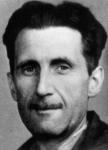
George Orwell, 1933 (Presumed Public Domain, from Wikipedia)

I was reminded of George Orwell’s rules for writing this weekend while reading an article about the German architectural historian, Nikolaus Pevsner (1902–1983). In her article, “New guides to Bath: Society and scene in Northanger Abbey, Judy Stove-Wilson wrote that

Pevsner noted the strong tendency of English towards monosyllables. He regarded this as symptomatic of ‘understatement, the aversion against fuss, the distrust of rhetoric’ (Pevsner, The Englishness of English art, 1956, p. 13).

The reason I was reading this article, as you’ve probably guessed from the title, is because my local Jane Austen group is currently discussing Northanger Abbey. Pevsner wrote in 1968 an oft-quoted article on Austen, “The architectural setting of Jane Austen’s novels”. He, keenly interested in architecture, was critical of Austen’s minimal descriptions of buildings in her novels, though he was impressed with her knowledge of and use of Bath in her novels – and of course much of Northanger Abbey is set in Bath.

But, I’m digressing. My inspiration for this post is his comment on “the strong tendency of English towards monosyllables”. It made me chuckle given the German language’s predilection for multisyllabic words. It also reminded me of Orwell’s 1946 essay, “Politics and the English language” and his 6 rules:

  1. Never use a metaphor, simile, or other figure of speech which you are used to seeing in print.
  2. Never use a long word where a short one will do.
  3. If it is possible to cut a word out, always cut it out.
  4. Never use the passive where you can use the active.
  5. Never use a foreign phrase, a scientific word, or a jargon word if you can think of an everyday English equivalent.
  6. Break any of these rules sooner than say anything outright barbarous.

No. 2, of course, is the one I was remembering.

However, on returning to the essay to check Orwell’s actual rules, I realised that the whole essay is worth reading again, because in our world of “alternative facts” Orwell’s words on the relationship between politics and language are as relevant today as when he wrote them 70 years ago. He writes that, paradoxically, our language

becomes ugly and inaccurate because our thoughts are foolish, but the slovenliness of our language makes it easier for us to have foolish thoughts.

This is reversible, he believes, and reversing it is critical because good writing enables clear thinking, and the ability “to think clearly is a necessary first step toward political regeneration”. I should clarify, if you don’t already know, that his target is factual, and particularly “political writing”, not “the literary use of language” by which, presumably, he means creative or fictional writing.

Later in the essay he makes very clear why he is writing it, and you’ll quickly see why I’m sharing it now:

In our time, political speech and writing are largely the defence of the indefensible. Things like the continuance of British rule in India, the Russian purges and deportations, the dropping of the atom bombs on Japan, can indeed be defended, but only by arguments which are too brutal for most people to face, and which do not square with the professed aims of the political parties. Thus political language has to consist largely of euphemism, question-begging and sheer cloudy vagueness. Defenceless villages are bombarded from the air, the inhabitants driven out into the countryside, the cattle machine-gunned, the huts set on fire with incendiary bullets: this is called “pacification”. Millions of peasants are robbed of their farms and sent trudging along the roads with no more than they can carry: this is called “transfer of population” or “rectification of frontiers”. People are imprisoned for years without trial, or shot in the back of the neck or sent to die of scurvy in Arctic lumber camps: this is called “elimination of unreliable elements”.

Hmm … I bet everyone reading this can think of their own contemporary examples. Please share them if you like!

I won’t write more on the essay, as my main aim was simply to share its continuing relevance. I’ll just leave you with a sentence from his last paragraph:

Political language — and with variations this is true of all political parties, from Conservatives to Anarchists — is designed to make lies sound truthful and murder respectable, and to give an appearance of solidity to pure wind.

That George Orwell. He really was something.

George Orwell
“Politics and the English language” 1946

Ellen N. La Motte, Alone (Review)

I decided to read Ellen N La Motte’s story “Alone” from recent Library of America (LOA) Story of the Week offerings because it was a war story, but as I read LOA’s notes I became more and more intrigued. I hadn’t heard of La Motte (1873-1961) before, but she was an American nurse. Two years before the US formally joined the First World War in 1917, she offered to work at the American Hospital of Paris.

She wasn’t pleased by what she saw. Rather than a serious “warzone” she found a bunch of “alleged do-gooders crowding out the recuperating soldiers”. In an essay written at the time, “An American Nurse in Paris,” she described the workers, as follows:

nearly all are dressed in the becoming white gowns of the French Red Cross and a few are pearled and jeweled, rouged and scented till they are quite adorable. . . . This system floods the institution with a mass of unskilled labor, some of which is useful, much superfluous, and some a positive menace to the patients themselves.

Not surprisingly, La Motte decided to move on, and worked for a year in a military hospital in Rousbrugge outside Dunkirk. She was little prepared, LOA writes, for the horror she witnessed. She herself described it as “beyond and outside and apart from the accumulated experience of a lifetime.”

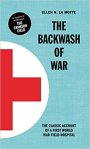
Ellen N LaMotte, The backwash of warWhile working at the hospital, she wrote of her experiences, and upon her return in 1916 published a dozen or so sketches in The backwash of war: The human wreckage of the battlefield as witnessed by an American hospital nurse. However, it was withdrawn in 1918 by her publisher, due to government pressure. It was too “unpalatable”, and wasn’t published again until 1934!

“Alone” is one of the sketches in the book. It tells the story of injured soldier, Rochard, who has gas gangrene. It’s a straightforward story – story-wise, anyhow. Rochard is brought into the hospital within six hours of being injured, but his wounds are inoperable and all know he will die. All they can do is offer pain relief and nursing care to keep him as comfortable as possible. What impressed me about the piece was La Motte’s insight, her humanity, and her ability to write, all of which turn this sad story into something more powerful.

La Motte describes the doctors in the hospital as comprising, primarily, young recent graduates from medical schools, and old doctors who had graduated long ago. She writes that

all those young men who did not know much, and all those old men who had never known much, and had forgotten most of that, were up here at this field hospital, learning. … there were not enough good doctors to go round, so in order to care for the wounded at all, it was necessary to furbish up the immature and the senile.

Oh dear. She describes the initial treatment given to Rochard in rather gruesome detail – which I won’t share here – and then describes his dying. He is given morphia, which “gives a little relief, at times, from the pain of life, but it is only death that brings absolute relief”. She never mentions euthanasia but, from her description of Rochard’s horrendous pain, you sense she’d support it. His death is a long and painful one. She writes, after one trying night:

So when the day nurse came on in the morning, there was Rochard strong after a night of agony, strong after many picqures of strychnia, which kept his heart beating and his lungs breathing, strong after many picqures of morphia which did not relieve his pain. Thus the science of healing stood baffled before the science of destroying.

As Rochard nears death, the screams of pain reduce and he becomes quiet. She writes that:

he had been decorated with the Médaille Militaire, conferred upon him, in extremis, by the General of the region. Upon one side of the medal, which was pinned to the wall at the head of the bed, were the words: Valeur et Discipline. Discipline had triumphed. He was very good and quiet now, very obedient and disciplined, and no longer disturbed the ward with his moanings.

Bitter, eh. The piece moves to its inevitable end – Rochard’s death – but the language La Motte uses to describe it and the way she controls the narrative to deliver a punch at the end, is impressive. This woman could have been a writer – well I suppose she was! – but her passion lay elsewhere, nursing and public health.

After the war La Motte, who wrote many books and articles on her nursing experiences, travelled in Asia and saw the devastation caused by opium addiction. According to the Johns Hopkins Medical Institutions, where her papers are stored, she became an authority on opium trafficking, and reported to the League of Nations. She was awarded the Lin Tse Hsu Memorial Medal by the Chinese government in 1930 and received the Order of Merit from the Japanese Red Cross.

But, she did more, too, so I’m going to conclude with the final paragraph from the American National Biography Online:

Ellen La Motte’s professional life was devoted to causes she analyzed through the lens of public health advocacy. Her efforts on behalf of the antituberculosis campaign, woman suffrage, and the anti-opium crusade emerged from a firm belief that promoting ways to improve the health of the larger community could create a more equal and just society for all.

Someone well worth knowing about … I’m glad I decided to read this LOA story.

Note: The backwash of war is available in entirety at Project Gutenberg.

Ellen L. La Motte
“Alone”
First published: The backwash of war: The human wreckage of the Battlefield as witnessed by an American hospital nurse (1916)
Available: Online at the Library of America

Janette Turner Hospital, Orpheus lost (Mini-review)

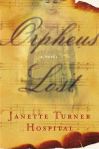
Janette Turner Hospital, Orpheus lostLast year I did a mini-review of Elizabeth Jolley’s An innocent gentleman using some scrappy notes from when I read the book long before blogging. This post on Janette Turner Hospital’s Orpheus lost has similar origins. I’m keen to add it here because I’ve read several of her novels, but none since blogging, and I really want her represented here.

Orpheus lost commences in Boston and is about Leela, a mathematician from the South, and the Australian musician, Mishka the subway-playing violinist, whom she meets.  They become lovers, until suddenly, after a subway explosion in which terrorism is suspected, Leela is taken to an interrogation centre where an old friend Cobb tells her that Mishka isn’t who she thinks he is. Meanwhile, Mishka is looking for his missing father, and heads off to the Middle East. The scene is set for what becomes, in fact, a literary thriller.

In a conversation* with Jason Steger on The Age online book club, Hospital said she had no political agenda but was interested in how people emotionally handle the shock of being randomly caught up in political action, and in what moral decisions they make. In other words, she’s interested in the moral and emotional repercussions of what happens when people get caught up because what they do looks dangerous but actually isn’t. (This is similar, in fact, to what happens in Richard Flanagan’s The unknown terrorist). It’s nightmarish stuff. Hospital talked about the trading of civil liberties for safety in the post-9/11 world, something she sees as a dangerous response. It makes it rather relevant still today doesn’t it?

However, she also talked about Orpheus and Eurydice being one of the great love stories of all time, and suggested that it is as much about loss, grief and yearning, as it is about love. But she was tired, she said, of the women always being the rescued ones. So she decided to give it a feminist twist and invert it. Consequently, in Orpheus lost, the man’s the one snatched away, and she’s the rescuer. Now that’s surely political!

The novel is a multiple-point-of-view novel and opens with Leela’s voice. We learn that she is fascinated by maths (numbers) and on the second page she quotes a seventeenth century mathematician saying ‘Obsession….is its own heaven and hell’. This theory is played out in the novel. The three main protagonists all have obsessions: Leela is obsessed with maths (which she believes always provides an answer to things) and with Mishka; Mishka is obsessed with music and with his identity (which involves his missing ‘father’); and Cobb is obsessed with Leela. There are other obsessions in the novel, though, too – the Islamic fundamentalists, Leela’s father with his religious fundamentalism, and other obsessive musicians and mathematicians.

Into this world of obsessed people, comes terror – and alongside terror, as we all know only too well, is the desperation for safety. Safety is a constant issue throughout the book. For example Cobb describes two types of people – those who take safety for granted and those who know it’s a precious thing. He suggests that the former create risks for the latter.

Unfortunately, I seem not to have the book anymore – which is unusual for me. Perhaps I’d borrowed it! So what I want to focus on is my experience of reading Hospital, rather than on the plot. She’s one of our more structured or tightly-styled writers. This means that I read her with my head as much as with my heart because she always has a lot going on. There is, for example, her strong use of recurring motifs and metaphors, such as, in this novel, photographs. They play several roles: they represent love, connections between people, surveillance, evidence, and the idea of truth vs fiction. I enjoy teasing out these sorts of things. Music and maths are other significant motifs. For some readers, and for me on occasions, Hospital can push her metaphors too hard but I thought they worked here.

And then, alongside multiple points of view and these recurring motifs and metaphors, there are structural devices, such as her use of parallels to set up points of likeness and tension between her characters. The three main protagonists all lost a parent early (Cobb and Leela their mothers, and Mishka never knew his father); Cobb and Leela both have ‘damaged’ fathers; the main characters all have small town upbringings in ‘odd’ places (the Deep South in a town called Promised Land, and the Daintree which is described as ‘the promised land’). The whole idea of “promised lands” is rich for exploration in our modern world of nationhoods!

Anyhow, to conclude this mini-review, lessons are learnt in the novel. Cobb, who initially wants to make Leela fear, comes to regret his actions. And Leela, who has to confront the reality of fear, also learns that random events which you can’t always control do occur. Steger says the book is about redemption – but, despite what Hospital says, I can’t help thinking it is also about politics. Like most of her novels, it’s challenging to read, because she’s a writer who extends, probes and pushes – occasionally, perhaps, a little too much – but that, to me, makes her always worth reading.

Bill (The Australian Legend)‘s review will fill you in nicely on more of the details.

aww2017 badgeJanette Turner Hospital
Orpheus lost
Sydney: Fourth Estate, 2007

* I couldn’t get the actual conversation to load when I checked this old link, but I’m adding it here in case it was just a temporary gremlin.

Mena Calthorpe, The dyehouse (Review)

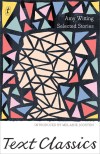
Mena Calthorpe, The dyehouseMena Calthorpe’s novel The dyehouse was, as I wrote in a post last year, Text Publishing’s choice for its 100th Text Classic, which surely says something about its quality or worth, wouldn’t you think? And yet, as Lisa (ANZLitLovers) pointed out in her post, it is not mentioned in recent books discussing the history of Australian literature, such as Geordie Williamson’s The Burning Library and Jane Gleeson-White’s Australian Classics.

However, it is listed in bibliographic and encyclopaedic works like Debra Adelaide’s Australian women writers: A bibliographic guide, Joy Hooton and Harry Heseltine’s Annals of Australian literature, and William Wilde, Joy Hooton and Barry Andrews’ The Oxford companion to Australian literature. It has also captured the attention of others, including Introduction-writer Fiona McFarlane (whose The night guest I’ve reviewed here). She writes of coming across a secondhand copy in a Sydney bookshop and says that she’d never heard of Mena Calthorpe, but as soon as she’d read the opening sentences, she decided to buy it. I can understand that. I would have too.

Now, before I get to the book, I’m going to bore you a little more with what people have or haven’t said about the book. In my above-linked 100th Text Classics post, I noted that while most reviewers were favourable, one from my city’s paper was less so. S/he, RR, called it “badly written and pretentious”, though conceded that if Calthorpe focused on “telling a story simply, economically, and honestly” she could be “a force … on the Australian literary scene”. Marian Eldridge, reviewing a reprint in the same paper, two decades later, had quite the opposite opinion. She praised Calthorpe’s “spare, clear prose and jaunty dialogue”, and called the book …

“a fine example of the social realist genre”

Well, I’m with McFarlane and Eldridge. The book got me in from its first paragraph, and I enjoyed it immensely. It is, what Lisa would call, a book that matters because its subject is, to put it broadly (and baldly!), the impact of capitalism-at-all-costs on workers. That could make for a dry, didactic book, but Calthorpe’s writing and characterisation bring the story to life. Her political message is unavoidable but it’s tempered by a cast of believable people (ranging from the cold chairman-of-the-board to the lowliest labourers), a well-controlled story that contains tragedy and romance without turning into melodrama, and writing that’s fresh and lively.

I’ll start with the writing first. The novel starts in 1956 and takes place over about a year. It’s told third person, in short chapters which move between the many, but not hard to keep track of, characters. It starts with Miss Merton arriving at the Dyehouse and meeting the on-site boss, Mr Renshaw. In chapter 2, we meet the Chairman of the Directors Harvison, the General Manager Larcombe, and Company Secretary Cuthbert. They’re discussing problems in the Dyehouse: it’s not keeping up with production. We quickly get a sense of the characters of these three men. Harrison’s lips tighten as he wonders “Where’s the firing squad?” Larcombe is ineffective – wary, unexciting, and full of excuses – while Cuthbert is “sharp-featured, pleasantly mannered”. We soon learn that he has some humanity, some empathy, but too easily lets his accounting distract him from troubling people issues. Then, in the same chapter, we shift to the General Office, and this (which McFarlane loved too):

Clack! Clack! Up came the carrier and ejected papers onto Mr Dennet’s table. There they lay: the Fanfolds! the Ledger Copies!
The Debits!
Mr Dennet took up his pen and began entering into the Control Book. The Comptometers sprang to life. Two young women with painted nails fell upon the papers.
Tic-tac, tic-tac. Now over to the files.
OK, Miss Brennan, you sort them out. City, Country, Government. Now break them up. A to K, L to Z, and then into the files with them.

There are other short interludes like this – a paragraph on worker Barney running for the morning train, for example – which break up the rhythm and convey the life better than any straight descriptive text could do. I have no idea what RR was thinking. Pretentious? No! Instead, I’d agree with McFarlane’s description of it as “formally experimental … with its episodic structure and its restrained lyricism …  its playful attention to sound.” It all makes for delicious reading.

“The trap’s set for us all” (Miss Merton)

Next, the well-controlled story. Told over a year, Calthorpe explores how the Dyehouse manages with its production crisis. We see Renshaw scapegoating the skilled, experienced but not certificated Hughie, moving him from his beloved dye-room to working on the vats. We also see Renshaw sexually preying on pretty young women in his employ, including the initially gullible Patty. We see the workers, their lack of security – those on “Staff” versus those brought in as needed – and their struggle to sustain their lives. We see the bosses turning a blind eye to the struggles of their people, or, not even noticing these struggles. We see nascent attempts to “organise” for better conditions. Along the way there’s an unplanned mid-life pregnancy, a tragic death, physical assaults and sexual abuse. The novel is nicely structured, beginning and ending with the calm, mature Miss Merton.

All this might suggest that the characters are stereotypical, designed simply to serve the “idea” but, while they do serve the idea, they come across as real, authentic human beings. Larcombe and Cuthbert, for example, are not simple villains. They are, in Larcombe’s case, for example, a bit lazy, a bit self-protective, a bit uncertain, resulting in his being a bit ineffective! Even the biggest villain of the piece, Renshaw, is shown to to have the odd ounce of humanity. Similarly, the workers. Hughie, Barney, Patty, Miss Merton and Oliver Henery, to name a few, are all rounded out with succinctly presented backstories, which establish their authenticity while also adding depth to the plot.

It is, essentially, an ensemble cast, but the stories of two characters primarily carry the plot – Hughie (whose love of his job “had given purpose and dignity to his labour”) and Patty (a naive young women who believes Renshaw will marry her, until she discovers otherwise).

The ending, which I won’t give away, is inspired, striking the right balance between realism and hope.

I really can’t recommend this book enough. It slots well into other books exploring the struggles of the working poor of the early post-war period, like Ruth Park’s Harp in the South series. And it is a thoroughly engaging read which is relevant today, not only because its humans reflect universals of human behaviour as well as the life of the period, but because we are currently seeing new threats to worker security which ensures that this book’s concerns do not feel dated. A worthwhile read on multiple counts, in other words.

Mena Calthorpe
The dyehouse
Melbourne: Text Publishing, 2016 (Orig. pub. 1961)
299pp.
ISBN: 9781925355758

(Review copy courtesy Text Publishing)

Graham Greene, Travels with my aunt (Review)

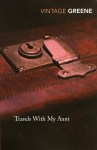
Graham Greene, Travels with my auntEvery year, my reading group aims to do at least one classic – usually something from the nineteenth century – but this year someone suggested Graham Greene. Yes, we all responded, why not? But which one? For reasons I don’t recollect, Travels with my aunt was suggested and given none of us had a burning desire to do another, it was scheduled. This suited me as I hadn’t read it before.

It surprised me a little. I was expecting something lighter because I’d understood that it was  a comedy, a bit of a romp, and it is – but I found layers too. Wikipedia says of Greene’s work, overall, that “he explored the ambivalent moral and political issues of the modern world, often through a Catholic perspective”. Travels with my aunt might be a fun book but this description is relevant to it too – though I’m not an expert on “the Catholic perspective” bit.

Anyhow, let’s start with the plot. It concerns middle-aged retired banker Henry Pulling’s travels in Europe and South America with his septuagenarian Aunt Augusta whom he only gets to properly know after his mother’s funeral. Henry is a bachelor whose hobby is growing dahlias. It’s a quiet, English sort of life. His aunt, though, is a completely different kettle of fish. She appears at her sister’s funeral, whisks Henry off to her flat where she lives with her valet-cum-lover, the black Wordsworth. She tells him that his mother was not his mother, but had married his father and faked pregnancy in order to take on his care when he was born to… Well, of course, we can guess who the birth mother is can’t we? From this point on, she engages Henry in her various travels which, it has to be said, become increasingly morally suspect. When she says that “sometimes I have the awful feeling that I am the only one left anywhere who finds any fun in life”, she’s not joking, but her fun can have a more than questionable edge.

The story is told first person by Henry. I’d call him a naive, rather than an unreliable, narrator – I think there is a subtle difference. This is one of the jokes of the book. We know or suspect things that Henry, in his inexperienced not to mention conservative British way, doesn’t immediately cotton on to. Part of the story’s enjoyment is the tension Greene creates between Henry and his free-wheeling Aunt. This tension provides one of the layers I referred to.

Another layer I’ll tentatively suggest was inspired by discovering that Greene’s full name was Henry Graham Greene. This made me wonder whether there is a little of the autobiographical in the book. There’s certainly not in the literal sense, because Greene, who left his wife and the associated traditional, domestic, settled life, led a peripatetic and adventurous life, one closer to Aunt Augusta’s. But the ending, which I won’t give away, poses some interesting questions when looked at from this perspective.

Other layers relate to various issues Greene refers to or hints at along the way, such as American imperialism, particularly in South America; World War 2 and the actions of collaborators; the impact of the pill (resulting in pregnancy now being the girl’s fault); Catholicism and its role (or not) in personal value systems; and, I think, some critique of “Englishness”.

However, I don’t want to make it sound too serious. The book is a romp. There’s no doubt about that, as we follow Henry and his aunt to Brighton, France, Istanbul via the Orient Express and, eventually, to Paraguay. The activities his aunt engages in, not to mention the stories she tells Henry about her past shenanigans, are funny, outrageous, sometimes farcical, and not always legal. You do have to keep up with a rather large cast of colourful characters, including the young Tooley and her is-he-a-CIA-operative father O’Toole, the Nazi war criminal and love of Augusta’s life Mr Visconti, various policemen and military personnel, and the put-upon Wordsworth who calls Augusta his “bebi gel”.

Greene’s writing is frequently funny. Here is a description of an American tourist having a cuppa in Europe:

One of them was raising a little bag, like a drowned animal, from his cup at the end of a cord. At that distressing sight I felt very far away from England, and it was with a pang that I realized how much I was likely to miss Southwood and dahlias in the company of Aunt Augusta.

Then there’s Aunt Augusta on her plans to fund their trip to Istanbul:

“I hope you don’t plan anything illegal” [says retired banker Henry!]
“I have never planned anything illegal in my life,” Aunt Augusta said. “How could  I plan anything of the kind when I have never read any of the laws and have no idea what they are?”

And there’s this on the is-he-CIA O’Toole:

“Are you in the CIA like Tooley told me?”
“Well … kind of … not exactly,” he said, clinging to his torn rag of deception like a blown-out umbrella in a high wind.

There are also many delightful set-pieces, such as the description of a Christmas lunch for the lonely, and some ridiculous confrontations with various policemen.

This book is too well-known for me to write something more comprehensive, so I’m going to leave it here, and let you tell me what you think.

Meanwhile, I’ll conclude on a quote from early in the book. It’s Henry reflecting on his mother’s life:

Imprisoned by ambitions which she had never realised, my mother had never known freedom. Freedom, I thought, comes only to the successful and in his trade my father was a success. If a client didn’t like my father’s manner or his estimates, he could go elsewhere. My father wouldn’t have cared. Perhaps it is freedom, of speech and conduct, which is really envied by the unsuccessful, not money or even power.

Without going into what he meant by “successful”, I think this notion of freedom – particularly “of conduct”, which is an interesting take – is what’s at the bottom of this book, the freedom to choose how you will live your life. In the end, Henry realises he is free to choose. Whether he makes the “right” or “best” choice is up for discussion, but it’s the freedom that’s the point.

Graham Greene
Travels with my aunt
London: Vintage Books, 1999 (Orig. pub. 1969)
261pp.
ISBN: 9780099282587

Carson McCullers, The great eaters of Georgia (Review)

Carson McCullers, 1959

Carson McCullers, 1959 (photographed by Carl Van Vechten, Public domain, via Wikimedia Commons

Regular readers of my Library of America (LOA) Story of the Week posts will probably guess why I’ve chosen to write about this story: it’s by an appealing American writer and it’s about food. However, it’s quite different from the other food stories. Firstly, while it’s called “the great eaters” it’s more of a little memoir essay albeit structured around food, and secondly, it was published posthumously in 2005. McCullers was born in 1917 (on Feb 19 in fact, so this month in the centenary of her birth) and died in 1967. “The great eaters of Georgia” was written, LOA’s notes say, in 1954 but was not published, because …

It’s a complex situation, which the Wikipedia article section on her personal life fills in, but the significant thing for us is that she had returned (fled) to the US from Paris in 1953, because her husband had tried to encourage her to commit suicide with him. Soon after her return, he succeeded in taking his life. Now, this is relevant because LOA tells us that McCullers had been offered money by Holiday magazine for a piece on Georgia, but, according to McCullers’ biographer Josyane Savigneau, the magazine rejected the article because they were “looking for a lighter, more descriptive, less personal piece.”

I guess that’s fair enough for a holiday-oriented magazine, but for readers more interested in McCullers than in Georgia – sorry, Georgia – it’s great that the piece didn’t disappear. Like many people, I’ve read and/or seen The heart is a lonely hunter and The member of the wedding – but in my case so long ago that my main memory is not of the plots but of melancholy and loneliness, the sorts of emotions that appealed to my teenage self!

But now, “The great eaters of Georgia”. It’s an intriguing piece that doesn’t perhaps quite cohere – certainly as a piece for a holiday magazine. For example, she mentions visiting various people. First is the controversial writer Lillian Smith, who openly confronted such issues as race and gender equality. McCullers writes:

Lill, like other Southerners, feels passionately about the problems of the Negro. Most Georgians do not agree with her, and often when her name is mentioned there is that strange area of silence.

This may not have been what Holiday was looking for, particularly when she adds that during her visit they “discussed Georgia politics”. Then she visits psychiatrist Dr Hervey Cleckley. She doesn’t share her discussions with him about her husband’s suicide – this I learnt from LOA – but they did talk

of the improvement in the understanding of racial problems and the migration from the rural cotton areas to the cities and towns.

Again perhaps not Holiday content? She says they also talked about Dr Crawford Long, a Georgian who was the first to use ether in an operation. You may wonder why this came up, but it resulted from their discussion of “ether parties”:

These odd-sounding affairs must have been like marijuana parties to the modern teenager but there was no social stigma attached, and my grandmother told me that, as a young lady, she often held ether parties for her young friends after they had ridden home from church and gathered for Sunday dinner.

Fascinating eh? Dr Long apparently noticed the numbing effect of ether (!) and thought it might work in surgery! I found this interesting because I have reviewed Sawako Ariyoshi’s The doctor’s wife, which fictionalises the story of Hanaoka Seishū who is believed to have been the first to use general anaesthesia in surgery – in 1804. Long carried out his first surgery in 1842.

Anyhow, I guess McCullers included this story of Long as an example of Georgian ingenuity? Again it may not have been what Holiday was looking for.

She was probably on firmer ground in her description of eating practices and food, because yes, she does talk about those too as the title suggests! I enjoyed little tidbits such as that in her mother’s day:

a child wore an asafetida bag around his neck to ward off colds and contagious diseases. Asafetida is the foulest-smelling substance. I suppose it makes good medical sense because one was not apt to go very near a person wearing an asafetida bag.

Hmmm, that’s not a food story though asafetida is used in cooking – and, anyhow, it’s adds a touch of humour.

She also talks about what great eaters (hence the title) Georgians are – at every meal:

Georgians eat big meals three times a day. I have never gotten over this orange-juice-and-coffee breakfast they have up North. A respectable Georgia breakfast means fish roe and grits or at least eggs or maybe country sausage.

She remembers chewing sugarcane as a child, and the historic cultivation of chinaberry trees “to counteract miasma”. She mentions the razing of the home she was born in, and sneaks in a comment about the reduction in (though not removal of) poverty in her home-town, before returning to the subject of breakfasts. She talks of the Yankee vulgarity of referring to children as “kids”. And she tells us that fried chicken is probably Georgia’s best-known dish, closely followed by “field peas”. She surprised me by mentioning a dish I have in my recipe folders from my early recipe-gathering days, Country Captain. It’s a sort of curried chicken dish, and I didn’t realise it came from the American south.

She also tells us that “any discussion of Georgian food is incomplete without the mention of watermelon” and provides a loving description of the “special operation and procedure” it demands. Fruitcake, tupelo honey, and the smells of Savannah are also shared with us, before she comes to a little anecdote about a “town character”, a bachelor who prefers to eat alone. This is very “un-Georgian”, and she concludes her piece by saying that

Although we have our share of eccentrics, I know very few Georgians who do not love fellowship, good hunting, food, and laughter—who do not enjoy life.

All in all, it’s a fascinating article – for what it tells us about Georgian life and food but more, for the little insights we glean of her interests and her emotional state. A good read for anyone interested in McCullers.

Pam (Travellin’ Penguin) has also written a response to this story.

Note: My other LOA food stories are by John Duncan (“A Virginia barbecue“), Ana Menéndez (“Celebrations of Thanksgiving: Cuban offerings“), George G. Foster (“The eating-houses“) and George Augustus Sala (“The tyranny of pie“).

Carson McCullers
“The great eaters of Georgia”
First published: Oxford American, Spring 2005
Available: Online at the Library of America

Jane Fletcher Geniesse, Passionate nomad: The life of Freya Stark (Review)

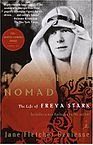
Jane Fletcher Geniesse, Passionate nomad, book coverMy reading group came to read Jane Fletcher Geniesse’s biography, Passionate nomad: The life of Freya Stark, by a somewhat circuitous route – and it started with my blog. One of our members had read my Monday Musings post on 19th century travellers, and suggested that we read a 19th century travel writer. Somehow, as the discussion developed, this morphed into reading a biography of a twentieth century travel writer. As young people say today, whatever!

Some of you probably know of Stark, but to clarify, she was a British-Italian travel writer, explorer/adventurer and historian, who was one of her time’s “most respected experts on the Arab world”. She lived and travelled in the Arabic states from the late 1920s to the mid 1940s, in particular, and was one of the first non-Arabians to travel through the southern Arabian deserts. Amazingly – well, it seems amazing when you’ve read the book and see what she experienced and endured – she lived until she was 100 years old, dying in 1993. Geniesse tells us that her parents both “placed a strong emphasis on stoicism”. She clearly learnt that lesson well!

Stark, Geniesse also tells us, moved among her era’s movers and shakers, including politicians, diplomats and a wide range of intellectuals. Geniesse shows her to be a strong, spirited, canny, resourceful and hard-working woman who took significant risks in order to achieve some remarkable, if not astonishing, feats. This is particularly impressive, given those highly gendered times when women had to fight for independence and recognition. She was, for example, one of very women to be accepted and recognised by the august Royal Geographical Society.

Geniesse traces in excellent, and well-documented detail Stark’s exploration of the Middle East, including, for example, her journeys into remote regions of Yemen which had seen few Europeans before. Unfortunately, the maps in my e-version are impossible to read and I didn’t have time to research every place she visited, so my comprehension of the detail is a little superficial. This excerpt, though, will give you a sense of Stark’s style and approach:

She reentered Luristan on a donkey, draped in native clothing, three Lurs at her side as guides. She bluffed her way past the border guards. (“The great and almost only comfort about being a woman,” she said, “is that one can always pretend to be more stupid than one is and no one is surprised”). (Ch. 8)

She spoke multiple languages, and was prepared to eat and drink what the locals did, sleep where they slept, and respect their beliefs, all of which facilitated her travel into remote, rarely visited lands.

Given the Middle East’s subsequent history, I was more interested in her theory about how the region should be “handled”. It was a theory she started developing when she was quite young, but further expanded over time. She promulgated it to the British and, in 1944 on a bruising British-government-suported lecture tour of the mostly pro-Zionist America. Stark wrote during this trip:

I have been thinking with more and more certitude on the wrongness of all our ways on becoming utilitarian at the expense of human relationships … the human relationship is what counts: and now that I have had time to think it all over, this has come to me so clearly that I feel I can lay hold on it as a definite philosophy and guide.

Respecting people’s sovereignty was a critical point for her, and she believed that any decisions had to be made with the Arabs’ consent. “We musn’t impose solutions,” was her mantra. That view, as we all know now, didn’t prevail.

Concluding the biography, Geniesse argues that while Stark

had not been able to affect British policy in a direct way, she had kept the flag aloft for decency, civility, and compassionate understanding.

Yet, Stark, like most people really, was a complicated person. She achieved a lot, but she also had her moments. One of the strengths of this biography is its even-handed portrayal of its subject. Geniesse shows Stark in all her glory – charming and petulant, wise and imperious, intelligent and petty – and does it with warmth, recognising Stark’s achievement and attraction for others, but also seeing her failings and sorrowing for their impact on her.

Geniesse argues that much of Stark’s paradoxical behaviour stemmed from growing up within an unhappy marriage that had broken up by the time she was 10 years old. She adored her self-centred mother, Flora, and yearned for her approval, but by the time she got it, with her successes in adulthood, the die was cast. She felt insecure about her appearance, and yearned throughout her life to be beautiful. She was also naive about some things, seemingly unaware for example, of the gay men in her midst and, disastrously accepting, later in life, a marriage proposal from one of them.

Stark made long-standing friends, and yet would also use people (and her health) to get what she wanted. She was surprisingly anti-feminist, like some other high achieving women before her, including (predecessor and self-imposed rival) Gertrude Bell. She preferred male company, and was keen to have male bosses (in preference even to being the boss herself, though she still fought for, and won, equal pay for herself from the British government). She was competitive and could be venomous, which her long-suffering but supportive publisher, in particular, tried to tone down.

Geniesse uses primary evidence – Stark’s letters, the writings of others, and interviews with people who knew her – to create her own psychological portrait of the sort of person she thinks Stark was, and why. As readers, we need to be aware that there could be other interpretations, but we can be comfortable, because the end-noting is there, that Geniesse’s picture is thoroughly researched and well-considered.

Geniesse also takes care in structuring her narrative. She starts with a Prologue summarising Stark’s significance, and then in Chapter 1 takes us to 1927/28 Lebanon when Stark was in her mid 30s and on her first trip to the Middle East. Having captured our attention by introducing Stark on the cusp of the grand adventure that became her life, Geniesse returns to her birth and childhood in Chapter 2 and thence tells the story chronologically. She uses foreshadowing, but not over-done, to make links between times and events “(“If Freya could only have known how close she now was to a fascinating life she might have been less depressed by the family responsibilities that again crashed down upon her”) or to focus the narrative (“but this was still a few years off”). Geniesse also finishes some “stories” even though Stark had left the picture, such as what happened post-war to the “ikwan” Stark had established in war-time Egypt to encourage local support for the British, and what happened to her husband after they separated.

In her philosophical book, Perseus in the wind, Stark wrote that:

the art of learning fundamental common values is perhaps the greatest gain of travel to those who wish to live at ease among their fellows.

I’ve really only touched on Stark’s life, and on Geniesse’s biography, but that’s all I can – or should – do. I’d certainly recommend it if you are interested in Freya Stark in particular, or in the Middle East, or in pioneer women travellers.

Jane Fletcher Geniesse
Passionate nomad: The life of Freya Stark
Random House, 1999
ISBN: 9781407053394 (eBook)

Olive Ann Burns, Cold Sassy Tree (Review)

Olive Ann Burns, Cold Sassy TreeAs I explained in my post last year on Annie Dillard’s The Maytrees, we are slowly listening to some of the audiobooks we gave Mr Gums’ mother in the last years of her life, and have just finished Olive Ann Burn’s epic-length, Cold Sassy Tree. From what I’ve read in Wikipedia, Olive Ann Burns was another late bloomer (albeit not an Australian one of course). Born in 1924, she didn’t publish Cold Sassy Tree, which was her only completed novel, until 1984. It was so successful that her readers pleaded for more, for a sequel, that is. She started it, but died of a heart attack in 1990 before finishing it. It, Leaving Cold Sassy, was apparently published unfinished, but with her notes, in 1992.

Now, when authors write historical fiction – particularly one that is not about a specific event, like, say, World War 2, or a person, like, say, the ever popular Ann Boleyn – my first question is why have they decided to write about a past time? Cold Sassy Tree is set in the American South in 1906, though if I remember back to the first CD correctly, the first person narrator, Will Tweedy, is telling the story some 8 years later (which would make it on the verge of the World War 1 – not that that is relevant given the USA’s delayed entry into the war.) According to Wikipedia, Burns was a journalist and columnist, and it wasn’t until 1971 that she “began writing down family stories as dictated by her parents. In 1975 she was diagnosed with lymphoma and began to change the family stories into a novel that would later become Cold Sassy Tree”. So, I guess, there’s my answer: she was capturing the stories from her family’s past. Will Tweedy, I believe, is based on her father. And it is, fundamentally, a simple, but charming, family story.

But, like all family stories, there is a little more to it than that. The American South is – or was, particularly, at the turn of the twentieth century – conservative, religious and prejudiced against other (coloured folks, poor folks, and so on). This is the society that Will Tweedy is born into. Luckily for him, he was also born into a family with an independent-thinker, live-by-his-own-rules, grandfather, E. Rucker Blakeslee. Early in the novel, Cold Sassy Tree (for that’s the name of the town), and particularly Will’s mother and aunt, are thrown into turmoil when 60-odd-year-old Rucker, just three weeks widowed to a wife he clearly loved, ups and marries the 33-year-old Yankee, Miss Love Simpson, who was working as a milliner in his general store.

Will, just entering adolescence, is the perfect narrator in what is, partly, a coming-of-age novel. He adores his grandfather, and becomes a sometime confidant, sometime unwitting but not unwilling eavesdropper, of the newly married couple. He has a mind of his own but is still obedient enough to mostly do what he is told. He soaks up what is going on around him, and is prepared to take risks and listen to new ways of doing things while also maintaining some of that level of shock about change that his parents have.

I’m not going to write a long post on this, partly because I listened to it over a long period of time and partly because, having listened to it, I don’t have good quotes to share. Burns has written the book in southern dialect, but it’s not hard to follow, and she uses some lovely fresh appropriate imagery – similes, in particular – which adds to the enjoyment. The coloured man, Loomis, for example says that religion is “like silver”, you “must keep polishing” it.

Besides the main story of this “shocking” marriage – which has its own trajectory to which Will becomes privy – we see the introduction of motor cars to the small town, the lack of opportunity for the children of the poor working class, the changing role of women, the economic challenges faced by small towns, and the stultifying effect of narrow religious beliefs. It’s not, in other words, all light. There’s drama – a near train accident, a returned would-be lover, a suicide, to name a few. There is also awareness of racism, but Burns glosses over this a little, preferring to show, overall, positive, more humane attitudes. She doesn’t necessarily gild the situation, but she doesn’t draw out the ugliness either.

This is not, probably, a book I would have picked up and read of my own accord, but as a book to listen to during hours on the road it did an excellent job with its engaging characters, its light touch, its warm but clear-eyed view of small-town life, and its sense that although times have changed people haven’t all that much.

Olive Ann Burns
Cold Sassy Tree (audio)
(read by Tom Parker)
BlackstoneAudio, 1993
12H 30M on 11 CDs (Unabridged)

Monday musings on Australian literature: Louise Mack

I promised in my Reading Highlights post that my first review of the year would be for a book from my TBR pile, and so it will be – hopefully in a couple of days. However, I suspect that the book, and maybe even the author, will be unknown to most of my readers here so I’ve decided to use my first Monday Musings of the year to introduce the author, Louise Mack.

Louise Mack, 1890s

Louise Mack, by Kerry & Co, 1890s (Photo:
National Library of Australia, nla.pic-an23474744, via ADB)

I’ve had Mack’s first novel, The world is round, on my TBR since the mid 1990s when I found it on a remainder table. It had been published under Imprint Classics by Angus & Robertson in 1993, and although it’s only 93 pages, I somehow didn’t read it then, and kept not reading it – until now. But, more on it later this week.

Louise Mack was born in Tasmania in 1870, the seventh child and first daughter of a family which ended up numbering 13! Her father was a Wesleyan minister, and they moved around, ending up in Sydney by the time Mack was in high school. She went to Sydney Girls’ High where she met and became friendly with Ethel Turner (who was also born in 1870). I wrote in my post on Ethel Turner’s juvenilia that Ethel and her sister, Lilian, established a magazine Iris when the school’s newspaper, Gazette, which was edited by Louise Mack, rejected Ethel’s contributions! However, I understand that they were very good friends and, in fact, Turner apparently met her husband at the Mack family home.

Australian author Nancy Phelan, who was Mack’s niece, wrote the entry about her in the Australian Dictionary of Biography (ADB), and also the introduction to the novel I’ve read. I don’t want to reiterate what you can read in the ADB, but here’s a potted history. After school she worked as a governess before being becoming “a regular contributor to the Bulletin in the late 1880s”, with the encouragement of owner-editor J. F. Archibald and editor A. G. Stephens. Phelan suggests that Mack perhaps received too much attention and praise, implying that it impacted the development of her talent. She married, but it failed and she went to England, around 1900, where she wrote novels and serials, travelled, and worked as a journalist, including as a war correspondent. She returned to Australia in 1915 and became a touring speaker or lecturer, something she did right through to the 1930s. During this time back in Australis, she wrote more novels and married a second time (more happily), before dying in 1935, “possessionless”.

“little lady”

They’re the dry facts. She was quite a colourful character, with Phelan describing her as “fair, pretty, extroverted, audacious, unpredictable, a genuine Bohemian who chose a life of adventure and insecurity”. Phelan writes in my novel’s introduction that Mack “grew up in a series of large, shabby, untidy parsonages, with no luxuries but plenty of books … books, as necessary as bread, were constantly discussed”. I found an article in Trove which announces her as a rising literary star. It suggests that:

Miss Mack owes much of her development to her mother’s literary tastes, and the varied training that an intellectual father can bestow on his children. (The Methodist, 23 Nov 1895)

My Trove search retrieved pages and pages of hits on her name, many of them from newspapers all around Australia – from Dubbo to Perth – announcing her lecture tour on her war experience, which included experiencing German occupation and bombardment in Belgium and going behind German lines. In her mid to late 40s at the time of the tour, she is, patronisingly to our modern ears, described in these announcements/reports, as “this charming little lady” or “the pretty and charming little lady”. This is the woman who, one of these articles says, was asked by Scotland Yard to report on a meeting of spies with Germans in Antwerp to which she’d been an eye-witness. This article’s writer also calls her a “little lady” but a bit later describes her more appropriately as “this daring and travelled lady”. S/he reports on an interview with Mack:

“I just love lecturing,” Miss Mack said; “it is the most fascinating work I have ever taken up. Indeed, I may say that I just live for the moment when 8 o’clock strikes, and I and my pictures begin to tell the story of a Woman’s Experience in the Greatest War this world has ever known.” (Western Mail, 17 September 1915)

Mack, you see, went the whole hog and illustrated her talks with moving pictures. Reports suggest that she was an excellent and engaging speaker. Some of these talks were given under the auspices of, and raised money for, the Red Cross. Her book, A woman’s experiences in the Great War, was published in 1915

I’m not going to discuss her writing in any detail here, because I’ll do that in my review post. Instead I’ll share a couple of columns that she wrote in the 1930s in the Australian Womens Weekly, for whom I’m guessing she must have been a columnist. These columns –  Louise Mack’s Diary and Louise Mack Advises – provide some insight into her values and sense of humour.

In a Diary column I found this on Mrs Bradfield, wife of Australian engineer and designer of the Sydney Harbour Bridge, John Bradfield:

I’VE always been wondering what would happen if Dr. Bradfield got his title, and dear Mrs. Bradfield became Lady Bradfield, and somehow, between myself and my diary, I must confess I’m glad that Mrs. Bradfield is still there. Dozens of times coming back from hospital, getting out of the train at Gordon, I would find my suitcase seized, or my parcels grabbed, and there’d be Mrs. Bradfield trotting along besides me, coming out of her way so that she could help carry someone’s burdens.

Could Lady Bradfield have done that? Ah, yes! Title or no title, this little simple, pale, absolutely natural woman, all kindness, with a quite remarkable craze for carrying other people’s parcels, would always have been Mrs. Bradfield. That’s her real title, her many friends think.

I like her focus on kindness, on the unimportance of “titles”, and her light humorous touch.

And, one of the advice columns. It’s called “The gentle art of giving” and asks “Do you give? Or Do you grab? The commonest way of giving is to give what you can spare. But that’s not giving at all, ethically speaking”. Fascinating. It made me think of Australian ethicist Peter Singer and his views on giving. However, let’s not get sidetracked by that now. Mack goes on to suggest that giving is good for your looks! She suggests getting on a tram and looking around:

Can’t you tell at a glance who hoards and who gives? It is written on their faces. It is graven around their lips. It is mirrored in their eyes, giving, or grabbing. The face that gives has a better complexion because the blood flows happily through capillaries kept open by the light-heartedness of generous doings. The face that gives has brighter eyes and sweeter lips. Oh, particularly about the lips does the will to give reveal itself in its full beauty.

She then gives examples of women who give and don’t give, ending with Myrtle who has almost no food left, when in comes her brother. Mack writes:

And there before my eyes took place a metamorphosis. Ovid wasn’t in it. One moment Myrtle was a grey woman with a quarter of a loaf of bread and a cold chop, and now she turned into a gracious creature, all wealth and possessions, that she was handing away to Tom. She whisked a bit of tea into one parcel, a quarter loaf into another, two potatoes and an onion into another, a cold chop out of her safe, two apples for the children, then pressed threepence into poor old Tom’s hand, with, “It’s pouring; take a tram.”

That was giving, indeed.

Giving is when you press your thumb down, down on the indicator of your heart—and, pressing still, and yet again pressing, send your will to give up, up, up, to the very highest storey of your soul.

Louise Mack sounds like a woman worth knowing … and yet is, I believe, unknown to most Australians. Such is life!

Eudora Welty, A curtain of green (Review)

This week I received the Library of America’s annual email in which they list their “Top 10 Story of the Week selections of 2016″. I’ve only read eleven of their selections this year, but two – Kate Chopin’s “A pair of silk stockings” (my review) and Willa Cather’s “Enchanted bluff” (my review) – are in their Top Ten. More interesting to me though is that it contains another writer I like, Eudora Welty. I read her book One writer’s beginnings and what is probably her most famous short story, “Why I live at the P.O.”, before I started blogging, so I decided to read this Top Ten story, “A curtain of green”.

weltycurtainofgreenWelty was a short story writer and novelist who wrote mostly about the South. She won the Pulitzer Prize in 1973 with her novel The optimist’s daughter and, according to Wikipedia, was the first living writer to be published by the Library of America (LOA)! “A curtain of green” was one of her early stories. It provided the title for (and was included in of course) her first published collection of short stories (1941), which also includes “Why I live at the P.O.”

However, before I get to the story, I want to share a little from One writer’s beginnings. This book originated in a series of lectures, the inaugural ones apparently, she gave in 1983 at Harvard University, the William E Massey Sr. Lectures in the History of American Civilisation. The cover of my 1984 edition claims that it was on the New York Times Bestseller List for 46 weeks! Pretty impressive for a series of essays I think. She was born in 1909 in Jackson Mississippi, the eldest of three. From the opening pages of the book she tells us how her growing up contributed to her writing.

For example, in the first paragraph she mentions growing up “to the striking of clocks”. She’s not sure whether it’s because of her father’s Ohio family “having been Swiss back in the 1700s” but her family were all “time-minded” all of their lives:

This was good at least for a fiction writer, being able to learn so penetratingly and first of all, about chronology. It was one of a good many things I learned, almost without knowing it; it would be there when I needed it.

Surely there’s a little bit of the tongue-in-cheek in her reference to the Swiss origins? Anyhow, two pages in, and she’s talking about her parents’ respective reactions to the weather, her father’s caution regarding storms for example and her mother’s rejection of that “as a character failing”:

So I developed a strong meteorological sensibility. In years ahead, when I wrote stories, atmosphere took its influential role from the start. Commotion in the weather and inner feelings aroused by such a hovering disturbance emerged in dramatic form.

And so the book continues in this delightful manner, sharing her childhood with affection, perception and a wonderful sly wit … but now to “A curtain of green” in which meteorological conditions do, in fact, feature!

“A curtain of green” is about grief, but it starts

Every day one summer in Larkin’s Hill, it rained a little. The rain was a regular thing, and would come about two o’clock in the afternoon.

One day, almost as late as five o’clock, the sun was still shining …

It tells the story of Mrs Larkin whose husband had died the previous summer in a terrible accident – a tree, “a fragrant chinaberry”, had come crashing down on his car as he was arriving home. She had seen it happening, had believed her love would keep him safe. And so now, while the other women of the town sit inside “fanning and sighing, waiting for the rain”, Mrs Larkin is out in her garden, where she is now all the time, because “since the accident in which her husband had been killed, she had never once been seen anywhere else”. It’s a fertile garden, needs “cutting, separating, thinning and tying back” to keep the plants from “overreaching their boundaries and multiplying out of all reason”. But, Mrs Larkin is deranged with grief. She does none of this, just works incessantly, obsessively, planting

thickly and hastily, without stopping to think, without any regard for the ideas that her neighbours might elect in their club as to what constituted an appropriate vista, or an effect of restfulness, or even harmony of colour. Just to what end Mrs Larkin worked so strenuously in her garden, her neighbours could not see …

She doesn’t offer flowers when they’re sick or die, for example. I love how the language in this story just piles on, driving us forward this way and that, just like Mrs Larkin’s grief does to her. The garden, to the neighbours who had initially tried to support her, “had the appearance of a sort of jungle, in which the slight, heedless form of the owner daily lost itself”. It’s oppressive to us, but Mrs Larkin has isolated herself behind her “curtain of green”. The only person she tolerates in this garden, and then only occasionally, is Jamey, “the coloured boy who worked in the neighbourhood”.

At this point in the story, which is told third person, the perspective shifts from omniscient to subjective, to Mrs Larkin’s point-of-view, that is. We are now in the garden with her as her memory returns her to the day of the accident. Suddenly all is still, “everything had stopped again, stillness had mesmerised the plants …” Jamey infuriates her, with his “look of docility”, of being “lost in some impossible dream of his own”. She watches him – her hunger for his innocence suddenly overtaken by a fury at his youthfulness, at his being able to be lost in this, to her, “impossible dream”. She’s overwhelmed by the unaccountability of accident, of life and death, by the meaningless of it all, and wants to smash his innocent absorption – but then comes the rain. There are two more pages in the story after this, but I’ll finish here.

This story was written in 1938 – quickly written and easily published, according to LOA. LOA also tells us that in 1931, Welty and her mother had been present when her father died of leukaemia, and they quote Welty’s biographer Suzanne Marrs as saying that her mother “discovered solace in gardening”. She spent hours in her garden, most days, often with Eudora by her side. Welty, says Marrs, wrote in an unpublished essay that “its [the garden’s] peace and fragrance are soothing to frayed nerves when we are weary from contact or perhaps conflict with the everyday world.” This memory clearly informed her story of the grieving Mrs Larkin.

“A curtain of green” is a great read, for its exploration of how grief can derail you, making you, temporarily at least, a little mad; for its evocative writing which captures that sense of derailment, taking you right into that garden with Mrs Larkin; and for its resolution which offers hope without being simplistic about it. After such a year as this has been, it seems just the right story to end on. Happy New Year everyone!

Eudora Welty
“A curtain of green”
First published in: Southern Review (Autumn 1938).
Available: Online at the Library of America