Monday musings on Australian literature: Random thoughts from the mid-1930s

I’ve written a few posts in recent months about Australian literary culture in the 1930s – on moving beyond “gumleaf and goanna”, on setting vs character, and two (here and here) on where Australian literature was heading. This week, I’m returning to the topic to share a random selection of comments made about Australian fiction in the newspapers around the middle of the decade, a time when life was still pretty tough due to the Great Depression.

Writing from real life

Book coverC.H. Wales (whoever s/he is) was inspired by the death of John McCarthy, who inspired ‘Irish Mac’ in Mrs. Aeneas Gunn’s 1907 novel, We of the Never-Never, to write about the frequent use made by Australian authors of people from real life in their novels. Writing in Adelaide’s Chronicle in June 1934, Wales comments that “the ways of life in the outback are accepted as a commonplace by people in the Commonwealth, but are learned of with amazement by people overseas” and suggests that it is therefore “no wonder, then, that our authors weave the romance of this life into their novels”. A life, he says, that includes cattle stations as big as Surrey and more, that involves using a flying medical service, and in which children who are five years old have “never seen a shower of rain”.
Wales names some contemporary writers continuing this tradition – William Hatfield’s Sheepmates (1931), which is dedicated to “the real life characters in the book”; Myrtle White’s evocatively titled No roads go by (1932); and, more famously, Ion Idriess’ Lasseter’s last ride (1931), which “adds another illuminating but tragic page to the annals of Australian exploration, which in years to come will supply a useful link with literature dealing with the history of the foundation and development of our Commonwealth and Empire”.

Interestingly, the two male writers here have Wikipedia articles, but not Myrtle White. However, like them, she does have an ADB entry (linked on her name), which includes this:

When her three children were older and she had some leisure, White began writing. At Wonnaminta, despite endless interruptions, she worked meticulously on her drafts which she typed with one finger. The result was No roads go by (Sydney, 1932), an account of life at Lake Elder, rather in the tradition of Mrs Gunn’s We of the NeverNever. With humour and resilience, White described the remote station surrounded by sand ‘insidiously creeping up the six-foot iron fence, which was our frail barrier against all that moving country’. Drought, flood and near death were presented in intense but restrained prose.

Stories about the past

Historical fiction, it seems, was as popular then as it is now. My random reading of “new fiction” columns revealed a goodly number of novels about Australia’s past, including:

  •  John K. Ewers’ Fire on the wind (1935) is, says the reviewer in Melbourne’s Leader, “a story of Gippsland nearly forty years ago, culminating in the disastrous bush fires of February, 1898”. Ewers, says the reviewer, was a school teacher in Perth who “has not lived in Gippsland, but he has derived his local color from relatives who spent part of their lives there, and lived through the terrible experiences of Black Thursday […] although the author is not a Gippslander he knows the bush and the settlers, and on that account the background of his story has the note of realism”.
  • Alice Meagher’s The moving finger (1934) was published to coincide with Victoria’s centenary. The South Coast Times and Wollongong Argus reviewer writes that “while not a history, the story gives an interesting outline the early days. There is a brief mention of the Eureka stockade, and a realistic description of the heart-breaking work in the mallee country. The graphic story of a bushfire helps to make one realise what the pioneers of this country had to go through.” The West Australian reviewer (below) says that it shows “the growth of the State in a comparatively brief period of time”.
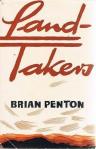
  • Book coverBrian Penton’s Landtakers (1934) is described as being among “other readable novels published in Australia”! Damned with faint praise? This West Australian reviewer describes it as “the usual type of tale that deals with Penal Settlement days, whereof Marcus Clarke’s For the term of his natural life is the great and abiding examplar”. Penton, who has a Wikipedia page like Ewers above, was an Australian journalist and novelist. Landtakers, his first novel, apparently sold well.
It’s interesting to see the specific mention of Ewers’ lack of personal experience about Gippsland and how he overcame that. I also liked the inference that fiction can tell us about who we are.

Other stories

Book coverTrove revealed many other books of different genres and styles, so I’ll share just a few, the first group coming from the West Australian (linked above):

  • F.E. Baume’s Burnt sugar (1934), described as “a powerfully-written romance of North Queensland, and of Italian settlers, slightly at variance over their racial divergencies”. Baume was a journalist, author, and radio and television broadcaster, well-known to some boomers!
  • Winifred Birkett’s Three goats on a bender (1934), described as “a highly farcical story, which has, however, its amusing moments”. I’ve mentioned Birkett here before, as she won the ALS Gold Medal in 1935 for another novel, Earth’s quality.
  • J. J. Mulligan’s A gentleman never tells (1934), described as “the surprising adventures of the versatile Lord Gerrard Fitzgerald in London, Paris, on the Riviera, in Egypt and elsewhere”. The reviewer calls it “a modern picturesque story” and “remarkably entertaining”. S/he also says that it’s “none the worse for getting away from the conventional and often tedious setting of the ordinary Australian novel”. But, Mulligan doesn’t appear in Wikipedia or the ADB.
  • Robert Waldron’s The flying doctor (1934), described as “the first romance — so far as we are aware — in which the leading motive is that admirable movement for supplying medical aid to persons in isolated districts of Australia by means of flying machines”. As with Mulligan, I can’t find him in Wikipedia or the ADB.

From the above-linked Leader article comes the comment that “there are few Australian novels ‘with a purpose’ in these distressful days” but that Ambrose Pratt “has attempted one in his new book, Lift up your eyes.” (1935). The reviewer wonders, however, whether the book

will add to his reputation as a writer or really further the causes of the ideal life and social and moral reconstruction which, it is to be presumed, are part of its justification. It is a Melbourne story, and some of its pleasantest passages describe hill-scenery and touch on life in and around the Victorian metropolis. But the strain upon the credulity of the reader is excessive and there appears to be an almost complete disregard of the “unities.”

S/he finds it hard to reconcile “the idealism and the religious intensity of feeling attributed to the leading male character” with his “Machiavellian conduct of a gigantic gamble in wheat”, but suggests the book “will excite curiosity and discussion”. Pratt was a prolific novelist who appears in both Wikipedia and the ADB. ADB says that in 1933 he founded “a League of Youth dedicated to the ‘protection and preservation of the flora and fauna of Australia’ and ‘the development of ideals of citizenship in the minds of young Australians'” and that the latter aspiration was reflected in Lift up your eyes.

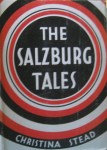
Book CoverThose versed in the period will know that I’ve not included some of the better known writers. This is partly because some have been mentioned in previous posts, but more because they didn’t pop up in my random search of this mid-30s period. One did, however, appear – Christina Stead’s The Salzburg tales. However, I have decided to hold it over for a future post as she’s worth a special focus.

Notwithstanding the above, the most notable observation to make, of course, is how few of these books and authors we know now. That may not be a bad thing, given the reviewers’ comments, but I love that Trove enables us to obtain a picture of what was being written and read at the time, and what the commentators thought. It all contributes to our knowledge of Australia’s culture and literary history.

Monday musings on Australian literature: Whither Australian literature, 1930s (Pt. 2)?

As I wrote last week, I apologise to those of you not interested in the history of Australian literature, because yes again I am continuing my little survey of contemporary writing about Australian literature in the 1930s. This week I plan to look at some another discussion about the place of and interest in Australian literature.

So, today’s post looks at an article which asked Why is the average Australian reader, if given the choice, more likely to pick an overseas (English or American book) than an Australian one?

Australian fiction in America

In 1935, Pegasus (whoever that is) wrote an article (probably syndicated) in the Central Queensland Herald inspired by Australian readers’ apparent preference for books written overseas*, and in which s/he discusses, conversely, the growth of interest in Australian literature in America! S/he says that the Christian Science Monitor reports that “the American reading public is beginning to ‘wake up’ to the fact that worthwhile fiction is being produced in Australia”.  Tell McKinnon et al, that, eh? Pegasus, in fact, says that

Australian fiction has been noticed in America is something to be put to the credit side of the ledger, when Australian authors and critics deplore the quality of Australian fiction produced to date.

Book coverIndeed, Pegasus says that the Christian Science Monitor writer talks about the enthusiasm of the American reviewers “which is more than I can remember occurring in this country”. The book, they are particularly enthusiastic about is Henry Handel Richarson’s The fortunes of Richard Mahony. Pegasus notes that “there are many in Australia who would agree with the American critic who described this novel as ‘the most important single piece of literature ever to come out of Australia,’ [but] it has never become popular in Australia, either amongst critics or readers”!
Pegasus then shares some of the other books that were being appreciated in America. Rolfe Boldrewood’s Robbery under arms and Marcus Clarke’s For the term of his natural life are also loved here, he says, but EL Grant Watson’s Desert horizon, “has been forgotten here, if it ever received any particular attention”. Katherine Susannah Prichard’s Working bullocks was being deservedly appreciated, but, says Pegasus,

the unfortunate Coonardoo, well-written though it is, is probably better appreciated than it deserves by an American critic who can regard it as “a portrayal of the relations between the white race and the white black on a typical cattle station in north-eastern Australia.

Other books appreciated in America include G.B. Lancaster’s Pageant, M. Barnard Eldershaw’s A house is built, and Frank Dalby Davison’s Red heifer (Man shy), which “has already been accepted in America, probably to a greater extent than in Australia”. Man shy and A house is built are both well known to me, and would be regarded as classics I think, but G.B. Lancaster, whom most of us haven’t read, is mentioned once again in my blog. This is the name used by Edith Lyttleton (1873-1945). Born south of Launceston, she moved with her family to New Zealand when she was six years old, and stayed there until she moved to England in 1909. She returned to Tasmania in the 1930s, but ended up moving back to England. She wrote, among other things, thirteen novels and some 250 short stories, which, says AustLit, were “mostly narratives of romance and adventure set in the remote back country of New Zealand, Australia and Canada”. It’s probably not surprising, given she lived very little of her adult life in Australia, that she’s not particularly well-known here now. However, Pageant did win the ALS Gold Medal.

What all this says to me is that when it comes to the creative arts, there is always something for commentators to be concerned about – and then talk about – which is not necessarily a bad thing. After all, any publicity is good publicity, n’est-ce pas?

Any comments?

* Things seemed to have started to change by 1937, according to Angus and Robertson’s Mr W.G. Cousins.

Monday musings on Australian literature: Whither Australian literature, 1930s (Pt. 1)?

Apologies to those of you not interested in the history of Australian literature, because this week and next I’m continuing my little survey of contemporary writing about Australian literature in the 1930s. My first post discussed the move from “gumleaf and goanna” to other topics, and last week’s focused on discussions about the importance of writing about character. This week and next, I plan to look at some bigger picture discussions about the place of Australian literature.

These posts are, however, based on a somewhat serendipitous search of Trove. There could very well be articles – there probably are – which say some different things. I can only share what I have been able to find in the time I have available. Just as well I’m not producing an academic work, eh?

And here might be a good place to point you to an article by Susan Lever in Inside Story concerning the current parlous state of teaching and research about Australian literature in Australian universities. It’s particularly depressing, now that we have Trove with its rich content, that there is not the support for research into our written heritage and culture – which, of course, feeds into discussions about who we are and where we are going.

Australian literature’s place in the Dominions

Why is it that Australian creative literature, fiction, and poetry has not reached the same high standard as that of South Africa and Canada?” and “What is the place of the Australian novel in the fiction of the British Dominions?” These questions were posed in reports of a lecture given in June 1934 by Firmin McKinnon to the English Association of the University of Queensland. Thomas Firmin McKinnon (1878-1953) was, coincidentally, born in the Yass area not far from were I live. He was a journalist, and, says Desmond Macaulay in the ADB, was nicknamed at Brisbane’s Courier, “the Encyclopaedia”! He and his wife were active in Brisbane’s cultural life, and by the mid 1910s and 1920s, he was “recognized as a tireless literary lecturer and mentor of many young writers”. Among his many roles, he was President of the Queensland Bush Book Club. Macaulay also says that “his Anglocentric conservatism, however, allowed little sympathy for certain literary trends”, so we should keep this in mind when thinking about his views of Australian literature.

The two reports are both in Brisbane’s Courier-Mail, one a brief report on a Tuesday and the other clearly a more feature article report on a Saturday. Neither have by-lines as far as I can see, so I’ll just call them Tuesday and Saturday. Tuesday’s is titled “Australian fiction: Where is it lacking” and Saturday’s is “Australian fiction: It’s place in literature”.

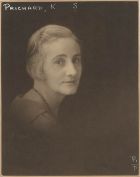
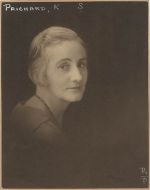
Katharine Susannah Prichard

Prichard, 1927/8 (Courtesy: State Library of NSW, via Wikimedia Commons)

Tuesday says that McKinnon particularly focused on the fiction of South Africa (represented by Sarah Gertrude Millin, Pauline-Smith, and Norman Giles), Canada (by Martha Ostenso, Corinthia Cannon, and Maza de la Roche), and Australia (by Katharine Susannah Prichard, Brent of Bin Bin, Flora Eldershaw, Marjorie Barnard, Helen Simpson, G. B. Lancaster, and John Dalley). Tuesday shares some of McKinnon’s arguments for the comparative failure of Australian fiction versus that of South Africa and Canada, saying that McKinnon’s conclusion is that “the contrast of nationality, and conflict of international ideas … were deficient in Australia. Even the contrasts provided by the migration era of the gold digging days had disappeared, and Australia was now the most homogeneous race on earth.” By contrast, South Africa had “a continuous conflict of colour and clash of nationalities” and while there was less conflict in Canada, it did have “a contrast of nationalities”. Hmm … sounds a bit simplistic to me. Prichard and Barnard-Eldershaw, for a start, found signifiant issues to tackle within our so-called homogenous culture. As did Christina Stead in Seven poor men of Sydney, but that, her first novel, was only published in the year of this lecture.

Tuesday reported that during the post-lecture comments, one person said “that many books of Australian fiction showed a good deal of slovenliness and lacked any marked spiritual impulse and characterisation”.

Book coverSaturday, as you would expect, provided more detail, including about the authors chosen to represent the three countries. Saturday reports that McKinnon admitted that “we have in Australia, in its history, and in its great cities excellent material and splendid background” but were not producing literature equal to Canada and South Africa. Saturday writes, presumably reporting McKinnon, that:

Unquestionably the impatience of the age has something to do with the decline of great creative literature all over the world. Beauty in literary form cannot flourish to perfection in an age that is wildly excitable, in an age that relishes some snippet about Bradman or Larwood, much more than it would a gem of English.

Have things changed much? Saturday goes on to report (or say) that

Australia has produced some very creditable fiction, but almost every creditable novelist who is writing of Australia has been abroad. Now is there any reason why our purely Australian novelist is not doing better work? There must be. Here in Australia we have a magnificent background for novels, and there is abundance of material. Some of the greatest novelists in the English language, from Jane Austen and Scott to Dickens and Walpole, have found their inspiration in happenings far less outstanding than those that could be found in the development of Australia, and in characters that may be found in any Australian city. But everything lies in the treatment of the subject, and our novelists fall short in the treatment of the story. Now what is the reason?

Llike Tuesday, he reports on the various ideas put forward and rejected by McKinnon, one being the effect of Democracy, itself, which he argued “which tends to the mediocre in everything”. Saturday quotes McKinnon as saying

Art and literature need to be fostered by leisure, good taste, moderate wealth, and cultivated discernment, and these do not flourish best in a democracy. Demos is a poor patron of art and literature.

Sounds a bit elitist don’t you think?

However, McKinnon, fortunately, realised the error of this argument, given Canada and South Africa were also democracies. And so, as Tuesday did before him, Saturday shares McKinnon’s argument that it’s “the lack of contrast and conflict in Australian life” that doesn’t support “literary creativeness”.

The answer? McKinnon says that what Australia needed was the “steady flow of migration” to provide “the clashes”, the opportunity to make comparisons “that are particularly valuable to the creative artist”. I’m not sure I fully agree with McKinnon’s argument regarding literature – I don’t see much evidence of clash of cultures driving Jane Austen’s novels, for example – but I do agree that cultural diversity is a good thing.

Anyhow, it appears that McKinnon gave a version of this talk later in the year, on 17 October, to the Authors’ and Artists’ Association. He again compared Australian writers with Canadian and South African ones, and he again argued that Australian novelists, with some exceptions, lack perspective and imagination, that they’re narrow and insular. Perhaps because this time he was talking to the creators themselves, he was, it appears, a little more positive. He “spoke of the vast and artistic improvement In Australian fiction within the past three years” albeit “all of it [was] written by travelled authors”. He again recommended migration to Australia, but added that “the development of aviation” and “even the Centenary gatherings in Melbourne” would be valuable in “helping to provide that standard of measurement that novelists needed”.

Now, I don’t know the South African and Canadian writers named, so I can’t comment on their relative merits. I’d love to hear from anyone who does know them. Regardless, though, I believe that Australians were producing some very interesting work in the 1930s, alongside the usual more popular fare?

Any comments?

Monday musings on Australian literature: Setting vs Character in 1930s Australian fiction

Today’s post continues the discussion started in last Monday’s “gumleaf and goanna” post. It looks particularly at what reviewers were saying about setting/scene and character, through five Australian books that were reviewed in papers during the decade. There was clearly a lot of engagement in the community about the development of Australian literature, and you can expect more posts on the decade!

This post was inspired, though I’m not going to labour the point, by Eric Norton, who wrote in The Courier Mail in 1934. He comments on the over-focus in Australian literature on “some half dozen ‘peculiar’ environments — the farm, the selection, the station, the mining camp, and a few others, which, if not familiar to us in actuality, have become so through the magazines or by repute”. The stories relying on these, he says, “develop inevitably a certain sameness”. For him, “the imperishable in fiction is that which deals primarily with the shallows or the deeps of the human heart” and he concludes with:

In the creation of fiction, as in life, it is character, not setting, that counts; and it is to the Australian rather than to Australia that the local novelist must look for his inspiration.

Book coverBrent of Bin Bin: We now know this pseudonym was Miles Franklin, but it was a pretty well-kept secret at the time. Certainly, the reviewer in Melbourne’s The Age had no idea. S/he reviews Ten creeks run (1930) (see Bill’s review), which was the second Brent of Bin Bin novel. The reviewer has mixed feelings, saying that “the same defects and the same merits” are apparent in it, but then says that “the effect of repetition is to bring out the merits more emphatically and to place the defects in the background”. This reviewer discusses both setting and character:
The canvas is crowded with minor characters, and the author has not sufficient skill to make these minor characters stand out individually; but the mass effect is good as a background to this story of station life on the Murrumbidgee more than a generation ago. Station life has never been more faithfully depicted in Australian fiction, or with so little conscious effort. Most of the more important characters are true to life, and though the story does not reveal much imaginative force on the part of the author in creating dramatic situations, he [ha!] has skill enough to keep the reader’s interest alive.

Birkett, 1939, Unknown, National Library of Australia, Public Domain, Via Wikimedia Commons.

Winifred Birkett, who won the prestigious ALS Gold Medal, for her 1934 novel, Earth’s quality. The reviewer in Melbourne’s Leader, says this book represents a “great advance on her previous book, Three goats on a bender”.  S/he goes on to say that Earth’s quality,

like so many other Australian novels, has a sheep station for its setting, but unlike most of its class it is not a description of station life, but a study in characterisation. And most of the characters are portrayed with the skill of a practised hand.

S/he then describes some of the main and minor characters, noting that one of the minor characters, Anthony, a Cockney man-of-all-work, “stands out with the vividness of reality”. Fascinatingly, however, “Miss Birkett is not very successful in portraying woman characters”. The story is “somewhat bare of incident, but the literary quality of her book lifts it much above the level of most Australian novels”.

John K Ewers: A Western Australian novelist, poet and schoolteacher who was President of the WA branch of the Fellowship of Australian Writers. His second novel, Fire on the wind (1935), was reviewed in Melbourne’s Leader.  It’s a story about disastrous bushfires in Gippsland in the late nineteenth century. The reviewer notes that Ewers hadn’t lived in Gippsland, but did have “relatives who spent part of their lives there, and lived through the terrible experiences of Black Thursday.” S/he then outlines the plot – a farm saga – including describing the characters, and concludes that “Although the author is not a Gippslander he knows the bush and the settlers, and on that account the background of his story has the note of realism. His best portrait is that of the aged Colliver, who, despite his narrowmindedness and his bigotry, is an engaging old man”. (ADB)

William Hatfield (pen-name of English-born writer Ernest Chapman): This author I hadn’t heard of. He was best known for his novel Sheepmates (1931), but the review I’m focusing on is for his 1933 novel, Desert saga. It buys right into our modern discussions about who can write what story, because it is, says the The Age’s reviewer, “about a tribe of aborigines in Central Australia, who, when the story opens, had never even seen a white man.” Our reviewer says the author provides “an interesting account of tribal customs and ceremonies, but the primitive conditions of life of an aboriginal tribe do not provide the variety in scene, incident and character, which are the main essentials of a good novel”. Of course, there would have been be good character to explore here, but Hatfield wouldn’t have been the man to do it. Hatfield is on firmer ground when he introduces white men, and explores their relationship with Indigenous people. The reviewer concludes that it’s obvious that Hatfield “has studied the Australian aborigines, and that in presenting their customs, habits and mentality, in the form of a story, he has adhered to truth”. Hmm … how does the reviewer know – and yet, it’s interesting to see that Indigenous people appeared in fiction more often, perhaps, than we might have thought. (ADB)

Kay Glasson Taylor (who, Bill identified last week, used the pseudonym of Daniel Hamline, and was second place-getter in the 1929 Bulletin Prize): The reviewer of her novel, Pick and the duffers (1930), commences by noting that the Australian story “must stand on its own merit, and not by implication or suggestion strive to emulate something of quite different atmosphere.” S/he was commenting on the claim on the jacket of “Pick …” that “Pick is an Australian re-incarnation of the immortal Tom Sawyer.” Our reviewer finds such comparisons dangerous. S/he writes that like several recent Australian stories, “the setting of Pick and the duffers is Queensland, and it deals with some lively incidents connected with cattle duffing on “Coomera” and adjoining stations … It is quite a good yarn, with plenty of action and incident”. It also, interestingly, has an Aboriginal character, Gordon, who is a friend of 11-year-old protagonist Pick. But, for our reviewer, it’s a “a good story for boys, but to adults, Pick becomes tedious with his posturing and posing and precocities”. Not much character development here!

I have more, but will save them for another post another time. I’m enjoying exploring the period, particularly seeing the reviewing style, and what reviewers looked for in and thought about Australian literature.

Any comments?

Lafcadio Hearn, Yuki-Onna (#Review)

I can’t believe how long it’s been since I’ve posted on a Library of America (LOA) Story of the Week. I usually “do” a few a year, but this is the first for 2019, even though I’ve identified several that I’ve wanted to do. However, when Lafcadio Hearn popped up last week – and with a Japanese story – I knew I really had to break the drought.

Image of Lafcadio Hearn's houseLafcadio Hearn (1850-1904) has appeared in this blog a couple of times before, the main time being in a Literary Road post from our 2011 trip to Japan when we visited Matsue. Hearn only lived there briefly but he met his Japanese wife there and it has a museum dedicated to him. Hearn is a fascinating man. Greek-born to a Greek mother and Irish father, he spent childhood years in Ireland before moving to the USA in 1869, where he then lived for two decades. Here he married a former slave who worked in his boardinghouse kitchen, and built his career as a journalist. In 1890 he went to Japan on a publisher’s commission. He married again, and lived out the rest of his life here, taking the name of Koizumi Yakumo. He became chair of English Language and Literature at the Tokyo Imperial University.

In their usual introduction, the Library of America quotes an article by another writer who appeared here only recently, Roger Pulvers. The article, in Japan Times, is titled “Lafcadio Hearn: ‘Japanese thru and tru'”. Pulvers provides a thoughtful, clear-eyed run-down of Hearn’s life, of his attitude to Japan, and particularly of his achievements as a writer. He says that Hearn:

was the shadow-maker, the illusionist who conjured up his own visions of Japan and gladly lost himself in them. He strove to leave Japan and return to the United States. Perhaps he realized that it was there that he had created his most accomplished work, attaining something he savored: notoriety. Again an ironical paradox emerges: He is remembered now in United States, if at all, not for his superb reportage on modern America but for his adoration of a long-gone Japan.

Pulvers says that Hearn loved “old” Japan –

He worshipped the static and wanted to see his beloved quaint Japan remain as sweet as it always was in his eye and the eyes of the world, bemoaning all progress: “What, what can come out of all this artificial fluidity!”

– but

loathed the modern Japanese male and what he stood for, and in this he recognized the futility of his task, a futility keenly felt toward the end of his years, where he heard “nothing but soldiers and the noise of bugles”.

Remember, when he died in 1904, Japan’s imperialism was at its height.

Hearn published roughly a book a year for the fourteen years he lived in Japan, but is best known for two of them, Kwaidan: Stories and studies of strange things (from which this post’s story comes) and Japan: An attempt at interpretation. Kwaidan comprises a number of ghost stories plus a non-fiction study of insects. Intriguing, eh?

Yuki-Onna, says the Library of America, means “snow woman”, and is “an ancient spirit who appears often in Japanese fiction, plays, and movies”. Hearn explains in the Introduction to Kwaidan that he’d heard this story from a farmer as a legend from his village. He says that he doesn’t know “whether it has ever been written in Japanese” but that “the extraordinary belief which it records used certainly to exist in most parts of Japan, and in many curious forms.” Wikipedia confirms in an article about this spirit that it dates back to the 14th to 16th centuries, and can be found in many Japanese prefectures including Aomori, Yamagata, Iwate, Fukushima, Niigata, Nagano, Wakayama, Ehime. If you know your Japan, you’ll know that these take us from northern Honshu down through the island and across to Shikoku.

The story is pretty simple, plot-wise, and given it’s just 4 pages long I’m not going to describe it here, except to say that it is about a vengeful snow spirit. Why she is vengeful is not made clear in Hearn’s story, but Wikipedia says that some legends believe she is the spirit of someone who perished in the snow. The legends vary over place and time, particularly in terms of how evil or aggressive she is.

I suggest you read it at the link below, as it will only take a few minutes. Meanwhile, I’m glad to have had this opportunity to remind myself of this intriguing 19th century character. Next, I’d love to read some of those American articles of his that Pulvers praises.

Lafcadio Hearn
“Yuki-Onna”
First published: Kwaidan: Stories and studies of strange things, 1904.
Available: Online at the Library of America

Monday musings on Australian literature: 1930s, moving beyond “gumleaf and goanna”

Time for another post inspired by Trove, this one, as often happens actually, discovered while researching something else. What I discovered was the discussion that went on in the 1930s about Australian fiction’s coming of age – and the fact that much of this was down to the women writers of the time (about which I have written before).

This post will focus on what critics and reviewers were saying about the Australian novel and its creators, and I’ll start with an intriguing competition that was run by Sydney’s The Sun in 1934. The competition was, apparently, for “a short comment on the progress of Australian fiction since the war”. What a fascinating competition idea? The competition report sums up the entries as follows:

Nobody expressed regret at the passing of the “gumleaf and goanna” phase — that tiresome exploitation of externals, of the obviously distinctive things in the Australian scene. Contestants commented on the decline of blood-and-thunder melodrama, and on the entry into Australian prose of high imagination and feeling for style (notably in the works of Henry Handel Richardson). Several commented on the success of women writers (H. H. Richardson, Kathleen Pritchard [sic], G. B. Lancaster, Helen Simpson, and others), and the use of themes of universal interest, even if the setting be Australian.

Katharine Susannah Prichard

Katharine Susannah Prichard (1927/8) (State Library of New South Wales [Public domain], via Wikimedia Commons)

This idea that Australian prose was moving away from a focus on melodrama and simple plots to exploring deeper issues and concerns runs through all the articles I read from the decade. As The Sun’s writer says, the setting, for most, was still Australian, but the core issues were becoming more universal. (Also running through the articles, unfortunately, was an ongoing issue with getting Katharine Susannah Prichard’s name right – something I’m sure biographer Nathan Hobby knows all about, and then some!)

Anyhow, the winner of the competition, a Miss Constance Wallace of Roseville, wrote that:

The Australian novel at last has broken from the convention of gum-trees and wide open spaces. It is losing its colonial, narrow atmosphere for a more vital and a broader national—and International—outlook. It has achieved a deeper humanity and a more virile quality. No longer is it mere landscape painting; the canvas begins to glow with the warmer tones of human emotions.

She names, among others, Henry Handel Richardson, Helen Simpson, G.B. Lancaster (pseudonym for Edith Joan Lyttleton), M Barnard Eldershaw, and a man or two, including Ion Idriess.

Meanwhile, back in 1931, The Canberra Times reported on two talks given to the Canberra Society of Arts and Literature by eminent men of letters of the time, Kenneth Binns and Harold White. Binns discussed M Barnard Eldershaw’s Green memory. He described the plot as “strong, dramatic and dignified” and as proceeding “with that quality of inevitableness which is characteristic of all great dramatic writing”. He liked the characterisation, describing the interest being in “the pull of character against character, instinct against instinct” in the two main characters, but he also commended the authors’ ability to delineate their minor characters. In terms of style, he described the pair as “masters of vivid, picturesque yet dignified writing”, likening them to Robert Louis Stevenson, “in their use of picturesque and arresting words and metaphors, and also in their command of highly pregnant short sentences”. Binns believed that Marjorie Barnard and Flora Eldershaw had “produced a book which not only delights but which also adds dignity and significance to Australian letters”.

Book coverWhite talked about Henry Handel Richardson’s The fortunes of Richard Mahony (1930), starting by contesting some of the criticisms from Australian critics. He described the trilogy as having “a structural harmony found only in very great novels” and he dispensed with “the question of whether the author had produced a typicallv Australian book or not” by saying it was “a universal work, and that should be enough”. (So there!) White, like Binns, then went on to talk about the work in detail – plot, characterisation, style, and so on, concluding, our reporter says, that

with this one book, Australian fiction took its rank with European conception of the novel as a form of art through which the real experiences of life are recorded sincerely and honestly. At the same time the author had recreated a period in our social history and added two living creations to the world’s great characters in fiction.

In 1934, a writer in The Age reviewed a later work by Henry Handel Richardson, The end of a childhood, which s/he described as “a collection of odds and ends”. Some of this the reviewer felt would “add little to the author’s reputation”. However, the work includes some sketches of girlhood, in which, says the writer, “slight as they are, Mrs. Robertson [sic!!!] displays a penetrative knowledge of the mentality of young girls”. The book concludes with four stories, which, our writer finally praises, reveals the “psychological subtlety which has proved a valuable asset in her portrayal of characters on a larger canvas”.

Moving on, in 1937, an article in Adelaide’s The Advertiser discussed Katherine [sic] Susannah Pritchard’s [sic] (honestly!) novel Intimate strangers, which the writer argues represents a development in Australian fiction because it “gives one the impression that Mrs. Pritchard [sic] is feeling her way towards what one may call the sociological novel”. The writer has some reservations about the book, but also praises it because Prichard

has grasped so well … the essentially challenging nature of marriage — the surrender that it calls for but which cannot wholly be given; the individual aspirations that, in its infinite demands, it so often submerges; the regrets it cannot completely banish; and the whole complex and unfathomable business of two distinct personalities being required to find a common denominator.

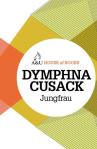
Dymphna Cusack, JungfrauAnother writer praised during the decade is Dymphna Cusack. In another 1937 article in Adelaide’s The Advertiser, the reviewer praises Cusack’s Jungfrau (my review). The reviewer starts with:
“IT is not wholly fanciful to suggest that within a decade or so most novels of ideas will be written by women,” a distinguished English literary critic wrote recently. “Modern intelligent men,” he added, “express themselves and their thoughts more easily in autobiographies, biographies, essays, and books of travel than in the form of fiction. And the future of the English novel is already largely in the hands of women.”

Our reviewer goes on to suggest that we should test this idea against the Australian novel, and starts by referencing Henry Handel Richardson. However, “are there”, s/he asks, “any young Australian women writers to succeed her in making the future of the Australian novel a brilliant one?” Well, yes, is the answer, and one of these is Dymphna Cusack as evidenced by her debut novel Jungfrau. I loved the writer’s reference to the cover, when s/he describes it as “a novel that — despite its title and its publishers’ absurd pictorial jacket— is arrestingly Australian in every way as well as being a fine piece of fiction”.

S/he goes on to praise Jungfrau, for its portrayal of Sydney, giving

a valuable picture of our city life that should do much to dispel persistently recurring illusions abroad concerning Australians’ homes, culture, manners, and way of speech.

Not only is Jungfrau “interesting and convincing”, s/he writes, it is also

extremely well-written, the prose having an effortless continuity and forcefulness which make it delightful to read, as, one feels, it must have been delightful to write.

The writer praises Cusack’s “lesser characters”, saying she “has endowed the very least of them with life; they are all so easy to believe in, and so easy to like or laugh at or despise.” And finally, s/he concludes that “altogether, the young writer is very much to be congratulated on her first book; on her irony, insight, and deft handling of human nature”.

So, Henry Handel Richardson, Katharine Susannah Prichard, Marjorie Barnard and Flora Eldershaw, and Dymphna Cusack … all praised, with clear argument, for progressing Australian fiction through the quality of their writing and their characterisation, and by tackling bigger and more universal ideas.

Have you read these authors, and, if so, what would you say?

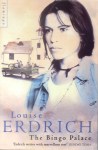
Louise Erdrich, The bingo palace (#BookReview)

Book coverWhen I bought Louise Erdrich’s The bingo palace in 1995, I never expected it to take me 24 years to read it but, there you go. Time flies, and suddenly it was 2019 and the book was still sitting on the high priority pile next to my bed! Truly! It took Lisa’s ANZLitLovers Indigenous Literature Week to make me finally give it the time it deserved – and even then I’m late. Oh well.
I have read Louise Erdrich before, back in 2000 when I read The crown of Columbus with my reading group. She it wrote with her then husband, the late Michael Dorris. While it was an enjoyable read, it didn’t make a big impression. However, I have always remembered it because of her. So now, her!

Erdrich is an enrolled member of the Anishinaabe nation (also known as Chippewa), and it is among the people of this nation that The bingo palace is set. One of the reasons the novel captured my attention all those years ago is because when we lived in the USA, we became aware of the importance of gambling as a major source of income for many Native American communities. Erdrich’s narrative draws from this fact, but it also provides her with the “luck” or “chance” metaphor – “the drift of chance and possibility” – which underpins the novel. One-third of the novel’s twenty-seven chapters, in fact, include the word “luck” in their titles, as in “Lipsha’s luck”, “Shawnee’s luck”, “Lyman’s luck”, and so on. Luck, good and bad, is a constant in the novel, and Erdrich constantly puts her characters to the test, as they navigate their rocky worlds. How much “luck” is of their own making is a question for them, and us the readers, to consider, I think.

Anyhow, the story centres on an unsettled young man, Lipsha Morrissey, and his love for Shawnee Ray, who has had a baby with Lyman Lamartine, manager of the titular Bingo Palace. The novel contains a complex web of relationships, which takes a while to unravel, but for which we are prepared in the first chapter:

The story comes round, pushing at our brains, and soon we are trying to ravel back to the beginning, trying to put families into order and made sense of things. But we start with one person, and soon another, and another follows, and still another, until we are lost in the connections. (p. 5)

Now, you might have noticed something interesting about the voice in the above paragraph – it’s a first person plural voice. This voice – which operates a bit like a Greek chorus, though here it’s the tribal Chippewa – disappears for most of the novel, reappearing near the end in chapters 25 and 27. The other chapters are told in first person for Lipsha’s story, and third person for all the other stories. This is tricky, daring stuff, but it works, partly because of the power of the stories being told, partly because of its unusual tone (to which I’ll return), and partly because of the language. Erdrich’s language is arresting:

As a baby, Lipsha knew how to make his hands into burrs that would not unstick from Marie’s clothing. (p. 28)

AND

Unwilling, I followed him out to the barn, placing no in my mouth like a pebble to throw. (p. 47)

AND

Albertine could see that Shawnee Ray bent her strength like a bow to the older woman’s need. (p. 210)

AND

We get into the car, pull into the pitted road, and I try not to brush too hard against my sorrows. (p. 215)

Now, back to the story, which concerns Lipsha’s attempts to win Shawnee Ray’s love, after being called back to the reservation by his grandmother, Lulu Lamartine. Life is not simple on the reservation, and as we follow Lipsha’s desperate quest, we are introduced, through a wonderful array of characters, to reservation life – to the tension between old traditions and new businesses, between spiritual life and the material one. Lipsha tries them all – he is initially lucky at bingo and wins a van, only to lose it to some white Montana boys. With a degree of easy-come-easy-go nonchalance, he then seeks out his great grandmother, Fleur Pillager, for love medicine. She lives on sacred land around Lake Machimanito, that Lyman has managed to have set aside for another bingo palace. Lipsha also, with Lyman, tries a spiritual retreat run by ceremony man, Xavier Toose.

All this is told with a tone that veers between resigned realism and sudden visions, a tone that effectively conveys the paradoxes involved in trying to retain tradition while surviving in a modern world. Lyman puts his faith in bingo entrepreneurship, while Shawnee sees education as her way. Zelda, on the other hand, has tried for decades to deny love and passion, while Fleur puts her faith in land and spirit.

Near the end, Lipsha, who has his moments of insight, says:

It’s not completely one way or another, traditional against the bingo. You have to stay alive to keep your tradition alive and working. Everybody knows bingo money is not based on solid ground […]

And yet I can’t help but wonder, now that I know the high and low of bingo life, if we’re going in the wrong direction, arms flung wide, too eager. The money life has got no substance, there’s nothing left when the day is done but a pack of receipts. Money gets money, but little else, nothing sensible to look at or touch or feel in yourself down to your bones … Our reservation is not real estate. Luck fades when sold … (p. 221)

Of course, as I read this, I wondered whether I could see any comparisons with indigenous lives and literature here, and one book immediately came to mind, Alexis Wright’s Carpentaria (my review). The likeness is loose, but both books have a wildness about them. Both confront the challenge of marrying tradition with contemporary life, and both do it by slipping easily between concrete reality and what we non-indigenous readers see as something more magical, but which for many indigenous people is all part of one spectrum. Both books are exhilarating, mind-expanding, to read.

Our “Greek chorus” tells us near the end, when “the federals” try to get the truth out of Lulu:

anyone of us could have told them they were getting into mazy woods when talking to that woman. (p. 265)

As you’d probably expect, there is no simple resolution at the end. Instead, there is, as the “chorus” says, “more to be told, more than we know, more than can be caught in the sieve of our thinking”. Like “the federals”, I got lost at times in the “mazy woods”, but I thoroughly enjoyed the humour and inventiveness, the warmth and heart – along with the challenge – to be had in reading this novel.

Canadian blogger Buried in Print has also reviewed this novel.

BannerLouise Erdrich
The bingo palace
London: Flamingo, 1995 (orig. pub. 1994)
274pp.
ISBN: 9780006547099

Mary McCarthy, The group (#BookReview)

Book coverMy reading group has a few loose “rules” for choosing our reads, but one of the more rigid ones is that each year we like to read at least one classic. This year’s first classic – yes, another is coming – was Mary McCarthy’s The group. As I wrote in last week’s Monday Musings, it was published in 1963 and became a New York Times best-seller. I was initially uncertain about this choice, because I had read it and there are so many classics I still haven’t read, but, as it turned out, I was glad to read it again. This is because it is a true classic, by which I mean it’s a book that you can read again, at a different time in your life, and find new richness.

For those of you who don’t know the story, it centres on the lives of eight women from Vassar College’s Class of ’33 (of which McCarthy herself was a member, so she knew whereof she wrote – Bill!) The novel follows their lives for the next seven years as they, variously, marry, divorce, have children, find jobs, and in the case of one, die. In doing so, it also evokes their era beautifully. This was a time when America was coming out of the Depression, when women’s expectations about their lives were starting to change, when medicine was starting to assert its authoritarian self, when Trotskyism was attracting the radical intelligentsia, and when Europe was moving into World War 2. Our eight women – Kay, Lakey, Polly, Dottie, Priss, Libby, Pokey and Helena – having received a liberal Vassar-style education, are engaged in the issues of their day. Indeed, the role of education is one of the themes of the novel. Early in the novel, Kay recognises that:

That was the big thing they taught you at Vassar: keep your mind open and always ask for the evidence, even from your own side.

Late in the novel, Norine, a friend of the group, and also Vassar ’33, voices the challenge their education has posed for them: “our Vassar education made it tough for me to accept my womanly role”. Some, of course, found it easier to accept than others.

[SLIGHT SPOILER ALERT FOR THE NEXT PARAGRAPH ONLY, BUT THIS IS A CLASSIC SO I’M INCLUDING IT]

I loved the novel – the satire, the writing, the details, the individuation of the characters. What was not to like? Well, there are flaws for some readers. It doesn’t have a strong plot, and the structure is episodic, so that just as you get into one person’s story, you leave her to move onto another. This can be alienating for readers who love to emotionally engage with their characters. I can see all this but, for me, they are not overriding issues. Firstly, while there isn’t a strong plot, there is a narrative trajectory that sees relationships develop and change over time as the girls mature from new graduates to experienced women. Also, the novel commences with the wedding of a character, who recurs more frequently than do others as the book progresses, and it neatly concludes with her funeral. Secondly, despite the episodic approach, I engaged with the lives of each character as she came into focus for a chapter or so. Of course, some engaged me more than others, and, in fact, McCarthy gives some more time than others. What made McCarthy’s approach work for me were the ideas being explored through the various characters, and the writing used to do this. Evocative and/or witty writing expressing interesting ideas or viewpoints will get me every time.

So, for example, the book contains wonderful set pieces that seem to just keep coming, including Dottie’s deflowering and the sociology of the “pessary”, Priss’s (shock! horror!) breast-feeding in hospital under the instruction of her paediatrician husband, Priss versus Norine on child-rearing, Hatton the butler’s management of “his” family, Kay’s time in a mental hospital, to name just a few. These vignettes – which provide such insight into the lifestyles, the political interests, health and medicine, and so on, of these women – make the novel a rich source for social history of the times. Being educated, and generally of a liberal bent, most of the group are actively engaged in the political issues of their day. Some support Roosevelt’s New Deal, while those more radical become involved in socialism, Trotskyism in particular. There are references to World War 2, and the tensions between the America Firsters (sound familiar?) and those who thought America should join the war.

Gender is also an issue. Educated they may be, but these women find themselves, more often than not, controlled by men in what was still a patriarchal society. The women believe that:

It was very important … for a woman to preserve her individuality; otherwise she might not hold her husband.

But the truth is somewhat different. Kay is mischievously committed to a mental hospital by her husband, without her knowledge, and finds she needs his agreement to be discharged, while Priss

did not recommend sacrifice, having meekly given up her job and her social ideals for Sloan’s sake. It was now too late, because of Stephen [her son], but she was convinced she had made a mistake.

And then, as you expect from a classic, these more temporal concerns are wrapped up in bigger, more universal themes, such as juggling love and friendship, managing relationships and work, balancing theory versus practice, or navigating the gap between appearance and reality. Our characters reflect the gamut of human nature, being, variously, conservative, radical, idealistic, pragmatic, confident, kind, empathetic, proud, manipulating, ambitious, pompous, opinionated, naive. You name it, you are likely to find it amongst the eight.

Besides its rich content is the writing. It’s so sly and satiric that it carries you on regardless of the story:

Now, in the chapel, they rearranged their fur pieces and smiled at each other, noddingly, like mature little martens and sables: they had been right, the hardness was only a phase; it was certainly a point for their side that the iconoclast and scoffer was the first of the little band to get married.

Moreover, McCarthy can skewer character with just a few words. Candace Bushnell, in her Introduction to my edition, writes that “Readers who desire ‘likeable characters’ in their fiction above all else may be disturbed to find that every one of her characters is flawed.” This is true, and is, in a way, what I liked best. There’s no perfection here, there’s just young women struggling to make lives for themselves with an education that didn’t always make it easy for them to live in the world they found themselves. Here are couple of McCarthy’s character descriptions:

she had an image of herself as a high-bred, tempestuous creature, a sort of Arab steed in an English sporting primitive. (Libby)

fat cheerful New York society girl with big red cheeks and yellow hair, who talked like a jolly beau of the McKinley period, in imitation of her yachtsman father. (Pokey)

a solemn, ashy-haired little girl who looked like a gopher and who felt it her duty to absorb every bit of word-of-mouth information that pertained to consumer problems. (Priss)

In the last chapter, Polly, the most sympathetic of the women, thinks “how young and superstitious they had all been … and how little they had changed.” Perhaps, though I think she’s being a bit hard and that some wisdom had been achieved. Regardless, the ending, when a certain male character gets his comeuppance, is delicious – and was loved by the members of my group!

Mary McCarthy
The group
London: Virago (Hachette Digital), 2009 (Orig. ed. 1963)
438pp.
ISBN: 9780748126934

Monday musings on Australian literature: Books banned in Australia

Book coverThis week, my reading group will be discussing an American classic, Mary McCarthy’s The group. Published in 1963, it sat on the New York Times best-selling list for five months. It also has the honour of having been banned in Australia! I realised that I’ve never done a Monday Musings on banned books, so now seemed a good time …

Last year, in Banned Books Week, The Canberra Times’ Karen Hardy wrote on the subject. She quotes Meredith Duncan, Library Manager at the ANU, as saying that the main type of books that used to be banned in Australia were those “seen as obscene”. She told Hardy that our attitudinal changes towards sex and sexuality have shaped literary censorship over the years:

“In the introduction to one of the editions we have here of the Kamasutra, which was banned in Australia for many years, reads ‘This is only to be read by married men or medical professionals’.

“A lot of censorship revolved around the idea of women taking charge, a lot of men weren’t comfortable with that.”

As times changed, she said, “homosexuality became a hot topic”.

However, as a National Archives of Australia (NAA) blog post says:

Literary and scholarly works made up only a small proportion of the publications banned by Australian Customs. The bulk of prohibited imports were pulp fiction novels, comics, magazines and pornographic material. These items were considered to be a threat, not only to our morals, but also to Australia’s literary standards. They were banned by Customs under special provisions introduced in 1938 to address the growing number of cheap books and magazines entering the country.

Consequently, in the 1940s and 1950s, those popular pulp fiction crime and detective thrillers with their “themes of both sex and violence” were frequently banned by Customs. (Do check out the blog post to see a selection of these, such as Darcy Glinto’s Road floozie!) Adult magazines, too, “were often subject to blanket prohibitions lasting years”. Playboy, for example, was banned here from 1955 to 1960.

Most of the information below comes from posts on the NAA’s Banned blog which they published over 2013. It is worth checking out, as it includes a wonderful selection of primary source documents. Use this Books page link to check out individual banned books.

Ten books banned in Australia

  • James Baldwin’s Another country: partially banned in 1963, until 1966, allowed only for “the serious minded student or reader”. Among the comments made by Kenneth Binns, of the Literature Censorship Board, was that the description of a homosexual incident “on pages 367-375 would both shock and offend the average Australian reader for he is not as sex conditioned as are readers in most other countries”. (Oh, we innocent little Aussies!) He was also concerned that a ban might “even be associated with Australia’s misunderstood ‘White Australia’ policy and her refusal to support UN condemnation of South African Apartheid”. (Poor misunderstood Australia!)
  • William Burroughs’ Naked Lunch: banned 1960 to 1973. The last work of fiction to be banned in Australia, it was banned for being “hard-core pornography”. It was reviewed by the Commonwealth Literature Censorship Board in 1963 after Clem Christesen, Meanjin’s founder, applied to import the novel. The Board allowed Christesen’s request but unanimously agreed to retain the ban on the general sale of the book. Chairman Kenneth Binns said that “there is no need to note any particularly objectionable scene or passage for the book is so full of them and the general writing so extremely coarse that one need only consider the general character and tone”.
  • Aldous Huxley’s Brave new world: banned 1932 to 1937. Ireland was the only other country to ban it. The ban, says the NAA, was supported “with great gusto by church-related associations and temperance movements” but opposed by librarians (of course) and publishers. The NAA writes that the ban was lifted after the appointment of an Appeal Censor, and that “a sexually permissive culture did not follow, nor did a seditious and morally bankrupt one”. (Funny that!)
  • DH Lawrence’s Lady Chatterley’s lover: banned 1928 to 1965, for, says Duncan, being “sexually obscene, with explicit relationships”.
  • Mary McCarthy’s The group: banned in Australia, Italy and Ireland, says Wikipedia, for “being offensive to public morals.”
  • Grace Metalius’ Peyton Place: banned 1957 to 1971, after initial approval and dissension within the Board. Positive comments about its depiction of small-town America were set against opinions like those of, yes, Kenneth Binns. He thought the novel’s “profanity and obscene expressions” were excessive, and wrote that “It is unfortunate that Mrs Metalious is so flustered with sex, for she often writes well”.
  • Vladimir Nabokov’s Lolita: banned 1955 to 1965, though in 1964 its prohibition was appealed when the ANU’s Dr Bob Brissenden added it as a text for his course on American literature. Apparently, a member of the Liberal and Country Party State Council “wondered why students should not study books such as the Bible, or works by Milton, Shakespeare and Dickens” even though this was a course in American literature!
  • Philip Roth’s Portnoy’s complaint: banned 1969 to 1971, and the last work of fiction to be taken to court in Australia. The National Literature Board of Review called it “obscene”, “filthy”, while Chipman of the Department of Customs and Excise noted that it was a bestseller in the America where “permissiveness is unlimited”. (Take that, Americans!) However, literary experts, including Patrick White, argued that it had merits. Its banning history is interesting regarding the role of the states.
  • JD Salinger’s Catcher in the rye: banned 1956 to 1957, although it had been circulating in Australia since publication in 1951. Talk about after the horse bolting! As with most bannings, it resulted in discussion in the media. The Sydney Morning Herald wrote in 1957, that “this country has one of the most arbitrary – and perhaps one of the most inefficient – systems of book censorship in the world”. The Commonwealth Literature Board could, but didn’t have to, review books banned by Customs. In this case, the Board had “no hesitation” in releasing it!
  • Kathleen Winsor’s Forever Amber: banned 1945 to 1958, for its “crude and obvious appeal to the sexual instinct”, for lacking literary merit and over-emphasising sex. Customs Minister Senator Richard Keane said, “The Almighty did not give the people eyes to read that kind of rubbish”.

Counter-arguments for not banning, or for lifting bans, included practical ones, such as that the book was too expensive for many readers, and that the book was not likely to be of popular interest. (Of course, if they banned it, it would certainly become so!)

Finally, Karen Hardy reminded us in 2018 that there are several non-fiction titles still banned in Australia, including two guide books – Dr Philip Nitschke’s voluntary euthanasia one, The peaceful pill handbook, and The anarchist cookbook, on how to make explosives and weapons, and manufacture drugs. Further, some books remain restricted. Bret Easton Ellis’ 1991 novel, American psycho, for example, cannot be bought in Queensland by those under the age of 18.

As a librarian, I support the freedom to read (freedom of information.)

Comments anyone?

Nadine Gordimer, Harald, Claudia, and their son Duncan (#BookReview)

There are authors I read long before blogging whom I really want to document here, in some way. One of these is Nobel Laureate Nadine Gordimer who first came to my attention in 1983 with her memorable, confronting 1956 short story collection, Six feet of the country.

Nadine Gordimer, as I’m sure you know, had a lifelong concern for economic and racial inequality and injustice in South Africa, and this is evident in her short story, Harald, Claudia, and their son Duncan. The story is told third person through the perspectives of a mother and father, the titular Claudia and Harald. Early in the story, they are visited by Julian, their 30-year-old son Duncan’s friend. They assume there’s been an accident, but

This Julian draws the flaps of his lips in over his teeth and clamps his mouth before he speaks.

A kind of … Not Duncan, no, no! Someone’s been shot. Duncan, he’s been arrested.

This description of Julian is so typical of Gordimer in the way, in a few words, she conveys something grotesque, something that feels more than the bringing of bad news, even before we know why he is there.

Book coverHowever, this 1996 story is particularly intriguing because it seems to be related to her 1997 novel The house gun. As far as I can tell, the first third of the story I read is very close to the first chapter of that book, but after that I don’t know. I do know that the details of the crime seem a little different in “my” story (but it may just be that they are not fully revealed). Also the novel’s Duncan is 27, while the story’s Duncan is 30. So, did Gordimer write the short story and then decide to flesh it out into a novel? I don’t know, but here is what Wikipedia says about The house gun, which was her second post-apartheid novel:

It follows the story of a couple, Claudia and Harald Lingard, dealing with their son Duncan’s murder of one of his housemates. The novel treats the rising crime rate in South Africa and the guns that virtually all households have, as well as the legacy of South African apartheid and the couple’s concerns about their son’s lawyer, who is black.

While the short story doesn’t emphasise all this, there is a reference to people having guns for protection, and there’s the sense that we are dealing with the post-apartheid world.

Anyhow, back to the story. What I love, as I’ve already intimated, is how Gordimer creates tone. Here’s our couple on hearing that the crime for which Duncan has been arrested is murder:

He/she. He strides over and switches off the television. And expels a violent breath. So long as nobody moved, nobody uttered, the word and the act within the word could not enter here. Now with the touch of a switch and the gush of breath a new calendar is opened. The old Gregorian cannot register this day. It does not exist in that means of measure.

What a wonderfully fresh way of conveying the sense of discombobulation, of unreality, that results when the world seems to change in an instant.

From here – it’s a Friday – we follow Harald and Claudia through to their son’s arraignment on Monday, and into the hours immediately after, at which point the story ends, fairly suddenly.

One of the themes, in the story anyhow, concerns the idea that no matter how much you try to lock yourself away from the “outside”, you can’t keep it from coming in. This has a political as well as a personal reading. The story starts by telling us that Harald and Claudia had recently moved from a house to a “town-house complex with grounds maintained and security-monitored entrance”. Later in the story, Claudia, a doctor, does her shift at the clinic which services “areas of the city and once genteel suburbs of Johannesburg where now there was an influx, a rise in and variety of the population.” During this shift, she considers the pain that it is her job to assuage – the pain that comes from inside, like a tumour, and that which comes from the outside, like being burnt or, yes, hit by a bullet. She reflects:

The pain that is the by-product of the body itself, its malfunction, is part of the self; somewhere, a mystery medical science cannot explain, the self is responsible. But this – the bullet in the head: the pure assault of pain.

This is surely a metaphor for that fear of the “outside” by the well-to-dos who choose to live in security-monitored complexes. What’s inside, the implication is, cannot be necessarily controlled but it’s part of your own world; what’s outside is to be feared. In this section of the story, there are references to socioeconomic differences. Claudia gives out diet sheets, for example, to people, mostly black, who, she knows, are “too poor for the luxury of these remedies”.

It is, then, just the sort of story I like to read. The careful word choice, the slightly odd syntax, plus things like the references to class and race, combine to convey something that is more than a simple murder plot involving a son and his devastated parents. As the narrator slyly says:

This is not a detective story. Harald has to understand that the mode of events that genre represents is actuality, this is the sequence of circumstantial evidence and interpretation by which a charge of murder is arrived.

Circumstantial evidence and interpretation. The stuff of complex lives in complex times, eh? I’d like to read the novel now.

Nadine Gordimer
Harald, Claudia, and their son Duncan
London: Bloomsbury Publishing, 1996
(A Bloomsbury Quid)
41pp.
9780747528913