Writers in Residence: An Online Festival

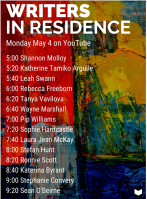
Program BannerWith information coming from every which way, I’m not sure how I heard about the Writers in Residence online festival. Organised by The Writers Bloc and inspired by Isol-Aid, its aim was to “ask some of Australia’s most exciting emerging writers to read from their new books” and share “what they’ve been reading in isolation”.
It ran from 5pm to 9.40pm on Monday, and involved 14 writers, each on for 20 minutes. All interviews were conducted by Geoff Orton, an English and Geography teacher and a founder of Writers Bloc. The format was that each writer provided some background to their book, did a 10-minute reading from the book, and shared some isolation reading.

I only managed to hear 6 properly, as 5-9.40pm is a pretty difficult time-frame, but I enjoyed what I heard. It looked like there were 50 to 75 people viewing throughout the evening. Here are the writers I watched …

5pm: Shannon Molloy

Book coverMolloy’s book, simply titled Fourteen, was published in March. It is an autobiographical coming-of-age memoir about being a gay teen. It is set in Yeppoon, in regional Queensland, in 2000. Molloy admitted that his story is harrowing, but believes it also has a strong message of hope. He wants kids “to know there is an end in sight”.
The excerpt he read described the annual coral spawn, which he sees as “the best metaphor for Yeppoon”. I understood this to mean that Yeppon is “pretty” but is also “a bit off”. (Apparently coral spawns give off a smell.)  He described how he “became a pastime for bored kids”. “I was there to taunt, to abuse, to bash”, he said.

To write his book, he drew on memories, talked with his mother and siblings, and listened to bad pop music from the era! Pop music, he said, was a way of accessing the outside world, of escaping.

5.20pm Katherine Tamiko Arguile

Book coverArguile’s debut novel, The things she owned, was published in late April. Describing herself as “from all over the place”, Arguile, was introduced by Orton as a Japanese-British-Australian artist and journalist. She explained the title of her book. The things are objects which the protagonist, Erika, inherited from her mother, Michiko. Erika is half-Japanese like Arguile, and the novel draws from her own experience. However, as she stressed, The things she owned is a novel, and Michiko is nothing like her own mother.
The novel is about Erika coming to terms with the death of her mother, which she gradually comes to accept by discovering the stories associated with the things her mother owned. Apparently, the book was the creative component of a thesis for a course at the University of Adelaide. Her research was about “grief and objects”, which is a topic other viewers, like myself, would love to have explored more.

Arguile noted that the things in the book are things she herself owns. These non-fictional objects anchored both her and the story, she said.

Orton commented on the role of the ocean in the book. Arguile replied that it hadn’t been something she’d planned but she’d realised later its strong presence. She referred to the Jungian understanding of water as “something unseen, something that lies underneath the conscious mind”. Makes perfect sense for a book about grief.

5.40pm Leah Swann

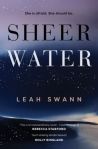
Book coverSwann’s novel Sheerwater, which was published in March, is garnering a lot of reviews for the Australian Women Writers Challenge. (I’ve reviewed her short story collection, Bearings). The novel starts with a mother driving with her two young sons. They witness a light plane accident, to which the mother goes to see if she can help. When she returns to her car, the boys are nowhere to be found.

Journalist and speechwriter Swann said the idea had come to her during a road trip some time ago, but that, as the mother of young children at the time, she wasn’t prepared “to go there”. Understandable! When she did decide to do it, she found it easy to write the first draft. She just kept writing, seeing where it would take her. The first draft was 130,000 words, with the final book, four or five drafts later, being around 70,000 words. Like Arguile, she doesn’t plan her books. What she loves about writing is discovering things.

I did note her lockdown reading: Meg Mundell’s We are here (Affirm Press), which she described as “beautiful essays by people who have experienced homelessness”; and Meg Mason’s Sorrow and bliss, whose publication has been delayed until September, because of COVID-19 I believe.

7pm Pip Williams

Book coverThe dictionary of lost words, published in late March, is Pip Williams’ debut novel, though she has written other books. She was one of the reasons I was keen to register for this event as I gave this book to my mother for Easter. She, a retired lexicographer, loved it.
If you’ve heard of the book (see Lisa’s review), you won’t be surprised to hear that she was inspired by Simon Winchester’s The surgeon of Crowthorne. Williams said that she saw that the OED (Oxford English dictionary) was a completely male endeavour, that the lexicographers, contributors, and workers were mostly men, and most of the literature they referred to was by men. It made her wonder whether “words mean different things to men and women, and if they do what does that mean for the OED?”

She talked a little about the OED, and her research (which included reading a lot of the OED). After her reading, Orton asked whether she’d found any “hilarious” words. She had, of course, but decided to share some interesting ones. For example, “teen” used to mean “vexed”, “irritate”, and “teenful” meant “causing trouble or sorrow”. Has this played a role in our word “teenager”, she wondered! She discussed the word “bondmaid”, which went missing from the dictionary, and she shared the word “anythingarian”which describes a person with no belief in anything. Perhaps I, a self-described wishy-washy person, is an “anythingarian”!

Her lockdown reading included another Affirm Press novel, Rachael Mead’s upcoming novel The application of pressure.

7.20pm Sophie Hardcastle

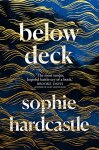
Book coverArtist and writer Hardcastle’s novel Below deck, was published in March and is her first novel for adults. It is divided into four parts, with the last being set in Antarctica. Hardcastle had had, she said, an artist’s residency in Antarctica. She wanted to write a work that explored “climate change and our relationship with the natural world.” She thought that a story of the body being violated could work as a metaphor for the environment being violated. The rest of the conversation, however, didn’t really discuss this aspect further.
Asked, whether the story changed as she was writing it, she said that the bones of the story stayed the same, but because it’s a book about trauma, about the way the body remembers trauma, this did come out more during the writing. She wanted, also, to explore, the myths around rape culture. Orton briefly mentioned synesthesia, which both Hardcastle and her protagonist have, but there was no time to discuss this.

Hardcastle’s lockdown reading included Maggie Nelson’s Bluets and Jenny Offill’s Weather (which reminded her of Max Porter, she said.)

7.40pm Laura Jean McKay

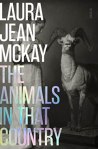
Book coverMcKay’s novel, Animals in that country, was published in late March. It’s another I had bought as an Easter gift, because, not only did it seem appropriate for the times, given it involves a flu pandemic, but it sounded innovative and feminist. Right up Daughter Gums alley! The novel does have talking animals, including a dingo called Sue! McKay had spent time in a Northern Territory wildlife park as part of a writer-in-residence program, and got to know some dingos here. Sue was apparently inspired by an actual dingo.
McKay read from the part of her book where the human protagonist first hears the animals talking, which happens just as a flu is whipping through the country. At the time she was writing it, she feared her idea was a bit too speculative, but as her publication date drew nearer, well, she realised not so much!

McKay’s lockdown reading included Ling Ma’s Severance (which is about a pandemic) and Ronnie Scott’s The adversary.

A well-conceived COVID-19 event. The writers I saw were thoroughly engaging, and Orton managed the technology with aplomb. Will these sorts of events continue post COVID-19?

Writers in Residence: An Online Festival
4 may 2020, 5:00 PM – 9:40 PM
ZOOM Online, organised by Writers Bloc


Writing War: A panel discussion about war and historical writing

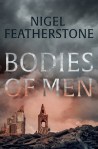
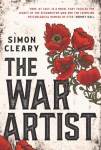
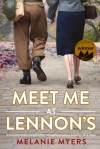
In its original guise, I would not have been able to attend Writing war: A panel discussion featuring Nigel Featherstone, Melanie Myers and Simon Cleary because it was going to be held in Brisbane’s Avid Readers bookstore. However, in one of those lucky COVID-19 silver linings, the discussion was transformed into an online ZOOM discussion and, hey presto, I could attend for the princely sum of $5. Having read Featherstone’s Bodies of men (my review) and Myers’ Meet me at Lennon’s (my review), and being interested in Cleary’s The war artist, it was an opportunity too good to miss.

Convenor, and author herself, Cass Moriarty, started by introducing the authors and asking them to talk about their novels, particularly in terms of their inspiration or intention:

  • Nigel Featherstone talked about wanting to explore different expressions of masculinity, particularly as expressed under extreme military pressure. He wanted to look beyond the ANZAC mantra that all men are brave, all do remarkable things, and so on. Can being a deserter, he wondered, be an act of bravery?
  • Simon Cleary described his Afghanistan War novel as a homecoming story, as being about soldiers finding a place in their home countries, as looking at the cost to the community of sending people to war.
  • Melanie Myers introduced a new genre (or sub-genre) to me, the “ensemble home-front novel”, which, she said, was coined by writer and educator, William Hatherell. It encompasses books like Come in spinner. Her novel is primarily about women’s experience of WW2.

On the challenge of writing about past wars with nuance

Featherstone immediately turned to the ANZAC idea, asking how do we talk about ANZAC without being kicked out of the country, and how is it that we have created a day that we can’t critique. He referred to Peter Stanley’s history Bad characters, which is about soldiers who were labelled as “bad”. Stanley’s book counterbalances the traditional ANZAC mantra, and taught him that bravery and cowardice can have many meanings.

Cleary liked the word coined by Featherstone for ANZAC, its “uncriticability”! He spoke of something he returned to a few times during the evening, the idea that sending people to war is political act. It means, he said, that writing about war is also a political act. Too many war novels focus on glory, resulting in the more human facets, including genuine human trauma, often being missing.

On that tricky question of the authority to write about war, when you haven’t personally experienced it

Myers talked about the challenge of being true to the times and values you are writing about, while being sensitive to those of your own era. Writing about African-Americans in Brisbane during World War 2, for example, she had to deal with the “N-word”.

Featherstone confronted the question more head on, asking “who gets to tell what story?” He did question his ability to write about war but, essentially, he believes “writers can do whatever they want”, with the proviso that they be prepared to talk about it. However, he also, a little anxiously but generously, shared his experience of inherited trauma (epigenetics), through his grandfather’s experience of World War 1.

Cleary noted that authority can come from various sources – personal experience, the novelist’s imagination and creative experience, and, returning to that idea of war being “a deeply political act”, he argued that “every citizen has a right to an opinion” about war.

Regular readers here will know that I agree, philosophically, with Featherstone, including that authors need to be prepared to discuss their choices. I also liked Cleary’s argument.

On the de rigueur question of research 

Myers explained some of her research process, saying that she starts with secondary sources, before looking at primary ones, and that in the case of this novel, she also walked the city imagining how it was, how it looked.

Cleary said that it was important to know the details – even those not actually needed in the work – to help avoid clangers. He also said – and I loved this – that writing novels is an excuse for learning stuff!

There was discussion about the impact of war on the social and economic opportunities for women, on values and prejudices, on the bonds forged during war, and on the burdens of war. Featherstone spoke of the physical and emotional scars of war. He pointed to a book titled We were there which reports on a survey of 3,700 World War 2 soldiers. A significant lesson from this book was that there can be multiple perspectives. He exemplified this by sharing a returned soldier’s view of his life versus the wife’s rather different view!

On should you write about war and love

Featherstone reiterated his position that there are no “shoulds” and that, anyhow, he wanted to write about love as a force of liberation. Love, he said, is what gets us through. Cleary noted that being in the proximity of death can make people feel vulnerable and therefore open to new things, and that these are the stuff of writing about war. However, he also said that war and gore can be depressing, and that art and love can provide useful “leavening”.

On whether war fiction is a genre

Myers answered that she specifically wrote in the “ensemble home-front genre” while Cleary didn’t see his book as being in the war novel tradition, but as simply being a story about humans dealing with an issue.

And on whether there are any parallels re society’s response to war and to the current pandemic, Cleary suggested that in war, as in the pandemic, humanity is fragmented, that borders are closed and self-interest reins, but, in both situations, he said, you can also “flip it around” to see a spirit of solidarity.

On the importance of documenting war

Featherstone responded that the work of artists is to ask difficult, dangerous, blasphemous questions, that we need artists to ask questions politicians won’t, that artists can “dream their way into answers”. Getting into trickier territory – though it wasn’t further explored – he also said that artists can explore different versions of history, the “what ifs”. (Kate Grenville would agree!)

Myers suggested that the volume of books still being written about World War 2 implies we still can’t make sense of it, that it is still unintelligible, while Cleary believed that it’s easy to forget the past, and that the role of fiction is to explore “the costs and consequences of the past”.

Ending the session

At this point the evening’s co-ordinator, Krissy Kneen, brought the event to a conclusion with some general questions:

  • Their advice to young writers: “if it feels dangerous, it’s worth doing”, “trust your instincts” and “be brave”.
  • War-related books they’d recommend: Dymphna Cusack and Florence James’ Come in spinner (Myers); Pat Barker’s Regeneration trilogy (Cleary) and The honest history book (Featherstone).
Melanie Myers

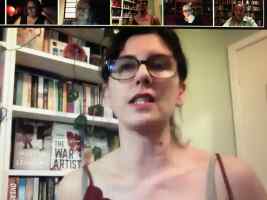
Melanie Myers (with the three novels faced out behind her)

Given the opportunity to plug their new work, only Myers was brave enough to name her project. I was thrilled to hear it as she’s research pioneering Australian filmmakers, the McDonagh Sisters. I look forward to that. Featherstone simply said he was not going near war for a long time, while Cleary said that he had a project but it was early days!

The hour whizzed by. Moriarty’s questions were focused and intelligent, the panelists’ responses were respectful and thoughtful, and the technology held up! It wasn’t the same as being in the room, but then, I wouldn’t have been, would I, so I’m grateful to have had the opportunity to hear these three writers speak.

Writing War: A panel discussion
20 April 2020, 6:30 PM – 7:30 PM
ZOOM Online, organised by Avid Reader (bookshop)

World Poetry Day 2020

I have written two World Poetry Day posts before, in 2016 and 2018, so why not again in 2020, particularly given, more than any year, we are probably in need of hearing what poets have to say – of being soothed, inspired, entertained, or yes, even admonished by them.

Awarnessdays.com says of World Poetry Day:

Poetry reaffirms our common humanity by revealing to us that individuals, everywhere in the world, share the same questions and feelings. Poetry is the mainstay of oral tradition and, over centuries, can communicate the innermost values of diverse cultures.

In celebrating World Poetry Day, March 21, UNESCO recognizes the unique ability of poetry to capture the creative spirit of the human mind.

They explain that the day was adopted by UNESCO in 1999, and that one of its main objectives is “To support linguistic diversity through poetic expression and to offer endangered languages the opportunity to be heard within their communities.” Observing the day is, they say, also “meant to encourage a return to the oral tradition of poetry recitals, to promote the teaching of poetry, to restore a dialogue between poetry and the other arts such as theatre, dance, music and painting, and to support small publishers and create an attractive image of poetry in the media”. Wonderful goals, all.

UK’s Global Dimension website provides ideas for recognising the day, including, of course, “organising readings of poems from different cultures, including from pupils’ own cultures.” Well, that’s not going to happen now, in the UK or anywhere, is it, with COVID-19 and the cancellation of public events. However, the page points us to the Wikipedia Poetry page as a good starting point for investigating different forms of poetry. They also, and this is just what we need, provide a link to a site called Poetry Station which offers “poems to view on video”. It was established after the English & Media Centre (EMC) was awarded in 2009 a small Arts Council of England grant for a pilot project to create “a freely accessible web-based video channel and portal for poetry”.

What a lovely aspirational site it is – and, it is also available as an app, simply called Poetry Station. For each poem, as well as the videoed performance, there is a link to information about the poet (often from Wikipedia), to suggested activities (for educators) and also a list of related poems which, of course, are linked to performance of this poems. The site also lists the poets, titles and topics for the poems on the site.

And in Australia?

A Google search brings up various cancelled events in Australia, run by organisations like the Geelong Library and Heritage Centre and Gosford Library. As in previous years there are also non-poetry reading activities being promoted or run. Golden Carers has a page of activities on their website (as I also noted in my 2018 post), and Reading Australia, which regularly support the day, is running a World Poetry Day competition for primary and secondary students and teachers, with the support of Red Room Poetry. (I’ve mentioned both organisations here before).

For those interested in Australian poetry, there are many sites and sources of information – many that I’ve mentioned here over the years – but for today, I’m sharing a list of Australian poetry books from the National Library of Australia bookshop.

Finally, not specifically created for World Poetry Day, but unfortunately applicable, is Australian comedian Sammy J’s recent offering, “The ballad of the dunny roll”, which riffs off the classic Australian balladeer Banjo Paterson. I think both Aussies and non-Aussies will appreciate this:

Leonard Cohen, 2009

Leonard Cohen, Bowral, January 2009

I’d love to hear about any poetry you like, or your favourite poets.

Meanwhile, I’ll leave you with what seems a very appropriate line, from Leonard Cohen’s “Dance me to the end of love” (available at the Poetry Station.)

Dance me through the panic till I’m gathered safely in.

Keep safe everyone.

My literary week (16), values and truth

Wow, it’s been a year since my last literary week post. How did that happen? I have had many literary weeks since then – haha – including a few that I even thought writing about, but each time something got in the way. This time, though, I’m not letting it …

Family values …

I was inspired to write this post by seeing a performance of Australian playwright David Williamson’s latest (and possibly last) play, Family values, this week. It is quintessential Williamson, I’d say – a satire in which a contemporary issue/ethical or moral concern is explored during an event or tightly defined period, in this case a retired judge’s 70th birthday party for “family only”. (Don’s party, for example, is set during an election night party, The club takes place over a football season, and Travelling north during a family holiday, to name a few well-known examples.)

What Williamson does is use satire to skewer some aspect of modern Australian life and values. In Family values, his target is our treatment of asylum-seekers/refugees. So, we have the successful but conservative recently retired judge Roger, and his tolerant but definitely not down-trodden wife, Sue, preparing for the birthday party. They are joined by their three, all divorced, adult children – daughter Lisa who arrives early with the recently medevac’d and now escaped refugee Saba, born-again Hillsong devotee Michael, and Emily who brings her partner Noelene. Lisa’s plan is to get Saba away to the family holiday house before Emily and Noelene, Border Force employees both, arrive. Of course, she doesn’t, and the stage is set for a family conflagration over values, priorities, and politics – all complicated by longheld childhood grievances.

It was highly entertaining as Williamson always is. I’m sure most of us watching could see bits of ourselves, and/or of our lives, in one or more of the characters. The set was effective, with its central staircase going nowhere, the actors did excellent jobs with their parts, and there were genuinely funny moments, but the satire was a little too obvious and some of the speeches were just that much too preachy and declamatory for me*. Mr Gums found it distressing because of the cruel intractability of our government’s attitude to asylum-seekers, but I’m afraid I was somewhat distracted by the play’s didacticism, despite its heartbreaking theme. However, the play’s heart is absolutely in the right place and I did enjoy the evening.

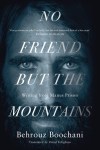
Behrouz Boochani, No friend but the mountainsCoincidentally, we are currently watching and enjoying the new Australian television series Stateless, which is also about our cruel mismanagement and mistreatment of asylum-seekers. It, though, is drama, and so quite different to Williamson’s satirical approach. All of this has reminded me that I need to read Behrouz Boochani’s No friend but the mountains, which will give me a first person account of what it’s like to be an asylum-seeker to Australia.
Miss Fisher … an interlude

We also saw, in the last week, the Australian feature film, Miss Fisher and the Crypt of Tears, which was inspired by the very popular Australian television series Miss Fisher’s Murder Mysteries, which itself was inspired by the popular Phryne Fisher 1920s-30s set detective novels by Australian novelist Kerry Greenwood. It was fun, but, although I like much of screenwriter Deb Cox’s work, this story and the production pushed my disbelief beyond my comfort level. However, as always, I did love Phryne’s clothes and derring-do!

Quote of the week

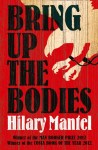
Hilary Mantel, Bring up the bodiesHaving included a Quote of the Week in my last two literary week posts, I’m continuing the tradition. This post’s quote, coming from Hilary Mantel’s Bring up the bodies (my review), is, however, not new:
What is the nature of the border between truth and lies? It is permeable and blurred because it is planted thick with rumour, confabulation, misunderstandings and twisted tales. Truth can break the gates down, truth can howl in the street; unless truth is pleasing, personable and easy to like, she is condemned to stay whimpering at the back door.

Like most, I read Bring up the bodies soon after it came out, but I have just seen this quote in the free little reading guide – The world of Wolf Hall – which I picked up in our local independent bookstore, Harry Hartog, last weekend. It is one of the guide’s two epigrams, and seems strangely applicable to our times! I’ll leave it with you …

* That said, I did love Williamson’s “going forward” joke.

Author event: Heidi Sze on her book Nurturing your new life

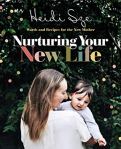
Book coverA book primarily intended for postpartum mothers is not really the sort of book Whispering Gums’ readers would expect to see here, but let me explain. Melbourne-based Heidi Sze started her food blog, Apples Under My Bed, the same year I started mine. However, that’s not our link. Rather, it’s that later that year, Daughter Gums also started a blog, through which she met Heidi – first online, then in person. Through that connection, a few years on, Daughter Gums ended up working in the Melbourne-based company co-founded by Heidi’s husband. Got all that?
Anyhow, the point is that over the last few years, I have been following Heidi, mainly via her Instagram account heidiapples. I have watched her gorgeous two children come into being – and then her third “darling child” (as Jane Austen would call it), her book Nurturing your new life: Words and recipes for the new mother. Note the double meaning of the title, “new life” referring both to a new child, and to a woman’s new life as a mother. “Matrescence, the process of becoming a mother” is, in fact, what the book is about.

Consequently, when I received Paperchain bookshop’s email announcing Heidi’s author tour event there, I knew I had to go and meet her in person. (Of course, Daughter Gums had already given me the heads-up, so I wasn’t going to miss it.)

The event …

I arrived early, hoping to say hello to Heidi before it started, as I had to get off promptly afterwards. I recognised her immediately, and was thrilled to be so warmly greeted when I introduced myself. An added bonus was that her two children, Joan (4) and Walt (18 months), and husband Ben were there too, so I got to meet the whole lovely family. Joan, though, as she should in a book shop, was more interested in finding out where the children’s section was. I approved!

The event basically comprised Heidi telling us about herself, how the book came into being, her intentions for the book, and how she structured and wrote it to meet those intentions. It was a small audience, comprising mostly mums and dietitians/nutritionists, given Heidi is a professional dietitian with a Bachelor of Nutrition and Dietetics from Monash University.

Would-be authors might be interested to know how she came to write this, her first book. She explained that a literary agent, who had been reading her blog and liked what she was writing, contacted her and suggested she write a book! Obviously, this isn’t going to happen to every blogger, but it shows that well-written clearly focused blogs can lead to other things – in Heidi’s case, also to being a recipe columnist for ABCLife (a lovely editor of which I also met at the event.)

Back to the book, though. It took Heidi seven months to prepare her book proposal, which included planning out the chapters and what each one would cover. She obviously did a thorough job because she got a book contract with HarperCollins.

Heidi also shared her career trajectory, explaining how, after the birth of her first child, she moved from general nutrition to a pre and postpartum focus. She also explained how in her early private practice she found she was doing as much counselling as specific nutrition advice. Through this, she had become increasingly aware of the damage that diet culture does. With her awareness of this and of the hard time women give themselves in general, Heidi underpins her book with one important message – that no two experiences are the same, so comparing yourself with others is not helpful. (A message relevant not just to new mums, eh?) She recognises, however, that it’s hard to live by this with “all the noise out there”.

Heidi supports this message in her book with practical advice for new mothers, two of which are that new mothers need support (Chapter 3) and that self-care is critical (Chapter 4). “We are not meant to do this alone”, she realised early in her new-motherhood. Indeed, the trickle-down effects of no support are immense, she said. And she’s right of course. Each generation does it differently, but each generation needs to recognise this important fact. It does take a village to raise a child. You are not a failure as a woman or a mother, if you can’t do it all because, in fact, you CAN’T do it all.

Related to the idea of support is the idea that new mothers need to take care of themselves, that fitting in self-care is not a luxury, but “a necessity and should be treated as such”. So, to tak self-care as an example of how the book works, Heidi not only provides sensible suggestions for how to achieve it, but, understanding from her own recent experience how hard it can be, she nurtures her readers along, encouraging them not to reach for the stars but to work out what’s manageable for them. Analyse your day, she says, to work out when you might slot in some time for yourself; think about when and how your partner can help; and so on. Self-care, she says, can be as simple as having a quiet rejuvenating shower. It’s partly in the mindset. In the end, she says:

Just do what you can and pray the stars align more often than not. And remember, you may need to make sacrifices – be it accepting piles of laundry or cancelling non-essential obligations – so that you don’t sacrifice yourself.

I didn’t find it hard to let the housework go, I must say!

Of course, being a nutritionist/dietitian, she includes recipes. Heidi said her goal was to create recipes that were easy and nutritious, that provided left-over opportunities for later meals, and that use up ingredients to reduce shopping expeditions. The recipes are great, and include things like banana oat smoothie, kedgeree (something I love), and slow-cook beef casserole.

If you have a new mother in your life, this warm, practical, non-judgemental book is for her – and, it wouldn’t hurt dipping into it yourself for ways to help. And, of course, if you are a new mother, this book is definitely for you.

Challenge logoAuthor Event: Heidi Sze on Nurturing your new life
Paperchain Bookstore, Manuka
27 February 2020

The Constructive Critic (Panel discussion)

For some reason that I can’t quite explain – a sudden rush to the head methinks – I agreed to be part of a panel being organised by the ACT Writers Centre for this year’s Design Canberra Festival. The panel, called The Constructive Critic, was described as
a unique panel discussion about art criticism across multiple disciplines including visual arts, design, theatre and literature, and its importance and impact.

What is the point of arts criticism? What has changed now everyone has a voice via social media? What is the relationship between artist and critic, and what about the blurred lines of artists who critique others?

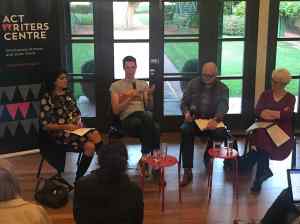
The panelists (check bios on the event website) were art curator and critic Peter Haynes (also the moderator), local authors Jack Heath and Karen Viggers, and me. This is not one of my verbatim reports because I was too busy taking part, but I want to document some of the things I remember that we discussed.

It was an enjoyable evening – for me, anyhow – largely because both the panel and the audience were friendly and engaged. We didn’t always completely agree on topics, but the ensuing discussion invigorated rather than diminished our thoughts and ideas.

My favourite description of arts criticism came from the most experienced critic amongst us, Peter, who said that:

For me writing criticism is about opening a dialogue and first the critique is for me to explore the work. Whatever medium. A review should start with a question. The critic opens the questions that the artist and curator have posed. (Tweeted by the ACT Writers’ Centre whom I thank for capturing this so nicely!)

I love this, the idea of opening the questions posed by the creator of the work (the book, the play, the exhibition, the film, etc), and will try to do it more. [PS: I forgot to say that we later talked about how social media at its best can encourage this dialogue/conversation.]

The topics we covered included defining what criticism is, what creators want from criticism, who criticism is for, the role of social media in contemporary criticism (is everyone really a critic?), the economic impact of criticism, whether creators can critique or review each other’s work, and what we think about negative criticism.

Most of us seemed to agree that there is a review-criticism continuum. The highest level of criticism we saw as comprehensive, academic, knowledgeable about the wider culture/genre/context within the work fits, while reviewing at its most basic can be short, narrowly focused and, perhaps, more oriented to promoting the work. This is not to say, however, that high level criticism can’t/doesn’t promote a work too, but the link is, I’d say, more tenuous.

Related to how we define criticism is the question of who/what criticism is for. For some critics*, it seems to be for the consumer (the reader, for example), for some it can be for the creators (the authors), and for others seems to be more for the producers (the publishers). At least, this last is how it looks when you get to the emerging “influencer” role, upon which we touched briefly. For the authors in our panel, the second was particularly relevant. They appreciate criticism which can help them develop their own work. There is a fourth option, which is the one I ascribe to. It’s that criticism is about contributing to the wider culture. While of course what critics write will encourage or discourage people from reading the book, going to the show, whatever, the main loyalty is to the culture. This means I’m keen to see the work I’m discussing within the context of both literary and social culture, to talk about how it adds to the body of work to which it belongs and how it addresses or contributes to the society in which we live. Looking at it this way, I’m less interested in ascribing value – this is a “good” or “bad” book – than in where it fits. I’m not sure I achieve this, but that’s my goal.

We talked briefly about social media: the destructive impact of thoughtless negative comments on authors; the positive and negative economic impact social media can have; the impact and application of ratings (like those on GoodReads); the current plethora of free review copies which can result in reduced early sales; and the value of hindsight versus the immediate response that is common in social media.

Opposing opinions were offered about whether artists can critique artists. The affirmative suggested that artists know what’s involved in creating the work and can therefore bring that understanding to their review, while the negative suggested that it is hard to properly critique people you know, and that creators, knowing the techniques involved, will often focus on technical aspects rather than the work as a whole.

Negative reviews came up several times throughout the discussion, and again at the end. Peter announced early on that he didn’t write negative reviews, which, regular readers here know, would appeal to me. What he meant by this – and how I also see it – is that if he doesn’t like something, he won’t review it. However, he will, in an overall positive review, refer to aspects that might not have worked so well. Yes! However, a question came from the floor about negatively reviewing a work that is against current social values – that is blatantly sexist, racist, ableist, for example. Karen spoke for all of us when she said that such ideas should be called out. Jack, earlier in the session, had entertained us by describing how he had learnt from a one-star review. The reviewer had missed the main point of his work he felt, but nonetheless the comment had made a valid observation, one that he used in the next book in his series!

Of course, like my old school exam days, I came away thinking about all that I could have, or wished I’d, said. One issue we didn’t discuss in any detail was the critic him/herself: the degree to which critics should aim to be “impartial” (whatever that is) versus put their preferences and background on the table, and, indeed, whether, in our current environment regarding who can write what, whether there’s also a question concerning who can critique what? But, I’ll leave those for another day!

Meanwhile, thanks to Paul and the ACT Writers Centre for asking me to be on the panel, and to Peter, Karen and Jack for being such fun and so interesting to talk with.

* I’m using the term “critic” broadly in this write-up to cover the whole continuum of arts writers, and my examples are mostly from the book world (but in most cases you can substitute your art form of choice!)

The Constructive Critic
Design Canberra Festival 2019
Gorman Arts Centre, Main Hall
12 November 2019

Helen Garner in conversation with Sarah Krasnostein

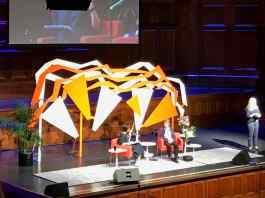
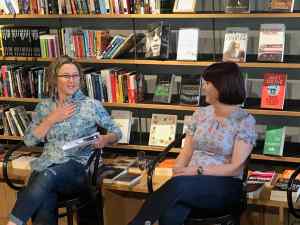
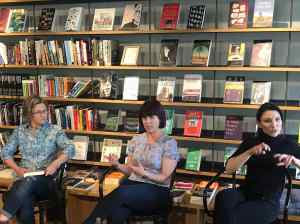
Garner and Krasnostein on stage

Krasnostein (L) and Garner (R), & Auslan interpreter

To say I was thrilled when Son Gums’ partner offered to buy tickets for us to see Helen Garner in conversation (last Saturday) would be an understatement. I have never seen Garner live before so that would be one bucket-list item ticked had I a bucket list! The fact that the conversation was to be conducted by Sarah Krasnostein (author of The trauma cleaner) was the icing on the proverbial cake.

This conversation was, in fact, the opening event of the Wheeler Centre’s inaugural Broadside Festival, promoted as “two days of an unapologetically feminist agenda”.

The Festival was opened by the Governor of Victoria, Linda Dessau, who referenced Barack Obama’s recent statement that “tweeting and hashtagging isn’t activism”. Festival Director Tam Zimet then started proceedings, explaining that the Festival’s purpose was “to bring conversations that are too hard or too much to Melbourne Town Hall”. She quoted Zadie Smith who was also in Melbourne for at the Festival, and who described writing as “taking the temperature of the moment”. This, of course, beautifully describes Helen Garner’s writing.

The Conversation

The conversation centred around the recent release of Garner’s Yellow notebook: Diaries, Volume 1, 1978-1987, so the conversation began by discussing both diary writing and the process of preparing them for publication. Krasnostein, who asked rather long but always thoughtful questions, talked about the role and function of diaries, suggesting they exist for their own sake but are also works in themselves. Garner’s diaries, she said, contain harvested and preserved details from the world, but also show Garner’s “fearless self-scrutiny”, plus “the things one can think but not say”. Garner said that she has always loved notebooks and pens, and how as a child she loved the peace and solitude she got from writing her diaries.
Several times through the conversation, Garner described her diary-writing as being partly about practising writing. She writes everyday, agreeing that you can’t wait “for ideal conditions”. For her, it’s all about “mother discipline”, by which she meant using the time given to you. She also commented on how much work you do when you are asleep, and referred to lessons from Marion Milner’s book, An experiment in leisure which taught her to sit quietly, with a sense of “nothingness”, to let ideas sort themselves out. This is not the same as waiting for inspiration, though. Garner, being her plainspoken self, said that “inspiration is bullshit”. Instead, “you do things little by little”. Writing, said Krasnostein a little later, is not the hard part. It’s getting to the desk.

Later in the conversation, we returned to diary-writing as stacking up the practice hours. Garner said she knows “how to put a sentence together”. (If you love Garner, like I do, you love her sentences.) But, said Garner, writers also need to know grammar. Without it, you can’t criticise your own work. The lack of grammar teaching is a “terrible loss”. Writers also need to read a lot to see how other writers do it. She bemoaned the fact that some books look like no editor has been near them. You see their “life-force leaking out of every joint”.

Krasnostein quoted Joan Didion’s statement that “style is character”, which somehow led to Virginia Woolf’s statement that you tell the truth about yourself first before you can do so about others. Krasnostein wondered whether being clear-eyed about yourself – one of Garner’s strengths, for me – was training for how to write in public. Garner took this to suggest that being honest about yourself gave you permission to write about others, but she didn’t think that would “stand up in court”! Garner suggested that memoirs can sometimes play fast and loose with other people!

Around here, Krasnostein asked whether revisiting earlier diaries – for any of us I think – shows that we are unreliable narrators of ourselves! Garner essentially agreed, saying that “memory is a creative act”. Reading one’s own diary “can be bracing” because it shows how over time you change stories, often showing yourself in a better light. There’s no way out of this, Garner believes, you just do the best you can. “Everything is fleeting, fleeting, fleeting”, she said. Writers write down stuff because they are terrified of forgetting. (I know the feeling!) “Writers are afraid of losing things”. This returned us to an idea that recurred through the conversation, that of writers preserving. Krasnostein quoted Philip Larkin’s statement that “the urge to preserve is the basis of all art”.

Of course, the process of making private diaries public was also discussed. Garner said she cut a lot. Her challenge was to decide what others might find interesting. She established certain criteria, such as she would not rewrite, and would only change (or add) something if it would otherwise be meaningless. A diary, she said, “has no voice over, unlike a memoir”, meaning that you can’t say “I did that then, but no way would I do that now, because now I’m a nicer person”. Accepting herself as she was at the time of her writing brought her to understand that she wasn’t unique, which made her feel more “comradely” with others. “We all hurt and are hurt,” she said. Krasnostein offered the idea that “the more vulnerable you are, the more you connect” to which Garner replied that this is what she hopes!

Another point Garner made was that tone is important, that “tone is character”, to which she then gave a feminist twist by saying that women have felt they’ve had to tone themselves down. She writes short books, she said, because she feels she has only a limited amount of reader’s attention.

I loved Krasnostein’s summation of the diaries as offering a new expansive view of Garner, but retaining her familiar voice, her “forensic eye for detail”, and her “lean lyricism”. I can’t wait to read my copy.

Q&A

There were several questions, but I’ll just share a couple:

  • on her daily writing practice: She rents an office, which stops her getting caught up housework! (In other words, she has “a room of her own”!) I particularly liked her point that she makes her notes about the details, say, of the court cases she attends, but, separately, she also documents her engagement with what she’s seen/heard, what she thought and felt. This material is “brightly alive … a treasure trove of information”. It doesn’t fit into the other boxes but it’s the richest when she comes to write. This is what I think is often missing from my reports of literary events. I need to do more of it.
  • on whether her views on Feminism had changed since the me-too movement: Not really seemed to be the answer. Garner, like many of us I believe, simply knows that when she discovered Feminism it changed her life: “It was like I’d been underwater and I finally put my head up and took a breath.” The me-too movement, like most movements, has been mixed, but “these things keep developing”.

Kate (booksaremyfavoaiteandbest) also wrote this up – including Garner’s comment about age freeing her to talk to random people on trams.

Helen Garner in conversation with Sarah Krasnostein
Broadside Festival 2019
Melbourne Town Hall
9 November 2019

Jessica White in conversation with Inga Simpson

Book cover

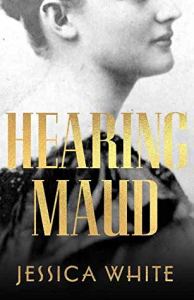
Hearing Maud, author Jessica White told us in her conversation with Inga Simpson two weekends ago, was 15 years in the making. This is something I already knew, because, as the result of our involvement in the Australian Women Writers Challenge, I’ve met Jess and we’ve talked about this book. However, it was excellent to hear the more detailed story – and at its conclusion rather than partway through. Jess is clearly very happy to have it finally off her hands, but it’s also clear that the book was, and is, very important to her – as you shall see.

The participants

Simpson and White
Simpson (L) and White (R), Muse, 2 Nov 2019

Jessica White has written two novels A curious intimacy, which earned her a Sydney Morning Herald Best Young Novelist gong, and Entitlement (my review). She’s been listed for various prizes, and has had essays and short stories published in Australia’s best-known literary journals, including MeanjinSoutherlyOverlandIsland and Griffith Review. She is a lecturer/researcher at the University of Queensland.

Inga Simpson, whom I’ve still to review here (but I will), has written three novels, Mr Wigg, Nest and Where the trees were, the last two of which have been listed for or won prizes. Her latest book, Understory, is a memoir about her love of Australian nature, and especially trees.

The conversation

As Simpson advised at the beginning, the conversation was not a Michael-Parkinson-like hardball interview but more a conversation between friends which, apparently, they are. As a result, it had a warm, natural feel, while still addressing some important points and issues.

Hearing Maud, which I’ve just started reading, is one of those hybrid memoir-biographies that I’ve talked about recently. However, most of those have been mother-daughter stories, the biography being about the mother and the memoir, the daughter. White’s book is different. The biographical subject is Maud, the deaf daughter of the late nineteenth-early twentieth century writer Rosa Praed (1851-1935) (whom I read before blogging). White did not know or ever meet Maud so her knowledge has come from her research, which, Simpson said, is a strength of White’s.

White began by talking about the book’s genesis. It started with her PhD research into Rosa Praed, with whom White felt a connection, given they shared a rural, bush background and a love of romance! White was drawn to Praed’s “racy romances”, she said!

However, as she researched Praed, she discovered the existence of Maud, and the more she researched the more she realised what a “terrible life” Maud had had. So, she started writing a biography about Rosa and Maud. This was rejected by a publisher, but in rejecting it he suggested that she make the book “more about deafness”. To her credit, White was not put off. Having initially felt that deafness hadn’t challenged her, she started, as she continued to research Maud’s life, to recognise more about her own life as a deaf person – and then to perceive the intersections and divergences in their two lives.

Patricia Clarke, in her biography of Praed, Rosa! Rosa!, wrote that it was fortuitous for Maud to be born at a time when they were teaching deaf to speak, but White, now understanding more about deafness, saw it differently. It was a time of Social Darwinism – when the idea was to breed out disabilities – so the pressure to conform was strong. This was often, as it was in Maud’s case, counterproductive, if not disastrous. I will write more on this when I review the book, but essentially, a number of factors, including the breakup of Maud’s family and Rosa’s non-inclusive attitudes, resulted in her having a mental breakdown at 28 years old, and being committed to an asylum. She spent the next 39 years of her life there, that is, until she died!

The conversation spent some time on White’s own experiences as a deaf person. Simpson, being a writer, was particularly interested in language, so questioned White about words she’d used in different contexts to those Simpson was familiar with, such as, “coming out” (as a deaf person), “assimilation” (of deaf people into hearing culture), “mainstream” (of people with disabilities into abled-culture), and “colonialism” (of deaf culture and language by hearing culture.) Coming out as a deaf person was a slow process for White, not so much because she was resistant to the idea but because she hadn’t realised how much deafness had impacted her. Living in the country amongst a large extended family, she’d been, essentially, sheltered from fully experiencing her deafness. She was, she said, brought up as a hearing person, and just saw herself as “a bad hearing person”. That got a rueful laugh from the audience.

However, White was conscious through her teens and early twenties of a sense of isolation and loneliness. It was not until she was in her 30s that she started think about herself as deaf, and understand its impact on her life. She recognises, though, the paradox (“the poison and the cure” that she discusses in Hearing Maud) of her deafness, because she believes it has had, for her, negatives but also positives. She would not, she says, have become a writer if she hadn’t been deaf, and turned to reading at a young age.

Signing during the conversation
The conversation was signed.

The conversation, at this point, engaged in some of the history and politics of disability (and particularly deafness, of course): on government policy regarding educating deaf children, on the politics of whether to teach signing or not, on the notion (that is embedded in the cochlear implant development) of ”fixing” people. White argued that this medical model of disability opposes the cultural model, which, for example, allows deaf people to sign, to have have deaf friends, to, in fact, be deaf. White observed that signing is strongest in poorer countries where the medical model is not so developed/can’t be afforded! White is now interested in learning to sign, and is pleased that the book has opened pathways for her into deaf communities. She clearly hopes this will result in mutual benefit to them all.

White also explained how her deafness forced her to develop the ability to intensely focus – on faces and body language, for example – to find patterns and thus meaning. This need to attend to detail makes her a good scholar, she believes, albeit also exhausts her!

Returning to more literary topics, White addressed that tricky memoir issue regarding their potential to hurt others. White said that although she says some tough things, this was not an issue in her clearly close family, whom, she described, as over-sharers! Nonetheless, she did pare back some difficult things in her parents’ lives. She also said that the self in the book is her authentic self.

As for what’s next, White has other things planned – as indeed I know she does because, from my meetings with her, I know she has a mile-a-minute mind! One project is an ecobiography about the pioneering Western Australian botanist, Georgiana Molloy, in which she wants to show the importance of biodiversity. She defined ecobiography, as being about how ecology shapes who we are. I’m intrigued by the various ways the biography form is being explored, expanded, teased out in contemporary literature, so I look forward to White’s ecobiography take.

Q & A

There was a short Q&A, which I won’t share in full, but I did ask White why she’d decided to combine memoir and biography. She said that she wanted to tell Maud’s story, but that hers created a foil or mirror for that story, and in doing so, it enriched both stories.

Another questioner, commenting on deaf people having to conform to the speaking world, asked what the speaking world could do to make life easier for deaf people. White said that many people don’t understand the feeling of powerlessness that disability can bring. She hopes the book will help people see that there are different ways of being.

Jessica White in conversation with Inga Simpson
Muse (Food Wine Books)
Saturday 2 November, 4.30-5.30pm

Hobart Writers Festival 2019, Part 2: Guest post

And now for the second and final part of my brother Ian Terry’s 2019 Hobart Writers Festival experience. The eagle-eyed among you will notice that this report is much shorter than yesterday’s. This is because Ian went to four sessions on Saturday, and two on Sunday.

Part 2: Sunday 15 September

Book cover

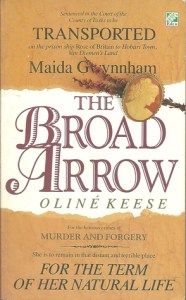
Day two dawned with a fascinating conversation between award winning novelist Amanda Lohrey and academic and writer, Jenna Mead. Mead has published an edited version of Caroline Leakey’s 1859 novel, The Broad Arrow: Being Passages from the History of Maida Gwynnham, a Lifer. Lohrey and Mead argue that the novel is one of the most significant works in Australian literature as one of the first novels to describe the convict experience and very rare in having a woman as its main protagonist.

Originally published in two volumes after Leakey’s four year stay in Hobart, it was edited and reissued in 1886 and remained in print until 2000. Mead has restored the original version and argues that while the 1886 edit was brilliant and made it a very saleable work, the original was a deeply political work which showed what it is to live in a convict society where cook’s, servants, nannies, gardeners and a large proportion of people encountered were convicts. It reveals what the daily life of a citizen in a convict society looks like and the role this had in forming a national life with multiple generations inheriting the legacy created. Leakey’s main character is a strong protagonist, a woman of spirit and integrity who is nonetheless worn away by years of refusing to surrender to the system.

While many of the passages excised in 1886 were religious in nature, Mead assures modern readers that these are important, an excoriating critique of Christianity as it was practised in contravention of the true spirit of the religion. The novel is about women and their essential role in forming culture and social life. Lohrey noted that unlike much historical fiction which she is on record as disliking this Leakey’s work written at the time has the feel of authenticity. Leakey kept her eyes and ears open during her visit to her sister in Van Diemen’s Land, eavesdropping on conversations and observing just how the society operated – the result being this newly re-published volume.

Rohan Wilson and Heather Rose
Wilson and Rose (Photo: Ian Terry)

My finale was an engaging conversation between award-winning novelists Heather Rose and Rohan Wilson discussing the latter’s recent book, Daughter of Bad Times. Wilson began by arguing that his novel, a love story (not, he emphasised, a romance) set in 2075 in which climate refugees live and work in a corporatized migration detention centre near Tasmania’s Port Arthur, is not dystopian. Dystopias, he told the audience, inhabit a world which is barely imaginable in its horror and disfunction. His 2075 can already be seen in the current trajectory of increasing global temperatures and sea level rise, and in corporate and government policy where citizenship is commodified, laws are crafted to service the demands of corporations, surveillance is unremitting and protest is outlawed.

Book cover

Wilson talked about the influence of Cormac McCarthy on his writing and the challenges of writing outside your culture and experience – his main protagonists are a Maldivian refugee and a Japanese-American woman. Both he and Rose underlined that while they can never fully comprehend the experience of being from another culture or ethnic group, artists have to be able to imagine themselves into other worlds and bodies, albeit following sufficient research and with sensitivity. Otherwise, Wilson suggested, he could only write about middle-class, middle-aged white guys and what does he and society learn from that. While he accepted that he could never wholly understand the world view of a young Islamic man from the Maldives, Wilson said that he thought it important that he bear witness to the catastrophe that climate change is for that low lying island nation with a 2500 year civilisation that faces annihilation within the next century. An interesting and vexed current conversation, of course, which will continue to exercise us all.

The conversation concluded with a discussion of the importance of Australia Council writing grants, which both authors have been recipients of. Wilson observed that Australian authors rely on such grants to write the books which provide an important window into our culture. For literature, indeed art, to thrive the grant system needs to be maintained without reduction.

________________________________

I don’t know about you, but I have enjoyed these posts. I’ve particularly enjoyed seeing references in both posts to that issue of writing outside of one’s own experience. I liked Rohan Wilson’s point that it’s important to bear witness to critical issues – in this case the impact of climate change on the Maldives – and, in yesterday’s post, Ian Broinowski’s mention of how he handled the indigenous Australian voice issue. Other points that interested me included poet Pete Hay’s provocative assertion that poetry can’t be put to political causes – really?! – and Rohan Wilson’s definition of dystopias, which is tighter than mine.

What do you think?

Meanwhile, thanks so much Ian for sharing your Festival with me (and us). I really appreciate the effort and have enjoyed experiencing the festival vicariously.

Hobart Writers Festival 2019, Part 1: Guest post

No, I didn’t go to this year’s Hobart Writers Festival, but I had the next best thing – a brother who did. Not only that, but he responded positively to my request for some notes. I’ll be posting what he so-called “cobbled” together today and tomorrow, which means no Monday Musings this week. I hope – and believe – that you’ll find his report a worthy replacement.

By way of introduction, my brother Ian Terry has lived in Tasmania for well over three decades now, and recently retired after around 10 years as a curator of history at the Tasmanian Museum and Art Gallery. We have been discussing our reading most of our adult lives. It’s a connection that means a lot to me,  because I respect his thoughts and interpretations (despite his not being a Jane Austen fan!)

Part 1: Saturday 14 September

Tasmanian readers and writers have had a mixed week. On the cusp of publishing its 40thanniversary edition of the state’s well-regarded literary magazine, Island learned that its funding from Arts Tasmania has not been renewed for 2020. Unless it can find new sources of funding this celebratory issue will be the magazine’s last.

On a happier note Hobart’s historic Hadley’s Orient Hotel, in recent years positioning itself as a significant cultural space in the city, hosted the Hobart Writers Festival this weekend. The festival has a had a chequered history, sometimes held annually, sometimes bi-annually at varying venues and with changing names. This record suggests that while Tasmania takes its art and culture seriously and has a vibrant and important scene, the state’s small population creates recurring financial difficulties.

This festival’s theme, My Tasmanian Landscape, promised a program all about ‘Tasmania’s amazing literary landscape’ to celebrate ‘our diverse writers and writing’. While it is too long since I ventured into the Hobart Writers Festival, this edition did not disappoint with several sessions a balm to my historian’s soul offering me tempting choices.

Book coverOn the first morning Henry Reynolds was in conversation with Ian Broinowski, author of a historical fiction entitled The Pakana Voice: Tales of a War Correspondent from Lutruwita (Tasmania) 1814-1856. Broinowski whose grandfather and father were both editors of the local newspaper, The Mercury, invents a colonial journalist, W.C., reporting on the frontier war that raged in Tasmania, but with sympathies lying on the Aboriginal side of the frontier. W.C. writes his despatches from an Aboriginal point of view, upending the usual way of reading history and forcing us to consider the colonial experience from the other side of the frontier. Acknowledging that as a non-indigenous person he could not truly represent an Aboriginal voice, Broinowski consulted the well-known Tasmanian Aboriginal writer puralia meenamatta Jim Everett and began the session by thanking him for his assistance and for changing the way he thought about Tasmania’s history.

The conversation touched on many issues, particularly on language, representation and the free press, matters as pertinent today as in the early 19thcentury. W.C. has a trusty canine companion Bent, a nod to early Tasmanian newspaper editor, Andrew Bent, who is regarded as the founder of Australia’s free press for his strident opposition to government control of newspapers. Words and language, Reynolds reminded us, configure the way we regard our history, drawing attention, as an example, to the procession of 26 weapon-carrying Aboriginal men and women through Hobart in early 1832. Although usually portrayed as having surrendered to colonial power Reynolds observed that captives do not commonly proceed to a Governor’s residence spears in hand. Words matter.

In a moving finale, Broinowski asked readers of his book to think about the people depicted on its cover – Aboriginal Tasmanians as drawn by John Glover – as the original owners of the soil and victims of the violence of the frontier.

History underpinned the next session which saw the launch of the inaugural Van Diemen History Prize, initiated by Forty South Publishing, at the suggestion of historian Dr Kristyn Harman. Judges Kristyn Harman, Imogen Wegman and Nick Brodie joined winner Paige Gleeson and highly commended authors Tony Fenton and Terry Mulhern on a panel discussing history writing in general and the authors’ essays in particular.

Brodie observed that much of Tasmanian history could be categorised as myth, and commended Gleeson for exploring and exploding the much-repeated myth of a bunch of rowdy female convicts (the so-called Flash Mob) mooning Governor Sir John Franklin and his wife, Jane Lady Franklin, at the Cascade Female Factory in 1844. In her thoughtful and entertaining response, Gleeson noted that, as an academic historian, writing popular history was alien to her, so she consulted the seer of all modern knowledge, Google, to get some tips. ‘Do not write about historiography,’ she was sternly advised, ‘nobody wants to read about writing about writing history’. ‘Rubbish,’ she thought and proceeded to do just that, exploring how myths come into being and how, while not wholly accurate, they can hold kernels of truth that point to a larger social reality.

In similarly entertaining mode, Tony Fenton informed the audience that writing about the minutiae of weather, the environment and times encountered by hapless scientists who journeyed to Bruny Island and remote Port Davey to view the eclipse of the sun in May 1910 was critical to his story, because otherwise it would be boring ‘as nothing happened’. Four weeks of drizzle, rain and grey skies did not abate and the eclipse was impossible to see. School children in Queenstown, on the other hand, despite the town’s soggy reputation, enjoyed rapidly clearing skies and a good view of the event.

Terry Mulhern’s essay is more sombre, telling us of the last days, even hours of early 19thcentury Henry Hellyer who took his own life 1832. Mulhern told us that he was able to draw on his own early experience of depression to empathise with the turmoil that led Hellyer down his fatal path.

Finally, in answering a question from the floor, Imogen Wegman reminded us that historical myth-breaking takes courage and could be controversial. For female historians, she suggested, this is even more difficult as women were not meant to rock the boat.

My third session took me on a journey from 1820s India and Tasmania’s Derwent Valley to the state’s Fingal Valley in the 1930s as Henry Reynolds discussed the lives, nature writing and linkages between Elizabeth Fenton and her great great grand-daughter, Anne Page with Margaretta Pos. Pos, a former Mercury journalist and ‘plain writer’ in her own words, has written about Elizabeth Fenton and published the teen-aged journal of own mother Anne Page.

Both women wrote lyrically about Tasmania’s natural world. Page called herself a ‘bush rat’ and lovingly described the valley in which she lived with its presiding presence, Tasmania’s second highest peak Ben Lomond. She listed animals sighted, including the thylacine, and like Fenton decried the destruction of old growth forest and the environment in general.

Reynolds noted that while many historians have argued that it took several generations for Australians to grow a deep sense of place and love for their new home, in Tasmania this happened very quickly as evidenced by the writing of women such as Fenton. He also suggested that Page’s love of nature was fostered by her being educated at home on the Fingal Valley farm rather than at school where education focussed away from Tasmania.

In conclusion, Pos reported that she asked her mother, who died aged 97, whether she had ever wanted to write books. ‘I was going to write eight books,’ Anne Page replied, ‘but had eight children instead’.

Dissident poets and story-tellers Sarah Day, Cameron Hindrum, Pete Hay, Ruth Langford and Gina Mercer, rounded out my day one sessions by discussing the role of poets as activists. Hindrum stated that Tasmanians have a genetic predisposition ‘not to take any crap’ and quoted Bertolt Brecht who, writing about dictatorship, asked, ‘Why were their poets silent?’

Unconvinced by Brecht’s question, Hay, a poet, academic and activist, provocatively opined that poets puff themselves up, that with their tiny and declining audience they cannot be activist by writing alone. Poetry, he said, is elusive and enigmatic and so cannot be put to political cause, although he did concede that writers have a role to bear witness and cut through political sloganeering. He finished by telling us that poetry rewires the brain by bending the rules of language, and read a moving poem about driving through clear-felled land near Laughing Jack Lagoon in central Tasmania – It’s no laughing matter, Jack – the poem concluded.

Day countered Hay’s thesis by remembering the writer/poet/activist Judith Wright and quoting Emily Dickinson’ lines, Tell all the truth/but tell it slant. Mercer drew on her own history of childhood trauma telling the audience that poetry became her solace and her voice, her way of speaking the unspeakable, of being activist in the cause of women’s and environmental rights by transforming silence into words and action. She spoke of poetry as providing reflective activism.

Langford, a Yorta Yorta woman who grew up in Tasmania, confessed that she was a dissident by birth and a story-teller rather than a poet, and that she had engaged in much activism in her life, chaining herself to machinery and scaling corporate buildings to hang protest banners. Life as an activist she said was one of hate and division, of us and them. Now eschewing direct activism, she argued that our current predicament required intelligence to heal the planet and society, with words and poetry providing powerful vehicles for this.