Canberra Writers Festival 2023: 3, A Jewel of a Book

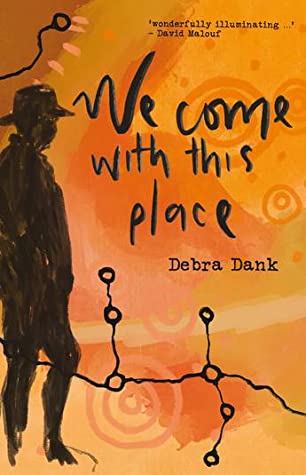
Which book you are presumably wondering? The session’s subtitle will give you a hint: Debra Dank in Conversation with Evelyn Araluen. The book, then, is Debra Dank’s We come with this place, which won a record four prizes in this year’s NSW Premier’s Literary Awards (as I described in my post).
The session description commenced with:

We come with this place is deeply personal, a profound tribute to family and the Gudanji Country to which Debra Dank belongs, but it is much more than that. Here is Australia as it has been for countless generations, land and people in effortless balance, and Australia as it became, but also Australia as it could and should be…

It described Dank as “a Gudanji/Wakaja woman” and Araluen as “born and raised on Dharug country [and] a descendant of the Bundjalung Nation”. If you read my second CWF post from yesterday, you’ll see that I have already “met” Debra Dank and Evelyn Araluen. That whetted my appetite for this more focused one-on-one session.

The conversation

Oh my, what a session this was in terms of complex ideas that challenge western world views being presented in a respectful but unapologetic way. After all, why should they be apologetic.

Araluen started by introducing Dank from the formal bio, and ending with the fact that her book had won “incredibly significant accolades”. The session’s title, she explained, had come from Tara June Winch’s description of it as “a jewel of a book”.

The session discussed several issues, but a recurring one concerned the book’s narrative style and how it reflects “Indigenous narrative practices” as Dank framed it. I was keenly interested in this because I have been aware of First Nations Australian storytelling (oral and written) as being different but identifying the difference has not been so easy!

Dank said in response to Araluen’s opening question that she hadn’t set out to write a book, so she was still developing her relationship with it “as a book”. She wrote it for her kids, and saw it as essentially a conglomeration of stories and events. Araluen picked up on this and talked about how the book comprises an interweaving of language, memory, time, and place. Critics, she said, have been trying to find a way to describe Indigenous storytelling by using words like “interweaving”. Dank saw this sort of interweaving as integral to “Indigenous narrative practices”, to Indigenous storytelling.

Araluen commented on how well Dank conveys the “embodied physicality of Indigenous experience”. This captured some of what I felt I’d gleaned from the book, though I didn’t quite have the words for it. Araluen read an excerpt from early in the book in which Dank shares a childhood memory

The sparks rose in the air and danced there – in celebration of a whole lot of things, I imagined. The deep hot red glow in the little hearts with their flaring skirts of blackened edges held my eyes. The embers twirled above our heads, in a dance on a sigh of wind barely there, and as I gazed upwards into the darkening sky, the just-appearing stars spotlighted larger ashy flakes. The bright burning cinders, exuberant and light, then faded to tiny pieces of black falling char.

Araluen loved the way Dank was able to go back into memory and narrativise that little girl.

Dank talked about how she always had access to books, but that her “childhood aesthetic” was always about country. She would do all her week’s correspondence school work on Monday morning and then “be gone with Dad”.

Araluen described the book as a “precious gift” that intricately captures experience. She commented on Dank’s interrogation of history. There is “no gratuitous, voyeuristic depiction” of what her father went through, for example, but we are conscious of the impact of history on him. She wanted to know how Dank navigated this.

It was at this point that the other main thread of the session appeared – the lack of representation of Aboriginal people, of the contribution they have made over the last 200 years (let alone the previous tens of thousands of years). It really gets up her nostrils! In historical photos, non-Aboriginal people are always identified, but never the Aboriginal workers. “We are not represented, we are not seen to exist, to be valid”, she said.

We then returned to narrative practice. The book comes, she said, from the less significant part of her PhD, so she didn’t feel bound by the conventions of literature. It wrote itself, just evolved.

The discussion then turned to language, multi-lingualism, and Dank’s research into semiotics and narrative structure, and the limitations that she observes.

Dank said that the issue of limitations motivated her. She is constantly vigilant about how language works in education, how Aboriginal students can “seem” incapable, and experience deficit in their education. She told us about discovering Umberto Eco who talked about the ways communities make sense of their surroundings. This is the basis of semiotics. Aboriginal people have their own languages, and these work differently on a semiotic level. The problem is that Aboriginal communication has been framed by, viewed through the prism of, western theories, but “we’ve been doing narrative longer than anyone else in the world” and it works because “we are still here”.

Araluen then talked about Dank’s style and structure, describing it as “eco-lyrical”, as having an environmental, seasonal underpinning. How did Dank find her writing language? Dank replied that she had always been a reader, and named her diverse influences – Funk & Wagnalls’ books, the Bible, Slim Dusty, Emily Dickinson’s poetry, Greek stoics (which fitted with the Scottish Methodist part of her heritage), and Toni Morrison. Araluen interrupted here with her description of the “bone-deep legacy of Beloved“, how it conveys the “physicality of memory”. Dank described Beloved as an unimaginable gift of a book, and that she got it. (Beloved is nowhere near my experience but I felt got it too. If ever a book could convey the injustice of slavery and racism at the deepest, most visceral level, it’s Beloved.)

Dank the said that Australian colonial authors, like Xavier Herbert, were also influences, in that they conveyed for her the “invisibilisation of a  people”. She got no sense of reality in what she was seeing. (This made sense to me. People talk about the importance of seeing themselves represented in culture – the arts, media, etc – which of course I understand, but Dank’s clarity about the implication of not seeing yourself, her sense that it’s not real to her experience, drove it home perfectly.)

Araluen talked about ecology, and how non-Aboriginal writers, going back to Lawson and Paterson, for example, have “f***ed up” representation of the land with their colonial and Gothic perspectives. Dank mentioned some “nice and convenient research” from the University of the Sunshine Coast which proves that Aboriginal stories document significant events on the land.

The conversation continued on how First Nations people understand country, on there being a “deep formal, absolute law around connection” to country, on understanding the earth and “our nonhuman kin”. Dank said that “country is not ever something I have the right to just wander casually across”. She talked about how we are “stuffing up ecosystems and habitats”, about mammal extinctions, and about fracking. Westerners do not understand how aquifers are connected, but the songlines do, she said. More Australians need to wake up to the urgency of the climate crisis. There was more, but I think you get the gist regarding the intense concern about what Araluen called “environmental violence”.

The formal part of the session ended with Dank reading from the beautiful “The business of feet” story in her book, which tells of her young son’s deep engagement with their country, and his awareness of the long history of that connection.

Q & A

  • On what sort of writer she sees herself having now published the book: she now feels like a writer; that is, the book is causing her identity to shift. She is becoming aware of the practice and process of writing, and wants to protect her non-genre writing practice. We come with this place is not a memoir. Dank added that she should thank the early colonial writers, because they made her sit up and say, “hang on, that’s not the truth”.
  • On what advice she would give to a Non-aboriginal teacher working with people from diverse linguistic backgrounds: start with the home language because that carries the student’s cultural being and it needs to be respected.
  • On what sustains Dank in the face of trauma: the real privilege of being alive, getting on with the business of living. Awful things are still happening, but there are also many things to remind her of the privilege of drawing breath. First Nations people are 4% of the population, but “this will aways be our country. It made us”, she said.
  • On what her perfect writing day would look like: a cup of Chai, and being on her own country with the aunties under a tree across the way being amazingly patient, then calling her when they think she’s written enough.

My wrap-up

This session might sound negative and critical of western culture, and it was in many ways, but Dank also admits to enjoying and drawing from both traditions. However, this book is about the culture that sustains her, the culture that she’s rightly passionate to see preserved and passed on, and that she believes can also offer something to the rest of us. This session was about how First Nations Australians are forging their own narrative practices, against a backdrop in which they have been invisible, unrepresented, for so long.

Canberra Writers Festival, 2023
A Jewel of a Book
Sunday 20 August 2023, 10.30-11.30am
Canberra Writers Festival 2023: 2, Celebrating the classics

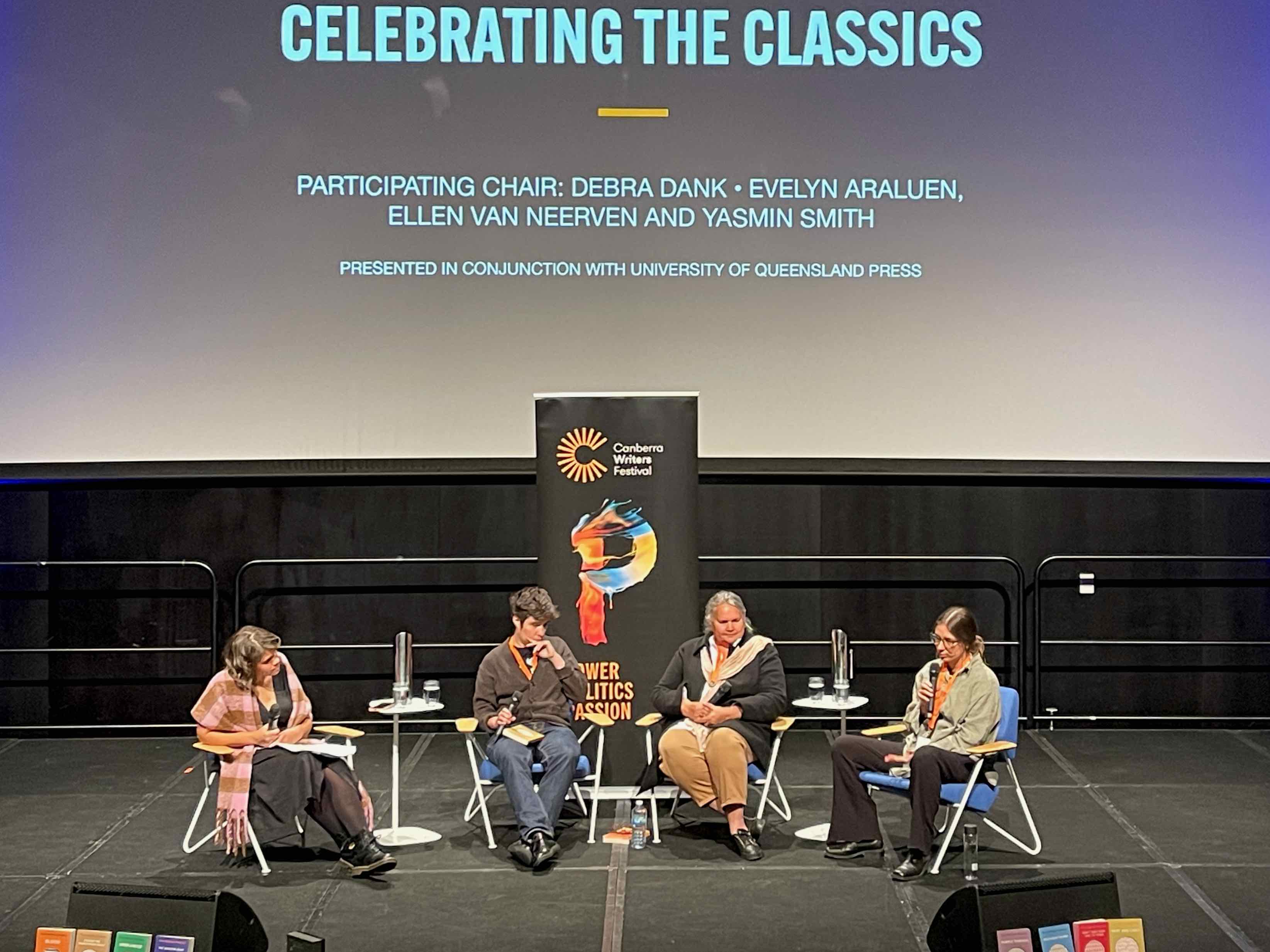
When I saw the line-up for this session – Debra Dank, Evelyn Araluen, Ellen Van Neerven and Yasmin Smith – I was in. I have read and admired writing by three of these writers and was keen to attend that rare thing, an all First Nations panel.

Its topic was described as follows:

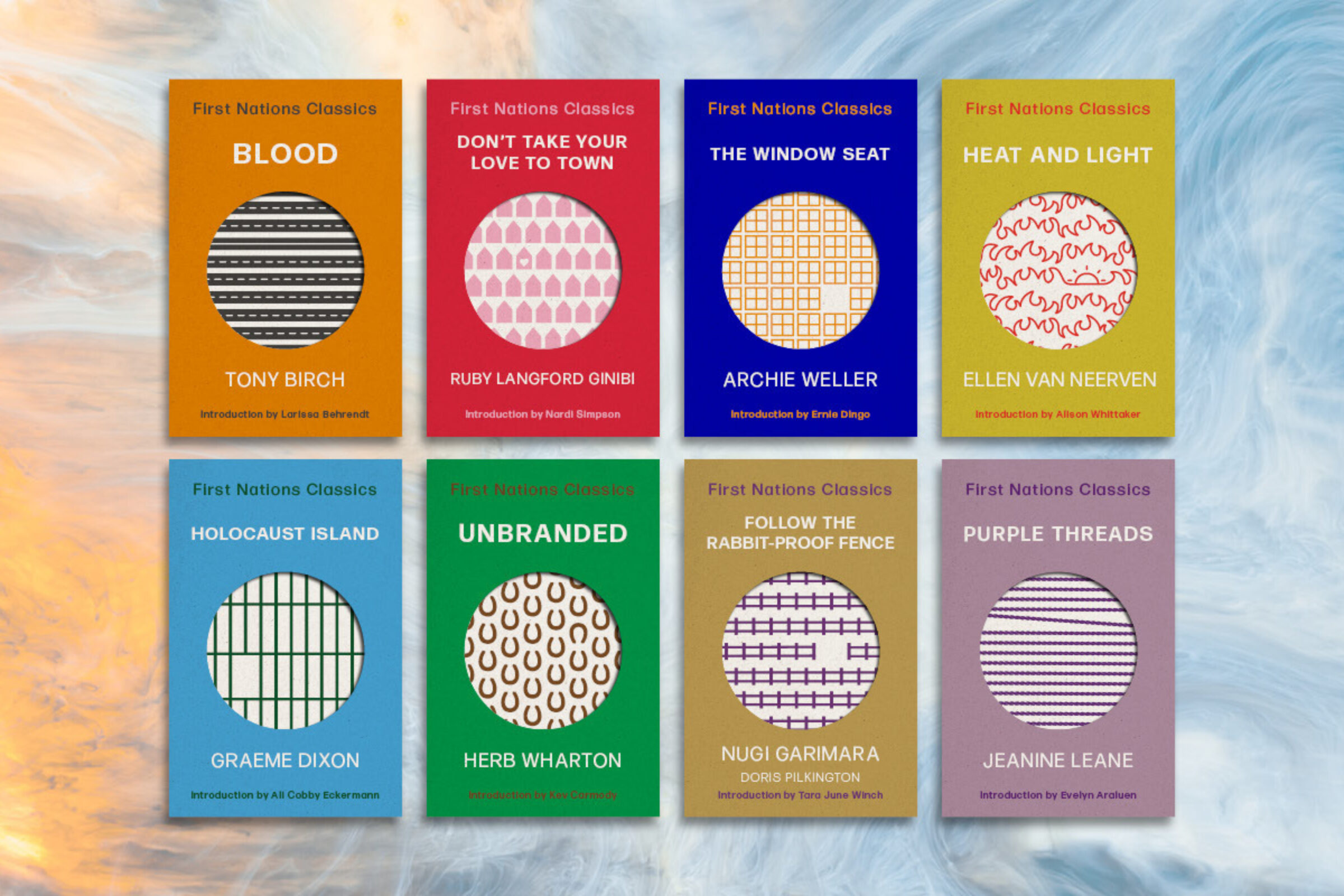
A new literary project sets out to change the way we tell the story of Australian literature. Join series editor, Yasmin Smith and a stellar panel of writers as they celebrate the first edition of First Nations Classics. Essential reading for all generations.

The discussion

The program didn’t, for some reason, identify the publisher of this new series, but it is the wonderful University of Queensland Press which, as the panelists said several times, has an excellent track record in publishing and supporting First Nations writing. I wrote about this series late last year, so loved having the opportunity to hear it discussed by those involved.

The session started with acknowledgement of country, and then with each writer briefly introducing themselves, which they did primarily by identifying the country they belong to. I love that these country names are now becoming so familiar to us all. We are all learning – almost by osmosis – the First Nations make-up of the land we live on.

Smith then talked about the inspiration for the series, about UQP’s “incredible backlist” of books across a range of forms, that are timeless and have a clear relevance now. She then asked the panelists what makes a classic. The responses to this age-old question were varied, thoughtful and provocative . Araluen commenced because, she said laughingly, the “eye contact” had come to her! I loved her response – it’s when a book shifts into a communal relationship! The idea of “classics”, she said, is related to “the cannon”, and idea which is a western concept loaded with values of the the city-state(Plato), beauty and artistry (Aristotle), and – haha – sexual innuendo (Shakespeare). For her though a classic is a book that’s ground-changing, and that people incorporate into their lives. Real classics live within communities, outside universities. They are classics because they are valued by the people they are for and from.

She also talked about the musicality of writing, such as Ruby Langford Ginibi’s Don’t take your love to town. Dank picked up this idea and talked about musicality and rhythm. These make a classic, they are the “thing that beats within all of us”.

Van Neerven talked about classics being stories that can be read and heard, and about her own early reading as a 19-year-old of writers like Oodgeroo Noonuccal, Samuel Watson, and Leonard Fogarty. These spoke to her, though they were not alway widely celebrated in their times. She talked about Jackie Huggans’ book Sister girl. Rereleased last year, it had sold more in the next two months than it had in its first 30 years. Black literature is now being read and recognised; young people are people inspired to add to the conversation; and the publishing industry is more open to black stories.

It was then suggested that classics have great characters, a strong voice, truth-telling, and good evocation of place. Araluen identified Jeanine Leane’s Purple threads (my post) as an example of great evocation of place. You can “feel its realness, authenticity”. Classics also embody a sense of honouring what came before.

Smith next asked the panelists to talk about the growth of First Nations literature since their careers began, to which Debra Dank’s laughingly said that she was surrounded by “gorgeous, youthful folk” but that she was the youngest in terms of a writing career. Her PhD was in semiotics, which is what motivated her. She believes not many non-Indigenous Australians are aware of the depth of black writing, of its amazing richness. Blackfellas tell stories differently (which I loved hearing because I have commented on it before, and hoped I wasn’t making it up!)

Smith encouraged Van Neerven to talk about her Heat and light (my post) journey. She started with her unversity days when all her reading was “so white”. She then talked about learning what she didn’t know, how to break rules, and what she wanted to say; and about being part of the black&write! program. When Heat and light, a hybrid book, was published in 2013, there was little queer representation in First Nations literature, and little satirical/futuristic/speculative writing in the black space. There has been significant change in both these areas over the decade.

Araluen talked about Purple threads, which, like much First Nations literature, doesn’t fit into a neat package. There was talk of “blackfellas evading classification”! She found it both an honour and a challenge to be invited to contribute an introduction to Leane’s book. She tried three introductions: a literary analysis on why the book doesn’t fit the usual prose categories, but this came from our impulse to name; looking at it within the framework of Leane’s life but this would tell people how to read it; and finally, a focus on the place. She drove to Gundagai (under Leane’s guidance) and immersed herself in the place. It was an immense privilege to step into someone else’s story. All the books she said come from particular contexts, but are now in conversation with each other.

At this point she made a shout out to the Festival’s Artistic Director, Beejay Silcox, for her diversity and inclusiveness this year’s programming.

Smith then noted that classics hold deep, rich history, and asked Dank if she had any favourites. Dank neatly sidestepped this (almost), saying that each book reflects different times and experiences. She did though name Herb Wharton’s cattle country book (Unbranded) and said Ruby Ginibi’s book is a classic. She’s relatively new to Van Neerven’s work which she sees as profound in a different way. She really couldn’t pick favourites, she said. they are life markers, they guide us.

Araluen wondered what the series will do for kids, and then asked Smith about her experience managing the process. Smith said it felt overwhelming, but it was all based on consultation and community. The challenge was working out who could speak to which book for the intros. It was also very hard to choose the initial 8. She was 19 years old when she first read a black writer, Tara June Winch’s Swallow the air. It gave her a sense of belonging; she could see herself. So, she wanted books “that spoke to ourselves as black writers and black readers … to community”.

Q & A

  • On a second series and the production process: There is a second series of 8, coming out next June (2024). The process was complicated: some were out of print, some pre-digital, so there was scanning, rekeying, retypesetting; there was designing the covers to make them collectible as a set; there was no editing of the works, but there was the commissioning of the intros. It takes a long time.
  • On getting the books into school curriculums: Some are already (like Heat and light) but they are trying to get them into the educator’s market. Some have teacher notes.

The panelists then asked each other questions. Araluen asked Van Neerven how she felt about Alison Whittaker writing her book’s introduction. Van Neerven said she’d been daunted by the whole process when her book first came out, but this time felt more in control. She liked how Whittaker contextualised the book from her own experience. She loved feeling her work had been cared for.

Van Neerven then asked Dank what she was working on now. Dank wasn’t sure it was wise to talk about, but she is reframing the other part of her PhD which is about black narrative, but she is having second thoughts about its form. The problem is it’s about to go to the printers! Araluen answered the same question, saying it will be some time before she tries poetry again! Her next book is from her PhD on desire, haunting and healing in literature and storytelling.

Van Neerven didn’t get to answer her own question. She was saved, she said, by “1700 [the session end time] staring at her”!

This was truly lovely panel, in which the panelists showed such respect for each other but also exuded a quiet confidence in themselves – and gave me some new things to think about. Beautiful.

Canberra Writers Festival, 2023
Celebrating the classics
Saturday 19 August 2023, 4-5 pm

Canberra Writers Festival 2023: 1, Canberra’s Biggest Book Club

A preamble

The Canberra Writers Festival is back in 2023, with a new Artistic Director, the writer and critic Beejay Silcox. The Festival’s theme continues to be “Power Politics Passion”, which, for this year’s Festival organisers,

begs big questions: What do we value? Whose stories are heard? How do we reckon with the past and imagine the future? It is our hope that CWF will provide a space to explore these questions, and to celebrate the heft and craft of Australian storytellers — a joyful collision of art-makers, big thinkers, big dreamers and readers.

I love the look of this year’s Festival program. It feels more diverse and more literary, without losing the political flavour that makes it uniquely Canberran.

Canberra’s Biggest Book Club

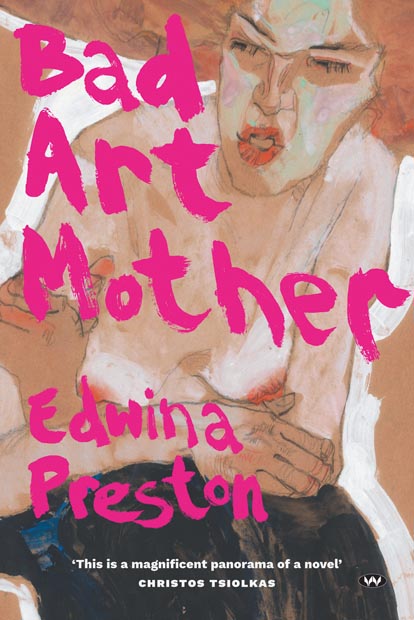
Canberra’s Biggest Book Club has been a regular Festival session, but I’ve not attended before, for various reasons, mainly to do with scheduling and location. This year, however, the stars aligned, including the fact that the featured book, Edwina Preston’s Bad art mother (my post), was one I’d read and was keen to see discussed.

The panel leading the “club” comprised Beejay Silcox, ABC’s The Bookshelf’s Kate Evans, and the author. The promotion for the session says:

There’s so much to unpick in this Stella Prize-shortlisted novel. Who gets to be an art-maker? At what cost? Whose artistic voices are valued, and whose are lost? These questions are as relevant today as they were half a century ago. That’s what makes this novel so vital and beguiling.

Because the session was framed as a “bookclub”, the format was that during the hour audience members could write questions on a piece of paper which would be collected by volunteers and handed to Beejay for inserting at intervals into the discussion.

Evans started by asking Preston for her “stuck in a lift” pitch for her book. Preston replied she wasn’t good at that but offered that it was about a female poet in the 60s coping with motherhood and a sexist culture.

Evans then asked Silcox, who had been chair of the Stella Prize panel that shortlisted this book, why this was the book she wanted us all to read. Silcox replied that the Stella books provide a core sample of the culture we are in right now, of the things we are thinking about. Bad art mother she said had urgency, and spoke to the collective history female Australian writers share. It was a YES on all levels for her – as a reader, critic and judge. I realised at this point that I like the way this woman thinks.

Evans then spoke to the point that this book had been rejected 25 times, and asked why. Preston said many reasons were offered such as it didn’t fit the “publishing cycle” (whatever that means), was likely to be commercially successful, didn’t like the voice of the child, not feminist enough …

This led to Evans to ask about her choosing a child’s voice. Preston said she had been thinking about Joy Hester and her son, and the idea of a parent giving up a child. The novel is not Sweeney’s story, but was inspired by that situation. She also thought later that a boy’s voice might offer an entry point for male readers. It also offered an opportunity to explore the sensitivity and vulnerability of male children. Silcox added that the use of the child’s point of view also provided an opportunity to explore different versions of mothering or parenting, through Owen’s perspective on all the people in his life. It’s a bit about urban family-making.

Next Evans moved to protagonist Veda’s antecedents, which included the Australian poet Gwen Harwood, whose letters Preston had read. This resulted in a fascinating discussion about Gwen Harwood, about women’s lives as artists, and about the role of correspondence in women’s lives. Preston talked about Harwood’s life, including the F*** ALL EDITORS acrostic poem scandal. Silcox talked about reading Harwood at school but knowing nothing about her radical side – and wishing she had. Harwood’s letters, we learnt, were brilliant, funny, scathing. She had a fighting, pioneer spirit, but she was also grounded by her children. Sometime around here, Harwood’s pointed poem “In the park“, was shared, including its last line, “They have eaten me alive”!

Preston talked about the challenges of being a woman artist and a mother. Veda feels she’s a bad mother while her son cuts her more slack. In Modjeska’s book Stravinsky’s lunch, said Preston, the artist Grace Cossington-Smith says that once her children left home, she had all the time but the urgency had gone. Veda faces a similar challenge when she has a weekend to herself.

Regarding her own time-management, Preston said she works best by writing in 1.5 hour blocks a few times a week. Working in short blocks means she always leaves something to work on next session. At this point we got an Audience Question, which was what surprised her most about her book. What an interesting questio. Preston’s response was not what I expected: she saw what her subconscious had created, how things she hadn’t explicitly planned had made the book work. This gave her confidence in her process. When asked for an example, she said introducing vegetarianism had opening up opportunities, like aligning meat-eating with masculine world views.

Another Audience Question concerned whose styles she admired. Preston had to think, but did say they included Jane Austen, George Eliot, Virginia Woolf and Elizabeth Harrower.

This provided a perfect segue to return to the idea of women creators, and a discussion that resonated with me. Do women, Silcox asked, need a room of their own? Preston talked about her PhD and her interest in women’s correspondence, which women tend to write in communal spaces. She contests the “room-of-one’s-own” myth. It’s a western, masculine view of art, she says. Interruptions are not a bad thing. Veda, however, subscribes to this “selfish artist” myth – as does Simone de Beauvoir. However, Preston asked, would de Beauvoir and Woolf have thought the same way had they had children? As someone who works happily in communal spaces, but has always worried about letting the sisterhood down, this spoke to me.

The panel then segued to the myth of genius, the sense that successful artists must be geniuses. Harwood was strong, but Veda is less strong, less sure, and destroyed herself. Silcox said that it was important to undermine these myths because it is hard enough “to carve a life on the page” in Australia without feeling you have to live up to these unrealistic ideas.

Evans then asked about Mr Parish, the man everyone loves to hate. Preston’s response was illuminating. He’s an archetype at the beginning, an early 20th century literary character, she said, but by the end he’s a human with fragilities and redeeming qualities.

Evans followed this by asking what the other women characters brought to the novel besides their art. They represent, was the answer, different relationships to art, and different family roles. These include the “I don’t have a creative bone in my body” Ornella who is not an artist, but is the most reliable person in the novel. All these women examine the themes from different perspectives. Silcox added that they offered “a polyphonic version of women”. She talked about the cages around us and finding ways to unlock them, about how you have to map the cage before you can break out of it. The book is so relevant, so resonant.

At this point another audience question was shared. Referencing Veda’s letters to her sister, it asked why women are so self-critical. Self-criticism is good for an artist, answered Preston.

Evans returned to the correspondence in the novel which offers a different more intimate voice. Preston talked about the role of correspondence in women’s lives, and how correspondence offers writing practice. Unlike diary writing, it involves considering the recipient, and providing details not always necessary in a diary. The letters in the novel are also, added Silcox, one-sided, which invites us to step in and wonder what Veda’s sister might have said (and how Veda might have responded to that). Good point, I certainly remember thinking about how Tilde might have responded.

The next audience question concerned the fact that all the women artists in the novel end up being successful. Had Preston considered including an unsuccessful artist. She hadn’t thought of this, she said, but the artists were, in fact, all successful later in life, and in Veda’s case, after her death.

This led to a discussion about ambition in women, and how it tends to be used pejoratively, as an insult.

Then there was an audience question about not liking Veda. Preston wondered if readers would like her. This didn’t concern her, but she knew it would be an issue for some. Silcox threw in that women being likable is another of those issues women have to deal with.

Evans, referencing a previous comment by Preston, asked her why she knew Veda had to die. Her answer was that the book needed to be a tragedy, though she also wanted to resuscitate Veda posthumously. The novel couldn’t be triumphantly feminist because everything isn’t fantastic.

This led to a discussion about Veda’s action that precipitated her downfall, and about her husband, the restaurateur and philanthropist. Again, Preston’s response was fascinating. She commented that men taking on cooking (like celebrity chefs) and public philanthropy results in their being celebrated for the things – cooking and caring – that women do invisibly.

Evans then quoted from the letter to Tilde in which Veda ponders what sort of mother she is, and whether if it came to the crunch she would sacrifice her art for her child. Is this question – Would I? – the heart of the book, she asked. Preston talked about 19th century women novelists discussing the writing-versus-babies quandary, and the “menopausal theory literary production”. She doesn’t agree it’s either-or. You can do both together, but it is a real quandary many women artists grapple with.

Finally, Silcox asked Preston to think about the writer she was before and after the book. What had it taught her? To trust herself, she said, and the workings of serendipity in her writing. What a great lesson.

And so ended another excellent writers’ festival session. I loved it for the number of ideas that went in different directions to those I expected, like the room-of-one’s-own discussion. Good stuff.

Canberra Writers Festival, 2023
Canberra’s Biggest Book Club
Saturday 19 August 2023, 2-3 pm

Monday musings on Australian literature: Poetry Month 2023

This year Red Room Poetry is running their third annual National Poetry Month. How excellent is that? I don’t know how successful it is at reaching its goal of increasing “access, awareness and visibility of poetry in all its forms and for all audiences” but sometimes you just have to hang in there and build recognition. Poetry Month runs throughout August.

They are offering similar events and activities to last year with their 30in30 daily writing competition with prompts from Red Room commissioned poets, poetry ambassadors, online workshops, showcases, a community calendar, and more. Do check their page, for events that might interest you.

National Poetry Gala … and more

This year they also, they said, returned their National Poetry Gala to celebrate Red Room’s 20th anniversary. It was held, unfortunately, on 4 August! It was emceed by Benjamin Law, and was held at the Australian Chamber Orchestra’s new venue near Sydney Harbour Bridge. It featured some of Australia’s “finest contemporary poets” including Jazz Money, Sara Saleh, Freya Daly Sadgrove (NZ), Rebecca Shaw, Red Room’s 2023 Fellow Charmaine Papertalk Green, and this year’s Stella Prize winner, Sarah Holland-Batt.

There was also to be a musical performance by First Nations choir Mudjingaal Yangamba and the current Minister for the Arts, Tony Burke, was a special guest.

Also to commemorate their 20th anniversary, Red Room has published a poetry anthology titled A line in the sand: 20 years of Red Room Poetry. Its introduction is by Ali Cobby Eckermann, and it contains “over eighty pieces from leading poets and public figures in a retrospective that covers twenty years of the best commissioned Australian poetry”. They include writers I have heard of, and some of whom I’ve read, though not always their poetry, like Yassmin Abdel-Magied, Maxine Beneba Clarke, Tony Birch, Dorothy Porter, Eloise Grills, Sarah Holland-Batt, Jazz Money, Omar Musa, Bruce Pascoe, Maria Tumarkin and Uncle Archie Roach AC. Tomorrow night, Tuesday 8 August, they are holding an online showcase via Facebook. The event is free but you need to book.

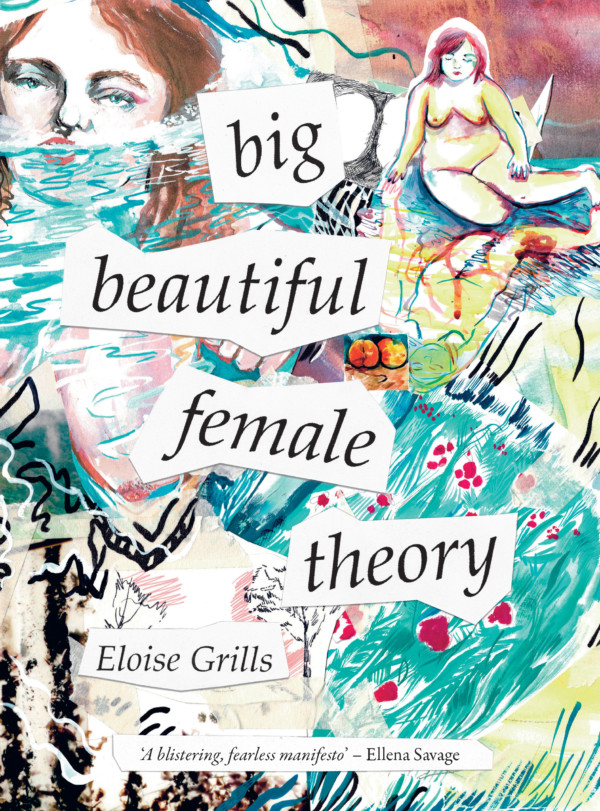
Meanwhile, if you missed the National Poetry Gala, you might be interested to know that the Victorian Poetry Month Gala has not been held yet. It is scheduled for 17 August at the Wheeler Centre. The host is a poet-playright I haven’t heard of before, Izzy Roberts-Orr, and the event will feature, says the promotion, “new work from a dazzling line-up of poets working across forms – from spoken word and performance to music and multimedia”. I don’t know many of the names those I do include Andrea Goldsmith reading unpublished poems by Dorothy Porter, and Eloise Grills whose book big beautiful female theory has been shortlisted for several literary awards this year. There is also a mention of “a collaboration” between journalist and author Erik Jensen and musician Evelyn Ida Morris. For other state and regional showcases and galas, check Red Room’s Showcases page.

These are just three of many events – online and live – scheduled during the month. If you are interested, check out the Community Calendar which lists events from across the country.

Do you attend poetry events – of any sort?

ACT Notable Book Awards 2023

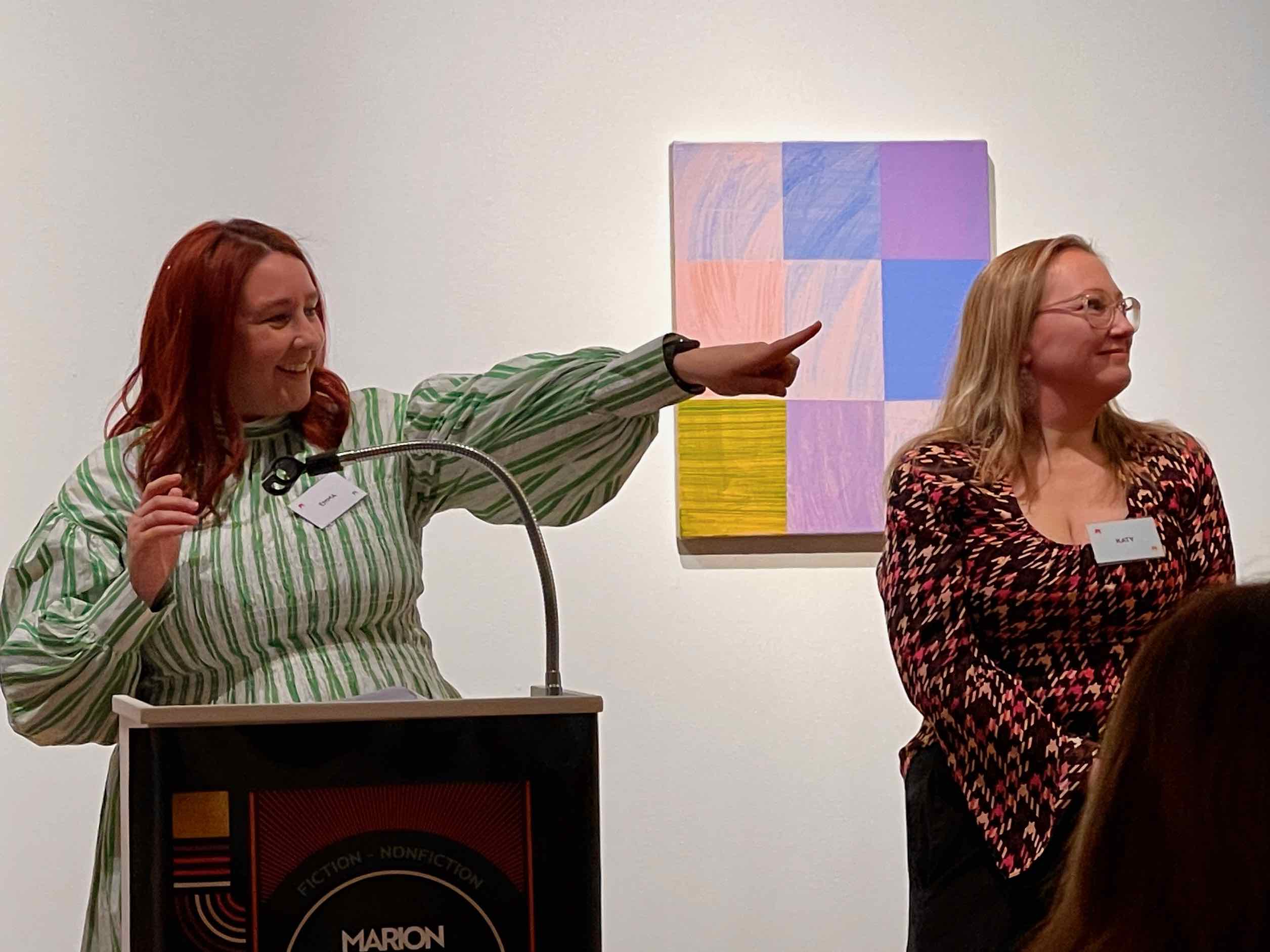
Board Chair Emma Batchelor, and acting CEO Katy Mutton, at the Awards

Tonight I attended the presentation of the ACT Notable Book Awards which are made by Marion (the ACT Writers Centre). It was a well-organised event, but had a wonderfully natural and friendly feel to it at the same time, appeals to me. I’ll take natural over glitz every time. The venue was the Canberra Contemporary Art Space, where the featured exhibition was Bodies without Organs, a group show, says the website, by queer and non-binary artists, exploring “how contemporary artists transgress and subvert our understanding of materiality and form”. There was a little time to view the art before the formalities started, but I’m afraid I used that time to catch up with people.

As I didn’t share the shortlists for these awards, I am listing those, and highlighting the winners in bold.

Poetry

The shortlist:

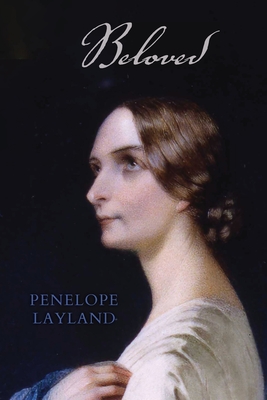
  • Penelope Layland, Beloved (Recent Work Press)
  • Maurice Nevile, Translating loss: A haiku collection
  • Peter Ramm, Waterlines (Vagabond Press)
  • Kimberly K. Williams, Still lives (Life before man) (Gazebo Books)

Maurice Nevile won the self-published award, and Peter Ramm was highly commended.

Non fiction

The shortlist was:

  • Tabitha Carvan, This is not a book about Benedict Cumberbatch (HarperCollins)
  • Katrina Marson, Legitimate sexpectations (Scribe Publications)
  • Michael Richards, A maker of books: Alec Bolton and his Brindabella Press (NLA Publishing)
  • Helen Topor, Neither king nor saint
  • Biff Ward, The third chopstick (my review)
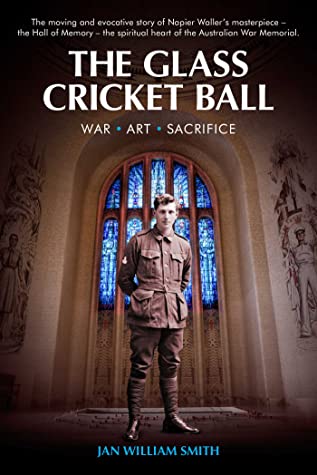
  • Jan Williams Smith, The glass cricket ball (Big Sky)

Helen Topor won the self-published award, and Katrina Marson was highly commended.

Children’s

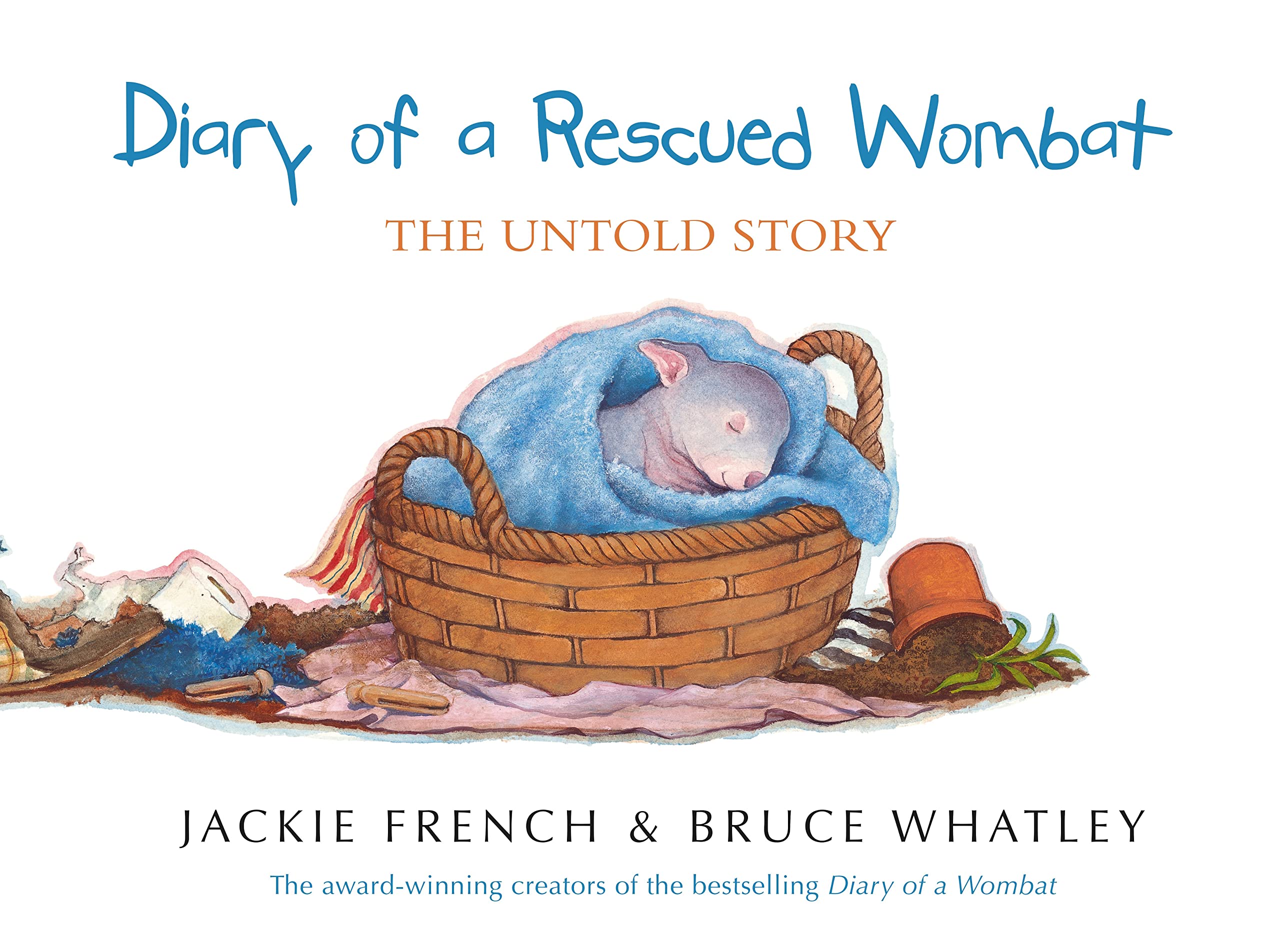
  • Jackie French and Bruce Whatley, Diary of a rescued wombat: The untold story (HarperCollins Australia)
  • Irma Gold and Wayne Harris, Seree’s story (Walker Books Australia)
  • Dr Bryan Lessard (Dr Bry the Fly Guy), Eyes on flied (Pan Macmillan)
  • Stephanie Owen Reeder and Astred Hicks, Swifty the super-fast parrot (CSIRO Publishing)
  • Barbie Robinson and Ian Robertson, Charles the gallery dog (For Pity Sake Publishing)
  • Krys Saclier and Cathy Wilcox, Camp Canberra (Wild Dog Books)

Barbie Robinson and Ian Robertson won the self-published award. Two highly commendeds were announced: Irma Gold and Wayne Harris, and Stephanie Owen Reeder and Astred Hicks. It’s interesting, but perhaps not unusual, how many of the shortlisted books feature, as an American friend of mine would say, “critters”.

Fiction

  • S G Bryant, A death in black and white
  • Paul Daley, Jesustown (Allen & Unwin)
  • Tanya Davies, Then Eve
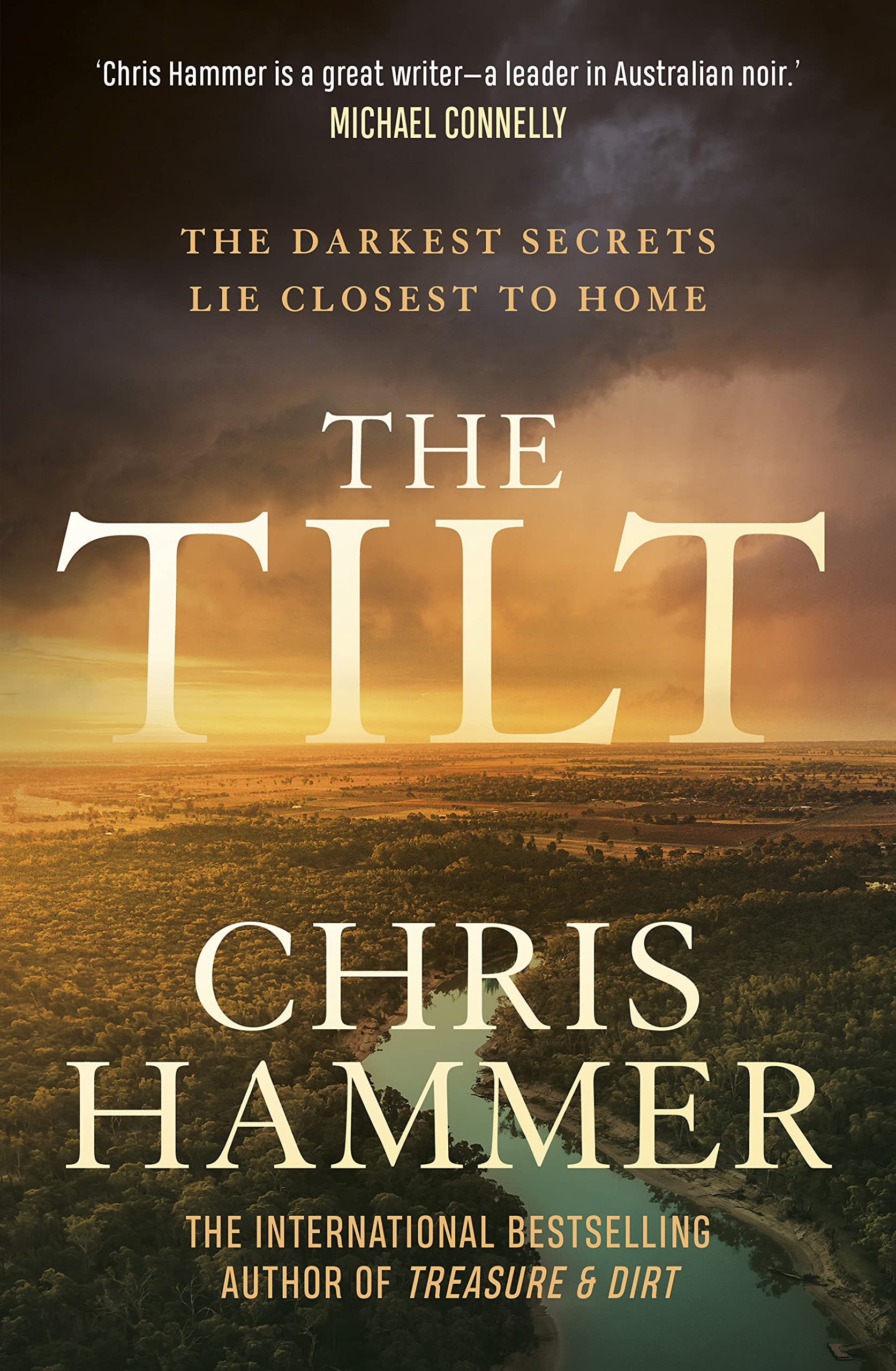
  • Chris Hammer, The tilt (Allen & Unwin)
  • Peter Papathanasiou, The invisible (Hachette)
  • Inga Simpson, The willowman (Hachette)

The self-published award went to Tanya Davies.

Marion Special Book Award

This award is not limited by genre, and this year’s was won by Dylan van Den Berg’s play, Whitefella yella tree.

Other awards

Two other awards were made:

  • The Anne Edgeworth Emerging Writers Award, now in its 11th year, is made to an emerging writer and this year’s winner was a screenwriter, Linda Chen.
  • The June Shenfield National Poetry Award for an individual poem was won by Rhian Healy from Western Australia for her poem “The gunshot”. ACT poet Rebecca Fleming won third prize for her poem “Anticipation”.

Canberra (the ACT) is a small jurisdiction, but has an active, engaged and, I’ve found, warm literary community that was well in evidence despite the awfully chilly evening outside. I’m glad I made the effort to go.

Stella Prize 2023 Winner announced

The 2023 Stella Prize winner was announced tonight and, for the second year in a row, it’s a poetry collection …

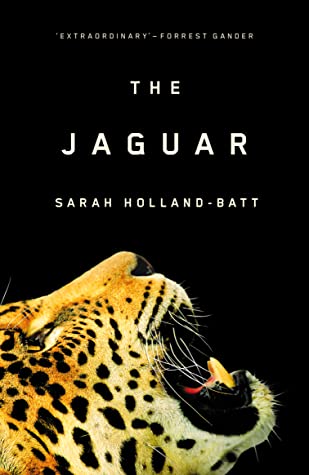
Sarah Holland-Batt’s The jaguar

Darn it! I nearly bought it last weekend when I was at the National Library but with my move and having stuff everywhere, I put it back down again and thought, maybe later. I guess it’s now not “maybe” but “yes later”. However, I’m pleased to share that a couple of bloggers I know have already read and reviewed it – like Kim at Reading Matters and Jonathan at Me fail? I fly! Check their posts if you are interested.

The judges said that The jaguar “investigates the body as a site of both pleasure and frailty”. The panel chair, Alice Pung, expanded on this saying that

… This is a book that cuts through to the core of what it means to descend into frailty, old age, and death. It unflinchingly observes the complex emotions of caring for loved ones, contending with our own mortality and above all – continuing to live.

It’s a response, I understand, to the death of Holland-Batt’s father. Those who have followed my blog for a while will understand, then, why I really would like to read it. Stella CEO, Jaclyn Booton, describes it as “a gift of a book” that “examines questions of grief and memory and care”.

You can read more on the Stella website, including an excerpt from Sarah Holland-Batt’s acceptance. She commented that she was “thrilled to enter into the company of the extraordinary writers who have received the Stella” and also said:

“It’s both an indescribable joy and a deep honour to receive the Stella Prize for The Jaguar. I wrote this book during an intensely challenging period, as my father was dying, and just after. It was the friendship, generosity, and camaraderie of women that not only saw me through this difficult time, but that has been the sustaining armature of my writing life.

Just to remind you, the judges were author Alice Pung, in the chair, with her co-judges bibliophile and host of The Garrett podcast (among many other roles) Astrid Edwards; essayist and literary critic BeeJay Silcox; writer, editor, broadcaster, and Walkley award-winning journalist Jeff Sparrow; and First Nations poet, essayist and legal advisor Alison Whittaker.

I have read eight of the ten previous winners: Carrie Tiffany’s Mateship with birds (2013, my review), Clare Wright’s The forgotten rebels of Eureka (2014, my review), Emily Bitto’s The strays (2015, my review), Charlotte Wood’s The natural way of things (2016, my review), Heather Rose’s The museum of modern love (2017, my review), Vicki Laveau-Harvie’s The erratics (2019, my review), Jess Hill’s See what you made me do (2020, my review), and Evelyn Araluen’s Dropbear (2022, my review).

Thoughts anyone?

Stella Prize 2023 Shortlist announced

It says something about my discombobulated year that I didn’t post on the Stella Prize longlist. And then, I was packing for Melbourne this morning while I listened to the shortlist announcement on ABC RN Breakfast. (Something new I think for Stella.) I didn’t have time to stop and write my post, then, but here I am overnighting in Wangaratta – don’t laugh truckie Bill – and have a few minutes to write a post.

I haven’t read any of the shortlist, you probably won’t be surprised to hear, but as I heard the announcement, I remembered that I had one on my TBR, so I immediately swapped out one of the books I had selected for my holiday reading pile to include it.

This year’s judges are author Alice Pung, in the chair, with her co-judges bibliophile and host of The Garrett podcast (among many other roles) Astrid Edwards; essayist and literary critic BeeJay Silcox; writer, editor, broadcaster, and Walkley award-winning journalist Jeff Sparrow; and First Nations poet, essayist and legal advisor Alison Whittaker. None of these were on last year’s panel. Stella, in fact, does a stellar (sorry!) job of keeping its panels fresh.

You may remember that poetry was added as an eligible form for the prize last year. Indeed, a poetry collection won last year

The shortlist

The 2023 Stella Prize shortlist is:

  • Debra Dank, We come with this place (Echo Publishing, memoir)
  • Eloise Grills, big beautiful female theory (Affirm Press, graphic memoir for want of a better description): Kate’s review
  • Sarah Holland-Batt, The jaguar (University of Queensland Press, poetry collection): Jonathan’s review
  • Adriane Howell, Hydra (Transit Lounge, novel): Lisa’s review
  • Louisa Lim, Indelible city (Text Publishing, memoir)
  • Edwina Preston, Bad art mother  (Wakefield Press, novel): on my TBR, Lisa’s review

The announcement this morning included an interview with Stella Prize CEO Jaclyn Booton and shortlisted author Edwina Preston who said that her book had been rejected 25 times before it found a publisher. She said that if she hadn’t had an agent who kept plugging away, she would have given up. Good on Wakefield! It’s a lovely little independent press in Adelaide, which publishes across an impressive range of fiction and nonfiction forms. I visited them once, many years ago, and have reviewed many of their books. 

So, three nonfiction works/memoirs, one poetry collection, and two novels, continuing wonderful diversity of form that characterises the Stella Prize. I must say – though I haven’t included them all here – the covers for these books are stunning – strong, expressive covers that eschew those book cover cliches so often associated with books by or featuring women.

Alice Pung says of the shortlist:

Although all the books on our shortlist are very different, common themes emerge about a woman’s relationship to her art and to the world around her. All our shortlisted books also explore with moving complexity some of the most pivotal relationships in a woman’s life, and their roles as daughters, partners, wives, and mothers.

Each shortlisted author will receive $4,000 in prize money. The winner will receive $60,000 (through the support of the Wilson Foundation). There’s more on the shortlist on the Stella website.

The winner will be announced on 27 April.

Comments?

Meet the Author: Dervla McTiernan

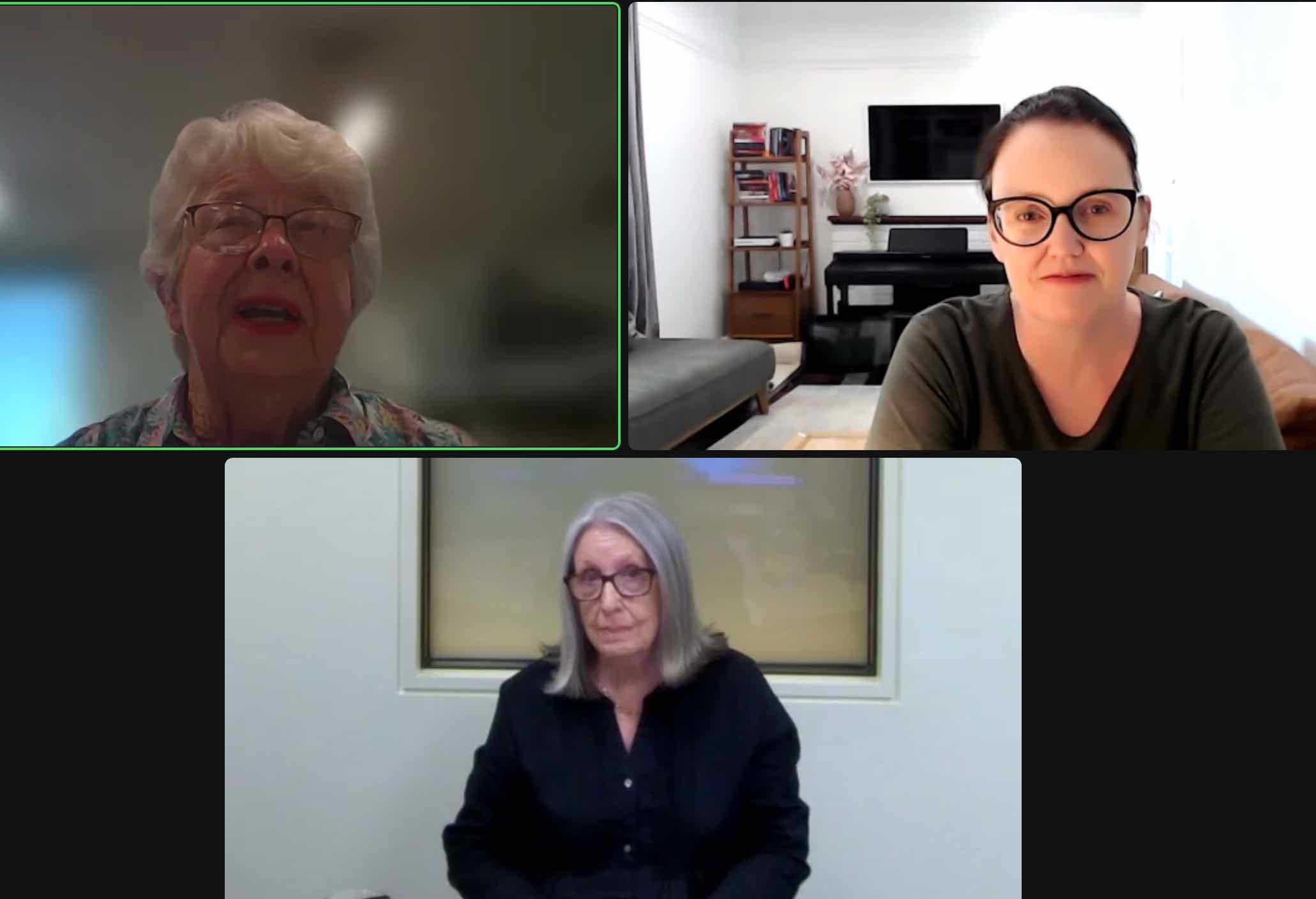
You’ve heard me say it before and I’m sure to say it again, I am not a “crime reader” – but I do read crime novels when something about them catches my attention. I have been interested to read Irish-born Australian writer Dervla McTiernan since her first book started appearing with positive reviews on the AWW database. As it turned out, this conversation brought out a couple of points that particularly interested me, and further spurred my interest in McTiernan’s novels.

The participants

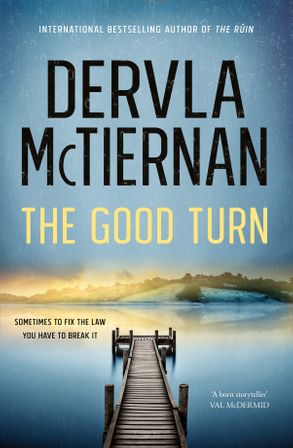
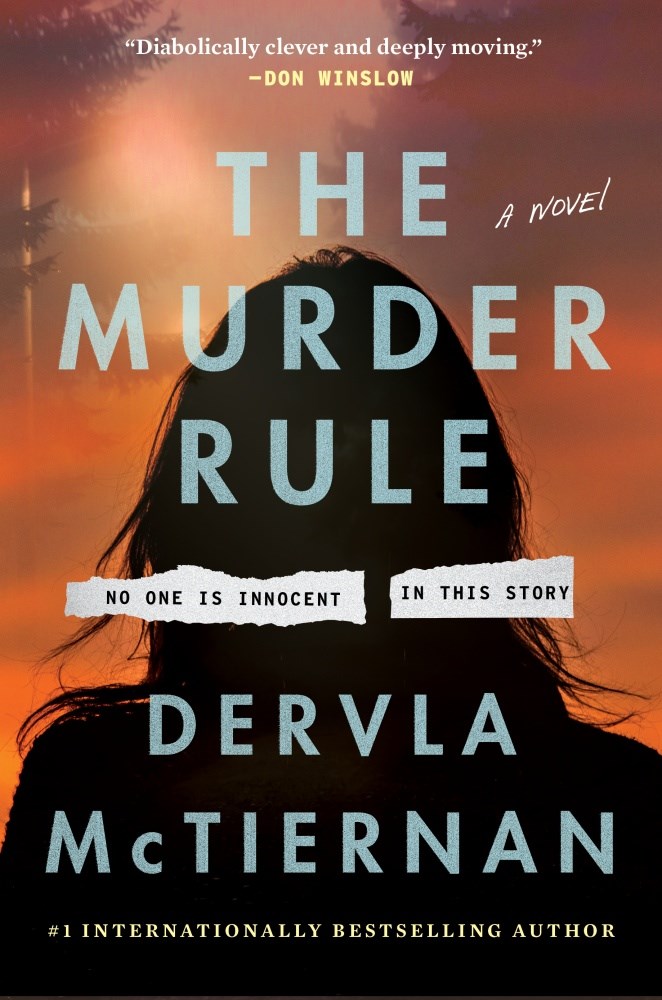
Dervla McTiernan: author of the internationally bestselling Cormac Reilly series (The rúinThe scholarThe good turn), and of three audio novellas The sistersThe roommate and The wrong one. She has won many awards, including an International Thriller Writer Award. Her latest novel is a standalone, The murder rule.

Anna Steele: since retirement has reviewed crime, historical and literary fiction for The Canberra Times and the ACM Press, using her nom-de-plume, Anna Creer. Before that, Anna was Head of English at Canberra Grammar School. I should add that I count Anna as a friend, as for many years we have been active members of our local Jane Austen group, JASACT.

The conversation

Anna commenced by explaining that the conversation would be structured as a retrospective of Dervla’s career so far, meaning it would not be one of those latest-book focused conversations. She also reassured Dervla and the audience that there would be no spoilers!

On how she started

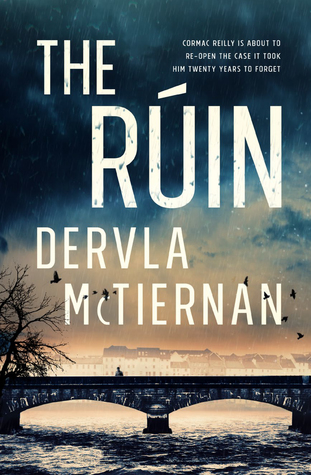
Dervla McTiernan, The ruin, book cover

Anna then mentioned Dervla’s Irish heritage, which is known for story-telling, and yet Dervla has said her writing would not have happened if she’d stayed in Ireland. Why? She followed this up with “why crime?”

Dervla said she’d been a lawyer in Ireland, but the 2007 GFC and its aftermath had been traumatic, with suicides and other serious distress amongst family and clients. By time she and her partner left Ireland in 2011, she never wanted to practise law again. After arriving in Perth and needing to support themselves, she nearly returned to law, but her husband reminded her of their promise to each other to now do it their way, so she got quasi legal work and wrote for two hours every night. The result was a contract with Harper Collins, and The rúin was born.

She said she had not initially intended to write crime, but she had a story she wanted to tell – about two siblings she named Maud and Jack. Up popped a young, uncertain twenty-something cop, Cormac Reilly, whose job it was to save the children. Also, she was a crime fiction reader.

On her detective, Cormac Reilly, and her success

Anna then asked more about Cormac Reilly. He’s not an alcoholic, not tormented, and he arrived on the scene, Anna felt, fully fledged. Dervla has called him, a “man of my generation”. What did this mean, Anna asked. Anna felt that he is one of the reasons for the success of the first novel, but wondered what Dervla thought.

Cormac, said Dervla, was a reaction to the crime fiction she was reading. She enjoys Ian Rankin, and others, but their male heroes tended to not have other responsibilities, which is not true to her generation’s experience of men. She wanted to write about someone she could admire, who could sustain relationships long term, about men who could change nappies, cook meals, and so on. She felt she’d be lying if she wrote an inept man. Love this – though I don’t think it’s only her generation that has “ept” men!

As for the novel’s success, although Anna instructed her not to be modest, Dervla said she really didn’t know. But, she did say that the story has to matter, that writers need to have genuine emotion about what they are writing, otherwise the writing is “dead on the page”.

On place

The next few questions concerned place, about which Dervla feels strongly. Why were her first three novels set in Ireland?

Dervla said that Galway, the setting for The rúin, is the place she knows best. Also, the story of Maud and Jack is an Irish story, and beyond that, she has questions and concerns about various aspects of Irish history.

Developing this, and moving us on to the second novel, The scholar, which is set in a university, Anna quoted Dervla’s statement that “all writers bring their life experience to their books”. Anna wondered what experience she’d brought to this novel. Again, Dervla said that she knows that place, a place that can be both safe and unsafe (particularly for women). The novel involves Cormac’s girlfriend, who is a scientist, which is not Dervla’s experience, but she has dealt with scientific issues in her legal work. Besides these are more subtle things such as how people talk.

Regarding the third Cormac Reilly book, The good turn, Anna, who clearly knows Dervla’s books well, noted that in this novel, policeman Peter Fisher, who had appeared in The scholar, has a much stronger role. She wondered why. She also noted that it is not set in Galway.

Dervla talked a bit about Peter Fisher, whom she clearly enjoyed writing. She was interested in his relationship with his father. Also, Cormac is a good person but is not universally liked, giving Peter a challenge – stick with Cormac or go with the consensus?

She set this novel in a rural area that she also knows well. She has decided to only write about places she wants to spend time in, but she also said that with Irish villages, they may be beautiful but you only have to scratch the surface …

On the trilogy

One of the things I enjoyed learning from this interview was Dervla’s decision to create in Cormac a competent man with outside responsibilities. The other thing I loved was Dervla’s response to Anna’s question regarding whether, given her comment that The good turn “rounds off” the previous two, she always knew Cormac Reilly was going to be a trilogy,

Dervla said that yes, she thinks it’s a trilogy – though she may write about Cormac again later. She didn’t want to write a long procedural series, as they tend to be episodic without overall narrative arcs. She wanted to challenge Cormac, to have a narrative arc which would see him changed by the end. I don’t like series, so I enjoyed hearing her perspective.

More on characters

Anna asked her about the female detective she’d started but not finished, and about the unlikeable Hannah Rokeby in The murder rule. Dervla said that she’d been waylaid from her female detective by the idea that became The murder rule. She was interested in the Innocence Project, which many Irish students get involved in, but felt she didn’t have a story. Then, she had the idea of flipping it: from having the traditional idealistic young woman to an angry, bitter one. She likes Hannah Rokeby. Hannah is “wish fulfilment” for her because Hannah represents the younger generation of women who don’t feel they have to be “the nice girl”, who, when they think something, “they own it”! Hannah’s problems are separate from her competence.

On police abuse of power in her books

Anna asked whether the police abuse of power that threads through the books was conscious or just part of the stories. Dervla felt it was the latter, but commented that in any community where there’s power there’s corruption. She said that teams like the police work very closely together and when something even a little untoward happens the tendency is to support the team rather than remember their true role!

On coming books, adaptations and the pandemic

The interview wrapped up with a number of questions about Dervla’s plans. Dervla explained that due to The murder rule she’d been given a three-book contract by Harper Collins’ American arm for books set in America. Her new book, now completed, is set in Vermont, which she visited. It’s about a young couple, in love and beloved in their community. They go away. He comes back, without her. Her parents want the truth, while his parents want to protect him.

Regarding when she will write an Australian-set novel, Dervla said she is currently working on a novella set in Perth and Margaret River.

Anna also asked her about the screen optioning of two of her novels. She’s not heard about The Rúin, but a miniseries for The murder rule is moving into full script.

Anna then asked whether the pandemic affected her writing, given she’d been writing a book a year until then. Dervla said it had been a weird artificial environment, and was a time of needing to focus more on family. She is usually always thinking of her characters when she is not doing other things, but the pandemic broke that pattern. It’s coming back though!

Q&A

There was a brief Q&A, which I’ll summarise:

  • On staying motivated when starting out: the two hours a night was her present to herself; she gave herself permission to have those two hours. This kept her going.
  • On support, like a writing group or mentor: she’s a solitary person, and so decided to put all her focus on writing, on doing the best writing she could. (It is a lonely profession, she had earlier admitted to Anna, so it is good for writers to make opportunities to engage with each other.)
  • On knowing how a police station works: research and common sense, she said. The Irish police produce useful annual reports.
  • On writing to deadlines: it is important if you are going to be a good publishing partner, but she also wants to write the best story she can, so deadlines are important but sometimes you need to take space.
  • On whether she feels the need to make female characters (like the tough Hannah Rokeby) likeable: no, she’s not driven to make her as likeable as Cormac.
  • On whether there’s a difference writing for audio versus print: can use fewer attributions (he said, she said, etc) and don’t need to describe responses (like “she gasped”) though she might provide a stage-type direction to person doing the reading.
  • On literary critics being scornful of crime: There are two writing worlds “commercial fiction” which is “story and character driven” and “literary fiction” which is not so. Some literary fiction can lift off the page, but not all. There is good and bad in both types, but for some, literary fiction is seen as the “real” writing. However, it is commercial fiction which supports publishing and bookshops. She’d like critics to recognise what people like to read. Anna commented that John Banville who has started writing crime, said that he “found freedom” in writing it.
  • On writing about murky psychological and social issues: she needs to start with character and let the story go from there. She doesn’t like to start with the theme. She doesn’t want to write issues-based books, but she will often write about something she’s angry about.

Another excellent conversation – well-prepared and generously answered.

Meet the author: Dervla McTiernan (with Anna Steele)
Webinar via Zoom, organised by the Friends of the National Library of Australia
Wednesday, 15 February 2023, 6-7pm

Heather Rose in conversation with Sally Pryor

As I’ve written before, Muse Canberra, a restaurant-cum-bookshop or vice versa, offers a wonderful program of book events, year after year. I don’t get to many, but today I attended a conversation featuring Tasmanian author Heather Rose with local journalist Sally Pryor.

The participants

Heather Rose has written three children’s books and five novels, of which I’ve reviewed two, The Museum of Modern Love (my review) and Bruny (my review). Her latest book, the subject of this event, is different, a memoir, Nothing bad ever happens here: A memoir of loss and recovery.

Sally Pryor is the Features Editor of our newspaper, The Canberra Times, which is now part of Australian Community Media. Since that company changed hands in 2019, it is now publishing local reviews once again, after some years in the dark when most of the arts reviewing we got was syndicated from the big city newspapers.

The conversation

After Dan did the usual intros, Sally spoke a little more about Heather and her book, explaining that while Heather had always planned to write a memoir, she hadn’t planned to publish one, for several reasons, one of which was that she was wary of outing herself as a spiritual person and of putting her views onto others. Sally described the memoir – which Heather has indeed published – as the “least predictable and most enticing memoir” she’d read. Heather then read the book’s first chapter, “Sky”. It places herself as a 6-year-old at school, and then concludes with

I could write a memoir about travelling, the writing life, or my love of making cakes. But I’m still that girl under the tree who wants to get to the big conversations, to the heart of things. So here are some stories about life and death. About experiences that have no easy explanation, but which happened, nevertheless. The unknown, that 95% – maybe it’s an invitation for compassion. Life is a process of forgiveness for the choices we make in order to be ourselves.

On what started it all 

Sally suggested they start with the tragedy that, says the back cover blurb, set her on “a course to explore life and all its mysteries”. Heather commenced by describing her idyllic childhood in Tasmania. It was beaches, paddocks and orchards; days spent outside; a “glorious, wild childhood”. There was the family home on the edge of Hobart and a shack on the Tasman Peninsula, built by her maternal grandfather built the shack. He also taught Heather to appreciate nature, telling her, “Look Heather, that’s what beauty is”. But, just after she turned 12, her grandfather and older brother died in a boating accident. It destroyed the family, and by the time she finished year 12, she found herself alone in the family home. She decided to go overseas, to live her life “very fully” because her brother hadn’t.

On life being “a process of forgiveness for the choices we make”

Sally shared a little of that overseas trip, that “thrilling life”, which had it all, from meeting celebrities, including the Queen, to staying in a Buddhist monastery, not to mention romance, drugs and alcohol. But, asked Sally, what did she mean by life being “a process of forgiveness”?

One of the things I enjoyed about this conversation was Rose’s comments on writing memoir, and one of the places she discussed it was here. One of the most challenging things about writing a memoir, she said, is revisiting who you were in the past. Memories are tough to go back to. She was reckless, but didn’t realise then what dangers she’d put herself in. She made many mistakes, and revisiting all those things is “a hollowing out experience”. She wrote a lot, and then had to decide what to leave out to hone it to the things that shaped her. She needed to confront what she’d inflicted on herself, and to not blame others. It was her life she said, and she was going to own it, hence life being a process of forgiveness for all we’ve done. I found this moving – and something worth thinking about a bit more for myself!

On the book’s spiritual journey

Sally then turned to the spiritual journey aspect of the book, calling it a “very religious book”. She asked, in particular, about Heather’s taking part in a Native American ceremony that lasted several years. I won’t detail it here as it’s all in the book, but it was the Sun Dance. The point is that it changed her world-view entirely because after this she did not see herself as separate. She felt connected to everything (animate and inanimate), and “did not see world as a fixed reality”. She writes in the book, “everything was permeable, malleable, responsive” (p. 132).

Sally, continuing this theme, mentioned that she understands Heather always asks people if they’ve experienced anything they can’t explain, and everyone has! Most are post-death experiences – messages from the recently dead that all is ok – but others include warnings (like “don’t go that way”) that people feel have served them, sometimes to the point of saving their lives. For Heather this is reassuring, the idea that we have other senses, while Sally said she finds it frightening, which resulted in Heather teasing her ideas out a bit more.

Heather’s point is that the hardest thing is to think our lives are meaningless. She goes back to Descartes, but instead of “I think therefore I am” she sees it as “I am, therefore I feel”, “therefore I think”, etc. Life is a finite thing, she continued, and our fear is that maybe it’s all for nothing. Perhaps, she said, but we could also think that maybe it’s all for everything. Don’t we all love people, she said, who are vibrant, alive, who give of themselves?

On the book’s title

Sally suggested that the book’s title was “a way of reframing the narrative”. Heather said that in her 50s she visited the place, Lime Bay, where the tragedy had occurred and “felt nothing”, which brought her to think that “if everything just is, maybe nothing bad ever happens”. (Me: Not sure about this.) She then threw out that she “likes being un-evolved”. In my experience, the idea of being “un-evolved” is usually seen as a bad thing, but I like her understanding of the idea, her sense of never being finished, of always being curious and open.

Q & A

There was a brief Q&A, which I’ll summarise:

  • On what she wanted her children to take away from the memoir: Heather shared that her 22-year-old daughter had said that most of her readers were older, but she thought it was a good book for people HER age 22 because it will make them braver. Heather added that it’s not bad for kids to see their parents 360°.
  • On her family’s response to the book given they were not allowed to talk about the tragedy at the time: This was hard, particularly how her parents would feel about it, but she also felt that it was her story, not theirs. Her sister read various drafts, and said she felt it completed her life. Heather was most concerned about her father, who has been a great supporter of hers but whose grief had been “enormous but unvoiced”. His reaction was “I think we all needed you to write about it”. Heather also commented that writing memoir is hard, because you can’t avoid writing about people who are alive, and then quoted Hemingway’s, “writing is easy, you just sit down and bleed”! Sally commented here that most people can’t get their feelings onto a page, so she can see what it meant for Heather’s dad, at which point, Heather observed that she was relieved to be returning to the novel!
  • On whether characters get away from her: Yes, for example her The butterfly man character “didn’t tell her the truth for two and a half years”! She kept stitching up the end to give him redemption, but had to let that go because it wasn’t him, it was her, the writer. That’s what makes good writing, she said, when the writer stops trying to intervene. She also gave a Bruny example.
  • On her reluctance to wear a “spiritual tag”: This was partly because things go very badly when women put themselves out in the world. It can be a “very vicious world” if you stand up and align with a specific perspective. But, she also wants people to take on their own perspective, rather than imposing her own point-of-view. The questioner appreciated that Heather is still exploring, which she saw as the “heart of spirituality”.
  • On the process of writing, particularly re fiction vs nonfiction: With fiction there are rules, responsibilities, and voice. We know, for example, that with Murakami we will get a “distant, hapless” voice, and with Kingsolver, “heart”. There is so much you can build on in fiction. With the memoir, she had to start with nothingness to find who she was, and she found she is still that 6 year old girl looking for the big conversations. Writing the memoir was “harrowing, and hallowing” but she feels braver, and now owns all she is.
  • On returning to the novel: Heather loves writing fiction because she loves her characters, and she also enjoys the research.

Closing the session, Dan commented on the level of attention he’d observed in all our faces! I’m not surprised. It was such an engaging, different and, at times, surprising discussion – and that always gets my vote.

Brona has reviewed this book.

Heather Rose: Nothing ever happens here (with Sally Pryor)
Muse (Food Wine Books)
Saturday, 26 November 2022, 4-5pm

In conversation with Craig Silvey

I understand that literary conversation events in Canberra go best when the subject is political. I guess it’s the nature of the beast – that is, of living in the national capital. But for me, it’s the fiction writers that I want to see, and we do get some interspersed amongst the run of historians and journalists that we get. Even so, it’s been three years since I attended an ANU/Canberra Times Meet the Author event, due partly to the pandemic which halted the program for a while and partly because I have a pretty full dance card. However, Mondays are often free, so Mr Gums and decided to check out Craig Silvey. I’ve only read his best-selling Jasper Jones (my review) but that’s because you can’t read everything. I would like have read Honeybee. Tonight’s focus, though, was his latest novel, Runt.

The conversation was conducted by local author Irma Gold, who is no stranger to this blog. She’s always good in the interviewer’s chair, being both warm in manner and astute about writing – and so it proved again tonight.

The conversation

After MC Colin Steele did the usual introductions, Irma took over and introduced Silvey and the book we were there to hear about. Runt is, she said, a middle-grade children’t book. It features a solitary girl, Annie, with a penchant for fixing things, and the dog, Runt that she befriends. Irma found Runt a heart-warming book, which was lovely to read to her 11-year-old son. She believes it is destined to become a children’s classic. It would, both she and Colin Steele said, make an excellent Christmas gift. What a shame our grandson is only 4.

Irma Gold and Craig Silvey, 2022, ANU

After some light-hearted banter with Craig about a Fremantle biscuit artist – who knew? – Irma got down to business. Noting that Runt represents a new audience for Craig – that middle-grade age – she asked what his favourite book/s had been as a child. Craig replied that he’d been a voracious reader as a child. (Show me an author who wasn’t!) He loved a range of books, including those traditional classics like Lord of the Rings and the Narnia books, but then he made some points that were specific to him. For example, he liked books that made him feel things, and named a short story by Paul Jennings titled “Busker”. It was the first story, he said, that made him cry. Another favourite was Goodnight Mr Tom, which elicited sounds of agreement from the audience, and which, he later realised, might have partly inspired Honeybee.

He also liked books that made him laugh, and he mentioned Roald Dahl, Paul Jennings again, and the James Herriot vet series.

After this, there was some discussion of Runt, which is set in the perfectly named country town of Upson Downs. There are Annie and Runt of course, and some villains, including the farmer, Earl, who is also a collector. One of the things he collects is water! Earl is buying up farms to get the water, and wants Annie’s family’s farm. The plot revolves around Annie’s plans to save the farm. There was more chat about the story and the characters, which include the wonderfully named 13-year-old Fergus Fink, and then we moved onto setting and themes.

Irma noted that Craig had grown up on an orchard in a small country town, and asked whether this had inspired Runt. Craig responded that the novel was an “affectionate love letter to country life“. He loves country people – their use of understatement, and their dry humour – and the country makes for great fiction settings because it is “exposed to the whims of elemental forces”.

This led to a discussion about the relevance of climate change to the book. Craig observed that water policy and climate change are putting people under pressure, and that villain Earl’s avarice is boundless. There are subtle messages in the book, including the fact that people are more important than hoarding/collecting things!

Irma commented that Runt is very different to Honeybee, but it does encompass diversity. Craig responded that he writes about Australians in Australia, and that we are a diverse country. Irma then said that the book had a contemporary setting but a very classic feel. Craig replied that he wanted classical elements underpinning his text but that, for example, a 13-year-old boy’s aspiration now would be to be a YouTube star. Of course!

From here Irma turned to screenplays, because each of Craig’s books have or are being adapted to film, with Craig also writing the screenplays. There was discussion about the screenplay writing process, and how Craig, “wrote them sort of together”. Film development for Runt is already underway, with production possibly starting next year.

Craig had some interesting things to say about writing screenplays versus novels. There are rigidities to screenwriting that you don’t have in novel writing, he said. The screenplay format can be too restrictive to let your creativity fly, so he enjoys novel writing, but, conversely, writing screenplays reins him in as a novelist, which has benefits.

Irma’s next question concerned publishing and the fact that Craig has been published for 20 years now. How has publishing changed? Interesting question, responded Craig. For him, the biggest change is in the post-publishing aspect. Back in 2004 when his first novel, Rhubarb, was published, we were not as “connected” so you had no idea what was happening with your book. Now, with social media, you get immediate recognition and can see what is happening. Reviewing is democratised and it is “a really beautiful thing”, he said. (As a blogger, I appreciated this.)

Publishing, itself, though is still painful. You take this tender part of yourself and you expose it to the world. So, while his success means that he no longer has to do the “shitty jobs” he had to do when he was 19 and writing Rhubarb, in terms of writing, he still faces the blank page with the same uncertainty. This is essential, though, to being a writer: you need to “straddle the pain and struggle” but you need also to balance it with hope and pride. Such a mentally healthy attitude.

On whether he was always going to be a writer, Craig talked about meeting his first writer, Glyn Parry, at school, when he was 14. He realised, suddenly that writers were human beings and it could be a vocation. He wrote to Parry, and got some great advice: “Don’t become a writer, be a writer”. Craig didn’t go to university. Instead, he did menial jobs and read and read – and “forensically examined novels.”

After a delightful little interlude discussing his career as an electric ukelele player in a band called the Nancy Sykes (inspired by Dickens, of course). During the band’s short life, they apparently played Shaun Tan’s bride down the aisle! A little later in the interview there was another fun interlude, this time about his being a finalist in Cleo’s Bachelor of the Year contest and being described as “the thinking woman’s buttered crumpet”. It was an entertaining story, but I’m not going to spoil it just in case you get to a launch and hear it yourself. Instead, back to the writerly life.

Irma asked Craig whether he enjoyed book tours, and the response was immediate. He loves it and is deeply grateful to anyone who comes out to hear him. Novelists lead bifurcated lives. They tease stories out of themselves, then release them to the audience at which point they become each reader’s to appreciate and define. He said most authors, like himself, feel profoundly empty when they finish a book, but engaging with readers fills him back up again.

Q&A

These sessions are always well-run, resulting, always, in time for a Q&A. There were some excellent questions. Canberra didn’t let Irma down!

On getting the voice of a teenager, and whether he sees hope in younger people: Craig said that he has gravitated to teenage protagonists (though Annie is I think pre-teen), because everything is amplified at that age. The bubble your parents keep you in is pierced and you start to recognise the truth of things. It’s a time of profound change, when you start to define who you are, where you’re going. He likes to pair his protagonist with something opposite that can provide the catalyst for change. As for hope, he said that Runt‘s protagonist Annie’s hope is infectious. She inspires change, kindness, generosity, hope.

On diversity and the challenge of writing characters outside his own experience: (This would have been my question if I hadn’t been taking notes and had to get up and go to a microphone!) Craig responded that the further his character is from his own experience, the more responsible he feels. His practice is to connect with the appropriate community, as he did with the trans community for Honeybee. I loved Craig’s response to this question. He had three rules of thumb for writing ethically: do no harm; your purpose must have merit; and execute properly. Ethical writing is something we must discuss, he said. Responding to a follow-up question on Honeybee, he said that while the trans character doesn’t announce herself at the beginning, it was clear to all audiences that she was trans. His writing was informed by the trans community. The risks trans people take in disclosing themselves means that his character would not have announced their trans nature immediately. His character Sam is slow to trust, which is true.

On film adaptations and how he feels about giving over control: Craig said that he has screenwriter all his novels which partly answers the question! However, filmmaking, he continued, is a vastly collaborative process which is the opposite of writing a novel. He said that seeing Jasper Jones brought the screen was one of the most extraordinary moments of his life. It’s a communal artistic pursuit, and the result can be something larger than you are capable of conceiving on your own.

Irma closed by reiterating that Runt was a “really beautiful book” and that Craig had been compared to Roald Dahl. That is an accolade worth having. Having not read the book, I can’t say whether I agree or not, but I can say that Craig came across as a genuinely positive yet thoughtful and serious-minded person, and that Irma did a great job of bringing it all out. Thoroughly enjoyable – and there should have been more people there!

ANU/The Canberra Times Meet the Author
MC: Colin Steele
Australian National University
10 October 2022
Podcast available at SoundCloud