Monday musings on Australian literature: some Australian feminist “classics”

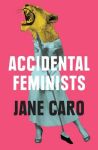
Jane Caro, Accidental feminists

Tonight I went to an ANU/The Canberra Times Meet the Author event featuring author and journalist, Jane Caro, in conversation with local radio personality and booklover, Alex Sloan. It was of course inspired by Caro’s new book, Accidental feminists. So, I thought it might be fun this Monday Musings to just list some of Australia’s best-loved feminist books – in chronological order of publication.

While I call myself a feminist, I wouldn’t call myself an expert on the history of feminist writing in Australia – and most of what I’ve read I read before blogging so I have minimal reviews here. Consequently, I don’t want to pretend to be offering anything like a complete or thorough list. Instead, this list is just a taster, a sample, an introduction to some of the best-known books and writers. (Oh and I admit up-front that I’m using the term “classic” loosely as I will be including some rather recent books which might, in time, become classics.)

Here goes:

Louisa Lawson’s The Dawn: a feminist magazine published between 1888 and 1905, The Dawn was established by feminist Louisa Lawson (under the name, Dora Falconer). It became, according to Wikipedia, the official publication of the Australian Federation of Woman voters. The journal has been digitised on Trove, and this comes from its first issue, May 15, 1888.

Every eccentricity of belief, and every variety of bias in mankind allies itself with a printing machine, and gets its singularities bruited about in type, but where is the printing-ink champion of mankind’s better half? There has hitherto been no trumpet through which the concentrated voice of womankind could publish their grievances and their opinions … Here then is Dawn, the Australian Woman’s Journal and mouthpiece – phonograph to wind out audibly the whispers, pleadings and demands of the sisterhood.

Here we will give publicity to women’s wrongs, will fight their battles, assist to repair what evils we can, and give advice to the best of our ability.

Germaine Greer’s The female eunuch: first published in 1970. Reading this while still a teen was my founding feminist moment. I had been brought up believing I was equal, that I could go to university and get a job just like my brother and the boys around me, that I didn’t have to marry to live a good and enjoyable life, but Greer’s book gave me an understanding of the structural, personal, psychological issues behind the struggle women faced (and still face) to gain true equality.

Anne Summers, Damned whores and God's police

Anne Summers’ Damned whores and God’s police: first published in 1975, this book examines the two main stereotypes that are used to define women – “bad girls” who refuse to conform to society’s expectations of “the good girl”, or “good women” whose role it is to civilise society, to keep everyone else moral. Forty years on, Summers believed that, despite some progress, the stereotypes persist, and a revised edition of her best-selling book was published in 2016. Lisa (ANZlitLovers) posted on this book, focusing on the introduction to the new edition.

Jocelynne Scutt’s Different lives (ed): published in 1987, this is less a feminist treatise, than an anthology of writing by women who were active in the second wave of feminism (either formally through organisations or informally through individual action.) This is just one of feminist lawyer Scutt’s several books on feminist issues.

Dale Spender: I’ve included Spender here because of the volume of her writing on women’s issues, in the 1980s and 1990s in particular, rather than for one particular book. Her focus has largely been women writers, and their neglect. Her first book, Man-made language, analyses how the English language is constructed from a masculine point of view, and the ramifications of this. Other books include Writing a new world: Two centuries of Australian women writers and the provocatively titled The writing or the sex?, or, Why you don’t have to read women’s writing to know it’s no good. I have her Mothers of the novel: 100 good women writers before Jane Austen, in which, among other things, she discusses how and why the work of these early women writers has been lost while that of their male peers has entered the canon.

Tara Moss’ The fictional woman (my review): published in 2014, this explores her thesis that women’s lives and roles are subject to an inordinate number of fictions that contradict reality, and that this helps perpetuate ongoing inequalities for women in representation, status, value. I’m not sure of Moss’s longterm standing in feminist literature, but I found this an engaging read.

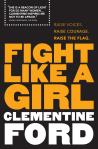
Clementine Ford, Fight like a girl

Clementine Ford’s Fight like a girl: published in 2016, this book belongs to the new generation of Australian feminists of whom Ford is clearly one of the frontrunners. The book’s starting point is that things have not changed for women – at least they haven’t changed enough. The book is therefore, writes Readings bookshop, “a call to arms for all women to rediscover the fury that has been suppressed by a society that still considers feminism a threat.”

There are many other Australian writers who explore aspects of women’s experience from a sociopolitical, and feminist, perspective, including Drusilla Modjeska’s Exiles at home, on Australia’s lively, fierce and often activist women writers of the 1930s; Diane Bell’s Generations on the way women pass on traditions; and Larissa Behrendt’s Finding Eliza (on my TBR) which takes on colonialism – and how the attendant stereotypes and myths have played out in the treatment of indigenous people, particularly women, since 1788. But, I had to stop somewhere…

Now, over to you: do you have any favourite feminist texts, Australian or otherwise, you’d care to share with us?

Elizabeth Kleinhenz in conversation with Chris Wallace – about Germaine Greer

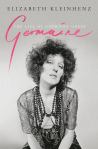
Elizabeth Kleinhenz, Germaine Greer

It made for a busy night, given that the last Tuesday of the month is also my reading group night, but I had to go to this ANU Meet the Author event, because it involved Canberra academic/journalist (not to mention Germaine Greer biographer) Chris Wallace conversing with Elizabeth Kleinhenz, whose biography, Germaine: The life of Germaine Greer, has just been published.

MC Colin Steele commenced proceedings by introducing the participants, then noting that Germaine Greer’s archives had been bought a few years ago by the University of Melbourne for $3m! Not cheap, eh, but it is a significant collection about, as the back cover artwork says, “arguably one of the most significant and influential Australian women of her time.” Hmm, there are a lot of qualifications here – “arguably”, “one of the most”, “Australian”, “women” and “her time”. Whoever said this was not going out on a limb!

Anyhow, it was an excellent conversation – not just because it was about this fascinating woman, Germaine (b. 1939) but also because Chris Wallace led the conversation in a logically, but not rigidly, structured way and Elizabeth Kleinhenz was open and articulate in her responses. I’m glad I made the effort to attend.

First things first

To get things going, Wallace asked some general questions about the book itself. Its cover pic, for example. Kleinhenz responded that it was the publisher’s choice, though she was involved, I gather, in the discussion. They wanted a picture that would be attention-grabbing. And so it is.

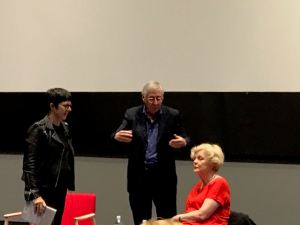
Wallace, Steele and Kleinhenz,
Wallace, Steele and Kleinhenz, 2018, before the session

Wallace then asked about that back cover quote that I’ve already mentioned. It led to Kleinhenz talking about why she’d chosen Greer as her subject. She spoke about all the negative reactions she’d received on telling people that she was writing about Greer – comments like “that silly old bat”. But, Kleinhenz felt that Greer had made some significant contributions to women’s lives and that she’s an excellent scholar: she wanted to “set the record straight”.

She also said that Greer, despite her obvious impact on women’s lives, doesn’t like women (like me, for example) telling her that she’d changed their lives. “I didn’t change your life,” she apparently says, “you did.” Well yes, technically she’s right, but, without enlightenment from Greer, many of us may not have made the leaps we needed – or may have made them much more slowly – so I think our belief stands, whether or not Greer accepts it!

Anyhow, then, before getting into the nuts and bolts of the biography, Wallace asked Kleinhenz to say a little about her first biography on Kathleen Fitzpatrick, who is, apparently, another misunderstood woman. I won’t go into details, but Kleinhenz said she had always wondered why Kleinhenz, when offered a Professorship, had declined, saying she wasn’t good enough. She found the answer, she said, when researching Greer: it’s that women of Greer and Fitzpatrick’s generation were not brought up to be equal. Greer, said Kleinhenz, saw that women had to change themselves in order to move forward.

Wallace asked Kleinhenz how it was that we had moved from Fitzpatrick to Greer. Kleinhenz, born in the 1940s, related her own experience as a young women who, although she had a good job as a teacher, “just” wanted a house and family. However, when she got there she found it wasn’t enough. She realised, as Greer argues in The female eunuch, women could/should not blame men – doing so, in fact, cedes power to men – but must change ourselves. So, she did – she went back to work.

Early, mid and late Germaine

We then got into the guts of the conversation. With Greer now 80, how, asked Wallace, do we assess her? Kleinhenz felt that Wallace had got it right in her biography, Germaine Greer: Untamed shrew, recognising that Greer writes from where she’s at at the time. In that, said Kleinhenz, she is consistent!

However, later in her career, she said, it seems that Greer “went funny”. She is known to suffer depression. Maybe she wasn’t well. Her book, The boy (2003), about the beauty of young boys’ bodies, comes from, Kleinhenz feels, an unfortunate period in her life. But some years later, she bought the rainforest – which was in fact funded, I understand, from that sale of her archives. Kleinhenz suggested that this period marks her “return”.

Wallace, though, seemed not so sure, and asked Kleinhenz about Greer’s book On rape. Wallace is appalled by it, while Kleinhenz admitted to a “softer” response, one that she has also found amongst other women of her age. She admitted that Greer takes a very narrow definition of rape, but felt that Greer says some sensible things about the legal system, for example, and about the role of violence in rape.

Research and writing

The discussion then turned to biography writing. Wallace asked whether readers are surprised that people are, in fact, rounded, that is, not all good or all bad. Kleinhenz said that she tried not to be soft on Greer in her book, but she did find Greer an interesting woman. Greer has, in fact, a lot of friends – the implication being that she must have some good things going for her despite all her critics.

Wallace noted that Greer is charismatic, and wondered whether it’s been a problem that she has been too uncritically treated, here, rather than getting “energetic” Australian feedback. Kleinhenz agreed somewhat with this. There was some discussion, for example, about Greer’s taking a cultural relativist view towards female genital mutilation, rather than opposing it categorically. Kleinhenz suggested that Greer has been criticised in Australia – but “of the silly old bat” variety rather than more “critical” criticism, that is, serious analytical discussion of her ideas. Kleinhenz also said that it’s hard to dislike someone who makes you laugh. I understand that!

Wallace then moved onto a subject dear to my heart – the issue of the archives. Were they rich, she asked. Did they change Kleinhenz’s view? Kleinhenz, laughing, started by comparing Kathleen Fitzpatrick’s ordered 8-box collection with Germaine’s nearly 500 boxes that were not organised chronologically. She discussed her process – the role Wallace had played in her getting “more organised”, and how she handled the closing of the Greer archives for 12 months partway through her research. This turned out to be useful, because during this time she went to secondary sources and conducted interviews, so that when the archives opened again, she had a framework.

She shared some of the treasures, some of the things that stood out – such as letters from Clive James, Helen Garner, and a French girl who told a very personal story and to whom Greer wrote a personally revealing reply.

During the Q&A at the end, the issue of Greer keeping copies of the letters she wrote came up. Why did she – do some – people keep not only the letters they receive but copies of those they write? There’s no single answer of course. However, Kleinhenz did say that she believes Greer knows her “commercial” value. The words “no fee, no work” appear at the bottom of many of her letters. Wallace interjected here commenting that writers’ incomes are “lumpy”, so it’s quite likely that potential financial value drove her decision to keep her papers – and, Greer knew she was big. (However, it could also simply that she’s a hoarder, or, a historian who likes to keep her records? I can understand that.)

Kleinhenz also said that she suspects that Greer had probably removed some family-related material from the archives before she sold them. Also, there was not much “childhood stuff” in the archives, but the audio material is wonderful. Greer apparently records her thoughts, for example, as she goes for walks with her dogs.

Q & A

I’ve included some of the Q&A discussions above, because it seemed logical, but other issues were discussed, including:

  • Why did she choose Greer? Kleinhenz said she grew up with Greer. Greer is only three years older than she, but also lived in the same area of Melbourne, and they both went to Catholic schools. However, the main reason is that she felt Greer deserved it: she wanted, she reiterated, “to put record straight”.
  • What difference do her archives make to assessment of her? Kleinhenz answered that while they don’t contain much in terms of signficant new facts, they add a depth of understanding. Those letters she mentioned above, and other letters like those with John Atwood, whom she appeared to love at one stage in her life, helped here.
  • What impact did the birth control pill have? Kleinhenz said that Greer was highly aware of the pill and felt that women needed to think through the changes the pill brought, and how they would manage those changes, what they would do with them. This came out in the excellent notes she made for writing The female eunuch.

Kleinhenz added at this point, that Greer had felt a freak as a young person – she felt too tall, too noisy.

Closing the session

In closing the session, Colin Steele referred to the small Trailblazers book – accompanying Australia Post’s Australian Legends series – in which Greer says she’s not a tour operator, but wants to encourage people to think for themselves. This, in fact, perfectly sums up my attitude to Greer. She’s a bit (hmm, just a bit?!) of an iconoclast. I don’t always like – or perhaps, fully comprehend – what she says, but I love that she’s around saying it. She can always make me think – and sometimes, she makes me laugh!

I’d love to say more about Greer and some of the ideas generated by this conversation, but will, perhaps save them until I’ve read the biography.

Podcast: click this link to see if you think I’ve captured the conversation accurately enough!

ANU/The Canberra Times Meet the Author
MC: Colin Steele
Australian National University
30 October 2018

Dymphna Clark Lecture: Clare Wright and You daughters of freedom

According to the University of Melbourne website, the Dymphna Clark Lecture “is delivered annually by a lecturer who exemplifies the deep commitment Dymphna Clark showed to Australia’s intellectual and cultural life.” Strangely, I can’t find a description of the lecture series on the Manning Clark House site which, I believe, is behind the lecture series. I can, however, find a list of the Manning Clark Lectures up to and including 2019 on their About Us page. Poor form I think, particularly given it was Dymphna, I understand, “who bequeathed the family home to the intellectual and cultural community with the wish that it be used to support artists and public intellectuals and provide a safe haven for the entire community.”

On Facebook I discovered that Drusilla Modjeska gave the 2016 lecture; on the above-linked University of Melbourne site that Anna Funder gave 2013’s; and on Virginia Haussegger’s site that David Headon was 2009. Drilling down to page 3 of my Google search, I found at honestyhistory that Bill Gammage was it for 2014 and on safecom that Eva Sallis was 2007. But, why can’t I easily find a list of all the Dymphna Clark lectures, as I can of the Manning Clark lectures? We could take exception to this, seeing it as, once again, sexism in action, but I’m inclined to think the reason is more mundane, and that it’s a sin of omission, not of commission. So, I now respectfully suggest that they create a new page for the two lecture series and maintain a list, with relevant links, of both series, because they are serious lectures. Clare Wright’s 2018 talk, for example, was being recorded for ABC RN’s Big Ideas program. But now, having made my point, I’ll move on to the lecture.

You daughters of freedom

Technological troubles

It was held in a lecture theatre at the ANU. Unfortunately, despite many people trying for over half an hour to get the technology working, the lecture went ahead without Wright’s accompanying slideshow. A real shame but, luckily, Wright is an excellent, engaging speaker, and easily kept our attention for the 50 minutes or so that she spoke. The lecture was, of course, inspired by Wright’s latest book, You daughters of freedom, the second in her Democracy Trilogy, she told us. Manning Clark House’s promotion for the lecture said the book:

brings to life a time when Australian democracy was the envy of the world—and the standard bearer for progress in a shining new century. For the ten years from 1902, when Australia’s feminist activists won the vote for white women, the world looked to this trailblazing young democracy for inspiration.

This epic new history tells the story of that victory—and of Australia’s role in the subsequent international struggle—through the eyes of five remarkable players: the redoubtable Vida Goldstein, the flamboyant Nellie Martel, indomitable Dora Montefiore, daring Muriel Matters, and the artist Dora Meeson Coates, who painted the controversial Australian banner carried in the British feminist activist marches of 1908 and 1911.   

I’ve started reading the book, and while I’ve only read some 40 of its 500 or so pages, I’m finding it wonderfully readable.

Anyhow, now, really, the lecture! Wright was briefly introduced by Sebastian Clark, President of the Manning Clark House and son of Dymphna and Manning Clark, and then we were off. She started by describing that famous restaurant scene in When Harry met Sally – you all know the one – which concludes with the woman at the next table saying to the server, “I’ll have what she’s having.” Wright teased out some meanings and implications of that scene in terms of women’s freedom, the #metoo movement, and, of course, her lecture’s subject, the granting of the vote to women in Australia in 1902.

“In the noonday glare”
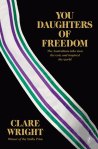
Clare Wright, You daughters of freedomWhen Wright stated that this legislation made Australian women the most franchised women in the world, there were mutterings in the audience about, for example, New Zealand – and was followed up in the Q&A. But, I had already read Wright’s Author’s Note that opens her book, where she explains her claim. Australia was the first nation to give (white) adult women full suffrage – meaning not only could they vote on equal par with men (that is, without property qualifications, and with the same age and residency requirements) but they could also sit in parliament. New Zealand granted women the vote in 1893, but New Zealand was not a nation until 1947, and women could not sit in parliament until 1919. Finland was, in fact, the next nation to grant full suffrage to women – in 1906. I loved that she refers in this Note to something that we’d discovered on our US travels back in the 1990s, which was that women were granted the vote in Wyoming in 1869! But, Wyoming is a state, not a nation. Similarly the colony of South Australia enacted universal suffrage in 1895, including allowing women to stand for the colonial parliament, but again, it was not a nation. It was the fact that a nation had granted suffrage that apparently became a beacon for the world. Of course, proclaiming “firsts” is always risky, but Wright’s definition seems perfectly valid to me in terms of her book’s thesis.

Wright explained in her lecture that this same Act disenfranchised indigenous people. Some parliamentarians did apparently demur on this point, but those who demurred gave way to ensure that at least women got the rights. Consequently, race not gender became the dividing line. As Wright said, “white” Australia was very much the game from Federation, and, while later, some women started fighting for their “black sisters”, their first priority, after gaining suffrage for themselves, was to go to England to support the mother country’s sisters. Such were the times. Later in her lecture, Wright said that it may not be pleasing to know this about our “heroines” but it’s historically accurate!

I should confess at this point, that I’m not reporting on this lecture exactly in the order that Wright gave it but in an order suiting my main takings from it.

Anyhow, back to the granting of suffrage. Wright quoted American-born Australian suffragist Jessie Ackermann who said that this act of the new Australian nation put it/us “in the noonday glare.” Suffrage was, she said, the biggest news in the early years of the twentieth century and was simply known as “the Cause”. Australia’s actions made it/us a test site for universal suffrage and the other socially progressive laws Australia enacted in those days. Could it work? Everyone was watching – particularly of course men who feared loss of power. As Wright said near the end of the lecture:

Power never concedes anything without a fight.

Wright briefly introduced the five main women she features in her book, Vida Goldstein, Nellie Martel, Dora Montefiore, Muriel Matters, and Dora Meeson Coates, and characterised their approach to activism by giving them a canine archetype! Goldstein, the “born activist”, she described as a kelpie, for example, while Meeson Coates is a “reluctant activist” and a Weimaraner! (As past owners of Weimaraner, Mr Gums and I chuckled here.) Again, near the end of the lecture, Wright explained that she did this canine breakdown to show that these women were not all one type, and that difference is critical to the movement’s internal gatekeeping.

Wright also spoke about the challenge she faced in making suffrage, citizenship and federation exciting, particularly at this time when democracy is under attack. She quoted the recently reported Lowy Institute poll showing the surprising level of ambivalence in Australia about democracy. It’s hard to imagine in this environment, she said, that democracy and all that it involves was the hottest topic on the planet in the late 19th century. Why did Aussie women travel to England to fight for the rights for others?

Well, they were different times, of course, as Wright made clear. The turn of the century was a time of optimism. In Australia it was a trinity – new year, new nation, new century. People believed the past was being left behind; they had new Utopian visions. Women’s suffrage encapsulated all this – the ideas of rebellion, emancipation, restructuring society. Suffrage was seen as the key to unlocking repression. If women could vote, and if women could sit in parliament, women’s needs might be better cared for. As Jessie Ackermann said, the freest girls were in Australia.

The women’s suffrage banner

As she does in her book’s Introduction, Wright walked us through (our current) Parliament House to a narrow corridor past the Members’ Hall where, if you get there, you find a large banner. It was created by that Weimaraner Dora Meeson Coates in 1908 and was carried in the 1911 suffragette-organised Women’s Coronation Procession. Wright took us through its iconography/symbolism, through the implications of its depiction of Mother Britannia with Daughter Minerva. It shows, she said, the daughter Australia speaking to the mother England, the banner headline reading “Trust the Women Mother As I Have Done.” This was, she said, “allegorical effrontery.” Why had she not known about this banner, she wondered, given she calls herself a feminist historian?

Now, I could go on, but I’ve probably lost half of you by now and will soon lose the rest, so I’m going to try to become even briefer. Wright explained that one-third of her book is about how Australian women won the vote, and two-thirds about how Australian women inspired the world, In this context, she told a wonderful story about Bulldog Dora Montefiore, another Aussie woman who went to England, and her “Siege of Hammersmith”, a 6-weeks long passive resistance protest again paying taxes without representation. (She was, says Wright, seen by a young Indian man, Mahatma Gandhi!) A wonderful story. It was part of something called the Women’s Tax Resistance League. Wright also described the passive resistance campaigns against the 1911 Census: Women argued that if they don’t count, they shouldn’t be counted.

The irony of history

And so, Australian women were leaders in the suffrage movement and yet, today, British suffragettes are icons of rebellion and bravado but our Australian activists are relegated to the footnotes of academic history. BUT, she argued, Dora Meeson Coates’ banner challenges the view that this history of women’s activism is niche. The big picture is, she said, that Federation and Feminism went hand-in-glove: the banner is about colonialism, about old and new, the enfranchised and disenfranchised, about men in Australia who championed women’s suffrage and those in England who didn’t, and more …

Why then are women not sufficiently accounted for in Australian history? Because, she said, of the First World War. Federation’s optimism, she argues, was soon overshadowed by the War, which, as we all know now, precipitated a “new narrative.” So, whilst before the War, our role in the world was being seen in terms of our achievements in terms of democratic idealism, suddenly it was being seen in military terms. It was our bravery, our contribution to the war effort, that now defined us as a nation – and the rest, as they say, is history! (Particularly given, I’d add, that, as Jane Austen said one hundred years ago, “Men have had every advantage of us in telling their own story … the pen has been in their hands.”) From Wright’s point of view, the War represented not the birth of a nation, but the death of the nation we were becoming. Something to think about, eh?

Clare WrightThere was still more, but even I’m running out of puff now. Wright concluded by talking about the importance of stories. The stories we choose to tell are the ones that define who (we think) we are. Why, for example, she asked, is there no statue in Melbourne memorialising that significant suffragist and social reformer, Vida Goldstein? Why, too, is Prime Minister Fisher remembered more for his statements about war (about our defending the mother country “to the last man, and the last shilling”) but not his argument about “true democracy” requiring the inclusion of “women as well as men in the electorate of the country”?

Wright said she’s wary of “learning lessons” from history, preferring to think about legacies. The legacy of the suffragists is that resistance, that grass-roots movements, can create real and lasting change. Her mantra, she said, is Dora Montefiore’s exhortion: #trustthewomen. And with that, her true colours, already advertised in the borrowed suffragette scarf she was wearing, were shown!

An intelligent Q&A lasting nearly half an hour followed, but eventually we had to finish. It was a wonderful lecture. I love that not only is Wright such an accessible, engaging historian, but that she linked the past to the present, because that is the main reason I like to read history. The past is interesting, but its true value lies in how it can enlighten the present.

And now, if you made it to the end – I thank and salute you!

Dymphna Clark Lecture
RN Robertson Theatre, ANU
17 October 2018
Nadia Wheatley in conversation with Marion Halligan

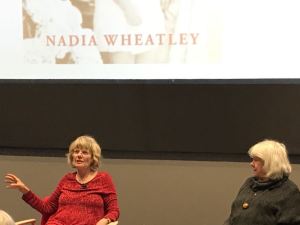
Nadia Wheatley, Marion Halligan,

Nadia Wheatley and Marion Halligan, ANU Meet the Author

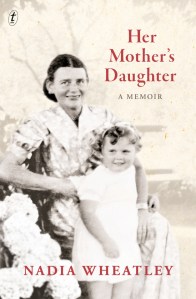
Nadia Wheatley is, I fear, not as well-known in Australia’s literary firmament as she should be because her credentials are excellent. Not only is there My place (1987) – a wonderful multi-award-winning children’s book about the history of place – but her biography of Charmian Clift, The life and myth of Charmian Clift, has been described by critic Peter Craven as “one of the greatest Australian biographies.” She has appeared here in a Monday Musings list of books recommended by indigenous writers (even though she is not indigenous) for her book, with Ken Searle, The Papunya School book of country and history. And these are just a few of her literary credentials.

All this is to say that when I saw that she was to be a “Meet the author” subject this week at the ANU – on a free night for me, no less – I didn’t hesitate to book. It didn’t hurt, too, that her Conversation partner was to be Marion Halligan (who has appeared here several times, in various guises.)

Now, I don’t want to discuss in detail her latest book – Her mother’s daughter: A memoir – which was the reason for this event, because I have almost finished it and will discuss it in my soon-to-come post, so I’ll just share, briefly, some of the main points from the conversation.

“Caught between an independent woman and a controlling man”

The book’s title suggests that the book is Wheatley’s memoir of her life with her mother (Nina, familiarly called Neen.) However, this is only part of the story. The book is, in fact, like a few I’ve read recently, a sort of hybrid biography-memoir, because it is as much a biography of her mother, who died in 1958 when Nadia was 9, as it is a memoir. Three others I’ve discussed here in recent years are Susan Varga’s Heddy and me, Anna Rosner Blay’s Sister, sister, and Halina Rubin’s Journeys with my mother. Interestingly, the mothers in all of these books experienced World War 2 in some way, though Wheatley’s mother differs from the other three European-born women in that she was an Australian who went over to work in the war.

Marion Halligan commenced the conversation by commenting that the book was a difficult read, and that it must also have been difficult to write. Wheatley agreed, commenting that people under-estimate children’s ability to suffer, but also their ability to survive…

… and both suffer and survive, Wheatley did. She was caught, she said, “between an independent woman and a controlling man”, but that was only the half of it. She wasn’t helped by a family which – only partly because it was the 1950s – did not feel the need to tell Wheatley what had really happened to her mother, resulting in the young Nadia hoping (if not totally believing), for some years, that one day her mother would return. She was abandoned by her father, whom she described as “a strange, sadistic person.” The family dynamics are complex, and I’ll discuss some of them a little more in my post on the book.

I will say, however, that the underlying biographer’s question for Nadia in writing the book was:

Why would a nice person like Neen marry an awful person like my father?

Because, awful he was … though not, it seems, to Neen in the early years of their relationship when they were working for/with refugees and displaced persons in post-war Europe!

What lifts this book above what could so easily have been a misery memoir is that it also works as social history of an era – of life in Australia in the first half of the twentieth century, and of the work Australian nurses did during and after the Second World War. The pictures Wheatley draws of the joys (yes) and challenges of the War for Nina are vivid, and ring true. Nina was a truly independent woman, despite the demands home and family exerted on unmarried “girls” at the time. The pictures Wheatley then draws of Nina post-marriage are, consequently, even more devastating – because of the gap between what could (should) have been and what was. Nina’s dire situation was compounded by the confluence of a controlling, sadistic husband and a time, the 1950s, when women had little agency in the face of such a situation. Even so, Nina did her best …

At one point during the conversation, Wheatley made the interesting – and obvious, if you know their stories – point that there are some parallels between her and her mother’s stories. Both were motherless from a young age, and both became involved in social justice action. There was discussion in fact about how her mother’s work with refugees is relevant to today’s refugee situation. Nina worked for the short-lived UNRRA and was involved in the early definition of just what a refugee is and in the practice of placing them.

Telling the story

Nadia Wheatley, Her mother's daughterIn the Q&A, I asked Wheatley about the structure she chose to use in the book, about the fact that while is it generally chronological, she inserts herself into this chronology at times when she herself wouldn’t have been alive. For example, she describes the young Nadia asking her mother about a photo in an album. This enables us to see Nadia’s interest in her mother’s story, her reaction to her mother’s story, and her mother’s later reaction to the events in her life, at least in terms of how she wants to present them to Nadia. From the reader’s point of view, it makes reading this book far more engaging.

Wheatley answered that felt she needed to be in there “on the quest”, and referred us to AJA Simon’s biography A quest for Corvo: An experiment in biography, as one of her inspirations. She wanted the book to be her journey of discovery – “to have the detective story of her unravelling her mother’s story” – rather than just be a presentation of the evidence. Again, I will talk more about this in my post, but Wheatley did share some of the stories about how she went about this unravelling. I like this approach to non-fiction, not only because it’s usually engaging, but because it can strengthen the authority or integrity of the work.

There was more to the conversation – but some of it, as I’ve already said, will come out in my post, and some of it is best left for you to read yourselves in the book. I mustn’t give it all away!

Vote of thanks

To conclude, MC Colin Steele introduced The Canberra Times’ past – and, distressingly, to date, last – literary editor, Gia Metherell, to give the vote of thanks. In doing so, she said that Wheatley’s book shows why childhood biographies can be so potent. She quoted the late Australian critic Geraldine Pascall* (I think) who said that Australian writers write more often and more potently about their childhood than anyone else, besides English and French writers. What an interesting thought on which to end a thoroughly engaging conversation.

* Gia Metherell clarifies this in the comments below saying that it wasn’t Geraldine Pascall to whom she was referring but English academic Roy Pascal. However, on checking later, she realised she had misremembered and it was Richard Coe, in “Portrait of the Artist as a Young Australian: Childhood, Literature and Myth”, Southerly, 41, no. 2, 1981. Thanks Gia.

ANU/The Canberra Times Meet the Author
MC: Colin Steele
Australian National University
8 October 2018

Telling and writing the story: Richard Fidler’s Seymour Biography Lecture

Richard Fidler

Richard Fidler, NLA, 2018

On Friday night I went to my fourth consecutive Seymour Biography Lecture at the National Library of Australia. A highlight on the Library’s calendar, it’s an annual lecture devoted to life-writing, and was endowed by the Seymours in 2005.

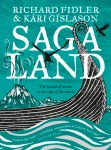
This year’s speaker, Richard Fidler, was, at first glance, a surprising pick – but a very popular one. He is well known to Australians, for several reasons, but particularly for hosting, since 2005, ABC Radio’s hour-long interview program, Conversations. He has also recently written two historical books, Ghost empire (2016) and Saga land (co-written with Kári Gíslason) (2017). These books, the lecture promo said, contain short biographies of historical figures from, respectively, Byzantium and mediaeval Iceland. So, he has not written a biography or memoir or autobiography, per se, but these books contain small biographies. Moreover, his Conversations program, it was suggested, comprises mini-autobiographies of the interviewees. Fidler then, as it turned out, was well able to talk about life-writing or, more broadly, telling life stories.

After being introduced by the NLA’s Director-General, Marie-Louise Ayres, Fidler commenced by telling us that he’d titled his lecture, “Telling and writing the story”. The event’s promotion explained that this meant

outlining some of the tensions that come into play when bringing someone’s life story to a listening audience and comparing it to the freedoms and constraints involved in writing biography for a reader.

Fidler commenced with a little anecdote exemplifying the dangers of biography. Back in 1988, he had read, he said, Robert Caro’s The years of Lyndon Johnson: The path to power (1982). It’s volume 1 of a larger work. Caro has now published three more volumes (in 1990, 1992 and 2012) and has apparently announced that he will conclude with a fifth volume which, he said this year, could take from two to ten years. Caro is now 82. Fidler proposed that this story provides a warning for the biographer – as you go in, he said, have an eye on the exit! This issue has not – to date, anyhow – been a problem for Fidler whose biographical work has taken a very different, and much shorter path.

Radio versus print

As the lecture’s promotion promised, Fidler talked about both his written and radio work, reflecting as he went on the difference between the two. I love this sort of discussion, this exploration of different media, of different forms of writing and presentation, in order to tease out what is inherent to each. As a consumer and reviewer of media, I believe that knowing and understanding the form in hand is a critical starting point. I’m therefore going (to try) to marshal my report on this lecture to focus on these issues, rather than be a blow-by-blow summary.

Print

Early in the lecture, Fidler said that written stories can take more liberties – the story can sprawl, for example, diving off on tangents at will. Radio, on the other hand, is more linear, it must keep moving forward in a direct path (though it does have the voice to guile you!) He likened radio to a shark driving ever forwards, while print is like a Portuguese man-of-war which can drag all sorts of bits-and-pieces along with it.

Richard Fidler, Kari Gislason, Saga LandHe exemplified this through the Saga land project, first explaining, for those of us who didn’t know, that Icelandic sagas – Saga land’s subject – are stories of real Vikings. Icelanders read these sagas, he said, the way we read Shakespeare. He also explained that in Old Norse, the word “saga” means “telling. He then read the beginning of the first saga about Gunnar, showing us how the narrative tension builds. (We’ll leave, here, the side issue of how much of the actual stories about these real people is fact, and how much fiction or hyperbole, as it’s irrelevant to my main thread. It’s an issue, he suggested, best left to saga scholars who still argue about it.)

He realised, he said, that these sagas would translate well to audio (to radio and podcast). Their first two chosen stories translated pretty easily to the audio form, but then he got to the story of Gisli which turned out to be much harder to transform into a linear form. How could he pour this sprawling story into the narrow form needed for a spoken narrative – a paradoxical problem, given the sagas originated in oral form. The “crush of family”, the multiple but confusing relationships, he said, are important to Gisli’s story. Eventually, though, he identified its core, and developed the narrative from there.

Fidler went on to talk about more stories from Saga Land, and talked a little about Ghost empire which he described as, essentially, the biography of a city, Constantinople. It reminded me of another “biography” of Constantinople, Orhan Pamuk’s mesmerising Istanbul: Memories of a city. Anyhow, regarding writing Ghost empire, he mentioned in particular the mini-biography of Constantine XI and how writing about him involved “a strange act of sympathy.” In fact, he described biography as “a profound act of sympathy”, which means, for him, “sitting beside his subject” as he writes rather than observing from a distance.

Radio

Of course, many in the audience were keen to hear about Fidler’s hugely popular radio program, Conversations, and Fidler did spend some of his 45 minutes on it too. He started by saying that the program’s aim was to present the stories of unknown people although, as listeners know, he also interviews better known people like “astronauts, authors and scientists.”

Fidler talked about the challenge of creating coherent narratives out of his subjects’ lives, many of whom, unused to the media, struggle to tell their stories coherently. His producers spend a long time talking – often on the phone – with selected interviewees, teasing out a narrative. Life is messy, a bit like a teenager’s bedroom he said!

Moreover, how reliable is memory, he asked – and then told a pertinent personal story to prove just how unreliable it is! He quoted British poet, Lemn Sissay’s definition of a family:

“Family is memory disputed between a group of people over a lifetime.”

Love it. Anyhow, he said that, consequently, he asks his interviewees “What do you remember?” rather than “What happened?” This question can often result in wonderful reveries, ones that make him almost stop breathing in order to not break the momentum. He gave an example from his interview with Angela Lansbury who gave an evocative description of the London of her childhood. Fidler said that he could see that a movie of that time was playing before her eyes.

Overall, he said, producing Conversations required artful deception in order to create the narrative arc of an hour.

Why read or listen to biography?

This subject wasn’t – really – specifically addressed, but Fidler did say a few relevant things. Regarding the value of reading Icelandic sagas, he said our interest springs from a deep-seated human need to understand our own lives through those of our ancestors. The sagas, he says, may fall short in terms of biographical rigour but they do tell larger truths. They were enjoyed as escapism but they also offered a different way of being human. Apparently, the poets Auden and Borges loved Iceland’s sagas.

Somewhat related to this issue was his discussion about the overall value of radio. It’s more intimate than television. It’s also more “profoundly democratic because you can’t be seen” and therefore not judged by the markers of appearance. He saw this as “a noble nakedness.”  In addition, radio has, he believes, an “enormous didactic momentum”, one which can create a “commonwealth of shared sympathies”, a sense of shared humanity.

There was more, including a Q&A during which questions included how subjects are found for Conversations, what he would ask Constantine XI if given the chance, and his tips for new interviewers.

But, I’ll leave it here and conclude with Fidler’s impassioned concluding statement, made in the context of the week’s astonishing events in which the ABC lost both its Managing Director and Chairman of the Board. He said that the public trusts that the Board will support the ABC, and that it’s not the government which funds the ABC, but you (that is, us), the audience. That of course brought him resounding applause – and so, sadly, ended another excellent Seymour lecture.

Further reading and listening: Saga Land: The Book and Radio Series

Previous lecture postsRobert Drewe (2015), David Marr (2016) and Raimond Gaita (2017)

Seymour Biography Lecture
National Library of Australia
28 September 2018

Canberra Writers Festival 2018, Day 2, Pt 2: Words (Last ones) and Music

My last Canberra Writers Festival event was, in a way, a little left field, because it primarily comprised a musical performance – but one with a strong literary element …

Turning Last Words into Music

I chose this one, for a couple of reasons, but mainly because it involved music and was at a time that would work for Mr Gums to join me. It featured a composition by Australian composer, writer and radio presenter, Andrew Ford (who appeared here long ago in my post on the Voss Journey). The session was MC’d by Jane O’Dwyer, Deputy Chair of the Canberra Writers Festival Board.

So, what was it about? Well, it was a performance of Ford’s 30-minute song cycle titled, yes, Last words. It comprises “the final poems, letters and diary entries of some of history’s most iconic figures” set to music. However, before we heard the music, Ford talked about its genesis and some of the challenges he faced in creating it.

He started by describing music as the most abstract of the arts, and song as the most ubiquitous type of music. But, he said, listeners will only pay attention to the words if the music attracts them first. He then explained that his wife suggested the project – that he set people’s last words to music, for soprano Jane Sheldon, and that he include Captain Scott’s last words.

Then the challenges started. For example, he said, “last words” tend to be very short which is hard for song, but then a friend suggested “last poems”, which he took up. Another challenge was the order, and structure. Given the topic, the mood/tone of course tended to the slow and mournful. Something fast, some relief, was needed to prevent its becoming tedious, but what? He lit upon the idea of including a fiction character, and chose Fish Lamb’s death from Tim Winton’s Cloudstreet. Then there was Virginia Woolf’s suicide note. What sort of music would work with that? In the end, he decided it didn’t need music (though in fact some minimal cello and piano did sound occasionally during that song.)

Goethe's bed, Goethe House, Weimar

The bed Goethe died in, Goethe House, Weimar

Finally, there was the challenge of his opening “last words” from Goethe: “Mehr licht, mehr licht” (More light, more light.) He was reading them as portentous, but then his wife suggested that perhaps they could be read simply – as Goethe simply wanting more light!

Responding to a question from moderator O’Dwyer, he talked a little about music and emotion. Debussy apparently said that music is “pure emotion” but Ford said that he didn’t consciously try to “embed” emotion in the music, because that would be manipulative. In composing this piece he tried to find the notes that would approximate how he would say the words. Simple, eh?

Anyhow, then the concert started, and I found it engrossing and moving. It’s not easy music, but neither is it hard – and it was performed beautifully, even though the performers had their first and last rehearsal only two hours before they took to the stage. The lyrics were provided to the audience, and are available on line at Andrew Ford’s website.

Some of the things I liked included the structure (or order). I liked, for example, that it starts with some of those brief last words …

Mehr licht, mehr licht … (Johann Wolfgang von Goethe)

Now comes the mystery. (Henry Ward Beecher)

Auftakt! Auftakt! (Alban Berg)

… and ends with some more brief last words:

Mehr licht, mehr licht …

Goodnight, my darlings. I’ll see you tomorrow. (Noël Coward)

Last Words trio and sopranoI think these beginning and endings gave the cycle a bit of a narrative arc, albeit the actual plot is death, death and death – if you know what I mean.

I also liked that Goethe’s words are used as a refrain, appearing intermittently to provide a transition between some of the songs – but sung with different dynamics or emphasis in different places.

I was particularly moved by Captain Scott’s last words, and thought that Ford, and singer Sheldon, handled its prose form very well. (As they did Fish Lamb’s faster piece, And Woolf’s suicide note.)

Appropriately, Emily Bronte’s last words were set to heavier more dramatic music, and ended in a screeching “Me”, which surely alluded to Cathy (from Wuthering Heights.)

And, I loved that texts included a favourite (last or otherwise) poem of mine, Dorothy Porter’s “View from 417”, with its final lines:

Something in me
despite everything
can’t believe my luck

The music here was more lightly lyrical. In other words, the mood and tone of the music did shift during the piece, despite the repeating death motif.

Performers: Jane Sheldon (Soprano), Helen Ayres (violin, replacing the advertised Tor Frømyhr), David Pereira (cello) and Edward Neeman (piano).

Q & A

There was some time for Q&A at the end, during which people asked:

  • does some writing “fit” music more easily than others (yes)
  • can music create new emotions (are there new emotions to be found?)
  • why does the voice occasionally get lost in the music, where mostly the music was subtle (it got “lost” in Fish Lamb’s scene because he’s drowning, so here the voice becomes another instrument.)

This was, for me, a delightful last session of the Festival – despite its theme!

Canberra Writers Festival 2018, Day 2, Pt 1: Art, Books and Politics

For my last day of the Canberra Writers Festival I chose two quite different sessions, as you will see! This post is on the first one …

(Note: these two posts will be in lieu of this week’s Monday Musings.)

The Art of Books

Chong, Bowers, Katsoukas
Chong, Bowers, Katauskas

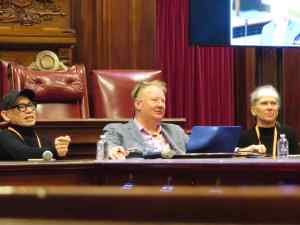
I chose this session primarily because one of the participants was the multi-award-winning book designer, WH Chong (from Text Publishing) and, woo hoo, he was there, even though, once again, one of the advertised panelists, cartoonist-illustrator Jules Faber, was not. The other panelist was political cartoonist Fiona Katauskas, and the session was moderated by The Guardian Australia photographer and Talking Pictures presenter, Mike Bowers. It was, I must say, a hoot of a session – and it was held in the old Senate Chamber in Old Parliament House. I was keen to attend an event in one of the parliamentary chambers there and so that was an added plus.

Bowers was an lively moderator, sharing the questions, back and forth, between the two panelists, which was a bit of a challenge given they work in somewhat different fields. Still, Chong had started in journalism – working in The Age’s newsroom – and maintains an interest in political cartoonists, and Katauskas has illustrated books, so the disjunction wasn’t too great. For this post, I’m going to organise my discussion by person, though the actual session see-sawed between the two.

WH Chong

Jonathan Galassi, Muse

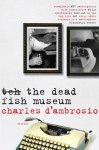
Bowers, who had also known Chong in earlier days, focused most of his questions, and examples, on Chong’s covers that feature typewriters and typewriter-style fonts. This gave Chong a chance to share his love of typewriters, and the fact that for most of those covers he used typewriters for the font, not digital fonts. One of the covers discussed was for Jonathan Galassi’s Muse, a novel about a poet. The letters of the word Muse are created with the letters for the word Poet (ie the M is made using “p”s, the U “o”s, etc). A concrete poem, in a way. A clever, striking design.

Janet Frame, In the memorial room

Bowers asked Chong whether he thought the online world is causing the death of good design, but Chong felt not, arguing that the ratio of good to bad design, remains the same. There’s some great design online he said. Bowers also asked him whether the rules of design changed for online books versus print. Chong wanted to know what those “rules” were! But then said that they were basically the same, regardless of form: you make author’s name and the title as big as possible, and use as much colour as possible!

Another question concerned fonts, and whether Chong had favourite and disliked fonts. Chong admitted to having changing favourite fonts, but quoted someone (whose name I didn’t catch) as saying that there is “no such thing as a bad type, just type badly used”. Chong added, with a straight face, that typeface (or font) is a serious matter and he ”won’t be typecast.” Haha.

D'Ambrosio, The dead fish museum

Some process issues were discussed, such as who approves covers. Chong said, basically everyone, including the author’s hairdresser, dog, etc etc! Haha, again. But, he did say that Text works collegially, which was lovely to hear. Bowers then asked how important is the cover. Chong seemed to think that it’s not that important, but that marketing and publishers believe “it is important in our noisy world” so  “who is he to complain?”

Bowers, you can see, did well at asking all those questions we’d like to ask. Another one was whether he looks back – perhaps in horror – at old work. Again Chong quoted someone else, this time I did get the name, Bob Dylan, who said “Never look back, you might catch up.”

Finally, before we leave Chong, Bowers asked him whether he reads the book first. He prevaricated a bit here saying “y-e-e-s” which meant, I gathered, “mostly but not always.” He’s a slow reader he says, and he only sees the draft.

This was a frustrating session because almost every book cover shown introduced me to a book I want to read.

Fiona Katauskas

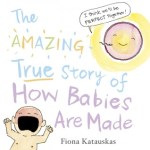
Fiona Katauskas, The amazing true story of how babies are made

Now, Katauskas. Bowers started by asked her about her book The amazing true story of how babies are made. She wrote it, she said, because when needing to answer her 5-year-old son’s questions she discovered the only book around was the now old Where do I come from? The book has been very successful, shortlisted for both the CBC and ABIA awards, and is now being animated. It was a different project she said from her more usual work of political cartooning. For one thing, it was not cynical! Bowers then asked her to share the shock! horror! furore that developed in the UK and USA after someone posted some images from the book on Facebook. Katauskas has written about the story in July’s The Monthly article. The ridiculous thing is that the book hadn’t even been published in those countries. It was a good lesson in clickbait, she said, but the result is that a US book deal now looks likely!

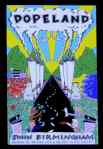
John Birmingham, Popeland

Bowers then asked Katauskas about her cover for John Birmingham’s Popeland. She loves doing book illustrations, even though it’s one of the worst-paid jobs, but unfortunately, she said, this sort of work is drying up these days. Anyhow, her illustrations – cover and inside – were inspired by books like Captain Goodvibes, boys’ own adventure books and The Beano. She described researching the fun of 1930/40s Beano books in the State Library. These commissions tend not to come with briefs. She receives the manuscript, and a statement that, say, there’s a budget for 10 illustrations. She talked about the process of ensuring there’s a “visual cadence” underpinning the illustrations through a book.

The conversation then turned to political cartooning which forms the bulk of her work. You really had to be there and I’m afraid I’m going to say that, to some degree, what happened in the room – such as stories about (very) contemporary (if you know what I mean) Australian political figures – will stay in the room.

I will however share some of the discussion about modern political satire. Katauskas admitted that the “best of times for satire is worst of time for everyone else.” Ouch! Chong asked whether we were beyond parody and satire, to which Katauskas replied (not perhaps answering Chong’s question) that “it’s hard to take the piss when they’re giving it away.” (You can guess who some of “they” were!) Bowers shared that satirist comedian Bryan Dawe is so concerned about politicians moving into the satirists’ domain that he’s considering bringing a class action against them. You can see what fun we had.

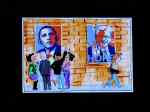
Fiona Katauskas, Obama and Rudd
Fiona Katauskas cartoon

Katauskas commented on the importance of publisher Scribe’s annual Best Australian political cartoons publications because they recognise that political cartoons are historical documents. She also talked about her job of researching cartoons for the annual exhibition of political cartoons, Behind the lines, and how she sees some recurring themes over the last fifteen years, the two major ones being asylum seekers and climate change.

Chong then asked whether we are beyond (or past) hope – but that question just hung.

Q & A

There were several questions, but I’ll just share the one about what media or technology Chong and Katauskas use. Both, interestingly, prefer to work in an analog way. Katauskas said she’s “old school”, and loves working with her pen dipped in ink. Chong said he was “very analog.”

Moderator, and photographer, Mike Bowers talked about the joy of working with good journalists, and named some of those he loves working with –  Paul Daley (with whom he has produced the book Armageddon), Katherine Murphy, Gabrielle Chan, and Lenore Taylor. With the breakup of the media and more people working alone, these important relationships are being lost.

He ended with the plea to us to “pay for your journalism.” I do, I wanted to say.

Canberra Writers Festival 2018, Day 1, Pt 4: Indigenous Australians (2)

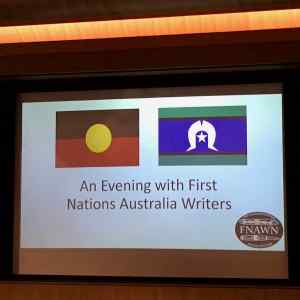
FNAWN screenMy first day of the Canberra Writers Festival ended with a bang – two hours with several of Australia’s top indigenous writers, organised by FNAWN (First Nations Australia Writers Network). It was a not-to-be-missed event, and was divided into two parts:

  • “Because of her I can”: poetry readings with Ellen van Neerven, Yvette Holt, Jeanine Leane and Charmaine Papertalk Green
  • Sovereign People – Sovereign Stories: a panel discussion with Kim Scott, Melissa Lucashenko, Alexis Wright, and moderated by Cathy Craigie

I liked this structure: the poets provided a emotive introduction to panel’s intellectually-focused discussion (not that the poems weren’t underpinned by intellect, mind you.)

“Because of her I can”

I’m just going to list the poets and their poems, as well as I can, as I did for the Canberra poets session earlier in the day. You may like to research them, though I’ve provided some links …

Jeanine Leane

Leane, whose unforgettable novel Purple threads I’ve reviewed here, started off – after acknowledging “the land never ceded” – with four poems:

  • Lady Mungo speaks“: first person poem about the egregious removal in a suitcase of Lady Mungo’s bones: “They spread me out like a jigsaw –/each piece an important part of their/puzzle of landscape and history.” Their puzzle!
  • “Evening of the day”
  • “River memory”: clever poem inspired by Gundagai’s Prince Alfred Bridge representing the idea of Australia’s “longest bridge, shortest history”, and subverting that to an indigenous perspective of “short bridge and long history”
  • “Canberra 100 years on”

Yvette Holt

Holt, a David Unaipon Award winning poet and academic, also read four poems:

  • “Progenitor”, an unpublished poem for her mother
  • “Through my eyes” (from Anonymous premonition), suits this year’s NAIDOC theme
  • ‘My mother’s tongue”, an unpublished poem about her mother who has dementia, exploring the issue of passing language between generations. I loved the line, “mother begins to scribble in her tongue in a language I do not understand”
  • “Motherhood”, a poem dedicated to her daughter Cheyenne Holt, when she was 7

Ellen Van Neerven

Van Neerven is a younger writer who has appeared several times in my blog. She dedicated her poems to black women in her life whom “she loves”:

  • “Orange crush”, for her mother: a found poem using lines from an inflight mag. (That got a laugh.)
  • “Bold and beautiful”, for her nanna: a humorous poem playing on her nanna’s love of the soap opera
  • “Home”, for her girlfriend Tia: a gorgeous love poem
  • “Queens”, for “the black women here tonight”

Charmaine Papertalk Green

New-writer-for-me Green hails from Western Australia. She read published and unpublished poems to honour women in her family:

  • “To the women of the land understand”: encouraging women to “remember your ancestors, remember your elders”
  • “My mother belonged to me”: included lines in language.
  • “Mothers letters”: I love writing letters, so loved this poem about her mother’s letters and the idea of “papertalking” but also that it’s “not just letters on paper”
  • “Grandmothers”: about mining ruining country
  • “Honey lips to bottlebrush”: about intergenerational cultural teaching.

You can hear her on ABC’s The Hub.

Jeanine Leane then returned to the podium, with the other poets, to pay tribute to Kerry Reed-Gilbert for her work with FNAWN, the Us Mob Writing Group, and in organising the Workshop coinciding with this Festival. She then read Oodgeroo Noonuccal’s poem “Song of hope.”

Sovereign People – Sovereign Stories

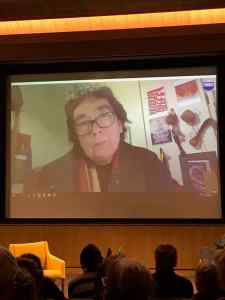
How lucky we were to have the above highly-respected poets, followed by, as moderator Cathy Craigie said, “three of Australia’s most dynamic writers”, Melissa Lucashenko, Kim Scott, and Alexis Wright (on the screen). The auditorium, which seats 300, must have been around three-quarters full, comprising indigenous and non-indigenous people from a range of ages. I hope they were pleased with the turnout. It certainly felt good to be part of it, which brings me to an important issue that came up in the Q&A and was also on my lips. It concerns what “white allies” can do. We can, of course, attend and support events like this, we can listen and learn from these events, and we can read the authors. It’s a challenge, though, I find to do this with the right tone – to not sound condescending, for example, when we try to “help” or empathise; to not assume we know or understand things we really don’t; to know how to communicate what we do know. It’s a fraught (though I recognise privileged) space to be in … but the important thing is to keep trying, isn’t it?

Anyhow, Cathy Craigie introduced the session, explaining that its focus was FNAWN’s theme for the week, intellectual sovereignty. She reminded us of the long history of Aboriginal and Torres Strait Islander writing in Australia – dating back to Bennelong’s letter to the Governor, and Maria Lock in the 1820s – and talked about the négritude movement in 1930s France, which promoted pride in racial identity.

The discussion then to-and-fro’d, with Craigie injecting questions regularly. I loved, again, the calm respect with which ideas were shared. There seemed to be a strong bond of “knowing” between the writers.

Melissa Lucashenko started by sharing some motivational quotes: “we are the authors of our lives” and James Baldwin’s statement that “freedom is not given, you take it.” She said Baldwin’s statement expressed an existential position – don’t wait, take power, and use it wisely.

Alexis Wright

Alexis Wright

Alexis Wright spoke about Tracker (the subject of her Stella-prize-winning book Tracker) and his focus on sovereignty. He was a visionary, she said, who wanted a stable Aboriginal economy, to ensure a secure culture, a secure future. She, like Lucashenko, emphasised the “sovereignty of the mind.”

She then talked about writing Tracker, which she calls a “collective biography”. She couldn’t do a conventional biography, she said, because he was a community man, because “his archive, his filing cabinet was in the minds of other people”.

There was much discussion about Tracker, who was clearly powerful, and significant in the indigenous community, albeit not everyone always agreed with him. Wright said he was a complicated person, with a sharp mind, which he was happy to express. He said, for example, that Native Title was “not big black stallion but a donkey”.

“Stories, songs, language are sovereign” (Scott)

Scott then talked a little about his latest novel Taboo. He said he tries hard not to think about politics and Aboriginal discourse when he writes his fiction, but he is interested in reclaiming older Noongar narratives and bringing in deeper resonance of place. “Stories, songs, language are sovereign” he said, and communities need to keep them strong so they’ll survive. There has been a long attempt to destroy stories and songs but we are moving from “denigration to celebration”.

Lucashenko raised the issue, currently being nutted out, regarding cultural restrictions on writing about other people’s country. I pricked up my ears of course at this, because it’s related to the cultural appropriation issue concerning white people writing black stories. Lucashenko said when she writes her own country she’s writing with rich knowledge. Writing about anywhere else would be superficial.

Wright was more circumspect about this restriction/limitation. Carpentaria, which is based in her country, was the book she wanted to write, but she is still learning about what she wants to write. Her 26 January story could, she said, be set anywhere.

Scott said he wrote Taboo in the “language of the default country”. He feels accountable to the past, to the fragile massacre area he comes from. He wants to build it up, strengthen its heritage. (He spoke about this in last year’s Ray Mathew lecture.) Perhaps we should all deepen our regions he said.

It was interesting here, because Scott clearly feels the need to strengthen Noongar culture, particularly his own area of it, while Lucashenko believes the culture in her country in northern NSW is strong. She lives in a progressive region, and they have “good white allies”. (See “white allies” discussion in the Q&A.)

Wright said that her country, her people, are strong, making it hard to encourage people into militant fighting for rights.

“Pay attention, tell the truth, write towards power” (Lucashenko)

At this point, Lucashenko teased out more about her notion of sovereignty – which she also expressed in the GR 60 session I attended: it doesn’t have to be politics but “can grow inside our heads.” She then said the job of the writer in these times is to pay attention, tell the truth, write towards power.

Scott suggested that sovereignty of mind involved (included) being accountable to ancestors and descendants. He talked about Australian Renaissance being “not digging up shards of pottery but texts buried in the landscape.”

The writers discussed language, words, and meanings – the importance of unpacking language – around this point.  Lucashenko said that the Bundjalung word for river is also the word for story, making the river, in her novel Too much lip a powerful metaphor for stories. Wright said that river means many things in her country too.

Craigie asked whether there was a change in how people are seeing intellectual and cultural sovereignty. Lucashenko seemed positive about young people’s sense of sovereignty within themselves and in their relationship to country, but said the young need to be nurtured with vigilance. She believes the thing is to avoid being reactive, because reaction puts you in a powerless position. She also said it was important not to become distracted by people who “don’t understand us.” Focus, instead, she said, on learning your own civilisation.

Survival

In a way, the whole session was about survival, but around here it came into sharper focus. Wright agreed that young people understand sovereignty and can teach older people about being gutsy. She emphasised the importance of nourishing story, of making story and of keeping it straight. Indigenous people are going to need strong storytellers. We’ve been an oral culture, she said, and need to learn from how the ancestors survived.

Scott agreed that indigenous people need to look after themselves, to “learn the game” (at which point Craigie quoted an African writer on learning to assimilate without assimilating.)

Lucashenko argued that indigenous culture is a knowledge-seeking culture, which is how they have survived. Indigenous people have done what they needed, learnt what they needed – such as learning English – to survive. (This reminded me of my recent Arnhem Land trip, during which we learnt about interactions between indigenous Australians and the Macassans for a few centuries. Indigenous people learnt skills, such as making dugout canoes, and incorporated Macassan words into their languages.)

Lucashenko concluded that indigenous people need to cultivate confidence.

Q & A

One questioner asked an excellent question regarding being good white allies: How best do we consume indigenous stories while preserving their integrity:

  • This is the nub, said Scott. There’s no easy answer, but: be conscious, and have a desire to listen. There is a real issue for Scott in getting the balance right to ensure indigenous people aren’t disempowered by non-indigenous people becoming more knowledgeable about culture than indigenous owners.
  • Lucashenko said there’s a simple test: Who benefits? If the answer is not the indigenous person, then go away and think again.

There were more questions, but I’ll leave it here – with the reminder to myself to always ask:

Who benefits?

Canberra Writers Festival 2018, Day 1, Pt 3: Indigenous Australians (1)

I planned to write a combined post for my last two events of Day 1, given both focussed on Indigenous Australians, but there was so much that I wanted to document (for myself, at least) that I decided to devote a post to each. There was, though, some overlap in terms of issues discussed, albeit from different perspectives. One of these was the fraught issue of “sovereignty.”

GR60: First things first

Sandra Phillips, Paul Daley, Shireen Morris, and Melissa Lucashenko

Sandra Phillips, Paul Daley, Shireen Morris, and Melissa Lucashenko

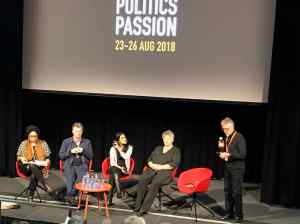
This event drew from Griffith Review’s 60th issue, titled First things first, which I referenced in my recent introductory post on this year’s festival. The event was advertised to be a panel: Dr. Sana Nakata, Shireen Morris, Paul Daley and Melissa Lucashenko moderated by Dr Sandra Phillips, but, as happened with most panels I attended, one person – here, Dr. Sana Nakata – didn’t appear. It was, however, an excellent session, albeit one which reminded us of the challenges still ahead for Australia. Given the session’s topic, the panel clarified who was (Phillips and Lucashenko) and was not (Daley and Morris) indigenous.

The Voice

Moderator Dr Sandra Phillips was also the co-editor of First things first. She introduced the participants, and briefly described the edition’s genesis in the Uluru Statement from the Heart, and the implications of then PM Turnbull’s rejection of the Voice. She then asked the participants to explain why were taking part in the panel. From there the conversation flowed somewhat organically, with Phillips injecting the odd question as needed …

Melissa Lucashenko said that when it comes to the issue of sovereignty, she’s somewhere in the middle, because she can’t claim to speak on behalf of anyone, beyond her family, until there is an elected model.

Constitutional lawyer and advisor to the Cape York Institute, Shireen Morris, described the Uluru Statement from the Heart, which resulted from an extensive consultative process, as historic. There were only 7 dissenters out of 250 delegates, albeit some dissent is good she said. The delegates coalesced around the idea of a Voice, so Turnbull’s outright rejection has been devastating.

Lucashenko was not as positive as Morris, feeling that the process had been rushed. She wasn’t convinced that the delegates had a mandate to represent all indigenous people. Here, political journalist Paul Daley, responding to her question, confirmed that our original Constitution was developed over 10 years. Phillips, however, felt that the consultation had been thorough and, further, had built on significant work preceding it (and on “the back of continuous failure to resolve things”.)

So, there was a difference of opinion about the Uluru Statement but the discussion remained completely respectful and focused on facts, on exploring ideas, and on sharing information. Lucashenko reiterated several times that she is very interested in the Voice but is concerned about what it would look like, how it would be made representative. Meanwhile, she said, she exerts her own sovereignty everyday.

Morris’ focus is constitutional reform. She strongly believes that getting something significant into the constitution is important because it’s harder to change, harder to get rid of (than something legislated, like ATSIC!) But, of course, this means that change is hard to get into the constitution too! So, the Voice needs to be in the constitution. Morris argued that the idea of a Voice can be enshrined in the constitution (via a referendum of course) with the details worked out and legislated afterwards. This is not an unusual process – but, of course, it requires trust, doesn’t it? Morris said the government should be working on the details now!

Later in the session, Morris said she’d argue that First Nations sovereignty was never ceded, and that the constitution is “squashing down” their sovereignty. Substantial constitutional reform is need to allow First Nations sovereignty to shine through, to express itself in a permanent way.

Daley commented that the Uluru Statement asks Australians to walk together “for a better future” for all, but that the immediate response of the then Deputy Prime Minister was that “that’s not gonna happen” and, of course, Turnbull dismissed the request for a Voice to considered a few months later in a press release. There was general agreement that the “whitefella political position is dire.” There was fury that ATSIC was killed off because of concerns about corruption, but the same thing doesn’t see whitefella institutions pulled down.

Truth-telling

The other important issue coming out of the Uluru statement is the need for truth-telling. The panel discussed Daley’s contribution to GR60, his truthtelling essay “Enduring traditions of Aboriginal protest” about the two indigenous men, Jimmy Clements and John Noble, who “turned up for the royal opening of the new Commonwealth Parliament building in Canberra” on 9 May 1927. Their story has never been properly told, and indeed in most reports and stories, the two men have been conflated into one. Daley sees their attendance as their assertion of Aboriginal sovereignty and as part of ongoing indigenous protest and resistance. Daley said that we have a responsibility to educate ourselves, and that the story of the frontier is there in Trove (yes!), if you want it.

Phillips added that contemporary Australian history is so short, there is no excuse for our not knowing the full story of our country. She argued that literature (meaning, I think, forms like fiction and poetry) plays a role in the truth-telling process.

At this point there was discussion of Lucashenko’s latest novel Too much lip, which Phillips said was about Aboriginal family relationships, about history and how “what happened in the past is with us today.” Lucashenko added that her characters are living in an age of depression and anxiety, but “don’t be depressed,” she said, “be angry.” She talked about the challenge of making these “hard” stories funny. For her next project, she’d like to write about colonial Brisbane. Trove – and archives in general – abound, she said, with “stories of resistance.”

Phillips added, cynically, that despite all these stories we end with lead characters in films that are Red Dogs! (Oh dear, my Red Dog post is still in my top ten posts.)

Daley talked about the novel he is writing. It’s inspired by the 1948 American-Australian Scientific Expedition to Arnhem Land, and in it he explores how the expedition was seen by indigenous and non-indigenous people. He realises it’s a cultural fraught thing to do, but he will, he assured Lucashenko, get indigenous assessment of what he’s written.

Phillips noted that there’d been millennia of successful governance in this country, and 230 years of destruction and oppression. Repairing this needs time, but we all need to be part of the dialogue. Meanwhile, she hoped, the panel had provided some illumination of the issues we are all facing. Yes, it did, I’d say.

Q&A

This is getting long, and there were quite a few questions, so I’m just going to summarise some of the main points that arose:

  • ATSIC represented a minimum model of what indigenous people want/need but she, Lucashenko, has good memories of it. It was killed off because, she said, white people don’t like indigenous people managing resources.
  • The Constitution issue is currently at a complete impasse, because our current (white) politicians appear to have no will to engage with the Uluru Statement.
  • Indigenous groups don’t need to wait for the Federal Government to act and are in fact working at local, regional and state levels to forge agreements.
  • Representation models for the Voice to Parliament could vary across the country depending on the needs and desires of different indigenous groups.

Canberra Writers Festival 2018, Day 1, Pt 2: Two panels

My next two festival sessions were panels – firstly at the National Museum of Australia, and then after a quick jaunt over the lake, chauffeured very kindly by Mr Gums, at the National Library of Australia. This Festival is spread too widely, geographically speaking – but I’ve said that before …

The power, politics and passion of poets: John Foulcher, Melinda Smith & Lesley Lebkowicz, moderated by Geoff Page

Moderator and local poet Geoff Page (whose verse novel The scarring I’ve reviewed) introduced the session. Noting the theme, he said that despite recent events (which I explained in my first post) poets tend not to be driven by transient events. He then briefly reminded us of the depth Canberra’s poetic tradition, with the likes of AD Hope, David Campbell, Judith Wright, Rosemary Dobson, among others.

Canberra Poets

Lebkowicz, Foulcher, Page, and obscured by the curtain, Smith

To get us in the mood for the theme, he shared a few ideas about poetry: Shelley’s comment that poets are the “legislators of the world”; Auden’s statement that “poetry makes nothing happen”; and Brecht’s poem “The solution” in which he suggests it might be easier for “the government/To dissolve the people!”

Finally, he kicked off the session with an appropriate political poem of his own, one I’ve read and enjoyed before, “Call yourself a socialist.”

The session comprised three local poets reading a selection of their poems – some published, some not (yet) – that relate in some way to the alliterative theme of the three Ps! It was a well-moderated session – that is it flowed well and finished on time. I liked that the poets often explained the form of their poems, as well as why they’d chosen them. I will list the poems they read as best I can, from the notes I took while trying to hear the poems. I do enjoy hearing poets read their poems.

Lesley Lebkowicz

Lebkowicz is, Page introduced, a poet, ceramicist, reviewer, and essayist, whose work is informed by her Buddhist practice. Her next book is Mountain lion. I have reviewed her Petrov poems here.

Lebkowicz started by commenting that it was nice reading to “different people”. She then read her poems, some  humorous and most drawing on women’s experiences:

  • “Butter”: a humorous poem satirising British snobbery about “the colonials”, by positing dairy-farming kangaroos.
  • Suite of poems relating to Mary Alice Evatt, artist and the wife of HV Evatt (Australian politician and judge). Lebkowicz had initially wanted to write her Petrov poems from the point of view of women, but Vladimir Petrov’s voice proved too strong, so she developed this suite of poems separately. The poems reference either paintings by Evatt or information Lebkowicz gleaned from her research, and included “Mt Solitary”, “Portraits 1930s Various sizes”, “Notes for a picture jam/flood”, “Woman seated on grass”, and the delightful “Notes for a picture, falling towards earth” (which you can read here, including its inspiration – do click on the link, you won’t be disappointed.)

Melinda Smith

Smith has a long, impressive CV, including winning the Prime Minister’s Literary Prize for Poetry in 2014 with her collection, Drag down to unlock or place an emergency call.

She started by saying she didn’t normally write political poems so her first poem would be about passion! Smith is, I’ve discovered before, pretty cheeky (in the best way.) She said that traditionally she’s not been interested in poems about recent issues because, by definition, they don’t last, but she feels that our current times calls for such poems. Her poems were:

  • “Splinter”: a very cheeky poem equating a splinter in the hand with a love gone wrong.
  • “Baby Joy”: a found poem, using Barnaby Joyce’s words to frame an apology to the gay community that they’ll never get otherwise from him.
  • “Sweetheart”: a found poem using misogynistic statements from the Ernie Awards, mostly from the 1990s, but they are strangely still applicable – she said.
  • “Newcastle reckoning”: a personal and political poem about the shock of seeing yourself as you are. It has a powerful refrain – “Having neither sought nor received permission” – referring to being on indigenous land without permission.
  • “No bed”: ending again on passion. A poem I’ve read – and in fact quoted from – before.

John Foulcher

Foulcher has published eleven books of poetry, the last being 101 Poems. He has also been a teacher for 40 years – a microcosm of politics and power!

His poems were:

  • “Fits and starts”: a very entertaining poem comprising the first words said by teachers to classes, from Grade 7 to 12. It garnered many knowing laughs from the audience.
  • “Why Ryan is on detention”: written around 2000 and unfortunately still relevant in these “Me Too” days.
  • “A revolutionary calendar”, his poetic biography of the French Revolution’s Robespierre. Architect of “the terror”, he had none of the obvious vices, but succumbed to power, and he too ended up at the guillotine. All dictators know, Foulcher said, that eventually the terror turns on you. The poems follow a calendar, and Foulcher read three: “Ventos” (month of wind), “Floreale” (month of flowers), and “Thermidor” (month of heat).
  • “The woman who danced with Stephen Hawking”: a monologue about a different power, one of mind, passion and body.

Before I end on the Q&A, I’ll share a line from Lebkowicz’s “Notes for a picture, falling towards earth”:

 Art, she knows, makes all things better.

If only our politicians knew, eh?

Q&A

A questioner asked what advice – that you might not find in books – would the poets give to a poetry workshop. They said:

  • Foulcher said that there are two types of poems – the ones where you know what you want to say at the start (bad), and the ones where you work out what you want to say as you write (good)
  • Smith suggested that attendees be asked to find a feeling they can tap into.
  • Lebkowicz said be true to yourself, know what you feel and believe, be patient and write with integrity.

Another questioner asked about separating one’s own emotions from those of a character. Foulcher said it’s impossible, that you are always writing from within, and Lebkowicz admitted that for all her research into the Petrovs, the poems ended up revealing much of herself. Smith made the political point that you need to be careful about “whose microphone you are taking.” She has written in the voice of a dead 10th century Iranian, she said, and that was okay, because “my ancestors haven’t repressed her.”

The Prime Ministers 2017 Literary Award Recipients

Whiting, Lawrence, Orr and Cochrane

Whiting, Lawrence, Orr and Cochrane

The intended line-up for this session was Ryan O’Neill, Anthony Lawrence, Wendy Orr and Peter Cochrane, with  Sue Whiting as moderator. One of the main reasons I chose this session was to hear Ryan O’Neill, author of Their brilliant careers, but unfortunately his father had died necessitating his going to Scotland. I’m very sorry for him – but fortunately the session was very enjoyable, anyhow.

Whiting, the moderator, commenced by explaining the session’s aims, and then gave a brief history of the awards, which were 10 years old in 2017. They are among the best remunerated ($80K for the winner, at present) and are, uniquely, tax-free. She then asked the panelists to speak briefly about their prize-winning works:

  • Lawrence described his poetry collection, Headwaters, as a miscellany comprising various forms, and not having a particular thematic arrangement, but all represented a visceral reaction to the natural world. It’s eco poetry, though this is a new term for an old form! The poems are about the natural world, a place where animals, birds, trees and humans interact, and all explore the same problem, a physical reaction to the natural world, which his body and mind then work through.
  • Orr said that Dragonfly song, which is partly written in free verse, is the book she’s been writing all her life. It’s about an outcast, and has the standard hero tale trajectory. She realised later that it had come from her own sense of exclusion and despair after she’d broken her neck in a car accident.
  • Cochrane explained that his book, Colonial ambition: Foundations of Australian democracy had been commissioned for NSW’s Sesquicentenary. He talked about the challenge of finding drama, because there was “no mud and blood” as other countries have experienced. (I question that, given what we know about indigenous massacres.) Anyhow, he said he realised there was a great human drama, and there were rich biographical records for a few characters, including WC Wentworth, to tell it. To attract readers, he said, you need to include personal lives. Wentworth had the “driving theme of vengeance”, which of course got a laugh given last week’s political events.

Whiting then asked them to share how they felt when their names were read out as winners:

  • Orr was in a daze, not thinking it would be her. The neighbours gave her a party, she said, which hadn’t happened when she’d won CBC Awards.
  • Lawrence had forgotten the advice to have a speech prepared. He was ribbed by his mates because he’d been their maverick. The money was wonderful, he said, because poets don’t make money – they never expect royalties. But it is a “bit of a chook raffle.”
  • Cochrane, who won in 2007, has vivid memories because he was sitting at a table next to John Howard, and opposite Julie Bishop with her eyes. He was relieved to escape them when his name was called.

Whiting then asked about what the prize money, which is significant, meant to them. It was clear that it was meaningful for them all, but none, really, expressed that absolute depth of need that Luke Davies did when asked that question after winning in 2012, the first year poetry was included.

Whiting followed this by asking whether the prize had other benefits:

  • Orr said you need two forms of energy needed to write – physical (money) and emotional (including confidence). The award gave her confidence, largely because, although she’s lived in Australia all her adult life and although all her books have been written here, journalists are continually told they cannot call her an Australian writer. (What the?) This award took all that hurt away.
  • Cochrane said it brings your book to greater attention – both public and academic. He said the feedback from peers was surprisingly important. One reviewer said that it read like a fast-paced novel, which, in fact, encouraged him to write fiction, as he has now done.
  • Poet Lawrence was more circumspect, saying that “you would like to think a gold sticker would increase book sales, but sadly not.” It was, though, wonderful for his confidence, and awards like this do raise the profile of poetry, he said. Poetry is on the rise, he feels.

Q&A

One questioner asked about the fact that, of all the prizes, this is the only one that has had political interference controversies. The panel explained that it’s due to the terms of the award: the judging panel makes a recommendation to the PM. Those recommendations have normally been accepted, with three exceptions to date, the most egregious being Frank Bongiorno’s “red-carding.”  (Feudal behaviour, said Cochrane.) In the other two cases, the PM intervened to force a joint winner. The terms of reference need to be changed, the panel agreed.

Whiting followed this up by asking whether judging literary merit was fundamentally flawed, but this was not really explored – at least from the philosophical point of view. Lawrence did talk about the value of blind judging, and Orr said that awards are important because they increase sales, promote literature, and get the public talking. 

Another interesting session. More analysis would have been good – how diverse have these awards been, for example – but time is always an issue.