Prime Minister’s Literary Awards 2025, Winners

In lieu of my usual Monday Musings post, I am reporting on the 2025 Prime Minister’s Literary Awards which were announced this evening, and which I attended via the live-stream from the Creative Australia website. I shared the short list several weeks ago, so I won’t repeat those here.

The awards ceremony was a long one, and I suspect longer than planned, because Mr Gums saw the winners come through on his phone before they had all been announced. The problem, I’m guessing, of automatic scheduling!

The event was emceed by an Australian comedian, writer, actor, and television presenter, Alex Lee, whom I don’t know. (I guess you are going to say, “where have you been?”) She injected lightness and humour into the opening, a bit like you see at America’s Academy Awards. Like the Academy Awards, some of the jokes worked and some didn’t. The thing is, I suppose, different jokes will work for different people.

She did say, however, that there were 645 entries this year, 100 more than last year. That says something, I presume, about the health of writing and publishing in Australia.

 There were then two speakers, the Chair of the Writing Australia Council, Larissa Behrendt, who commented on the appropriateness of holding the Awards at the NLA which embodies the “the heart of our nation’s stories”. She said that the Awards “celebrate writing, reading ideas and the voices that shape who we are”, and she thanked Selina Walker for her welcome. She reminded us of the 65,000 years of storytelling in our country.

Behrendt then introduced the Minister for the Arts (among his many hats), Tony Burke, whose passion for the arts is palpable to anyone who hears him speak. Behrendt noted his appreciation of the centrality of First Nations Arts to Australia’s cultural policy. And said that this is a minister who shows up at opening nights, awards nights, festivals and so on, because he deeply understands why the Arts matter.

I couldn’t possibly share all that Burke said. He recognised the main players, commenting first on the generosity of the word “welcome” Selina Walker’s Welcome to Country. He thanked Australian Greens leader, Sarah Hanson-Young, who was present and who has been there, in support, through the whole cultural policy journey. He thanked Alex Lee for injecting a bit of fun, and he acknowledged Larissa Behrendt (who is Chair of the National Library of Australia Council) and Clare Wright (who is Chair of the Council of the National Museum of Australia.) He noted that it has been a long time since a writer has chaired the NLA’s Council, and an historian that of the NMA. (I groaned inwardly as we are still waiting for an archivist – or appropriate professional – to chair the council of the National Film and Sound Archive!) But all progress in this sphere of Boards/Council appointments is good!

Burke talked at some length about the importance of the arts and, what he believes to be the strength of the Government’s Creative Australia cultural policy. He talked particularly about writing. he argued that the ability to learn from writing is the gift “we celebrate tonight”. He suggested that writing is the only art form that we don’t react to with physicality. Music, Dance, Visual Arts, and so on, engage through the senses – sight, hearing – but writers work on our imaginations, writing lives within our minds. (There are some debates in this, I think, but I still like his point.)

He also quoted from three books to illustrate his points. First was from Kelly Canby’s children’s book, A leaf called Greaf, which ends on the idea of things being held in the heart forever, and which is the gift writers give us. Then he mentioned Fiona McFarlane and Michelle de Kretser who spoke to untold stories. Highway 13 deals ingeniously with the fact that we hear more about the person who should not be remembered rather than the stories of those affected by that person’s actions. Then he quoted from Theory and practice, which I will abbreviate to “that was the meaning of assimilation … it trained us to disappear”. Writers, he said, make sure that people are seen. (For me, though, he raised yet another idea to explore in this wonderful novel.)

There was more, but I think that’s a great point on which to end the introductions.

And the winners
  • Fiction: Michelle de Kretser, Theory & practice (Text, my review)
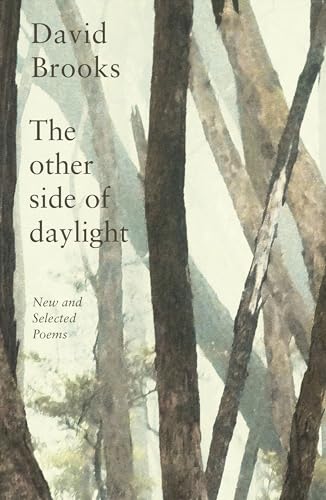
  • Poetry: David Brooks, The other side of daylight: New and selected poems (UQP)
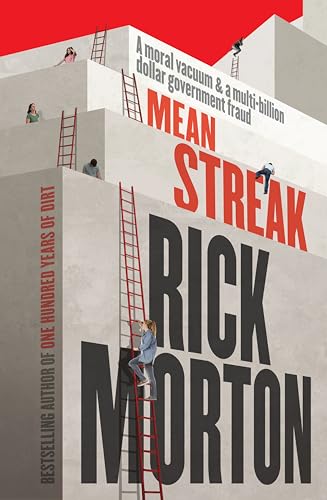
  • Nonfiction: Rick Morton, Mean streak (Fourth Estate)
  • Australian history: Geraldine Fela, Critical care: Nurses on the frontline of Australia’s AIDS crisis (UNSW Press)
  • Children’s literature: Peter Carnavas, Leo and Ralph (UQP)
  • Young adult: Krystal Sutherland, The invocations (Penguin)

Links on authors’ names are to my posts on these authors. (I loved that Children’s Literature winner, Peter Carnavas, is a teacher-librarian. Go him.)
Now, this being the Prime Minister’s Literary Awards and, anyhow, this being a gathering of writers who as a group are passionate about ideas, many political comments were made, lengthening the supposedly short speeches. These comments addressed what is happening in Gaza, the issue animal rights, the treatment of human beings by government social policy, and the gutting of humanities and humanities research in Australian universities. In the case of the last, Geraldine Fela’s video speech had been cut off at the allotted time, but she had asked Clare Wright to complete her speech, which Wright did!

Thoughts anyone?

Prime Minister’s Literary Awards Shortlist 2025, announced

I haven’t announced the Prime Minister’s Literary Award shortlists for a few years, but for various reasons, including the fact that there is a Poetry section which works nicely with this month being National Poetry Month (see my Monday Musings), I’ve decided to share this year’s shortlists.

Creative Australia’s page for the announcement says they received “a remarkable 645 entries across six literary categories: fiction, non-fiction, young adult literature, children’s literature, poetry, and Australian history”.  The winner in each category will receive $80,000, with each shortlisted author receiving $5,000.

Fiction

  • Michelle de Kretser, Theory & practice (Text, my review)
  • Fiona McFarlane, Highway 13 (A&U, on my wishlist, kimbofo’s review)
  • Emily Maguire, Rapture (A&U, on my wishlist, kimbofo’s review)
  • Mykaela Saunders, Always will be: Stories of Goori sovereignty from the futures of the Tweed (UQP, on my TBR)
  • Tim Winton, Juice (Hamish Hamilton, on my TBR, kimbofo’s review)

Most of these books have been appearing on shortlists throughout this year, with de Kretser and McFarlane having won some of those already announced. De Kretser won the Stella, and McFarlane has won the ALS Gold Medal as well as the NSW and Victorian Premiers’ fiction awards. That’s serious recognition.

Interestingly, this year’s Miles Franklin winner, Siang Lu’s Ghost cities, is not on the list. However, I like that two short story collections have been included.

Fiction award judges: George Haddad, Chloe Hooper, Julieanne Lamond, and Stephen Romei. For the full judging panel across all categories, check the webpage linked above.

 Poetry 

  • Peter Boyle, Companions, ancestors, inscriptions (Vagabond)
  • David Brooks, The other side of daylight: New and selected poems (UQP, a 2025 National Poetry Month Ambassador)
  • Hasib Hourani, rock flight (Giramondo)
  • Barrina South, Makarra (Recent Work Press)
  • Petra White, That galloping horse (Shearsman Books)

Nonfiction

  • James Bradley, Deep water (Hamish Hamilton, Brona’s review)
  • Adele Dumont, The pulling (Scribe)
  • Rick Morton, Mean streak (Fourth Estate)
  • Khin Myint, Fragile creatures: A Memoir (Black Inc.)
  • Samah Sabawi, Cactus pear for my beloved (Penguin)

Australian history

  • Geraldine Fela, Critical care: Nurses on the Frontline of Australia’s AIDS crisis (UNSW Press)
  • Peter Kirkpatrick, The wild reciter: Poetry and popular culture in Australia 1890 to the present (Melbourne University Publishing)
  • Amanda Laugesen, Australia in 100 words (NewSouth)
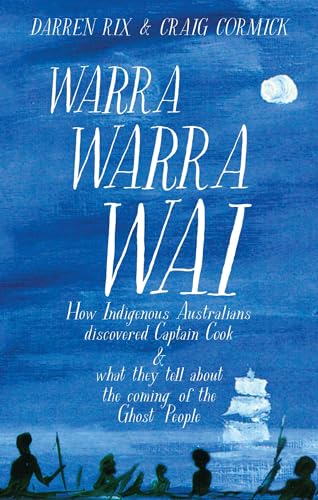
  • Darren Rix & Craig Cormick, Warra Warra Wai (Scribner, on my TBR)
  • Clare Wright, Näku Dhäruk The Bark Petitions (Text)

Children’s literature 

  • Kelly Canby, A leaf called Greaf (Fremantle)
  • Peter Carnavas, Leo and Ralph (UQP)
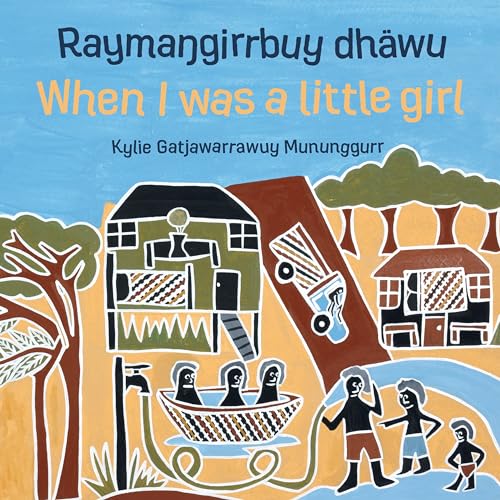
  • Kylie Gatjawarrawuy Mununggurr, Raymaŋgirrbuy dhäwu, When I was a little girl (Magabala)
  • Dave Petzold, We live in a bus (T&H)
  • Briony Stewart, Everything you ever wanted to know about the Tooth Fairy (and some things you didn’t) (Lothian)

 Young adult 

  • Sophie Beer, Thunderhead (A&U Children’s)
  • Kate Emery, My family and other suspects (A&U Children’s)
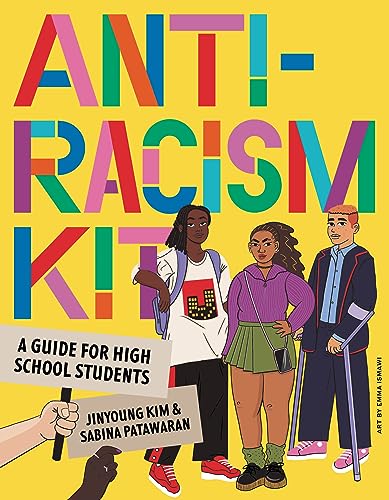
  • Jinyoung Kim & Sabina Patawaran, The anti-racism kit: A guide for high school students (HGCP)
  • Emma Lord, Anomaly (Affirm)
  • Krystal Sutherland, The Invocations (Penguin)

The winners will be announced at the National Library of Australia on 29 September, 2025.

Any thoughts?

Prime Minister’s Literary Awards Winners, 2023, announced

The Winners of the the Prime Minister’s Literary Awards for 2023 were announced this evening.

The website says that 643 entries were received across six literary categories: fiction, non-fiction, young adult literature, children’s literature, poetry, and Australian history. Each shortlisted entry receives $5,000 with the winner of each category receiving $80,000. The awards are now being managed by Creative Australia, rather than by the Department of the Arts, which should provide the right arms’ length distance and avoid the problems of political interference which soured some of the early awards.

The event, which I attended in livestreamed form from the National Library, was slick but not superficial. Arts Minister Tony Burke inspired me once again, not only with his passion for the importance of the arts to Australia and his determination to entrench arts policy in government, but with his obvious personal engagement with arts across all forms. I’ve seen it before, and I saw it again. It’s a joy. As MC, Benjamin Law said, any Minister who takes poetry into the office has “got the vibe”.

Below is the shortlist for the three categories I am most interested in, with the winners marked in bold.

Fiction

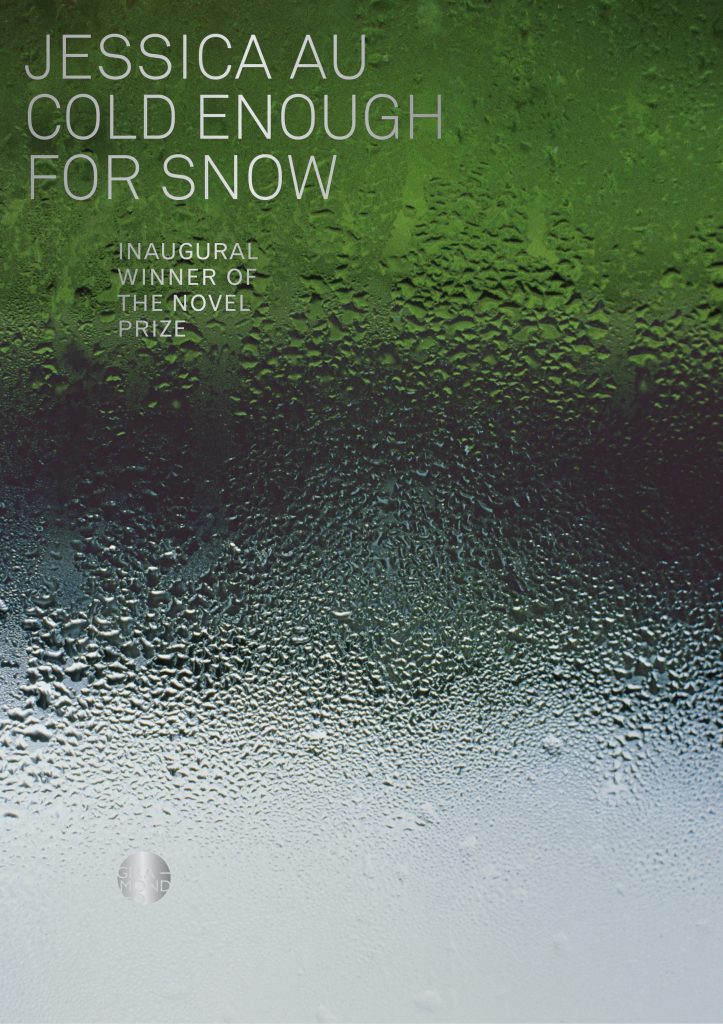
  • Jessica Au, Cold enough for snow (my review)
  • George Haddad, Losing face
  • Yumna Kassab, The lovers 
  • Fiona McFarlane, The sun walks down
  • Paddy O’Reilly, Other houses (Lisa’s review) (on my TBR)

Non-fiction

  • Debra Dank, We come with this place (my review)
  • Louisa Lim, Indelible city: Dispossession and defiance in Hong Kong 
  • Brigitta Olubus, Shirley Hazzard: A writing life
  • Thom van Dooren, A world in a shell: Snail stories for a time of extinctions
  • Sam Vincent, My father and other animals: How I took on the family farm (Vincent said that he “wants to change perceptions about what Australian farmers can do and be” particularly regarding their relationships with First Nations people)

Australian history

  • Alan Atkinson, Elizabeth and John: The Macarthurs of Elizabeth Farm
  • Rohan Lloyd, Saving the Reef: The human story behind one of Australia’s greatest environmental treasures
  • Russell Marks, Black lives, white law: Locked up & locked out in Australia
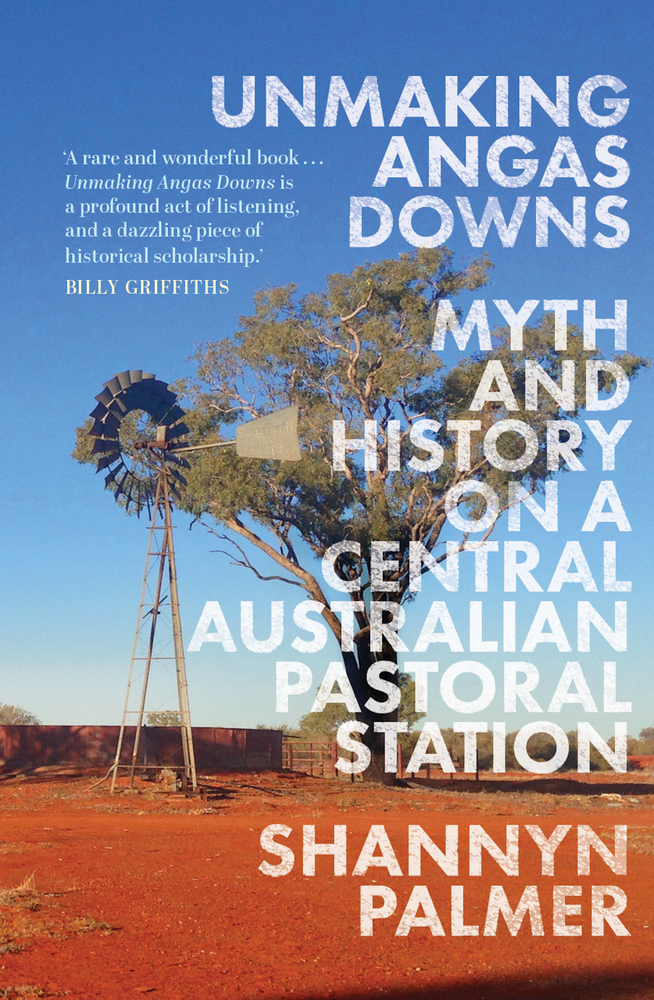
  • Shannyn Palmer, Unmaking Angas Downs: Myth and history on a Central Australian pastoral station
  • Lachlan Strahan, Justice in Kelly Country: The story of the cop who hunted Australia’s most notorious bushrangers

Other category winners …

  • Poetry: Gavin Yuan Gau, At the altar of touch
  • Young Adult fiction: Sarah Winifred Searle, The greatest thing (Searle said during her acceptance speech, referencing how challenging the world is to navigate, “admit you’re scared even if you don’t have answers”.)
  • Children’s fiction: Jasmine Seymour, Open your heart to country

The complete shortlist with judges’ comments can be seen on the website. But I will say that the shortlist and the winners are impressively diverse, in who created the works and in their subject matter. So good to see.

Our lives are made more meaningful in the presence of a talented scribe. (Benjamin Law, closing the awards presentations)

Thoughts?

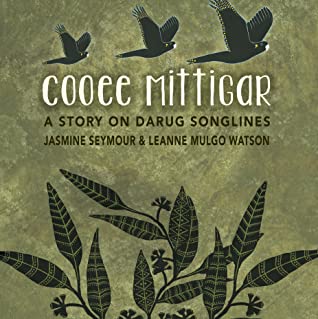
Jasmine Seymour and Leanne Mulgo Watson, Cooee mittigar: A story on Darug songlines (#BookReview)

Recently, on a bit of a whim, I bought two books from the Indigenous Australian publishing company, Magabala Books. They were the younger readers-young adult novel, Black Cockatoo (my review), which had been shortlisted for a few awards, and this picture book, Cooee mittigar, which had just won the 2020 Prime Minister’s Literary Award for Children’s Fiction. It is described on the Awards website as “introducing children and adults-alike to Darug ‘Nura’ (Country) and language”. So, a book for children and adults. I’m in …

The book tells the story of the seasons*, as understood or experienced by Sydney’s Darug people, through the eyes of the black swan, Mulgo. It is a perfect example of the generosity of Indigenous Australians. Despite being dispossessed of their country, despite being repeatedly discounted as having anything important to contribute, despite being overlooked or specifically excepted by policy-makers, they come back again and again, willing to share their knowledge – and, particularly, their language – when there’s a real risk that it too might be taken from them. They seem to understand, when so many don’t, that it’s only by sharing and communicating with each other our values and belief systems that we can mature as a nation.

And so, we have this beautiful hardback, written and illustrated by two Darug women, Jasmine Seymour and Leanne Mulgo Watson. Like many recent books I’ve read by Indigenous Australian writers, it incorporates Indigenous – Darug here, of course – language into the story. The technique they use is, in two-page spreads, to tell the story using English and Darug words, immmediately followed (on the same spread) by a glossary for the Darug words used. So, for example, we have:

In the time of yuruka and burara
Elders tell us not to hunt the buru.

yuruku – hot
burara – dry
buru – kangaroo

The glossary words are presented in slightly smaller but still clear text. The illustrations for the page, as you’d expect in a picture book, help convey the meaning. This spread, for example, is dominated by hot-dry looking yellows and tans, with two kangaroos lazing in the grass.

But now, let’s go back to the beginning. The book starts with a welcome: “Warami mittigar. Welcome friend. … Cooee mittigar. Come here friend.” We are then introduced to our guide, the afore-mentioned black swan, Mulgo, who tells us that she will teach us “about Darug life” – and off we go, starting, logically, with an introduction to Biami (dreaming ancestor spirit) and the idea of Darug dreaming and the songlines which tell the story of “Nura” or country. From here, we move through the seasons, starting when the “the darrabura [day] grows long and the weather warms up”. Each step of the way, we are told what to look for, what might be happening, what we can do, with respect to country and the natural environment, such as:

During dagara, gulgadya will bloom –
ready to be turned into spears.

dagara – frost
gulgadya – grasstree

The story ends with the gentle request to “tread softly on our lands”.

The language flows simply – though, as a non-indigenous reader, I’m sure it would take me a few readings to feel comfortable enough with the words to make it sound good aloud. Leanne Mulgo Watson’s illustrations draw mostly from greens, blues and yellows, but with touches of other hues. They are gorgeously evocative of the text, making them a delight for all readers, but they also provide good opportunities for actively engaging younger readers (and listeners).

At the end of the book is a complete glossary of the Darug words used throughout, with a simple pronunciation guide, which is a feature I’ve missed in other books. So, for example, there’s “warami – wara me – hello”. There is also a one-page description of Darug Country, and another page providing brief bios of Seymour and Watson.

Cooee mittigar concludes with a statement of its creators’ intentions, which are “to share Darug language and culture and show that the Darug people are still strong on Country”. They also “hope that Cooee mittigar will contribute to the continuation of stories and culture”. I’d be surprised if they haven’t achieved this, but I hope that in publishing this post I will have made my contribution to supporting their goals.

Challenge logo

Jasmine Seymour and Leanne Mulgo Watson (illus.)
Cooee mittigar: A story on Darug songlines
Broome: Magabala Books, 2019
48pp.
ISBN: 9781925936865

* As many Australians know, Indigenous Australians do not see the year through “our” four-season calendar, but through different seasons depending on the country.

Prime Minister’s Literary Awards Winners, 2019, announced

The Winners of the the Prime Minister’s Literary Awards for 2019 were announced earlier today, but I was driving to Berrima for my annual “same-time-next-year” catch up with a dear Sydney friend.

Below is the shortlist for the three categories I posted on in my shortlist post, with the winners marked in bold.

Fiction

  • Rodney Hall’s A stolen season, Picador (my review)
  • Gail Jones’ The death of Noah Glass, Text Publishing
  • Melissa Lucashenko’s Too much lip, University of Queensland Press (my review)
  • Suneeta Peres da Costa’s Saudade, Giramondo Publishing (Lisa ANZLitLovers’ review)
  • Laura Elizabeth Woollett’s Beautiful revolutionary, Scribe Publications

Oh well, not one I’ve read but Gail Jones has been around the traps for a long time with many shortlisted books, so congratulations to her.

Non-fiction

  • Cynthia Banham’s A certain light: A memoir of family, loss and hope, Allen & Unwin
  • Gabrielle Chan’s Rusted off: Why country Australia is fed up, Vintage Books
  • Paul Genoni and Tanya Dalziell’s Half the perfect world: Writers, dreamers and drifters on Hydra, 1955–1964, Monash University Press
  • Chloe Hooper’s The arsonist: A mind on fire, Hamish Hamilton (on my TBR) (Lisa AnzLitLovers’ review)
  • Maria Tumarkin’s Axiomatic, Brow Books (my review)

Australian history

  • Billy Griffiths’ Deep time dreaming: Uncovering ancient Australia, Black Inc.
  • Anna Haebich’s Dancing in shadows: Histories of Nyungar performance, UWA Publishing
  • David Kemp’s The land of deams: How Australians won their freedom, 1788-1860, The Miegunyah Press
  • Meredith Lake’s The Bible in Australia: A cultural history, NewSouth Publishing
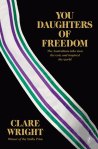
  • Clare Wright’s You daughters of freedom: The Australians who won the vote and inspired the world, Text Publishing (my review)

Other winners …

Three other categories were announced:

  • Poetry: Judith Beveridge Sun music: New and selected poems 
  • Young Adult fiction: Michael Gerard Bauer’s The things that will not stand
  • Children’s fiction: Emily Rodda’s His name was Walter

The complete shortlist with judges’ comments can be seen on the website (Check out their augmented reality function!)

No further comments from me, and no images, as I hate doing this on my iPad, but what about you…

Thoughts?

Prime Minister’s Literary Awards Shortlist, 2019, announced

As you know, I don’t announce all literary awards shortlists, but the Prime Minister’s Literary Awards have an “interesting” history, so I plan to follow them more closely than I originally did.

The press release says that over 500 books were submitted across the 6 categories, much the same as last year in fact. Last year, I listed all categories, but this year I am just listing the three that feature most often on my blog.

Rodney Hall, A stolen seasonFiction

  • Rodney Hall’s A stolen season, Picador (my review)
  • Gail Jones’ The death of Noah Glass, Text Publishing
  • Melissa Lucashenko’s Too much lip, University of Queensland Press (my review)
  • Suneeta Peres da Costa’s Saudade, Giramondo Publishing (Lisa ANZLitLovers’ review)
  • Laura Elizabeth Woollett’s Beautiful revolutionary, Scribe Publications

While last year’s list was male-dominated, this year’s tips the balance just over to the women’s side. Also, last year’s list seemed a little conservative, sticking to tried and true authors, while this year’s list mixes it up a bit. Indeed I barely know two of them. Best of all, last year I had read none of the shortlist, while this year I’ve read two! Hall, Jones and Lucashenko have appeared on a few lists this year, with Lucashenko, of course, recently winning the Miles Franklin Award.

Maria Tumarkin, AxiomaticNon-fiction

  • Cynthia Banham’s A certain light: A memoir of family, loss and hope, Allen & Unwin
  • Gabrielle Chan’s Rusted off: Why country Australia is fed up, Vintage Books
  • Paul Genoni and Tanya Dalziell’s Half the perfect world: Writers, dreamers and drifters on Hydra, 1955–1964, Monash University Press
  • Chloe Hooper’s The arsonist: A mind on fire, Hamish Hamilton (on my TBR) (Lisa AnzLitLovers’ review)
  • Maria Tumarkin’s Axiomatic, Brow Books (my review)

A mixed bunch, as you’d expect from something broadly described as “non-fiction”, but I’m pleased that again, unlike last year, I have actually read one of the books, and have another on my TBR. I like the judges’ description of Tumarkin’s exploration of her axioms, that she “turns them upside down and uses them to explore the intersection of past and present memories and the entanglement of human frailty.”

Clare Wright, You daughters of freedomAustralian history

  • Billy Griffiths’ Deep time dreaming: Uncovering ancient Australia, Black Inc.
  • Anna Haebich’s Dancing in shadows: Histories of Nyungar performance, UWA Publishing
  • David Kemp’s The land of deams: How Australians won their freedom, 1788-1860, The Miegunyah Press
  • Meredith Lake’s The Bible in Australia: A cultural history, NewSouth Publishing
  • Clare Wright’s You daughters of freedom: The Australians who won the vote and inspired the world, Text Publishing (my review)

Like last year, university publishing houses have done well here, with UWA Publishing, The Miegunyah Press and NewSouth Publishing taking three of the five spots. But, unlike last year, this year I have actually read one of the books! I am also particularly keen to read Billy Griffiths’ book which explores not only Australia’s archeology but the history of archeologists’ relationship with indigenous people and their knowledge and ideas about Australia’s “deep past”. While Griffiths and Haebich address indigenous Australia in their histories, I’m disappointed that there are no indigenous-authored histories here. Were any published or submitted this year I wonder?

The complete shortlist with judges’ comments can be seen on the website (Click on each book for the comments).

Thoughts, anyone?

Prime Minister’s Literary Awards Winners, 2018, announced

The Winners of the the Prime Minister’s Literary Awards for 2018 were announced this morning at Parliament House … an event I followed via their Twitter Live Feed … and it contained the BEST of ALL POSSIBLE news that Gerald Murnane won the Fiction prize. I haven’t read the novel, so perhaps my approval is cheeky, but Murnane has been far too under-rated over the years and it’s high time he was recognised for his contribution to Australian letters! Sure, he can be obscure, but that makes him interesting – even fun – to read because of the mesmerising way he interrogates our emotional interiors/landscapes in some sort of alignment with a physical interior/landscape, that feels Australian but is also mythical in its lack of specificity.

Below is the shortlist, with the winner marked in bold.

Gerald Murnane, Border districtsFiction

  • A long way from home, Peter Carey (Penguin Random House): on my TBR (Lisa’s review)
  • Border districts, Gerald Murnane (Giramondo): on my TBR (Lisa’s review)
  • First person, Richard Flanagan (Penguin Random House): my review
  • Taboo, Kim Scott (Pan Macmillan): on my TBR (Lisa’s review)
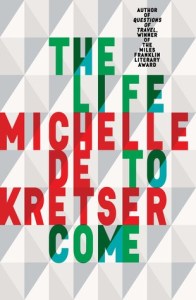
  • The life to come, Michelle de Kretser (Allen & Unwin): my review (and winner of this year’s Miles Franklin Award)

The pre-announcement Twitter feed said “beautifully told stories capturing a broad range of themes”. That tells us a lot doesn’t it!

Poetry

  • Archipelago, Adam Aitken (Vagabond Press)
  • Blindness and rage: A phantasmagoria, Brian Castro (Giramondo Publishing) (Lisa’s review)
  • Chatelaine, Bonny Cassidy (Giramondo Publishing)
  • Domestic interior, Fiona Wright (Giramondo Publishing)
  • Transparencies, Stephen Edgar (Black Pepper)

This time the twitter feed said that “this year’s shortlistees prove that poetry is very much alive and a vibrant art form in Australia”. Hmm … any different from last year’s I wonder?

The winner is another grand man of Australian letters whom I must get onto my blog soon – he’s one of my gaps.

Non-fiction

  • Asia’s reckoning, Richard McGregor (Penguin Random House UK)
  • Mischka’s war: A European odyssey of the 1940s, Sheila Fitzpatrick (University of Melbourne Publishing)
  • No front line: Australia’s special forces at war in Afghanistan, Chris Masters (Allen & Unwin)
  • The library: A catalogue of wonders, Stuart Kells (Text Publishing)
  • Unbreakable, Jelena Dokic and Jessica Halloran (Penguin Random House): my report of an In Conversation event

And the pre-announcement twitter feed said, “The shortlisted books reflect our place in history and the modern world.” Hmm … again. I think I’ll forget the Twitter feeds.

Australian history

  • Beautiful Balts: From Displaced Persons to New Australians, Jayne Persian (NewSouth Publishing)
  • Hidden in plain view: The Aboriginal people of coastal Sydney, Paul Irish (NewSouth Publishing)
  • Indigenous and other Australians since 1901, Timothy Rowse (NewSouth Publishing)
  • John Curtin’s war: The coming of war in the Pacific, and reinventing Australia, Volume 1, John Edwards (Penguin Random House)
  • The enigmatic Mr Deakin, Judith Brett (Text Publishing)

Children’s literature

  • Feathers, by Phil Cummings and Phil Lesnie (Scholastic Australia)
  • Figgy takes the city, Tamsin Janu (Scholastic Australia)
  • Hark, it’s me, Ruby Lee!, Lisa Shanahan and Binny Talib (Hachette Australia)
  • Pea pod lullaby, Glenda Millard and Stephen Michael King (Allen & Unwin)
  • Storm whale, Sarah Brennan and Jane Tanner (Allen & Unwin)

Young Adult literature

  • Living on Hope Street, Demet Divaroren (Allen & Unwin)
  • My lovely Frankie, Judith Clarke (Allen & Unwin)
  • Ruben, Bruce Whatley (Scholastic Australia)
  • The ones that disappeared, Zana Fraillon (Hachette Australia)
  • This is my song, Richard Yaxley (Scholastic Australia)

Thoughts, anyone?

Prime Minister’s Literary Awards Shortlist, 2018, announced

I don’t always announce all literary awards shortlists, but have decided to announce the Prime Minister’s Literary Awards shortlist this year. The press release says that over 500 books were submitted across the 6 categories. Is that all? I guess I would have expected more, but it is somewhat expensive to submit, particularly for small publishers. There is NO entry fee, but 10 copies of each book submitted must be provided.

Over the years, the number of categories offered under the award, which was introduced in 2008 by Kevin Rudd, has increased, which is excellent I’d say for Australian writers, given the value of the award. Winners receive $80K, and shortlisted authors $5K.

I also don’t always announce all the categories covered by awards, but this year I’m gonna, starting with Fiction of course!

Michelle de Kretser, The life to comeFiction

  • A long way from home, Peter Carey (Penguin Random House): on my TBR (Lisa’s review)
  • Border districts, Gerald Murnane (Giramondo): on my TBR (Lisa’s review)
  • First person, Richard Flanagan (Penguin Random House): my review
  • Taboo, Kim Scott (Pan Macmillan): on my TBR (Lisa’s review)
  • The life to come, Michelle de Kretser (Allen & Unwin): my review (and winner of this year’s Miles Franklin Award)

Quite a male-dominated list this year, and generally conservative, as it sticks with tried and true authors, but nonetheless these are all, from what I’ve read or ascertained from others, good books. Still, I have liked that this award has often introduced us to something a bit different (like Stephen Daisley, and Lisa Gorton) from the other awards, but not so here. It would be lovely to see Gerald Murnane win – the only one among these not to have won a significant Australian award – given his significant contribution to Australian letters, but, will he?

I have not read any of the rest of the shortlisted books, I’m afraid.

Poetry

  • Archipelago, Adam Aitken (Vagabond Press)
  • Blindness and rage: A phantasmagoria, Brian Castro (Giramondo Publishing)
  • Chatelaine, Bonny Cassidy (Giramondo Publishing)
  • Domestic interior, Fiona Wright (Giramondo Publishing)
  • Transparencies, Stephen Edgar (Black Pepper)

Looks like that wonderful independent publisher Giramondo is one of this year’s winners, regardless of WHO wins the awards in the end. Good on them, in particular, for supporting poetry so well.

Non-fiction

  • Asia’s reckoning, Richard McGregor (Penguin Random House UK)
  • Mischka’s war: A European odyssey of the 1940s, Sheila Fitzpatrick (University of Melbourne Publishing)
  • No front line: Australia’s special forces at war in Afghanistan, Chris Masters (Allen & Unwin)
  • The library: A catalogue of wonders, Stuart Kells (Text Publishing)
  • Unbreakable, Jelena Dokic and Jessica Halloran (Penguin Random House): my report of an In Conversation event

Australian history

  • Beautiful Balts: From Displaced Persons to New Australians, Jayne Persian (NewSouth Publishing)
  • Hidden in plain view: The Aboriginal people of coastal Sydney, Paul Irish (NewSouth Publishing)
  • Indigenous and other Australians since 1901, Timothy Rowse (NewSouth Publishing)
  • John Curtin’s war: The coming of war in the Pacific, and reinventing Australia, Volume 1, John Edwards (Penguin Random House
  • The enigmatic Mr Deakin, Judith Brett (Text Publishing)

And here, NewSouth Publishing, the publishing arm of the University New South Wales, has strut its stuff. They also did well at this year’s New South Wales Premier’s Literary Awards, where they won two prizes, including Paul Irish’s Hidden in plain view for the NSW Community and Regional History Prize. As I’ve said before, it’s excellent to see university presses publishing and doing well.

Children’s literature

  • Feathers, by Phil Cummings and Phil Lesnie (Scholastic Australia)
  • Figgy takes the city, Tamsin Janu (Scholastic Australia)
  • Hark, it’s me, Ruby Lee!, Lisa Shanahan and Binny Talib (Hachette Australia)
  • Pea pod lullaby, Glenda Millard and Stephen Michael King (Allen & Unwin)
  • Storm whale, Sarah Brennan and Jane Tanner (Allen & Unwin)

Young Adult literature

  • Living on Hope Street, Demet Divaroren (Allen & Unwin)
  • My lovely Frankie, Judith Clarke (Allen & Unwin)
  • Ruben, Bruce Whatley (Scholastic Australia)
  • The ones that disappeared, Zana Fraillon (Hachette Australia)
  • This is my song, Richard Yaxley (Scholastic Australia)

And, in the youth literature area, congrats to Allen and Unwin, Hachette Australia and Scholastic Australia who have scooped the pool. I don’t know enough about this area to know how representative this is, but I do know that indigenous publisher Magabala Books publish children’s books. I wonder if they submitted.

The complete shortlist with judges’ comments can be seen on the website. And now, I apologise for the rushed post, but I’m running late for my afternoon commitments and will be out this evening too.

Thoughts, anyone?

Monday musings on Australian literature: 2016 awards season dragging to a close

As the year draws to a close, our final major literary awards are being announced. We’ve seen this month the winners of the Queensland Literary Awards and the Western Australian Premier’s Book Awards. The Barbara Jefferis Award has announced its shortlist, but we are still waiting for the Prime Minister’s Literary Awards shortlist.

All but one of these awards have had somewhat problematic trajectories in recent years. The Queensland Literary Awards were established in 2012 when the then Queensland Premier, Campbell Newman, abolished the Queensland Premier’s Literary Awards. The awards were managed for two years by a volunteer committee, before negotiation with the State Library of Queensland saw the Library take over management in 2014. In 2015, new Premier Anastasia Palaszczuk announced that the government would again support the awards. However, they are now a more collaborative venture than they’d been under the abolished regime, which should ensure a more secure future for them. The Western Australian Premier’s Book Awards, on the other hand, which had been awarded annually from 1996 to 2014, were downgraded to a biennial timetable starting in 2016. Disappointing, really.

Meanwhile, what has happened to the Prime Minister’s Literary Awards (PMLA)? Established in 2008 after Kevin Rudd became Prime Minister, they expanded quickly from comprising just two prizes (fiction and non-fiction) to several, so that by 2102 there were six prizes with young adult fiction, children’s fiction, poetry and Australian history being added to the mix. However, there seems to be no established timetable. In 2008, the winners were announced in September, while in 2009 and 2010, we had to wait until early November. Then, in 2011 and 2012, they were announced in July, and in 2013 it was August. The last two years, 2014 and 2015, the winners were announced in December, with their shortlists announced in October and November, respectively. Given there’s been a call for entries this year, they must be happening, so presumably we’ll see this year’s shortlist soon! The PMLA people play it very close to their chest, despite having a Facebook page on which they share all sorts of literary news, because this year, as in recent ones, I’ve not been able to find a timetable. I guess we just have to have faith.

The Prime Minister’s Literary Awards have other issues, though, besides erratic timetabling, including a lack of transparency regarding the process, poor marketing and promotion, and, most serious of all, political interference in the judges’ decisions. The best known example of this occurred in 2014 when the then Prime Minister Tony Abbott over-ruled the fiction judges’ choice of Stephen Carroll’s A world of other people to award the fiction prize to Richard Flanagan’s The narrow road to the deep north. But, according to Patrick Allington in The Conversation and past non-fiction judge Colin Steele, such interference has occurred a few times in the Awards’ short history. This is not good enough. As Allington writes, the stipulation that a Prime Minister has the final say about winners “compromises the Awards’ credibility, purpose and depth.”

The fun stuff … some winners

But enough of that. Let’s talk about some of the winners. I’m not going to list them all because the Queensland Literary Awards offers prizes in twelve categories and you can see them all at the site. Similarly, the WA Premier’s Book Awards has about eleven categories, and you can see those winners too at their site. I’m just going to share the few winners I’ve read and reviewed!

Elizabeth Harrower, A few days in the country and other stories

First up, the Queensland Literary Awards. The award which pleased me most is Elizabeth Harrower’s A few days in the country and other stories (my review) sharing the Steele Rudd Award for Australian short story collections sponsored by the University of Southern Queensland. This is a wonderful collection of short stories, which has been shortlisted for a couple of awards, so I’m thrilled to see Harrower receive the recognition she deserves. (And I’m pleased for Text Publishing too given the work they’ve done to bring Harrower to our attention through their Text Classics).

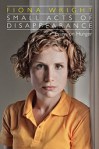
Fiona Wright, Small acts of disappearanceAnother a winner at these awards was Fiona Wright’s honest, insightful collection of essays, Small acts of disappearance (my review), about her experience of an eating disorder. Wright was the Non-fiction Book Award, also sponsored by the University of Southern Queensland.

Meanwhile, over in the west, at the newly biennial Western Australian Literary Awards, it all felt a little old because many of the winners have been around for a couple of years now and most of them featured in the 2015 shortlists and awards. This is not their fault of course, but it certainly brought home the impact of the awards only being two-yearly. The fiction award, for example, was won by Joan London’s The golden age, which was shortlisted and/or won several awards in 2015.

Helen Garner, This house of grief book cover

Courtesy: Text Publishing

The big news at these awards, from my point of view, is that Helen Garner’s non-fiction work This house of grief (my review) won not only the Non-fiction prize, but also the overall Premier’s Prize. A fascinating choice, because mostly, though not exclusively I know, these overall awards tend to go to works of fiction.

Western Australia, like Queensland, quarantines an award or two to writers from their states. Queensland has awards for “a work of state significance” and “emerging Queensland writer”, while Western Australia offers awards for “Western Australian history” and “Western Australian emerging writer”. The winner of this last award is a book I’ve reviewed here, Lost and found by Brooke Davis.

And so, by my reckoning, we have three more literary awards to go – the Prime Minister’s (on a yet-to-be announced date), the biennial Barbara Jefferis Award (on 25 October), and the always interesting MUBA (Most Underrated Book Award (on 11 November). Good luck everyone.

Monday musings on Australian literature: The challenge of literacy

Today’s topic may be a bit serious for Christmas week, but I’ve decided to go with it anyhow. I was inspired to write it by an article in the online journal, The Conversation. The article, by Deakin University academic Lyn McCredden, was itself inspired by the Prime Minister’s Literary Awards at which one of the winners, Richard Flanagan, donated his $40,000 prize to the Indigenous Literacy Fund. A good thing, nest-ce pas? McCredden goes on to mention the creation by Prime Minister Tony Abbott that night of the Australian Book Council, and quotes publisher Louise Adler as stating that this Council “declares that Australian writing matters and that building future generations of writers and readers is vital to a civilised and free society”. So far so good, but …

Then she quotes American literary critic Michael Bérubé who wrote in 1996 that:

… it has been some decades now since George Steiner and Thomas Pynchon reflected, in their different ways, on the phenomenon of Nazi officers with a fine appreciation of aesthetic excellence. (Bérubé)

In other words, the importance of literacy is a given but

what is so often occluded or skimmed over in many of the prize-giving activities of the book industry is that literacy on its own [my emphasis] is not necessarily a good. (McCredden)

Are you getting the picture? Sure, she says, not being able to read is a bad thing – it usually implies or leads to powerlessness and lack of privilege – but being able to read per se is not automatically good in itself, as Bérubé implies.  (Though, of course, what is “good” is a judgement isn’t it?). Anyhow, McCredden goes on to refer to Flanagan’s winning novel, The narrow road to the deep north, and the fact that “the figure of the vicious and violent prison guard is also notable for the way he quotes the exquisite poetry of Basho, even as he inflicts maniacal harm on prisoners”. If I understand her correctly, she suggests that for reasons like this, she doesn’t find Flanagan’s book (see my review), “satisfying or cohesive”. However, my reading is that Flanagan addresses the ambiguity contained in the Japanese officers’ love of poetry when he says:

They recited to each other more of their favourite haiku, and they were deeply moved not so much by the poetry as by their sensitivity to poetry; not so much by the genius of the poem as by their wisdom in understanding the poem; not in knowing the poem but in knowing the poem demonstrated the higher side of themselves and of the Japanese spirit … (Flanagan, The narrow road to the deep north)

This, to me, clearly expresses Flanagan’s awareness of the questionable or complicated nature of our relationship to literature. McCredden and I could argue this specific point, but it’s not the essence of her article, so let’s continue.

Books, she argues, do not always “unite” us. In fact, the controversies they sometimes generate show that culture is “always contested, and always ideological”. The best kinds of books she therefore suggests might be those that challenge our assumptions about ourselves – like Christos Tsiolkas’ Barracuda (see my review) – rather than those that “please us with myths about ourselves”. She argues that:

if we are, like Dorrigo, privileged enough to be able to read, we are opening ourselves to a world of pain, as much as entertainment. (McCredden)

Literacy, in other words, carries responsibilities as well as rights. As citizens we have a right to be able to read and to therefore conduct the business of our lives, but, there’s more to it than that, and therefore

Learning how to read – that is, how to think, analyse and challenge prevailing ideas (including those appearing in many works of literature, many histories) needs to be considered more coherently alongside the mechanics of book distribution, book marketing, learning the alphabet. (McCredden)

A very good point – and much needed methinks in our rush-to-judgement world. Do you agree? And if so, how do we teach this sort of reading without turning people off?