Gabrielle Carey, Only happiness here: In search of Elizabeth von Arnim (#BookReview)

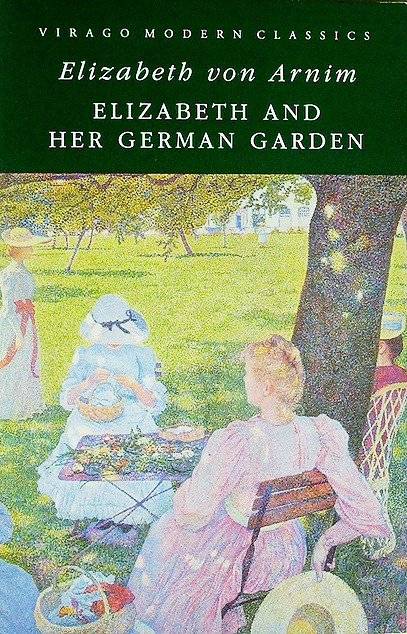
I discovered Elizabeth von Arnim (nee Mary Annette Beauchamp, 1866-1941) back in the 1990s when Virago republished her first novel, Elizabeth and her German garden. Published in 1898, this novel, writes Gabrielle Carey, was an immediate hit, turning her, almost overnight, into one of England’s favourite authors. It was certainly a revelation to me.

I went on to read several of her books, including her pseudo-autobiography All the dogs of my life, over the next decade. I was completely charmed by her wit and humour together with her insights into love and marriage, and their impact, in particular, on women’s lives. Anyone who’s a Jane Austen fan couldn’t fail, I’m sure, to see von Arnim’s ancestry. I wrote one of my early Monday musings posts on her.

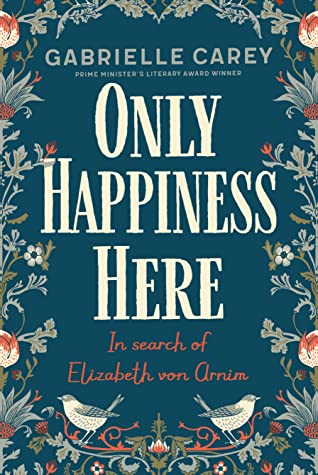
Book cover

What, a Monday Musings on Australian literature on Elizabeth von Arnim? It was cheeky I know – and I admitted it at the time. Yes, she was born in Australia, but yes, she left here, never to return, when she was three. However, I just wanted to write about her. And so, it seems did Gabrielle Carey, who opens her hybrid memoir-biography with

When I first discovered Elizabeth von Arnim, I found, for the first time, a writer who wrote about being happy. So much of my reading life – which essentially means so much of my actual daily life – had been spent reading miserable literature because, let’s face it, most literature is miserable.

Carey isn’t clear about when she discovered von Arnim in relation to when she started working on this book, but says that once she discovered von Arnim, she became something of a “von Arnim evangelist”. She was “incensed” that von Arnim had been so completely forgotten. I could relate to this, because I felt the same. Unfortunately, my evangelising didn’t go far because no-one in my reading group had heard of her when I recommended that we do one of her novels as our “classic” this year. More on that, then.

If you are among those you don’t know this writer, you might be surprised to hear that several biographies have been written about her, including three in the last decade. I have two of them, Jennifer Walker’s more traditional literary biography, Elizabeth of the German garden: A literary journey, published in 2013, and Gabrielle Carey’s. The third is Joyce Morgan’s The countess from Kirribilli, published in 2021. Just this should tell you something about the fascination with which this woman is held, this woman who published 21 books, whose first cousin was Katherine Mansfield, and who knew EM Forster, had an affair with HG Wells and married (among others) Bertrand Russell’s brother. She had a life – and then some!

OK, so I’ve written quite a bit about Elizabeth von Arnim, but not much about Gabrielle Carey’s book. Only happiness here is the third sort-of literary biography that Carey has written, the other two being Moving among strangers (my review) about Randolph Stow and her family’s connection with him, and Falling out of love with Ivan Southall about her losing faith in this childhood writing idol. Carey, it seems, likes to explore her subject matter through the prism of her own life and experience (a bit like Von Arnim did with her fiction). This is not to everyone’s taste, but when done well, like, for example, Jessica White’s Hearing Maud (my review), it can be both engaging and effective.

I loved White’s book for the way she explored Maud Praed (daughter of novelist Rosa Praed) through their joint experiences of deafness, neatly marrying information with activism. Carey’s book has a very different driver, one I foreshadowed in the opening quote from her book. A few pages on, Carey makes her goal clear:

What did Elizabeth von Arnim understand about happiness that no other writer I’ve ever come across did? And is it something I too might be able to learn?

She wanted to know “the secret to her enviable ability to enjoy life” because it was clear from her novels and journals that she did, despite the many trials she faced. Indeed, the book’s title is the sign von Armin put over the door of her Swiss chalet. Carey argues that von Arnim “was, perhaps unknowingly, one of the earliest proponents of positive psychology”. Carey was so serious about her goal that amongst the end-matter in her book is a page titled “Elizabeth von Arnim’s Principles of Happiness”. There are nine, but if you want this bit of therapy you are going to have to read the book yourself! However, to whet your appetite, the first one is “Freedom”.

Carey tells her story – I mean, von Arnim’s story – chronologically, regularly interspersing her own reflections and experiences in relation to von Arnim’s. An early example occurs when she writes about von Arnim’s first marriage to the much older Count von Arnim, and her novel inspired by this, The pastor’s wife (albeit the Count was not a pastor!) In this novel, von Arnim writes that “Ingeborg in her bewilderment let these things happen to her”. Carey immediately follows this with:

How well I understand this experience of letting things happen. All my life I had let things happen to me, often without my consent.

And she then spends nearly two pages exemplifying this from her life. Mostly this approach of Carey’s was interesting, even illuminating, but there were times when it felt a little too self-absorbed. However, this didn’t overly detract from what is a thoughtful introduction to von Arnim and her work. In under 250 pages, Carey manages to tell us something about almost every one of Von Arnim’s books – how each one fit into her life, what aspects of her life it drew from, and how it was received at the time. In that same number of pages, she conveys the richness of von Arnim’s long and event-filled life. I’m impressed by how succinct and yet engaging the book is, and am not surprised that it was shortlisted for the 2021 Nib Literary Award. I should add here that while the book is not foot-noted – its not being a formal “literary biography” – there are two and a half pages of sources at the end.

So, what did I, as a reader of von Arnim, get from this book, besides a useful introduction to her complete oeuvre? Well, firstly, I got a deeper understanding of how much of her oeuvre drew from her own life, and from that I got to better understand her attitude to marriage and to the relationship between men and women, and to her exploration of, as Carey puts it, “the clash between the concept of the ideal and the real”. I also got to understand more about her times, its literary milieu, and her place within it – and to see how we can never really foretell which writers will survive and which won’t. When von Arnim died, obituary writers were sure she’d not be forgotten. They also believed she’d be far more remembered than her shorter-lived cousin, the above-named Katherine Mansfield. But …

… as Carey sums up, “her style of conventionally plotted novels, however, rebellious, insightful or entertaining, soon went out of literary fashion”, because, wrote English novelist Frank Swinnerton, “her talent lay in fun, satirical portraiture, and farcical comedy”. These, he said, were ‘scorned by the “modern dilemma”‘. We are talking, of course, of Modernism, which, as Carey puts baldly, “didn’t believe in happiness”, a value that has carried through to today.

I will leave this here, because I want to return to it in a separate post. Meanwhile, I’d argue that while von Arnim’s books might be witty, they are not simplistic. They come from an astute and observant mind that was able to comment both on the times and on universalities in human nature. They may not have Modernism’s bleakness, but they aren’t light fluff either. Carey’s simple-sounding quest has, I think, touched on something significant.

Brona (This Reading Life) enjoyed this book, which she ascribes to the bibliomemoir genre.

Gabrielle Carey
Only happiness here: In search of Elizabeth von Arnim
St Lucia: UQP, 2020
249pp.
ISBN: 9780712262975

Stella Prize 2022 Longlist announced

Apologies to those of you who look forward to my Monday Musings post, but I’ve gazumped this week’s edition, because the Stella Prize longlist was announced this evening, and I do like to report on that. I attended the online streamed announcement.

As I say every year, I don’t do well at having read the Stella Prize longlist at the time of its announcement. In recent years the most I’ve read has been two (in 2019). Last year it was none. I don’t expect much better this year.

I was, however, doing better at reading the winners, having read Carrie Tiffany’s Mateship with birds (2013), Clare Wright’s The forgotten rebels of Eureka (2014), Emily Bitto’s The strays (2015), Charlotte Wood’s The natural way of things (2016), Heather Rose’s The museum of modern love (2017), and Vicki Laveau-Harvie’s The erratics (2019). But, that’s slipping too. So far, I’ve missed 2018’s winner, Alexis Wright’s Tracker, am still reading 2020’s winner, Jess Hill’s See what you made me do, and still have last year’s winner, Evie Wyld’s The bass rock on my TBR.

The judges are a complete changeover from last year’s with the excellent, multi-award-winning Melissa Lucashenko taking the role of chair. Her co-judges are writer, poet, essayist Declan Fry; author-across-all-forms Cate Kennedy; memoirist and activist Sisonke Msimang; and essayist and screenwriter Oliver Reeson. As always, attention has been paid to diversity on the panel.

Oh, and I should note that a new form has been added to those eligible for the prize this year, single-author poetry collections. An excellent decision – as it turns out.

The longlist

  • Randa Abdel-Fattah, Coming of age in the War on Terror (nonfiction)
  • Eunice Andrada, Take care (poetry)
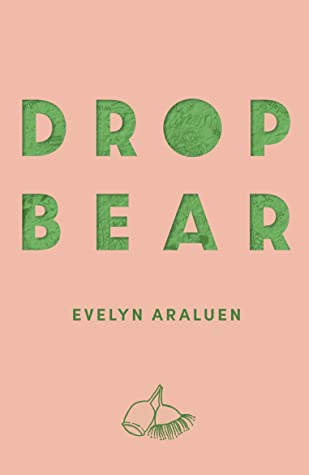
  • Evelyn Araluen, Dropbear (poetry) (TBR, Brona’s review)
  • Paige Clark, She is haunted (short stories)
  • Anwen Crawford, No document (memoir) (Lisa’s review)
  • Jennifer Down, Bodies of light (novel)
  • Anita Heiss, Bila Yarrudhanggalangdhuray (novel) (TBR, Lisa’s review)
  • Lee Lai, Stone fruit (graphic novel)
  • SJ Norman, Permafrost (short stories)
  • Elfie Shiosaki, Homecoming (memoir) (Lisa’s review)
  • Lucy Van, The Open (poetry) 
  • Chelsea Watego’s Another day in the colony (nonfiction) (Bill’s post)

I didn’t have a strong feel for what might be on the list, but did guess four that ended up there – Araluen, Crawford, Down and Watego. I should have thought of Heiss. On the other hand, although I haven’t read it yet, I was hoping to see Melinda Bobis’ The kindness of birds. However, as I haven’t read any of the longlist, I’m not going to judge. But I will say that the panel discussion that followed the announcement made powerful arguments for their choices. It might be a cliched thing to say, but it looks like a brave list that is likely to challenge readers.

In the lively and very enjoyable online discussion, the panel made some overall comments, as well as discussing individual books. They said that the flavour of the year was poetry. There are, in fact, three on the list. Interestingly, there are only two novels, but there is a graphic novel, and there are two short story collections, so fiction is still well represented. That leaves four works of nonfiction to round out the twelve.

The panel was “excited to have all genres in the list”, and made the strong point that it’s the message that matters more than the medium. It was very clear, as the evening progressed, that message was a critical issue for this panel, that works that interrogate and fiercely tackle the serious matters confronting us, are what most attracted them – whether from a political, or personal point of view, or both. As one who loves “message” in literature, I appreciate this. However, lest all this sound too bleakly serious, they also made the point that although the books are all “quite challenging”, in most there’s also wit, if not, in some, laugh-out-loud humour.

Finally, I’ll close with judging panel chair, Melissa Lucashenko’s opening comments:

In the aftermath of Black Lives Matter and #MeToo, Stella writers are not holding back… Australian women and non-binary writers are producing innovative, sophisticated literature in very difficult times. It has been a great privilege to read and assess their work for the 2022 Stella Prize.

To read more, do check out the Stella website.

The shortlist will be announced on 31 March, and the winner on 28 April.

Any comments?

Julie Koh, Portable curiosities: Stories (#BookReview)

I’ve decided to try reading more audiobooks this year, despite not being a big fan of this mode of consuming books. I’m a textual person. I like to see the print on the page, how it is set out. I like to see the words. I like to see how the names are spelt. Given my reservations and the fact that I expect to “read” in short stints, I thought short stories might be the way to go. I think they are, though my overall reservations still stand.

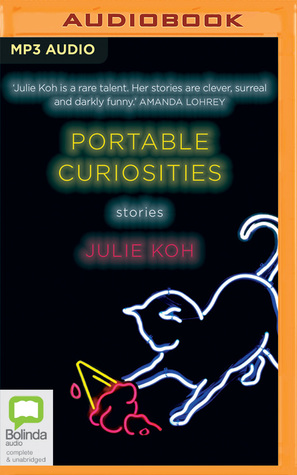
My first book was one that was well-reviewed when it appeared in 2016, Julie Koh’s Portable curiosities. It won the SMH Best Young Novelists Awards in 2017, and was shortlisted for several other awards, including the Steele Rudd Award for Short Story Collections (Queensland Literary Awards) and the Glenda Adams Award for New Writing (NSW Premier’s Literary Awards). I checked to see who won the Steele Rudd Award that year, because Koh’s collection is great. It was clearly a strong year. There were co-winners, Elizabeth Harrower’s wonderful A few days in the country, and other stories (my review) and Fiona McFarlane’s High places, which I’ve also been wanting to read.

So, Portable curiosities. I had no idea what this collection was about, and was delighted to find a lively, engaged and engaging interrogation of contemporary Australia, particularly as it intersects with Chinese-Australian experienceIt is highly satirical, penetrating the myths and assumptions that underpin our shaky existence.

The order of stories in a collection is always worth thinking about, and it is notable that this twelve-story collection opens with a story called “Sight” which satirises immigrant Chinese mothers who are so ambitious for their children to fit in and achieve success that they discourage any sort of individuality or creativity. Many of the stories have a surreal or absurdist element. They start realistically but suddenly we find ourselves in another realm or dimension. “Sight”, starting off the collection, is an example. Here, we suddenly find our young narrator having a “third eye” painted on her navel. This eye represents her imaginative self, so her mother organises for it to be removed in an operation.

From here, having satirised Chinese immigrant culture, Koh moves on to critique, with biting clarity, aspects of Australian culture, from misogyny (in “Fantastic breasts” where our male narrator looks for “the perfect set of breasts to have and to hold” at a conference on “The difficulties of an objective existence in a patriarchal world”) to crushing, soulless workplaces that pay lipservice to their employees’ mental health (in “Civility Place”). “Satirist rising” mourns the end of the civilised world, with a bizarre travelling exhibition that aims to ensure the continuation of the “landscapes of our mind”, while the cleverly titled “Cream reaper” (you have to read it to see what I mean) tackles foodie culture, turning foodie-ism into an extreme sport. Along the way, it also skewers multiple aspects of our capitalist culture, like the housing bubble, the commercialism of art, institutional banking, and the plight of the tortured writer.

As a retired film archivist, I loved “The three-dimensional yellow man” which takes to task the stereotyping of Asians on film. There’s “no need for a back story”, our one-dimensional (yellow man) Asian actor is told, “you’re evil”. He belongs, after all, to the “cruel, meek blank-faced race”. Again, the satirical targets are broad-ranging from film festival panels to Pauline Hanson – and embarrassingly close to the bone.

Many of the stories, like “Two” and “Slow death of Cat Cafe”, explore success, materialism and power, while the 2030-set “The Sister Company” exposes a cynically commercial “mental health industry” through the application of androids to the problem. All these stories, despite, or because of, their laugh-out-loud moments and forays into absurdity, hit their mark. A couple, such as “Two” and “Cream reaper”, felt a bit long, even though I thoroughly enjoyed their imagination, but this might have been a product of listening rather than reading, so I’m reserving judgement on this.

My favourite, however, was probably the last, “The fat girl in history”, which opens on a reference to the popular (in Australia) CSIRO Total Well-being Diet. The narrator is Julie, and, although this story also moves into surreal realms, there is a strong sense of autofiction here. Remember, though, that autofiction is still fiction so … Our narrator is a fiction-writer experiencing a crisis of confidence. She has written about a depressed girl, androids and the future – all of which appear in this collection. She’s been told that she writes like Peter Carey, though she admits she’s never read him. She reads an article telling her that contemporary literature is “in the throes of autofiction”, that the “days of pastiche are over”, and then informs us that she’s going to write autofiction titled “The fat girl in history.” Australians will know that Peter Carey has written a short story, “The fat man in history”, and that his debut collection named for this story started his stellar career. I will leave you to think about the portents and threads of meaning Koh is playing with here, but her outright cheekiness in daring us to go with her made me laugh – particularly when I saw where she went.

Portable curiosities deals with serious, on-song subjects, and I so enjoyed seeing her address them through satire, absurdity and surrealism with a healthy dose of black humour. At times the lateral thinking in these stories, not to mention Koh’s interest in satire, reminded me of Carmel Bird. A most enjoyable collection, that was expressively read by Lauren Hamilton Neill.

Julie Koh
Portable curiosities: Stories
(Read by Lauren Hamilton Neill)
Bolinda Audio, 2018 (Orig. pub. 2016)
5hrs 48mins (Unabridged)
ISBN: 9781489440808

Christine Balint, Water music (#BookReview)

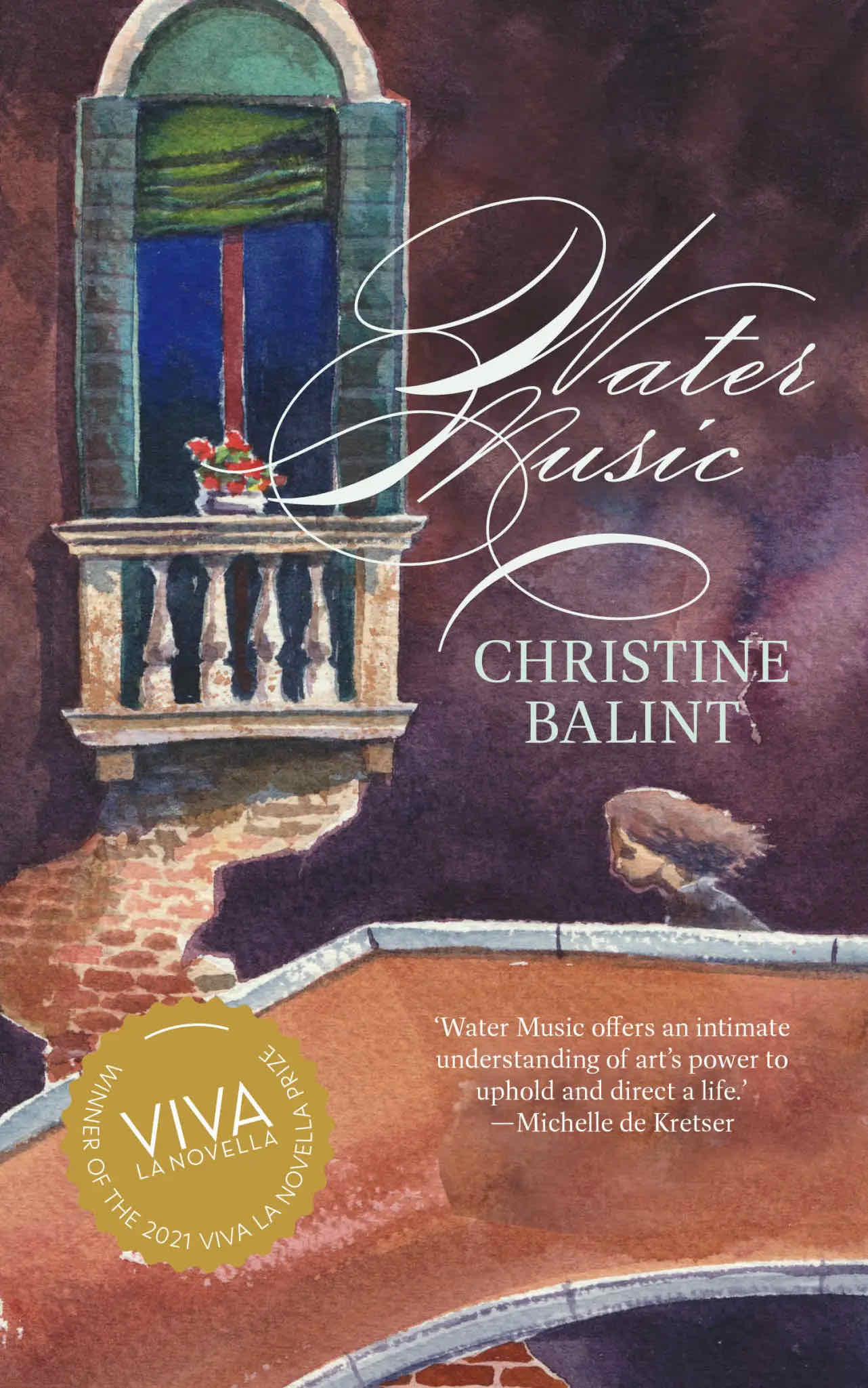
Christine Balint’s Water music was a joint winner of the 2021 Viva La Novella Prize with Helen Meany’s Every day is Gertie Day (my review), but they are very different books. Meany’s is contemporary, perhaps even near-future, and tackles some up-to-the-minute issues regarding fact, truth and authenticity, while Balint’s is historical fiction, a coming-of-age story, albeit a very specific one.

Set in 18th century Venice, Water music tells the story of a young orphan, Lucietta, who is raised by a fisherman’s family until she’s 16 years old when she leaves to live in Derelitti Convent, one of Venice’s many musical orphanages for girls. This interested me, because when my children were young we loved listening to an audiocassette telling the story of Vivaldi teaching in a Venetian orphanage for girls, but I’d never researched it further.

Balint explains her inspiration in the Acknowledgements and on her website. The book, she says, draws on “the unique history of the musical orphanages” in Venice, which existed from around 1400 to 1797, and were run by and for women. They took in girls of any class or background, if they passed an audition, and provided them with an opportunity to pursue a professional career when this “was rarely possible elsewhere in the world”. In particular, they gave impoverished girls an opportunity “to earn an income and establish a career or save for a dowry—enabling them to forge a fruitful life”.

The obvious question is, how could impoverished girls learn enough music to pass the audition? There must have been a way, but in our Lucietta’s case, she was born illegitimately and placed in a “foundling home”. From here she was given to a wet-nurse, the woman who became her mother, but her “real” father had left instructions and money for her musical education. This sets her on the course that leads her to auditioning for and being accepted at Derelitti.

From the beginning, it’s clear that Lucietta, who has learnt the violin, is musically talented and that her parents have been conscientious about fulfilling these instructions. Her mother, Lucietta tells us, “believed that if she followed these instructions, my musical and marital future would be assured”. Notwithstanding this, the question the novella poses is, what is her future to be? A few options are available to, or possible for, Lucietta, ranging from the future her mother doesn’t want for her, being a fisherman’s wife, to one dreamed of by the orphanage girls of being married to a nobleman from the “Golden Book“.

The story is told first person by Lucietta, so we see it all through her eyes. She’s a sensitive, intelligent young woman who has loved her fishing family, which includes a brother Lionello, so it’s not surprising that she is initially disconcerted when she leaves her family to live in the convent. However, this seems to be a kind place were the nuns and music teachers are supportive and the other girls are friendly. There’s not a lot of drama here, which is counter to your typical historical fiction. Instead, we travel along with Lucietta as she absorbs the influences, ideas and life around her, as she grows and changes, and as she meets, under the eyes of her mentors Maestra Francesca and the Convent’s priora, her suitor and potential husband, Don Leonardi.

Lucietta has decisions to make … and the good thing is that she is supported in those decisions without pressure. Well, there is a little pressure, including from one of her Convent friends, the sweet but one-armed and therefore in those times unmarriageable Regina. She had been sent to the Convent by her father who didn’t want to waste money on her. This is a world, after all, where “a girl is only as worthwhile as her marriage prospects”. Through Regina, Lucietta sees all the

Unwanted, unmarriageable girls through centuries. Here in this vast echoing building. Creating sublime music, their souls lost to time. Their music remaining.

There is a little political barb here regarding all those women who created and produced in the past – but anonymously. These convent girls may have had more opportunities than many, but they were not individually remembered. Some may see it as anachronistic when Lucietta sees value in “restoring the music, in finding the music, trying to recover their stories”, but then again, why wouldn’t someone back then have thought of doing this?

Balint’s writing is lovely. She brings the settings Lucietta experiences – her fishing home and then her convent one – to life, and creates in Lucietta an engaging, believable character.

Water music didn’t excite me quite so much as Helen Meany’s book did, perhaps because it’s a gentle book that explores a familiar story, albeit in a different and thoroughly interesting historical setting. However, because of that setting, because of its feminist underpinning, and because the writing is sure, I’d recommend it to anyone interested in a good – and not bleak – story.

Theresa also enjoyed this book.

Christine Balint
Water music
Lidcombe, NSW: Brio Books, 2021
119pp.
ISBN: 9781922267610

Helen Meany, Every day is Gertie Day (#BookReview)

Helen Meany’s Every day is Gertie Day is the third Viva La Novella winner that I’ve read and posted about on my blog, the other two being Julie Proudfoot’s The neighbour (my review) and Mirandi Riwoe’s The fish girl (my review). All are memorable reads, and do this award proud – and no, I am not being paid to say this.

Announcing Meany’s win, Books and Publishing quoted the prize organisers who said that “at the intersections of art, politics, identity and representation, this darkly funny novella shows us a world that is weird, disturbing and all too familiar”. Previous Viva La Novella winner, Jane Rawson, calls it “a fresh, funny and delightfully weird take on authenticity and the people who manufacture it”.

Both use the word “weird”, but if you don’t normally do “weird” please don’t let that put you off because this novella is just weird enough to jolt us into thinking about its ideas, but it’s not that far-fetched – unfortunately.

Every day is Gertie Day concerns a new small house museum in Sydney commemorating a reclusive woman called Gertrude Thrift who had died and not been found until well decomposed. She had been the subject of a series of paintings by an artist called Hettie P. Clarke. This series, formally called the Girl with Greyhound series, is popularly known as the Elf Ears paintings because Gertie is depicted in them with pointy elf-like ears. This isn’t particularly weird, but what is weird is that there are people who have adopted Gertie as their inspiration, their role-model and have had their ears modified to emulate those in the paintings. The problem is that there is no evidence in the museum that Gertie herself had such ears.

The story is told in the first person voice of Nina, a guide (or Public Education and Engagement Officer) at the Museum. That this book was going to interrogate contemporary cultural and political trends and tensions is clear early on. As a retired librarian-archivist invested in the heritage sector, I was hooked when Nina notes that

getting people through the door of any museum anywhere was enough of a challenge, and the professional consensus, though no one would publicly admit it, was that it didn’t matter how you achieved it.

Nina continues that if anyone voiced “any sort of distaste, or ethical concerns, or accusing State Heritage of cashing in on a tragedy” they were to say that the museum endeavoured “to be as respectful as possible”. Thus the stage is set for conflict between the Gerties (mainly the Truthers but also the Regular Gerties), the museum staff, and State Heritage over the authenticity – the truth – of their displays. What follows is a story about a tussle for the “truth” in which the actual “truth” seems less important than what people want to believe and why, and what State Heritage and the Government think is best to do and say about it.

While Nina’s voice is the prime one, we are also given excerpts from the artist Hettie’s diaries, which may, or may not, be the “truth”, and, as the conflict escalates, we see some transcripts of social media commentary from various Gerties and their opponents. It is all so real, and delicious to read in the wake of contemporary controversies about “truth” and our tendency, desire even, to make it suit our own purposes and world-views. Nina is as reliable a narrator as we could hope for in this environment, but she has her own needs and perspectives. Mainly, she wants a quiet life and a job to support her family.

There is an element of dystopia in all this. A parallel story concerns Nina’s husband Benj, his recyc-u-pay job and the plight of the unemployed Trolley People (Trollos). These Trollos earn a living sorting through other people’s rubbish to feed into recycling machines that may be poisoning the air. Has Benj been affected? Who is caring about the Trollos, while the Gertie business garners all the attention?

And then there’s the State Museum, where Nina had previously worked. It had closed because of the “controversial Hall of Extinction”. The truth, it appears, was unpalatable. People had stopped coming because no one wanted to be reminded of all the lost species that could now only be seen “stuffed and mounted or on large video screens”:

Dwelling on the past was no way to move forward, it only made people unnecessarily depressed and angry. At least they were the government’s main arguments for defunding the museum.

There are many angles from which to explore this book – cult, identity, and politics; who controls the narrative and what can get lost in the melee; not to mention, art, and its creation and meaning. How ever you look at it, in Every day is Gertie Day, Meany has astutely tapped into the zeitgeist in a way that extends where we are now just a little bit into “weird”, but not beyond our ability to accept its – hm – truth or, worse, its inevitability. Have we got to the point where people are simply “allowed to believe what they want” or, where authority is so distrusted that all we have is belief (with or without evidence)? The ending is perfect.

Read for Novellas in November, and AusReading Month.

Challenge logo

Helen Meany
Every day is Gertie Day
Lidcombe: Brio Books, 2021
213pp.
ISBN: 9781922267627

Monday musings on Australian literature: Supporting genres, 6: Novellas

Yes, I know, novellas aren’t really a genre, but when I started this sub-series I couldn’t find one word to cover all the types of literary works I thought I might end up covering, so we are all going to have to live with “genres”. OK? Many of you will know why I’ve chosen novellas as my next in the series: it’s because one of the several blogger memes running this month is Novellas in November.

Regular readers here will know that I love a novella – and it’s not because they are short, per se, but what the shortness implies. You know that I love short stories, so you will probably know what it is that I love about novellas – it is the ability to condense a story to its essence, while still engaging my heart and mind. In an interview post on my blog, author Nigel Featherstone who has a few novellas under his belt said this:

If short stories are about brevity, novels are about complexity. So that’s what I might love about working with the novella: they offer the best of both worlds: succinctness and sophistication. Thomas Mann’s Death in Venice and George Orwell’s Animal Farm are cases in point.

Featherstone, Fall on me

Of course, as he goes on to say, definitions like this “are ultimately meaningless: some short stories are about complexity, while some novels use up 200,000 words by saying not much about anything. A story must find its natural length, that’s the beginning and end of it”. True, but I do like the idea that novellas offer “succinctness and sophistication”. Kate Jennings’ Snake, on which I posted last week, is a perfect example.

I should, I suppose, discuss definition. The problem is that novella definitions tend to be based on word count, but we readers have no idea of the number of words in the books we buy. Consequently, we tend to go by number of pages, which has to be rough because the number of words per page can vary significantly from book to book. However, my rule of thumb is the same as that offered by the Novellas in November crew, which is “150 pages or under, with a firm upper limit of 200 pages”.

However, I do want to make the point that for me – and for all serious definitions I’ve read – a novella must be fiction (despite Griffith Review’s including creative nonfiction in its criteria!)

Publishers

There is a sense that publishers are loath to publish novellas because they believe readers equate length with value and feel cheated paying a book price for something that’s 150 pages versus, say, 300 pages. However, some publishers do actively support novellas. They are often the smaller independent publishers. Most of the Australian-published novellas that I’ve reviewed on this blog have come from, in no particular order, Spinifex, Wakefield, Hybrid, Xoum, Scribe, Text, UQP, Blemish (no longer in existence), and Inkerman and Blunt (which published Nick Earls’ acclaimed Wisdom Tree series). Classic novellas, and novellas by “big” names are, of course, published by the big publishers like Penguin.

One publisher which has been actively promoting and supporting novellas is Griffith Review. Primarily a literary journal, Griffith Review has, since issue 38 in 2012, devoted one issue a year to novellas, which they call The Novella Project. Introducing the project, then editor Julianne Schultz discussed the changes that were happening in publishing, and said,

In this context we believe that the time is right for the revival of the novella – of those stories that are longer and more complex than a short story, shorter than a novel, with fewer plot twists, but strong characters. Condensed tales that are intense, detailed, often grounded in the times, and perfectly designed for busy people to read in one sitting.

They have a page on their website titled Notes on the novella. It comprises a collection of “notes” from contemporary Australian novella writers, including those published in the Novella Project editions. If you are interested in what writers think about the form, here is a good place to start. Holden Sheppard, for example, sees it as a “very pure form of storytelling”:

Novellas promise readers a direct flight to their destination – no layovers in Singapore or Dubai. 

Love it …

Competitions

Who would have thought there’d be a prize for novellas but, it seems, where there’s a form or genre, there’s likely to be a prize. Here are three for novellas:

Julie Proudfoot, The neighbour
  • Griffith Review Novella Project is a competition that commenced in 2012, and sees winning entries being published in an edition of the journal. Entries can be fiction or creative non-fiction, ranging between 15,000–25,000 words. Winners have included established writers like Nick Earls, Cate Kennedy, John Kinsella and Stephen Orr. Catherine McKinnon worked her Novella Project III winner, “Will Martin”, into a novel, Storyland (my review).
  • Viva La Novella Prize was also established in 2012 – by Seizure – with the first winner announced in 2013. It’s an annual prize awarded for works of 20,000-50,000 words. Seizure is “a social endeavour which runs under the auspices of Xoum Publishing“. Since the award’s inception, Brio/Xoum has published 20 short novels, meaning there’s been more than one winner per year. I’ve read two, and have a couple more on my TBR. It’s another wonderful initiative.
  • Storyfest National Novella Writing Competition is an annual competition for high school students, that seems to have been running since 2018. The entries have to be between 8,000 and 20,000 words. You can see and read the overall and state winners on the Somerset Storyfest website. Lovely to see such encouragement for student writers.

Lists

Just search “novellas” in your browser and you will find a multitude of lists, but for a useful list of Australian novellas, check out Brona’s blog.

Are you a novella fan? If so, would you care to share some favourites?

Previous supporting genre posts: 1. Historical fiction; 2. Short stories; 3. Biography; 4. Literary nonfiction; 5. Crime.

Monday musings on Australian literature: Supporting genres, 5: Crime

When I decided to write this sub-series, the genre that nearly stopped me before I started was crime, because I knew I’d have to do it! CRIME is so-o-o big that it’s hard to know where to start … so, I’m just going to dive in, share a select number of ideas, and let the rest of you, as you always do, fill in the gaps.

Crime, as you know, is not a key genre for me, but over the years, for one reason or another, I’ve read a number of crime books, ranging from cosy crime to police procedurals, from classic crime to true crime, from rural noir to literary crime, from – well, you get the picture. In other words, for someone not drawn to crime, I’ve read and, I admit, enjoyed more than I would have thought when I started this blog. I have also written separate posts about Sisters in Crime Australia and their Stiletto awards.

Festivals

Angela Savage, The dying beach

Crime, being the popular genre it is, features regularly at writers festivals around Australia. It would be rare, methinks, to attend a festival and not find at least one panel devoted to crime. I’ve written on a couple myself – a crime panel convened by Angela Savage at the 2020 Yarra Valley Writers Festival, and a true crime one at the 2019 Canberra Writers Festival.

But, there are also festivals devoted specifically to crime, including these three held or to be held in 2021:

BAD Sydney Crime Writers Festival

To be held from 2-5 December, 2021. As far as I can tell, this is an annual festival that started around 2017. It “explores what crime can tell us about human beings today and in the past”, or, what BAD describes as “”the dark side that is part of being human”. They suggest that Sydney is particularly appropriate “because it was founded by convicts and their guards” and “has been significantly affected by crime and corruption for much of its history”. On the 2017 festival page, they argue that “you cannot understand this city completely without its vital criminal subculture”. The 2021 festival will feature “some of the biggest names in crime fiction, true crime and social justice advocacy”, including Jane Harper, Michael Robotham, Garry Disher, Chris Hammer, Xanthé Mallett, as well as Melissa Lucashenko, Robert Drewe, Richard Glover, Tony Birch, Larissa Behrendt and Stan Grant. This is a face-to-face festival, but all sessions will also be Zoom-ed.

Rural Crime Writing Festival

Held as an online festival on 12 June 2021, by the New England Writers Centre. Calling it the “very first of its kind”, they hope to repeat it. Participants included Emma Viskic and Yumna Kassab. Carmel Shute of Sisters in Crime convened a panel which discussed “the rewards of literary awards”. Would love to have heard that.

Terror Australis Readers and Writers Festival: CSI: Tasmania Digital Festival

To be held as an online festival on 27 & 28 November, 2021. Described as Tasmania’s International Crime and Mystery Literary Festival. Like BAD, TARWF, which is located in the Huon Valley, offers a range of live, live-streamed and virtual events throughout the year. CSI Tasmania is their second festival, following their successful Murder She Wrote festival in 2019. It features Australian writers like Gary Disher, Sulari Gentil, Candice Fox and Anita Heiss, and international writers like Val McDiarmid and Ann Cleeves. TARWF’s founder and current director is crime writer L.J.M. Owen, and the organisation is volunteer-run.

Prizes

Crime is also a genre that seems well served by awards and prizes.

  • Danger Award, offered by BAD. An annual award, established about 2018, I think, for “the best book, TV series, podcast or film about Sydney crime” (so not “just” books).
  • Davitt Awards, offered by Sisters in Crime Australia, since 2001. Prizes are offered in several categories for writing by women.
  • Ned Kelly Awards, run by the Australian Crime Writers Association and established in 1996. They offer prizes in several categories, including true crime, debut crime and YA crime.
  • Scarlet Stiletto Awards, also run by Sisters in Crime Australia, since 1994. This award is limited (devoted) to crime and mystery short stories “written by Australian women and featuring a strong female protagonist”. Clan Destine Press has now published eleven collections of winning stories.

AWW Challenge

Many of you know that I’ve been involved in the Australian Women Writers Challenge pretty much from its inception. It collects on-line reviews, mostly by bloggers and GoodReads readers, of books in all forms and genres written by Australian women. And crime, of course, is a big genre. An important aspect of the challenge is our Book Review database, which you can search via the Books Reviewed search page. Clicking this link, however, will take you immediately to a list of the reviews posted for over 950 crime books by Australian women writers. It’s quite a database now.

Finally …

If you’ve been paying attention, and I’m sure you have, you will have realised that there are many organisations in Australia devoted to supporting crime, including the Australian Crime Writers Association, Sisters in Crime Australia, BAD, and publishers like Clan Destine Press.

And, just to round it all off, this article in The Conversation provides a neat history of Australian crime – in case you are interested.

Do you read Crime? If so, would you care to share some favourites?

Previous supporting genre posts: 1. Historical fiction; 2. Short stories; 3. Biography; 4. Literary nonfiction.

Sofie Laguna, Infinite splendours (#BookReview)

Those of you who know the subject matter of Sofie Laguna’s latest novel, Infinite splendours, will not be surprised to hear that it drew a mixed reaction from my reading group, particularly coming on the heels of recent reads like Nardi Simpson’s Song of the crocodile (my review) and Douglas Stuart’s Shuggie Bain (my review). However, if we all agreed on one thing, it was that Laguna’s writing is splendid.

Some of you though, particularly non-Australians, will not know what it’s about, so let’s get that out of the way first. The back cover blurb starts this way:

Lawrence Loman is a bright, caring, curious boy with a gift for painting. He lives at home with his mother and younger brother, and the future is laid out before him, full of promise. But when he is ten, an experience of betrayal takes it all away, and Lawrence is left to deal with the devastating aftermath.

It’s not a spoiler to say that this betrayal involves sexual abuse.

Infinite splendours, like Laguna’s previous book, The choke (my review), is set in the rural past. In this case, we are in the Grampians, west of Melbourne, and the novel starts in 1953 when Lawrence is 10. As with The choke, my question is, why set the story in the past? And my answer – though I don’t know Laguna’s – is the same: it’s set at a time when awareness of abuse and the resultant trauma were essentially non-existent. This enables Laguna to explore her theme unencumbered.

The novel is told chronologically in three parts. The first ends with the abuse, and the second takes Lawrence through to another crisis in his late twenties, with the third picking him up, a couple of decades later, in 1994. By this time, Lawrence is living alone in the isolated family home. The novel is told first person, so we spend the whole time in Lawrence’s head, seeing only his perspective. It’s intense and introspective, but not unleavened. There are moments of calm and beauty.

One part engaged, another observing. Two selves. (p. 411)

Still, it’s a tough story, as we watch this lovely, sensitive boy, whom we’ve come to love, decline. He stutters. He gives up his interests, including the art in which he’d shown such talent, and he keeps to himself. His body is a source of mental and physical anguish. From the moment of the abuse, he’s a divided person:

I felt myself dividing; there were two selves to choose from. One inside, one outside. (p. 152/153)

There are moments when he may have been helped. Soon after the abuse, his younger brother Paul asks “what did he do to you Lawrence” – but Lawrence won’t confide. At the beginning of part 2, the family’s kind neighbour, Mrs Barry, tells his mother that he reminds her of the “men back from the war”, but of course PTSD was not properly recognised nor treated back then.

After his mother dies when he is 26 years old, his brother leaves home, and a crisis occurs at his workplace. At this point, Lawrence’s self-isolation is complete. He does, however, have points of solace. His beloved mountain Wallis, a fictional mountain in the Grampians which features in the story from the beginning, provides moments of peace, hope and transcendence; a bunker on the property, in which he hides in a game of hide-and-seek at the novel’s opening, is a place he goes to for safety; and his art, to which he returns after leaving his job, provides occupation and self-expression:

This was the world for me; there was Wallis above and the bunker below, and here was I, between them with my tray of colours. (p. 267)

Lawrence also has an art book, Letters from the masters, that his uncle had given him during his “grooming”. This book becomes his “bible” – for art and life – and he returns to it again and again. He studies the paintings, and he ponders the artists’ words. Indeed, the novel’s title comes from Master Millet who wrote “I see far more in the countryside than charm, I see infinite splendours”. And so does Lawrence, particularly in his beloved Wallis. It is while standing on Wallis, before the events unfold, that he has his first intimations of “something else, greater, that was infinite–the earth’s invisible self. Wallis whispered, See this“.

It is in this context that Lawrence’s art becomes his life’s work. He describes one of his landscapes as “like a living thing … a soul contained within an object”, and sees his paintings as his family. He is as settled as he can be. But, change is inevitable, and the time comes when Mrs Barry’s long-empty house across the yard is occupied again. It discombobulates Lawrence:

I painted into the sun, layers of yellow into yellow. Immersion in light. Sun across my knees, sun in the sky, sun on my canvas. Could I not keep going, contained forever within this one emerging world of light? Must I inhabit another?

It seemed I must … Everything changes.

The new occupants are a single-parent family like his own had been, this one, though, with a mother, teen daughter, and, yes, a 10-year-old boy. The tension builds as we readers watch and desperately hope that Lawrence will not repeat history, that he will get his two selves back in sync in the best way.

I said at the beginning that my reading group praised Laguna’s writing. Her descriptions of the landscape are exquisite and her delineation of character, even minor ones, is so very good. Her warmth and empathy are palpable. I also love her ability to change pace and rhythm to evoke different emotions. However, several of us did feel it became repetitive. Further, although I was fully engaged in Lawrence’s story, and was never going to give up on him or the book, there were times that I felt overwhelmed with the multitude of motifs. As well as those I’ve mentioned, like Wallis and the bunker, there’s Robinson Crusoe, Madame Butterfly, a strawman/scarecrow, birds and the bird clock, rocking and a rocking chair, colours, and more. While none of these were gratuitous, they did sometimes become distracting, as I tried to identify whether they were adding anything critical to what I already knew and felt.

As I read this novel, with a frequent sense of foreboding, I was buoyed by my memory of Laguna’s statement that hope is important. Without giving anything away, let’s just say that, here, the hope felt a bit thin, albeit there is a real transcendence in the ending. For that I was truly grateful.

As for my reading group? Well, there’s been a request for books with a lighter touch next year, which is fine by me, as long as they have meat too!

Challenge logo

Sofie Laguna
Infinite splendours
Sydney: Allen & Unwin, 2020
435pp.
ISBN: 9781760876272

Winner of the 2021 Colin Roderick Award

Stella … 10 years

While the Stella Prize isn’t quite 10 years old, next year will see the awarding of the 10th prize. With that landmark in its sights, the Stella people decided to tweak the prize criteria, and have added single-author poetry collections to the forms eligible for the prize. An excellent move. Around the same time, they announced their 2022 judging panel – Melissa Lucashenko (chair), Declan Fry, Cate Kennedy, Sisonke Msimang, and Oliver Reeson – creating another nicely diverse panel.

Now and then: Ten years of Stella

To celebrate entering its 10th year, Stella held a zoom session involving three past winning and shortlisted authors, Carrie Tiffany (Mateship with birds), Emily Bitto (The strays), and Claire G. Coleman (Terra Nullius). (Links are to my reviews) The session was convened by Christine Gordon who introduced herself as a Stella founding member, and the Programming and Events coordinator for Melbourne’s Readings Bookshop.

I wasn’t sure what to expect, but it was short and tightly focused on the value of the Stella. There was no Q&A, but I it was a good opportunity to hear from three writers whom I’ve read and reviewed here.

To honour the Prize’s inclusion of poetry collections next year, Christine started by reading from Evelyn Araluen’s poem “Acknowledgement of country” (from Dropbear). It’s a powerful, in-your-face poem that further inspired me to read this collection. (Brona has reviewed it, but doesn’t mention this particular poem.)

What did you know about the prize at the point your book was listed/won?

Mateship with Birds (Courtesy: Pan MacMillan)

Emily, who won the prize in its third year, remembers being excited by the idea behind the prize. Being a debut author, she didn’t know much about the literary landscape that inspired it, but she was amazed by the inequities that the Stella Count had revealed for women writers, across prizes, publishing, and reviewing. She was thrilled to win, but straight after, she found its value being questioned by men who wondered how worthwhile it was to win a prize only open to women! As the panel concurred, these critics didn’t understand the idea of an unequal playing field and its impact.

Carrie, Stella’s inaugural winner, said that she had not been overly aware of discrimination. She’d had good experience with her first novel – Everyman’s rules for scientific living – of the Orange Prize (now the Women’s Prize for Fiction), which was taken very seriously. But, she did experience backlash immediately after winning the Stella, with patronising articles in The Age and The Australian, for example. The latter described her book as a “bush romance”. Had someone like Carey or Winton written the book, she said, it would have been described in terms of exploring “nature and desire”. She said that her approach now would be to talk about history and women’s lack of opportunity and education, about how women have much catching up to do. Stella, she said, has more than broken the glass ceiling, it has “smashed the wall out of the building”.

Claire said that, like Carrie, she’d come to writing late, and had had no connection with the writing community. Being longlisted and then shortlisted for her debut novel was a profound endorsement.

What did winning mean for you?

Emily BItto, The strays, book cover

Christine noted that winning the Stella has a clear impact on sales. Emily agreed saying her book had been out for a year before winning the award, and sold as much in the first two weeks after winning as it had in that whole first year. Claire said after her shortlisting, her book achieved a spike in sales. Christine then mentioned the ongoing work Stella does to keep books in the public eye, over the long haul.

Choose a favourite poem

Christine asked each participant to share a favourite poem:

  • Claire read “White excellence” (Ellen van Neerven’s Throat, which Brona has also reviewed)
  • Carrie commented first that, while poetry collections are new to the prize, verse novels like Lisa Jacobsen’s shortlisted The sunlit zone had been eligible from the beginning. She read a poem dedicated to poet Anne Carson (Maria Takolander’s Trigger warning). She loved its focus on words and the concreteness of language.
  • Emily read “This landscape before me” by, she admitted, her friend, Sarah Holland-Batt. (Available at Poetry Foundation.

Why do you write/Earliest memories of writing

Emily talked about writing newspapers for her mother – from headlines right through to the sports news! As for why she writes, she described herself as an “angsty person” concerned about finding what we can do that’s meaningful. Books give her meaning, and she decided she wanted to contribute to that. Writing feels a worthwhile thing to do. (Amen to that, eh?) She added that winning the Stella was a wonderful endorsement.

Claire G Coleman, Terra nullius

Claire said, simply, that she was impelled to write Terra nullius: it was there and had to be written. In the process, though, she found that writing was something she could do, and that it is, in fact, the only job she’s suited for! She felt that being listed for this and other prizes helped create interest in her, which probably then helped her get her next books published. The prize changed her life in the sense that it told her that she could write.

Carrie, like Emily, sees reading as life-sustaining. She also likes that she can conceal herself in her writing, she can use the novel “to express me”. She believes in the role fiction can play in encouraging empathy: through novels we can “learn what it is to be someone else”. As to whether the prize was life-changing, she said that she was obliged, as a winner, to give lectures at universities. This was challenging as she’d never done it before! She also felt that her success with her first two novels meant people were more open to her later, more difficult book.

At this point, Christine closed the session, reminding us that Stella’s aim is to get women’s writing on everyone’s agenda, and asking us all to “Be a Stella Ambassador”. But of course!

I wouldn’t say I learnt anything earth-shatteringly new. However, through the experience of these quite different writers, I obtained a first-hand sense of what Stella can mean for writers. I also enjoyed getting to know these three a little more – and I loved all four poems that were shared. There’s something about hearing a poem read.

Monday musings on Australian literature: 2021 Mark and Evette Moran Nib Literary Award shortlist

Once again I am using my Monday Musings post to make an awards announcement, though I prefer not to. However, I am breaking my rule-of-thumb so soon again for a few reasons: I spent too much time on yesterday’s Living under Covid-19 post leaving less time for today’s post; I have a zoom Tai Chi class this evening; and, the Mark and Evette Moran Nib Literary Award shortlist was announced today. I hope this doesn’t disappoint those of you who enjoy my more usual MM posts (however you define that), but it’s the best I have for you today! It has inspired a future MM post, but you’ll have to wait to see what that is.

Now, you may remember that the longlist for this year’s Nib award was a very long one – 18 titles. I wondered how they were going to whittle it down, and to how many. Before I share their decision, I’ll remind you that this award celebrates “excellence in research and writing”. It is not limited by genre, though given the research focus, nonfiction always features heavily.

Wonderfully, all shortlisted authors automatically win the Alex Buzo Shortlist Prize, of $1000, each. So, a big congratulations to them. And now …

The shortlist

Book cover
  • Gabrielle Carey‘s Only happiness here: In search of Elizabeth von Arnim (biography/memoir) (on my wishlist) (Brona’s review)
  • Kate Holden’s The winter road: A story of legacy, land and a killing at Croppa Creek (nonfiction/environment)
  • Ramona Koval’s A letter to Layla: Travels to our deep past and near future (nonfiction)
  • Sarah Krasnostein’s The believer: Encounters with love, death & faith (nonfiction/religion) (on my TBR)
  • Tim Olsen’s Son of the brush (nonfiction/memoir)
  • Luke Stegemann’s Amnesia Road, landscape, violence and memory (nonfiction/history) (Janine’s review)

Unfortunately, only one of the five books from the longlist that I had on my TBR – I identified four in my longlist post, and bought another since – made it through. However, that one l will definitely read this year, whether it wins or not.

Head judge Jamie Grant said that

This year’s Nib shortlist has been chosen from the largest and most diverse field that the prize has yet known. There are biographies, true crime stories, philosophical meditations, and personal memoirs among the shortlisted books, a variety the judges hope will include as many different readers as possible.

It certainly was diverse in terms of content, and in terms of author gender, but it could be more diverse regarding author background. I wonder if the lack of diversity in this aspect is due to authors not being aware of this prize. Hopefully, posts like this will help improve its visibility.

The judges for the 2021 award are Katerina Cosgrove (author), Jamie Grant (poet and editor), and Lee Kofman (author and editor).

Finally, I should add that there is a People’s Choice prize, which is now open for voting. It is worth $2,500, and all who vote will go into a draw to win a Nib Award prize pack containing all six of this year’s shortlisted books and $100 voucher from Nib Award community partners, Gertrude & Alice Bookstore Cafe. You can Cast Your Vote here!

The overall Winner ($20,000) and the People’s Choice Prize will be announced on 24 November.

Many of you commented on the longlist … any further thoughts now?