Miles Franklin Award 2023 longlist

I haven’t posted a Miles Franklin longlist for a while, but when I saw today’s come through with its intriguing mix of titles, I decided it was time to do one again.

The longlist

  • Kgshak Akec, Hopeless kingdom (UWAP)
  • Robbie Arnott, Limberlost (Text) (my review)
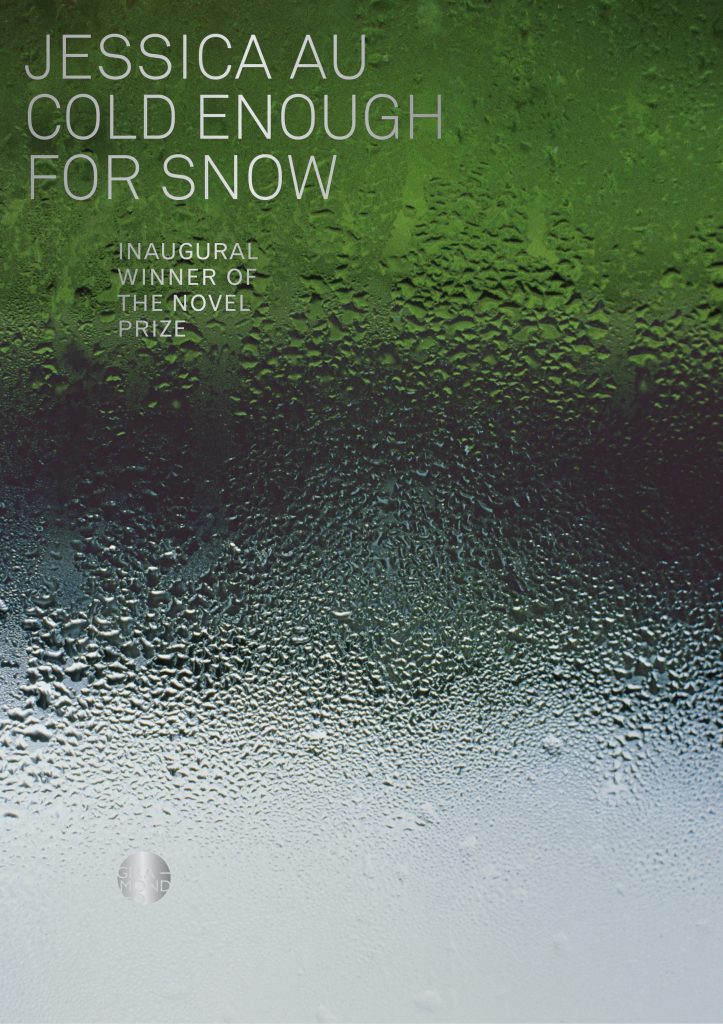
  • Jessica Au, Cold enough for snow (Giramondo) (my review)
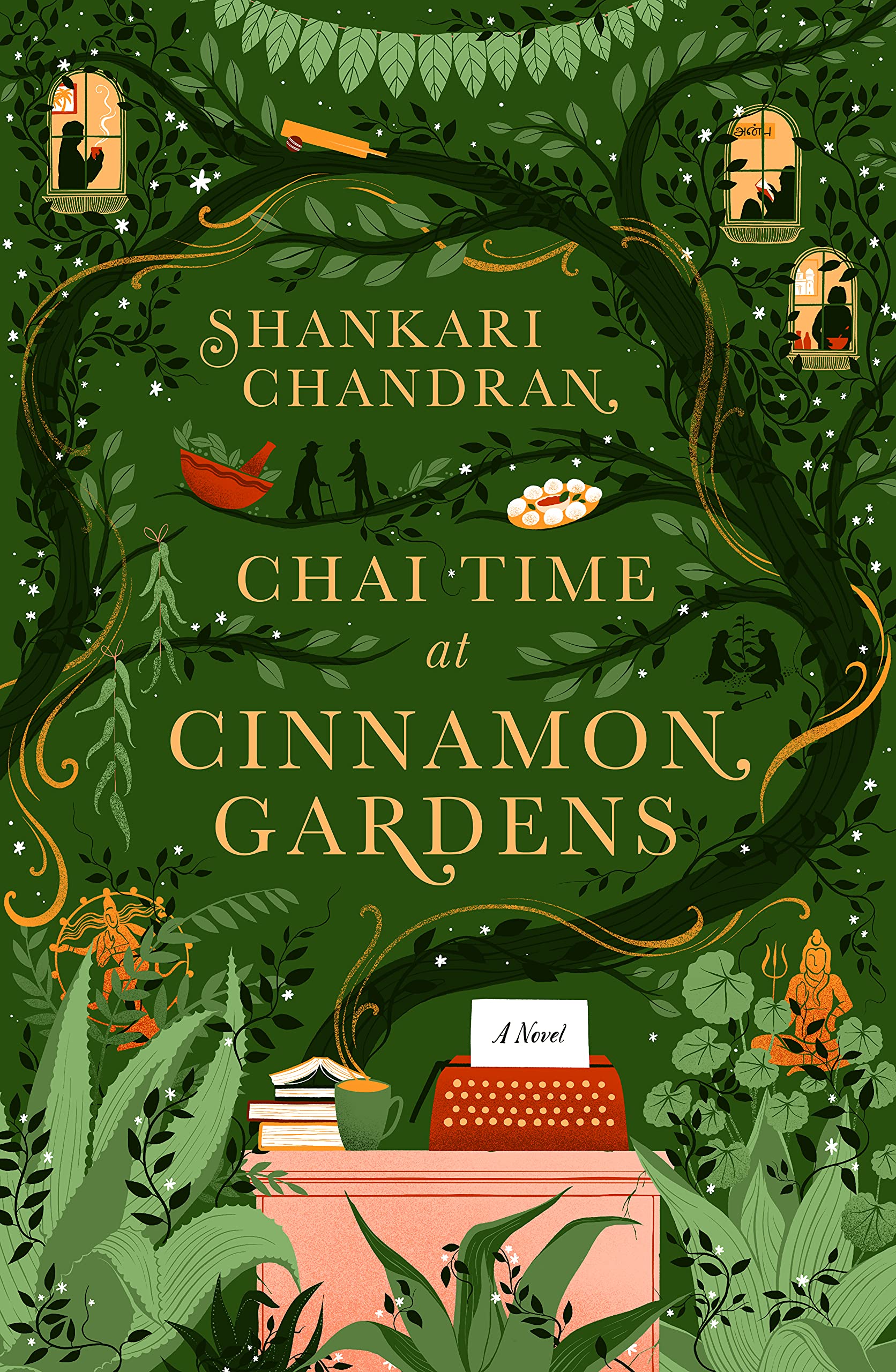
  • Shankari Chandran, Chai time at Cinnamon Gardens (Ultimo Press) (Brona’s review)
  • Claire G Coleman, Enclave (Hachette) (Bill’s review, on my TBR)
  • George Haddad, Losing face (UQP)
  • Pirooz Jafari, Forty nights (Ultimo Press)
  • Julie Janson, Madukka: The river serpent (UWAP)
  • Yumna Kassab, The lovers (Ultimo Press)
  • Fiona Kelly McGregor, Iris (Pan Macmillan Australia) (Lisa’s review; kimbofo’s review)
  • Adam Ouston, Waypoints (Puncher & Wattmann) (Lisa’s review)

Some random observations:

  • There is impressive diversity in the writers listed as I recollect there was last year, including seven of the eleven being by women, and two being by First Nations writers.
  • Independent publishers are well represented, which is also becomings more common in recent prize listings
  • Only a small number of these have been reviewed by my usual list of litblogger suspects, which makes me wonder about our reading choices versus those being chosen for these awards lists.
  • Most of the novels are by authors with at least one book under their belt but Hopeless kingdom is a debut novel by a Sudanese-Australian author. Like many debut novels it is inspired by her own experience of migration from Africa to Australia. It won the Dorothy Hewett Award for unpublished manuscript in 2021. 
  • There’s been little commentary today on the news sites, but hopefully this is because the announcement is less than a day old – or, maybe longlists just don’t garner the same interest as shortlists?

The judging panel

The 2023 judges are, from the announcement on the Perpetual Trustees website, Richard Neville, Mitchell Librarian of the State Library of NSW and Chair; author and literary critic, Dr Bernadette Brennan; literary scholar and translator, Dr Mridula Nath Chakraborty; book critic, Dr James Ley; and author and editor, Dr Elfie Shiosaki. This is, I believe, the same panel as last year’s, but Chakraborty and Shiosaki were new last year so there is some commitment to refreshing the panel. I don’t think it hurts for there to be some stability in panels, but a managed turnover is also important. (Says she!)

From this website too is a statement from the judging panel:

The 2023 longlist is a reflection of the breadth and depth of contemporary Australian story-telling. The eleven longlisted novels define Australian literature as a transformative space where writers are singing the songs of the nation today. They reverberate with the cadences of this land where Indigenous sovereignty was never ceded, but also bring to us mellifluous sounds from far-away lands, weaving together literary traditions from around the world. The words of our novelists, grounded in personal experience, poetry and philosophy, are heralds of the new dawn of Australian fiction: they hum and hiss with language that is newly potent and styles that are imaginative and fresh.

The shortlist will be announced on 20 June, and the winner on 25 July.

Thoughts?

Monday musings on Australian literature: Melbourne Prize for Literature

Having posted on a literary prize last week – the ACT Book of the Year Award – I decided that I may as well do another one, and give us a break from my recent run of historically-focused Monday Musings posts. This week’s award is another geographically limited one, the Melbourne Prize for Literature.

This award is comparatively new, having been first offered in 2006, and it is, unusually, a triennial award. This is because it is one part of the Melbourne Prize which is awarded, as Wikipedia puts it, “on a rolling three-year basis for Urban Sculpture, Literature and Music, in that order”. It is managed by the Melbourne Prize Trust, which was founded by someone called Simon Warrender in 2005. I did not know who Simon Warrender was, and Wikipedia did not provide a link on his name. However, he is, in fact, in Wikipedia (so there is now a link to him on the Prize’s page!) The English-born Simon Warrender was “a Royal Navy officer and businessman” who migrated to Australia after the war and married into the well-to-do and philanthropic Myer Family.

The Prizes are funded by a range of donors from government, cultural and philanthropic organisations – like the City of Melbourne, The Robert Salzer Foundation, Hardie Grant Books and Readings Bookshop – to the general public.

As Wikipedia’s description of the prize’s order implies, the first prize was for Urban Sculpture. That was in 2005, so the first Melbourne Prize for Literature was awarded in 2006. The Literature Prize is made to “a Victorian published author whose body of published work has made an outstanding contribution to Australian literature and to cultural and intellectual life”. In other words, it is one of those “body of work”/contribution to literature types of award. It can, says the Prize website, “include all genres, for example, fiction, non-fiction, essays, plays, screenplays and poetry”, and they take this seriously as you will see from the winners below. It is a valuable prize, currently netting the winner AUD60,000.

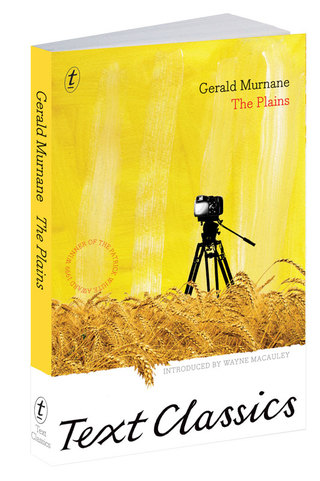
Gerald Murnane, The Plains, bookcover

The winners to date are:

  • 2006 Helen Garner: novelist, short-story writer, screen-writer, non-fiction writer, essayist
  • 2009 Gerald Murnane: novelist, memoirist, short story writer, poet
  • 2012 Alex Miller: novelist, short story writer, essayist, playwright
  • 2015 Chris Wallace-Crabbe: poet
  • 2018 Alison Lester: author and illustrator of, mostly, children’s book
  • 2021 Christos Tsiolkas: novelist, playwright, screenwriter

Links are to my posts on the writer. As you can see I have written about all of them, at least once, except for the poet (though he has had several mentions in passing! I guess that’s better than nothing.)

But wait, there’s more, because other awards are made alongside the main Prize for Literature. One is the Best Writing Award which is for (or was initially) “a piece of published or produced work in any genre by a Victorian writer 40 years and under, which is an outstanding example of clarity, originality and creativity”. By 2018, they seem to have dropped the age criterion. The winners to date are:

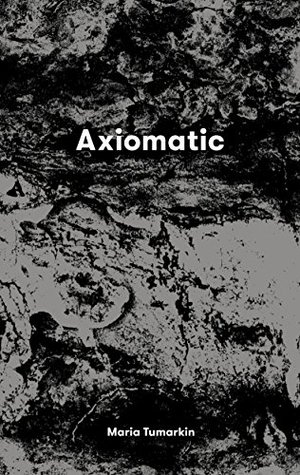
Maria Tumarkin, Axiomatic

In 2021, this prize was not offered, but they presented The Writers Prize. It went to Eloise Victoria Grills. According to the website the prize was for “an essay (10,000 words maximum) of outstanding originality, literary merit and creative freshness”. (I should add that this Prize had also been presented in 2015, in addition to The Best Writing Award, and was won by Kate Ryan.) What will happen in 2024?

The other main prize in the suite is the Civic Choice Award. It is voted for by the public from the finalists for the main award/s. Most recently this has been done via an online form available on the Prize website. The winners to date are:

  • 2006 Henry von Doussa for The park bench
  • 2009 Amra Pajalic for The good daughter
  • 2012 Tony Birch for Blood (Lisa’s review)
  • 2015 Robyn Annear for her essay “Places without mercy”
  • 2018 Louise Milligan for Cardinal
  • 2021 Maxine Beneba Clarke

Over the years there have been other awards, or combinations, or slight changes, like a Residency Award. But, you can see it all at the Prize website which I linked to above.

The Melbourne Prize for Literature – indeed the Melbourne Prize as a whole – is an impressive suite of awards that supports the arts by offering decent prize money and recognises the state’s serious practitioners of their art.

Monday musings on Australian literature: the ACT Book of the Year Award

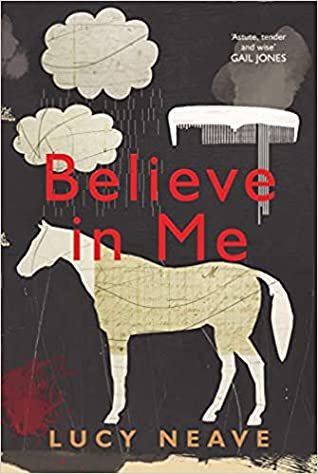
I think it’s time I dedicated a post to the Book of the Year Award made in my own jurisdiction. I briefly introduced it back in 2018, and then wrote recently about its 2022 shortlist. But today, I want to document it a bit more thoroughly. (For the record, the 2022 winner has now been announced, Lucy Neave’s second novel, Believe in me.)

The ACT Book of the Year Award is presented by the ACT Government for contemporary literary works, and is currently worth $10,000. Unlike most of the state government awards (but like the Northern Territory Literary Awards), it is limited to local writers. Only one award is made, and like the Stella Prize, the winner can be fiction, non-fiction or poetry. The award was first made in 1993 – and was shared by poet AD Hope and novelist Marion Halligan – so the 2022 Award is its 30th.

Winners to 2022

  • 1993: Marion HalliganLovers’ Knot (novel, read before blogging); A.D. Hope, Chance encounters (poetry)
  • 1994: John Foulcher, New and selected poems (poetry)
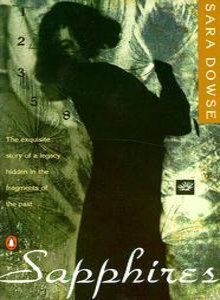
  • 1995: Sara Dowse, Sapphires (novel)
  • 1996: Paul Hetherington, Shadow swimmer (poetry)
  • 1997: Francesca Rendle-ShortImago (novel, Lisa’s review)
  • 1998: Lee Chittick, Travelling with Percy : A South Coast journey (biography)
  • 1999: Craig Cormick, Unwritten histories (non-fiction/satire)
  • 2000: Adrian Caesar, The white: Last days in the Antarctic journeys of Scott and Mawson 1911-1913 (non-fiction)
  • 2001: Alan GouldThe Schoonermaster’s Dance (novel, Lisa’s review); Dorothy Johnston, The Trojan dog (novel)
  • 2002: Jackie French, In the blood (YA novel)
  • 2003: John Clanchy, The hard word (novel)
  • 2004: Marion Halligan, The Point (novel, read before blogging)
  • 2005: Tony Kevin, A certain maritime incident: the sinking of SIEV X (non-fiction)
  • 2006: John Clanchy, Vincenzo’s garden (short stories)
  • 2007: Quynh Du Thon That, Sunday menu : selected short stories of Pham Thi Hoai (short stories)
  • 2008: Tony Kevin, Walking the Camino: A modern pilgrimage to Santiago (memoir/travel, Lisa’s review)
  • 2009: Nicholas Drayson, A guide to the birds of East Africa: A novel (novel)
  • 2010: Marion Halligan, Valley of Grace (novel, my review, and additional post)
  • 2011: Chris Hammer, The river: A journey through the Murray-Darling Basin (non-fiction)
  • 2012: Bill Gammage, The biggest estate on earth: How Aborigines made Australia (non-fiction, on my TBR)
  • 2013: Frank Bongiorno, The sex lives of Australians: A history (history)
  • 2014: Gordon Peake, Beloved land: Stories, struggles and secrets from Timor-Leste (non-fiction)
  • 2015: Mark HenshawThe snow kimono (novel, my review)
  • 2016: Frank Bongiorno, The eighties: The decade that transformed Australia (history)
  • 2017: Tom Griffiths, The art of time travel: Historians and their craft (history, on my TBR, Lisa’s review)
  • 2018: Paul Collis, Dancing home (novel, on my TBR, Lisa’s review)
  • 2019: Robyn CadwalladerBook of colours (novel, my review)
  • 2020: Lisa Fuller, Ghost bird (YA novel)
  • 2021: Subhash Jaireth, Spinoza’s overcoat: Travels with writers and poets (essays, Lisa’s review)
  • 2022: Lucy Neave, Believe in me (novel, my review)

(Links on author’s names take you to my posts on that author, which may not necessarily include the work listed.)

The winners tell you something about Canberra. For example, you might have gleaned from the early winners that Canberra has been particularly strong in poetry, and you’d be right. Well-regarded twentieth century poets like A.D. Hope (1907-2000), David Campbell (1915-1979), and Rosemary Dobson (1920-2012) made this region home for significant stretches of their lives. Canberra’s strength in this form is reflected in poetry winning three of the first four awards. Poetry continues to be strong here, though has featured less in the awards as they’ve progressed through the years.

THEY used to say in my neck of the North Carolina woods that if you shook a tree a banjo player would fall out. I’m beginning to think that if you shake a tree in Canberra, you’re more likely to dislodge a poet. (Bob Hefner, Canberra Times, 25 July 1993)

Couldn’t resist sharing that … but now, moving along … Canberra is also the national capital of Australia, so is the home of our national parliament. History and politics are, consequently, a significant interest of its residents, and this too is reflected in the sort of non-fiction that has won the award – the controversial sinking of SIEV X, the fraught Murray-Darling basin, and revisiting the role of First Nations Australians in our history, to name a few.

In terms of fiction, Canberra’s successful Seven Writers group is well represented here with Marion Halligan, Sara Dowse and Dorothy Johnston all being winners. The year Sara Dowse won she made history, apparently, by also winning the ACT Book Reviewer of the Year award. What, a reviewer award?

Yes! It seems that the ACT Book Review of the Year (as it was initially called) was instigated in 1993, alongside the Book of the Year. It was won by Amirah Inglis for her review of two books – As good as a yarn with you, edited by Caroline Ferrier, and A fence around the cuckoo by Ruth Park – in the November 1992 issue of Monash University’s Editions. In 1994, there were joint winners, Robert Boden’s review of Stanley Breeden’s Visions of a rainforest in The Canberra Times, and Amirah Inglis’ review of Hazel Rowley’s Christina Stead: A biography in the National Library’s Voices. Then in 1995 came Sara Dowse, named as ACT Book Reviewer of the Year. After that a review award seems to disappear from view. What a shame.

Have you heard of professional review or reviewer awards? If so, I’d love to hear about it.

Meanwhile, I hope you have found this little history of my local award interesting!

Stella Prize 2023 Winner announced

The 2023 Stella Prize winner was announced tonight and, for the second year in a row, it’s a poetry collection …

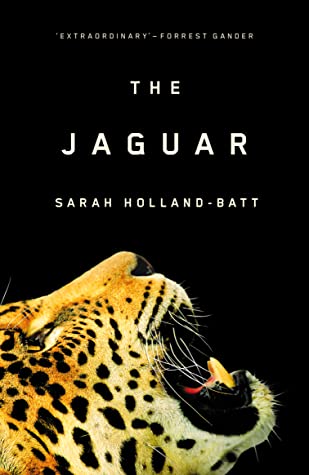
Sarah Holland-Batt’s The jaguar

Darn it! I nearly bought it last weekend when I was at the National Library but with my move and having stuff everywhere, I put it back down again and thought, maybe later. I guess it’s now not “maybe” but “yes later”. However, I’m pleased to share that a couple of bloggers I know have already read and reviewed it – like Kim at Reading Matters and Jonathan at Me fail? I fly! Check their posts if you are interested.

The judges said that The jaguar “investigates the body as a site of both pleasure and frailty”. The panel chair, Alice Pung, expanded on this saying that

… This is a book that cuts through to the core of what it means to descend into frailty, old age, and death. It unflinchingly observes the complex emotions of caring for loved ones, contending with our own mortality and above all – continuing to live.

It’s a response, I understand, to the death of Holland-Batt’s father. Those who have followed my blog for a while will understand, then, why I really would like to read it. Stella CEO, Jaclyn Booton, describes it as “a gift of a book” that “examines questions of grief and memory and care”.

You can read more on the Stella website, including an excerpt from Sarah Holland-Batt’s acceptance. She commented that she was “thrilled to enter into the company of the extraordinary writers who have received the Stella” and also said:

“It’s both an indescribable joy and a deep honour to receive the Stella Prize for The Jaguar. I wrote this book during an intensely challenging period, as my father was dying, and just after. It was the friendship, generosity, and camaraderie of women that not only saw me through this difficult time, but that has been the sustaining armature of my writing life.

Just to remind you, the judges were author Alice Pung, in the chair, with her co-judges bibliophile and host of The Garrett podcast (among many other roles) Astrid Edwards; essayist and literary critic BeeJay Silcox; writer, editor, broadcaster, and Walkley award-winning journalist Jeff Sparrow; and First Nations poet, essayist and legal advisor Alison Whittaker.

I have read eight of the ten previous winners: Carrie Tiffany’s Mateship with birds (2013, my review), Clare Wright’s The forgotten rebels of Eureka (2014, my review), Emily Bitto’s The strays (2015, my review), Charlotte Wood’s The natural way of things (2016, my review), Heather Rose’s The museum of modern love (2017, my review), Vicki Laveau-Harvie’s The erratics (2019, my review), Jess Hill’s See what you made me do (2020, my review), and Evelyn Araluen’s Dropbear (2022, my review).

Thoughts anyone?

ACT Book of the Year Award 2022 shortlist announced

For some reason – perhaps because I don’t write about every award every year – I’ve only written once before about the ACT Book of the Year Award. It is an award presented by the ACT Government. Unlike most of the state government awards, the award is limited to ACT Writers, and, like the Stella, it is not limited to genre or form. The award was first made in 1993 – shared by poet AD Hope and novelist Marion Halligan – so this is its 30th year.

The shortlist for the 2022 award – for books published in 2021 – was announced on the weekend by Tara Cheyne*, the Minister for the Arts. The seven finalists were selected from the 43 eligible nominations.

The shortlist

  • Dylan van den Berg, Milk (play, also won the 2021 Nick Enright Prize for Playwriting, in the NSW Premier’s Literary Awards)
  • Merlinda Bobis, The kindness of birds (short story collection; on my TBR; Lisa’s review)
  • Tim Bonyhady, Two afternoons in the Kabul Stadium: A history of Afghanistan through clothes, carpets and the camera (social history, also shortlisted for the 2022 Mark & Evette Moran NIB Literary Award)
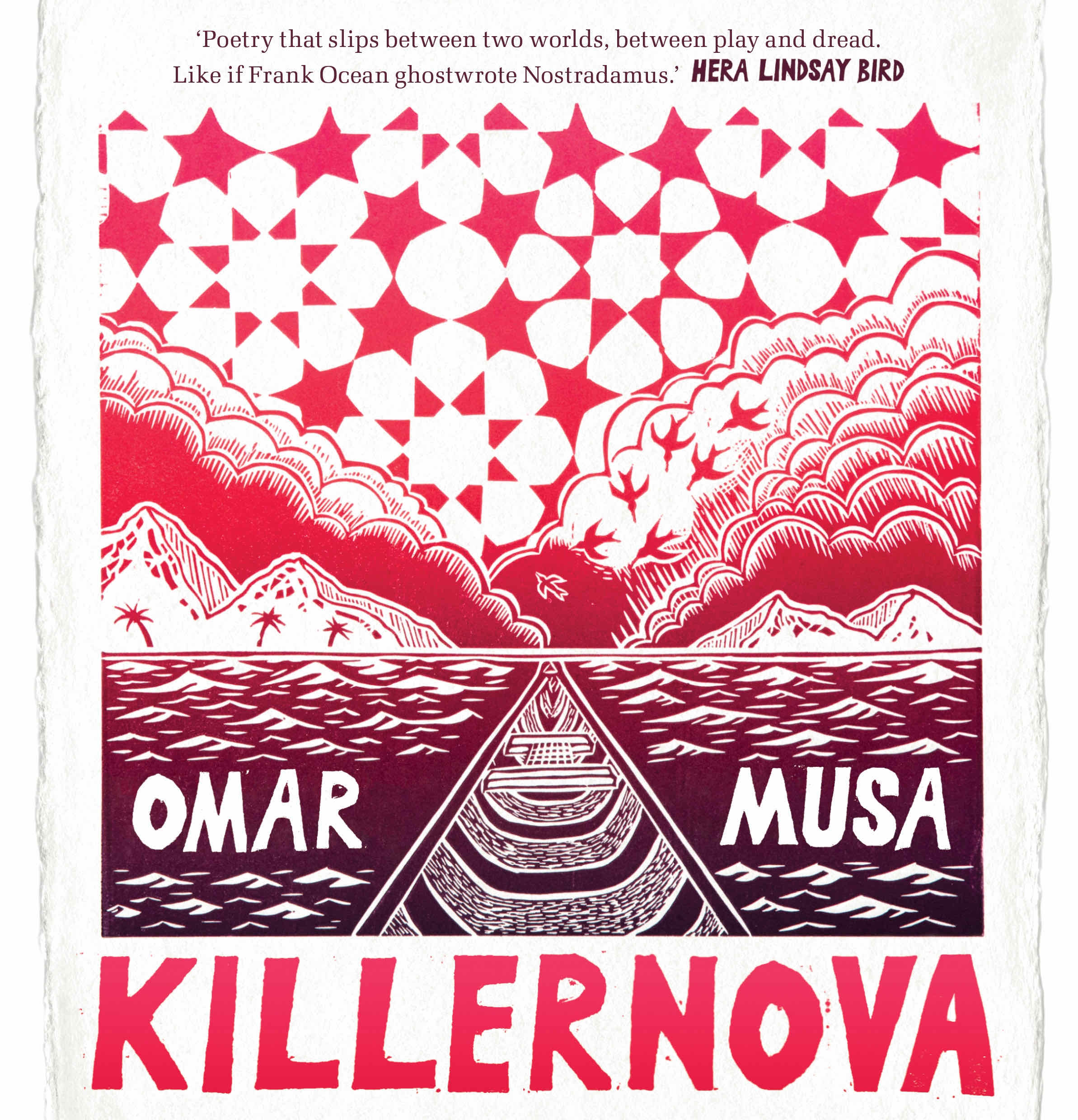
  • Omar Musa, Killernova (poetry and woodcuts; on my TBR, my book launch post)
  • Lucy Neave, Believe in me (novel; my review)
  • Hugh Poate, Failures of command: The death of Private Robert Poate (war history)
  • Kaya Wilson, As beautiful as any other: A memoir of my body (memoir)

The winner will apparently be announced in the coming weeks, but no actual date has been given, and I can’t find any information about the judging panel. 

In addition to these awards, the ACT also has annual awards presented by the ACT Writers Centre (now called Marion).

* Tara Cheyne first became known to me as the delightful blogger behind In the Taratory, but she stopped blogging – unfortunately but understandably – when she decided in 2016 to stand for the ACT Legislative Assembly. I love that she is our Minister for the Arts.

Stella Prize 2023 Shortlist announced

It says something about my discombobulated year that I didn’t post on the Stella Prize longlist. And then, I was packing for Melbourne this morning while I listened to the shortlist announcement on ABC RN Breakfast. (Something new I think for Stella.) I didn’t have time to stop and write my post, then, but here I am overnighting in Wangaratta – don’t laugh truckie Bill – and have a few minutes to write a post.

I haven’t read any of the shortlist, you probably won’t be surprised to hear, but as I heard the announcement, I remembered that I had one on my TBR, so I immediately swapped out one of the books I had selected for my holiday reading pile to include it.

This year’s judges are author Alice Pung, in the chair, with her co-judges bibliophile and host of The Garrett podcast (among many other roles) Astrid Edwards; essayist and literary critic BeeJay Silcox; writer, editor, broadcaster, and Walkley award-winning journalist Jeff Sparrow; and First Nations poet, essayist and legal advisor Alison Whittaker. None of these were on last year’s panel. Stella, in fact, does a stellar (sorry!) job of keeping its panels fresh.

You may remember that poetry was added as an eligible form for the prize last year. Indeed, a poetry collection won last year

The shortlist

The 2023 Stella Prize shortlist is:

  • Debra Dank, We come with this place (Echo Publishing, memoir)
  • Eloise Grills, big beautiful female theory (Affirm Press, graphic memoir for want of a better description): Kate’s review
  • Sarah Holland-Batt, The jaguar (University of Queensland Press, poetry collection): Jonathan’s review
  • Adriane Howell, Hydra (Transit Lounge, novel): Lisa’s review
  • Louisa Lim, Indelible city (Text Publishing, memoir)
  • Edwina Preston, Bad art mother  (Wakefield Press, novel): on my TBR, Lisa’s review

The announcement this morning included an interview with Stella Prize CEO Jaclyn Booton and shortlisted author Edwina Preston who said that her book had been rejected 25 times before it found a publisher. She said that if she hadn’t had an agent who kept plugging away, she would have given up. Good on Wakefield! It’s a lovely little independent press in Adelaide, which publishes across an impressive range of fiction and nonfiction forms. I visited them once, many years ago, and have reviewed many of their books. 

So, three nonfiction works/memoirs, one poetry collection, and two novels, continuing wonderful diversity of form that characterises the Stella Prize. I must say – though I haven’t included them all here – the covers for these books are stunning – strong, expressive covers that eschew those book cover cliches so often associated with books by or featuring women.

Alice Pung says of the shortlist:

Although all the books on our shortlist are very different, common themes emerge about a woman’s relationship to her art and to the world around her. All our shortlisted books also explore with moving complexity some of the most pivotal relationships in a woman’s life, and their roles as daughters, partners, wives, and mothers.

Each shortlisted author will receive $4,000 in prize money. The winner will receive $60,000 (through the support of the Wilson Foundation). There’s more on the shortlist on the Stella website.

The winner will be announced on 27 April.

Comments?

Jessica Au, Cold enough for snow (#BookReview)

What did I say about mothers and daughters recently? Just when I thought I’d done with them for the year, along came another, Jessica Au’s gorgeous novella, Cold enough for snow. However, before I get to that, let me describe the award it won, The Novel Prize.

Cold enough for snow was the inaugural winner of this plainly named, but ambitious prize which was established by three independent publishers, Australia’s Giramondo Publishing, the UK and Ireland’s Fitzcarraldo Editions, and North America’s New Directions. It is “a biennial award for a book-length work of literary fiction written in English by published and unpublished writers around the world”, and looks for “works which explore and expand the possibilities of the form, and are innovative and imaginative in style”. The winner receives US$10,000 and simultaneous publication of their novel in Australia, New Zealand, the UK and Ireland, and North America.

Jessica Au’s novel was selected from over 1500 entries worldwide, and was published in the above-named territories this year, but is to be published in many more. It has made quite a splash, and was one of the most favourited Australian books in my recent 2022 Favourite Picks post. Those who nominated it used words like “meditative”, “mesmerising”, “elegance”, “exquisite” and “quietly brilliant”. I would agree with those.

Told first person, Cold enough for snow revolves around a holiday in Japan organised by a daughter for herself and her mother. They walk, and travel by train; they visit shops, cafes, galleries, churches and temples, the things you do in Japan. Very few places are identified, keeping the focus on the characters and the ideas being explored, rather than on travel. As someone who has visited Japan several times, I was initially frustrated by this. I wanted to compare my experiences with theirs, but I soon realised that this was not that sort of book. Once I accepted that, I also realised that it was, in fact, the sort of book I enjoy.

By this I mean that it is one of those quiet, reflective books, ones without a lot of plot – albeit I like plots too – but with lots to say about life and relationships, and with much to make you think. The novel has an overall chronological trajectory following the daughter and her mother’s journey but, along the way, the daughter – our first-person narrator – digresses frequently to consider other people and relationships in her life, particularly with her sister and partner. It is in these digressions, in particular, that we get a sense of what this trip is about.

Ostensibly, the book is about the daughter and her mother, who live in different Australian cities, reconnecting. In the opening paragraph, the daughter describes their walking to the train station:

All the while my mother stayed close to me, as if she felt that the flow of the crowd was the current, and that if we were separated, we would not be able to make our way back to each other, but continue to drift further and further apart.

However, it soon becomes clear that it is the daughter who is more concerned about drifting further apart. A couple of pages in she mentions that on a previous trip to Japan with her partner Laurie – one of the few named people in the novel – she “remembered thinking” that she wanted to share some of the fun she’d had with him with her mother. On the next page, she refers to a bonsai plant that her mother had had, and “remembered disliking it”, perhaps because it looked “unnatural, lonely, this very detailed, tiny tree, almost like an illustration, growing alone when it looked as if it should have been in a forest”. Subtly, Au has conveyed in the opening pages that the seemingly sure and in-control young woman we thought we had met is not that at all. Gradually this becomes more explicit. Nearly halfway through the novel, in one of her many digressions, she describes house-sitting for a lecturer and comments that “somehow it felt like I was living my life from outside in”.

There is a melancholic tone to this novel, which is not to say it is unhappy. It is simply that our narrator is uncertain about her life, while her mother, for whom she feels responsible, is quietly self-contained. Her relationships – with her partner, Laurie, with her sister, and with her mother – seem positive enough. It’s a ruminative book, in which the daughter’s thoughts roam between history, art, and life past and present, seemingly at will, but of course all carefully structured by Au to lead us to a deeper understanding. It’s a short book but I took time to read it because the thoughts and ideas, so quietly and delicately expressed, would constantly pull me up – because I am used to looking for meaning and answers in my reading. For example, early in the novel, she recounts looking at some pots in a museum. They were “roughly formed but spirited”, their handmade utility “undifferentiated from art”. I could grasp these ideas. So, it’s about art and life I thought, but then later, discussing Laurie’s father’s art, the daughter remembers feeling she didn’t “even know enough to ask the right questions”. And I realised that, perhaps, neither did I – and that this book, in which time and memory move fluidly rather than exactly, is about something very different.

The Japanese setting is perfect for this novel, because Japan too is paradoxical. In the cities, particularly, where our two spend most of their time, Japan is a bustling place but it also, sometimes in the smallest ways, manages to simultaneously exude stillness and quietness. Similarly telling is that the trip takes place in autumn – the mother and daughter’s favourite season – which is surely the season most conducive to reflection, and to the idea of change over which we have no control.

Early in the novel, one of the issues confronting our narrator becomes clear, that concerning whether to have children. She and Laurie have been discussing it exhaustively – between themselves, with their friends, and, it seems, also with her mother. She’s aware that, unlike her own generation, her mother very likely never had the opportunity to choose, and she comes to wonder

if it was okay either way, not to know, not to be sure. That I could let life happen to me in a sense, and that perhaps this was a deeper truth all along, that we control nothing and no one, though really I didn’t know that either.

Cold enough for snow is not easy to write about because its very essence is the mutability of life. How do you pin down something that seems to be about being unpinnable? And yet, Au manages to pin down this very fact, or, at least, to convey the idea that, as the daughter glimpses near the end, “perhaps it was alright not to understand all things, but simply to see and hold them”. A good book, methinks, to end the year on!

Lisa also reviewed this novel.

POSTSCRIPT: An excellent interview with the author on the publisher’s website.

Jessica Au
Cold enough for snow
Artarmon: Giramondo, 2022
98pp.
ISBN: 9781925818925
Nell Pierce, A place near Eden (#BookReview)

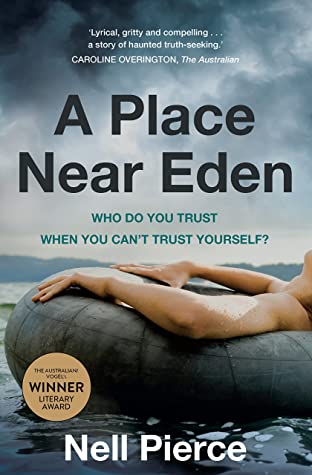
Nell Pierce’s debut novel, A place near Eden, won the 2022 The Australian/Vogel Literary Award. It was my reading group’s last book of the year, and it engendered a lively discussion, partly because our response was mixed and partly because its setting on the south coast of New South Wales is well-known to us.

Part coming-of-age novel, part mystery, part family drama, A place near Eden is told first person in the voice of Tilly who is around 20 years old when she is telling her story to a mysterious “you” – at least, “you” is not revealed to the reader until around half-way through the novel, so I won’t reveal it now. I can reveal however, that Tilly is trying to tell her side of a story to this “you”, and slowly, what this story is comes out of the murky recesses of her memory.

My reading group’s practice is to start with each of us briefly sharing our first impressions before we settle into deeper discussion. My first impressions for A place near Eden were that I loved its exploration of how truth can be manipulated or twisted, of different versions and perspectives of the same experience, and of the difference between facts and truths, in personal lives, in law, in art, but that I found the tone a bit heavy-handed, with little respite. Respite in tone – as Shakespeare knew – is good. A place near Eden is a reflective novel in which Tilly reviews the events that had happened to her, trying to make sense of them, so its tone is peppered throughout with “perhaps”, “maybe”, “looking back”, “in retrospect”, “now”, “still” and so on. It was a little unremitting. However, A place near Eden is a first novel so can be forgiven some flaws.

As you will have guessed, the title has both literal and metaphorical meanings: it is set near Eden in southern New South Wales, and the characters may be “near” but they don’t achieve being “in” Eden (paradise). Their own flaws prevent it.

The story starts with a prologue which looks back to halcyon days in the life of Tilly, then 13 years old, and her foster brother Sem and friend Celeste who were 14, almost 15 years old. The dynamic is set between them, one in which the younger Tilly is seen by the other two as “just a kid”. There is a bit of an experience gap between them – as can happen at the time of early puberty. An incident happens at the local pool that sets us up for the tone of the book, though it’s not “the” incident on which the book centres. In this incident, a small child falls – or is knocked – and hurts his head. Who did it? Tilly blames Celeste, though she herself “might” have done it. Writing later, she says:

The more I think on things, one way or the other, the more real they seem. That I was afraid of getting in trouble. Or that I wanted to punish Celeste. That it was her fault, or mine. I can believe it either way.

Throughout the novel, which primarily takes place when Tilly and Celeste are around 19 to 21 years old, the story is told in this maybe-this-maybe-that sort of tone. It is, essentially, a story about finding one’s self, one’s identity. In this case, it’s Tilly’s, so we see it all through her eyes, as she struggles to keep up with the just-a-bit-older, just-a-bit more experienced, just-a-bit more confident Celeste. This sort of uneven friendship is difficult to maintain.

“it could play either way” (Tilly)

So we come to the critical incident. Tilly and Celeste have been living at a holiday shack near Eden, while Sem – who is in a relationship with Celeste – comes and goes at will. One night, however, he disappears, and Tilly, who was drunk at the time, is blamed for it. Did she cause it or didn’t she? This is what she is trying to comprehend and explain to “you”.

Tilly is a character who likes facts – her preferred reading is the encyclopaedia – but she is aware that there is often a gap between facts and the truth (which she describes as “something that hissed out”). She is aware that “even when people try to tell the truth about something as mundane as a tomato, they couldn’t help but betray other things about themselves”. So, what are we to believe from this self-consciously unreliable narrator, from this narrator who says to us “saying something with confidence … can make a story real” and that “maybe we all embroider the truth sometimes”? Late in the novel, when she writes about telling her story to her lawyer, she says “I could feel stories emerging in my mind, ways of presenting things that I knew would please her”. She admits to lying to both the police and the lawyer, but that doesn’t, in fact, mean she is guilty of what she is accused of.

Alongside Tilly telling her story is her description of the documentary film being made about the case by her erstwhile boyfriend, Peter, who tells the story from three angles – the lost, troubled boy (Sem); a revenge story (Tilly); the manipulator (Celeste). In each version, different pieces of information are omitted to construct a specific viewpoint about what happened. It’s a clever portrayal of the “art” of the documentary. Tilly sees how “controlled” it is, and admits that she had “thought in art there might be truth”. Not here … though she had seen “truth” in Celeste’s portraits.

The book’s tagline on the cover is, “who do you trust when you can’t trust yourself?” This personal story is part of it, and reminds me of the recent conversation I attended with Heather Rose. She commented that “life is a process of forgiveness for the choices we make in order to be ourselves”. This could easily describe Tilly’s situation, as she struggles to come to terms with what she did – or what she may have done – in that tortuous process of becoming herself.

However, Nell Pierce also has a bigger story to tell, I believe. Late in the novel, Tilly comes to realise that, like her Mum, she is “sceptical of these neat stories we tell about people”. By concluding her book without a neat resolution, Pierce suggests to us that we too should beware of “neat stories”, that we should take nothing at face value. Question everything, just as Tilly seems to do.

Lisa also found this an intriguing book.

Nell Pierce
A place near Eden
Crows Nest: Allen & Unwin, 2022
296pp.
ISBN: 9781761066177

Monday musings on Australian literature: on 20/40, a new publishing prize

We all like to see a new literary or publishing prize. That is, most of us do, because I do appreciate that prizes in the arts are problematic, and that some do not, for perfectly valid reasons, like them. However, for most, the positives outweigh the negatives. These positives include – in different combinations – kudos, money, time, publication.

Carmel Bird, Fair game

Last week, I received a press release about a new prize being offered by one of our wonderful local-ish, independent, and non-profit, publishers, Finlay Lloyd. I have reviewed many Finlay Lloyd publications over the years, and I also reported on their 10-year anniversary back in 2016. Their output is small in quantity but the quality, both in content and in the physical product itself, is high. Their design aesthetic is carefully considered and I love handling, as well as reading, the results. Like many small publishers, they are not afraid to publish the books and forms others eschew. Take their FL Smalls, for example. These are tiny books – smaller than a traditional novella, even – written by emerging and established (like Carmel Bird) writers. Finlay Lloyd also publishes short story collections, illustrated novels, and nonfiction on difficult subjects, like their Backlash: Australia’s conflict of values over live exports (my review).

Given this background, it’s to be expected that if they came up with a prize it would be a bit left-field, and it is. Called the 20/40 Publishing Prize, it aims to “encourage and support writing of the highest quality”, but writing that meets certain criteria. Here is how they describe it:

In an environment where writers find it increasingly difficult to find an audience, Finlay Lloyd is branching out to offer a publishing opportunity for fiction and non-fiction prose works between 20,000 and 40,000 words through the 20/40 Publishing Prize.

Finlay Lloyd’s publisher and commissioning editor, Julian Davies, is quoted in the Press Release as saying:

‘We’re incredibly excited to be able to encourage writers to submit pieces of this length, a scope which has proven itself through time to be particularly engaging and rewarding for writers and their readers.

‘It’s long enough to allow the rich development of a concept but tight enough to encourage focus and succinctness.

‘Each year we plan to select two winning authors, closely supporting them through the editorial process with care and enthusiasm, and publishing their entries in line with Finlay Lloyd’s innovative design standards.’

This length is, of course, novella length – but Finlay Lloyd has not used the term “novella” because this term refers to short prose fiction, while the prize encompasses fiction and nonfiction. They say on their website that “all genres of prose writing are welcome, including hybrid forms”. 20/40 is, I should clarify, an unpublished manuscript competition with publication being the prize.

The press release goes on to explain that Finlay Lloyd is “dedicated to identifying and encouraging good writing free from external pressures such as reputation and the undue influence of market forces”. Consequently, the judging panel will read the submissions “blind”, and will focus on “creative inventiveness and quality”.

Their hope is that 20/40 will “offer an incentive for writers to get down to work and hone their expressive skills”. They believe that readers are “hungry for writing of quality that is published with care and flare as well-designed and engaging paper artefacts”. See what I mean? The content AND the object are both important to them. I know many readers, myself included, who are so hungry.

Anyhow, submissions can be made between 1 January and 10 February, 2023. They will announce the shortlist in October and publish the winning books – one fiction, one nonfiction, I think – in November. The prize is being overseen by their “expert advisory board”:

Book cover
  • Dr Christine Balint, whose novella, Water music, I’ve reviewed
  • John Clanchy, novelist and short story writer whom I’ve reviewed a few times here
  • Donna Ward, writer, publisher, and editor
  • Dr Meredith McKinney, academic, translator – including of Mori Ôgai’s The Wild Goose on my TBR – and daughter of Judith Wright
  • Emeritus Professor Kevin Brophy, whose recent short story collection is on my TBR

I must say that I’m tickled about the timing of this announcement, given its relevance to Novellas in November.

Monday musings on Australian literature: The Miles Franklin Rights Project

Some months ago, I became aware of The Miles Franklin Rights Project, and of course, it piqued my interest, so I flagged it for a future Monday Musings. The project apparently commenced in early 2021, and is still continuing. Before I describe the project, though, I need to explain for non-Aussie readers here that the Miles Franklin Award, though no longer Australia’s most valuable award in monetary terms (albeit is still generous), is arguably our most prestigious literary award. It is also one of our oldest, having been first awarded in 1957. That first winner was Patrick White’s Voss.

So now, the project …

It is led by Dr Airlie Lawson, who is “a literary sociologist and cartographer, a Visiting Fellow at the ANU’s College of Arts and Social Sciences, and the Postdoctoral Fellow on Untapped: the Australian Literary Heritage Project (on which I posted earlier this year) at the University of Melbourne”. The project intrigues me because it asks some questions that are dear my heart. Here is how it is introduced on the AustLit website, which is funding the project:

Alexis Wright Carpentaria in Chinese
Chinese edition of Carpentaria

Over the last 21 years, the Miles Franklin Literary Award has been won by many acclaimed Australian novels including Alexis Wright’s Carpentaria, Michelle de Krester’s Questions of Travel, Tara June Winch’s The Yield, Peter Temple’s Truth and Tim Winton’s Dirt Music. But which of these novels has been published internationally—where and in what languages? And shortlisted titles—have they had international success? Is there a discernable gender difference? Associations between publishers? What about change over time? How might we find out?

The site goes on to say that

Globally, publishers and agents report a strong association between literary awards and prizes in international interest in a novel and, subsequently, the licensing of the publishing rights internationally.

The problem is that there’s been little research into what impact awards and prizes have had on rights transactions. A prerequisite for such research, really, is “a comprehensive set of international editions” of Miles Franklin Award winners, but this has not been easy to find. Consequently, the aim of this project is “to create such a list—and to create an efficient, accurate international edition identification model that can be used for other AustLit projects”. They are focusing on the novels which won or were shortlisted for the award from 2000 to 2020. This list, which comprises 22 winners and 93 shortlisted titles, will provide, they hope, a basis from which the global impact and value of this award can be explored.

As you can imagine, it’s not easy tracking down the editions, but they are starting with two major international book databases: WorldCat (library-supplied data) and GoodReads (crowdsourced). As you would expect from an academic project, the information obtained from these databases, and elsewhere, is then checked against multiple sources, including authors, agents and publishers.

You can read about the project on the AustLit website. In fact, this website was my major source for this post, but I did find information about a paper given (via Zoom) by Airlie Lawson in May this year. The paper was titled “How Global is Australian Literature in the 21st century? A story of gender, genre and the international literary field”. The talks’ description says that the “paper draws primarily on data produced for the Conditions of Access (COA) project*, supplemented by data from the industry report Success Story (Crosby et al) and AustLit’s The Miles Franklin Rights Project. Specifically, it draws on data relating to what the COA project models as international rights ‘transactions’ for adult novels first published in print between 2000-2020″. The description also says this:

Analysis of this data reveals several rather different accounts of international access over a twenty-year period, but all have one element in comment: in contrast with the domestic field, they tell a positive story for women authors. 

Interesting, but not wholly surprising, because anecdotally-speaking, at least, my sense is that many of our women writers are finding their way to overseas readers. We are seeing it in posts by international bloggers, for a start. Presumably Lawson explored why this might be the case. The point she makes here is not comparing our women with our men authors overseas, but our women authors overseas versus them at home.

I also found a Q&A with Lawson. The first question concerned the inspiration for the project, and Lawson responded that

There’s been a lot of discussion in Australia about literary prizes in recent years—the cost of entering, the type of books more likely [to] win them, their proliferation—but there’s no question that a prize win can boost copy sales. I wanted to find out if there was a similar effect on international rights licensing.

Anecdotally, she said, Australian industry professionals claim some do have an influence, and her own research has supported this, but there’s no “reliable comprehensive data set of international editions” to enable this to be properly proved (or not). On why she chose the Miles Franklin Award as her basis, she said that

  • it is often described as Australia’s “most prestigious literary award”;
  • it’s long running (though they are starting with a 21-year period); and
  • it stipulates Australian content, so “examining the international publication records for works associated with it can tell us something about how Australian literary culture is valued internationally”.

As for who the research is for, it’s broad: it’s for other researchers (of course), students, readers, book clubs, and publishers.

Certainly, as a reader and book-club member, I am fascinated by the publishing environment within which authors work, and what can help them reach more readers. Moreover, as one who loves to read works from overseas writers, I am also keen to see overseas readers read our writers. Consequently, I love the idea of this project.

Does such research interest you – and why, if it does?

* The Conditions of Access project is another Airlie Lawson project. Its aim was, said the talk’s description, “to better understand, from a data-driven and conceptual perspective, where, when and why Australian novels have travelled in the early years of the twenty-first century”.