Stella Prize 2019 Winner announced

The Stella Prize winner was announced tonight while I was at yoga so I had to wait, impatiently – oops, no, it was yoga, so I was very calm thanks to my wonderful neighbour and teacher – until I got home, to discover the winner. I only managed to read three of the six, which is one more than I had read by last year’s announcement, but I do have a fourth on my TBR.

Before I announce the winner, which most of you will have heard by now anyhow, here is a quick recap:

  • the longlist was announced on 7 February: check out my subsequent Monday musings post for an interesting conversation about the judges’ comments; and
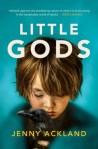
  • the shortlist was announced, as is tradition, on International Women’s Day: Jenny Ackland’s Little gods; Enza Gandolfo’s The bridge; Jamie Marina Lau’s Purple Mountain on Locust Island; Vicki Laveau-Harris’ The erratics; Melissa Lucashenko’s Too much lip; Maria Tumarkin’s Axiomatic.
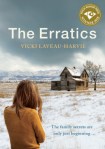
Vicki Laveau-Harvie, The erraticsAnd the winner, from around 170 books submitted, is a memoir, Vicki Laveau-Harris’ The erratics, a book that intrigues me, although I have to admit I wasn’t expecting it to win – but there you go, you never can tell. It is the third non-fiction book to win the award in seven years, nicely confirming Stella’s aim to be broad in the forms it encompasses. The other two were Alexis Wright’s collective biography, Tracker (2017), and Clare Wright’s history The forgotten rebels of Eureka (2014, my review).

The winner receives $50,000, and each shortlisted author receives $3000, as well as a three-week writing retreat on the Victorian coast, making it a generous prize.

Now, while I haven’t read The erraticsKim (Reading Matters) has, and found it “compulsive” reading. Kate (booksaremyfavouriteandbest) has too, and was less enamoured, but she explains her reactions in detail. These reviews are worth reading. Kim also has a postcript explaining book’s publishing trials.

Anyhow, here is an excerpt from what Louise Swinn, this year’s Judging Panel Chair, said at the announcement:

The six shortlisted titles all have something to say about the way we live today, two in the form of nonfiction and four novels. These books are very outward-looking and unafraid. They deal with complex and complicated issues. They can be unsettling.

The winning book elegantly tramples all over the Stella requirements: it is excellent, engaging and original in spades. It is moving and funny, and as powerful in what it leaves out as it is in what it includes. It is also a first book, and I hope it’s the first of many. It is my considerable pleasure to announce that the winner of the 2019 Stella Prize is Vicki Laveau-Harvie for her memoir, The Erratics.

She also made an interesting comment about the Stella Prize itself:

In this seventh year of the Stella Prize, the high quality of the general submissions could, for anyone not paying attention, make you wonder why we have this prize at all. But the Stella has never been about an actual lack of talent — it is about perception and how this has affected the amount of space women’s writing has been allowed to take up.

It will be interesting to see this year’s Stella Count, because that’s where we can see what progress (if any) is being made.

If you have any comments on the winner, I’d love to hear them.

Monday musings on Australian literature: NSW Premier’s Translation Prize

Don’t worry. I know this is the second Monday Musings post in a row inspired by the NSW Premier’s Literary Awards, but when I wrote last week’s post, I felt that one on the Translation Prize in this suite of awards would be an appropriate follow-up. It’s not the start of a Monday Musings trend!

I know I don’t need to say this to readers who come here, but reading works by people from other cultures is so critical to our ability to understand our world and the people in it. However, funnily enough, not all of that literature is written in the language/s we read! Hence, the importance of translation. Unfortunately, translation doesn’t have high visibility in Australia, partly, I presume, because of our geographic isolation and our attendant monolingualism. Yet, there are many* in Australia who speak more than one language. It surely behoves us, for a start, to read more from the cultures living amongst us.

Jane Sullivan wrote an article in The Age back in 2005 about the state of translation in Australia, and made this comment:

In Australia, the market for translated work is very small and publishers are rarely willing to take the risk of commissioning a translation. While the Australia Council supports translation of Australian writers’ work into other languages, it does not usually support Australian translation of foreign literature into English.

I wonder how much has changed since then? (Do read the article, if you are interested. Sure, it’s a bit old now, but it has some interesting things to say nonetheless, including suggestions that things were changing.)

NSW Premier’s Translation Prize

Now, I have written about translation before, particularly in my review of Linda Jaivin’s Quarterly Essay and in a Monday Musings on Australian literary translators, but have never focused on the NSW Premier’s Translation Prize. I’m rectifying that now!

The Translation Prize is offered biennially, and is currently worth $30,000. It has been offered, I believe, since 2001. According to the State Library of NSW, it was proposed by the International PEN Sydney Centre and is funded by Arts NSW and the Community Relations Commission for a Multicultural NSW. Its aim is “to acknowledge the contribution made to literary culture by Australian translators” and it “recognises the vital role literary translators play in enabling writers and readers to communicate across cultures and ensuring that dissident voices are heard around the world”. (This latter is probably where PEN, particularly, comes in.)

The prize is awarded to translators (not to particular translations) who translate into English from other languages. Meaning, I suppose, that it is geared to broadening the reading of the English-speaking Australian public.

The winners to date, as listed in Wikipedia, are:

  • 2001: Mabel Lee: Chinese
  • 2003: Julie Rose: French
  • 2005: Chris Andrews: Spanish
  • 2007: John Nieuwenhuizen: Dutch and Flemish
  • 2009: David Colmer: mainly Dutch
  • 2011: Ian Johnston: Chinese and Classical Greek
  • 2013: Peter Boyle: French and Spanish
  • 2015: Brian Nelson: French
  • 2017: Royall Tyler: Japanese

Raphael Jerusalmy, EvacuationBy this schedule, the next prize will be awarded this year, and the shortlist has been announced: (Names are linked to the judges’ comments.)

  • Harry Aveling: translates South and South-east Asian literature, including Indonesian, Malay, Hindi and French. He has translated Pramoedya Ananta Toer (but my 1991 edition of a Toer novel was translated by Max Lane)
  • Steve Corcoran: translates French philosophical and literary works.
  • Alison Entrekin: described as one of the world’s leading translators of Portuguese
  • Penny Hueston: mostly translates contemporary French literature, and is a Senior Editor at Text Publishing. (She translated Jerusalmy’s Evacuation – my review.)
  • Stephanie Smee: translates mostly French, specialising in children’s literature, but does other work too.

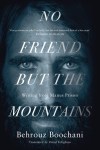
Behrouz Boochani, No friend but the mountainsThis year there’s also a “highly commended”, Omid Tofighian. He’s not on the shortlist because he doesn’t have “the substantial bodies of work” of the shortlisted translators, but is worth special mention, they say. Some Australians will recognise him as the translator of No friend but the mountains by Kurdish-Iranian poet and Manus Island detainee, Behrouz Boochani. He has also translated a number of articles by Boochani. The judges argue that Tofighian merits this special commendation because of that point about translation allowing “cultures to converse and voices to be heard that might otherwise remain silent”. (Quite coincidentally, I bought No friend but the mountains the other day. The enthusiastic bookseller said it was a great book and specifically told me to read the Translator’s Note! She didn’t need to tell me that because I always do, but I loved that she did. This book had special challenges for the translator because the book arrived via thousands of text messages from Boochani’s phone).

Anyhow, have you noticed something about all this? By far the majority of the translators listed above work with European languages. This is, to me, astonishing – but perhaps it shouldn’t be, given our still obviously Euro-centric attitudes. Are we still so myopic – is that too harsh a word – that we only want to read European literature when we leave our own?

So, hmm, I checked my own reading … and discovered that, since starting this blog, my reading of translated works has been 25% Asian, 15% Latin American, and the rest European (mostly, I admit, Western European), so, who am I to talk?

What about you? 

* According to the 2016 Census, just over one-quarter of Australians speak languages other than English at home.

Monday musings on Australian literature: Multicultural NSW Award

Synchronicity strikes again, this time concerning the idea of multiculturalism. In the last week or so, it has popped up several times – in Lisa’s post on the NSW Premier’s Literary Awards shortlist, in the conversation I attended last Thursday featuring historian Michelle Arrow on her book The Seventies, and then in the Festival Muse conversation this weekend featuring Asian-Australian writer Alice Pung. I’ve taken all this as a hint that I should talk a bit about multicultural writing in Australia and have decided that a good way to do it – this round anyhow – would be through the Multicultural NSW Award. It’s one of the many categories in the NSW Premier’s Literary Awards.

Before focusing on the award, though, I’ll reiterate my comment in my Alice Pung conversation post (linked above) that during the conversation she mentioned several writers, all of whom are writers of migrant experience – Christos Tsiolkas, Benjamin Law and Anh Do. It gave me the sense that there’s quite a sense of fellow-feeling, or, at least, respect, amongst these writers. I like that: we all need peers with whom to share our challenges and experiences don’t we?

So, the Multicultural NSW Award

As far as I can tell, this award has changed name several times. It seems to have been established in 1980 as the Ethnic Affairs Commission Award. At some time its name changed to the Community Relations Commission Award, and then again, around 2014 I think, to the Multicultural NSW Award. From the start though, its goal and content has been the same.

It’s an interesting award because it is not form specific. Works submitted can be:

  • fiction;
  • non-fiction;
  • drama (in various forms, including plays, musicals, theatrical monologues);
  • poetry, single or in collection; or
  • screenplays/scripts for film, television, radio

The main limitation is content: submitted works must deal with or further our understanding of migrant experience, cultural diversity or multiculturalism in Australia. The prize is decent – currently $20,000.

Maxine Beneba Clarke, The hate raceRecent past winners are:

  • 2018: Roanna Gonsalves’ The permanent resident: short story collection
  • 2017: Maxine Beneba Clarke’s The hate race: memoir (my review)
  • 2016: Osamah Sami’s Good Muslim boy: memoir
  • 2015: Matthew Klugman and Gary Osmond’s Black and proud: The story of an AFL photo: social history/sociology
  • 2014 Joint winner: Andrew Bovell’s The secret river: playscript adapted from Kate Grenville’s novel The secret river
  • 2014 Joint winner: Michelle de Kretser’s Questions of travel: novel (my review)
  • 2013: Tim Soutphommasane’s Don’t go back to where you came from: social and political history
  • 2012: Tim Bonyhady’s Good living street: The fortunes of my Viennese family: biography of a family
  • 2011: Ouyang Yu’s The English class: novel (Lisa’s – ANZLitlovers – review)
  • 2010: Abbas El-Zein’s Leave to remain: A memoir: memoir

To see all the winners back to 1980, check out Wikipedia.

There are a few points worth making here, the first being that, as per the award criteria, the focus is the content, not the author so, while most of the winning authors come from diverse backgrounds, not all do. Andrew Bovell (and the author he adapted for his winning play, Kate Grenville) are both white Australians. The second point is that the award is true to its word about diversity of form, with the winners ranging from novels to social history, from plays to short stories. The winners also include at least one book for young people, Ursula Dubosarsky’s The first book of Samuel, back in 1995. The shortlists add to this diversity, by including, for example, poetry and television scripts. Another point is that the winning works cross time, from way past to the present. Finally, although a few of the winners over the history of the prize discuss or are by indigenous Australians, it’s good to see that in 2016, a biennial Indigenous Writer’s Prize worth $30,000 was added to NSW’s suite of awards.

I don’t want to write a long post tonight as there’s a lot going on in my life at present, so I’ll just conclude with some words from a 2014 guest post on the Wheeler Centre blog. The post is about the need for “true diversity in our media”. The writer Fatima Measham says that lack of diversity in our media

is a problem because it leaves us with a patently false construction of our society.

[…]

greater diversity of perspectives and commentators leads to clarity, a sharper sense of the aspects of conflict and power that grip democratic life.

I can’t think of a better argument for why we need to read diverse literature and, therefore, for the role that awards like the Multicultural NSW Award can play in bringing diverse voices to the fore.

Stella Prize 2019 Shortlist announced

As you probably know, the Stella Prize is the award I particularly like to follow, though I don’t always post on the Longlist and the Shortlist as I am this year. The Longlist was announced on 7 February (my post), and the shortlist was announced, today, International Women’s Day, as has, appropriately, become tradition.

Here is the shortlist:

What an interesting list – and one for which I’ve already read two, and am currently reading a third. This year there are two, not one, non-fiction works on the list, out of the five on the longlist.

Louise Swinn, the 2019 Judging Panel Chair, says that:

The six finalists on the 2019 Stella Prize shortlist explode the myth of the death of the book, and they are a hearty response to the under-representation of women’s work in awards. This is an incredibly diverse knot of books, with broad subjects showing that identity is shaped across many continents and informed by many cultures. Non-fiction and fiction works stray from their formal constraints as authors give authentic voices to those who are otherwise under-represented. The books on this shortlist inform and entertain, and while they speak absolutely to our moment, their insights are timeless

Anyhow, what do I think about the list? Well, it is an intriguing one – and from what I’ve heard and/or read myself the list encompasses quite a variety of concerns and styles, and is not, probably, what you’d call conventional! Whether you agree with the judges choices or not, I like this.

The winner receives $50,000, and each shortlisted author receives $3000, as well as a three-week writing retreat on the Victorian coast. It’s a lovely generous prize. The winner will be announced on 9 April.

Now, I’ll get back to my reading … but if you have any comments on the list, I’d love to hear them.

Monday musings on Australian literature: 1950s prose-poets criticised

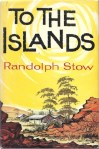
Randolph Stow, To the islandsSerendipitously, while trawling Trove for something else recently, I came across a fascinating article in the Tribune about the winners of the first two Miles Franklin Awards. The article was written by Jack Beasley in July 1959, and the two winners were Patrick White’s Voss (1957), and Randolph Stow’s To the islands (1958), two books which are now regarded as significant Australian classics. Jack Beasley wouldn’t have agreed!

So, who was Jack Beasley? Born in 1921, he was interested in the arts, was closely associated with the Australasian Book Society, and at one stage had his own publishing company. He wrote several books, including a memoir and a couple of books on Katharine Susannah Prichard. He was also a member, for many years, of the Communist Party of Australia. The Tribune, for those of you who don’t know, was the Party’s official newspaper. This background is relevant to his criticism of White and Stow’s wins.

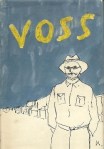
Patrick White, VossHe commences his article by stating that Randolph Stow’s winning the award has created quite a lot of discussion, particularly since it followed Patrick White’s winning for Voss the year before:

The two authors are the leading exponents of the so-called “prose-poetry” school, very fashionable today in literary circles attached to the big publishing houses.

He quotes Sidney J. Baker, whom he describes as a Sydney Morning Herald authority. Baker

regards their work as a “new type, of novel … distinguished by strength and sincerity and blowing away traditional debris like a cool wind after sizzling heat.” It should be added that among the “traditional debris” blown away are the traditions for which Miles Franklin herself so firmly stood.

Hmm, so the award should only be for writers who write in the same style as Miles Franklin?

Anyhow, Beasley writes that Franklin “believed that literature drew its ideas from life and attachment to native soil, and she wrote with a vigorous, entertaining prose”:

Her major work, ‘”All That Swagger” is notable for Danny Delacy and his “brave Joanna,” Irish immigrants who go through life undaunted by its buffetings and rejoicing in its happinesses.

In sorry contrast are the morbid heroes of Messrs. White and Stow, who flee from life and society in search of some individual haven.

To Beasley, prose-poetry “is a fad of style, a pretentious juggling of words and grammar”. He quotes from both White and Stow to prove his point, and then argues that while this “obscure” style is new in Australia, it “emerged many years ago in bourgeois culture”. He names “Joyce, Proust, Virginia Woolf and the extreme case, Gertrude Stein” as exponents of the style.

“Individual haven” and “Bourgeois culture” give away his leanings. He discusses To the islands:

According to some reviewers, “To the Islands” shows a warm sympathy for the Aborigines. This is partly true, but an even warmer sympathy is shown for the missionaries and whatever might be the personal motivation of individual missionaries, history has shown that the missions have played their part in the destruction of tribal life and the continuing ordeal of the Aboriginal people.

This is of course true, but what becomes increasingly clear is that Beasley’s main criticism is in fact less the style than the content of White and Stow’s work. The criticism focuses very much on the fact that their focus is the “individual” which is not part of Communist ethos. He describes White and Stow as being “closely bound to the capitalist class”, and writes that their protagonists, Voss and Heriot,

are nothing more than the bourgeois intellectuals, or more correctly a personification of the crisis of the intellectuals, desperately reaching for a sanctuary. They feel the sands shifting beneath them but are still unable because of their individualism to accept the new ideas that are emerging.

He believes intellectuals need to grasp new ways of thinking:

Only by coming to the working class and taking their part in the struggles led by this class for a better life, only by ceasing to believe in the omniscience of the lonely individual and learning in life of the inexhaustible strength of collective ideas, can the intellectuals have a future.

The socialist countries show again and again that there is no hostile contradiction there between the intellectuals and the proletariat and the Australian workers have always welcomed those who joined their cause.

Only at the end of his article does he return, somewhat off-handedly, to the style issue:

It is not suggested that Miles Franklin would have supported all of the views stated above [that is, his political views], but both the misanthropic themes and the literary quality of the two prizewinners are at variance with her view of life and literary standard.

It might have ended there but, intriguingly, a few weeks later, a letter in response appeared in the same paper – by author Alan Marshall. He thought the article was the “best analysis” he’d read of this new trend, but he takes issue with a couple of points. One is Beasley’s generalisation about “intellectuals”, his tarring them all with the same brush, but the other is his use of the term of “prose poets”.

Marshall writes:

What is wrong with prose poetry? The works of Katharine Prichard are full of it; Turgenev was a master at it; Gorky often delighted in it; Sholokhov’s works feature it. It can lift prose to its highest level and be an inspiration to mankind. In the hands of the writers I have mentioned it not only appeals to the highest emotions but to the reason as well.

Patrick White and Stow are not Prose Poets.

They are obscurantists juggling words to obscure sense in an effort, to create a sense of profundity. They believe readers have little faith in their judgement; that readers praise what they cannot understand for fear of being regarded as incapable of appreciating good writing.

Ouch … “obscurantists”, not “prose poets”.

I’m leaving it here. I’m sharing this because I like hearing the arguments and ideas of another time, and testing them against our own (with the benefit of time). Marshall’s criticism of authors writing obscurely to create profundity is often trotted out. But, clearly, his and Beasley’s assessments of White and Stow have not stood the test of time, thank goodness.

Monday musings on Australian literature: Stella judges on the zeitgeist in Australian fiction

Last week I reported on the longlist for this year’s Stella Prize, and shared an excerpt from the judge’s comments. For today’s Monday Musings, I’m reiterating most of that – for us to think about and discuss:

Reading for the Stella Prize … [is] a sample of the zeitgeist, a look at what is informing our thinking right now …

It feels like a big year for fiction, and our longlist reflects this. … Family relations and the persistence of the past in the present continue to inspire writers, and several books were concerned with the aftermath of trauma, especially sexual violence. Realism continues to dominate Australian fiction, with a few standout departures into other modes.

We wished for more representations of otherness and diversity from publishers: narratives from outside Australia, from and featuring women of colour, LGBTQIA stories, Indigenous stories, more subversion, more difference.

I’m not aiming here to get into a beat-up about their choices – because we all know that judging in the arts is such a subjective thing – but they did raise the issue, so I thought we could have a little think …

Starting with what they say is dominating contemporary fiction:

  • family relations
  • impact (“persistence”) of the past in the present
  • aftermath of trauma (particularly sexual violence)
  • realism

And then, looking at what they felt they didn’t see much of, which was “otherness and diversity”. They defined this as narratives that:

  • are not based in Australia
  • come from and feature women of colour, LGBTQIA people, Indigenous people (and, presumably, other “differences”, such as people with “disabilities”)
  • are subversive
  • are different

There are a several ways we can look at this. Firstly, do we agree with their assessment of Australian fiction, specifically, of course, that written by women – recognising that they are talking about trends, not exceptions as there will always be those. My sense is that they are right. Certainly, several books in their longlist are about family relationships – particularly fathers and daughters/parents and children – and about how the past continues to impact present behaviours and lives.

Secondly, if we agree with the judges’ assessment, does it matter? I’d say it does, because it suggests that we are not being introduced to the breadth and depth of Australian experience but to a subset of it.

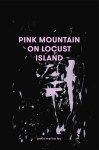
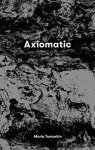
Jamie Marina Lau, Pink Mountain on Lotus IslandThirdly, if we agree it does matter, why is it so? Is it because this is what publishers think readers want to read? It’s interesting, for example, that the most subversive books in the longlist are probably the two from the small independent publisher, Brow Books (Lau’s Purple mountain on Locust Island, and Tumarkin’s Axiomatic), and that the indigenous work in the list (Lucashenkos’ Too much lip) is published by UQP, a university press which has a history of supporting indigenous writing.

Anyhow, what I’m going to do is share here some books written by women and published last year that I think offer “otherness and diversity”, not, as I said, to say that I think these should have been shortlisted – because I haven’t read all the books the judges did, and I don’t know which ones were submitted anyhow – but just to offer some ideas and to have you offer some back!

  • Glenda Guest’s A week in the life of Cassandra Aberline (Text) (my review), which could be seen to largely fit the zeitgeist/trends the judges identified – family relations, the impact of the past on the present – but it is also about “otherness”, in that the main character is an older woman who has been diagnosed with dementia.
  • Krissy Kneen’s Wintering (Text), which I haven’t read but Kneen does tend to be subversive. Is this book so – or is it simply a variation on Tasmanian Gothic?
  • Margaret Merrilees’ story about lesbians, Big rough stones (Wakefield Press) (my review)
  • Angela Meyer’s dystopian-tending-realism-departing story, A superior spectre (Ventura Press) (my review).

This isn’t what you’d call a lot! I did find a few more by men, but. We see stories all the time about “other” experiences, about the many challenges we are facing as a society – on the news, for a start. Where are they in our fiction?

Now, over to you – and if you’re not Australian, I would of course love to hear what you have to say about “otherness and diversity” in your neck of the woods.

(PS This may not publish, as scheduled, on Monday night AEDST as we are out in the wilds of NE Victoria where internet connection is flakey.)

Stella Prize 2019 Longlist

I don’t do well at having read the Stella Prize longlist at the time of its announcement. In 2017 I’d read none, and last year I improved on that by having read one of the 12-strong longlist. By the end of the year, though, I had read five, which is good for me, given in 2017, I’d only read three. How will I go this year?

I do have a BIG fail though, which is that until now I had read all the winners – Carrie Tiffany’s Mateship with birds, Clare Wright’s The forgotten rebels of Eureka, Emily Bitto’s The strays, Charlotte Wood’s The natural way of things, and Heather Rose’s The museum of modern love – but I have yet to read 2018’s winner, Alexis Wright’s Tracker.

The judges are again different to last year’s – with the exception of the chair, Louise Swinn, who also judged last year – which is good to see.  The 2019 judges are writer, journalist and broadcaster Daniel Browning; writer Michelle de Kretser (whom I’ve reviewed a couple of times here); bookseller Amelia Lush; Walkley Award-winning journalist Kate McClymont (who is in that Media Hall of Fame I wrote about a couple of weeks ago); and writer and publisher Louise Swinn (the chair). Once again attention has been paid to diversity on the panel.

Here is the longlist:

  • Jenny Ackland’s Little gods (novel/Allen & Unwin) (my review)
  • Stephanie Bishop’s Man out of time (novel/Hachette)
  • Belinda Castle’s Bluebottle (novel/Allen & Unwin) (Theresa Smith Writes review)
  • Enza Gandolfo’s The bridge (novel/Scribe) (Lisa’s review)
  • Chloe Hooper’s The arsonist (non-fiction/Penguin Random House) (Lisa’s review)
  • Gail Jones’ The death of Noah Glass (novel/Text)
  • Jamie Marina Lau’s Purple Mountain on Locust Island (novel/Brow Books) (Amanda’s guest post here)
  • Vicki Laveau-Harris’ The erratics (memoir/Finch Publishing)
  • Bri Lee’s Eggshell skull (memoir/Allen & Unwin) (Kate’s – booksaremyfavouriteandbest – review)
  • Melissa Lucashenko’s Too much lip (novel/UQP)(on my TBR, and coming up soon) (Lisa’s review)
  • Maria Tumarkin’s Axiomatic (essays/Brow Books) (my review)
  • Fiona Wright’s The world was whole (essays/Giramondo) (on my TBR – I loved her Small acts of disappearance

So, I’ve read and reviewed just two – creeping up my one each year! – and have a guest post for a third on my blog. I have two more on my TBR right now, and a couple more I am very keen to read, including Chloe Hooper’s The arsonist. I have been out tonight, and  so had tried to get a head start by partially drafting this before I went out with my “guesses” inserted – I had only 5 right!

The judges commented on the longlist that:

Reading for the Stella Prize … [is] a sample of the zeitgeist, a look at what is informing our thinking right now …

It feels like a big year for fiction, and our longlist reflects this. As well as some strong debuts, it was reassuring to see so many books from writers whose work we have admired for some time. Family relations and the persistence of the past in the present continue to inspire writers, and several books were concerned with the aftermath of trauma, especially sexual violence. Realism continues to dominate Australian fiction, with a few standout departures into other modes.

We wished for more representations of otherness and diversity from publishers: narratives from outside Australia, from and featuring women of colour, LGBTQIA stories, Indigenous stories, more subversion, more difference.

[…]

Ultimately, we chose books that strove for something big and fulfilled their own ambitions. … These are all artists concerned with the most important questions of our age and how to live now, and it has been a pleasure to be in their company.

I like their comment about a wish for more diversity – but I would expect nothing less from them. As always there are surprises, but that’s to be expected. It would be a sad world if we all came up with the same 12 eh?

Anyhow, I’d love to know if you have any thoughts on the list.

The shortlist will be announced on March 8 (International Women’s Day, as has become tradition), and the winner in April.

Indie Books Awards shortlist, 2019, announced

And so it, starts, the Literary Awards trail! Early in the year will be the Stella Prize, but first up is the Indie Book Awards. These are lovely awards, because they are run by Australia’s Independent Booksellers – who are members of Leading Edge Books – and we love to support them don’t we? Consequently, I’ve decided to share them this year. (I don’t list every award, every year, but just select a few to give a flavour to the year’s Awards scene!)

The Press Release I received reminds us of the Awards’s role and history. They were established in 2008, and, they say, have developed “a well-deserved reputation for picking the best of the best in Australian writing”. They “recognise and celebrate this country’s incredible talent and the role independent booksellers play in supporting and nurturing Australian writing.”

Past Book of the Year winners have gone on to be bestsellers and win other major literary awards, and include Charlotte Wood’s The natural way of things by Charlotte Wood (my review); Don Watson’s The bush (on my TBR); Richard Flanagan’s The narrow road to the deep north (my review); Anna Funder’s All that I am (still on my TBR); Craig Silvey’s Jasper Jones (read before blogging); and Tim Winton’s Breath (my post).

The shortlisted books have been nominated by independent booksellers, but the winners in each category will be selected by judging panels. The booksellers, though, get to vote for their favourites in each category too. And, there is also an overall Book of the year which is what those examples I mentioned above won.)

The list seems a reasonable one though we could make the usual comments about diversity. There’s not a lot of it here, though indigenous writers (Marcia Langton, and Ambelin Kwaymullina & Ezekiel Kwaymullina) appear in the categories I haven’t listed here.

The shortlist

Fiction

  • Jane Harper’s The lost man (Macmillan Australia)
  • Kristina Olsson’s Shell (Scribner Australia) (Lisa’s review)
  • Tim Winton’s The shepherd’s hut (Penguin Random House Australia)
  • Markus Zusak’s Bridge of clay (Picador Australia)

 Non-Fiction

  • Richard Glover’s The land before avocado (ABC Books, HarperCollins Australia): Mr Gums is reading this now
  • Chloe Hooper’s The arsonist (Penguin Random House Australia) (Lisa’s review)
  • Bri Lee’s Eggshell skull (Allen & Unwin)
  • Leigh Sales’ Any ordinary day (Penguin Random House Australia)

Trent Dalton, Boy swallows universeDebut fiction

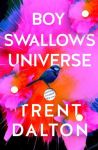
  • Trent Dalton’s Boy swallows universe (HarperCollins Australia): (my review)
  • Chris Hammer’s Scrublands (Allen & Unwin)
  • Heather Morris’s The tattooist of Auschwitz (Echo Publishing) (Lisa’s review)
  • Christian White’s The nowhere child (Affirm Press)

There are also shortlists for Illustrated non-fiction, Children’s and Young Adult. For the full list, check out the website

The Winners will be announced on Monday 18 March, 2019 at the Leading Edge Books Annual Conference Awards Dinner, in Adelaide, SA.

The Indie Book Awards list their main sponsors for these awards: Peribo, Pan Macmillan Australia, Affirm Press, Allen & Unwin, Thames & Hudson Australia, Hardie Grant Egmont, Text Publishing, and Awards partner: Books+Publishing.  

Good Australian writing needs good Australian bookshops to prosper. Without them Australian writers are one more endangered species whose bush has been bulldozed.
(Richard Flanagan, Indie Book Awards 2014 Book of the Year,
The narrow road to the deep north)

Monday musings on Australian literature: ACT’s literary awards

Last week, I attended the ACT Writers Centre’s Christmas Party and Awards Night. It was a lovely, relaxed affair – just the sort I like. Not too much ceremony, but much good will and conviviality. I loved seeing writers, and others from our little territory’s literary community, mingle with each other, commending each other’s achievements. I could name drop, but fear forgetting a special name as you always do in situations like this, and I could describe some fan-girl moments, but that, too, could be fraught. So, instead, I’ll just say what a very enjoyable night it was (helped along by delicious local wines from Eden Road Wines, who do a great job in Canberra sponsoring arts organisations, including, in my experience, the ACT Writers Centre and Musica Viva. Thanks Eden Road – and your wines are delicious.)

And now, the awards – which come in two strands.

ACT Book of the Year Award

This award, “for excellence in literature”, is supported by the ACT Government, and supports ACT-based writers and writing. It “recognises quality contemporary literary works including fiction, non-fiction and poetry by ACT-based authors published in the previous calendar year”. The winner receives $10,000, with any highly commended book receiving $2,000, and the shortlisted books earning $1,000 each. Not the biggest awards in town, but we are a small jurisdiction. I should note too that “ACT-based” can include residents outside the ACT who “can specifically and strongly demonstrate an ACT-based arts practice”.

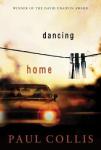
Paul Collis, Dancing homeThis year’s winner and runners-up were:

  • Paul Collis’ Dancing home (Winner), which also won the David Unaipon Award in 2017, and has been reviewed by Lisa. I have it on order.
  • Merlinda Bobis’ Accidents of composition (Highly commended)
  • Jackie French’s Facing the flame (Shortlist)
  • Omar Musa’s Millefiori (Shortlist)
  • Rachel Sanderson’s The Space Between (Shortlist)

ACT Writers Centre Awards

These sponsored awards are managed by the ACT Writers Centre.

Marjorie Graber-McInnis Short Story Award

Amanda McLeod’s Loyal Animals

June Shenfield Poetry Award

Natalie Cook’s Incursion, Extinctions.

The 2018 Anne Edgeworth Young Writers’ Fellowship

Gemma Killen. She will receive support from the Trust to help her develop her skills in writing for the screen with a focus on comedy scripts.

Anne Edgeworth’s son announced that, next year, the award will change emphasis, slightly, from “young” to “emerging”, recognising that new older writers also need support.

Publishing Awards

Kirsty Budding, paper cutsThese awards were established in 2004 “to recognise, reward and promote writing by ACT region authors that has been published by small publishers or been self-published”.

  • Fiction: Kirsty Budding, Paper cuts: Comedic and satirical monologues for audition or performance (Blemish Books, who also published Nigel Featherstone’s three novellas). Budding lives and works in Canberra as a theatre producer and teacher. She has been shortlisted and/or won several playwright awards, including being a semi-finalist in the 2017 ScreenCraft Short Screenplay Contest, Los Angeles.
  • Non-fiction: Robert Lehane’s Verity (Australian Scholarly Publishing). This is a biography of Canberra pioneer, Verity Hewitt, who, among other things, established a bookshop in Canberra in 1938. She also, apparently, taught Gough Whitlam, and was an activist in the peace movements of the 1950s to 70s.
  • Children’s: Maura Pierlot’s Trouble in Tune Town (Little Steps Books). This is Pierlot’s first children’s picture book, and it has been gaining recognition in awards – Best Illustrated Children’s E-Book in the Independent Publisher Book Awards (IPPY) 2018 (Joint Winner); and a finalist in the Children’s Picture Book (Hardcover Fiction) in the International Book Awards 2018
  • Poetry: Paul Cliff, A constellation of abnormalities (Puncher and Wattman). Cliff is a poet, playwright and editor whose has been published for over 30 years, and has won or ben shortlisted for several awards including the Mattara Poetry Prize, the David Campbell and Rosemary Dobson Poetry Prizes.

Full details of the awards, with all the shortlisted writers can be found on the ACT Writers Centre website.

Congratulations to all the winning and shortlisted authors, and a big thanks to the ACT Writers Centre for inviting me to the event.

Prime Minister’s Literary Awards Winners, 2018, announced

The Winners of the the Prime Minister’s Literary Awards for 2018 were announced this morning at Parliament House … an event I followed via their Twitter Live Feed … and it contained the BEST of ALL POSSIBLE news that Gerald Murnane won the Fiction prize. I haven’t read the novel, so perhaps my approval is cheeky, but Murnane has been far too under-rated over the years and it’s high time he was recognised for his contribution to Australian letters! Sure, he can be obscure, but that makes him interesting – even fun – to read because of the mesmerising way he interrogates our emotional interiors/landscapes in some sort of alignment with a physical interior/landscape, that feels Australian but is also mythical in its lack of specificity.

Below is the shortlist, with the winner marked in bold.

Gerald Murnane, Border districtsFiction

  • A long way from home, Peter Carey (Penguin Random House): on my TBR (Lisa’s review)
  • Border districts, Gerald Murnane (Giramondo): on my TBR (Lisa’s review)
  • First person, Richard Flanagan (Penguin Random House): my review
  • Taboo, Kim Scott (Pan Macmillan): on my TBR (Lisa’s review)
  • The life to come, Michelle de Kretser (Allen & Unwin): my review (and winner of this year’s Miles Franklin Award)

The pre-announcement Twitter feed said “beautifully told stories capturing a broad range of themes”. That tells us a lot doesn’t it!

Poetry

  • Archipelago, Adam Aitken (Vagabond Press)
  • Blindness and rage: A phantasmagoria, Brian Castro (Giramondo Publishing) (Lisa’s review)
  • Chatelaine, Bonny Cassidy (Giramondo Publishing)
  • Domestic interior, Fiona Wright (Giramondo Publishing)
  • Transparencies, Stephen Edgar (Black Pepper)

This time the twitter feed said that “this year’s shortlistees prove that poetry is very much alive and a vibrant art form in Australia”. Hmm … any different from last year’s I wonder?

The winner is another grand man of Australian letters whom I must get onto my blog soon – he’s one of my gaps.

Non-fiction

  • Asia’s reckoning, Richard McGregor (Penguin Random House UK)
  • Mischka’s war: A European odyssey of the 1940s, Sheila Fitzpatrick (University of Melbourne Publishing)
  • No front line: Australia’s special forces at war in Afghanistan, Chris Masters (Allen & Unwin)
  • The library: A catalogue of wonders, Stuart Kells (Text Publishing)
  • Unbreakable, Jelena Dokic and Jessica Halloran (Penguin Random House): my report of an In Conversation event

And the pre-announcement twitter feed said, “The shortlisted books reflect our place in history and the modern world.” Hmm … again. I think I’ll forget the Twitter feeds.

Australian history

  • Beautiful Balts: From Displaced Persons to New Australians, Jayne Persian (NewSouth Publishing)
  • Hidden in plain view: The Aboriginal people of coastal Sydney, Paul Irish (NewSouth Publishing)
  • Indigenous and other Australians since 1901, Timothy Rowse (NewSouth Publishing)
  • John Curtin’s war: The coming of war in the Pacific, and reinventing Australia, Volume 1, John Edwards (Penguin Random House)
  • The enigmatic Mr Deakin, Judith Brett (Text Publishing)

Children’s literature

  • Feathers, by Phil Cummings and Phil Lesnie (Scholastic Australia)
  • Figgy takes the city, Tamsin Janu (Scholastic Australia)
  • Hark, it’s me, Ruby Lee!, Lisa Shanahan and Binny Talib (Hachette Australia)
  • Pea pod lullaby, Glenda Millard and Stephen Michael King (Allen & Unwin)
  • Storm whale, Sarah Brennan and Jane Tanner (Allen & Unwin)

Young Adult literature

  • Living on Hope Street, Demet Divaroren (Allen & Unwin)
  • My lovely Frankie, Judith Clarke (Allen & Unwin)
  • Ruben, Bruce Whatley (Scholastic Australia)
  • The ones that disappeared, Zana Fraillon (Hachette Australia)
  • This is my song, Richard Yaxley (Scholastic Australia)

Thoughts, anyone?