Monday musings on Australian literature: Britannica Australia Awards

While researching my recent 1965 Monday Musings posts, I came across a new award to me – the Britannica Australia Awards (also known as the Encyclopaedia Britannica Australia Awards). Of course, I wanted to find out more about them. It was tricky. They have Wikipedia article, but The Canberra Times came good via Trove, and there is a paragraph about them in the Oxford companion to Australian literature, so I have enough to share with you.

The awards were sponsored by, obviously, the Encyclopaedia Britannica, to recognise, says the Oxford companion, “outstanding achievement in Australia” and “Australian-American links”. They were only offered from 1964 to 1973. From 1964 to 1967, they were made for the arts, education, literature, medicine and science; and from 1968 to 1973 for the arts, science and humanities. In this post I’m focusing on literature/the humanities. The award included money (initially £5,000), a medal and a citation.

1964: Judith Wright

The first literature winner was poet Judith Wright, who received it “for her wide-ranging and permanent contribution to Australian literature”. According to The Canberra Times, the citation said her work “was already part of Australia’s history. Both readers and other writers were richer in experience because of what she had done.”

Wright has been mentioned several times in this blog, with my main reference being in another Monday Musings post, on Capital Women Poets.

1965: Robert D. Fitzgerald and Professor A. D. Hope

The 1965 award was shared by two poets, AD Hope and Robert Fitzgerald. The Canberra Times reported that Hope “had been named on the occasion of the publication of his book of critical essays, The cave and the spring, and in recognition of his considerable achievement as poet, literary critic and teacher”. Chair of the literature committee, Clement Semmler, said that:

As a critic he is lively and controversial and he has earned the respect of his fellow teachers and intelligent readers, for his determined efforts to re-evaluate accepted literary convention.

Robert D Fitzgerald, the other recipient, was recognised for “his substantial contribution to Australian poetry over many years”.

1966: Julian Randolph Stow and Hal Porter
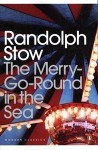
Randolph Stow, The merry-go-round in the seaThe 1966 award was also shared – and at last we have an author I’ve reviewed here, Randolph Stow. The Canberra Times reports this award, as follows:

Mr Hal Porter, novelist, short-story writer, playwright and poet, shared the literature award for his contributions to Australian writings, particularly his two most recent publications, The cats of Venice and The paper chase.

Randolph Stow’s award was made on the merits of his published works since 1956, including his latest novel, The merry-go-round in the sea (my review).

1967: Not awarded

You can’t have an award – even a short-lived one – without a controversy, it seems, and so it was that the Britannica Australia Awards had one. The Canberra Timescolumnist Gang Gang reported that Professor Alec Hope, himself a recipient of the Britannica Award, said ‘that the decision to deprive author Christina Stead of the 1967 award because she was not an Australian author (though born here) was “absolutely bloody nonsense”.’

Hope, naming other Australian writers, like Henry Handel Richardson, who had made their homes outside Australia, said that

Christina Stead made her reputation as an Australian writer and although she left Australia 40 years ago (at the age of 26) she belonged to the world of English-speaking literature. Writers, he added, shouldn’t be subject to the test of whether they are ‘Canadian’ or ‘Australian’ enough to achieve recognition.

However, unknown-to-me journalist and writer Marien Dreyer disagreed:

Book cover“Chrisina [sic] Stead is undoubtedly a fine and prolific author by any standards — but she has lived for too long outside Australia to qualify. She left Australia for America in 1928 and since then our country has experienced two world wars, a world economic depression, and is greatly changed from the Australia she knew nearly 40 years ago”.

Like Stow, Stead has appeared here a few times, including my review of her novel For love alone.

1968: Douglas Stewart

I was introduced to Douglas Stewart, the poet, playwright and literary editor who won the 1968 award, at high school through his verse play about Scott’s tragic expedition to Antartica, The fire on the snow. I have also read his daughter’s biography/memoir Autobiography of my mother about his wife and her mother, the artist Margaret Coen. I didn’t find anything more than a brief announcement of this award in The Canberra Times. Stewart and Coen moved in circles which included several writers I’ve mentioned here, including Rosemary Dobson and David Campbell.

1969: Keith Hancock

1969’s winner, Keith Hancock, was an historian. According to The Canberra Times columnist Maurice Dunlevy, he said, on being advised of this award, “Well I had to wait a long time for Father Christmas to come to me”. Haha! Love that. He was 71.

If you are interested in Hancock, check out the article because Dunlevy gives a decent potted history of the man. On Hancock’s work as an historian, Dunlevy writes that

he sees his role as that of seeker, not seer. His job is not to answer questions but to know how to look for them. “Inquiry and narration – that is my craft”, he once wrote.

and that he wasn’t impressed by the modern “ordeal by thesis” type of history. Instead, said Dunlevy,

he emphasises that history is about life, “The man who chooses theory may write a valuable monograph on monopolistic competition . . . the man who chooses life will write history.”

I’d love to hear what contemporary historians think of his work now.

1970: CB Christesen

Clem Christesen, 1970’s winner, is best known as a literary editor. Not only did he found one of Australia’s most significant literary journals, Meanjin, in 1940, but he was its editor until 1974. He was influential in the careers of many of Australia’s mid-twentieth century writers, including the award’s first recipient for literature, Judith Wright. Again, I found nothing about his winning the award in my Trove search.

1971: Douglas Pike

As for Christesen, I don’t have a report on 1971’s winner, Douglas Pike, but I did found an obituary by Jacqueline Rees in 1974. Professor Pike was also an historian, but his greatest claim to fame was his work as a general editor of the Australian dictionary of biography, for which he received the Britannica award. The report said that he saw this award as “recognition not so much for his own work as for the project as a whole”. Nice.

1972: James McAuley

Poets seem to have won the lion’s share of this award – not a complaint, just an observation. James McAuley, the 1972 winner, was described by The Canberra Times as “Professor of English at the University of Tasmania and a prominent poet and literary spokesman”.

McAuley is quoted as saying at the presentation event

that Australia was second only to the US in the amount of talent it had among poets.

He was not enthusiastic about contemporary English poets. They have had very little to offer in recent years, he said. “Much the same could be said for the Russians”.

Ha! Perhaps the awards committees agreed, and this is why poets did so well!

1973: AD Trendall

The last award went to a new name for me, AD Trendall. Another Professor, he was Master of University House at the ANU, here in Canberra, from 1954 to 1969, but was resident Fellow at Melbourne’s La Trobe University at the time of winning the award.

The Canberra Times provides some brief information about him, saying that

He has written and published many works on archaeology, specialising in the Roman and Greek origin and has been a contributor to many overseas and Australian journals.

To conclude, it’s clear that this award had, as you might expect given its sponsorship, a scholarly tenor, which may explain why “literature” was broadened to “the humanities” (even though I’d argue that most writing in the humanities can be defined as literature.) Why it stopped, I don’t know. It might be there somewhere in Trove, but it didn’t pop up in first few pages retrieved by my various searches.

Another long post, I know, and probably only of interest to a few of you, but I did want to document these awards usefully.

Miles Franklin Award 2019 Longlist

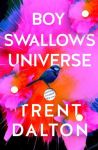
Trent Dalton, Boy swallows universeWoo hoo! Last year I had only read and reviewed one book on the Miles Franklin longlist, but this year I’ve read three! It’s a record (for me, anyhow!)

Here is the list:

  • Michael Mohammed Ahmad’s The Lebs (Nancy’s review) (Hachette)
  • Robbie Arnott’s Flames  (Lisa’s review) (Text)
  • Trent Dalton’s Boy swallows universe (my review) (Fourth Estate)
  • Gregory Day’s A sand archive (Lisa’s review) (Picador)
  • Lexi Freiman’s Inappropriation ( A&U)
  • Rodney Hall’s A stolen season (my review) (Picador)
  • Gail Jones’ The death of Noah Glass (Text)
  • Melissa Lucashenko’s Too much lip (my review) (UQP)
  • Jennifer Mills’ Dyschronia (Lisa’s review) (Picador)
  • Tracy Sorenson’s The lucky galah (Lisa’s review) (Picador).

Rodney Hall, A stolen seasonSome random observations:

  • There are 10 on the longlist. The Miles Franklin judges have, in recent years, not constrained themselves to a set number for their longlist. In 2018 there were 11 books, In 2016 and 2017, there were 9 books, and in 2015 there were 10.)
  • Half of the longlisted books are by women writers. Two of these, Gail Jones and Melissa Lucashenko, were also longlisted for the Stella Prize.
  • Rodney Hall has won twice before, for Just relations and The grisly wife, and been shortlisted three more times.
  • I was little surprised not to see Enza Gandolfo’s The bridge on the list – but this is always the way. I accept that!
  • There are debut authors here – including Trent Dalton and Tracy Sorenson – and many well established ones (who don’t seen to be named!)

Melissa Lucashenko, Too Much LipState Library of NSW Mitchell Librarian Richard Neville, said, on behalf of the judging panel:

The 2019 Miles Franklin longlist yet again highlights a mixture of new and established writers. It showcases ten of the most vibrant voices of Australian fiction speaking to us of lives facing, or having endured, some version of extremity. Angry, funny, contemplative and urgent, these voices—which include a galah—explore personal, historical and ecological loss, cultural inheritances and disenfranchisement, and the fraught bonds of friendships, families and communities.

I am rushing to go out… so will leave that for you to think about.

The judges for this year are almost the same as last year’s: Richard Neville (State Library of NSW),  Murray Waldren (journalist and columnist for The Australian), Dr Melinda Harvey (book critic), Lindy Jones (bookseller), and Bernadette Brennan (author and literary critic). Brennan replaces last year’s Susan Sheridan.

The shortlist will be announced on 2 July at the State Library of New South Wales, and the winner on 30 July in Sydney.

What do you think?

NSW Premier’s Literary Awards 2019 Winners; and Vale Les Murray AO (1939-2019)

I decided to replace today’s Monday Musings with an awards announcement, because the NSW Premier’s Literary Awards were being announced tonight, and they comprise a swag of prizes, many being of particular interest to me. But, then I was shocked to hear that Australian poet Les Murray had died, and I couldn’t let that pass either, so you have a double-barrelled post tonight!

NSW Premier’s Literary Awards

I will only report on a selection of the winners, but here is a link to the full suite. And, if you are interested to know who the judges were, they are all listed on the award’s webpage.

Michelle de Kretser, The life to comeBook of the Year: Billy Griffiths’ Deep time dreaming: Uncovering ancient Australia

The Christina Stead Prize for Fiction: Michelle de Kretser’s The life to come (my review).

People’s Choice Award for Fiction: Trent Dalton’s Boy swallows universe (my review)

The Douglas Stewart prize for Non-Fiction: shared between Billy Griffiths’ Deep time dreaming: Uncovering ancient Australia and Sarah Krasnostein’s The trauma cleaner (my review)

Trent Dalton, Boy swallows universeThe UTS Glenda Adams Prize for New Writing Trent Dalton’s Boy swallows universe (my review). I love that in his thank you speech, he spoke about the time he spent with Les Murray in 2014. Murray, he said, shared his poem Home Suite, telling Dalton not to be afraid to go home. Going home, he said, is exactly which he did in his novel.

Multicultural NSW Award: Michael Mohammed Ahmad’s The Lebs.

Translator’s Prize (presented every two years, and about which I posted recently): Alison Entrekin.

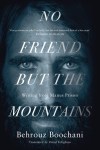
Behrouz Boochani, No friend but the mountainsSpecial Award: Bherouz Boochani’s No friend but the mountains (translated by Omid Tofighian). This award is not made every year, and is often made to a person, but this year it went to a work “that is not readily covered by the existing Awards categories”. The judges stated that it

demonstrates the power of literature in the face of tremendous adversity. It adds a vital voice to Australian social and political consciousness, and deserves to be recognised for its contribution to Australian cultural life.

Some of you may remember that I recently wrote about taking part in a reading marathon of this book.

Congratulations to all the winners – and their publishers – not to mention the short- and long-listees. We readers love that you are out there writing away, and sharing your hearts and thoughts with us. Keep it up!

Vale Les Murray

As I said in my intro to this post, I was shocked to hear this evening that one of Australia’s greatest contemporary poets, Les Murray, aka the “Bard of Bunyah”, had died. He was only 80.

His agent of 30 years, Margaret Connolly, confirmed the news, saying that

The body of work that he’s left is just one of the great glories of Australian writing.

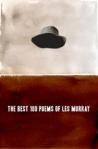
Les Murray, Best 100 poemsI don’t think that’s an exaggeration.

Black Inc, released a statement saying

Les was frequently hilarious and always his own man.

We mourn his bundles of creativity, as well as his original vision – he would talk with anyone, was endlessly curious and a figure of immense integrity and intelligence.

Although I don’t write a lot about poetry, Les Murray has appeared in this blog before, most particularly when Mr Gums and I attended a poetry reading featuring him. What a thrill that was. He was 75 years old then, and the suggestion was that these readings were probably coming to an end due to his health. I have just two of his around 30 volumes of poetry – The best 100 poems of Les Murray and an author-signed edition of Selected poems, both published by Black Inc – and dip into them every now and then.

His poetry was diverse in form, tone, subject-matter. He could be serious, fun, obscure, accessible. You name it, he wrote it. He was often controversial, being, as Black Inc said, “his own man”! In other words, he was hard to pin down, not easy to put in any box. David Malouf, interviewed for tonight’s news, said that he could be “funny”, he could be “harsh”, but that he said things “we needed to hear”. And that, wouldn’t you say, is the role of a poet, particularly one considered by some to be a candidate for the Nobel Prize for Literature?

If you would like to find out more about him, do check out his website, and if you’d like to read some of his poetry (though it would be better to buy a book!), you can check out the Australian Poetry Library. Lisa ANZLitLovers) has also written a post marking his death.

Meanwhile, I’m going to close with the last lines of a poem called “The dark” in his Selected poems (which he chose in 2017 as his “most successfully realised poems”):

… Dark is like that: all productions.
Almost nothing there is caused, or has results. Dark is all one interior
permitting only inner life. Concealing what will seize it.

Seems appropriate for today.

Vicki Laveau-Harvie, The erratics (#BookReview)

Book coverTruth is that, while I like to read at least some of the Stella Prize shortlist, I didn’t have Vicki Laveau-Harvie’s memoir, The erratics, on my high priority list, though the more I heard about it, the more intrigued I became. However, it was winning the prize that tipped it over into my must-read category. What a challenging read it is.

The erratics is the story of how Laveau-Harvie and her sister responded to their estranged aging parents’ needs as infirmity caught up with them. Canadian-born Laveau-Harvie had, decades earlier, escaped the family home in rural Alberta moving, eventually, to Australia. Her younger sister had also escaped, though not so far. She lived in Vancouver. It all came to a head when their 94-year-old mother’s hipbone “crumbles and breaks” putting her in hospital. Laveau-Harvie and her sister regroup to help – their father, in particular, who, they discover, had been being systematically starved by their mother. The story of this dysfunctional family, and the sisters’ actions to save their father and ensure their mother is deemed incompetent, never able to return home, is arresting.

Equally arresting is Laveau-Harvie’s writing. It’s not surprising that she won the Stella (not to mention the Finch Memoir Prize and being shortlisted in the NSW Premier’s Literary Awards), because the writing grabs your attention with an impressive sureness of tone and language. It’s particularly impressive because it is, apparently, 70-something Laveau-Harvie’s first book.

The back-cover blurb of my edition concludes with: “a ferocious, sharp, darkly funny and wholly compelling memoir of families, the pain they can inflict and the legacy they leave, The erratics has the tightly coiled, compressed energy of an explosive device  – it will take your breath away”. It does all of that.

First, it’s an astonishing story of a mother who seems incapable of the love we expect from a parent. I’ll share the quote that you’ll have read before if you’ve read about this book:

One of the few coherent messages my mother repeated to me and my sister as we grew up, a message she sometimes delivered with deceptive gentleness and a touch of sadness that we weren’t more worthy prey, was this one, and I quote: I’ll get you and you won’t even know I’m doing it.

If you are a parent who feels guilty about mistakes you made in your parenting, you can rest easy after reading this (unless of course you are like Laveau-Harvie’s mother!) Most of us, I’m sure, made our mistakes inadvertently, not with the intent behind this woman’s behaviour. The problem in Laveau-Harvie’s family was compounded by the fact that their father, while not brutal like their mother, was weak, believing (or, at least accepting) everything his wife said about their daughters.

So, the story, itself, is compelling – in the strange behaviour of these two parents, and in the willingness of the daughters, despite being rejected by their mother, including being given no formal role in managing her affairs, to step in and do the hard stuff out of love for their father and, I guess, a sense of responsibility. But, in addition to the story, what makes this memoir particularly compelling is, as I’ve already said, the writing itself.

It’s a tight, spare read at just over 200 pages. It has stunning descriptions, but I’ll exemplify it with the metaphor contained in the title itself, a metaphor that draws from a geologic formation called the Foothills Erratics Terrain in the town nearest her parents’ home:

Countless years ago, the Okotoks Erratic fell in on itself and became unsafe to climb upon. It dominates the landscape, roped off and isolated, the danger it presents to anyone trespassing palpable and documented on the signs posted around it.

Unfortunately, Laveau-Harvie’s mother came with no such sign.

There is a deft handling of chronology, with the occasional bit of foreshadowing. And then there is the tone, which is achieved by a crisp story-telling style that is direct, colloquial, witty even, and that focuses on the facts with little explication, all the while conveying the challenges faced by the two sisters in negotiating their relationships with each other, their father and their mother. One of Laveau-Harvie’s techniques is to undercut a description or plan with a short, emphatic sentence like “That was the plan” or “I can’t fix this” or “I don’t do this”.

It’s an invidious situation, and you can’t help but feel their pain. She writes at one stage of not remembering certain events:

I do know this: where there is nothing, there must be pain; that’s why there is nothing. Be glad if you forget.

There’s another of those short concluding sentences – “Be glad if you forget”. It’s powerful.

The strongest part of the narrative concerns the relationship with her sister who, still living in Canada, is the person on-site, and who has always been less able distance herself from the pain. There’s a telling sentence about their choices of mementoes from the house:

I salvage a few other things … things from my childhood … my sister takes only things acquired by my mother after we had left home, heavy crystal goblets, silver serving plates, full dinner sets of translucent china. I want only the connection to the past, she wants never to feel it again.

So, this sister, the one who wants to distance the past takes on, at a cost to her health, more than Laveau-Harvie believes sensible: “I can see sinkholes of simmering resentment about to develop between us.” Laveau-Harvie explores the challenges of siblings negotiating the care of aging parents with the clear-eyed honesty she applies to the whole story, albeit, at times, I wondered how the sister felt about her depiction. Presumably, it’s ground they’ve well-covered between each other.

The book, then, is compelling and many readers, like Kim (Reading Matters), have found it a “compulsive read”. I did too. But, there was also something about the tone that disquieted me, as it did Kate (booksaremyfavouriteand best). This surprised me because I wasn’t expecting to feel this way. I love fearless honesty. It’s one of the reasons (besides her writing) that I like Helen Garner so much. She is not afraid to say the hard, unpalatable things. And yet, I found it difficult at times here. I think it’s because I felt some of this “honesty” was attended by an unkindness, by a willingness to laugh at another’s expense (though, admittedly, she also frequently laughs at her own).

An example is her description of the array of carers she and her sister put in place for their father. It’s funny, and has an element of truth, recognisable by anyone who has experienced the situation. But I bridle at name-calling, so “the gold-digger” and “the housekeeping slut” did not make me laugh. (I particularly hate women calling other women “slut”, even a “housekeeping” one – but that may just be me!) And then there’s the description of the breakage of some fine china freighted to Australia:

I imagine customs officers dropping the box because it has a label that says ‘Fragile’, satisfied at the sound of something delicate breaking.

Ultimately, however, although I couldn’t help reacting, occasionally, with the disquietude that I did – I realise I can’t judge. How can I, when the family life she experienced is beyond my ken? And, the ending is inspired. She draws on myths about the Okotoks to lay her mother – that “bitterly unhappy and vindictive old woman” – to a potentially more peaceful rest.

The erratics, then, is an impressive debut. It’s compelling and, significantly, it prompts us to think about the importance of love, responsibility and respect within all families.

AWW Challenge 2019 BadgeVicki Laveau-Harvie
The erratics
Sydney: Fourth Estate, 2019 (Orig. pub. 2018)
217pp.
ISBN: 9781460758250

Monday musings on Australian literature: Ashurst Business Literature Prize

Book coverMy, how dry does today’s topic sound? But read on, and see what you think. This prize was brought to my attention a couple of days ago by a tweet from author Michelle Scott Tucker announcing that her book, Elizabeth Macarthur: A life at the edge of the world (my review), had been shortlisted for the Ashhurst Business Literature Prize. Her tweet was followed up by Lisa (ANZLitLovers) posting the shortlist on her blog. I decided to save my post for Monday, as it seemed a perfect topic for musing on …

What exactly is this Ashurst prize?

Firstly, it has been going for FIFTEEN years, having been established in 2004 by Blake Dawson as the Blake Dawson Business Literature Prize, “for business and financial affairs writing”. The prize’s name was changed to the Ashurst Business Literature Prize in 2012. Ashurst Australia was previously called Blake Dawson, and is the Australian arm of an international commercial law firm. The prize has been administered by the State Library of New South Wales from the start.

The prize is currently worth $30,000, marking it as an award that means serious business! (Sorry, couldn’t resist that.)

Its aims, from the Prize’s site, are to:

  • Encourage business and finance writing and commentary of the highest quality; writing that brings with it the richness that can come from detailed research
  • Stimulate those writers with a knowledge of Australia’s business life and to encourage their continued production of insightful, well researched books that can be easily digested by the general reader
  • Enable all Australians and the general reader to be better informed about Australia’s commercial life and its participants
  • Add another dimension to Australia’s intellectual and cultural life

So the subject matter is clearly defined, as is the intended audience. The subject matter, though, has changed a little over time. Initially, it was restricted to Australian business and finance, but in 2013, this was expanded to encompass “international and global commercial life and its participants”. That explains why a book about the Lanes who started the Penguin publishing company was eligible. (See 2015’s winner.)

There’s also a wider aspiration about adding to our “intellectual and cultural life.” I like that – we need more good writing on some of the more practical topics affecting our lives.

The conditions of entry include the subject matter and the intended audience. Also:

  • the works must be in English, and can be in printed book or ebook form
  • the author/s must be Australian citizen/s or hold permanent resident status, and at least one of the authors must be alive at the time of nomination.

It doesn’t specifically say anywhere, but it seems that the works are expected to be non-fiction, so, for example, a book like Kate Jennings’ Moral hazard, which, as I wrote in my review,  “looks not just at our contemporary globalised financial world, but more widely at work, our relationship to it, and the moral choices we make in work and in life”, would not be eligible. A shame, I think, for such work not to be recognised. However, a wide variety of non-fiction genres are clearly accepted, including histories and biographies.

Past winners

The past winners, as listed on the State Library of NSW’s website:

  • 2004: Fred Benchley’s Allan Fels: A portrait of power (John Wiley & Sons Australia)
  • 2005: Darrin Grimsey and Mervyn K. Lewis’s Public private partnerships: The worldwide revolution in infrastructure provision and project finance (Edward Elgar)
  • 2006: Gideon Haigh’s Asbestos house (Scribe)
  • 2007: Caroline Overington‘s Kickback: Inside the Australian Wheat Board scandal (Allen & Unwin)
  • 2008: Leonie Wood‘s Funny business: The rise and fall of Steve Vizard (Allen & Unwin)
  • 2009: Peter Thompson and Robert Macklin‘s The big fella (Random House)
  • 2010: Paul Barry’s Who wants to be a billionaire? The James Packer story (Allen & Unwin)
  • 2011: Trevor Sykes‘ Six months of panic: How the Global Financial Crisis hit Australia (Allen & Unwin)
  • 2012: Peter Hartcher’s The sweet spot: How Australia made its own luck – and could now throw it all away (Black Inc)
  • 2013: Malcolm Knox‘s Boom: The underground history of Australia, from Gold Rush to GFC (Penguin Random House Australia)
  • 2014: Andrew Burrell‘s Twiggy: The high stakes life of Andrew Forrest (Black Inc)
  • 2015: Stuart Kells’ Penguin and the Lane Brothers: The untold story of a publishing revolution (Penguin Books Australia) (Lisa’s ANZLitLovers review)
  • 2016: Catherine Bishop’s Minding Her own business: Colonial businesswomen in Sydney
  • 2017: Michael Traill’s Jumping Ship: From the world of corporate Australia to the heart of social investment (Hardie Grant Publishing)

Has anyone read any of these? Several of the authors are known to me – including journalists Paul Barry, Gideon Haigh, and Caroline Overington – and I have heard of a couple of the books, but no, I’ve not read a one!

Shortlist for the 2018 prize

  • Ian D. Gow and Stuart Kells’s The big four: The curious and perilous future of the global accounting monopoly (La Trobe University Press)
  • Damon Kitney’s The price of fortune (HarperCollins)
  • Eleanor Robin’s Swanston: Merchant Statesman (Australian Scholarly Publishing)
  • Michelle Scott Tucker’s Elizabeth Macarthur: A life at the edge of the world (Text Publishing)
  • Brian Sherman and AM Jonson’s The lives of Brian (Melbourne University Publishing)

The judging panel is quite different to the usual composition: Richard Fisher AM (General Counsel and Adjunct Professor of Law at the University of Sydney); Narelle Hooper (business journalist, editor and author); Margie Seale (Non‐Executive Director of Telstra Corporation, Westpac Banking Corporation, Scentre Group and Australia Pacific Holdings).

The panel’s chair, Richard Fisher, described the 2018 shortlist:

… Four are biographies; two are concerned with pioneering business people, Elizabeth Macarthur and Charles Swanston whilst the others focus on James Packer and Brian Sherman. The fifth traces the evolution of accounting practice, and particularly The Big Four, from Medici to the modern day.

The winner will be announced on 15 May.

Any thoughts? Would you be inspired to read these sorts of books?

ABIA 2019 Shortlists announced

I have not posted on the ABIA (Australian Book Industry Association) Awards here before, but it has a couple of categories that interest me, so I’ve decided this year to share them with you.

The process of selection involves, as I understand it, the longlist being chosen/voted for by the ABIA Academy of over 200 industry professionals, with the shortlist and winners then being chosen by judging panels. There are several categories, but I’m reporting on just three here. If you are interested to know more, do check out the ABIA awards website.

Books may only be entered for one award – except for the Matt Richell new writing award. This means, then, that submitters must choose whether to submit, for example, their books for the General Fiction Award or the Literary Fiction Award, or, say, for the the Small Publishers’ Adult Book or the General Fiction or Literary one. This must result in some interesting discussions.

The shortlist was announced yesterday, April 11, and the winners will be announced on May 2.

Literary fiction book of the year

  • Trent Dalton’s Boy swallows universe (Fourth Estate) (my review
  • Melissa Lucashenko’s Too much lip (UQP) (my review)
  • Kristina Olsson’s Shell (Scribner) (Lisa’s review)
  • Tim Winton’s The shepherd’s hut (Hamish Hamilton) (Theresa’s review)
  • Marcus Zusak’s Bridge of clay (Picador)

Small publishers’ adult book of the year

(It’s great seeing small publishers getting their own little spot, albeit they’ve been doing pretty well, in recent years on bigger stages!)

  • Anita Heiss’s (ed) Growing up Aboriginal in Australia (Black Inc.) (my review)
  • Robert Hillman’s The bookshop of the broken hearted (Text)
  • Angela Meyer’s A superior spectre (Peter Bishop Books) (my review)
  • Sally Piper’s The geography of friendship (UQP)
  • Alison Whittaker’s Blakwork (Magabala)

The Matt Richell award for new writer of the year

(This award is named for the publisher of the Australian arm of Hachette, Matt Richell, who tragically drowned a few years ago.)

  • Trent Dalton’s Boy swallows universe (link to my review above)
  • Bri Lee’s Eggshell skull (A&U) (Kate’s review)
  • Heather Morris’ The Tattooist of Auschwitz (see link to Lisa’s review above)
  • Holly Ringland The lost flowers of Alice Hart (Fourth Estate) (Theresa’s review)
  • Christian White’s The nowhere child (Affirm Press)


This slideshow requires JavaScript.

Any comments or predictions?

Stella Prize 2019 Winner announced

The Stella Prize winner was announced tonight while I was at yoga so I had to wait, impatiently – oops, no, it was yoga, so I was very calm thanks to my wonderful neighbour and teacher – until I got home, to discover the winner. I only managed to read three of the six, which is one more than I had read by last year’s announcement, but I do have a fourth on my TBR.

Before I announce the winner, which most of you will have heard by now anyhow, here is a quick recap:

  • the longlist was announced on 7 February: check out my subsequent Monday musings post for an interesting conversation about the judges’ comments; and
  • the shortlist was announced, as is tradition, on International Women’s Day: Jenny Ackland’s Little gods; Enza Gandolfo’s The bridge; Jamie Marina Lau’s Purple Mountain on Locust Island; Vicki Laveau-Harris’ The erratics; Melissa Lucashenko’s Too much lip; Maria Tumarkin’s Axiomatic.

Vicki Laveau-Harvie, The erraticsAnd the winner, from around 170 books submitted, is a memoir, Vicki Laveau-Harris’ The erratics, a book that intrigues me, although I have to admit I wasn’t expecting it to win – but there you go, you never can tell. It is the third non-fiction book to win the award in seven years, nicely confirming Stella’s aim to be broad in the forms it encompasses. The other two were Alexis Wright’s collective biography, Tracker (2017), and Clare Wright’s history The forgotten rebels of Eureka (2014, my review).

The winner receives $50,000, and each shortlisted author receives $3000, as well as a three-week writing retreat on the Victorian coast, making it a generous prize.

Now, while I haven’t read The erraticsKim (Reading Matters) has, and found it “compulsive” reading. Kate (booksaremyfavouriteandbest) has too, and was less enamoured, but she explains her reactions in detail. These reviews are worth reading. Kim also has a postcript explaining book’s publishing trials.

Anyhow, here is an excerpt from what Louise Swinn, this year’s Judging Panel Chair, said at the announcement:

The six shortlisted titles all have something to say about the way we live today, two in the form of nonfiction and four novels. These books are very outward-looking and unafraid. They deal with complex and complicated issues. They can be unsettling.

The winning book elegantly tramples all over the Stella requirements: it is excellent, engaging and original in spades. It is moving and funny, and as powerful in what it leaves out as it is in what it includes. It is also a first book, and I hope it’s the first of many. It is my considerable pleasure to announce that the winner of the 2019 Stella Prize is Vicki Laveau-Harvie for her memoir, The Erratics.

She also made an interesting comment about the Stella Prize itself:

In this seventh year of the Stella Prize, the high quality of the general submissions could, for anyone not paying attention, make you wonder why we have this prize at all. But the Stella has never been about an actual lack of talent — it is about perception and how this has affected the amount of space women’s writing has been allowed to take up.

It will be interesting to see this year’s Stella Count, because that’s where we can see what progress (if any) is being made.

If you have any comments on the winner, I’d love to hear them.

Monday musings on Australian literature: NSW Premier’s Translation Prize

Don’t worry. I know this is the second Monday Musings post in a row inspired by the NSW Premier’s Literary Awards, but when I wrote last week’s post, I felt that one on the Translation Prize in this suite of awards would be an appropriate follow-up. It’s not the start of a Monday Musings trend!

I know I don’t need to say this to readers who come here, but reading works by people from other cultures is so critical to our ability to understand our world and the people in it. However, funnily enough, not all of that literature is written in the language/s we read! Hence, the importance of translation. Unfortunately, translation doesn’t have high visibility in Australia, partly, I presume, because of our geographic isolation and our attendant monolingualism. Yet, there are many* in Australia who speak more than one language. It surely behoves us, for a start, to read more from the cultures living amongst us.

Jane Sullivan wrote an article in The Age back in 2005 about the state of translation in Australia, and made this comment:

In Australia, the market for translated work is very small and publishers are rarely willing to take the risk of commissioning a translation. While the Australia Council supports translation of Australian writers’ work into other languages, it does not usually support Australian translation of foreign literature into English.

I wonder how much has changed since then? (Do read the article, if you are interested. Sure, it’s a bit old now, but it has some interesting things to say nonetheless, including suggestions that things were changing.)

NSW Premier’s Translation Prize

Now, I have written about translation before, particularly in my review of Linda Jaivin’s Quarterly Essay and in a Monday Musings on Australian literary translators, but have never focused on the NSW Premier’s Translation Prize. I’m rectifying that now!

The Translation Prize is offered biennially, and is currently worth $30,000. It has been offered, I believe, since 2001. According to the State Library of NSW, it was proposed by the International PEN Sydney Centre and is funded by Arts NSW and the Community Relations Commission for a Multicultural NSW. Its aim is “to acknowledge the contribution made to literary culture by Australian translators” and it “recognises the vital role literary translators play in enabling writers and readers to communicate across cultures and ensuring that dissident voices are heard around the world”. (This latter is probably where PEN, particularly, comes in.)

The prize is awarded to translators (not to particular translations) who translate into English from other languages. Meaning, I suppose, that it is geared to broadening the reading of the English-speaking Australian public.

The winners to date, as listed in Wikipedia, are:

  • 2001: Mabel Lee: Chinese
  • 2003: Julie Rose: French
  • 2005: Chris Andrews: Spanish
  • 2007: John Nieuwenhuizen: Dutch and Flemish
  • 2009: David Colmer: mainly Dutch
  • 2011: Ian Johnston: Chinese and Classical Greek
  • 2013: Peter Boyle: French and Spanish
  • 2015: Brian Nelson: French
  • 2017: Royall Tyler: Japanese

Raphael Jerusalmy, EvacuationBy this schedule, the next prize will be awarded this year, and the shortlist has been announced: (Names are linked to the judges’ comments.)

  • Harry Aveling: translates South and South-east Asian literature, including Indonesian, Malay, Hindi and French. He has translated Pramoedya Ananta Toer (but my 1991 edition of a Toer novel was translated by Max Lane)
  • Steve Corcoran: translates French philosophical and literary works.
  • Alison Entrekin: described as one of the world’s leading translators of Portuguese
  • Penny Hueston: mostly translates contemporary French literature, and is a Senior Editor at Text Publishing. (She translated Jerusalmy’s Evacuation – my review.)
  • Stephanie Smee: translates mostly French, specialising in children’s literature, but does other work too.

Behrouz Boochani, No friend but the mountainsThis year there’s also a “highly commended”, Omid Tofighian. He’s not on the shortlist because he doesn’t have “the substantial bodies of work” of the shortlisted translators, but is worth special mention, they say. Some Australians will recognise him as the translator of No friend but the mountains by Kurdish-Iranian poet and Manus Island detainee, Behrouz Boochani. He has also translated a number of articles by Boochani. The judges argue that Tofighian merits this special commendation because of that point about translation allowing “cultures to converse and voices to be heard that might otherwise remain silent”. (Quite coincidentally, I bought No friend but the mountains the other day. The enthusiastic bookseller said it was a great book and specifically told me to read the Translator’s Note! She didn’t need to tell me that because I always do, but I loved that she did. This book had special challenges for the translator because the book arrived via thousands of text messages from Boochani’s phone).

Anyhow, have you noticed something about all this? By far the majority of the translators listed above work with European languages. This is, to me, astonishing – but perhaps it shouldn’t be, given our still obviously Euro-centric attitudes. Are we still so myopic – is that too harsh a word – that we only want to read European literature when we leave our own?

So, hmm, I checked my own reading … and discovered that, since starting this blog, my reading of translated works has been 25% Asian, 15% Latin American, and the rest European (mostly, I admit, Western European), so, who am I to talk?

What about you? 

* According to the 2016 Census, just over one-quarter of Australians speak languages other than English at home.

Monday musings on Australian literature: Multicultural NSW Award

Synchronicity strikes again, this time concerning the idea of multiculturalism. In the last week or so, it has popped up several times – in Lisa’s post on the NSW Premier’s Literary Awards shortlist, in the conversation I attended last Thursday featuring historian Michelle Arrow on her book The Seventies, and then in the Festival Muse conversation this weekend featuring Asian-Australian writer Alice Pung. I’ve taken all this as a hint that I should talk a bit about multicultural writing in Australia and have decided that a good way to do it – this round anyhow – would be through the Multicultural NSW Award. It’s one of the many categories in the NSW Premier’s Literary Awards.

Before focusing on the award, though, I’ll reiterate my comment in my Alice Pung conversation post (linked above) that during the conversation she mentioned several writers, all of whom are writers of migrant experience – Christos Tsiolkas, Benjamin Law and Anh Do. It gave me the sense that there’s quite a sense of fellow-feeling, or, at least, respect, amongst these writers. I like that: we all need peers with whom to share our challenges and experiences don’t we?

So, the Multicultural NSW Award

As far as I can tell, this award has changed name several times. It seems to have been established in 1980 as the Ethnic Affairs Commission Award. At some time its name changed to the Community Relations Commission Award, and then again, around 2014 I think, to the Multicultural NSW Award. From the start though, its goal and content has been the same.

It’s an interesting award because it is not form specific. Works submitted can be:

  • fiction;
  • non-fiction;
  • drama (in various forms, including plays, musicals, theatrical monologues);
  • poetry, single or in collection; or
  • screenplays/scripts for film, television, radio

The main limitation is content: submitted works must deal with or further our understanding of migrant experience, cultural diversity or multiculturalism in Australia. The prize is decent – currently $20,000.

Maxine Beneba Clarke, The hate raceRecent past winners are:

  • 2018: Roanna Gonsalves’ The permanent resident: short story collection
  • 2017: Maxine Beneba Clarke’s The hate race: memoir (my review)
  • 2016: Osamah Sami’s Good Muslim boy: memoir
  • 2015: Matthew Klugman and Gary Osmond’s Black and proud: The story of an AFL photo: social history/sociology
  • 2014 Joint winner: Andrew Bovell’s The secret river: playscript adapted from Kate Grenville’s novel The secret river
  • 2014 Joint winner: Michelle de Kretser’s Questions of travel: novel (my review)
  • 2013: Tim Soutphommasane’s Don’t go back to where you came from: social and political history
  • 2012: Tim Bonyhady’s Good living street: The fortunes of my Viennese family: biography of a family
  • 2011: Ouyang Yu’s The English class: novel (Lisa’s – ANZLitlovers – review)
  • 2010: Abbas El-Zein’s Leave to remain: A memoir: memoir

To see all the winners back to 1980, check out Wikipedia.

There are a few points worth making here, the first being that, as per the award criteria, the focus is the content, not the author so, while most of the winning authors come from diverse backgrounds, not all do. Andrew Bovell (and the author he adapted for his winning play, Kate Grenville) are both white Australians. The second point is that the award is true to its word about diversity of form, with the winners ranging from novels to social history, from plays to short stories. The winners also include at least one book for young people, Ursula Dubosarsky’s The first book of Samuel, back in 1995. The shortlists add to this diversity, by including, for example, poetry and television scripts. Another point is that the winning works cross time, from way past to the present. Finally, although a few of the winners over the history of the prize discuss or are by indigenous Australians, it’s good to see that in 2016, a biennial Indigenous Writer’s Prize worth $30,000 was added to NSW’s suite of awards.

I don’t want to write a long post tonight as there’s a lot going on in my life at present, so I’ll just conclude with some words from a 2014 guest post on the Wheeler Centre blog. The post is about the need for “true diversity in our media”. The writer Fatima Measham says that lack of diversity in our media

is a problem because it leaves us with a patently false construction of our society.

[…]

greater diversity of perspectives and commentators leads to clarity, a sharper sense of the aspects of conflict and power that grip democratic life.

I can’t think of a better argument for why we need to read diverse literature and, therefore, for the role that awards like the Multicultural NSW Award can play in bringing diverse voices to the fore.

Stella Prize 2019 Shortlist announced

As you probably know, the Stella Prize is the award I particularly like to follow, though I don’t always post on the Longlist and the Shortlist as I am this year. The Longlist was announced on 7 February (my post), and the shortlist was announced, today, International Women’s Day, as has, appropriately, become tradition.

Here is the shortlist:

What an interesting list – and one for which I’ve already read two, and am currently reading a third. This year there are two, not one, non-fiction works on the list, out of the five on the longlist.

Louise Swinn, the 2019 Judging Panel Chair, says that:

The six finalists on the 2019 Stella Prize shortlist explode the myth of the death of the book, and they are a hearty response to the under-representation of women’s work in awards. This is an incredibly diverse knot of books, with broad subjects showing that identity is shaped across many continents and informed by many cultures. Non-fiction and fiction works stray from their formal constraints as authors give authentic voices to those who are otherwise under-represented. The books on this shortlist inform and entertain, and while they speak absolutely to our moment, their insights are timeless

Anyhow, what do I think about the list? Well, it is an intriguing one – and from what I’ve heard and/or read myself the list encompasses quite a variety of concerns and styles, and is not, probably, what you’d call conventional! Whether you agree with the judges choices or not, I like this.

The winner receives $50,000, and each shortlisted author receives $3000, as well as a three-week writing retreat on the Victorian coast. It’s a lovely generous prize. The winner will be announced on 9 April.

Now, I’ll get back to my reading … but if you have any comments on the list, I’d love to hear them.