Colin Roderick Award longlist 2021

I wrote about this award in a Monday Musings back in 2012, but haven’t mentioned it much since. Roderick, as I explained in that post, is a somewhat controversial character in Australian literature. However, the award is worth $20,000 and encompasses a wide range of forms and genres, both fiction and nonfiction, so, I thought it might be interesting to revisit. Awards, like the Stella, which are brand like this, make interesting lists for readers.

But, just to recap … as I explained in my Monday Musings post, the award goes to “the best book published in Australia which deals with any aspect of Australian life”. A bit like the Miles Franklin – except that it can be “any” book.

It is administered by the Foundation for Australian Literary Studies (FALS) at James Cook University.

The 15 longlisted titles for 2021 are:

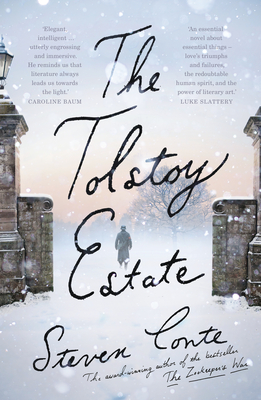
  • Steven Conte’s The Tolstoy Estate (historical fiction, my review coming but here’s Lisa’s)
  • Stephanie Convery’s After the count: The death of Davey Browne (nonfiction)
  • Garry Disher’s Consolation (crime fiction, a sequel to Bitter Wash Road which I reviewed recently)
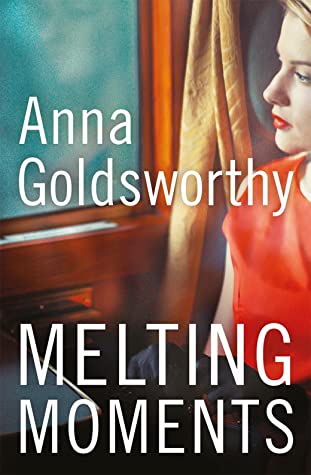
  • Anna Goldsworthy’s Melting moments (fiction, my review)
  • Jane Harper’s The survivors (crime fiction, Kim’s measured review)
  • Daniel Keighran & Tony Park’s Courage under fire (nonfiction/memoir)
  • Grantlee Kieza’s Banks (nonfiction/biography)
  • Sofie Laguna’s Infinite splendours (fiction, Theresa’s and Kate’s qualified reviews)
  • Tobias McCorkell’s Everything in its right place (fiction)
  • Louise Milligan’s Witness (nonfiction)
  • Kirli Saunders’ Bindi (children’s poetry)
  • Nardi Simpson’s Song of the crocodile (fiction, to be read in July)
  • Elizabeth Tan’s Smart ovens for lonely people (short stories, on my TBR, Bill’s review)
  • Jessie Tu’s A lonely girl is a dangerous thing (fiction, Kim’s and my inaugural blog mentee Angharad’s reviews)
  • Mark Wilson’s Eureka! A story of the goldfields (children’s picture book)
Book cover

This year’s extended longlist includes nine works of fiction, four of nonfiction (including a biography and a memoir), and two children’s books. One of these is Eureka!, which, says Books + Publishing, is the first children’s picture book to be longlisted for the award.

For more information, including an excellent description of each of the longlisted books, check out the Foundation’s website.

Do any of these books interest you?

Miles Franklin Award 2021 shortlist

I haven’t posted on the Miles Franklin Award since 2019, and I didn’t post this year’s longlist when it came out last month, but, despite my woeful record – I’ve yet to read any on the longlist – I felt it was about time I returned to Australia’s best known literary award.

Unfortunately, I was driving in the back blocks of northeast Victoria when the announcement was made, with no Internet connection in our room overnight. We have landed in civilisation – hmmm – depending on you definition, and are once more connected! I thought I’d start by sharing the longlist:

The longlist

Book cover
  • Aravind Adiga’s Amnesty (Lisa’s review)
  • Robbie Arnott’s The rain heron
  • Daniel Davis Wood’s At the edge of the solid world
  • Gail Jones’ Our shadows
  • Sofie Laguna’s Infinite Splendours (on my TBR and will definitely be read this year)
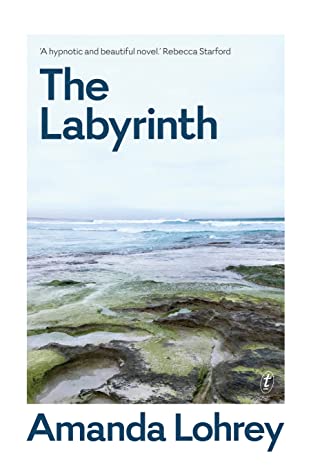
  • Amanda Lohrey’s The Labyrinth (Lisa’s review)
  • Laura Jean Mckay’s The animals in that country (my, I wish I’d read this already, given its popularity on awards lists)
  • Andrew Pippos’ Lucky’s
  • Mirandi Riwoe’s Stone sky, gold mountain (on my TBR)
  • Philip Salom’s The fifth season (on my TBR) (Lisa’s review)
  • Nardi Simpson’s Song of the crocodile ((on my TBR and will definitely be read this year)
  • Madeleine Watts’ The inland sea

The judges describe the spread as “‘a rich mix of well-established, early career and debut novelists whose work ranges from historical fiction to fabulism and psychologism”.

And now, the shortlist:

  • Aravind Adiga’s Amnesty
  • Robbie Arnott’s The rain heron
  • Daniel Davis Wood’s At the edge of the solid world
  • Amanda Lohrey’s The Labyrinth
  • Andrew Pippos’ Lucky’s
  • Madeleine Watts’ The inland sea

Some random observations:

  • Two of the authors – Adiga and Wood – are not Australian-born or based, but meet the award’s criteria because their subject matter is Australian (that is, they present ‘Australian life in any of its phases’). Adiga won the Booker Prize in 2008 with The white tiger, and Wood is apparently the founder and publisher of Splice, a small UK-based press.
  • None of these books are on my TBR pile – wah – though I have been wanting to read Lohrey so this might be the impetus I need.
  • There appears to be less diversity in terms of author background, though Adiga is Indian.
  • There are four women and two men, which is fine, particularly given the award has rebalanced the gender representation well over recent years.
  • None of these authors have won the Award before, but two, Arnott and Lohrey, have been listed before.
  • Two – Pippos and Watts – are debut novelists.
  • Lisa (ANZLitLovers) will be happy as she was mightily impressed with Lohrey’s Labyrinth (see her review above).

Each of the shortlisted writers will receive $5000 from the Copyright Agency’s Cultural Fund, with the winner receiving $60,000 prize.

The chair of the judging panel, Richard Neville, said

‘In various ways each of this year’s shortlisted books investigate destructive loss: of loved ones, freedom, self and the environment … There is, of course, beauty and joy to be found, and decency and hope, largely through the embrace of community but, as the shortlist reminds us, often community is no match for more powerful forces.’

This year’s judges comprise, as always, continuing judges and new ones, providing I think a good mix of experience and fresh ideas: Richard Neville (State Library of NSW), author and activist Sisonke Msimang, and critics Melinda Harvey, Bernadette Brennan and James Ley.

The winner will be announced on 15 July.

And, for a bit of fun, we saw this on a school notice board as we drove by today:

I always knock on the fridge door just in case salad’s dressing. (Eltham Primary School) 

What do you think – of the shortlist, I mean!?

Monday musings on Australian literature: Return of The Age Book of the Year

Early in my retirement, I spent quite a bit of time creating and editing articles on Australian literature in Wikipedia. I focused on a couple of subject areas in particular, Australian women writers and Australian literary awards. One of the awards I worked on was the well-regarded The Age Book of the Year Awards.

Gillian Mears' Foal's bread

They were established by Melbourne’s The Age newspaper, and were first awarded in 1974. For 15 years – between 1998 and 2012 – they were presented during the Melbourne Writers Festival (like the NSW Premier’s Literary Awards are during the Sydney Writers Festival.) They started with two awards – fiction and nonfiction – but in 1993, a third was added for poetry. One of the winning books from these categories was chosen as The Age Book of the Year. Sadly – at least, sadly for those who think literary awards have value – this award was cancelled in 2013. However, I have just read – in The Age of course – that it has been revived, and the winner will be announced, once again, at the Melbourne Writers Festival.

The revival was written up by The Age’s literary editor, Jason Steger:

In a double boost for writers, readers and the book industry The Age is sponsoring the Melbourne Writers Festival and reviving the Age Book of the Year award…

Apparently, The Age’s current editor, Gay Alcorn was “dismayed” when she joined the paper in 2020 and found that it no longer supported the Festival. Steger quotes her as saying, “I am thrilled that it has been rectified. The festival is about books and writing, ideas and debate in this city – exactly what The Age champions.” Even if you don’t like Awards, you will hopefully like this editor’s belief that a newspaper should champion “books and writing, ideas and debate”.

This year there will only be a fiction award, but there are plans to revive the other two categories and the overall “book of the year” in the future. With just three months to go, they’d better get their skates on to even do just one award this year! My web search has not found any further information about how the prize is going to be managed, how (or whether) books are submitted, and/or who will be judging. Neither is there any information about what the actual prize is. We will just have to wait.

We’ll also have to wait to see whether long and shortlists will be announced. For me, as a reader, these lists are as important as the award itself, as they provide good guides to what is going around.

Recap of Past Fiction Awards

You won’t be surprised that past winners of the fiction category include writers who are some of our biggest literary names, but before I share some of them, I should explain that the award was described as “Imaginative writing”. The result is that an early winner was a poetry collection – AD Hope’s A late picking – awarded before poetry was given its own prize. It also includes short stories, but as these are fiction, that shouldn’t be a surprise!

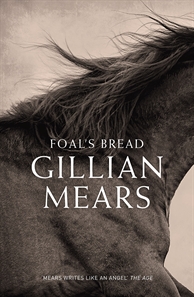
So, let’s look at some of the winners. Over the Award’s 38 years, there were 39 winners, as one year the award was shared. Of these, 16 were by women. The first award was made in 1974 to David Foster’s The pure land, and the last, in 2012, to Gillian Mears’ Foal’s bread (my review).

Book cover

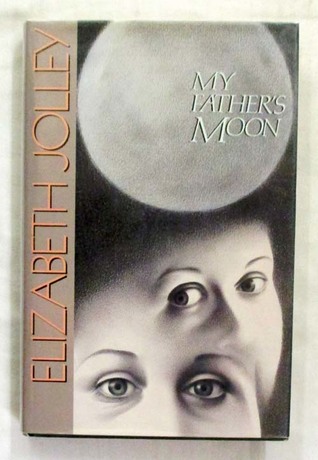
The writer who won the most awards is Peter Carey, with four, for True history of the Kelly Gang (2001), Jack Maggs (1997), The unusual life of Tristan Smith (1994), and Illywhacker (1985). One writer received three awards, Elizabeth Jolley, for The Georges’ wife (1993) (Bill’s review), My father’s moon (1989) (my review), and Mr Scobie’s riddle (1983).

Three writers won twice – David Malouf, Joan London and Thea Astley.

If you compare this award with other major fiction awards over the same period – such as the Christina Stead Award (NSW Premier’s Literary Award) and the Miles Franklin – you will see a large overlap in authors, but not so much in actual titles. In other words, Carey, Jolley, Astley, and so on, have won awards on each list, but for different books. Carey, for example, won the Miles Franklin in 1989 for Oscar and Lucinda, and the Christina Stead in 1982 for Bliss. Jolley won the Miles Franklin in 1986 for The well, and the Christina Stead in 1985 for Milk and honey, while Thea Astley won four Miles Franklins, but all for different books than her two The Age winners.

Of course, there are also authors who only appear on one list. Nicholas Hasluck, for example, won The Age’s award but neither of the other two.

None of this is particularly surprising. Occasionally, we see a book sweeping the awards, but mostly – and this is a healthy thing, I’d argue – the accolades and largesse are spread around.

What is worth noting but not surprising about The Age’s award and the other two I’ve mentioned here is that before 2012, very few authors from diverse backgrounds won. Since then, authors like Kim Scott, Michelle de Kretser, Melissa Lucashenko, Tara June Winch and Melinda Bobis have won literary fiction awards, and it has happened often enough for it to be no longer particularly commented on, which is as it should be. Presumably, The Age’s award will continue this trend.

We await the next move …

Monday musings on Australian literature: Best Young Australian Novelists (3)

I’ve posted twice on The Sydney Morning Herald’s Best Young Australian Novelists, last year, and back in 2013. Bill, in fact, chose that 2013 post in his Bill Curates series on this blog.

The award was established in 1997 by the newspaper’s then literary editor, Susan Wyndham, making this year its 25th year. An emerging writing award, it is open to “writers aged 35 and younger” at the time their book is published. It is called a “novelists” award, but is made on the basis of a specific book, which can now include short stories. It seems that the newspaper’s Fairfax Melbourne stablemate, The Age, is involved which is why the name now seems to be, simply, Best Young Australian Novelists. I don’t know when that change occurred.

This year’s winners, as announced by Jason Steger, the current Literary Editor for The Age and The Sydney Morning Herald, are:

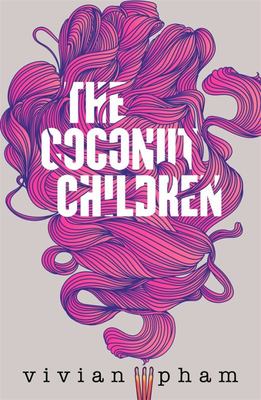
  • Vivian Pham’s The coconut children (winner, $8,000)
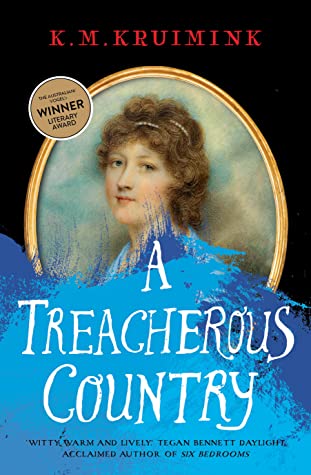
  • K.M. (Kate) Kruimink’s A treacherous country (runner-up, $1,000) (see Lisa’s review)
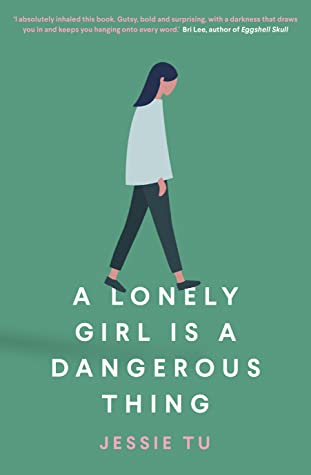
  • Jessie Tu’s A lonely girl in a dangerous thing (runner-up, $1,000) (see Kim’s review)

The judging panel always includes the papers’ literary editor, so Jason Steger, plus a previous winner, Pip Smith, and another novelist, Peggy Frew. The number of awards made varies, but this year, as last, there were three.

The winners, briefly

Vivian Pham

According to Steger, Pham was a whopping 19 years old when her novel was published last year. Not what you’d call a “late bloomer” then! Her novel is set in the Vietnamese Australian community in Sydney’s Cabramatta. Steger says that while redrafting the novel, Pham came across the idea of “second-generation trauma inherited via the stories and behaviour of the previous generation”. This idea apparently runs through the novel.

Pham says that “You want to know the people that are closest to you. You know something epic has happened to them, to make them the people that they are, and you want to know why that happened.” She agrees with Steger that that novel is “a love letter to Cabramatta”, because “she felt more connection to Vietnam there than in Vietnam, when she spends all her time at her grandmother’s home”.

One of her significant influences is James Baldwin, who apparently “got her into reading seriously and realising that it could change your world”. Her second favourite writer is P.G. Wodehouse!

The judges said that “Pham’s non-judgmental portraits of parents living with trauma, and children struggling to comprehend their parents’ choices, was nuanced and wise”.

K.M. Kruimink

Lisa, as noted above, has reviewed A treacherous country, and described it as having “a playful narrative”. She tells us, as does Steger, that this novel also won the Vogel (unpublished manuscript) Award. It has also been longlisted for the Walter Scott Prize for historical fiction.

Unlike Pham’s more contemporary work, this novel is historical fiction set in colonial Tasmania. It’s about a young man coming to Tasmania to bring a message to a young convict woman. Originally, Kruimink was writing about the woman. However, she was a new mother at the time that she decided to pick up the work again, and

Because I was in a vulnerable place, it was too emotional for me. It was a sad story and I felt like I couldn’t write about this sad young woman and I decided to write about a silly young man instead.

She thinks she will go back to the young woman’s story, though her next novel is about something very different.

She named Hilary Mantel and Kazuo Ishiguro as writers she likes to read.

The judges loved the voice, saying that she delivered “a stand-out voice – eccentric, funny and deceptively endearing. While the research behind the writing is evident, it is handled with a lightness of touch, and the language itself is truly impressive, ornate, yet controlled and deft”. 

Jessie Tu

Tu’s A lonely girl is a dangerous thing has been making a bit of a splash, having been shortlisted for Readings’ New Australian Fiction Prize and the NSW Premier’s Literary Awards Multicultural Award, as well as longlisted for the Stella Prize. 

Kim, whose review I linked above, was mightily impressed. She thought it would be another book about a millennial, but found it was much more. “Its real strength,” she writes, “lies in its perspective of an Asian-Australian trying to succeed in a closeted world dominated by the white and the privileged”.

Taiwanese-born Tu was apparently clear from the start what she was writing about, and also believes, says Steger, that “what drives a good novel … is the kind of questions it considers”. For her, loneliness is a big issue – as the title suggests. She says that:

I’ve been trying to think constantly where to seek solace for my feeling that I don’t belong in this world and what I found really comforting was reading stories about women in the past, especially female artists or female writers, and realising that they have also gone through sad, lonely lives. For me to know that helps me understand that this feeling that I have is not at all special.

The judges said that “Tu, with unswerving clarity, draws out many unsettling and compelling questions regarding race, talent, performance, perfectionism, agency and worth”. They called it “provocative” and “uncompromising”, reflecting Kim’s assessment, in fact!

Have you read any of these books?

Stella Prize 2021 Winner announced

Unfortunately – though not really – I was not able to “attend” the online announcement as I did last year, as I’m spending a few days in the Snowy Mountains with Mr Gums and two friends.

Before I announce the winner, which most of you will have heard by now anyhow, here is a quick recap:

  • the longlist was announced on 4 March; and
  • the shortlist was announced on 25 March: Rebecca Giggs’ Fathoms: The world in the whale (non-fiction); SL Lim’s Revenge (fiction); Laura Jean McKay’s The animals in that country (fiction); Louise Milligan’s Witness (non-fiction); Mirandi Riwoe’s Stone sky gold mountain (fiction); Evie Wyld’s The bass rock (fiction)

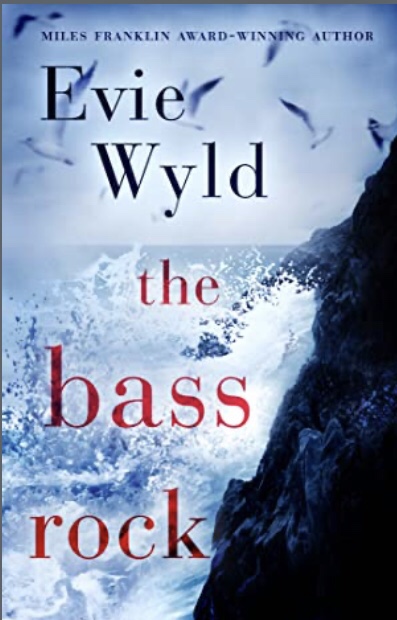
And the winner, from 160 entries, is British-Australian author Evie Wyld’s The bass rock. Jaclyn Booth, Stella Prize’s Executive Director, called it “a gripping novel that is unlike anything I’ve read before”, and judging panel chair, Zoya Patel, says that it “forces the reader to think and engage with the unique narrative structure, but in a way that feels effortless, so engaged are you by the story.” It deals with the legacy, and trauma, of male violence, so is very much a “zeitgeist book”, which is to say, it’s relevant to our times. I must read it, as I have the previous fiction winners …

It is the fifth work of fiction to win in nine years. The previous four were Heather Rose’s The museum of modern love (2017, my review), Charlotte Wood’s The natural way of things (2016, my review), Emily Bitto’s The strays (2015, my review), and Carrie Tiffany’s Mateship with birds (2013, my review).

You can read more about the book on the Stella website.

The winner receives $50,000, and each long and shortlisted author also receive monetary prizes.

If you have any comments on the winner, please share them with us.

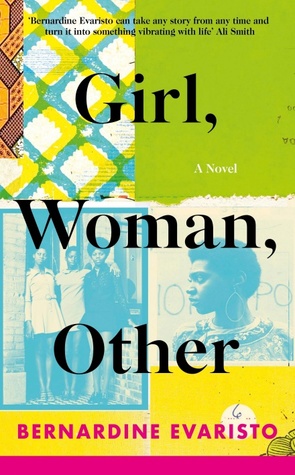
Bernadine Evaristo, Girl, woman, other (#BookReview)

If ever there was a “zeitgeist” book, Bernadine Evaristo’s 2019 Booker Prize winning novel, Girl, woman, other is it. It might be an English-set novel about black British women, “the embodiment of Otherness”, but its concerns, ranging from ingrained inequality, racism and sexism to newer issues such as globalisation, are contemporary – and relevant far beyond its setting.

Take, for example, sexual violence. One young woman, after being raped, is not sure exactly what happened:

    wondering if he’d done anything wrong or was it her fault
    she should have stayed and talked to him about it
    he might have said he hadn’t heard her saying no

(Chapter 2: LaTisha)

This could have been set in Australia, given discussions happening here right now. It is truly troubling how many young women apparently feel uncertain about what they’ve experienced, and turn it back on themselves. But now, having leapt in to make my “zeitgeist” point, I’ll start again, properly!

Girl, woman, other is an astonishing book, as most of my reading group agreed. It’s fresh and exuberant, but oh so biting too. As much poetry as prose, it has minimal punctuation and yet it just flows. It’s a risky book – what great art isn’t? – because, in addition to its idiosyncratic style, it comprises multiple points-of-view that move back-and-forth in time. There are four main chapters, each divided into three parts with each part in the voice of a different character. This makes 12 voices in all! The voices within each chapter are closely related in some way – mothers, daughters, friends – but the links between the four chapters are more subtle. This demands much of the reader.

Fortunately, the voices are captivating. Spanning over a century, they range from the ultra-confident 19-year-old Yazz, daughter of a lesbian mother, to 93-year-old Hattie, a strong-minded farmer and great-grandmother. All are women, and all have some genetic links with African or Caribbean cultures, some from a few generations back, others being themselves migrants. Through them, Evaristo interrogates a diversity of experiences and responses to colour, in particular, in contemporary England. Hattie’s mother, for example, had an Abyssinian father, and she herself had married an African-American GI. However, with the colour fading amongst her descendants, the family is less than happy when it is reintroduced by Julie who “saw not the darkness of his skin but the lightness of his spirit”. Hattie reflects

    none of them identifies as black and she suspects they pass as white, which would sadden Slim if he was still around 
    she doesn’t mind, whatever works for them and if they can get away with it, good luck to them, why wear the burden of colour to hold you back?
    the only thing she objects to is when they objected to Chimango when he arrived on the scene, a fellow nurse at the hospital where Julie worked, from Malawi
    Hattie was sickened by their behaviour, they should’ve been more enlightened 
    but the family was becoming whiter with every generation 
    and they didn’t want any backsliding

(Chapter 4: Hattie)

You can see how well the language flows, and how accessible it is. It’s experimental but unforced. You can also see the author’s approach to her subject matter, which is to show, through her characters, different behaviours, values and attitudes. With 12 characters telling of their interactions with even more people, the breadth of humanity Evaristo encompasses is breathtaking – and it is all done without judgement. Some characters might, and do, judge each other, but Evaristo doesn’t. She lets them speak for themselves, which requires us to read attentively.

So, when Dominique’s female lover increasingly restricts her life, we see abusive control long before she does. And, when 93-year-old Hattie’s mother, Grace, experiences postpartum depression in the early 20th century, it is not named. Who talked about that then? But we recognise it immediately.

Issues come and go in this novel, whether they are up-to-the-minute topics, such as Brexit or transgender rights, or ongoing issues in women’s lives such as violence or ageing. Underpinning it all, however, is race and inequality. Being “othered” is common to Evaristo’s characters, and they all deal with it differently, but we see very clearly its debilitating, devastating impact.

    oh to be one of the privileged of this world who take it for granted that it’s their right to surf the globe unhindered, unsuspected, respected

(Chapter 2: Carole)

By now you might be thinking a few things – that the novel is heavy-going, perhaps, or that it’s chaotic. But nothing doing. For all its seriousness – and there are definitely grim moments – the novel has a light touch, frequently bitingly satiric, sometimes simply funny, always human. Nineteen-year-old Yazz, for example, is a hoot with her teenage know-it-all confidence. Many recognise their failings, as they grow older, such as Amma appreciating her father too late or Carole realising her supportive teacher had feelings. Transgender Morgan, the epitome of the modern activist, speaks many truths:

    Megan was part Ethiopian, part African-American, part Malawian, and part English
    which felt weird when you broke it down like that because essentially she was just a complete human being

Chapter 4: Megan/Morgan

And, although the novel may sound chaotic, it does have an overarching structure. It starts hours before Amma’s play – the one she hopes will finally make her name – is to premiere at the National Theatre, and it ends with the After Party and an Epilogue, which, combined, bring most of the characters together. The ending, in fact, is clever. The After Party is political, drawing together the threads and reminding us that there’s a long way to go before black people in white societies are not defined by their colour. The Epilogue, on the other hand, is personal, showing us that there’s always human connection and that that, really, is the stuff of life – if only we could all see it.

Girl, woman, other is such a read. Uncompromising in its politics, but also warm and cheeky, it offers heart and intelligence in equal measure.

Bernadine Evaristo
Girl, woman, other
Hamish Hamilton, 2019
453pp.
ISBN: 9780241985007 (ebook)
Stella Prize and Christina Stead Prize for Fiction 2021 Shortlists announced

With two shortlists being announced on the heels of each other, I thought I would combine them into one post, so here goes …

Stella Prize Shortlist

The Stella Prize shortlist was announced this morning and is, I suppose, a bit of a surprise for me – though I haven’t read the books so I have nothing to base that on. I was hoping Ellen Savage’s Blueberries, Nardi Simpson’s Song of the crocodile and Elizabeth Savage’s Smart ovens for lonely people would be in the list as they are on my TBR or I’m keen to read them. However, besides the Stella judges, I have it on good authority from other bloggers that many of the books below are excellent reads, so … on with the show … and I’ll see what I can read!

The shortlist

Book cover

Stella’s Executive Director, Jaclyn Booton makes a political point – which is very Stella!:

As recent events have shown, there’s significant cultural change needed in this country to ensure women’s voices are heard. Books can be a tool for positive social change – I encourage everyone to seek out these books and delve into the stories and perspectives within.

The judge’s chair, Zoya Patel, says:

“The 2021 Stella Prize shortlist truly demonstrates the immensity of talent in Australian women and non-binary authors. This shortlist is varied, diverse, and reflects on urgent themes across the gamut of human experience.

To read the judges on each of the shortlisted books, do check out the Stella website.

The winner will be announced on April 22.

NSW Premiers Literary Awards

Unlike the Stella, these awards comprise several categories, but I’m just going to share the two fiction ones.

Book cover

The Christina Stead Prize for Fiction

  • Kate Grenville’s A room made of leaves
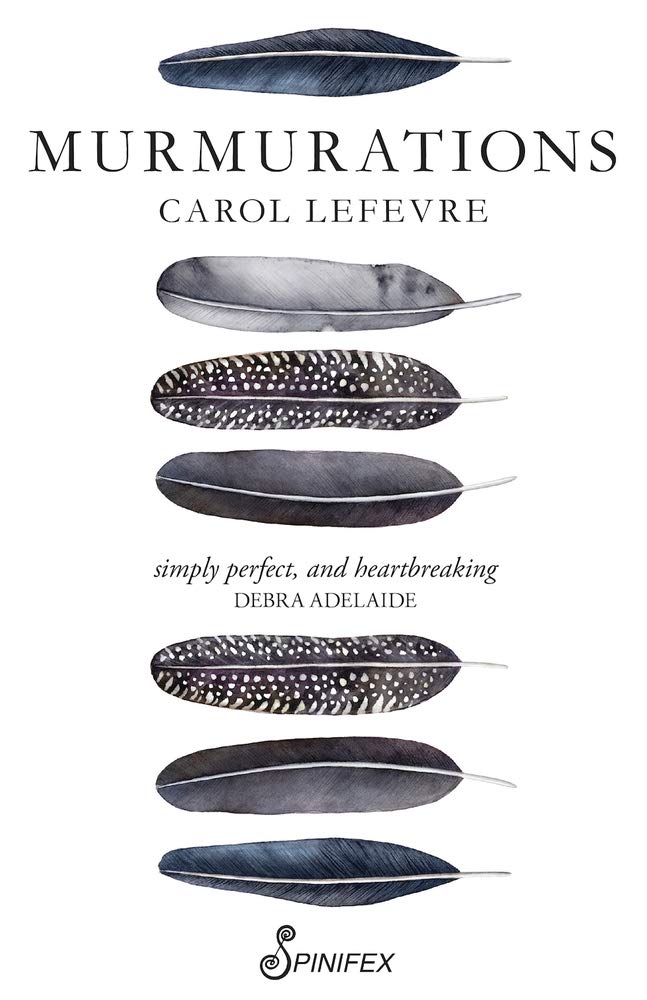
  • Carol LeFevre’s Murmurations (my review)
  • Laura McPhee-Browne’s Cherry Beach
  • Pip Williams’ The dictionary of lost words
  • Charlotte Wood’s The weekend (my review)
  • Evie Wyld’s The bass rock

UTS Glenda Adams Award for New Writing

  • Erin Hortle’s The octopus and I
  • Laura McPhee-Browne’s Cherry Beach
  • Sean O’Beirne’s A couple of things before the end
  • Nardi Simpson’s Song of the crocodile
  • Madeleine Watts’ The Inland Sea

For more categories in these awards, and links to her own and other bloggers’ reviews, please see Lisa’s post on them.

Any comments?

Monday musings on Australian literature: Commonwealth Writers Prize (now defunct)

March 8 this year is a packed one. Of course, it is always International Women’s Day, but the second Monday in March is also Canberra Day here in the ACT, Labour Day in Victoria, and Commonwealth Day in, yes, the Commonwealth. It is not a public holiday in most places, but I decided it could inspire this week’s Monday Musings!

Some of you will have come across the Commonwealth Writers’ Prize before. It was established by the Commonwealth Foundation in 1987, as a successor to their Commonwealth Poetry Prize. This Foundation was itself established in 1966 by CHOGM (the Commonwealth Heads of Government). As its Wikipedia page, says

the Commonwealth Secretariat was established [1965] to support the political endeavours of the Commonwealth, the “Foundation was brought into being in the hope that it would give further substance to the old truism that the Commonwealth is as much an association of peoples as of governments”.

In other words, it focuses on the social, cultural, professional and other more locally-focused aspects of the Commonwealth. This includes, the Wikipedia pages also says, “to help to create national professional societies as part of a general process of “deanglicization”. This sounds a bit quaint now, but maybe that’s because much of this “deanglicisation” has been achieved. Has it? Anyhow, another of its formal goals was “to aid the broadening of experience through the printed word”. Hence, I assume, the various literary prizes.

The first was the Commonwealth Poetry Prize, which was succeeded in 1987 by today’s focus, the Commonwealth Writers Prize. This prize had two components – Best Book (1987–2011) and Best First Book (1989–2011). They were awarded for four regions: Africa, Caribbean and Canada, South Asia and Europe, and South East Asia and Pacific. There were winners in each category, Best Book and Best First Book, for each region, and from these, overall Best Book and Best First Book winners were chosen. In 2011, this award was discontinued. A new cultural programme was launched, with a new prize, the Commonwealth Short Story Prize, which is still going.

Anyhow, as most of us love lists, I thought I’d share the Australian winners of the Best Book and Best First Book awards over the duration of the award. Australia was in the Southeast Asia and South Pacific region, which comprised Australia, Brunei Darussalam, Fiji Islands, Kiribati, Malaysia, Nauru, New Zealand, Papua New Guinea, Samoa, Singapore, Solomon Islands, Tonga, Tuvalu, and Vanuatu.

So, the lists … bolded titles were overall winners for the year. Also, please note that I’m not being ethnocentric, just true to the Aussie Lit focus of Monday Musings! You can see all the prizes on the website.

Best Book

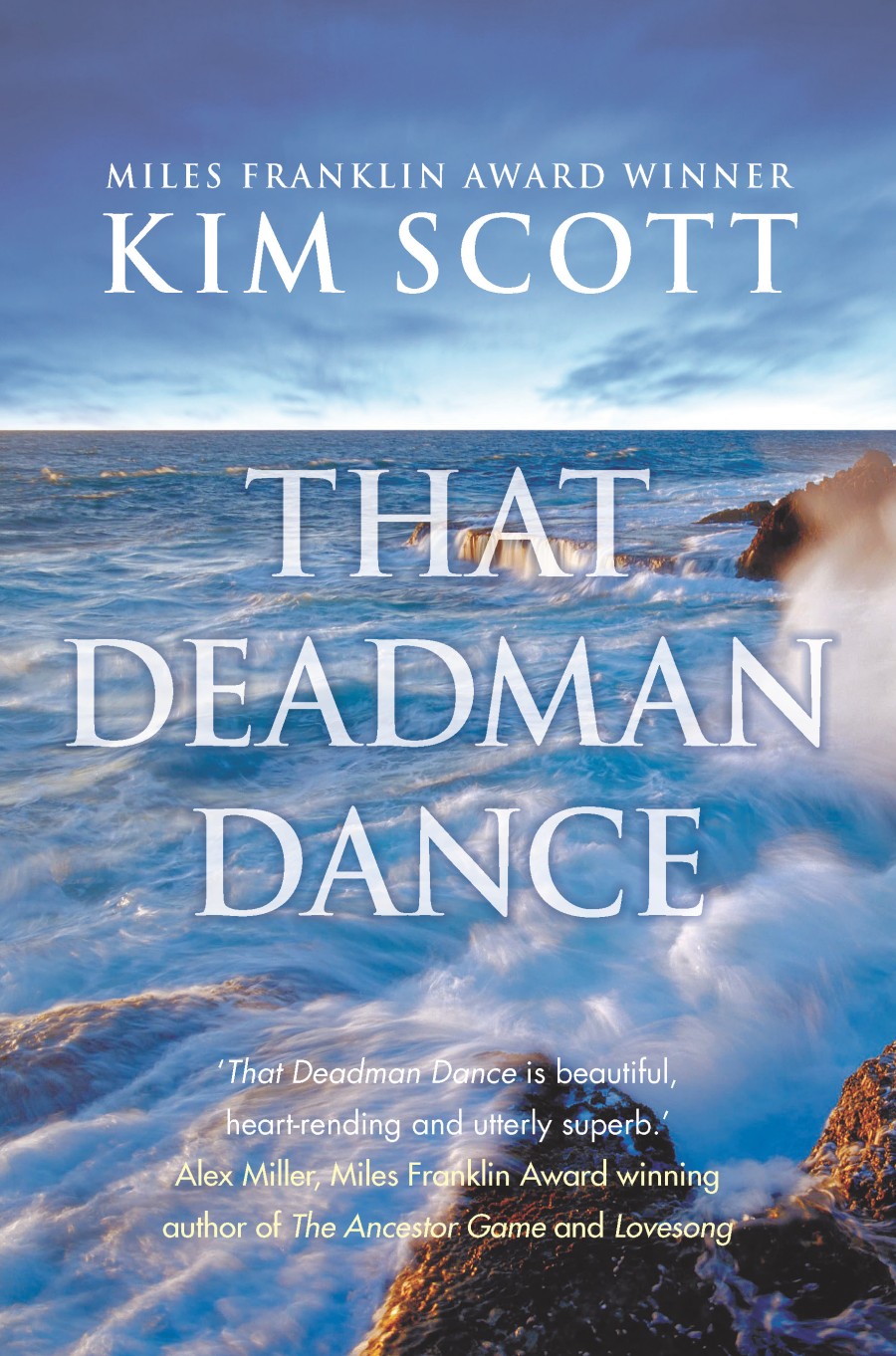
Kim Scott That Deadman Dance
  • 2011: Kim Scott’s The deadman dance (my review)
  • 2009: Christos Tsiolkas’ The slap (my review)
  • 2008: Steven Carroll’s The time we have taken
  • 2006: Kate Grenville’s The secret river
  • 2005: Andrew McGahan’s The white earth
  • 2004: Michelle de Kretser’s The Hamilton case
  • 2003: Sonya Hartnett’s Of a boy
  • 2002: Richard Flanagan’s Gould’s book of fish
  • 2001: Peter Carey’s True history of the Kelly Gang
  • 2000: Lily Brett’s Too many men
  • 1999: Murray Bail’s Eucalyptus
  • 1998: Peter Carey’s Jack Maggs
  • 1997: Sue Woolfe’s Leaning towards infinity
  • 1996: Gillian Mears’ The grass sister
  • 1995: Tim Winton’s The riders
  • 1994: David Malouf’s Remembering Babylon
  • 1993: Alex Miller’s The ancestor game
  • 1991: David Malouf’s The great world
  • 1990: Robert Drewe’s The bay of contented men
  • 1988: George Turner’s The sea and summer
  • 1987: Blanche d’Alpuget’s Winter in Jerusalem (shared with a NZ book)

You will see that Australia won the lion’s share of these prizes (21 of 25). The exceptions were 2010 won by a Samoan writer, 2007 and 1989 by a New Zealand writer, and 1992 by a Samoan-New Zealand writer. Things were a little different for the Best First Book award …

Best First Book

Book cover
  • 2010: Glenda Guest’s Siddon Rock
  • 2008: Karen Foxlee’s The anatomy of wings
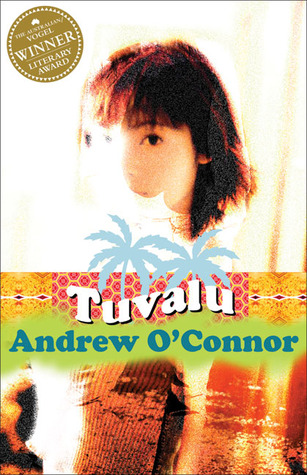
  • 2007: Andrew O’Connor’s Tuvalu
  • 2005: Larissa Behrendt’s Home
  • 2004: Nada Azar Jarrar’s Somewhere, home
  • 2002: Meaghan Delahunt’s In the blue house
  • 2001: Arabella Edge’s The company
  • 1998: Emma Tom’s Deadset
  • 1995: Adib Khan’s Seasonal adjustments
  • 1994: Fotini Epanomitis’ The mule’s foal
  • 1993: Andrew McGahan’s Praise
  • 1991: Thea Welsh’s The story of the year of 1912 in the village of Elza Darzins
  • 1989: Gillian Mears’ Ride a cock horse

So, fewer won by Australians here (13 of 23), and another country involved too: 2011, 2009, 2000, 1999, 1996, 1992, and 1990 by New Zealand writers; 2006 and 2003 by Malaysian writers; and 1997 by a Samoan writer.

There’s another interesting thing here. All of the winners of the Best Book award continued to be published and be well-known after their win. This is not the case with the Best First Book winners where a few have not become well-known on the literary scene (though many have continued to write and publish, some now overseas).

I have read many of the Best Books, and a few of the Best First Books, but mostly before blogging. Interestingly, the Best Books reflect the very “white” focus in Australian literary awards at the time (with a couple of exceptions), while the Best First Books reflect greater diversity. I wonder whether this fact is behind the Foundation’s change to focusing on short stories, because the aim seems to have also changed from “simply” recognising achievement to developing, promoting and encouraging writers. The prize, they say,

is open to writers who have had little or no work published and particularly aimed at those places with little or no publishing industry. The prize aims to bring writing from these countries to the attention of an international audience. The stories need to be in English, but can be translated from other languages.

What do you think about all this?

Stella Prize 2021 Longlist announced

Unfortunately, because I’m on the road, I wasn’t able to “attend” the announcement earlier this evening, but at least I have been able to get my post out on the night, as it were.

As I say every year, I think, I don’t do well at having read the Stella Prize longlist at the time of its announcement. In 2017 I’d read none; in 2018, one, and in 2019, two! Last year, I was back to one! By the end of 2020, I’d read 3.5 which is worse than previous years.

Again, as I’ve said before, I do better at reading the winners, having read Carrie Tiffany’s Mateship with birds (2013), Clare Wright’s The forgotten rebels of Eureka (2014), Emily Bitto’s The strays (2015), Charlotte Wood’s The natural way of things (2016), Heather Rose’s The museum of modern love (2017), and Vicki Laveau-Harvie’s The erratics (2019). So far, I’ve missed 2018’s winner, Alexis Wright’s Tracker, and I’m only halfway through reading last year’s winner, Jess Hill’s See what you made me do. I will finish though, as it’s a significant book I believe.

The judges are again different to last year’s with only Zoya Patel (this year’s chair), continuing on the panel: memoirist and editor Zoya Patel (Chair); playwright, author and Blak & Bright First Nations Literary Festival Director Jane Harrison; 3RRR radio producer, presenter and literary critic Elizabeth McCarthy;  production editor of The Saturday Paper Ian See; and Deputy Programme Director at Edinburgh Book Festival Tamara Zimet. As always, attention has been paid to diversity on the panel.

The longlist

Book cover
  • Rebecca Giggs’ Fathoms: The world in the whale (non-fiction)
  • SL Lim’s Revenge (fiction) (Lisa’s review)
  • Laura Jean McKay’s The animals in that country (fiction)
  • Louise Milligan’s Witness (non-fiction)
  • Cath Moore’s Metal fish, falling snow (fiction)
  • Intan Paramaditha’s The wandering (fiction)
  • Mirandi Riwoe’s Stone sky gold mountain (fiction) (on TBR; Kate’s mini-review)
  • Ellena Savage’s Blueberries (non-fiction/essays)
  • Nardi Simpson’s Song of the crocodile (fiction) (on TBR)
  • Elizabeth Tan’s Smart ovens for lonely people (short stories) (Bill’s review and on TBR)
  • Jessie Tu’s A lonely girl is a dangerous thing (fiction) (Kim’s review)
  • Evie Wyld’s The bass rock (fiction)

Well, I guessed five of these might be in the list – McKay, Riwoe, Simpson, Tan and Tu, but I also guessed some more non-fiction like Grace Karskens’ People of the river, and Jacqueline Kent’s Vida. However, as I haven’t read any of the longlist – and have not, in fact, heard of several of them – I’m not going to judge. I’ll just say, how interesting!

Oh, and for the record, I’ve read none – though I have a few on my pile!

The judges’ chair, Zoya Patel commented on the longlist:

The 2021 Stella Prize longlist demonstrates the breadth of expression present in Australian literature, and the importance of raising the profile of women and non-binary voices in celebrating this expansive talent. In reading these titles, we pondered what might be lost or overlooked should a prize such as the Stella not exist to specifically examine the output of Australian women and non-binary writers. […]

This year’s reading presented a diversity of talent and expression, with books exploring the people and animals through the lens of fiction and non-fiction, and with a common objective to reach into the heart of what it means to exist in the world today.

To read the judges on each of the longlisted books, do check out the Stella website.

Stella’s announcements are all later this year than in previous years – including this longlist which has usually been announced in February. So, the shortlist will be announced on March 25, and the winner on April 22.

Any comments?

Jasmine Seymour and Leanne Mulgo Watson, Cooee mittigar: A story on Darug songlines (#BookReview)

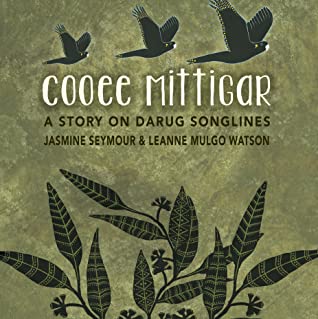
Recently, on a bit of a whim, I bought two books from the Indigenous Australian publishing company, Magabala Books. They were the younger readers-young adult novel, Black Cockatoo (my review), which had been shortlisted for a few awards, and this picture book, Cooee mittigar, which had just won the 2020 Prime Minister’s Literary Award for Children’s Fiction. It is described on the Awards website as “introducing children and adults-alike to Darug ‘Nura’ (Country) and language”. So, a book for children and adults. I’m in …

The book tells the story of the seasons*, as understood or experienced by Sydney’s Darug people, through the eyes of the black swan, Mulgo. It is a perfect example of the generosity of Indigenous Australians. Despite being dispossessed of their country, despite being repeatedly discounted as having anything important to contribute, despite being overlooked or specifically excepted by policy-makers, they come back again and again, willing to share their knowledge – and, particularly, their language – when there’s a real risk that it too might be taken from them. They seem to understand, when so many don’t, that it’s only by sharing and communicating with each other our values and belief systems that we can mature as a nation.

And so, we have this beautiful hardback, written and illustrated by two Darug women, Jasmine Seymour and Leanne Mulgo Watson. Like many recent books I’ve read by Indigenous Australian writers, it incorporates Indigenous – Darug here, of course – language into the story. The technique they use is, in two-page spreads, to tell the story using English and Darug words, immmediately followed (on the same spread) by a glossary for the Darug words used. So, for example, we have:

In the time of yuruka and burara
Elders tell us not to hunt the buru.

yuruku – hot
burara – dry
buru – kangaroo

The glossary words are presented in slightly smaller but still clear text. The illustrations for the page, as you’d expect in a picture book, help convey the meaning. This spread, for example, is dominated by hot-dry looking yellows and tans, with two kangaroos lazing in the grass.

But now, let’s go back to the beginning. The book starts with a welcome: “Warami mittigar. Welcome friend. … Cooee mittigar. Come here friend.” We are then introduced to our guide, the afore-mentioned black swan, Mulgo, who tells us that she will teach us “about Darug life” – and off we go, starting, logically, with an introduction to Biami (dreaming ancestor spirit) and the idea of Darug dreaming and the songlines which tell the story of “Nura” or country. From here, we move through the seasons, starting when the “the darrabura [day] grows long and the weather warms up”. Each step of the way, we are told what to look for, what might be happening, what we can do, with respect to country and the natural environment, such as:

During dagara, gulgadya will bloom –
ready to be turned into spears.

dagara – frost
gulgadya – grasstree

The story ends with the gentle request to “tread softly on our lands”.

The language flows simply – though, as a non-indigenous reader, I’m sure it would take me a few readings to feel comfortable enough with the words to make it sound good aloud. Leanne Mulgo Watson’s illustrations draw mostly from greens, blues and yellows, but with touches of other hues. They are gorgeously evocative of the text, making them a delight for all readers, but they also provide good opportunities for actively engaging younger readers (and listeners).

At the end of the book is a complete glossary of the Darug words used throughout, with a simple pronunciation guide, which is a feature I’ve missed in other books. So, for example, there’s “warami – wara me – hello”. There is also a one-page description of Darug Country, and another page providing brief bios of Seymour and Watson.

Cooee mittigar concludes with a statement of its creators’ intentions, which are “to share Darug language and culture and show that the Darug people are still strong on Country”. They also “hope that Cooee mittigar will contribute to the continuation of stories and culture”. I’d be surprised if they haven’t achieved this, but I hope that in publishing this post I will have made my contribution to supporting their goals.

Challenge logo

Jasmine Seymour and Leanne Mulgo Watson (illus.)
Cooee mittigar: A story on Darug songlines
Broome: Magabala Books, 2019
48pp.
ISBN: 9781925936865

* As many Australians know, Indigenous Australians do not see the year through “our” four-season calendar, but through different seasons depending on the country.