Miles Franklin Award 2021 winner announced

Nothwithstanding this week’s Monday Musings posts on literary awards, I still like the Miles Franklin – partly because of its significance in the Australian literary firmament – and so I am sharing today’s announcement of this year’s winner which I watched via You Tube.

You may remember that this years shortlist was:

  • Aravind Adiga’s Amnesty (Lisa’s review)
  • Robbie Arnott’s The rain heron
  • Daniel Davis Wood’s At the edge of the solid world
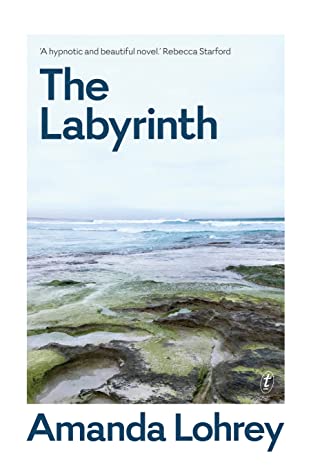
  • Amanda Lohrey’s The Labyrinth (Lisa’s review)
  • Andrew Pippos’ Lucky’s
  • Madeleine Watts’ The inland sea
Book cover

And the winner is: Amanda Lohrey’s Labyrinth

(Lisa will be pleased!)

Just to recap, from my shortlist post: Each of the shortlisted writers received $5000 from the Copyright Agency’s Cultural Fund, with the winner receiving $60,000 prize. This year’s judges comprised, as always, continuing judges and new ones, providing I think a good mix of experience and fresh ideas: Richard Neville (State Library of NSW), author and activist Sisonke Msimang, and critics Melinda Harvey, Bernadette Brennan and James Ley.

So, more on the winner …

This is Lohrey’s second listing for the Miles Franklin award, but her first win. The panel described the novel as a “profound mediation” on loss, with judging panel chair, Richard Neville commanding the “clarity” of her prose in exploring “loss at so many levels”. (Notably, Neville also mentioned the increasing cultural diversity appearing in the awards, by which I assume he meant, in the books submitted. Ninety-six titles were submitted.)

Amanda Lohrey spoke briefly, thanking various people – including family, publisher, editor, of course. She praised her publisher, the wonderful Text Publishing, for supporting “literary values” and she talked of the award’s benefactor, Miles Franklin, as “the great Australian nonconformist”. She also thanked the readers whom she described as an “indestructible tribe” in a world of Netflix (etc). She characterised the relationship between writer and readers as “an extraordinary exchange among strangers.” I like that.

Book cover

The presentation also included last year’s winner Tara June Winch congratulating Amanda Lohrey. She said that what she gained, in particular, from the award, was “a readership”. Isn’t that great to hear, because that – and the “gift of time” – is what we hope awards like this offer books and their writers.

And, finally, just for fun. Today The Sydney Morning Herald published an article on How to win the Miles Franklin: Analysing 64 years of data, by Pallavi Singhal. It looks at the usual issues like gender, origin (birth location, ethnicity), age, but also other points you may not have considered like length (“write about 400 pages”, it says), title style (“Begin your book title with ‘the’ and keep it short”) and publisher (Allen & Unwin is ahead at the moment)!

Do you have any thoughts on this year’s winner?

Miles Franklin Award 2021 shortlist

I haven’t posted on the Miles Franklin Award since 2019, and I didn’t post this year’s longlist when it came out last month, but, despite my woeful record – I’ve yet to read any on the longlist – I felt it was about time I returned to Australia’s best known literary award.

Unfortunately, I was driving in the back blocks of northeast Victoria when the announcement was made, with no Internet connection in our room overnight. We have landed in civilisation – hmmm – depending on you definition, and are once more connected! I thought I’d start by sharing the longlist:

The longlist

Book cover
  • Aravind Adiga’s Amnesty (Lisa’s review)
  • Robbie Arnott’s The rain heron
  • Daniel Davis Wood’s At the edge of the solid world
  • Gail Jones’ Our shadows
  • Sofie Laguna’s Infinite Splendours (on my TBR and will definitely be read this year)
  • Amanda Lohrey’s The Labyrinth (Lisa’s review)
  • Laura Jean Mckay’s The animals in that country (my, I wish I’d read this already, given its popularity on awards lists)
  • Andrew Pippos’ Lucky’s
  • Mirandi Riwoe’s Stone sky, gold mountain (on my TBR)
  • Philip Salom’s The fifth season (on my TBR) (Lisa’s review)
  • Nardi Simpson’s Song of the crocodile ((on my TBR and will definitely be read this year)
  • Madeleine Watts’ The inland sea

The judges describe the spread as “‘a rich mix of well-established, early career and debut novelists whose work ranges from historical fiction to fabulism and psychologism”.

And now, the shortlist:

  • Aravind Adiga’s Amnesty
  • Robbie Arnott’s The rain heron
  • Daniel Davis Wood’s At the edge of the solid world
  • Amanda Lohrey’s The Labyrinth
  • Andrew Pippos’ Lucky’s
  • Madeleine Watts’ The inland sea

Some random observations:

  • Two of the authors – Adiga and Wood – are not Australian-born or based, but meet the award’s criteria because their subject matter is Australian (that is, they present ‘Australian life in any of its phases’). Adiga won the Booker Prize in 2008 with The white tiger, and Wood is apparently the founder and publisher of Splice, a small UK-based press.
  • None of these books are on my TBR pile – wah – though I have been wanting to read Lohrey so this might be the impetus I need.
  • There appears to be less diversity in terms of author background, though Adiga is Indian.
  • There are four women and two men, which is fine, particularly given the award has rebalanced the gender representation well over recent years.
  • None of these authors have won the Award before, but two, Arnott and Lohrey, have been listed before.
  • Two – Pippos and Watts – are debut novelists.
  • Lisa (ANZLitLovers) will be happy as she was mightily impressed with Lohrey’s Labyrinth (see her review above).

Each of the shortlisted writers will receive $5000 from the Copyright Agency’s Cultural Fund, with the winner receiving $60,000 prize.

The chair of the judging panel, Richard Neville, said

‘In various ways each of this year’s shortlisted books investigate destructive loss: of loved ones, freedom, self and the environment … There is, of course, beauty and joy to be found, and decency and hope, largely through the embrace of community but, as the shortlist reminds us, often community is no match for more powerful forces.’

This year’s judges comprise, as always, continuing judges and new ones, providing I think a good mix of experience and fresh ideas: Richard Neville (State Library of NSW), author and activist Sisonke Msimang, and critics Melinda Harvey, Bernadette Brennan and James Ley.

The winner will be announced on 15 July.

And, for a bit of fun, we saw this on a school notice board as we drove by today:

I always knock on the fridge door just in case salad’s dressing. (Eltham Primary School) 

What do you think – of the shortlist, I mean!?

Monday musings on Australian literature: Indigenous Australian writers and the Miles Franklin Award

This is not going to be a treatise on the Miles Franklin Award and diversity. We all know literary awards have not been as diverse as they could have been (and that they still have a way to go). We know, too, that this is not only due to judging, but also reflects the fact that the publishing industry has not been as diverse as it could be. It is probably also true that, in the past at least, we readers have not demanded more diversity in our reading. However, this story is too complex for this post, and, anyhow, has been explored many times. Today, I simply want to celebrate those Indigenous Australian writers who have been listed for and/or won Australia’s (arguably) most prestigious literary award, the Miles Franklin, in the spirit of bringing attention to their work as a body of literature.

Notwithstanding the above, I do need to make the point that it wasn’t until 2000 that we started seeing Indigenous Australian writers appear in the short and longlists for the award*.

  • 2000 Kim Scott’s Benang (won) (Lisa’s and Bill’s reviews)
  • 2007 Alexis Wright’s Carpentaria (won) (my review)
  • 2011 Kim Scott’s That Deadman Dance (won) (my review)
  • 2012 Tony Birch Blood (shortlisted) (Lisa’s review)
  • 2014 Melissa Lucashenko Mullumbimby (longlisted) (Lisa’s review)
  • 2014 Alexis Wright The Swan Book (shortlisted) (Lisa’s and Bill’s reviews)
  • 2016 Tony Birch Ghost River (longlisted) (my review)
  • 2018 Kim Scott’s Taboo (shortlisted) (Lisa’s and Bill’s reviews)
  • 2019 Melissa Lucashenko’s Too Much Lip (won) (my review)
  • 2020 Tony Birch’s The white girl (shortlisted) (my review)
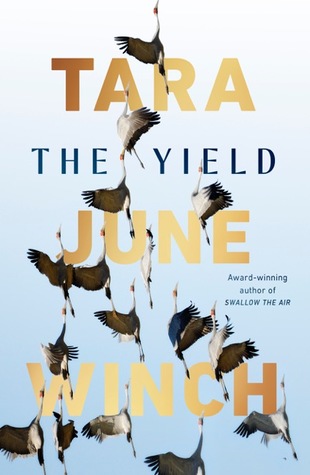
  • 2020 Tara June Winch’s The yield (won) (my review)

This slideshow requires JavaScript.

You could probably call this a round-up of the usual suspects, in terms of contemporary Indigenous Australian novelists, with Kim Scott and Tony Birch appearing three times, Melissa Lucashenko and Alexis Wright twice each, and of course relative newbie, Tara June Winch, once. It’s notable that every book here deals with Indigenous issues. This is important for truth-telling, but it will be a measure of our maturity as a nation when Indigenous Australian writers can feel free of the need to carry these truths on their backs.

Anyhow, I wonder what Miles Franklin would say? When she said “without an indigenous literature, people can remain alien in their own soil”, I don’t believe she was thinking of the real Indigenous people of this soil. However, I imagine that, were she living now, she would love the richness that the growth of Indigenous Australian literature has brought to Australian life and culture.

It seems apposite, then, to leave this (very) little tribute with the words of this year’s winner, Tara June Winch, as quoted in the Sydney Morning Herald, “It doesn’t have to be POC writers against white voices – we have to work together to bring voices to the fore.” Absolutely. Let’s hope more and more diverse writers get to tell their stories to us. I – and I know many of my litblogging friends – love to read them. Meanwhile, if you haven’t read it yet, I recommend that you do read The yield, a complex but strong book which its author calls “a once-in-a-lifetime love letter to Australia.”

Have you read any of the listed books, and if so, would you like to share your favourite/s?

* I may have missed a writer or two, as I didn’t find complete lists of short and longlisted authors from the beginning of the award, but I think my point still stands.

Miles Franklin Award 2019 Winner announced!

Melissa Lucashenko, Too Much LipWell, good news for me (because it’s all about me of course!) Not only had I read more of the longlist and the shortlist than is my usual achievement, but one of those books is the winner – and a wonderful winner it is too, Melissa Lucashenko’s Too much lip (my review)!

Really, as much as I liked the other contenders I’d read, I did hope this would win – because it is truth-telling of the most honest sort. Indeed, Lucashenko has said that she expected backlash (which didn’t come) from indigenous communities for her no-holds barred story about a rather dysfunctional indigenous family in which violence and substance abuse, in particular, is no stranger.  Lucashenko, does, of course, underpin this squarely with references to/evocation of the causes, that is, the intergenerational trauma indigenous people have experienced after two centuries of dispossession (and all the policies and practices that have ensued to deny them equality, dignity, and thus the health and security that we all deserve as citizens of this country.)

But, in addition to this honest, real story about contemporary indigenous lives and culture – about the challenge of marrying traditional beliefs and values with contemporary life – is the fact that it’s a rip-roaring tale. Humorous, page-turning, with colourful, individuated characters. If you haven’t read it yet, you surely will now!?

Jason Steger, writing in The Sydney Morning Herald, says

It’s not surprising that Melissa Lucashenko says Too Much Lip was her most difficult book to write. After all, it deals with physical and substance abuse, violence, marginalisation, displacement and dispossession, racism and incarceration within the experience of one Indigenous family.

He quotes the judges as saying that she “weaves a (sometimes) fabulous tale with the very real politics of cultural survival to offer a story of hope and redemption for all Australians”. Exactly!

I apologise for the delayed announcement – I was at reading group last night, and was distracted by our exciting discussions!

But, woo hoo! This is an inspired and inspiring choice! Well done judges, I say.

What do you think?

Miles Franklin Award 2019 shortlist

Well, good news for me in that I had read three of the longlist, and two of those have made it through to the shortlist. Interestingly, the one that didn’t, Trent Dalton’s Boy swallows universe, has been making such a splash that I rather expected it to be shortlisted. But, as we all know, you can never second guess literary judges.

So, here is the shortlist:

  • Michael Mohammed Ahmad’s The Lebs (Nancy’s review) (Hachette)
  • Gregory Day’s A sand archive (Lisa’s review) (Picador)
  • Rodney Hall’s A stolen season (my review) (Picador)
  • Gail Jones’ The death of Noah Glass (Text)
  • Melissa Lucashenko’s Too much lip (my review) (UQP)
  • Jennifer Mills’ Dyschronia (Lisa’s review) (Picador)

Rodney Hall, A stolen season

Some random observations:

  • There’s fair diversity here, with Ahmad and Lucashenko both making to to the shortlist.
  • Three women and three men! That’s neat.
  • Rodney Hall has won twice before, for Just relations and The grisly wife, and has now been shortlisted four more times.
  • Lucashenko has, this year, been shortlisted for the Stella Prize, the Victorian and NSW Premiers’ literary awards, and the Australian Book Industry awards.
  • This will be the fourth time that Gail Jones has been shortlisted for the Miles Franklin.
  • And, three of the six books were published by Picador! Congrats to them.

Melissa Lucashenko, Too Much LipStefanie Convery, writing in The Guardian (Australia), reports that:

Judge Bernadette Brennan said this year’s authors were “unafraid to take risks” in their narratives, which addressed “complex, disparate and urgent aspects of contemporary Australian life”.

This is certainly true of the two I’ve read …

Michaela Boland, writing for the ABC News, spoke to Michael Mohammed Ahmad, and wrote this:

While Mr Ahmad said that [winning the Prize] would be welcomed, the honour itself had already eased the insecurity and inadequacy he said was inherent to being an Arab Muslim immigrant in Australia.

“Three years ago our immigration minister Peter Dutton said second or third-generation Lebanese Australians like me are the mistakes of the Fraser government,” he said, after he learned his second book was one of the six short-listed.

It’s so distressing that Ahmad and, clearly, many other Australian citizens have to live their lives feeling this way – and that our government doesn’t seem to think it has a role to play in setting a welcoming, inclusive tone.

Anyhow, the judges, as I wrote in my longlist post, for this year are almost the same as last year’s: Richard Neville (State Library of NSW),  Murray Waldren (journalist and columnist for The Australian), Dr Melinda Harvey (book critic), Lindy Jones (bookseller), and Bernadette Brennan (author and literary critic). Brennan replaces last year’s Susan Sheridan.

The winner will be announced on 30 July in Sydney.

What do you think?

Miles Franklin Award 2019 Longlist

Trent Dalton, Boy swallows universeWoo hoo! Last year I had only read and reviewed one book on the Miles Franklin longlist, but this year I’ve read three! It’s a record (for me, anyhow!)

Here is the list:

  • Michael Mohammed Ahmad’s The Lebs (Nancy’s review) (Hachette)
  • Robbie Arnott’s Flames  (Lisa’s review) (Text)
  • Trent Dalton’s Boy swallows universe (my review) (Fourth Estate)
  • Gregory Day’s A sand archive (Lisa’s review) (Picador)
  • Lexi Freiman’s Inappropriation ( A&U)
  • Rodney Hall’s A stolen season (my review) (Picador)
  • Gail Jones’ The death of Noah Glass (Text)
  • Melissa Lucashenko’s Too much lip (my review) (UQP)
  • Jennifer Mills’ Dyschronia (Lisa’s review) (Picador)
  • Tracy Sorenson’s The lucky galah (Lisa’s review) (Picador).

Rodney Hall, A stolen seasonSome random observations:

  • There are 10 on the longlist. The Miles Franklin judges have, in recent years, not constrained themselves to a set number for their longlist. In 2018 there were 11 books, In 2016 and 2017, there were 9 books, and in 2015 there were 10.)
  • Half of the longlisted books are by women writers. Two of these, Gail Jones and Melissa Lucashenko, were also longlisted for the Stella Prize.
  • Rodney Hall has won twice before, for Just relations and The grisly wife, and been shortlisted three more times.
  • I was little surprised not to see Enza Gandolfo’s The bridge on the list – but this is always the way. I accept that!
  • There are debut authors here – including Trent Dalton and Tracy Sorenson – and many well established ones (who don’t seen to be named!)

Melissa Lucashenko, Too Much LipState Library of NSW Mitchell Librarian Richard Neville, said, on behalf of the judging panel:

The 2019 Miles Franklin longlist yet again highlights a mixture of new and established writers. It showcases ten of the most vibrant voices of Australian fiction speaking to us of lives facing, or having endured, some version of extremity. Angry, funny, contemplative and urgent, these voices—which include a galah—explore personal, historical and ecological loss, cultural inheritances and disenfranchisement, and the fraught bonds of friendships, families and communities.

I am rushing to go out… so will leave that for you to think about.

The judges for this year are almost the same as last year’s: Richard Neville (State Library of NSW),  Murray Waldren (journalist and columnist for The Australian), Dr Melinda Harvey (book critic), Lindy Jones (bookseller), and Bernadette Brennan (author and literary critic). Brennan replaces last year’s Susan Sheridan.

The shortlist will be announced on 2 July at the State Library of New South Wales, and the winner on 30 July in Sydney.

What do you think?

Monday musings on Australian literature: 1950s prose-poets criticised

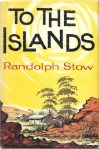
Randolph Stow, To the islandsSerendipitously, while trawling Trove for something else recently, I came across a fascinating article in the Tribune about the winners of the first two Miles Franklin Awards. The article was written by Jack Beasley in July 1959, and the two winners were Patrick White’s Voss (1957), and Randolph Stow’s To the islands (1958), two books which are now regarded as significant Australian classics. Jack Beasley wouldn’t have agreed!

So, who was Jack Beasley? Born in 1921, he was interested in the arts, was closely associated with the Australasian Book Society, and at one stage had his own publishing company. He wrote several books, including a memoir and a couple of books on Katharine Susannah Prichard. He was also a member, for many years, of the Communist Party of Australia. The Tribune, for those of you who don’t know, was the Party’s official newspaper. This background is relevant to his criticism of White and Stow’s wins.

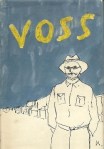
Patrick White, VossHe commences his article by stating that Randolph Stow’s winning the award has created quite a lot of discussion, particularly since it followed Patrick White’s winning for Voss the year before:

The two authors are the leading exponents of the so-called “prose-poetry” school, very fashionable today in literary circles attached to the big publishing houses.

He quotes Sidney J. Baker, whom he describes as a Sydney Morning Herald authority. Baker

regards their work as a “new type, of novel … distinguished by strength and sincerity and blowing away traditional debris like a cool wind after sizzling heat.” It should be added that among the “traditional debris” blown away are the traditions for which Miles Franklin herself so firmly stood.

Hmm, so the award should only be for writers who write in the same style as Miles Franklin?

Anyhow, Beasley writes that Franklin “believed that literature drew its ideas from life and attachment to native soil, and she wrote with a vigorous, entertaining prose”:

Her major work, ‘”All That Swagger” is notable for Danny Delacy and his “brave Joanna,” Irish immigrants who go through life undaunted by its buffetings and rejoicing in its happinesses.

In sorry contrast are the morbid heroes of Messrs. White and Stow, who flee from life and society in search of some individual haven.

To Beasley, prose-poetry “is a fad of style, a pretentious juggling of words and grammar”. He quotes from both White and Stow to prove his point, and then argues that while this “obscure” style is new in Australia, it “emerged many years ago in bourgeois culture”. He names “Joyce, Proust, Virginia Woolf and the extreme case, Gertrude Stein” as exponents of the style.

“Individual haven” and “Bourgeois culture” give away his leanings. He discusses To the islands:

According to some reviewers, “To the Islands” shows a warm sympathy for the Aborigines. This is partly true, but an even warmer sympathy is shown for the missionaries and whatever might be the personal motivation of individual missionaries, history has shown that the missions have played their part in the destruction of tribal life and the continuing ordeal of the Aboriginal people.

This is of course true, but what becomes increasingly clear is that Beasley’s main criticism is in fact less the style than the content of White and Stow’s work. The criticism focuses very much on the fact that their focus is the “individual” which is not part of Communist ethos. He describes White and Stow as being “closely bound to the capitalist class”, and writes that their protagonists, Voss and Heriot,

are nothing more than the bourgeois intellectuals, or more correctly a personification of the crisis of the intellectuals, desperately reaching for a sanctuary. They feel the sands shifting beneath them but are still unable because of their individualism to accept the new ideas that are emerging.

He believes intellectuals need to grasp new ways of thinking:

Only by coming to the working class and taking their part in the struggles led by this class for a better life, only by ceasing to believe in the omniscience of the lonely individual and learning in life of the inexhaustible strength of collective ideas, can the intellectuals have a future.

The socialist countries show again and again that there is no hostile contradiction there between the intellectuals and the proletariat and the Australian workers have always welcomed those who joined their cause.

Only at the end of his article does he return, somewhat off-handedly, to the style issue:

It is not suggested that Miles Franklin would have supported all of the views stated above [that is, his political views], but both the misanthropic themes and the literary quality of the two prizewinners are at variance with her view of life and literary standard.

It might have ended there but, intriguingly, a few weeks later, a letter in response appeared in the same paper – by author Alan Marshall. He thought the article was the “best analysis” he’d read of this new trend, but he takes issue with a couple of points. One is Beasley’s generalisation about “intellectuals”, his tarring them all with the same brush, but the other is his use of the term of “prose poets”.

Marshall writes:

What is wrong with prose poetry? The works of Katharine Prichard are full of it; Turgenev was a master at it; Gorky often delighted in it; Sholokhov’s works feature it. It can lift prose to its highest level and be an inspiration to mankind. In the hands of the writers I have mentioned it not only appeals to the highest emotions but to the reason as well.

Patrick White and Stow are not Prose Poets.

They are obscurantists juggling words to obscure sense in an effort, to create a sense of profundity. They believe readers have little faith in their judgement; that readers praise what they cannot understand for fear of being regarded as incapable of appreciating good writing.

Ouch … “obscurantists”, not “prose poets”.

I’m leaving it here. I’m sharing this because I like hearing the arguments and ideas of another time, and testing them against our own (with the benefit of time). Marshall’s criticism of authors writing obscurely to create profundity is often trotted out. But, clearly, his and Beasley’s assessments of White and Stow have not stood the test of time, thank goodness.

Miles Franklin Award 2018 Shortlist

Having posted this year’s Miles Franklin Award Longlist I decided I may as well keep on with it! After all, it is, probably, Australia’s most watched award. The shortlist was announced in Canberra tonight – not that I was invited!

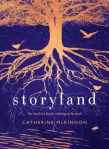
Catherine McKinnon, StorylandHere is the list:

Some random observations:

  • Gerald Murnane, a neglected Australian author has made it through to the shortlist, which is great to see. Of being longlisted, he said he was “gratified”, because it was “a suitable reward for the hard task of writing the book.”
  • Two previous winners, Michelle de Kretser and Kim Scott, have made it through.
  • Recent winner of the Premier’s Award in the 2018 Adelaide Festival Awards for Literature, Hornung, has also made the cut. Her novel The Last Garden has also been shortlisted for the ALS Gold Medal. Hornung, who hasn’t been listed for the Miles Franklin, said of being longlisted that it felt “like a personal endorsement.”
  • McKinnon, who has been overlooked, to date, by other awards, has also been shortlisted – which is great to see because it’s an interesting book and a good read. She said about being longlisted that she was “Delighted, dizzy, honoured, thrilled.” What will she feel now!
  • Four of the six books are by women writers, and one is by an indigenous writer.

Judge Richard Neville, Mitchell Librarian of the State Library of NSW, said, justifying the shortlisting in terms of Miles Franklin’s criteria:

The Miles Franklin 2018 shortlist engages with the complexities of Australian life in all of its phases, and the legacy of its timeless Indigenous past and its recent European present. All the novels explore how Australians connect with their complex stories, with their emotional histories, and with the legacy of colonisation. Each author in the shortlist considers what it means to live in a particular location, with unique and challenging vision. The vibrancy of contemporary Australian literature, and its relevance to thinking through the challenges of modern Australia, is confirmed with this diverse and intelligent shortlist.

The winner will take away $60,000, and each shortlisted order will receive $5,000 from the Copyright Agency’s Cultural Fund.

The judges for this year are: Richard Neville (State Library of NSW),  Murray Waldren (journalist and columnist for The Australian), Dr Melinda Harvey (book critic), Lindy Jones (bookseller), and Susan Sheridan (Emeritus Professor in Humanities, Flinders University).

The winner will be announced in Melbourne on 26 August. I congratulate them all and wish them luck …

Is your favourite there? Do you want to make a prediction?

Miles Franklin Award 2018 Longlist

Catherine McKinnon, StorylandI didn’t post the Miles Franklin Award Longlist last year, but I’m intrigued by this year’s list so am sharing it with you – though I’m sure most Aussie readers will have seen it already.

Here is the list:

Some random observations:

  • There are 11 on the longlist, which is interesting in itself – the Miles Franklin judges have, in recent years at least, not constrained themselves to a set number for their longlist. In 2016 and 2017, there were 9 books, and in 2015 there were 10.
  • Six of the longlisted books are by women writers. Only one of these, Michelle de Kretser, was also longlisted for the Stella Prize.
  • The list, unlike the Stella, is rather short on diversity, though, in addition to representing women well, it does include twice-winning indigenous writer, Kim Scott and Sri Lankan-born Michelle de Kretser.
  • This is the first time that Gerald Murnane – frequently tipped as Australia’s next Nobel Laureate in Literature – has been listed for the award. About time.
  • Peter Carey has won three times. If he wins this year, he will equal Tim Winton and Thea Astley who have both won four.
  • I have several on my TBR, and others I would like to be there, but have only read one, Catherine McKinnon’s  Storyland which, I was starting to think, was not going to be listed for any awards, despite its fascinating structure and all-round good story.
  • I’m a little surprised not to see Claire G. Coleman’s Terra nullius nor Sofie Laguna’s The choke on the list.
  • The ABC notes in its announcement that it’s “a list that’s light on outliers, all writers have been shortlisted for, or won, at least one major literary award.”
  • Oh, and not surprisingly, Lisa has reviewed a lot of them!!

The judges for this year are: Richard Neville (State Library of NSW),  Murray Waldren (journalist and columnist for The Australian), Dr Melinda Harvey (book critic), Lindy Jones (bookseller), and Susan Sheridan (Emeritus Professor in Humanities, Flinders University).

The shortlist will be announced in Canberra on 17 June, and the winner in Melbourne on 26 August.

What do you think?

Monday musings on Australian literature: Miles Franklin Award, the third decade (1978-1987)

Miles Franklin

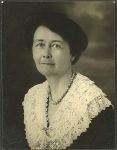
Miles Franklin, c. 1940s (Presumed Public Domain, via Wikipedia)

Today’s post is the third in my little sub-series of posts looking at the Miles Franklin Award by decade.

As before, I don’t plan to list all the decade’s winners, as you can find them on the Award’s official site. Instead, I’ll share some interesting snippets, inspired by my Trove meanders.

Women writers on the rise?

The late 1970s and 1980s saw, I believe, a flowering of Australian women writers, similar to that we saw in the 1920s-1940s with the likes of Katharine Susannah Prichard, Marjorie Barnard/Flora Eldershaw, Eleanor Dark, and Christina Stead, not to mention Miles Franklin herself. This flowering is partly evidenced by the fact that while just five awards were made for books by women in the first two decades, another four were made to women in this third decade. These were Jessica Anderson’s Tirra Lirra by the river (1978) and her The impersonators (1980), Elizabeth Jolley’s The well (1986), and Glenda Adams’ Dancing on coral (1987).

In 1979, The Australian Women’s Weekly announced Jessica Anderson’s win under the headline “Women take honours in literature, fashion”. It seems the awards were handled differently then, with the winner being advised before the presentation. The Weekly describes Anderson’s reaction:

“I was thrilled,” she said. “Like all Australian writers, I think we owe a tremendous debt to our predecessors. The award does encourage writers. You feel someone out of the past has spoken to you.”

One of the Award judges, the well-known and successful publisher-editor, Beatrice Davis, said of Anderson’s book that “It has an unpretentious elegance, an individual quality so different from the realistic documentary that still dominates the field in Australian novels.” But Jessica Anderson told The Weekly that, the book’s content annoyed a lot of people, particularly men:

“I didn’t mean it to be a liberationist gesture,” she said. “Men recorded their experiences for hundreds of years and women read them with admiration.”

Hmmm … this is fascinating, and an issue that we still confront, I believe. Meanwhile, if you haven’t read Tirra Lirra by the river, add it to your list. It’s a great read. I read it before blogging, but Lisa has posted her thoughts on her blog.

Incomprehensible or outstanding?

David Ireland won the award in 1980 for the third time with A woman of the future. Ireland said at the time that it had been initially rejected by Macmillan because it was “too incomprehensible”. The judges called it “outstanding”. Well, four of them felt it was. The fifth, Colin Roderick, called it “literary sewage”, The Canberra Times reported.

A few months after it won, a long article giving “a feminist perspective” appeared in Woroni, the ANU’s student paper. The writer, Andrea Mitchell, starts by discussing Ireland’s previous novels in which women appear as “domestic or sexual adjuncts”. Ireland, she argues, does not dissociate himself in these novels from his male characters’ poor treatment of women, but, she writes

A Woman of the Future offers a different and more rewarding perspective on women in society. A complete turnabout, Ireland presents a woman’s life and experience in the first person.

It’s an in-depth analysis, but I’ll just share her assessment of what she thinks he is doing, because I love it:

I would suggest that Ireland is not only satirizing sexism, but levelling criticism at a certain style of feminism epitomized by German Greer’s A Female Eunuch: That is, that in order to change the subservient position of women, women must become as ruthlessly self-oriented and competitive as men have traditionally been. Ireland reasonably sees the same danger for women as for men who pursue social power: a less than full human existence, and alienation in their personal lives.

Here come the men!

Peter Carey, BlissIf this decade saw a flowering of Australia’s women writers, it was also when some of the men who are now among Australia’s top male writers won their first awards. I’m talking Peter Carey, who won the first of his three Miles Franklin Awards with his debut novel Bliss, and Tim Winton who won the first of his four awards with his second novel Shallows.

The Canberra Times reported judge Beatrice Davis as saying that

Carey was an “effortless stylist” who “gives a sense of immediacy to every vivid scene and compels belief in every character no matter how bizarre”.

While I haven’t loved every Carey I’ve read, I do love the fact that you never know what form or “style” he’s going to produce next. He is exciting to read.

Tim Winton won the 1984 award with his novel Shallows. The award was not made for 1983 (see below) so I was intrigued to read the following statement by the judges quoted in The Canberra Times report:

The merit of Winton’s novel is reflected by the high quality of the 29 books considered this year for the $5,000 award … Among the other books entered were David Malouf’s Harland’s half acre, Elizabeth Jolley’s Milk and honey, Thomas Shapcott’s The white stag of exile, Nicholas Hasluck’s The Bellarmine jug (The Age Book of the Year), David Ireland’s Archimedes and the seagle, Alan Gould’s The man who stayed below and Olga Masters’s Loving daughters.

Interesting.

Now, I’m a Winton fan but when I read Shallows not long after it came out I clearly remember feeling it overdid the imagery a bit, that it was a little “overwritten” (which is something I’ve just read Helen Garner felt about his first novel). Still, the judges saw “ample proof of a developing talent” and I certainly wouldn’t disagree with that. The judges also said:

The merits of this novel are perhaps most evident in the strength of the characterisation — these characters stand on their own — and in Winton’s ability to bring the early history of whaling into an intelligible relationship with present-day attitudes to the whaling industry.

Fair enough. Winton is great at writing character, and setting. He, like, Carey, is always exciting to read.

Another interesting winner this decade was Rodney Hall, with his wonderful Just relations, but I just don’t have time to share everything I found.

No award (again)

As happened in the second decade, there was a year in this third decade, 1983, in which no award was made. The Canberra Times reported that most of judges for the 1983 Miles Franklin Literary Award “felt the standard too poor to justify presenting it”. The report continued that “if no novel of sufficient quality is available, the author of a play for stage. radio, television ‘or such other medium as may develop’ can be the recipient but few scripts are received”.

In 1983, novels were published by people like Brian Castro, Sara Dowse, Elizabeth Jolley, and Peter Kocan. Interestingly Peter Kocan’s The cure won the NSW Premier’s Literary Award and Elizabeth Jolley’s Mr Scobie’s riddle won The Age Book of the Year Award. There were also short story collections – but these, unlike plays and scripts, are not eligible it seems – by Carmel Bird, Robert Drewe, Beverley Farmer, amongst others. I’m not saying any of these should have won, but in the light of what the judges said the following year – including highlighting The Age Book of the Year as indicative of quality – it does make me wonder.

Past posts in the series