Miles Franklin Award 2025 winner announced

The winner of the 2025 Miles Franklin Literary Award, worth AUD60,000, was announced this evening by Australian journalist Fran Kelly during her program, The Radio National Hour. And the winner is:

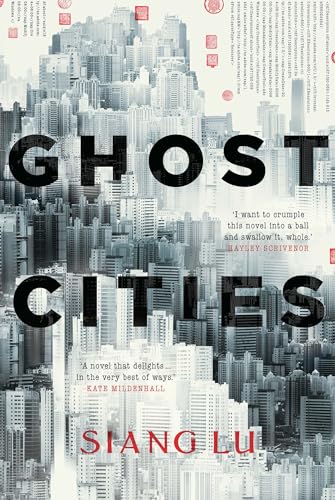
Siang Lu’s Ghost cities

Kelly described the novel as being about an “epic conquest of ancient empires and tyrannical leaders”, and also about “what is truth and power”. Also, she said, “it makes you laugh sometimes”. Ghost cities was inspired by the migrant experience, and living in a diaspora. Consequently, it “grapples with the tensions of being Chinese but not Chinese enough”. She and Lu talked a little about his experience of living in such a diaspora.

The judges described the book as “at once a grand farce and a haunting meditation of diaspora”. Lu was happy with the “grand farce” description.

Publisher UQP starts its page on the novel with this description:

Ghost Cities – inspired by the vacant, uninhabited megacities of China – follows multiple narratives, including one in which a young man named Xiang is fired from his job as a translator at Sydney’s Chinese Consulate after it is discovered he doesn’t speak a word of Chinese and has been relying entirely on Google Translate for his work.

Steinberg – see my link below – concludes his short discussion of the novel, with:

Ghost Cities both embraces and defies its emperor’s directive to abandon “the pursuit of beauty” for art that favours “furrowed brows and scholar-like interpretation”. In its zany intertextuality, it displays a level of intellectual ambition rarely found in recent fiction.

Kelly discussed the novel with Lu, teasing out many of the ideas raised in the above descriptions, and in a review of the novel by Tara June Winch (which had, apparently, made Lu cry!) I didn’t capture it all for my post, but Australians, at least, will be able to listen to this interview on the program’s podcast. However, I did like Lu’s final comment regarding current concerns about the impact of AI on writing (and on the arts in general). He said that “if authors imbue their life and soul into their work, that’s the lodestar, and is something AI can’t replicate”. I love his confidence – and surely he’s right (for a while at least)?

To recap, the shortlist

  • Brian Castro, Chinese postman (Giramondo) (on my reading group’s 2025 schedule) (Lisa’s review): Castro has been shortlisted for the MF before
  • Michelle de Kretser, Theory & practice (Text Publishing) (my review): de Kretser has wont MF twice before, and this book won this year’s Stella Prize
  • Winnie Dunn, Dirt poor islanders (Hachette Australia) (review coming next week): debut novel by a Tongan-Australian writer
  • Julie Janson, Compassion (Magabala Books): sequel to Benevolence, which I reviewed; Janson’s author’s first shortlisting for the MF
  • Siang Lu, Ghost cities (UQP): Lu’s first shortlisting for the MF – and now on my TBR!
  • Fiona McFarlane, Highway 13 (Allen and Unwin) (kimbofo’s review): McFarlane has been shortlisted before, but for a novel; this book straddles the short story/novel divide. I’m keen to read it.

For a succinct discussion of the shortlist, you could check out the one posted at The Conversation, by Western Australian postdoctoral fellow, Joseph Steinberg. But there are others.

To recap, winners since 2020

To put this in context, I thought it would be interesting to share the winners, since 2020:

All women writers, and encompassing diverse backgrounds. Now, for the first time since 2016 (AS Patrić’s, Black rock white citymy review), we have another book by a male writer. Interestingly, like that 2016 winner, it’s a book inspired by migration.

This year’s judging panel comprised Richard Neville (Mitchell Librarian, the State Library of NSW and Chair), Associate Professor Jumana Bayeh (literary scholar), Dr Mridula Nath Chakraborty (literary scholar and translator), Professor Tony Hughes-d’Aeth (literary scholar and author) and Professor Hsu-Ming Teo (author – of Love and vertigo, among other books – and literary scholar).

A big congratulations to Siang Lu. I have been toying with buying this book, particularly because I’d heard it has a humorous element. After all, it was listed for the Russell Prize for Humour Writing, and the VPLA John Clarke Humour Award (see my post on Humour Writing prizes). A big plus for me.

Thoughts anyone?

Miles Franklin Award 2025 shortlist

For some reason, I haven’t posted on the Miles Franklin Award shortlist for a few years, probably partly due to timing because I often travel in the southern hemisphere winter. However, I have time to post on this year’s shortlist that has just been announced, and, what’s more, I have read or will read more of this list than I have for some time. I find the list exciting, mainly because all have caught my attention – though I’ve not read them – before they were listed. That hasn’t always been the case recently.

The shortlist

  • Brian Castro, Chinese postman (Giramondo) (on my reading group’s 2025 schedule) (Lisa’s review): Castro has been shortlisted before
  • Michelle de Kretser, Theory & practice (Text Publishing) (my review): de Kretser has won twice before, and this book recently won the Stella
  • Winnie Dunn, Dirt poor islanders (Hachette Australia) (on my reading group’s 2025 schedule): debut novel by a Tongan Australian writer
  • Julie Janson, Compassion (Magabala Books): sequel to Benevolence (my review); this author’s first listing
  • Siang Lu, Ghost cities (UQP): Lu’s first shortlisting for the MF
  • Fiona McFarlane, Highway 13 (Allen and Unwin) (kimbofo’s review): McFarlane has been shortlisted before; but this book straddles the short story/novel divide. I’m keen to read it.

Some random observations:

  • Five of the six shortlisted writers are writers of colour, reflecting the increasing diversity in Australian publishing.
  • Two of the shortlisted writers – Castro and Lu – are male, but a male writer has not won since 2016 (AS Patrić’s, Black rock white city – my review).
  • “Each of the six books investigates race, class and gender in contemporary Australia but in different ways. It’s very hard to compare books like Ghost Cities and Dirt Poor Islanders because they’re written in such distinct ways, but they both encourage us to think about narrative and who owns stories” (from Sarah L’Estrange of the ABC).
  • One of the books, Highway 13, is more like a short story collection, and others are “quite formless”, says Declan Fry (of the ABC) who approves the trend.
  • There’s a wide spread of publishers, including a few independent Australian ones, which is always good to see as these small publishers do the hard yards with our literary writers

For more discussion by the ABC RN’s book people – on the shortlist and on each of the books – check out this page.

For posterity’s sake, here was the longlist

  • Brian Castro, Chinese postman
  • Melanie Cheng, The Burrow (my review)
  • Michelle de Kretser, Theory & practice
  • Winnie Dunn, Dirt Poor Islanders
  • Julie Janson, Compassion
  • Yumna Kassa, Politica (on my TBR)
  • Siang Lu, Ghost Cities
  • Fiona McFarlane, Highway 13
  • Raeden Richardson, The degenerates (Lisa’s review)
  • Tim Winton, Juice (kimbofo’s review

Each of the shortlisted writers will receive $5000 from the Copyright Agency’s Cultural Fund, with the winner receiving $60,000 prize.

This year’s judging panel comprises Richard Neville (Mitchell Librarian of the State Library of NSW and Chair), Associate Professor Jumana Bayeh (literary scholar), Dr Mridula Nath Chakraborty (literary scholar and translator), Professor Tony Hughes-d’Aeth (literary scholar and author) and Professor Hsu-Ming Teo (author and literary scholar).

ArtsHub, from which I drew the names on the judging panel, quotes the judges as saying:

“The shortlist for the 2025 Miles Franklin Literary Award celebrates writing that refuses to compromise. Each of these works vitalises the form of the novel and invents new languages for the Australian experience.”  

“Vitalises the form of the novel” and “invents new languages for the Australian experience” sound positive to me. Finding language for our experience is the issue, many of you will recognise, that I’ve found constantly in my Trove searches about Australian literature. It’s something that should never stop. As our society changes (its makeup for a start), so does our culture, and so also should the language we use to explore and reflect that.

The winner will be announced on 24 July

What do you think of the shortlist?

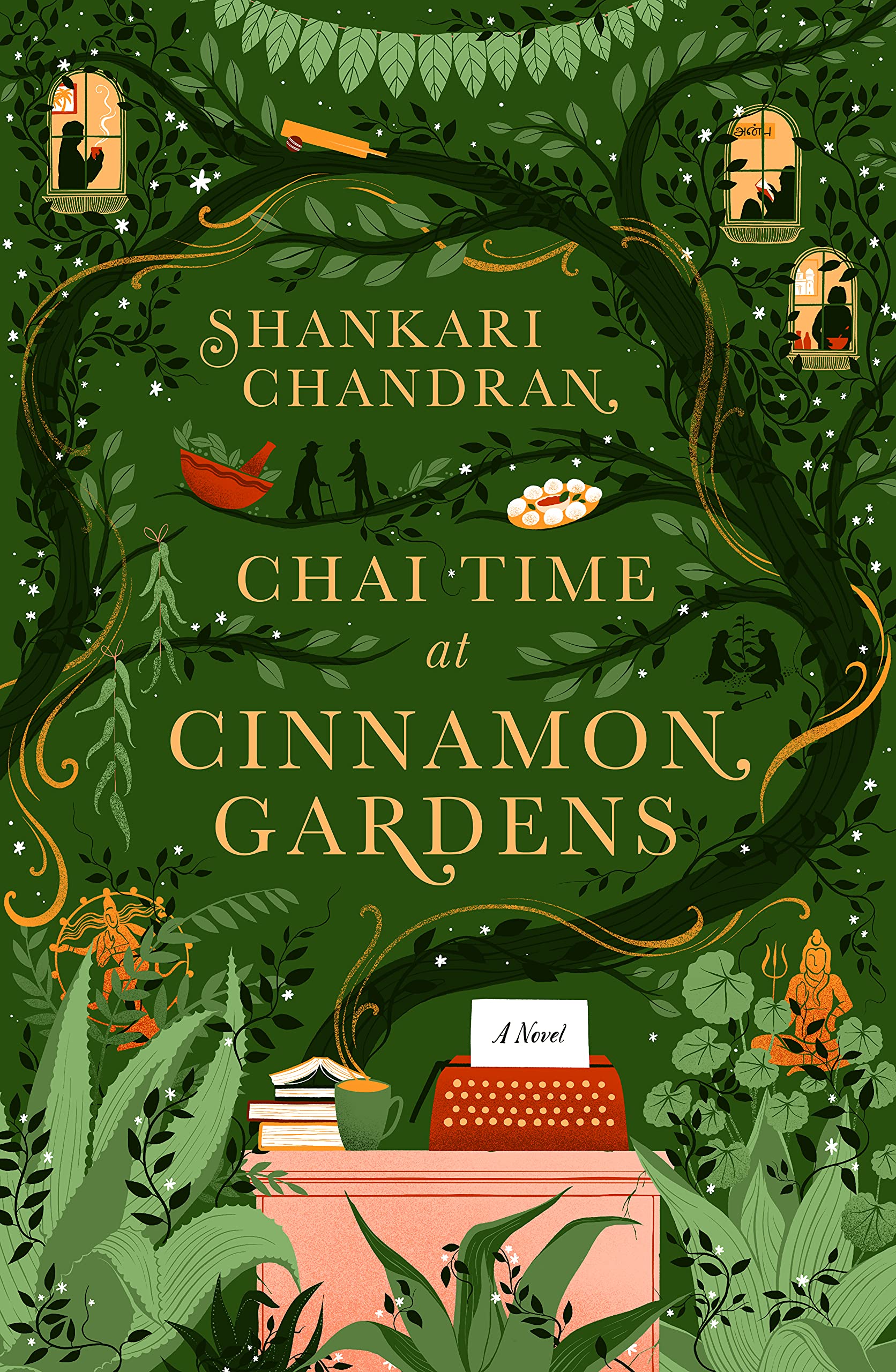
Shankari Chandran, Chai time at Cinnamon Gardens (#BookReview)

Shankari Chandran’s Miles Franklin Award winning novel, Chai time at Cinnamon Gardens, was my reading group’s March book. Unfortunately I was out of town at the time of the meeting, but of course I wanted to read it – and I did, finally!

Like many people, I think, when I first saw the book, I assumed it was one of those cosy crime novels set in a nursing home or retirement village. The title and the pretty cover certainly suggest that. Only a fraction of this first impression was right, though. It is set in a nursing home, and crimes do occur, but it is not a crime novel and nor is it cosy. Instead, it is a serious, thoughtful and immersive novel that covers many issues confronting modern multicultural Australia, but that also has one main driving idea – which I’ll get to soon.

First, though, I want to clear up another assumption I had, which was that Chandran is a Sri Lankan-Australian writer. Wikipedia told me otherwise. It describes her as a British-Australian writer, who was born in London to Tamil refugees from Sri Lanka. She grew up in Canberra, and studied law at the University of New South Wales, before working as a human rights lawyer in London for a decade. She now lives in Sydney. Chai time at Cinnamon Gardens is her third novel. GoodReads describes her first novel, Song of the Sun God (2017), as being “about three generations of Australian Tamil women and the choices they make to survive Sri Lanka’s civil war“. I don’t know what that novel’s overarching idea is, but Chai time at Cinnamon Gardens also draws from its main characters’ experiences during that civil war, and I do have a view on what drives it, so let’s get to the novel.

It is set in the Cinnamon Gardens Nursing Home in a fictional Sydney suburb called Westgrove, which situates it in Sydney’s multicultural western suburbs. The home is taken over in the early 1980s by Sri Lankan migrants, Cedric, Zakhir, and his wife Maya who wants to transform it to a place “where people will be valued”. The novel is told through multiple alternating voices, but starts with a Prologue which describes the home and which, if you read carefully, also prepares us for what’s to come:

Arabian jasmine climbs the wooden trellises staked in the garden beds. They are bold travellers, dark vines carrying white stars up the two-storey walls and around the windows of the residence. The plant grows obediently in the quiet suburb of Westgrove, Sydney, but its tropical ancestors are a wild breed, a vine that grows rampant in the villages of Sri Lanka, a home more familiar to many of the residents.

“Bold travellers”, “dark vines”, and “white stars” together with words like “obediently” and “wild” suggest a tension that we are going to explore.

We then start the narrative proper. It’s 2020, and Maya is now old and living as a resident in the home – albeit one who still holds many strings. Ruben is attending her, and we become aware that he bears fresh and old scars on his body. As the narrative progresses, we learn that the fresh scars come from recent racist attacks on him in the vicinity of the home, while the old scars relate to his experiences in Sri Lanka during the war. These scars more literally embody the tensions that pervade the novel.

From here, the rest of our narrators, all third person, are gradually introduced – Ruben; Maya’s daughter Anjali (Anji), who now manages the home; Anji’s old schoolfriend Nikki, who is the home’s geriatrician; and Nikki’s husband Gareth, who is white-Australian and a local councillor. There are other characters, including, most significantly, Anji’s also white-Australian husband, Nathan, and Maya’s aforementioned husband, Zakhir who disappeared, now presumed dead, ten years before the novel’s opening.

A strength of the novel is the way these characters inveigle their way into our hearts and minds so that we care about them, even the unappealing Gareth who, blinded by self-pity, rashly but unintentionally unleashes the dreadful drama that unfolds. It all hinges on racism. Chandran exposes the awful truth of how endemic racism is in Australian society and how, as a result, things can so quickly get out of hand. Interspersed with this present-day storyline are Maya’s, Ruben’s and Zakhir’s backstories, which explain why they had come to Australia – personally, in terms of what they had experienced during the civil war, and politically, in terms of their Tamil heritage and what that civil war was about.

I said at the beginning that the novel covers many issues which confront modern Australia, but that it also has one main driving idea. The issues include racism, colonialism, and multiculturalism; trauma, loss and grief; friendship, family and community; and the role played by the media, including social media, in fuelling emotions rather than encouraging reason. Underpinning these issues is the idea that drives the narrative – storytelling, and “the most powerful” of all stories, history. By framing her story within the Sri Lankan civil war and its battle over contested histories, Chandran makes her novel relevant to all cultures and societies where history has been used to oppress minorities resulting in violence, disempowerment and oppression, where distortion produces misinformation and confusion that can be manipulated to serve personal and political ends.

As grim and confronting as much of it is, Chai time at Cinnamon Gardens is not without hope. Alongside Chandran’s exploration of the misuse of history is a commitment to the positive value of story. To this end Maya, from the beginning, interviews all residents of the home, capturing their lives and their dreams in order to properly know and care for them. This provides the book with another underlying tension, that between histories that erase and stories that “must not be erased”.

Does it all work? Chandran holds a lot of balls in the air. Early on I felt caught in an awkward amalgam of a contemporary novel about middle class angst (husband versus wife, daughter versus mother, and so on) and one exploring critical political ideas. Also, there’s constant moving backwards and forwards in place and time, the plot felt a little contrived in places, and the main themes are hammered home. However, Chandran balances the tone well, mixing light humour and satire with sadness and tragedy, and the characters are vividly and sympathetically drawn. The end result is a book that reveals our essence, and asks us to consider how we might live together in respectful community. Consequently, despite some unevenness, I greatly enjoyed the read.

Shankari Chandran
Chai time at Cinnamon Gardens
Ultimo: Ultimo Press, 2022
360pp.
ISBN: 9781761151408

Monday musings on Australian literature: Miles Franklin Award 2023 Shadow Jury

Some of you have probably heard of “shadow juries”. I took part in one a decade ago, for the now defunct Man Asian Literary Prize. It was great, but I haven’t taken part in any blogger-inspired shadow juries again because of the time commitment needed. If I was already impressed by the work of literary award juries, I was even more so after that experience. But, had any of you heard of a Shadow Jury for the Miles Franklin Award? I hadn’t.

It was a project of the University of Queensland’s Writing Centre. Their jury is a bit different to the blogger-run ones I’ve seen, because their aim was not to select a winner. Here is how they describe their idea of a shadow jury, its composition and its aims:

A shadow jury is an independent panel of passionate readers, critics, and literary enthusiasts who come together to review a longlist of books. While the official judging panel ultimately determines the award-winning book, the shadow jury offers an alternative lens through which to appreciate and analyse the longlisted works. 

In this post, we present reviews from our shadow jury, which included students, writers and critics from UQ who delved into each longlisted book. Through these reviews, we aim to provide readers with a multifaceted understanding of the longlisted works and spark engaging conversations about their literary significance.

So, what I am going to do here is add an excerpt from the Shadow Jury’s reviews, for each book, to whet your appetite. You might then go on and read the review (which you can find at the UQ link above) and/or, perhaps, the book itself! I’ve added UQ’s reviewer’s name in brackets at the end of the excerpt

  • Kgshak Akec, Hopeless kingdom (UWAP): “This impressive first novel is less about immigration itself, and more about family as a living organism that once uprooted, wills itself to do more than survive.” The reviewer also comments on the losses that come with immigration, such as “the normalcy of being Black in Sudan, [which is] replaced by minority status and the accompanying racism in Egypt and Australia” (Doreen Baingana)
  • Robbie Arnott, Limberlost (Text): “The first chapter is a revelation and a masterclass in the economy of words”. The whole novel is, I’d say. “Would I go as far as to declare that Arnott is Tasmania’s Tim Winton? Yes, I would, and I am willing to die on that hill. Limberlost is a superb rendering of a coming-of-age story. Tender, evocative, brutal and radiant.” (Carly-Jay Metcalfe)
  • Jessica Au, Cold enough for snow (Giramondo): “The novel’s elliptical tone plays constantly with time and memory. How much we can know another person, even those as intimately connected as mother and daughter, haunts the book, as does how much we can know our (past, present, future) self…New Australian fiction, especially from the second- and third-generation diasporic communities of Western Sydney, is quietly but determinedly shattering the white male ceiling of Australian literature, as Maxine Beneba Clarke notes elsewhere, creating a provincial literature that is both local and global in scale. ” (Professor Anna Johnston)
  • Shankari Chandran, Chai time at Cinnamon Gardens (Ultimo Press): “What does it mean to be Australian in the 21st century? Shankari Chandran’s Miles Franklin shortlisted novel Chai Time At Cinnamon Gardens ponders this question with grace, humility, and confronting depictions of racism raging with Shakespearean levels of drama and tragedy…Chai Time at Cinnamon Gardens is an important and enthralling read. While it lacks subtlety on some occasions, the message it evokes is damningly clear.” (Olivia de Silva)
  • Claire G Coleman, Enclave (Hachette): “Few works of speculative fiction have been considered for Australia’s most prestigious literary award, a symptom of the genre’s uneasy relationship to literary fiction and culture…In addition to its literary merits, Enclave is concerned with decolonising Australia’s stories about itself and its future. In the process, the unexamined racism still driving speculative fiction’s narratives of empire, progress, or pastoral idyll are also decolonised.” (Dr Natalie Collie)
  • George Haddad, Losing face (UQP): “Ivan and Joey’s romance is what makes this an understated, lovely book with an episode of Special Victims Unit wedged inside. It’s the unusual parts of Losing Face that make it a remarkable Australian novel, not the parts ripped from the headlines.” (Pierce Wilcox)
  • Pirooz Jafari, Forty nights (Ultimo Press): “Forty Nights is a debut work of literary fiction by Pirooz Jafari, who has fictionalised his own life story in this novel…Insightful, tender and whimsical, Forty Nights is a standout novel on this year’s longlist.” (Martine Kropkowski)
  • Julie Janson, Madukka: The river serpent (UWAP): “While at times I struggled to understand how Janson’s first foray into crime writing had qualified for the longlist of the Miles Franklin, Madukka’s handling of issues of racism, climate change, drug use, and the ongoing First Nations’ struggle for land back and recognition ultimately makes it worthwhile. I’ll end with my initial thought; I actually think I’d really enjoy seeing this story adapted for the screen.” (Rani Tesiram)
  • Yumna Kassab, The lovers (Ultimo Press): “I expected a modern fable underscored by Arabic folklore with more traditional, less didactic conventions. What I found instead was something far more poignant, raw and real…Irrespective of whether The Lovers is the recipient of the 2023 Miles Franklin, its nomination speaks to the state and tenor of contemporary Australian literature embracing the novel as an experimental form.” (Bianca Millroy)
  • Fiona Kelly McGregor, Iris (Pan Macmillan Australia): “The blurb of this book asks a simple question: is Iris Webber innocent or guilty? At the end of some 430 pages, however, such a dichotomy feels terribly pale. It is the larger questions of history, reclamation, oppression, and humanity that mark McGregor’s work and transform the form of the historical novel into something alive and urgent, innovative and instructive. At its heart, Iris is (as Peter Doyle notes) a remarkable work of conjuring. With charm and grit, Iris conjures up Sydney of the 1930s, in all its grim glory. And Fiona Kelly McGregor, in a feat of sensitivity and skill, has conjured Iris Webber.” (Madeleine Dale)
  • Adam Ouston, Waypoints (Puncher & Wattmann): “an anxiety dream of a novel… In a breathless spiralling narrative told (more or less) in a single feverish paragraph, Cripp [the protagonist] pinballs from one association to another, circling back to grasp at his bearings before bouncing off again into further tangents, digressions, curlicues and cul-de-sacs. In lengthy, slippery sentences, he details the history of Houdini’s failed record-breaking attempt, he dips into Victorian showmanship, the swirl of misinformation around the disappearance of MH370, the history of powered flight, Alzheimer’s disease and Australia itself…It’s a strange, ambitious, reckless thing. But it flies; it really flies…” (Vince Haig)

It is damning – but true to our time – that so many these novels address racism. But there are other subjects here too, plus a variety of forms, and, it seems, some bold new writing. I enjoyed these reviews, particularly because, as you’d expect, they critiqued the books as literary works, as content, and against the forms or styles they represent.

Shankari Chandran won the official jury’s prize with Chai time at Cinnamon Gardens – as most of you know.

Thoughts?

Miles Franklin Award 2023 winner announced

The winner of the 2023 Miles Franklin award was announced this evening, and it’s not one I’ve read, even though this year I’ve actually read two of the six shortlisted books! A record for me in recent times. The winner is:

Shankari Chandran, Chai time at Cinnamon Gardens

It’s a book I’ve been toying with reading since it first came out, and it is on my reading group’s short list of schedule suggestions, so maybe its time will come.

ArtsHub, in announcing the award, quotes Chandran’s response to winning:

I’m excited by the prospect of a wider readership for for this novel. Chai Time at Cinnamon Gardens can take the reader to a difficult and uncomfortable place; there’s trauma and bigotry – but I have tried to explore that within a safe space of humour and love and respect

The book has a cutesy title and a pretty cover which I admit initially made me think it was one of those cosy murder stories. It is set in a nursing home in Western Sydney where, you know, you can imagine Miss Marple investigating a murder. But, after seeing Brona’s review (see below), I realised that this is not what this book is at all. It is, says ArtsHub, “a multigenerational and historical journey of revelation and reckoning across time and place”. Chandran, who calls Australia her “chosen home, and Sri Lanka her ancestral home” says her novel is set “against the backdrop of rising racism in contemporary Australia”. It also flashes back “to big movements in Sri Lanka’s history” and “dives into the contested formation and histories of both countries”.

Big congrats to Shankari Chandran!

Just to remind you … the shortlist

  • Kgshak Akec, Hopeless kingdom (UWAP)
  • Robbie Arnott, Limberlost (Text) (my review)
  • Jessica Au, Cold enough for snow (Giramondo) (my review)
  • Shankari Chandran, Chai time at Cinnamon Gardens (Ultimo Press) (Brona’s review)
  • Yumna Kassab, The lovers (Ultimo Press)
  • Fiona Kelly McGregor, Iris (Pan Macmillan Australia) (Lisa’s review; kimbofo’s review)

The 2023 judges wereRichard Neville, Mitchell Librarian of the State Library of NSW and Chair; author and literary critic, Dr Bernadette Brennan; literary scholar and translator, Dr Mridula Nath Chakraborty; book critic, Dr James Ley; and author and editor, Dr Elfie Shiosaki.

Thoughts?

Miles Franklin Award 2023 longlist

I haven’t posted a Miles Franklin longlist for a while, but when I saw today’s come through with its intriguing mix of titles, I decided it was time to do one again.

The longlist

  • Kgshak Akec, Hopeless kingdom (UWAP)
  • Robbie Arnott, Limberlost (Text) (my review)
  • Jessica Au, Cold enough for snow (Giramondo) (my review)
  • Shankari Chandran, Chai time at Cinnamon Gardens (Ultimo Press) (Brona’s review)
  • Claire G Coleman, Enclave (Hachette) (Bill’s review, on my TBR)
  • George Haddad, Losing face (UQP)
  • Pirooz Jafari, Forty nights (Ultimo Press)
  • Julie Janson, Madukka: The river serpent (UWAP)
  • Yumna Kassab, The lovers (Ultimo Press)
  • Fiona Kelly McGregor, Iris (Pan Macmillan Australia) (Lisa’s review; kimbofo’s review)
  • Adam Ouston, Waypoints (Puncher & Wattmann) (Lisa’s review)

Some random observations:

  • There is impressive diversity in the writers listed as I recollect there was last year, including seven of the eleven being by women, and two being by First Nations writers.
  • Independent publishers are well represented, which is also becomings more common in recent prize listings
  • Only a small number of these have been reviewed by my usual list of litblogger suspects, which makes me wonder about our reading choices versus those being chosen for these awards lists.
  • Most of the novels are by authors with at least one book under their belt but Hopeless kingdom is a debut novel by a Sudanese-Australian author. Like many debut novels it is inspired by her own experience of migration from Africa to Australia. It won the Dorothy Hewett Award for unpublished manuscript in 2021. 
  • There’s been little commentary today on the news sites, but hopefully this is because the announcement is less than a day old – or, maybe longlists just don’t garner the same interest as shortlists?

The judging panel

The 2023 judges are, from the announcement on the Perpetual Trustees website, Richard Neville, Mitchell Librarian of the State Library of NSW and Chair; author and literary critic, Dr Bernadette Brennan; literary scholar and translator, Dr Mridula Nath Chakraborty; book critic, Dr James Ley; and author and editor, Dr Elfie Shiosaki. This is, I believe, the same panel as last year’s, but Chakraborty and Shiosaki were new last year so there is some commitment to refreshing the panel. I don’t think it hurts for there to be some stability in panels, but a managed turnover is also important. (Says she!)

From this website too is a statement from the judging panel:

The 2023 longlist is a reflection of the breadth and depth of contemporary Australian story-telling. The eleven longlisted novels define Australian literature as a transformative space where writers are singing the songs of the nation today. They reverberate with the cadences of this land where Indigenous sovereignty was never ceded, but also bring to us mellifluous sounds from far-away lands, weaving together literary traditions from around the world. The words of our novelists, grounded in personal experience, poetry and philosophy, are heralds of the new dawn of Australian fiction: they hum and hiss with language that is newly potent and styles that are imaginative and fresh.

The shortlist will be announced on 20 June, and the winner on 25 July.

Thoughts?

Monday musings on Australian literature: The Miles Franklin Rights Project

Some months ago, I became aware of The Miles Franklin Rights Project, and of course, it piqued my interest, so I flagged it for a future Monday Musings. The project apparently commenced in early 2021, and is still continuing. Before I describe the project, though, I need to explain for non-Aussie readers here that the Miles Franklin Award, though no longer Australia’s most valuable award in monetary terms (albeit is still generous), is arguably our most prestigious literary award. It is also one of our oldest, having been first awarded in 1957. That first winner was Patrick White’s Voss.

So now, the project …

It is led by Dr Airlie Lawson, who is “a literary sociologist and cartographer, a Visiting Fellow at the ANU’s College of Arts and Social Sciences, and the Postdoctoral Fellow on Untapped: the Australian Literary Heritage Project (on which I posted earlier this year) at the University of Melbourne”. The project intrigues me because it asks some questions that are dear my heart. Here is how it is introduced on the AustLit website, which is funding the project:

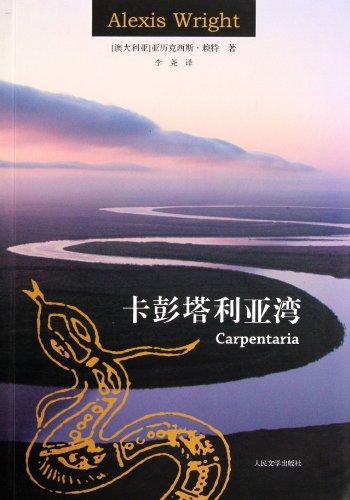
Alexis Wright Carpentaria in Chinese
Chinese edition of Carpentaria

Over the last 21 years, the Miles Franklin Literary Award has been won by many acclaimed Australian novels including Alexis Wright’s Carpentaria, Michelle de Krester’s Questions of Travel, Tara June Winch’s The Yield, Peter Temple’s Truth and Tim Winton’s Dirt Music. But which of these novels has been published internationally—where and in what languages? And shortlisted titles—have they had international success? Is there a discernable gender difference? Associations between publishers? What about change over time? How might we find out?

The site goes on to say that

Globally, publishers and agents report a strong association between literary awards and prizes in international interest in a novel and, subsequently, the licensing of the publishing rights internationally.

The problem is that there’s been little research into what impact awards and prizes have had on rights transactions. A prerequisite for such research, really, is “a comprehensive set of international editions” of Miles Franklin Award winners, but this has not been easy to find. Consequently, the aim of this project is “to create such a list—and to create an efficient, accurate international edition identification model that can be used for other AustLit projects”. They are focusing on the novels which won or were shortlisted for the award from 2000 to 2020. This list, which comprises 22 winners and 93 shortlisted titles, will provide, they hope, a basis from which the global impact and value of this award can be explored.

As you can imagine, it’s not easy tracking down the editions, but they are starting with two major international book databases: WorldCat (library-supplied data) and GoodReads (crowdsourced). As you would expect from an academic project, the information obtained from these databases, and elsewhere, is then checked against multiple sources, including authors, agents and publishers.

You can read about the project on the AustLit website. In fact, this website was my major source for this post, but I did find information about a paper given (via Zoom) by Airlie Lawson in May this year. The paper was titled “How Global is Australian Literature in the 21st century? A story of gender, genre and the international literary field”. The talks’ description says that the “paper draws primarily on data produced for the Conditions of Access (COA) project*, supplemented by data from the industry report Success Story (Crosby et al) and AustLit’s The Miles Franklin Rights Project. Specifically, it draws on data relating to what the COA project models as international rights ‘transactions’ for adult novels first published in print between 2000-2020″. The description also says this:

Analysis of this data reveals several rather different accounts of international access over a twenty-year period, but all have one element in comment: in contrast with the domestic field, they tell a positive story for women authors. 

Interesting, but not wholly surprising, because anecdotally-speaking, at least, my sense is that many of our women writers are finding their way to overseas readers. We are seeing it in posts by international bloggers, for a start. Presumably Lawson explored why this might be the case. The point she makes here is not comparing our women with our men authors overseas, but our women authors overseas versus them at home.

I also found a Q&A with Lawson. The first question concerned the inspiration for the project, and Lawson responded that

There’s been a lot of discussion in Australia about literary prizes in recent years—the cost of entering, the type of books more likely [to] win them, their proliferation—but there’s no question that a prize win can boost copy sales. I wanted to find out if there was a similar effect on international rights licensing.

Anecdotally, she said, Australian industry professionals claim some do have an influence, and her own research has supported this, but there’s no “reliable comprehensive data set of international editions” to enable this to be properly proved (or not). On why she chose the Miles Franklin Award as her basis, she said that

  • it is often described as Australia’s “most prestigious literary award”;
  • it’s long running (though they are starting with a 21-year period); and
  • it stipulates Australian content, so “examining the international publication records for works associated with it can tell us something about how Australian literary culture is valued internationally”.

As for who the research is for, it’s broad: it’s for other researchers (of course), students, readers, book clubs, and publishers.

Certainly, as a reader and book-club member, I am fascinated by the publishing environment within which authors work, and what can help them reach more readers. Moreover, as one who loves to read works from overseas writers, I am also keen to see overseas readers read our writers. Consequently, I love the idea of this project.

Does such research interest you – and why, if it does?

* The Conditions of Access project is another Airlie Lawson project. Its aim was, said the talk’s description, “to better understand, from a data-driven and conceptual perspective, where, when and why Australian novels have travelled in the early years of the twenty-first century”.

Miles Franklin Award 2022 winner announced

While once again I haven’t read (yet, anyhow) any of the Miles Franklin shortlist, I do try each year to announce the winner of this significant Australian literary award.

You may remember that this year’s shortlist was:

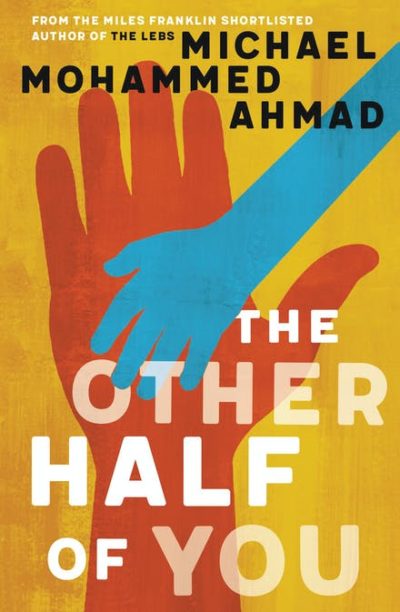
  • Michael Mohammed Ahmed’s The other half of you
  • Michelle de Kretser’s Scary monsters (Lisa’s review)
  • Jennifer Down’s Bodies of light 
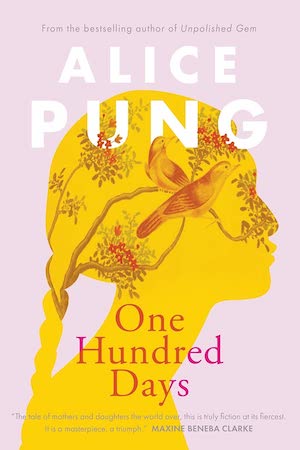
  • Alice Pung’s One hundred days (kimbofo’s review)
  • Michael Winkler’s Grimmish

And the winner is: Jennifer Down’s Bodies of light

Each of the shortlisted writers received $5000 from the Copyright Agency’s Cultural Fund, with the winner receiving $60,000 prize. This year’s judges comprise, as always, continuing judges and new ones: Richard Neville (State Library of NSW), critics Bernadette Brennan and James Ley (both also on last year’s panel), and new members, scholar Mridula Nath Chakraborty, and writer and editor Elfie Shiosaki. 

So, more on the winner …

The book was published by Text Publishing, and in their email announcing the winner they shared the thoughts of Michael Heyward, Text’s publisher:

Bodies of Light  is a transformative novel that gives epic scope to the life of a single soul. To read it is to be immersed in it. All of us at Text are thrilled at the news of Jennifer Down’s Miles Franklin win, and offer her our heartfelt congratulations.’

And of senior editor Alaina Gougoulis:

‘What an incredible recognition of Jennifer Down and all she has achieved with Bodies of Light. The abundant talent on display in her debut novel, Our Magic Hour, has been fully realised in this book, an intimate story of one life told on an epic scale: heartbreaking, and yet brimming with hope and beauty. That she is still so early in her career should fill us with optimism about the future of Australian writing. I am beyond thrilled for her, as her editor and as her friend. Warmest congratulations to Jenn, from all at Text.’

The announcement has already been reported by the usual sources, like the ABC, The Guardian, The Conversation, and so on. Canberra’s Jen Webb wrote The Conversation’s article. As she says, Down already has some runs on the board: she won the Sydney Morning Herald Young Novelist of the Year award for her debut novel, Our magic hour in 2017, and again in 2018 for her short story collection Pulse points.

Webb shares that the judges commended the book as “a novel of affirmation, resilience and survival, told through an astonishing voice that reinvents itself from six to 60”, and she describes it herself as follows:

Under interrogation-level lighting, it confronts the institutional “care” offered to the most vulnerable of people: little children, labile adolescents, and traumatised youth. Any society that routinely fails to provide children with the care they need to grow into secure adulthood is a society that needs a critical light shone on it. In the most lyrical, gentle language, this is precisely what Bodies of light does.

It’s a book that interests me. Indeed, Down has interested me since Pulse points appeared (and for which there is a guest post on my blog).

(BTW: In last year’s winner post, I provided a link to an article by Pallavi Singhal in The Sydney Morning Herald published an article on How to win the Miles Franklin: Analysing 64 years of data. You might like to revisit that in the light of today’s win!)

Do you have any thoughts on this year’s winner?

Miles Franklin Award 2022 shortlist

I didn’t post this year’s longlist when it came out last month, and if any of you have been following the award you will know that controversy has, once again, hit it, with one of the longlisted books, John Hughes’ The dogs, being withdrawn on the grounds of plagiarism. That’s a shame for me, as it was the only one on the longlist that I had read, although I will be reading another longlisted book next month.

The shortlist

  • Michael Mohammed Ahmed’s The other half of you, is, writes The Guardian*, “the third instalment of an auto-fictional series exploring the life of a young Muslim boy in western Sydney named Bani Adam”. It follows The Lebs which was also shortlisted for the Award.
  • Michelle de Kretser’s Scary monsters (Lisa’s review, not her favourite de Kretser, and kimbofo’s, also mixed), which, the judges described, as “a witty, meticulously witnessed and boldly imaginative work that rages against racism, ageism and misogyny”. De Kretser has won the award twice before.
  • Jennifer Down’s Bodies of light which deals with the state child care system and is told, say the judges, in an “astonishing voice that reinvents itself from age six to sixty”.
  • Alice Pung’s One hundred days (kimbofo’s review) is about a pregnant 16-year-old girl who is “locked into her housing commission flat by her Philippines-born Chinese mother for 100 days before the birth”. Among other things, the judges commented on the book’s “making visible the stories of those deemed powerless”.
  • Michael Winkler’s Grimmish is the first self-published novel to be shortlisted. It was also one of Jock Serong’s recommendations in the Warm Winter Read program I recently posted about. Publishers apparently found it “wearisome” and “repellant”, but it has been praised by some writers, whom I would call bold and fearless, like Helen Garner, Murray Bail and JM Coetzee. That tells us something (perhaps!) The judges called it “a uniquely witty and original contribution to Australian literature.”

Some random observations:

  • There are only five books this year, as against last year’s six. Did they only think five were worth it, or was The dogs going to be the sixth? I guess we’ll never know.
  • It is a nicely diverse list with more than half being by, to use modern terminology, people of colour. (I hate labelling but what to do?)
  • It looks like, for want of a better word, an “edgy” list, with little of the tried-and-true in terms of style, form and content. Excellent to see.

For posterity’s sake, here was the longlist

  • Michael Mohammed Ahmed’s The other half of you
  • Larissa Behrendt’s After story
  • Michelle de Kretser’s Scary monsters
  • Jennifer Down’s Bodies of light
  • Briohny Doyle’s Echolalia
  • Max Easton’s The magpie wing
  • Joh Hughes’ The dogs (withdrawn)
  • Jennifer Mills’ The airways
  • Alice Pung’s One hundred days
  • Claire Thomas’ The performance
  • Christos Tsiolkas’ 7 1/2
  • Michael Winkler’s Grimmish

A note on The dogs

I am not going to buy into the plagiarism debate, as I can’t know what Hughes did or didn’t know he was doing. However, I would like to comment on the publisher of this book, Upswell Publishing. This is an exciting new venture by Terri-ann White who did such a wonderful job at the University of Western Australia Press for many many years. The Guardian’s report (first link above) on the issue quoted White as saying that she “stands steadfast alongside the author, despite the appropriations now evident in this text”.

However, as more examples of parts of the text being identical or similar to various other works have been identified, White has realised the situation is not as she originally felt able to support. She has made a statement on her website, that:

I have published many writers who use collage and bricolage and other approaches to weaving in other voices and materials to their own work. All of them have acknowledged their sources within the book, usually in a listing of precisely where these borrowings come from. I should have pushed John Hughes harder on his lack of the standard mode of book acknowledgements where any credits to other writers (with permissions or otherwise), and the thanks to those nearest and dearest, are held. I regret that now, as you might expect. To have provided a note in this book with attribution would have been the only way to treat it.  I now recognise this as a breach of my trust.

The point I’d like to make is that we should not let this upsetting situation affect our support of Upswell. I subscribed to their list last year, and have again this year. The books are beautifully designed, the list is wonderfully varied in content, and White has a reputable track record. She and her stable deserve to be supported and encouraged.

Now, back to the Award

The chair of the judging panel, Richard Neville, praised the shortlist for its

range of dynamic and diverse voices that address the experience of pain, intergenerational trauma and intergenerational dialogue with compassion, exceptional craft and rigorous unsentimentality.

Each of the shortlisted writers will receive $5000 from the Copyright Agency’s Cultural Fund, with the winner receiving $60,000 prize.

This year’s judges comprise, as always, continuing judges and new ones, providing I think a good mix of experience and fresh ideas: Richard Neville (State Library of NSW), critics Bernadette Brennan and James Ley (both also on last year’s panel), and new members, scholar Mridula Nath Chakraborty, and writer and editor Elfie Shiosaki.

The winner will be announced on 20 July.

What do you think of the shortlist?

* All other quotes in the Shortlist section come from the same The Guardian article.

Monday musings on Australian literature: Miles Franklin Award, the fourth decade (1988-1997)

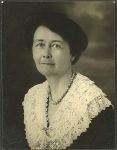
Miles Franklin
Miles Franklin, c. 1940s (Presume Public Domain, via Wikipedia)

This is my fourth post in a little sub-series looking at the Miles Franklin Award by decade.

As with the first three, written back in 2016, I don’t plan to list all the decade’s winners, as you can find them on the Award’s official site. Instead, I’ll share some interesting snippets, inspired by my Trove meanders. This mostly involved The Canberra Times and The Australian Jewish News, because this period is still within copyright, meaning the NLA can only digitise newspapers which have given them permission to do so.

Men in the ascendant (again)

In my third decade post (linked below), I noted the increase in awards made to women. Just five awards were won by women in the first two decades combined, but in the third decade, four of the nine awards went to women. This reflected, I suggested, the flowering of writing by Australian women in the late 1970s and 1980s. However, it wasn’t to last. In the fourth decade, eight of the nine awards made went to men – and the woman who did win generated one of the Award’s biggest controversies (see below). Without spoiling my fifth decade post, this “bias” towards men continued for another ten years or more, which inspired, among other things, the establishment of the Stella Award in 2012 … but, I’m jumping ahead. Let’s stay in the nineties for the moment.

The skewing towards men, not surprisingly, carried through to the shortlists, with 31 men shortlisted over the decade to 18 women. However, when it comes to multiple listings, four writers, two men and two women, were shortlisted three times: Rodney Hall and David Malouf, Thea Astley and Janette Turner Hospital (who has never won it).

The men who won included previous winners Peter Carey, Tim Winton, and Rodney Hall. The others were Tom Flood, David Malouf, Alex Miller, Christopher Koch and David Foster. I admit that I didn’t know Tom Flood, but Dorothy Hewett was his mother. His winning book, Oceana Fine, was his only novel.

There wasn’t much discussion about the skewing back then, but I did love Celal Bayari, who wrote in the the University of New South Wales’ Tharunka paper about Elizabeth Jolley missing out in 1989:

Jolley good book (ha ha)

JOLLEY’S latest has just been omitted from the shortlist for the Miles Franklin Award. That is a real shame because The Sugarmother is a great book.

Controversy (1)

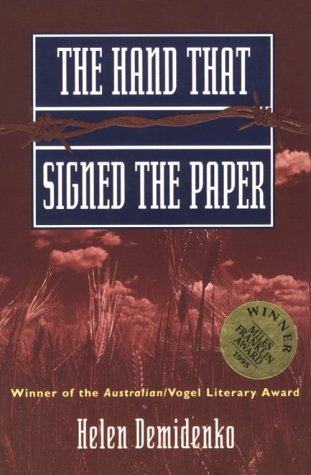
The controversy concerned Helen Demidenko’s novel, The hand that signed the paper, which won in 1995. Bill (The Australian Legend) summarised the controversy beautifully in his post on the book, so why reinvent the wheel? Bill wrote:

For the benefit of non-Australians, the controversy surrounded the awarding of the 1995 Miles Franklin Award to Helen Demidenko for The Hand that Signed the Paper, the story of a Ukrainian family collaborating with the Nazis during the Holocaust. The granting of the Award to an anti-semitic work was justified on the grounds that Demidenko was telling the story of her people, until Demidenko, who would attend speaking engagements dressed in the costume of a Ukrainian peasant girl, was finally unmasked as Helen Darville, a University of Queensland student of entirely English background.

This was a multi-pronged controversy – and Bill explores some of the prongs in his excellent post. There were criticisms of the work itself: it was uneven and poorly written, it was racist/anti-semitic, it distorted history. There were criticisms of the author’s deception regarding her background, with some saying that the only reason they accepted this unpleasant book’s win was because the author was speaking for “her” people. (This feeds into current discussions about who can write what.) There was discussion about literary criticism – about whether it’s all about the text, or whether other considerations, like the author’s background, are relevant to assessing a work. There were discussions about the line between fact and fiction, particularly since Demidenko/Darville herself called her work “faction”. There were criticisms of plagiarism, which were subsequently overturned. There were suggestions that the author, around 24 at the time, was a disturbed young woman to be pitied. And, there were criticisms of the judges – of their decision in the first place, their refusal to admit they were wrong, and their not engaging in discussion. The novel was apparently shortlisted for the Victorian Premier’s Literary Award, and then quietly un-shortlisted before the announcement. The controversy raged for months.

The book, by the way, had previously won the 1993 The Australian/Vogel LiteraryAward for unpublished manuscript, and in 1995 it also won the ALS Gold Medal.

The Canberra Times‘ literary editor at the time, Robert Hefner, suggested that the book “could well prove to be one of the most divisive books in Australian history”. Not surprisingly, it sold well. By August 1995, according to her publisher, it had sold 25,000 copies, and they were preparing to republish it under the author’s real name.

Controversy (2)

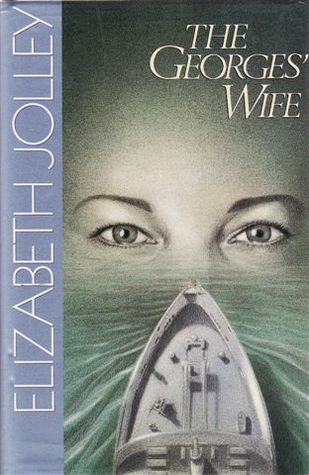
Lest you think, however, that this was the only Miles Franklin Award controversy of the decade, think again. The ongoing issue of the “Australian content” requirement raised its head during the decade too. In 1994, when Rodney Hall won for The grisly wife, The Canberra Times reports that, “The Georges’ Wife [Elizabeth Jolley], and Frank Moorhouse’s Grand Days, were disqualified because the judges decided they did not have enough Australian content”.

No award (again)

In both the second and third decades, there was a year in which no award was made. It happened again this decade but for a purely administrative reason, to do with changing the award’s timing from year of publication to year of announcement!

The value of awards

Given I’ve posted on the value of awards recently, I’ll conclude by sharing a couple of points that came out of this little piece of research.

David Malouf said, on winning in 1991 with The great world,

“An award like this is a bit like the Archibald to painting. Both are extremely well known and important … People who don’t necessarily buy a book when it first comes out are interested to see what books turn up on the short list and which book wins. That kind of interest is always very important.”

He also admits that winning awards offers reassurance:

“Writers are very diffident, basically. They’re always doubtful of themselves and it’s always good when you are offered approval for what you have done”

Similarly, Alex Miller, who won in 1993 for The ancestor game said:

“I decided it was terrific to be short-listed and that was that, and I just got on with my work, and then when I was told last Wednesday I really couldn’t believe it … It’s enormous validation and acknowledgment, for sure.

It’s a bit of a watershed, isn’t it, winning something like Miles Franklin.”

And Rodney Hall, winning in 1994 with The grisly wife, said “this has picked me up”.

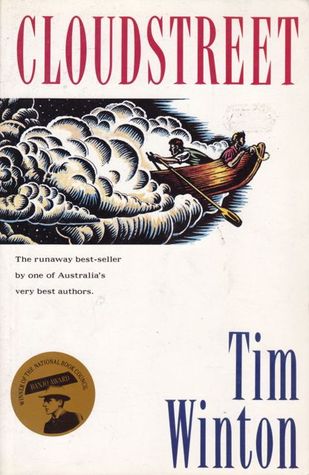
I mentioned above sales for Demidenko/Darville’s book, but that had the “benefit” of controversy. Tim Winton’s 1992-winning Cloudstreet experienced a boost in sales. The Canberra Times reported less than two months after Winton’s win:

… Tim Winton returned recently from a 30-day promotional tour of the United States, where Graywolf’s beautiful hardback edition of his Miles Franklin Award-winning novel Cloudstreet has already sold more than 12,000 copies. In Australia, where it was published by McPhee Gribble and Penguin, sales have topped 60,000.

Let’s leave the fourth decade there!

Past posts in the series