ALS Gold Medal for 2024 announced

It is some time since I wrote about the ALS Gold Medal. This is not because I don’t think it’s interesting or worthwhile, but because there are so many awards, and I just don’t have the time to write up announcements for every award made each year. So, I pick and choose a bit, and this year’s ALS Gold Medal winner is – well, you’ll see … but first, a quick recap on the award.

As I wrote in my first post on the medal, it was established in 1928 by the Australian Literary Society (ALS) – hence its name – but this society was incorporated in 1982 into the Association for the Study of Australian Literature (ASAL), and it is this organisation that now makes the award. The Gold Medal is awarded to “an outstanding literary work in the preceding calendar year”. Note that it is for a “literary work”, which means it can be fiction, poetry, memoir, biography, and so on.  It is Australia’s longest-standing literary award, but there is no money attached to it, just a gold medal. This is a shame for the writers, but it is nonetheless an award that is well worth having.

The shortlist for this year’s award was:

  • Jordie Albiston, Frank (documentary poetry)
  • Stuart Barnes, Like to the lark (poetry)
  • Katherine Brabon, Body friend (novel)
  • J. M. Coetzee, The Pole and other stories (short story collection)
  • Omar Sakr, Non-essential work (poetry)
  • Sara M. Saleh, The flirtation of girls/Ghazal el-Banat (poetry)
  • Alexis Wright, Praiseworthy (novel)

And the winner, announced on July 8, is
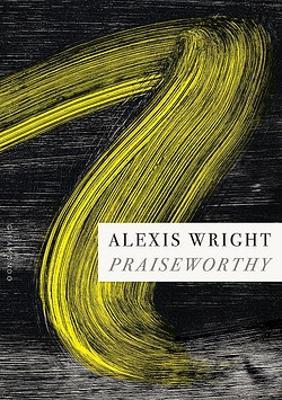
Alexis Wright’s Praiseworthy 

How apposite for Wright’s win to be announced in NAIDOC Week. This is the third time that Wright has won the medal. Books+Publishing, announcing this award, says that over the life of the award only two other writers have won it three times, and they are Patrick White and David Malouf. Those of you who read my Monday Musings post this week may remember that I observed that Alexis Wright and Melissa Lucashenko are the only writers who have won the Stella Prize three times. This woman, this First Nations writer, really is something, and I need to catch up my reading of her.

For the record, Praiseworthy has, so far, won the ALS Gold Medal (2024), the Stella Prize (2024), the Queensland Literary Award for fiction (2023), and the James Tait Black Memorial Prize (2023). It has also been shortlisted for the Miles Franklin Literary Award (2024).

This year’s judges for the medal were Elizabeth McMahon (academic and literary critic), Ali Alizadeh (literary writer and theorist), and Ann Vickery (poet and feminist scholar). According to Books+Publishing, the judges described Praiseworthy as “a novel for and of our time… hilarious, furious, poetical and painful”.

(BTW I haven’t read any of this year’s shortlist, but I have read two of last year’s including the winner, Debra Dank’s We come with this place).
Two under-the-radar Australian literary awards announced

A couple of lesser known – but significant to me – literary awards were announced over the last week or so, one national and the other local. I’d like to tell you about them!

ALS Gold Medal 2013

The ALS Gold Medal is awarded by the Association for the Study of Australian Literature. It doesn’t usually get a lot of publicity, partly I suspect because it doesn’t carry a large purse but, rather, well, a gold medal! It is ” awarded annually for an outstanding literary work in the preceding calendar year”. Last year it was won by Gillian MearsFoal’s bread (my review), which also won the Prime Minister’s Literary Award (for Fiction). This year the medal was won by Michelle de Kretser’s Questions of travel, which also won, in May, the Miles Franklin Award. It’s my next read – and I can’t wait. The judges said:

Questions of Travel embarks on an exploration of the present and emerging conditions of late modernity on a scale that could only be successfully achieved by a highly accomplished writer. Through her two central characters, Australian woman, Laura, and Sri Lankan man, Ravi, De Kretser creates an expansive fictional space that both traverses continents while never losing sight of the separateness of individual lives defined by their especial relationships to place and culture, new and old. (AustLit News)

It was selected from a shortlist of five, which included books that haven’t been appearing on many other shortlists: Jessie Cole’s Darkness on the Edge of Town, Robert Drewe‘s Montebello, Christopher Koch‘s Lost Voices and P.A. O’Reilly’s The Fine Colour of Rust.

For reviews of these books, please check out Lisa at ANZLitLovers who’s already read them all!

ACT Poetry Prize 2013

I don’t often report on poetry prizes, and particularly not on local ones, but given my focus on Canberra’s Centenary this year, I figured why not. And, anyhow, I like the winning and shortlisted poems. There were apparently 128 entries, and they were judged by a blind panel of local poets, two male, one female.

The winning poem (and you can read it and the two shortlisted ones online) is “Inside” by Lesley Lebkowicz, whom I only really discovered this year through her short story about her immigrant parents,”The good shoppers”, in The invisible thread. “Inside” is about that invisible disease that afflicts women, osteoporosis, about living with something “inside”. Interestingly, this is also what “The good shoppers” is about, though what the characters are living with inside in that story is their experience of the Holocaust. “Inside” is a short poem, just 15 lines. Its language is accessible and evocative

Inside her, bone sheared off from itself like
limestone in a private landslide – and she fell.

But just when you think that’s all there is, you get the ending. It adds another layer to the story. Read it (using the link in the first line of this para).

The two shortlisted poems are also by women – Libby Porter (“Stabat Mater”, a bittersweet poem about loss, framed through perspectives on age) and Elizabeth Lawson (“Emily Kngwarreye”, a wry poem about indigenous versus non-indigenous attitudes to art). You can read them too at the link.

Canberra is, I think, blessed to have such excellent poets.

ALS Gold Medal, 2009 (announced 2010)

Since many book bloggers are posting the Booker longlist, I don’t think I need to do so here. I don’t expect to read many of them, not so much due to a lack of interest as to the fact that I’ve a pretty full reading schedule in front of me without adding these to it! I have read and reviewed Christos Tsiolkas’s The slap, and expect to read in the next few months Peter Carey’s Parrot and Olivier in America and David Mitchell’s The Thousand Autumns of Jacob de Zoet. There are a couple of others I would like to read, but time will probably defeat me.

David Malouf Ransom
UK edition cover (Used by permission of the Random House Group)

However, I will instead announce – because it gets such little publicity – that David Malouf has won this year’s ALS Gold Medal for Literature with his novel, Ransom. As I wrote in my earlier post on this award, it does not come with a monetary prize and so tends to be overlooked by the media. Nonetheless it is an award well worthwhile watching (how’s that for some alliteration!) because its winners do tend to be among our more notable authors and books.

The other awards made by the Association for the Study of Australian Literature for the year are:

Congratulations to David Malouf – and the rest of the awardees. What a shame there hasn’t been a little more fanfare…

ALS Gold Medal (and 2009 award shortlist)

My recent review of Herz Bergner’s Between sky and sea reminded me of a rather ignored Australian literary award, the ALS Gold Medal, that I’d come across a few years ago but have let slip beneath my radar. It is time, methinks, to bring it to the fore. It was initially awarded by the Australian Literary Society (ALS) – hence its name – but this society was incorporated, in 1982, into the Association for the Study of Australian Literature (ASAL) and they now make the award. I suspect it does not receive the exposure that other awards do because there is no money attached, just – obviously – a gold medal, and oh, the glory, though perhaps there’s not much glory if no-one knows about it! There is a judging panel convened by an ASAL member from a state different to that of the previous year’s convenor and comprising other ASAL members.

The Gold Medal, just one of several awards they make, is awarded to “an outstanding literary work in the preceding calendar year”. They identify the award by the year for which the award is made and not in which it is announced and so last year’s winner, Christos Tsiolkas’ The slap, was announced in 2009, as the 2008 winner. This year’s award will be announced in July after ASAL’s annual conference, but the shortlist is out. It is:

While I haven’t read all of these, they are by respected writers who have won and/or been shortlisted for other significant Australian awards. It is therefore an award worth watching, if only because it represents another contribution to our assessment of Australian literature. I will keep you posted…