Angus Gaunt, Anna (#BookReview)

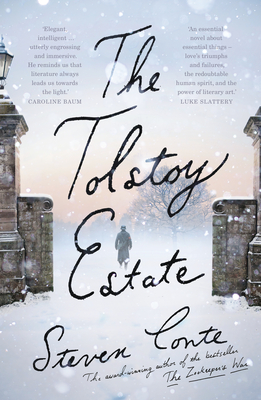
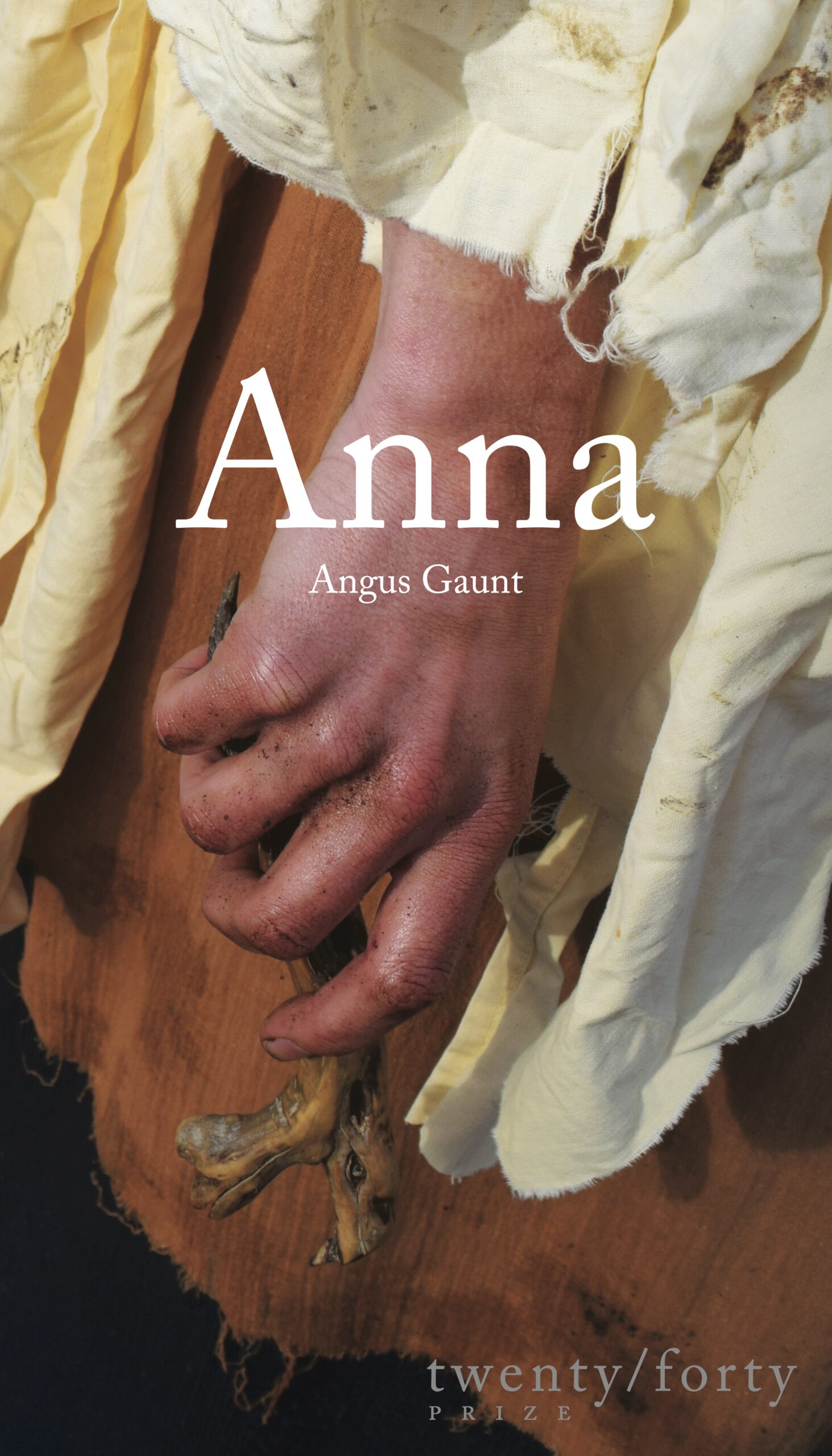
Last month, I posted on the winners of the 2025 Finlay Lloyd 20/40 Publishing Prize, of which Angus Gaunt’s Anna was one. I am thrilled with this prize, not only because I love the novella form, but because of the variety of stories we are seeing. So far the fiction winners have been an historical novel from Kim Kelly, a contemporary coming-of-age novel from Rebecca Burton, and an audacious “what if” story from PS Cottier and NG Hartland. Three very different books, and now Anna makes it four.

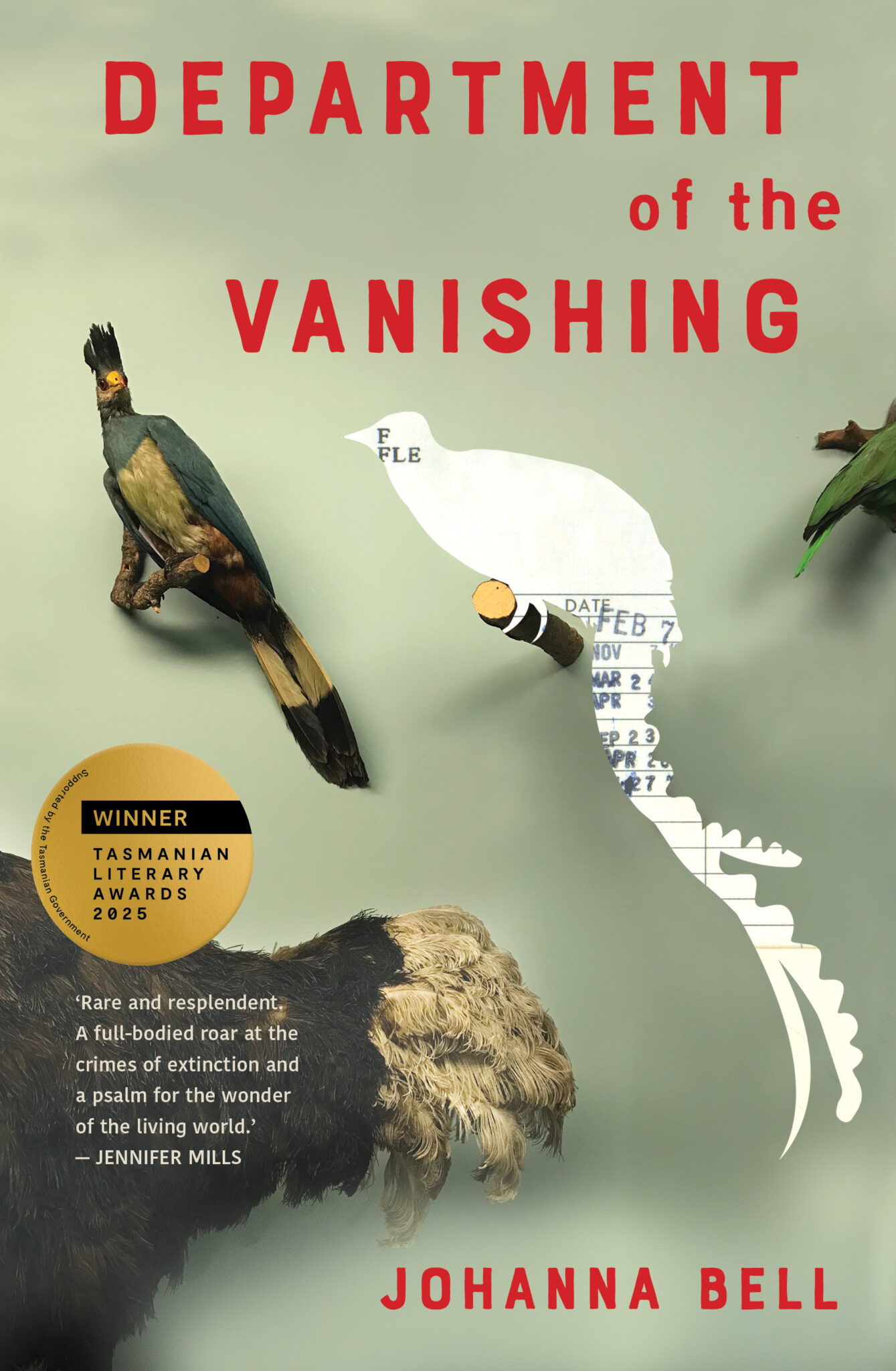
When I started reading Anna, I thought I was heading into a dystopian novel. It is told third person from Anna’s perspective, and starts with her walking in the woods. A young man is following her. The woods are not identified, and neither is the young man, but she recognises him as a guard from the place she’s just left. Through their initial interaction, we learn that “the war is over” and the gates had been opened. Therefore, she firmly implies, he has no jurisdiction over her.

Anna, we discover as her journey continues, is about 15 years old, and had been taken to a labour camp with her family about three years ago. Her parents had died but she’s hoping her remaining siblings are ahead of her, safe in the exodus she’d missed. We know nothing about the woods – but they do not sound Australian – nor do we know the time setting. It is cold. There are some generic animals and plants – deer, hares, mushrooms, berries. The story focuses on Anna’s thought processes and her survival. There is almost nothing about the sociopolitical situation that got her there. We do know that Anna and the guard speak different languages, which suggests an invasion or some sort of oppression of minorities, but Gaunt does not go there. The notes I made during my reading, include this: “Timeless, placeless, non-political, means not dystopian? More allegory?”

The judges don’t call it either of these, but on “why this book is different” they say:

Winter is only beginning to thaw in a remote forest as Anna treks for her survival, accompanied by someone she cannot trust. With distilled clarity, this short novel carries the reader on a journey from victimhood to self-possession.

So, it is about survival, or, more precisely, about the inner resources you need to develop to overcome a dire situation.

Anna is a moving and absorbing read. Gaunt quickly engages our sympathy for his protagonist, young and defenceless in the woods. The language in the first two paragraphs sets up uncertainty. It starts:

Anna had already walked further than she meant to, but did not want to go back, not yet. She was basking in the sun … also in the silence. She had not done something like this for a long time … (p. 9)

Then she stops and looks up, where she sees “a large predatory bird … floating on secret air currents, delicate wing tips spread”. “Predatory” but “delicate”. Should we be worried? Then she sees the young guard, later identified as Yevgeny. He’s very young, uncertain, and in a show of bravado he tries to shoot the bird, but fails. He’s never shot anything before. And so the narrative and its main characters are established. Anna is alert, sensitive, intelligent and has some nous and wisdom about her. The guard, also young, lacks confidence, experience and nous, and is confused about his role as a man, a soldier, a human. This makes him potentially dangerous but also vulnerable. We – like Anna – are on the watch for which way he might go.

And so the novel progresses as this uneasy, wary-of-each-other pair journey through the woods, looking for the railroad and its promise of civilisation. Early on, during a brief time when she and Yevgeny are not together and she has returned to the camp, Anna meets a dying man who gives her his last food. Then later, together, they come across a cottage containing a barely surviving couple.

This brings another literary form to mind, the journey narrative, the search for home, a new one or old one, and – perhaps – for self. In journey narratives, physical and spiritual or emotional challenges are faced, and people are met. The journeyer must rely on inner resources to overcome the challenges, including assessing whether the people met are to be trusted or not. This is what we watch Anna do. We are privy to her thoughts as she goes, as she draws together past knowledge and present experience, and we gain confidence in her ability to make good decisions. Nearly half way through the story, her mind drifts to the schoolroom. It is comforting, but she stops herself,

recognising that she was attracted by the emotion of it rather than its practical application. There was not room for emotion. She was glad of this thought. Feelings and emotion could only cloud the mind, waste precious resources. All resources were precious. Her mind was clear now. She had a choice to make and she made one. (p. 56)

Of course it’s not a straight line, and Anna, like any journeyer under stress, slips back several times before getting a grip once more.

Anna is beautiful to read, from the first sentence. The language is tight but expressive. The necessary tension is off-set by moments of tenderness and hope, not to mention some subtle foreshadowing. And the characterisation is warm and empathetic.

I concluded my post on last year’s winner, The thirty-one legs of Vladimir Putin, that it was an audacious “what if” story. Anna is also audacious, in a different way. It calls on the tropes of established forms, like allegory and the journey narrative, but makes them into something new, something that confronts issues like trust and power in a way that feels both modern and timeless.

Read for Novellas in November.

Angus Gaunt
Anna
Braidwood: Finlay Lloyd, 2025
110pp.
ISBN: 9780645927047

Review copy courtesy Finlay Lloyd.

Canberra Writers Festival 2025: 1, ACT Book of the Year

A preamble

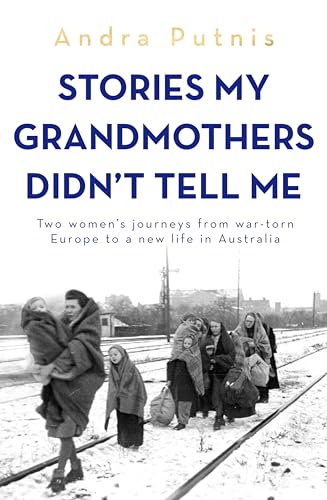
The Canberra Writers Festival is back in 2025, with a new Artistic Director, author Andra Putnis whose biography-memoir, Stories my grandmothers didn’t tell me I reviewed earlier this year. The Festival’s theme continues to be “Power Politics Passion”, albeit not as dominating in promotion as it used to be.

The ACT Book of the Year

The ACT Book of the Year is broad-based award, meaning that it encompasses fiction, nonfiction, plays, and poetry. It is presented by the ACT Government, and was first made in 1993. I have written on this award in a Monday Musings, so won’t say more here!

The winner announcement has been made in various ways over the years. In 2023, for example, I attended the presentation at Woden Public Library. This year it was announced during the first full day of the Canberra Writers Festival, which feels fitting.

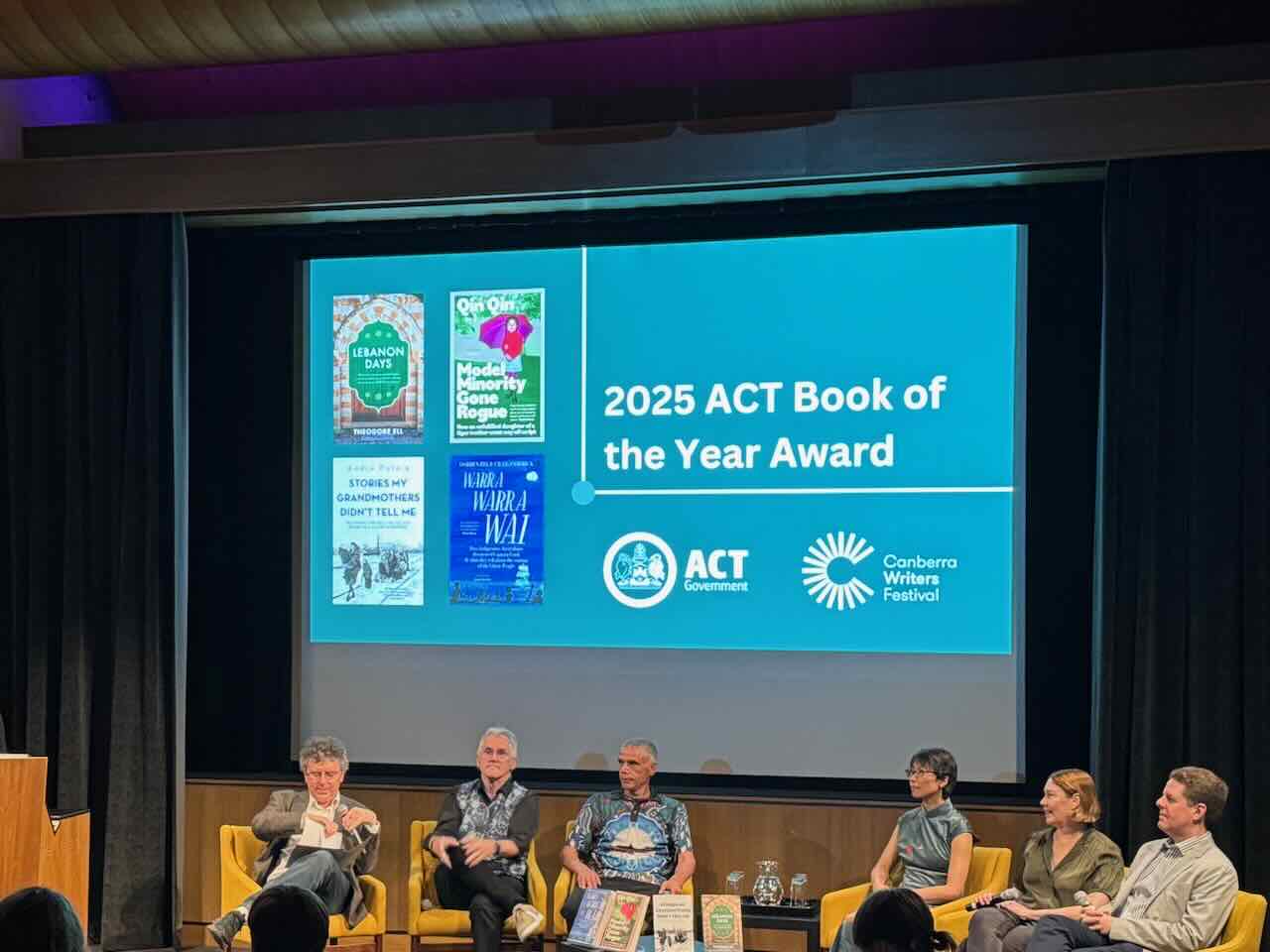
But first, there was the shortlist, which was announced on 7 September:

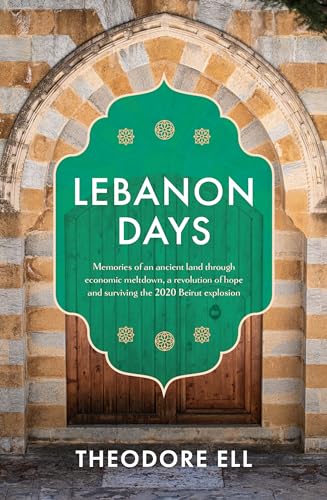
  • Theodore Ell, Lebanon days: memoir, based on Ell’s experience when he accompanied his wife on her diplomatic posting to Lebanon and witnessed a country on the brink of collapse
  • Andra Putnis, Stories my grandmothers didn’t tell me (my review): biography/memoir about the author’s two Latvian grandmothers, their experiences during the war, their subsequent emigration to Australia and the family they built here.
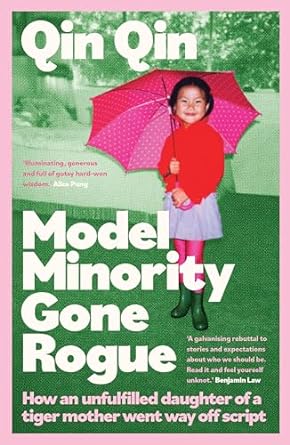
  • Qin Qin, Model minority gone rogue: memoir, by a young high-achieving Asian-Australian woman and her break from suffocating expectations to find the life she wants to lead.
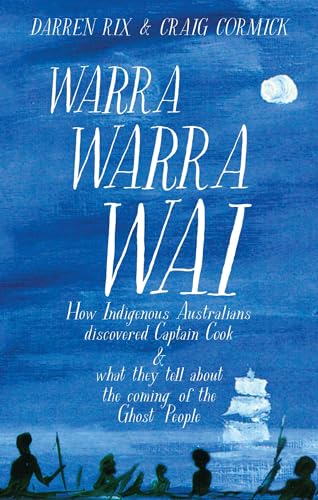
  • Darren Rix & Craig Cormick, Warra warra wai: history, focusing on First Nations people’s experience of James Cook’s exploration of the east coast of Australia in 1770, in order to ensure the complete story is told.

All shortlisted books this year, are nonfiction, three being memoirs.

The panel

The event comprised two parts – a panel discussion featuring the shortlisted authors followed by the winner announcement.

Cover

So, the panel. It was moderated delightfully by science fiction writer, Daniel O’Malley. His questions were perfect for the shortlisted books, and generated some enlightening responses. Unfortunately – or fortunately, for those of you who know how longwinded I can be – I had some technological challenges so didn’t capture some of the thoughtful ideas and experiences shared with us. Hmm, this has still ended up being long!

On their 30-second pitch for their books

Darren said it all when said he would tell people Warra Warra Wai was “a great read”. This is true, I think, for each of the books.

On whether the book they produced was the book they started out writing

Darren and Craig started travelling up the east coast of Australia gathering stories, wanting to contribute to truthtelling, to expose the history of dispossession and share the story of rebirth, to “record history in the right manner”, but it ended up being a much bigger story. Qin Qin said she always wanted to be a writer, but that her story started to take form and gel during COVID when Chinese people were being demonised. Andra was in Darwin and can pinpoint the time when she decided to write her story, when she realised that what she wanted to write was how her family came to Australia and become the people they were (are). Theodore probably had the most circuitous route. His book started as an essay that was more successful than he expected. (In fact, my friend, the writer Sarah St Vincent Welch, told me, that this essay, “Façades of Lebanon”, won the 2021 Calibre Essay Prize). He realised he had more to tell. He could have writte more essays, choosing a theme at a time, but he realised that Australians know little about Lebanon – its history and its beauty – so a book it was.

On what they did and didn’t include

Theodore provided the most intriguing answer. His book is written in five parts, and he wrote it backwards, that is, he started with part 5 which covered the most recent memories. Then he worked on part 4, and he knew what was needed to set up part 5! Ingenious. Andra knew she wanted to include the arc of her grandmothers’ lives. What she cut was a lot about herself! She realised she only needed enough about herself to sustain interest in the grandmothers. Qin Qin spoke like the Type A person she admits to being. She kept a diary as a child, and this provided some content, but her publisher and editor helped a lot. When she submitted her draft, hoping it was pretty much done, she was told she could write good dialogue and that it read like something written to get an HD! That brought a laugh from the audience. However, with editorial guidance, she eventually produced something that broke open her heart. Darren and Craig talked about their process, which included Craig doing the archival research, and both interviewing First Nations people up the coast. Darren said they interviewed young people as well as elders, to get a full picture.

On major challenges or any resistance they experienced

Qin Qin described her writing as “one continuous showdown” involving her constantly deprogramming herself from the limiting pressures and expectations she felt as the eldest daughter. She said anyone writing about race will get pushback, and at one stage she contacted the police about emails she was getting. Andra said she had been very afraid about how her story would be perceived, by the family and the Latvian community. The fear was so great she nearly gave up. But the response has been good, and the family has responded with such grace. Theodore did not face any real opposition or obstacles but there were ethical challenges. He’s not Lebanese, no one in his family is Lebanese, so he has no true stake in what happens to Lebanon. He wanted to avoid ventriloquising Lebanese points of view. The ethical core of the book is what people told him, in their words, but to protect their privacy he gave them pseudonyms. Also, as his wife is a diplomat – the reason he was there – he had to be careful about doing anything “unbecoming”. Even the simplest thing can be spun the wrong way, so he had a delicate path to tread. Fortunately DFAT was happy with the manuscript. Craig said the commonality between all the shortlisted books is that they are open to pushback, but books threaded with a respectful element of truth are protected. He and Darren said that some communities rejected their approach, but that with many, once they sat down and explained what they were doing – that they weren’t from “the government” or “a university” – they were accepted. This was then passed on, like traditional message sticks, to other communities. They explained they wanted to produce a woven black and white history. Also, many communities had not been asked these sorts of questions by an Aboriginal man.

On where they write and how (a writer’s question)

Andra can’t write just anywhere, but needs a place to base herself. She started with vignettes, like squares in a patchwork, which she then assembled. She was helped by the fact that Nana Aline had already started reflecting on her life. As for Qin Qin, it’s a lovely thing when, as you sit through panels like this, authors reveal themselves as the real – and individual – people they are. So, her response was not surprising. She said the writing process was an ongoing journey of becoming more aware of herself, but she finds it easier to let herself, rather than others, down. So, she needs deadlines, which her publisher gave her regularly. She then wrote anywhere, anytime, to meet those deadlines. She works best when there’s accountability. Darren and Craig spent lots of time together in planes and cars, during which they talked about what they were doing, their structure, the way they would incorporate different timelines (like dreamtime and white time). Once they got the structure, the writing was easy. Makes sense to me. Theodore said he must have a room. He has a room at home and one at the ANU. The latter is where he does the hard yards, the welding of the words.

On what was most satisfying

For Darren it was travelling country, particularly those he hadn’t been to before. Craig added that communities wanted their own stories in a form they could read, and their book has provided this. Qin Qin said that with each rewrite she felt she shed layers, she felt weight lifting. Her book is a spiritual memoir, one about deprogramming herself from living up to expectation. She was glad to find she had her own voice. Andra said getting to the end was satisfying, but she also related to the idea of shedding layers. What moved her most, however, was when Nana Aline told her that she had felt “seen” by her granddaughter. Theodore had two. One was that while much of his story is dark it also contains fun, because Lebanese people are witty and satirical. These scenes and those of real friendship mean a lot to him. Also, he liked, during revision, how much spontaneously came back in memory, enabling him to relive the many stunningly beautiful places.

On their next project

Craig and Darren are working on two books, which they call “batmen” (about the Aboriginal cricket tour of England in 1868) and “Batman” (about Treaty, involving Victoria, Tasmania and New South Wales)! Qin Qin’s sole (deprogramming) journey is to have no goals, so she will see what comes up. Andra can’t wait to write something else but didn’t say whether she had a project, while Theodore’s main longterm project is a biography of Les Murray.

The announcement

Michael Petterson, ACT Government’s Minister for Business, Arts and Creative Industries, made the announcement, including sharing comments from the judges, but this is long enough. He did say, however, that there was a record number of 56 books entered for this year’s award.

The winning book was Darren Rix and Craig Cormick’s Warra Warra Wai, which the judges praised for providing a “unique lens on history, land and identity”. Theodore Ell’s Lebanese days was highly commended. I hope the ACT Government will share the judges comments on their website.

At the end of the announcement Craig said that he and Darren had decided that, should they win, they would pronounce it a four-way tie, which they did, and handed each author a medal to document it! The audience loved this spirit.

The session ended with afternoon tea served in the National Library foyer. A lovely treat for us who attended this free event!

Canberra Writers Festival, 2025
The ACT Book of the Year
Friday 24 October 2025, 2:30-4:30pm

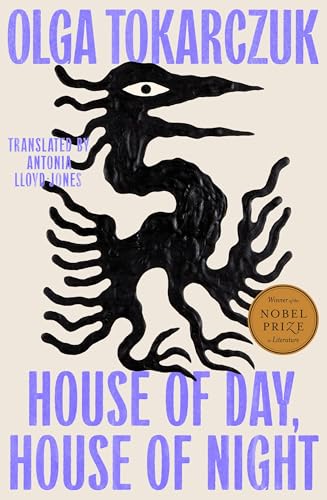
Olga Tokarczuk, House of day, house of night (#BookReview)

About 30 pages into Olga Tokarczuk’s novel, House of day, house of night, I turned to Mr Gums and said, I have no idea what I am reading, which is unusual for me. I certainly don’t pretend to understand everything I read, but I can usually sense a book’s direction. However, something about this one was throwing me, so …

I had a quick look at Wikipedia, and found this “synopsis”:

Although nominally a novel, House of Day, House of Night is rather a patchwork of loosely connected disparate stories, sketches, and essays about life past and present in … a Polish village in the Sudetes near the Polish-Czech border. While some have labeled the novel Tokarczuk’s most “difficult” piece, at least for those unfamiliar with Central European history, it was her first book to be published in English. [Accessed: 1 October 2025]

That made me feel better! I am more than comfortable with “loosely connected disparate stories” but am only generally-versed in Central European history. So, I decided to relax and go with the flow. From that point on, I started to enjoy my reading more, but it was slow going, because the “disparate stories” demand attention. It’s not a book you whizz through for story, but one you savour for thoughts and ideas, and for the connections you find along the way.

Tokarczuk calls it, in fact, a “constellation novel”, which I understand builds on thinking by the German critic and philosopher, Walter Benjamin (1892-1940). According to academic Louis Klee, who has written on “the constellational novel”, “these novels are recognizable by the presence of a first-person narrator committed to drawing affinities and making connections among disparate things”. They can be non-linear and incorporate various forms of writing from essayistic to lyrical to fragmentary, and encourage readers to find their own connections (like finding patterns in a constellation).

This well encapsulates House of day, house of night. It comprises numerous individually titled chapters (or sections or parts), some just a few paragraphs long, and others several pages. At first it felt disjointed, but it wasn’t long before an underlying structure started to reveal itself, one held together by a first-person narrator, a woman who had come to live in a small Polish village with her partner R – just like Tokarczuk and her husband did – three years before the novel opens. She tells of life in the village, and particularly of the relationship she develops with her neighbour, a somewhat mysterious old woman named Marta, who embodies a wisdom that she sometimes shares but other times must be gleaned from what she doesn’t say.

Interspersed with our narrator’s story, are other stories – some real, some magical, some past, some present – about the region and people in it. There’s a gender-fluid monk named Paschalis who is writing the life of the female saint Kummernis. There’s the unnamed couple who think they have it all, until each is visited by the same lover, a female for “he” and a male for “she”. There’s a religious community called the Cutlers who make knives and believe that “the soul is a knife stabbed into the body, which forces it to undergo the incessant pain that we call life”. There’s the wonderfully named Ergo Sum who had tasted human flesh in frozen Siberia, where he’d been deported in 1943, and believes he is turning into a werewolf. And so on. Some of these stories continue, for several chapters, woven around our narrator’s story, while others stand alone. Some are about people who think they have life worked out, while in other stories, the people don’t have a clue.

There’s more though, because scattered through the stories are ruminations on disparate things like dahlias, nails, comets and grass allergies. And threading through it all are various motifs, usually providing segues between chapters, encouraging us to see links and to ponder their meaning for us. These motifs include dreams, names, time, death, borders, mushrooms (potentially deadly), and knives. The more you read, the more connections you see between them and the stories. Many are philosophically-based, but are not hard to understand. In other words, the challenge is not in understanding, but in how we, individually, process the links we see. You might have already noticed some in my examples above, such as the idea of identity. Even the mysterious Marta, who disappears every winter, is unsettling. Who is she really?

“people are woefully similar”

This is the sort of book you would expect of a Nobel prizewinner. The writing is simple but expressive, and is accompanied by a rich, dark, and often ironic humour. We have border guards who don’t want to deal with a dead body so they quietly shove it to the other side of the border. And Leo the clairvoyant who says “Thank God people have the capacity for disbelief — it is a truly bountiful gift from God”. That made me splutter.

Underpinning all this – the thing that gives the book its heft – is a quiet but somewhat resigned wisdom. It interrogates some big questions – our willingness (or not) to see what is happening in front of us, our relationship to place, how we comprehend time, and who we are. These are explored through universal binaries, not only the night-and-day contained in the title, but life and death, change and stasis, ripening and decay. How do we live with – and balance – these parts of ourselves, of life?

But, House of day, house of night is also set in a particular place and time, southwest Poland, just post World War 2. This area, explains the Translator in her note, was part of the German Reich until 1945, when the Allies agreed to move Poland’s borders west. Many Poles left their old lands of the east (now part of the USSR), and resettled in this once German area in the west, occupying homes left by the evacuated Germans. This specific history is also found in the book, with Polish families hopefully, greedily, digging up German treasures, for example, and Germans sadly returning to see their old places.

House of day, house of night offers no answers, but it sure asks a lot of questions – about how, or whether, we can move forward into more humane, and hence more fulfilling lives.

This brings me to the ending. I won’t spoil it – it’s impossible in a story like this anyhow – but we close, appropriately, on the idea of constellations and finding patterns, and a hope that it is possible to find a pattern that explains it all. It is deliciously cheeky. And, on that note, I will end.

Olga Tokarczuk,
House of day, house of night
Translated from the Polish by Antonia Lloyd-Jones
Melbourne: Text publishing, 2025 (Orig. pub. 1998; Eng trans. 2002)
298pp.
ISBN: 9781923058675

Review copy courtesy Text Publishing

Finlay Lloyd 20/40 Publishing Prize 2025: Winners announced

In August I wrote a progress report on Finlay Lloyd’s 20/40 Publishing Prize, a prize in which I have special interest because I love novella-length writing and the publisher behind this prize, Finlay Lloyd.

So just a quick recap on the prize: 20/40 is a manuscript award, with the prize being publication. It is not limited to debut or young or women or any other subgroup of writers, as some manuscript awards are. However, it does have its own criteria, which is implied in its name. It is for prose writing that is between 20,000 and 40,000 words. Outside these criteria – prose and length – the submissions can be from “all genres … including hybrid forms”. The aim is to choose two winners, preferably one fiction and one non-fiction, as they did last year.

And now, the Shortlist and Winners

The shortlist, announced on Finlay Lloyd’s website, was:

  • Angus GauntAnna: a novel which “steps with deep insight into the dire circumstances of a girl who has little more than her own inner resources to deal with sustained privation and the threat of violence”.
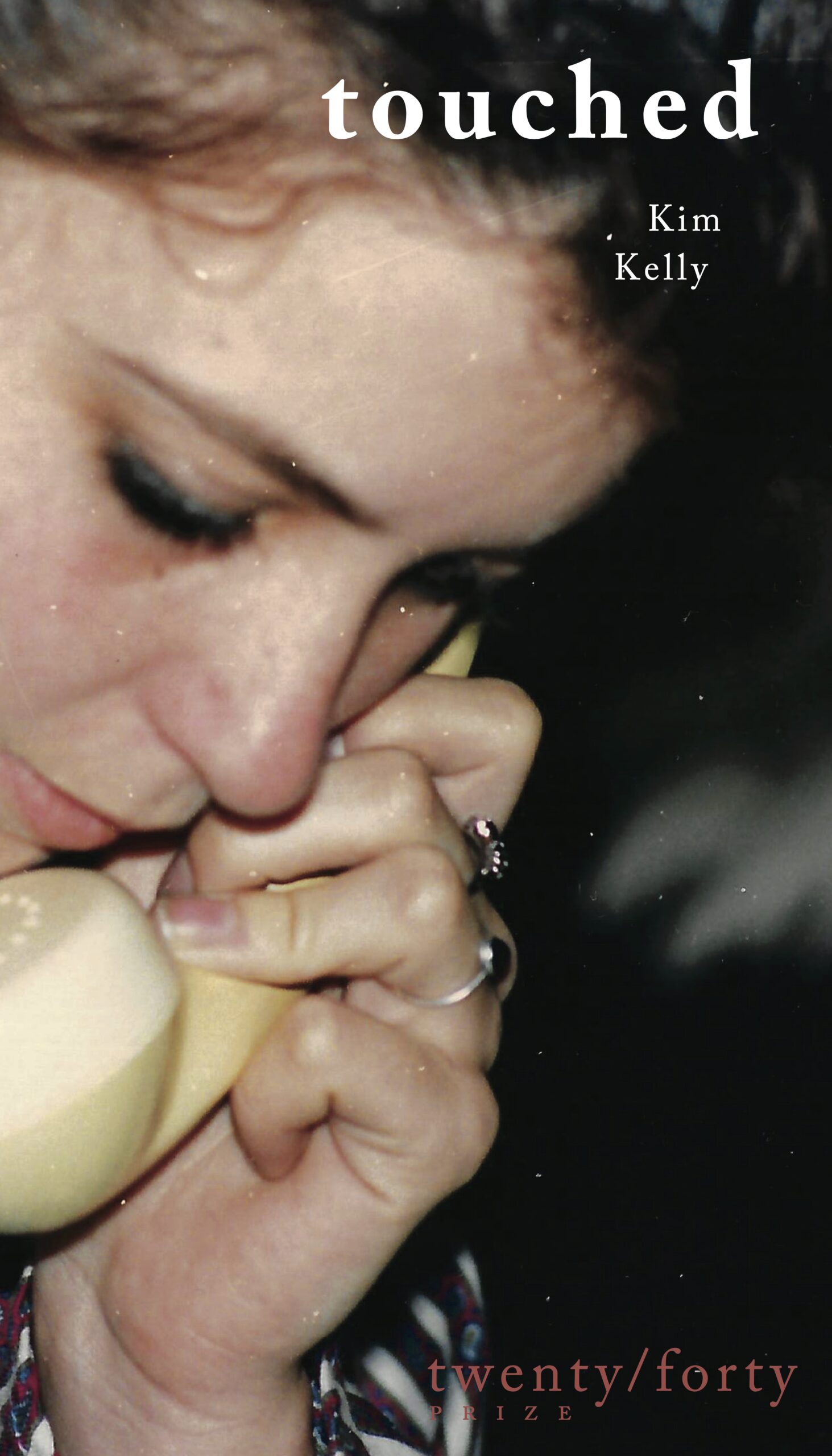
  • Kim KellyTouched: “a memoir that uses self-deprecation and humour to turn her own experience of intense panic attacks into a lively and profound reflection on the prevalent role of anxiety in so many of our lives.”
  • Monica RaszewskiMystic Vera and Lottie the shadow puppet: another novel, this one “centred on eccentric, flighty, Vera who dances with happy abandon around her sister, Lottie’s flailing attempts to control her excesses.
  • Paul TooheyBad face: an historical novel “set on the late 19th Century US frontier, where totemic violence between settlers, cattle ranchers and rustlers, and native Americans is played out with vital gothic intensity”.

And the winners are Angus Gaunt’s Anna and Kim Kelly’s Touched. You can read more about them on the Winner Announcement page. The judges were last year’s winners – Sonya Voumard, Penelope Cottier and Nick – plus Finlay Lloyd author John Clancy and the publisher Julian Davies.

The judges liked Gaunt’s novel because “the extreme circumstances of this story are written with a quiet yet incisive humanity”. Gaunt as born and educated in England, coming to Australia in 1987. He now lives in Dharug/Guringai country on the northern edge of Sydney. He has been published and nominated for awards in Australia, England and Ireland.

They liked Kelly’s memoir because of its “breadth of understanding—of the author’s own crazily complex family, of the wider issue of anxiety across society, and of her own voyage as a highly competent yet vulnerable being in a worryingly unhinged world”. Kelly was one of the two inaugural winners of this prize with her historical fiction novella, The Ladies Rest and Writing Room (my review). She lives and works on Wiradjuri and Eora lands in central west NSW and Sydney. Kelly has written historical fiction, short stories and essays, and is completing a PhD in Literature at Macquarie University. She is also a book editor (as Kim Swivel).

I was able to attend the launch of the 2023 and 2024 winners, as they were held in Canberra. This year, however, because both authors have Sydney bases, the launch will be held there next week when I’m in Melbourne, so I will not be able to report on the winners’ conversation, unfortunately. However, I do have the books and plan to read both for this year’s Novellas in November. And, there is an excellent interview with the authors available RIGHT NOW on the above-linked Winner Announcement page!

I am thrilled that this prize has now passed its third year, and hope it continues for many years more. If you like the sound of these books, and would like to support them (and the prize), you can order the books at Finlay Lloyd (though great bookstores will carry them too.) The recommended retail price is AUD26, but you can buy them from FL at AUD23.40 each (plus postage).

Congratulations to Finlay Lloyd and this year’s winners.

Louise Erdrich, The night watchman (#BookReview)

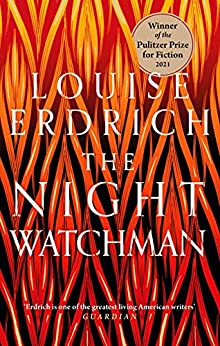
Louise Erdrich’s Pulitzer Prizewinning The night watchman is historical fiction about a community fighting back against a government set on “terminating them”. Erdrich, whom I have reviewed before, is an enrolled citizen of the Turtle Mountain Band of Chippewa Indians of North Dakota and it is the story of this community’s response to something called the House Concurrent Resolution 108 that she tells in The night watchman.

Passed by Congress on August 1, 1953, this Resolution would, says Erdrich in her Afterword, “sever legal, sacred, and immutable promises made in nation-to-nation treaties”. Or, as Wikipedia explains, it would “end reservations and tribal sovereignty” and “integrate Native Americans into mainstream American society”.

As it happens, Erdrich’s grandfather, Patrick Gourneau, was Chairman of the Turtle Mountain Band of Chippewa Advisory Committee at the time and recognised this resolution for what it was. He is the inspiration for Thomas Wazhushk, one of Erdrich’s two protagonists. Thomas is a man of two cultures:

Watching the night sky, he was Thomas who had learned about the stars in boarding school. He was also Wazhashk who had learned about the stars from his grandfather, the original Wazhashk. (p. 17)

Throughout the novel Thomas strategically draws on these two selves in order to perform his role, which is to keep the community safe (or, at least, safer, than they would be if the Government’s plans came to fruition).

This is both a sophisticated and a grounded novel. Grounded in the way Erdrich uses her storytelling ability to create a compelling narrative peopled by a large cast of wonderfully individuated characters. We are interested in them all, and this makes the novel a darned good read. Sophisticated in how Erdrich subtly layers her story to enrich its meaning. The overall structure comprises two parallel but related stories or journeys: Thomas’s fight for his community’s survival, and his niece Patrice’s journey to find both her missing sister and her own path in life. Erdrich’s writing is simple, plain, but also imbued with gorgeous lyricism, metaphor and symbolism. The novel is threaded, for example, with physical holes, wells, caves, ship holds, and falls, which never let us forget the precariousness of these people’s lives.

She also peppers the story with humour, which reminds us no matter how serious things are, people can still have a laugh. There are many laugh-out-loud moments, alongside a recognition of humour’s role in how we navigate the things we confront. In Minneapolis, Patrice finds herself in a strange and potentially dangerous situation, and has

the sort of feeling and thinking that could only be described in Chippewa, where the strangeness was also humorous and the danger surrounding this entire situation was of the sort that you might laugh at, even though you could also get hurt… (p. 131)

“Survival is a changing game” (Biboon)

Overlaying all this is Erdrich’s exploration of how language works, how it can be used to clarify or obfuscate, to inspire or deflate. Her writing embodies this knowledge. So, for example, Thomas receives the Resolution papers and reads them carefully. He sees

their unbelievable intent. Unbelievable because the unthinkable was couched in such innocuous dry language. Unbelievable because the intent was, finally, to unmake, to unrecognize. To erase as Indians … his people, all of us invisible and as if we never were here, from the beginning, here. (p. 79)

His people were being targeted, the papers said,

for emancipation. E-man-ci-pation. Eman-cipation. This word would not stop banging around in his head. Emancipated. But they were not enslaved. Freed from being Indians* was the idea. Emancipated from their land. Freed from the treaties that Thomas’s father and grandfather had signed and that were promised to last forever. (p. 80)

Later, the once dapper but now frequently drunk Eddy Mink cuts to the chase, stunning officialdom with his plain language statement:

The services that the government provides to Indians might be likened to rent. The rent for use of the entire country of the United States. (p. 200)

Meanwhile, as Thomas builds his case, Patrice, who works in the Turtle Mountain Jewel Bearing Plant where Thomas is the titular night watchman, sets off for Minneapolis to look for her sister. Vera had gone there with her new husband but had not been heard of since. What Patrice finds in the city, how people can be exploited, is shocking, and she returns home somewhat wiser but with more to learn about herself and the ways of humans.

Surrounding Thomas and Patrice is a large community of people – family, friends, neighbours, work colleagues, teachers, coaches, visiting missionaries, and even a ghost. The interactions between these people build up a picture of a community that functions despite external stresses and the usual internal disagreements. This makes engrossing reading because these characters are so real, including the two Mormon missionaries who not only add humour and pathos but also represent the naiveté of supporters of a faith – in the form of Utah Senator Arthur V. Watkins – that was driving the Resolution.

Similarly, our protagonists’ interactions with specific individuals make great reading while also advancing the narrative and the ideas. When Thomas is with his father Biboon and Patrice with her mother Zhaanat, we feel their spiritual connection with their culture, and their desire to learn from their elders. When Thomas is with the white teacher and boxing coach, Barnes, we see how little non-Indian society understands the existing situation and the implications of the Resolution. Thomas patiently – and generously – explains to the clueless Barnes why Indians are not, and can never be, “regular Americans”. And, why he, Barnes, cannot be an Indian! Just look at this writing:

“If I married an Indian woman,” said Barnes, “would that make me an Indian? Could I join the tribe?”
He was awed at the possible sacrifice he could be making.
Thomas looked at the big childish man with his vigorous corn-yellow cowlicks and watery blue eyes. Not for the first time, he felt sorry for a white fellow. There was something about some of them—their sudden thought that to become an Indian might help. Help with what? Thomas wanted to be generous. But also, he resisted the idea that his endless work, the warmth of his family, and this identity that got him followed in stores and ejected from restaurants and movies, this way he was, for good or bad, was just another thing for a white man to acquire.
“No,” he said gently, “you could not be an Indian. But we could like you anyway.”

In statements like “he was awed at the possible sacrifice he could be making”, Erdrich conveys more about cultural superiority than just this man’s thoughts.

When Patrice is with her girlfriends and workmates, Valentine and Doris, we see how her goals diverge from their more girlish ones, and when she is with Wood Mountain we see her inner conflict about her chosen direction. As a young person, her journey is more personal than Thomas’s but they coalesce when it comes to saving the community.

“Assimilation. Their ways become your ways.” (Roderick)

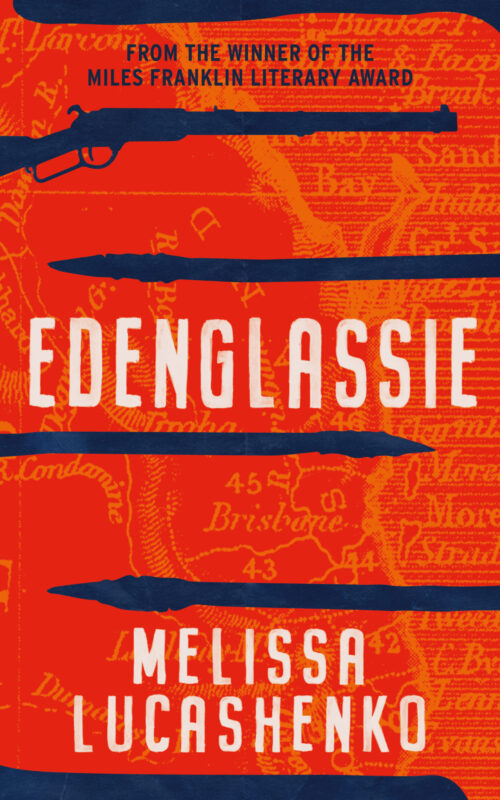
I loved spending time with these characters. In fact, so did most of my reading group, as this novel was our September read. We enjoyed her vividly drawn characters – and their perfect names, like Juggie Blue, Wood Mountain, Louis Pipestone, Millie Cloud, and Patrice not Pixie. We teased out the complexity of the storytelling, the way Erdrich seemed to effortlessly incorporate complex ideas into a compelling narrative. This starts right at the title, The nightwatchman, which is both literal, Thomas’ job, and metaphorical, in his role of keeping watch as the community’s Chairman. I was reminded a little of Melissa Lucashenko’s novels, in which tough stories are told with compassion and humour to paint a picture of real people confronting a world that’s against them.

Early in the novel, Thomas moves that the Committee call the Resolution the “Termination Bill [because] Those words like emancipation and freedom are smoke”. This bill heralded what is now called the Termination Era (1953-1968). As Erdrich explains in her Afterword, this is what happened to 113 tribal nations. Although some regained recognition, “31 are now landless” and “24 are considered extinct” (p. 447).

The night watchman is one of those books that hits the spot – the heart spot and the mind spot. Recommended.

* The novel is set in 1953, and Indian is the term most commonly used when the specific Chippewa is not.

Louise Erdrich
The night watchman
London: Corsair, 2020
453pp. (Kindle edition.)
ISBN: 9781472155337

Prime Minister’s Literary Awards 2025, Winners

In lieu of my usual Monday Musings post, I am reporting on the 2025 Prime Minister’s Literary Awards which were announced this evening, and which I attended via the live-stream from the Creative Australia website. I shared the short list several weeks ago, so I won’t repeat those here.

The awards ceremony was a long one, and I suspect longer than planned, because Mr Gums saw the winners come through on his phone before they had all been announced. The problem, I’m guessing, of automatic scheduling!

The event was emceed by an Australian comedian, writer, actor, and television presenter, Alex Lee, whom I don’t know. (I guess you are going to say, “where have you been?”) She injected lightness and humour into the opening, a bit like you see at America’s Academy Awards. Like the Academy Awards, some of the jokes worked and some didn’t. The thing is, I suppose, different jokes will work for different people.

She did say, however, that there were 645 entries this year, 100 more than last year. That says something, I presume, about the health of writing and publishing in Australia.

 There were then two speakers, the Chair of the Writing Australia Council, Larissa Behrendt, who commented on the appropriateness of holding the Awards at the NLA which embodies the “the heart of our nation’s stories”. She said that the Awards “celebrate writing, reading ideas and the voices that shape who we are”, and she thanked Selina Walker for her welcome. She reminded us of the 65,000 years of storytelling in our country.

Behrendt then introduced the Minister for the Arts (among his many hats), Tony Burke, whose passion for the arts is palpable to anyone who hears him speak. Behrendt noted his appreciation of the centrality of First Nations Arts to Australia’s cultural policy. And said that this is a minister who shows up at opening nights, awards nights, festivals and so on, because he deeply understands why the Arts matter.

I couldn’t possibly share all that Burke said. He recognised the main players, commenting first on the generosity of the word “welcome” Selina Walker’s Welcome to Country. He thanked Australian Greens leader, Sarah Hanson-Young, who was present and who has been there, in support, through the whole cultural policy journey. He thanked Alex Lee for injecting a bit of fun, and he acknowledged Larissa Behrendt (who is Chair of the National Library of Australia Council) and Clare Wright (who is Chair of the Council of the National Museum of Australia.) He noted that it has been a long time since a writer has chaired the NLA’s Council, and an historian that of the NMA. (I groaned inwardly as we are still waiting for an archivist – or appropriate professional – to chair the council of the National Film and Sound Archive!) But all progress in this sphere of Boards/Council appointments is good!

Burke talked at some length about the importance of the arts and, what he believes to be the strength of the Government’s Creative Australia cultural policy. He talked particularly about writing. he argued that the ability to learn from writing is the gift “we celebrate tonight”. He suggested that writing is the only art form that we don’t react to with physicality. Music, Dance, Visual Arts, and so on, engage through the senses – sight, hearing – but writers work on our imaginations, writing lives within our minds. (There are some debates in this, I think, but I still like his point.)

He also quoted from three books to illustrate his points. First was from Kelly Canby’s children’s book, A leaf called Greaf, which ends on the idea of things being held in the heart forever, and which is the gift writers give us. Then he mentioned Fiona McFarlane and Michelle de Kretser who spoke to untold stories. Highway 13 deals ingeniously with the fact that we hear more about the person who should not be remembered rather than the stories of those affected by that person’s actions. Then he quoted from Theory and practice, which I will abbreviate to “that was the meaning of assimilation … it trained us to disappear”. Writers, he said, make sure that people are seen. (For me, though, he raised yet another idea to explore in this wonderful novel.)

There was more, but I think that’s a great point on which to end the introductions.

And the winners

  • Fiction: Michelle de Kretser, Theory & practice (Text, my review)
  • Poetry: David Brooks, The other side of daylight: New and selected poems (UQP)
  • Nonfiction: Rick Morton, Mean streak (Fourth Estate)
  • Australian history: Geraldine Fela, Critical care: Nurses on the frontline of Australia’s AIDS crisis (UNSW Press)
  • Children’s literature: Peter Carnavas, Leo and Ralph (UQP)
  • Young adult: Krystal Sutherland, The invocations (Penguin)

Links on authors’ names are to my posts on these authors. (I loved that Children’s Literature winner, Peter Carnavas, is a teacher-librarian. Go him.)

Now, this being the Prime Minister’s Literary Awards and, anyhow, this being a gathering of writers who as a group are passionate about ideas, many political comments were made, lengthening the supposedly short speeches. These comments addressed what is happening in Gaza, the issue animal rights, the treatment of human beings by government social policy, and the gutting of humanities and humanities research in Australian universities. In the case of the last, Geraldine Fela’s video speech had been cut off at the allotted time, but she had asked Clare Wright to complete her speech, which Wright did!

Thoughts anyone?

Monday musings on Australian literature: Creative Australia Awards in Literature

Creative Australia is the – how shall we say it – rebranded Australia Council for the Arts / Australia Council. Under whatever name it has, this is the body that serves as the major arts funding and advisory body for the Australian Government. You can read its history on Wikipedia if you are interested.

The Australia Council Awards were established around 1981, and over time have been offered in various categories, but Literature has been one of them since at least 1987, again under different guises. These awards recognise outstanding and sustained contributions to arts and culture across a range of disciplines, including literature, music, dance, but sorting out a full and proper history of these awards is not easy. They are now named under the Creative Australia umbrella. The writers who have been given these awards include novelists, poets, nonfiction writers and children’s literature writers. They include First Nations Writers, like Ruby Langford Ginibi, Herbert Wharton and Bruce Pascoe as well as Alexis Wright.

In the lists below, links are to posts I have written on the writers.

Creative Australia Awards for Lifetime Achievement in Literature

As far as I can gather, the “Creative Australia Awards for Lifetime Achievement in Literature” dates just from 2023, and acknowledges “the achievements of eminent literary writers over the age of 60 who have made an outstanding and lifelong contribution to Australian literature”.

Australian Council Awards for Lifetime in Literature

ArtsHub calls the 2021 award that went to Arnold Zable a “Lifetime Achievement in Literature” award, and says he follows writers like Malouf and Garner in receiving this award. Earlier research I did suggested that in 2015 it was also called a “Lifetime Achievement award”.

Previous Award Recipients

You will see that this section of my list includes “awards” and “fellowships”. I could have just included the “award” but decided the fellowships might be interesting too. You might notice that some women are listed under their “married name”, like Judith Wright as Judith Wright McKinney, and Mary Durack as Mark Durack Miller. In the 1990s!

  • 2013: Australia Council Award for Lifetime Achievement in Literature: Frank Moorhouse
  • 2012: Australia Council Award for Lifetime Achievement in Literature: Herbert Wharton
  • 2011: Emeritus Award: Robert Gray
  • 2010: Emeritus Award: Peter Kocan
  • 2007: Emeritus Award: Christopher Koch and Gerald Murnane
  • 2006: Emeritus Award: Alice Wrightson
  • 2005: Emeritus Award: Ruby Langford Ginibi
  • 2004: Emeritus Award: Margaret Scott
  • 2003: Emeritus Award: Don’o Kim and Barry Oakley
  • 2001: Emeritus Award: Dimitris Tsaloumas and Amy Witting 
  • 2000: Emeritus Award: Donald (Bruce) Dawe and John Hooker
  • 2000: Emeritus Fellowship: Eric Charles Rolls
  • 1999: Emeritus Award: James Henderson and Eleanor Witcombe
  • 1998: Emeritus Award: Peter Porter
  • 1997: Emeritus Award: Boro Wongar
  • 1996: Emeritus Award: Rosemary Dobson and David Martin
  • 1996: Emeritus Award: Dorothy Hewitt
  • 1995: Emeritus Fellowship: Victor Beaver, Michael M Cannon, Barbara Jefferis, Ray Lawler, Vincent Noel Serventy, Ivan Southall, and Maslyn Williams
  • 1993: Emeritus Award: Ivan Southall and Judith Wright McKinney
  • 1993: Emeritus Fellowship: Hugh Geddes Atkinson 
  • 1992: Emeritus Award: Mary Durack Miller
  • 1992: Emeritus Fellowship: John Blight, Beatrice Bridges, David Rowbotham, Harold Stewart
  • 1990: Emeritus Fellowship: Dorothy Green and Roland Robinson
  • 1989: Emeritus Fellowship: Jack Lindsay
  • 1987: Emeritus Fellowship: Olaf Ruhen

2025 Mark and Evette Moran Nib Literary Award shortlist

This is a quick post because I’m on the road in Japan, but I do like the Mark and Evette Moran Nib Literary Awards, and their shortlist has just been announced, so here is a quick post.

Just to recap if you don’t recollect my previous posts on this award, it is not limited by genre or form – that is both fiction and non-fiction are eligible. The judging is based on “on literary merit, research, readability, and value to the community”. Research and value to the community are interesting criteria. I have written about it before, so if you are interested in its origins and intentions please check that link. Previous winners include historians Alison Bashford and Claire Wright, biologist Tim Low, novelists Helen Garner and Delia Falconer, and journalist Gideon Haigh.

Each of the six finalists receive the $1500 Alex Buzo Shortlist Prize and are eligible for the $4,000 Nib People’s Choice Prize, which, by definition, is awarded by popular vote. The winner will receive $40,000.

The judges for the 2025 award are Sydney based writer, editor and arts producer Lliane Clarke, publisher and award-winning editor Julia Carlomagno, and author and publishing professional Angela Meyer (whom I’ve reviewed a few times here). They said, according to the email I received from Waverley Council which manages the award:

“In reading the nominations this year, we noted the effort, dedication and often bravery required to delve with such depths into topics of personal, political and cultural significance. The shortlisted books display great passion and commitment on the part of the authors and publishers, often years and decades of work, and they are all thoughtfully constructed, absorbing, moving works of literature with great value to the community”.

The email also said that this is the Award’s 24th year, and describe it as “one of Australia’s most high-profile and valuable book prizes, celebrating the most compelling research-based literature published annually”.

The 2025 shortlist

Last year I had, unusually for me, read two of the six shortlisted books, but this year we are back to the status quo! That is, I’ve read none, though most interest me. There were 174 submissions.

  • Helen Ennis (ACT), Max Dupain (biography)
  • Amy McQuire (Qld), Black witness (nonfiction/essays)
  • Rick Morton (NSW), Mean streak (nonfiction)
  • Samah Sabawi (Vic), Cactus pear for my beloved (memoir) 
  • Martin Thomas (ACT), Clever men (history)
  • Tasma Walton (WA), I am Nannertgarrook (historical fiction)

This list seems to be a bit broader, as in less life-writing heavy, than it has sometimes been, but like last year, there is just one work of fiction.

You can vote for the People’s Choice award at this link, but voting closes on October 9.

Have you read any of these books?

Monday musings on Australian literature: Michael Crouch Award

The Michael Crouch Award is part of the National Biography Award (NBA) suite of prizes. I have written about the NBA before, but have never specifically focused on the Michael Crouch Award.

But first, a quick recap … the National Biography Award has been going since 1996, and celebrates excellence in life writing, that is, in biography, autobiography and memoir. It is, apparently, Australia’s richest prize for Australian biographical writing and memoir, with the prize-money being:

  • $25,000 for the National Biography Award winner
  • $2,000 for each of the six shortlisted authors
  • $5,000 for the Michael Crouch Award

Michael Crouch Award

Michael Crouch was one of the original sponsors of the NBA, but died in 2018. In 2019, the award came under new sponsors, who not only increased the prize money for the shortlisted authors, but also created a new prize to honour Michael Crouch. Named, obviously, the Michael Crouch Award, it is for a first (debut) published biography, autobiography or memoir by an Australian writer. It has been awarded since 2019, but most of the NBA reporting focus has continued to be the “main” award.

So, to give these writers some extra air, I’m listing here all its winners to date:

Book cover
  • 2025: Nikos Papastergiadis, John Berger and me (Giramondo Publishing, biography/memoir)
  • 2024: Jillian Graham, Inner song: A biography of Margaret Sutherland (Melbourne University Press, biography, Lisa’s review)
  • 2023: Tom Patterson, Missing (Allen & Unwin, biography)
  • 2022: Amani Haydar, The mother wound (Pan Macmillan, memoir, Kate’s review)
  • 2021: Andrew Kwong, One bright moon (HarperCollins, memoir)
  • 2020: Jessica White, Hearing Maud (UWA Publishing, biography/memoir, my review)
  • 2019: Sofija Stefanovic, Miss Ex-Yugoslavia (Atria Books, memoir)

It’s interesting, but not surprising, that the memoirs have it.

Having read several hybrid biography/memoirs, including Jessica White’s, I am particularly interested in this year’s winner. I enjoy the process – if done well of course – whereby a writer explores another person through some prism of their own life, though this prism varies widely. In some cases, the writer and subject are related (like mother and daughter), or they are friends (like Papastergiadis and Berger), or they have something in common (like deafness in the case of Jessica White and her long-dead subject, Maud Praed). If you want pure biography, these don’t do the job, as they tend not to be comprehensive. But, what I like about these hybrids, is how the writer explores some aspect of their subject’s life story alongside, or through the prism of, their own perspectives or experiences. Done well, and particularly if both writer and subject are interesting, this form can be satisfying – and illuminating.

This was the case with Jessica White’s Hearing Maud, as I discussed in my post, and I can understand its being the case with Papastergiadis’s book. The judges called it “an original hybrid form”. The website continues:

The judges chose John Berger and Me for the Michael Crouch Award for a Debut Work for its originality and clever, non-linear but accessible structure. The quality of the author’s perceptive, lyrical, subtly humorous prose also stood out among a highly competitive field of debut books. A unique and highly readable blend of biography and memoir.

And there, I think, is a major reason why I enjoy reading these hybrids, the fact that there is no set form or formula. Each one can reinvent the wheel, with authors free to choose the approach that best suits the story they want to tell, the ideas they want to explore. It’s exciting to read books like this where authors have to work out from scratch how to start, proceed, and finish!

As for this latest winner, I am particularly interested, because John Berger’s Ways of seeing made a lasting impression on me when I read it – and saw the BBC series – in the late 1970s. I can imagine why such a man would interest a sociologist like Papastergiadis, but I think their friendship and points of contact ended up being far deeper and broader than just sociology. I’m so tempted.

Have you read any of these winners – and/or are you interested in hybrid biography/memoirs?

Monday musings on Australian literature: Finlay Lloyd’s 20/40 Publishing Prize, progress report

Nearly three years ago, I reported on a new literary prize, the 20/40 Publishing Prize which was being offered by the non-profit publisher, Finlay Lloyd. It has now been awarded in both 2023 and 2024, and preparations for announcing the 2025 winners are well under way.

Briefly, the aim of the award is to “encourage and support writing of the highest quality” by offering publication rather than cash. It has a specific criterion, however, as conveyed by its title: the works, which can be fiction or nonfiction, must be between 20,000 and 40,000 words. The submissions are read blind, and the judging panel includes the previous year’s winners. This means the judges for the 2025 award are Sonya Voumard, Penelope Cottier and Nick Hartland, alongside publisher, Julian Davies, and longtime Finlay Lloyd supporter (and writer), John Clanchy. 

The winners to date have been:

  • 2023: Rebecca Burton, Ravenous girls (fiction, my review)
  • 2023: Kim Kelly, Ladies’ Rest and Writing Room (fiction, my review)
  • 2024: PS Cottier and NG Hartland, The thirty-one legs of Vladimir Putin (fiction, my review)
  • 2024: Sonya Voumard, Tremor (nonfiction, my review)

Most awards, particularly those coming from a small organisation, take time to build – and some disappear into the ether. So I worried that this award might not last – not only because Finlay Lloyd is small but also because this shorter form is not popular with everyone. I am therefore thrilled to hear that the third annual winners are on track for announcement, and that Finlay Lloyd is now calling for entries for the 2026 prize.

This is where today’s post comes in. I don’t make a practice of announcing calls for competition entries, but this attracted me for a couple of reasons. First, I often wonder what difference awards make to authors and their sales. Well, while I don’t know what the initial print runs were, Finlay Lloyd says that The thirty-one legs of Vladimir Putin has been reprinted twice since its first run, and Tremor is about to go into reprint. This must be encouraging, surely, for writers?

The other relates to the fact that Finlay Lloyd wants to offer a fiction and a nonfiction award each year. This didn’t happen in 2023 because they did not receive enough quality entries, but it happened in 2024. Sonya Voumard’s Tremor is an excellent example of novella-length (is there a better description for this) nonfiction.

In my report on the Winners Conversation last year, I shared Voumard’s discussion about length. She said that there’s “the assumption that to be marketable you need to write 55,000 plus words”. She had the bones of her story, but had then started filling them out, when, in reality, it was just “flab”. The competition, and then Julian Davies’ editing guidance, taught her that she had a good “muscular story”. So she set about “decluttering”. The end result is interesting, because this book doesn’t have that spare feeling common to short works, which is not at all a criticism of spare writing. However, Tremor feels tight. It has little extraneous detail, but it’s not pared back to a single core. I found it informative but also a personal and moving read, and I bought a few copies as gifts last year. I would love to read more shorter-length works of nonfiction.

All this is precursor to sharing that last week, I received a Media Release from Finlay Lloyd, in which publisher Julian Davies says:

As 20/40 builds momentum, our enthusiasm for encouraging this compact scope for both fiction and nonfiction has continued to grow. The length of 20,000 to 40,000 words allows for the rich development of an imaginative story or factual concept while being tight enough to encourage focus and succinctness. It’s a form we love and believe is apt for our moment in the history of thought and invention.

Each year we support the winning authors through a close and probing editorial process that works towards finding the best possible version of their book. We also take delight in a design process where books are created that feel like artefacts, that ask to be picked up and engaged with.

Submissions for 2026 will open in December. The prize is open to emerging and established writers, but they must be Australian citizens, permanent residents, or valid visa holders. It is a prose prize, but is open to all genres – as the winners to date demonstrate – including hybrid forms.

The original NaNoWriMo might have ended, but that doesn’t mean November (or any month of your choice) isn’t a good month for giving writing a go, particularly if there’s a publisher out there waiting for your work. For more information, check the prize’s webpage.