Monday musings on Australian literature: on Nation and people

Hodge and Whitehurst, Nation and PeopleDo you keep your old textbooks? I do, though am now starting to move them on. But some I still can’t part with, one being my high school history text. Called Nation and people: An introduction to Australia in a changing world, and first published in 1967, it was written by Brian Hodge and Allen Whitehurst who were teachers at East Sydney Technical High School. I decided for today’s Monday Musings to have a little look at what my teenage self learnt from it …

I was tickled because some of what I saw, looking at it now, had connections with my future – though, of course, I didn’t know it then. First is the fact that I went to high school in Sydney, and the teachers who wrote it were in Sydney, but the front cover is an image of Canberra, the city I moved to for my first professional job after finishing university, and where I live today. The other is that the first book listed in the student’s bibliography at the back is “F. Whyte, William Morris Hughes: His life and times“. F. Whyte (actually William Farmer Whyte), a journalist, was the grandfather of the man I married. This biography was his magnum opus. I have no idea why it is listed first though. The list is not alphabetical by author or title, and Billy Hughes was not our first Prime Minister so there’s not an obvious chronological reason. The order is quite idiosyncratic to my librarian eyes!

What is history?

These, however, aren’t what I really want to share, entertaining though they are to me. I was interested, for example, in the Preface. The authors say that

students should be encouraged to look for themes. It is important … that they understand the nature of a particular topic they are studying and why they are studying it.

In other words, history is not about dates but ideas and trends. Now, my two favourite high school teachers were my history teacher (Mrs Reynolds) and the librarian (Miss Reeve). It was the late 196os, a time of increasing interest in rights for indigenous Australians, of the Civil Rights movement in the US, and when anti-Apartheid activism was becoming stronger. These two teachers – seen as “red” by more conservative parents – encouraged us to think about what we’d now call social justice. I loved them, because for them history was a living thing about themes, ideas and values.

Indigenous Australians

Of course, in looking at this book now, I particularly wanted to see what it told us about indigenous Australians, because this was an issue we felt strongly about. There are a few references to Aborigines, as indigenous Australians were called then, but there is also a 10-page section devoted to them. It starts with some quotes – from the Constitution (1901), “A Crown Lands Commissioner to Governor La Trobe in 1840”, and writer Marjorie Barnard (from her history of 1962) – followed by their introduction:

During the nineteenth century, the white settlers of Australia extended their frontiers and finally won a continent from its former black owners. The pattern was a similar one to other regions in the world where the white civilisation had made contact with coloured races which were less powerful and culturally different. Lands had been conquered, the stability of the conquered society shattered and the coloured peoples exploited.

They talk about early contact – from seventeenth century sealers to the later farmers – and their poor treatment of indigenous people. They note that “few whites made any effort to understand” cultural differences. They describe conflict between white and black people, in which killing occurred on both sides, but in their view:

Too often in Australian history in the nineteenth century good relations were destroyed by the low standard of settler and the low standard of police.

Next, they say

After the white man had won the land, his [this was before 1970s feminism!] attitude changed. The black man became regarded as a useful stockman who could perform important duties in areas of harsh environment where white labour was scarce and expensive. Thus an extensive cheap labour force was set up for the cattle stations …

They go on to discuss other aspects of black-white history in Australia: missionaries and paternalism, and then assimilation. In 1967, a referendum was passed which amended Australia’s Constitution “to allow aborigines to be included in the census”. Hodge and Whitehurst include a photo of some “Young Australians” sitting at desks. The caption reads: “Now these young Queenslanders will be counted. But will they count?” Good question.

This section ends by suggesting that “integration” is starting to be seen as a better policy than “assimilation”, but

This means, of course, that Australians would have to accept the fact that their society is multi-racial and multi-cultured, and that two cultures would live side by side with complete equality.

Those words – “would have to accept” – suggest, don’t you think, an uncertainty that Australians would indeed accept this. Around 50 years have passed since this was written, and progress has been made but “complete equality”? Nope. How very depressing it all is.

Further reading

Finally, the authors provide a list of additional reading at the end – where I found F. Whyte – but they say “the reading list in this text is recommended as a manageable one”.  They don’t think students “should or could read all the books listed, but … are thoroughly capable of looking at quite a number of them.” They tell students not “to become a slave to one or two general texts, even if they are concise and interesting” and not to “attempt to wade though volumes that are recommended as reference books”. Instead, they say:

Perhaps your most profitable course at this stage of your study of History would be to enter into the spirit of the course through biography. This plan of action  you will find very profitable in your study of Australian development. Through reading biographies you will gain a feeling for History and insight into the spirit and problems of each decade.

How sensible is that? Don’t make students read dry recitations of historical events and facts. Better to read books that will bring history alive. Those they recommend at the end include biographies and fiction, such as George Johnston’s My brother Jack, Xavier Herbert’s Capricornia and, interestingly, Alan Paton’s Cry the beloved country.

Looking at this book, I can see the origins of my ideas about what history is and what it means. Thank you Messrs Hodge and Whitehurst, and thank you too Mrs Reynolds and Miss Reeve. You have not been forgotten.

Do you have teachers and classes that have made a lasting impression on you and your way of thinking?
Larissa Behrendt, Under skin, in blood (Review)

ANZLitLovers ILW 2016In my last review – that for Ali Cobby Eckermann’s Ruby Moonlight – I shared the following lines:

Jack knows the remainder of the conversation
before it was spoke ya see any blacks roaming
best ya kill ’em disease spreading pests
(“Visitor”, from Ruby Moonlight)

Quite coincidentally, this point I was making, that it was not “the blacks” who brought disease, turned out to be the subject of my second choice for Lisa’s 2016 Indigenous Literature Week, Larissa Behrendt’s short story, “Under skin, in blood”. I chose it because I wanted to read at least something by Behrendt.

The story is told in first person by an older woman – called Nana Faye by Merindah, the granddaughter she’d raised – and is divided into three parts. The first and third parts are set in the present while the middle part flashes back to Faye’s past as she tells us why she no longer has her husband and son (Merindah’s father).

In the present, Faye (and Merindah) live in Faye’s grandmother’s country, Gadigal land, around Sydney. But Faye spent her married life, the place where Merindah was born, in Baryulgil on the land of the Bunjalung people. Faye’s flashback is inspired by a discussion she has with university student Merindah who is researching the Northern Territory’s Kahlin Compound, a place to which “half-caste children” (members of the Stolen Generations) were taken between 1911 and 1939. It had – and here you’ll start to understand my introductory paragraph – high rates of leprosy. Merindah is researching claims – claims which have indeed been made and researched – that children there were used as guinea pigs for leprosy drugs. Whether or not these claims are true – they may never be fully resolved due to lack of records – the case causes Faye to comment that the most lethal things white settlers brought to Australia were not guns and alcohol but “microbes” which were “flowing through their veins, floating in their blood, under that skin like bark from a ghost gum tree”. Leprosy, in other words, and malaria, small pox, syphilis, influenza. These killed more indigenous people in the first year of white settlement than bullets.

But these microbial-based diseases are not the main focus of Faye’s memories. It’s the mine in Baryulgil, the mine that opened in 1944 and which everyone thought made them lucky. Having lost their land to the pastoralists, but having decided to stay to be close to their country, the people suddenly found they had jobs – but, what were they mining? Asbestos! Faye tells of the tragic impact asbestos had on her husband Henry and son Jack:

… the mine we felt lucky to have, that gave us the benefits of work and kept the community together was slowly but surely killing us.

The scandal is that there was awareness of deleterious health effects of asbestos in the early 20th century, and certainly by the 1960s its relationship to mesothelioma was recognised. Australia’s best known asbestos mine, Wittenoom, was closed in 1966, ostensibly for economic, not safety reasons. It is telling though that Baryulgil was not closed until 1979. Faye says that the official enquiries that came later found

the mine was barely profitable and only continued to operate to prevent permanent unemployment among the Aboriginal workers in the area. Turned out this employment that was supposed to be doing the community a favour was actually a death sentence.

So, Wittenoom was closed more than a decade earlier because it wasn’t profitable, but different decision-making was used for Baryulgil. Now, normally, I’d approve of decision-making that took into account social values but this one is a bit suss.

This is, I have to say, a fairly didactic story. It could almost have been an essay, except that Behrendt has clearly thought, as she in fact says in her interview with Annette Marfording, that telling it as a story, showing the impacts of policy on human beings, would be the more effective way to go. So, while the story imparts a lot of factual information, Faye shares the devastating impact on her of losing her husband and son. She also tells how indigenous cultural practices work to their disadvantage in a white world. She says:

The hardest thing is to trust these people. These people who have the power of life or death over you, and use that power carelessly. These people we are mute to argue against. And our words never seem a match for what they wrote down, even though we have good memories and they make mistakes.

Now, that is probably the most important message in the story.

awwchallenge2016Larissa Behrendt
“Under skin, in blood”
in Overland (203), Winter 2011
Available online

Ali Cobby Eckermann, Ruby Moonlight (Review)

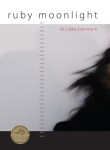
ANZLitLovers ILW 2016Ali Cobby Eckermann has been on my radar for a while, so when Lisa announced her 2016 Indigenous Literature Week, I decided Eckermann’s verse novel Ruby Moonlight would be my first choice. This novel won the poetry prize and the book of the year in the 2013 New South Wales Premier’s Literary Awards.

I enjoy verse novels but don’t read them often enough to build up a comprehensive understanding of the form. Eckermann’s Ruby Moonlight is the shortest and sparest of those I’ve reviewed on this blog, but its narrative is just as strong. It is set in colonial South Australia – the not-very-poetic subtitle being “a novel of the impact of colonisation in mid-north South Australia around 1880” –  and tells the story of Aboriginal teenage girl, Ruby Moonlight, whose family is massacred by white settlers. The novel reads like a classic three-act drama. It opens with the massacre and Ruby’s lonely wanderings, and then moves into a somewhat idyllic phase when Ruby meets the also lonely “colourless man”, Miner Jack. They become friends and lovers, giving each other the company and warmth they both so desire:

good friendships
blossom
slowly
(from “Friends”)

and

in the moonlight
solace is shared
in this forbidden friendship
( “Solace”)

But it can’t last, of course, not in that place and time, because neither the colonisers nor the Aboriginal lawmen will accept it: “it is the oasis of isolation/that tolerates this union”. Nothing else.

Ali Cobby Eckermann, Ruby MoonlightThe poetry, as you can see from my excerpts, is spare. There’s no punctuation, not even apostrophes, and no capitalisation except for proper names. Lines are generally short, and description is generally minimal. There’s a lovely but restrained used of repetition, and the rhythm is matter-of-fact, that is, it moves the story along with few flourishes (if that makes sense). The story is told through separately titled poems, each of which occupies its own page, though some only part of it. The titles are simple and to the point – “Ambush”, “Friends”, “Oasis”, “Hate”, “Cursed”, “Sunset”. You could almost track the trajectory of the story through its titles. This spareness, I think, enhances the emotional power. The poems say what they need to say without embellishment.

The excerpts above are from more narrative-focused poems, but there are also poems which provide context, describing the seasons as time passes, commenting on the landscape within which our characters operate, providing a sense of the country’s spirits watching, tending, ready to act. The novel opens on the poem “Nature” which sets the scene perfectly by conveying the opposing faces of nature – “sometimes/turning to/butterfly” or sometimes just to “dust” – which also subtly heralds the coming massacre. And, a few poems in, soon after the massacre, comes one describing nature’s nurturing of Ruby:

chirping red-browed finches lead to water
ringneck parrots place berries in her path
trust nature
(“Birds)

The words “trust nature” are repeated at the end of each couplet in this poem, providing a soothing mantra for Ruby.

Most of the poems are presented in couplets or triplets, but occasionally one uses a different structure, usually to mark a dramatic change. Early in the novel is the devastating, shaped-poem, “Ambush”, in which all lines but one comprise single words (“hack/hack/hack” it starts); and half-way through is another shaped-poem, “Tempo”, which marks both the passing of time and acts as a transition from a short time of idyll for Ruby and Jack to the appearance of others:

Jack knows the remainder of the conversation
before it was spoke ya see any blacks roaming
best ya kill ’em disease spreading pests
(“Visitor”, immediately after “Tempo”)

The irony of it! Who brought disease?

So, Ruby and Jack. One of the delights of the book is the sympathetic representation of these two characters. Bereft after the loss of her family, Ruby stumbles across Jack, a loner who scrapes a living out of fur-trapping. Both are outcasts in colonial Australia, Jack an Irishman, a hated “Mick” (“a music-less man stands aloof at the bar/scowling his hatred for the Micks”, from “Loose”) and of course Ruby, a lubra or black woman. These two cautiously find a “small trust … growing” (“Solace”) between them, but it is a “forbidden friendship”, forbidden from both cultures, so their times together are snatched carefully. Ruby is watched by members of another mob, people who are “slowed by fatigue” and “weary with worry” (“Signs”), and who know the dangers:

camp smoke whispers
tell story of the killings
(“Whispers)

Jack and Ruby become the target of the aforementioned “music-less man” – a man who’d lost his “music heart” after an act of barbarity – and his hired help, two brothers “with rotten teeth smirks” (“Scheme”). Hatred and greed fuel these men. And so the scene is set, but it doesn’t quite play out the way you expect, because Eckermann wants to focus more on our universal need for warmth, love and companionship, and also on survival.

The novel is imbued with indigenous presence, from the opening where Ruby’s family live in “Harmony” in their environment, through her meeting with the other mob, the Cloud people, “on their winter trek”, to the appearance of “Kuman”, her guardian spirit who guides her to safety.

Ruby Moonlight is a special read that adds another perspective and voice to colonial contact narratives, a voice that pays respect to indigenous law and traditions, addresses the politics of contact, but also recognises our personal and universal need for love and companionship. It’s a warm and generous book, but it doesn’t pull punches either. A good read.

awwchallenge2016Ali Cobby Eckermann
Ruby Moonlight
Broome: Magabala Books, 2012 (2015 reprint)
74pp.
ISBN: 9781921248511

Monday musings on Australian literature: Recent books by Indigenous Australians

Next week, from 3rd to 10th of July, Lisa at ANZLitlovers is running her now annual Indigenous Literature Week. While she usually holds it during or near Australia’s NAIDOC Week in order to support that program’s goal of increasing awareness and understanding of indigenous Australian culture, she does in fact accept reviews of works by any indigenous authors worldwide. In other words, you don’t have to be or read Australian to join in, so if you’d like to raise awareness of an indigenous culture near (or not so near) you, do head over to her blog (link above) and make your contribution.

Lisa has included links to lists of indigenous Australian books, including her own, to get people started, so I’m not going to repeat that. But, for my own benefit as well as to support Lisa’s week, I thought I’d suss out and share some works – across genres and forms – that have been published in the last 12 months or so. It’s a serendipitous list:

  • Tony Birch, Ghost riverLarissa Behrendt’s Finding Eliza: Power and colonial storytelling (UQP, 2016): historical analysis of how indigenous people – in Australia and elsewhere – have been portrayed in stories by the colonisers.
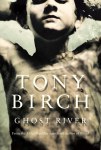
  • Tony Birch’s Ghost river (UQP, 2015) (my review): novel set in working class Melbourne in 1960s; long-listed for the 2016 Miles Franklin Award.
  • Ali Cobby Eckermann’s Inside my mother (Giramondo, 2015): poetry collection.
  • Lizzie Marrkilyi Ellis‘ Pictures from my memory: My story as a Ngaatjatjarra woman (Aboriginal Studies Press, 2016). (Yvonne’s Stumbling through the past review): memoir by a Central Australian woman.
  • Stan Grant’s Talking to my country (Lisa’s ANZlitLovers review): memoir, exploring the complicated experience of growing up black in a white dominated world.
  • Ambelin Kwaymullina’s The foretelling of Georgie Spider (Walker Books, 2015): the last in her Young Adult fantasy series, the Tribe trilogy, set in a post-apocalyptic world in which Aboriginal culture and philosophy play a significant role.
  • Marie Munkara’s Of ashes and rivers that flow to the sea (Vintage, 2016): memoir about her search for her origins. (I read her David Unaipon award-winning Every secret thing, and loved her voice)
  • Lesley and Tammy Williams’ Not just black and white (UQP, 2015) (Lisa’s ANZLitLovers review): won the David Unaipon Award in 2014

I decided to focus just on 2015 to 2016, but in my research I included the new biennial Indigenous Writers Prize in the New South Wales Premier’s Literary Awards, and found that the 2016 joint winners were books published in 2014, so I’m including them too:

  • Bruce Pascoe’s Dark Emu (Magabala Books, 2014) (Lisa’s ANZLitLovers review): analyses pre-colonial indigenous Australian culture suggesting that it was more “settled” than the common “hunter-gatherer” assumption. (I’ll be reading this with my reading group later this year.)
  • Ellen van Neerven’s Heat and light (UQP, 2014) (my review): collection of stories, some connected, some not, and including a longform speculative story, about living as an indigenous person in contemporary Australia.

But what am I hoping to read? First up, an older book, Ali Cobby Eckermann’s Ruby Moonlight, followed by, if I have time, a newer one, Stan Grant’s Talking to my country.

Do you make a point of reading indigenous literature? And do you have favourites?

Monday musings on Australian literature: Explorer’s journals (1, Edward John Eyre)

I have delved before into Australian explorer’s journals when researching posts, but I must admit that I’ve never read one right through. However, I don’t think that prevents my sharing some of the things they have to offer …

Project Gutenberg Australia (PGA), which I’ve described before, is a rich resource of a wide variety of copyright-free works, including, not surprisingly, Australiana. And a special subset of this Australiana area is its Journals of Australian Land and Sea Explorers and Discoverers collection. This is, they say, “one of the most comprehensive collections [in e-book form] in the world of the journals of Australian explorers”. The earliest journal is from Abel Tasman in 1642, and the latest seems to be from David Carnegie who “led one of the last great expeditions in the exploration of Australia” at the end of the nineteenth century.

Most of you know that Australia was first settled (invaded, as indigenous people with valid reason call it) in 1788, but sightings and brief landings had been occurring for well over a century before that. PGA writes:

In March 1606 Willem Janszoon, on board the Duyfken, charted about 300 km of the west coast of Cape York Peninsula in Queensland. He is the first authenticated discoverer of Australia.

White discoverer, that is, as indigenous Australians had found it long before that. But, here’s the thing, all this European exploration really only touched the coast, so when the first settlers landed they knew nothing about the interior – and they wanted, needed, to find out what was here. Was it arable, was there water, and could we build tracks, telegraph lines etc through it? Did they also want to know, with any seriousness, “who” beyond the idea that there were “natives” who might help or hinder what they wanted to achieve?

I will probably write a few posts (not sequentially or chronologically) on these journals over time, but in this post I want to share some of explorer Edward John Eyre’s (1815-1901) comments on indigenous Australians. (For an overview of his expeditions, you can check out his entry in the Australian dictionary of biography.)

The invasion of those ancient rights …

Edward John Eyre, c. 1870

Edward John Eyre, c. 1870, by Henry Hering, (The Caribbean Photo Archive) [Public domain], via Wikimedia Commons

I was inspired to write this post when I was looking at Eyre’s journal for last week’s Lake Eyre post, and noticed references to “natives” in the chapter summaries, such as “Plundered by the natives” for Chapter 8. The journal was published in 2 volumes in 1845, with the second volume comprising “an account of the manners and customs of the Aborigines and the state of their relations with Europeans”. This was partly based on his experience, from 1841 to 1844, as a resident magistrate and protector of Aborigines, at Moorundie, on the Murray River.

He summarises his views regarding indigenous people in the preface which he addresses to Lieut.-Colonel George Gawler “under whose auspices, as Governor of South Australia, the expeditions… were undertaken”:

For the account given of the Aborigines the author deems it unnecessary to offer any apology; a long experience among them, and an intimate knowledge of their character, habits, and position with regard to Europeans, have induced in him a deep interest on behalf of a people, who are fast fading away before the progress of a civilization, which ought only to have added to their improvement and prosperity. Gladly would the author wish to see attention awakened on their behalf, and an effort at least made to stay the torrent which is overwhelming them.

It is most lamentable to think that the progress and prosperity of one race should conduce to the downfall and decay of another (my emph); it is still more so to observe the apathy and indifference with which this result is contemplated by mankind in general, and which either leads to no investigation being made as to the cause of this desolating influence, or if it is, terminates, to use the language of the Count Strzelecki, “in the inquiry, like an inquest of the one race upon the corpse of the other, ending for the most part with the verdict of ‘died by the visitation of God.'”

He supports his views and experience, he says, with “the testimony of others … those who are, or who have been resident in the Colonies, and who might therefore be supposed from a practical acquaintance with the subject, to be most competent to arrive at just conclusions”. He believes that “the interests of two classes”, that is, the “Settlers”, and the “Aborigines”, need to be provided for, and argues that

it is thought that these interests cannot with advantage be separated, and it is hoped that it may be found practicable to blend them together.

That sounds not only humane but pretty enlightened to me. He proposes “blending” interests which seems a long way from later ideas of “assimilation”, though I don’t know exactly what he means by “blending”.

Concluding his own experience, he writes, that:

During the whole of the three years I was Resident at Moorundie, not a single case of serious injury or aggression ever took place on the part of the natives against the Europeans; and a district, once considered the wildest and most dangerous, was, when I left it in November 1844, looked upon as one of the most peaceable and orderly in the province.

Then we get to Volume 2 where he writes that the “character of the Australian native has been so constantly misrepresented and traduced, that by the world at large he is looked upon as the lowest and most degraded of the human species”. He supports his opposing view to this with Lord Stanley’s statement that the “fault [re different experiences] lies with the colonists rather than with the natives”. A little later he quotes a Mr. Threlkeld, who, in a speech to the Auxiliary Aborigines’ Protection Society in New South Wales, stated that “the whites were generally the aggressors”.

He continues in this vein throughout, picking up arguments that are negative to indigenous people and beating them down. Here is another quote he includes to support his view, this one from Gawler, himself, responding to a man “who objected to sections of land being appropriated for the natives, before the public were allowed to select”:

The invasion of those ancient rights (of the natives) by survey and land appropriations of any kind, is justifiable only on the ground, that we should at the same time reserve for the natives an AMPLE SUFFICIENCY for THEIR PRESENT and future use and comfort, under the new style of things into which they are thrown; a state in which we hope they will be led to live in greater comfort, on a small space, than they enjoyed before it occurred, on their extensive original possessions.

Not perfect, and paternalistic, but some recognition at least of entitlement! These quotes – or testimonies of others – are included as “notes” and all are cited as to who said them and where.

This is getting long, but I do want to share his thoughtful comment on the application of law:

In addition to the many other inconsistencies in our conduct towards the Aborigines, not the least extraordinary is that of placing them, on the plea of protection, under the influence of our laws, and of making them British subjects. Strange anomaly, which by the former makes amenable to penalties they are ignorant of, for crimes which they do not consider as such, or which they may even have been driven to commit by our own injustice …

These are all from Volume 2, Chapter 1. In the succeeding chapters, he documents the “appearance, habits, mode of life, means of subsistance [sic], social relations, government, ceremonies, superstitions, numbers, languages, etc” of indigenous Australians, noting the impact of Europeans on them. Records like these must surely be useful to indigenous people looking for lost histories not to mention proof of attachment to land.

As for Eyre, after leaving Australia, he had various roles in the colonies, including governor-in-chief of Jamaica where things went rather pear-shaped when he declared martial law in response to a rebellion. He was criticised, back in England, for his harshness back in England, with a Royal Commission, writes ADB historian Geoffrey Dutton, finding “that Eyre had acted with commendable promptitude but unnecessary rigour”. Dutton suggests mitigating circumstances but concludes that “the poignant contrast remains between the … humane protector of the Aboriginals in Australia, and ‘the monster of Jamaica’.”

Monday musings on Australian literature: Blak and Bright

I should have written about the Blak and Bright last Monday, as the Festival was held last weekend, but unfortunately I only heard about it – my inattention, I’m sure – a few days ago, via an ABC RN program (which you can listen to online). However, although the actual Festival is now over, I think it’s still a worthwhile topic – and, anyhow, most of you who read my blog wouldn’t have been able to attend, given it was held in Melbourne.

So, what is (was) Blak and Bright? From the website, link above, it is described as the debut event of the Victorian Indigenous Literary Festival. Their “about” page lists sponsors and supporters, and says:

We believe Indigenous writing is relevant and exciting to literature lovers and readers everywhere.

What a simple, straightforward “mission statement”! Unfortunately, there is no program online. However, there is a list of artists, and from that you can locate the sessions they were involved in. Via this method, I found a fascinating variety. Here are a few:

  • 6 Plays in 60 Minutes: six short play readings from Australia’s longest running Indigenous theatre company, Ilbijerri.
  • Blak Book Club: an opportunity to discuss two Indigenous books, Gayle Kennedy’s Me, Antman & Fleabag and Tony Birch’s Ghost River.
  • Borrow a Rare (Living) Book: opportunity for attendees to have one-on-one sessions with Indigenous storytellers/Elders (Aunty Di Kerr, Uncle Larry Walsh, Aunty Kerry Reed-Gilbert and Aunty Judith ‘Jacko’ Jackson).
  • Cross Continental Conversations: explored the international Indigenous writing scene, by discussing the experiences of a contingent of Aboriginal writers who travelled to the Native American literary organisation, Woodcraft Circle, and the Literary Commons exchange in India. Participants were Lee Francis IV, Bruce Pascoe and Ali Cobby Eckermann.
  • Fresh Blak Writers: Maurial Spearim (playwriting), Hannah Donnelly (speculative fiction), and Elijah Louttit (screenwriting) talking about how they got started with their writing.
  • Ellen van Neerven, Heat and light, book coverPublishing and Editing Blak: about the challenges faced by Blak writers working with white editors and publishers, and the challenges faced by Blak editors and publishers. Posed the question: Is there a need to make Aboriginal language or depiction of culture easy for a white readership? It involved Rachel Bin Salleh, Ellen van Neerven (whom I’ve reviewed) and Sandra Phillips.
  • Sistas are Doing It: Tammy Anderson, Anita Heiss, and Kate Howarth share how to “build and sustain a career as a Blak writer”.
  • Yung, Blak and Bold: involved young writers presenting new ways of presenting the world. “Listen”, the program advised, “as we bust stereotypes and discuss how words in new contexts can activate change”. Featured Benson Saulo, Amelia Telford and Nayuka Gorrie. (All new to me, but that’s the point I guess!)

It looks wonderfully varied, catering for all sorts of interests. It involved several writers I don’t know; and some, like Bruce Pascoe, Ally Cobby Eckerman, Gayle Kennedy, who are on my radar to read. Sessions were supported (sponsored I presume) by some wonderful literary “players” like the Small Press Network and the Stella Prize. I would be interested to see an assessment of how it went, recognising that these sorts of events can take a few years to build.

There is a blog on the site. I’m not sure if it will continue post-festival, but in addition to posts about events, it has a series on the topic “Why I read Blak?”:

  • Associate Professor at the Graduate School of Language and Culture at Osaka University, Sei Kosugi: on the global reach of Australia’s Indigenous storytellers, naming a couple of the writers she teaches and why.
  • Writer and crossword-maker, David Astle: on “an important lesson he’s learnt from reading Blak”.
  • Writer Drusilla Modjeska: on the various ways reading Blak has enriched her reading and writing life. She looks more widely, starting with African writer China Achebe’s Things fall apart (which I will be reading and reviewing in a few months – at last!)
  • Our very own Auslit blogger Lisa Hill: on the value to her of reading books by Indigenous Australians. She writes that “I feel as if I am being invited to get to know my country better. I’m being welcomed in to share in an ancient story”.

Finally, in the RN program I heard (link in the opening paragraph), Anita Heiss spoke on why people should read Blak. She has fleshed it out on her blog. It not only gives excellent reasons – such as “we write human rights” and “we write the search for self” – but it provides a useful but by no means complete list of works and authors well worth checking out.

My encounter with Encounters

I rarely write about museum exhibitions, and when I do it’s usually in the context of a travel post, but I do want to share with you our National Museum of Australia’s current exhibition, Encounters. Subtitled “Revealing stories of Aboriginal and Torres Strait Islander Objects from the British Museum”, it is described by the Museum as “one of its most important exhibitions”. That could sound, of course, like your typical promo-speak, but in this case I’m inclined to agree. Encounters is a very interesting and, yes, important exhibition – one that is not without its controversy.

The foundation pieces of the exhibition are 151 Aboriginal and Torres Strait Islander objects, including masks, shields, spears and spearheads, didgeridoos, baskets and head dresses, which were collected by a wide range of people – settlers, explorers, administrators, and so on – between 1770 and the 1930s, and which are now held by the British Museum. Complementing these are 138 contemporary items, some specially commissioned for the exhibition. The objects are supported by excellent interpretive labels which convey both the history of the objects and contemporary responses to them. The end result is a conversation between past and present that is  inspiring and mind-opening.

I’m not going to formally review the exhibition. You can read a thoughtful one published in the Sydney Morning Herald last month, including a discussion of the repatriation controversy. (Thanks to brother Ian for pointing me to this review). Instead, I’m just going to comment about its impact on me. So, here goes …

One message I took from the exhibition is not a new one at all, really, but more a confirmation: it’s that indigenous people, like all of us, are not one! It is way too easy for us (no matter who “us” are) to simplify “other” (no matter who “other” are). We tend to think that “they” all think the same, but obviously, like “us”, “they” don’t! This is made patently clear in Encounters where we see different responses by different indigenous communities to the objects. Some are adamant that their objects should be returned to them. Others may agree with that, but that’s not their priority (perhaps because they realise such a goal may not be realistic, in the short term at least!) They, such as Robert Butler, a Wangkangurru man from the Birdsville area, believe that the objects should not have been taken in the first place but recognise that the fact that they were now means they are available once again. Still others argue that the important thing is not the object itself, but the knowledge and skill they can obtain from it. Obtaining knowledge and practising skills that can be passed on, they argue, are the crucial thing, because they are critical to indigenous people’s identity and mental health.

I was consequently interested, for example, in a comment from the Noongar community regarding objects that had been collected by a young Englishman Samuel Talbot in the 1830s. He made detailed notes about the objects, demonstrating his keen interest in understanding Noongar culture. Present day Noongar woman, Marie Taylor, says:

I want to acknowledge the white people who sat down with the Aboriginal people, who wrote the stories down, who collected this information that still exists today. Down here in Noongar country, we may have lost all of that had it not been for many of these people.

Talbot is one of many such people. Lieutenant Dawes, about whom Kate Grenville wrote in her historical novel The lieutenant (my review), is another. Taylor’s response is, though, a generous one, since had there been no white people, they would not have lost (or been at risk of losing) their culture in the first place!

Bagu figures, contemporary objects from the Girringun Aboriginal Art Centre, Cardwell, north Queensland

Bagu figures, contemporary objects reflecting the past, from the Girringun Aboriginal Art Centre, Cardwell, far north Queensland

A very different story comes from far north Queensland. The panel that accompanies a shield, club and basket is titled “Guerrilla warfare”. The objects were collected in the 1860s by settler John Ewen Davidson at Rockingham Bay. He’d gone there, we’re told, “in 1866 to establish a sugar plantation. He began as a shocked observer of the violence of the occupation, yet within six months he was part of it”. Coincidentally, this story reminded me of another Grenville novel, The secret river, in which her fictional protagonist commenced with the aim of being peaceful but he too got caught up in violence.

Then there’s a comment that touched me on a more deeply personal level. It comes from Aunty Barbara Vale, a Dieri elder in South Australia. She says:

When I visit Killalpaninna I get a strong feeling of belonging. It’s our land, Dieri land. I feel safe and relaxed and always come away feeling good for having been there.

Now, I know my connection to the land is nothing like that of an indigenous person’s sense of belonging to and responsibility for their country, but Vale describes perfectly how I feel each year when Mr Gums and I go to Kosciuszko National Park – safe, relaxed, and a lovely sense of well-being. I don’t presume at all that my feeling is the same – it’s not – but her statement did give me a sense of connection, and, in that, of the validity of my own “truth”.

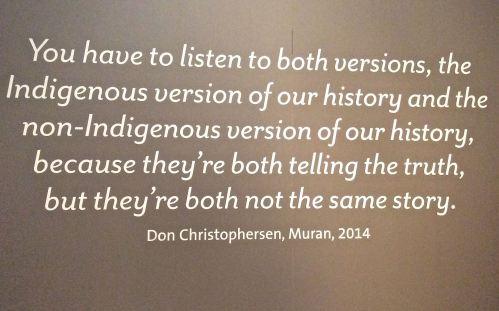
Towards the end of the exhibition, I came across a recent statement by Don Christopherson, a Muran man. He said:

Christopherson

And that is the spirit I’d like to think we all have in Australia today. It is surely the only real way we can move forward. Objects like the ones in this exhibition are crucial to this process, because, as one elder said, they bring the past into the present, which then enables us to move into the future. And, I’d say, they provide an excellent basis for a conversation.

A wonderful exhibition that I’ll try to visit again.

POSTSCRIPT: Here is a link to short films included in the exhibition. Many depict the way contemporary indigenous Australians are making objects today – some making traditional objects, some making modern ones commenting on contemporary relationships and concerns (like the ghost net project on Darnley Island – Erub – in the Torrest Strait).

Monday musings on Australian literature: Utopia, Paraguay and Australian writers

The workingman's paradise (Courtesy: Sydney University Press)

The workingman’s paradise (Courtesy: Sydney University Press)

Utopia, Paraguay, Australia? I’m referring, of course, as many Australians will know, to the Utopian colony, New Australia or Colonia Nueva Australia, which was established in Paraguay in 1893 by the New Australia Movement, with the support of the Paraguayan government. This movement was founded by William Lane, whose novel The workingman’s paradise I reviewed quite early in this blog. The settlement did not succeed. According to Wikipedia (linked to above), conflict started early “over prohibition of alcohol, relations with the locals and Lane’s leadership”. Colonist Tom Westwood is quoted as saying, “I can’t help feeling that the movement cannot result in success if that incompetent man Lane continues to mismanage so utterly as he has done up to the present”. Oh dear.

The settlement has been written about by historians (Gavin Souter’s A Peculiar People and Anne Whitehead’s Paradise Mislaid) and at least one novelist, Michael Wilding‘s The Paraguayan Experiment. Australian travel writer Ben Stubbs has written about his trip to talk to “remnants” of that settlement in his Ticket to paradise: A journey to find the Australian colony in Paraguay among Nazis, Mennonites and Japanese beekeepers. Several musicians have also written songs about it, according to Wikipedia.

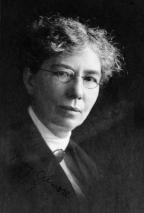
Mary Gilmore, 1927 (Public Domain, at State Library of QLD, via Wikipedia)

Mary Gilmore, 1927 (Public Domain, at State Library of QLD, via Wikipedia)

So why am I mentioning all this now? Well, it has to do with those creative Griffyns and their last concert for the year, titled The Utopia Experiment, which is inspired by this settlement. I’ve known, of course, all year that it was coming up, but an article in today’s Canberra Times, which reminded me of other (contemporary) literary links besides Lane, encouraged me to write this post. The main link is Dame Mary Gilmore (née Mary Jean Cameron) who, in the first half of the twentieth century, was regarded Australia’s greatest woman poet. According to NSW’s Migration Heritage Centre website, she said of Lane’s The workingman’s paradise that:

 the whole book is true and of historical value as Lane transcribed our conversations as well as those of others.

Gilmore, in fact, became one of the 200-odd settlers, but returned after 5 years. She said in an interview over 60 years later that:

It was purely communistic. I wouldn’t say it was a success, but I certainly wouldn’t say it was a failure. The reason it had to break up, or disappear, is because William Lane would only have British people in it…

The aforementioned Anne Whitehead has written a book specifically on Gilmore’s Paraguayan story, Bluestocking in Patagonia: Mary Gilmore’s quest for love and Utopia at the world’s end, suggesting, says reviewer Sarah Macdonald, that Gilmore joined the settlers as much in search of a prospective husband as for the socialist ideal. Perhaps so, but she must have been looking for a particular type of husband to take such a trip!

A 1911 newspaper article quotes Renmark Pioneer editor, who knew Gilmore at the time, as stating that she:

joined the Cosme Colony in Paraguay, where a number of us, under the leadership of William Lane, were giving communism a trial. We were at that time a very happy family, and Mary Gilmore entered into the life whole-heartedly. She rendered good service to the colony, not only taking charge of the school (thereby releasing the former teacher, John Lane, for work in the fields), but doing much to add to the success of the social gatherings that were a marked feature in the life of our little community.

Mary Gilmore went on to live a long and highly productive life, dying in 1962 when she was 97. She was a socialist and activist, a poet and journalist, who argued for better conditions for working women, children and indigenous Australians. (Critic A.G. says in the Age in 1941 that “Her association with the early days of the Australian Labor movement has deepened and widened her social outlook … she speaks especially for the “little” people”).

Her Paraguay experience followed her for the rest of her life, as the National Library of Australia’s Trove reveals. Here is a description of her in a 1923 newspaper, Melbourne’s Advocate, when she would have been 58:

Mrs. Gilmore, who was one of the band that went to Paraguay with the late William Lane on the New Australia adventure, is a proven Irish sympathiser as well as a good Australian.

“A proven Irish sympathiser as well as a good Australian”. What I love about reading old newspapers is the insight they give into the thinking and values of the times.

The literary links don’t end here, however, because Gilmore was very keen for that other great Australian poet-writer of the time, Henry Lawson, to join the settlers. Certainly Lawson had the appropriate socialistic leanings. In 1893, he wrote a poem, “Something better” supporting the Paraguayan vision:

Give a man all earthly treasures – give him genuine love and pelf* —
Yet at times he’ll get disgusted with the world and with himself;
And at times there comes a vision in his conscience-stricken nights,
Of a land where “Vice” is cleanly, of a land of pure delights;
And the better state of living which we sneer at as “ideal”,
Seems before him in the distance — very far, but very real.

However, he didn’t join the settlers.

I could explore these two writers more, but life is busy right now – and, you never know, I might return to the subject after the Griffyns have presented their musical version.

Monday musings on Australian literature: David Unaipon Award

David Unaipon (Courtesy State Library of NSW, via Wikipedia. Public Domain)

David Unaipon (Courtesy State Library of NSW, via Wikipedia. Public Domain)

I’ve mentioned the David Unaipon Award several times in passing but have never devoted a post specifically to it. Today seemed to be a good time to do it, as it would mean I’ve bookended this year’s NAIDOC week with Monday Musings posts devoted to indigenous literature.

Just to recap, David Unaipon is credited as the first indigenous author to be published, with a commissioned book on Aboriginal Legends in the early 1920s. He is featured on Australia’s $50 note. To commemorate him, the David Unaipon Award for unpublished Aboriginal and Torres Strait Islanders was established in 1988, and has had a rather chequered career. In 1999, it became part of the Queensland Premier’s Literary Awards. When those awards were abolished in 2012 by new Premier Campbell Newman, it was carried over to the new Queensland Literary Awards.

I have read and reviewed several past winners on this blog: Ellen van Neerven’s Heat and Light (2013), Jeanine Leane’s Purple Threads (2010), Marie Munkara’s Every Secret Thing (2008), and Tara June Winch’s Swallow the Air  (2004, originally titled Dust on Waterglass). 

But this is only a start. The list of winners, from the first award made in 1989, represents a useful list for anyone looking for works by indigenous authors to read. Here are a few writers that I’m keen to follow up:

  • Samuel Wagan Watson, a poet, who won in 1999 with Of Muse, Meandering and Midnight. According to the New South Wales Writers’ Centre this work is “a collection of moments: snatches of life in urban Brisbane, glimpses into childhood recollections”. Watson is a well-known raconteur, and during NAIDOC Week last week, I heard him recite a very entertaining, gently subversive poem “A message to my publisher”. It reminded me that I need to keep him high in my TBR list, either this book or one of his later ones.
  • Larissa Berendt, a writer, lawyer and academic, who won in 2002 with her novel Home. This novel also won the Commonwealth Writers Prize for Best First Novel in the south-east Asian/South Pacific region. It explores the complex notion of “home” for people for whom home has become a fraught notion: they’ve been dispossessed, stolen, or separated for a variety of reasons from their roots and significant connections. Her second novel, Legacy, won the Victorian Premier’s Literary Award for Prize for Indigenous Writing in 2010. She is frequently recommended to me, and so is also high on my TBR list.
  • Gayle Kennedy, a writer who won in 2006 with her “road trip” novel Me, Antman and Fleabag. It was also shortlisted for the Victorian Premier’s Literary Award and Deadly Award. She was featured in a Guest Post on the Australian Women Writers Challenge last week so, rather than add my own words here, I’ll just point you to there! Fair enough? (There’s an added incentive for visiting that post. If you read and review a work by an indigenous Australian in July you can go in the draw to win a copy of Me, Antman and Fleabag.)
  • Dylan Coleman, a more recent winner of the award, winning in 2011 with Mazin’ Grace. It was also shortlisted for the Commonwealth Book Prize and longlisted for the 2013 Stella Prize. Like Marie Munkara’s Every secret thing, its subject is mission life, a significant part of indigenous Australian experience and a story that needs to be told.

These are just four from a much longer list. I have no idea how many of these books are still in print, but hopefully most if not all are available in libraries. I wonder?

Monday musings on Australian literature: NAIDOC Week 2015

Australians will be aware that this week, July 5 to 12, is NAIDOC Week. NAIDOC originally stood for National Aborigines and Islanders Day Observance Committee, the committee that was once responsible for organising national activities during NAIDOC Week. However, this acronym has now become the name of the week, which suggests just how significant, and well-accepted, this week is now on Australia’s calendar.

The Week aims, as you would expect, “to celebrate the history, culture and achievements of Aboriginal and Torres Strait Islander peoples”, and in doing so, to encourage all Australians to recognise and better understand indigenous Australians. Each year the week has a theme, and this year it is We all Stand on Sacred Ground: Learn, Respect and Celebrate.

This theme, according to the NAIDOC website

highlights Aboriginal and Torres Strait Islander peoples’ strong spiritual and cultural connection to land and sea. The theme is an opportunity to pay respects to country; honour those who work tirelessly on preserving land, sea and culture and to share the stories of many sites of significance or sacred places with the nation.

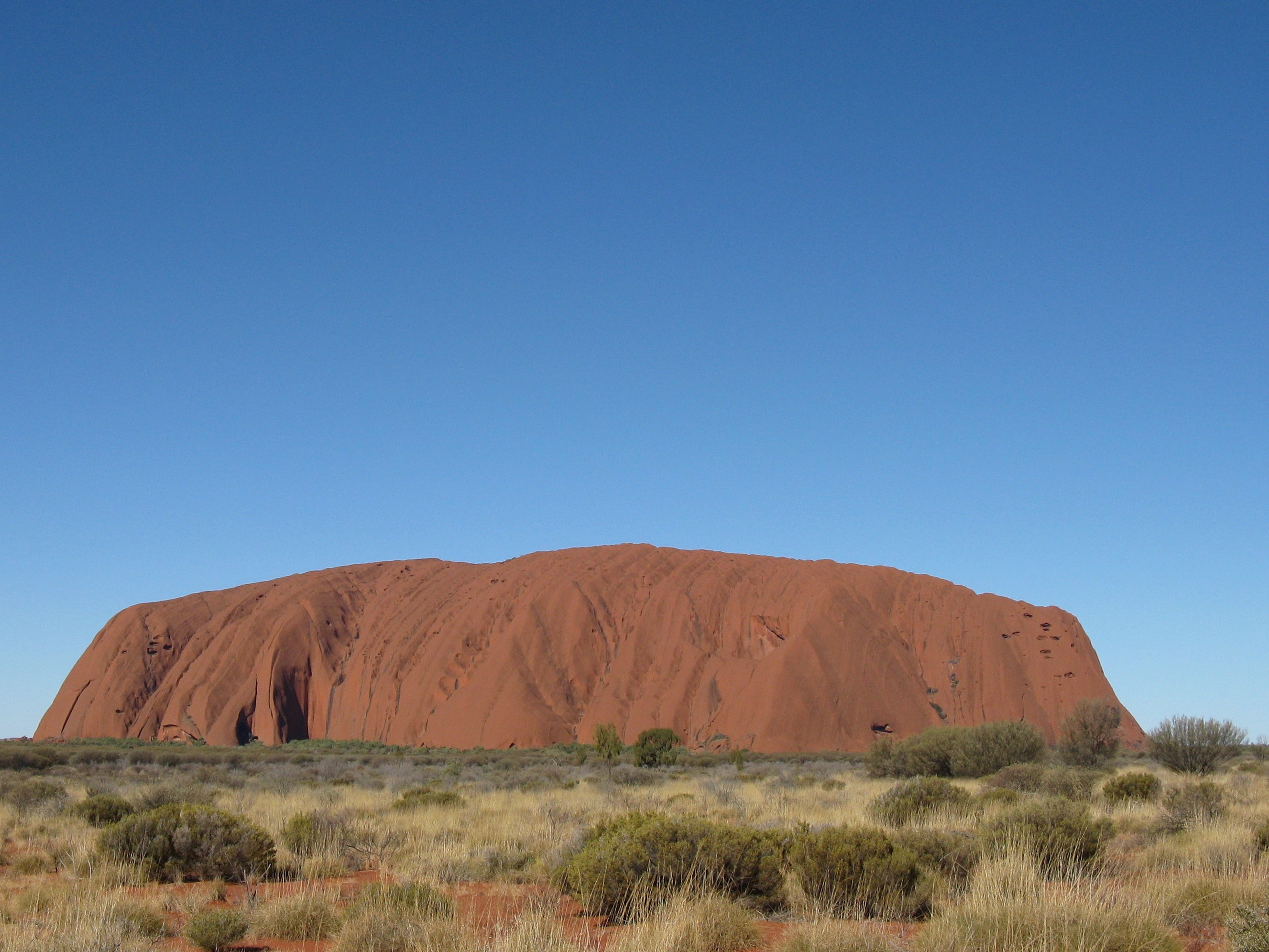
Uluru

Uluru, taken August 2009

The site also tells us that this theme was particularly chosen this year “to highlight and celebrate the  anniversary of the ‘Handback’ of Uluru, one of these sacred sites, to its traditional owners on 26 October 30 years ago”. To that I say, wonderful, as I am visiting Uluru for my third time later this month.

I know my ways of celebrating and supporting indigenous Australian culture are pretty tokenistic in the scheme of things, but in the spirit of this week I thought I’d share with you some of the rather eclectic things I do throughout the year as the opportunities arise:

  • engage with local indigenous culture when I travel, mostly through tours led by indigenous Australians;
  • attend exhibitions featuring indigenous Australian art and culture, ancient, traditional and contemporary;
  • donate to the Indigenous Literacy Foundation;
  • attend performances by the Bangarra Dance Theatre; and,
  • read Indigenous Australian literature (though I don’t seem to read anywhere near as much as I’d like to).

It’s this last way, of course, that is most appropriate to my blog, so to mark this NAIDOC Week, I’m sharing links to posts written by me, and, with her permission, Lisa Hill (ANZLitLovers), on Indigenous Australian literature:

Some of you will know that Lisa has for the last few years run an Indigenous Literature Week during NAIDOC week but, as she wrote recently, this year she plans to run it to coincide with the First Nations Australia Writers’ Network Workshop which will be held in Melbourne next month. Watch out for that.

Meanwhile, Lisa and I hope our links help you discover more about Indigenous Australian culture through literature.