Monday musings on Australian literature: Reading and publishing, pandemic-wise

In his 1946 essay, “The prevention of literature”, George Orwell named “the unwillingness of the public to spend money on books” as one of the threats to literature. I commented in my post that I didn’t know how that stood now in England, but that I thought Australians were currently buying books. The week’s Monday Musings seemed a good opportunity to check this out.

It didn’t take long to confirm. Jason Steger, literary editor for The Sydney Morning Herald and The Age, reported on 4 June, in his weekly emailed newsletter, that:

total book sales in Australia, according to Nielsen BookScan, jumped by 9 per cent to 66 million in 2020 … It’s proof that even as we sink more and more time into streaming services and social media, we’re still finding entertainment and enlightenment in books, and increasingly so during times of crisis and change.

This confirms what the Australian and New Zealand book industry’s Books+Publishing reported last (southern) spring (30 September):

For the first eight months of 2020, adult fiction sales were up 12% in value compared to the same period in 2019, and children’s, YA and educational sales were up 7%, according to data from Nielsen BookScan. Only adult trade nonfiction was lagging slightly, with sales down 1%.

This includes some catch-up, because, apparently, sales were down 3% in 2019 after 5 years of “marginal growth”.

Unfortunately, the figures do not include “ebooks and audiobooks, as their sales aren’t tracked in Australia in any reliable way”. We don’t know, therefore, whether, with lockdowns, more people turned to eBooks, making the increase even better than they look.

On the other hand …

While this looks positive, it’s not evenly so. Books+Publishing notes that bookshops in major city centres and some shopping centres struggled – particularly in Melbourne with its long lockdown – while sales in suburban strip shopping centres and regional towns were up on last year. The major winners were the online retailers and discount department stores. I don’t know whether these “online retailers” include the bricks-and-mortar shops which introduced online options.
Book cover

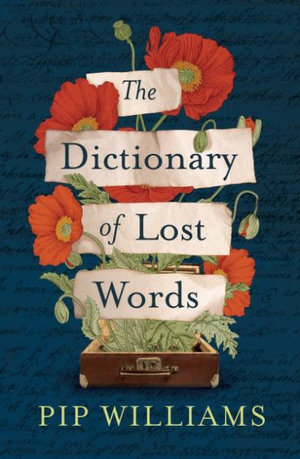
Books+Publishing also looked at the impact on publishing. They reported that major publishers “appear to have weathered the fallout from Covid-19 better than many of the smaller publishers, particularly those with titles doing well in discount department stores, chains and online retailers”. Many smaller publishers reported significant declines in sales. An exception was Melbourne’s Affirm Press which chose not to delay publishing any of its titles. It had excellent results with Pip Williams’ debut novel The dictionary of lost words which went into reprint in its first week.

Steger takes up the impact on writers, particularly debut authors who had “book launches, festival appearances and publicity tours cancelled”. He links to Melanie Kembrey’s article on how “six authors got their books published – in the hardest of times”. The article, actually, focuses more generally on these debut authors than on the impact of COVID-19, but a couple of authors do talk about it. Sam Coley, author of State Highway One, had a sense of humour about it saying:

Since you’re not going to make any money out of it, that’s the real fun part of it, drinking wine on our publisher’s expense account … It was disappointing. It was difficult to launch a book online and then still be inside your own house.

He also had a publicity tour of New Zealand cancelled (thus missing more excellent wine-drinking opportunities, I’d say!)
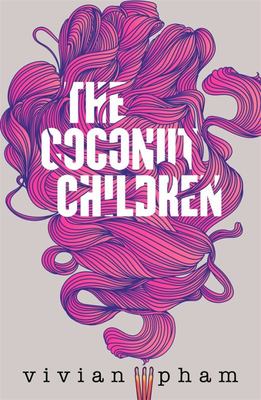
Vivian Pham, author of the well-regarded The coconut children, was “relieved” that the coronavirus meant cancellation of public events. It was a silver lining, for her, as it gave her time to process what was happening. She didn’t feel “ready”, having had no “public speaking” experience. She said she’d “mainly been doing online events and book clubs which feel really personal.” She liked that the pandemic “slowed things down” because it had been “overwhelming.”

Many of you will have seen/attended online events, like those mentioned by Pham. One lovely one that I attended was Writers in Residence, which focused on emerging writers. Blogger Lisa (ANZLitLovers) offered to host Virtual Launches and had three authors take this up.

What sold?

You may have noticed in the figures above that most areas increased, except for adult nonfiction which showed a small decrease. Steger reported in January on 2020’s bestselling books. He starts by noting a trend already under way, “the continuing absence of one of the staples of many annual bestseller lists, international and American fiction, particularly crime”. How interesting.

A decade ago, the top 10 books sold in Australia included only one Australian book (a cookbook), says Steger. However, in 2020, only two US books were on the list (one being Delia Owens’ Where the crawdads sing). Mark Newman, managing director of the 57-shop Dymocks chain, said there’s been a growing trend towards Australian stories. This started in 2016 with Jane Harper’s The dry. Novels which appeared in 2020’s top 10 included Trent Dalton’s All the shimmering skies and Jane Harper’s The survivors. Newman said that 2020 had been “particularly strong for Australian authors with new books.
Bruce Pasco, Dark emu

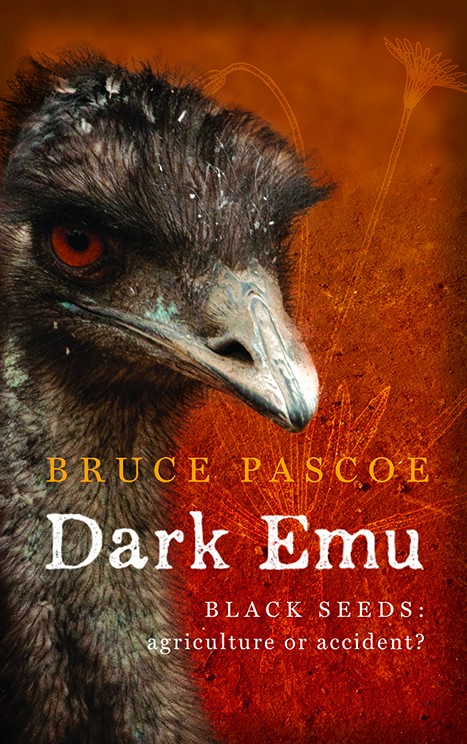
Other Australian books which appeared in the top 20 included Julia Baird’s Phosphorescence and Bruce Pascoe’s Dark emu which was first published in 2014.

Books+Publishing categorised what people were reading, and came up with “escapist fiction, self-help and children’s books (middle grade)”. According to Allen & Unwin, crime by both Australian and international authors, was selling well, particularly from “well-loved local and international authors … as people are looking for something they know they will enjoy”. This was not me. Although for reasons many of you know I read less, my reading preferences didn’t change.

Anyhow, Books+Publishing writes,

In the absence of browsing opportunities, established brands, titles and authors were the clear winners. ‘Debut literary fiction has been more challenging,’ says Sherwin-Stark [Hachette Australia]. ‘In normal times, our debut authors would be out and about meeting booksellers and readers on publication, and this has just not been possible.’

The impact of the lack of “browsing” is something I hadn’t considered. You can browse books online, but, do you? Do you?

Sherwin-Stark also says something that I’m sure many of us observed: 

“the pandemic has encouraged the industry to get more creative in their promotion. ‘Publishers and bookshops have been incredibly innovative to find ways to connect readers with authors—virtual events are excellent and attracting very large viewing audiences and these events will become a part of our promotional mix permanently.’

So there it is … a little round-up on the pandemic’s impact on the bookselling and publishing.

I’d love to hear about your experience of pandemic reading?
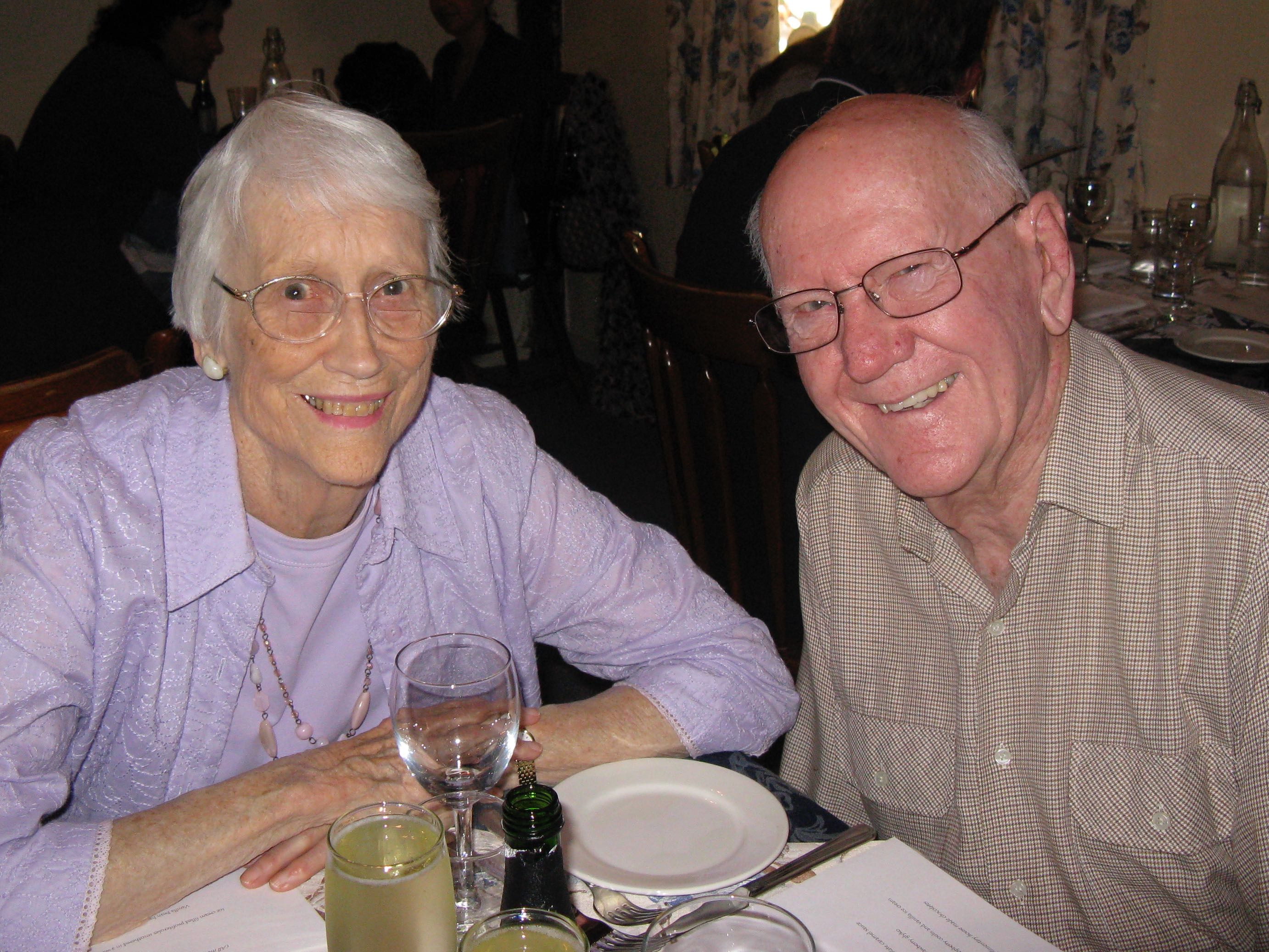
Vale my dear old Dad (1920-2021)

If it was my Mum who introduced me to Jane Austen and the classics of English literature, together with a love of language (and thus Scrabble and cryptic crosswords), it was my Dad who introduced me to Australiana, starting in my youth with the verse (as the poet himself called it) of Banjo Paterson. The grandson of a Presbyterian minister, my father never swore, but he’d read with great gusto the lines ‘”Murder! Bloody murder!” cried the man from Ironbark’. And we kids loved it. As Dad’s eyes deteriorated in his last years, he gave up reading books, but the book he kept by his chair-side, and the book he was last seen dipping into, was a book of Paterson’s verse.

Born in 1920, and living through the heyday of Australia’s development in the twentieth century, Dad loved stories about Australian pioneers of all sorts, from the exploits of Charles Kingsford-Smith to those of cattle kings like the Duracks. Mary Durack’s Kings in grass castles was one of his favourites, at least from the time when I was old enough to be aware of his reading. In later years, he became more aware of the politics of Australia’s colonial settlement and appreciated our need to revise our understanding of frontier life, but I don’t think that ever completely removed his love of these ventures. Dad, of course, also lived through the Depression and Second World War, with the latter inspiring another major reading interest, the history of the War. (He didn’t read a lot of fiction, being of that generation of men who felt fiction wasn’t quite as worthwhile as non-fiction).

My other main memory of Dad and books comes from the days when, as a very little girl, I would go to my parents bedroom in the morning – much to my mum’s chagrin as she loved a sleep-in – with my “twenty-eight books”. It wasn’t 28 of course, but for some reason, that was the number I would say. One of those books featured Jiminy Cricket, and Dad would feign great fear as I shoved this terrifying creature under his nose! This became a lasting in-joke between us for the rest of his life.

Now, though, Dad has gone – peacefully, at the excellent age of 100 years and 8 months – and I am left with these memories, along with the enduring knowledge of a man who loved me very much, who never failed to support me and compliment me, and who set an example of integrity, honesty, acceptance, stoicism, and love of and responsibility for family. He, like all of us, had his moments, but his, like Mum’s, was a life well-lived, one that will continue through our memories and through the lives of all those who loved him.

Vale, Dad. Go well, and thanks.

Monday musings on Australian literature: Political biography

With the US election going, going … but not quite gone it seems … and with a new biography of President-elect Joe Biden, Joe Biden: The life, the run, and what matters now by Evan Osnos, hitting the bookstands, I thought it might be apposite to consider the political biography in Australia. By “political biography”, I mean, not those multitudinous memoirs that seem to come out with mind-numbing regularity soon after a major leader leaves the stage, nor the more formal autobiographies, but those extensively researched, analytical, and hopefully objective presentations of politicians’ lives written not by themselves.

Researching this topic, I found a 2006 monograph documenting a workshop on political biography and administrative histories held at the ANU in May 2005. (This workshop, incidentally, included autobiographies and memoirs.) In the final chapter, it says of an informally generated list of “favourite” political biographies that:

all of them tell us about how we are governed, explain the thinking of past leaders, and contribute to political science by illustrating how personalities affect our political structures and policy. … all have contributed to a greater understanding of how politics works.

However, in the monograph’s preface, the writers recognise that political biography is a tricky beast, often being written by those who have sympathy for their chosen subject and who, therefore, tend to write favourable books. But, they argue,

biographies (and autobiographies) have much to offer the student of politics. Political biography is an alternative narrative of events — a personalised view stressing the familiar and the specific. It contributes the views of political actors — sometimes in a contemporary context, sometimes with the benefit of hindsight. It can reinforce existing accounts of events or produce new accounts. It can add new perspectives and insights to existing accounts. It provides a medium through which the personal ‘take’ on politics is able to be ‘written in’ to conventional accounts. Crucially, political biographies are often the most accessible and widely read form of political writing, attracting readerships beyond the purely scholarly interest or the political junkie market.

One of the most famous and authoritative political biographies of recent times is American Robert Caro’s five-volume The years of Lyndon Johnson, of which four have so far been published. Caro is now 85, which begs the obvious question, but you can read about his progress at the Wikipedia link I’ve provided.

Selected Australian political biographies

Book cover

Below is a very select, and somewhat randomly chosen, list of recent-ish Australian political biographies. They are listed chronologically by date of publication, although to follow tradition I should perhaps have listed them alphabetically by biographical subject, or, even more interestingly, chronologically by birthdate of subject! Not surprisingly, these are all about prime ministers.

  • Blanche d’Alpuget’s Robert J Hawke: A biography (1982). One of the rare political biographies I’ve read (because my biographical interest tends towards literary subjects), this biography was published the year before Hawke became Prime Minister. It won the NSW Premier’s Douglas Stewart Prize for Non-fiction in 1983. D’Alpuget, who married Hawke in 1995, wrote a “complete biography” of Hawke, which was published in 2019, the year he died.
  • Allan Martin’s 2-volume Robert Menzies: A life (1993, 1999). I had to include this one, given Menzies was, in his time, and still remains, Australia’s longest-serving prime-minister.
  • Jenny Hocking’s 2-volume Gough Whitlam: The biography (2008, 2012). These volumes are just two of many biographies written about Whitlam, and just two of the several books written about him by Hocking. Hocking came to public notice recently for her successful court case to have the embargo lifted on secret correspondence [now dubbed the “palace letters”] between the then Governor-general, Sir John Kerr, and the Queen concerning the controversial dismissal of  Whitlam’s government.
  • Judith Brett’s The enigmatic Mr Deakin (2018). Deakin was Australia’s second prime minister, so Brett’s biography is certainly one of those able to “benefit from hindsight”. This book won the National Biography Award in 2018, with the judges calling it among “the very best political biographies written in Australia”.
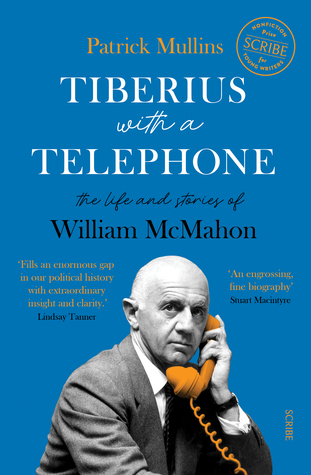
  • Patrick Mullins’ Tiberius with a telephone: The life and stories of William McMahon (2019). Having studied political biographies, Mullins wanted to write one, and McMahon – funnily enough – was there for the taking. So Mullins told the audience at last year’s Canberra Writers Festival. Good decision, because Mullins won two big awards with this – the National Biography Award and the NSW Premier’s Douglas Stewart Prize for Non-fiction. The NSW Premier’s Award judges commented that this was “an impressive work of political biography, an achievement all the greater for its unpromising, though fascinatingly complex, subject”. Poor Billy! 
Book cover er

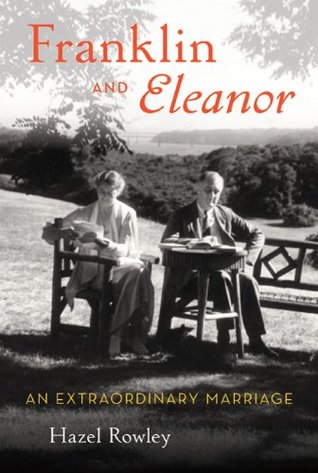
And here I’m going to sneak in one I have reviewed here. The subjects are not Australian, but the biographer is. The book is Hazel Rowley’s Franklin and Eleanor: An extraordinary marriage (2011) (my review).

A matter of definition

But here’s the interesting thing. While Franklin and Eleanor is about two consummate politicians, Rowley’s focus was their marriage. This made me think about who writes political biographies – in Australia anyhow. They tend not to be our “professional” biographers – people like Rowley, Brenda Niall and now, I’d say, Gabrielle Carey – but historians, like Judith Brett, Jenny Hocking and Allan Martin. Is the driver for writing political biographies a little different?

Journalists – like Blanche d’Alpuget, David Marr, Chris Masters – also tend to write biographies with a political bent, though sometimes their subjects are not politicians. Would we call Masters’ biography Jonestown: The power and myth of Alan Jones a political biography? Would we call David Marr’s books, Barwick on Australia’s longest-serving Chief Justice of Australia’s High Court, and The Prince about Cardinal George Pell, political biographies? Not technically, perhaps, but politics surely inspired and drove these books. Your thoughts?

And now the obvious question: Do you read political biographies? And, if so, would you care to share some favourites (or, even, not-so-favourites)?

Living under COVID-19 (4)

It’s some months since I wrote a “living under COVID-19” post, as things have been pretty much pottering along here in the Australian Capital Territory, but I’ve decided it’s time to do an update (for posterity if for no other reason.)

COVID-normal

There’s been much talk about living under COVID-normal, though what that means is, I suspect, a movable feast depending on where your jurisdiction is at.

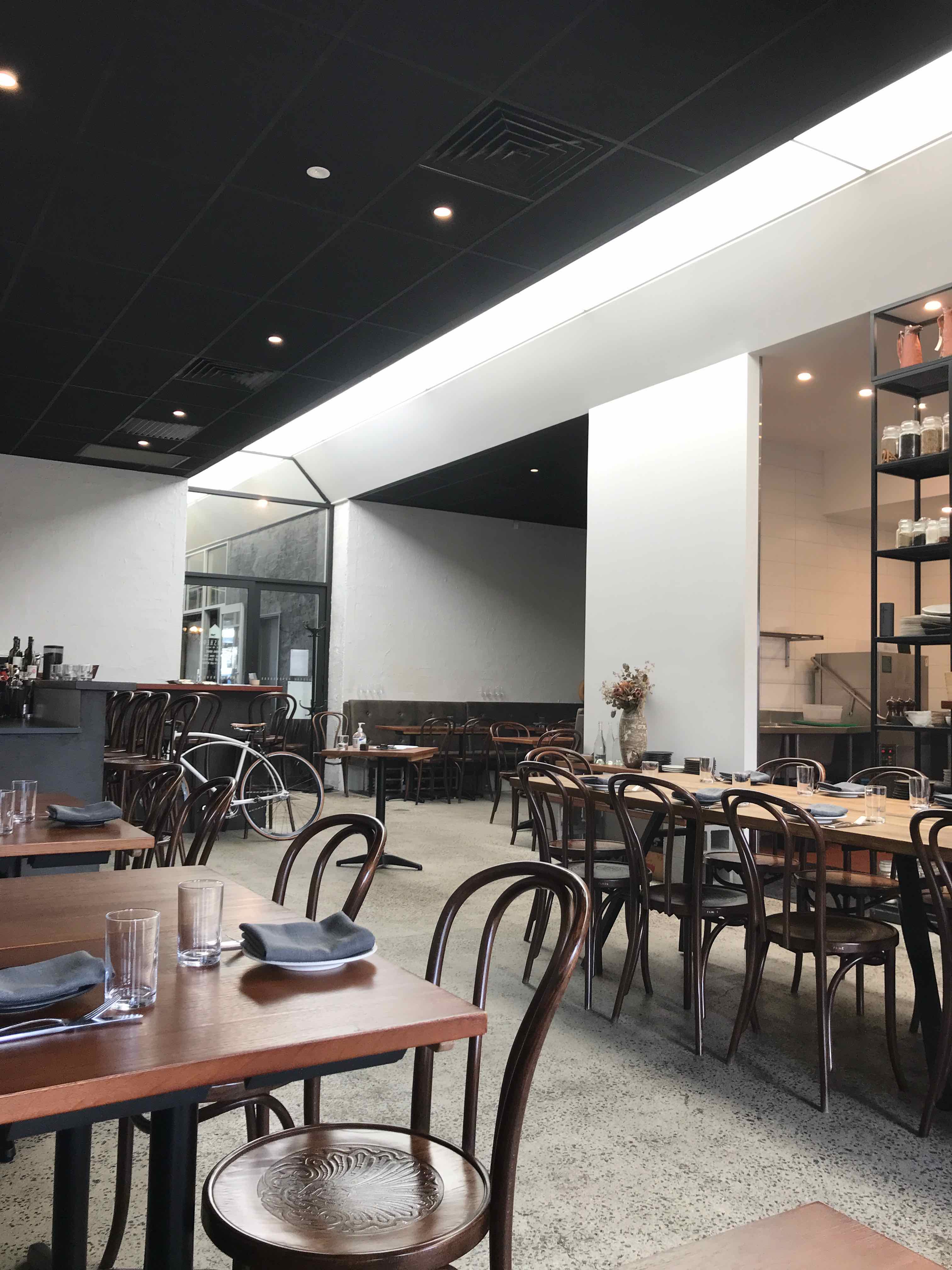
Lamsheds Restaurant, Yarralumla
Spaced tables, Lamsheds, Yarralumla

Here in the ACT, where we’ve had fewer than 10 cases since May (and only one since mid-July), COVID-normal means, primarily:

  • sanitising, everywhere
  • cleaning, particularly in cafes and restaurants after each client
  • checking-in, via QR-code apps, QR-code websites using phone cameras, or good old pencil and paper. Privacy? What privacy!
  • social distancing: public venues – shops, restaurants, etc – are currently restricted to one person per four square metres of “usable indoor space” and one person per two square metres of outdoor space rule, but larger gatherings in larger spaces are allowed (thought still with some upper limits).
  • no masks, except by personal choice or for certain health workers

We have no limits on household visits, so my reading group has been meeting in person (woo hoo) for some months. Cinemas have been open since July with strict social distancing, which the cinemas have been handling very well through allocated seating with enforced separation, and spaced scheduling creating quiet foyers.

I can visit my father in Aged Care, as long as I meet certain requirements. Visits have some limitations, but the constraints, though a little irritating, are minor. We certainly can’t complain, and our older people feel safe.

Online eventing – book launches, musical events

As I’ve written in previous posts – and something you all know – the main plus out of this pandemic has been the ability to attend remote events that we wouldn’t otherwise have been able to attend. I haven’t got to as many as I’d like because the timing frequently conflicts with other commitments. (How does that happen?) Anyhow, events I’ve “attended” since my last COVID-19 post are (in case you are interested):

Book cover

More consolation than plus – though we’ll take it – are the streamed live performances. We’ve not attended many of these, once again due to timing and commitments, but we have enjoyed some Discover Musica Viva Concerts with accordionist James Crabb and cellist Julian Smiles, and then classical guitarist Karin Schaupp. These were short concerts, but delightful with the performers introducing their pieces. I always enjoy hearing musicians talk about the pieces they play. I was devastated to have missed my beloved Griffyn Ensemble’s event (though we paid for it).

Spring has sprung – big

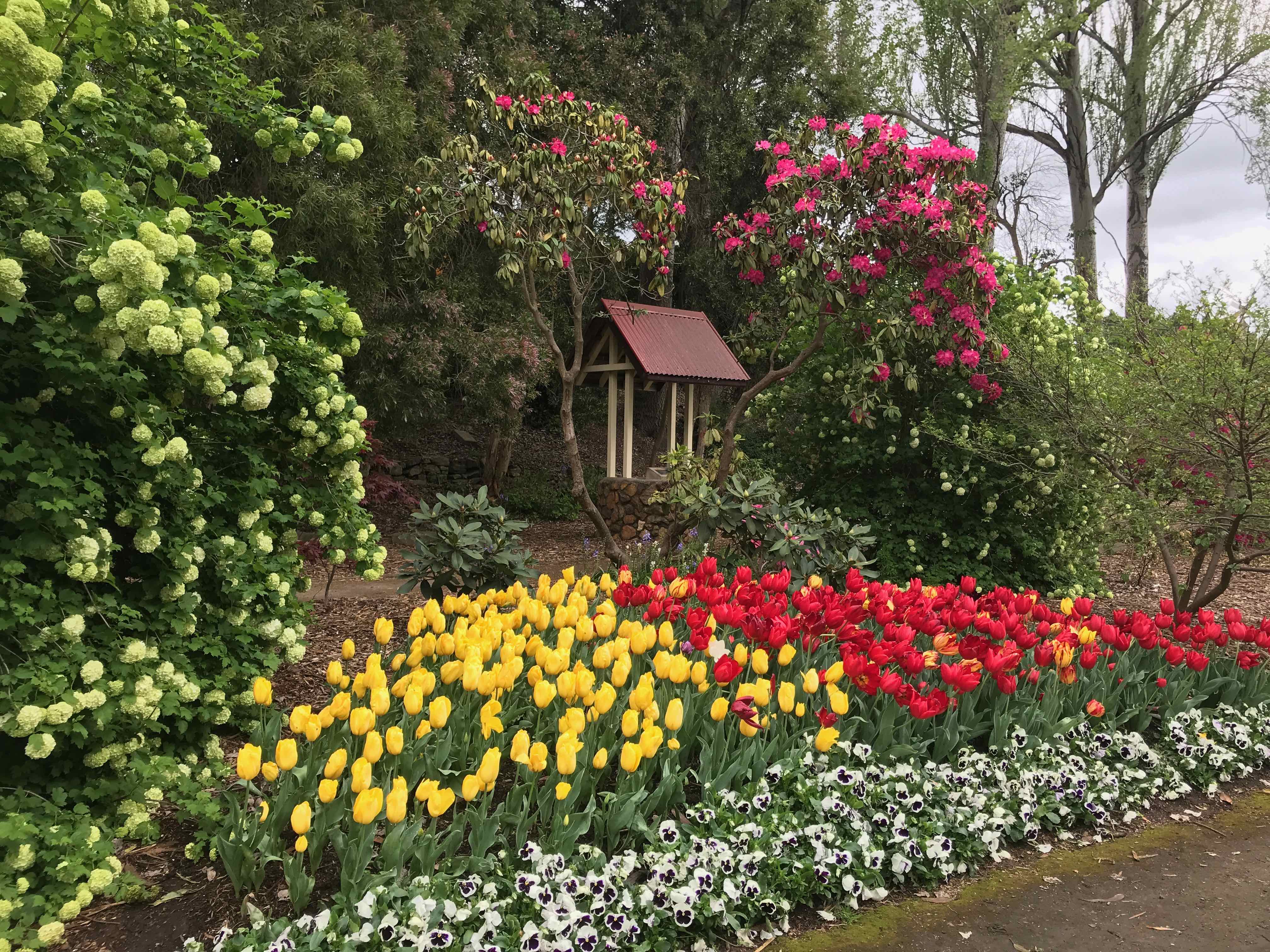
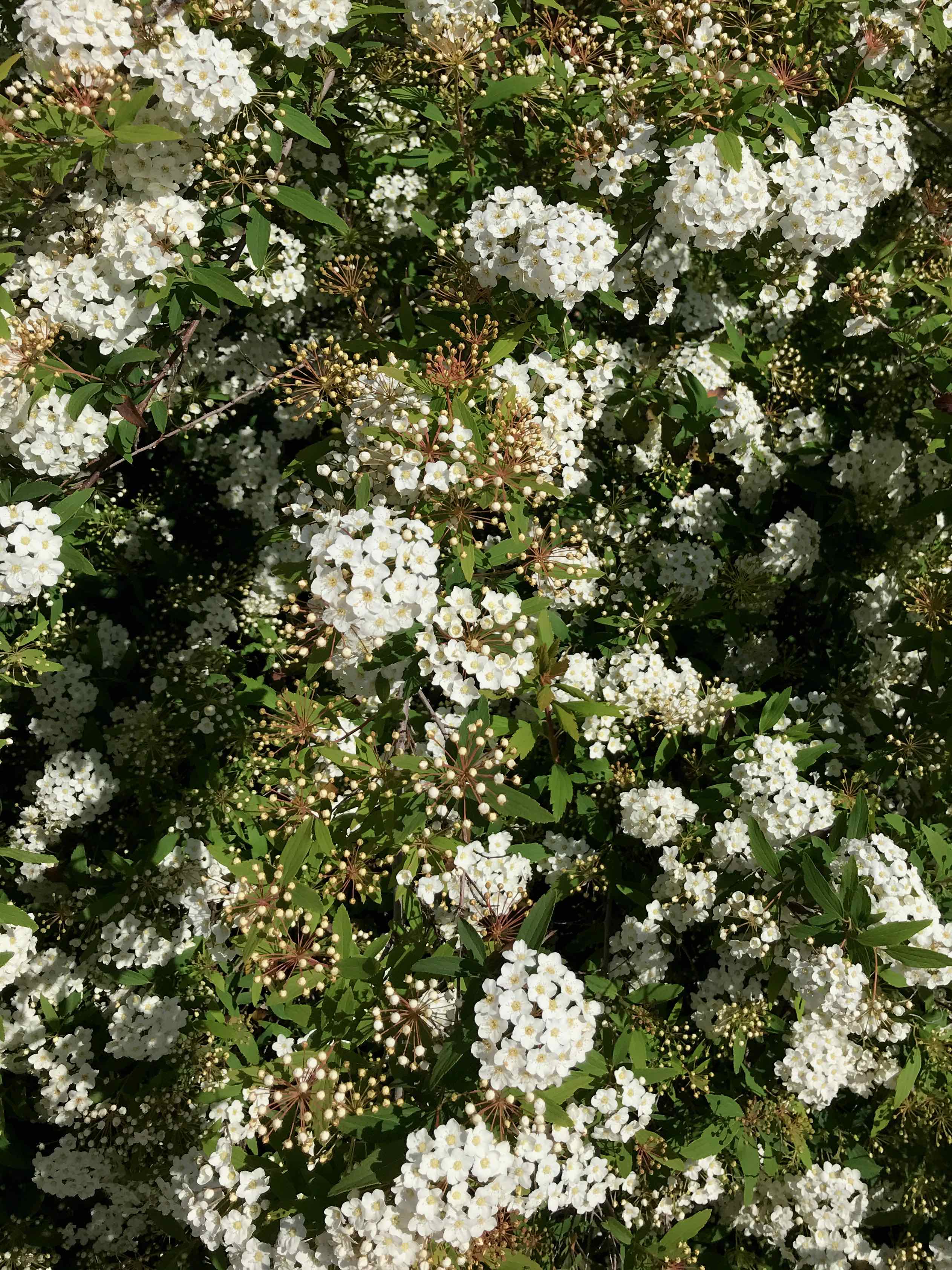
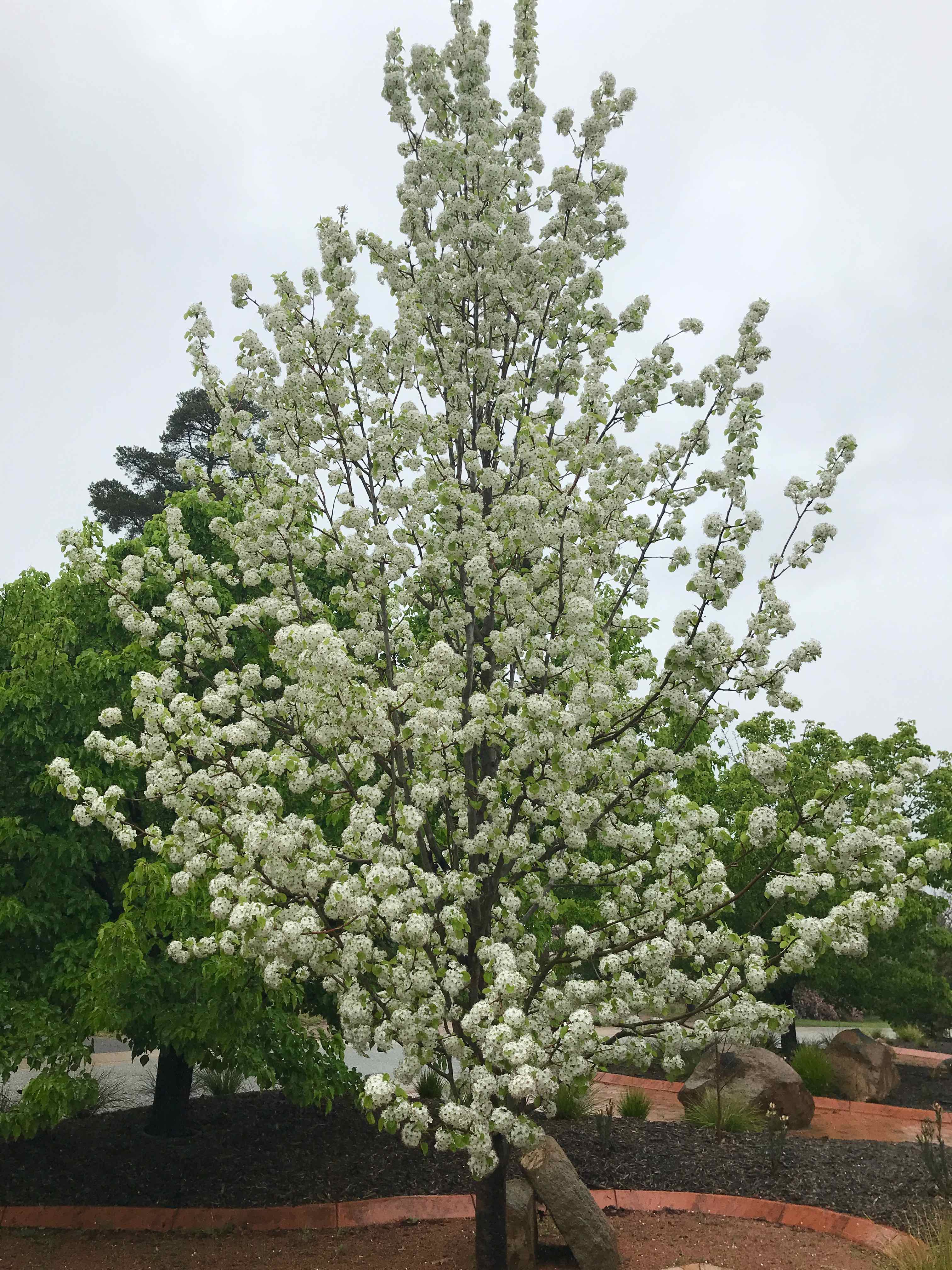
As if the universe knew we needed it – as if! – we have had a beautiful spring down under with enough blossoms (and flowering weeds) to cheer the saddest heart (I hope).

Need I say more? (From our garden, except the tulips, which are from Moss Vale)

Helen Garner’s lockdown diaries

Book cover

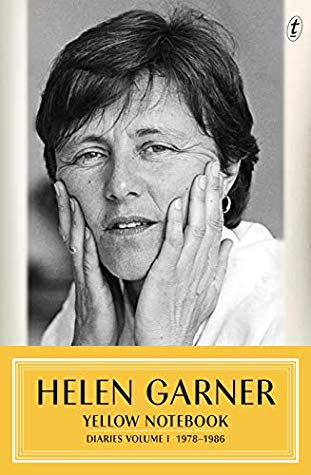
You all know how much I love Helen Garner, and how much I enjoyed the publications of volume 1 of her diaries in 2018 (my review), so I was excited to see her “lockdown diaries” in The Monthly, October xx, 2020. One of the things I enjoyed about reading this piece, besides the writing, was that I could track the trajectory from COVID-19’s earlier days in Australia to around August/September. Garner, for those who don’t know, lives in Melbourne, so her diaries include the only significant second wave lockdown we’ve had here in Australia.

We’re supposed to observe physical distancing. Everyone is to have an area of 4 square metres. “These are not suggestions,” says the chief medical officer. “These are civic duties.” The phrase “civic duty” thrills me.

I love the idea that ‘the phrase “civic duty”‘ thrills her!

Stage 3 lockdown. People over 70 are ordered to stay home for three months. A stab of stir-craziness, then, again, the stoical feeling.

This immediately brought to mind Julia Baird’s Phosphorescence (my review), and her discussion of stoicism, using the extreme example of Jim Stockdale (a POW in “Hanoi Hilton” for over 7 years).

Cadavers encased in white plastic are trolleyed out of New York hospitals and trucked in refrigerated vans to mass graves. Are they old people? Rash people who kept going to clubs? People with delivery jobs or “co-morbidities”? Who are the unlucky ones? Why are they dead, and we’re not? Is there a reason? Will we ever understand what’s happening to us?

Good questions, Ms Garner!

The old professor calls. He talks for a good 20 minutes, he can’t stop, he is flustered, agitated, distressed, veering among the wrecked shards of his mind. His sentences have no content but they are so perfectly jointed and polished that they make me dizzy with admiration. When at last he begins to peter out (…) I produce from behind my back the syringe of praise and give him a huge shot: “Your English is admirable and beautiful. Your syntax is faultless.” He becomes relaxed and sunny, like someone who’s had a hit of Valium: “I am a man. I am vain. You have entered my soul.”

This pure Garner – the interaction (with her old German neighbour, recently moved to aged care), the tone, the language. I love her description of producing from behind her back “the syringe of praise” to “give him a huge shot”.

Numbers of new cases rise and rise. Hotspots here and there. The big flats shut down. Quarantine hotels. A new lockdown, from midnight. People are refusing to be tested. How can people refuse? The world I’ve spent my life in is coming to an end. I keep myself half turned away, my eyes narrowed. On some deep level I’m terrified.

Do you feel as Helen does? And, overall, how are you faring?

Talking with my Dad: Wattles and Jimmy Woodsers

As many of you know, my father turned 100 this year, and three weeks later, my mother died. Life is sad, but Dad and I are soldiering along – with support of course from Mr Gums, not to mention family elsewhere in Australia. What is amazing, though, is how often new little pieces of information, or insights into Dad’s life, are still cropping up! I’m sharing a couple here, to document them for myself and because they might interest readers here too.

Wattle Day

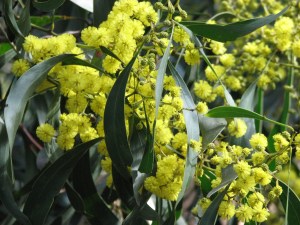
Image of Golden Wattle

Acacia pycnantha or Golden Wattle, by Melburnian (CC BY-SA 3.0).

Wattle Day, as most Australians now know, occurs on 1 September, celebrating the first day of spring here downunder. The golden wattle (acacia pycnantha), which was included in Australia’s coat of arms in 1912, is just one of many wattle species found around Australia, but most tend to blossom in late winter to early spring. Wikipedia provides the complicated origins of Wattle Day, but by the 1910s it seems, most states in Australia were celebrating it, though it wasn’t a nationally gazetted day until 1992.

So, on this year’s Wattle Day, as I was visiting my Dad, he burst into song, with these opening verses:

The bush was grey
A week to-day
(Olive-green and brown and grey);
But now the spring has come this way,
With blossoms for the wattle.

It seems to be
A fairy tree;
It dances to a melody,
And sings a little song to me
(The graceful, swaying wattle)

– by Veronica Mason

I was astonished. I’d never heard this song. Indeed, I had only become aware of Wattle Day relatively recently. However, on discussing the Day with my patchwork-now-coffee group, I discovered that all present, except one other, were very familiar with Wattle Day. What? Then the penny dropped. My father was born in 1920, and most of this group were born in the late 1930s to 1940. The “one other” was, like me, born in the 1950s. So, on thinking about it, I realised that they were born during times of pro-Australian nationalism, whilst that other and I grew up during a period of cultural cringe, a time when we turned away from things Australian.

Wikipedia helped confirmed this. Referencing Libby Robin, Wikipedia advises that “the day was originally intended to promote patriotism for the new nation of Australia”. I sussed out Libby Robin’s article, “Nationalising Australia: Wattle Days in Australia”, in which she talks about the linking of nature with nationalism. After discussing some of the various nature days that were created, she writes that

Wattle Day was the most aesthetic and human-centred of the three ‘days of nature’, and its influence waned as the century wore on. In the 1930s and later the Gould League went from strength to strength. Arbor Day had a steady and strong following, reinventing itself in the 1990s as ‘Arbor Week’. But Wattle Day changed in the early 1930s, eventually fading away altogether. A Wattle Day League limped on in Victoria until the mid-1960s, but the other states were no longer interested.

So, those born in the first half of the twentieth century were well familiar with the day – and its various songs and poems – while those of us born mid-century have only discovered it in recent years, with its revival and 1992 gazetting. Thanks Dad for the song – and the inspiration to suss out Wattle Day a little more.

A Jimmy Woodser

And then, just this week, Dad mentioned a “Jimmy Woodser”! I looked blank! Do you know what a Jimmy Woodser is, because I sure didn’t!

Barcroft Boake portrait

Barcroft Boake, by George Lambert, pre 1913, Public Domain.

So, back to Google I went. I found several references, but this one on Time Gents (Australian Pub Project) blog is particularly good. The post starts by saying:

Jimmy Woodser is a name given to a man who drinks alone, or a drink consumed alone. The name is thought to come from a poem by Barcroft Boake, published in The Bulletin on May 7 1892, about a fictional Jimmy Wood from Britian [sic] who is determined to end the practice of ‘shouting’ (buying rounds of drinks for a group of mates), by drinking alone.

“One man one liquor! though I have to die
A martyr to my faith, that′s Jimmy Wood, sir.”

“Jimmy Wood, sir” to “Jimmy Woodser”!

Barcroft Boake (1866-1892) was an Australian poet best known for his poem “Where the dead men lie”. (In a little digression, I have posted on, and reviewed works by, his niece Capel Boake.)

Back, though, to Jimmy Woodser. There is an alternative anecdotal version of the term’s origin provided in The Brisbane Courier (May 11, 1926), which dates it to the 1860s and a story about two rival publicans. There’s another one in the Dungog Chronicle (July 14, 1942), while this one in Adelaide’s The Mail (7 July, 1945) provides a rundown of several theories. Without doing more research I can’t confirm which is right, but the meaning doesn’t change. (In a fun little aside, the Glen Innes Examiner and General Advertiser (11 May, 1906) has an article titled ‘A “Jimmy Woodser” Club’ about the creation of the Non Shouting Club, in Araluen, near where I live. Its aim was to reduce the drunkenness that they believed shouting encouraged!)

Meanwhile, Time Gents go on to share a poem by Henry Lawson, titled “The old Jimmy Woodser” (c. 1899). They suggest it could be about a Wollongong character, Billy Fitzpatrick. Its first verse is:

The old Jimmy Woodser comes into the bar
Unwelcomed, unnoticed, unknown,
Too old and too odd to be drunk with, by far;
So he glides to the end where the lunch baskets are
And they say that he tipples alone.

“Too old and too odd to be drunk with, by far”. Well, my Dad is pretty old, but I’ll have a drink with him any day – and look out for more little treasures like this to research and share.

Monday musings on Australian literature: Guest post from Michelle on our Brave New (online) World

Book coverToday, I present another Monday Musings guest post coordinated for me by Bill (The Australian Legend), this one from Michelle Scott Tucker, author of the wonderful Elizabeth Macarthur: A life at the edge of the world (my review).
Thanks so much again to Bill and to Michelle for helping me out with my Monday Musings. Read on … and of course we’d love your comments  … Do you think your online activity will change significantly post-COVID-19?

Michelle’s post

Hands up if you’re quite the expert at videoconferencing now. Got your lighting all sorted? Your headphone hair? De rigueur Indigenous artwork behind you?

With the onset of the COVID-19 shutdowns, the Australian literary community has moved its events online with commendable alacrity. A few organisations, like the Wheeler Centre, were ahead of the curve. They’ve regularly livestreamed some of their events for a while now. But for the rest of us, the haste with which the move to online ‘events’ had to happen resulted in a few bumps along the way, but overall, the experiment has been a success, I think.

I’ve no insider data for you, no formal evaluation, but in the last three months I’ve been involved in quite a few literary events via Zoom, or similar – so let’s take a closer look at how the experiment is going.

The Stella Prize usually hosts a glamorous, invitation-only gala event at which the annual winner is announced. Egalitarianism be damned! The NSW Premier’s Literary Awards have an equally glamorous event which, in the past, was at least ticketed. This year, though, the events were cancelled, and the announcements were livestreamed. Well, I say livestreamed but what they really meant was pre-recorded clips of the relevant hosts and authors were livestreamed to the web at an agreed announcement time. That was a little disappointing, to be honest, although understandable logistically. It wasn’t that the winners weren’t fabulous, or the speeches less interesting but what was missing was the buzz. The excitement. The little jokes and patter that are part of a live event. Frankly, though, even big-budget events like the Logies (Australia’s version of the Emmy Awards) or the Academy Awards are pretty tedious. It’s only the fashion that gets them over line and let’s face it, fashion isn’t going to rescue a literary award – everyone wears black, or Gorman. Apparently that’s the law.

The organisers of the Yarra Valley Writers Festival managed to pivot from face-to-face to a live-streamed extravaganza with swan-like grace. I can only imagine how hard the organisers had to paddle beneath the surface. The livestreamed festival was a very professionally run event, and it showed. And it was actually ‘live’, which was nice. The organisers clearly had access to excellent video and tech support. Whispering Gums blog-host Sue wrote about the sessions she watched here, here, here and here. I “attended” the festival too, largely because I found their pricing to be irresistible. For $15 I could watch a whole day of sessions live, and for an additional $20 I could continue to have access to the recordings for the next two months. Bargain. To compare, attendance in-person would have cost me $75 for the day, plus food and petrol.

In the pre-COVID world there’s little chance I’d have attended the Yarra Valley Writers Festival. It was at least two hours’ drive from my place, and family commitments usually fill my weekends. So in terms of accessibility, the revised format was a winner. But I found it difficult to stay watching and engaged for more than a couple of sessions, and eventually spent the afternoon doing something else. I kept meaning to go back and watch those later sessions but somehow never got around to it. I would rather, I belatedly realised, have listened to them in podcast format while I was doing that ‘something else’. And my insider sources tell me I was not alone – the online version of the Yarra Valley Writers Festival could best be described as a qualified success.

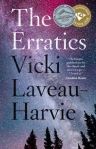
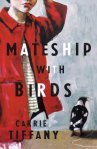
Other writers festivals were not so confident about executing the pivot from face-to-face to live-stream and so sensibly aimed for a much less ambitious offering. The volunteer organisers of the excellent Bellingen Readers and Writers Festival, for example, ended up cancelling the festival although they managed to salvage the Poetry Slam, which they ran live via Facebook, as well as some other book launches and workshops. I genuinely feel for the organisers, and for the would-be audiences, the local businesses and the speakers (of which I was going to be one. I was lined up for a couple of sessions at Bellingen, but the one I was looking forward to the most was facilitating a discussion between three Stella Prize winners: Heather Rose, Vicki Laveau-Harvie and Carrie Tiffany. How good would that have been?). On this last point, I should flag that I accept speaking gigs because I enjoy them. The fact that I occasionally also get paid for them is a happy bonus. But many writers rely on their speaking gigs as an important source of income. Some earn more from speaking than they ever will from sales of the book itself, especially those who speak at schools. This is yet another example of the impact of the COVID-19 shutdown on artists’ incomes.

During the shutdown period, I also “attended” an online book launch and, separately, a bookshop event where a panel of three writers were interviewed about their work. Both these events were held via Zoom on weekday evenings. The book launch was a free event, and the bookshop panel discussion was sensibly priced at $5. I thoroughly enjoyed both of them, and would have been unlikely to physically attend either in a pre-COVID world (not least because the bookshop in question was quite literally a thousand miles from my place). But, again, I had some reservations.

These days I usually attend bookish events because I know the author and want to support them. For authors I don’t know personally, but whose work I admire, I simply seek out their interviews in podcast format. ABC Radio is a great source of interviews with Australian writers, via The Book Shelf, The Book Show and Conversations, as are the excellent podcasts The Garret and The First Time. So all this Zooming has made me think about WHY I attend literary events.

I think that it’s less because of the formal proceedings, and more because of the interesting conversations that follow – with the author when I buy their book, and with the other book-loving attendees. At the last book launch I attended in person I ended up having a good chat with Helen Garner! At writer’s festivals, the same applies. I enjoy listening to the sessions, but I REALLY enjoy meeting new people or bumping into acquaintances in the crush of the coffee queue. To continue my blatant name-dropping, at Bellingen Writers Festival last year I had an impromptu pub dinner with Dr Marcia Langton AO and Dr Jane McCredie, CEO of Writers NSW. Halfway through we were joined by actor and director Rachel Ward AM. Yes, I managed to play it cool – sort of!  And, to be clear, while I know that Jane remembers this dinner very fondly, I very much doubt that Marcia or Rachel do!

So the online book launch I attended, and the online literary event were interesting, but they lacked buzz. I missed the face-to-face interactions of real life, and in this I’m not alone. A friend started up a Zoom book club as we moved into the COVID-19 shutdown. She reports that they were very popular early on, but enthusiasm was waning by the three-month-mark. Many reported that after spending much of the day using Zoom for the day job, the thought of logging-in again in the evening was less than appealing. I can vouch for that, too.

But what of the core purpose of literary launches and events – to sell more books? It appears that Zoom and its ilk have only been a qualified success. Writer and bookseller Krissy Kneen had some super interesting things to say on the topic recently, during a podcast interview. She was pleasantly surprised by the number of sales that livestream events generated but didn’t pretend that those sales were as high as they would have been for a face-to-face event.

So, in essence, livestreamed literary events have been a useful stop-gap but may play a decreasing role as physical distancing restrictions are eased. There is, however and of course, an exception to that rule.

Writers Victoria, in a usual year, hosts large numbers of face-to-face workshops, seminars and events. They adroitly managed to move most of these online and my sources tell me that the number of participants has been pretty much the same as usual. This is impressive, given that fees for a full-day online workshop remain at $155 for members (concessions are available, and non-members pay more) but the sweetener is that most online courses include, afterwards, personalised feedback by the presenter on a piece of writing up to 500 words. It’s also worth reminding ourselves that delivering online sessions often costs much the same as delivering face-to-face sessions. Fee-paying participants can also subsequently access a recording of the session, so they can go back and review what they learned.

The delightful part, though, is that the online workshops have provided access to people who otherwise could not have participated. Attendees have included people from overseas, from interstate, or who for various reasons would have been housebound even without the COVID-19 threat. Apparently there’s a mum with a newborn who has happily attended several! I delivered one of these full-day online workshops and was pleasantly surprised by how interactive it was, and how much we were able to engage with one another. The word is that Writers Victoria will return to face-to-face workshops when they can, but – beyond the shutdown – will continue to provide online workshops too.

And there, for me, lies the answer. As we move beyond a strict shutdown, I hope that we’ll be able to enjoy a blended approach to accessing literary events. By all means hold a live, face-to-face event but livestream or podcast it too. Include separate webinars as an integral part of your festival offerings, alongside face-to-face activities. By doing so, the literary community might become a little more open to the wider community and might become a little more accessible to readers – whoever, or wherever they are.

What do you think?

Michelle Scott Tucker is the author of Elizabeth Macarthur: A Life at the Edge of the World (Text Publishing, 2018) – a compelling biography of the woman who established the Australian wool industry, even though her husband received all the credit.

Elizabeth Macarthur was shortlisted for both the 2019 State Library of NSW’s Ashurst Prize for Business Literature, and the 2019 CHASS Australia Prize (from the Council for the Humanities, Arts and Social Sciences).

Michelle is a freelance writer and consultant, with a successful career in government, business and the arts – including a recent stint as Executive Director of the Stella Prize, Australia’s top prize for women writers. She has served as Vice Chair of the Writers Victoria board and is currently one of the organisers behind the inaugural ‘Mountain Writers Festival’. The festival’s focus on the environment, story and place not just as a theme, but as the festival’s entire purpose now and into the future, is unique in Australia. Passionate about Australian literature, history and storytelling, Michelle lives in regional Victoria with her family.

Vale my magnificent Mum (1929-2020)

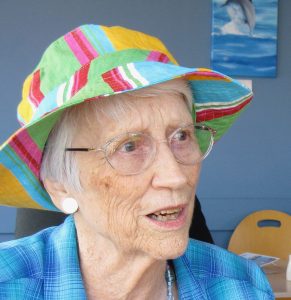
Portrait of JessieSome of you already know, but most of you may be wondering about my recent silence. I am really too heartsore to write much now, but I feel all you lovely followers deserve to know whyfor this silence. On Friday, my dear 90-year-old Mum died peacefully, after a short illness that, coincidentally, aligned with the COVID-19 lock-down here. I have spent much of the last month by her side, and am just too sad right now to compose a proper post about her. She loved and nurtured me with all her heart from the moment I was born right through to the end; she fostered my love of reading, introduced me to Jane Austen and taught me cryptic crosswords; she supported and respected me; she was self-effacing, always putting herself last; she was quietly passionate about social justice and the environment; and she made me laugh. She was the whole package.
Here are some words from her friends:

“I have fondly admired Jessie and feel so privileged to have learned from her wisdom, her gentle elegance, and her intellect.”

“Jessie is one of the most beautiful women I have known, so kind and thoughtful and so clever too. She is a truly lovely lady.”

“I feel very privileged to have known Jessie … so wonderfully supporting, caring and kind.”

 “I have always enjoyed her company and admired her attitude to all things.”

And, finally, from one of her church friends …

“We have lost a soft voice, a strong faith, an enquiring mind and a great friend”.

As for the family, we have lost a dearly treasured and much enjoyed wife, mother and mother-in-law, grandmother, great-grandmother, aunt and cousin. The loss is all ours.

(Finally, I must say a huge thanks to Lisa and Bill for their behind-the-scenes support and offers of help, and to Bill, in particular, for ensuring my blog kept going. There are still a couple of Bill Curates posts to come. I do not have enough words to thank them.)

Monday musings on Australian literature: Guest post from Lisa on national library book culls

As I noted in last week’s Monday Musings, Bill (The Australian Legend) has organised a few Monday Musings guests posts for me. Of course, given we comment closely on each other’s posts, he turned to Lisa (ANZLitLovers) for the second one. Bill did suggest an idea to Lisa, in case she needed it, but she found another topic to inspire her. It is a highly relevant one to me as a retired national institution librarian/archivist, so I was more than happy with her suggestion.
Thanks so much again to Bill and Lisa for helping me out and for offering some wonderful new content for Monday Musings.  Read on … and do let us know what you think …

Lisa’s post

Last year, when in New Zealand for the Auckland Writers’ Festival, I visited the Auckland Art Gallery, and was disappointed to find its ’Historic European’ Gallery closed.  From the postcards on sale in the shop we could see that they had some very interesting pieces, so we were a bit disappointed. But at the time we just thought this meant they had stopped collecting European art.  However, from a recent visit to their website, it’s clear that European art has been sidelined.  If you want to see New Zealand and Pacific art, this gallery is the place to go.  But if on the other hand you are a Kiwi student of art history, or merely curious about New Zealand’s international collection as we were…

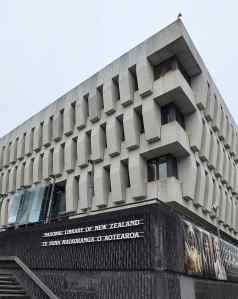
I thought of this when I came across a more radical policy underway in the New Zealand National Library. In October last year the library announced that they are going to ‘rehome’ 600,000 books to make room for New Zealand and Pacific material, in line with their 2015 Collections Policy.

Yes, that’s right, 600,000 books!

Behind the scenes, libraries have all kinds of policies that affect their acquisitions and deaccessions procedures.  These rarely attract much interest from the public, except for the issue of censorship, or ‘self-censorship’ of certain types of books. (As, for example, when a school library unofficially responds to complaints from religious minorities by not lending books featuring magic such as the Harry Potter series).

Acquisitions and deaccession policies reflect a variety of complex issues which change over time.  No collection is static, and space for underutilised materials is always a problem.

The New Zealand library’s Rachel Esson (Director of Content Services) explains their decision like this:

The overseas published collection is not one single collection but is made up of an assortment of books acquired from a range of sources, some were purchased and some donated to us having been weeded from other libraries. These books were collected to support the library system, to provide access to information that other libraries might not hold. However, around 80% of them have not been issued for 20-30 years which means most of these books are not being used and that means that the library system is telling us that it doesn’t need these books anymore.

To be clear, they are keeping some overseas published books and will continue to purchase more for their collections in focussed areas, which include: library and information science; music; reference works; children’s literature; family history, and print disabilities.

But the removal of 600,000 books is needed to make room for New Zealand and Pacific Materials:

The National Library acquires between 80,000 – 90,000 electronic and print publications a year that consist of New Zealand, Pacific and overseas material.

That makes sense to me, because New Zealand is a wealthy nation and is in a position to be a centre of excellence for the literature of Pacific Island nations which may not have the resources to do it themselves.

But as I know from my own experience as a teacher-librarian, undertaking a cull of underutilised books can be a fraught exercise, because there is always someone who, for sentimental or research reasons, needs that battered copy of a text that seems past its use-by date.  At the same time there will always be people who want to cut a swathe through the entire collection to rid it of books that offend them for one reason or another.  In the feminist Seventies, for instance, there was alarm about the preponderance of male central characters in library collections of children’s literature, and that’s still a problem today.  So is the paucity of characters reflecting Australia’s multiculturalism, its Indigenous past and present, and its LGBTIQ and disabled communities…

The philosophy of inclusion is comparatively new and it keeps changing.  Difficult decisions have to be made around those innocuous words ‘as well as’, ‘instead of’ and ‘proportion’ because these decisions have implication for space, storage, display and especially funding.

For most libraries, the decision to acquire or get rid of a book to make space for others is a decision for the local community and the users.  However, in the case of a national or state library, the rules are different.  They have a statutory obligation, i.e. enshrined in law as ‘deposit legislation’, to acquire and retain the books they have for the benefit of the nation.  According to New Zealand writer and reviewer David Larson, in a lively critique for The Spinoff the relevant Minister has to sign off on the disposal of these 600,000 books.  Amongst other concerns he is alarmed about the process for retention and selection.  There’s more to it than whether the books have been issued within a certain time frame…

The consultation process, Larson says, appears not to have adequate expertise to identify which books are needed for research purposes, and offering them to other New Zealand libraries which have no obligation to keep them is a concern.  Then there are books that are published overseas, but written by New Zealanders:

New Zealanders are, famously, a nation of part-time expats: any number of Kiwis have contributed to this field or that by publishing books while living overseas. So if the goal is to keep “anything that is New Zealand and Pacific related”, that will require identifying a huge corpus of often obscure books published offshore.

Likewise, there are many overseas-published books by non-New Zealanders which touch on New Zealand or Pacific interests, often in ways obvious only to specialists.

Larsen stresses that many of these books are destined not for rehoming, but for destruction, but his article met with a droll riposte from librarian Rebecca Hastie, in a piece also for The Spinoff, ‘Weed in the Dead of Night, a Librarian shares the secrets of book culling’.

To see why it might matter that New Zealand could lose its only copy of a text that’s being offered for ‘rehoming’, I took a look just in the ‘A’ section of the Fiction List (downloaded from here).  For a start, the library is also offloading everything that Jessica Anderson and Thea Astley wrote, so Australian Literature isn’t a priority area for retention.  Too bad if a Kiwi wants to do a PhD in the comparative literature of our two countries.  There were titles I’d love to read by Kingsley Amis, Joan Aiken, Louisa May Alcott, Isaac Asimov, and Margaret Atwood.  Even Jane Austen has to go.  Top of the Bs was a stack of titles by Isaac Babel, which, along with three by Leonid Andreyev, mean that someone in a previous era understood the important of dissident Soviet literature (which is surely still a subject for scholarly attention.)

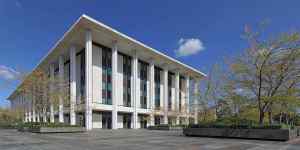
Lest you think that this is only an issue for this particular library in New Zealand, this week Inside Story is carrying an article called ‘Asia Illiteracy’ about a new collection development policy at the National Library of Australia, which is about to sideline its collections of Southeast and Northeast Asian material:

For almost seven decades, the National Library of Australia has been building one of the world’s most extensive collections of Southeast and Northeast Asian material. The legacy of accumulated investment and collecting by specialist curators, its store of Asian newspapers and periodicals, books, government documents and other rare materials is among the great treasure troves of Asian studies, and the most extensive Asia collection in the Southern Hemisphere. Researchers visit from around the world, and the collection is a foundation stone of decades of effort to build sustained and deep knowledge of Asia at Australian universities.

Now, much of this is to be abandoned. In a new “collection development policy” — the document which lays out what and how the library will collect — the library has dramatically downgraded its emphasis on overseas collecting. It has removed key Asian countries from its list of priorities; it has closed its Asian Collections Room; it has cancelled subscriptions to hundreds of Asian periodicals.

[…]

The new collection development policy makes it clear that the library is turning inward, sharpening the focus on Australian materials. Thankfully, the Asia-Pacific will remain the priority in overseas collecting, but the scope of the reduction leaves only part of the previous Asia strategy intact. Countries that have been a major focus for decades — notably Japan and Korea, and also all the countries of mainland Southeast Asia — have been dropped altogether from the list of priority countries for collecting. 

The catalyst for the New Zealand decision seems to have been the need to deal with a collection in a flood-prone storage facility which is too expensive to replace, while the NLA’s decision, according to Inside Story is forced on them by relentless funding cuts.

It’s always a matter of money…

Living under COVID-19 (3)

It’s been nearly three weeks since my second COVID-19 post, because, after all, if there’s one thing you can say about living in these times, it’s that the days just roll one into the other with not a lot of differentiation. You have to work hard, sometimes, to remember just what day it is. At least, we Gums do. However, we haven’t been totally inactive, and I do have some things to share, so here goes …

First, a disappointing thing. As the lock-down continues, more and more events are being cancelled. We have now been notified that three concerts of our six-concert Musica Viva season have been cancelled, and two or is it three of our Canberra Theatre subscription package have also been cancelled. More of these may still be cancelled. Excitingly, however, one Canberra Theatre show, so far, has been able to be moved to later in the year. Woo hoo. Any win is cause for celebration!

I realise that if these cancellations are our biggest disappointments, we have nothing to complain about. I also realise that in being happy for our Chief Minister to be cautious about easing restrictions, I also have nothing to complain about. The lives of others are not so easy …

The lives of others

Like Tolstoy’s unhappy families, every family’s experience of COVID-19 is a bit different. My brother, for example, having been here helping with elder care for a month, had to go into two weeks’ quarantine upon his return to Hobart a fortnight ago. Holed up in a two-room suite – it could have been worse – in Wrest Point Motor Inn, he entertained the family with daily epistles. Those epistles will be donated to the local museum for future historians (remember that video conversation between Frank Bongiorno and Chris Wallace I shared in my last COVID-19 post?) Fortunately, Ian has many solitary interests and is not uncomfortable being alone, so he managed the quarantine as well as anyone. It was gratifying, however, to know that as well as friends and family checking in on him, the government and the Red Cross did too.

Another person experiencing COVID-19 a bit differently is my Californian friend, Carolyn, with whom I have been corresponding weekly since we left California in late 1993. Her personal situation, like ours, is not difficult, but she is a high school language teacher – and that has not been so easy. With the end of their school year in sight, there has been much uncertainty and confusion regarding teaching and assessment. What would the IB administrators do, for example? Should students be graded or just marked as pass or fail. How would that affect college enrolments? Minds changed as circumstances changed! The big problem is – and this might surprise you when I tell you she lives in Orange County – that her school does not serve a wealthy area. This means that a good proportion of her students do not have internet access at home. It also means that many students need to take on the care of younger siblings because their parents need to work. However, my friend, like many of us, has become a Zoom-pert, and is developing a range of teaching strategies to do the best for her students. For many teachers, this time has been one of intense work and emotions, as well as of demanding self-education. I admire them immensely.

These lives are nowhere near as tough as many are confronting, but they are just two different experiences I’ve been close to.

Literary and cultural stuff

First, some booklists. I know there are many, many out there but here are two that might interest:

  • Picture of a book stackPandemics: An essential reading list: I know some people don’t want to read gloom and doom books, but others of us are intrigued by what novelists have had to say. This list, sent to me by the above-named Carolyn, is an excellent one. Organised chronologically, it starts in England with Daniel Defoe’s A journal of the plague year (1722) and ends in Zambia with Namwali Sherpell’s The old drift (2019).
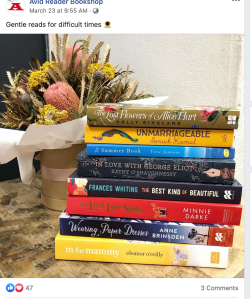
  • Comfort books: For those wanting some “gentle reads for difficult times”, this book pile pic posted by Brisbane’s Avid Reader bookshop will provide a start!

And then, there’s this little piece, sent to me by Carolyn again, about Ernest Hemingway experiencing isolation! You will see that they tried their own socially distanced drink parties!

Then, a couple of online events/activities:

  • Terror Australis Readers and Writers Festival – a festival based in the Huon area of Tasmania – has responded to the pandemic with a Facebook “event’ called Booklove Tuesdays. It occurs each Tuesday at 7pm on their Facebook page, and involves author chats (text and video), readings and giveaways. I popped into one a couple of weeks ago, in which Dorothy Johnston (see my reviews) took part. It was rather delightful.
  • National Portrait Gallery’s The amazing face: The National Portrait Gallery released this week their course/program on the art of portraiture. It comprises 14 lessons/sessions, each based around a different portrait. The program is describes as follows: “How is a portrait created? What makes one great? How exactly does this genre of art convey character and personality? Learn about some inspiring Australians and discover how portraiture works through text, video and audio, alongside activities to boost your creativity and resourcefulness.” I’ve looked at the first one, featuring Howard Arkley’s portrait of Nick Cave. It’s clearly positioned to serve a range of interests, including teachers and students, those who’d like to do portraiture, and those interested in the portrait as an art form. Well worth a look if, like me, you like portraits.

As for me, my reading has been very slow – even slower than in “normal times”. This is disappointing, but such is life. However, my reading group is continuing to meet, this month via Zoom, having tried the more low-key WhatsApp last month. Being a thorough lot, we had two practices with Skype and one with Zoom before deciding that Zoom – despite its 40-minute limit for free accounts – was the way to go. The practices were worth it. All 12 attended our actual Zoom meeting, and everyone managed to have their microphones and video cameras working. Go team! We discussed Melissa Lucashenko’s Too much lip (my review), which, although universally liked, still generated an in-depth discussion that lasted over an hour. The only thing missing was the wine and cake!

Finally, there’s nothing like colourful plants to raise the spirits.

Meanwhile, as I’ve asked before, how are you faring?

Living under COVID-19 (2)

Just checking in to see what’s up with everyone in their neck of the woods. How are you coping with your COVID-19 restrictions? Are you getting stuck into those projects that have been hanging around forever? One of our friends is finally sewing clothes out of fabrics she bought on overseas trips years ago, another is starting to scan old photos, while yet another is decluttering one item a day. (Now that’s a goal I could probably meet!)

I haven’t quite been able to get seriously stuck into those sorts of projects yet, but we are gradually rearranging our lives, COVID-19 style. Here are some of the ways …

Exercise stuff

Anyone with any sort of social media account can’t help but come across programs/sites/apps offering to help you stay fit. As a ballet lover, I am particularly seeing programs coming out of ballet companies. My favourite, which I first saw on Instagram but which is also available on YouTube (and perhaps elsewhere), is Dancing with David (that is David McAllister, Artistic Director of the Australian Ballet). The first one is  How to do a plié:

But, he is adding other ballet exercises, including, to date, calf rises and port de bras. These are exercises you can easily do at home. They also introduce those who have never done ballet to some of the fundamentals, while for those who have, like me, they offer such a fun trip down memory lane – made even better by McAllister’s delightful personality. He makes me smile, and that is the best thing of all in thee difficult times.

Of course, we also do some walking, as I mentioned in my first post, and I have continued doing something I’ve been doing for years, Yoga with Adriene (who is also on YouTube, like David, though I have subscribed to her app.)

Finally, last week, our Tai Chi teacher test-drove a Zoom Tai Chi class with our group. It worked – well, enough anyhow – so we have that to look forward to next term.

Social stuff

Gradually, we are increasing our online social life with friends and family, matching the technology to the group – from simple email discussion times with older groups, through WhatsApp for those let’s-keep-in-touch groups, to all sort of Zoom events from committee meetings to classes to Happy Hours! (Almost anyone who is anyone is now a Zoom-pert it seems, though I’m not always sure why other free technologies like Skype and FaceTime aren’t used more! Anyone? For the record, we use FaceTime for our hookups with our Melbourne family members.)

Literary and other cultural stuff

Again, like exercise, opportunities to engage in literary (or other arts) culture abound, so I’ll just share a couple with you here that I’ve had time to check out (or plan to check out).

  • Living in Solitude: Donna Ward & Donata Carrazza: A Zoom conversation inspired Donna Ward’s new book She I dare not name, and focusing on “what it means to live alone during this new era of social distancing”. This was a free event promoted via Facebook, and took place on Thursday 2 April at 7pm. I attended a small part of it, but it was a difficult time for me so I wasn’t able to listen to it all. However, it did work as a good proof-of-concept.
  • Newtown Review of Books started a new series of Friday book extracts, which is intended, I understand, to help promote new books which are missing out on all those launches and Festival appearances the authors were expecting. First up was Kirsten Krauth’s Almost a mirror (April 3) followed by Chris Hammer’s Silver (April 10). It’s a shame they’ve not “tagged” the series so readers can locate them easily.
  • Heather Rose Reads is an initiative by Australian author Heather Rose (see my review of her novel The museum of modern love) in which she … well, I’ll let her explain it:

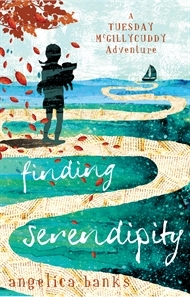
Book coverDear parents of primary age children! Monday April 6th at 4pm Australian EST its time for Heather Rose Reads. We’ll begin with the first book in the acclaimed children’s series I co-author under the pen name Angelica Banks. Book 1 is Finding Serendipity for children aged 8 – 12 (grades 3 -6). If you have primary school children this is my way of helping you have a break for a little while on Mondays, Wednesdays and Fridays. I’ll also post the readings on YouTube if you’re in a different time zone. See you and your children here on Facebook Live 4pm this Monday April 6th … it’s going to be fun.
As you can see, it started last week, but she is posting them on YouTube too. Her Angelica Banks co-author is Danielle Wood (whose Mothers Grimm I’ve reviewed). What a lovely idea.

  • This is History: The National Library of Australia has produced a video conversation between ACT-based historians Dr Chris Wallace and Professor Frank Bongiorno on “why it’s so important to document everyday life during irregular times” like our current COVID-19 pandemic. They talk about what citizens can do now to help historians of the future document and interpret the life we are living. We often don’t realise we’re living through a major historical moment until the time has passed, but we surely do this particular time. Anyhow, this 20-minute conversation is a lovely introduction to the work of historians and the importance of everyday lives to the study of history.
  • Nigel Featherstone, Bodies of menWriting War: A Panel Discussion: Still upcoming – Monday 20 April – but I’m sharing it now in case any of you are interested in attending. It features Nigel Featherstone (whose Bodies of men I’ve reviewed), Melanie Meyers (whose Meet me at Lennon’s I’ve reviewed), and Simon Cleary (whose The war artist Lisa has reviewed) moderated by author Cass Moriarty. This event is not free, costing a whopping $5! To book tickets check this link.

Final thought

“What’s true of all the evils in the world is true of plague as well. It helps men to rise above themselves.” (Albert Camus, The plague)

Wouldn’t that be lovely!

Meanwhile, how are you faring?