BookSeer – is it for you?

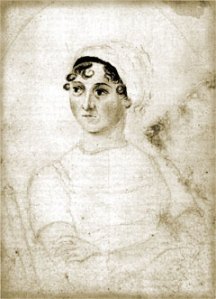
Jane Austen (surely public domain!)

Jane Austen (surely public domain!)

What do Jane Austen’s Pride and prejudice and Cormac McCarthy’s The road have in common (besides the fact that I mentioned both authors in a recent post that is)? Nothing much, really, except that Amazon.com suggests that if you’ve read Pride and prejudice you may like to read The road. See, I was onto something when I said that Jane Austen could to some degree be described as a spare writer! But, truly, I don’t think that’s what Amazon was saying.

The site at which I saw this suggestion was not the Amazon site, but BookSeer. BookSeer is, apparently, “another literary web project by APT Labs”. What it does is present suggestions for reading based on what you’ve just read. The home page poses the simple question:

You there! I’ve just finished reading …….. by …….. . What should I read next?

When you enter your last read and then click the arrow you get suggestions from Amazon, the Book Army and LibraryThing. I hate to say it, but the algorithms for generating the suggestions leave a lot to be desired. To test it out I said that I had just read Pride and prejudice. Following are the first three recommendations from BookSeer’s sites.

Amazon:

  • Let the right one in, by John Ajvide Lindqvist
  • The Zombie survival guide: Complete protection from the Living Dead, by Max Brooks
  • World War Z, by Max Brooks

Do these selections look a bit odd to you? Well, the reason is that although I typed Pride and prejudice by Jane Austen into BookSeer.com, Amazon decided that what I was really interested in (had read even) was Pride and prejudice and zombies. As my American cousins would say, Go figure! (BTW The road was number 6 in the list).

BookArmy:

  • Mansfield Park, by Jane Austen
  • Persuasion, by Jane Austen
  • The power that preserves, by Stephen Donaldson

Now this looks a little more appropriate, doesn’t it?

LibraryThing:

  • Sense and sensibility (Penguin Classics), by Jane Austen
  • Persuasion (Penguin Classics), by Jane Austen
  • Emma (Penguin Classics), by Jane Austen

Now, this is SO sensible it is perhaps a little boring – after all if you’ve read Pride and prejudice you probably know of and already want to read her other 5 novels!

BookSeer then is an intriguing idea, but until the algorithms used by the sites they draw on are a little more sophisticated – and until I get through my TBR (To Be Read) list – I don’t think I will be a regular visitor to the site. What about you?
Australian Classics Library

Am I the last to know? I have just discovered that Sydney University Press is publishing a new set of Australian Classics, using a grant from the CAL Cultural Fund. Each title has a newly written critical introduction and, in a nice bit of collaboration, some biographical and bibliographical information from AustLit.

The titles – an interesting lot really – were selected from over 80 titles already sold by the Press and were chosen for “their importance in the canon of Australian literature and their applicability to the education market”. They are:

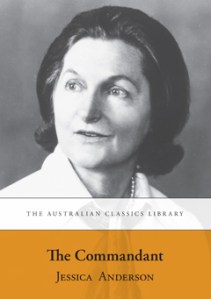
The commandant, by Jessica Anderson (SUP website, applying their fair dealing statement)

The commandant, by Jessica Anderson (SUP website, applying their fair dealing statement)

The prices, ranging from around $22.95 to $32.95, are a little high I think. Some (though by no means all) of these are still in copyright so that makes a difference, and there’s also the additional editorial material (but presumably that has been covered by the grant?). However, with the recent and very cheap original-look Penguin Classics range, the comparison may put people off, particularly when the covers of these, with their orange and white theme, appear to riff a little off those Penguins.

Anyhow, back to the selection. I’m embarrassed to say that I’ve read almost none of these books though I have owned the Cappiello for quite a few years, and bought Maurice Guest a few years ago to fill a gap in my reading. I have read and do like Jessica Anderson – just not The commandant. It’s encouraging, in fact, to see a decent, well 33% anyhow, proportion of women in the list. Oh, and I must admit that I haven’t heard of Price Warung (apparently, according to Wikipedia, a pseudonym for one William Astley, 1855-1911).

The advertisement (and I have to remember that it IS an advertisement) that drew my attention to this new series described it as “12 best-known and loved works of Australian literature”. Hmmm…I have no serious quibble with the selection – after all, it is encouraging to see such support for our classics and any selection is going have a large degree of subjectivity. However, I’m not sure that I’d quite describe this set – fine as it is – as our “12 best-known and loved”. Would you?

Aboriginal women – sacred and profane

A regular column in The ABC Weekly, about which I have blogged a couple of times in recent days, was written by Australian writer Vance Palmer. I have only read one novel by Palmer – The passage – and have been feeling recently that I’d like to read it again partly, but not only, because Vance and his wife Nettie were significant players – and mentors – in Australia’s literary scene of the 1930s-50s. Anyhow, back to the topic in hand … Palmer’s column is basically a weekly book review column and on 4 May 1940 the book was anthropologist Phyllis Kaberry’s published thesis, Aboriginal women: Sacred and profane (1939).

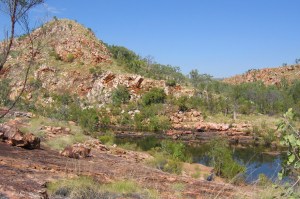
Waterhole in the Kimberleys

Waterhole in the Kimberleys

Now, while I did fancy myself a bit of an anthropologist  for a time in the early 1970s when my university anthropological studies excited and challenged me, I don’t pretend to be anywhere near across the subject now. I won’t therefore go into great detail about this work – or its anthropological ramifications. I will say though that it was groundbreaking in its time as, based on her research in the Kimberleys, Kaberry argued that there was not a clear division in Aboriginal society, as proposed apparently by Durkheim, in which men focussed on the sacred and women on the profane. She argued that women had their own sacred ceremonies and, further, that women’s role in their society was not inferior to men’s but complementary.

This is interesting and was of course moreso in its time, but it is not what I most liked about Palmer’s review. What I liked was the fact that he saw Kaberry’s work as making a significant contribution to our understanding of indigenous society. He says that it is not necessarily an easy book to read, particularly as parts of it can be technical, but that it is an important one. He concludes the review with

But knowledge once gathered, gradually sinks into the general mind, and it is necessary that we should understand the pattern of living involved by the people we are displacing on this soil, both for our own good and theirs.

That was in 1940. How well do you reckon we have done since then?

Florence James and journalism, 1940

Florence James, with Dymphna Cusack, wrote one of Australia’s most successful novels set in World War 2, Come In Spinner. She was also a literary agent and journalist – and wrote regularly for The ABC Weekly which I referred to in a post a few days ago. In the 23 March 1940 issue was her article titled “Writing for profit doesn’t always pay”. Like Zelda Reed, from my first post on the topic, she refers to women’s ambition to be journalists, but she takes quite a different tack. She commences with:

It seems that there is only one thing standing in the way of half my friends becoming journalists, and that is Cruel Fate.

She then lists how Cruel Fate has quashed her friends’ ambitions. There’s

  • Jean who “has always had journalism in her bones” but for whom the social round and her work in a beauty parlour have stopped her “get[ting] down to it”;
  • Margaret who writes tediously long letters but believes that she could write a book as against “those little articles of yours” that “can’t take much time to dash off” but doesn’t recognise the time taken in “writing and rewriting, cutting and altering and writing all over again”;
  • Anne who once read testimonials from people who had learnt journalism in two months from a correspondence college and thus wondered how James “could spend a whole day at so simple a job which was so clearly only a pastime for the more gifted”; and
  • the friend who beat her in English at school and who, if she didn’t have her 9-5 job as private secretary to an important businessman, could easily “lead the charming carefree, money-for-jam life of a freelance journalist”.
Writing (from Churl @ Flickr, under Creative Commons Attribution Noncommercial No Derivative License 2.0)

Writing (from Churl @ Flickr, under Creative Commons Attribution Noncommercial No Derivative License 2.0)

None of these friends, she says, will believe that as a freelance journalist she cannot write what she likes, when she likes. They don’t see the times a journalist must miss out on a special event like the ballet or a friend’s wedding because a job suddenly comes in from the editor who is her bread-and-butter. They don’t know the pain of having “your beautiful story … cut down to a quarter of its original size because a cable has just come describing the contents of Lady Muck Tuck’s 39 wardrobe trunks that she is bringing to Australia”. They don’t realise that no matter how good your essays were at school or how much your friends love your letters or how many poems or plays you have in your head, “you have got to write down your inspiration in a form which someone will think is good enough for them to buy”.

There’s the rub [she says]. Believe it or not few journalists are born, and most of them are made by the sweat of their brows. The only way to learn to write is to write and write and write, not at your own sweet will as Margaret writes her letters, not between cooking and serving dinner, not at the call of elusive inspiration, but regularly and faithfully, working towards a standard of publication day in and day out as regularly as you would have to practise the piano if you wanted to be a concert performer.

I like this. It makes me feel it’s okay to keep writing here. Not that I intend to be a journalist but I would like to improve my style. By writing here and by reading other blogs, surely I’ll get better. Better enough that people will want to buy – not with money, but with hits on my page!

Advice to would-be women journalists, 1930s style

While I was researching something completely different today, I came across a wonderful – you’ll see why soon – article titled “Not much fun in being a woman journalist – or is there?” in the second issue of The ABC Weekly published on 9 December 1939 by the Australian Broadcasting Commission. The article was written by Zelda Reed, an American who was working her way around the world as a journalist. The editor says that Miss Reed has directed the article “to ambitious Australian girls who think, perhaps, that JOURNALISM IS SUCH FUN” (their stress).

Miss Reed starts by describing how “the talkies [that is, movies] have discovered that there is glamour in the newspaper business” and goes on to give a rundown of the typical plot involving “cheeky young females” who “peck perkily at their portables and indulge in gay repartee with that winsome character, the Editor”. HOWEVER, Miss Reed warns, young women dreaming of such a career should first “well study the seamy side of the journalist’s lot”.

She says would-be reporters should be aware of:

a curious paradox in the minds of practically all editors. These men are liberals by temperament and feminists by conviction. They will do everything to help women break down the prejudice against their sex – everything, that is, except hire them as general news reporters.

Dorothy Dix (released to Public Domain, at Wikipedia)

Dorothy Dix (released to Public Domain, at Wikipedia)

She says that the real paying jobs are not the adventurous ones – and cites Dorothy Dix as one who makes very good money without ever having to move from her desk. This leads her into the traditional areas in which women do well – because “nobody else wants them. The women’s page editors, the society editors…” and so on. You know the drill.

Then she dashes any hopes of romance! She says that

Gallantry is not a strong point among the men who work on newspapers. Except when salaries are involved, these are the men who believe in equality of the sexes and act on it!

Hmmm…what does that mean? They believe in equality but don’t want to marry it? Well, she goes on to say that newspaper men have “none of the elementary requirements for a good husband”. In other words, “men reporters … go in for irresponsibility as an art” and “lack material ambition, and are proud of it”!

So, the positives? Well, there’s never being bored in a newspaper office because “entertaining companions, with a rich store of anecdotes, will always drop their work to share a coffee with you”. And a female reporter “will have her scrapbooks filled with forgotten scoops [and] a reputation as a ‘top journalist for a woman’. But that is a Bohemian reward which perhaps one woman in a million finds satisfactory”. Well…

Her conclusion is that

the rest [the other 999,999 women in a million, that is] would do well to run like rabbits whenever the urge to work on a newspaper creeps over them – they’ll pay a price that is exorbitant for the doubtful privilege of being the uninvited guest at a social function, or meeting a few front-page characters face to face.

Miss Reed, it seems, doesn’t think much of the career that is taking her around the world! I’m sure there’s truth in what she says – and I’m sure things have changed since then. All I can say is that I’ll stick to blogging. May not be as adventurous but I can have the fun of writing what I like while steering clear of all those non-materialistic irresponsible male writers!

Home thoughts from abroad

Well, it feels like it’s home thoughts from abroad as we’ve probably spoken to more non-Australians over the last ten days than Australians. And, interestingly, the highest proportion of those are not German as it seems to have been in the last decade or so but French. We spoke in more detail to one young (how old it feels to say that!) couple on the Valley of Winds walk in Kata Tjuta and were told that Australia is now a popular destination for the French, partly due the fellow said to cheaper airfaires. Whatever the reason it’s great to see them here!

The “foreigners” we’ve met have not only been other tourists of course, but people working in the hospitality industry. We even met a young Japanese guide (for the AATKings company) along the Kings Canyon Rim Walk. She works out of Yulara (the tourist village that supports Uluru) and has for the last 5 years. Now THAT was interesting. 

One night we went to the gorgeous Sounds of Silence dinner in the dunes. The first couple we met over champagne and canapes was Australian (from Melbourne in fact), but the next was a honeymooning middle-aged Spanish couple and then at our table for the dinner we were the only Aussies. We dined with two groups of New Zealanders, and an American couple. I love this aspect of travel. Oh, and we did meet some Germans too! In Kata Tjuta we met a German teacher of English – who had wonderful English. This was her third visit to Australia she told us!

However, we do also have our “it’s a small world” story because we did meet an Aussie couple on the Valley of Winds walk. And they just happen to live about 5 houses from us! We know well the people across the road from them but hadn’t met them before! Truly, the world is a wonderful place…for the lucky ones of us anyhow.

And that’s about all from me in the Centre. Look out for the next post from home – I’m hoping to post some images – especially of GUMS of which we have seen some absolutely gorgeous specimens.

(PS Don’t you think I deserve a bit of a kickback from the Northern Territory Government for all this promotion?)

Climate change, ferals and Central Australia

While we generally prefer to go it alone, we did decide a few days ago, due to access challenges, to book onto an organised tour of Palm Valley. A good tour can work well and this one turned out to be one of the good ones – decent tour guide, uncrowded tour with congenial companions, and a relaxed style.

During the tour, our guide told us – and he came across as pretty knowledgeable though we didn’t ask him for his sources! – that climate change is pretty evident in the Central Australian deserts. He said that, over the last 40 years, there has been significantly more rain, more frequent flooding, and a higher number per annum of high temperature days. Fascinating, eh, that the desert has had more rain while much of the rest of Australia (particularly in the south and southeast) has had much less! It sounds as though there aren’t many climate change sceptics here in the Centre.

The golden feral buffel grass in Palm Valley

The golden feral buffel grass in Palm Valley

Just as, if not more, scary, though, was his discussion of the problem of ferals. We all know about feral cats, foxes, horses, camels etc but he showed us some feral plants, the worst of which seemed to be buffel grass. It gives the desert, to we more naïve visitors, a lovely golden tinge but in fact it is a highly invasive plant which creates a monoculture thereby removing the habitats for many Australian flora and fauna. And, like the cane toad, its march seems inexorable and hard to halt. It was designed by the CSIRO (in the 1930s/40s if I recollect properly) as a hardy dry-country stockfeed grass! He also showed us a Ruby Dock plant which is an efficient water “gatherer” and which as a result leaves less water for native Australian plants to use. It’s a pretty plant though – and I remember proudly photographing some on a previous trip to the Northern Territory only to discover when I got home that it was not a plant to promulgate proudly! Traps for young players!

Some thoughts from Centralia

With daughter and dog minding the fort, Mr Gums and I headed out last weekend to Central Australia where we are spending ten or so days escaping the wintry south.

It is an interesting place to visit, geologically, botanically and culturally; it is where we urban Aussies come across more indigenous people than we usually do in our daily lives. This rather makes us (re)think. Is it shame or is it guilt? Whatever it is, I feel a little sad wandering through Alice Springs and noticing the number of local indigenous people who seem to be at loose ends. It seems unreasonable that I, the newcomer, should be living a comfortable life while they, whose land it is, live a displaced life. Alice Springs is the setting of the central part of the recent Aussie film Samson and Delilah, about which I posted a couple of months ago. The Todd River, over which we drive a few times each day, is where Samson and Delilah “live” when they come to Alice after escaping the brutality of their own community. It’s not a pretty story. Alice, we are told – and we can see – is being “cleaned up”. In recent years, Dry Town Legislation has been enacted which applies strict controls on the sale of alcohol to white and black customers. And a couple of years ago there was the infamous “Intervention” instituted by the previous conservative government which rather ham-fistedly tried to “fix” violence and dysfunction in indigenous communities. Our tour guide on a day tour we did told us that these things have made Alice Springs a “quieter” place BUT the question is whether it has just pushed the real problem of displacement and dysfunction underground or is actually resulting in a better life for our indigenous compatriots? I don’t know. All I know is that I feel a little guilty and a little helpless. Should I buy some artwork from a street hawker? Or are there better ways we can help? What is better? Helping personally on the street, or impersonally through a “reputable” indigenous organisation? The problem is everyone has a different answer, including indigenous people themselves…more later.

George Orwell, Books v. Cigarettes

George Orwell, 1933 (Presumed Public Domain, from Wikipedia)

George Orwell, 1933 (Presumed Public Domain, from Wikipedia)

We all do it! That is, we say we haven’t got the time to do something or we can’t afford something when in fact we really could if we changed our priorities. This idea is the inspiration for George Orwell’s essay titled “Books v. Cigarettes” (written in 1946). It all started when a newspaper editor told him of some factory workers who said that they read the newspaper but not the literary section because “Why, half the time you’re talking about books that cost twelve and sixpence! Chaps like us couldn’t spend twelve and sixpence on a book”. Orwell’s response is to examine what he believes is a widespread view (in 1940s England anyhow) “that the buying, or even the reading, of books is an expensive hobby and beyond the reach of the average person”.

He does this by attempting to ascertain how much his own reading costs him.  You can read the details in the essay (it’s a short one) here. In short, he decides that he averages £25 per year on his reading habit, but £40 on smoking. And this, he says, is based on buying not borrowing books which would of course significantly reduce the cost of his reading. He then tries to establish a relationship between the “cost” of reading and the “value” you get from it, but realises how difficult it is to apply a value across the board. As he says

There are books that one reads over and over again, books that become part of the furniture of one’s mind [my emphasis] and alter one’s whole attitude to life, books that one dips into but never reads through, books that one reads at a single sitting and forgets a week later…

How do you value these different experiences? He decides to avoid this tricky problem and just estimate what it costs to treat reading as simple entertainment, so he divides the average price of a book by the average time it takes to read one and discovers that this cost compares favourably with going to the cinema. And of course, he says, if you bought second hand books or borrowed them, the cost of reading would compare even more favourably.

Finally, he presents the rough estimate that only 3 books are bought per person per year in Britain. A woeful situation he says in a society which is nearly 100% literate. And his conclusion?

…let us admit that it is because reading is a less exciting pastime than going to the dogs, the pictures or the pub, and not because books, whether bought or borrowed, are too expensive.

Thanks to George Orwell, next time I go to buy that case of wine, I see that I will have to stop and think about whether I should buy a few books instead!

More on blogging, images and copyright

Courtesy of Uncommon Depth at flickr (using Creative Commons Licence)

Courtesy of Uncommon Depth at flickr (using Creative Commons Licence)

Those of you who have read my very early posts will know that copyright on images is an important issue for me – it’s why I often don’t have a lot of images on my posts, much as I’d like to. I’m sure that it won’t be long before the whole copyright situation is blown sky high but, until it does, I’m erring on the side of caution.

Today I was sent two links concerning a controversy at Wikipedia regarding the uploading there of images from the National Portrait Gallery in London. Apparently the Gallery has threatened legal action on a Wikipedian who uploaded onto Wikipedia over 3000 public domain images from the Gallery. The Gallery claims that while the original images are in public domain, their scans are protected by copyright. This is just one of their claims. It is all explained in an edition of Wikipedia’s magazine Signpost.

Another Signpost edition comprises an open letter written by three administrators to the Wikipedia community. It explains the reasoning behind Wikipedia’s philosophy while also recognising where institutions like the Gallery are coming from. It gives examples of other more positively negotiated solutions to the problem. A basic issue is that cultural institutions spend a lot of money preserving and storing their collections, and never have enough funding to do all they need to do. Many supplement their incomes by charging fees for commercial use of their images. Often, in the case of public domain images, they call this fee a “preservation” or “handling” fee. In our new digital world, many institutions are starting to free up non-commercial use of low-resolution images and I have myself obtained permission to upload low resolution images onto Wikipedia. However, the Wikipedian in question downloaded high resolution images from the National Portrait Gallery…a whole new ball-game.

You can see the challenge. The world is full of institutions holding immense and rich collections of material that the rest of us would like to access. These institutions are caught in a bind – the digital world exponentially increases their ability to provide access to their collections but it also hugely increases the risk of non-approved or even illegal use of their collections. And, the rights issue is a complex one. We users are not always aware, when looking at an image, what is in copyright and what isn’t. The issue is further complicated by the fact that we live in a global world but we do not have global copyright laws … I am regularly frustrated in my hunt for images by there being no statement anywhere concerning rights.

They might be juggernauts, but it is organisations like Wikipedia, Google and Flickr which are likely to push the issue to a conclusion. We all know a picture tells a thousand words … and we now have the technology to achieve it. All we need is for our rules and laws to catch up with the technology.