Nonfiction November 2023: Worldview Shapers AND New to my TBR

Once again, I am combining my Nonfiction November weeks because this month has been very busy personally as well as blog-wise.(I did Week 1, on its own, and then combined Weeks 2 and 3).
Nonfiction November is hosted by several bloggers, each one managing one of the weeks. This year, Week 4 – Worldview Shapers is hosted by Rebekah at She seeks nonfiction, and Week 5 – New to my TBR, by Lisa at Hopewell’s Library of Life.

Worldview Shapers

This week the questions relate to the fact that

One of the greatest things about reading nonfiction is learning all kinds of things about our world which you never would have known without it. There’s the intriguing, the beautiful, the appalling, and the profound. What nonfiction book or books have impacted the way you see the world in a powerful way? Is there one book that made you rethink everything? Do you think there is a book that should be required reading for everyone?
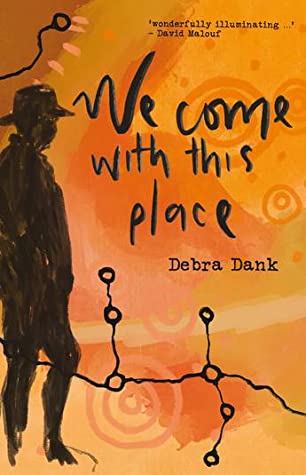
“Everyone” is a big call but I’m going to say it anyhow. I believe that, in the interests of truth-telling (or, is it, truth-receiving) that everyone in Australia should read more First Nations authors, fiction and non-fiction. I have read a few that I’d recommend, starting with this year’s standout read, Debra Danks’ We come with this place (my review), which I have already written about a couple of times this Nonfiction November. As I wrote in my last post, through it, I learnt new things about First Nations history and culture; I better understand this history and culture, particularly in terms of connection to Country; and, as a result, I can better explain and defend my support for First Nations’ people’s fight for fairness.

So, I thought I would add two more books on the topic that I have read in recent years, books that are readable, confronting but also generous in outlook, like Stan Grant’s Talking to my country (my review) and Anita Heiss’s Growing up Aboriginal in Australia (my review). I have read other First Nations nonfiction, but these two provide excellent introductions to the experience of living as a First Nations person in Australia.

Although written by an old-ish white man, my brother Ian Terry, I’d like to add to this list his book published this year, Uninnocent landscapes (my post, review to come), which is part of his truth-telling journey on the impact of colonialism on the Australian landscape, and thus, by extension, on First Nations Australians.

New to my TBR

Our instruction is obvious, to identify any nonfiction books that have made it onto our TBRs through the month (and noting the blogger who posted on that book).
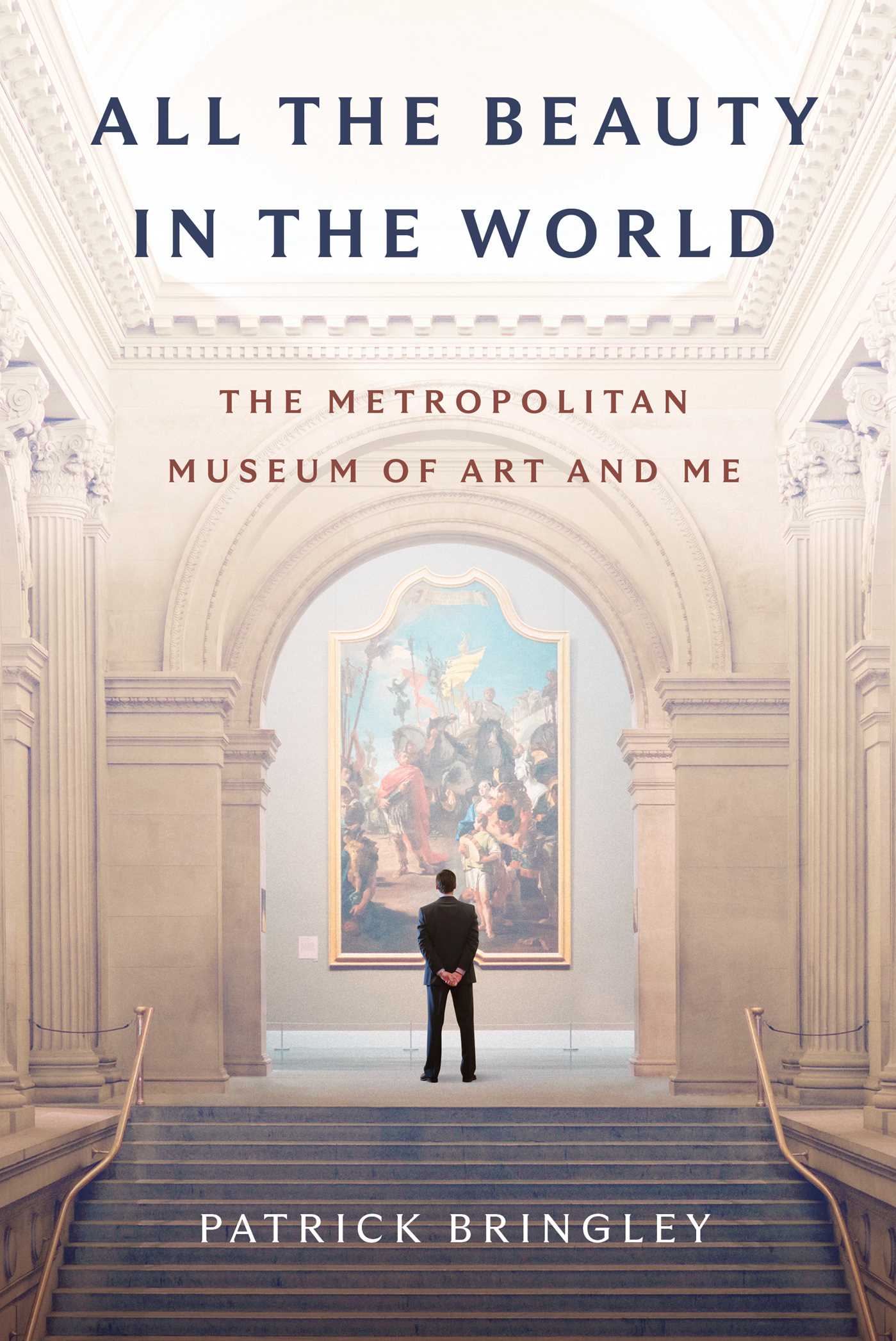
I’m sorry, but I tried very hard not to be tempted as I have a pile of nonfiction books already on my TBR and I’ve read so very few of them this year. I was intrigued though by Patrick Bringley’s All the beauty in the world: A museum guard’s adventures in life, loss and art posted by Frances (Volatile Rune). I love going to museums and galleries, and often wonder about those people who stand guard in the various rooms. Do they like their job? Are they interested in the collections they are guarding? How do they cope with being on their feet for so long? Bringley apparently answers these questions, and many more, including some I hadn’t thought of.

I am also hoping to read in the next few months two recent Aussie nonfiction books, Anna Funder’s Wifedom (which Brona has reviewed), and Richard Flanagan’s just published Question 7. I think that’s more than enough to keep me out of mischief.

A big thanks to the bloggers who ran Nonfiction November this year. I wasn’t as assiduous as I could have been, but I did appreciate reading the bloggers I did get to, and I enjoyed taking part on my own blog in the little way I did.

Any Worldshapers for you? Or, new nonfiction must-reads?
Novellas in November 2023: Week 4, The short and the long of it

This week’s question is the Novella version of Nonfiction November’s Book Pairings. It goes like this

Pair a novella with a nonfiction book or novel that deals with similar themes or topics.

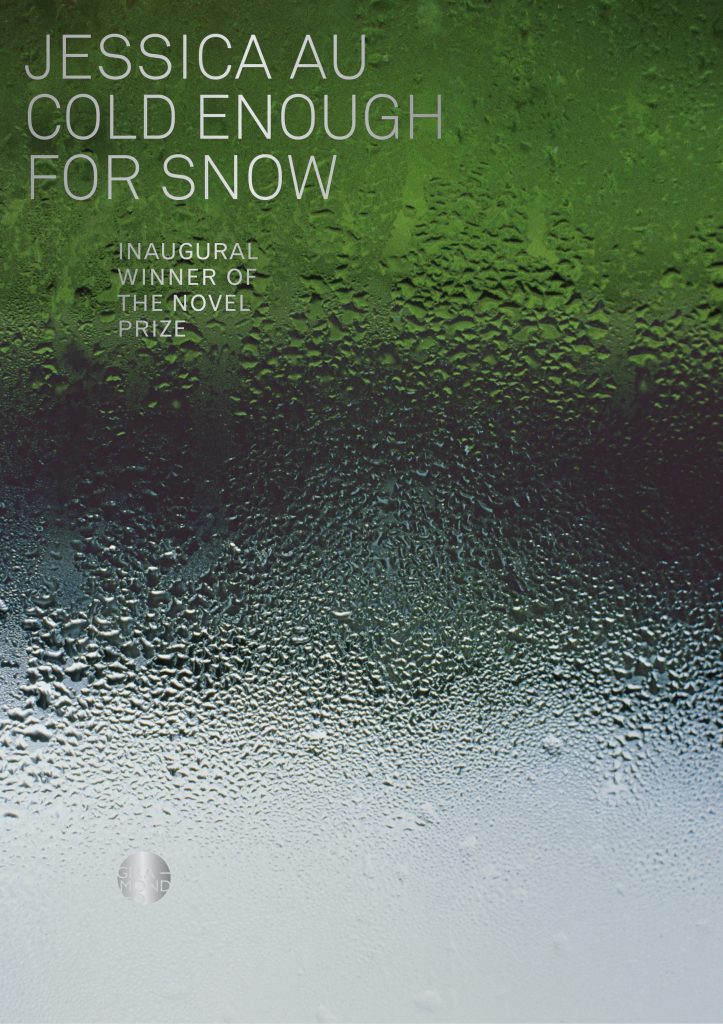
I am doing several pairings with Jessica Au’s novella Cold enough for snow (my review), because although it’s a “little” book, it’s so rich.

  • Mother-daughter trip instigated by a daughter, novella-novel pairing: Larissa Behrendt’s novel, After story (my review), is about a daughter taking her mother on a literary tour of England. Behrendt’s novel, however, had a clearer resolution than Au’s complex “little” book in which the issues to be resolved are more subtle and internal.
  • Mother-daughter migration stories, novella-memoir pairing: I’m pairing three books here, Susan Varga’s Heddy and me (my review), Anna Rosner Blay’s Sister, sister (my review), and Halina Rubin’s Journeys with my mother (my review). These three hybrid biography-memoirs are all about post-war migrations, and in each the daughter is challenged by her mother, though in different ways. Sometimes it’s that the mother is hesitant to share a painful past, while in others the mother is a challenging personality. In Cold enough for snow, the issue seems to be a sense of distance or difference that the narrator feels with her migrant mother, and their respective expectations, and a desire to work that through.
  • Mother-daughter disconnect, novella-novella pairing: Elisa Shua Dusapin’s Winter in Sokcho (my review) is about a daughter who struggles to live up to her mother’s expectations and those of the society she lives in. Both daughters seem uncertain about their relationship with their mothers, and both have decisions to make about the way forward in their own lives. Both novellas have open endings.
  • Daughters questioning their relationships with their mothers, novella-memoir anthology pairing: Rebellious daughters (my review), edited by Maria Katsonis and Lee Kofman, contains stories about rebellions against mothers (and also some against fathers and grandmothers). Not all are resolved but as I wrote in my post, in most of the stories, age and experience eventually bring rapprochement: daughters come to understand their mothers (or whomever) a little more, while their mothers likewise learn to accept the daughter they have. In Au’s book, there is a sense that the daughter has come to understand her mother more but also to understand that there are limits to this understanding.

Do you have any pairing ideas?

Written for Novellas in November 2023

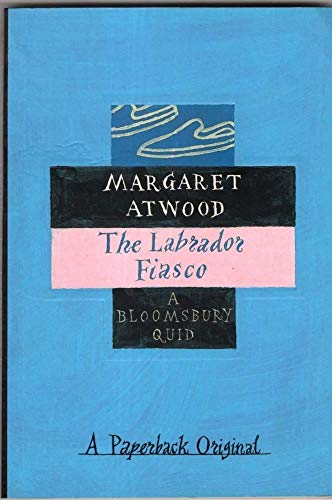
Margaret Atwood, The Labrador fiasco (#Review)

Although I am an Atwood fan from way back, I haven’t, to date, taken part in Marcie’s (Buried in Print) MARM (Margaret Atwood Reading Month) event. But I promised her I would this month, albeit with just one little short story probably, this one. I have had The Labrador fiasco on my “little book” TBR shelf since it was produced as a Bloomsbury Quid back in the 1996. I have no idea why I have not read all my little books, but, there you go!

Most of you will know Margaret Atwood (b. 1939). I read several of her books before blogging – including her dystopian novel, The handmaid’s tale; her historical fiction novels, Alias Grace and The blind assassin; and her more contemporary novels Cat’s eye and The robber bride – and I have more on my TBR. But, I have only reviewed her twice here, her novella, The Penelopiad (my review), and her recent poetry collection, Dearly (my review). Now, I bring you a short story. This woman is versatile.

As far as I can tell, “The Labrador fiasco” was first published in this edition. Many of my “little books” comprise previously published short prose works, but this doesn’t seem to be the case here. I have three other Bloomsbury Quids, two of which were previously published, with the other, Nadine Gordimer’s Harald, Claudia and the son Duncan (my review), also seeming to have been first published as a Quid. Interesting, but not relevant to my discussion of Atwood’s story, so let’s move on. The Quids, though, are gorgeous little books.

“The Labrador fiasco” is a “story-within-a-story” story. (Ha!) The framing story concerns the narrator and her aging father and mother. (The narrator’s sex is not provided, but let’s go with female as Atwood is female.) The father, in particular, is declining, having experienced a stroke six years before the story’s opening. It is told first person by the daughter, who regularly visits her parents.

The story within comes from Dillon Wallace’s The lure of the Labrador wild, published in 1905. Wallace was, says Wikipedia, “an American lawyer, outdoorsman, author of non-fiction, fiction and magazine articles” and this, his first book, was a bestseller. It tells of an exploratory trip through Labrador undertaken by Wallace and a man called Leonidas Hubbard, with their Cree Indian guide, George. The Cree bit is important as the Cree are not from the region they were travelling in. Anyhow, the aim was to explore a part of Labrador that hadn’t been explored by Europeans, with Hubbard wanting to “make his name”. However, as Wikipedia (and Atwood’s story) explains, they took the wrong river from the start, with tragic consequences.

Atwood’s story opens with:

It’s October; but which October? One of those Octobers, with quick intensities of light, their diminuendos, their red and orange leaves. My father is sitting in his armchair by the fire. He has on his black and white checked dressing gown, over his other clothes, and his old leather slippers, with his feet, propped up on a hassock. Therefore it must be evening.

There’s so much going on here, besides the gorgeously structure sentences. We are immediately put on the back foot with “which October”, and “it must be evening”, but at least the father is very much present. The uncertainty suggests that the story is being told from a later time. Whichever October it is, however, it is autumn – or fall – and that means the season of decline. Within a couple of paragraphs, we learn of the father’s stroke, and know he is declining. But, the question, “which October”, also hints at the October in the Wallace-Hubbard story when things have really started to sour – because not only is it cold of course, but our explorers have taken the wrong route and are running out of supplies.

This is the set up. As the story progresses, the narrator’s father, who was an experienced outdoorsman himself in his day, provides a running commentary on the explorers, with the narrator adding her own layer. “They took the wrong supplies”, the father says, pleased because he would have known what to take. However, our narrator wonders “what supplies could they have taken other than the wrong ones” … “No freeze-drying then” or “nylon vests”, for example.

“harsh and unmarked and jumbled”

What Margaret Atwood does in this story, then, is parallel the deterioration in the condition of the explorers as their expedition goes awry, with the narrator’s father’s decline as he ages. The explorers leave things behind, their feet suffer because they don’t have effective footwear. The father leaves hobbies behind, and says his feet are too sore to walk. The father thinks he would have done the expedition better, but he faces his own “forest” and in fact, like the explorers, he and his supporters are not fully equipped to deal with it.

And so it goes. In under 40 (very small) pages, Atwood combines commentary on a failed (colonial) expedition, conveying the poor planning and hubris of those involved, with a tender family story of an adult child and mother coping with a failing father. To do this she calls on her obvious love and knowledge of Canada’s history and “wilderness” (a contested term now, I know), and her keen interest in humans and how our lives play out.

We are all explorers, I think Atwood is saying, and the way, at least some of the time, can be “harsh and unmarked and jumbled”. It takes all our energy to traverse it. Good planning and the help of others can ease the way, but in the end, we each have to do it on our own. A clear-eyed, clever and tight story with an ending that encompasses genuine warmth with an acceptance of life’s realities. Beautiful.

Read for MARM 2023

Margaret Atwood
“The Labrador fiasco”
London: Bloomsbury, 1996 (A Bloomsbury Quid)
64pp.
ISBN: 9780747528890
Available online at Independent, 1996

Novellas in November 2023: Week 3, Broadening my horizons

This week’s question is new to me, and I like it. It goes:

Pick your top novellas in translation and think about new genres or authors you’ve been introduced to through novellas.

I love this question because it feels like I’ve read almost more novellas in translation than English language novellas. Is this because translation is such a difficult and expensive task that publishers tend to commission translations for shorter books more than for longer ones? But no, I don’t really think so. Just look at all those big Russian classics that have been translated – and translated more than once. My guess is something more simple, that perhaps some literary cultures value novellas more than others.

This idea is supported by something I read only a few months ago in Trove. The article, which appeared on 6 July 1907 in Sydney’s The Australian Star, cites an English writer named Basil Tozer, who had made a “plea for shorter novels”. He commented that

The habit of loading a story with indifferent descriptive passages still prevails to a great extent, though it might with considerable advantage be dispensed with. A beautiful woman loses her charm when every good point she possesses, from the creamy smoothness of her complexion to the alluring, curve of her eyebrow, is described separately and in detail; and in the same way a glorious scenic panorama metaphorically falls flat when every square mile of it is analysed and dissected. 

He says these “faults” are “commonest among young writers” but also occur “among some of our novelists who have served a long apprenticeship”. He doesn’t name these offending writers, but he does name the opposite, French writers like Daudet, Hugo and de Maupassant, whose writing includes no “superfluous verbiage”. These are, he admits, three of France’s most polished fiction writers, but even “the rank and file” French novelists “seldom err upon the side of overloading their work with unnecessary vocables and third-rate descriptive passages”. He argued that British novels would be strengthened if they were more condensed. That was over 100 years ago, but I wonder – without much evidence to support it – whether there really is something cultural in this?

Whatever … I can say that of the translated fiction I’ve read over the years, novellas represent a large proportion. This started way before blogging, and is not because I specifically chose to read novellas. They just seemed to be the books most often recommended to me.

So, before blogging, my favourites included Albert Camus’ The outsider (French, and which I did first read in French, as L’étranger, at school), Alexander Solzhenitsyn’s One day in the life of Ivan Denisovich (Russian), and Gabriel Garcia Marquez’s Chronicle of a death foretold (Colombian). These three have stuck with me over a long time. Marquez’s has such a mesmerising opening, “On the day they were going to kill him…”

Since blogging, I have read so many compelling translated novellas that I find it hard to choose, but I’ll name three, in alphabetical order by author, that have captured my interest:

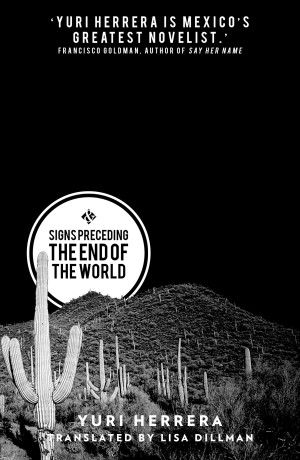
Yuri Herrera, Signs preceding the end of the world
  • Yuri Herrera, Signs preceding the end of the world (Mexican, my review), because it deals with the Mexican-USA migration issue, but with an almost mythical tone that overlays it with a bigger story about crossings and transitions.
  • Patrick Modiano’s Sundays in August (French, my review), because of the carefully structured journey we are taken on, one that leaves us at the end with so many questions to think about, while also revealing enough about what had happened that we know its impact on the protagonist.
  • Sayaka Murata’s Convenience store woman (Japanese, my review), because of the way Murata gets into the head of her mystified outsider in a culture that values conformity.

I found it hard limiting myself to three but, it had to be done or I’d go on forever.

In terms of how these have broadened my horizons, well, there’s the obvious thing to do with reading different cultures. Herrera’s and Murata’s books deal with issues I know to be significant in their cultures, but it means something to read about them from artists working within the culture rather than from the perspective of the news. Modiano’s exploration of disappearance, loss and memory is less obviously a specifically French issue, but it does I think have roots in a postwar European sensibility.

Each book uses the novella form a bit differently, but each is characterised by a sustained tone which can denote a novella. By this I mean that novels, being longer, will often vary the tone because not to do so could become oppressive, whereas the intensity of a sustained tone (whatever that tone may be) is part of what makes a novella. I’m generalising of course, but this seems to be the case in the novellas I love.

As for the other part of the question. I don’t think I’ve been introduced to new genres through novellas, just to different ways of writing those genres, but I have certainly been introduced to many great new writers – like the three above, for a start. But, moving away from translation, I have been introduced to other writers too through their novellas, such as Edith Wharton through her intense Ethan Frome. From that introduction, I went on to fall in love with Edith Wharton.

Novellas … any whichway, I love them.

What about you?

Written for Novellas in November 2023

Nonfiction November 2023: Choosing nonfiction AND Book pairings

My participation in Nonfiction November has been sporadic, but this year I have done Week 1, and am now combining Weeks 2 and 3, partly because there’s an element of repetition in my Week 2 responses.

Nonfiction November is hosted by several bloggers. This year, Week 2 – Choosing Nonfiction is hosted by Frances at Volatile Rune, and, my favourite, Week 3 – Book Pairings, by Liz at Adventures in Reading, Running and Working from Home.

According to the plan, Week 2 finished last Friday (10 November), and Week 3 commences tomorrow (Monday 13 November), so I am dragging the chain for the first and jumping the gun for the second, by posting today, Sunday 12 November.

Choosing Nonfiction

This week the questions relate to what sort of nonfiction we like to read. My answers will mostly be known to regular readers here, but there are some new twists on the questions.

What are you looking for when you pick up a nonfiction book?

Depending on the book and the topic, I am looking to learn something new, to increase my understanding of something I already know, and/or to have my perspective challenged (which might result in my changing that perspective, or, being able to better defend it.) The two books I named in my Week 1 post – Debra Danks’ We come with this place (my review) and JD Vance’s Hillbilly elegy (my review) – satisfied at least one of these criteria.

Dank’s book, in fact, satisfied all three – I learnt new things about First Nations history and culture; I better understand it, particularly in terms of connection to Country; and, as a result, I can better explain and defend my support for First Nations’ people’s fight for fairness.

Do you have a particular topic you’re attracted to?

I haven’t changed from what I’ve said before, which is that my overriding interests are literary biographies/memoirs, nature writing, and works about social justice/social history (which includes First Nations history and decolonisation, climate change and feminism.)

This year, as you already know, I’ve read very little nonfiction, but those I’ve read have been memoirs in the social justice/social history area.

Do you have a particular writing style that works best?

For want of a better word, I enjoy what is broadly called creative or narrative nonfiction. Because I love fiction, I like the writing to be engaging and evocative, which tends to mean writing that draws on some of the techniques of fiction to tell a nonfiction story. This does not mean playing with the facts, but making the facts, shall we say, accessible. Where a case is being argued, I want it to be clear and logical, not characterised by academese or jargon that is understood only by those in the know.

While this question doesn’t specifically ask it, I also like, where it’s appropriate, to know what sources have been used (either through an author’s note or footnotes/endnotes), and I LOVE an index. I know indexing is expensive, but, unless you are reading an eBook with search functionality, the value of a nonfiction book can be seriously diminished by the absence of an index.

When you look at a nonfiction book, does the title or cover influence you? If so, share a title or cover which you find striking.

I wouldn’t say I am influenced by titles and covers, because with nonfiction – for me, anyhow – content or subject matter is queen. However, this is not to say that a good titles and beautiful covers don’t enhance the experience, because they do.

Debra Dank’s We come with this place is a powerful title. It categorically announces that First Nations people were always here, that is, they WERE HERE when the settlers/invaders arrived. More than that, it suggests they are an intrinsic part of, if not essential to, this place. WE. COME. WITH. THIS. PLACE.

By brother Ian Terry’s book, Uninnocent landscapes, also has a strong title (but I will discuss that in my review). The book’s design and its cover are also glorious. The cover is striking in a minimalist restraint that also happens to be literal, in that it depicts Robinson’s journey that Ian followed.

Book Pairings

Our instruction is to “pair up a nonfiction book with a fiction title. Maybe it’s a historical novel and the real history in a nonfiction version, or a memoir and a novel, or a fiction book you’ve read and you would like recommendations for background reading. You can be as creative as you like! “

Okay, so my creativity will extend to two pairings:

Nonfiction read this year, paired with fiction from any year

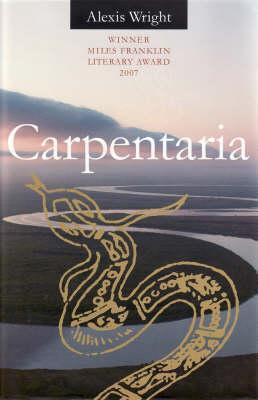
Alexis Wright, Carpentaria

Debra Dank, We come with this place with Alexis Wright’s Carpentaria (my post). For a start, both books are set in neighbouring parts of northeast Australia, just south of the Gulf of Carpentaria. Secondly, both convey, in powerfully descriptive ways, the catastrophic dislocation experienced by First Nations peoples when they are separated from Country and/or when they are not able to interact with Country in the ways that are essential to their (and Country’s) wellbeing.

Fiction read this year, paired with nonfiction from any year

I have read a lot of First Nations and other non-white/BIPOC fiction this year, but I’ve already focused on First Nations writing in the post, so I’m changing tack, and am pairing Edwina Preston’s Bad art mother (my review) with Jane Sinclair’s memoir Shy love smiles and acid drops (my review), which I read early last year. Preston’s novel was inspired by several Australian artists (visual artists and writers) including the story of Sunday and John Reed’s adoption of Joy Hester’s son Sweeney. Jane Sinclair’s parents were part of the Reeds’ Heide Circle, and in her book Sinclair includes letters written by her mother to Sunday Reed, which include discussions of Sweeney. These are just two of the books I’ve read which deal with or reference in some way Heide. There are many more I haven’t read, as this Circle was not only fascinating but one of the most influential in Australia’s arts history, particular in terms of Modernism.

What would you pair (and/or do you have anything to share regarding the first questions)?

Novellas in November 2023: Week 2, What is a novella

The thing about these annual memes is that the questions became somewhat the same, which is fair enough as new bloggers appear on the scene as do new ideas. However, my challenge is whether I have anything to add to what I have written about novellas before? The answer is not a lot, but I did listen to the beginning of the 20/40 winners’ interviews on the Finlay Lloyd website. I didn’t listen for long, because it’s a combined interview and I haven’t finished reading the second book. My preference, where possible, is to gather and write my own thoughts before I hear other ideas (including those of the authors).

However, the interview started on the topic of novellas, and the two winners did have some interesting things to say about them which add to what I’ve said before. I’ll recap those ideas first by (re)sharing the Griffith Review’s Julianne Schultz on novellas. She said they are

stories that are longer and more complex than a short story, shorter than a novel, with fewer plot twists, but strong characters. Condensed tales that are intense, detailed, often grounded in the times, and perfectly designed for busy people to read in one sitting.

Most of the novella definitions out there say things like this – in more or less words, and with different emphases here and there. In the 20/40 Prize interviews, authors Kim Kelly and Rebecca Burton put their own interesting spins on it.

Kelly said novellas are books you can read in a couple of hours, without racing but also taking your time. Yes! Good call, I thought, because I do like to take my time with what I am reading, and this works well with novellas. I can take my time but not take forever! Kelly also commented on the value of novellas from the writer’s perspective. As a busy person, she says, she has little time for writing, but once a story “presents itself as a novella” she can see the finishing line and get there faster! I love insights like that into the practicalities of a busy writer’s life.

The interviewer and, more relevantly, the publisher, Julian Davies, made a point about structure, suggesting that a novella is long enough for the writer to develop something but not so long that such development can get away from them. Burton picked this up, saying that, with a novella, writers have time to develop but can still retain “a fleetingness”, a sense of “capturing a moment in time, a breath, a mood”.

Kate Jennings, Moral Hazard

Somewhat less poetically, Kate Jennings, as I recorded in my in praise of the “taker-outers” post, described novellas as “sinew and bone”, which Davies captured in the interview by using my favourite cliche, “less is more”.

I agree with all these definitions, but I’d like to add that novellas can also offer writers the possibility of experimentation. Writers can try things out without getting lost in excessive verbiage, or they can simply be experimental without being constrained by any expectations of form. I’m thinking, for example, of Ida Vitale’s Byobu (my review) or of Kate Jennings’ Snake (my review).

For this week 2 of the meme, we are also encouraged to suggest works that best capture the ‘spirit’ of a novella. I have done that before (Little Treasures and Classic Australian novellas), but let’s just say that in recent years I could add some new memorable books like Sayaka Murata’s Convenience store woman (my review) and Jessica Au’s Cold enough for snow (my review) which are condensed, intense, detailed tales focusing on a limited set of characters. But I could also add experimental books like Byobu, that aren’t that at all.

What about you?

Written for Novellas in November 2023

Nonfiction November 2023: Your year in nonfiction

My participation in Nonfiction November has been sporadic, until last year when I managed to complete the whole series. Maybe I will again this year, maybe I won’t. We’ll see.

Nonfiction November, as most of you know, is hosted by several bloggers. This year, Week 1 – Your Year in Nonfiction is hosted by Heather at Based On A True Story, with variations on the usual first week questions.

But, here’s the thing. As we come to the end of 2023, I’m having to come clean on what a strange reading year I’ve had. You will hear more in my end-of-year roundups, but by then you’ll have had inklings from posts like this! Last year, I wrote for this post that I’d read about 25% more nonfiction than I’d read in each of the preceding few years. Last year’s (that is for 2022) non-fiction reading had comprised 45% life-writing, 45% essays, with the rest being “other” non-fiction. This year, since the end of last November, I have read only TWO nonfiction works and both have been memoirs.

What were your favorites?

The two books are Debra Dank’s We come with this place (my review), and JD Vance’s Hillbilly elegy (my review). We are asked to name our favourites, which is always tricky for me, as I don’t tend to think in terms of “favourites”. Both these books provided truly fascinating insights, albeit in diametrically opposed directions. Dank is a First Nations Australian writer who conveys with impressive clarity just how the interconnectedness between her people, the ancestors and Country works, and how that translates into knowing Country, while Vance was a poor white hillbilly from Kentucky who is now a Republican politician and, last I heard, a Trumpian. You won’t be surprised I think to hear me say that while I found Vance enlightening in terms of contemporary US politics, Dank’s book is by far my favourite. She bowled me over with her generosity.

Have you had a favourite topic, and Is there a topic you want to read about more? 

I’m bundling there two questions together because clearly I didn’t review enough nonfiction this year to have a favourite topic, but what I’d like to read more are books on my favourite interests areas – literary biographies, nature writing, and works about social justice/social history.

I have several literary biographies, in particular, on my TBR, so maybe next year I’ll have a fuller report to make. In terms of the third area – social justice/social history – I must say that reading more nonfiction from First Nations writers, like Debra Danks’ book, is what interests me right now.

What are you hoping to get out of participating in Nonfiction November? 

As I wrote last year, I am not looking for more recommendations – not because I am not interested but because I have too much on my TBR already without adding to the pile (physical and virtual). However, I always like book talk, and the book talk I most like is that which focuses on areas that interest me (see above), and which talks about wider issues like why do we read nonfiction, what do we look for, and what makes a good nonfiction read?

What do you think?

Six degrees of separation, FROM Western Lane TO …

Time has been tight for me this last month so I’ve rushed this month’s Six Degrees a bit, but I hope it satisfies my regular readers’ different needs! So, let’s just get to it … the Six Degrees meme, I mean. If you don’t know how this meme works, please check host Kate’s blog – booksaremyfavouriteandbest.

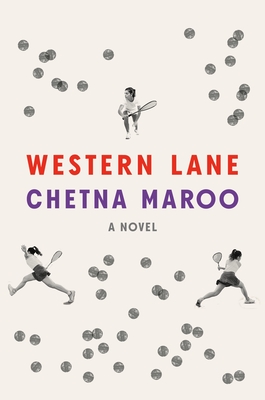
The first rule is that Kate sets our starting book. In November we are back to books I haven’t read. Indeed, this is one I hadn’t even heard of, Chetna Maroo’s Western Lane. It’s a debut novel that was shortlisted for this year’s Booker Prize. GoodReads starts its description with “a taut, enthralling first novel about grief, sisterhood, and a young athlete’s struggle to transcend herself…”

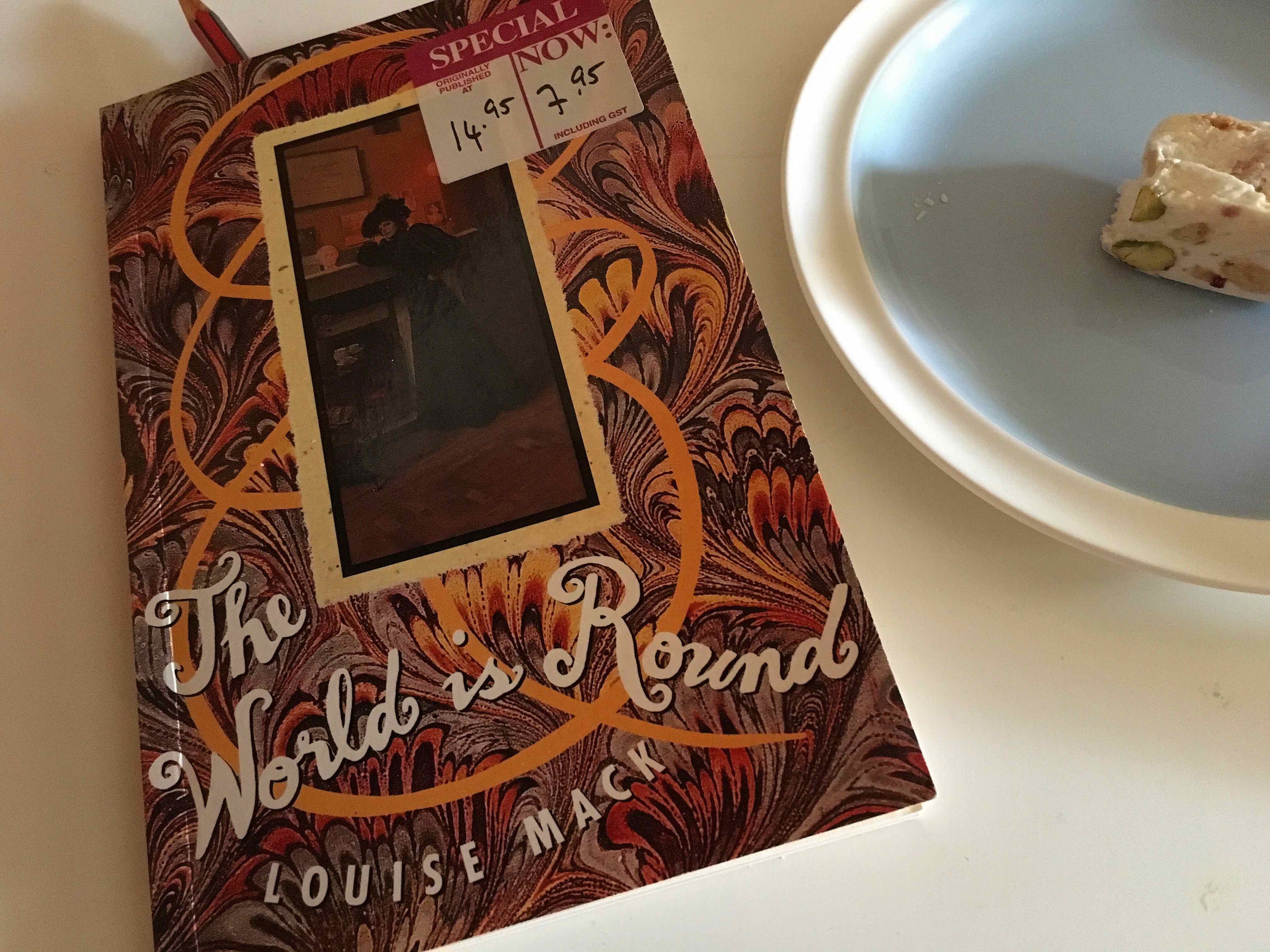
Louise Mack, The world is round

I could go with books about sisters, or athletes, as I’ve read a few of those on my blog, but I’m going in a different straightforward direction instead, to another debut novel by a young writer, albeit this one a century or so ago, Louise Mack’s The world is round (my review). It’s not about a struggling athlete, but it is about a would-be writer.

Book cover

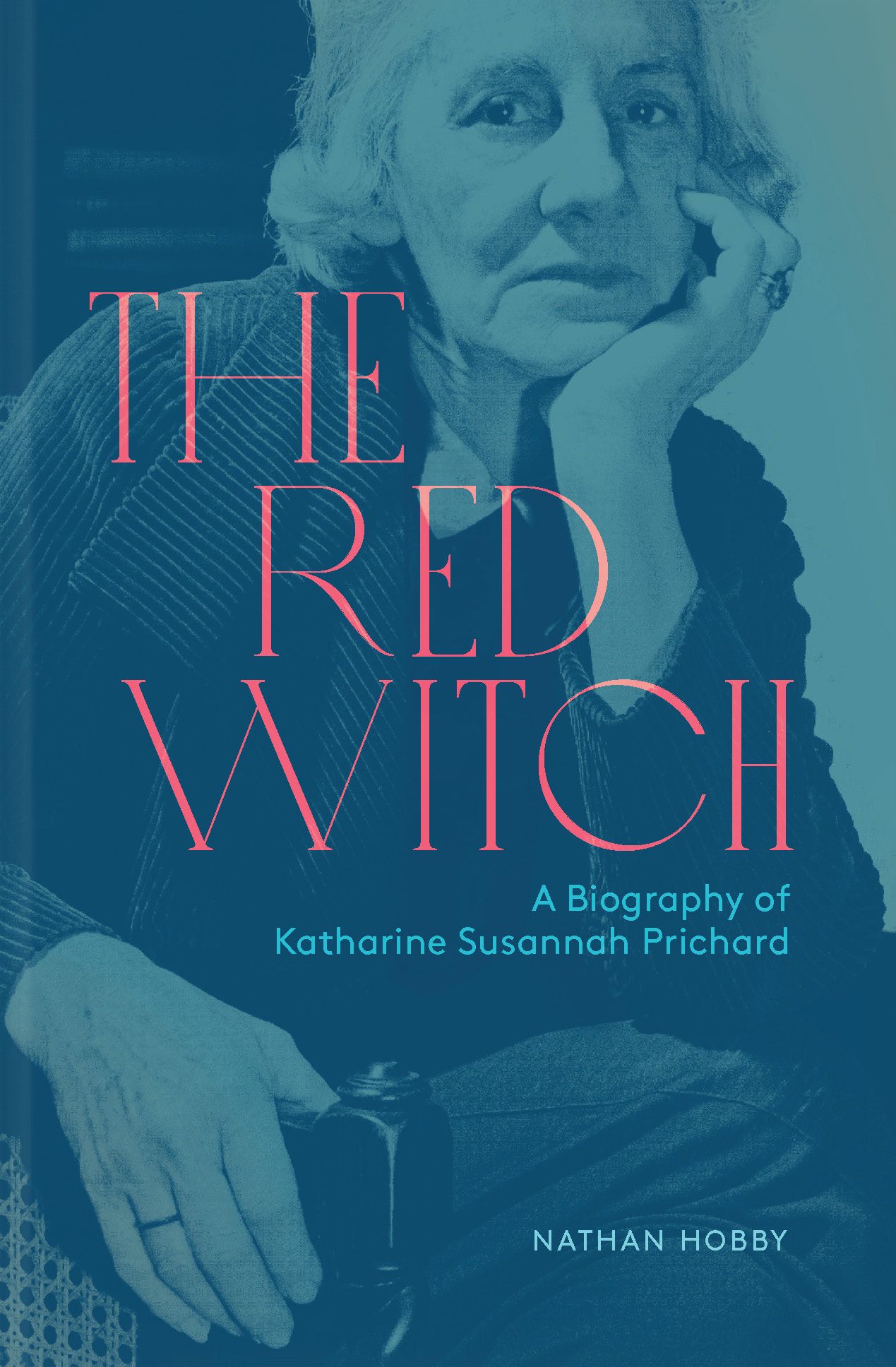
Now, I don’t want to go down the content path though that would be easy – and, you never know, we might meet a would-be or struggling writer or two a bit later in this chain. Here though I’m going for a word in the title, and so it’s to Michelle Scott Tucker’s biography, Elizabeth Macarthur: A life at the edge of the world (my review) that I’m linking next. Round worlds, edges of worlds, where to now? Not to worlds, in fact … but to …

Jane Fletcher Geniesse, Passionate nomad, book cover

Another strong woman. Elizabeth Macarthur had to be strong to keep the family farm going in colonial Australia while her husband spent months if not years travelling to and from England. Freya Stark was another strong Englishwoman who made her way in a man’s world, a century or more after Macarthur. The book I’m linking to is Jane Fletcher Geniesse’s biography, Passionate nomad: The life of Freya Stark (my review).

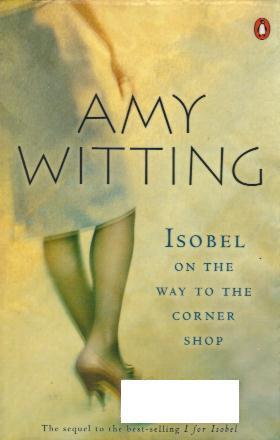
Geniesse’s biography was published in 1999, as was the wonderful Amy Witting’s gorgeous novel, Isobel on the way to the corner shop (my review). Here come the would-be writers! Isobel is a young woman who is struggling to be a writer. Poor, starving and isolated, she ends up contracting TB and, after a dramatic collapse, is admitted to a sanitarium, where she starts to recover in more ways than one.

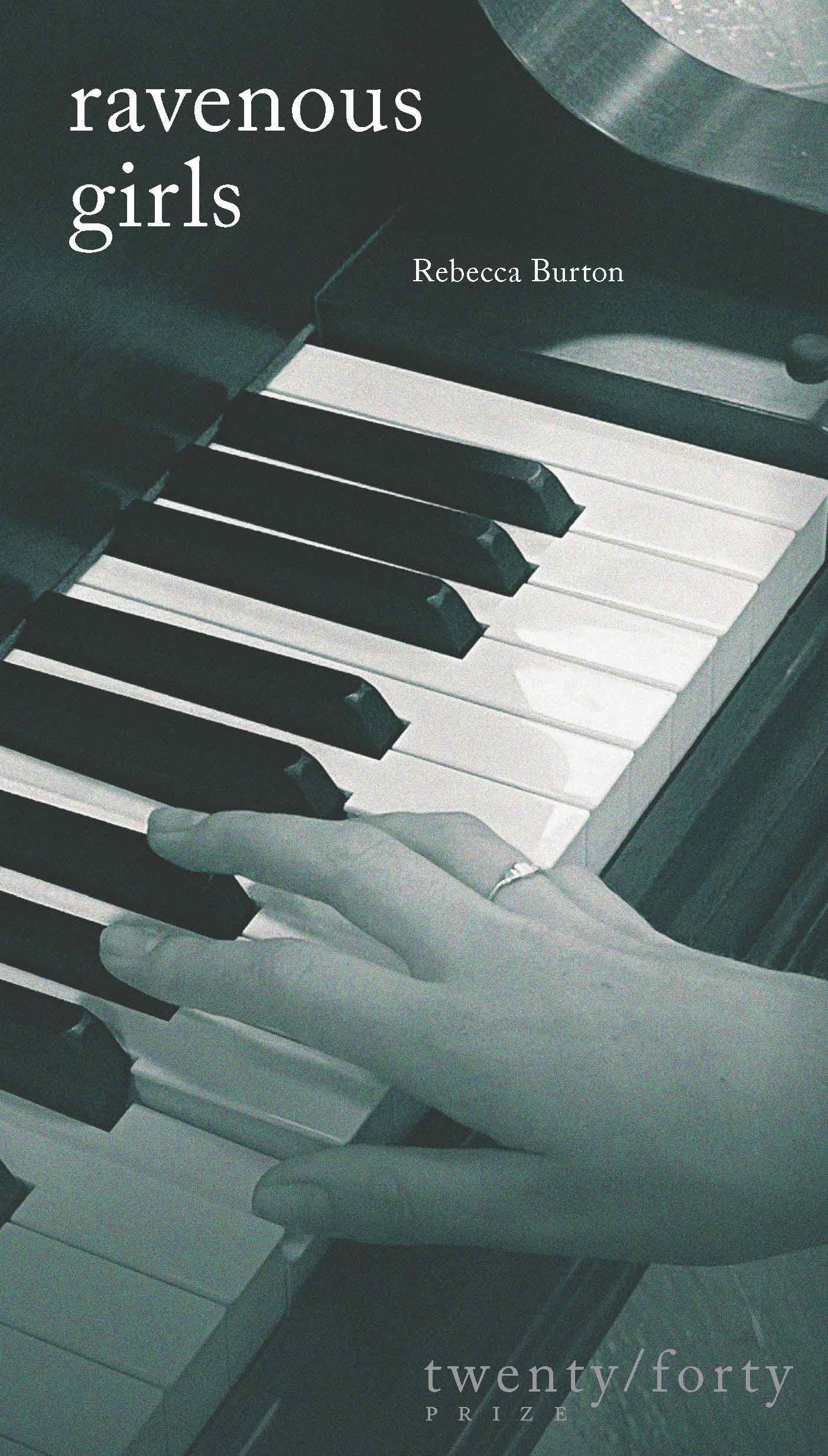
From Isobel I am taking us to my most recent post, Rebecca Burton’s Ravenous girls (my review) which is about another young woman – starving for different reasons – who ends up as a long stay patient in hospital. Justine is a different person to Isobel, and the story is from her sister’s perspective, but the link still works!

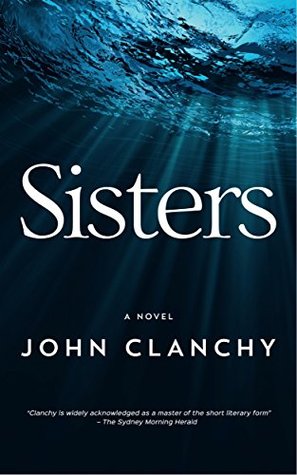
John Clanchy, Sisters

And now, I’m going to do something I don’t usually do, which is to close the circle. Maroo’s book is apparently about sisterhood, and so, in a large way, is Burton’s Ravenous girls, so it’s on sisters that I’m going to conclude, but with sisters at the older end of the spectrum. John Clanchy’s Sisters (my review) are not struggling to find themselves, or to make their way in the world. Instead, they are needing to resolve secrets from the past, which just goes to show that when you solve one of life’s challenges, there’s sure to be another waiting! In fiction, at least!!

I’ve spent far more time in Australia than I usually do, but we did make a quick foray to the middle east, and we have traversed Australia from its early colonial days to through to the present. I have also been, as last month, rather one-sided in author gender, with just one male author again bringing up the rear.

Now, the usual: Have you read Western Lane? And, regardless, what would you link to?

Novellas in November 2023: Week 1, My year in novellas

I love novellas and have written on and reviewed novellas almost since this blog started, because I love the form, but I have only tinkered around the edges of Novellas in November (run by Cathy of 746 Books and Rebecca of Bookish Beck). Last year, I wrote a Monday Musings on Classic Australian novellas and the year before I did one on Supporting Novellas (here in Australia). Otherwise, I have written a few novella reviews for the month. But I have not focused on the weekly themes suggested by Cathy and Beck. I may not again, because I might become a bit repetitive, but I’m going to start at least.

However, this has been a very strange reading year for me, so I won’t have a lot to say, which is probably good, as it means my posts will be short for you to read! For Week 1, which just runs from 1 to 5 November, the theme is “My year in novellas”. It asks us to write about novellas we’ve read since last November.

Well, I’ve only read one, and that was Jessica Au’s quiet, meditative, award-winning Cold enough for snow (my review). It was the inaugural Novel Prize winner, and also won the Victorian Premier’s Literary Awards prize for fiction (as well as being the overall winner). It’s been shortlisted for more prizes, including, most recently the Prime Minister’s Literary Awards fiction prize. It’s one of those books that’s perfect for the novella form, because it’s an intense, concentrated book rather than a plot-driven page-turner. It says a lot that it has held its own so well in the “novel” world – in terms of awards and overall critical reception – despite its short length. (See publisher Giramondo’s site for its awards to date.)

Cold enough for snow tells the story of a mother-daughter trip to Japan, but its focus is not the trip. Told from the daughter’s point-of-view, it tells about a relationship that is characterised by closeness and distance, by tender caring and frustration, by needs that aren’t always satisfied perhaps because they can’t always be, by a desire to connect. For me it was about the paradoxical nature and mutability of life. But everyone who reads this book – as in my reading group – seems to see something different because it speaks so closely to our individual experiences of life and close relationships. The Prime Minister’s Literary Award judges capture this well in their comment (see the Giramondo site above) that it is “intricately structured and with a flow and reach that, like all remarkable writing, is without boundaries”. “Without boundaries” is a good description …

Au’s book might have been my only novella review in the last twelve months, but all has not been quiet on the novella front. Back in July I wrote a Monday Musings about support for “short novels” from various points of view over the first half of the 20th century – that I found in Trove. And, just a few days ago I wrote about the winners of the new 20/40 novella prize being run by Finlay Lloyd publishers. I plan to read these two winners for this year’s Novellas in November.

Written for Novellas in November 2023

Hal Porter, Francis Silver (#Review, #1962 Club)

Introducing my first review for the 1962 Year Club – Shirley Hazzard’s “The picnic” – I said I had read two short stories and might post on the second one. I am doing so now but, stupidly, I left the book back in Canberra and here I am in Melbourne, so my post will be limited, and without the usual quotes to convey Porter’s writing style. But, it was this, or not at all, because by the time we return home, I will be onto other things. I am cross though, because Kerryn Goldsworthy did write a useful introduction, which, if I remember correctly, placed Porter as part of a change in short story writing from the more realist school that had held on strongly since Lawson.

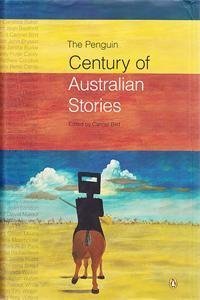
Like Hazzard’s story, “Francis Silver” appears in the Carmel Bird edited anthology, The Penguin century of Australian stories.

Who was Hal Porter?

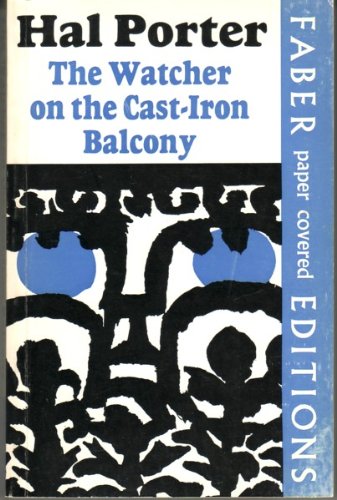
Porter (1911-1984) was an Australian novelist, playwright, poet and short story writer. His first autobiography, The watcher on the cast-iron balcony (1963), is regarded as a classic.

The Wikipedia article, linked on his name, is relatively brief, but there is a more thorough biographical entry for him in the Australian dictionary of biography (ADB). Written by literary critic and academic, Peter Pierce, it tells us that he had many occupations, including teaching (on-and-off at many schools), librarian, and shorter term jobs like window-dresser and sheep-station cook. But, cutting to the chase, it also reveals Porter as a problematic figure, because of his pederast behaviour. Peter Pierce writes, for example, that, around 1940, he had “an affair” with a male student at the school where he taught, “an indiscretion that went unpunished”. Those were the days, I suppose. This “affair” – should we grace it with that description? – is apparently fictionalised in his short story “The dream”.

Pierce also writes that, in her 1993 book, Hal Porter: Man of many parts, Porter’s biographer, Mary Lord was, “even-handed in judging an old friend and sensational in revealing Porter’s paedophilia, in particular his sexual relations with one of her sons.” Hard to understand. Moreover, Pierce says that Porter’s third autobiography, The extra (1975),

ventilated many of Porter’s prejudices — against Jews, ‘foreigners’ and Aborigines. The counterpart of Porter’s grace, charm and cultivation was an intense snobbery that, for instance, saw him elevate his father’s occupation from engine-driver to engineer. His facility at winning friends was matched by ceaseless demands on their patience.

So, a difficult man, and one I thought twice about sharing here. However, I read the story, liked it, and as it doesn’t smell of these difficult issues, I am covering it in the uncomfortable spirit of separating the work from its creator. Peter Pierce described him in his 2012 ADB entry as “one of the finest of all Australia’s authors of short stories and a pioneer of the first flowering of autobiographical writing in this country”. (This piece by the late academic Noel Rowe explores the Porter issue in depth.)

“Francis Silver”

“Francis Silver” is a first-person story in which an older man tells of fulfilling a deathbed request from his mother who had died at the age of 41 when he was 18. All through his childhood, he had heard about a man called Francis Silver, who, his mother had implied, had been not only a beau, but an alternative potential husband to the country-living man she did marry, the narrator’s seemingly long-suffering father.

Through our narrator’s childhood, his mother had shared with him an album of postcards sent to her by Francis Silver. Along with sharing this album, she had told stories about this man which suggested he was a worldly, debonair man, who loved the theatre. Her wish was for him to give the postcard album to Silver – but, on no account, was he to also give the lock of her hair that she had kept in an envelope with Francis Silver’s name on it. He was to burn that.

Francis Silver, his mother told him, had worked in a picture-framing shop, and that is where our narrator finds him – but what he finds doesn’t gel at all with the stories his mother had told. The story, then, is about memory, illusion and reality, and the boy’s recognition of the difference. In his own romantic fantasy, he had decided to ignore his mother’s second request and give Francis Silver (whose name works as a mantra in the story, hence my using it in full for each reference here) the lock of hair too. But, as he confronts reality, he changes his mind. The closing sentence vividly conveys his decision in an act that encompasses layers of meaning and feeling.

The father is a less developed figure, because the son was in his lively mother’s thrall, but the sense we get is of a man who loves his wife, and who tolerates her flights of fancy, feeling comfortable, it seems, that she chose – and remains with – him. He seems to recognise (or trust) that Francis Silver is one of those escape fantasies people have to help them cope with the tedium of life, the fantasy that, should it get too hard, there were, or perhaps even are, other options. The narrator, as a boy, doesn’t understand these nuances.

There was a strong autobiographical element, I understand, to Porter’s writing. From the little I read for this post, I am aware that there are such elements in this story. For example, Porter’s beloved mother died when he was 18 years old, as does the narrator’s mother in this story. How much else might be autobiographical though, I don’t know.

Anyhow, just to finish … in the end, the narrator resolves the differences he confronts and is generous to his father for whom Francis Silver had seemed an imagined (if not, as it turns out, real) rival. Our narrator has also learned something about the imagined, illusory past, and its relationship to present realities. A tight, neat, engrossing story.

* Read for the 1962 reading week run by Karen (Kaggsy’s Bookish Rambling) and Simon (Stuck in a Book).

Hal Porter
“Francis Silver” (orig. pub. in Hal Porter, A bachelor’s children, 1962)
in Carmel Bird (ed.), The Penguin century of Australian stories
Camberwell: Penguin Books, 2006 (first ed. 2000)
pp. 186-197