Non-fiction November 2018, Weeks 4 and 5

Non-fiction November 2018Well, bizarrely, I did the first three weeks from 2016 for my first Non-fiction November of 2018 post! I won’t revisit those – they’re similar topics to this year’s anyhow – but I’m back on track for this post. Non-fiction November, if you haven’t guessed, involves celebrating non-fiction for the month, with each week focusing on a specific issue, question or topic. This year’s meme is being hosted by Katie (Doing Dewey), Kim (Sophisticated Dorkiness), Rennie (What’s Nonfiction), Julz (JulzReads), and Sarah (Sarah’s Bookshelves). 

As with my first post which covered weeks 1 to 3, I’m combining weeks 4 and 5 into one post and am publishing it during the weekend between the two weeks.

Week 4: (Nov. 19 to 23) – Reads Like Fiction (Rennie @ What’s Nonfiction)

This topic essentially asks whether we like a form of non-fiction called “narrative” or “creative non-fiction”, which Wikipedia describes as “writing that uses literary styles and techniques to create factually accurate narratives.”

Well, in a word, yes – I do – very much. If that makes me sound soft, then so be it, but I’d argue that non-fiction writer using literary styles and techniques to engage readers doesn’t automatically weaken the seriousness or worthiness of their content. Commenting on a previous post of mine, historian Yvonne Perkins quoted historian Penny Russell who said that “Writing history… is a creative art. It requires empathy, intuition, a keen sense of drama and pathos, a distinct narrative flair.”

Helen Garner, This house of grief book cover

So, who (or what) are my favourites? One of the internationally recognised exponents of this form is the Australian writer, Helen Garner, whom I started reading long before blogging. Her books Joe Cinque’s consolation and This house of grief are excellent examples, and she influenced, I believe, younger Australian writers, like Chloe Hooper (The tall man) and Anna Krien (Into the woods and Night games). In these books the narrative drive comes from the writer’s involvement in the “story”, in their taking us along in their thinking and investigation. And to be not entirely ethnocentric, I’ll name one excellent non-Australian author I’ve read, albeit some years ago – Erik Larson and his book Isaac’s storm.

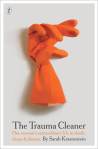
Michelle Scott Tucker, Elizabeth MacarthurTurning to this year, most of my non-fiction reading has been biography, which lends itself to this “creative” approach though not all biographers do adopt it. Two that I’ve read this year did, however, Sarah Krasnostein’s The trauma cleaner and Michelle Scott Tucker’s Elizabeth Macarthur: A life at the edge of the world. Krasnostein achieves it by being part of the journey, by using a creative structure interweaving her subject’s past with her present life, and by evocative language which uses the sort of imagery more common in fiction. Tucker, on the other hand, takes the more traditional straight chronological approach, but she encourages us to engage with Elizabeth Macarthur the woman, rather than present her to us as a fait accompli. There are gaps in Macarthur’s story. For example, we might know what happened, but not, perhaps, how or why, so Tucker uses her imagination – and makes it clear she’s doing to – to consider the situation. Here’s an example:

No. The most likely source is Elizabeth Macarthur, once more trying to mitigate her husband’s wilder misjudgements. But we have to imagine it: a hushed yet heated conversation with Edward to send him flying out after Oakes and then a vain attempt to placate and soothe John …

This is a thoroughly researched and documented biography, but written with a narrative, dare I say, novelist’s flair.

Week 5: (Nov. 26 to 30) – New to My TBR (Katie @ Doing Dewey)

Unfortunately, like last year, and although I’ve been reading several participants’ posts, I haven’t added anything to my TBR as a result of these November posts, because – and it’s a big because – I have so much already on that pile, including, most recently:

  • Peter Ackroyd’s Dominion (History of England V)
  • Elizabeth Kleinhenz’s Germaine: The life of Germaine Greer (about which I have also posted recently)
  • Clare Wright’s You daughters of freedom (currently reading, and about which I have already posted)

However, if I were looking for book ideas, I’d probably go back to some of “expert” posts. What a variety of topics – from Kate (booksaremyfavouriteandbest) on Empathy to Debbie (ExUrbanis) on Downsizing and Making Major Life Changes, from Buried In Print’s call for good non-fiction books on Indigenous Storytellers to Brona (Brona’s books) wanting more on the French Revolution (which reminds me that I must go recommend something!) To name just a few!

Meanwhile, I’d love your comments on any of the above, but particularly your thoughts on non-fiction that reads like fiction. Do you like it? And if so, do you have any you’d recommend?

Non-fiction November 2018, Weeks 1 to 3

I’m not sure how long Non-fiction November has been happening in the blogosphere, but I first became aware of it last year. It runs for a month, with a different set of questions posed for each week of the month. Last year I concatenated my responses into two posts, one for weeks 1 to 3, and the other for weeks 4 to 5. I’m going to do the same this year.

The meme is jointly hosted this year by Katie (Doing Dewey), Lory (Emerald City Book Review), Sarah (Sarah’s Book Shelves), Rachel (Hibernator’s Library) and Julz (Julz Reads).

Week 1: (Oct 31-Nov 4) (KatieYour Year in Nonfiction: 

There are several questions for this week, but, like last year, I’m just going to answer a couple …

What was your favorite nonfiction read of the year?

Now, last year, I read a disproportionate amount of non-fiction (in terms of my reading preferences, that is), and said that I would like to right the balance somewhat this year. I like non-fiction – a lot – but I don’t want it to overtake fiction as it nearly did last year. Well, this year I sure have righted it, with, so far, non-fiction representing around 15% of my reading to date – mostly biographies and autobiographies/memoirs.

There are three standouts: Michelle Scott Tucker’s Elizabeth Macarthur: A life at the edge of the world (my review), Nadia Wheatley’s Her mother’s daughter (my review), and Sarah Krasnostein’s The trauma cleaner (my review). If I were forced to choose just one, I would have to go for The trauma cleaner for the sheer chutzpah of its subject against terrible odds and for the clever structure Krasnostein uses to tell the story.

What is one topic or type of nonfiction you haven’t read enough of yet? 

The same as last year – literary biographies – closely followed by Australian history.

Week 2: (Nov 7 – 11) – (Rachel) Choosing Nonfiction

Again, there are several questions and I’ll share them all: What are you looking for when you pick up a nonfiction book? Do you have a particular topic you’re attracted to? Do you have a particular writing style that works best? When you look at a nonfiction book, does the title or cover influence you? If so, share a title or cover which you find striking.

Book cover, The forgotten rebels of EurekaThese are complex questions that could take a whole post, but I’m going to keep it succinct, with the following answer encompassing the first three questions above! The two main things I look for in a non-fiction book are subject matter and engaging style. For example, I like biographies (particularly of writers and achieving women) and Australian history, but I don’t like dry factual this-happened-and-then-that-happened writing. I particularly like something called creative non-fiction. However, while I want to be engaged, I also want to feel that the writing is authoritative so I like to see the author’s sources. Clare Wright’s histories, such as The forgotten rebels of Eureka (my review) and You daughters of freedom, are excellent examples. Wright writes with the narrative instincts of a novelist and yet her claims and statements are thoroughly cited.

Covers are never hugely important to me in selecting books. Of course, a good cover can catch my eye, but I will never buy a book by its cover. With fiction, it’s the author or a recommendation from a person I respect, that will decide me once I’ve seen the book. With non-fiction, the cover is even less important to me, which is just as well, because in general I’ve found non-fiction covers to be less interesting. Non-fiction covers seem more literal, more determined to capture the “facts” of the book – an image of the subject of the biography for example or of a war scene for a war history – whereas fiction covers can get a little more creative and look to capture an emotional response rather than depict content.

PS I also like Helen Garner’s non-fiction. She could write about grass growing and I’d be there.

Week 3: (Nov 14 – 18) – (Sarah) Book Pairing

I’m a bit ahead of the game here, but as I’ll be away from November 14 to 16, I’m going to sneak in my response now. The challenge is to pair up a nonfiction book with a fiction one – via whatever sort of connection seems fit. I loved this challenge last year, and found it fun again this year.

My pair is:

Yes, it is Clare Wright’s latest history, You daughters of freedom, which I’m still reading, and EM Forster’s Howard’s End which I reviewed just a week or so ago. You daughters of freedom is about the achievement of women’s suffrage in Australia, from the late 19th to early 20th century, and the role Australian suffragists played in worldwide suffrage movements, particularly in England.

Howards End was published in 1910, and its two main female characters, Margaret and Helen Schlegel, are well aware of and support women’s suffrage, though, as you’d expect from their personalities, Margaret is the one who is clearer about its meaning and impact. The novel opens with Helen writing from Howards End where Mr Wilcox easily demolishes her arguments for suffrage and equality:

He says the most horrid things about women’s suffrage so nicely, and when I said I believed in equality he just folded his arms and gave me such a setting down as I’ve never had. … I never felt so ashamed of myself in my life. I couldn’t point to a time when men had been equal, or even to a time when the wish to be equal and made them happier in other ways. I couldn’t say a word. I had just picked up the notion that equality is good from some book – probably from poetry, or you.

Later, when Margaret holds a luncheon party in Mrs Wilcox’s honour, suffrage and women’s rights come up. Margaret sees the issue as wider than just “the vote”:

“Aren’t we differing on something much wider, Mrs. Wilcox? Whether women are to remain what they have been since the dawn of history; or whether, since men have moved forward so far, they too may move forward a little now. I say they may…”

Howards End provides a fascinating study of England during this time of political and social change – and gender is one of the issues which recurs throughout.

Six degrees of separation, FROM Vanity fair TO …

Well, it’s a tricky night here in Canberra, with a nasty bushfire on my side of town. It’s probably far enough away to not put us at serious risk, but a serious fire just two-thirds into spring is a worry. For now, though, I shall put those thoughts aside and turn to Six Degrees. As most of you know, Six Degrees of Separation is a meme that is currently hosted by Kate (booksaremyfavouriteandbest). Click on the link on her blog-name to see her explanation of how it works.

William Makepeace Thackeray, Vanity FairNow, mea culpa – or something like that – I’m ashamed to admit that I haven’t, though I should have, read this month’s starting book, William Makepeace Thackeray’s Vanity fair. It was one of the books set during my study years, but I chose other books at the time and for some reason have never got back to it, though I have a copy on my TBR. I have though seen it. Does that count? Probably not … but it’s the best I can do.

William Makepeace Thackeray, Barry Lyndon

What’s in a name?

However, I have read Thackeray, and in fact, since blogging, because his The luck of Barry Lyndon (my review) was scheduled as my reading group’s classic a couple of years ago. I must say that it wasn’t my favourite English classic, but I will get to Vanity fair one day.

Eve Langley, the pea-pickersThe reason I didn’t much like it was that it seemed to go on and on and on, which is not something that usually bothers me, but there was nothing special about the writing I think to overcome my lack of interest in all the adventures. It’s a picaresque novel, which is a style or form I can enjoy, such as Saul Bellow’s wonderful The adventures of Augie March. Here, however, I’m choosing an Australian novel with picaresque elements, Eve Langley’s The pea pickers (my review). Set primarily in 1920s Gippsland, it’s a book that has stayed with me long after reading it – because of its fresh, evocative writing and voice.

Frank Moorhouse, Cold LightNow, in The pea-pickers, the two protagonists, sisters, dress as men, partly to travel safely but mainly, as I recollect, to be considered for farm labouring jobs like, say, pea-picking. Cross-dressing was a common way for women to make their way in the patriarchal worlds of the past. Another book in which a character cross-dresses is Frank Moorhouse’s Cold light (my review), except that in this book the cross-dressing is for a very different reason. It’s practised by the main character Edith’s bisexual husband.

Amitav Ghosh, River of smokeI’m not a big reader of series, even of trilogies, but I have read two books in Moorhouse’s Edith trilogy, though only one since blogging. I’ve partly read another trilogy on this blog: Indian writer Amitav Ghosh’s River of smoke (my review), which is the second in his Ibis Trilogy. It’s set primarily in China around the 1830s. I read it in 2012 for the Shadow Man Asian Literary Prize team.

Jahnavi Barua, RebirthAnother book by an Indian writer that I read for the Shadow Man Asian Literary Prize team was Jahnavi Barua, Rebirth (my review). It’s about a woman in an arranged marriage and her journey to self. It takes the form of a first person monologue by a mother to her unborn child. The child is waiting to be born, but we sense that for the mother, Kaberi, a rebirth might be in the offing. It’s a quiet contemplative book with, as I recollect, slow dawnings rather than dramatic changes.Fyodor Dostoevsky, Crime and punishment

A more dramatic and much longer book in which the protagonist finally seems to be reaching for a rebirth – for redemption and a new start – is Fyodor Dostoevsky’s Crime and punishment (my review.)

A rather different chain for me this month. We started in 1840s Europe and ended in 1860s Russia. We spent most of our time in the nineteenth and early twentieth century in fact. We also spent time with four male writers, and just two female, a change from my usual ratio. And, this post contains more classics and more non-Australian books than usual, which may mean more of you have read books in my chain than usual.

And now, over to you: Have you read Vanity fair? And, regardless, what would you link to? 

Six degrees of separation, FROM The outsiders TO …

Woo hoo, tomorrow Daylight Savings starts here in eastern Australia and I can’t wait. I love the longer nights, and not being woken by the birds so early in the morning. But that’s tomorrow, today is Six Degrees of Separation day. Most of you know by now what that means, but for those who don’t, Six Degrees of Separation is a meme that is currently hosted by Kate (booksaremyfavouriteandbest). Click on the link on her blog-name to see her explanation of how it works.

SE Hinton, The outsidersI’m excited this month because it’s one of those rare occasions where I’ve read the starting book, which is SE Hinton’s The outsiders. It’s a YA novel, but I didn’t read it I didn’t read it when I was a young adult. I read it in fact for a course on children’s literature for my librarianship studies. I loved the course, and I really enjoyed this book. SE (Susan) Hinton wrote  this, her first book, while she was still at high school.

Jane Austen, Emma, PenguinI got that piece of information from Wikipedia, which also told me that she’s a private person who loves reading. The first author they list that she likes to read was – guess! Yep, Jane Austen! Now, which Jane Austen novel (or novels) have I not yet included in these Six Degrees posts? Emma (my review) … so I’ll make that my next link.

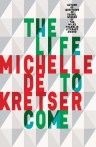
Michelle de Kretser, The life to comeNow, Austen fans will know Austen’s famous statement about Emma. She wrote in a letter than “I am going to take a heroine whom no one but myself will much like.” And it’s sort of true. There are people who don’t like Emma much. A recent novel I read which includes a character who, her author knows, some don’t like is Michelle de Kretser’s The life to come (my review). The character is Pippa, whom de Kretser herself doesn’t dislike!

Kim Scott That Deadman DanceBut now, moving along. The life to come was de Kretser’s second Miles Franklin win. I have read and reviewed here another book that was its author’s second Miles Franklin win, Kim Scott’s That deadman dance (my review). In case you are interested, he won his first MF award with Benang: From the heart.

Claire G Coleman, Terra nulliusOne of the important things about Scott’s novel is the different perspective it offers on the colonisation of Australia – an indigenous perspective. Another book by an indigenous author exploring colonisation from a different point of view – this one dystopian – is Claire G Coleman’s Terra nullius (my review)

Mirandi Riwoe, The fish girlFrom here I thought I could link to another book with characters from another planet, but not being a big reader of speculative fiction I don’t think I have any (since blogging at least). So, I’m going to stay with the colonisation theme, and choose another book looking at it from a different perspective, this one feminist. The book is Mirandi Riwoe’s The fish girl (my review).

Margaret Atwood, The PenelopiadBesides looking at colonisation, Riwoe’s Fish girl is a riff on – or a response to – an earlier text, Somerset Maugham’s short story, “The four Dutchmen.” This suggests a good last link, Margaret Atwood’s The Penelopiad (my review) which many of you will know is her take – her feminist take – on the Odyssey.

And so we come to the end of another Six Degrees meme, one that has taken us from 1960s to early 19th century England, and then to Australia where we spanned more than two centuries. We then crossed the sea just to Australia’s north – Indonesia – before finally time-travelling way back to Ancient Greece where we landed a long way from Hinton’s Oklahoma!

And now, over to you: Have you read The outsiders? And, regardless, what would you link to? 

Six degrees of separation, FROM Where am I now TO …

Woo hoo, Spring has sprung (just) in the southern hemisphere, and I for one am glad to see the back of winter, albeit the real warmth is a way off yet. And this month, the first day of Spring is also Six Degrees of Separation day. You regular readers here will know what that means, but for any newbies, Six Degrees of Separation is a meme that is currently hosted by Kate (booksaremyfavouriteandbest). Clicking on the link on her blog-name will take you to her explanation of how it works.

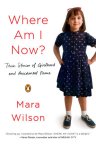
Mara Wilson, Where am I nowUnlike last month, I haven’t read the starting book. In fact, mea culpa, I hadn’t even heard of it. It’s Where am I now? by someone called Mara Wilson. Kate chose it because she would be seeing the author at the (now past) 2018 Melbourne Writers Festival. Where to start with a book I hadn’t even heard of? Aha, while searching for the cover, I discovered that she’s the actor who starred in Matilda! Silly me. She was great.

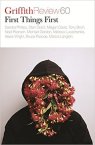
Griffith Review 60So, I could, of course, go for another memoir by an actor, but I’m not. Instead I’m going for a book that I read (well, started to read, anyhow) in preparation for my festival, the Canberra Writers Festival, which overlapped with Melbourne’s. The book is the 60th issue of the Griffith Review, and is titled First things first. You  have seen the Griffith Review mentioned here before. It’s a wonderful contemporary literary magazine that contains essays, fiction, memoirs, poems and reports on a specified subject. I have, in fact, already introduced this one, which was inspired by the Uluru Statement from the Heart.

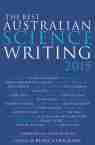
Bianca Nogrady, The best Australian science writing 2015Now, you might think that from here I’d go to something by or about indigenous Australians, but I feel like being contrary, so instead I’m going on form, and will choose a book of essays, science essays, in fact – The best Australian science writing 2015 (my review) edited by science journalist Bianca Nogrady. I was surprised by just how much I enjoyed it at the time. I still share snippets of information I read in that volume.

Jordan Fall GirlFor my next link, I’m sticking with science, but am turning to fiction – to Toni Jordan’s entertaining chick-lit novel Fall girl (my review). Her heroine is not your usual chick-lit heroine, but a con artist who presents herself as an evolutionary biologist and sets up a scientific expedition to attract money from a millionnaire-run foundation. It’s a bit of a hoot, as Toni Jordan can be.

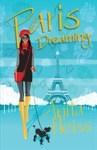
Anita Heiss Paris DreamingAnd now, since we’ve moved from essays to chick-lit – a rather wild jump, n’est-ce pas? – let’s stay with chick-lit and go to Paris with Anita Heiss’s Paris dreaming (my review). This book has, in fact, multiple connections with this post – I read it after hearing Anita Heiss at a festival and she’s an indigenous Australian author.

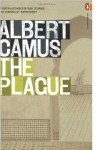
Albert Camus, The plagueSince we’ve gone to France, and since daughter Gums has just arrived in Paris, I figure we should linger there a while, so I’m going to choose one of my favourite French novels, Albert Camus’ La peste (aka The plague) (my review). This book is one of the few books I’ve read more than once – and I could very well read it again, because I love its lessons about life.

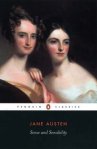
Jane Austen, Sense and sensibilityFor my final link, I’m hopping over the channel to England, and to a book by one of my favourite authors, Jane Austen’s Sense and sensibility (my review of vol. 1). I could link on the fact that, like Camus’ La peste, I’ve read it more than once, but I’m going a little more esoteric, and am linking it on the fact that, also like La peste, it contains, for me, a memorable quote – almost a personal mantra in fact. There aren’t many quotes that I remember from books, but this is one of them:

Marianne Dashwood was born to an extraordinary fate. She was born to discover the falsehood of her own opinions, and to counteract by her conduct her most favorite maxims.

When I first read this, I was brought up short, because I realised I was often like Marianne – pontificating on things I had not experienced, and then discovering how wrong I was. It was one of those lightbulb moments – though I probably still do it sometimes!

So there you have it. Another Six Degrees meme done and dusted. We’ve read serious essays and fun chick-lit, we’ve been to the US, Australia, France and England, and we’ve read a diverse set of authors.

And now, over to you: Have you read Where am I now? And, regardless, what would you link to? 

My literary week (13), it’s (mostly) all about Aussies

This last week or so we’ve been on the road again, severely cutting into my reading time, but literary things have been happening, nonetheless.

National Bookshop Day, 2018

Readings Kids, Carlton

Readings Kids, Carlton

Yesterday, August 10th, was, as many of you know, National Bookshop Day and I did, in fact, visit a bookshop, Readings in Carlton, Melbourne. I bought Gerald Murnane’s Border districts, which brings me one step closer to reading this Miles Franklin shortlisted book. Daughter Gums and I also visited, next door, the Readings Kids bookshop, where she bought Alison Lester’s Rosie sips Spiders for a baby shower she was attending this weekend.

It was so hard not to buy more, but you all know how behind I am in my reading so you’ll understand my abstemiousness!

I’d love to hear what you did – if you are an Aussie – to support the day?

Alison Lester Gallery

A couple of days before National Bookshop Day we were driving to Melbourne from Canberra via one of the long routes, in this case via Cann River. It was an interesting drive that took us through some quite dramatic landscapes – from the shimmering yellow-white colours of the Monaro in drought to the lush green of south-east Victoria which is not!

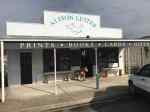
Alison Lester GalleryOn Day Two we overnighted at Foster, in order to visit Wilson’s Promontory, before driving on to Melbourne the next day via Fish Creek. Now, Fish Creek is a very pretty little town that also happens to be the home of the Alison Lester Gallery – yes, the Alison Lester who wrote (and illustrated) the book Rosie sips spiders mentioned above. Fish Creek is a lovely little town, and is in the region where Lester was born, grew up and still lives. We bought books here for our new Grandson Gums. The Gallery sells Lester’s books plus numbered prints of her beautiful book illustrations. It also has a little library nook where you can read her books before you decide to buy them. Unfortunately Lester wasn’t there, but you can organise to have your books signed if you want to (and don’t mind waiting for your books!)

BTW Alison Lester was one of Australia’s Inaugural Children’s Laureate from 2011 to 2013, which I wrote about back then.

The Wife and RBG

One of our Melbourne traditions is to have a meal and see a movie with Daughter Gums. We usually go to Cinema Nova (across the road from Readings Bookshop.) It’s a big complex, but not at all like those big impersonal suburban multiplexes. The cinemas are mostly small, and many have rather idiosyncratic layouts, but the movie selection is wonderful. We decided to see The wife, starring Glenn Close and Jonathan Pryce, and adapted from Meg Wolitzer’s novel, that I haven’t read. It focuses on the responses and feelings of the wife of an author who is told he has won the Novel Prize for Literature. If you don’t know the story, I don’t want to spoil it, but it is a great film for booklovers, and, particularly, for women booklovers! I enjoyed seeing Glenn Close again in a meaty role. The story is full of issues to chew over about gender, morality, pride, vocation, relationships over the long haul, and about how a door chosen can have unexpected ramifications down the line.

Ruth Bader Ginsburg

Ruth Bader Ginsburg, by Supreme Court of the United States (Supreme Court of the United States (Source 2)) [Public domain], via Wikimedia Commons

Then, suddenly finding ourselves with some extra free time, Mr Gums and I took the opportunity to also see the documentary RBG about the US Supreme Court justice, Ruth Bader Ginsburg. As documentaries go, this takes a pretty standard form – a combination of archival footage, contemporary footage, interviews with Ginsburg and with friends, family and colleagues. Wikipedia quotes film reviewer Leslie Felperin who says:

…there is something deeply soothing about RBG, a documentary that, like its subject, Supreme Court Justice Ruth Bader Ginsburg, is eminently sober, well-mannered, highly intelligent, scrupulous and just a teeny-weeny bit reassuringly dull.

As I said, traditional in form, but the subject is so intelligent and her contributions to thinking about women’s rights so relevant beyond the USA, that the film kept us engaged from beginning to end. She is a fascinating woman with an inspiring capacity for clarifying the complex.

Bangarra Dance Theatre’s Dark Emu

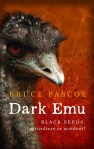
Bruce Pasco, Dark emuNow, we didn’t quite see Bangarra Dance Theatre’s performance of Dark Emu this week but we did see it very recently so I’m sneaking it in here. This is Bangarra’s interpretation of Bruce Pascoe’s book Dark emu (my review) in which he argues that indigenous Australians were not hunter-gatherers but had an agricultural practice, a practice that better proves, in legal terms apparently, their sovereignty or ownership of the land.

I wondered how they would balance the abstraction of dance with the literalness of the theory Pascoe presents (a theory that requires evidence of all sorts of agricultural practices) without, somehow, being prosaic. The dance, the props (which helped convey activities such a corralling animals, damming water, storing food), the lighting, and the music (which mixed traditional sounds with more suggestive modern ones) kept the audience on track with the story being told, although I understand Canberra reviewer Michelle Potter’s point that we didn’t always comprehend the “meaning” of what we were seeing in terms of the theoretical argument. For Mr Gums and me, though, these concerns were not strong enough to spoil the spectacle of Bangarra’s dancing. The moves, the shapes, the energy – we can never get enough of them and we did “get” the main threads of the narrative. (And, I suspect a second viewing would make a big difference. It is sometimes tricky to separate out spectacle from meaning first time around.)

Six degrees of separation, FROM Atonement TO …

It’s August and the last official month of winter. I’m happy, happy, happy. I’m also happy that it’s time again for Six Degrees of Separation. How quickly it comes around. And, like last month, I’ve read the starting book. First though, the formalities. Six Degrees of Separation is a meme that is currently hosted by Kate (booksaremyfavouriteandbest). Clicking on the link on her blog-name will take you to her explanation of how it works.

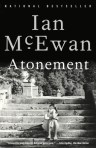
Ian McEwan, AtonementSo now, the meme. The book Kate has chosen for August is Ian McEwan’s Atonement. I love this choice, not just because I’ve read it, but because I like Ian McEwan, and I liked this book. Also, it offers so many options for linking, including one that I considered, which was good film adaptations. I loved the clever soundtrack, for a start.

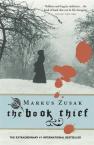
Markus Zusah, The book thiefHowever, I decided on a different tack, and I hope this isn’t a spoiler. I don’t think it is. My linking point is that it’s a metafictional work, that is, it self-consciously lets the reader know that it is a work of fiction. Another metafictional novel that contains stories within stories is Markus Zusak’s The book thief (my review). If you’ve read it, you’ll know that Death reminds us regularly that he is telling us a story.

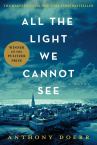
Anthony Doerr, All the light we cannot seeBesides being metafictional, The book thief tells the story of young people, particularly Liesel the titular book thief, and their experience of World War 2. Another book set in World War 2 whose protagonists are young is Anthony Doerr’s All the light we cannot see (my review). A moving book, that won America’s Pulitzer Prize.

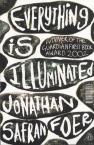
Jonathan Safran Foer, Everything is illuminatedSo far I’ve linked on technique and protagonists, but now I’m moving to title. Another novel about World War 2 (and that, coincidentally, also has metafictional elements) is Jonathan Safran Foer’s Everything is illuminated (my review). My linking point though is the reference to light in the title!

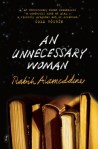
Rabih Alameddine, An unnecessary womanNow, one of the main characters in Foer’s novel is a translator. Another book with a translator as the protagonist is Rabih Alameddine’s An unnecessary woman (my review). She’s not a professional translator, but has done it in her spare time for much of her adult life. I loved reading, among other things, about her technique for translating.

Michelle de Kretser, The life to comeMichelle de Kretser’s The life to come (my review) is a book in five parts. The protagonist of Part 3 is Céleste. She is also a translator. She describes her technique for translating too – though unlike Alameddine’s translator, she does it for a living.

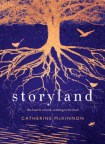
Catherine McKinnon, StorylandAnd now, all too soon, we’ve come to the end. The life to come is one of six books shortlisted for this year’s Miles Franklin Award. I’ve only read two, so far, from the shortlist, so I’ve decided to make my final link the other one, Catherine McKinnon’s Storyland (my review). I have, however, an ulterior motive for linking to this book, which is that I don’t think it’s getting enough notice so I’d like to give it another plug. It’s an intriguingly structured book, and tells a provocative story about Australia.

Well, this month we started our journey in England, and then moved to Germany, France and Ukraine, all of these trips involving, in some way or another, World War 2. We then hopped over to Lebanon in the Middle East, before arriving in Australia with de Kretser, though she did take us on brief forays to Paris and Sri Lanka. Finally, we landed back in Australia where we traversed a thousand years from the late 1700s to 2717. As for gender balance, four of my six books are by men. A major departure from the usual proportion in my Six Degrees posts, but that’s okay every now and then!

And now, my usual question: Have you read Atonement? And regardless, what would you link to? 

Australian Women Writers 2018 Challenge completed

Mirandi Riwoe, The fish girlAs in previous years, I’m writing my completion post for the Australian Women Writer’s Challenge, around the middle of the year, even though I will continue to contribute until the year’s end. However, I like to get the formal completion post out of the way, so I can relax!

I signed up, again, for the top-level, Franklin, which involves reading 10 books and reviewing at least 6, and again I’ve exceeded this. In fact, by June 30, I had contributed 18 reviews to the challenge.

Here’s my list in alphabetical order (by woman author), with the links on the titles being to my reviews:

AWW Badge 2018There’s a significant difference between this year’s completion post and those of recent years – and that’s in the proportion of fiction to nonfiction. Last year, as you may remember from my 2017 Reading Highlights post, I read an unusually large proportion of nonfiction books (47%) and this was also reflected in my AWW Challenge reading. I said I wanted to recalibrate this in 2018 towards more fiction, and so far I’ve been achieving that (in my AWW Challenge reading and overall).

I don’t have specific goals for the rest of the year, except that I’d like to read more indigenous writers (besides Claire G. Coleman), at least one more classic (in addition to Tasma), and more from my TBR pile (besides Helen Garner and Elizabeth Jolley).

My 2018 AWW Challenge wrap-up post will tell the story!

Six degrees of separation, FROM Tales of the city TO …

It’s July – a cold month in my city – but when this post is published I won’t be there. I’ll be in the far north, about to start a 12-day tour of Arnhem Land which is not only a fascinating place to visit, but a warm one! However, I didn’t want to miss this month’s Six Degrees of Separation meme, particularly since I’ve read the starting book. A rare occurrence. Some background first on the meme: it’s currently hosted by Kate (booksaremyfavouriteandbest). Clicking on the link on her blog-name will take you to her explanation of how it works.

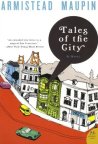
Armistead Maupin, Tales of the citySo now, the meme. The book Kate chose for July is Armistead Maupin‘s Tales of the city. Not only have I read it but – unusually for me – I’ve read the whole series. I still remember the glorious weekend nearly three decades ago in which, for some reason, I had the opportunity to read and read – and this series is what I read. I had read novels by gay authors before, including EM Forster’s Maurice, which he would not let be published until after his death, but Maupin’s series spoke of lives contemporary to mine – albeit lived in San Francisco – and I loved the open, warm way he shared the lives and experiences of his characters.

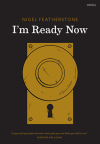
Featherstone, I'm ready now, book cover

Because gay writers on gay subjects are still underrepresented in our literary milieu, I’m going to stick with this theme and shout out to local writer Nigel Featherstone and his novella, I’m ready now (my review). It revolves around Gordon, a gay man turning 30, who is coming to the end of his Year of Living Ridiculously, a year of rather self-destructive high living that he designed for his 30th year. It’s a lovely book about coming to terms with the past, and about, as Featherstone says, “living imaginatively.”

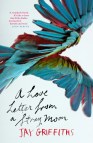
Jay Griffiths, A love letter from a stray moon coverNext, I’m going to change tack, and look at form. Nigel Featherstone will understand, because he, like me, likes novellas – so it is to another novella that I’m linking next. I’ve read and reviewed many novellas on this blog, so I’m choosing a beautiful one that I don’t think I’ve used before in Six Degrees, Jay Griffiths’ A Love letter from a stray moon (my review). It’s a gorgeous, moving story told in the voice of the Mexican artist Frida Kahlo, someone who could also tell us something about “living imaginatively!” (And just look at that cover.)

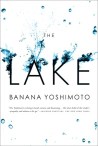
Banana Yoshimoto, The lakeYou might think that from here I’d move to another novel about an artist, but this month I’m in the mood to discombobulate … so, here’s the thing. I read Griffiths’ novel while I was travelling in Japan, which reminds me of all the Japanese authors I like (and how I haven’t read enough of them since starting this blog.) One I’ve read though is Banana Yoshimoto’s The lake (my review).

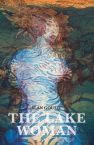
Alan Gould, The lakewomanThe lake is about a few things, but one of the main ones is about a daughter coming to terms with the loss of her mother. Another book involving a lake and a sort of loss – though not of a mother – is Alan Gould’s The lakewoman (my review). It’s a lyrical and clever book about love and connection, despite distance.

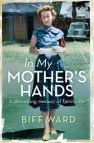
That’s lakes done. I could, in fact, link to another lake book, as I have a few in mind, but that’s a bit boring, so I’m going to switch gears again and link on authors who’ve attended my reading group meetings. Alan Gould was one, and Biff Ward was another. We were all moved by her clear-sighted memoir, In my mother’s hands (my review), and loved the additional insights she provided at our meeting. It is always a treat having authors present at meetings.

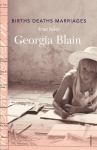
Georgia Blain, Births deaths marriagesFor my final book, I’m staying with form and content. Ward’s book is a memoir about living in a complicated family, and so is Georgia Blain’s Births deaths marriages: True tales (my review). In Blain’s case the difficulties came more through her father, but both authors document beautifully the challenge children can have navigating tricky relationships or situations.

Wow, I think I’ve excelled myself this month in terms of travels. We have been all over the place – from the USA (in the starting book) to Australia, and then winged our way to Mexico, Japan and France, before returning to Australia. As for gender balance, four of my six books are by women, which is about average for my Six Degrees posts.

And now, my usual question: Have you read Tales from the city? And regardless, what would you link to? 

Monday musings on Australian literature: New Territory 2018

New Territory LogoLast year, some of you will remember, I was a mentor for the ACT Writers’ Centre ACT Lit-bloggers of the future program. It was great fun, and I really enjoyed working with Angharad and Emma over the six-months the program lasted. I wrote a couple of posts about the program, but if you’d like to refresh yourself, this one soon after it started would be a good place to start.

Well, it’s on again this year, but newly branded as New Territory: Adventures in Arts Writing, and with the Street Theatre joining the ACT Writers Centre and the National Library of Australia as program partners. The program, as last year, provides for two emerging ACT-region writers to attend events at the National Library of Australia, the Street Theatre and, in fact, the Canberra Writers Festival, and post their responses on the Writers Centre’s Capital Letters blog.

The ACT Writers Centre’s advertising of the program described it as follows:

[It] is a program that is committed to developing a deeper conversation about the arts: why we make art, how do we engage in art, and to what end? We aim to develop the arts writers, thinkers and provocateurs of the future.
In other words, the writers are encouraged to explore the arts in Canberra – and particularly the events offered by the partner organisations, which they can attend at no charge.

The two writers were chosen in June, and the program is now officially under way, so I’d like to introduce this year’s bloggers to you:

  • Amy (armchaircriticoz): like last year’s Angharad, Amy has a full-time job, and is developing her blog and critical writing skills on the side. Currently her blog roams across film, television, exhibitions, books and other topics that grab her fancy. Do check it out.
  • Siv Parker (On Dusk): and like last year’s Emma, Siv has some writing credentials behind her. Indeed, she won the  David Unaipon Award in 2012, and, in fact, I mentioned her twitter fiction piece in my post on the Writing back anthology last year. She is keen to rekindle her writing career, particularly in this arts writing area, and wants to explore how social media can be harnessed to this purpose. Check out her blog too.

I have asked Siv and Amy whether they’d like to write a guest post here during the program, as Emma did last year, and both seemed keen so you will hopefully see them here sometime in the not too distant future.

I will report back mid-program and point you to some of the work Amy and Siv have been doing, but meanwhile please do check out their blogs and Capital Letters (links above).

Until then, thanks again to the ACT Writers Centre, the NLA and the Street Theatre for sponsoring this program – and a special thanks to author Nigel Featherstone for overseeing this program and gently, encouragingly, shepherding us all through it. I am thrilled to be involved again. I loved getting to know, and spending time with, Angharad and Emma, and look forward to developing a similar relationship with Amy and Siv. Writers – of all sorts – are such fun to be around.

We’d love to hear if you know of any similar programs in your neck of the woods.