Arthur Gask, The passion years (#Review, #1936Club)

A couple of weeks ago, I posted a Monday Musings in support of Karen (Kaggsy’s Bookish Rambling) and Simon (Stuck in a Book) #1936 Club, which involves participants reading, posting and sharing books from the chosen year.The #1936 Club has been running, 12-18 April, which means it is about to finish.
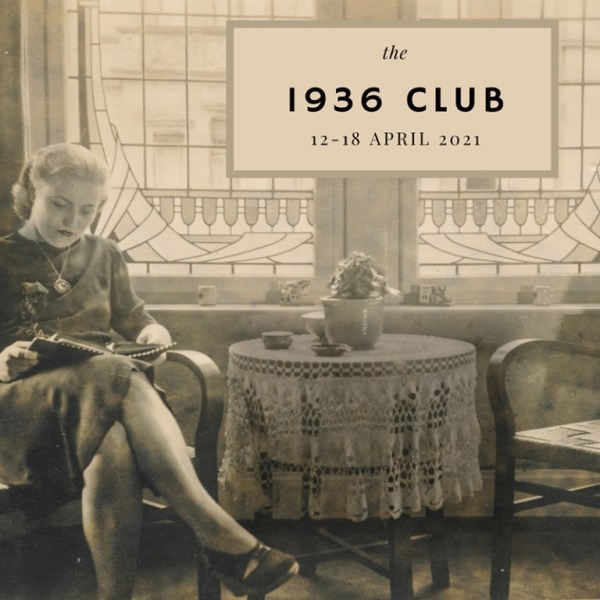
In my post I listed a number of potential books for me – or others – to read (and noted those from the year that I’ve read in the past.) Unfortunately, I did not find the ones I wanted to read, so I decided to do something different, read a short story! The first short story I considered was Ernest Hemingway’s The snows of Kilimanjaro, which was first published in Esquire in 1936, but, I really wanted to do an Australian story – so, back to the drawing board. And, at Project Gutenberg Australia I found a short story published on Boxing Day (26 December) 1936 in, wait for it, The Australian Women’s Weekly! Nothing ventured, nothing gained I thought so in I dived. It’s called of course, “The passion years”.

Published in a women’s magazine on Boxing Day, it is, as you would guess, a romance. It’s past midnight and two women – “all pink and white in their robes-de-nuit” and looking “pretty enough to eat” – are chatting, one of them telling the other about her brother’s romance:

It seems just like a tale one reads and, of course, it’s a very sentimental one, too. Oh, no dear, you take it from me sentiment is not all sickly, and only those say it is who are getting old and sickly themselves. Sentiment’s the most beautiful thing in all the world, and when you’re first in love, well, the sentiment there is just too holy and too sacred to understand.

As the story goes, her brother had lost all his money in a horse race and at the same time a wealthy young woman falls for him, but, being a proud and responsible man, he withdraws when he realises she is showing interest in him because he doesn’t want to be a fortune hunter. You can guess how it works out, but what adds to the story is the perspective and world view offered by the narrator. Our teller asserts that “a baby’s only what every girl who’s really in love looks forward to”. The story is very much of its time and place, highly gendered, but it is nicely written.

However, of more interest is the writer, Arthur Gask. The Australian dictionary of biography (ADB) describes him as a dentist and novelist. Born in England in 1869, he came to Adelaide, Australia, with his second wife, in 1920. He was particularly a crime writer, and was prolific as Wikipedia and the Project Gutenberg Australia show. His first novel, The secret of the sandhills, was published to immediate success in 1921, partly he believes due to the reviews by S. Talbot Smith. Wikipedia says he wrote it while waiting for his patients!

Gask went on to write over thirty books, as well as countless short stories. He gave up dentistry in 1933, and bought a farming property, which he names Gilrose, after his detective, Gilbert Larose. However, apparently most of his stories were set in England. ADB’s Michael Tolley described his writing as pacy and sometimes titillating, and says that his works were translated into several European languages, were serialised in newspapers, and broadcast on radio.

For interest, I tracked down a local review of his posthumously published novel, Crime upon crime. The review was written by AR McElwain in Adelaide’s The Mail on 4 October 1952. I was interested in his comment on the writing

Prolific Mr. Arthur Gask of Adelaide (SA) has a remarkable facility for blending sordid crime with old world charm So much so that I am usually more fascinated by his prose style than by the actual cases …

He also provides insight into Gask’s detective:

Our old friend, Gilbert Larose introduces some unorthodox sleuthing. But there’s a Gaskian explanation for it all, never fear. Larose is simply “acting up to his reputation as a man who always places justice above law.”

McElwain’s comment on Gask’s writing points to why he most drew my attention. His writing was also admired by novelist, HG Wells, who called Gask’s 1939 novel, The vengeance of Larose as his “best piece of story-telling…It kept me up till half-past one.” In addition, philosopher Bertrand Russell also loved his books. Russell corresponded with Gask, and visited him in Adelaide in 1950, when Gask was 81 and Russell 78.

According to Wikipedia, Gask was still writing two 80,000-word novels a year when he was nearly 80. Prolific indeed.

So, my contribution to the #1936club is small, but I’m thrilled to have finally taken part and to have discovered another Aussie writer.

Did you take part in the 1936 Club?
Six degrees of separation, FROM Shuggie Bain TO …

It is now autumn here Down Under, and, like our summer, it’s a strange one – cooler and wetter than “normal”. Oops, we need to get used to the fact that in this world of change, there is no “normal” anymore, “new” or otherwise. Anyhow, ’nuff said. Let’s get onto our Six Degrees of Separation meme. If you don’t know how it works, please check out meme host Kate’s blog – booksaremyfavouriteandbest.

The first rule is that Kate sets our starting book – and after a two-book run, we are back to normal (did I say that!) by which I mean to a starting book I haven’t read, Douglas Stuart’s Shuggie Bain. It won several awards, including the 2020 Booker Prize. I’d like to read it.

Now, I considered many links for this – subject, titled for main character, Scottish setting, but in the end I’ve gone with the obvious, another Booker Prize winner. I used to read them all, but since blogging I’ve only read a handful, but I did have a choice, and the one I’ve chosen doesn’t really have any other obvious links with Shuggie Bain besides both being winners, but I’m sticking with it, New Zealander Eleanor Catton’s The luminaries (my review).

Book cover

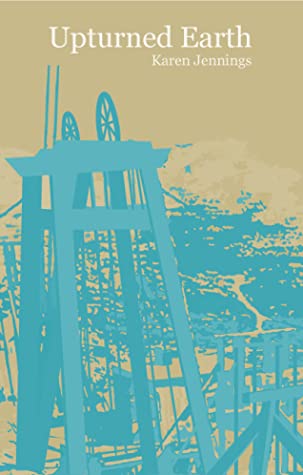
It’s an historical novel set on the goldfields of New Zealand’s West Coast, and is grand and ambitious in its conception. Somewhat less grand, but nonetheless, also an historical novel set in a mining community is South African writer Karen Jennings’ Upturned earth (my review). Inspired by a real character, it’s primarily about corrupt powerful men destroying the lives of the powerless men in their employ, and the challenge of standing up to them.

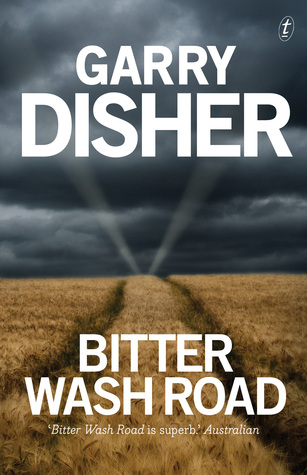
Another novel about corrupt men – in this case police and justice officials – destroying the lives of powerless others is the crime novel I read in March for Kim’s (Reading Matters) Southern Cross Crime Month, Garry Disher’s Bitter Wash Road (my review). It is set in a tiny, poor community in rural South Australia and is about a demoted police officer’s struggles to solve a crime in a situation where he doesn’t know which colleagues he can trust.

My next book is also titled for the name of a road, but it is set in one of the world’s busiest capital cities, Helene Hanff’s delightful book, 84 Charing Cross Road (my review). Now a classic, you probably know it, but if not, it comprises the charming letters between American writer and bibliophile Helene Hanff and bookseller Frank Doel of Marks & Co, a London bookshop which specialised in secondhand and antiquarian books.

Maria Edgeworth, Leonora

For my next link, we are staying in England, and sticking with letters, this time with a classic epistolary novel, Maria Edgeworth’s Leonora (my review). Published in 1806, it lacks the subtlety of Austen’s novels, the first of which was published in 1811, but it’s interesting for Edgeworth’s exploration of English and French “sensibilities” during Napoleonic times.

And so, I’m going to stay with this time period and conclude with Caroline Moorhead’s Dancing to the precipice (my review) which is a biography of French aristocrat Henriette-Lucy, Marquise de La Tour-du-Pin-Gouvernet, from her birth in 1770 to her death in 1853. It’s a wild ride, but a fascinating story about survival in tricky political times.

So, again we’ve roamed around a bit, from Scotland to New Zealand to South Africa, over to Australia before returned to Europe where we stayed for the last three books. We time travelled a bit covering many time periods between the late 1700s to contemporary times. Five of my links were written by women.

Now, the usual: Have you read Shuggie Bain? And, regardless, what would you link to?

Six degrees of separation, FROM Phosphorescence TO …

So our strange Antipodean summer has ended, and I, for one, am sad. How often did I, this year, get to wear my summer frocks? More often than I needed to, actually, because I hated seeing them lonely in the wardrobe. I know there are people who hate the heat, and I know that it was great to have had some good soakings of rain this year, but still … a few more hot summer days would have been appreciated. With the whinge over, I’ll get to something I’ll never whinge about, our Six Degrees of Separation meme. If you don’t know how it works, please check out meme host Kate’s blog – booksaremyfavouriteandbest.

Book cover

The first rule is that Kate sets our starting book – and wonder of wonders, for the second month in a row, I’ve read the starting book, Julia Baird’s Phosphorescence (my review). It wasn’t one I would normally have read, but it was a reading group choice, and like most of my reading group’s choices – because we have a great group of interesting women – I was glad I did read it. Subtitled On awe, wonder, and things that sustain you when the world goes dark, it sounds like it could be a self-help book. It is a bit, but not entirely.

Stan Grant, Talking to my country

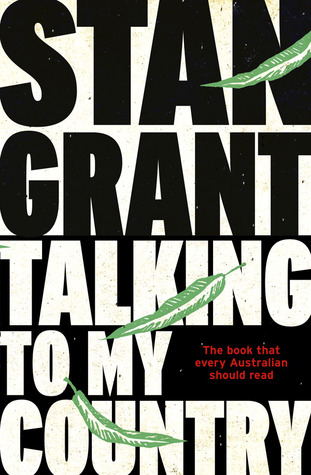
So, the obvious choice for a link would be come sort of other self-help book – or memoir about surviving great odds. I suppose at a push, my next book could be seen as the latter, but it’s not really, so that’s not the linking point. The link is that, Stan Grant, the author of Talking to my country (my review), is an occasional host of ABC TV’s The Drum program for which Baird is one of the two founding hosts.

The little stranger, by Sarah Waters

I have heard Stan Grant speak in person in an ANU/Canberra Times Literary Event, and my, was he impressive. The first such event I attended after I started blogging was back in 2010 when I heard (and saw, of course) Marion Halligan converse with the English author Sarah Waters about her latest novel at the time, The little stranger (my review). She’s quietened down a bit lately, hasn’t she?

Book cover

I could then, but I’m not going to, link on authors who have quietened down. Instead I’m linking on the fact that both Waters’ novel and Shokoofeh Azar’s The enlightenment of the greengage tree (my review) deal in some way with ghosts, albeit Waters’ book is a more traditional ghost story while Azar’s ghosts are of quite a different spirit.

Book cover

Azar migrated to Australia from Iran, and her novel, while not exactly autobiographical, draws from the experiences of friends and family under Ayatollah Khomeini’s dictatorial regime. Elizabeth Kuiper was much younger than Azar when she migrated to Australia – with her mother – from Robert Mugabe’s dictatorial regime in Zimbabwe. Her novel, Little stones (my review), does have an autobiographical element.

Nick Earls, NoHo

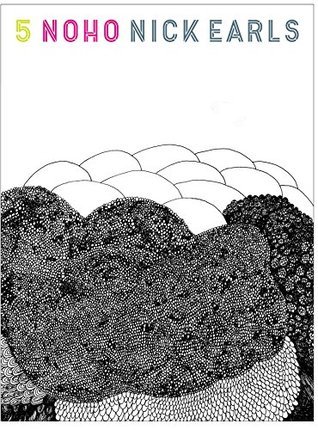
Kuiper’s protagonist and first-person narrator is 11-year-old Hannah. Another novel – or novella in this case – with an 11-year-old narrator is Nick Earls’ NoHo (my review), which is set in Los Angeles (North Hollywood if you want to know!) although Earls is very definitely Aussie.

Book cover

NoHo is part of a (subtly linked, apparently) novella series by Earls, called Wisdom Tree. My last link is going to be a bit cheeky, because it draws on this idea of a novella series. I say cheeky because Nigel Featherstone’s three novellas published by Blemish Press were not originally conceived as a series. It’s just that at the end of a month’s writer’s retreat in Launceston, many years ago now, he found he had sketches for three novellas, and Blemish published all three. As NoHo is the last of Earls’ 5-book series, I’ll link to Beach volcano (my review) which is the last of Featherstone’s. Their subject matter is very different but both books are about sons and brothers – one 11-year-old, one 44-year-old – who are facing challenges in their lives! I’ll leave it at that…

So, hmm, where have we been this month. All over the shop really. While nearly all this month’s authors are Australian, or Australian-based now, they have taken us not only to Australia, but England, Iran, Zimbabwe and Los Angeles in the USA. That’s a bit of arm-chair travelling for you, though we’ve been through some rocky territory!

Now, the usual: Have you read Phosphorescence? And, regardless, what would you link to?

Bill curates: Ruth Park

Bill curates is an occasional series where I delve into Sue’s vast archive, stretching back to May 2009, and choose a post for us to revisit. This is a most enjoyable project as I read every post and usually the comments too. Which is why I’m still only up to Oct. 2010. Today, because I can, I’ve chosen an AWW Gen 3 post on Ruth Park which I had previously overlooked.

______________________________

My original post titled: Monday musings on Australian literature: Ruth Park

The muddle-headed wombat by Ruth Park, book cover

For a New Zealander, Ruth Park is a very popular Australian! Not only did she write the much-loved (and studied) Harp in the south trilogy, but she also wrote the hugely popular (in its time) radio serial The muddle-headed wombat, was married to the Australian D’Arcy Niland (now deceased) who wrote The shiralee, and is mother to children’s author-illustrators Deborah and Kilmeny (now deceased) Niland. Ruth Park also won the Miles Franklin Award with her Swords and crowns and rings, and wrote two very popular autobiographies, Fence around the cuckoo and Fishing in the Styx. And this is not all – or even all of the best – that she’s produced in her long career.

Park was born in New Zealand in the early 1920s and first came to Australia in 1940 when she met D’Arcy Niland. She writes that Australian writer Eve Langley*, with whom she had a longstanding friendship, said of Niland:

‘That’s a good face … Do you know what it is saying?’
‘No, what?’
‘It says “Take me or leave me.” I like that.’

So apparently did Park. She returned to Australia in 1942 to work as a journalist, and married Niland. They worked at various jobs in rural New South Wales for some years before Park’s stories gained the attention of the Australian Broadcasting Commission (ABC) resulting in their decision to try to make a living from free-lance writing. They wrote, and wrote, and wrote – anything that would earn money. They wrote, for example, short stories, genre stories (such as romances and westerns), radio talks and radio plays, scripts for radio comics, all the while honing their skills for their more serious writing goals. And they lived during these early years in Sydney’s inner city slum, Surry Hills.

These experiences of living in rural areas and city slums are clearly evident in Swords and crowns and rings (the story of the dwarf Jackie, and his love Cushie Moy) and the Harp in the south trilogy (the story of the Darcy – ha! – family). The thing I love about these books – both of which span the first 4-5 decades of the twentieth century – is the way Park explores gritty issues like poverty, abortion, religious bigotry, unemployment and illness with a psychological and social realism that also encompasses warmth and humour. Her main characters tend to be the quintessential Aussie battlers, but their concerns transcend time and place. It’s not surprising, really, that these works keep being read, re-published, set for study, and adapted for television and film.

Realism though is not the only string to Park’s fictional bow. She wrote in several “genres” for a range of audiences, including fantasy for children. Her Muddle-headed wombat stories ran on the ABC Children’s Session from 1957 to 1971. I have to say that I never have really been one for anthropomorphism, and have read few children’s classics featuring animals (no, not even The wind in the willows) but even I would tune in for the wombat! Park also wrote a children’s time-travel fantasy Playing Beatie Bow, which is taught in schools and has been made into a film.

And yet, for all this, I’m sure she is little known outside Australia … if I am wrong, please let me know!

In the meantime, I will conclude with her description in her first autobiography, Fence around the cuckoo, of her first sighting of Australia as she arrived by boat:

What I saw were endless sandstone cliffs reflecting the sunrise. A chill ran over my skin, my ears buzzed as they had once done when I was about to experience uncertainty about something as yet unknown. The sea fled south, its malachite green changing to beaming blue; the sky was sumptuous with a sun hotter than I had ever known.

This was my first glimpse of Australia Felix, the ancient, indifferent, nonpareil continent that was to become the love of my life.

Ruth Park is not one of those ground-breaking writers who makes you go, wow!, but  she is an excellent story-teller who has an enviable ability to create and develop memorable characters who confront the real “stuff” of life. You could do far worse than read her if you want an introduction to Australian literature. If I haven’t convinced you, read Lisa at ANZLitLovers and Tony of Tony’s Bookworld on Harp in the South, and kimbofo at Reading Matters on her “Top 10 novels about Australia”.

*Park mentions Langley (whom I reviewed early in this blog) several times in Fence around the cuckoo. One concerns Park’s decision to stay with Eve to escape a Peeping Tom uncle but, when she arrived at the windmill in which she believed Eve to be living, she found no Eve but another woman who had heard of Eve but not for some years. “What had happened to that weird girl?”, the new windmill resident wondered. Poor Eve. She was indeed a bit weird and had a rather sad life, but that is another story.

___________________________

Book cover

It’s interesting for me to re-read these old posts of mine, and think about how I’d write them now! Regarding Park, my admiration has only grown for her warmth, humour and abiding sense of fairness. Check my Park posts here.

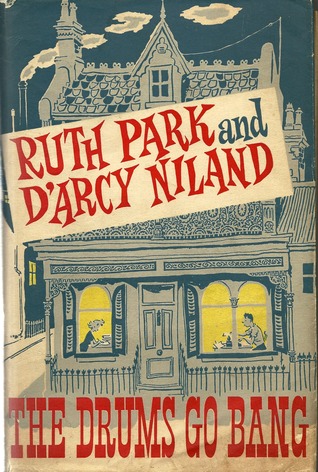
But, back to Bill. He says he’s not a fan of Park’s autobiographies but he does recommend, whenever he can, the Park/Niland memoir The Drums Go Bang, which we have both reviewed (Bill’s review) (my review). I enjoyed her autobiographies, but The drums go bang is very special.

Are you are Park fan? If so (or if not), we’d love to hear your thoughts.

Bill’s literary tour of the Mallee

I love road-tripping around different parts of Australia, and for some time now have had a hankering to explore the Mallee-Wimmera region of western Victoria. This hankering has been enthusiastically supported by Bill (The Australian Legend) for whom this part of Australia was his youthful stomping ground. We have discussed the region and what might be included in a Mallee literary tour several times over the years – with Lisa joining in on occasion too.

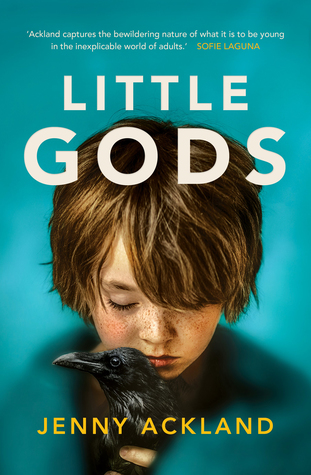
Jenny Ackland, Little gods

We would all, I think, like to compile a list of books set in the region. I’ve reviewed a few on this blog – at least I think they are set in the Mallee, as the region’s borders are a bit confusing to me – such as Jenny Ackland’s Little gods, Charlie Archbold’s Mallee boys, and Sue Williams’ crime novel Live and let fry. Lisa recently posted a review of a new Mallee-set book, Anne Brinsden’s Wearing paper dresses, and last year, another, Bill Green’s Small town rising.

But, topping it all, is that this week, Bill has finally put fingers to keyboard and written a post on touring the Mallee which he has generously said I can post here too … He starts:

Sue/Whispering Gums a year or so BC set me the task of devising a literary tour of the Mallee – the northwest corner of Victoria, a triangle bounded by the Murray River to the north and northeast, the South Australia border to the west and let’s say to the south the 36th parallel, so a line from a bit north of Route A8 to the Murray north of Echuca. To read the rest of the tour, please check out his post. I’m sure he wouldn’t mind if you hitched a ride and took the tour too!

Thanks so much Bill … there’s a possibility we might even do a bit of this trip this month. It all depends … no glamping in Little Desert is a bit of a worry!

Bill curates: Charles Dickens and Australia

Bill curates is an occasional series where I delve into Sue’s vast archive, stretching back to May 2009, and choose a post for us to revisit.

I’m such a fan of Monday Musings – I guess we wouldn’t be here if we didn’t all enjoy talking about books, and writing, and authors, and translators, and publishers – that all the posts that jump out at me, seem to be MMs. From Sept 2010 Sue discusses the Australianness of an author who was never in Australia. As Hannah Gwendoline D’Orsay Tennyson Bulwer [Last Name] wrote in Comments “I had no idea Dickens had such a connection with Australia.”

______________________________

My original post titled: Monday musings on Australian literature: Charles Dickens and Australia

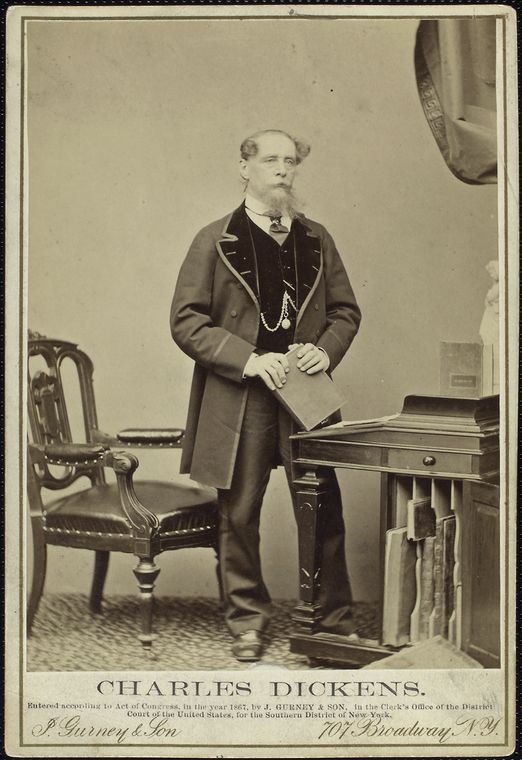
Charles Dickens, c1860

Here’s something completely different for my Monday musings! Not an Australian author, not even a foreign born author who came to Australia (though, being the great traveller he was, he did consider a lecture tour), but Charles Dickens does have a couple of interesting “connections” with Australia. These connections are supported by the existence of some letters written by him at the National Library of Australia.

On convicts and migration in general

Transportation of convicts to Australia – actual, implied or threatened – features in several of his novels. These include John Edmunds in Pickwick Papers (1836-37), the Artful Dodger in Oliver Twist (1837-1839), Mr Squeers in NicholasNickleby (1838-39), Alice Marwood in Dombey and Son (1846-48), and Magwitch (probably the most famous of all) in Great expectations (1861)not to mention Jenny Wren who threatens her father with transportation in Our mutual friend (1864-65). Dickens apparently learnt quite a lot about convict life, and particularly the penal settlement on Norfolk Island, from his friend Alexander Maconochie (to whom I refer in my review of Price Warung’s Tales of the early days).

Clearly, it was this knowledge which inspired the letter he wrote to the 2nd Marquess of Normanby (George Augustus Constantine Phipps), who was Secretary of State for the Home Office . He suggests

a strong and vivid description of the terrors of Norfolk Island and such-like-places, told in a homely narrative with a great appearance of truth and reality, and circulated in some very cheap and easy form (if with the direct authority of the Government, so much the better) would have a very powerful effect on the minds of those badly disposed … I would have it on the pillow of every prisoner in England. (3 July 1840, Original in the National Library of Australia, Ms 6809)

He offers to write this narrative, gratis. As far as I know, although Dickens and the Marquess were friends, nothing ever came of this offer.

While Dickens deplored the treatment of convicts in the penal settlements, he also saw Australia as a land of opportunity. The transported Magwitch, as we know, made his fortune in Australia. Mr Micawber, debt-ridden at the end of David Copperfield, emigrates to Australia and becomes a sheepfarmer and magistrate. But, perhaps the strongest evidence of Dickens’ belief in Australia as a place where people could get ahead, is the emigation of his sons.

On his sons

Two of Dickens’ sons – Alfred D’Orsay Tennyson Dickens and Edward Bulwer Lytton Dickens* (nicknamed Plorn) – emigrated to Australia, both with their father’s encouragement.

Alfred (1845-1912) migrated to Australia in 1865. He worked on several stations/properties in Victoria and New South Wales and as a stock and station agent, before partnering with his brother in their own stock and station agency, EBL Dickens and Partners. He died in the United States in 1912, having left Australia on a lecture tour in 1910. Dickens’  youngest son, Edward (1852-1902), went to Australia in 1869. He also worked on stations before opening the stock and station agency with his brother. He later worked as a civil servant and represented Wilcannia in the New South Wales Legislative Assembly in 1889-94, but he died, debt-ridden, in 1902 at Moree. Australia did not quite turn out to be the land of opportunity for these two that Dickens had hoped, but fortunately he was not around to see it!

A couple of Dickens’ letters to his sons are held at the National Library of Australia. One was written in 1868, not long before Plorn left England, and includes some fatherly advice:

Never take a mean advantage of anyone in any transaction, and never be hard on people who are in your power …

The more we are in earnest as to feeling religion, the less we are disposed to hold forth on it. (26? September 1868, Original in National Library of Australia, Ms 2563)

One does rather wish that Dickens had taken his own advice regarding not being “hard on people who are in your power” in his treatment of his poor wife Catherine.

Eighteen days before he died in 1870, he wrote this to Alfred:

I am doubtful whether Plorn is taking to Australia. Can you find out his real mind? I note that he always writes as if his present life were the be-all and end-all of his emigration and as if I had no idea of you two becoming proprietors and aspiring to the first positions in the colony without casting off the old connexion (1870, Original in National Library of Australia, Ms 6420).

These are just two of the many letters that he wrote to (and about) his sons in Australia. More can be found in published editions of his letters. I have chosen these particular ones purely because we have them here in Canberra. It’s rather a treat to be able to see Dickens’ hand so far away from his home.

Do you enjoy close literary encounters of the handwritten kind?

Image: Dickens, c. 1860 (Presumed Public Domain, via Wikipedia)

___________________________

What an interesting choice of Bill’s but I am glad to be reminded of this post as I have been wanting to read more of Dickens’ journalistic writings. Whether I will is another thing but, you never know.

Are you a Dickens fan?

Bill curates: Some Australian expat novelists

Bill curates is an occasional series where I delve into Sue’s vast archive, stretching back to May 2009, and choose a post for us to revisit. I’m a bit over seeing my name up the top here, but Sue has asked me to keep going for a little longer, and how could I possibly say no.

This one is from August 2010. My opinions on the topic are quite different from Sue’s, but I’ll save that for Comments.

______________________________

My original post titled: Monday musings on Australian literature: Some Australian expat novelists

Australia is the only country I have come across that divides its writers into residents and those who have dared to live elsewhere. Can one imagine Americans writing of Ernest Hemingway, or the Brits of Auden, thus? (Carmen Callil, Australian-born founder of Virago Press)

That answers one of my questions: that is, whether other nations talk about “expats” the way we do. Apparently they don’t. Is it the oft-quoted Australian cultural cringe? Is it envy? Perhaps I’ll just skirt the issue and say that Australians have a bit of a reputation for wanderlust, so I’m not surprised that we have our share of novelists who have gone overseas and stayed. One of those is Kate Jennings whose “fragmented autobiography”, Trouble, I reviewed last week. Kate Jennings went to New York in 1979, and has not returned (except for regular visits). In her book, she includes interviews with three other expat Aussie writers, Sumner Locke Elliott and Ray Mathew (both now deceased), and Shirley Hazzard. I thought it might be interesting to talk a little about some of our still-living novelists who reside in the USA.

But first, Ray Mathew, the least known of Jennings’ three interviewees. I hadn’t heard of him until a few years ago when he was the subject of one of the National Library of Australia’s (NLA) gorgeous little “A Celebration” books, using funds bequeathed in his name by his American friend and patron, Eva Kollsmann. The Ray Mathew and Eva Kollsmann Trust is a significant bequest which funds a number of initiatives at the NLA. One of these is the annual Ray Mathew Lecture which is to be given by “an Australian living abroad”. The first lecture was given in 2009 by Geraldine Brooks, and the second, this year, by Kate Jennings.

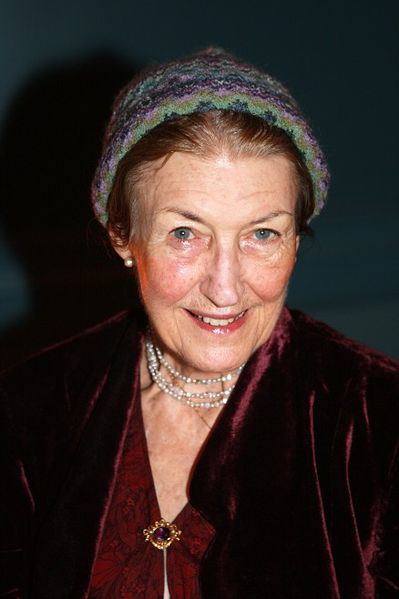
Shirley Hazzard
Hazzard, 2007 (Courtesy: Christopher Peterson, via Wikipedia, using CC-BY-SA 3.0)

For brevity’s sake – and because I’ve read each of these writers – I’ll just focus in this post on five Australian expat novelists based in the USA. Some of them are very well known internationally, moreso than many of our home-based writers. This is not surprising I guess: if you live in the USA and get published there your market potential is far greater than it would be at home. That said, the lure of increased fame and fortune is not the reason these writers moved overseas:

  • Geraldine Brooks: moved to New York in 1983 to study, met and married American journalist (Tony Horwitz), and now splits her time between Australia and the USA. Geraldine Brooks titled her Ray Mathew lecture, “The opportunity of distance”. She’s the youngest of these five and, perhaps, has the most uncomplicated view of her relationship with home. She has travelled widely and discussed in that lecture all the benefits that have resulted, but her final point is:

For all its opportunities, distance can still feel like a tyrant, sometimes, when a partner’s work or a kid’s schooling means we must spend more time there than here. The oscillation stalls, the roots start to dry out. It’s like a high stakes game of musical chairs. Round the world you go, and then the music stops and you have to sit down somewhere, but it’s not quite the chair you were aiming for.

  • Peter Carey: moved in 1990/91 to New York with his wife to work in their respective careers, and has remained there. Peter Carey, not surprisingly given his status, is often asked about his expat status. Here is what he said in an interview for the Paris Review:

Of course, there is a specially reserved position in Australian culture for the expatriate. The prime expatriates—people like Clive James, Germaine Greer, Robert Hughes—belong to an earlier generation than mine. When these people return to Australia, they are asked, What do you think of us? How are we doing? The expatriate is occasionally lauded and occasionally fiercely criticized for daring to come back and judge. I try to stay away from that as much as humanly possible. I don’t feel at all like an expatriate….

  • Shirley Hazzard (has died since I wrote this post back in 2010): moved to Hong Kong with her parents in 1947 when she was 16 years old, ending up in New York in 1951 where she has been mostly based since, though does spend time regularly in Capri, Italy. A webpage on Shirley Hazzard summarises her expat status in this way:

Hazzard does not reject her designation as an Australian writer but insists her temperament is not national. She only took out United States citizenship twenty-five years after she began living in New York, on the resignation of Richard Nixon. Eschewing nationalistic identifications, she does not consider herself as an expatriate, and emphasized that “to be at home in more than one place” (Gordan and Pasca). However, her novels are full of displaced Anglos in Hong Kong and Italy, or displaced Australians in London and New York.

  • Janette Turner Hospital: moved to Boston in the mid 1960s with her husband, and has lived in Canada and the USA. She now splits her time between these two countries and her home state of Queensland. In an early Griffith Review, Hospital commented on the impact of modern technology on being physically displaced, and wrote:

Place is unequivocal. But virtual communities and diaspora organizations suggest that you don’t always need to be somewhere to be a part of something. You can check the surf report, vote, play scrabble, watch the evening news, buy a car or be connected to country from the other side of the world. This new reality reflects an age-old truth: that home is where the heart is. It offers a new kind of citizenship. One we’re defining as we go.

  • Kate Jennings: as described above. She bookends Brooks nicely: not only because they gave the first two Ray Mathew lectures but because they both value travel highly but offer almost opposing conclusions. Here is Jennings from her lecture:

I have lived now in New York nearly as long as I lived in Australia. Heretical as it might seem, Australia is neither my country nor my home, as it is for Geraldine. It’s the place I started from, to paraphrase TS Eliot slightly. It shaped me, but so have my 30 years in New York city. I have, as Robert Dixon put it, ‘overlapping allegiances and multiple affiliations’.

Well, that lot provides enough to think about I reckon. I was going to talk a little about these writers’ works but I’ve taken up enough of your time for this Monday. More anon… Meanwhile, if you’ve lived away from “home” for any period of time, what do you think about all this?

___________________________

Thanks so much Bill for being willing to continue this series until I can get back to some semblance of normal reading and posting. I’m particularly pleased that he chose this one because given he has some different ideas to mine. I look forward to hearing them to seeing whether I agree, given I wrote this post over 10 years ago.

And, of course, we’d be interested to know what you think…

Six degrees of separation, FROM Redhead by the side of the road TO …

What a strange summer we’ve had. Last year it was fires and smoke, and this year, lower temperatures and rain. I rather like the heat, but it has been good to have a calmer time. Now though to that thing that stayed with us unchanged all through 2020, come hail or shine, come fire or covid, and that thing of course is our Six Degrees of Separation meme. If you don’t know this meme and how it works, please check out meme host Kate’s blog – booksaremyfavouriteandbest.

Book cover

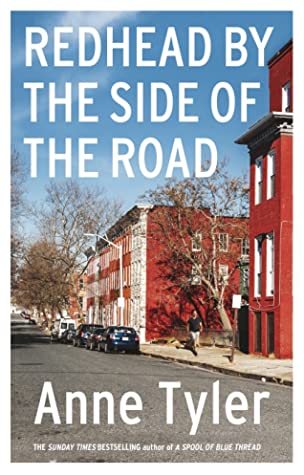
The first rule is that Kate sets our starting book. This month, she’s chosen a book that I’ve actually read – Anne Tyler’s Redhead by the side of the road (my review)! I rather like Anne Tyler, but I bought this for my Mum not long before she died, and ended up reading it myself. The titular redhead is not what you might think.

Book cover

This was a fun choice for our starting book, because I could think of all sorts of options to follow, but in the end, I decided to go with another redhead, this one in António Lobo Antunes’ The natural order of things (my review). His redhead is a real one, although there are those who have imaginings about her.

Book cover

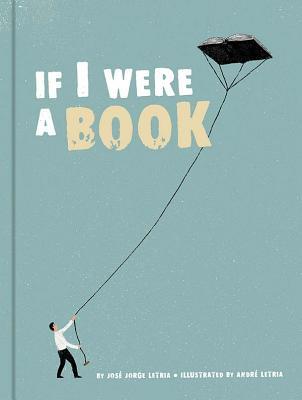
My links are hopping about quite a bit this month. The obvious one would have been Charlotte Wood’s similarly titled The natural way of things, but instead I’ve chosen another Portuguese author with a triple barrel name, José Jorge Letria and his lovely book, If I were a book (my review), which is a quirky little love letter to the book and reading.

Title page for Ch. 16, Sylvia Nakachi
Writing black, Ch. 16 by Sylvia Nakachi

And now, I’m using the title “If” to move to the Queensland Writers Centre and its innovative If: Book Australia program, which Im not sure is still going but was about exploring the future of the book and digital literature. One exciting project it supported was Writing black, edited by Ellen van Neerven (my review) and published as an Apple iBook.

Us Mob Writing, Too Deadly

Writing black is an anthology of new writings by Indigenous Australians. For this next link, I am using content, and choosing another innovative anthology of Indigenous Australian writing, Too deadly: Our voice, our way, our business, by a Canberra- based writing group, Us Mob Writing (my review).

Book cover

I am going to stick with content again, by choosing another anthology. However, this link is a double one, because this particular anthology, The near and the far, Volume 2, edited by David Carlin and Francesca Rendle-Short (my review), comprises pieces written by another (sort of) writing group. The group is WrICE (Writers Immersion and Cultural Exchange) which brings writers from Australia and Asia-Pacific together in writing residencies.

Maxine Beneba Clarke, The hate race

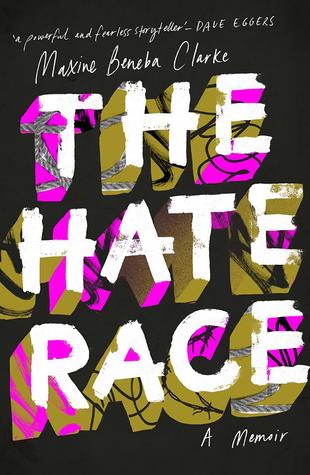
And finally, a rather cheeky link from the writer of the Foreword of The near and the far, Maxine Beneba Clark, to her memoir of growing up in western Sydney, The hate race (my review). It’s a powerful book about how cruelly people who are different, particarly those with non-white skins, can be treated in Australia.

So, an unusual and highly political month this time, with several books having overtly political messages or content. Three of the books are anthologies, which is also unusual for me, and only the first of my six links is a novel. We have though travelled widely from Baltimore in the USA, though Portugal, Australia, Asia and the Pacific, and back to Australia again.

Now, the usual: Have you read Redhead by the side of the road (or any other by Anne Tyler)? And, regardless, what would you link to?

Bill curates: Dymphna Cusack’s A window in the dark

Bill curates is an occasional series where I delve into Sue’s vast archive, stretching back to May 2009, and choose a post for us to revisit. During the latter part of January we will look at some of Sue’s older posts which have relevance to my Australian Women Writers Gen 3 Week, Part II, 17-23 Jan, 2021

Dymphna Cusack was a central writer of the Gen 3 period. I (Bill) recently reviewed her Say no to death (1951) which with its focus on TB gives us some perspective on the plagues like Covid-19 which regularly sweep around the world. Here, in a post from 2013, Sue reviews Cusack’s memoir of her years as a teacher, written in the 1940s but published posthumously.

______________________________

My original post titled: Dymphna Cusack, A window in the dark

Dymphna Cusack‘s A window in the dark has been glaring at me from my TBR pile for many years now. Not being able to stand it any longer, I decided to sneak it in before my next reading group book, Michelle de Kretser‘s Questions of travel. Posthumously published by the National Library of Australia, A window in the dark is Cusack’s chronicle of her teaching years, spanning 1922 to 1943.

For those who haven’t heard of her, Dymphna Cusack (1902-1981) is an Australian writer best known for her collaborative novel (with Florence James), Come in spinner (1951), and Caddie, the story of a barmaid (1953), which was made into a successful feature film in 1976. According to Debra Adelaide‘s comprehensive introduction, Cusack was not interested in writing her autobiography but, in the mid-1970s, three decades after she finished teaching, she decided to write about this part of her life. While much has changed since 1975/6 when she wrote it (let alone 1944 where the story ends), A window in the dark – “my job was opening a window in the dark for the minds entrusted me” – is an interesting read. It is not, though, a typical writer’s memoir; its focus really is teaching and education.

The book is well produced with an excellent introduction and explanation of its genesis by Debra Adelaide (though I would have loved an index). It was prepared from the version included with her papers held by the National Library of Australia. This version is probably the final draft, but Adelaide believes that Cusack would have done more work on it, had it found a publisher. Certainly, it does have some rough edges, but not enough to spoil the content nor to prevent our getting some sense of Cusack as a person, as a writer, and of course as a teacher.

Cusack tells the story of her years as a teacher chronologically, starting with university and her decision to accept a bonded Teachers College Scholarship. However, a number of themes run through the book and I’m going to frame the rest of this post through some of them.

Format: Photograph Notes: Dymphna Cusack (1902...

“The sum total of my years of teaching in Broken Hill and Goulburn was the conviction that the high school curriculum was insane”

Cusack decided very early in her career that the curriculum she was required to teach was unsuitable for all but the minority who planned to go on to university. She rails, in particular, against the teaching of ancient languages (Latin) and against the focus on British history and English (as in from England) literature (both only to the end of the nineteenth century, what’s more). She criticises educational practice which relied heavily on examinations and argues against dependence on IQ assessment for identifying capable students. She is disgusted by corporal punishment. She does become a bit repetitive, as she moves from school to school, but that simply reinforces her passion for relevant education and humane methods. Being personally interested in local and contemporary history, she’s distressed that students weren’t taught about their own places. Students in Broken Hill were taught nothing about that city’s origins, nor its geology and botany. Students in Parkes learnt nothing about William Farrer and his pioneering work with wheat. And so on … Students learnt, well, I’ll let her tell you:

It was the same in every country town I lived in. An essential part of our history was ignored, whether massacres of whites by blacks or blacks by whites, while we got bogged down in the Hundred Years’ War or the Thirty Years’ War or the Seven Years’ War – all taught with no reference whatever to the basic economic causes underlying them.

She was happiest when, for various reasons, she was given non-examination classes to teach. Then she could teach what she thought was useful. A playwright herself, she was renowned for her drama classes, and the school plays she produced.

“I look so middle-class; it’s my nose”

Despite her ongoing frustrations (not to mention chronic health issues), she had, you can see from this quote, a sense of humour. Cusack belonged to that wonderful cohort of left-leaning writers in early to mid-twentieth century Australia, a cohort which included Miles Franklin (with whom she collaborated on books), Flora Eldershaw and Frank Dalby Davison.  She had a finely honed moral and social conscience, and was acutely aware of injustice. She was not above using her “middle-class” look to get a hearing on issues important to her. She was distressed that Australia, which, by the 1850s was

politically and socially the most advanced country in the world … should by the middle twenties be bogged down into a morass of social and sectarian bigotry and educational conservatism.

Cusack became convinced of the “wickedness of our economic system”, which could not fund milk for children of unemployed parents but could, somehow, find the “money for everything for war”. She abhorred the power those with money had over others. She became unpopular with the Department of Education for her outspokenness on social and economic justice issues, and was particularly critical of the treatment of “that much-maligned creature, the woman teacher”.

“What we want is the warmth, the humanity, the feeling for Newcastle that is inherent in everything you write about …”

So said BHP’s Newcastle manager Keith Butler to Cusack in 1943 as he offered to pay for a novel about Newcastle and the steelworks. Not surprisingly, Cusack would have none of it. She did, however, write her novel, titled Southern steel (1953), and it was, apparently, a positive portrayal. Cusack wrote throughout her teaching career – mostly plays, many of which were performed on the ABC but only some of which have ever been published. She tackled tricky-for-her-times issues such as racism, workers conditions’ and war. Her second novel, Jungfrau (1936), which explored young women, their sexuality and abortion, was runner-up in the Bulletin’s S. H. Prior memorial prize. It was shocking for its time.

“… I found in my teaching life teachers are sublime optimists – why, I never knew.”

And yet, she must have known, for she stuck to teaching through years of ill-health and poor treatment by those in power. She did it, partly of course to support herself, but partly too because she loved her students. She was still receiving thankyou letters from them in her last years. That surely says something.

Why, though, read a book written in the mid-1970s about education in the 1920s-40s? It is not, after all, a memoir, so there are gaps in the story of her life – particularly in terms of her significant relationships. And while she mentions some of the plays and novels she wrote during the time, she does this mostly in relation to something happening in her teaching life. Moreover, it’s not particularly interesting in terms of form. That is, she doesn’t play, as some writers do when writing non-fiction, with narrative style or voice or perspective. Yet, there are reasons for reading it. It works as social history and a history of education. It provides insight into the development of her political philosophy and social values. It shows off her skills as a writer, particularly her ability to evoke people and place. And, for all its seriousness, it contains many entertaining anecdotes.

I’m so glad I finally read what turned out to be a fascinating book about (and by) a compassionate, funny and feisty woman whose intelligence is displayed on every page. Would that every child had teachers like this.

Dymphna Cusack
A window in the dark
Canberra: National Library of Australia, 1991
175pp.
ISBN: 9780642105141

___________________________

Dymphna Cusack was an interesting woman who was passionate about economic fairness and social justice. For that reason, she fits in very well with the wonderful cohort of women writers who were active, particularly in the 1920s to 40s, such as Katharine Susannah Prichard, Marjorie Barnard, Flora Eldershaw, to name a few. I’m glad Bill chose this post to bring up the rear of “my” contributions to his AWW Gen 3 Week.

We’d love to know whether you’ve read any of Cusack’s novels or other writings, and what you think?

Bill curates: M.L. Skinner’s The hand

Bill curates is an occasional series where I delve into Sue’s vast archive, stretching back to May 2009, and choose a post for us to revisit. During the latter part of January we will look at some of Sue’s older posts which have relevance to my Australian Women Writers Gen 3 Week, Part II,17-23 Jan, 2021

Mollie Skinner is a little known Western Australian who served as a VAD (nurse) during WWI. Her importance to Australian Literature is that she co-wrote a novel with DH Lawrence, The Boy in the Bush (1924). She also wrote an account of her time as a VAD, and some other novels as well, at least two with some assistance from Lawrence.

_______________________________

My original post titled: “M.L. (Mollie) Skinner, The hand (#Review)”

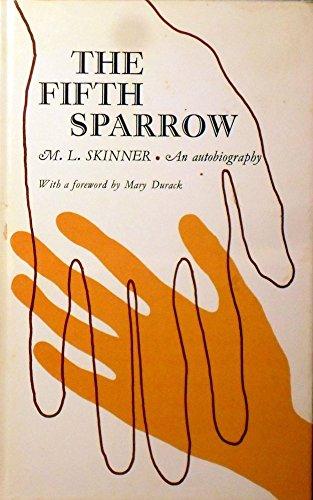
ML Skinner, The fifth sparrow

Pam of Travellin’ Penguin blog read ML Skinner’s short story “The hand” for a challenge she was doing, and, when I expressed interest in it, very kindly sent me a copy. “The hand” is a mysterious little story – and by little, I mean, little in that it takes up less than 7 pages of the anthology, Australian short stories, that she found it in.

Now, the story is a bit tricky, and I think is best understood within the context of Skinner’s biography. She was born in Perth in 1876, but the family moved to England and Ireland in 1878. Mollie was a keen student and reader but had to abandon formal education in 1887 because of an ulcerated cornea, which resulted in her spending much of the next five years in a darkened room with bandaged eyes. After cauterisation partially restored her sight, she started to write poems and stories. Presumably this was around 1892 (ie 5 years after 1887?) when she was about 16 years old. Later she trained as a nurse, which gave her her main living. And then, the ADB biography (linked to above) says something interesting in terms of our reading of this story:  “she recognized within herself an intuitive power, or sixth sense.” A little later in the biography, we are also told that “Mollie believed that God’s hand on her shoulder guided her life. She dabbled in the occult”. She returned to Australia in 1900, though returned to England later to study. She also travelled to India, and served there and Burma during World War 1.

So to the story, which was first published in 1924. It is set in a “mining hospital back there in the west.” As there was “little doing” and the light too dim to read by, the Matron is encouraged to tell a story which she is “good at” doing. They – presumably the off-duty staff – ask her about her life in “those posts way back in the interior”. Was she ever frightened, they ask?

‘Of what?’
‘Well–the loneliness. And bad white men, and bad blacks. Of patients in delirium. Or some awful maternity case you couldn’t handle.’
‘I didn’t think about it. I did what I could. I was frightened once, though: and that, really, by a nurse screaming. A nurse shouldn’t scream.’

Interesting, the “bad white men, and bad blacks”, but I’ll just take that as another of those ways in which contemporary stories provide us insight into the times, and move on with the story. She then tells the story of the scream. She describes the small outback post, the sense of community they had, and the little L-shaped hospital which was open to the bush on one side, and the road and railroad on the other. There were two other nurses besides herself, one being Nurse Hammer “a regular town girl, very attractive, but unstable, untried.” On the night of the scream, our Matron story-teller was doing accounts while the two nurses were chatting with the patients. Our Matron’s mind kept wandering she says. She’s

very practical, really, and then liable to feel things in the air, things that other people don’t seem aware of. My father called it “unwarranted interference”; and told me to taboo it. But it gets hold of me sometimes: and this evening I was uneasy, aware of “something”. There seemed to be a sound.

But, she can’t identify anything, so continues to try to work. She hears Nurse Hammer go to bed, and then – the scream. The rest of the story concerns locating the scream – it was Nurse Hammer – and working out the cause of it – a hand has grabbed Hammer’s leg.

In the end, there’s a practical explanation for “the hand” but along the way there’s a sense of an awakening or at least, a growing up, for Nurse Hammer. Initially, the Matron is

conscious, not only of Hammer’s terrible fear, but of a deeper source, dark and secret within herself. I remembered how lovely she was. How men in the wards watched with furtive eyes as she walked past. I remembered the way she walked–how she avoided those eyes. I knew then that the girl had herself been tempted, that she was powerless, now, in this dark room, because in her own life she was passing through crisis.

The Matron finds herself praying that “whatever we found in this room would not be evil.”

Skinner builds up the suspense well, the darkness, the lantern going out, until eventually the cause of the scream is determined. Before it is fully explained though, Nurse Hammer has a little more to endure, but, says Matron,

I glanced at Hammer. The Nightingale light was flooding her face …

And the Matron goes on to use words that imply a biblical aspect to Hammer’s enlightenment – but if I say more, I’ll give away the story which I’m not sure I want to do (though unfortunately the story does not seem to be available online).

Interestingly, Skinner attracted the attention of DH Lawrence … but I think I might make this the subject of tomorrow’s Monday Musings! Meanwhile, I think the story is to be understood in the sense of a divine intervention intended to test and try Nurse Hammer, from which she emerges, in a sense, reborn and now a real nurse, like Florence Nightingale. (But, I could be wrong.)

ML (Mollie) Skinner
“The hand” (1924)
in Australian short stories (1951)
ed. by Walter Murdoch and Henrietta-Drake Brockman
(pp. 148-154)

_____________________________________

Bill has also posted on Mollie Skinner – on her collaboration with DH Lawrence – so please check out his post, ‘Writing The Boy in the Bush’ too.

As always, we would love to hear your thoughts, particularly whether you have read Mollie Skinner or any of DH Lawrence’s Australian writing?