Six degrees of separation, FROM The Poisonwood Bible TO …

May is the last month of autumn for us in the Southern hemisphere, and what an autumn it’s been. So warm. I shouldn’t be pleased, however, because the cause is worrying … so, let’s get on to something uncontroversial and non-worrying – our Six Degrees of Separation meme. It’s currently hosted by Kate (booksaremyfavouriteandbest). Please click the link on her blog-name for her explanation of how it works. Meanwhile, this month’s meme is  Barbara Kingsolver’s The Poisonwood Bible, which, woo hoo, I’ve read, along with all the linked books.

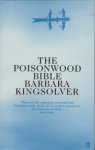
Barbara Kingsolver, The Poisonwood BibleLike last month’s Memoirs of a geisha, I’m guessing most readers, except millennials perhaps, will have read this 1998 book. It was Kingsolver’s fourth novel, and made quite a splash. It’s about a family of missionaries who go to the Belgian Congo in 1959.

Claire G Coleman, Terra nulliusNow, I’ve read several novels about missions and missionaries, and most of them critical. The most recent one is, and if you’re Australian you’ve probably guessed it, Claire G. Coleman’s Terra nullius (my review). It’s a debut, dystopian novel by an indigenous Australian author, and aims to encourage Australians to understand what being invaded means.

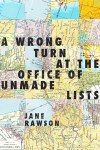
Jane Rawson, A wrong turn at the office of unmade listsAnother dystopian novel wanting us to understand “something”, is Jane Rawson’s A wrong turn at the Office of Unmade Lists (my review). (I still love this title!) The something she’s warning us about – is the something I alluded to in my opening paragraph – climate change. It’s a great read – serious but with a touch of humour too. But, time now to move on to the next link, which is …

Sara Dowse SchemetimeCalifornia! California because Rawson’s novel is partly set in San Francisco, 1997 San Francisco in fact, to which a couple of 2030 Melbourne Aussies go. Another book in which an Aussie or two go to California is Sara Dowse’s Schemetime (my review), though her characters are involved in the film industry and they go to the Los Angeles area in the 1960s.

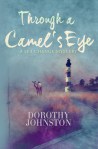
Dorothy Johnston, Through a camel's eyeSo, where next? Well, Sara Dowse was a member of Canberra’s famous Seven Writers, and so were a couple of other writers who have appeared here, Marion Halligan and Dorothy Johnston. As Halligan has appeared in my Six Degrees a couple of times already, and Johnston hasn’t, I’m going to share it around and choose her new coastal-Victoria-based detective series, which started with Through a camel’s eye (my review).

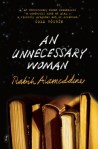
Jamil Ahmad Wandering falcon coverAnd now, because, after starting in Africa, we’ve only been to Australia and the USA, I’m going to take us somewhere completely different, to a perfect setting for camels, Pakistan/Afghanistan/Iran. Jamil Ahmad’s debut novel, The wandering falcon (my review) comprises nine stories, the third of which is titled “The death of camels”. This novel explores what happens when political borders are plonked down without regard to people and how they live in a land.

Yan Lianke's Dream of Ding Village

Now, I read Ahmad’s book as part of the 2011 Shadow Man Asian Literary Prize team, so I’m going to end on another memorable book I read for this project, Yan Lianke’s Dreams of Ding village (my review). Set in China, it was inspired by the plasma economy that developed in Henan Province in the early 1990s. It was an engrossing book, and I’d love to read more Lianke.

Well, I’m thrilled that this month we not only managed to keep our travels up, but I also kept the word count down! I fear I’ve become too wordy in my Six Degrees of late. Interestingly, unlike last month, which was historical fiction heavy, this month we dipped our toes into the future a couple of times. The gender balance, though, has been the same, two male authors amongst our six.

What will Kate suggest for June?

And now, my usual question: Have you read The Poisonwood Bible? And regardless, what would you link to? 

Six degrees of separation, FROM Memoirs of a geisha TO …

Last month I complained about the start of autumn because although I love autumn, I hate winter. This month, another nail went in the warm-weather coffin, with the ending of daylight savings. Oh dear … The good news for me, though, is that I have actually read April’s starting book for the Six Degrees of Separation meme, which is currently hosted by Kate (booksaremyfavouriteandbest). Please click the link on Kate’s blog-name for her explanation of how it works. Meanwhile, I’ll get on with the meme, which starts with Arthur Golden’s Memoirs of a geisha. As always, I’ve read all the linked books.

Arthur Golden, Memoirs of a geishaI’m guessing many of you – unless perhaps you are millennials – will have read Memoirs of a geisha. It was quite the book when it came out. It’s an historical fiction novel, set in Japan before, during and after World War 2. Golden, an American writer, wrote it first person in the voice of a geisha. It was controversial at the time because he had based his story on a geisha whom he’d interviewed. He had promised her anonymity but then included her as a source in his acknowledgements.

Min Jin Lee, PachinkoAnother historical fiction novel set in Japan by a non-Japanese author is Min Jin Lee’s Pachinko (my review). There is a slight difference here, though, in that American-based Min Jin Lee was born in South Korea, and her novel’s focus is the experience of Koreans in Japan. Wikipedia, quoting a PBS report, says that it’s “the first novel written for an adult English-speaking audience about Japanese Korean culture.” I certainly found it fascinating.

Pramoedya Ananta Toer, This earth of mankindNow, I should probably showcase my reading of Japanese literature here, as I’ve read a fair variety over the years, but instead I’m going to do something different, and choose a book by another author with a three-part name, Indonesian writer Pramoedya Ananta Toer and the first of his Buru quartet, This earth of mankind (my review). The book presents his idea of nationalism, in response to the long colonisation of his country.

Mirandi Riwoe, The fish girlAnd now you might guess where I’m going … it’s to the recent book I’ve read that was set in Indonesia, and which also, in a different way, responds to the impact of colonialism on the country. In this case, however, the emphasis is on its impact on a particularly powerless part of the Indonesian community, the women. The book is Mirandi Riwoe’s The fish girl (my review).

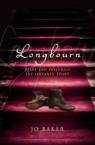
Jo Baker, LongbournAnother interesting thing about Mirandi Riwoe’s book is that it’s a response to another piece of fiction, in her case to W. Somerset Maugham’s “The four Dutchmen”. So that aspect is going to be my next linking point. The book is Jo Baker’s Longbourn (my review) which retells Jane Austen’s Pride and prejudice from the point of view of the servants. While there were plot elements I didn’t like, the historical research underpinning it made it a good read.

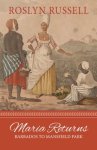
Roslyn Russell, Maria Returns Barbados to Mansfield ParkI’m going to stick with the retelling idea here, and link to another retelling of a Jane Austen novel, Roslyn Russell’s Maria returns: Barbados to Mansfield (my review). Like Baker, Russell underpins her novel with research, but in her case it’s the history of Barbados, and particularly of slavery there. Our disgraced heroine is redeemed by supporting the abolitionist movement.

David Mitchell, The thousand autumns of Jacob de PoetThis brings us to the final link and it’s a bit spurious – but it’s neat so I’m going to stick with it. It’s spurious because, whilst slaves are mentioned, they are not the focus of the book. It’s neat because it’s another historical fiction book set in Japan by a non-Japanese writer, this time an English one. The book is David Mitchell’s The thousand autumns of Jacob de Zoet (my review).

Well, I’m proud of myself this month, because after travelling very conservatively the last two months, this time we’ve spread our wings. True, we’ve spent a bit of time in Japan, but we’ve also been to England, Indonesia and Barbados! We’ve also traversed time from the late 1700s to the late 1900s, and we’ve read two male authors amongst our six. On the negative side, we’ve stayed pretty much with historical fiction. There’s always something to improve …

And now, my usual ending question: Have you read Memoirs of a geisha? And whether or not you have, what would you link to? 

Six degrees of separation, FROM The beauty myth TO …

Wah, it’s now the start of autumn here down under. I love, love, love autumn (and not just because my birthday occurs during it) but it does mean that winter’s next and I hate, hate, hate that! We do, however, have fun things to entertain us when things get glum like, for example, The Six Degrees of Separation meme. It is currently hosted by Kate (booksaremyfavouriteandbest) – and if you are not familiar with how it works, please click the link on Kate’s blog-name. She explains it all.  Meanwhile, this month’s book is one that I should have read when it came out, given my interests, but didn’t, Naomi Wolf’s The beauty myth. As always though, I’ve read all the linked books.

Naomi Wolf, The beauty mythNow, when I said I should have read The beauty myth, given my interests, but didn’t, I mean that I have been interested for a long time – since I read Germaine Greer’s The female eunuch back in the 1970s – in the way western culture, specifically, objectifies women. Wolf’s The beauty myth, which was praised by Greer, looks, among other things, at the way women are pressured to conform to set notions of beauty, and are exploited as a result.

A more recent – and Australian – book-cum-memoir which looks, among other things, at the way women are pressured to meet societal standards of beauty is Tara Moss’s The Fictional woman (my review). Her thesis is that women are subject to an inordinate number of fictions that contradict reality, and that this helps perpetuate ongoing inequalities for women in myriad ways. Despite having some long bows, this book – written in 2014 – is spot on in terms of what is now, finally, coming to the fore. It’s distressing that so many writers (among others) have been saying the same things about this issue for SO long, but here we are, in 2018, still in a patriarchal society which thinks it’s ok to objectify and thus control women. Unbelievable.

Kate Jennings, Trouble, bookcover

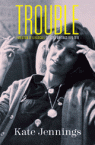
Another memoir by a feminist is Kate Jennings’ Trouble: Evolution of a radical (my review). It’s a different sort of memoir, a “fragmented autobiography” she calls it. It comprises a compilation of Jennings’ writings selected and ordered by her to show how she has come to be the person she is, to believe the things she does. It’s an engrossing book that includes fiction (poetry and prose) and non-fiction (including interviews) written over a couple of decades.

And, it includes excerpts from her own semi-autobiographical novella, Snake (my review), which I have also reviewed here. Snake is a coming-of-age story set in rural Australia, and tells of Girlie and Boy, and their parents Rex and Irene. It’s not a happy childhood, and in fact the book was described by the Sydney Morning Herald as a “domestic dystopia”. The snake title provides a clever motif encompassing such ideas as temptation, deceit and danger.

Winterson, Oranges are not the only fruit, book coverThere are several books I could link from here, including Jill Ker Conway’s memoir The road from Coorain and Francesca Rendle-Short’s fiction-cum-memoir, Bite your tongue, but I’d like to leave the Australian continent at least once in this journey. Consequently, I’m choosing another autobiographical novel about a difficult childhood, Jeanette Winterson’s Oranges are not the only fruit (my review). Unlike Snake though, the orange motif is far less clear but seems to relate, in part at least, to closed-mindedness. At the end of the novel, pineapples appear, which may suggest change.

Thea Astley, Hunting the wild pineapplePineapples bring us back to Australia and a book with pineapples in the title, Thea Astley’s Hunting the wild pineapple (my review of the short story from this collection). It is set on a pineapple farm in a place called Mango, and deals, among other things, with the power wielded by white men over others – in particular, women (reminding me of where this month’s meme started) and migrants. And now …

Dymphna Cusack, Jungfrau

For my last book, I’m going to link on names – from author Thea Astley to character Thea in Dymphna Cusack’s Jungfrau (my review). Coincidentally, this book returns to another thread in this meme, the coming-of-age one (though perhaps, as Diana Blackwood suggested in the comments on my review of her novel Chaconne, it’s more a “wising-up” one.) Set in 1930s Sydney, it concerns three young women, Thea, Eve and Marc, and revolves particularly around Thea’s affair with her married professor. Hmmm … I think we are back to the idea of the unbalanced power relationship between men and women. I’ll leave it there…

This month, again, we haven’t travelled far, only visiting the same countries as last month – the USA, England and Australia. We’ve stayed in the last 100 years and with women writers only. I must diversify a little more next month.
And now, have you read The beauty myth? And whether or not you have, what would you link to? 

Six degrees of separation, FROM Lincoln in the Bardo TO …

The Six Degrees of Separation meme, currently hosted by Kate (booksaremyfavouriteandbest), is, I’m starting to realise, an effective marker of passing time – and I’m not sure I like it. This passing of time I mean, not the Six Degrees meme, which I enjoy! If, perchance, you are not familiar with this meme, please click the link on Kate’s blog-name – you’ll get all the gen you need there. Meanwhile, this month’s book is one that I bought with a Christmas gift voucher, but I haven’t read it yet. It’s George Saunders’ Booker Prize-winning Lincoln in the Bardo.  As always though, I’ve read all the linked books, albeit some before this blog.

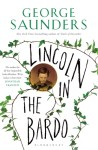
George Saunders, Lincoln in the BardoNow, the reason I bought Lincoln in the Bardo is not so much because it won the Booker, but because one of our ex-reading group members (ex because she retired to the coast, not because we expelled her I might add!) recommended it. She said it was challenging to start with but a great read. However, when I put it forward as an option for this year’s schedule, it was not chosen. I still plan to read it – but when?

Ali Cobby Eckermann, Ruby MoonlightAnother book that I recommended for this year’s schedule and that was not chosen was Ali Cobby Eckermann’s verse novel Ruby Moonlight (my review). I don’t usually recommend a book I’ve read, as I like to use my reading group to read a new book for me, but I would like us to read more indigenous authors, and this one, a work of historical fiction in verse, is particularly interesting. In the end we chose Claire G Coleman’s Terra Nullius which suits me just fine as it’s one I’m keen to read.

Geoff Page, The scarringI’ve enjoyed quite a few verse novels during my reading life to date, but the first one I reviewed here was local Canberra author Geoff Page’s The scarring (my review). It’s a gut-wrenching story about war, love and loneliness, revenge and male power. And it’s one of those books that I haven’t forgotten.

Talking about firsts on this blog, and first verse (ha, that rhymes!) in particular, the first verse collection I reviewed here was A.B. (Banjo) Paterson’s now classic collection The man from Snowy River and other verses (my review). Interestingly, Paterson differentiated between verse and poetry, which he saw as a higher form. He wrote verse he said.

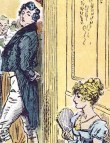
Jane Austen's Mr Darcy, illustration by CE Brock

Mr Darcy, illus by CE Brock (Public Domain, courtesy Wikipedia)

Like many of us I’m sure, I was introduced to reading by my parents. I remember as a very young child carting a pile of picture books into my dad in the mornings (as he was an early riser), but the first author I remember him sharing with us was the aforementioned Banjo Paterson. It perhaps won’t surprise regular readers here that the first author I remember my mum sharing with me was Jane Austen. And the first book of hers she shared – read aloud in fact – was, of course, Pride and prejudice. I haven’t done a full review of it here – I hardly dare – but I did write a post about it to commemorate its 200th anniversary.

Ayn Rand, The fountainheadNow, the thing about Pride and prejudice, according to the Independent, is that it’s never been out of print. Another book that I’ve read, though long before I started this blog, that hasn’t been out of print – according to the The Irish Times is Ayn Rand’s The fountainhead. It’s one of those books I’m glad I’ve read though I can’t claim to love it as I do Pride and prejudice!

Patrick White, Happy ValleyMost authors, of course, would be thrilled to know that their books have never been out of print, but not all. One such is Patrick White who didn’t want his first novel, Happy Valley (my review), to be republished. Fortunately for us, Text Publishing disagreed with him – after his death, anyhow – and published it as part of their wonderful Text Classics series. I’m so glad I got the opportunity to read it! Not only is it an interesting read, but it’s an accessible introduction to his themes and style.

So, this month we’ve not travelled far, culturally speaking anyhow, having only been to the USA, England and Australia. Historically, though, we’ve been a bit more diverse, including visiting Regency England and colonial Australia. We’ve spent time on farms and in cities, and we’ve met some moral men and not so moral ones. I wonder whom we’ll meet next month and where they’ll be! I can’t wait to see the starting book Kate has chosen for us.
And now, have you read Lincoln in the Bardo? And whether or not you have, what would you link to? 

Six degrees of separation, FROM The No. 1 Ladies’ Detective Agency TO …

It’s a new year and I’ve committed, for the moment at least, to continuing with the Six Degrees meme which is currently hosted by Kate (booksaremyfavouriteandbest). For details about the meme, please click the link on Kate’s blog-name. Meanwhile, on with the challenge. This month we start with a book that I have, in fact, read, Alexander McCall Smith’s No. 1 Ladies Detective Agency – and, as always, I’ve read all the linked books too, though some before I started blogging.

Alexander McCall Smith, The No. 1 Ladies' Detective AgencyMost of you will know that light, crime books are not my usual fare. However, there was a time when reading the latest book from this series was something my parents, mother-in-law, husband and I did on our annual coast holiday. When those holidays ceased, somehow the impetus to read the books ceased too. While it lasted, though, it was a lot of fun to share a reading interest, and ponder the warmth and practical problem-solving of Precious Ramotswe.

Catherine McNamara, PeltFor my first link, I’m going with a book by another non-African writer setting stories there, Catherine McNamara’s Pelt and other stories (my review). McNamara is an Australian expat writer currently living, I believe, in Italy, but she also lived and worked for some time in Africa. Several stories in this collection, as the cover might suggest, are set in Africa, particularly West Africa. But they are definitely not warm and fuzzy like McCall Smith’s Botswanan set stories!

Chinua Achebe, Things fall apartAnd since we rarely visit Africa here, let’s stay there for the next link, and look at Chinua Achebe’s Things fall apart (my review), a classic that I finally managed to read in 2016. It’s set in a small village in Nigeria, and deals with the impact of change in Africa – the missionaries, colonialism – by presenting a variety of reactions and behaviours. He shows western colonialism to be arrogant and oblivious to the culture being overtaken, but also sees aspects of African culture which made it vulnerable.

Marie Munkara, Every secret thingMy next link takes us from Africa to Australia, but stays with the idea of missionaries and their role in the colonialism project. The book is Marie Munkara’s Every secret thing (my review). She uses humour to explore her theme, telling stories in which the Bush Mob use every bit of ingenuity they can muster to resist the incursion into their life and culture by the Mission Mob. As with Things fall apart the power imbalance is too strong, but the Bush Mob manages nonetheless to strike some blows for its side.

Eimear McBride, A girl is a half-formed thingAt this point I had a few options for linking, including staying with the colonialism theme in Australia, and I was highly tempted. However, I suddenly realised that my previous two books had “thing” or “things” in the title, and that I’ve read another book whose title includes this word, Eimear McBride’s A girl is a half-formed thing (my review). It had to be – not only because it was an irresistible connection but because it enabled me to shift gear for this link, and thus the next one. 

Anos Irani, The parcelIf you’ve read McBride’s book, you will know it is a tough read about a young girl who feels alone and unsupported in her family, for understandable reasons – but she doesn’t deserve what happens to her. It reminded me of a book I read this year which had a similar gut-wrenching impact on me, and whose protagonist, while different, feels unsupported by her family and, increasingly, an outsider within her community. The book is Anosh Irani’s The parcel (my review) about the transgendered Madhu in Mumbai’s red-light district.

Tony Birch, Ghost riverFor my last link, I’m sticking with the idea of outsiders, and returning to an indigenous Australian writer. The book is Tony Birch’s Ghost River (my review). It tells of the friendship between two young boys, Ren and Sonny, and their involvement with a group of homeless men living by the river and about to be “dispossessed” of their spot by plans to build a freeway. These men, though, are not the only outsiders in the book. Sonny, who is from a disadvantaged background, is also an outsider. Birch demonstrates that once you are an outsider, everything is just that much harder. It’s a double whammy.

So, this month we’ve travelled from Africa to Australia, then popped over to Ireland before returning to Australia via India. Our writers, though, have been even more multicultural – two indigenous Australian writers, an Indian-born Canadian writer, an expat-Australian writer living in Italy, an Irish writer born in England, and an African writer. What a fascinating bunch, eh?

And now, have you read The No. 1 Ladies’ Detective Agency? And whether or not you have, what would you link to? 

Reading Bingo 2017

Reading Bingo 2017Are you getting sick of memes and lists? If so, just ignore this post and come back when the silly season is over because it seems that we book bloggers can’t help ourselves at this time of year. Today’s meme is a bingo asking us to name books we’ve read this year that meet categories on a bingo card – and it’s a big one with TWENTY-FIVE categories. I got the card from Lisa (ANZLitLovers).

Like most bloggers I have not read to the bingo card, but have tried, after the event, to squish my reading into the card. There are, therefore, a couple of fudges, which I hope you’ll accept. But if you don’t, what are you going to do? Unsubscribe? I hope not!

Sara Dowse, As the lonely blyA book with more than 500 pages: As it turns out I didn’t read one that was more than 500 pages though I read at least three that were between 450 and 500 pages, so I’m choosing the Australian one of those three, Sara Dowse’s As the lonely fly (my review), about Jewish migration, big dreams and the Jewish state in Israel.

Mena Calthorpe, The dyehouseA forgotten classic: Mena Calthorpe’s The dyehouse (my review), which was (re)published by Text. They thought it was so special they made in their 100th book in their Classics series. If you haven’t read it, consider doing so, particularly if you like social realist novels about the lives of workers.

Graham Greene, Travels with my auntA book that became a movie: I have a few of those in my reading this year – and they are mostly classics. The one I’m choosing is Graham Greene’s Travels with my aunt (my review) which, unlike the ones I didn’t choose, I haven’t seen!! I did however read it!

Stephen Orr, DatsunlandA book published this year: I’ve read several new releases this year, mostly review copies. I’m choosing Stephen Orr’s Datsunland (my review) because I do like a collection of short stories, and I’ve read a few good’uns this year. I’ll be reviewing my third Orr book, his newest release, within the next few months.

Susan Varga, RuptureA book with a number in the title: This proved strangely difficult this year, but luckily one book I read had numbers in its subtitle, Susan Varga’s moving poetry collection, Rupture: Poems 2012-2015 (my review). I do hope this isn’t a fudge – the numbers are on the title page even if not on the cover!

Louise Mack, The world is roundA book written by an author under thirty: Normally this would be hard, but history tells me that Louise Mack was 26 when her book The world is round (my review) was published in 1896. This book was nearly my “forgotten classic” until I needed something here!

Rebekah Clarkson, Barking dogsA book with non-human characters: I was initially challenged by this one, until I remembered Rebekah Clarkson’s interconnected short story collection Barking dogs (my review) in which Jasper the barking dog recurs a few times, eventually providing the catalyst for a devastating action.

Hartmann Wallis, Who said what exactlyA funny book: I don’t read a lot of funny-haha books, but many of the books I read make me laugh. Take Hartmann Wallis’ Who said what exactly (my review), for example. If my review doesn’t enable you to see the humour, try reading Robin Wallace-Crabbe’s comment.

Carmel Bird, Family skeletonA book by a female author: Now this is a hard one – not! I have an embarrassment of riches here, so I’m going to go with one of the doyennes of the Australian literary scene, Carmel Bird and her clever Family skeleton (my review).

Emily Maguire, An isolated incidentA book with a mystery: Well, let’s choose an actual mystery book here, albeit a literary one in which the mystery is really not the main point. I’m talking about Emily Maguire’s An isolated incident (my review).

Ian McEwan, NutshellA book with a one-word title: I have a few options here, but I’ll go with the one I used in a recent Six Degrees post, Ian McEwan’s Nutshell (my review). Such an intriguing book with an unusual choice of narrator.

Stephanie Buckle, Habits of silenceA book of short stories: As a short story enthusiast I have a few options here too, so am choosing the last one I reviewed, Stephanie Buckle’s Habits of silence (my review). It’s a (lovely) debut collection, so I’d like to give it this extra shout-out.

Kim Mahood, Position doubtfulA free square: So many to choose from, but I’ll nominate the book that I waited months to read until my reading group did it, Kim Mahood’s thoughtful memoir, Position doubtful (my review), about being Australian and relating to this land that belonged to someone else first.

Hoa Pham, Lady of the realmA book set on a different continent: I read several books set in different parts of the world, but, quite coincidentally, two of them were set partly or completely in Vietnam. I’m choosing the one set completely there, Hoa Pham’s Lady of the realm (my review).

Stan Grant, Talking to my countryA book of non-fiction: Again, so many to choose from, but Stan Grant’s Talking to my country (my review) works as a sort-of companion to Position doubtful, in that it’s by a descendant of one of those original owners. He firmly but generously talks about what it has meant for his people to have been so summarily displaced by us!

Northerner Abbey illus br Brock

From Ch. 9, illus. by CE Brock)

The first book by a favourite author: Most of you know who my favourite author is (though I have a few really) – Jane Austen. I’m fudging here, because her first book to be published was Sense and sensibility, but the first sold to a publisher (who then didn’t publish it) was Northanger Abbey (my posts). I just so happen to have re-read it this year (200 years after its eventual posthumous publication).

Karenlee Thompson, Flame tipA book you heard about online: Like most readers, I hear about many books online, but one I know I FIRST heard about online is Karenlee Thompson’s book of short fiction, Flame tip (my review), which was inspired by Tasmania’s bushfire of 1967.

Min Jin Lee, PachinkoA best-selling book: Hmmm, I don’t tend to read best-sellers, but I think Min Jin Lee’s Pachinko (my review) is such in the USA, where it was named one of the New York Times Book Review’s 10 Best Books of 2017.

Heather Rose, The museum of modern loveA book based on a true story: My choice here is one of my top reads of the year, Heather Rose’s The Museum of Modern Love (my review). Such a stimulating excursion into ideas about art, love and home.

Claire Battershill, CircusA book at the bottom of my TBR pile: Now which TBR pile do they mean? And what does bottom mean? I have no idea but one of my TBR reads this year was a wonderful collection of short stories given to me by Daughter Gums in 2014, Circus (my review), by Canadian writer Claire Battershill.

Viet Thanh Nguyen, The sympathizerA book your friend loves: This is easy. My dear American friend gave me Viet Thanh Nguyen’s The sympathizer (my review) because she loved it. I did too.

Anos Irani, The scribeA book that scares you: When I think of this category, I don’t think mystery or horror genre, but books with ideas that scare me. I’ve several to choose from, but I’ll go with Anosh Irani’s The parcel (my review) for its devastating evocation of how cruelly people can treat others, and how intolerant people can be of difference.

Jane Fletcher Geniesse, Passionate nomad, book coverA book that is more than ten years old: Again I have a few of these, but some have already appeared in this list, so I’ll go with Jane Fletcher Gienesse’s Passionate nomad: The life of Freya Stark (my review) which was first published in 1999.

The second book in a series: I almost never read series, and certainly haven’t read anything in a series this year so FAIL. I can’t complete the Bingo card!

Ali Cobby Eckermann, Too afraid to cryA book with a blue cover: Woo-hoo, this category enables me to include one of the two books I read this year by Ali Cobby Eckermann, her memoir Too afraid to cry (my review).

So there you have it … a long post. Did you make it to the end? I can’t expect you to complete the bingo card in the comments, but how about choosing one category to highlight a book you’ve read this year that you think deserves a shout-out?

A year in first lines, 2017

How is that I, a non-meme-doing blogger, suddenly find myself doing memes, like the Six Degrees one? I can’t explain it exactly, but I think it happens when the meme encourages me to think about my reading or blogging. So, when Lisa (ANZLitLovers) reminded me of this end-of-year meme, that she was reminded of by Jane at Beyond Eden Rock, I decided to give it a go. To play, you “Take the first line of each month’s post over the past year and see what it tells you about your blogging year.” (I think this means the FIRST line of the FIRST post in each month.) Apparently, the idea started with The Indextrious Reader.

Now, I have cheated a little on this meme because I found that of the twelve first posts of the month, six were the Six Degrees of Separation meme, and two were my Monday Musings on Australian Literature series. This happened because I post, on average, thirteen posts a month, so there’s good probability that Six Degrees, which occurs on the first Saturday of the month, or Monday Musings, which occur every Monday, will be the first post of the month. Sharing these posts wouldn’t give a good overview of my blog, so I’ve chosen the first post of the month that is not a Six Degrees or Monday Musings one.

So, my first lines …

January: Reading highlights for 2016: 

And so we finally say goodbye to a year many of us would like to forget, but before we do, I would like to share my 2016 reading highlights.

February: Delicious descriptions: Freya Stark on a studied absence of curiosity: 

Usually I post a Delicious Description after my main post on the book in question, but I’m reversing my practice this time, for no other reason than time.

Graham Greene, Travels with my auntMarch: Graham Greene, Travels with my aunt: 

Every year, my reading group aims to do at least one classic – usually something from the nineteenth century – but this year someone suggested Graham Greene.

April: Janette Turner Hospital’s Orpheus lost: 

Last year I did a mini-review of Elizabeth Jolley’s An innocent gentleman using some scrappy notes from when I read the book long before blogging.

May: William Temple Hornaday, The bird tragedy of Laysan Island: 

William Temple Hornaday (1854-1937), whose article “The bird tragedy of Laysan Island” was a recent Library of America (LOA) Story of the Week offering, is a tricky man to write about.

June 2017: Linda Neill, All is given: 

Linda Neil’s second book, All is given, is subtitled “a memoir in songs”.

Ali Cobby Eckermann, Inside my motherJuly: Ali Cobby Eckermann, Inside my mother: 

Ali Cobby Eckermann, a Yankunytjatjara/Kokatha woman, has featured a few times on this blog, including in my review of her verse novel, Ruby Moonlight, and my Monday Musings post on her winning the valuable Windham-Campbell Prize this year.

August: Hartman Wallis, Who said what, exactly: 

Never mind Hartmann Wallis’ question Who said what, exactly, I want to know who Hartmann Wallis is, exactly!

September: Phil Day, A chink in a daisy-chain: 

You’ve “met” Phil Day, author of A chink in a daisy-chain, here before.

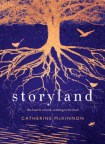
October: Catherine McKinnon, Storyland: 

It is still somewhat controversial for non-indigenous Australian authors to include indigenous characters and concerns in their fiction, as Catherine McKinnon does in Storyland.

Stan Grant, Talking to my countryNovember: Stan Grant, Talking to my country: 

History is, in a way, the main subject of my reading group’s October book, Stan Grant’s Talking to my country.

December: Unbreakable: Conversation with Jelena Dokic: 

If you are a fan of professional tennis you will probably have heard of Jelena Dokic who hit the world stage during the 1999 Wimbledon Championships.

The question is, as Lisa asked herself, do these first lines give you a good sense of my blog and of my reading interests. Well, I’d say yes and no …

Yes, because:

  • my reading each year includes some classics, such as Graham Greene’s Travels with my aunt.
  • my focus is Australian literature and this is clearly evident in the list above.
  • I am aiming to increase my coverage of indigenous Australian literature, and this is evidenced here by Ali Cobby Eckermann in July and Stan Grant in November.
  • each year I read a selection of offerings from the Library of America, and there’s one here, William Temple Hornaday’s “The bird tragedy of Laysan Island”.
  • I enjoy reading left-of-field books, such as those published by Finlay Lloyd, exemplified here by Hartmann Wallis’ Who said what, exactly and Phil Day’s A chink in a daisy-chain.
  • I report on my reading group’s reads, including, here, Graham Greene’s Travels with my aunt and Stan Grant’s Talking to my country.
  • I try to attend literary events and author talks, such as December’s conversation with Jelena Dokic (which in itself is not wonderfully indicative of my literary events, but it’s the one that popped up!)
  • I mix my reading forms and genres, across non-fiction and fiction, so in this list are memoirs, a biography, novels, an essay, and a classic.
  • I try to mix up my opening sentences, and I think there’s some evidence of that here (but you can tell me how successful you think I’ve been!)
  • I run some series on my blog, the main one being Monday Musings of Australian Literature, but another being Delicious Descriptions (which you can see in February).

And no, because:

  • I generally read more women authors than men, but the mix here is pretty even.
  • I do read some translated and diverse writing, but there are none here, besides the indigenous writers.
  • One of the forms I love to read are short stories, and they are not represented at all in this set of posts.

Overall though, my first lines have captured my blog reasonably well … I’d say. 

Six degrees of separation, FROM It TO …

And so we come to December and the last Six Degrees of Separation for the year. For newbies to blogging – because the rest of you surely know by now – this is a meme currently hosted by Kate (booksaremyfavouriteandbest). For information about how the meme works, please click the link on her blog-name. It’s fascinating to see the wild and wonderful paths different bloggers go, all starting with the same book – which, this month is a book I haven’t read (as is more common than not), Stephen King’s It. As always though, I have read all the books I link to.

Stephen King, ItThe reason I haven’t read It is that I’m not a big fan of horror, either to read or see in movies, and It is, I understand, horror. I have enjoyed some movie adaptations of King’s novellas, like The Shawshank Redemption, Stand by me, and Apt pupil, but the horror stories? Not so much. So, how to link a book that I have not only not read but is a genre I don’t like? Well, I’ve chosen something superficial …

Ian McEwan, NutshellOne-word-titles! How original, eh?! There are many possibilities here, but I’m going to choose one I read this year, Ian McEwan’s Nutshell (my review). It’s one of those books that some people love and some hate, mostly because of its narrator. Some people just don’t like a foetus as a narrator! Can’t understand it myself. After all, fiction is supposed to be about the imagination. Seriously, though, I do understand the uncertainty about such a device, but I thought McEwan pulled it off …

Courtney Collins, The burialAs did too, I felt, Courtney Collins with her dead baby narrator in The burial (my review). If you think a foetus is a little bizarre, a dead baby speaking from the grave may be a step too far for you, but again, I thought Collins carried it off to present a fascinating historical fiction work about an Australian female bushranger. I haven’t heard anything more about Collins since, but I do hope she’s working on another book.

Hannah Kent, Burial Rites bookcover

Anyhow, my next link is the obvious one. It’s on the word “burial” in the title and is, of course, Hannah Kent’s Burial rites (my review) Not only does it have “burial” in the title, but it is also a work of historical fiction, albeit one set in remote 19th century Iceland, not early 20th century outback Australia. Kent’s book, however, was not the first book set in Iceland that I’ve read. That honour goes to my next linked book …

Halldor Laxness, Independent peopleHalldór Laxness’ spare, mesmerising Independent people. Unfortunately, I read this book a few years before I started blogging, so I don’t have a review to link to. One day I might fish out my reading notes and try to concoct a review, just to have it recorded on my blog. But, I probably won’t – because I fear the result would be too superficial. I really need to have a book fresh in my mind to write my reviews.

Patrick White, Happy ValleyNow, the thing about Laxness, besides being Icelandic, is that he won the Nobel Prize for Literature, in 1955. He is, apparently, Iceland’s only Nobel Laureate. Aussies may see where this is going – it’s to Patrick White, who is not quite our only Nobel Laureate, but he is our only Nobel Laureate in Literature. The Nobel Prize goes, as you know, to a body of work, so I’m doing the logical thing and have chosen the novel that got him going, his debut novel, Happy Valley (my review).

Louise Mack, The world is roundI’m going to stick with this idea of debut novel for my last link – and choose another older debut novel, Louise Mack’s The world is round (my review). While White’s book was first published in 1939, the year he turned 27, Mack’s book was published in 1896 when she was 26. Mack may not have gone on to have the stellar literary career that White did, but she’s part of our early literary tradition and I don’t want her forgotten!

So, this month we’ve travelled the globe a bit, from America to England to Australia to Iceland and back to Australia! We’ve visited remote cold places and remote hot places. And we’ve met some unusual narrators. I’ve had fun – and I hope you have too.

And now, to end, have you read It? And whether or not you have, what would you link to? 

Six degrees of separation, FROM Less than zero TO …

Last month I changed my Six Degrees titling practice to not including the end book. Most commenters preferred that approach, so I’m sticking with it for the moment, with apologies to those who demurred! And now, before I get stuck into this month’s choices, the formalities. Six Degrees of Separation is a meme currently run by Kate (booksaremyfavouriteandbest). For information about how the meme works, please click the link on her blog-name. It’s a fun meme.

Bret Easton Ellis, Less than zeroThis month’s book, as often happens, is one I haven’t read, Bret Easton Ellis’s Less than zero. It’s set in 1980s Los Angeles, and the GoodReads summary calls it “a raw, powerful portrait of a lost generation who have experienced sex, drugs, and disaffection at too early an age, in a world shaped by casual nihilism, passivity, and too much money– a place devoid of feeling or hope.”  Plenty there for connections, but that’s not the way I’m going to go. However, before we set off, I’ll reiterate that, as always, I’ve read all the books in my chain, though some before I started this blog.

Jessica Anderson, One of the wattle birdsSo, the obvious link for this book would be to go with a title with a number in it – and that’s what I’ve decided to do, except I decided to challenge myself further and find six books I’ve read that have numbers in the title, starting with one, then two and on through to six. And I did it. First cab off the rank is Jessica Anderson’s ONE of the wattle birds (my review). Anderson was a well-regarded Australian author whose best-known book is the Miles Franklin Award winning Tirra Lirra by the river. One of the wattle birds was her last novel.

Irma Gold's Two steps forward BookcoverFor two, I have Irma Gold’s short story collection TWO steps forward (my review). I loved the title of this because it suggests that phrase “two steps forward, one step back” which is pretty much how life often goes, isn’t it? The thing about short story collections is that it’s often hard to remember the stories years down the track, but in this collection there’s one in particular that has always stuck in my mind, “Refuge” about an empathetic woman working in a refugee detention centre. She cares deeply for the detainees but she’s powerless to change anything. It’s a story that’s still (if not more) relevant today – but then all the stories are, because they are about ordinary people and the things that happen to them, such as divorce, terminal illness, miscarriage, homelessness.

Elliott Perlman, Three dollarsThe next book is also still relevant today, though it’s nearly twenty years old. It’s one, though, that I haven’t forgotten. I’m talking THREE dollars by Elliott Perlman, which has also been adapted to film. It’s an excruciating book about when bad things happen to good people, about what happens when you stand up for what you think is right. You can end up with nothing but three dollars, that’s what. Elliott Perlman is not a prolific writer, but when he writes it’s usually powerful.

Ian Caldwell and Dustin Thomason, The rule of fourNow, number four is the odd one of the group because although I’ve read it – my reading database says so – my memories of it are vague. I read it when I was actively involved in a few online bookgroups. The book is The rule of FOUR by Ian Caldwell and Dustin Thomason. You know how GoodReads displays the ratings/reviews by your “friends” at the top of the list of reviews for a book? Well, for this book they were all from some of my internet bookgroup pals. Their ratings are 4, 2, 2, 1 and 1. This probably tells you why I don’t remember much about it.

Kazuo Ishiguro, NocturnesIt’s a different story for number five, however. The book is Nocturnes: FIVE stories about music and nightfall (my review) by this year’s Nobel Prize for Literature winner, Kazuo Ishiguro. I’m a big Ishiguro fan, having read all but two of his books, and I enjoyed this collection. It’s identifiably Ishiguro, not only because it deals with subjects he likes, such as music, but also for the style. The stories all have narrators who are either unreliable or in some other way not completely across what is going on, and they have an overall tone “of things not being quite right, of potential not being quite achieved, of people still looking for an elusive something but not necessarily knowing quite what that is.”

Tegan Bennett Daylight, Six bedroomsAnd so we come to the end, and it is, surprisingly, another short story collection, Tegan Bennett Daylight’s Stella Prize shortlisted SIX bedrooms (my review). However, unlike Nocturnes, the “six” doesn’t relate to the number of stories in the book, but to the title story about a six-bedroom share house.

And I’ll leave it there. This has been an odd one to write up. I’m not sure that I like the way I decided to go. It was fun searching for books to meet my sequential numbers challenge, but it’s more fun looking for ideas to link on. Back to normal next month!

Meanwhile, have you read Less than zero? And whether or not you have, what would you link to? 

Six degrees of separation, FROM Like water for chocolate TO …

I’ve decided to change my blog titling practice for my Six Degrees meme, from including the end book to not! I’ve decided it’s more fun to read the post following the connections until the end, rather than knowing the end book at the beginning? Let me know what you think. But now, the formalities. Six Degrees of Separation is a meme currently run by Kate (booksaremyfavouriteandbest). To find out more about it please click the link on her blog-name. It’s a fun meme.

Laura Esquivel, Like water for chocolateNow, the book Kate chose for October is one I’ve actually read, unlike many of her other choices, but it was long before I started blogging. It’s Laura Esquivel’s Like water for chocolate. Unfortunately, I no longer have my beautiful hardback copy, having lent it to someone and never got it back, as happens sometimes in our reading lives. As always, I’ve read all the books in my chain, though not all since I started this blog.

Fannie Flagg, Fried green tomatoesI had fun choosing my first book. Should I go with chocolate in the title (like Chocolat), or Mexican authors (like Valeria Luiselli), or magic realism (like Gabriel Garcia Marquez), all of which or whom I’ve read? Nope! The subtitle of Esquivel’s book is “a novel in monthly installments (sic) with recipes, romance and home remedies”, so I’ve chosen another book that (like Chocolat in fact) also glorifies food and eating, Fannie Flagg’s Fried green tomatoes at the Whistle Stop Cafe. I read it before blogging, so no review to link to I’m afraid.

Marion Halligan, The pointFood plays a shocking role at the end of Flagg’s warm Deep-South-set comedy, but I’ve decided not to go there. Instead, I’m linking on the cafe idea, and have chosen another book that I read before blogging, Marion Halligan’s The point, about a beautiful, top-class, but fictional, glass restaurant in my city, the capital of Australia. I did say I wasn’t going to follow Flagg’s shocking end, but I need to admit that there’s a murder in this book so it’s not all champagne and caviar! It deals with haves and have-nots, with insiders and outsiders (for which the glass motif works well, of course.)

Emily BItto, The strays, book coverAnd now, I’m going to get to books I’ve read since blogging. Another book which deals with insiders and outsiders is Emily Bitto’s The strays (my review). Its narrator is an outsider who is welcomed into a Victorian artists’ community as the friend of the founding artists’ children. She has her life, her expectations, her dreams turned around, until things go awry. How much it was all to her benefit is a question we ponder at the end, and that is also a relevant question for my next book …

William Lane, The salamandersWilliam Lane’s The salamanders (my review) which has its origins in an artists’ colony though the book is set sometime after that colony had disbanded. However, it too explores the impact on the children of the artists. It’s a very different book to Bitto’s, however, delving into bigger issues relating to the land. Salamanders, and lizards in general, feature, both to represent the antiquity of the Australian continent and also, I think, resilience.

Thea Astley, DrylandsRegardless of the intent, this motif reminded me of the bar, cheekily called the Legless Lizard, in Thea Astley’s Drylands (my review)! It’s set in the dying town of Drylands and presents a bleak picture of Australia. Here is the quote I used in my review, describing Drylands as
a God-forgotten tree-stump of a town halfway to nowhere whose population (two hundred and seventy-four) was tucked for leisure either in the bar of the Legless Lizard or in front of television screens, videos, Internet adult movies or PlayStation games for the kiddies.
[…]

No one was reading anymore.

Drylands could be called dystopian, albeit one set in the present not the future. And that made me think of Jane Rawson’s A wrong turn at the Office of Unmade Lists (my review). There’s no doubt about its definition as a dystopian novel, dealing as it does with the devastating effects of climate change. Coincidentally, it also has several scenes in a bar!

Well, we haven’t travelled far once leaving the Americas – besides returning there briefly in Rawson’s book – but we have spent quite a bit of time in kitchens and bars. What does that tell you about me?

Have you read Like water for chocolate? And whether or not you have, what would you link to?