ACT Notable Book Awards 2023

Board Chair Emma Batchelor, and acting CEO Katy Mutton, at the Awards

Tonight I attended the presentation of the ACT Notable Book Awards which are made by Marion (the ACT Writers Centre). It was a well-organised event, but had a wonderfully natural and friendly feel to it at the same time, appeals to me. I’ll take natural over glitz every time. The venue was the Canberra Contemporary Art Space, where the featured exhibition was Bodies without Organs, a group show, says the website, by queer and non-binary artists, exploring “how contemporary artists transgress and subvert our understanding of materiality and form”. There was a little time to view the art before the formalities started, but I’m afraid I used that time to catch up with people.

As I didn’t share the shortlists for these awards, I am listing those, and highlighting the winners in bold.

Poetry

The shortlist:

  • Penelope Layland, Beloved (Recent Work Press)
  • Maurice Nevile, Translating loss: A haiku collection
  • Peter Ramm, Waterlines (Vagabond Press)
  • Kimberly K. Williams, Still lives (Life before man) (Gazebo Books)

Maurice Nevile won the self-published award, and Peter Ramm was highly commended.

Non fiction

The shortlist was:

  • Tabitha Carvan, This is not a book about Benedict Cumberbatch (HarperCollins)
  • Katrina Marson, Legitimate sexpectations (Scribe Publications)
  • Michael Richards, A maker of books: Alec Bolton and his Brindabella Press (NLA Publishing)
  • Helen Topor, Neither king nor saint
  • Biff Ward, The third chopstick (my review)
  • Jan Williams Smith, The glass cricket ball (Big Sky)

Helen Topor won the self-published award, and Katrina Marson was highly commended.

Children’s

  • Jackie French and Bruce Whatley, Diary of a rescued wombat: The untold story (HarperCollins Australia)
  • Irma Gold and Wayne Harris, Seree’s story (Walker Books Australia)
  • Dr Bryan Lessard (Dr Bry the Fly Guy), Eyes on flied (Pan Macmillan)
  • Stephanie Owen Reeder and Astred Hicks, Swifty the super-fast parrot (CSIRO Publishing)
  • Barbie Robinson and Ian Robertson, Charles the gallery dog (For Pity Sake Publishing)
  • Krys Saclier and Cathy Wilcox, Camp Canberra (Wild Dog Books)

Barbie Robinson and Ian Robertson won the self-published award. Two highly commendeds were announced: Irma Gold and Wayne Harris, and Stephanie Owen Reeder and Astred Hicks. It’s interesting, but perhaps not unusual, how many of the shortlisted books feature, as an American friend of mine would say, “critters”.

Fiction

  • S G Bryant, A death in black and white
  • Paul Daley, Jesustown (Allen & Unwin)
  • Tanya Davies, Then Eve
  • Chris Hammer, The tilt (Allen & Unwin)
  • Peter Papathanasiou, The invisible (Hachette)
  • Inga Simpson, The willowman (Hachette)

The self-published award went to Tanya Davies.

Marion Special Book Award

This award is not limited by genre, and this year’s was won by Dylan van Den Berg’s play, Whitefella yella tree.

Other awards

Two other awards were made:

  • The Anne Edgeworth Emerging Writers Award, now in its 11th year, is made to an emerging writer and this year’s winner was a screenwriter, Linda Chen.
  • The June Shenfield National Poetry Award for an individual poem was won by Rhian Healy from Western Australia for her poem “The gunshot”. ACT poet Rebecca Fleming won third prize for her poem “Anticipation”.

Canberra (the ACT) is a small jurisdiction, but has an active, engaged and, I’ve found, warm literary community that was well in evidence despite the awfully chilly evening outside. I’m glad I made the effort to go.

Monday musings on Australian literature: A question about things

A different sort of Monday Musings this week …

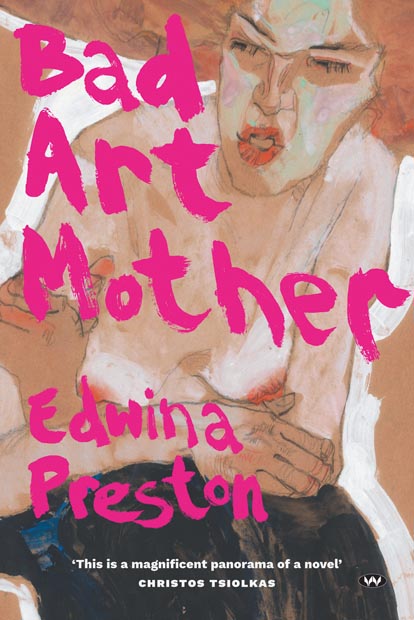
My reading group’s June book is Edwina Preston’s Bad art mother, which was published by Wakefield Press last year and which I’ll be reviewing soon. (If you don’t know it and are interested, you can check out Lisa’s review.) It was shortlisted this year for the Christina Stead Prize for Fiction (in the New South Wales Premier’s Literary Awards) and for the Stella Prize. Wakefield Press’s website describes it as being “set in the Melbourne milieu of Georges and Mirka Mora, Joy Hester, and John and Sunday Reed”. The same milieu, in fact, that inspired Emily Bitto’s The strays (my review) although that’s a very different book. However, I digress … because my little question for you today is not central to the book, just something that caught my attention. It comes from Owen talking to his aunt:

Why did you throw out everything when you sold the house in Coburg, Ornella? Was it because you knew all those things didn’t matter in the end, that without memories attached they were just junk shop rubbish? You put Nonna’s things out on the grass for the neighbours to pick through. You didn’t even keep a teapot, or a pair of earrings. You filled your place with glossy new things … But what are you now without all those things?

There’s a bit more, but the question Owen asks is one I’ve been confronting in my current big downsizing project – a project that is almost done, thank goodness. Still, it has been difficult, a wrench, to part with things that are part of the story of my life, things I haven’t used in decades but that, every time I see them, remind me of some person or event. They gave me joy, so Marie Kondo’s criterion just didn’t work!

However, to use a cliche, you can’t take them with you, and we don’t want to leave more of a headache to our kids than we have to, so decisions had to be made. And, they have been. I do expect some gnashing of teeth in the future, as well as some “I kept that!”, but overall I think we’ve done ok. My choices were not based on value, but on meaning, so out went some fine art porcelain and in stayed Mum’s funny little no-brand donkey that she kept with her through her many moves, for as long as I can remember. I never did ask her why – why didn’t I? – but I couldn’t let it go. And, of course, I kept her copy of Pride and prejudice.

I could go on, sharing all my little decisions, but will leave it there, and return to the opening question: what do our things mean to us, and does letting them go change who we are?

What do you think?

Monday musings on Australian literature: Trove treasures (9), Pro-novel reading, early 20th century

Last week, in my Trove Treasures series, I shared some ideas published in the 19th century arguing for reading novels. Now, I am sharing some from the first decades of the 20th century. The articles range from 1903 to 1928, with many, again, coming from London.

Diversion and instruction

Two papers – Brisbane’s The Telegraph (18 December) and Perth’s The Spectator (31 December) – reported in 1903 on the annual address given by Professor Dicey to the Working Men’s College in London. Dicey argued that the main benefit of novels was “to take a man out of himself — to afford some relief from the petty and tiresome thoughts of every-day life by substituting a world of larger and more varied interest”. (We must forgive him and the others below their gender specificity – I suppose.)

Interestingly, The Spectator says, and this seems to be its own reflection, that it’s not always “the highest class that serves this purpose best” and goes on to share a variety of novels from penny novelettes, like the Deadwood Dick novels, to Scott, Thackeray and Balzac. This idea of novels as valid – indeed useful – recreation is refreshing. The Spectator goes so far as to say that

That degree of mental absorption and excitement to be found in works of fiction, fine and trashy alike, and more often in the trashy ones, has become part and parcel of the home life.

But, this sort of reading must not be “indulged too far”. The Telegraph reports a month or so later (8 February) that Prof Dicey does comment on the issue of quality, making this recommendation:

take good care that you read novels of a good kind — each good of its kind. If you like a detective story take care you read a good detective story, and think about what you have read.

Dicey also believed – and here we are in more familiar territory – that novel reading provides “an introduction to life and thought”. This idea though, says The Spectator, is one few – including itself – “will be prepared to admit”. It fears that novels might teach readers what to expect in life but not how to meet it.

Moving to 1905, we have another Englishman’s point of view, this time Sir Richard Henn Collins*, Master of Rolls in England. The Armidale Express and New England General Advertiser (7 February) reports Sir Richard’s argument that much useful knowledge can be acquired through reading fiction. Indeed – are you listening Bill – he argued for the value of the historical novel, saying, “that he himself had won a scholarship mainly through having imbibed French history by reading Dumas’ famous Three Musketeers and other French novels of a similar class”. Even I think that might be going a bit too far – as does our newspaper. It argues that while this might be an appealing way of learning, the fact is that the public service and many professions require the passing of examinations. This means that the “the greater part of the schoolboy’s career must necessarily be occupied in the process of stuffing with dates, syntax rules, and other learned matter. The novel as an educator cannot, therefore, be recommended as an essential part of the ordinary public school curriculum”.

A year later, on 16 March 1906, The Hebrew Standard of Australasia, picks up the argument favouring the reading of novels. It suggests that “many people, especiallv men between twenty-five and forty-five, men in responsible positions, serious people engrossed by the details of a large business, consider novels simply as a kind of dross”, but this, it argues, is a “mistake”:

To read a good novel and read it with undivided attention is a means of instruction and education, which very few men below fifty can afford to entirely neglect. We have met not one, but many business men, excellent, successful and commanding our admiration in a very high degree, in whose manner of conducting business we have noticed defects, not to say faults, which most probably, would never have occurred if they had been in the habit of reading, now and then, a good novel, and had been able to extract from that reading the good which it can yield [my emph].

It then spends some time elaborating exactly what businessmen can learn from novels. It’s a thoughtful article, well worth reading.

Varying the diet

William Makepeace Thackeray, Vanity Fair

Support for novel reading continued in the 1920s, but I found some qualifications. For example, Leeton’s The Murrumbidgee Irrigator (20 March 1923), shares an argument put forward by Thackeray, half a century previously, “that all people with healthy literary tastes love novels” but “that overindulgence in them in youth spoils the taste for them in after-life, even as a schoolboy outgrows his love for pudding and jelly”. He goes on to discuss the truth of this in his era, particularly regarding those decadent modern novels which cannot hold his attention. Yet, speaking for himself and his fellow-sufferers, he admits that, regardless of having over-indulged in their youth, they can still “find a corrective in those romances which used to entrance us — ah! how many years ago”.

And in 1928, Brisbane’s Daily Standard (17 March) shared an argument from London’s Evening Standard that “the habitual novel-reader should sometimes vary his mental diet”. Indeed, the Evening Standard suggests that this is important given that the other works of literature, which preceded the novel and continue alongside it, “will no doubt be still vigorous when the novel has had its day”. Little did it know!

It then goes on to say something rather interesting:

There is no good novel which is not veiled autobiography, either from the emotional or from the intellectual standpoint; but a writer can under the protection of the veil, be franker than he could possibly be in a ‘Confession’ or ‘Apologia pro vita sus.’ There is perpetual complaint of the indecent novel; but in a sense all novels are indecent —that is, they reveal thoughts and feelings that the writer would never dream of exposing to a company of even close friends.

It says more, arguing that there is value in wide reading – hard and low-brow, fiction and nonfiction – but I’ll leave you with its closing remarks because they tickled me:

it is neither polite nor grateful to many excellent modern writers in non-fiction genres to talk as if ‘books’ were only another name for novels.

So there!

* Collins was the judge in the Wilde vs Queensberry libel case.

Monday musings on Australian literature: Trove treasures (8), Pro-novel reading, 19th century

Édouard Manet, The Reading (1865-1873), Manet’s son reading in the background. Public domain, via Wikimedia Commons.

Continuing my Trove Treasures series, I am turning this week to some of the discussions I found about the value of novel-reading. Three months ago, I shared some of the arguments made against novel-reading, but in fact, in the papers I found, there seemed to be more arguments pro such reading. So much so that I’m planning two posts – one on the mid-to-late 19th century, and the other on the beginning of the 20th century.

Today’s 19th century articles range from 1867 to 1899, and they traverse the topic from some interesting angles.

Prose vs Poetry

The earliest article was published in the Geelong Advertiser, on 7 May 1867, but appears to be from London’s Saturday Review. So, not Australian-written but published here. Several of the articles I’ll discuss comment on what reading novels can teach us, but this one did surprise me. It commences:

As every novel turns upon love and matrimony, the first effect of universal novel reading must necessarily be to familiarise the young imagination with the idea of both. 

What’s this assumption that “every” novel is about love and matrimony? Was this so at the time? Well, not “every”, because then our writer offers exceptions. Regardless, the writer recognises that novels aren’t the means by which people become aware of the “matrimonial adventures to come”. Fairy tales, for example, contribute to the construction of “masculine and feminine ideals”. What is “left” for novels to do is “to train and develop an instinct which is already in existence in the germ” but, says our writer, this knowledge must “ripen gently”. Indeed,

premature cultivation tends to every species of social mischief. Nobody ever yet knew a very sentimental boy, unless indeed he came under the exceptional category of a genius, arrive at much good; and though to pass the same general censure upon sentimental girls would be hard upon the sex; it may be believed that women who go through life most happily whose capacity for sentiment has flowered late.

The language is convoluted but I think you get the gist. Basically, the article claims that sentimentality stimulates imagination at the expense of observation:

Sentimental boys and girls seldom notice nature, keenly, and with the eye of a student or an inquirer. They get into a lazy habit of liking sunsets, and deriving a number of prematurely solemn impressions from them; but they have no healthy interest in butterflies, birds nests, and fossils.

The problem, according to the article, is that this sentimentality – that comes, remember, from understanding “matrimonial adventures” too quickly – results in high sensitivity to natural phenomena but limited understanding of how it all works. For these reasons, the writer does not greatly like poets – particularly Byron. Wordsworth is acceptable, because the writer believes his “sentimentality” is that “of a middle-aged genius, not of an overgrown and morbid boy”.

Was this a common view of romantic poetry? The article then describes the value of novel-reading:

a fairly good novel presents young minds with a better and more correct notion of the relations between men and women than they would be likely to form if left to their unassisted efforts. It does away with a good deal of unnecessary mystery in which young people are inclined to clothe the idea of love. Marriage is not what it appears to be in most romances, but it is more like the literary pictures than it is like the vague and hazy conception which emanates from the youthful brain. Fiction in prose is truer to nature than fiction in verse, and novelists may be trusted more than poets. 

Take that, poets! The reason, says our writer, is that “prose fiction is generally written by less morbid people”. The article then discusses the sorts of people who write novels. Its point is that novelists (aka “literary men”) mix in the world while poets live in the closet or within garden walls. Surely a generalisation! Anyhow, then he gives a recommendation – Mr Trollope. Our writer is concerned about

flirtation with married women becoming an unnecessarily frequent ingredient in his literary conversaziones; but life is life, and it is probably difficult to produce monthly humour without a little impropriety. On the whole, the bent of his pen is to sketch love and matrimony as healthy domestic pleasures, and not to depict them in the artificial colours in which diseased imaginations dress them.

Basically, Trollope is a good example of the “better class of novel writers” and is much better for the English youth than French romance! I’ll leave you with that thought and move to the 1890s …

A practical education

The two articles from the 1890s were published in Queensland’s Darling Downs Gazette (17 December 1890) and Sydney’s Sunday Times (26 February 1899). The first article quotes two British men on the value of novel reading. The first was Sir Edward Clarke QC MP, who, opening a “free library” in London, said that reading novels “was not a mischievous but a good thing”. “Good novels”, he believed, contain “elements of history” that are more valuable and easier for readers to digest than can be found in other books.

The other was the Scottish poet, biographer and translator, Sir Theodore Martin, who was presiding at the annual meeting of another free library, this one in Wales. That year, 2,492 novels had been read versus 811 of everything else combined. This disproportion was similar in other libraries, and Sir Theodore had some qualms. He didn’t criticise “reasonable indulgence in the delights of good novels and romances” because they widen our sympathies, and, he hoped, they inculcated a taste for reading which might lead readers to more demanding studies in areas like natural history, biography, poetry, and science. (He, clearly, saw poetry as having a higher value than prose fiction!) For Sir Theodore, reading fiction does not leave the lasting impression or give the satisfaction that other reading does.

The 1899 article was titled “The reading of novels and the morals of the public” and came from Women’s World, edited by Vivienne. Vivienne’s interest is in whether reading novels is “a judicious measure of education” and whether it should be encouraged. Her response? She failed to see that such reading caused “any great harm or moral wrong”. Indeed, she argued that novel reading provided “a kind of practical education”.

Novels illustrate the mechanism of the world at large, and show the various points of the machinery of life. They tell of every-day episodes; of the romance of days gone by; and, in fact, deal with life in all its forms, from the lowest to the highest grades of society, and from the earliest ages to present times. 

Sounds right to me, but the passing comment at the end did stop me: “of course, children should not be allowed to read novels, for obvious reasons”. 

So, there you have it … there were those who viewed novel reading positively, even where they had some reservations. This is a tiny sample, but you can see some progression from the idea mid-century that novels were primarily about marriage to the end of the century when they were seen to have broader relevance to understanding the world. I’ll be interested to see if things change in the next few decades …

Monday musings on Australian literature: Trove treasures (7), What police read

Number 7 in my Trove Treasures series was inspired by a little piece that appeared in Sydney’s Daily Telegraph on 6 December 1946. It was titled, “Men join police force after reading novels”. Naturally, I was intrigued. What novels, for example?

The story’s subject was one Constable J. Simons who had just resigned the police force, after having served for 17 years. He was speaking at a Police Association meeting and he said, to quote the Telegraph, that “most men joined the police force for adventure after reading detective stories”. (The rest of the piece was about why he is was resigning, which related to pay and and conditions, particularly regarding slow promotion due to the system operating at the time.)

It made sense that detective reading might inspire young men to look to the police as a career, but I wanted to find out more. Unfortunately, this proved quite difficult because it was hard to find specific search terms to get what I was looking for. As it turned out, in the time I gave to it, I didn’t find much, but what I did find was illuminating.

What I found were articles about what policemen (as they were mostly then) read – rather than about what caused them to join the police force. One article came from New York in 1914, and another two came from Queensland in the 1930s. All indicated that policemen did not read detective stories. Neither talked about what might have inspired them into the force, but both stated very clearly what they read once in the force.

New York New York

The 1914 article appeared in Sydney’s The Sun on 4 August. It commences with:

Whatever the world at large may think of detective stories, they do not win the esteem of those whose business it is to follow up crime. The police care least of all for this line of literature — a fact discovered by reports of books most favored among those consigned by the New York Public Library for use at the police stations. 

This story, then, is about the NYPL’s providing books to police stations for police reading. The article implied that what the police read might be affected by the sorts of books selected! They’d be, the article said, “standard and classic books” chosen by the library authorities “as to what they ought to read, that being an inclination of librarians everywhere”. (Oh dear, but I think this sort of high-minded prescription was more the case then, than in modern libraries!) Nonetheless, the article does explicitly discuss detective stories:

According to report, these particular readers find little of interest and nothing of profit in the ‘detective stories’ which have such a wide sale with the ununiformed public. The policemen say that ‘real’ detective work is not done after the fashion of the sagacious heroes of Conan Doyle and his predecessors, and therefore they scorn romantic crime-hunting. This condemnation involves the assumption that the methods of ‘practical’ men cannot be bettered — an assumption wildly fallacious, but entirely natural. The police antagonism to detective novels may be due in some part to the fact that in almost every such book it is the scientific amateur who works all the miracles, while the ‘headquarters man’ is usually a comic character who laboriously follows a false clue while the other fellow gets the results.

The article goes on to defend the writers of these books, suggesting that errors in detective work “may be intentionally made by an author for the sake of attaining some higher end of emphasis or excitement”. Indeed, says the article, “all the great advances in the task of crime-detection have been made, not by policemen, but by scientists”. Lest, however, we feel that the police were being unfairly targeted, the article continues that this is true of many professions and trades, so ‘that “the force” need not be humiliated by it”. Still, the article ends with a little sting in the tail for the poor copper, which I’ll leave for you to read.

Caring for police in Queensland

We then skip a couple of decades to Queensland and the creation of a library in that state’s Police Welfare Club. I found two articles on this initiative. One appeared in Brisbane’s The Courier Mail (24 November 1937), titled “Policemen’s reading: Logic, forensic ballistics: Why thrillers are unpopular”, and the other, nearly two years later, in that city’s The Telegraph (19 June 1939), titled “Our policemen study the classics”.

The 1937 article commences with

Few of Queensland’s detectives read detective stories. They find the novelists’ supermen unreal to the point of irritation.

The article quotes the C.I.B. man who showed the writer around the Club’s “fine new library” as saying that “We don’t detect that way”. This new library, the article claims, indicates “the higher education of the modern policeman”.

Both articles describe the broad content of the library, but it’s the second one that provides more detail about its genesis, noting something that harked back to that first article I found. It says that “a policeman’s pay does not ordinarily permit him to possess as his very own a library of any consequence”. Our detective novel reading Constable from 1946 would probably agree! Anyhow, the article’s writer, a “special correspondent”, explains that Queensland’s Commissioner of Police (Mr. C. J. Carroll), who had been appointed in 1934, had immediately set about creating a club “to give his men better facilities for recreation, educational advancement, and departmental advancement”. In 1936, after fundraising had got the club going, he turned to creating a communal library for the police and their families, in Brisbane and state-wide via mail.

Both articles write about the breadth of the collection, and engage in discussion about was being read, which ranged widely from poetry and the classics to political satire and books reconstructing real crimes and trials.

Towards the end of the second article, the writer asks the wife of a detective:

“Does he go in for detective stories?” 
“No, he reads to relax” she replied. Adventure stories—the lighter the better—were first favourite with him for recreational reading. 

The earlier article says that “Wild West books are the most popular in the relaxation class of reading”, so maybe this is what her husband was reading!

Much of the second article is anecdotal so it’s impossible to say just what “real” impact the library had on the state’s policing, but I’d like to think that our “special correspondent”, who concludes by quoting Arnold Bennet on the value of reading, is right when s/he says that

… with the aid of their library the men in the police force are developing greater understanding of mankind; consequently they must surely become better policemen.

Monday musings on Australian literature: Reconciliation Day musings

Since 2018 in the Australian Capital Territory, the first Monday after (or on) 27 May (the anniversary of the 1967 referendum) is a public holiday called Reconciliation Day. It is part of Reconciliation Week which, says Wikipedia, aims “to celebrate Indigenous history and culture in Australia and foster reconciliation discussion and activities”. Because Mr Gums and I have reached crunch time in our downsizing project, we did not engage in any of the focused activities around town. However, quite coincidentally, my decluttering task today included the books that set me off down my own reconciliation path, not that we called it that then. So, I thought to share them with you – and some of my own journey, from the keen but naive teenager to the better-educated person I hope I am today.

It all started at high school in Sydney, although there were beginnings in my early high school years in the outback town of Mt Isa. In Sydney, though, it was two women – the school librarian, Miss (Ellen) Reeve, and my modern history teacher, Mrs (Mary) Reynolds – who encouraged my interest in civil rights and to whom I am eternally grateful. When I was 15, I wrote my first piece on the need for fair treatment of “Australian Aborigines”* – for the school magazine. I intended well, but looking at it now I can see that it was naive and simplistic.

The books I read in those days included:

  • Brian Hodge and Allen Whitehurst, Nation and people: An introduction to Australia in a changing world, 1967: its progress-focused tone was typical of the times. It did recognise, albeit in passing, “the first black owners of our continent” but it also conveyed that lie that they didn’t offer much opposition. It briefly discussed paternalism, assimilation, and integration, which, it says, “most thoughtful people are now favouring”.
  • Douglas Lockwood, I, the Aboriginal (1960 Bill’s post) and We, the Aborigines (1963, my ed. 1970): written by a white man in the voice of his Aboriginal subjects, these were some of my first introductions to Indigenous lives – at least outback ones. Such an approach is politically incorrect now but, in its favour, the table of contents lists every person by name and “tribe”.

Then we move to my university years, and although my major was English literature, I also studied some anthropology. This included traditional ethnographic studies, using AP Elkin’s classic The Australian Aborigines (with its uncomfortable subtitle, How to understand them), but also involved more political reading, like CD Rowley’s The destruction of Aboriginal society (1970). It was my first serious literary introduction to the truths we are still learning now. Here is what the back cover of my 1972 Pelican edition says:

The destruction of Aboriginal society is a powerful and detailed study of the history and tragedy of the interaction between black and white Australians. Most white Australians today are unaware of the part the Aboriginal played in the history of settlement. Even if he only stood to be shot, he influenced profoundly the kind of man who made a successful settler.

The Aboriginal has been “written out” of Australian history; the tragic significance of conflicts have long been bowdlerised and forgotten. Yet, even if vicariously, our guilt remains, as does our responsibility. Aboriginal attitudes take on a new dimension in the light of history, and no policies should be formulated except in that light. This is a book to stir the sleeping white Australian conscience.

That was over 50 years ago! What have we been doing? Anyhow, it’s the book that informed my understanding, by which I mean it kickstarted my thinking from simple ideas about fairness and equality to comprehending the sociological complexity. It is also the book that, in 1982, the academic Peter Biskup said had begun, twelve years previously, “the process of rewriting the history of contact of Australian Aboriginals”.

These writers were all white, however. The first work I read by a First Nations writer would have to be, as it was for many of my generation, Sally Morgan’s My place (1987). Sally Morgan conveyed the fear and shame that attended being Indigenous in modern Australia, how this caused her family members to try to hide their heritage if at all possible, and the devastating intergenerational (though we didn’t use that term then) impact this can have.

Since then, and particularly since 2000, my reading of First Nations writers has increased dramatically, much of it documented on this blog, so I’m not going to repeat all that now.

My main point is, really, how horrifyingly slow all this is. We have had, among other things, the 1967 Referendum; Mabo and Wik, and the related Native Title legislations in the 1990s; the Royal Commission into Aboriginal Deaths in Custody tabled in 1991; the Bringing Them Home report tabled in 1997; the National Apology in 2008; and most recently, the Uluru Statement from the Heart in 2017. Having come of age in the 1960s with all its idealistic fervour, I would never have believed that here I would be in the 2020s with so little real progress having been achieved, with relationships fraught and a referendum on constitutional recognition struggling to gain forward momentum.

But, it’s not about me, so I will share the theme of this year’s National Reconciliation Week, which is, appropraitely,

Be a Voice for Generations.

The theme  encourages all Australians to be a voice for reconciliation in tangible ways in our everyday lives – where we livework and socialise.

For the work of generations past, and the benefit of generations future, act today for a more just, equitable and reconciled country for all.

And will leave you with CD Rowley’s conclusion. The words are of his time but the meaning is still valid, wouldn’t you say?

The future status and role of the Aboriginal will be a significant indicator of the kind of society which eventually takes shape in Australia.

* Nomenclature has changed over time, but in this article I have used different terms as appropriate to the subject and time.

Monday musings on Australian literature: Best Young Australian Novelists (5)

Okay, so last week I said that post would be the end of the current little run of awards posts – but then I saw the announcement of this year’s Best Young Australian Novelists award, and decided we could cope with just one more. I really will try to offer something new (or, do I mean old – time will tell) next week.

This award, as I have explained before, was established in 1997 by The Sydney Morning Herald‘s then literary editor, Susan Wyndham. This year is, thus, its 27th. It’s an emerging writers’ award, open to “writers aged 35 and younger” at the time their book (novel or short story collection) is published. They don’t have to be debuts, though they often are. Last year’s winner was Diana Reid’s Love and virtue, with Ella Baxter’s New animal and Michael Burrows’ Where the line breaks being runners-up.

This year we seem to have three equal winners, with each receiving $5,000:

  • Katerina Gibson’s Women I know (debut short story collection)
  • George Haddad’s Losing face (second novel, just longlisted for this year’s Miles Franklin award)
  • Jay Carmichael’s Marlo (second novel) (Lisa’s review)

The judging panel comprised the Sydney Morning Herald’s Spectrum editor, Melanie Kembrey (who also judged last year’s award), plus writers Bram Presser (whose The book of dirt won several prizes including the Christina Stead Prize for Fiction) and Fiona Kelly McGregor (whose Iris was longlisted for this year’s Miles Franklin award). The prize money comes from the Copyright Agency Cultural Fund.

The Herald‘s Melanie Kembrey, writing in the emailed newsletter I receive, said of the winners:

If these books haven’t already found a place on your reading list, they should. Gibson’s short story collection − clever, hilarious and inventive − will have you returning for rereads. Carmichael’s Marlo, the story of a love affair between two men in conservative 1950s Melbourne, will heal and break your heart in equal measure. It’s a slight novel that packs a big punch. Haddad’s Losing Face is alive with the sights and sounds of western Sydney, and deftly tackles the subjects of masculinity, misogyny and sexual violence

The winners, briefly

Most of the information below comes from the announcement in The Sydney Morning Herald (and, presumably, The Age).

Katerina Gibson

Women I know is a debut collection of short stories from an author whose work has appeared in such well-established literary journals as Granta, Kill your darlings, and Overland. She was also the Pacific regional winner of the 2021 Commonwealth Short Story Prize.

The SMH reported that the judges described this collection as showing “astonishing skill with the form – moving easily from actual to fantastical worlds, from sharp, straightforward prose to concrete poetry.”

Gibson herself is reported as saying that she loves the short story form, that “there’s something you can do with a short story that isn’t possible in longer writing. You can take more stylistic risks or try bolder concepts”.

George Haddad

Haddad’s first novel was, in fact, the novella, Populate and perish, which won the 2016 Viva La Novella competition. According to Star Observer, his second novel, Losing face, grew out of his doctoral studies at Western Sydney University “where he was researching the representation of masculinity in contemporary Australian literature, looking to authors like Christos Tsiolkas and Peter Polites for inspiration”. 

The SMH reported Haddad as saying that “It was really important for me to contribute to the conversation and to snapshot characters and situations that reflected contemporary Australian society as accurately as I knew it. The novel was always in me, but it was particularly sparked by my doctoral research on the intersection of masculinities, shame and suburbia.”

Jay Carmichael

Carmichael’s second novel, Marlo, follows his first novel Ironbark. It was about a young gay man coming of age in a small country town, and was, says The Guardian, “so deftly written it made Christos Tsiolkas jealous”. Lisa, in her review of Marlo linked above, writes that it “reveals the hostile environment of 1950s Melbourne for a young man discovering his sexuality when the laws of the land denied him the right to be.  It’s a very powerful, moving novella, tracing the coming-of-age of Christopher, a young gay man escaping the constrictions of the small Gippsland town of Marlo”. 

According to the SMH, Marlo is “a perfectly crafted story” and quotes the judges as saying that it “makes history immediate, every page pulsing with heart and sensuality”.

Have you read any of these books?

Miles Franklin Award 2023 longlist

I haven’t posted a Miles Franklin longlist for a while, but when I saw today’s come through with its intriguing mix of titles, I decided it was time to do one again.

The longlist

  • Kgshak Akec, Hopeless kingdom (UWAP)
  • Robbie Arnott, Limberlost (Text) (my review)
  • Jessica Au, Cold enough for snow (Giramondo) (my review)
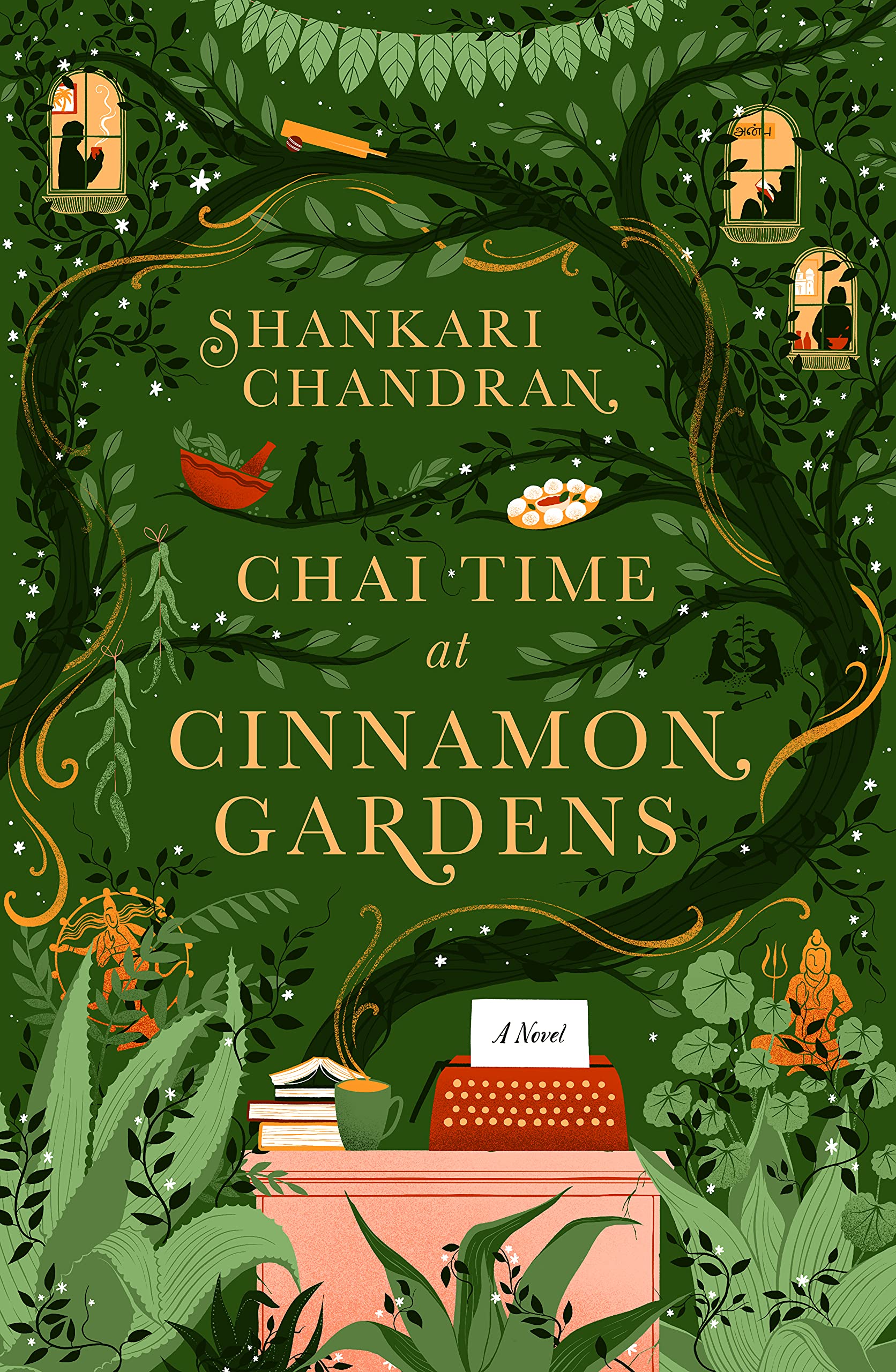
  • Shankari Chandran, Chai time at Cinnamon Gardens (Ultimo Press) (Brona’s review)
  • Claire G Coleman, Enclave (Hachette) (Bill’s review, on my TBR)
  • George Haddad, Losing face (UQP)
  • Pirooz Jafari, Forty nights (Ultimo Press)
  • Julie Janson, Madukka: The river serpent (UWAP)
  • Yumna Kassab, The lovers (Ultimo Press)
  • Fiona Kelly McGregor, Iris (Pan Macmillan Australia) (Lisa’s review; kimbofo’s review)
  • Adam Ouston, Waypoints (Puncher & Wattmann) (Lisa’s review)

Some random observations:

  • There is impressive diversity in the writers listed as I recollect there was last year, including seven of the eleven being by women, and two being by First Nations writers.
  • Independent publishers are well represented, which is also becomings more common in recent prize listings
  • Only a small number of these have been reviewed by my usual list of litblogger suspects, which makes me wonder about our reading choices versus those being chosen for these awards lists.
  • Most of the novels are by authors with at least one book under their belt but Hopeless kingdom is a debut novel by a Sudanese-Australian author. Like many debut novels it is inspired by her own experience of migration from Africa to Australia. It won the Dorothy Hewett Award for unpublished manuscript in 2021. 
  • There’s been little commentary today on the news sites, but hopefully this is because the announcement is less than a day old – or, maybe longlists just don’t garner the same interest as shortlists?

The judging panel

The 2023 judges are, from the announcement on the Perpetual Trustees website, Richard Neville, Mitchell Librarian of the State Library of NSW and Chair; author and literary critic, Dr Bernadette Brennan; literary scholar and translator, Dr Mridula Nath Chakraborty; book critic, Dr James Ley; and author and editor, Dr Elfie Shiosaki. This is, I believe, the same panel as last year’s, but Chakraborty and Shiosaki were new last year so there is some commitment to refreshing the panel. I don’t think it hurts for there to be some stability in panels, but a managed turnover is also important. (Says she!)

From this website too is a statement from the judging panel:

The 2023 longlist is a reflection of the breadth and depth of contemporary Australian story-telling. The eleven longlisted novels define Australian literature as a transformative space where writers are singing the songs of the nation today. They reverberate with the cadences of this land where Indigenous sovereignty was never ceded, but also bring to us mellifluous sounds from far-away lands, weaving together literary traditions from around the world. The words of our novelists, grounded in personal experience, poetry and philosophy, are heralds of the new dawn of Australian fiction: they hum and hiss with language that is newly potent and styles that are imaginative and fresh.

The shortlist will be announced on 20 June, and the winner on 25 July.

Thoughts?

Monday musings on Australian literature: Hilary McPhee Award

I’m on a roll! That is, this week’s Monday Musings is another post on a lesser known literary prize. I’ll probably stop here for a while, but I came across this one in my notes, and thought, why not? The award is the Hilary McPhee Award (obviously, given the post title!) and is managed by the University of Melbourne. It is relatively new, having been established in 2016, and no, it is not due to a bequest. Hilary McPhee is still – I’m pleased to say – alive.

McPhee is probably known to most Australian readers, but may not be so well known further afield. I did write about her some years ago. However, I will recap now. Hilary McPhee is one of Australia’s literary giants. She, with the late Diana Gribble, founded in 1975 a small independent publishing company called McPhee Gribble. They filled a major gap in Australian publishing at the time by bringing us new Australian authors like Tim WintonHelen Garner and Murray Bail. I have reviewed these writers here because they have all gone on to be giants themselves. McPhee Gribble also commissioned Carmel Bird to write a guide for aspiring writers, which resulted in the well-regarded (and highly readable), Dear Writer (1988). It’s so well regarded in fact that a revised edition was published in 2013 as an eBook titled Dear Writer Revisited. McPhee Gribble survived for 14 years before being sold in 1989 to Penguin. (Soon after, Diana Gribble established Text Publishing.) McPhee documented the history of their publishing adventure in a memoir, Other people’s words (which I read before blogging). It’s a great read – still.

Anyhow, back to the award, which is formally described on the University of Melbourne’s website. It is funded by a donation of $90,000 from Hilary McPhee’s brother, Peter McPhee, a Professor Emeritus of the University of Melbourne. It is for

writers making contributions to the Melbourne University Publishing Limited (MUP) publication, the Meanjin Journal or any replacement or successor publication to that journal.

The actual process, as described by the University in its documentation, is that Melbourne University Press (MUP) will “provide a shortlist of candidates for the Award, from which the Dean of the Faculty [of Arts] (or nominee) will select the recipient in consultation with the Chief Executive Officer of MUP”.

So, what exactly is the contribution being awarded? Well, it seems to be an essay – published in Meanjin, which is one of Australia’s oldest literary magazines. In 2022, the prize was worth $3,500, so not a huge prize but surely a decent feather in the cap. (Australia’s “premier” essay-writing prize is, probably, the Calibre Prize, which currently nets its winner around $7.500.) Announcing the winner of the 2022 award, the Queensland University of Technology’s Centre for Justice blog was more specific about the award criteria, saying that the award “recognises brave essay writing that makes a fearless contribution to the national debate. Eligible essays are shortlisted from those published in Meanjin each calendar year”.

I have not, unfortunately, been able to find a list of the winners. My search engine found next to nothing, it’s too recent for Trove, and Meanjin does not seem to have a page devoted to the prize, which is a shame. Here is all I’ve been able to find …

McQuire’s essay commences with a quote from Audre Lorde, and then this:

We do not know how many Aboriginal women have gone ‘missing’ in this country. The archives are filled with the ‘missing’: the Aboriginal women who are no longer here to speak; the Aboriginal women who do not have names; the Aboriginal women who do not have graves or places where their families can remember them. There is a comfort that comes with the word ‘missing’, because to be ‘missing’ implies that perhaps they have left on their own accord; that there are no perpetrators or violence enacted against them. As Canadian First Nations lawyer and activist Pam Palmater says, the term ‘missing’ is a misnomer: ‘It seems to imply that these women or girls are just lost or ran away for a few days.’ ‘Missing’ also comes with the assumption that the case is still active. When the police speak of ‘missing persons’, there is an implication that the police are still searching for them, and that they will never tire in their search until those who are ‘missing’ are found or come back. Because they are still ‘missing’, the police do not see themselves as responsible for failing to find them; but instead, see the women themselves as ‘responsible’ for going missing in the first place. There is a term specific to this place, in that women are accused of going ‘walkabout’, which serves to naturalise their disappearances as innate to Aboriginal culture, and not a distinctly settler-colonial phenomenon.

It’s a strong and necessary read…

I’d love to know if you know anything about this prize and its winners.

Monday musings on Australian literature: Melbourne Prize for Literature

Having posted on a literary prize last week – the ACT Book of the Year Award – I decided that I may as well do another one, and give us a break from my recent run of historically-focused Monday Musings posts. This week’s award is another geographically limited one, the Melbourne Prize for Literature.

This award is comparatively new, having been first offered in 2006, and it is, unusually, a triennial award. This is because it is one part of the Melbourne Prize which is awarded, as Wikipedia puts it, “on a rolling three-year basis for Urban Sculpture, Literature and Music, in that order”. It is managed by the Melbourne Prize Trust, which was founded by someone called Simon Warrender in 2005. I did not know who Simon Warrender was, and Wikipedia did not provide a link on his name. However, he is, in fact, in Wikipedia (so there is now a link to him on the Prize’s page!) The English-born Simon Warrender was “a Royal Navy officer and businessman” who migrated to Australia after the war and married into the well-to-do and philanthropic Myer Family.

The Prizes are funded by a range of donors from government, cultural and philanthropic organisations – like the City of Melbourne, The Robert Salzer Foundation, Hardie Grant Books and Readings Bookshop – to the general public.

As Wikipedia’s description of the prize’s order implies, the first prize was for Urban Sculpture. That was in 2005, so the first Melbourne Prize for Literature was awarded in 2006. The Literature Prize is made to “a Victorian published author whose body of published work has made an outstanding contribution to Australian literature and to cultural and intellectual life”. In other words, it is one of those “body of work”/contribution to literature types of award. It can, says the Prize website, “include all genres, for example, fiction, non-fiction, essays, plays, screenplays and poetry”, and they take this seriously as you will see from the winners below. It is a valuable prize, currently netting the winner AUD60,000.

Gerald Murnane, The Plains, bookcover

The winners to date are:

  • 2006 Helen Garner: novelist, short-story writer, screen-writer, non-fiction writer, essayist
  • 2009 Gerald Murnane: novelist, memoirist, short story writer, poet
  • 2012 Alex Miller: novelist, short story writer, essayist, playwright
  • 2015 Chris Wallace-Crabbe: poet
  • 2018 Alison Lester: author and illustrator of, mostly, children’s book
  • 2021 Christos Tsiolkas: novelist, playwright, screenwriter

Links are to my posts on the writer. As you can see I have written about all of them, at least once, except for the poet (though he has had several mentions in passing! I guess that’s better than nothing.)

But wait, there’s more, because other awards are made alongside the main Prize for Literature. One is the Best Writing Award which is for (or was initially) “a piece of published or produced work in any genre by a Victorian writer 40 years and under, which is an outstanding example of clarity, originality and creativity”. By 2018, they seem to have dropped the age criterion. The winners to date are:

Maria Tumarkin, Axiomatic

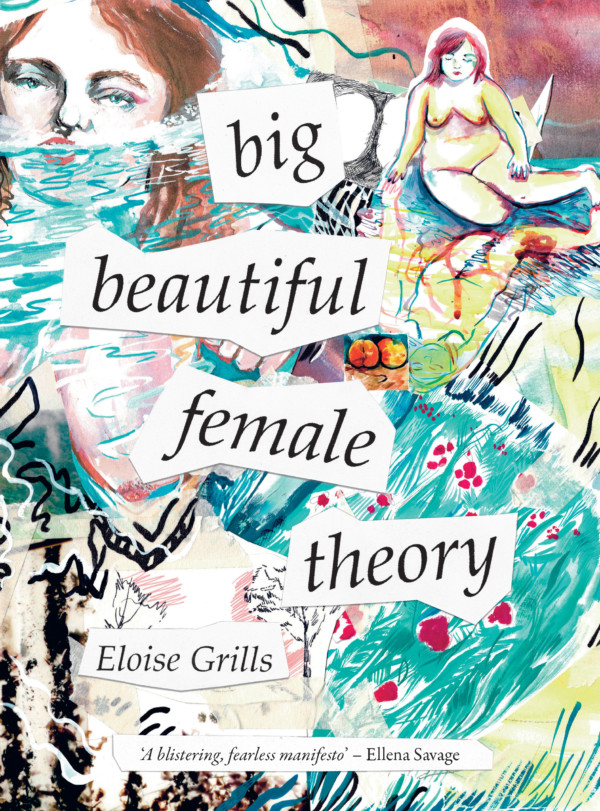
In 2021, this prize was not offered, but they presented The Writers Prize. It went to Eloise Victoria Grills. According to the website the prize was for “an essay (10,000 words maximum) of outstanding originality, literary merit and creative freshness”. (I should add that this Prize had also been presented in 2015, in addition to The Best Writing Award, and was won by Kate Ryan.) What will happen in 2024?

The other main prize in the suite is the Civic Choice Award. It is voted for by the public from the finalists for the main award/s. Most recently this has been done via an online form available on the Prize website. The winners to date are:

  • 2006 Henry von Doussa for The park bench
  • 2009 Amra Pajalic for The good daughter
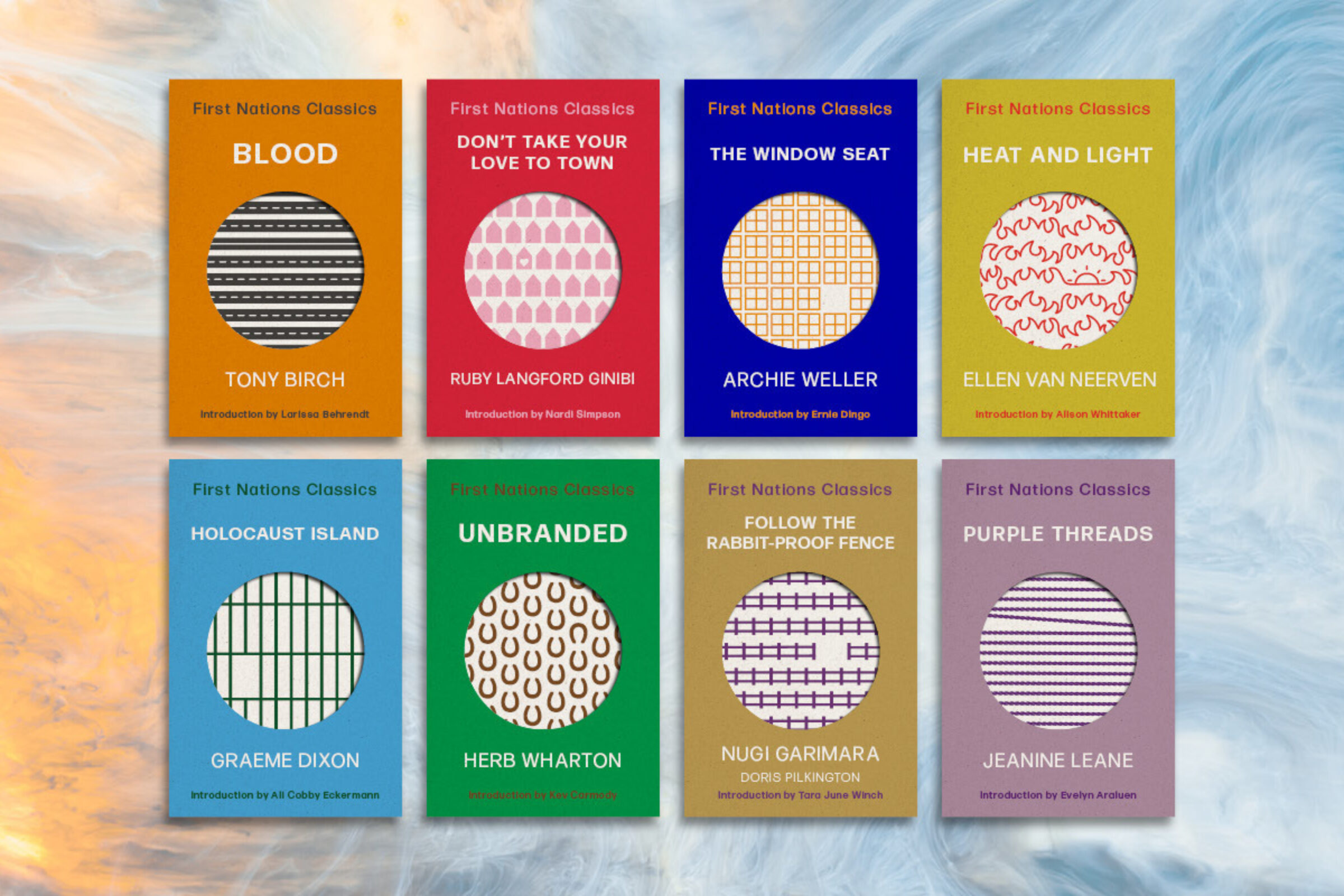
  • 2012 Tony Birch for Blood (Lisa’s review)
  • 2015 Robyn Annear for her essay “Places without mercy”
  • 2018 Louise Milligan for Cardinal
  • 2021 Maxine Beneba Clarke

Over the years there have been other awards, or combinations, or slight changes, like a Residency Award. But, you can see it all at the Prize website which I linked to above.

The Melbourne Prize for Literature – indeed the Melbourne Prize as a whole – is an impressive suite of awards that supports the arts by offering decent prize money and recognises the state’s serious practitioners of their art.