Monday musings on Australian literature: Your 7-year-old self

Emma Ayres, Cadence

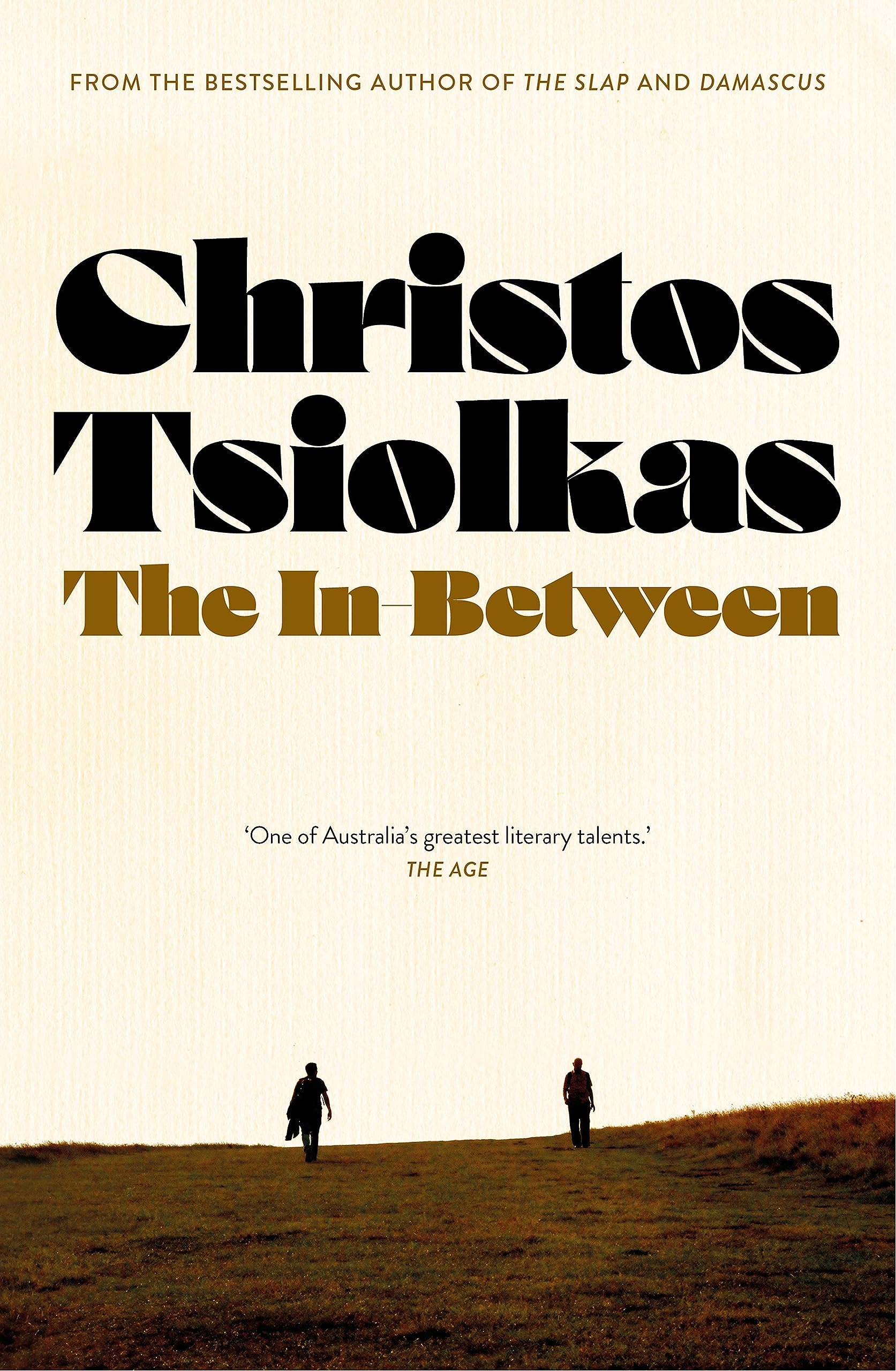
Ok, I admit it. This post’s link to Australian literature is tenuous, but there is a link, even though it’s not the subject of this post. The link is that the person who inspired this post, Ed Le Brocq, previously known as Emma Ayres, has written several books – memoirs, mostly – of which I’ve read and posted on one, Cadence. Since then, as Eddie/Ed Ayres and Ed Le Brocq (married name), he has published Danger music, Whole notes and Sound bites. None of these, however, have much to do with this post, though they all interest me.

Ed Le Brocq became known to many of us – starting back when he was Emma – as a radio announcer on our ABC Classic FM. She was hugely popular. Since then, she left radio, travelled some more, transitioned to Ed, and in 2019 returned to ABC Classic FM, doing the Weekend Breakfast show. I often listen in. This last weekend, he told a little story and asked us a question – and I thought, for a change of pace, that I would ask it of you too.

The story goes this way – but needs a little explanation first. As well as radio announcing, Ed Le Brocq performs music, and teaches it – the viola and cello. The story concerns a lesson he was conducting recently from his garage because his usual venue in a school wasn’t available. A mother walked by with her 7-year-old son and apparently the son was attracted to the music. He came into the garage, and asked, “What’s that you’re playing?” and, on being given the answer, said, “I want to play that too”. He will start lessons next year – on one of those two stringed instruments.

Ed was fascinated by the child’s recognition of something that he really wanted to do, and asked the radio audience whether they knew around that age what they wanted to do – and whether they’d done it. So:

Did you realise when you were around 7 years old (give or take a couple of years) what your interest or passion was, and is that what you ended up doing in some way or another?

It seems I did. When I was around 5, my father was President of the local Apex group (a service organisation roughly like Lions and Rotary). I was fascinated by his papers, and am reported as saying, “When you die, can I have your Apex stuff?” Jump a few years to when I was around 11, and I remember myself creating a little neighbourhood library, complete with Date Due notations in the back of my books. Around the age of 14, I encouraged my sister to help me write an encyclopaedia, starting with one article per letter (though we didn’t get far because adolescence hit!)

Is it any wonder that I ended up being a librarian-archivist – and that it was a career I loved?

Now, over to you …

Finlay Lloyd 20/40 Publishing Prize 2023 Winning Books Launch with Conversation

I have written about Finlay Lloyd’s 20/40 Publishing Prize a few times now, so I hope I’m not imposing too much on your precious time. However, this weekend was the launch here in Canberra, and it involved a conversation led by a favourite Canberra journalist, Virginia Hausseger, with the two winning authors. I had to go.

The participants

Rebecca Burton and Kim Kelly are the two winners, and I’ve introduced them before, so just to recap, Burton is an editor and author of two young adult novels, while Kelly is also an editor and the author of twelve adult historical fiction novels.

Virginia Hausseger is, to use Wikipedia’s description, an “Australian journalist, academic advocate for gender equity, media commentator and television presenter”. She is well-known to Canberra audiences, having been our local ABC news presenter from 2001 to 2016.

Julian Davies did the introductions. He is the inspiring publisher and editor behind Finlay Lloyd, a company he runs with great heart and grace (or so it seems to me from the outside.)

The conversation

Before the conversation started proper, Julian provided some background to the prize. Human nature, he said, seems drawn to large things. Why else would we have things like the Big Potato! What is it about large things? He sees it related to the “tussle between quality and quantity” and thinks there’s something problematic in our tendency to admire the grand and overlook the miniature. (Yes!) He believes restrictions can liberate writers, and sees the novella form as perfect for this. It can encourage succinctness while allowing room for development. I don’t expect he had any argument about that in the room.

He reminded us that it was judged blind (by two old men and three young women). That it was won by published writers shows that those who have developed their craft are likely to shine through.

Then, Virginia took over …

On their novellas

Kim described her novella with beautiful succinctness saying it was set in 1922 Sydney in the wake of World War 1, just as the city was starting to wake up. It’s about grief, and about how recognising pain in the other leads to the young women rescuing each other. She added a little later that many novels have been written about the War, but not so many about after it, and even fewer about young women’s experience of that time.

She has written three novellas, and “kind of” knows at the beginning which form the story will be. The impetus for this one was wanting to impress a potential PhD supervisor. While researching Trove she saw the ad for the Room (which she included as an epigraph.) Virginia remarked that the closing pages set up a whole new story.

Rebecca said that hers was about two teenage sisters over six weeks of summer in 1986. The old sister, who is anorexic, has been admitted to hospital for bed-rest, and the younger sister visits her daily. It’s about what the sisters learn about each other, and the impact of this condition on the family.

She said that she hadn’t set out to write a novella, but she is comfortable with a word length which is shorter than the standard novel. Then she saw the prize! Writing adult fiction is a new genre for her, but she had stopped reading YA fiction and adores literary fiction. A friend suggested that she write what she reads. Sounds good advice to me.

On Ladies Rest and Writing Room

Kim explained that rest and writing rooms “were a thing” in the late 19th and early 20th centuries, for men and women. What is special about hers is that it was in a department store, and how it was advertised.

Dotty’s grief comes out in shopping addiction and behaving as though she had a death wish. She is so tied up in herself that she doesn’t notice her old schoolmate Clarinda. The book is built around the moment of recognition, that is, when Dotty “sees” Clarinda.

When Virginia commented on how well the “story gallops along” while still being “tight, descriptive, elegant”, Kim said that was the “magic of editorial process”. Also, she said, she knows that Sydney well.

On Ravenous girls

Answering where her story came from, Rebecca said that it was a story she had to write. Frankie had been with her for a long time, and a story about her childhood kept coming to her. The trickiness was not so much the 1986 summer story, but managing the way the time telescopes at the end. She wanted to nod at the years that go by after someone comes out of hospital.

When Virginia commented on how well she’d handled the scene of another girl post-hospital, providing an alternative glimpse of how it goes, Rebecca said she wanted to tell other stories because every story is different.

Young Frankie loves her sister, but is bewildered. An enlightening moment for her is when she realises that sister Justine is the only one allowed to suffer, that her own pain is not seen. She realises that the story she’s been told is not right. Hers is a story of loss, grief, sadness. She’s left to her own resources, and because her older sister is sick, she’s left with no role model.

As for Justine, she uses hunger to mute her desires. Rebecca said that her working title was Yearn, and quoted that great line from the novella, “I don’t want to want the things I want”. Justine feels shame for wanting things, and so starves herself for wanting them.

On the physical process of writing

Kim throws her whole self into a new project, trying to get it all down before she loses her emotional or imaginative connection. Then she goes away, coming back some time later to a “full tub of play dough” that she can then mould. She is able to quarantine the time to work this way because as a freelancer she can manage her time. She loves to be free to fly through the story.

Rebecca has a very different more measured process. She works part-time to a set roster, so has a “chipping away” process. Since her new job, she has created a ritual involving getting up an hour earlier than usual, making a cup of tea and writing for an hour. This helps her manage the peaks and troughs that happen with writing. If things go badly she can get up and go away, leaving it for the next time, and if they go well, she can get up feeling good! It’s important for her not to get obsessed with writing.

On the editing process

Rebecca said for her it went structural edit, then copy edit, then the final proofread. The delight of working with small publisher was that time was allowed for growth.

Kim seconded Rebecca’s comment about the delight of working with Julian, who “cares about words and ideas”. In her worklife as commercial fiction editor, time is of the essence, so she luxuriated in the “nurturing” experience of working with Julian.

On what’s next

Kim’s next project is her PhD, which will include a story about an ancestral grandfather who intersects with Dickens. It’s an idea she has had for a long time, but she will need to try Rebecca’s “chipping away” approach for this!

Rebecca has these characters in head, and wants to see these young girls into adulthood. This could mean three related novellas, the next set in 1993 with Justine in recovery and in her first relationship. She wants to explore recovery because some never move beyond “functional recovery”. The third book she’d like to be about Frankie in her 30s or 40s to see how things have worked out for her. Some of these futures are hinted at in Ravenous girls.

Virginia was an excellent, well-prepared and enthusiastic interviewer. She knew the books well and showed genuine interest in them and their authors.

There was no Q&A which suited me, as I had to rush off to get to my monthly Jane Austen meeting where we were to discuss the up-and-comers in Austen’s novels. However, I did have a very brief chat, as I was leaving, with the other “old man” judge, John Clanchy whose writing I love and who had commented on my recent novella post. He talked about his interest in the form and the choices writers need to make when working within it, such as which characters or stories to develop and which to leave by the wayside.

The Finlay Lloyd 20/40 Publishing Prize Winning Books of 2023 Launch
Harry Hartog Booksellers, Kambri Centre, ANU
Saturday, 18 November, 12.30-1.30pm

Kim Kelly, Ladies’ Rest and Writing Room (#BookReview)

Early in the month I reviewed the first of the two winners of Finlay Lloyd’s inaugural 20/40 Publishing Prize, Rebecca Burton’s Ravenous girls (my review). It was set in Sydney in the 1980s. Now, as promised, I bring you the other winner, Kim Kelly’s Ladies’ Rest and Writing Room. It is also set in Sydney, but in the early 1920s. Some of you will know Kim Kelly, as she has published around 12 novels, mostly historical fiction. Not only that but she was longlisted for the ARA Historical Novel Prize 2022 and shortlisted for the Viva La Novella 2021 prize with her novella, The rat catcher: A love story.

So, she has written novellas, before. A check on her GoodReads page revealed others, including what I think is her best known book, Wild chicory. So, she, like Rebecca Burton, is comfortable with the novella form (or length).

Finlay Lloyd describes the book on their website like this:

Two young women, brought up to expect conventional lives, are thrown together in unexpected circumstances. Each has suffered a devastating loss that challenges their belief in life and themselves. It’s rare to come across a work of deep psychological insight conveyed with such verve and lightness of touch.

As I said in my opening paragraph, Ladies’ Rest and Writing Room is set in 1920s Sydney. The title is explained in the first of two epigraphs. It comes from an advertisement in the Sydney Morning Herald, in 1922, for the Ladies’ Rest and Writing Room in Farmer’s department store. This “artistic room” was intended as a place of respite for busy shopping ladies. It was also where they could also write any “urgent notes” for “the very next mail”. Writing facilities were provided for the purpose. The room was, of course, intended for the well-heeled, as you paid a “nominal charge of 8d.” to avail yourself of its charming “rose shades”. The second epigraph comes from Sappho, which might or might not tell you something!

The story is told in from alternating third person perspectives of two young women. One is the apparently entitled Dotty, who comes from a wealthy business family and who uses the Room in the opening chapter. She is introduced, however, on the street outside where she plays chicken with a tram every Tuesday on her way to Farmer’s and its titular room. Why does she do this? We soon come to understand the pain this young woman, who seems on the outside to have it all, is dealing with. And it’s to do with World War 1, if you haven’t already guessed from the time setting.

The other young woman is down-on-her-luck Clarinda, who has just started work as the Room’s attendant. She went to school with Dotty, but Dotty, in her grief, doesn’t notice her, which doesn’t surprise Clarinda after her shooldays’ experiences with Dotty. Clarinda has her own sadness, partly stemming from losses in the War, but also from the fact that due to her father’s tragic death she and her mother are now on the proverbial hard times.

The narrative takes place over a few weeks encompassing Christmas, and comes to a head when Dotty’s pain becomes too much for her, resulting in a crisis in the Corset Salon (next door to the Ladies Rest and Writing Room). Clarinda steps in to protect Dotty, and, through what ensues, both young women grow. Clarinda treats Dotty with compassion and forgiveness, while Dotty wakes up to sadnesses in others.

What I most enjoyed about the book is its evocation of post WW1 1920s Sydney. Kim Kelly knows the place and the time well, and, despite the shortness of the novella form, she vividly captures a city and people in flux – the grief of wartime loss, the changing workforce as men return home after the war, the increasing migration, the excitement of change in the air, but with old social values and class structures still in place.

Clarinda, for example, was grateful for having finally landed a decently paid job:

It certainly beat unreliable casual waitressing at three shillings a luncheon, or three and six per dinner service, or sixty hours per week as a shop assistant at considerably less than two pounds, both of which she’d done, piecing together a living. All the better paying more respectable clerical positions for which she was qualified, were being given to returned soldiers, and that was fair enough, except that nothing fair had happened for Clarinda since her brothers were ripped from this life and …

So much is told in these words.

Kelly is also adept at characterisation, creating two well-differentiated characters in Dotty and Clarinda. They immediately come to life on the page, which is particularly important in a novella where there’s no time to waste. We care about them both, because we are privy to what’s going on for them, and thus to their isolation, even if those around them aren’t.

The writing and plotting are assured. Kelly is clearly experienced in writing historical fiction where description and rhetorical language are used to create the sort of atmosphere and tone needed to drive a plot forward. Kelly does this very well, and I quickly became engrossed in these two girls’ lives. It’s a novella that wears its heart on its sleeves, and I wondered at times whether some pulling back might have challenged us readers to delve into more of the complexities, and maybe leave us with more questions than answers. But, that would have been a different book. As it is, Ladies’ Rest and Writing Room is beautifully accessible and will hopefully attract more people to the novella form. It and Ravenous Girls would make excellent stocking stuffers for busy readers in your lives. And I don’t mean this condescendingly! I am referring to their perfect stocking-stuffer size!

As with all Finlay Lloyd books, the design is gorgeous, with an appealing monochromatic cover featuring a woman’s hands writing a letter. Very different to your usual historical fiction cover.

Ladies Rest and Writing Room is a good read about a significant and complicated time in our history. Like Ravenous girls, it is a compassionate book, this one about navigating deep loss and the grief that attends it, and, even more, about the importance of generosity in dealing with others. I wish these two books well and thank Finlay Lloyd for sponsoring such an appealing, targeted prize.

Read for Novellas in November. Lisa (ANZ Litlovers) and Theresa (Theresa Smith Writes) have reviewed both winners in one post, but I have done them separately.

Kim Kelly
Ladies’ Rest and Writing Room
Braidwood: Finlay Lloyd, 2023
122pp.
ISBN: 9780994516596

Prime Minister’s Literary Awards Winners, 2023, announced

The Winners of the the Prime Minister’s Literary Awards for 2023 were announced this evening.

The website says that 643 entries were received across six literary categories: fiction, non-fiction, young adult literature, children’s literature, poetry, and Australian history. Each shortlisted entry receives $5,000 with the winner of each category receiving $80,000. The awards are now being managed by Creative Australia, rather than by the Department of the Arts, which should provide the right arms’ length distance and avoid the problems of political interference which soured some of the early awards.

The event, which I attended in livestreamed form from the National Library, was slick but not superficial. Arts Minister Tony Burke inspired me once again, not only with his passion for the importance of the arts to Australia and his determination to entrench arts policy in government, but with his obvious personal engagement with arts across all forms. I’ve seen it before, and I saw it again. It’s a joy. As MC, Benjamin Law said, any Minister who takes poetry into the office has “got the vibe”.

Below is the shortlist for the three categories I am most interested in, with the winners marked in bold.

Fiction

  • Jessica Au, Cold enough for snow (my review)
  • George Haddad, Losing face
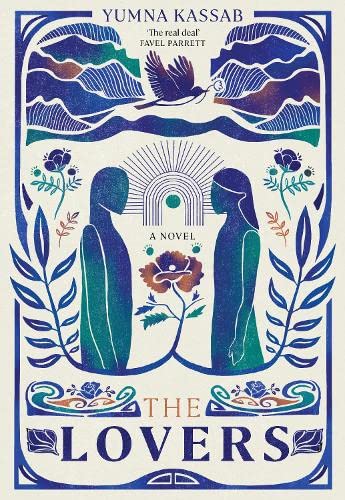
  • Yumna Kassab, The lovers 
  • Fiona McFarlane, The sun walks down
  • Paddy O’Reilly, Other houses (Lisa’s review) (on my TBR)

Non-fiction

  • Debra Dank, We come with this place (my review)
  • Louisa Lim, Indelible city: Dispossession and defiance in Hong Kong 
  • Brigitta Olubus, Shirley Hazzard: A writing life
  • Thom van Dooren, A world in a shell: Snail stories for a time of extinctions
  • Sam Vincent, My father and other animals: How I took on the family farm (Vincent said that he “wants to change perceptions about what Australian farmers can do and be” particularly regarding their relationships with First Nations people)

Australian history

  • Alan Atkinson, Elizabeth and John: The Macarthurs of Elizabeth Farm
  • Rohan Lloyd, Saving the Reef: The human story behind one of Australia’s greatest environmental treasures
  • Russell Marks, Black lives, white law: Locked up & locked out in Australia
  • Shannyn Palmer, Unmaking Angas Downs: Myth and history on a Central Australian pastoral station
  • Lachlan Strahan, Justice in Kelly Country: The story of the cop who hunted Australia’s most notorious bushrangers

Other category winners …

  • Poetry: Gavin Yuan Gau, At the altar of touch
  • Young Adult fiction: Sarah Winifred Searle, The greatest thing (Searle said during her acceptance speech, referencing how challenging the world is to navigate, “admit you’re scared even if you don’t have answers”.)
  • Children’s fiction: Jasmine Seymour, Open your heart to country

The complete shortlist with judges’ comments can be seen on the website. But I will say that the shortlist and the winners are impressively diverse, in who created the works and in their subject matter. So good to see.

Our lives are made more meaningful in the presence of a talented scribe. (Benjamin Law, closing the awards presentations)

Thoughts?

Chris Hammer in conversation with Jack Heath

Apologies for those of you expecting a Monday Musings. I did think about it, as this conversation turned out to be a bit of a Chris Hammer retrospective so it could have worked as one of my Monday Musings spotlight-on-an-author post. However, after considering my options, I decided to call this post what it is, a report of an author event. It was held at the wonderful Muse Canberra, a restaurant-cum-bookshop or vice versa, where co-owner Dan did the introductions before passing the baton to Jack Heath to conduct the conversation.

The participants

Chris Hammer is a multi-award-winning local Canberra author, who worked for 30 years as a journalist, during which he also published two nonfiction books. Since 2018, when he was 58, he has written six bestselling crime novels. (If he’d been around when I wrote my Late Bloomers post in 2011, he would have qualified – as the only man!) His first three novels (Scrublands, Silver, and Trust) feature the journalist Martin Scarsden, with the next three (Treasure and dirt, The tilt, and The seven) featuring a detective duo, Ivan Lucic and Nell Buchanan. The seven was the official subject of the conversation.

Jack Heath is also a local writer – of fiction for children/young adults and adults. He is definitely not a late bloomer, having published his debut novel, The lab, in 2006, when he was 20. Since then he has written around 40 science fiction and crime novels. His new book, Kill your husbands, is coming out now.

From these intros, I think you’ll be able to work out who’s who in the pic!

The conversation

I loved that Jack launched straight in, with little of the usual pleasantries. It was clear that they were comfortable with each other, which is probably not surprising, both being Canberra-based crime writers.

On moving from nonfiction to fiction 

Although his first novel only came out five years ago, Chris said that fiction had always been a passion. Like many writers, he has in his drawer a very bad one he wrote in his 20s (that will never see the light of day – unless, joked Jack, you don’t destroy it and your literary executor thinks otherwise! We all know some of those examples.) Chris said he didn’t have the talent or attention span for fiction when he was young, so he turned to journalism, but persistence pays off.

On dramatic openings

The seven starts with a bizarre death. Is this his modus operandi, Jack wondered. Chris’s answers to this and the next question were fantastic, taking us through his novels, and, at the same time, his development as a writer. I’m not sure I’ve ever attended such a lucid discussion of a writer’s oeuvre in one session before.

After giving a sly little plug to the premiere of the Scrublands TV series on Stan later this week, Chris said not all start like that, but most, including Scrublands, do. He finds it works effectively.

However, Scrublands did not start like that. He was six or seven drafts in before he decided to start with a prologue describing the murder. He was learning on the job, he said. The narrative then jumps a year with his journalist investigating the murder on its first anniversary.

With The Seven, the dramatic opening death marks the start of a contemporary story. The homicide detectives arrive. (The murder victim is an accountant. They are good victims, Chris said, because they have secrets. That got a laugh.) Anyhow, the killer is still on loose, so the detectives are in a race against time. But, there are two other storylines: a university student in the 1990s who decides to do his thesis on the history of irrigation (during which he finds some skeletons); letters from an Indigenous girl from 1913. The connection between them all is not clear until near the end.

On his voices

All Chris’ novels are set in Australia, and all but one are rural. Will this always be the case? Further, Scrublands, his debut novel, features a journalist, a bit like himself. It is set in the present, but gradually, through his later books, he has been moving back in time, and diversifying his characters. How did he get into voices that aren’t a middle-aged ex-journalist?

Chris described his development beautifully:

  • Scrublands, the first of his journalist series, has a simple structure, and is told completely chronologically.
  • Silver, the second in the series, has similar trajectory but there are flashbacks.
  • Trust, the third (and currently final) in the series, has two alternating points-of-view.
  • Treasure and dirt, the first of his detective duo (Ivan-Nell) series, has a dramatic prologue (like Scrublands) and alternating points-of-view. The duo start finding crimes in the past, and this got him into some exposition. However, writers are always told to show-not-tell, so in ….
  • The tilt, the second Ivan-Nell book, he decided not to use exposition, which meant needing to create voices from the past. The 1973 voice wasn’t a big stretch since he was alive then, but the 11-year-old boy from World War 2 was a challenge, so he created an old man looking back on his time as an 11-year-old. This novel has multiple (four, I think) points-of-view.
  • The Seven, the third Ivan-Nell book, also has multiple points-of-view from different times, but they include a 15 to 16-year-old Indigenous girl. Before I or anyone could ask the question, Chris said that we need diverse – including Indigenous – characters in books, otherwise it’s terra nullius all over again. But there’s the issue of appropriation, so he decided to tell her story through letters, which, he said, can be unreliable, given people “present” themselves through letters.

Each book, he told us, has built on the experience of the previous books, with the latest ones being “more accomplished”. This doesn’t necessarily mean they are better stories! Jack interrupted, though, with the comment that Chris just keeps getting better and better.

By this point in the session, I felt we were getting gold.

On second-guessing issues of the day

Jack noted that many of his books seem to have second-guessed coming issues of the day (such as reference to Afghanistan war crimes in 2018’s Scrublands, and irrigation corruption in The seven). How did he do it?

Some has been luck, some has come from keeping his ear to the ground (with his journalist friends). For example, rumours were just starting to appear regarding the SAS-Afghanistan war crimes when he was writing Scrublands, so he included that. Given it’s fiction, he didn’t have to be factual. Most of his books are set in rural Australia, where ongoing concerns are climate change and Indigenous dispossession. These are part of The seven. It’s not hard to write his stories, he said, because, given its history, “the Australian continent is a crime scene”. Touché. He added that “Crime writers often touch on matters of societal concern”.

However, the opal mines’ skulduggery in Treasure and dirt he made up, only to be told later that what he’d described really does happen.

On changing his setting

Most of his novels, except for Trust, are set in dying country towns, but The seven’s setting is a beautiful, tidy town. Was he playing against his “type”?

The answer in a single word was No – but he was looking for something new. An earlier novel had featured a lot of water, and he thought water-trading would be good to explore, but not in that book. The town in The seven is fictional, but is based on Leeton, which was planned by Canberra’s Griffins. It has circular layouts and lovely art deco buildings.

On being a nice guy!

Finally, Jack, saying what a nice guy Chris was, offered four reasons: 1. he’s not really nice, but is a villain; 2. he’s so successful, he can afford to be generous; 3. he came to success late, so he realises how lucky he is; and 4. he’s just always been very nice!

Having learnt from his two nonfiction books how hard it is to make a living from writing, Chris considers himself fortunate to be “living the dream”. Scrublands was life-changing, and he is very grateful. He is financially secure and doesn’t have to struggle for that work-life-writing balance that most writers do. Also, Australian crime writers are welcoming and collegial, and – unlike many journalists – have their egos under control!

Q & A

There was a brief Q&A, some of which required knowledge about Hammer’s earlier books.

  • On whether there will be more Ivan and Nell books, or a new tortured detective: The next book is another Ivan one, but he is thinking of bringing journalist Martin back. (The way this questioner started her question made Jack and Chris palpably nervous about spoilers!)
  • On whether he plots carefully: As I’ve heard authors say before, Chris said there are the “plotters” (like Jane Harper) and the “pantsers” (like himself). He has a setting, an idea, and a few plot lines, and then sees how it goes. If he doesn’t know where the plot is going, how can the reader, the implication being this is good in crime writing. He also wants his main character/s to have “skin in the game”. There is usually an emotional storyline, whose trajectory he knows, but the crime plotting is done constantly as he goes.
  • On his “silly” character names, which critics have commented on: If I understood correctly, he said that as he was writing Scrublands, he got a bit bored and created fun names. He feels sheepish about them now as he is stuck with them, the reason being he has many recurring characters, and can’t really have recurring characters with exotic names alongside new ones with plain names. Also, his editors didn’t complain, which they’d do if they disapproved. And, one reader told him that the distinctive names helped her keep track of who’s who.

A wonderfully lively session, one enjoyed also by Mr Gums who has read three of the novels, and bought a fourth from Muse.

Chris Hammer in conversation with Jack Heath
Muse (Food Wine Books)
Sunday, 12 November 2023, 3-4pm

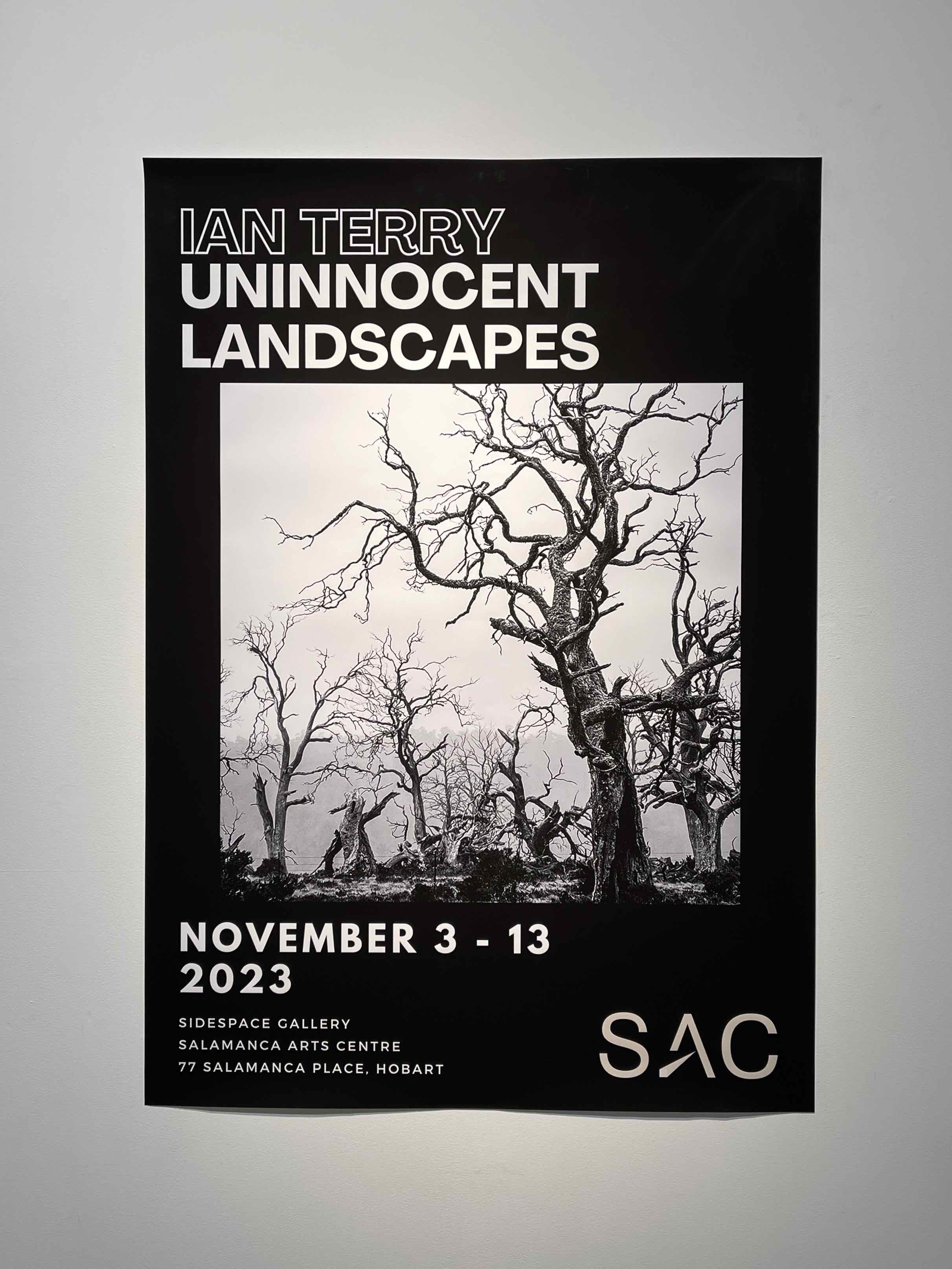
Monday musings on Australian literature: Uninnocent Landscapes opened and launched

Those of you who know me on other social media will already have seen some of this, but I am keen to spread the message wherever I can about my brother’s wonderful, and significant, project. I introduced it back in September – and later in Nonfiction November I will review the book. That, however, will be after the exhibition has closed, and I want to encourage anyone who is in Tasmania to see it.

Uninnocent Landscapes – the exhibition and book – is the culmination of an idea Ian started thinking about a decade ago, but that he actively worked on over the last two to three years. It involved his following the journey taken by George Augustus Robinson on his 1831/32 Big River Mission, which was a poorly conceived attempt to conciliate between settler and Aboriginal Tasmanians. Needless to say it was a disaster, that effectively ended First People’s resistance in lutruwita/Tasmania (at the time anyhow!) For Ian, who has come to call lutruwita home, there is discomfort in reconciling his privileged life as a middle-class white man with the devastating impact of colonialism on Tasmania’s First Peoples. This is his truthtelling project, and he found a unique way to do it by combining the three big passions of his life (besides family) – history, photography and the bush.

I will write more about this when I review the book because what Ian has done feels original and exciting. Essentially, though, the book and the exhibition comprise photographs accompanied by excerpts from Robinson’s journal, resulting in an experience that is enlightening, engrossing, and sobering. The exhibition contains a selection of 11 from the book’s over 50 photographs.

The venue, Sidespace Gallery, is in a heritage building that dates back to the mid-1800s. This means two things – there are some restrictions on how items can be affixed, and the walls and floors are not what you would call square. However, Ian and his “crack instal team” did the research and, by the time I got there, were ready to go. The photographs – large-scale archival prints – were “hung” through a clever system of special Japanese tape (that doesn’t mark walls), double-sided tape, and magnets. I enjoyed being a little part of it all on the first day of installation, and loved meeting Ian’s delightful, hardworking team, Erica and Nikki, who made me feel so very welcome.

The opening (and book launch) went very well, with 50 or 60 in attendance. The MC was writer and researcher Steph Cahalan, and the exhibition was formally opened by Tony Brown, a First Nations man and museum colleague of my now-retired brother. Ian of course then spoke to his project, explaining, among other things, that he had discussed his project with many in the local Aboriginal community, and had made clear that he was not trying to tell their story, but his own. His good relationships with the community suggest that they accept this.

It was a warm-hearted event attended by historians, artists, museum professionals, bushies, activists, not to mention family and friends. I met and talked with so many interesting, thoughtful people who support Ian’s project and believe in what he is doing. I can’t name them all, but before it all started I had a great chat with the two women who designed and published the book. Our conversation ranged from technical issues like fonts to more personal ones like downsizing and philanthropy. It was truly a privilege to be there.

Ian calls Uninnocent Landscapes a photographic conversation. By this he means, I think – though I didn’t ask him while we were together – that he is using photography to reflect on (to interrogate, in fact) his relationship with the Tasmanian landscape he loves so much but which has been indelibly affected by over two centuries of colonialism. The idea of conversation, however, also encompasses something ongoing and inclusive, something inviting us all to join in as we engage with his photos and, for those of us living in colonised places, as we engage with “our” places. I will discuss this more, and talk about the title, in my review!

Uninnocent landscapes, the book, is published and distributed by OUTSIDE THE BOX / Earth Arts Rights under their imprint An Artist’s Own Book. It costs $65, and all proceeds are going to the Aboriginal Land Council of Tasmania’s Giving Land Back fund. You can order it here.

Ian Terry
Uninnocent Landscapes
Sidespace Galley, Salamanca Arts Centre
3 – 13 November, 2023
Admission is free


Rebecca Burton, Ravenous girls (#BookReview)

When I announced the two winners of Finlay Lloyd’s inaugural 20/40 Publishing Prize, a few days ago, I said I planned to read them for the Novellas in November challenge/meme/reading month. (What do we call these things?) So here, now, is my post on the first I’ve read, Rebecca Burton’s Ravenous girls.

Rebecca Burton, as I’ve said in previous posts on the prize, is an editor, and author of two young adult novels, Leaving Jetty Road and Beyond Evie, both published by HarperCollins Australia. This book, I’d say, is a cross-over. It could be read by YA readers, but its subtle perspective of looking back from some years later, means that it is particularly geared to adult readers.

Finlay Lloyd writes on their website that

Stories of family dysfunction often expose us to relentless failure. And while Ravenous Girls is about the tensions and growing distance between two sisters—the elder burdened by anorexia, the younger by self-doubt—it is distinguished by its lithe and tender understanding of the complexities of growing up.

It is, I suppose, a story of family dysfunction, but in the sense that most families, dare I say, can be dysfunctional to a point. By this I mean that many families face trauma and challenges that can affect how well they function. Which is the chicken, which is the egg? It’s probably not worth much going there – and this book doesn’t. Nonetheless, there is a bit of backstory to why things may be the way they are.

So, Ravenous girls. It’s told first person from the point of view of 14-year-old Frankie, which puts her slap-bang in the coming-of-age category, and like most her age she is unsure about who she is. She feels “the wrongness of me”, which includes sometimes being “too much me”. She is challenged by her friend “racing away” from her, as can often happen at this time of life, with neither the racer-ahead nor the left-behind having the tools – the experience – to manage it gracefully. Frankie feels the loss deeply, just when friendship is most needed.

Meanwhile, Frankie’s family life is challenged by the fact that Justine, her seventeen-year-old sister, is, as the book opens, about to enter an Eating Disorders Unit as a live-in patient. The third person in this family is Iris, their mother. She – and all of them – still suffer from the premature death of husband and father some eleven years earlier. I have seen this happen – a mother’s grief over the early death of her husband derailing family relationships. That seems to be part of the situation here.

The story primarily covers the months over the summer holidays when Justine is in hospital. Frankie, at loose ends because friend Narelle has secured a holiday job, visits Justine every day. She observes Justine, and thinks about what is happening to her and why. She and her mother attend, with Justine, a poorly-handled family therapy session, and she also attends a family support group. Neither of these provide much help or support. She doesn’t see either Justine or her family in these, so she continues to try to work it out for herself. She sees her mother’s tiredness and pain, and she sees there is no space for her own concerns when Justine’s needs are so great, which is something Justine, bound up in her own growing-up challenges, doesn’t appreciate.

What elevates this reading from what could have been a “woe is me” tale are the occasional foreshadowings or hints from later Frankie, telling us what she now knows, or in some cases, still doesn’t know. These references play several roles, from recognising their naiveté at the time (“It astonishes me now that this is the way we thought”) or her own self-absorbed inattention (“maybe if I’d listened more carefully”) to sharing lessons learnt or hinting that character development had occurred (“But now I think that I may have been a monster too”). Burton handles these later reflections adroitly – they add richness and depth without spoiling the conclusion or losing the tension or reducing our care for the characters.

The novella is set in 1985/1986 Adelaide, and Burton captures the era well – the political happenings from Queensland’s Joh Bjelke-Peterson to America’s Unabomber, the technology (cordless phones appearing, but certainly no mobiles!), the films and music. I could ask why the novel is set then, which is my usual question for novels set in the past, but, for a start, an earlier time-period is necessary to enable the inclusion of that perspective, I’ve mentioned, of the much older Frankie.

There are references during the novella to Frankie and her mum reading books about anorexia and other recovery memoirs – as readers will do when confronted by difficult situations. I liked this comment – or warning – about such memoirs:

It didn’t occur to me that what was truth for one person might not be true for another – or that the truth as people wrote about it wasn’t always the truth as they’d experienced it.

Fortunately, Ravenous girls isn’t a memoir!

As with all Finlay Lloyd books, the design is gorgeous. It has their unique shape, a dust jacket despite being a paperback, and a stylish but minimalist overall design aesthetic with elements that carry through to the other winner.

Before I close I must mention the title, Ravenous girls, which relates to anorexia and the hunger its sufferers experience. In anorexia, as we know, the hunger, and hence the title, is not purely literal. For Justine, as she articulates to Frankie, it’s about “wants”: “I don’t want to want the things I want, you know?” “Ravenous” perfectly encapsulates the intensity of need explored here.

Ravenous girls is a compassionate book that sensitively charts the emotional ups and downs that are part of the anorexia landscape, and explores the helplessness about understanding what is such an individual and complex mental condition. It also conveys something more generally relatable about family relationships – sisterhood and daughterhood, in particular – and about how darned hard it is to grow up. But, grow up we do.

Read for Novellas in November. Lisa (ANZ Litlovers) and Theresa (Theresa Smith Writes) have reviewed both winners in one post, but I am doing them separately. Watch this space.

Rebecca Burton
Ravenous girls
Braidwood: Finlay Lloyd, 2023
103pp.
ISBN: 9780645927009

Novellas in November 2023: Week 1, My year in novellas

I love novellas and have written on and reviewed novellas almost since this blog started, because I love the form, but I have only tinkered around the edges of Novellas in November (run by Cathy of 746 Books and Rebecca of Bookish Beck). Last year, I wrote a Monday Musings on Classic Australian novellas and the year before I did one on Supporting Novellas (here in Australia). Otherwise, I have written a few novella reviews for the month. But I have not focused on the weekly themes suggested by Cathy and Beck. I may not again, because I might become a bit repetitive, but I’m going to start at least.

However, this has been a very strange reading year for me, so I won’t have a lot to say, which is probably good, as it means my posts will be short for you to read! For Week 1, which just runs from 1 to 5 November, the theme is “My year in novellas”. It asks us to write about novellas we’ve read since last November.

Well, I’ve only read one, and that was Jessica Au’s quiet, meditative, award-winning Cold enough for snow (my review). It was the inaugural Novel Prize winner, and also won the Victorian Premier’s Literary Awards prize for fiction (as well as being the overall winner). It’s been shortlisted for more prizes, including, most recently the Prime Minister’s Literary Awards fiction prize. It’s one of those books that’s perfect for the novella form, because it’s an intense, concentrated book rather than a plot-driven page-turner. It says a lot that it has held its own so well in the “novel” world – in terms of awards and overall critical reception – despite its short length. (See publisher Giramondo’s site for its awards to date.)

Cold enough for snow tells the story of a mother-daughter trip to Japan, but its focus is not the trip. Told from the daughter’s point-of-view, it tells about a relationship that is characterised by closeness and distance, by tender caring and frustration, by needs that aren’t always satisfied perhaps because they can’t always be, by a desire to connect. For me it was about the paradoxical nature and mutability of life. But everyone who reads this book – as in my reading group – seems to see something different because it speaks so closely to our individual experiences of life and close relationships. The Prime Minister’s Literary Award judges capture this well in their comment (see the Giramondo site above) that it is “intricately structured and with a flow and reach that, like all remarkable writing, is without boundaries”. “Without boundaries” is a good description …

Au’s book might have been my only novella review in the last twelve months, but all has not been quiet on the novella front. Back in July I wrote a Monday Musings about support for “short novels” from various points of view over the first half of the 20th century – that I found in Trove. And, just a few days ago I wrote about the winners of the new 20/40 novella prize being run by Finlay Lloyd publishers. I plan to read these two winners for this year’s Novellas in November.

Written for Novellas in November 2023

Monday musings on Australian literature: Australian Political Book of the Year

It’s fascinating just how many book awards there are in specialised areas. Last week I posted on the Dame Mary Gilmore Award, which started as a trade union supported award, but is now a more general poetry award. Yesterday I posted about the winners of the 20/40 short form prose award. Another specialised award is the Australian Political Book of the Year Award.

This is a new award that was first made in 2022. It is not a huge award in prize money, but it’s not minuscule either. The winning author (or authors) receives $15,000 and each shortlisted author receives $1,000. It’s great to see, in fact, more and more awards offering a monetary prize to the shortlisted books.

The award’s website says that the award

recognises the vital part political books play in better understanding Australian politics and public policy. Well researched, balanced and compelling political books that engage Australians are vital to the strength or our democracy.

Further, it says, the longlisted, shortlisted and winning books will be those the judges determine to have

provided the most compelling contribution to the understanding of Australian political events and debates.

The award is sponsored by a Melbourne independent bookshop, Hill of Content Bookshop, and the York Park Group.

Last year’s lists (that is winner, short and long for 2022) are available on the site. The shortlist for 2023 is on the site too, but I’ll also share them here:

  • James Curran, Australia’s China odyssey: From euphoria to fear (NewSouth Publishing): looks at the relationship between China and Australia through Australia’s prime minister from Gough Whitlam in 1972.
  • Russell Marks, Black lives, white law: Locked up and locked out in Australia (La Trobe University Press): interrogates the fact that First Nations Australians are the most incarcerated people on the planet. This book has also just been shortlisted for the Australian History section of the 2023 Prime Minister’s Literary Awards.
  • Nick Mackenzie, Crossing the line (Hachette Australia): exposes the story behind the fall of SAS hero Ben Roberts-Smith.
  • Nikki Sava, Bulldozed: Scott Morrison’s fall and Anthony Albanese’s rise (Scribe Publications): self-explanatory, I’d say!

You can see the 2023 longlist on the same page. It includes books by the historian Frank Bongiorno, First Nations author Stan Grant, and author, ex-political advisor and speechwriter, Don Watson. This year’s judges are well-known political journalists Laura Tingle and Barrie Cassidy, and the academic John Warhurst.

Australia’s current treasurer, Jim Chalmers, announced the 2022 winner at a National Press Club event, the winner being Dean Ashenden’s Telling Tennant’s Story: the strange career of the great Australian silence. It’s about Tennant Creek’s, and by extension, Australia’s silence about the past, about the truth of what happened between settler and First Nations Australians.

Anyhow, back to Chalmers … he spoke, of course, about the prize, the judges and the books. I particularly liked this point he made about political books:

A good book is never just a collection of speeches or an extra-long feature piece – it’s a true study of an issue or idea, full of complications and confirmation, and with the pleasure of illustration, story-telling, portraiture.

He says more, but I’ll just share one more excerpt from his speech, in which he talked about “narratives that don’t just help us recognise patterns but also help us question our assumptions about the patterns we think we see”. That’s the important thing, isn’t it – to keep questioning the assumptions we make, because it is too easy to get locked into them, even when the world and/or our own lives and experiences change.

POSTSCRIPT: Nancy Elin noted in the comments that she has read all the shortlist, and has predicted the winner. Rather than link to each post, I’m giving you this link to her blog as she is an assiduous reader of Aussie books.

Had you heard of the Australian Political Book of the Year Award, and, regardless, does such an award interest you?

Winners announced for the inaugural 20/40 Prize

Last November, I announced the creation of the new 20/40 Publishing Prize by independent, non-profit publisher, Finlay Lloyd. And then, early this month, I announced the shortlist for the inaugural prize. Today, I announce the Winners.

First though, I’ll remind you that 20/40 is a manuscript award, with the prize being publication. It is not limited to debut or young or women or any other subgroup of writers, as some manuscript awards are. However, it does have some criteria, in addition to looking for “writing of the highest quality”. Submissions must be prose, and must be between 20,000 and 40,000 words (hence the name). Outside of these criteria, works submitted can be “all genres … including hybrid forms”. The plan is to choose two winners, as they have this year, and they hope to run this prize for many years to come.

And now, the Winners

From six on the shortlist, we now have our two winners:

  • Rebecca BurtonRavenous girls. FL says “Stories of family dysfunction often expose us to relentless failure. And while Ravenous Girls is about the tensions and growing distance between two sisters—the elder burdened by anorexia, the younger by self-doubt—it is distinguished by its lithe and tender understanding of the complexities of growing up.”. Burton is an editor, and author of two young adult novels, Leaving Jetty Road and Beyond Evie, both published by HarperCollins Australia.
  • Kim KellyLadies’ Rest and Writing Room. FL says “Two young women, brought up to expect conventional lives, are thrown together in unexpected circumstances. Each has suffered a devastating loss that challenges their belief in life and themselves. It’s rare to come across a work of deep psychological insight conveyed with such verve and lightness of touch”. Kelly is known to many already, I think, as the author of historical fiction, most if not all published now by Brio Books.

Finlay Lloyd had hoped to make one award to fiction and one to non-fiction, but there were not enough strong non-fiction entries this year. They hope this changes as the prize becomes better known. I hope so too, as I enjoy creative non-fiction.

You can read Finlay Lloyd’s announcement here. Also, Lisa has read the winners, while I plan to read them for Novellas in November. Here is Lisa’s post.

It would be great to see Aussie readers, not to mention others, get behind this publishing prize. You can order the winners at Finlay Lloyd, with a special deal if you buy the two.

There is to be a launch of the books in Canberra on 18 November. If you will be in town that day, and would like to attend, comment here, and I will contact you with the details.