I thought it was time to show that Gums can have gorgeous flowers as well as interesting bark. Not all gums have dramatic flowers. The one in my garden doesn’t, for example – as is clear from its name: Eucalyptus pauciflora! But some gums, like this hybrid of the Eucalyptus maculata (obviously!) do.
Gum blossoms have a very special place in Australian literature, through the work of author-illustrator, May Gibbs. Her most famous book is Snugglepot and Cuddlepie (1918). However, she produced her first Gumnut booklets in 1916, and through them created the characters she soon after became famous for, including her Gumnut Babies and Gumblossom Babies.
There was a strong conservation message behind her books. On the first page of Snugglepot and Cuddlepie is:
Humans please be kind to all Bush Creatures and don’t pull flowers up by the roots.
And that’s about all I’ll say about May Gibbs … she’s an Australian icon but in fact she was not part of my childhood. I read very few of the traditional anthropomorphic (can plants be anthropomorphic?) children’s books when I was growing up. I much preferred reality to fantasy, then, and pretty much now too. So, I’ll just share this image that grabbed my attention on a trip to the coast earlier this year – and suggest that it’s no surprise really that such beautiful things inspired writers like Gibbs.
(This was an experiment posting directly from flickr, but I don’t think I’ll do it that way again)
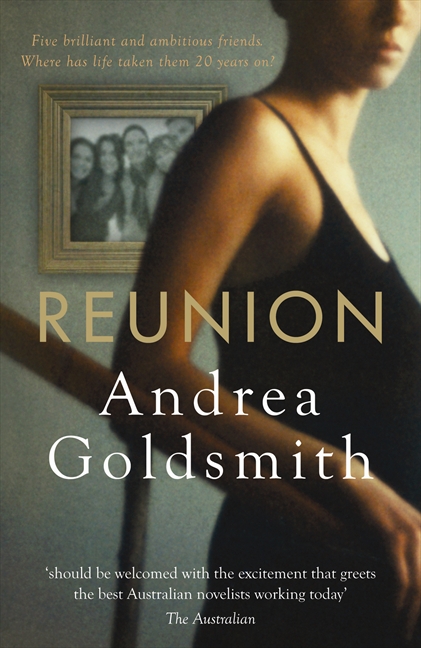
I wanted to love Andrea Goldsmith’sReunion. And I expected to, as I remember enjoying the last book of hers that I read. But, somehow, I found it a bit of chore to read, though it did pick up towards the end. I think I understand why it was not listed for the 2010 Miles Franklin Award.
Friendships become swaddled in invisible protective layers and nothing short of a cataclysmic blow can break through to the inevitable stress points beneath.
The plot is fairly straightforward. Four university friends (three students, borderline baby-boomers and now in their mid-40s, and a lecturer, now around 60) find themselves all living in Melbourne again after some 20 years apart. All four had met in Melbourne, had moved together to England to continue studies and work, but had then gone their separate ways. At the beginning of the novel Jack, an academic and Islamic expert, is single and still in love with Ava; Ava, a novelist, is married to the unpopular Harry; Helen, a scientist, is a single parent; and Connie/Conrad, a philosophy lecturer, is on his third marriage but still philandering. Harry, who met them in England, is on the outer, but it is he who has engineered the reunion under the auspices of an organisation he has created, NOGA (Network of Global Australians).
The novel, then, is about this time of reunion: it explores who they are now, and the state of their relationships with each other. Sounds like the sort of thing that would interest me – Melbourne setting, characters with whom I would expect some level of identification, themes exploring love and friendship, and a writer whom I’ve enjoyed before. None of these, I should add, are essential for my reading enjoyment – I also like books set in exotic places and about very different characters – but familiarity often appeals too (doesn’t it?).
And yet, for me the book fell a little flat. It just didn’t feel quite original enough – in either ideas or language. It felt a little same-old-same-old. That said*, I found the characters interesting and convincing, although only one, Jack, changed in any significant way as the novel progressed. The narrative mode is multiple 3rd person subjective, with Jack’s perspective starting and ending it. It is told, chronologically, but with flashbacks to fill in the past. All this is well controlled and keeps the story moving nicely.
Goldsmith ranges across a lot of themes – love and friendship (of course); truth and fiction; secrets and memory; passion and obsession; modern communications; revenge and forgiveness; and science, ethics and politics. It is probably here that the novel palled most for me because many of these themes seem to go nowhere. Take the truth and fiction one. Those of you who read my blog know that I enjoy seeing this issue explored, but in this novel it’s raised, often with a nice level of irony, but is not really developed. For Ava, the novel writer, “there was no better vehicle for truth” than fiction, whereas for the scientist, Helen, “Ava’s work is only fiction – none of it is true”. Well, I thought, Goldsmith will unpack the ironies contained in these, but she doesn’t really. Perhaps that’s OK, perhaps it’s enough for us to notice them, but I wanted more.
At other times, the themes seem more like the author’s soapbox than ideas fully integrated into the story, albeit that the characters are her mouthpieces. Here, for example, is Jack expressing a rather stereotyped view of modern communication:
Whenever Jack looked back to his university experience and compared it with today’s university student life, so much seemed to have changed – even friendship itself. Without computers and mobile phones, face-to-face communication ruled the day.
The implication is that modern friendships are somehow less meaningful, but what does he really know and, further, what does the novel show us about it? Nothing really. Similarly, Helen rages about political interference in science, but the issue, while valid enough, seems a little fabricated in the context of the novel.
There are some funny set pieces, such as the young television make-up artist trying to hide Connie’s aging neck. Goldsmith does irony well – something I, as a Jane Austen aficionado, rather enjoy – and she peppers the novel with a lot of effective literary allusions – to Waugh, Wharton, James, and others. Moreover, there are some lovely descriptions, such as this one on Ava’s discomfort during her first weeks in England: “It was like being stranded on a sheet of clear glass with nothing but blackness underneath”. I’m not sure why I like this, but I do.
I’ve struggled to write this review, really, because there are things to like about this book. I decided to do a quick review of reviews out there and what I mostly found were positive reviews that each had some little reservation: “despite that minor misgiving”, “a rich and at times frustrating novel”, “despite a few stylistic glitches”, and “the novel was marred but not spoiled for me by …”. None though explored these reservations in any depth.
And so, rather than labour any more, I will close with the words of Helen’s teenage son, Luke. He says, in that simple, direct way that the young can do:
The truth can hurt. But that doesn’t make it less right.
The final irony is that Harry is hurt by a truth – but the truth he is hurt by and the real truth of the matter are two quite different things. And that, in the end, made the novel an interesting if not totally engaging read.
For a more positive perspective on this novel, check out Lisa’s at ANZLitLovers.
Andrea Goldsmith Reunion London: Fourth Estate, 2009 414pp. ISBN: 9780732287832
The literary awards season is well and truly here downunder … and last night, just before the opening of this year’s Sydney Writers Festival, the NSW Premier’s Literary Awards for 2010 were announced.
The full list of winners can be found here, so I’ll just name the critical ones, from my point of view (with links to relevant posts of mine):
Christina Stead Prize for Fiction: J.M. Coetzee, Summertime
The People’s Choice Award: Cate Kennedy, The World Beneath
Special Award: The Macquarie Pen Anthology of Australian Literature
Not a bad result from my point of view. I have been meaning for some time to dip into the Macquarie Pen Anthology of Australian Literature properly. I wonder at myself sometimes really. What have I been doing posting on various offerings of the Library of America, when I could (should) in fact be choosing some choice items from this volume to share with you. I really must (want to) rectify this. (That said, another Library of America offering will be winging its way to you soon!)
Anyhow, I’m not going to ramble on about the Awards, but I would like to make one comment, and that is that the People of NSW seem to like what our judges tend to dismiss! Last year, they voted for Steve Toltz’s wonderful A fraction of the wholeand this year they’ve gone for Cate Kennedy’s The world beneath. Both these books were longlisted for the Miles Franklin Award in their years, and were well reviewed around the traps, but both were not shortlisted. An interesting state of affairs, n’est-ce pas?
When I bought Eric on a whim the other day (as you do!), I didn’t realise that it had been excerpted from Shaun Tan’s Tales from outer suburbia which I haven’t yet read, but have given to others. That’s okay though, because it means that I’ve finally read a little of Shaun Tan, something I’ve wanted to do for a while.
Shaun Tan is an Australian multi-award-winning artist-writer (or is it writer-artist?) who has published books, worked in theatre and film, and had his work adapted by such luminaries as the Australian Chamber Orchestra. He is one versatile man! His best known works include The arrival (a wordless graphic novel about migrants) and Tales from outer suburbia (an anthology of 15 short illustrated stories about all sorts of strange things that happen in suburbia).
Eric picks up on what I believe is one of Tan’s common themes, that of being different or strange, an outsider. It is about a foreign exchange student who comes to stay with a family in – yes – suburbia, and how they all get along.
Tan’s is not a negative presentation – at least, not here. The mostly monochromatic drawings are whimsical and all focus on Eric, the visiting student, while the text is in the voice of a child of the house. The story is about tolerance and acceptance of what you don’t understand. It’s also about expectations that aren’t met – but accepting the things that happen instead. As Mum says in the book, “It must be a cultural thing”. Overall, it’s about the fact that other can reside with other – and yet it also allows discomfort and incomprehension to be an acceptable feeling.
This sounds like a simple book, and in some ways it is, but it’s not simplistic. Producing it as a gift-edition like this is a lovely idea. It will, I hope, introduce more people to Shaun Tan and his rather unique view on the world. It has certainly whetted my appetite.
Shaun Tan Eric
Crow’s Nest: Allen & Unwin, 2010
[48pp.]
ISBN: 9781742372921
Lovesong is my first Alex Miller novel, which is a bit embarrassing, really, given that he has won the Miles Franklin Award twice.
John was the quiet type … Except when he was telling me his story. Even then there was something quiet and private in the way he spoke about himself and Sabiha; as if he was telling himself the story; going over it to find its meaning for himself. Looking for something he’d missed when it was happening to him.
As you can probably tell from this quote, Lovesong is one of those story-within-a-story novels. Its basic plot is fairly simple. John, an Australian, tells the story of his life in Paris with his Tunisian wife, Sabiha, to Ken, a retired novelist. Retired? Well, so he says, but can he resist a good story when he hears one?
John and Sabiha’s love story is not exactly straightforward, which is foreshadowed early in the novel when Ken first meets Sabiha and notes “a sadness in the depths of her dark brown eyes”. He begins to wonder about “her story”. Adding a little complexity to this is a loose parallel in Ken’s life. He lives with his 38-year-old daughter, Clare, who during the novel starts a love affair of her own. Sabiha is, coincidentally, about 38 when the “crisis” in her life occurs. There are other parallels in the novel, such as Sabiha’s aunt Houria and her marriage to Dom, and Ken’s marriage to his wife Marie. Again, these are loose. They provide depth and perspective rather than the direct commentary that parallels often seem to do.
This is a surely structured novel. Miller manages to be simultaneously subtle and obvious so that you are conscious of being led along, but you are not always sure where to or what it might mean. Early in the novel, Clare tells her father that “Love is never simple”. A little later, Sabiha’s father reflects on his daughter and wonders, rather more prophetically than he realises, what “makes some people so different from others that they cannot share a common fortune with them”. Alongside these early thematic hints is a whole slew of comments about story-telling and writing, about story-telling as “confession”, as “craving for absolution”, as, in fact, catharsis. In other words, the novel is also self-consciously metafictional, which is not surprising given that the first person narrator, Ken, is a novelist.
Meanwhile, there is John and Sabiha’s actual story – and again, the plotting is sure. We learn early that Sabiha wants just one child, “her child. There was only one”. And we learn of her closeness to her maternal grandmother. These two things, dropped lightly in the book, play a significant role in the development of the plot.
The novel is full of irony, starting with the title and its romantic connotations being undercut by other sorts of songs. And there is this from Sabiha’s aunt Houria:
Don’t try sorting out the rest of your life tonight, darling. You’ll see, it’ll all work out in the most unexpected ways.
This is doubly ironic because, eventually, Sabiha does attempt to sort out her life, rather than let it work out, and the result, while giving her what she wants, is also not what she expected. What’s that adage? Be careful what you wish for? And yet, that’s not what the novel is about. It’s not a cautionary tale. Rather, without being coy, it’s a meditation on the mystery and power of love – and, I would say, on innocence and experience in its many guises.
But it’s about other things too, such as the importance of home and place. Both Sabiha and John spend much of their lives living away from their respective homes. Ken, at the novel’s start, has just returned from spending time in Venice and is trying to decide whether to return. It’s also about Life – and the inevitability of change: “Change being forced on them, even as they stood still”. John feels it, Ken feels it.
But again and again, we come back to stories and storytelling. Partway through the novel Ken thinks:
There were things I could have added to his story, but I didn’t want to make it up this time. The truth is … I have never really liked making it up. My imagination, such as it is, needs the facts to feed off. I could see the directions I might go in with John and Sabiha’s story, but I resisted. I wanted to hear the truth from John.
And yet, it is not so simple as it sounds. At the end, he wonders:
I had her story now, but it is one thing to have a story and another to write it. How was I to articulate the delicate complexities that must give weight and depth and beauty to her story, those things that most easily elude us?
I found Lovesong an engrossing read. Its writing engaged me, it’s accessible, and it tells a great story, while also exploring the art and meaning of storytelling. I am left though with one question: Whose story is it to tell?
Lisa at ANZLitLovers also liked this book. You can read her review here.
Alex Miller Lovesong
Crows Nest: Allen & Unwin, 2009
368pp.
ISBN: 9781742371290
There are two main reasons why I like – actually love – to read Thea Astley. One is her language, her wonderful way with words that may, at times, be over-the-top but that is never clichéd. The other is her passion for the underdog, and thus for social justice in a world where it is often conspicuously absent.
Island with palm, because Penguin will not answer emails regarding bookcover use (Courtesy: OCAL, via clker.com)
The multiple effects of rainshadow is Astley’s second last novel. Its overall subject matter is, as one character says late in the book, “the unmoored behaviour of humans”, an effective image given the book’s central motif is an island. It has a very loose plot which is based on an actual event that occurred on Palm Island in 1930. Palm Island was, at that time, essentially a dumping ground for Indigenous Australians deemed to be “problems”, but the event in question concerned the white superintendent, mad with grief at the recent death of his wife, running amok and setting fire to buildings (including his own home in which his children were sleeping). He was eventually shot (and killed) by an Indigenous man under the (cowardly) order of the white deputy superintendent. The novel explores, through multiple points of view and over a period of around 30 years, the impact of this event on six white people who were present on the island at the time – but interspersed between these voices is the voice of Manny, the man who shot the super. This is, I think, a pretty risky thing to do but Astley is not one to shy away from risks in her writing.
The voices are, in chapter order:
Manny Cooktown, first person, the indigenous “shooter” and main narrator who commences the story and appears between each voice, but does not conclude the novel
Mrs Curthoys, first person, landlady on Palm Island at the time of the incident
Gerald Morrow, third person, writer/editor who had gone to the Island to work as a foreman, for which he had no skill or experience, and who was in fact escaping the Island in a boat at the time of the incident
Captain Brodie, third person, the Superintendant who ran amok and was shot by Manny
Mr Vine, third person, a school teacher on the Island at the time of the incident
Father Donellan, third person, priest who visits regularly from the mainland and is responsible for the Island’s religious “needs”
Leonie née Curthoys, first person, daughter of Mrs Curthoys and so on the Island at the time of the incident
Omniscient author who carries the last chapter
Looks complex eh? But in fact it’s pretty straightforward in terms of knowing who is who, as each voice “manages” its own chapter. The chronology is a little trickier as many of the characters (let’s call them that from now on) flip between their present (some are writing from many years after the event) and the past. Did you notice that the first person voices belong to the two groups most recognised by Astley as disadvantaged: women and indigenous Australians? A subtle but clever use of her narrative structure to give them a voice!
The setting is, after all, very much a white patriarchal world, and marriage is seen in that light. Vine, for example, is told to get a wife for
‘The boring bits. You know. Meals. Washing. Shopping. Kids. All that sort of thing. A man hasn’t time for that sort of thing.’
‘Why not a housekeeper, then?’
‘You are green. Cost too much …’
Not surprisingly Mrs Curthoys and Leonie do not find marriage much to their liking. The main underdogs in this novel though are the indigenous people, many of whom are brought to the Island – and therefore separated from their country – as problems, and are treated with disdain at best and real cruelty at worst by most of the white residents (from 1918 when the settlement begins to 1957 when the book closes). Astley offers, I’m afraid, little hope. She is not a cheery writer: her goal is to shock us into attention – and that she does. However, I can imagine some critics accusing her of putting contemporary views about feminism and indigenous relations in characters’ mouths. I would argue though that contemporary ideas do not spring from a vacuum, and that therefore the occasional more sensitive/egalitarian views expressed in the novel are historically valid.
I said at the beginning of this review that one of the main reasons I like Thea Astley is her language, so here are some examples of her imagery:
…whistlestop hamlets scattered along briefly tarred roads that led to further sprawls moated by loneliness … [from school-teacher Vine, heading to a country school]
And I am weary of a Celtic charm that is shaken like spice over any dish within gulping reach. We bore each other rancid. [Leonie on marriage and her philandering husband]
At least I’ll have tried. At least I’ll be learning to decline the gumleaf, conjugate the seasons. [Vine’s “do-gooder” son Matthew]
She also effectively mixes up the rhythm to make points or convey feeling, using short snappy sentences, repetition of phrases (such as Morrow’s “swing dip drag” as he sails across the sea), and punctuation-free streams of consciousness:
There was an unalterable plane geometry to his movements: the clock the tea/toast the clock the bell the classroom the toted piles of exercise books the bell the repeated texts the stale jokes the texts the bell the common-room bitchings the clock the bell … the … the … [schoolteacher Vine]
Astley is often quite self-conscious about the act and role of writing, and this is certainly the case in this novel. I’ll give just one example, the bitter rant of failed writer Gerald Morrow, who is jealous of the success of another, to him, lesser writer:
There must be a million readers out there who crave boredom! Who love the dangling participle! Who wallow in truisms and fatuous theorisings! … Slap in your popular aphorisms, buddy, but don’t make ’em think!
You could never accuse Astley of not making you think, but there has to be some irony here, some little sense of self-deprecation even, in the fact that she put these words in the mouth of a failed writer, as if she knew that for all her passion there’s only so much you can achieve with words. That may be so, but Astley has given it a darned good try!
Thea Astley The multiple effects of rainshadow
Camberwell: Penguin, 1996
296pp.
ISBN: 9780143180265
It seems vaguely silly for all we bloggers to be announcing the same thing – except that perhaps each of us has a slightly different readership so maybe it’s not completely redundant for me to announce here what has already been announced elsewhere – at Musings of a Literary Dilettante.
The Dilettante has provided links to the Judges’ comments, so please check out his link (here) if you’d like to see them. The shortlist though is:
Last year I wrote a couple of posts about places of literary interest that we passed through on a road trip. Here is another such post, again using The Oxford literary guide to Australia as my main source.
Yarrawonga, Vic
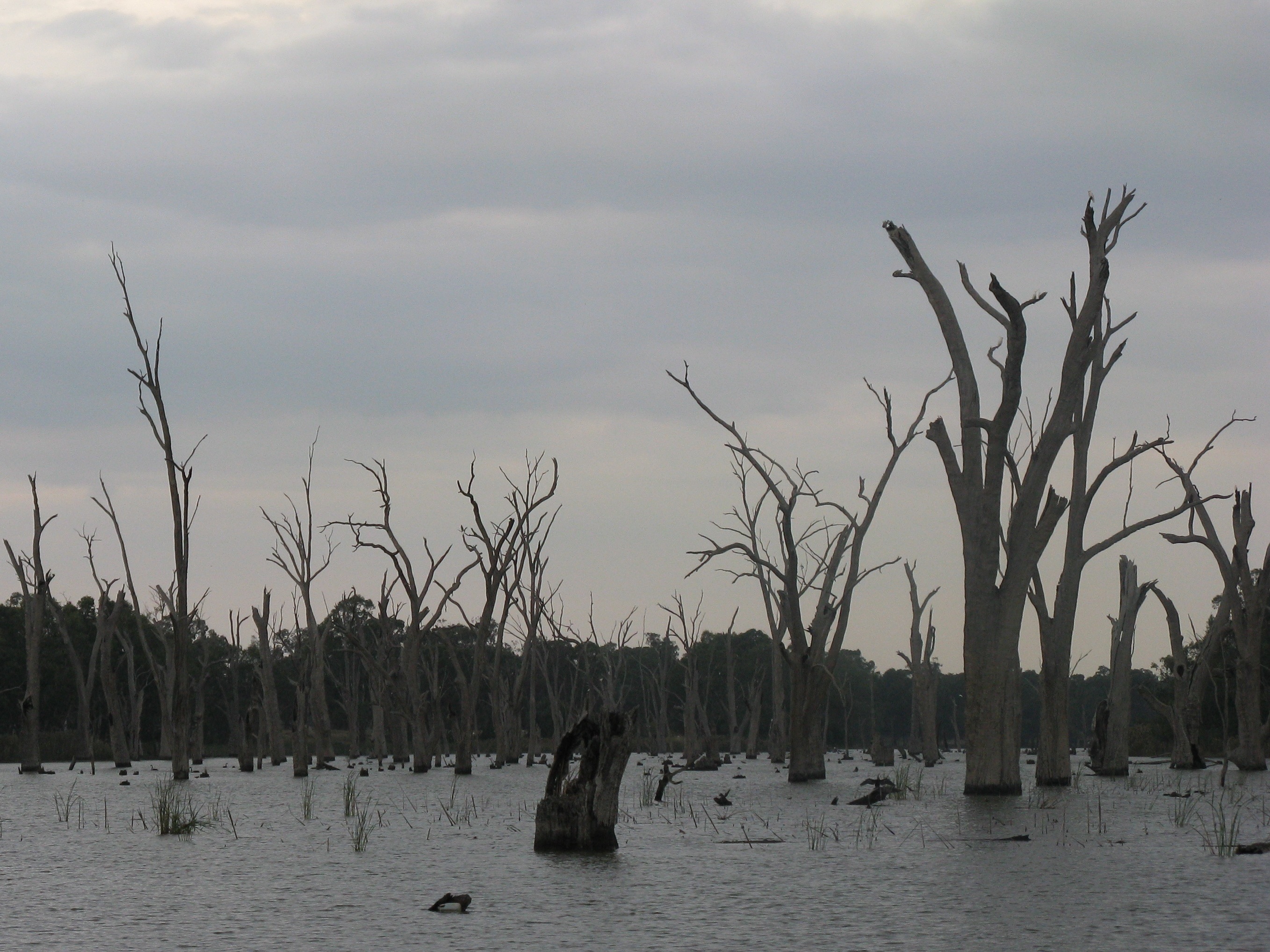
Lake Mulwala at dusk
Yarrawonga was where, on this trip, we hit Victoria first. It is a twin town with Mulwala which is on the New South Wales side of the border. The border, here, is formed by Lake Mulwala which was created by a dam built on the Murray River in 1939. This lake is rather eerie due to the dead tree trunks protruding from its waters. This however is not its literary connection, which is, really, a bit of a far fetch. The town features in the poem, “Night vision, Yarrawonga” by Christine Churches who, from what I can see, never really lived there. Oh well, it gets the town in the book – and these lines are rather evocative of the slow flowing Murray and its eucalyptus lined banks:
At sunset we came to the river
slow water feeding through the trees
Chiltern, Vic
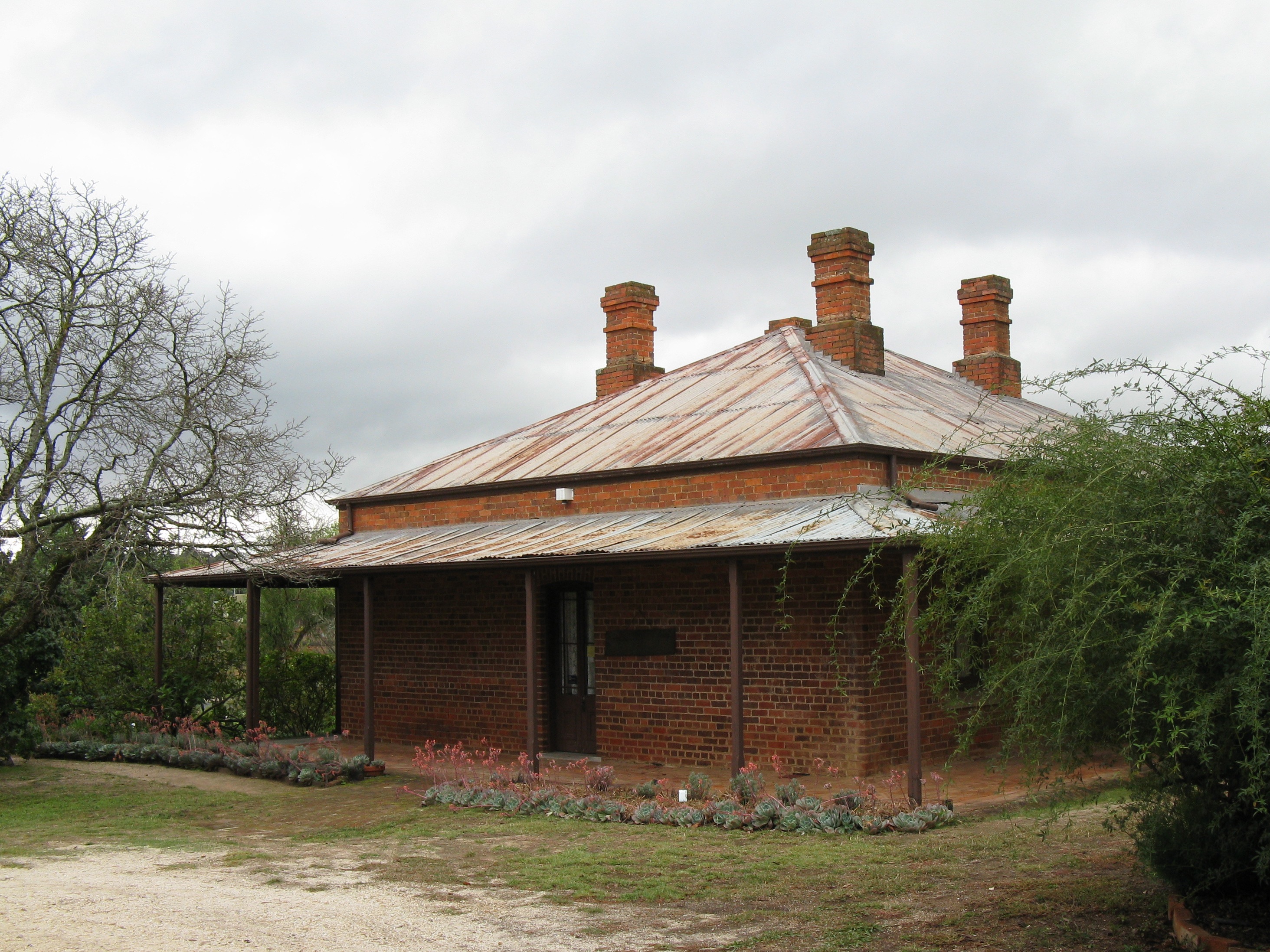
Lake View House, Chiltern (built 1870)
This pretty little town’s literary credential is far less arguable as the significant Australian writer Henry Handel Richardson spent part of her childhood here, and the house, Lake View, in which she lived, still stands. In her autobiography, Richardson says this is where she first smelt wattles in bloom. (For more on Henry Handel Richardson in Victoria, check out ANZLitLovers here).
Beechworth, Vic
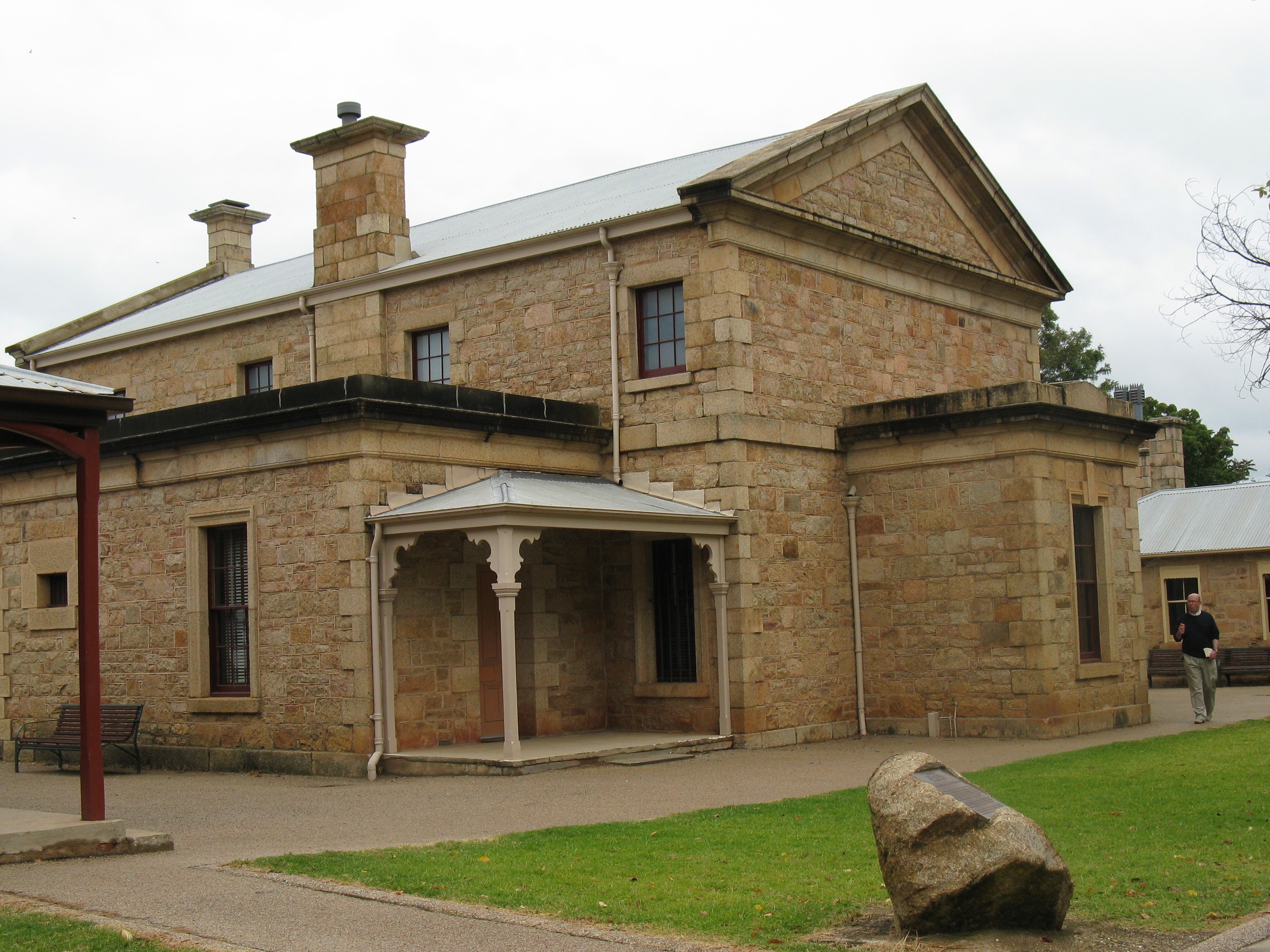
Beechworth Courthouse, est. 1858, where Ned Kelly was committed to stand trial for murder
Beechworth’s big claim to fame is that the Australian outlaw, Ned Kelly, was first jailed here! However, it also has “real” literary connections as several novelists lived or visited here, including Henry Kingsley (brother of the English novelist Charles Kingsley), Mary Gaunt, Ada Cambridge, Ronald McKie and David Martin.
I’ve only read one of these, Ada Cambridge. She was a prolific writer but, like many of our early (turn of the century) women writers, receives far less attention than she deserves. She was a strong woman who often tackled issues that were close to women’s hearts but not deemed proper for the clergyman’s wife that she was. I was surprised and delighted when I first read her in the 1980s – and horrified that I had not known of her before.
Here ends the formal literary highlights of this most recent trip! Informal “literary” highlights had more to do with signs and town names. I will leave you with just one that tickled our fancy:
Road sign for Burrumbuttock (Photo: Courtesy Carolyn I)
Burrumbuttock, NSW, is, apparently, affectionately known as “Burrum”. Seems sensible to me!
Peter Pierce (ed) The Oxford Literary Guide to Australia
Oxford: Oxford University Press, 1983 (rev ed)
501pp.
ISBN: 0195536223
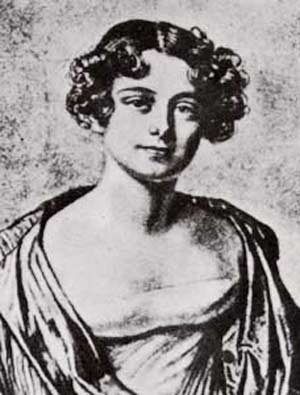
Lady Jane Franklin (Presumed public domain, via Wikipedia)
Those of you who have read a bit of my blog will know that I am a big Jane Austen fan, and so when you see the name Jane in a post’s title you would not be wrong to assume that it’s about her. However, over the last decade another Jane has been coming to my attention. She’s not a writer, unless a lifetime of journal-writing counts, but she was born during Jane Austen’s time, and is a fascinating woman. Her name is Lady Jane Franklin (1791-1875), and these are the ways I’ve been meeting her:
Andrea Barrett’s The voyage of the Narwhal, dealing with one of the expeditions which set out to find Lady Jane’s missing explorer husband, Sir John Franklin, was the first thing I read that brought her truly to my consciousness;
Matthew Kneale’s English passengersin which as I recollect she is portrayed as the rather strange wife of the Governor;
Richard Flanagan’s Wanting which partly explores the Franklins’ time in Van Dieman’s Land and, in particular, their disastrous adoption of the little indigenous girl, Mathinna;
Adrienne Eberhard’sJane, Lady Franklin, a poetry collection written in the persona of Lady Jane (and given to me this year by my Tasmanian-based historian brother); and
Silkweed’sLady Jane Franklin: an examined life, a musical-theatrical-visual presentation of her life, which I saw this weekend at the National Folk Festival.
Silkweed’s website describes her thus:
a woman ahead of her time; she was an explorer and adventurer, a prolific diarist and wife of Sir John Franklin, Arctic explorer and one-time Governor of Tasmania. John Franklin died searching for the North-West passage and his widow spent her later years ensuring his place in the history books.
Their production had some rough edges and is still, I think, being developed, but it was thoroughly engaging and made me finally realise that this is one rather astonishing woman. So, what have these various “sources” told me about Lady Jane? Well, first and foremost that she was a strong, intelligent woman who was intellectually curious and adventurous, who was ambitious for her husband whom she had married in her late thirties, and who had a lot of energy much of which she channelled into all sorts of plans for improvement or “doing good”. She was, paradoxically, both ahead of her times and firmly planted in them. For example, in Wanting she is presented as a childless woman who genuinely wanted to do the right thing by Mathinna but who really had no idea. For a woman who was ahead of her times in so many things, she was not so when it came to raising children or understanding the real needs of indigenous people.
I am well and truly intrigued now … and will try to read more about her, but for now I’ll end with some lines from the first poem in Eberhard’s book. The poem describes her well-documented plans to rid Tasmania of snakes and ends with:
No. For all this work,
this hatching of plans
– catching, dispatching –
when I close my eyes
the snakes multiply.
The Franklins did not have a smooth path in Tasmania, and their plans to create a “model society” failed, due partly to the machinations of self-interested others. I cannot help thinking that it’s not coincidental that Eberhard opens her collection with the failure of Lady Jane’s snake-removal plan, as there were indeed snakes in that grass.
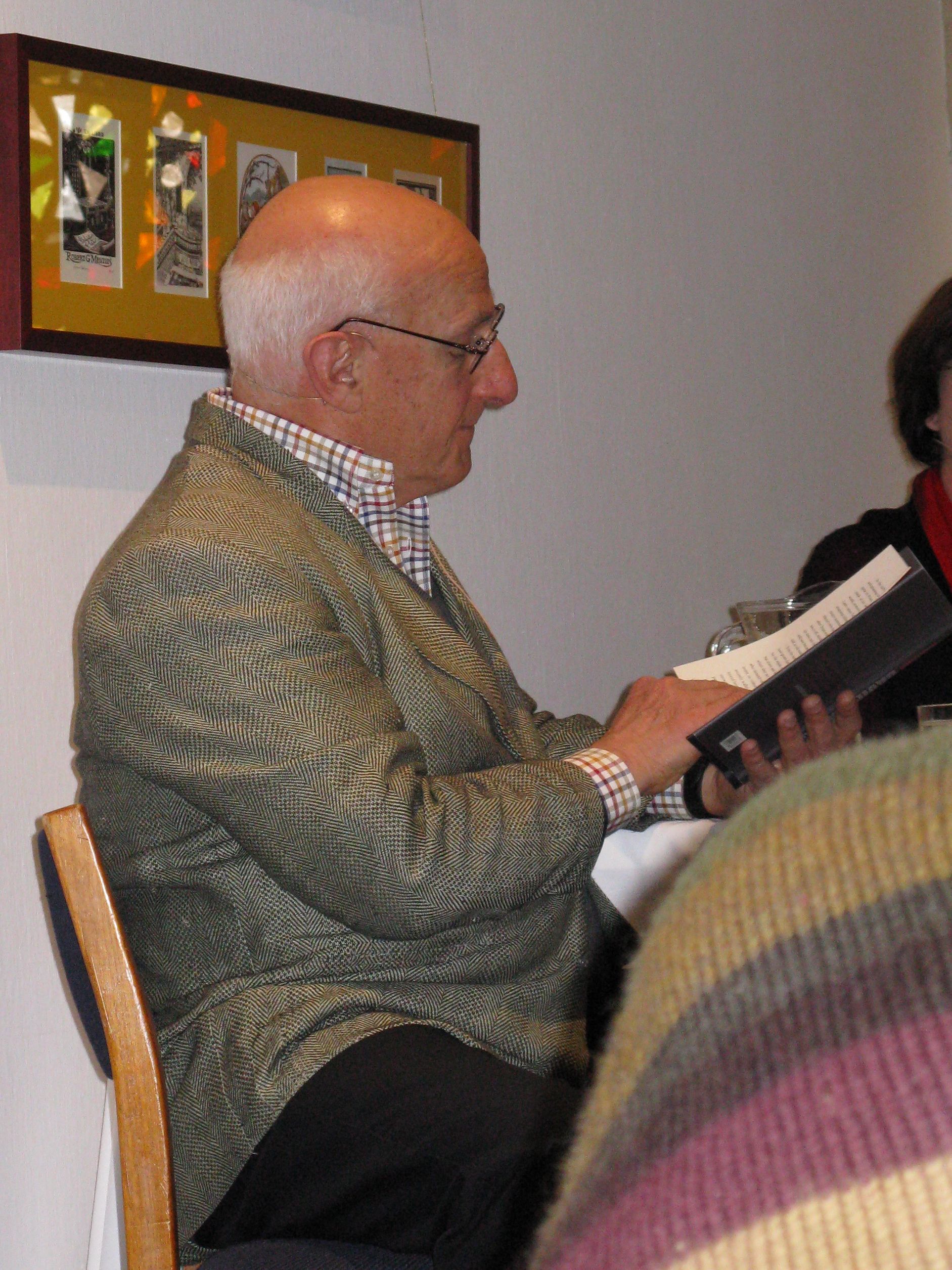
Malouf reading Ransom, National Library of Australia, August 2009
Words are powerful. They too can be the agents of what is new, of what is conceivable and can be thought and let loose on the world. (p. 61)
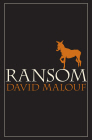
Is risk-taking only the province of the young? Do desperate times call for desperate measures? Or, more to the point, can the impossible be made possible? These are some of the questions that form the core of David Malouf’s most recent novel, Ransom.
WARNING: Spoiler if you don’t know the Iliad!
Ransom, as I wrote in my post last year, is Malouf’s re-visioning of the section of the Iliad (from Books 16-24) which chronicles Patroclus’ death at the hands of the Trojans, Achilles’ revenge killing of the Trojan prince Hector and his subsequent abuse of Hector’s body, and Priam’s visiting Achilles to ask for his son’s body back. Malouf says that he wanted to suggest a new kind of human, non-heroic consciousness, by re-visioning how Priam does this through deciding “do something extraordinary” (Malouf’s words). As Priam discusses with his wife Hecuba
I believe … that the thing that is needed to cut this knot we are all tied up in is something that has never before been done or thought of. Something impossible. Something new. (p. 58)
and
there might be another way of naming what we call fortune and attribute to the will, or the whim of the gods. Which offers a kind of opening. The opportunity to act for ourselves. To try something that might force events into a different course. (p. 61)
Ah, I thought, here is going to be Malouf’s vision (or recipe even) for our conflict ridden times. He wants to show, through Priam’s desire to do “something impossible. Something new” that there is another way of managing conflict. But sadly, that is not what he is about. Sure, Priam does do something audacious – he enters Achilles’ compound as an ordinary man on a plain mule-driven cart driven by an even more ordinary man, the humble carter, Somax. But, I was disappointed, because after a lovely interval of humanity the story plays out as it always does with Achilles dying, and Priam being brutally killed by Achilles’ son. What I hoped Malouf was setting me up for wasn’t his goal at all. It was something both bigger and smaller. Smaller because he is not (really) making a political statement for our times, and bigger because he re-visions the story as one of humans rather than of heroes, and as one in which humans can be self-directed rather than at the whim of the gods. There is some irony here though because, as well as being accompanied by the humble Somax, he is for a while escorted by the god Hermes who facilitates their entry into Achilles’ compound. I did wonder about the meaning of this unlikely trio – common man, king, god – but it is in the original and so is not really part of a new message. That said, this is, as I am sure you are starting to realise, quite a complex book despite its small size – and I am only going to touch the surface here.
Some of the loveliest parts of the book are in fact the most human ones, such as the conversation Priam has with Hecuba when he reveals his idea, and Priam’s journey with Somax in which he learns to enjoy ordinary human (as against royal) pleasures. (“It had done him good, all that, body and spirit both”).
In the end after a beautifully rendered meeting with the conflicted Achilles, Priam achieves his goal and brings Hector’s body back for burial. It is a triumph of his vision, but
It is only a provisional triumph, of course; the gods are not to be trusted when they tilt the balance momentarily in your behaviour. And what sort of triumph is it to be bringing home the body of a son? But he has done something for which he will be remembered for as long as such stories are told …
Yes, he is “a man remade” because he has done a “deed that till now was never attempted”. Achilles too has been transformed (at least for a while): he is “visited by a lightness that is both new and a return”. But, and unfortunately there is a but, the story plays out as it always has…
So, what is it all about – besides, that is, the underlying themes relating to fathers and sons, grief, will versus fate, and humanity versus the gods? Perhaps it is simply this, that you can dare to try the impossible, and you can triumph. How big that triumph is, how long it lasts, is perhaps not the right question. The right question is the original one, “Dare I dream, and dare I do it?” It is also about the power of stories. Priam’s action will now be remembered “for as long as such stories are told”, while his killer, Achilles’ son, Neoptolemus, is not so lucky. The murder is a messy one and so “for him … however the story is told and elaborated, the raw shame of it will be with him now till his last breath”.
UK edition cover (Used by permission of the Random House Group)
In its rather ironic and paradoxical way, then, Ransom is redemptive … and is beautiful for all that. And yet, I do have this little nagging feeling that I’d have liked it to have been a little more. I did in fact want a recipe for our times, a suggestion that we can move our humanity forwards!
David Malouf Ransom
North Sydney: Knopf, 2009
224pp.
ISBN: 9781741668377





 Whispering Gums