Monday musings on Australian literature: For the love of ballads

Gum tree trunks, Rutherglen

Crisscrossing gum tree trunks at Rutherglen

I was first introduced to Australian ballads by my father who loved to read the works of AB (Banjo) Paterson to us. I loved it – my father’s reading and the poems themselves. This love was reinforced in my first year of high school, through my poetry textbook, The call of the gums: An anthology of Australian verse. I treasured this book – and still have it today. It’s organised by subjects/themes, with the first two sections being “Bush songs and ballads” and “Not very serious”.

First though, the introduction. The anthology was selected by one Ian V Hansen, and he starts his brief introduction by saying that:

The world knows Australia; she produces brilliant cricketers and formidable soldiers, athletes and tennis players. But this is not all. She also exports (mostly to Britain) painters, opera principals, concert musicians, scientists … and keeps her poets at home. Which is a pity. This book is an attempt to give some Australian poets the wider school public they deserve.

I don’t know much about Ian V. Hansen, the anthologist, but his introduction gives me a little pause. I wonder how much has changed in the last five decades regarding how the rest of the world sees Australia and its (we don’t use “her” anymore, do we) achievements? Methinks not quite as much as we’d like!

Anyhow, back to the book. It seems that I started my marginalia practice quite young. In the front of the book I have written the following, clearly based on what the teacher taught us:

Ballads

  1. Passed on from one man’s lips to another
  2. They varied because people could not remember all the words
  3. Easy rhythm that can be sung (Folk songs)
  4. A lot are anonymous
  5. A complete story about a happening or story
  6. A lot have a chorus
  7. Narrative (spoken by story-teller)

Well, a few of the ballads in the book are anonymous, they do tell stories, and I’m sure it was my love of ballads that led to my enthusiasm for folk music. While my interest in folk music now ranges widely, a good singer-songwriter telling a moving or funny story will always win me over.

Australia’s best known ballad has to be Banjo Paterson’s “Waltzing Matilda” which tells of the swagman who drowns himself in the billabong rather than be captured for stealing a sheep. It says something rather endearing I think about the Australian character that many would be happy to have this as our national anthem! It is, of course, in this anthology along with many others, including Paterson’s “Clancy of the Overflow”, Adam Lindsay Gordon’s poignant “The sick stockrider”, and Henry Lawson‘s “Andy’s gone with the cattle now”. I’m sure I don’t need to tell you their subject matter: droving was almost the universal theme of the nineteenth century Australian ballad.

Some of the ballads are tragic, and some wistful, but my favourites in this collection tend to be the funny ones, because humour in the face of adversity is often seen as an Australian trait. They celebrate ingenuity, such as Thomas E Spencer’s “How Macdougall topped the score”, or the determination of the bush to prove itself over the city, as in Banjo Paterson’s “The Geebung Polo Club”, or simply explore personality. One such is “Holy Dan” (anonymous), the story of a devout drover who, as he loses his cattle one by one to drought, continues to pray trustingly to God, until only one remains:

‘That’s nineteen thou hast taken, Lord
And now You’ll plainly see
You’d better take the bloody lot,
One’s no damn good to me.’
The other riders laughed so much
They shook the sky around;
The lightning flashed, the thunder roared,
And Holy Dan was drowned.

Another is John O’Brien’s “Said Hanrahan” who is the opposite of optimistic Dan. Hanrahan always expects the worst – and again the theme is the weather. It starts:

‘We’ll all be rooned,’ said Hanrahan
In accents most forlorn
Outside the church ere Mass began
One frosty Sunday morn.

And continues…

‘We’ll all be rooned,’ said Hanrahan,
‘If rain don’t come this week.’

Well, the rain does come but Hanrahan is still not satisfied. Rain, you see, means growth and knee-deep grass, and that means the risk of bushfires. As Hanrahan says, “We’ll all be rooned”!

“Said Hanrahan” also appears in a recent anthology, 100 Australian poems you need to know. The anthologist of this collection, Jamie Grant, writes

…it is significant that a large proportion of the poems I have chosen are distinctly funny … The most striking achievement of our culture, and the distinctive element of our national character, lies in the Australian sense of humour. That sense of humour is often described as “dry”, like the Australian landscape, but it also includes an element of cheerful exaggeration, and a liking for the reversal of expectations. It amuses Australians that our most iconic military adventure was a failure, but it also amuses us that we have produced triumphs where none was anticipated, whether through a stroke of ingenuity such as a winged keel or by winning a race by being the last left standing…

(If you don’t know what Grant is referring to in these examples, just ask the next Australian you meet. S/he is sure to know.) Meanwhile, I’ll be posting more on Australian poetry, but I wanted to start with the ones that first captured my attention… Do you have poems that you remember from childhood?

The call of the gums
(The world of English poetry)
Selected by Ian V Hansen
London: Edward Arnold (Publishers), 1962
180pp.

Jeremy Chambers, The vintage and the gleaning

Jeremy Chambers, The vintage and the gleaning Bookcover

Bookcover (Courtesy: Text Publishing)

There’s something I haven’t had an opportunity to share with you, until now that is – and that is that I love to visit wine regions. Not just because I like wine but also because I like the areas in which wine is made. The landscape is often beautiful, the wineries themselves vary so much in architecture and cellar-style, and, because of the culture that usually attends wine, there is often good dining and, if you’re lucky, some great music too. I was consequently very happy to read The vintage and the gleaning by the new Australian writer, Jeremy Chambers. It is set in in a winemaking town on the Murray River in northeast Victoria, an area I have visited and enjoyed many times – and so I was ready to sit back and enjoy.

And, enjoy it I did. However, there is very little – in fact, I’d go so far as to say none – of the glamour of the wine industry in this book. That this is so is clearly intended by Chambers. As one of the vineyard labourers says near the end, after a night of some violence:

I thought we was meant to be the civilised ones, he says. Winemaking town.

The irony, then, is keenly felt!

So, what is the book about? It doesn’t have a strong plot. Its first person narrator is Smithy, a man who would be in his 60s. He’s now a vineyard labourer, after having been a shearer for 47 years. He’s also now sober, necessitated by poor health from  years of heavy drinking. The story takes place over two weeks – starting on Monday and ending two Mondays later –  and the novel is structured by the days of this fortnight. Most “chapters” (unnumbered and unnamed) commence with the name of the day, and many are followed by “Spit doesn’t show”: “Tuesday, Spit doesn’t show and Lucy catches a snake”. Spit, we discover, is Smithy’s rather recalcitrant adult son, but the story is not about him. Rather, his chronic absence is symptomatic of the pretty dysfunctional masculinity that is the “stuff” of this novel.

Civilised Northeast Victoria - Sunday Creek Bridge, Pfeiffer's Winery

Smithy is a quietly engaging character. Through his inner reflections and discussions with others, particularly the publican’s wife, we learn that drink has been his ruin:

Can’t hardly remember me own life. Because I drank it all away, you understand.

And that

Nowadays I’m doing all the thinking I should have done when I was young … When I could have done things right. But all I got now is memories and regrets. And there’s not a thing in the world I can do about it. That’s it. That’s me life. Gone. Can’t change a thing. Can’t put it right.

Paralleling this is the story of Charlotte, the young woman whom he had found one night on the railway track after she’d been severely beaten by her husband, Brett. In the second half of the novel, just as Brett is being released from jail for this beating, Charlotte (in her mid 30s) stays with Smithy and tells her story. She also sees her life as having “gone”:

I just can’t make a new start … I just can’t. I don’t have it in me anymore. I feel like everything’s over, like it’s already ended …

Chambers gives a lot of time to Charlotte’s story – we learn that she was a “horrible private school bitch” who married Brett, already prone to violence, against her parents’ wishes. She’s inclined to blame others for her troubles – her father who indulged her and Brett for obvious reasons – though she does have the occasional flash of recognition of her own part in her life’s trajectory. And yet, unlike Smithy, who says his life is over but is quietly trying to change, she seems incapable of acting upon the little self-knowledge she has achieved, saying that her life is “not something I can change”. To tell more, however, would give away the plot, such as it is … so we shall leave Smithy and Charlotte here.

While the novel has some awkwardness – Charlotte’s story for example is a little drawn out – my only real reservation relates to the scattered references to Aboriginal Australians, and particularly to the institutionalisation of Aboriginal children. I understand where Chambers’ heart is coming from, but can’t quite connect it all with the rest of the story. It’s perhaps a case of the first-time novelist trying to include too much.

There’s a lot to like about the book. It is carefully structured but not slavishly so. The language evokes the rhythms and atmosphere of the place and its people: birds, insects, the sun, and the ever-present gum trees backdrop the story well and are made to serve the book’s resigned, if not downright foreboding, tone. The dialogue captures what I would describe as “laconic Australian”: terse but with the occasional touch of dry humour. The title is lovely: vintage refers of course to winemaking, but also evokes age in general (and thus Smithy); gleaning is an agricultural term and therefore appropriate, but also implies the gathering of knowledge (such as Smithy does through the course of his life).

This is a very new book, but it has also been reviewed by Lisa at ANZlitLovers. She believes Chambers is a writer to watch, and I can only agree.

Jeremy Chambers
The vintage and the gleaning
Melbourne: Text Publishing, 2010
264pp.
ISBN: 9781921656507

(Review copy supplied by Text Publishing)

Monday musings on Australian literature: Charles Dickens and Australia

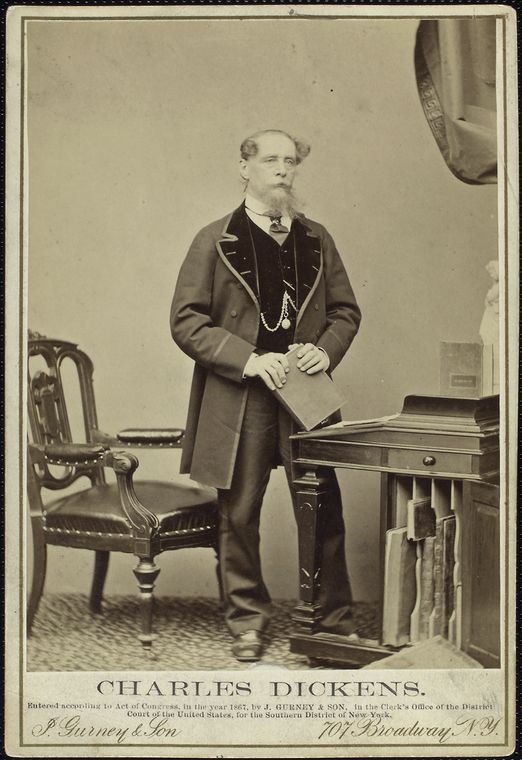
Charles Dicken, c1860

Dickens, c. 1860 (Presumed Public Domain, via Wikipedia)

Here’s something completely different for my Monday musings! Not an Australian author, not even a foreign born author who came to Australia (though, being the great traveller he was, he did consider a lecture tour), but Charles Dickens does have a couple of interesting “connections” with Australia. These connections are supported by the existence of some letters written by him at the National Library of Australia.

On convicts and migration in general

Transportation of convicts to Australia – actual, implied or threatened – features in several of his novels. These include John Edmunds in Pickwick Papers (1836-37), the Artful Dodger in Oliver Twist (1837-1839), Mr Squeers in NicholasNickleby (1838-39), Alice Marwood in Dombey and Son (1846-48), and Magwitch (probably the most famous of all) in Great expectations (1861), not to mention Jenny Wren who threatens her father with transportation in Our mutual friend (1864-65). Dickens apparently learnt quite a lot about convict life, and particularly the penal settlement on Norfolk Island, from his friend Alexander Maconochie (to whom I refer in my review of Price Warung’s Tales of the early days).

Clearly, it was this knowledge which inspired the letter he wrote to the 2nd Marquess of Normanby (George Augustus Constantine Phipps), who was Secretary of State for the Home Office . He suggests

a strong and vivid description of the terrors of Norfolk Island and such-like-places, told in a homely narrative with a great appearance of truth and reality, and circulated in some very cheap and easy form (if with the direct authority of the Government, so much the better) would have a very powerful effect on the minds of those badly disposed … I would have it on the pillow of every prisoner in England. (3 July 1840, Original in the National Library of Australia, Ms 6809)

He offers to write this narrative, gratis. As far as I know, although Dickens and the Marquess were friends, nothing ever came of this offer.

While Dickens deplored the treatment of convicts in the penal settlements, he also saw Australia as a land of opportunity. The transported Magwitch, as we know, made his fortune in Australia. Mr Micawber, debt-ridden at the end of David Copperfield, emigrates to Australia and becomes a sheepfarmer and magistrate. But, perhaps the strongest evidence of Dickens’ belief in Australia as a place where people could get ahead, is the emigation of his sons.

On his sons

Two of Dickens’ sons – Alfred D’Orsay Tennyson Dickens and Edward Bulwer Lytton Dickens* (nicknamed Plorn) – emigrated to Australia, both with their father’s encouragement.

Alfred (1845-1912) migrated to Australia in 1865. He worked on several stations/properties in Victoria and New South Wales and as a stock and station agent, before partnering with his brother in their own stock and station agency, EBL Dickens and Partners. He died in the United States in 1912, having left Australia on a lecture tour in 1910. Dickens’  youngest son, Edward (1852-1902), went to Australia in 1869. He also worked on stations before opening the stock and station agency with his brother. He later worked as a civil servant and represented Wilcannia in the New South Wales Legislative Assembly in 1889-94, but he died, debt-ridden, in 1902 at Moree. Australia did not quite turn out to be the land of opportunity for these two that Dickens had hoped, but fortunately he was not around to see it!

A couple of Dickens’ letters to his sons are held at the National Library of Australia. One was written in 1868, not long before Plorn left England, and includes some fatherly advice:

Never take a mean advantage of anyone in any transaction, and never be hard on people who are in your power …

The more we are in earnest as to feeling religion, the less we are disposed to hold forth on it. (26? September 1868, Original in National Library of Australia, Ms 2563)

One does rather wish that Dickens had taken his own advice regarding not being “hard on people who are in your power” in his treatment of his poor wife Catherine.

Eighteen days before he died in 1870, he wrote this to Alfred:

I am doubtful whether Plorn is taking to Australia. Can you find out his real mind? I note that he always writes as if his present life were the be-all and end-all of his emigration and as if I had no idea of you two becoming proprietors and aspiring to the first positions in the colony without casting off the old connexion (1870, Original in National Library of Australia, Ms 6420).

These are just two of the many letters that he wrote to (and about) his sons in Australia. More can be found in published editions of his letters. I have chosen these particular ones purely because we have them here in Canberra. It’s rather a treat to be able to see Dickens’ hand so far away from his home.

Do you enjoy close literary encounters of the handwritten kind?

Peter Temple, Truth

I think that every novelist has a single ideal reader (Stephen King, On writing)

Peter Temple, Truth

Truth bookcover (Courtesy: Text Publishing)

As I was reading Peter Temple‘s Truth I wondered whether I was Temple’s “ideal reader”. Somehow I think not. I am not a crime novel reader, but I did read and greatly like Temple’s previous book, The broken shore, so why did I feel less enthusiastic about Truth?

Part of the reason might be expectations. This novel won the Miles Franklin award this year. I don’t, theoretically, have a problem with a so-called genre novel winning literary awards but I did expect that if such a book won it would be out of the ordinary, and by that I mean that it would break the mould of its genre in some way. Well, I don’t think Truth does that. Of course, the Miles Franklin doesn’t explicitly say the work has to be innovative; it just says the work must be “of the highest literary merit” and present “Australian life in any of its phases”.

Another reason, related to the above, is that I found it to be a little too stereotypical. While I don’t read crime fiction as a matter of course, I do watch a lot of crime television, particularly those based on the writings of Ian Rankin, Val McDermid, and the like. I didn’t find Temple’s detective here, Steve Villani (who at one point talks of “the full stupidity of his life”), particularly different from many of the other contemporary angst-ridden middle-aged detectives I’ve seen. I didn’t find the plot, which deals with corruption (in the police force, politics and business) to be particularly different either.

So, did I like anything about it? Well, yes. But not for what Val McDermid would expect. She has said that:

As literary fiction became more hermetic, more concerned with literary theory and less concerned with narrative, crime writers assumed the mantle of turning the spotlight on the world we live in and doing it in a form where narrative was still of paramount importance.

Oh dear. I have to say this narrative bored and, at times, confused me. I was not interested in the plot – in remembering who all the characters were and guessing whether this one or that one might have “done it”. I just didn’t care. But, I was interested in Villani and his relationships with people – his father and brothers, his family, his old (now deceased) boss Singo, and his colleagues, particularly the indigenous policeman, Dove, who appeared in The broken shore. It was all a bit typical really – the workaholic cop with the troubled background and failing marriage – but Temple did manage to engage me in this character. He did this largely by telling the story through Villani’s eyes – through a third person limited point of view (or “first person in the third person” as he told Ramona Koval on the Bookshow). We are right there with Villani through one pretty hellish week in his life: horrific murders, bushfire threatening his father’s property, and a runaway daughter, alongside the odd bit of pressure to drop one of the cases because it was “just” a prostitute who’s not worth rocking the boat over.

Peter Temple is well-known for his writing. Ramona Koval describes this book as having “beautifully written ugly scenes”. I suppose they are. There is a lot of staccato dialogue, though Temple does little to explain the language used by the cops. If you don’t know the lingo, you are expected to pick it up as you go. (American readers, however, will apparently get a glossary!). There are a few motifs which run through the book. Smells are important – they convey the corruption and the social disintegration in the city and they play a practical role in solving a crime; and trees are also significant, conveying Villani’s connection with nature and his father, with, that is, something far more healthy than his homicide-driven life:

Below them a forest, wide and deep and dark, big trees more than thirty years old. Planted by hand, every last one, thousands of trees – alpine ash, mountain swamp gum, red stringybark, peppermints, mountain gum, spotted gum, snow gum, southern mahogany, sugar gum, silvertop ash. And the oaks, about four thousand, grown from acorns collected in two autumns from  every russet Avenue of Honour Bob Villani [father] drove down, from every botanical garden he passed.

Lists like this are a feature of the writing and they are effective in building up pictures in the fast moving, rather clipped world of this novel. Rhythm is in fact a significant aspect of the style. As you would expect, the story is mostly grim, but there is the odd bit of humour. I did love this one:

“Say police as caringly as possible. Like a blessing.”
“Jeez, that’s a big ask.”

The title seems to come from a horse which is mentioned only once in the novel:

…the first horse Bob raced, the best horse he ever had had, the lovely little grey horse called Truth who won at her second start, won three from twelve, always game, never gave up. She sickened and died in hours, buckled and lay, her sweet eyes forgave them their stupid inability to save her.

There’s a message in there somewhere – mostly ironic. I kinda like that.

So, my overall reaction? I don’t usually read reviews before I post, but I do when I’m preparing for my bookgroup. One of the reviews I read was Edmund Gordon’s in The Guardian. I like his conclusion that it’s an accomplished book but doesn’t escape the bounds of its genre. I was, I realise, hoping it would – and that means I’m not Peter Temple’s “ideal reader”. You, however, may be.

Peter Temple
Truth
Melbourne: Text Publishing, 2009
387pp.
ISBN: 9781921520716

Monday musings on Australian literature: Some Australian expat novelists

Australia is the only country I have come across that divides its writers into residents and those who have dared to live elsewhere. Can one imagine Americans writing of Ernest Hemingway, or the Brits of Auden, thus? (Carmen Callil, Australian-born founder of Virago Press)

That answers one of my questions: that is, whether other nations talk about “expats” the way we do. Apparently they don’t. Is it the oft-quoted Australian cultural cringe? Is it envy? Perhaps I’ll just skirt the issue and say that Australians have a bit of a reputation for wanderlust, so I’m not surprised that we have our share of novelists who have gone overseas and stayed. One of those is Kate Jennings whose “fragmented autobiography”, Trouble, I reviewed last week. Kate Jennings went to New York in 1979, and has not returned (except for regular visits). In her book, she includes interviews with three other expat Aussie writers, Sumner Locke Elliott and Ray Mathew (both now deceased), and Shirley Hazzard. I thought it might be interesting to talk a little about some of our still-living novelists who reside in the USA.

But first, Ray Mathew, the least known of Jennings’ three interviewees. I hadn’t heard of him until a few years ago when he was the subject of one of the National Library of Australia’s (NLA) gorgeous little “A Celebration” books, using funds bequeathed in his name by his American friend and patron, Eva Kollsmann. The Ray Mathew and Eva Kollsmann Trust is a significant bequest which funds a number of initiatives at the NLA. One of these is the annual Ray Mathew Lecture which is to be given by “an Australian living abroad”. The first lecture was given in 2009 by Geraldine Brooks, and the second, this year, by Kate Jennings.

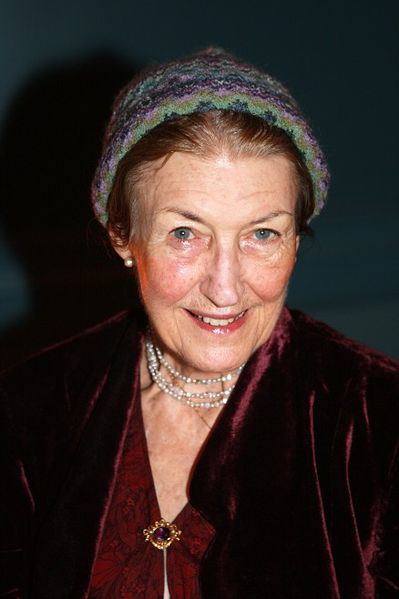
Shirley Hazzard

Hazzard, 2007 (Courtesy: Christopher Peterson, via Wikipedia, using CC-BY-SA 3.0)

For brevity’s sake – and because I’ve read each of these writers – I’ll just focus in this post on five Australian expat novelists based in the USA. Some of them are very well known internationally, moreso than many of our home-based writers. This is not surprising I guess: if you live in the USA and get published there your market potential is far greater than it would be at home. That said, the lure of increased fame and fortune is not the reason these writers moved overseas:

  • Geraldine Brooks: moved to New York in 1983 to study, met and married American journalist (Tony Horwitz), and now splits her time between Australia and the USA. Geraldine Brooks titled her Ray Mathew lecture, “The opportunity of distance”. She’s the youngest of these five and, perhaps, has the most uncomplicated view of her relationship with home. She has travelled widely and discussed in that lecture all the benefits that have resulted, but her final point is:

For all its opportunities, distance can still feel like a tyrant, sometimes, when a partner’s work or a kid’s schooling means we must spend more time there than here. The oscillation stalls, the roots start to dry out. It’s like a high stakes game of musical chairs. Round the world you go, and then the music stops and you have to sit down somewhere, but it’s not quite the chair you were aiming for.

  • Peter Carey: moved in 1990/91 to New York with his wife to work in their respective careers, and has remained there. Peter Carey, not surprisingly given his status, is often asked about his expat status. Here is what he said in an interview for the Paris Review:

Of course, there is a specially reserved position in Australian culture for the expatriate. The prime expatriates—people like Clive James, Germaine Greer, Robert Hughes—belong to an earlier generation than mine. When these people return to Australia, they are asked, What do you think of us? How are we doing? The expatriate is occasionally lauded and occasionally fiercely criticized for daring to come back and judge. I try to stay away from that as much as humanly possible. I don’t feel at all like an expatriate….

  • Shirley Hazzard: moved to Hong Kong with her parents in 1947 when she was 16 years old, ending up in New York in 1951 where she has been mostly based since, though does spend time regularly in Capri, Italy. A webpage on Shirley Hazzard summarises her expat status in this way:

Hazzard does not reject her designation as an Australian writer but insists her temperament is not national. She only took out United States citizenship twenty-five years after she began living in New York, on the resignation of Richard Nixon. Eschewing nationalistic identifications, she does not consider herself as an expatriate, and emphasized that “to be at home in more than one place” (Gordan and Pasca). However, her novels are full of displaced Anglos in Hong Kong and Italy, or displaced Australians in London and New York.

  • Janette Turner Hospital: moved to Boston in the mid 1960s with her husband, and has lived in Canada and the USA. She now splits her time between these two countries and her home state of Queensland. In an early Griffith Review, Hospital commented on the impact of modern technology on being physically displaced, and wrote:

Place is unequivocal. But virtual communities and diaspora organizations suggest that you don’t always need to be somewhere to be a part of something. You can check the surf report, vote, play scrabble, watch the evening news, buy a car or be connected to country from the other side of the world. This new reality reflects an age-old truth: that home is where the heart is. It offers a new kind of citizenship. One we’re defining as we go.

  • Kate Jennings: as described above. She bookends Brooks nicely: not only because they gave the first two Ray Mathew lectures but because they both value travel highly but offer almost opposing conclusions. Here is Jennings from her lecture:

I have lived now in New York nearly as long as I lived in Australia. Heretical as it might seem, Australia is neither my country nor my home, as it is for Geraldine. It’s the place I started from, to paraphrase TS Eliot slightly. It shaped me, but so have my 30 years in New York city. I have, as Robert Dixon put it, ‘overlapping allegiances and multiple affiliations’.

Well, that lot provides enough to think about I reckon. I was going to talk a little about these writers’ works but I’ve taken up enough of your time for this Monday. More anon… Meanwhile, if you’ve lived away from “home” for any period of time, what do you think about all this?

Kate Jennings, Trouble: Evolution of a radical

Kate Jennings, Trouble, bookcover

Bookcover (Courtesy: Black Inc)

I’m not going to beat about the bush but tell it like it is: I absolutely gobbled up Kate Jennings’ Trouble: Evolution of a radical: Selected writings 1970-2010. It took me a fortnight to read it, partly because I’ve been pretty busy but also because there was so much to savour and take in that I did a lot of stopping and thinking. That said, I do have one whinge, so I’ll get it over with now: it has no index. The book is described as an “unconventional” or “fragmented” autobiography and it is chock full of content. She mentions people, she discusses books and genres, she talks about politics, economics and feminism, not to mention all sorts of enthusiasms including, would you believe, swimming pools and shopping! I can see myself wanting to refer to it again and again but each time I’ll have to flip through it to find the idea or topic that I want to explore. Just as well I’m a marginalia person is all I can say!

So, who is Kate Jennings (b. 1948)? She is an Australian-born writer (poet, novelist, short story writer, essayist) and feminist, who stunned Australia with her Front Lawn speech in 1970, confronting progressive men, in particular, with their sexism. She moved to New York at the end of the 1970s and, in one of her iterations, worked as a speechwriter for a couple of large Wall Street firms in the 1990s. Somehow, she seems to have managed to do that without losing her critical eye. I have not yet read her novels, but will (finally, and rather coincidentally) be reading Snake in the next month or so.

Why did I like the book? This is how Jennings describes it in her preface:

This book, then, is a stand-in memoir. I’ve assembled pieces  – essays, speeches and poems, along with short stories and passages from my novels that actually happened – so that a reader might have a narrative of sorts.

On reading this you could be forgiven for fearing a mish-mash but fortunately that’s not what you get. The book is divided into 9 parts, each introduced by Jennings with a current reflection on the aspect of her life and career covered by that part. These parts move more or less chronologically through her life, though the readings themselves jump around a bit. This is because, like most of us really, she revisits some parts of her life many years after they occur, while others are documented at the time of their occurrence. The press release which came with my copy describes it in the following terms: “no-holds-barred” and “pull-no-punches”. What’s that, you say? They’re clichés! They are, but they describe the book perfectly, because this is a fiercely honest book written by a rather formidable woman. How else to describe someone who defiantly affirms, in almost one breath, her commitment to feminism and Jimmy Choo shoes, who calls herself a pragmatist but also argues passionately that “these are times of moral poverty”.

I think at this point I will just dot-point the parts to give you a sense of what she covers, because I fully intend to explore many of her ideas in more detail in the coming weeks/months.

  • Presumption: the making of her intellect, covering the years from 1970 to the late 1980s.
  • A child of grace, a landscape of progress: her childhood in the Riverina area of New South Wales, told mainly through excerpts from her novels and poems.
  • Cause and not symptom: her youth, focusing particularly on her introduction to alcohol (and subsequent joining of AA).
  • You don’t understand! What do you know! You don’t live here!: the life of an Australian expat in the USA explored mostly through her interviews with three other expat writers: Sumner Locke ElliottShirley Hazzard and Ray Mathew.
  • Catching a man, Eating him: her romantic life, which, with some self-mockery, she views through the songs of Dusty Springfield.
  • Crazed, delinquent fabulousness: an eye-opening sampler of her essays from 1990 to 2009 showing what a hard woman she is to pin down!
  • A bright, guilty world: more essays, these ones about her life as a speechwriter on Wall Street during the 1990s, including the full text of her Quarterly Essay 32, titled “American revolution: The fall of Wall Street and the rise of Barack Obama“. She has much to say about the GFC.
  • Irrelevance is deadly: how literature has (or hasn’t) dealt with the issue of business and finance.
  • Cut the shit: two no-holds-barred (yep, bring on the cliché!) essays which, she says, bring us back full circle to her main themes: “The first, a foray into my dusty childhood and Aussie alcoholism and masculinity through the re-release of the movie Wake in Fright, and the second, into poetry and the reasons I forsook it – or it, me – and a pet peeve: closed minds”.

I know it’s a bit of a copout, but I feel I can’t do justice to this book without writing my own Quarterly Essay and so, as I’ve already said above, I will return to it in future posts. In the meantime, the question to ask is: How does it work as an autobiography or “stand-in memoir”. I say very well. It does the things I look for: it tells me the main facts of her life, it shows me her interests, beliefs and values, and it gives me a sense of her personality (which is intelligent, opinionated, fearless and principled). Fragmented it might be in structure, but coherent it is in portraying a life.

In one of the poems she includes in the book, she writes:

… Saying simple things

well or complicated things simply is an art
that is fast disappearing …

Fortunately it is an art that Kate Jennings has not lost.

Kate Jennings
Trouble: Evolution of a radical: Selected writings 1970-2010
Melbourne: Black Inc, 2010
319pp.
ISBN: 9781863954679

(Review copy supplied by Black Inc.)

Ah, sweet synchronicity of life!

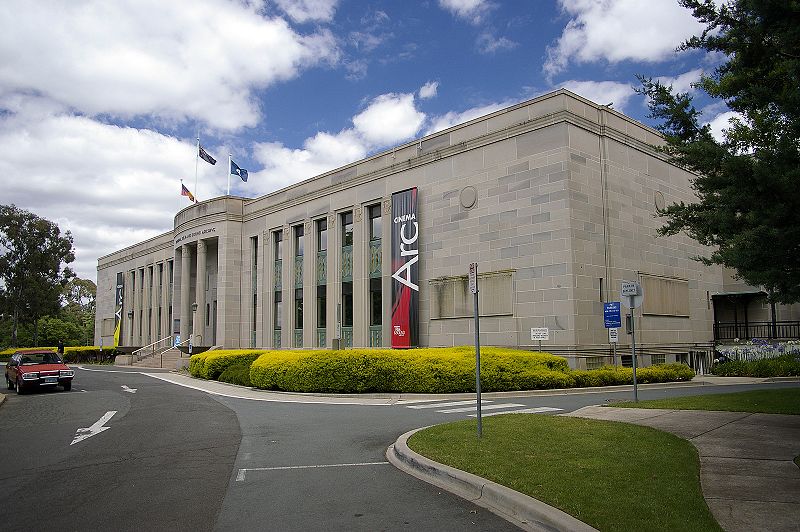
NFSA exterior

Exterior of my previous home-away-from-home (Courtesy: Bidgee, via Wikipedia, using CC-BY-SA 3.0)

Ok, I know that “synchronicity” doesn’t really scan with “mystery” but it just felt right.

Last night, wearing one of my hats, I attended the National Film and Sound Archive‘s event, Coo-ee: Sound Day: Sounds of Australia 2010. (Phew, that’s a mouthful isn’t it?). Sounds of Australia is an NFSA initiative aimed at creating a register of recorded sounds that Australians deem significant. These sounds can be songs, speeches, jingles, sporting announcements, and so on. Anyone can nominate, and the final selection for each year’s additions is made by a judging panel.

Well, I was astonished (but pleased) to find that one of this year’s additions is Oodgeroo Noonuccal reading one of her most famous poems, We are going. This poem appeared in her first 1964 anthology as well as in My people which I listed in this week’s Monday Musings post. It was one of the poems that I remembered from my youth and considered using in that post. You can hear her, clear and strong, online at the Sounds of 2010 website – scroll down to 1986. Here are the last lines of the poem:

The scrubs are gone, the hunting and the laughter.
The eagle is gone, the emu and kangaroo are gone from this place.
The bora ring is gone.
The corroboree is gone.
And we are going.

See why I like her? Simple but powerful.

Monday musings on Australian literature: Indigenous writers

Tara June Winch

Tara June Winch (Courtesy: Friend of subject, via Wikipedia, under CC-BY-SA 3.0)

It’s important I think that my third post be on our indigenous writers. Again it’s going to be pretty idiosyncratic as my reading in this area has been scattered, not for lack of interest so much as the old “so many books” issue that we all know only too well. I was first introduced to indigenous writing at high school where I had two inspirational teachers who encouraged us to think seriously about human rights. It was then that I bought Oodgeroo Noonuccal’s (or Kath Walker as she was then) book of poetry, My people.

In my first Monday Musings post, I mentioned David Unaipon who is generally recognised as the first published indigenous Australian author. However, it was Oodgeroo Noonuccal, with her book of poetry, We are going (1964), who heralded contemporary indigenous Australian writing. So let’s start with her.

Oodgeroo Noonuccal My people (1970, poetry)

Noonuccal’s poetry is largely political. She wrote to right the wrongs which indigenous Australians confronted every day: the racism, the white-colonial-slanted history, the lack of land rights, and so on. Much of her poetry is therefore strong but accessible “protest” poetry. My people collects poems from her first two books and includes new works as well. Here are just a few lines to give you a sense of what she was about:

… Do not ask of us
To be deserters, to disown our mother,
To change the unchangeable.
The gum cannot be trained into an oak.
(from “Assimilaton – No!”)

Gumtree in the city street,
Hard bitumen around your feet,
Rather you should be
In the cool world of leafy forest walls
And wild bird calls.
(from “Municipal gum”)

I love the way she uses gums to represent her people – who they are, where they should be. Some of the poems are angry, some are conciliatory, and others celebrate her culture. I loved the book then, and I still value it now.

Sally Morgan My place (1987, memoir)

The next book in my collection, chronologically speaking, is Sally Morgan’s memoir My place. Sally Morgan is primarily an artist but her memoir became a best seller when it was first published. In it she chronicles how she discovered at the age of 15 years old that her colour did not come from an Indian but  an Aboriginal background, and her subsequent investigations into her family’s rather controversial story. I don’t want to go into the controversy here. Rather, the point I’d like to make is her story-telling: it is warm, funny, and thoroughly engaging.

Women of the centre (1990, short life-stories); Black chicks talking (2002, short life-stories produced in film, book, theatre and art)

Telling stories is an intrinsic part of indigenous Australian culture. It’s how traditions have been passed on for 40,000 years or more. It’s probably simplistic to draw parallels between traditional story-telling and the telling of stories in general. After all, we all love stories. Nonetheless it is certainly clear from the little experience I’ve had and the reading I’ve done, that story-telling is an intrinsic part of indigenous Australian culture and is becoming an important way of sharing their experience with the rest of us. This was powerfully done in Bringing them home: The stolen generation report of 1997 which contained not only the history of the separation of children from their parents and recommendations for the future, but many many first person stories which drove the drier points home.

Two books that I’ve read which contain personal stories by indigenous women are Women of the centre and Black chicks talking. The introduction to the former states that its aim is to help we non-Aboriginal Australian readers to understand lives that are so different from our own and “to provide personal written histories for the descendants of the women involved”. This latter is becoming an urgent issue in indigenous communities today – the capturing of story before more is lost. In Black chicks talking Leah Purcell interviews nine Aboriginal woman – some urban, some rural, some well-known, some not – about their lives. Another wonderful read.

Life stories/memoirs represent, in fact, a significant component of indigenous literature. Another work worth mentioning, though I’ve only seen the film and not read the book (shame on me!), is Doris Pilkington’s “stolen generation” story of her mother’s capture and subsequent escape involving an astonishing trek home, Follow the Rabbit-Proof Fence.

Alexis Wright Carpentaria (2006, fiction); Tara June Winch Swallow the air (2006, fiction); Marie Munkara Every secret thing (2009, novel)

Finally, a brief mention of three recent fictional works, two of which I’m ashamed to say are still in my TBR pile. These are the two David Unaipon Award winners by Tara June Winch and Marie Munkara. If you are interested in the latter, please check Musings of a Literary Dilettante’s review.

I have though read Alexis Wright’s Miles Franklin Award-winning Carpentaria. It’s set in a fictitious place, tellingly called Desperance, in northern Australia. Its focus is colonialism (ie European invasion of the land), and conflict within black communities about how to respond. To explore these, Wright touches on lot of ground, including land rights, deaths in custody, mining rights, boat people, and petrol sniffing to name just a few. She flips between the real and the magical, she uses language that is image-rich and often playful, and she tells some very funny stories. It’s a big, wild and rather complex read that manages in the end to be hopeful despite itself.

This is just a small introduction to the wealth of Australia’s indigenous literature. It won’t be the last time I write about it. I will also in the future post on white Australians who have written about Aboriginal Australians, writers like Thomas Keneally who wrote The chant of Jimmie Blacksmith but who now says he wouldn’t presume to write in the voice of an indigenous Australian. A vexed question really. I believe there should be no “rules” for writers of fiction and yet, sometimes perhaps, it is best not to appropriate voices not your own. But that is a question for another day…

Meanwhile, back to Alexis Wright – and stories:

Old stories circulating around the Pricklebush were full of the utmost intrigues concerning the world. Legends of the sea were told in instalments every time you walked in the door of some old person’s house. Stories lasted months on end, and if you did not visit often, you would never know how the story ended. (Carpentaria, p. 479)

Monday musings on Australian literature: 5 to get you started

Among the responses to my first Monday Musings post was one from Ingrid of The Blue Bookcase suggesting I post my 5 favourite Australian novels. I had planned something else for this second post but that can wait, as this seems like a great idea. However, rather than post my 5 favourite novels, I’ve decided to nominate 5 novels that might be a good introduction for newbies to Australian literature. Like all lists, it’s very subjective, and as soon as I hit publish I’ll think “why didn’t I choose X?”, but it’s a start and there is some method in its madness. Anyhow, you never know, it may get a bit of discussion going on other worthy “starter” books.

Miles Franklin

Miles Franklin (Presumed Public Domain, via Wikipedia)

5 Australian novels to get you started

  • My brilliant career (1901), by Miles Franklin. It’s hard to go past this one, not only because Miles Franklin endowed what is our most significant literary award, but because it’s a semi-autobiographical novel about a young woman who is determined to be a writer (rather than marry well). What reader can resist a story about a would-be writer? On top of this, Franklin grew up in the countryside around where I live!
  • The harp in the south (1948), by Ruth Park. Set half a century after My brilliant career in an urban rather than rural setting, and dealing with working class rather than farming people, Parks’ novel is the perfect companion piece. It’s a down-to-earth, realist but warm-hearted, novel about the struggle to live in the slums of post-war Sydney. For a recent review, check out Lisa’s at ANZLitLovers.
  • Fly away Peter (1982), by David Malouf. As well as being a novelist, Malouf is a poet, and it shows in his novels, particularly in this beautiful novella set before and during World War I. Don’t let the “poetry” claim put you off, because this is a very accessible story exploring relationship to land and nature, the class divide, and war. It covers a lot in its 130 or so pages.
  • Cloudstreet (1991), by Tim Winton. This is the only novel of the 5 I’ve listed to be set in the west. It is also the one that in recent times has been most commonly voted as our favourite Australian novel. Like The harp in the south, its characters are “battlers”: the Lambs who believe in hard work, and the Pickles who prefer to chance their luck. Winton puts these two families together in one house and explores their lives over two significant decades, from 1943 to 1963.
  • The secret river (2005), by Kate Grenville. I had to include this one, after mentioning it in last week’s 5 random facts. It is Grenville’s envisioning of what might have happened in the Sydney region when the white settlers – the farmers in this case – came face to face with the indigenous inhabitants in the early years of settlement. Despite official journals and various newspaper reports, there is little documented history of the day-to-day experience of those times. The book won a few awards, but also met its share of controversy, particularly from historians. Some argued that, in her statements on her aims in writing the book, she (unacceptably) blurred the line that separates history from fiction. Others argued that her creation was too 21st century, was not “true” to the times. Partly (wholly?) to answer these critics, Grenville wrote Searching for The secret river in which she detailed the origins of the book and the research she undertook, and then the process by which she changed from writing a non-fiction book to a novel.

What, do I hear you say? No Elizabeth Jolley or Thea Astley or Helen Garner? No Christina Stead or Peter Carey? Not to mention the grand man himself, Patrick White? And no indigenous writers, either? No, not this time. Not because they aren’t wonderful but because this list has a very specific purpose of easing newbies in and at the same time offering a bit of breadth. It’s still pretty narrow though: three of the five were written post 1980 though they cover a wider period, and three are set in New South Wales. But it’s a start. We have plenty of time to explore more.

Meanwhile, if you have books you think work well as an introduction to Australian literature, please share them with us.

Postscript: Before closing this post, I’d like to say a big thanks to all of you who responded to my post last week (and to those of you who read it and didn’t respond. You’re most welcome too!) It was encouraging to receive such interest. I look forward to continuing our conversation through this and future posts – and welcome any ideas for topics you’d like to explore.

Monday musings on Australian literature: Making a start

Whispering Gums is now 15 months old and I’m still playing with what I am doing here – but one thing I haven’t played with is my desire to help promote Australian literature. And so I’ve decided to formalise this a bit through a weekly post titled “Monday musings on Australian literature”. This is somewhat of an experiment for me. I haven’t fully worked out how I’ll proceed – or where I’ll ramble – but I do hope to entice the occasional guest blogger to share some aspect of their experience of Australian literature. Watch this space.

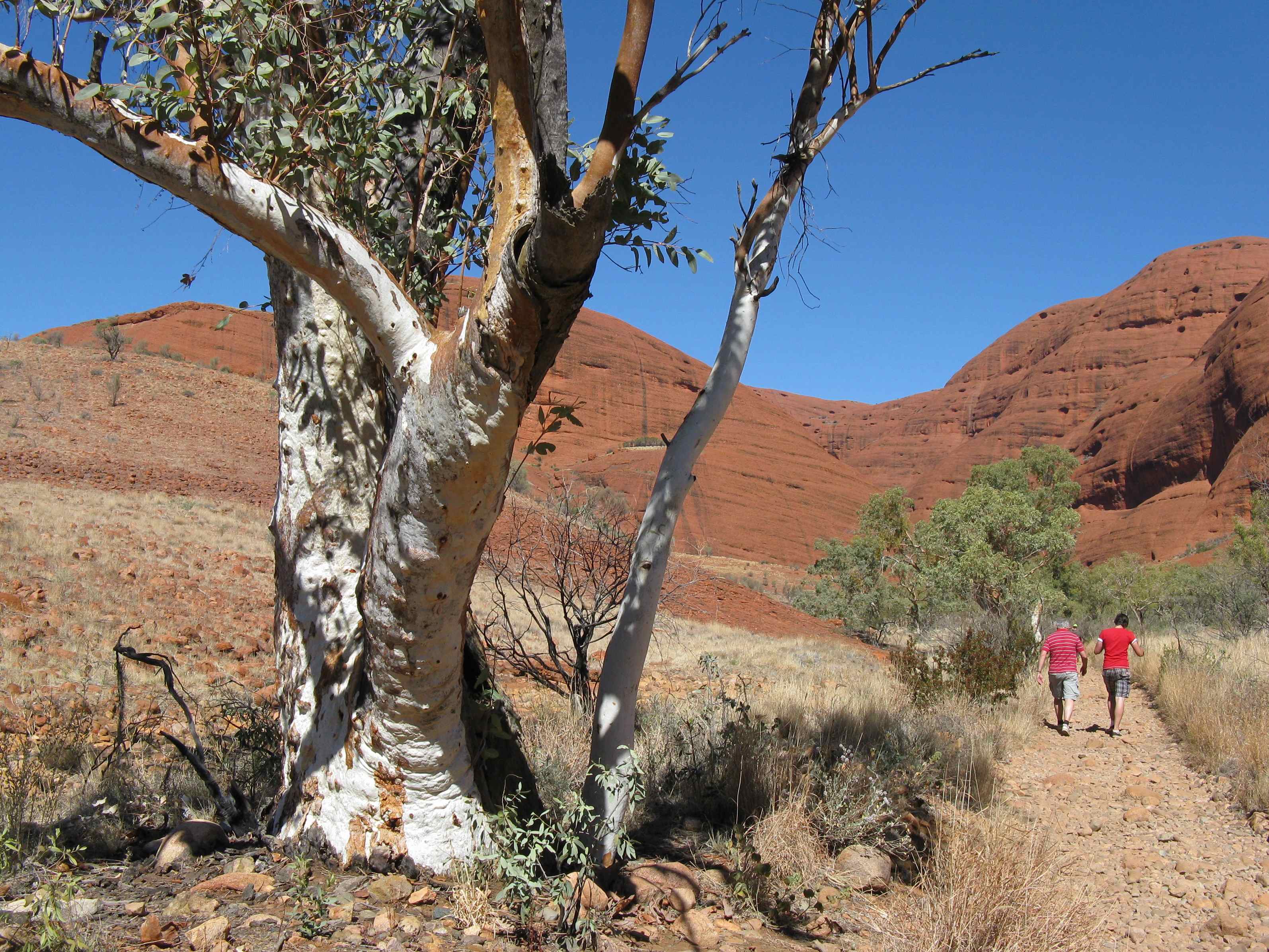
Dry creek bed, Kata Tjuta

From the dry (creek bed, Kata Tjuta in Central Australia)

How to start things going though? How about this?

5 random, and possibly little-known, facts about Australian literature

  1. Australia has only one Nobel Laureate in Literature: Patrick White in 1973
  2. Melbourne was the world’s second UNESCO City of Literature
  3. The first Australian-born woman to publish a novel in Australia was probably the pioneering botanist and  journalist, Louisa Atkinson, with her Gertrude: the emigrant (1857)
  4. David Unaipon (1872-1967) is generally regarded to be the first indigenous Australian writer and is commemorated on the Australian $50 note and by the the David Unaipon Award for Unpublished Indigenous Writers
  5. The most taught Australian text in 2010 (in Australia), according to the Teaching Australian Literature website, is Kate Grenville’s The secret river.
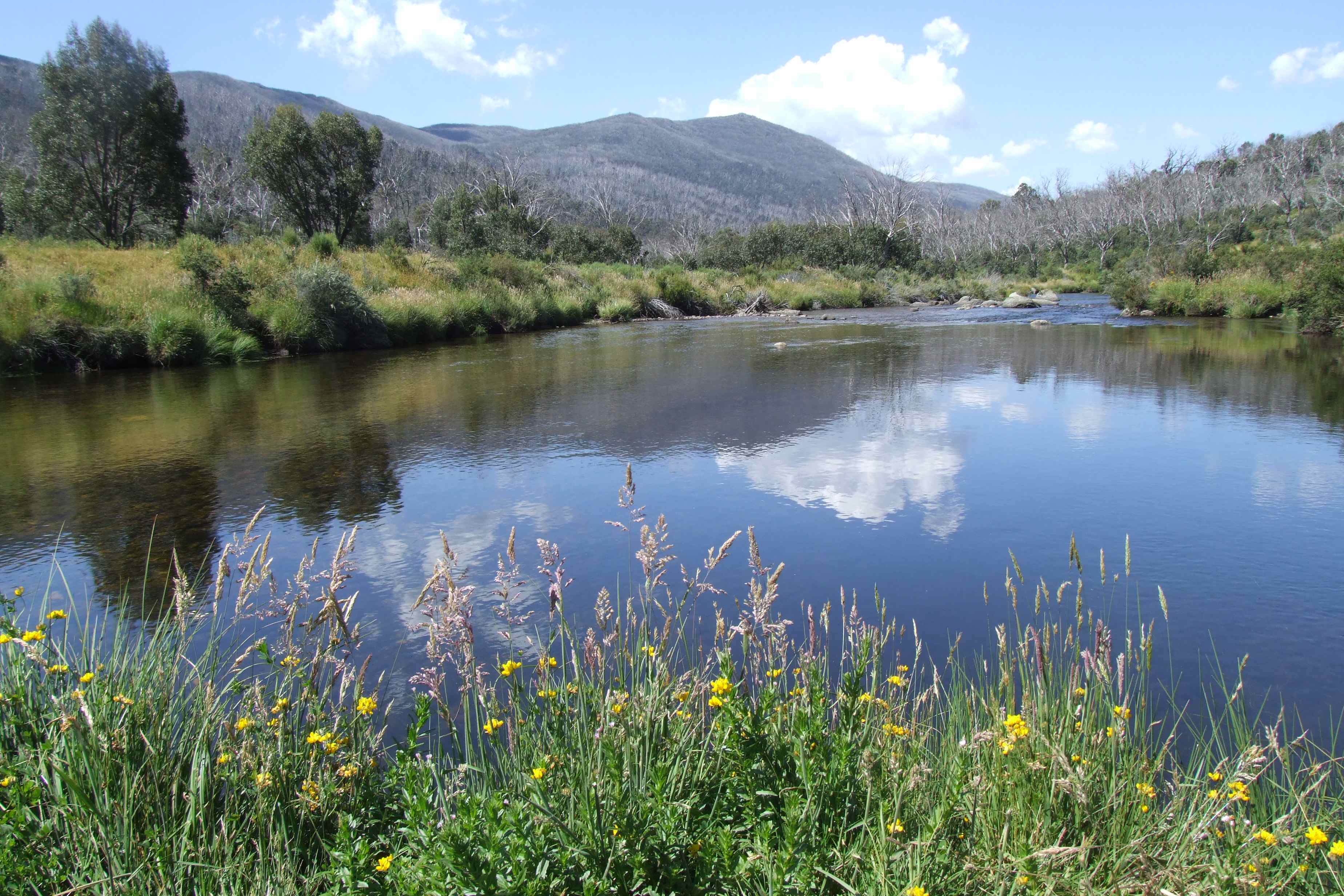
Thredbo River, Kosciuszko National Park

To the wet (Thredbo River, Kosciuszko National Park)

Well, there’s the start – brief though it is. I hope in future weeks to explore in more depth all sorts of writers, works and issues relating to literature in Australia. It will be rather serendipitous. Meanwhile, I’d love to hear from you about your favourite Aussie writers…