Monday musings on Australian literature: Aussie writers and Jane Austen

Jane Austen sketch by Cassandra

Cassandra's portrait of her sister, c. 1810

Funnily enough, I’m not the only Australian who loves Jane Austen – and so we too have our very own Jane Austen juggernaut. We see the films and miniseries, we have the Jane Austen Society of Australia – and we have academics and others researching and writing on all sorts of topics relating to her. Today, I thought I’d post about one of the lighter Australian-published books on her because it is, after all, that time of year when we tend to relax the brain power a little – or, at least, I do. The book is Jane Austen: Antipodean views (edited by Suzannah Fullerton and Anne Harbers).

I clearly remember when this book was published, nearly 10 years ago, because it included comments that I related to – that tickled me, in some cases – by some Aussie writers, and so this is what I’m going to share now.

The comment that made the greatest impression on me was the one from John Marsden, a popular and award-winning Australian children’s writer:

I’ve deliberately refrained from reading Persuasion, so that I would never get to the point where I had no more Jane Austens left to read. When the doctor, with grave countenance, gives me the news that I have only three months, the grief will be mitigated by delight that at last I am allowed to read Persuasion. In the meantime, I am avoiding crossing roads when busses are in sight.

Now, I can relate to this because I too saved a Jane Austen for quite a long time. Although I’d reread all of the others a few times, I was saving Mansfield Park for the same reason. Finally, a decade or so ago, I decided that I could put it off no longer (mainly because the Patricia Rozema film version was coming and I wanted to read the book first!). I’m glad I changed my mind and I hope Marsden has too, as rereading Jane Austen is as enjoyable, really, as reading her the first time. Why deny yourself that pleasure?

Close to that one is the following from one of my very favourite Australian writers, Elizabeth Jolley:

I find in old age, I have forgotten the novels, in particular the magic of being lifted into other lives and background. Re-reading is one of the Best Things of old age. Forgetfulness – it’s like having a present.

This one tickles me because my reading group often jokes that when we get to a certain age – and it’s moving rapidly closer – we’ll read the same book over and over because it’ll be new every time! I’ll be very happy if that one book is a Jane Austen…

My third favourite comment – and those of you who regularly read my blog will soon see why – comes from the mellifluous broadcaster and writer, Phillip Adams:

The longer I live the more bored and irritated I am by excess  – and the more grateful to find such a wide range of emotions, and such accuracy of observation, in the less-is-more prose of that remarkable woman.

“Less-is-more”. Exactly so! Need I say more?

There are many more comments along similar lines to those above but, just to be even-handed, I’ll end with the words of the award-winning but clearly unenlightened children’s book author and illustrator, Graeme Base:

Jane who?

The cheek of it!

Suzannah Fullerton and Anne Harbers (eds)
Jane Austen: Antipodean views
Neutral Bay: Wellington Lane Press, 2001
168pp
ISBN: 9780908022168

Monday musings on Australian literature: Silly names for the silly season

Burrumbuttock sign

22 kms to Burrumbuttock (Courtesy: Carolyn I)

It’s nearing Christmas, and I’m getting busy, so today’s Monday musings will be short …

Ever since I started this blog series, I have wanted to write about Australian place names. We are not, I know, the only country to have interesting or fun place names – and I’d love it if you shared your favourites in the comments – but we do have some good’uns Downunder.

Oodnadatta,
Parramatta
Names to make your tonsils chatter

(From “Patter”, by Ronald Oliver Brierley)

Oodnadatta and Parramatta are just the beginning. What about Cabramatta, Wangaratta and Coolangatta? And then there’s Woolloomooloo. You have to concentrate to spell that one! (It’s a bit like, I suppose, Mississippi, isn’t it?) Many of these places appear in Lucky Starr‘s tongue twisting “I’ve been everywhere” song. You can listen to it online if you like… I love all these names. They tend to sound silly and poetic at the same time, and because of this many of them have found (and still find) their way into Australian verse and song.

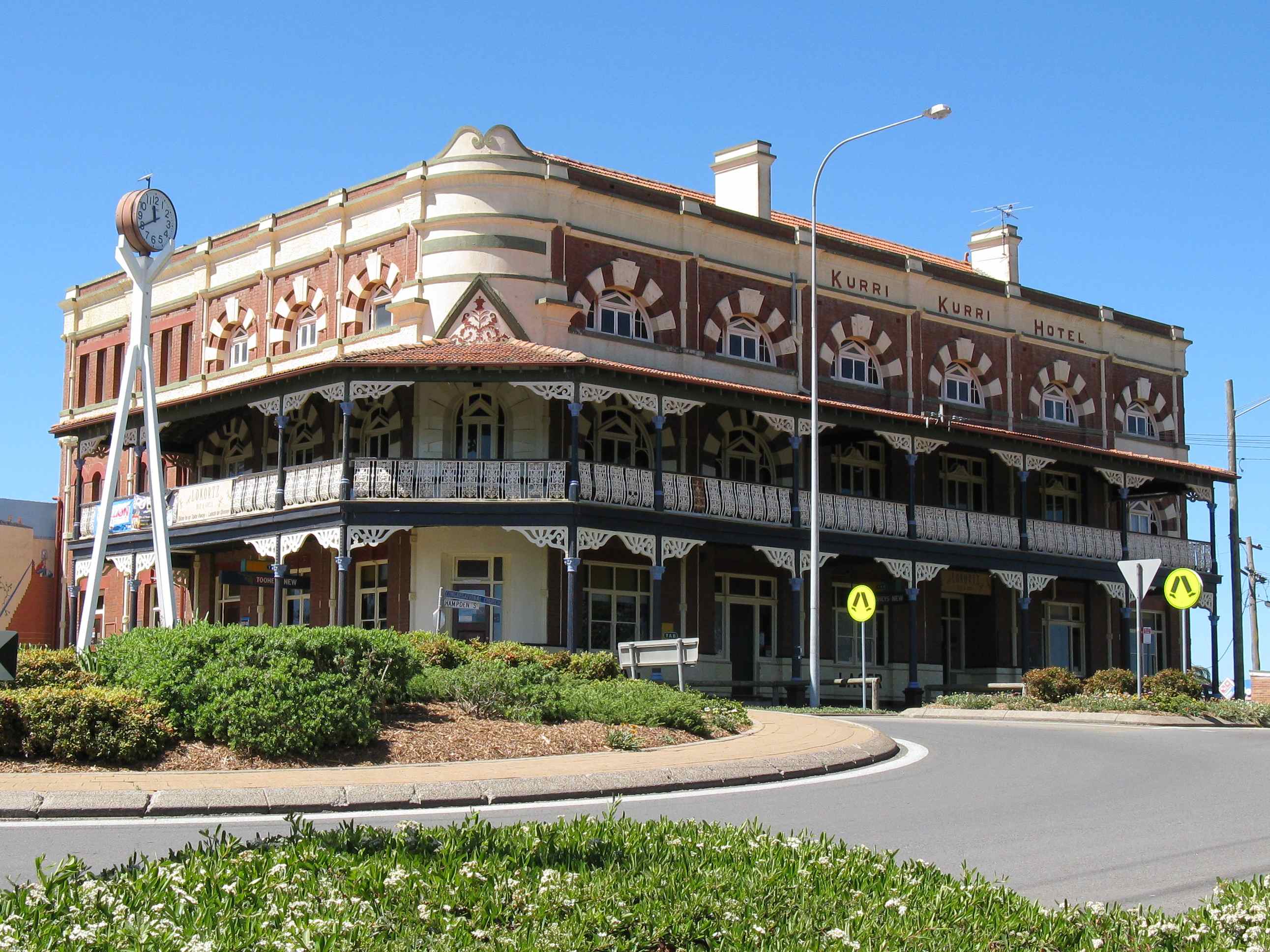
Kurri Kurri Hotel

Kurri Kurri Hotel, Kurri Kurri, NSW

But, there is a type of name that is rather endemic here, and that is the reduplicated place name. The best known one is probably Wagga Wagga – “Don’t call Wagga Wagga Wagga”* – but it’s just one of many. Here are some of my favourites: Bong Bong, Drik Drik, Gatum Gatum, Grong Grong, Kurri Kurri, Tilba Tilba and Woy Woy. You can find more in Wikipedia. English comedian Spike Milligan‘s parents moved to Woy Woy in the 1950s, and Spike wasn’t above making fun of the town. In his novel Puckoon, he wrote

There is, somewhere in the steaming bush of Australia, a waterside town called Woy Woy (Woy it is called Woy Woy Oi will never know).

Finally, in a related but somewhat different vein, is the poem, “The Integrated Adjective” about the great Australian adjective. If you don’t know what that is, you soon will. The poem was written by John O’Grady, who wrote, under the pseudonym Nino Culotta, the 1957 novel, They’re a weird mob, a comic tale of an Italian migrant’s struggles to understand and fit into his new country. Anyhow, “The Integrated Adjective” is set in a bar and is the narrator’s record of the bar-time talk he overhears:

“…. Been off the bloody booze,
Up at Tumba-bloody-rumba shootin’ kanga-bloody-roos.”

Now the bar was pretty quiet, and everybody heard
The peculiar integration of this adjectival word.

The town of course is really Tumbarumba, but do we let that spoil our story here? Abso-bloody-lutely not!

*Song by Greg Champion and Jim Haynes.

Peter Carey, Parrot and Olivier in America

Alexis de Tocqueville.

Alexis de Tocqueville (Presumed Public Domain, via Wikipedia)

It’s not surprising, really, that after living in America for two decades Peter Carey should turn his pen to it. Having lived in the US twice myself, I well understand the fascination of trying to understand that large and paradoxical country. In Parrot and Olivier in America, then, Carey sets out to explore America through the eyes of two men from early nineteenth century Europe: Olivier Jean-Baptiste de Clarel de Barfleur de Garmont, a French aristocrat whose parents had barely survived the French Revolution, and John ‘Parrot’ Larrit, a poor Englishman who had been brought to France as a boy by another French aristocrat.

Olivier was born in 1805, the same year that French writer and historian Alexis de Tocqueville was born. This is not a coincidence as the novel is Carey’s loose re-imagining of Tocqueville’s trip to America, with a friend, to study American prisons. Like Tocqueville, Olivier undertakes his trip with the support of the July monarchy, but Oliver’s companion is not an equal. Rather it is Parrot, servant-class and twice Olivier’s age. An unlikely pair, really, but perfect for Carey’s purposes …

… which are to pry into, poke at, and peer under that great American experiment, Democracy. Through having two protagonists of such diverse backgrounds and perspectives, Carey is able to explore the issues from different angles, that of master and servant. And through choosing the picaresque as his form (or style), he is able to do so without being ponderous. In other words, the tone is comic, as befits a picaresque novel, and the narrative comprises a series of adventures in which our “heroes”, Parrot and Olivier, meet a range of characters along the way who test them and their ideas. The novel is told in alternating, and well-differentiated, first person voices – starting with Olivier and ending, very even-handedly, with Parrot. It is basically chronological, but there are flashbacks to fill in gaps and frequent overlaps caused by one telling a story followed by the other giving his version.

That’s the nuts and bolts of it, but how does it come across? Well, in a word, exuberantly. That’s not to say it doesn’t have its serious side, but just that it’s rather fun to read. At least, it was for me, though that could be because of my personal history with America. Here, for example, are some of the observations which caught my attention:

On not needing government (Parrot talking with a tradesman):

‘When there is enough for all,’ the nail-maker said, ‘there is no need for government.’
‘But what of the poor.’
‘No man who will work can be poor.’

A little myopic methinks – but an idea that seems to be still entrenched in America?

On the focus on money and trade (Olivier):

No matter how strong their religious sentiments, or their passion about the reform of criminals, the Americans quickly revealed themselves to be obsessed with trade and money … They had got their hands on a mighty continent from which the least of them could, by dint of some effort, extract unlimited wealth. There being so much to be extracted it scarcely mattered how they were governed, because there is no need to argue when there is plenty for all.

For all, that is, if you are able to work, are not black and not indigenous! Even aristocratic Olivier noticed some of these contradictions.

On the ability to be self-made (Peek, the banker, to Olivier):

‘Experiment,’ he cried, laughing too violently for my taste. ‘There is no experiment. We make this transformation every day. It is called rags-to-riches …’

And on the possibility of art and culture in a democracy (Olivier):

… They [paintings in Philadelphia] made me think that the taste for ideal beauty – and the pleasure of seeing it depicted – can never be as intense or widespread among a democratic as an aristocratic people.

Hmm…Peter Carey is on record as expressing concern for the survival of culture. He said in his closing address at this year’s Sydney Writers’ Festival that ‘We have yet to grasp the fact that consuming cultural junk … is completely destructive of democracy’. In other words, Olivier/Carey question whether “high” art and “total” democracy are mutually exclusive? Somewhat related to this is Carey’s ongoing interest (see My life as a fake, and Theft: a love story) in authenticity in art. He explores it here through Olivier’s love of art, and the artistic endeavours of several characters, including Parrot and his mistress.

As for the story itself, there is a lot to enjoy. Olivier and Parrot have a complex relationship that develops from mutual disdain to a cautious friendship as the novel progresses. For all his attempts to be open-minded, Olivier never totally accepts the notion of equality between “men”, but Parrot, from both his early training and a generous nature, manages to tolerate and even accommodate this. Besides these two, there are characters from all strata of society: aristocrats, printers, bankers, land-owners, artists, actors, and so on. And, of course, there are romances, with Olivier’s playing out to a rather ironic conclusion.

One little demur, though. The book did not really engage me emotionally – something I tend to expect in longer novels – and I wonder whether this is partly due to the picaresque genre whose episodic and comic nature can have a distancing effect. Is this a failing? I think not, but it was noticeable, and means that the writing and ideas have to be powerful enough to carry the reader along. And mostly they do here, largely due to the novel’s pacing.

So, what is Carey’s conclusion? Well, it’s pretty even-handed, with both the aristocrat and the servant summing up their experience of America. But, in a twist on Tocqueville, the last words are Parrot’s. As a reader who always looks to see if structure informs the meaning, I wonder if this tells us something. Then again, there could be an element of irony in it. However you read it, there is no real answer to the question in the epigraph:

Can it be believed that the democracy which had overthrown the feudal system and vanquished kings will retreat before tradesmen and capitalists? (Alexis de Tocqueville)

Prophetic words, eh.

Peter Carey
Parrot and Olivier in America
London: Faber and Faber, 2010
578pp
ISBN: 9780571253319

Monday musings on Australian literature: The Victorian Literary Map

This week’s Monday Musings will be a brief one, partly because my time is tight (I really must finish Parrot and Olivier in America by tomorrow) and partly because I’m primarily going to post a link to a map: the online interactive Victorian Literary Map.

As you might have guessed from my various Literary Road postings, I am rather partial to maps, particularly when they are combined with a subject of interest to me. Consequently, I was rather thrilled when I came across the Victorian Literary Map. It is a project of the State Library of Victoria, and was part of the Library’s Independent Type: Books and Writing in Victoria exhibition which celebrated Melbourne’s establishment as a UNESCO city of literature. It has Flash (with a clickable map) and Text (with a clickable alphabetical listing of towns) versions. The introduction to the text version says, simply:

Victoria is a state of rich and diverse literary culture.
View the places where some of our greatest writing was created or set, and learn about our writers and their origins.

Clicking on a place (in the map or index) can retrieve:

  • the name/s of writer/s associated with the place. Click on an author and the little pop-up “card” contains an image of the writer, a brief biography, a list of references and, where they exist, related links to another writer in the map
  • work/s set in or about the place. Click on the work and the little pop-up comprises an excerpt from the work
  • events or other literary activities associated with the place, such as Clunes Booktown

The map seems a little limited though, because the text version introduction also contains the following:

NOTE: Only towns and places that have literary records will show in the index.

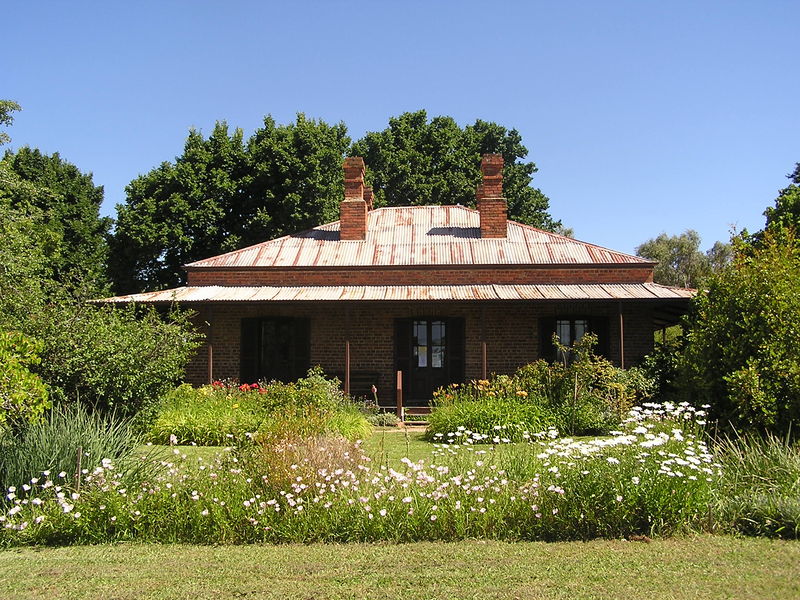
Lake View House, Chiltern
Lake View House, Chiltern (Courtesy Golden Wattle, via Wikipedia, using CC-BY-SA 2.5)

This must be why Chiltern does not appear in the map, because it certainly has literary associations. The Australian author Henry Handel Richardson lived in Lake View House for a short time, and set the early years of what is probably her most famous novel (trilogy), The fortunes of Richard Mahoney, in the town. It’s a pretty little town well worth visiting, and so it’s a shame it doesn’t appear on the map.

Anyhow, click on the map and have a look around. It’s a nice idea, though it could do with updating, in a technological sense (such as implementing some Web 2.o functionality), and expansion, in terms of content (as Victoria’s literary heritage is clearly richer than the map shows).

Oh, and I’d love to know if there are other web-based initiatives designed to help we literary travellers.

Dr Peter Kocan wins the 2010 Australia Council Writer’s Emeritus Award

Some literary awards tend to fall somewhat under the radar, and one of these is the Australia Council‘s Writer’s Emeritus Award – even though it’s a fairly generous one: $50,000. This is one of those lifetime awards; it is given to a writer over 65 years old* (hence, I suppose, the “emeritus”) for “exceptional contribution to Australian writing”. Previous winners include well-known and lesser known writers, such as: Eleanor Dark, Ray Lawler, Barbara Jefferis, Christina Stead, Barry Oakley, Margaret Scott and Judith Wright McKinney.

I’m embarrassed to say, though, that I haven’t read this year’s winner, Peter Kocan. He is an interesting fella! In 1966, when he was 19 years old, he was found guilty of the attempted assassination of the then Federal Government Opposition Leader, Arthur Calwell, resulting in a prison sentence and a place in an institution for the criminally insane. It seems that he managed to turn that experience into an opportunity and took up writing in 1967. He has published novels, plays and poetry (with his first two poetry collections being published while he was still in prison). Much of his writing is, apparently, autobiographical, and therefore deals with prison life, mental health, and post-prison alienation.

He is a writer I am going to look out for …

*Note: I think this age definition must have been dropped in recent years as Kocan was born in 1947. Presumably though it is still intended for “older” writers.

POSTSCRIPT: Guy of His Futile Preoccupations has written an excellent, thorough review of Kocan’s novel, The treatment and the cure. It’s well worth reading if you’d like a sense of Kocan and his writing.

Monday musings on Australian literature: The future of Australian literature

‘If their [Australian writers’] work is so interesting,’ comes the query, ‘why isn’t it known here [London]?’

This query was put to Australian novelist and literary figure, Vance Palmer, in 1935! When I read it, I couldn’t help thinking plus ça change. A few months ago I wrote on Hilary McPhee‘s concern about the continued low profile of Australian literature overseas. She said that, while the situation has improved since the 1980s when she first wrote on the issue, it is uneven because Australian writers are “cherry-picked”. In other words, Tim Winton, Peter Carey and maybe David Malouf are known, but who else?

Anyhow, back to Palmer and 1935. His response to the question was

No use to reply that it [Australian writers’ work] is hardly known on their native heath!

That was probably so … and during the 193os and 1940s, Vance and his wife Nettie Palmer, along with writers like Flora Eldershaw, Marjorie Barnard and Frank Dalby Davison worked hard to raise awareness in Australia of Australian literature, and to secure good funding support for writers. The Palmers personally mentored writers like Eldershaw, Barnard and Davison. Nettie Palmer, in particular, corresponded regularly with writers, advising and encouraging them. Vance Palmer wrote for newspapers and journals, and lectured widely, on Australian literature.

Why do we need a national literature?

In the article “The future of Australian literature”, Palmer discusses why it’s important to have a national literature. He asks, “Why all this fuss about having a literature of our own? Why waste time writing books when ‘all the best and the latest’ can be imported from overseas?” His answer is not surprising to we readers:

The answer, of course, is that books which are revelations of our own life can’t be imported, and that they are necessary to our full growth. … since the world is divided into nations and societies, it is necessary that these shall find their own forms of expression, each subtly different from the others.

… we have to discover ourselves – our character, the character of the country, the particular kind of society that has developed here – and this can only be done through the searching explorations of literature. It is one of the limitations of the human mind that it can never grasp things fully till they are presented through the medium of art. The ordinary world is a chaos, a kaleidoscope, full of swift, meaningless impressions that efface one another; the world of a well-pondered novel or drama is designed as an orderly microcosm where people and things are shown their true significance. And so, unless a country has its life fully mirrored in books it will not show a very rich intelligence in the business of living.

He goes on to suggest that through literature, we

  • learn to understand and adjust to our surroundings or landscape (the physical, I suppose). In Australia at that time this meant learning “to live with our bonny earth with a spirit of affection. It is not the same haggard landscape our ancestors looked on with loathing” but has its own beauty in its, for example, wattle and gums.
  • discover our roots, find out who we are (what he calls, the social). In Australia at that time, that included exploring themes of exile and immigration, “the theme of the vanishing race, with its wild charm and its tragic doom”, and themes related to Australia-at-war and coping with universal economic conditions.

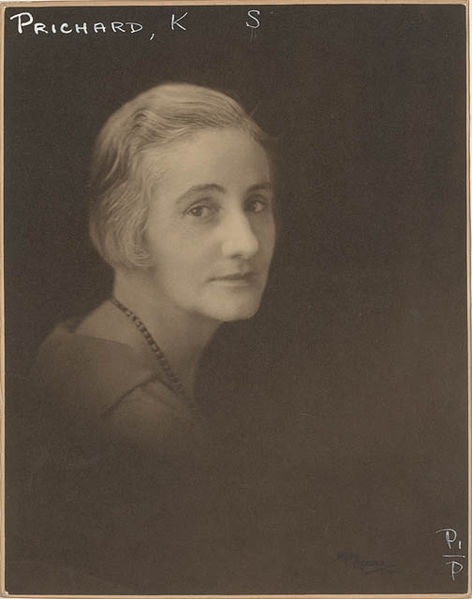
Katharine Susannah Prichard

Katharine Susannah Prichard, by May Moore (Presumed Public Domain, State Library of NSW)

He argues that change was occurring, that a national literature was developing – and gave many examples including works by those mentioned above, as well as writers like Katharine Susannah Prichard and Christina Stead.  He suggests that one of the reasons for improvement was the growth of publishing in Australia. What these publishers produce might be uneven in quantity and literary value, he said, “but at least they have taken the Australian background for granted, and that has marked an advance”. However, he bemoans the lack of “lively and intelligent [literary] criticism” which he believes is essential to writers finding “their proper audience”.

Palmer concludes positively, believing that there has been “a bubbling in our drought-scaled springs”. He says that the new literary pulse will have a significant impact on Australia in the next 50 years and will “quicken its imagination, stimulate its powers of introspection, and make it as interesting to itself as every country should be”.

There’s a lot to think about here – in terms of how Australian literature has progressed (within and without the country) and how we see the role of national literatures in our more globalised world. How important is national literature? My answer is that while nationalism, taken to exclusionist extremes, can be rather scary, we still do need to understand our own little corners of the world, in both their local, unique and their wider, universal meanings and implications.

What do you think? And how important is it, particularly with so many writers on the move, to define nationality?

Vance Palmer
“The future of Australian literature”
First published in The Age, February 9, 1935
Availability: Online

Toni Jordan, Fall girl

Jordan Fall Girl

Fall girl cover (Courtesy: Text Publishing)

It’s just as well I’m not one of those readers who likes to draw conclusions about writers’ lives from their writing, because if I were I’d be seriously concerned about Toni Jordan. You see, her latest novel, Fall girl, is about a con-artist, a very experienced one in fact. And Jordan writes so convincingly you’d almost think … ah, but we’re not going there, are we!

Now, Toni Jordan writes chick lit, but it’s chick lit with a difference. The heroine of her first novel, Addition (which I reviewed earlier in this blog’s history) has obsessive compulsive disorder and at the start of the novel is almost a recluse. She is not, in other words, your typical chick lit heroine.  And so it also is with Fall girl‘s heroine, Della. She too is a little off-the chick-lit-beaten track. She is:

  • not in normal employment;
  • not really upwardly mobile (as her family lives in a dilapidated mansion, and tends to spend up big “wins” rather than using the money to improve their lifestyle);
  • not focused on fashion and appearance (though she does prefer to dress well); and
  • not looking for a husband (though of course this being chick lit, romance does rear its head).

The hero, Daniel Metcalf, however, is somewhat more typical: “he looks like a model from an adventure store catalogue”. He is tanned, strong, big and muscled, and there is a little nod, I think, to Jane Austen’s Mr Darcy in him. But there is also a bit of a mystery about him that our heroine needs to resolve if she is to succeed in this, her biggest “sting” by far.

What can I say about it? It’s a fun read. The plotting and characterisation are good. It’s told first person, in a mostly light tone, but there is light and dark, as not everything runs smoothly (of course). There are some lovely comic scenes – particularly during the scientific expedition on which Della (aka Dr Ella Canfield) takes her mark, Daniel, to demonstrate how professionally his grant money will be spent. Without giving anything away, the resolution is in keeping with chick lit without being completely, neatly tied up.

Is there anything else to it? The writing is good – in a traditional, straightforward way – and the structure is generally chronological, with the odd flashback to fill in Della’s family background. It drips with irony, but in a light-hearted, rather tongue-in-cheek way. Jordan knows that we know the conventions of the genres – of both chick lit and the con – and plays them to effect. We read, and we smile, not grimace. But, there is something else here too, something besides the chick lit and the con story, and that is a coming-of-age story. Not the traditional adolescent story, but we discover as the novel wears on that twenty-something Della has not really achieved self-determination. Everything she does is in accord with her training and her father’s “rules”. Towards the end of the book, her stepmother Ruby talks to her about her upbringing in the family and her inculcation into its “business”, and says:

What you choose to believe is up to you, Della. You don’t have to listen to anybody. You have to make up your own mind.

But, of course, being a Jordan novel, it’s not typical “coming-of-age” either and what Della decides is part of the fun of the ending.

This is a light, entertaining read – and yet it’s not lacking in things for readers to think about. In fact, it’s just the right sort of read for the Christmas holidays. Lisa at ANZLitLovers would probably agree – but go check her review for yourself.

Toni Jordan
Fall girl
Melbourne: Text Publishing, 2010
234pp.
ISBN: 9781921656651

(Review copy supplied by Text Publishing)

Monday musings on Australian literature: Guest post by Lisa from ANZLitLovers

When I started this Monday musings series, I said that I’d have the occasional guest post. The first one, I decided then, had to be Lisa at ANZLitLovers. Not only did she give me a lot of encouragement when I started blogging (thanks Lisa!) but she is one of our most committed bloggers on Australian literature. In her day life she is a primary school librarian, and so she decided to do her Guest Post on a subject dear to her heart. Read on …

How do we raise the next generation of booklovers?

In recent weeks there’s been a lot of chat in the blogosphere about the impact of eBooks in the marketplace, but I think reading is under more pressure from the diversity of entertainment choices that are available now, than it is from the method used to deliver the book.  I grew up without TV, so weekly visits to the library with my father were an essential component of my life from the time I first learned to read, and I’ve never lost that reading habit. Children now have so many choices, it can be hard for them to find time for a book.

So how do we raise the next generation of booklovers?  If you’re a booklover yourself, it’s important to you that your kids are too, but it’s important for all of us because reading books makes better people of us.  The world needs better people, right?

As a booklover myself I think children are deprived if they don’t have access to lovely books, so all the children in my life get books for presents until they turn into sulky teenagers, and then they’re on their own.  But getting books for presents doesn’t necessarily turn a child into one who loves books…

Remember little Scout, in To Kill A Mockingbird, when her foolish teacher forbids her to read with her father anymore? Scout is appalled.  ‘Until I feared I would lose it, I never loved to read. One does not love breathing.’  She learned to read not with pretty picture books but by reading the most boring of texts over her father’s shoulder.  She loved to do it because she was with him.  However that was in a different age, and there’s nothing to tell us that Scout went on voraciously reading books into adulthood.

As a teacher-librarian, it’s my job to share books with children.  Primary librarians don’t just manage library acquisitions and book processing, or guide students with their book borrowing and research.  We teach as well.  I have 17 classes for an hour each week.  I’m supposed to teach them research skills, and I do, but I think the literature part of my curriculum is much more important.  The kids I teach might not remember how to takes notes for a project but they will always remember the meaning of the word ‘perfidy’ – and the moral issues that lie behind it – because I read them Kate DiCamillo’s Tale of Despereaux.  They’ll also remember joining in that pleasurable gasp of woe at the end of the lesson because they have to wait till the following week to find out what will happen next.  Suspense is good!

Our definition of literature is ‘those books that you always remember, forever and ever’. What are the ones that they apply this definition to? Here are some of them:

Dragon Keeper book cover
Cover image from Black Dog Books


DragonKeeper by Carole Wilkinson is a compelling fantasy/adventure series about a nameless slave girl in Ancient China whose job it is to feed the dragons.  Most boys past a certain age won’t put up with female central characters, but they sit still and listen for this one.  When the evil dragon hunter turns up to kill the last dragon for its body parts, she flees with it on an epic journey to protect a mysterious stone.  The book won the CBCA (Children’s Book Council of Australia) Book of the Year and took out a host of other awards, and my students and I went on to become keen fans of this wonderful Melbourne author. The sequel, Garden of the Purple Dragon, was shortlisted everywhere in 2006, Dragon Moon won the CBCA Award in 2008, and now there is a prequel – Dragon Dawn – which shows us Danzi as a young dragon, a mere 1000 years old.  A great favourite.

Sticking with dragons for the time being, I always read Lily Quench and the Dragon of Ashby by Natalie Prior to lure Years 3 and 4 students to reading.  Once again there is a female hero plagued by self-doubt, but she rises to the occasion (literally) when Queen Dragon lands in the grey, miserable town of Ashby and challenges the evil Black Count who has taken over everything and rules with an iron fist.  This one is rich in opportunities for discussion too, but it also features droll humour which eight and nine year old students can appreciate.  This is one of a series of seven, so the other six books are whisked off the shelves by borrowers before I’ve got to the end of chapter two…

The Deltora Quest by Emily Rodda series is a blockbuster.   Three trusty companions travel across Deltora to retrieve magic artefacts and defeat the evil Shadow Lord.  It’s a particular favourite with kids who play computer games involving collecting artefacts to fight off the Bad Guys.  No matter how many of these books I buy there are never enough, and I’ve given up trying to shelve them where they belong on the R shelf.  They have a tub of their own where the kids can riffle through looking for the title they want. (There are 15 in the series).

Another favourite is Truck Dogs, A Novel in Four Bites by Graeme Base.  He’s a picture book author and first editions of this book have full colour artwork, showing the bizarre creatures featured in this SF adventure.  It takes place at some time in the future in outback Australia when dogs have mutated into hybrid vehicles, part canine-part machine.  The hero, Sparky, (a Jack Russell/ute cross) is a scamp forever in trouble, but when a gang of Rottweilers come into town to steal all the town’s petrol, he leads the Mongrel Pack street gang to defeat Mr Big, (a Chihuahua/BMW cross) and save the day.  It’s an exciting romp with tongue-in-cheek humour and kids love it.

Do-Wrong Ron by Steven Herrick is completely different.  It’s a novel in free verse, and it tells the story of Ron who is good-hearted but manages to do almost everything wrong.  He tries to help Isabella’s grandmother who is too sad and lonely to go out of her house, and as usual things go wrong – but turn out right.  This is a great book for those under-confident kids who think they’re never going to belong, and the gentle humour is lovely.

Billy Mack’s War by James Roy is a great antidote to boys’ enthusiasm for war.   It’s set in 1945 and it tells the story of how shamefully the POWs were treated when they were evacuated back to Australia from Japan.  Billy doesn’t know his father, and he’s embarrassed and his loyalties are tested when he hears people talk about the POWs ‘sitting out the war’ while others fought.  His father’s experienced such horrors that he’s not coping with freedom very well. Not a book for under 11s, but a book that will intrigue older readers around Anzac Day…

Finally, although it’s British, I can’t resist including my favourite, Sir Gawain and the Green Knight, retold brilliantly by Michael Morpurgo, Britain’s Children’s Laureate.  This ancient tale from the 14th century takes place in Camelot, where on New Year’s Eve the feasting is interrupted by a strange green man who confronts the reputation of King Arthur’s knights with a fearsome challenge.  It is Sir Gawain who has to prove that he has courage, determination and honour, and it is this one that has my students pleading for me to read the finale even after the bell is long gone for them to go out to play.  We talk about the seven knightly virtues, and whether they still apply today; we talk about why Gawain says his life is less important than his king’s, and we talk about why flirting with your best mate’s girl is so wrong.  I read Michael Morpurgo’s version of Beowulf to Years 5 & 6 too and they love that as well (especially the gory bits), but it is Sir Gawain and his quest to do the right thing when tempted not to, who speaks to them across the centuries.

While nearly all my students love listening to stories in the library each week, I know that they don’t all turn into booklovers.  However some kids, who never used to borrow, now do so regularly and they’re in the library before school pestering me to buy new books as well.  I wish I knew the secret that makes this happen for more of them…

Back to Sue … Thanks Lisa for this inspired and inspiring guest post. Now, we’d love to hear your thoughts on the issue …

Gretchen Shirm, Having cried wolf

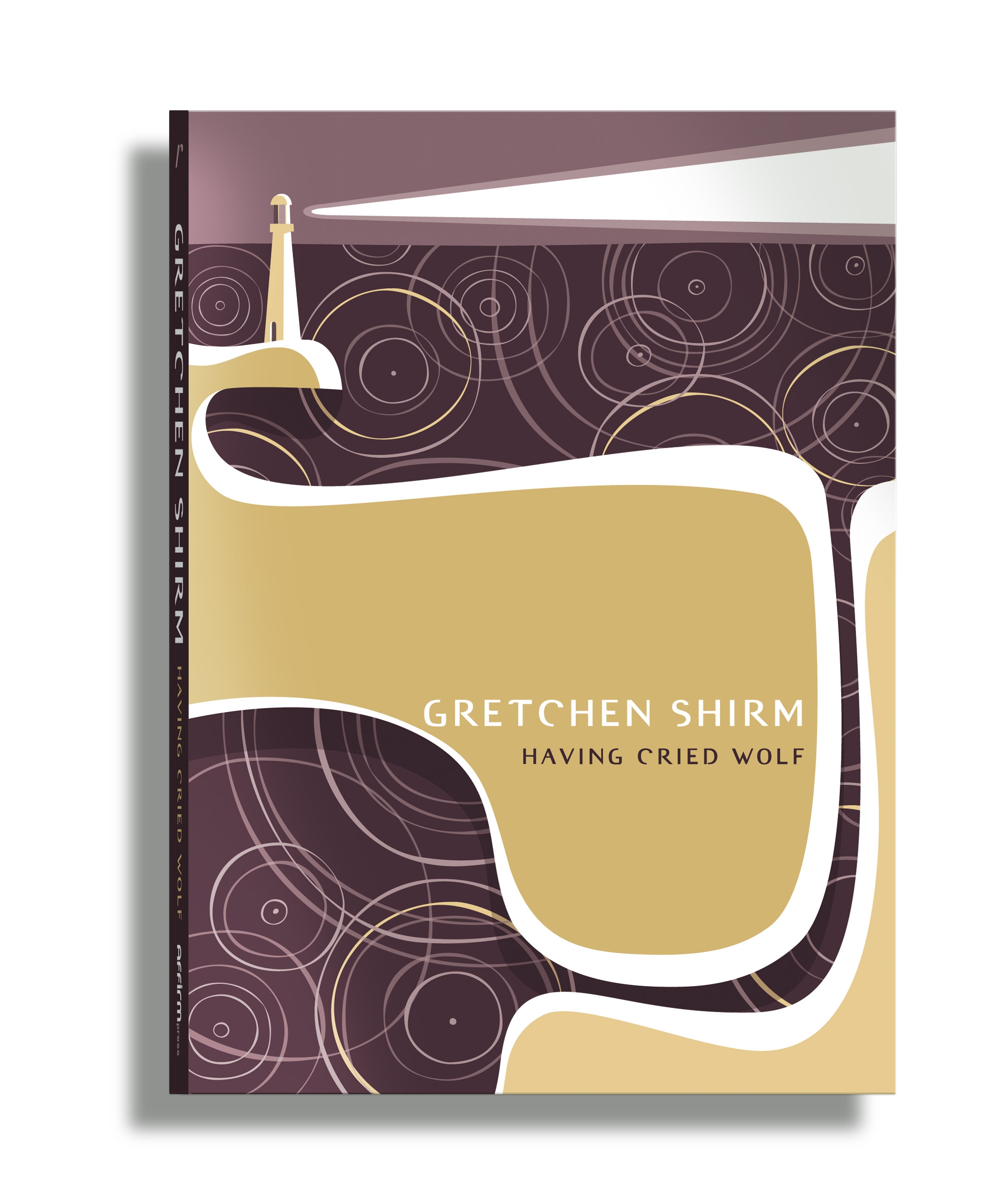
Having cried wolf, book cover

Book cover (Image from Affirm Press)

I have come to the conclusion that short stories are the best holiday reading for me. After a day’s sightseeing followed by reading up on sights for the next day, I usually find I have little time left for my reading. Novels are hard to read under such circumstances, but short stories? Well, they are just the thing. And so, on our recent trip to Hong Kong, I took Gretchen Shirm’s first collection of short stories, Having cried wolf.

Gretchen Shirm is a new Australian writer who was awarded the D.J. O’Hearn Memorial Fellowship for Emergent Writers in 2009. The blurb on the back of the collection likens her to Olga Masters, Helen Garner and Beverley Farmer, and I can see that, but as I was reading the stories I kept thinking of Tim Winton‘s The turning. The obvious reason is because, like The turning, Having cried wolf comprises short stories that are connected by character and place. The fifteen short stories are set in (or deal in some way with) the fictional New South Wales coastal town of Kinsale, and several characters reappear throughout, sometimes in their own stories and sometimes in others. It is rather fun, actually, identifying these and picking up the thread of a story as you progress through the book. Despite this, though, the stories do, I think, also stand well alone.

While Shirm doesn’t focus quite so much as Winton does on the description of place, beyond, that is, conveying the sense of small-town life, her themes are similar: the challenges of small-town living and, particularly, of maintaining meaningful relationships. These themes, however – particularly regarding maintaining relationships – are also those of the aforesaid Masters, Garner and Farmer.

And so to the stories. I must say I enjoyed them – though they are not a particularly cheery bunch. Shirm’s writing is tight and sure, with none of the over-writing often found in first-timers. She writes in first and third person, in female and the occasional male, voices. The characters range from early teens to middle-aged and she captures them all well. Her subject matter includes coming-of-age, marriage and separation, sexuality, suicide and some uncomfortable morality. While many of the stories are interlinked, they are not organised in a totally chronological manner. For example, we learn in the first story, “Breakfast friends”, that Alice is separated from her husband, but in a couple of stories later, “The shallows”, we meet her with the boyfriend who later becomes her husband. This nicely replicates I think the random way we often find out about people in real life.

I’m not going to do a blow-by-blow discussion of the stories but just mention a couple to exemplify some features of her writing. “Small indulgences” for example is a first person story by a rather down-trodden wife. It perfectly encapsulates a woman who has almost, but not quite (as she refuses to colour her hair), subsumed herself to her husband’s needs – and it ends on a delicious if rather sad ironic note. Several of the stories end effectively on metaphors that are subtle but gorgeously appropriate. “Duplicity”, which is about the son of the woman in “Small indulgences”, ends with “There were still no lights on in the house, but by then Daniel was used to the darkness”. And “Breakfast friends” ends with:

The cicada shell is empty now, but inside it was once soft, malleable and not yet formed.

The meaning of that is clear when we read it, but gains added poignancy as we learn more about its characters in later stories. There are many other lovely expressions throughout the stories, such as

… she wants to pour the memory into a mould and leave it there to set.

Why can’t I think like that!

Shirm uses foreshadowing in many of the stories to convey suspense and move the plot along, but she’s not heavy-handed about it. It does mean though that the stories are similar in tone. In other words, this is not a collection of great tonal range but I don’t think that matters, because there’s enough variety and interest elsewhere. There are however a few grammatical oddities that jarred. In a first person voice they can I suppose be forgiven, but there were a couple in third person stories that did bother me. “Peter’s friends swum in the pool” just isn’t right. Is it okay if the voice is third person subjective and that’s how the character might speak? I’m not sure. I’m being pedantic though because overall this is fine confident writing with lovely insights into human behaviour. It does not read like a first collection – and I hope we see more of Gretchen Shirm.

Gretchen Shirm
Having cried wolf
(Series: Long Story Shorts, 4)
Mulgrave: Affirm Press, 2010
ISBN: 9780980637892
221pp.

(Review copy supplied by Affirm Press)

Monday musings on Australian literature: Some Australian travel writing

At luggage carousels one can question travelling (Donald Horne, The intelligent tourist)

Having just returned from our trip to Hong Kong, I thought this would be a good opportunity to post about some Australian travel writing. Hmm … good idea, but where to start? The first problem is that while I usually enjoy travel literature when I read it, I don’t read it often. And the second one is the focus: should I post on Australians writing about travel or on anyone writing about travel in Australia? I’ve decided on the former, which means that while the writers will be Australian, their subjects will not necessarily be so. Travel writers, as you probably know, are a varied lot: some only write travel, but many are novelists, journalists and other sorts of writers who have, for some reason, written travel books.

To keep it simple, I’ve chosen 3 fairly recent examples that represent different types of travel writing.

1. Robyn Davidson‘s Tracks (1995)

Robyn Davidson has to be the Australian travel writer most contemporary Australians would first think of when asked. Tracks is Davidson’s first travel book and it chronicles her 1,700-mile trek across the central and west Australian deserts using camels. It resulted in her being dubbed “The camel lady”. It also resulted in her developing a fascination for deserts and nomadic life, and in 2006 she wrote an essay titled “No fixed address” for the Quarterly Essay. Her book is an example of what I would call adventure travel literature. There are many more examples of this type – from walkers, sailors, mountaineers and so on.

2. Thomas Keneally‘s The place where souls are born (1992)

Monument Valley

In Monument Valley, one of the areas that inspired Keneally

Australian novelist Keneally’s book is about the American southwest. It is one of my favourite pieces of travel writing because I lived (and travelled) in the area for three years and fell in love with it, and because Keneally writes about it so evocatively. He matches criticism with reverence, and shares the area’s history and culture with us alongside his own personal reaction to it. What more  do we want in travel writing? This book is from Jan Morris‘s Destinations series. Keneally says he considered Sudan (“that bitter, lovely republic”) and Australia before settling on the Southwest. He sees the Southwest the same way I do, as being different (“the space of enormous elevations of mountains, of canyons deep enough to make the brain creep and waver”) from Australia but also similar. He says:

An Australian has to keep on referring to the snow and the heights to remind himself that this is not some town in western New South Wales. It is as if similar passions have run through the earth’s crust and core and made an organic link between the two places.

I’d put this in the category of traditional travel literature – it’s both descriptive and reflective of place and people, and it shows what is individual to the place in question while also revealing the universals. He concludes the book with:

But, in the spirit of the book, it is the chanting [from the Pueblo] we fix on, going away with it more or less in our ears. I take to the road strangely assured that someone is singing for us, celebrating matters we have got out of the way of celebrating for ourselves. The eternity of things. Even of our own spirits.

3. Don Watson‘s American journeys (2008)

Don Watson has impeccable writing credentials. Not only has he written about cant, jargon and weasel words in Death sentence and Watson’s dictionary of weasel words but, with American journeys, which covers his travels in America, post-Hurricane Katrina, he won the Age Book of the Year and the Walkley Award for best non-fiction book. “To journey in America,” he says, “is to journey in language”. While the book is a little repetitive at times – because the same issues keep cropping up as he travels – it captures the paradox that is America. He sees how its wonderful can-do-ism is offset by a focus on individualism that refuses to see that sometimes individualism needs to be over-ridden for the common good, that there are some things that government should do to ensure that all its citizens are well cared for.  Katrina ably demonstrated this. Watson says:

… if it is true that private businesses are efficient because it is in their nature to seek and maximise profit – which is to say their self-interest – then the pursuit of the public interest is not in their nature, and one may as well look to a rattlesnake for kindness as to corporations for the rebuilding of a city full of people. It is pointless; and it follows that it’s just as pointless to imagine that a country governed by the principle of private interest is capable of fixing problems in the public interest – be they local, like New Orleans; national, like poverty; or global, like the environment or peace …

He goes on to say that while American churches, corporations and the nation as a whole

do good and selfless works at home and abroad, it is also true that, in these days of culture wars, the idea of government being the principal agent of such works is faded. That is what New Orleans revealed …

Watson’s book is in a category I’d call socio-political travel literature. This sort of writing tries to understand how a society works, what makes it what it is.

The travel writing I like best:

  • is generous towards its subject matter, that is, it doesn’t whitewash the negatives but neither does it refuse to understand them
  • uses language that captures my imagination
  • has a sense of humour (though not necessarily laugh-out-loud funny)
  • illuminates place and people – that is, it looks beyond the clichés

In his book The intelligent tourist, Donald Horne (known to most Australians as the author of The lucky country and The education of young Donald), suggests that tourists “give up sight-seeing for sight-experiencing“.  This sense of “experience” is what I look for in travel writing – as well as in my own travelling.

Do you have favourite pieces of travel writing?